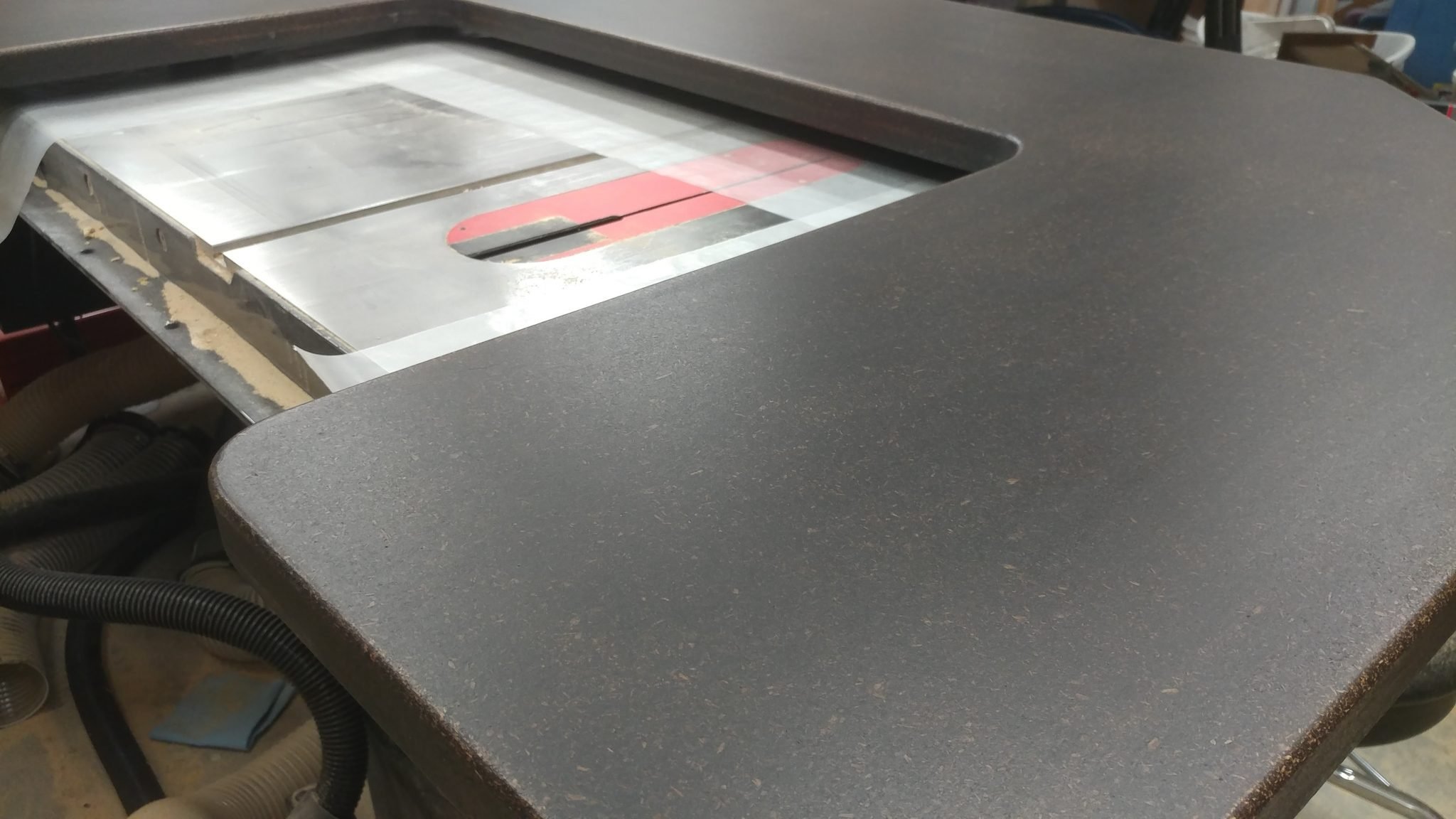
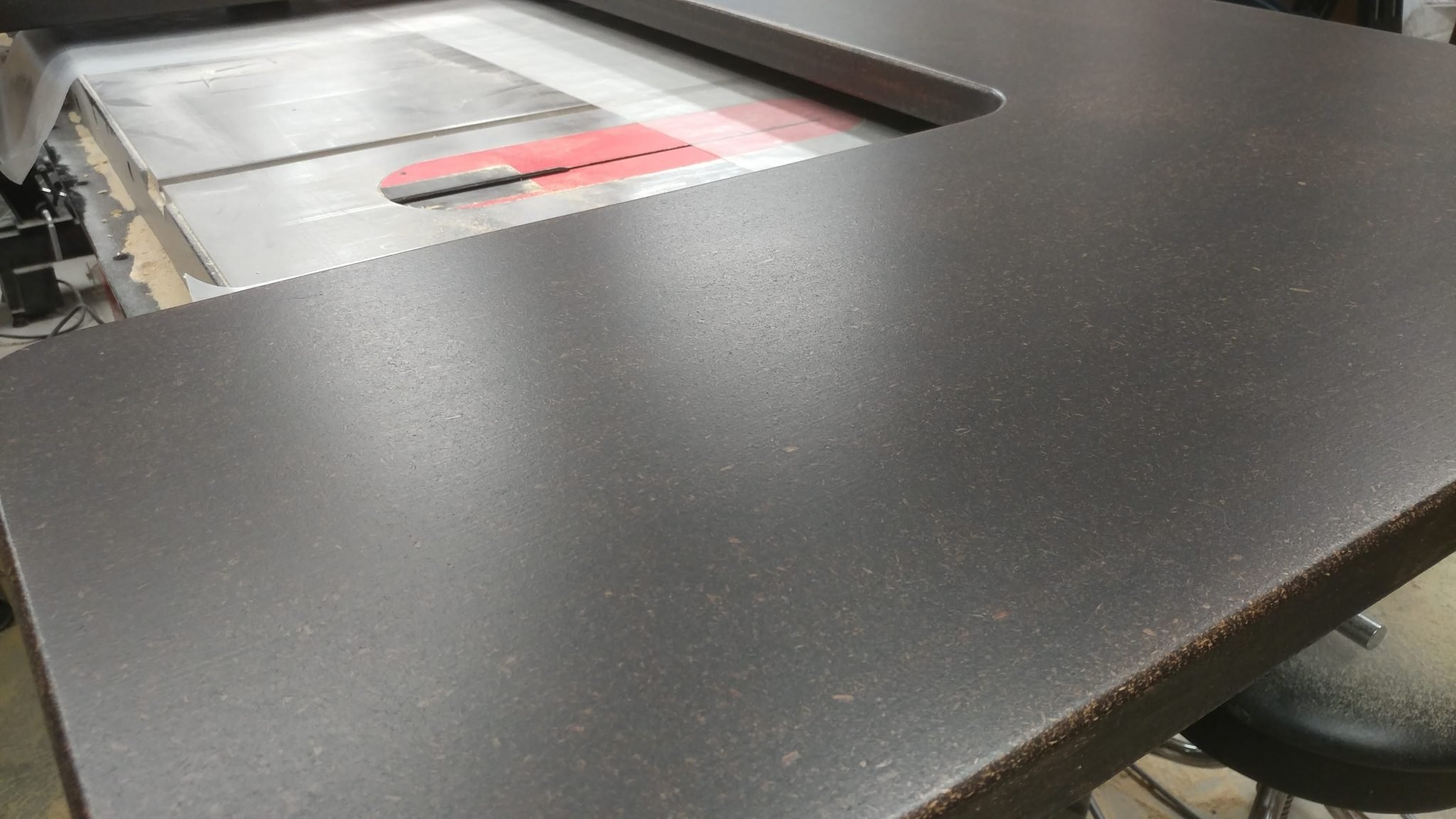
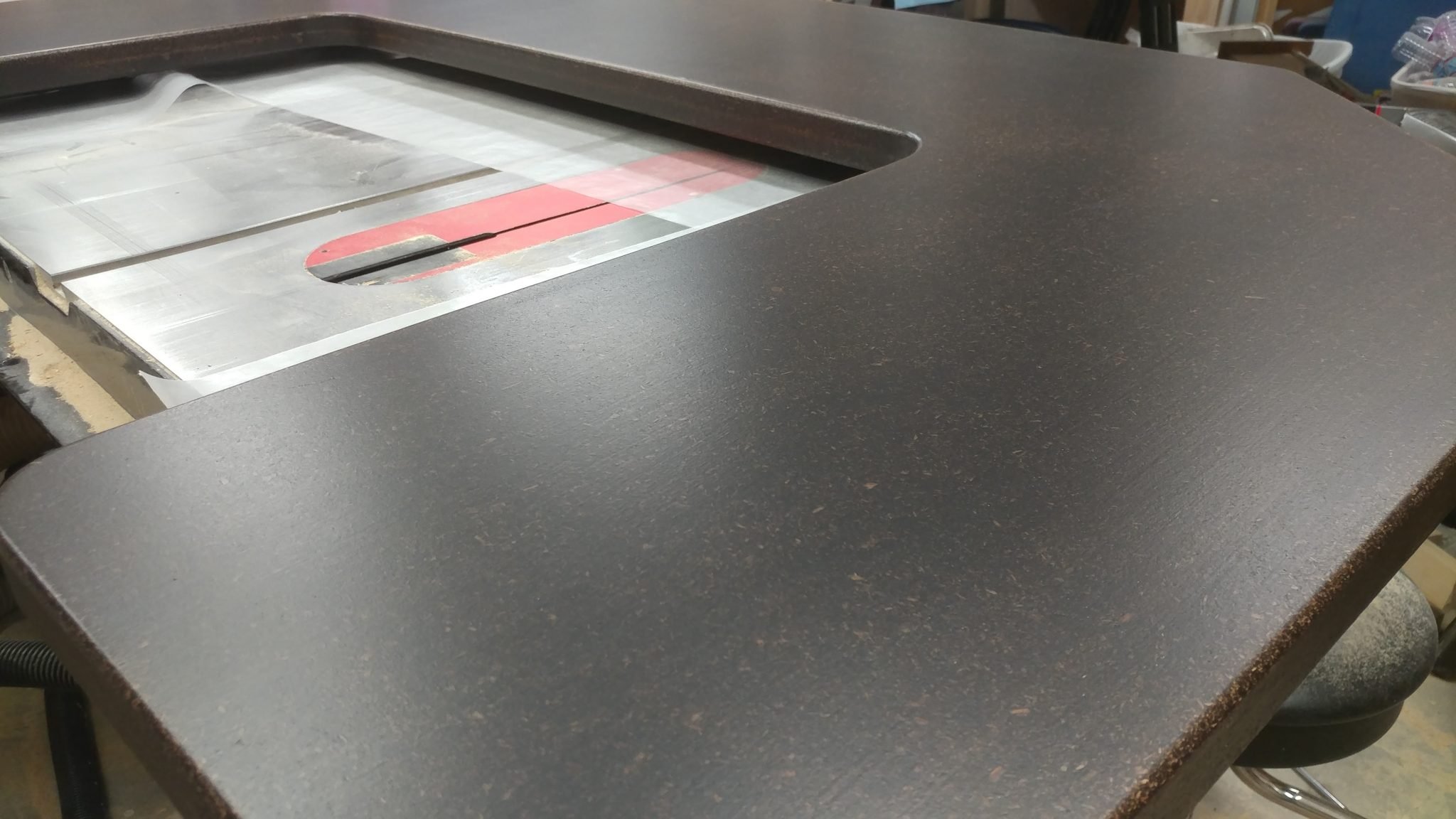
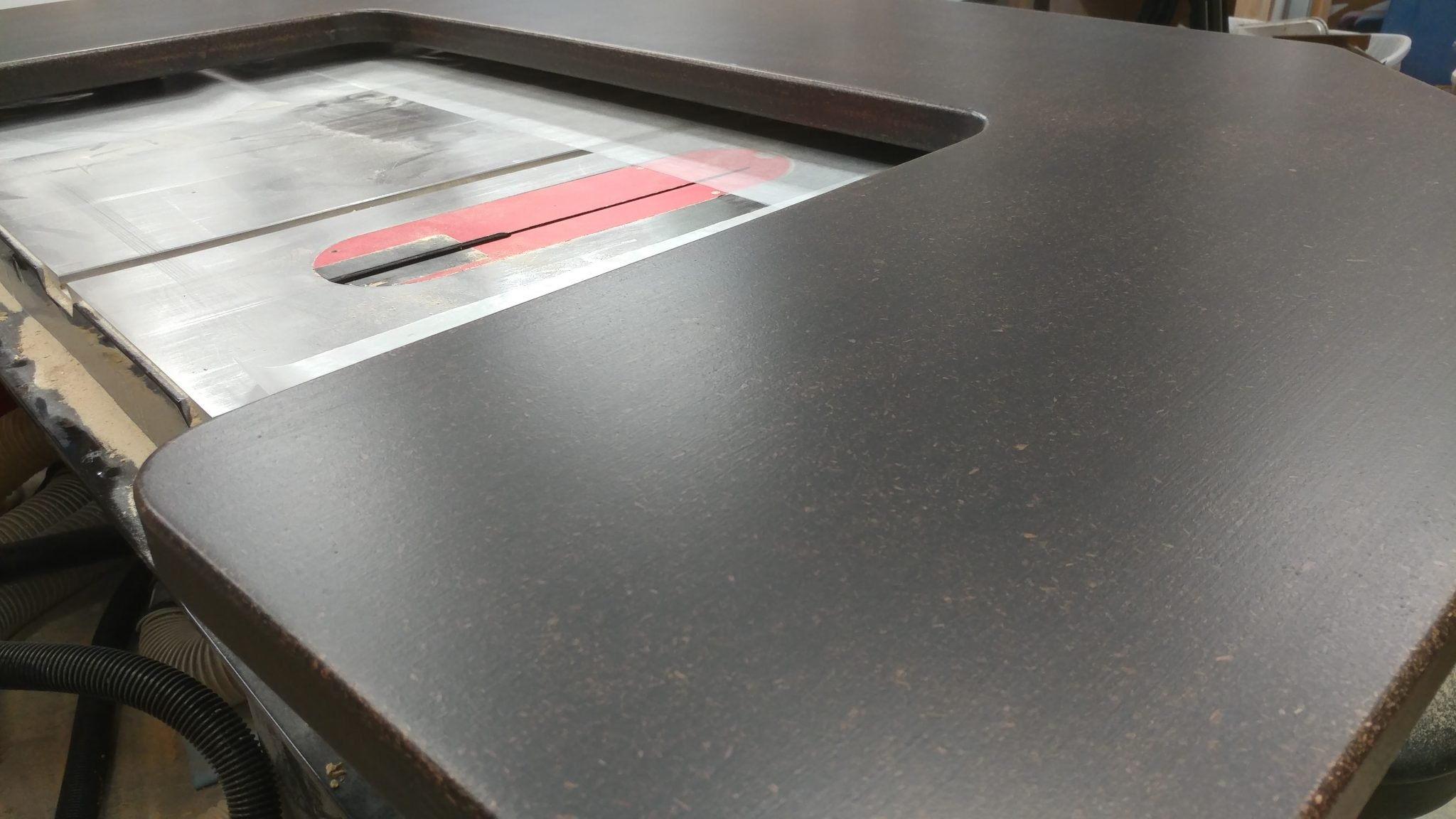
News – June 11th, 2018 – SawStop Floating Dust Collecting Guard

I Decided to Upgrade my Table Saw Dust Collection

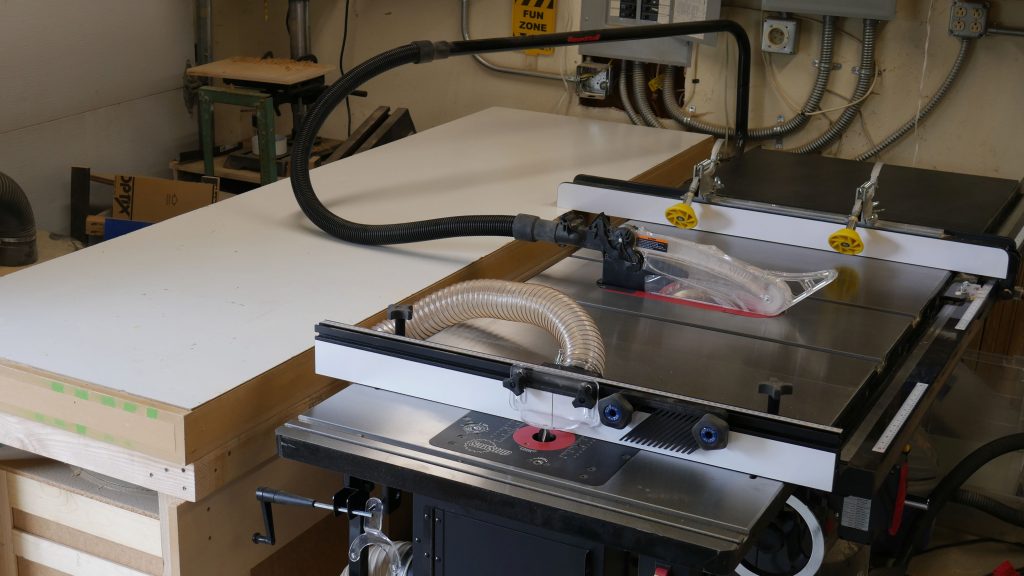
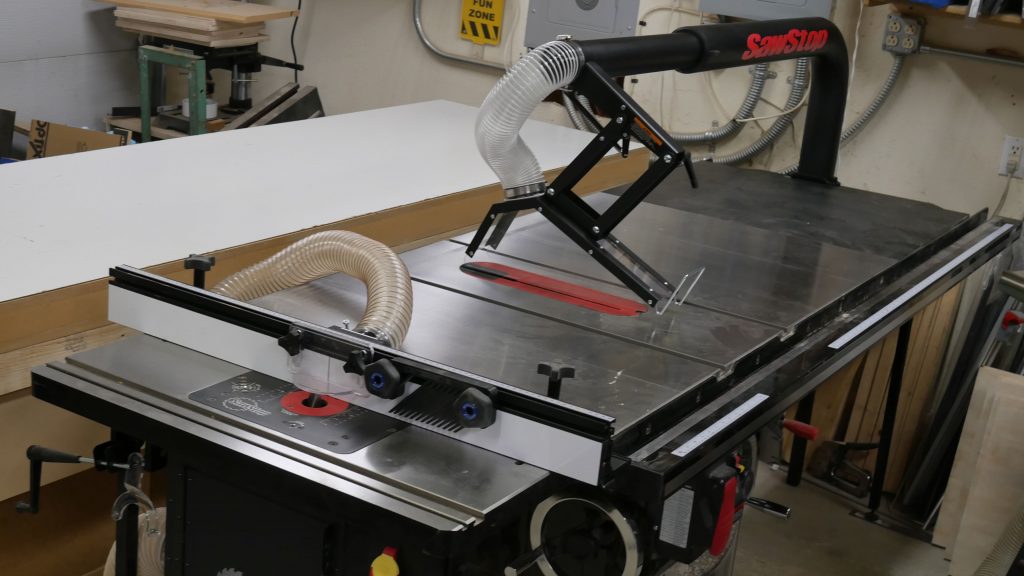
For the past several years I have been using SawStops Dust Collecting Blade Guard along with the Over-Arm Dust Collection Assembly.  This has worked well but there are a few things about it that weren’t working well for me.  Granted, there is no perfect solution for sawdust and different people have different requirements.  This is not a knock against the earlier dust collection system.  I just have different requirements than the old system was able to provide for.

I upgraded my table saw dust collection from this…

…to this.

I installed the SawStop Floating Dust Guard on my saw and I have to say that I’m pretty happy with it so far.  I’m going to do a few modifications to it to make it work better for my particular uses but out of the box it seems to work great.

I’m working on a detailed write-up on the installation of this upgrade, complete with the modifications I did and why they were necessary for me.

News – June 5th, 2018 – Rainstick Prototype

I Decided to Make a Rainstick

I’ve wanted to try my hand at making a rainstick for some time.  Not that I really enjoy playing with them but it seems like a fun project, especially with the amount of experimentation you can do.  Like most of my projects, I start with a prototype.  Like a fool, I forgot how horrible it is to turn MDF on a lathe.

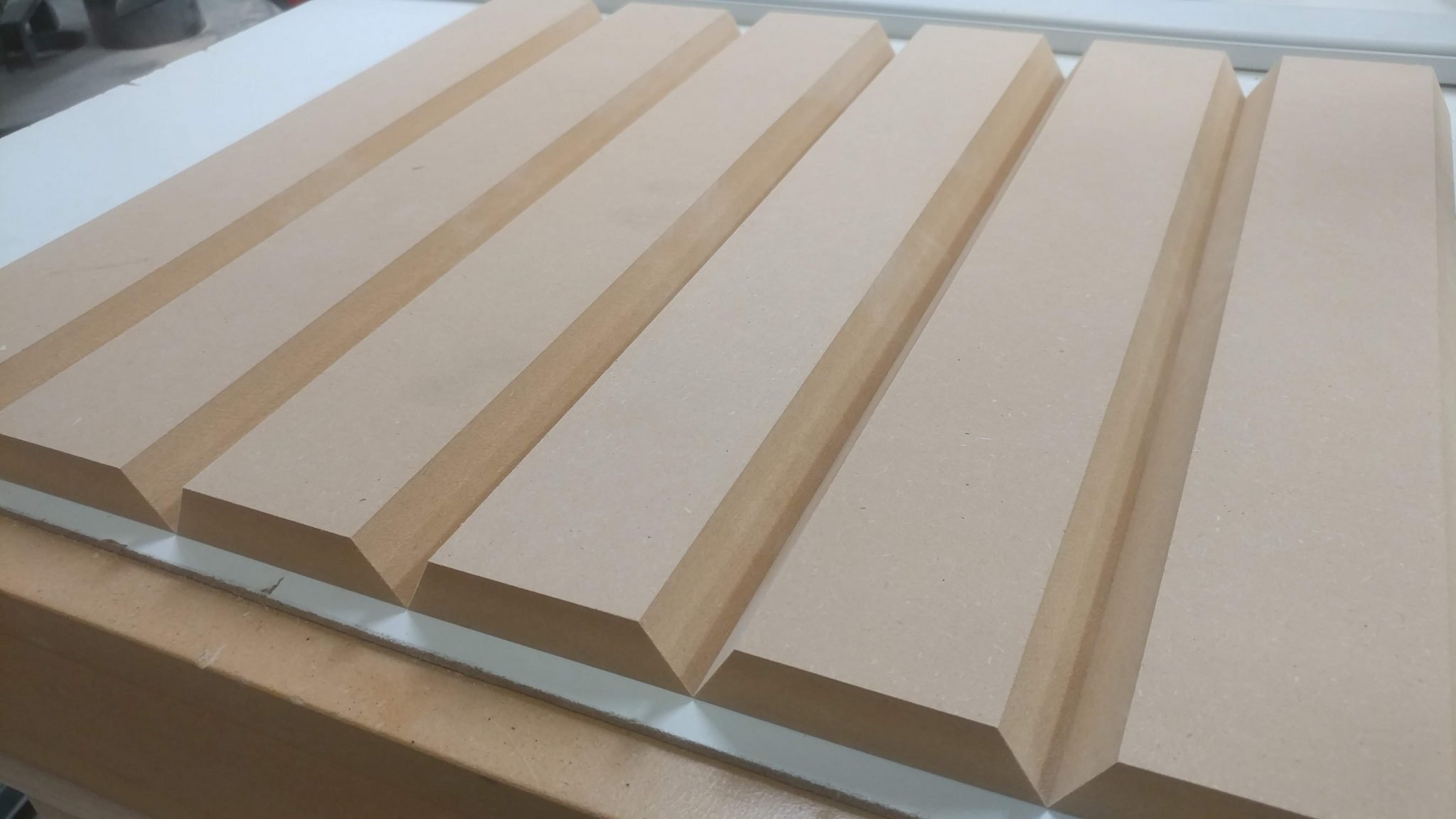
I started by cutting staves on my table saw.  I used the Stave Calculator to calculate the dimensions and angles for each stave.  Since it is only six stave, the calculations are pretty simple but I always like to double-check my calculations.

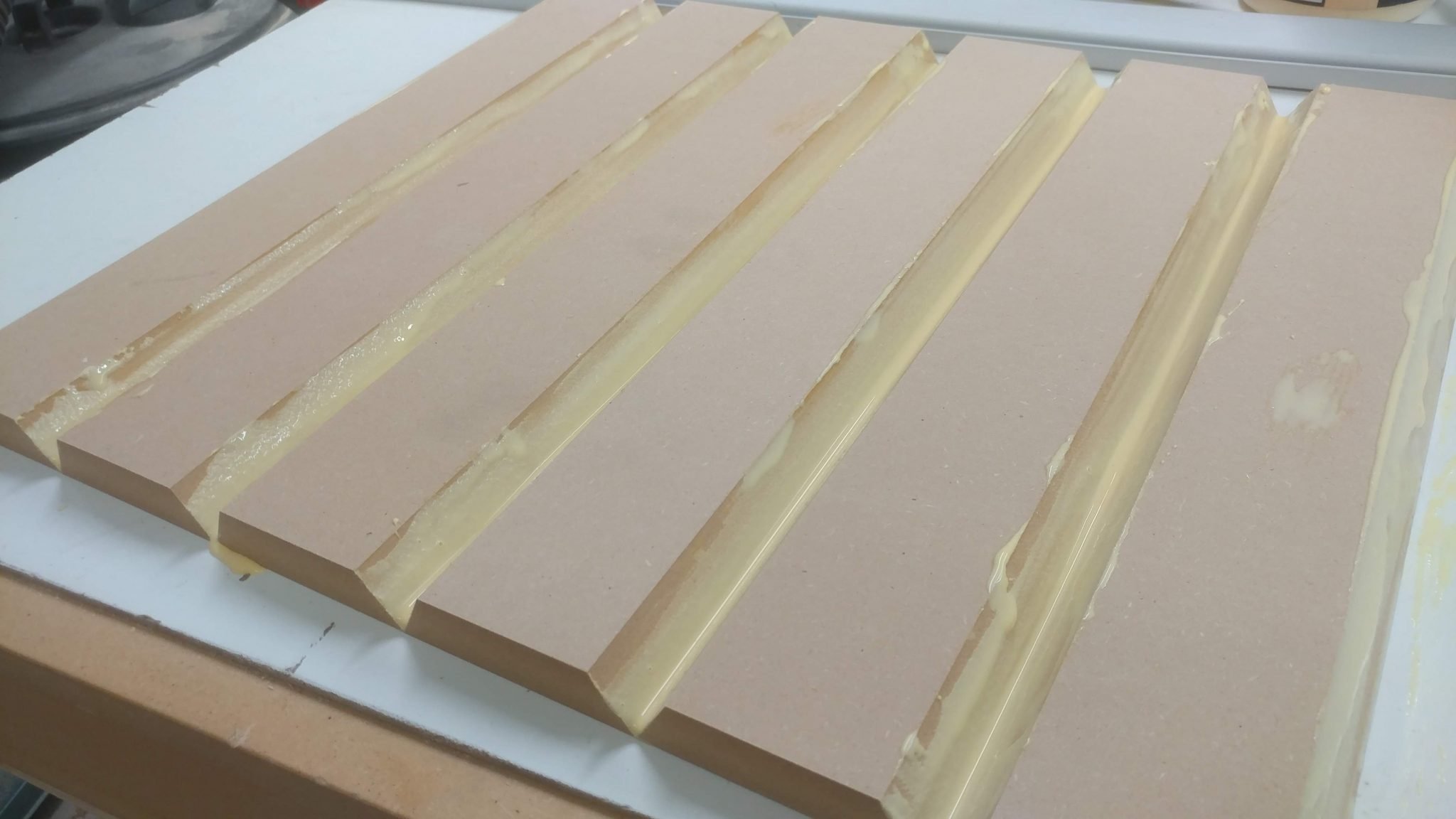
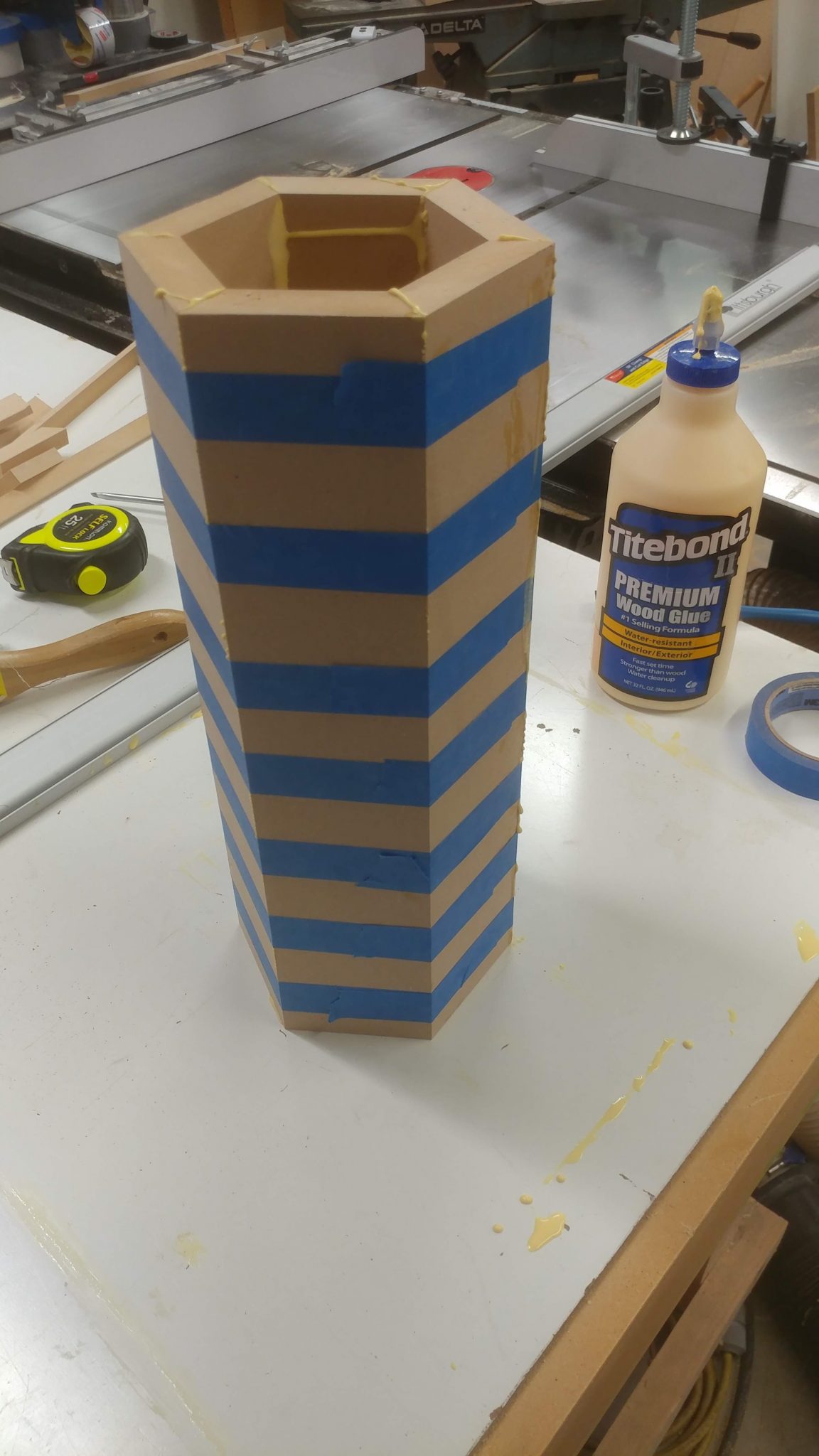
I applied glue between each of the staves.  One thing I didn’t get a picture of is how I laid each stave next to each other and applied strips of tape to what is now the underside of the staves so the whole thing can be rolled up into a tube.

After applying the glue, I rolled it up and added more tape to act as a clamp.

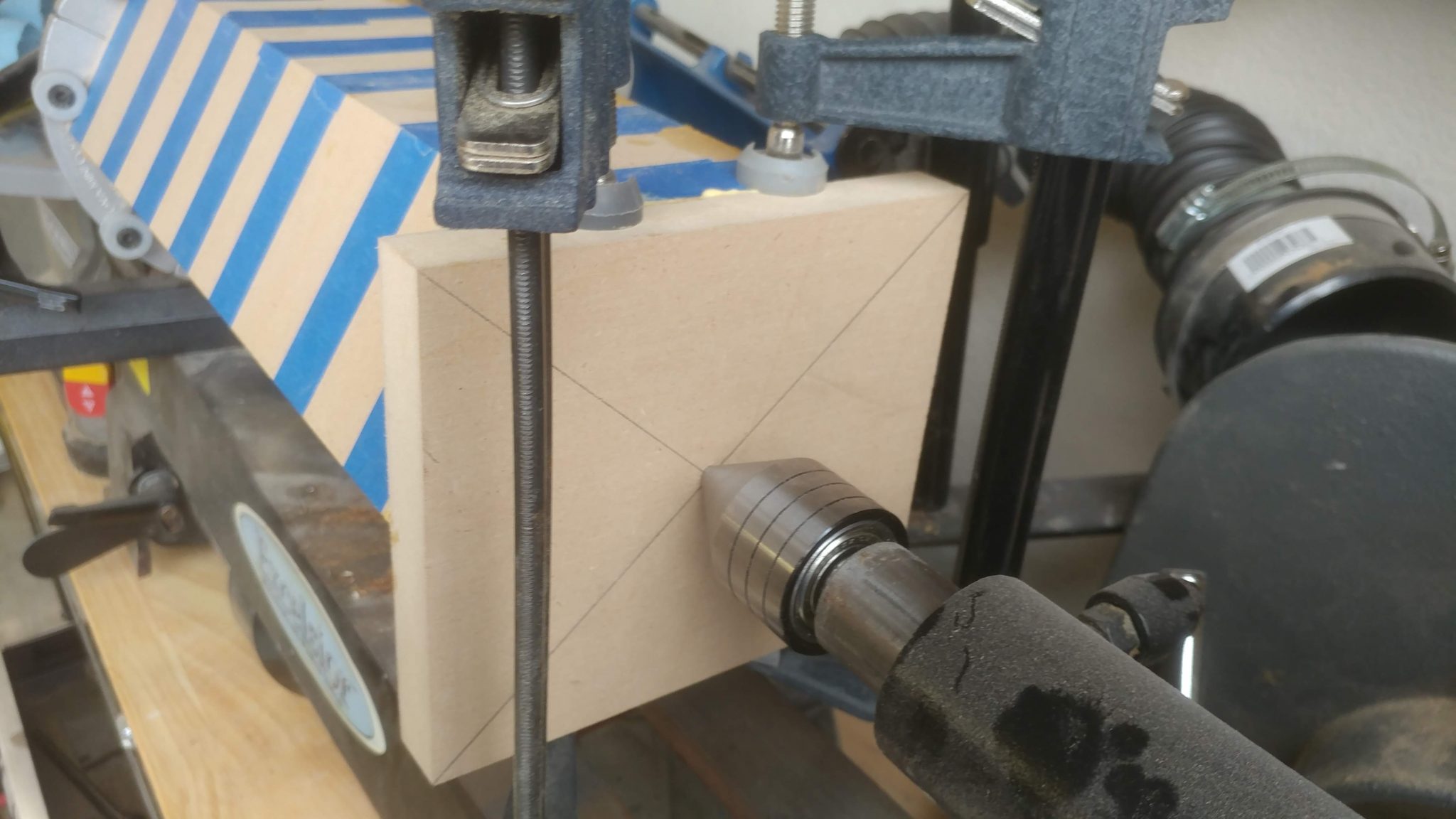
I cut a piece to act as an endcap and glued it to one end of the tube, using the lathe to clamp it together while the glue dries.

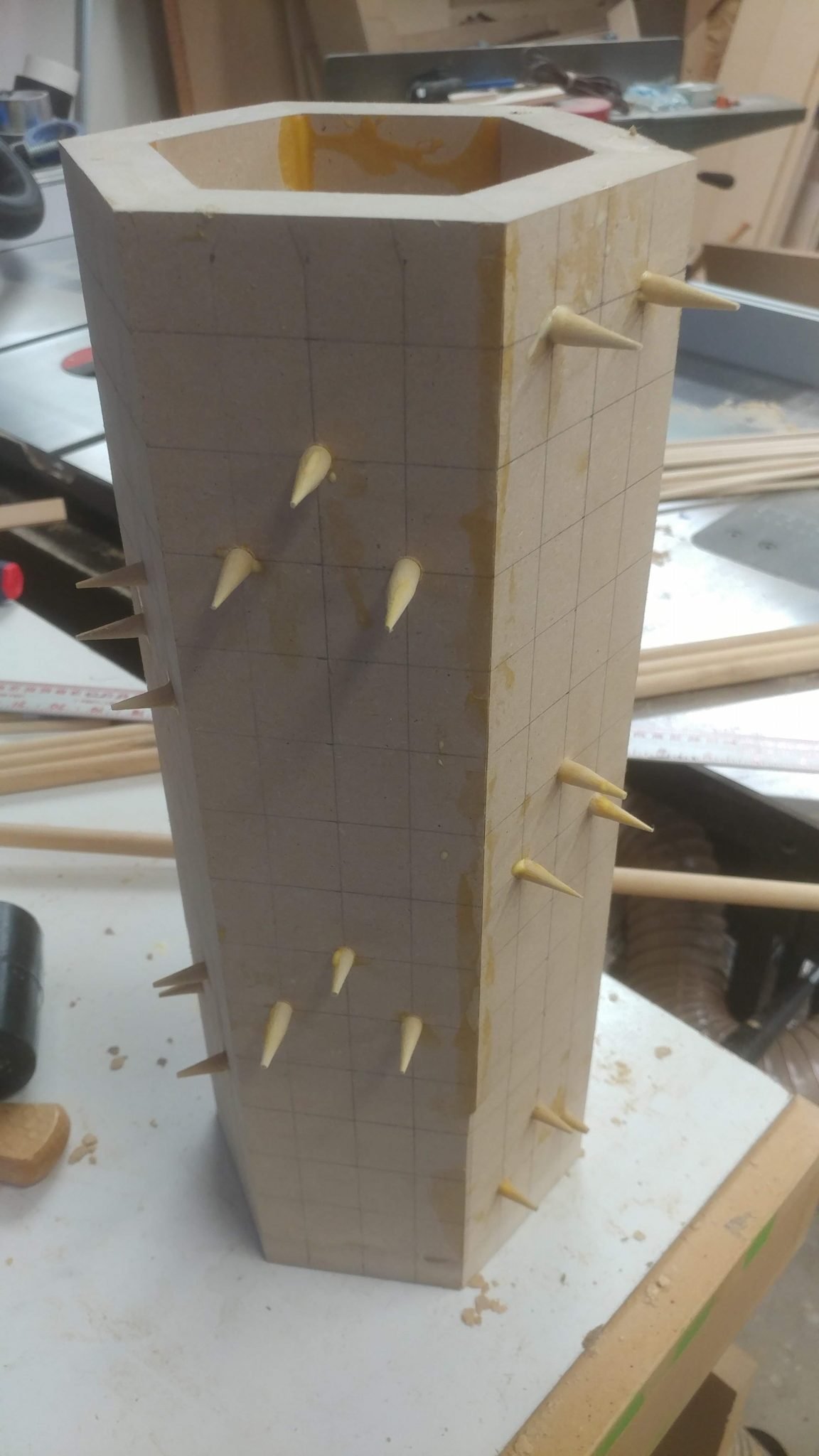
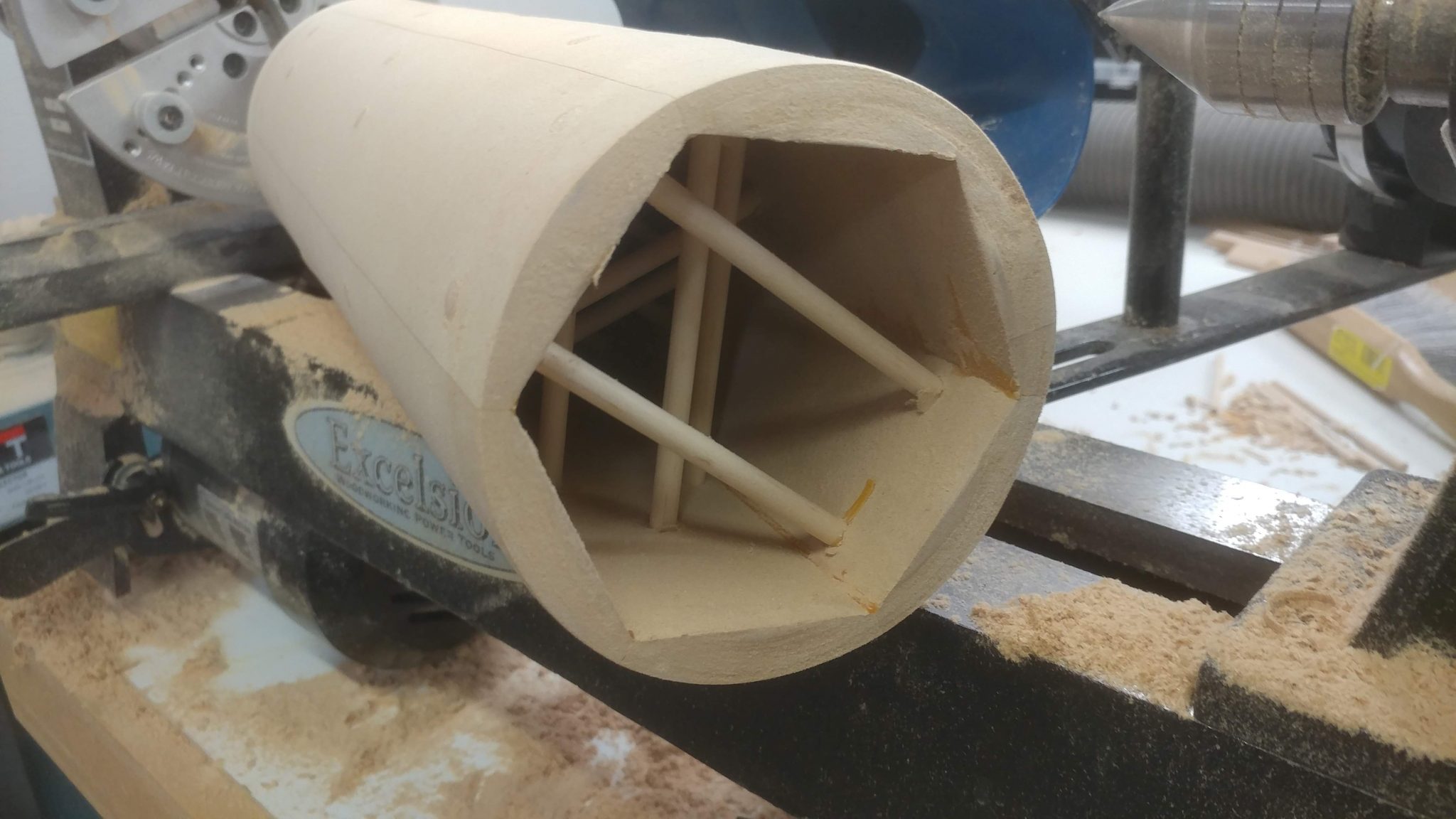
After it was all dry, I drew a grid on each stave and drilled holes through one side, then at corresponding locations on the opposite side.  I then took some 1/4″ birch dowels and sharpened one end with a pencil sharpener so I could guide it through one hole and into the opposite one without having to deal with the alignment of the two holes being slightly off.  These dowels were glued in place.  It looks pretty deadly at this point.

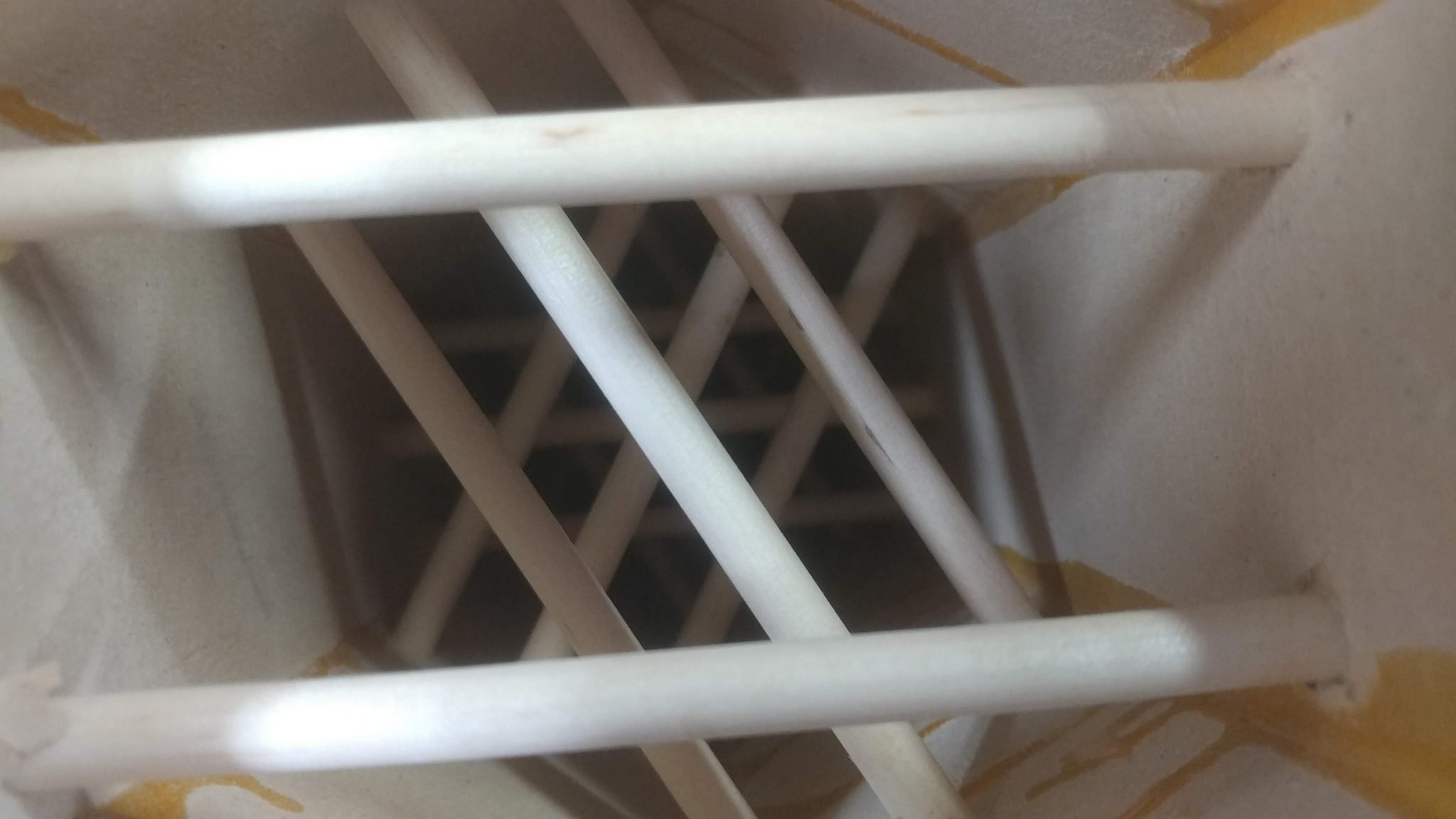
Here’s an internal view.  You can see that there is a lot of glue in there.  This is fine because it just adds more bumps for the rainstick filler to bounce off of.

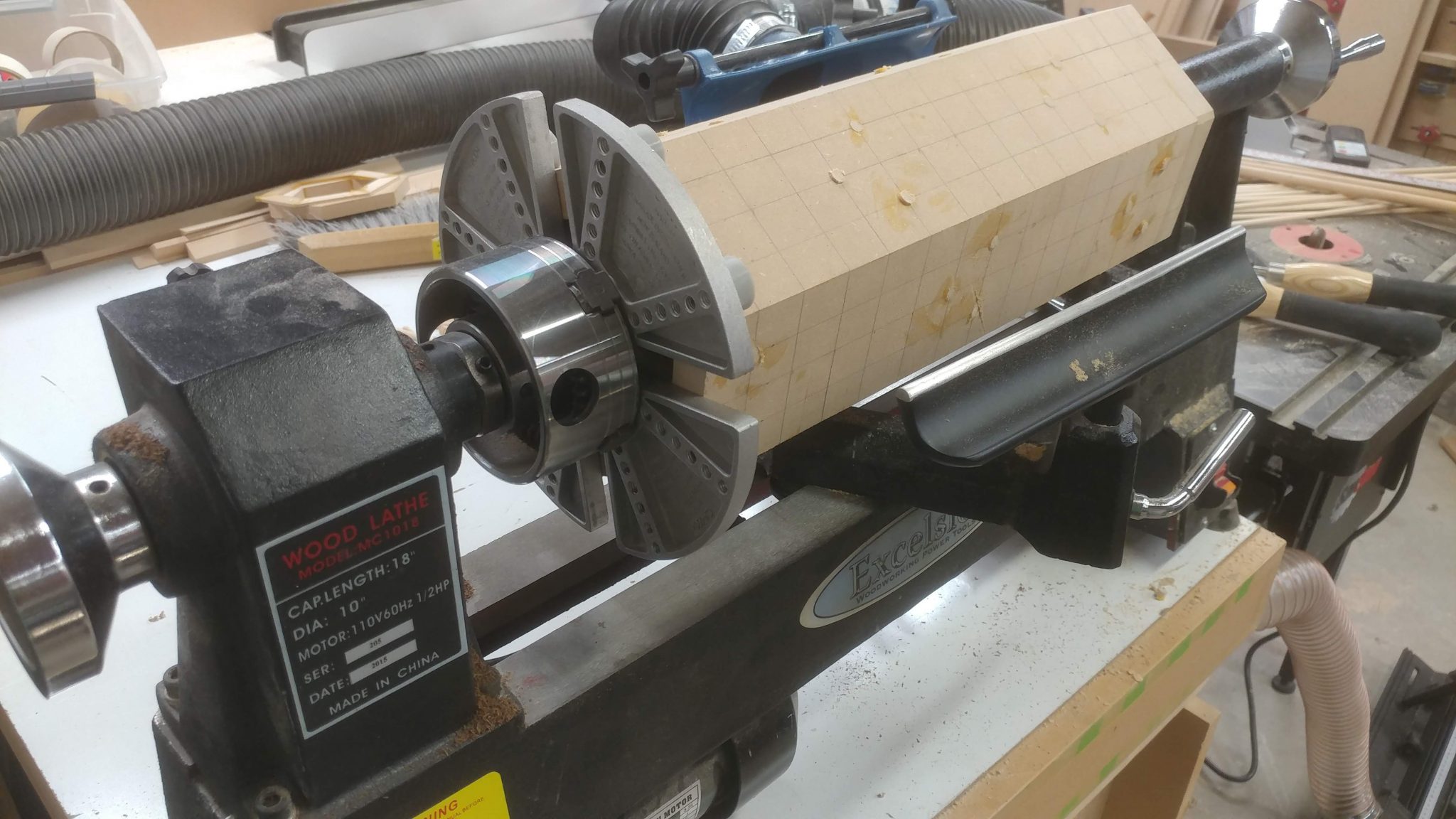
I trimmed off the spikes and put the prototype on the lathe.

After a lot of turning, I got it it so the thinnest parts of the walls were about 3/16″ thick.  Since this is just MDF, I don’t really want to go much thinner.

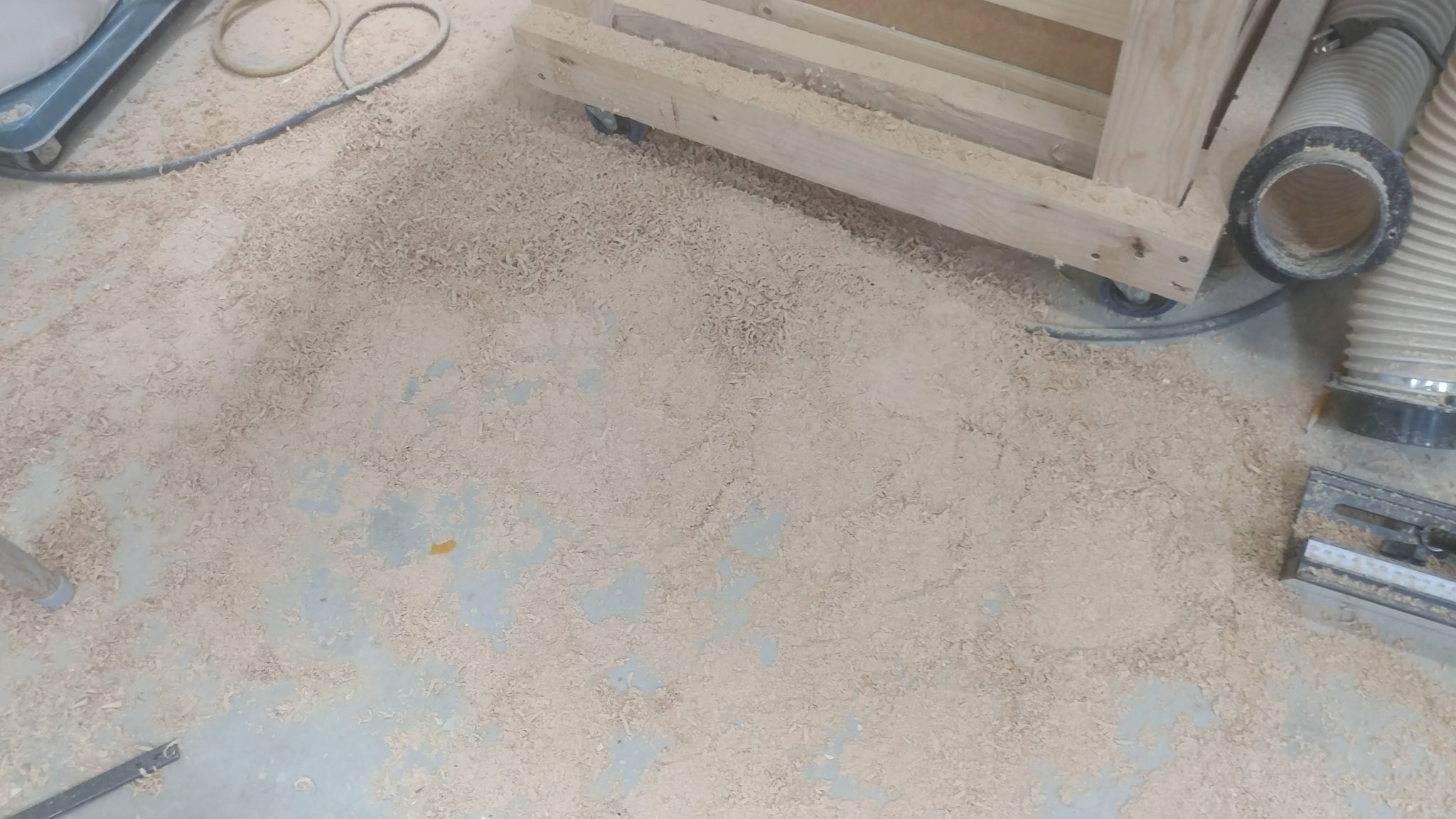
As you can see, I made quite a mess.

I left one end open so I could experiment with different fillers.  I tried unpopped popcorn and rice.  I also want to try sand and B-B’s,

I’m ready to make my first real rainstick.  I’ve decided on a few things.

  1. The diameter is too big.  I’m going to aim for about an inch narrower.
  2. I’m also going to aim for thinner walls if I can make it work.
  3. The dowels need to be thinner as well and more frequent.
  4. Rice is a great filler but I need to add a lot more.

I’ll do a detailed write-up and possibly a build video when I make a real rainstick.

Any ideas?

Have you ever made or even just played a rainstick?  If so, do you have any ideas of different construction techniques or materials that would make this more interesting?

Feel free to share your thoughts in the comments section below.

If I use your idea, I’ll be sure to credit you.  I might even feel the urge to send out a free rainstick to whomever gives the most interesting idea.  The idea needs to actually work, however.  Filling the rainstick with gummy bears is definitely interesting but lacks certain acoustic characteristics  that I am looking for.

Don’t ask me how I know this…

News – May 31st, 2018 – Finished Router Table and a Pleasant Surprise

Finished the Router Table

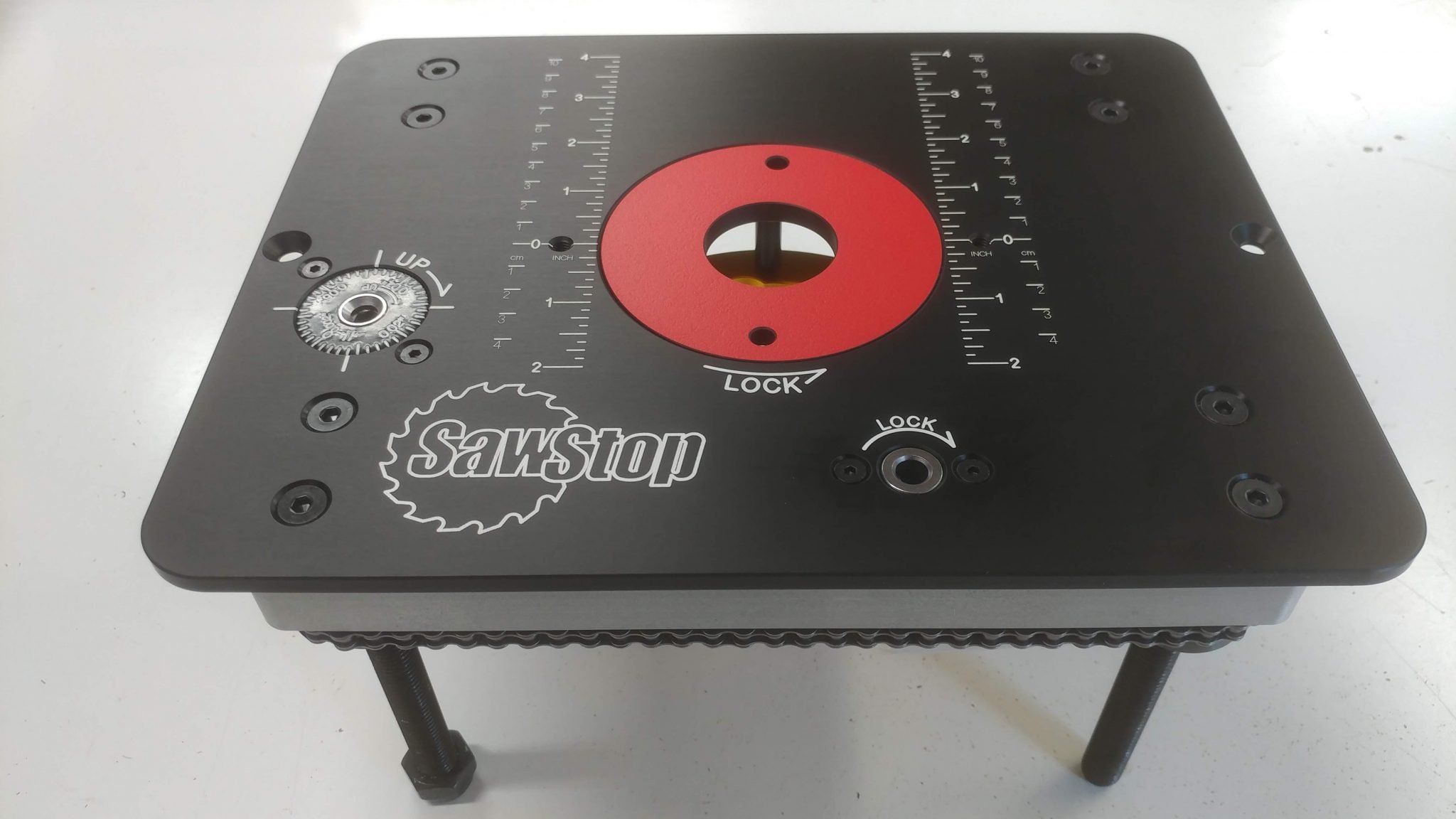
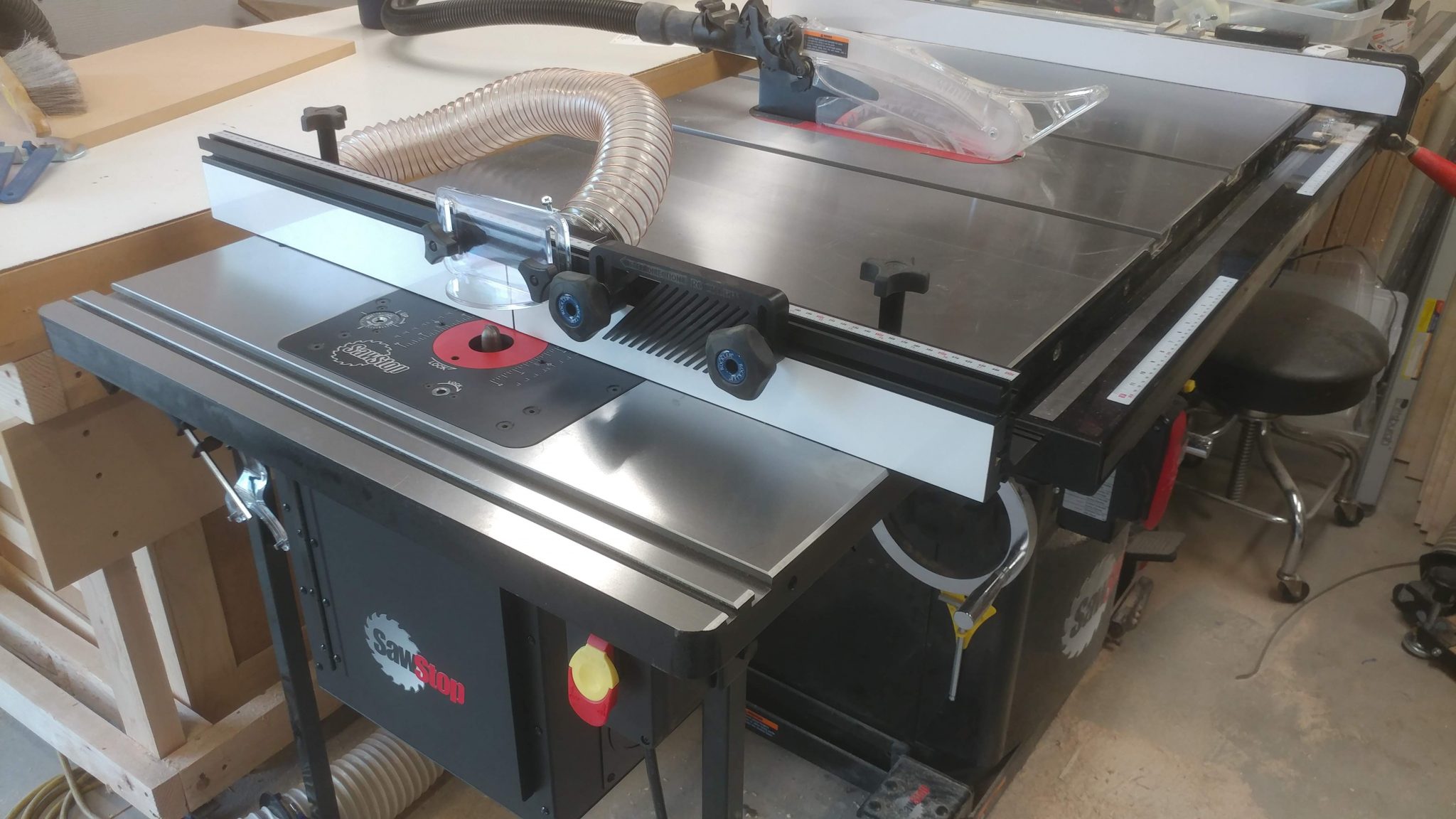
I managed to get my hands on a SawStop router lift and downdraft dust collection box.  This finishes up my SawStop Router Table

I’m putting together a detailed write-up on the assembly of each of the components as well as some of the tests I ran on it afterward.  My initial impressions are good.  I’m particularly happy with the dust collection capabilities.

Surprise Present from a Customer

In mid-April, I got a call from Siuslaw Middle School in Florence, Oregon.  They needed assistance with their blade guard.  I’ll spare you the boring details but the end result is that their problem was solved.  All in a day’s work.  No big deal.

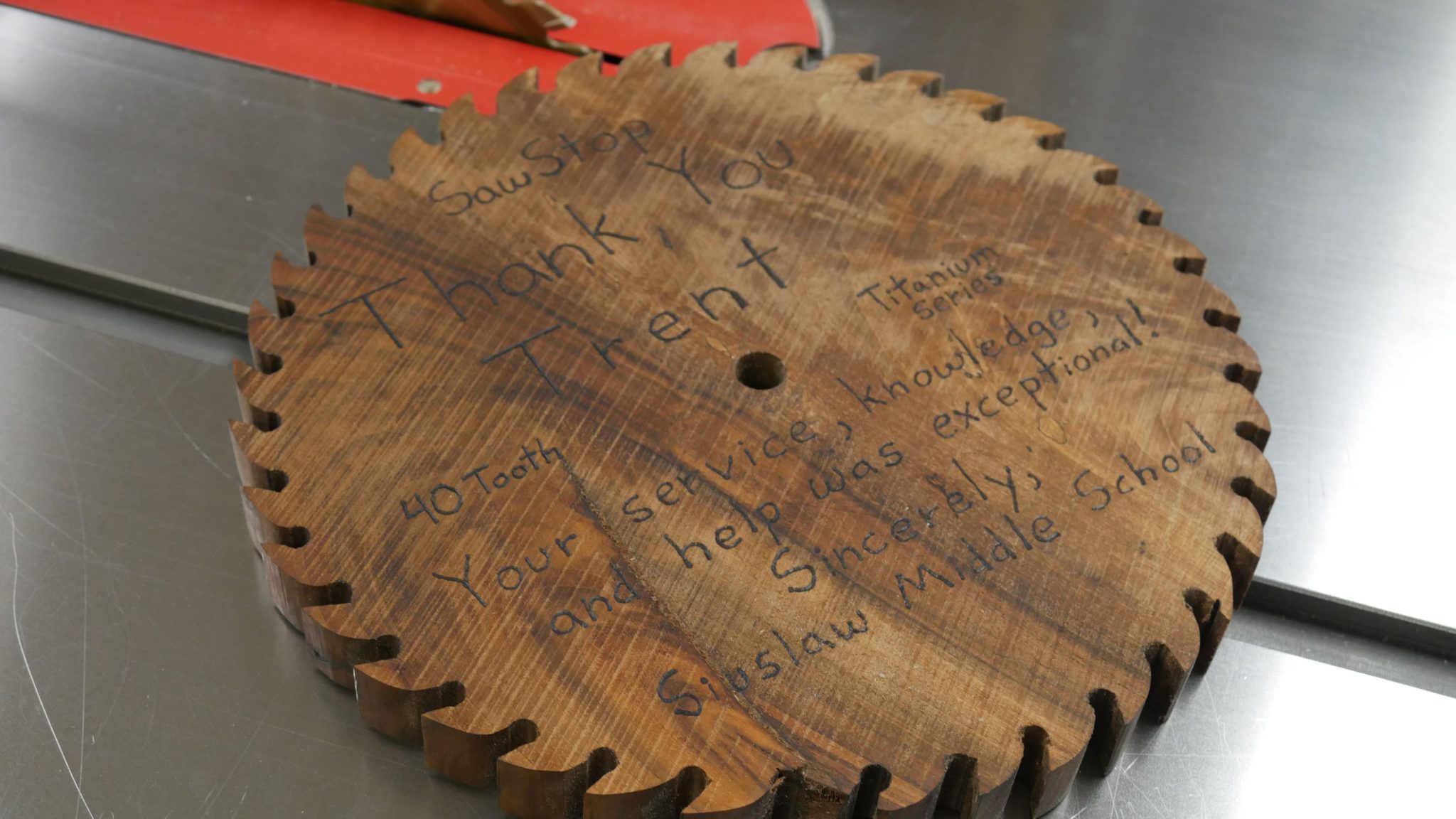
Fast forward a few weeks later and something cool arrived for me in the mail.  As you can see in the picture above, it is a saw blade.  Not just any saw blade, mind you, this one was hand made for me by the awesome students in the Community Wood program at Siuslaw Middle School.  The blade is made from English Walnut and finished in Linseed Oil.  This is now my prized possession and hangs proudly on my cubicle wall.  I get lots of people stopping by to look at it.  I’ve gotten things from customers before but this is my new favorite.

The Community Wood Class is a woodworking class with a focus on community service.  They do woodworking projects for people in the school district and even in the general community.  According to their teacher Tod Graham, “We also like to do simple acts of kindness involving wood.”  I think it’s safe to say that this counts as an act of kindness.

The craftsmanship on this blade is great.  I could never produce something of this quality when I was in middle school.  I really want to see some more of their work.  I’m particularly impressed that they actually cut out all 40 teeth and each of the teeth looks great.  Being able to focus on a mundane task and perform it at a consistent quality level, as is evident on this blade, is very impressive.  These kids are good at what they do and their community is lucky to have them.

I’ll explain why this is so important to me…

We take customer service very seriously at SawStop, where I work.  We have a reputation in the industry for handling customers better than the competition.  I love this company but if they ever change their approach then I would probably leave (not that they’re planning on changing).  I made sure to show this blade to my superiors as a nice reminder that we are doing the right thing and we should continue to do so.  We don’t get bonuses or even praise for taking a certain number of calls or keeping the calls under a specific time-limit.  Our job is to take care of the customer.  Period.

Where else can you call for free support for, say, a 10-year old used saw that you bought at an auction, not have to go through an annoying call-tree, and get someone who not only speaks English but who also uses a table saw regularly and can talk shop with you?  I love my job.  My coworkers feel the same.  This may sound cheesy but my passion is helping people achieve their goals.

It makes me feel good to know that there are people like the students in the Community Wood Class out there, and that I can help them do what they need to do in order to have a positive impact on their community.

News – May 7th, 2018 – New Router Table and Emptying The Coffee Cans

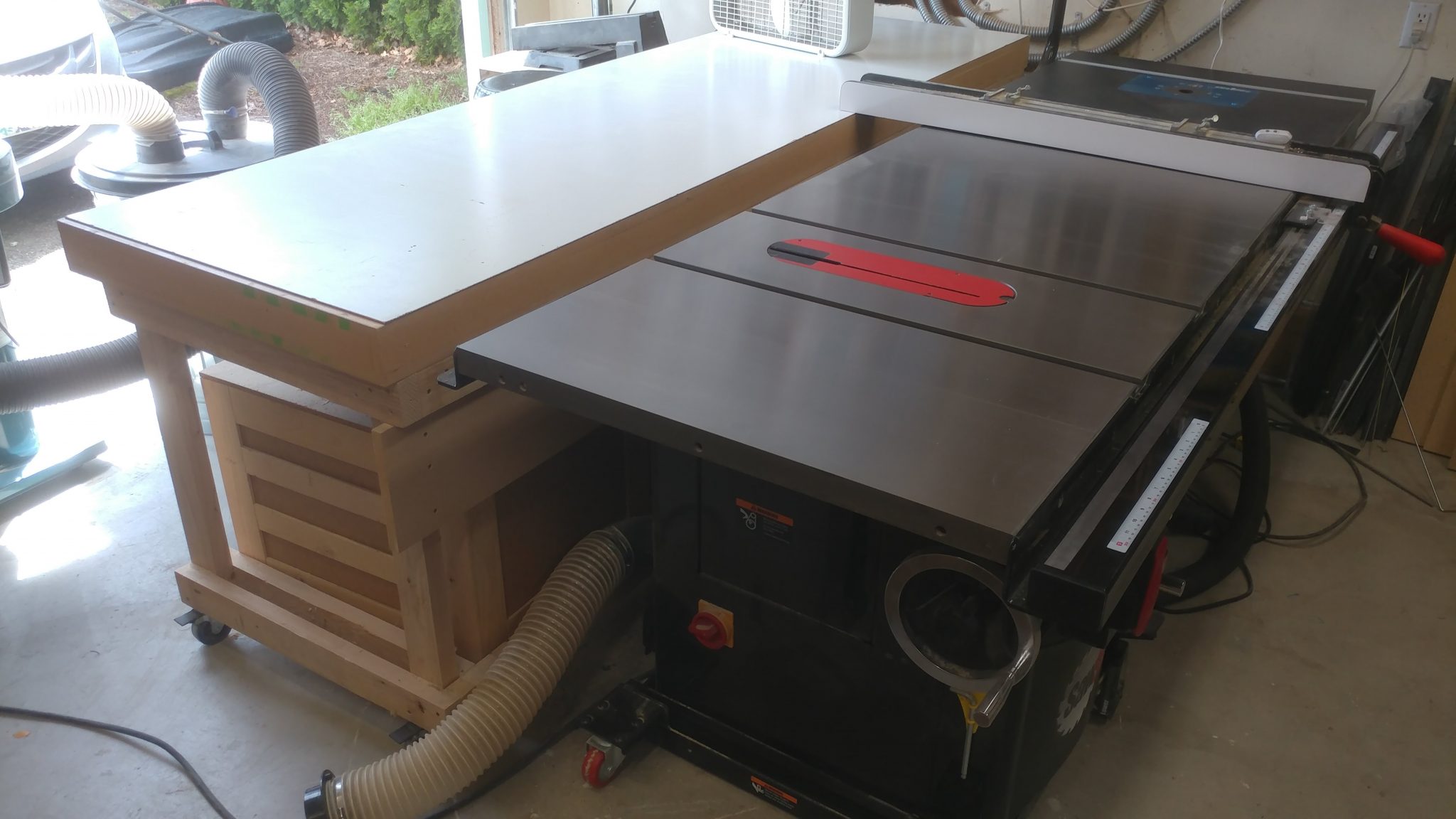
There have been some major changes in my shop.  Unfortunately, I haven’t been able to actually build anything but that should change soon.  The picture above shows my table saw and outfeed table.  I took this photo because I knew that this was the cleanest my shop would be for quite a while.

New Cast-Iron Router Table

I finally gave in and upgraded to a cast-iron router table attachment for my table saw.

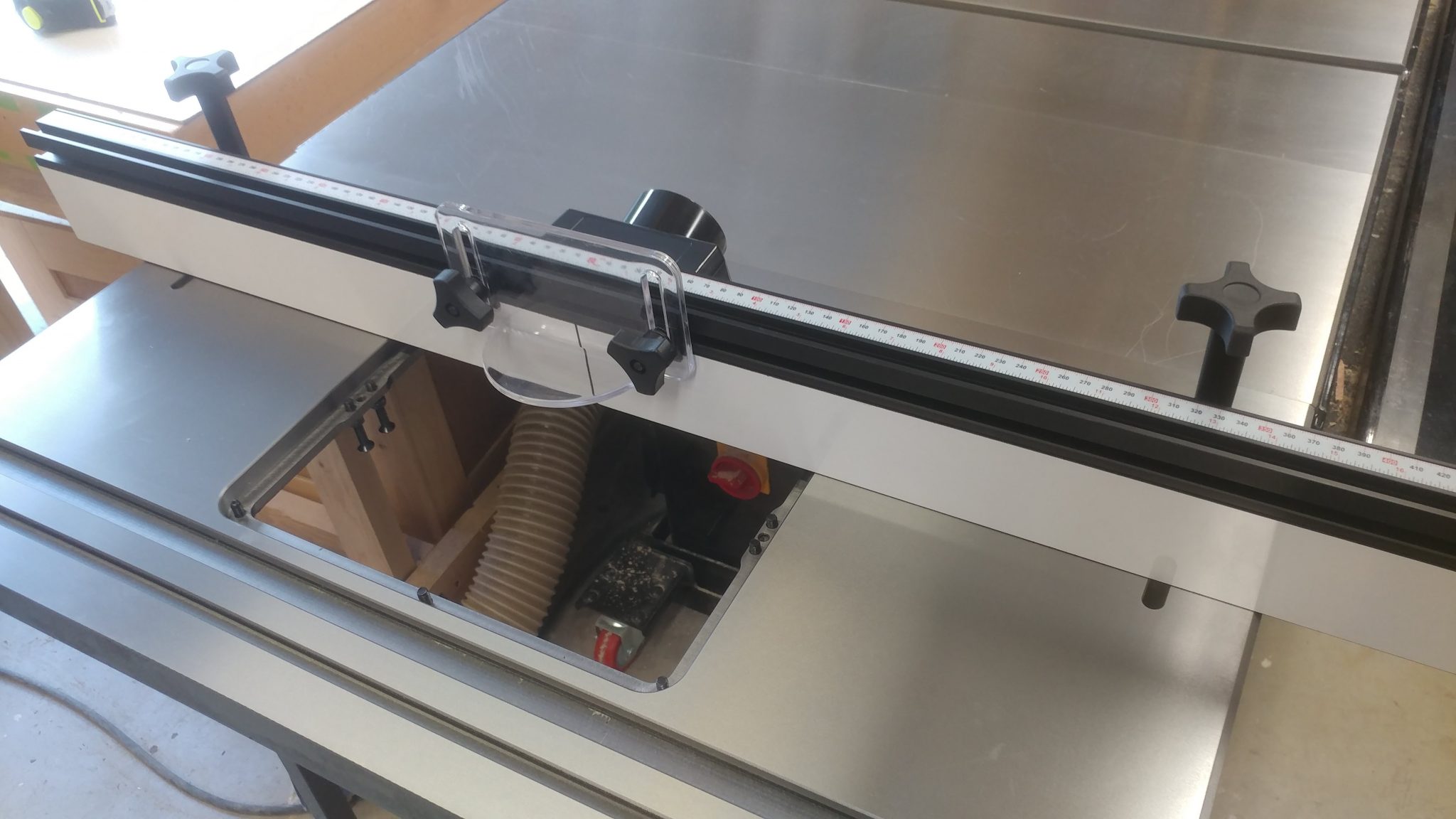
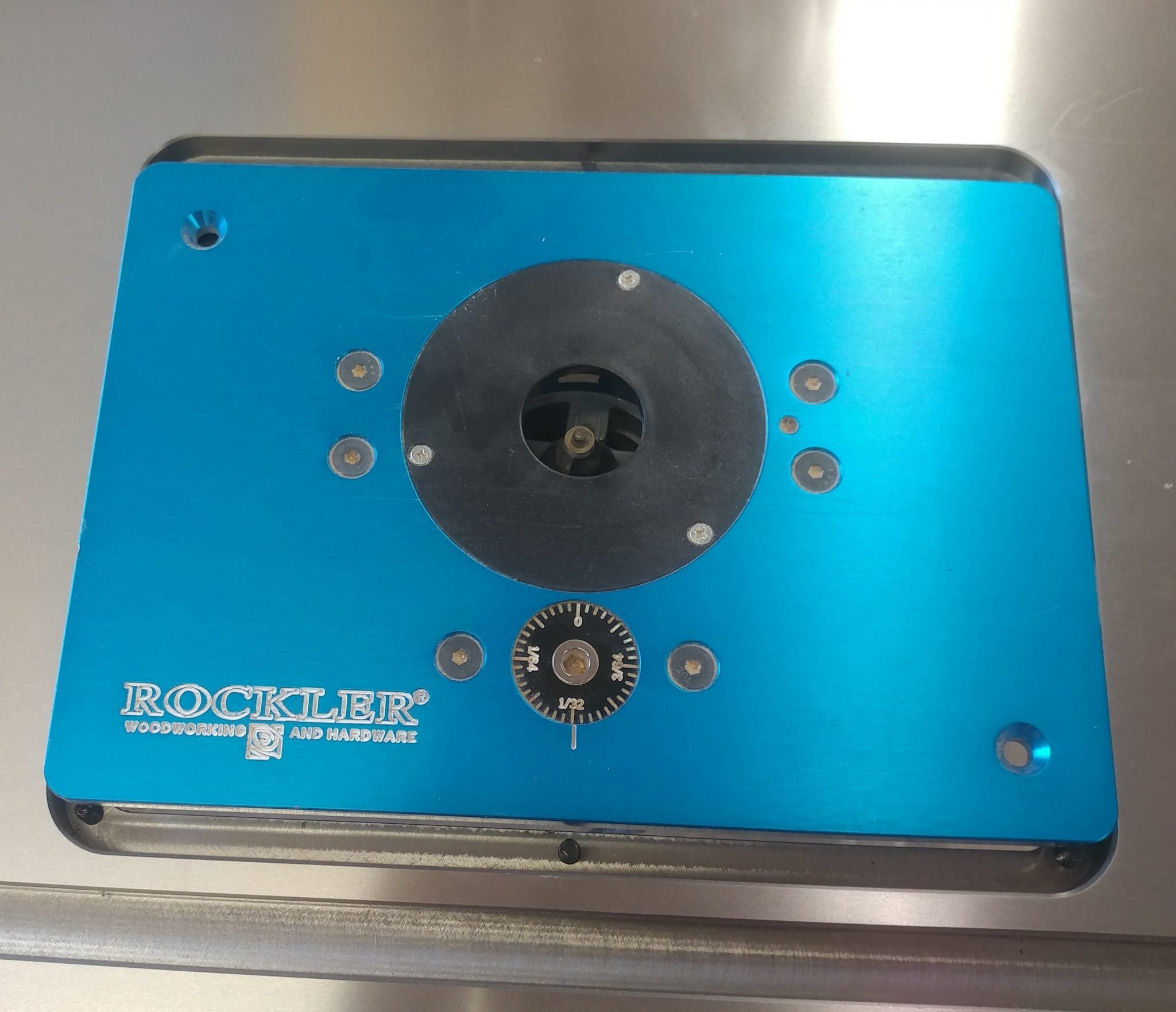
I bought the ICS Inline Router Table from SawStop.  I bought it without the router lift and the dust enclosure for a few reasons.  One is financial; we just put a new roof on our house.  The other is that I wanted to see if my existing router lift would fit in it and if so, how tight of a fit was it.  In the area of router lift/insert dimensions, there doesn’t appear to be any “official” standard.  As you can see, my lift doesn’t fit.  It’s totally the lifts fault.  Time to get a new one.  Fortunately, I already found a good home for my old lift and even the router table I built.

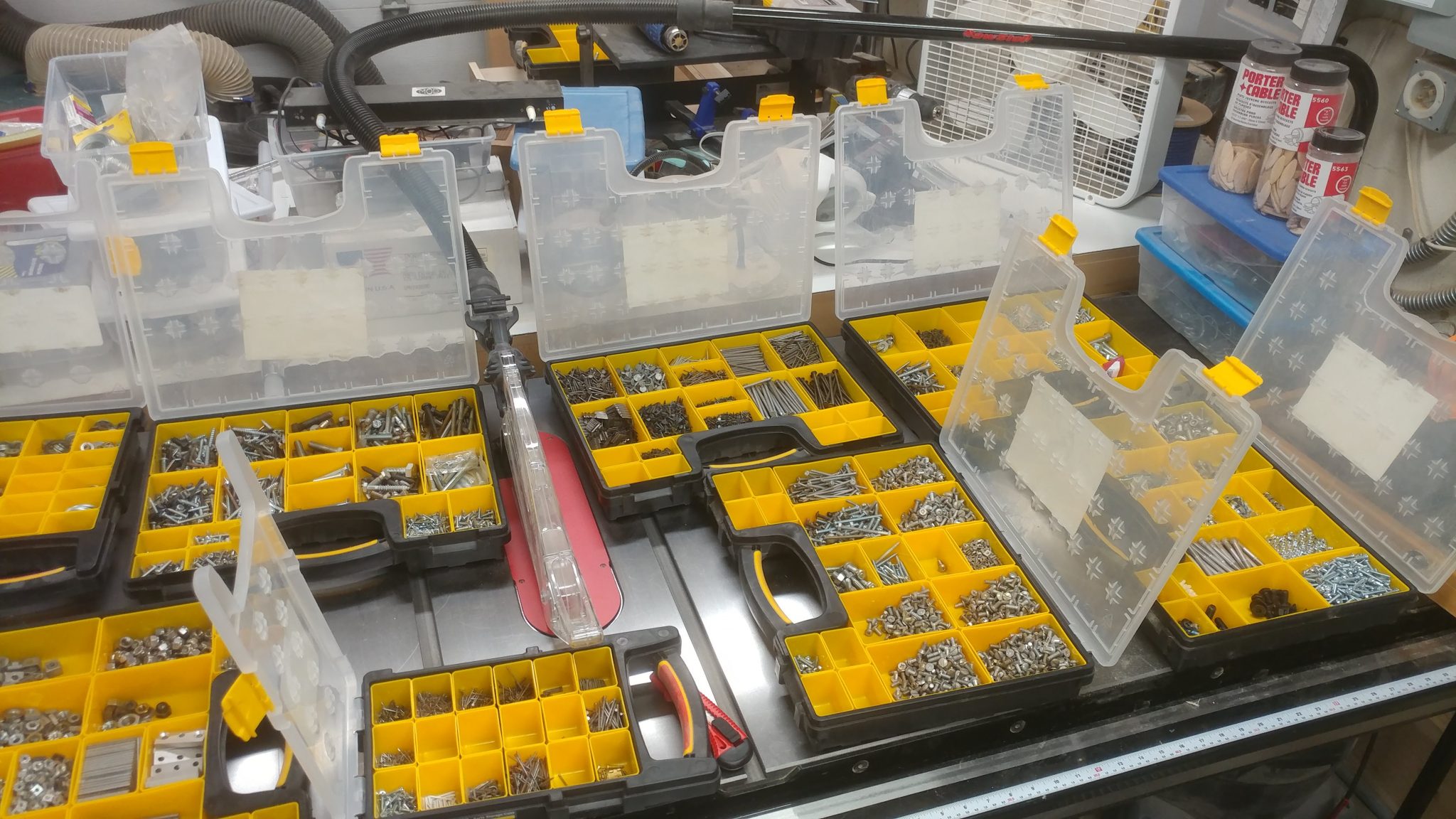
Cleaning Out my Coffee Cans of Hardware

I spent the past week going through all of the coffee cans of hardware that I have been accumulating over the past few years and sorting them out.  What you see here is how it looked about halfway through the process.

This is all part of a new phase in my shop.  I’m going through everything and getting rid of things that I don’t or won’t use.  I’m actually considering getting rid of my jointer since I only use it once or twice a year and it takes up a ton of space.  I haven’t decided yet.

I dismantled my electronics workbench.  This consisted of a torsion box top that sat above my jointer and was my attempt at utilizing the space of my jointer into something more usable.  As it turns out, it was just another horizontal surface that gathered junk.  I’m hoping that limiting myself in this way will make for a tidier shop.

I feel like I’m at a turning point.  I’m going to focus my woodworking into the areas that interest me rather than trying to cover a bit of all of it.  I plan on doing a mental inventory of what tools I do and don’t use in my shop.  I have access to other tools at work so I may just decide to get rid of some of them that I don’t use that often, such as my jointer, scroll saw, and maybe even my metal lathe.

How about you?

Do you think it’s better to have as many tools as possible or to limit yourself to just your areas of interest?  Let me know by leaving a comment below.

News – April 20th, 2018 – Where have I been?

It’s been a few months since my last update and a few people have asked if I was still around.  Here’s what’s been going on…

Death In The Family

Sadly, my family was dealt a tragic blow with the death of my mother-in-law on March 1st.  She was a truly inspiring person and one of my best friends.

She was an art teacher at Heritage High School in Vancouver, WA.  Unlike most art teachers, she didn’t just teach kids to draw and finger-paint.  Rather, she taught 3D animation, video game design, 3D printing, and many more subjects that changed throughout the years but were always exciting and engaging.

Some of her students went on to work at places like Pixar and Laika and she had working relationships with such companies as Wacom and Big Fish Games.

I assembled a five-minute video for her memorial service which was attended by several hundred people, many of them current and previous students.

It’s difficult to fill the void left in your life with the loss of a person like her, especially when it was as sudden and unexpected as this.  My family has had to adapt to the sudden imbalance but we have supported each other well and this experience has brought us all a bit closer together, not that that was a problem to begin with.

Since she was an educator and passionate about art, I decided it would be nice to create a scholarship fund in her name.  We are working on this now and it looks like it is going to happen.

Table Saw Rust

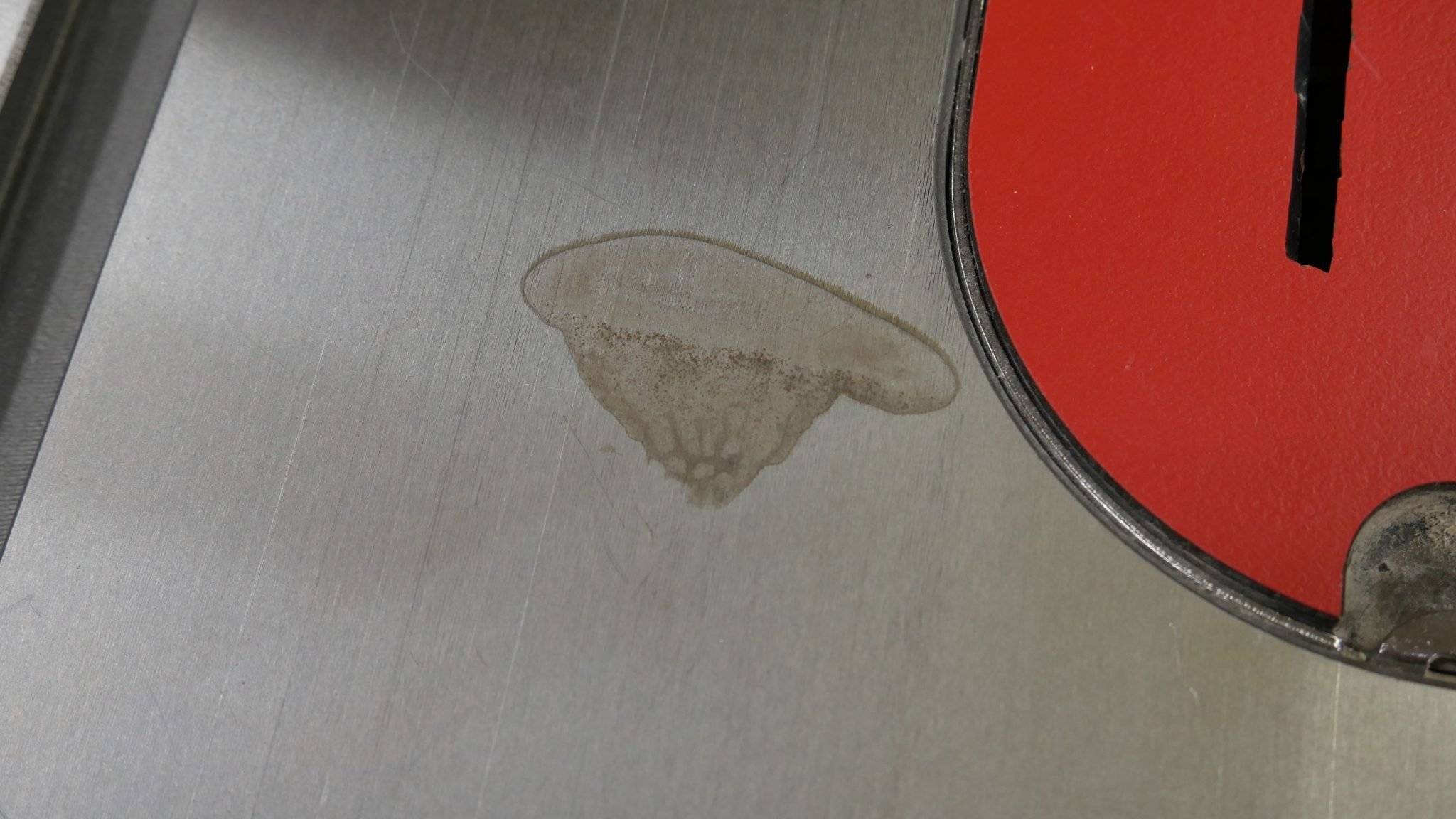
I had to do a hasty glue-up and I didn’t have space on my assembly/outfeed table for it to dry.  Like a fool, I set it up on my table saw to dry, but I forgot to deal with the glue squeeze-out.  Then, family required me to focus on other things for a few days.  When I came back to it, the glue had dried on the cast-iron.

This gave me a good opportunity to apply the technique in one of my other articles on removing rust and protecting a cast iron table top.  I’m happy to say that the rust has been removed.

Playing around with Macro-Photography

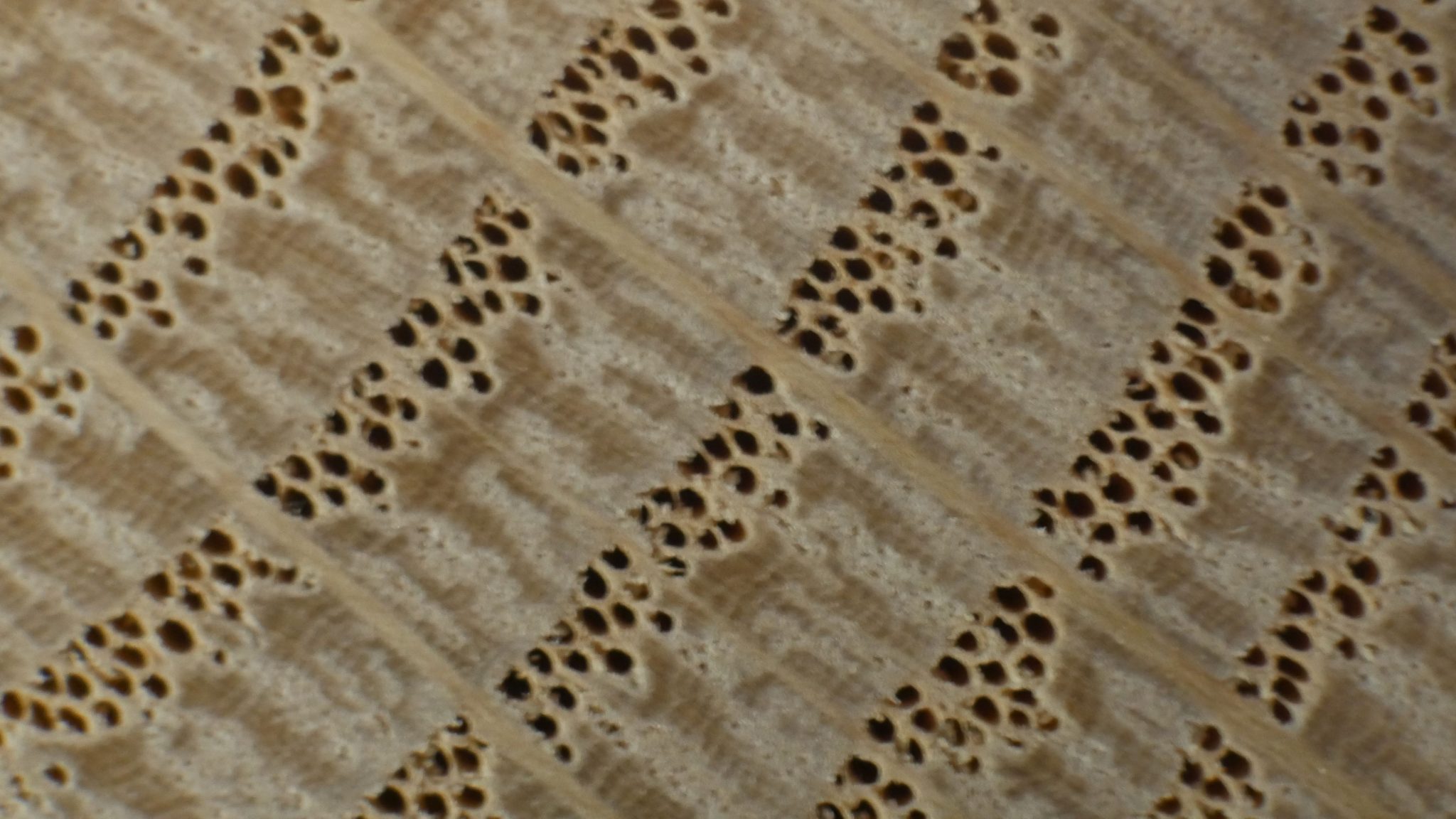
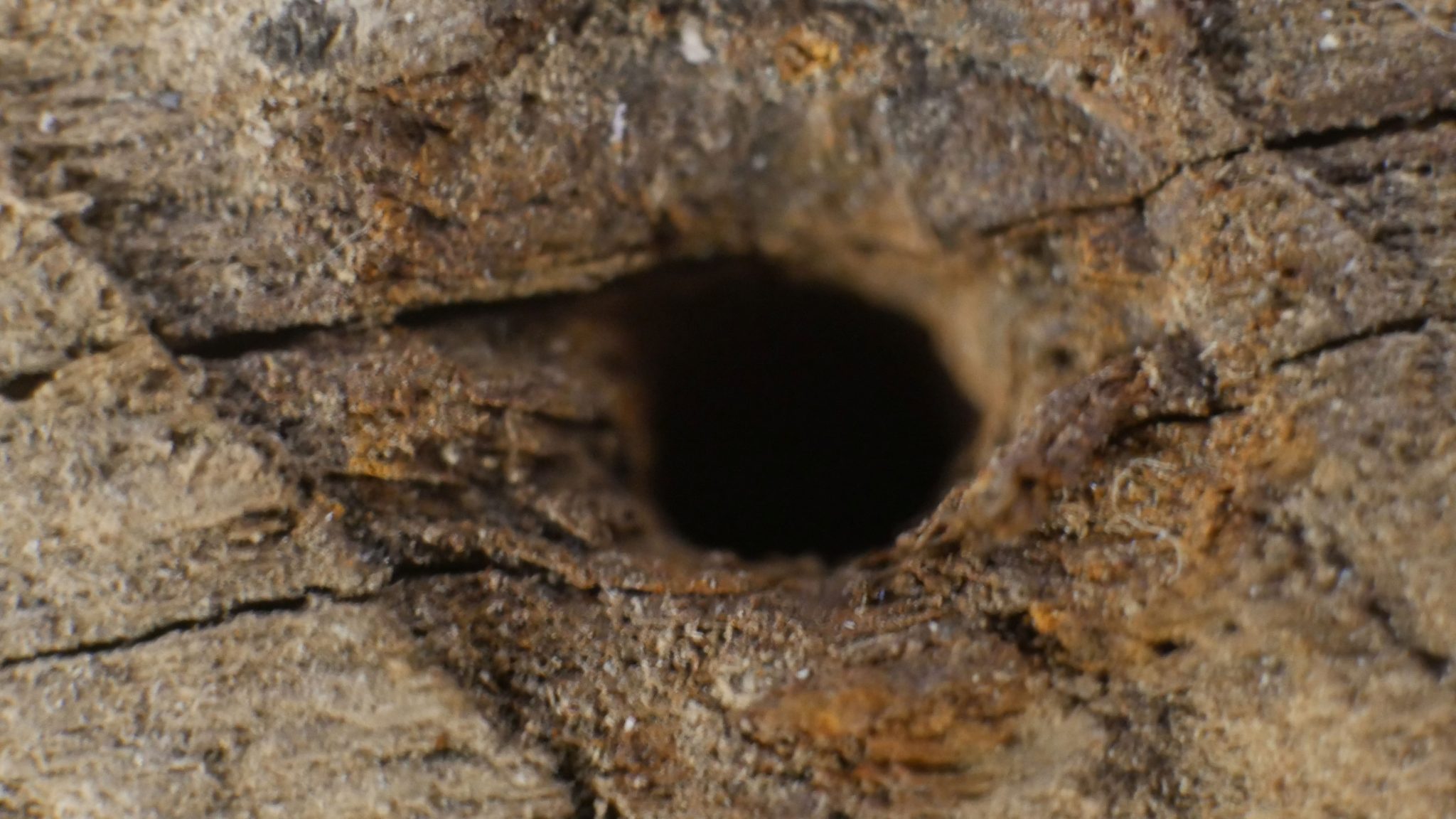
I recently started playing around with macro-photography but not with any degree of seriousness/  I’m just having fun.  Above is a piece of oak endgrain.  Below is a nailhole in a piece of recycled barnwood.  Both shots are blurry because I clearly have no idea what I’m doing.

The featured image at the top of this article is a close-up of one of the rust spots I removed from my table saw.  It’s interesting how the focus works with macro photography.  I’ve got a lot to learn but so far it’s been fun.

General Shop Updates

My shop is a mess.  Don’t judge; yours probably is too.

I’ve been working on trying to add more storage and organization to my shop, all while adding more metalworking tools, so I’m fighting myself every step of the way.  As soon as I clear up some space, I fill it with something new.

I gave in and started replacing my shop-built storage solutions with commercially available storage options.  I prefer to use hand made solutions when available since I can customize them but I really hate making drawers which led to me having tools set up on carcases that just end up with crap stuffed in them.

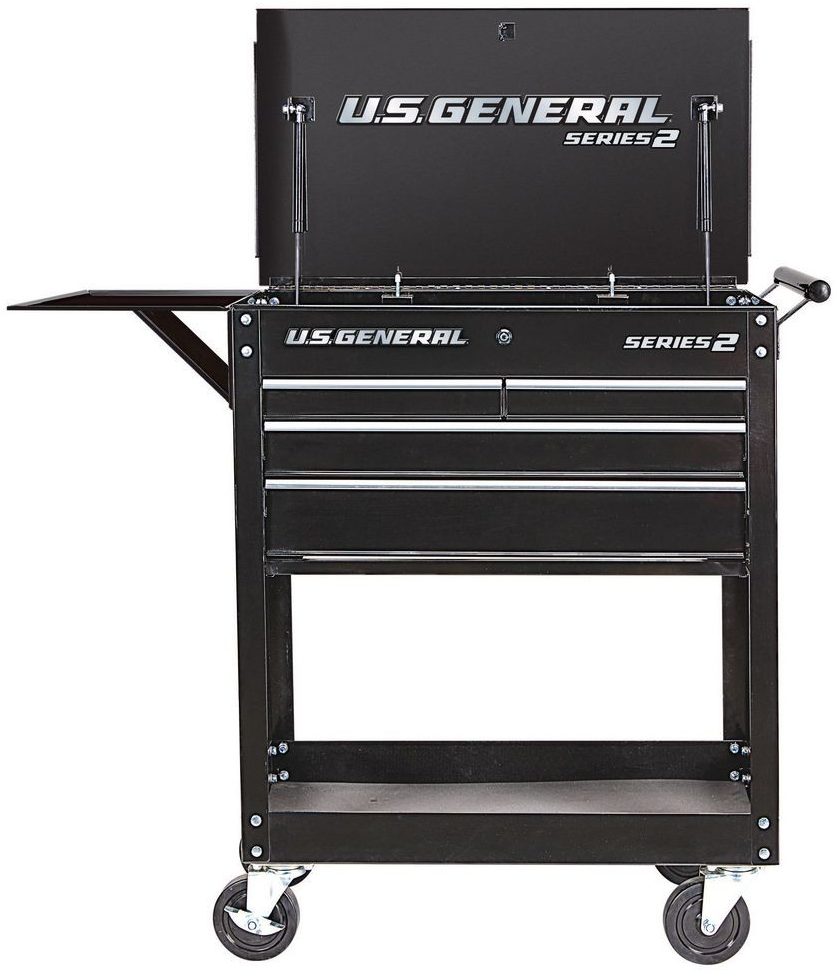
It’s no secret that I’m a big fan of Harbor Freight.  Sure, they make and sell a lot of crap but they also sell some really great products.  One of the things I like is their US General tool storage solutions.  I’m adding a few of the carts shown at left.

I pick these carts up when they are on sale for $100.  I can’t build drawers for that price so this is a great deal and it allows me to focus my time on actually making stuff.

Writing Assignment

I am working with Fox Chapel Publishing to edit and co-write the updated version of one of their table saw books.  The publication was pushed back a season so I don’t have any official info to share but I have submitted the final draft and we’re just waiting on photos at this point.  I’ll post more info when it is available.

I have also started working on a new book that will focus on experimental musical instrument construction.  It’s still in the early planning phases but I’ll be posting updates as I progress.

Clamp Storage

All of my clamps are just thrown in a box.  It’s embarrassing but I’ve been planning on making some adequate clamp storage for some time and I keep putting it off thinking that I’ll have a better idea for it later.  I decided to just go with my latest idea and if I decide to change it later, I will.

I’ll be writing an article on this sometime in the near future.

Studio Desk – Part 5: Attaching the hardware

This is a continuation of Studio Desk – Part 4: Applying The Finish   For me, all projects have a point where they start to fall apart.  This is what happened here. Don’t get me wrong, I’m happy with how the desk turned out but I also have a few things that I really want to change.

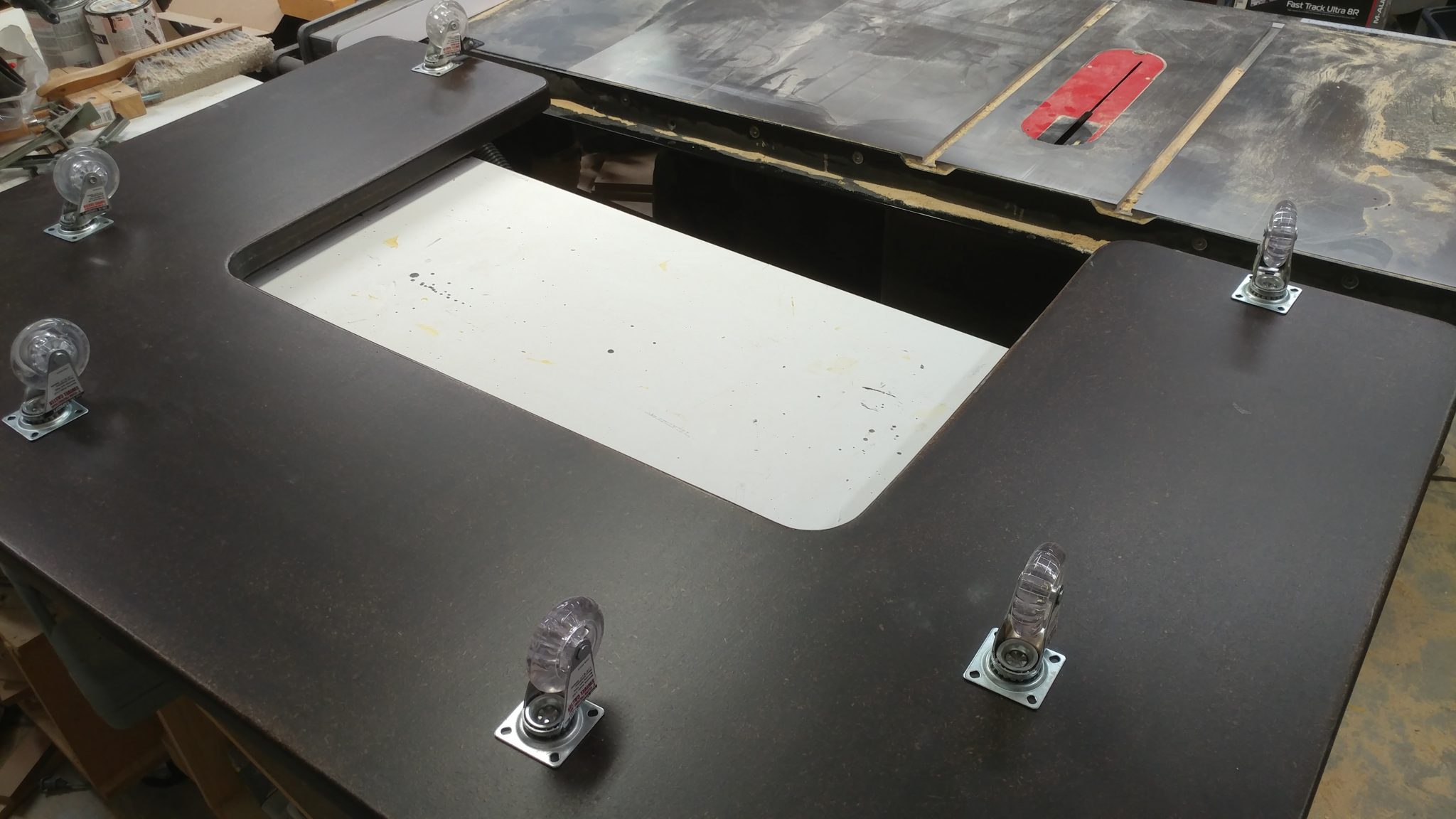
Attaching the Casters

I decided to go with 3″ polyurethane casters since this is going to sit on hardwood floors.  This was my first mistake in that I grossly underestimated the weight of this desk when completed.  More on this later.

1. Rough-positioning the casters

First I laid out where they would be placed on the underside of the bottom piece.

2. Fine-positioning the locking casters

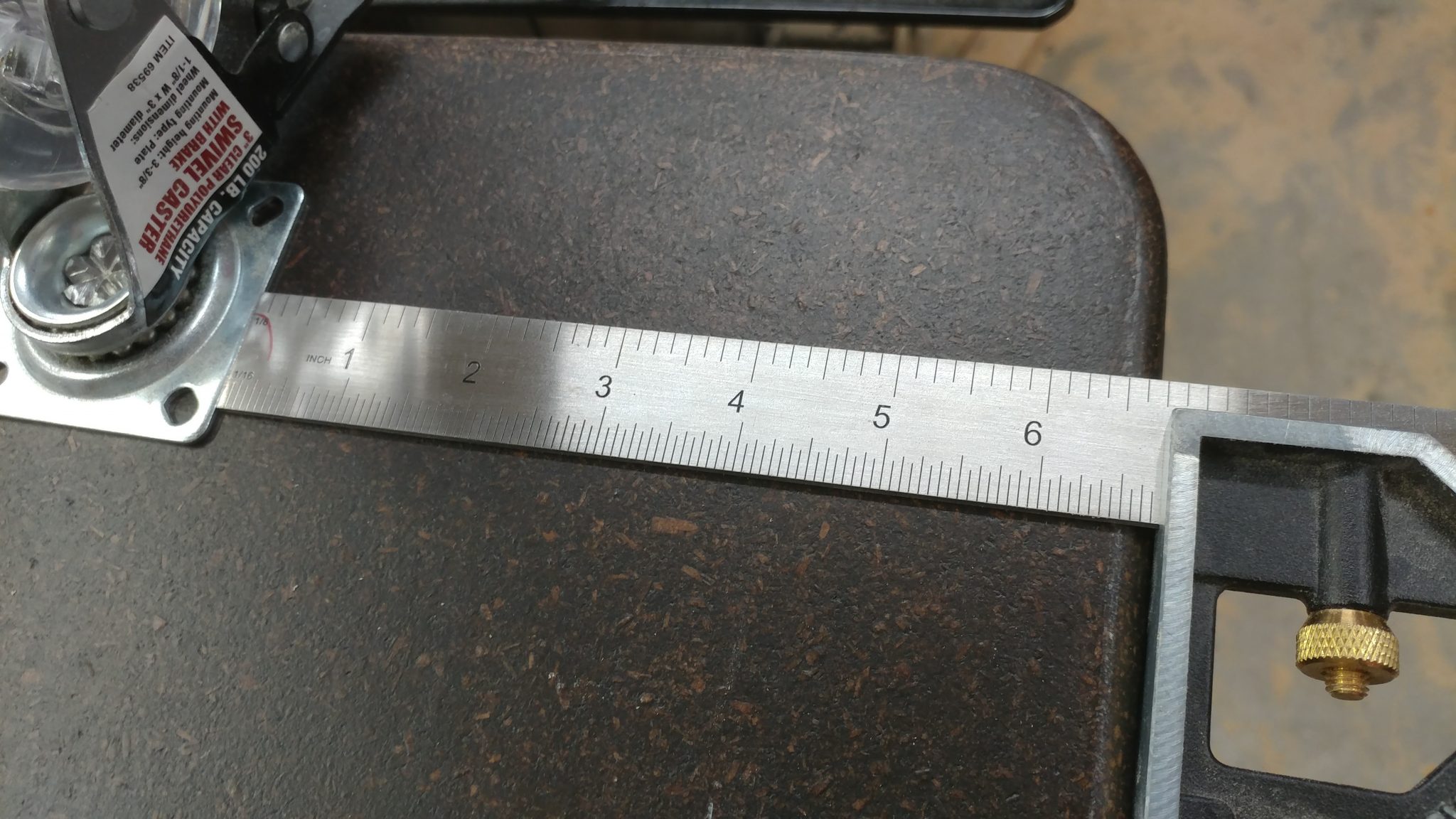
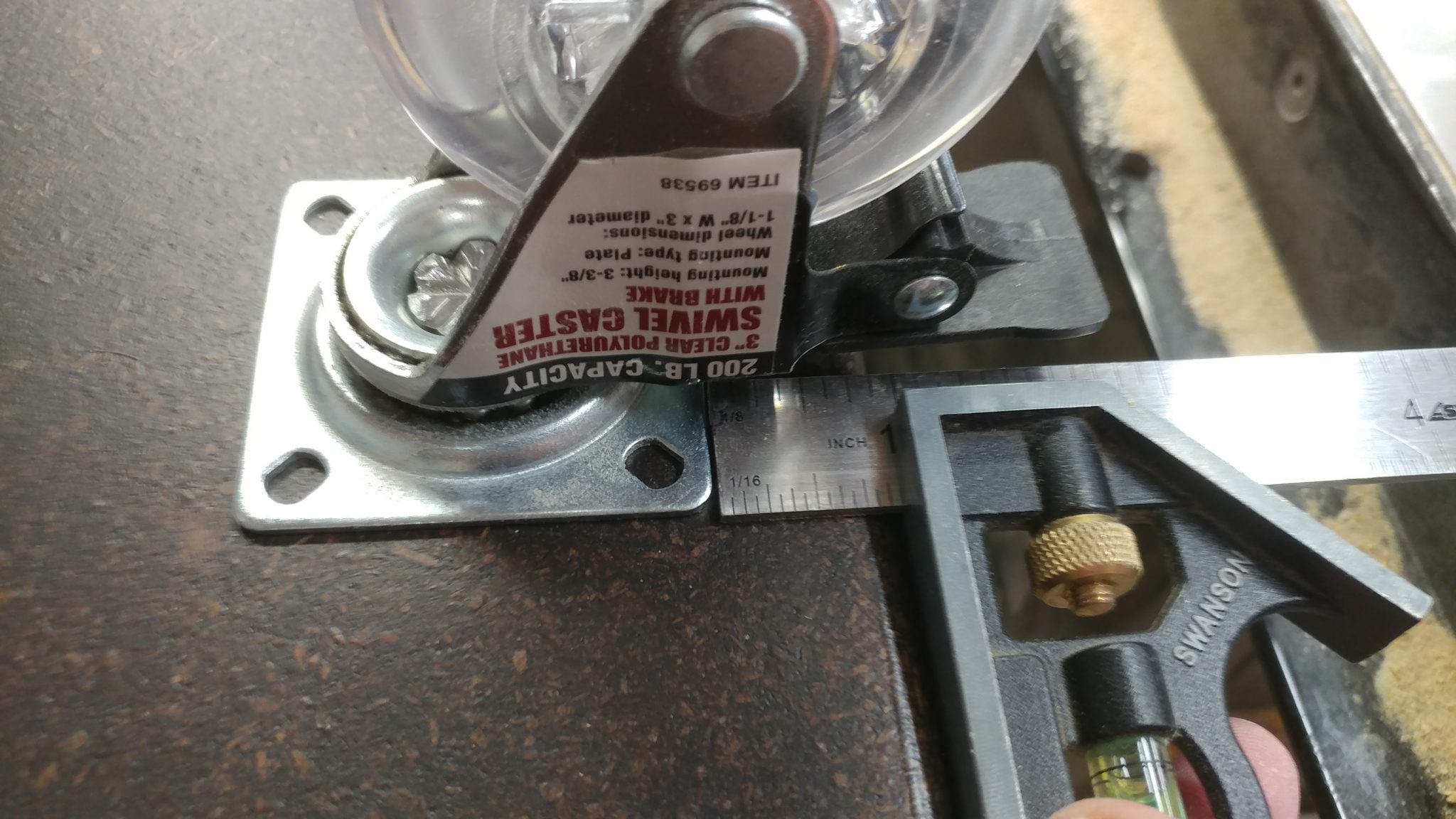
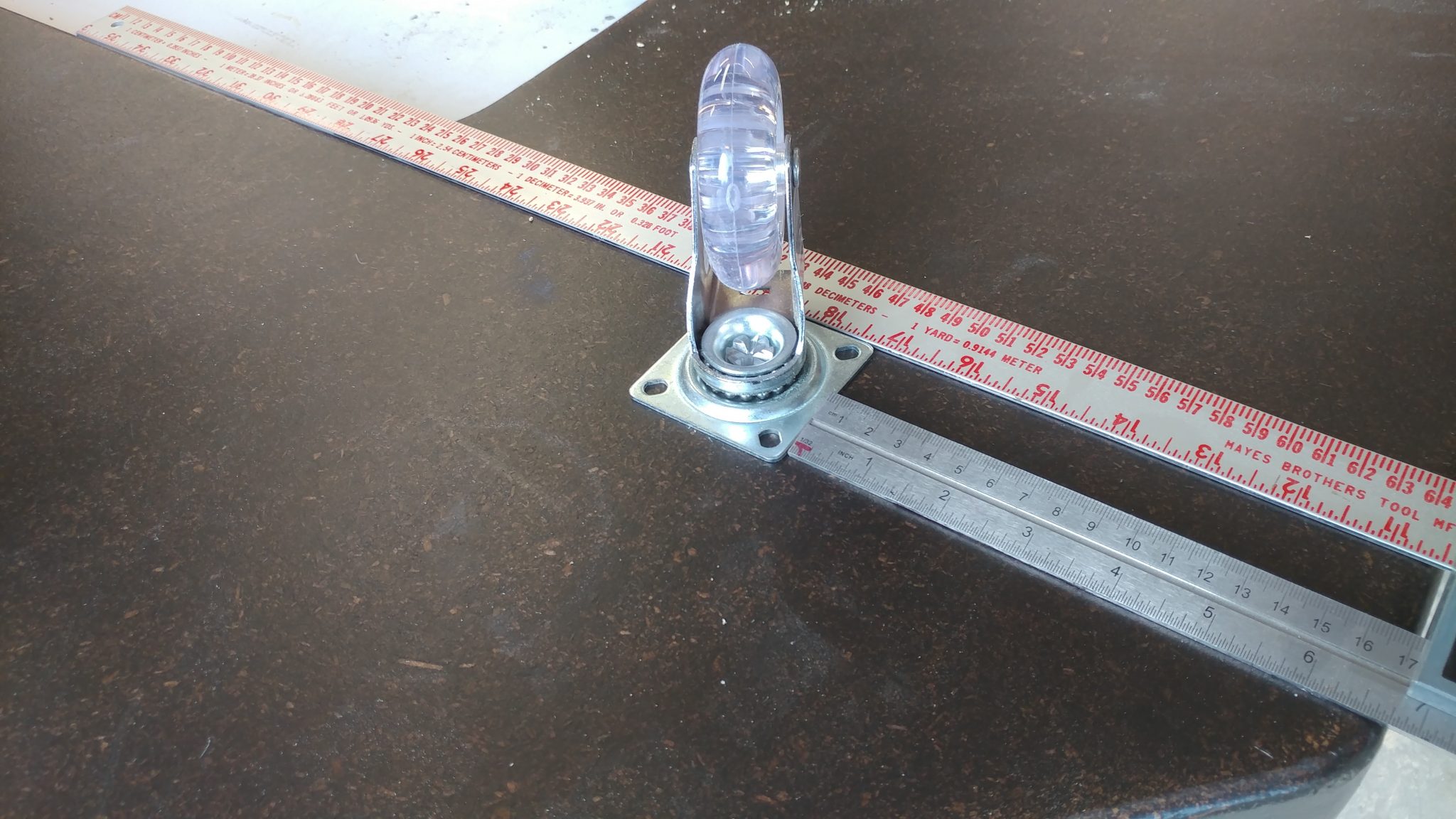
I roughly centered the wheels on the sections that extend out the back by placing the casters 6-3/4″ from the outside edge…

…and 1″ from the rear edge.  This will allow me to lock the casters when I don’t want the desk rolling around.

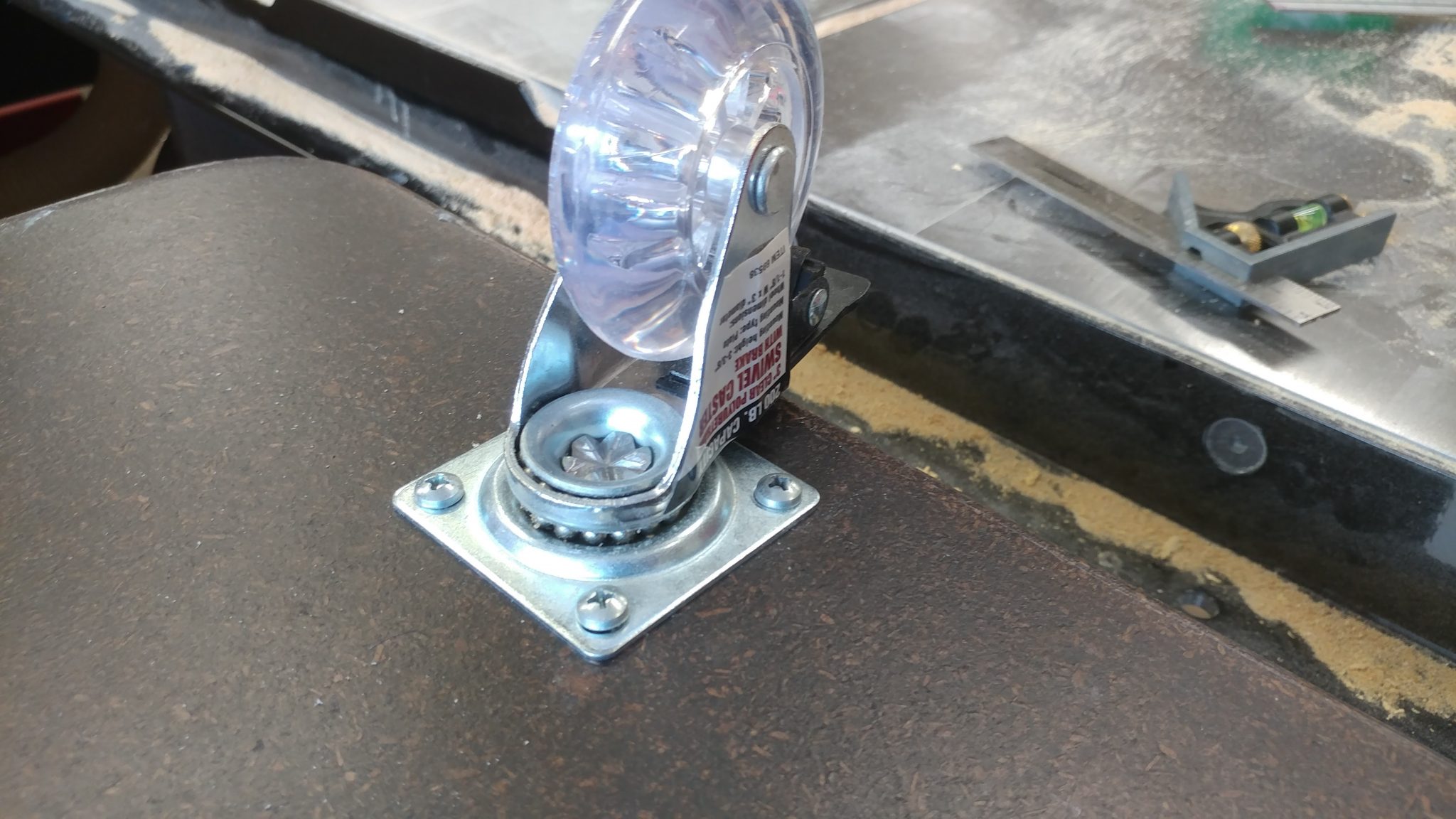
3. Attaching the locking casters

I secured the casters with 1-1/2″ button-head screws.

4. Fine-positioning and attaching the middle non-locking casters

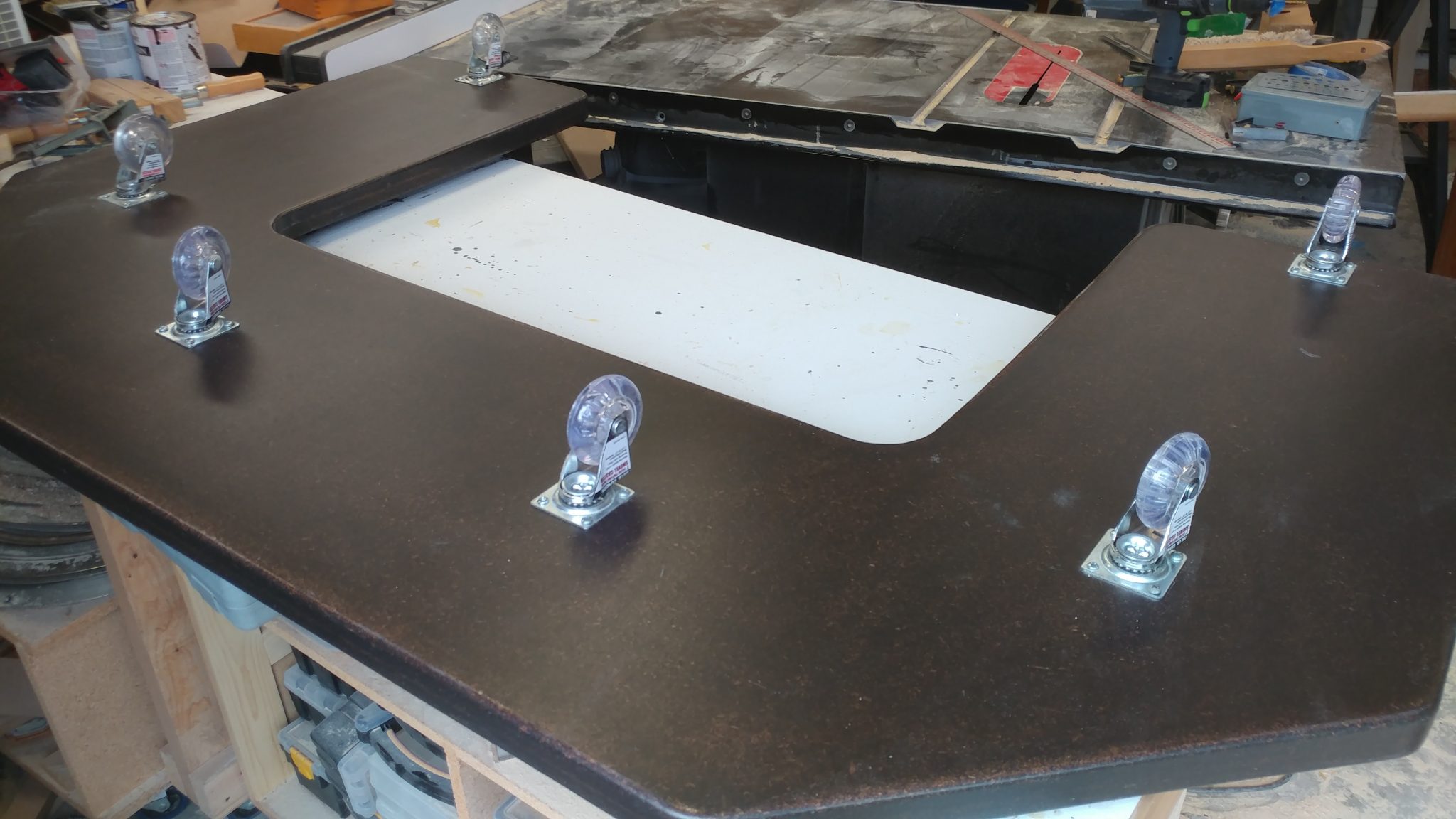
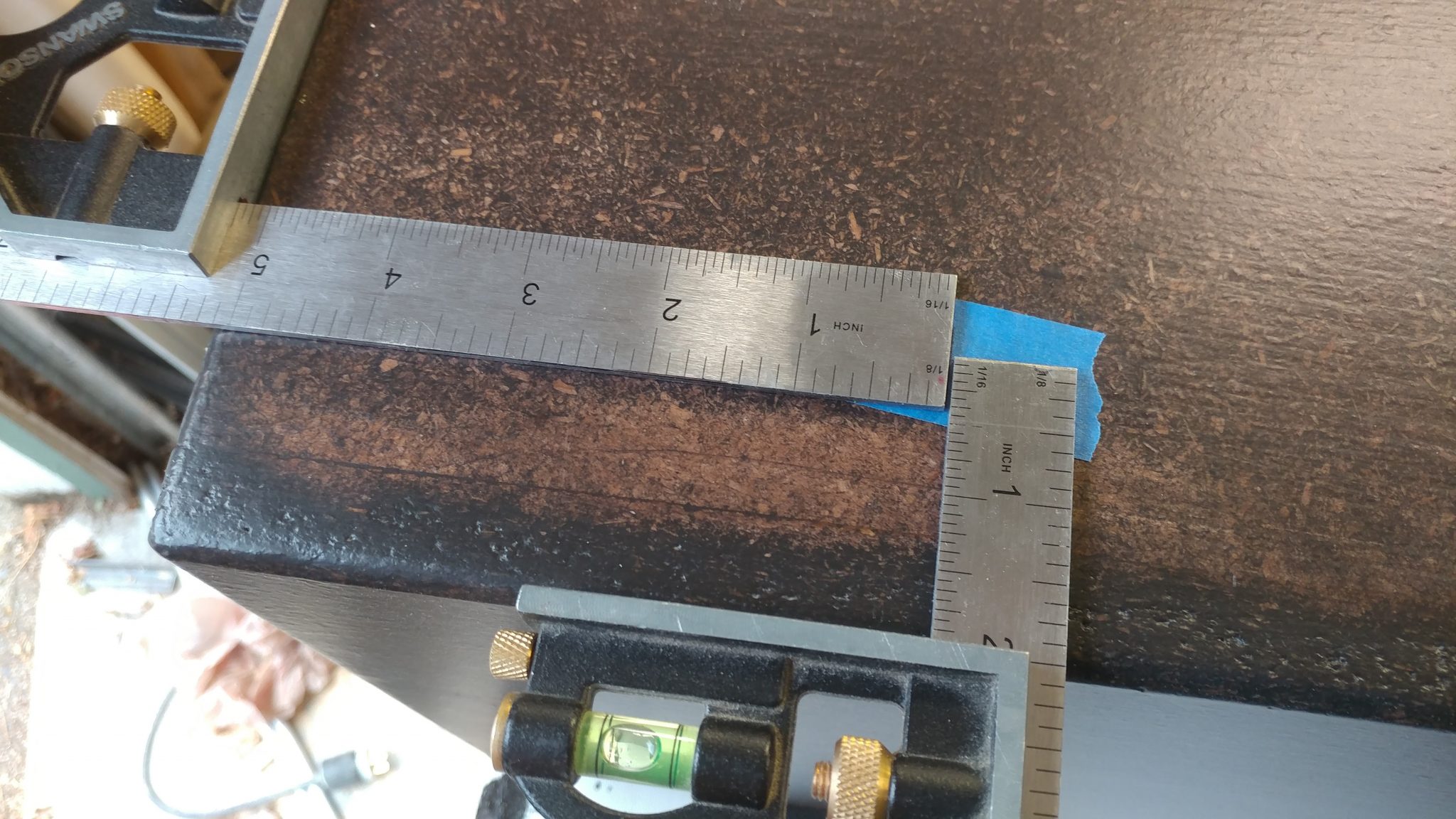
The casters that are not at the rear of the desk are non-locking.  I used my combination square to ensure that the middle casters are inline with the rear casters.  These were attached with the same 1-1/2″ button-head philips screws.

5. Finishing up with the front non-locking casters

The casters at the front are more centered to better bear the heavy load of all of the desk gear.

Installing the Rack Hardware

Equipment racks are one of the most overpriced pieces of studio gear and it gives me great pleasure to be able to make my own for a small fraction of the cost.  If you have a use for a studio rack, I highly recommend you try making your own.

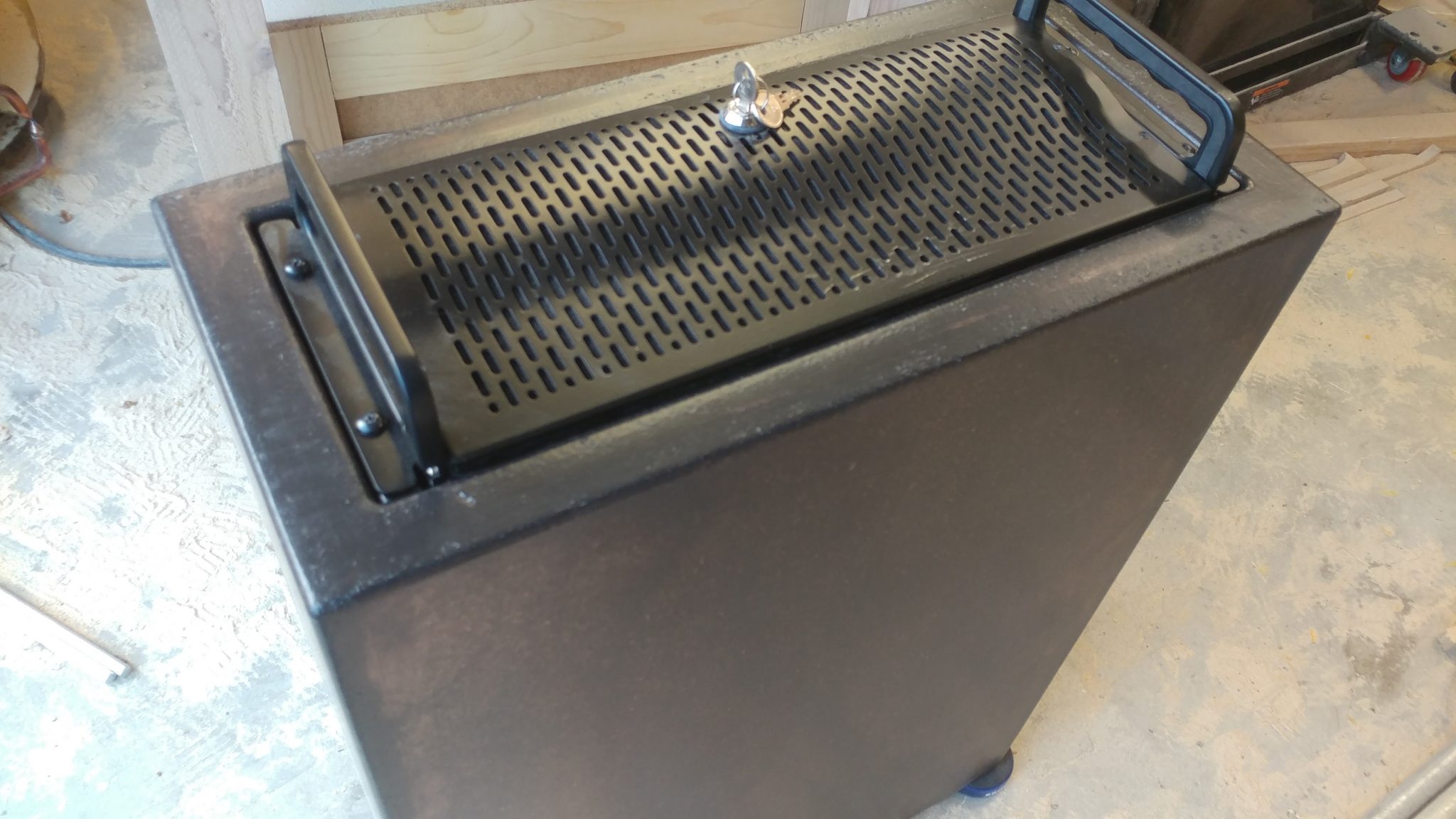
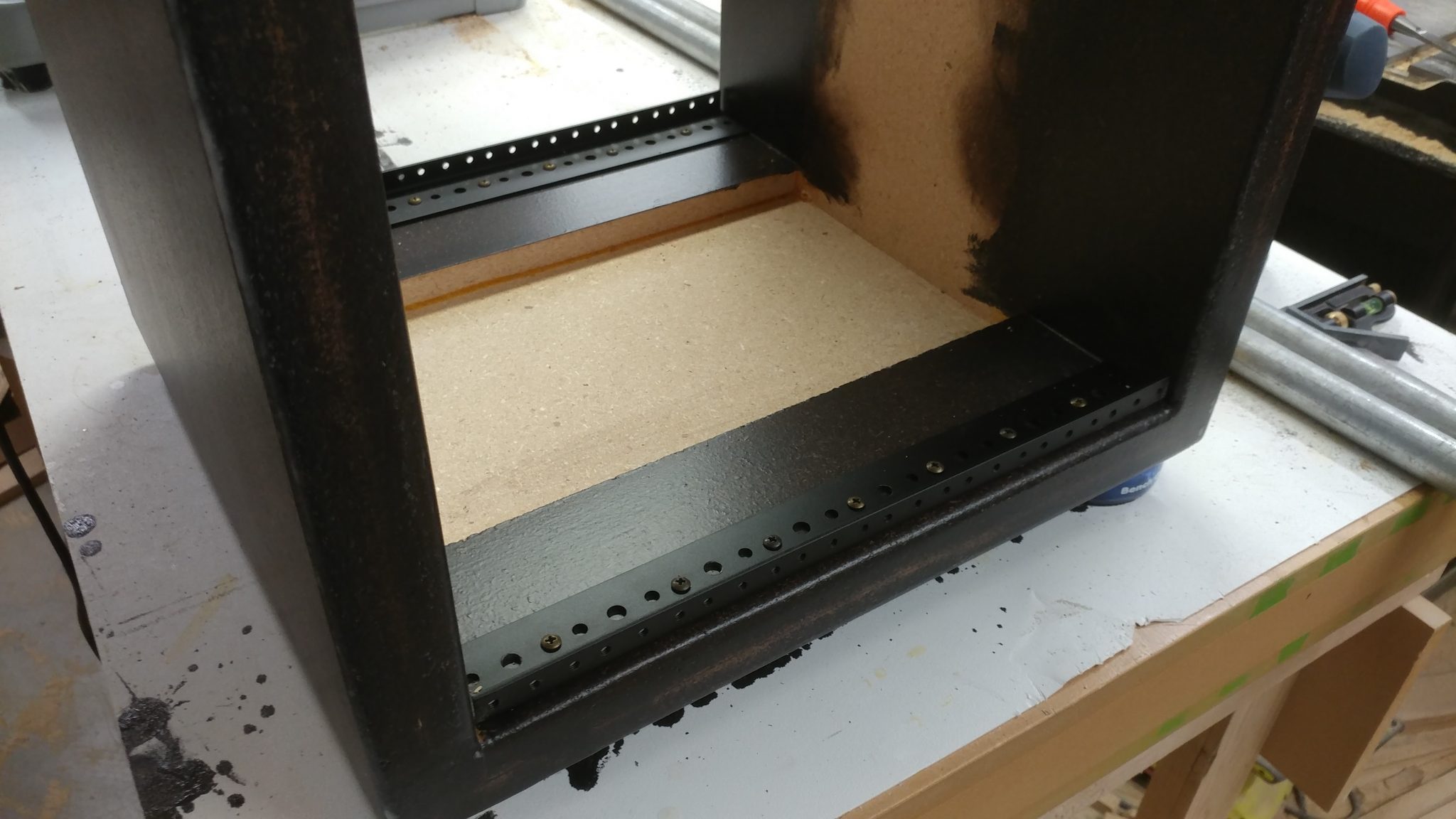
1. Positioning the 4-space rack rails

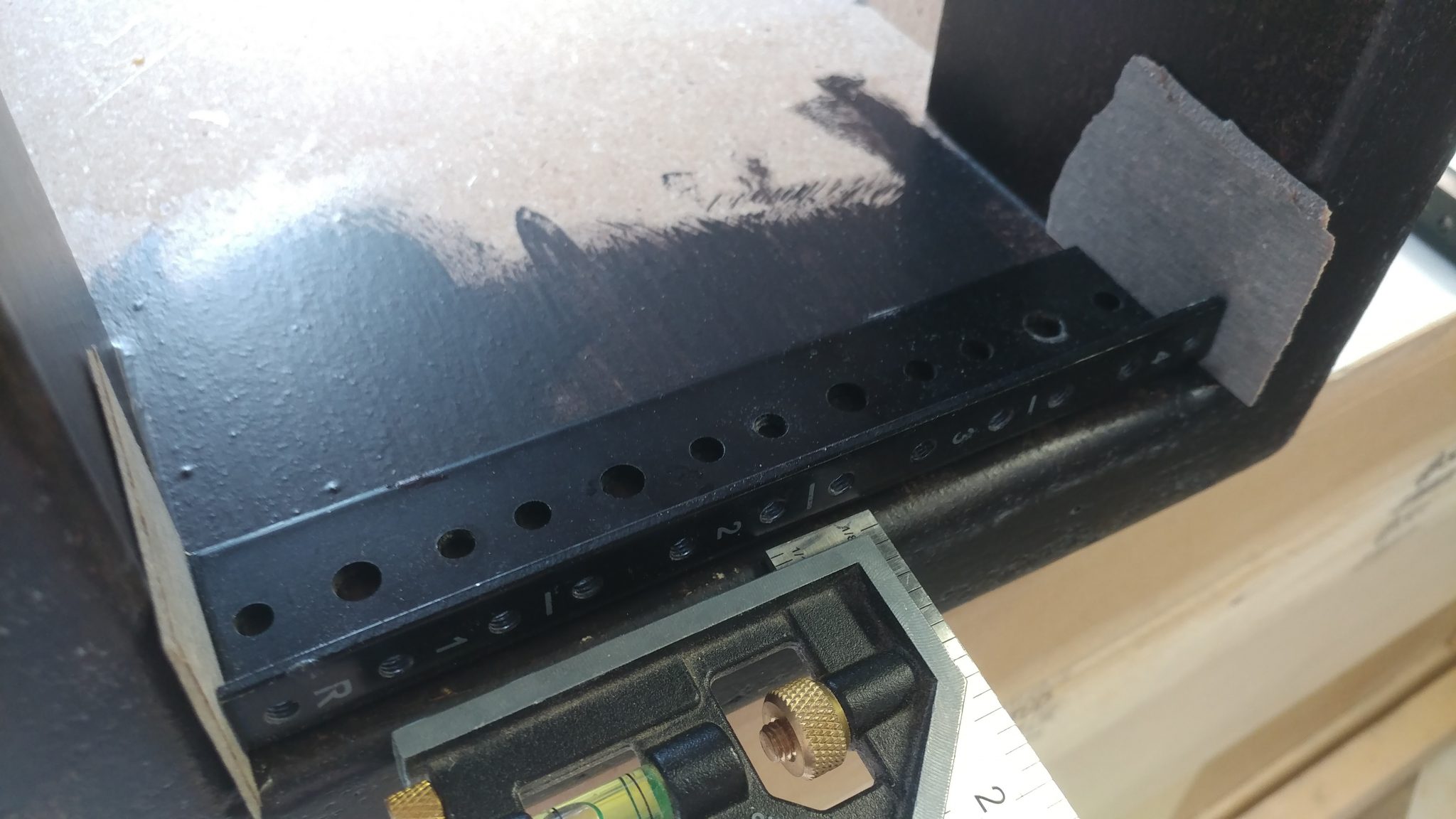
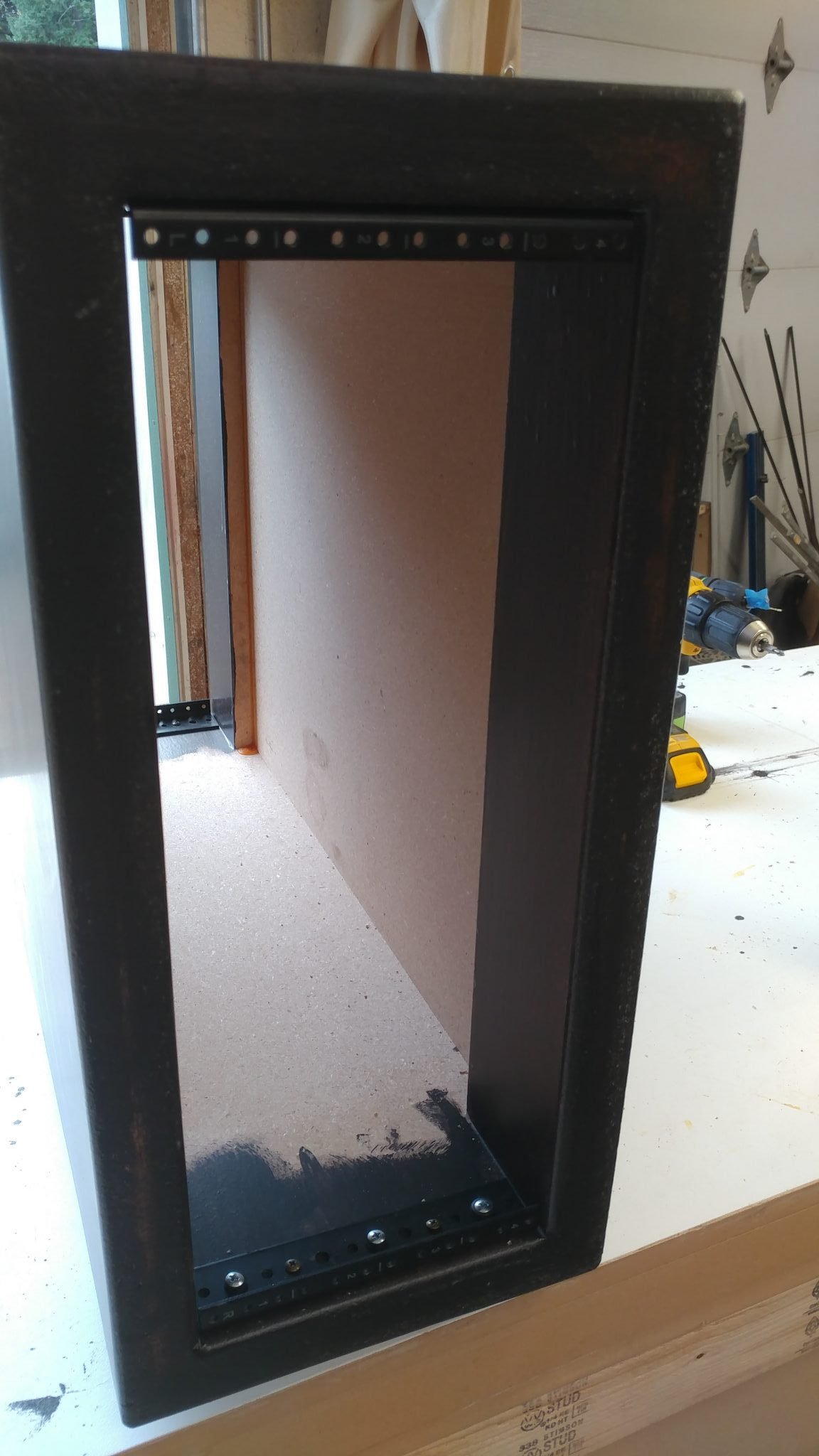
The rack rails were installed so they were 1/8″ from the front of the rack body.  I used two scrap pieces of laminate left over from my router enclosure build to shim between the top and bottom of the rack rails and the inside of the rack body, ensuring that they would be centered and consistent on both the front and back of the racks.

2. Attaching the 4-space rack rails

These rails were attached with screws as well.

Each rack got four rails; two for the front and two for the rear.

3. Determining the location for the grommet

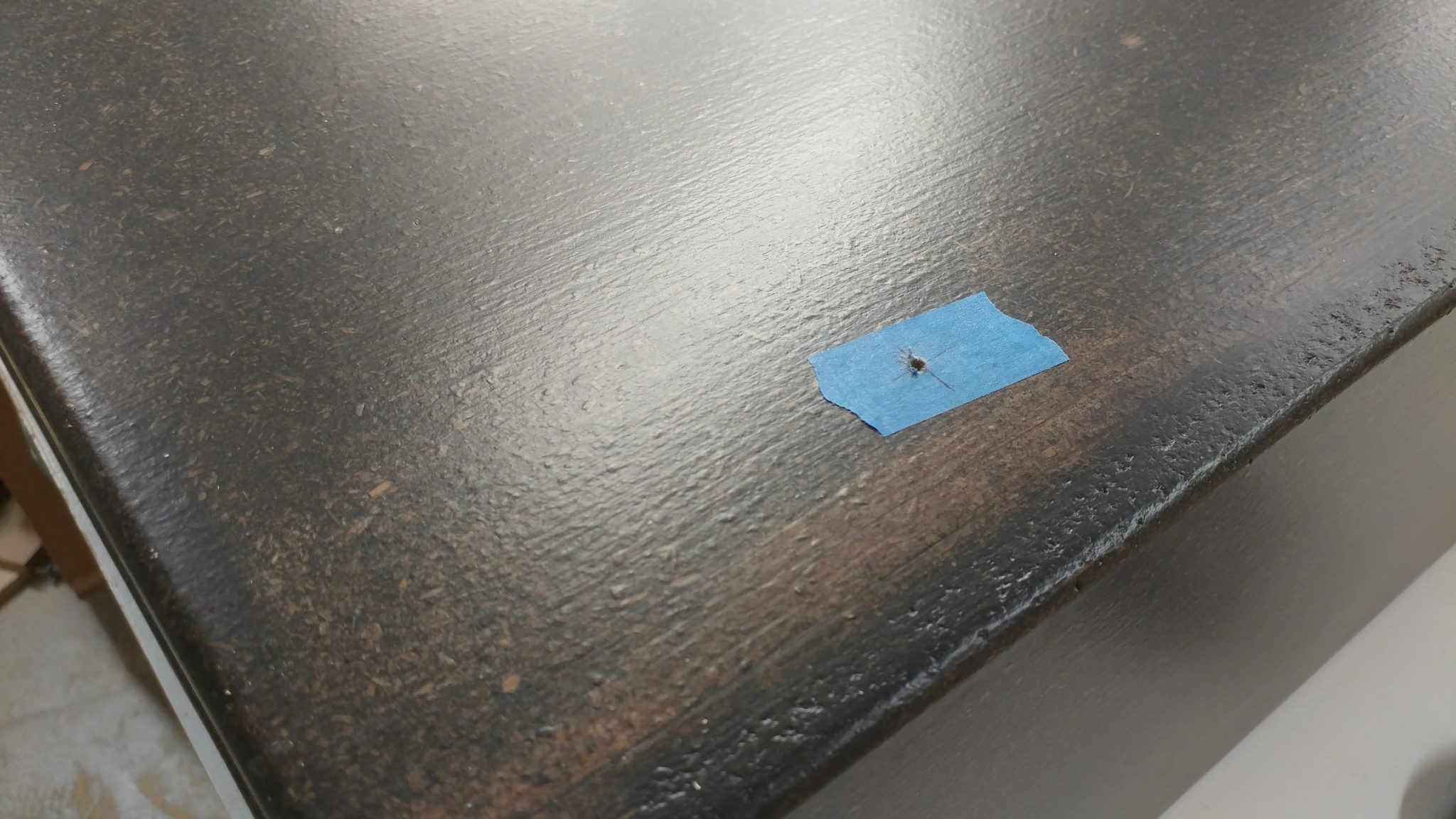
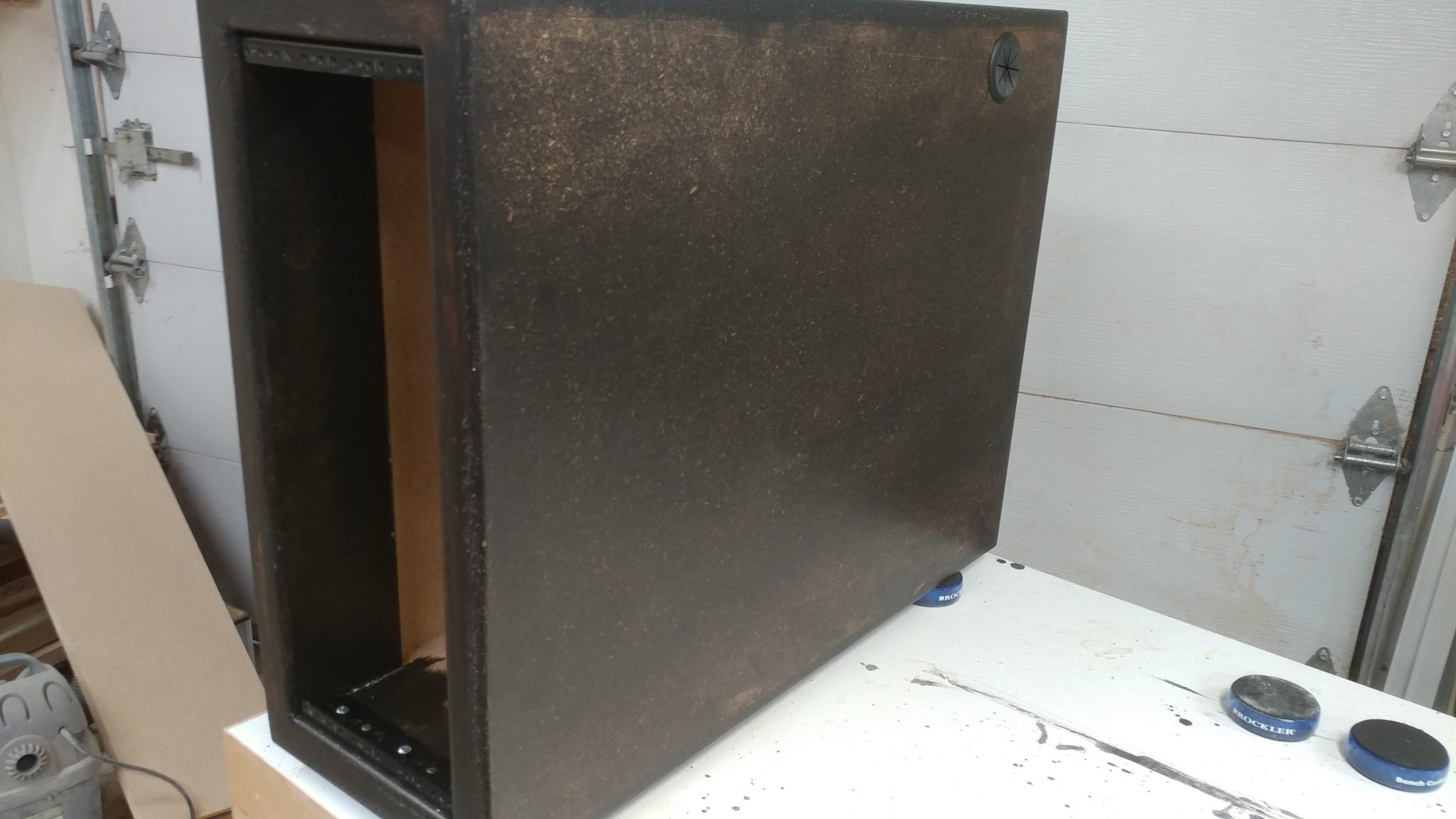
Each rack will have a number of cable pass-throughs.   I wanted the pass-through to be placed towards the back and towards the top, which will make it easier to conceal the cables.  I decided to have the computer pass-through located 2″ from the top of the rack and 5-1/4″ from the rear.  This was a slight mistake, as you’ll see below.

I marked the spot on painters tape and drilled a pilot hole.

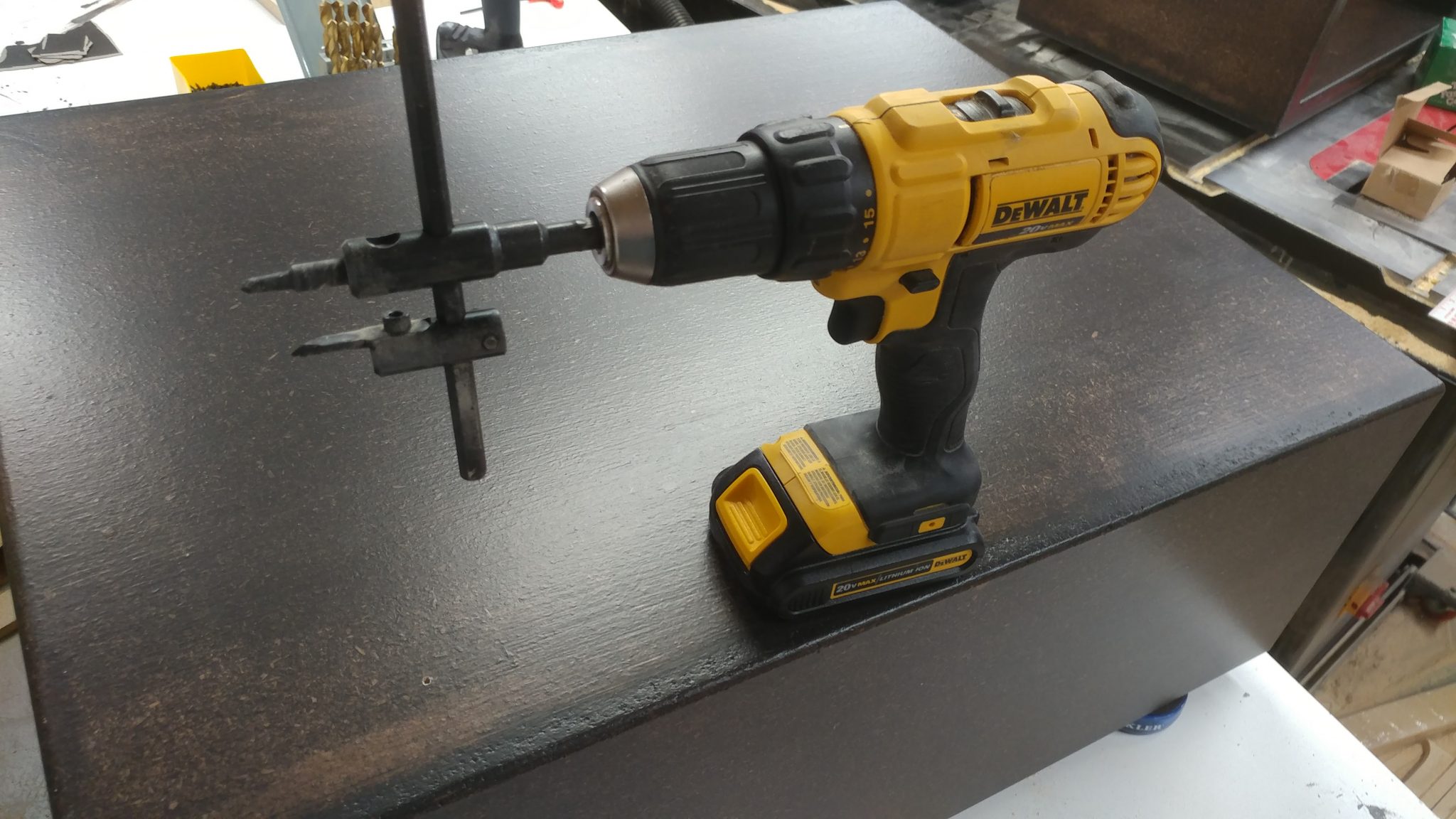
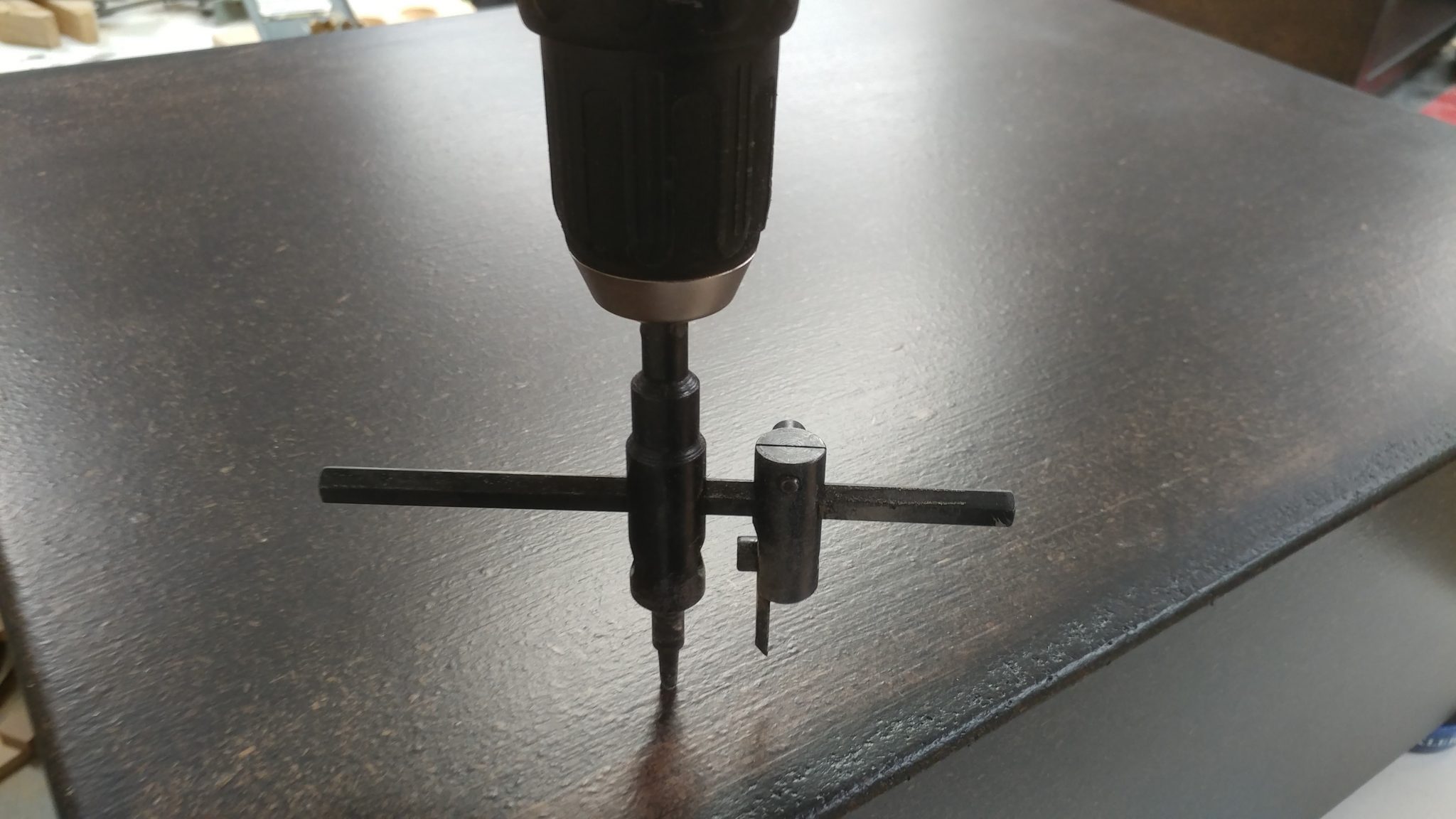
4. Prepping the circle-cutter

I used a circle cutter on my cordless drill.

I only used one cutter to do this.  Having the second cutter installed was feeling a bit sketchy.

5. Cutting the circle for the grommet

I used the pre-drilled pilot hole to start cutting

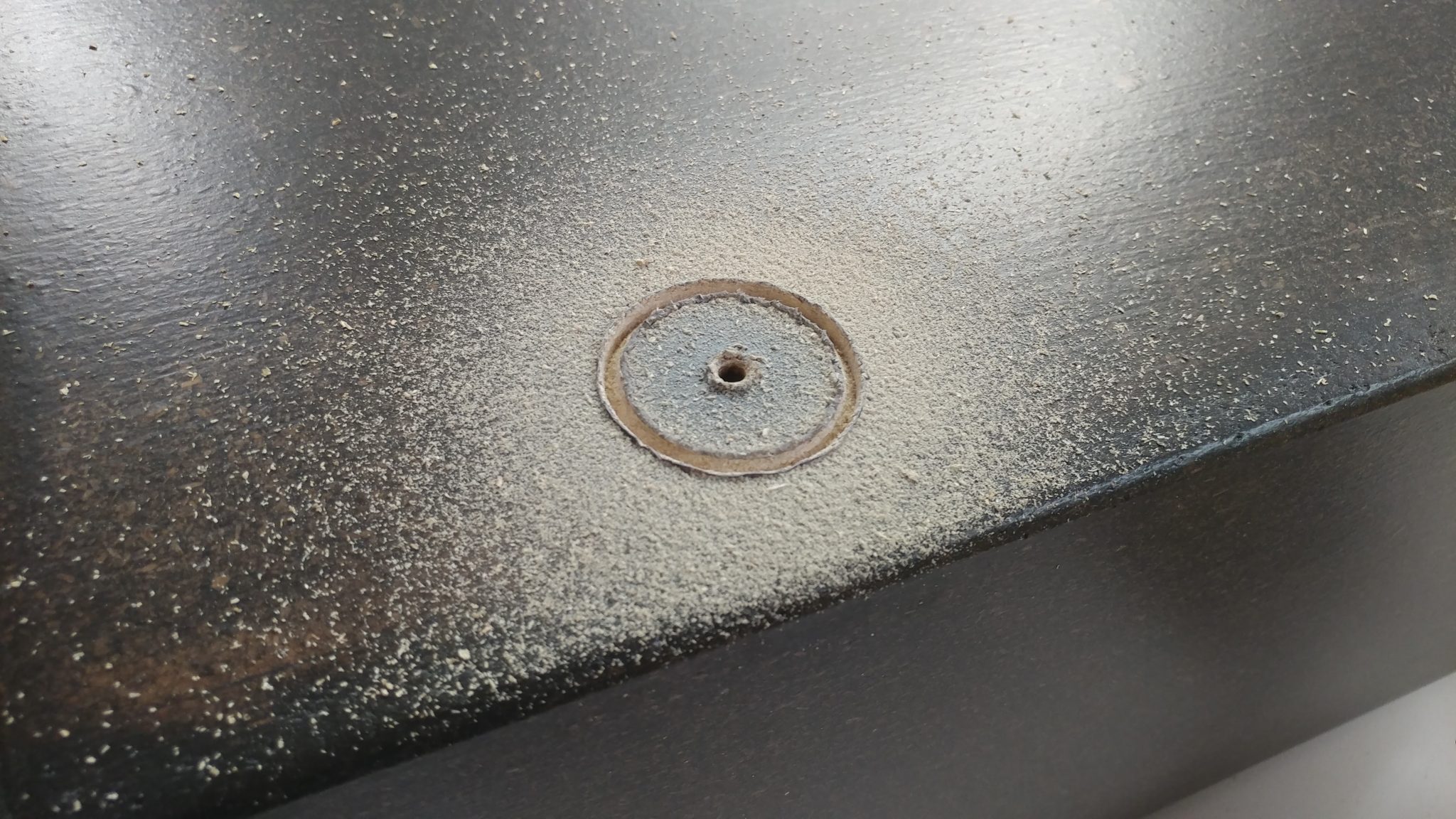
The circle cutter uses the pilot hole to keep it in the proper location.

6. My first major screw-up

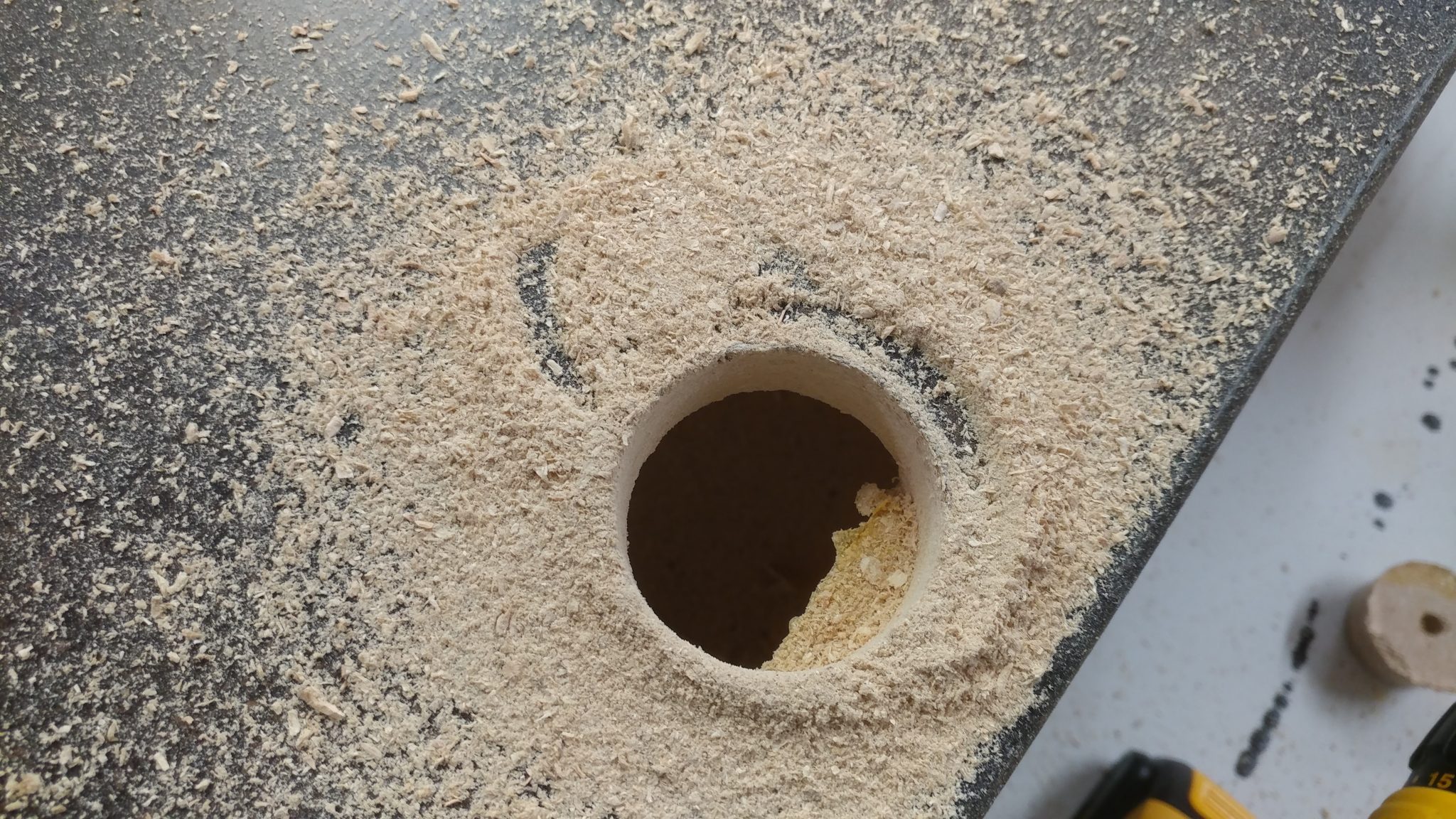
This is where I screwed up.  I forgot that the top and bottom of the racks have two layers of 3/4″ particle board rather than just one.  I didn’t calculate that when I decided on a hole placement.  This means that the top of the rack will interfere with the pass-through.

7. Fixing the screw-up

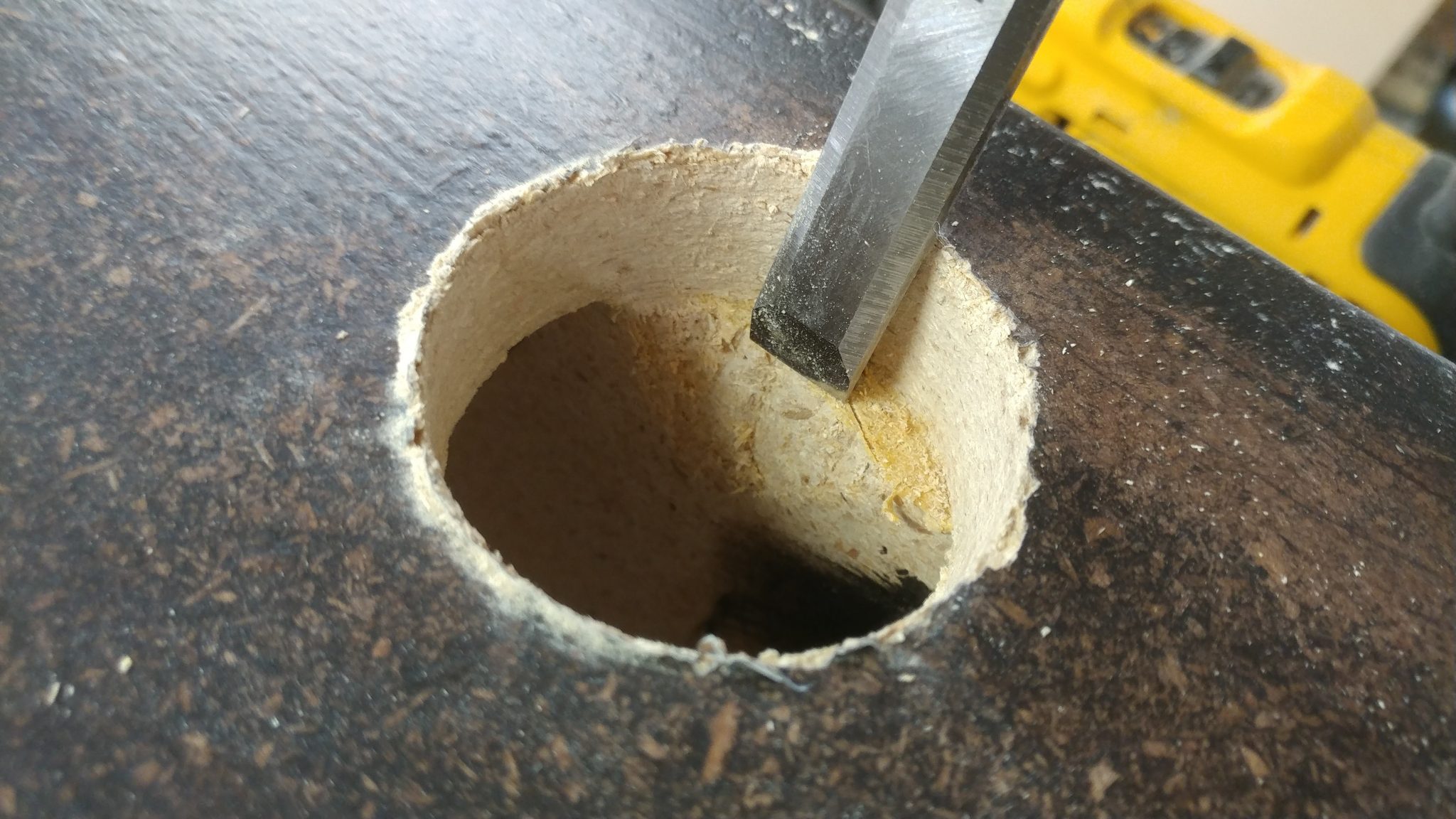
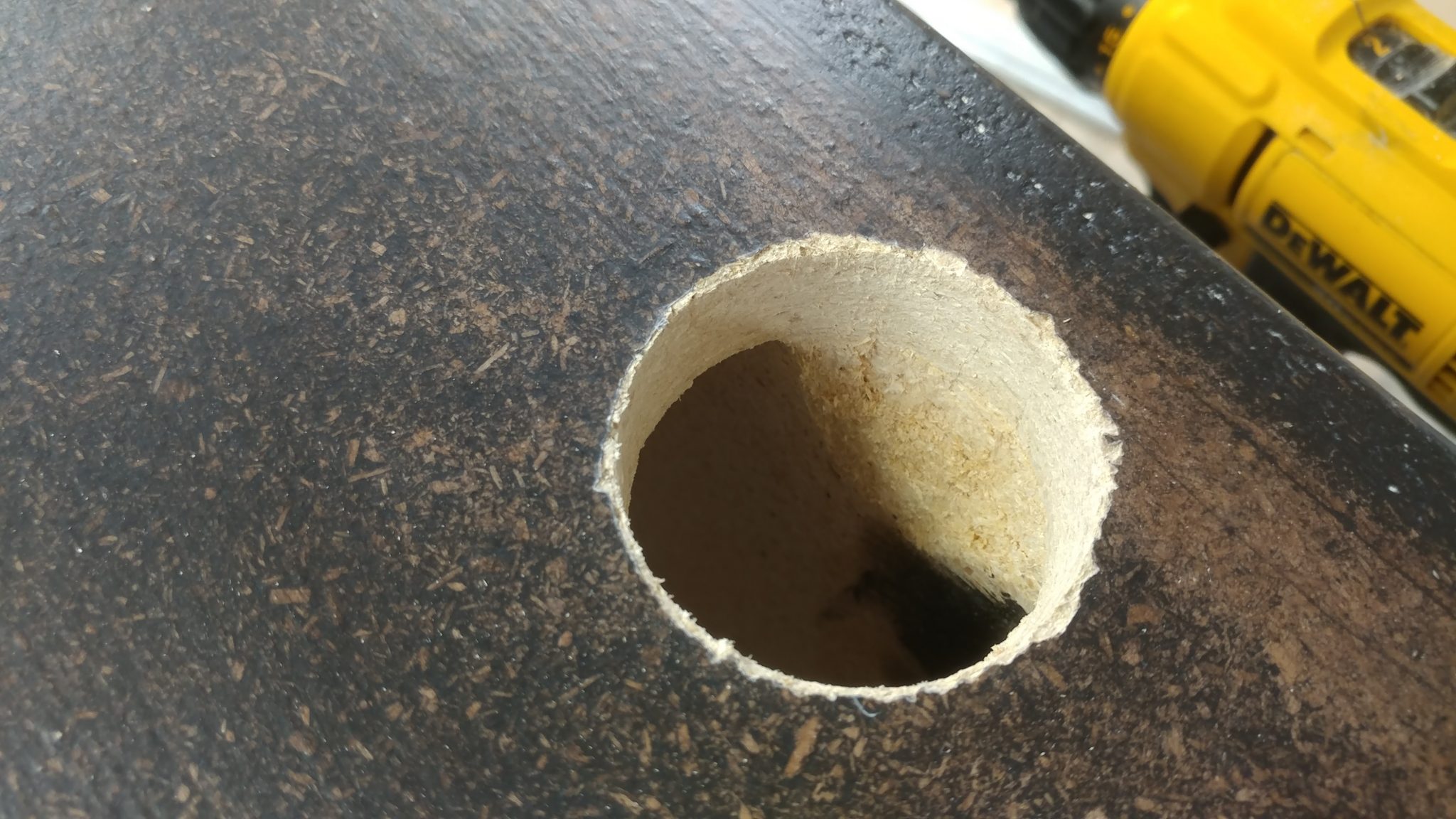
I used a chisel and a rasp to clear out enough room to allow the pass-through grommet to be fully inserted and provide more room for cables.

Much better.

8. Installing the grommet

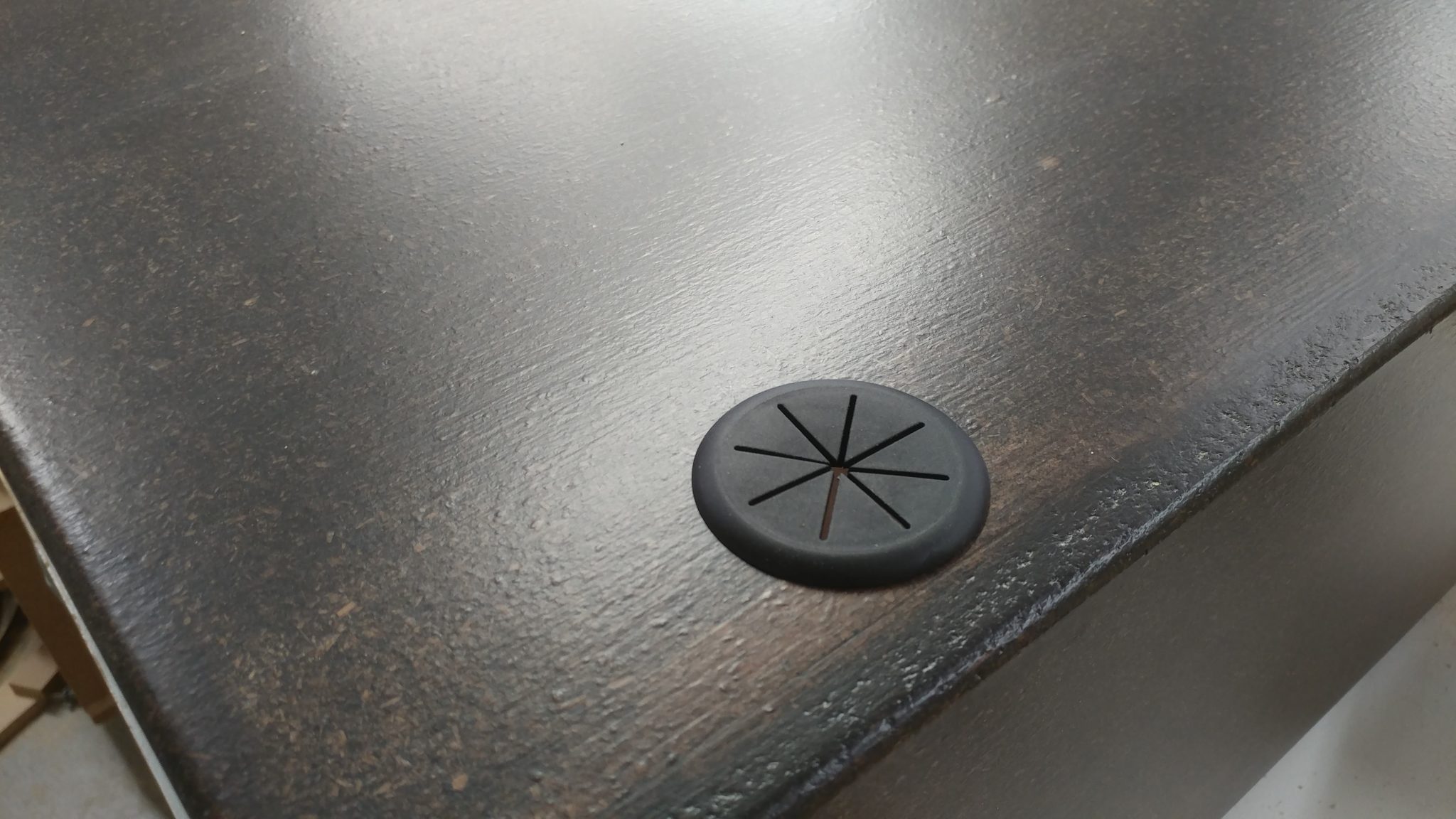
The grommet fits nicely and covers the jagged edge around the hole.  I used some 5-minute epoxy to secure the grommet in place since the hole cutter didn’t really cut a smooth hole in the particleboard..

9. Taking it all in

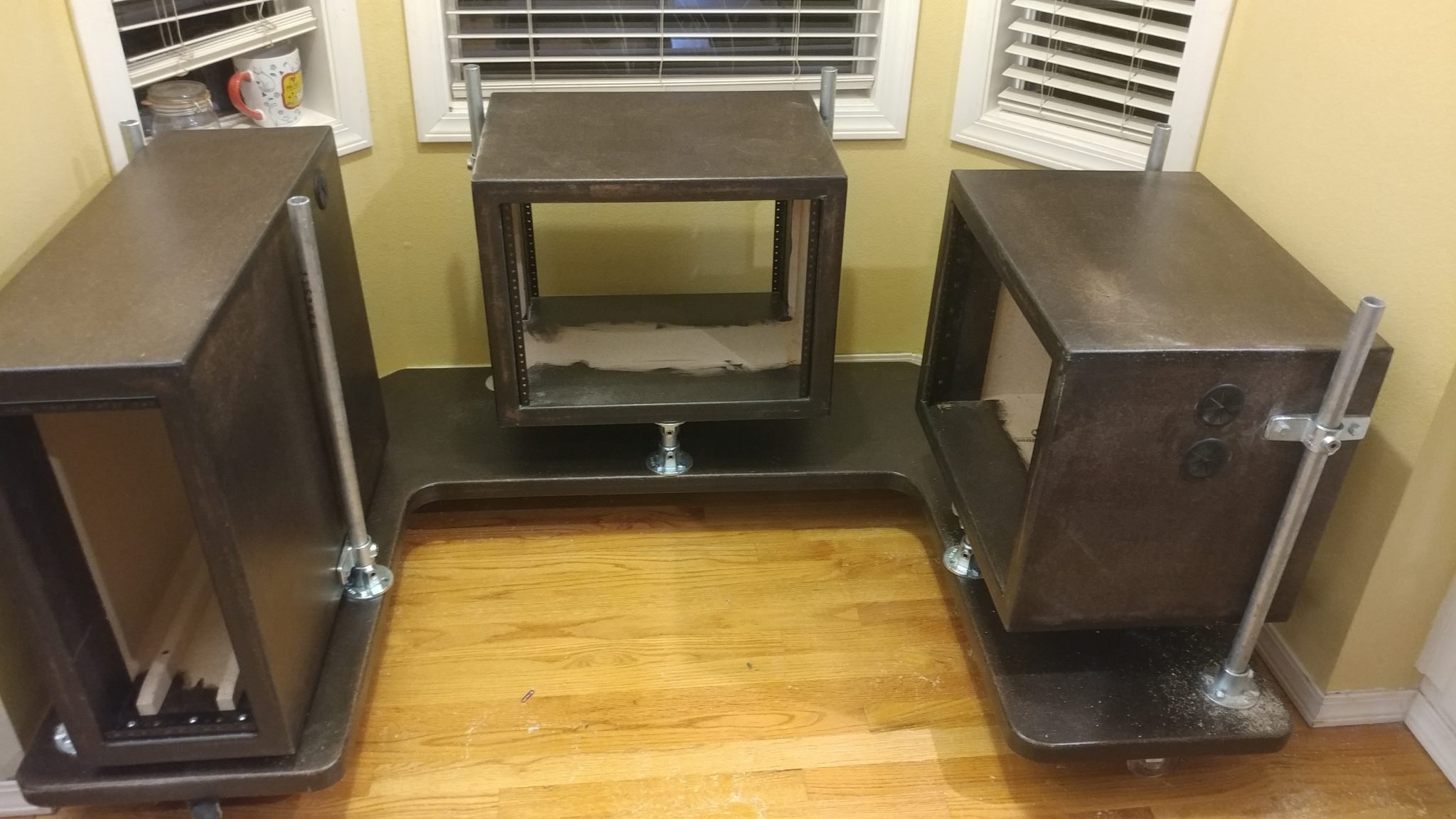
This is how the rack will be positioned in the desk.  You can see the pass-through grommet in the upper rear corner on the side of the rack.

10. Ensuring that the PC will fit in the rack

I set the rack on its back and dropped the computer in.  I screwed it to the rack rails but right now there isn’t anything supporting the computer, which is very heavy.

11. Measuring the space under the PC

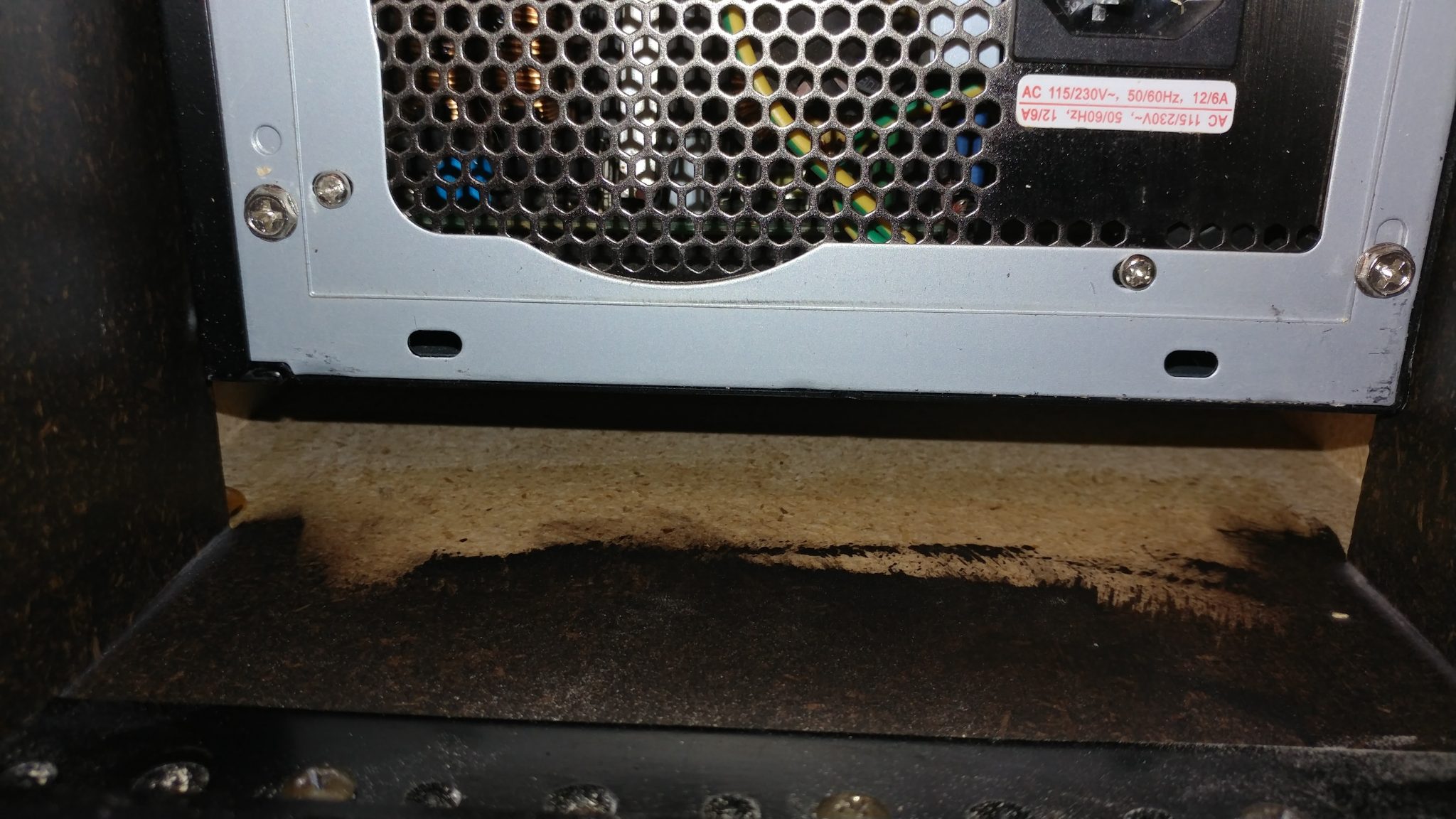
I set the rack upright again and went around the back.  You can see that there is a gap between the computer and the inside floor of the rack.

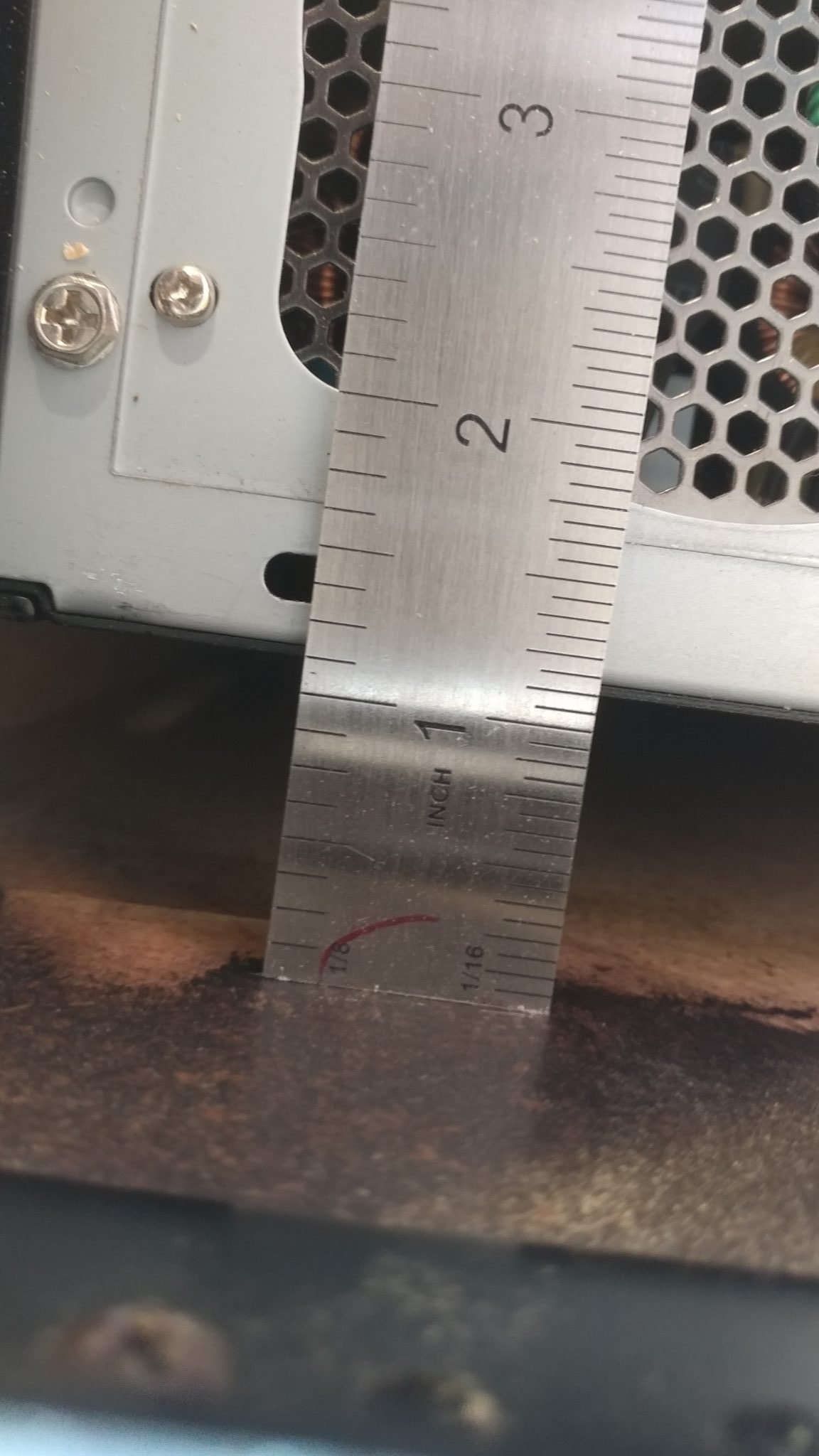
I measured that to be 1-1/8″.

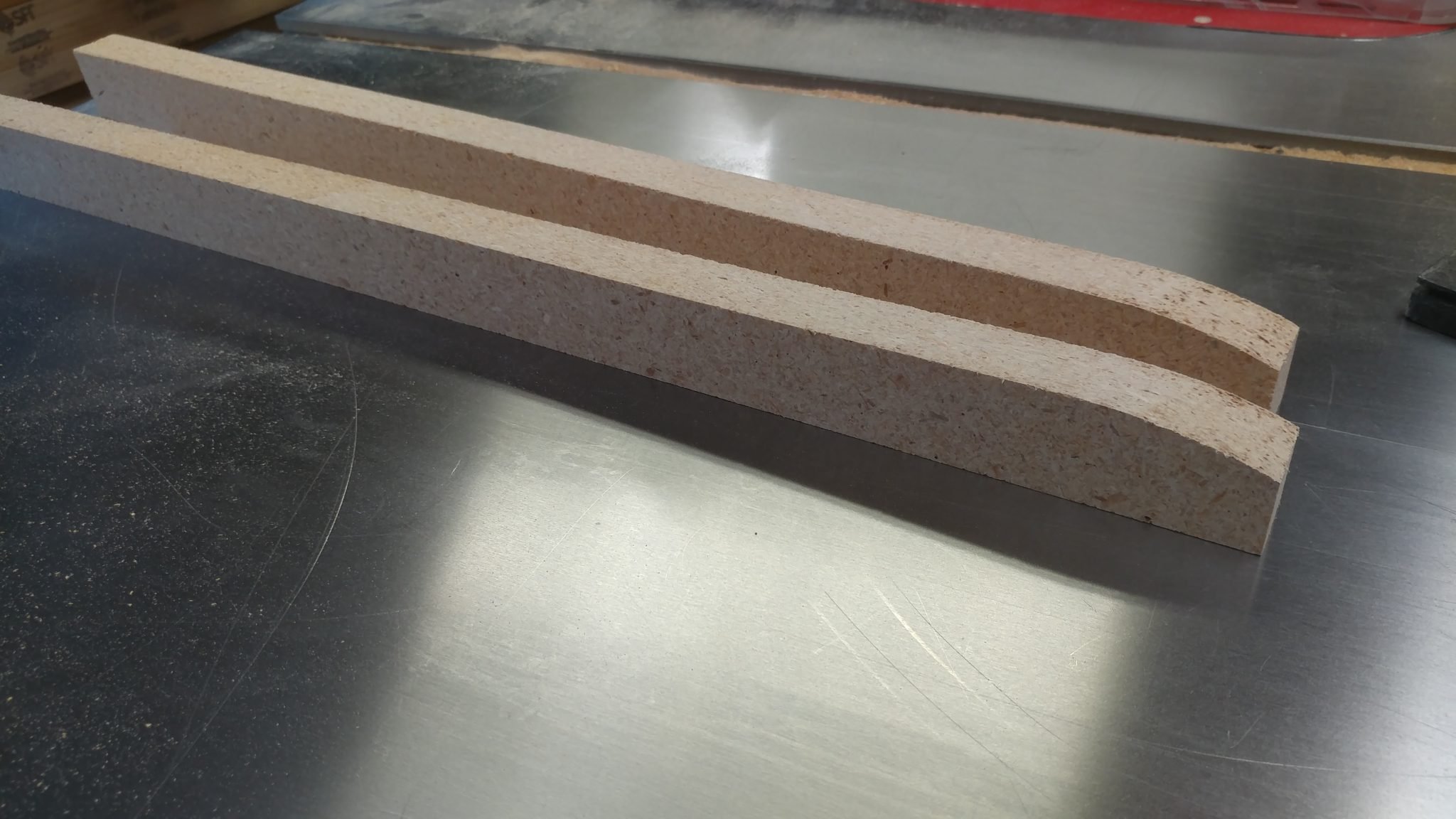
12. Making the PC supports

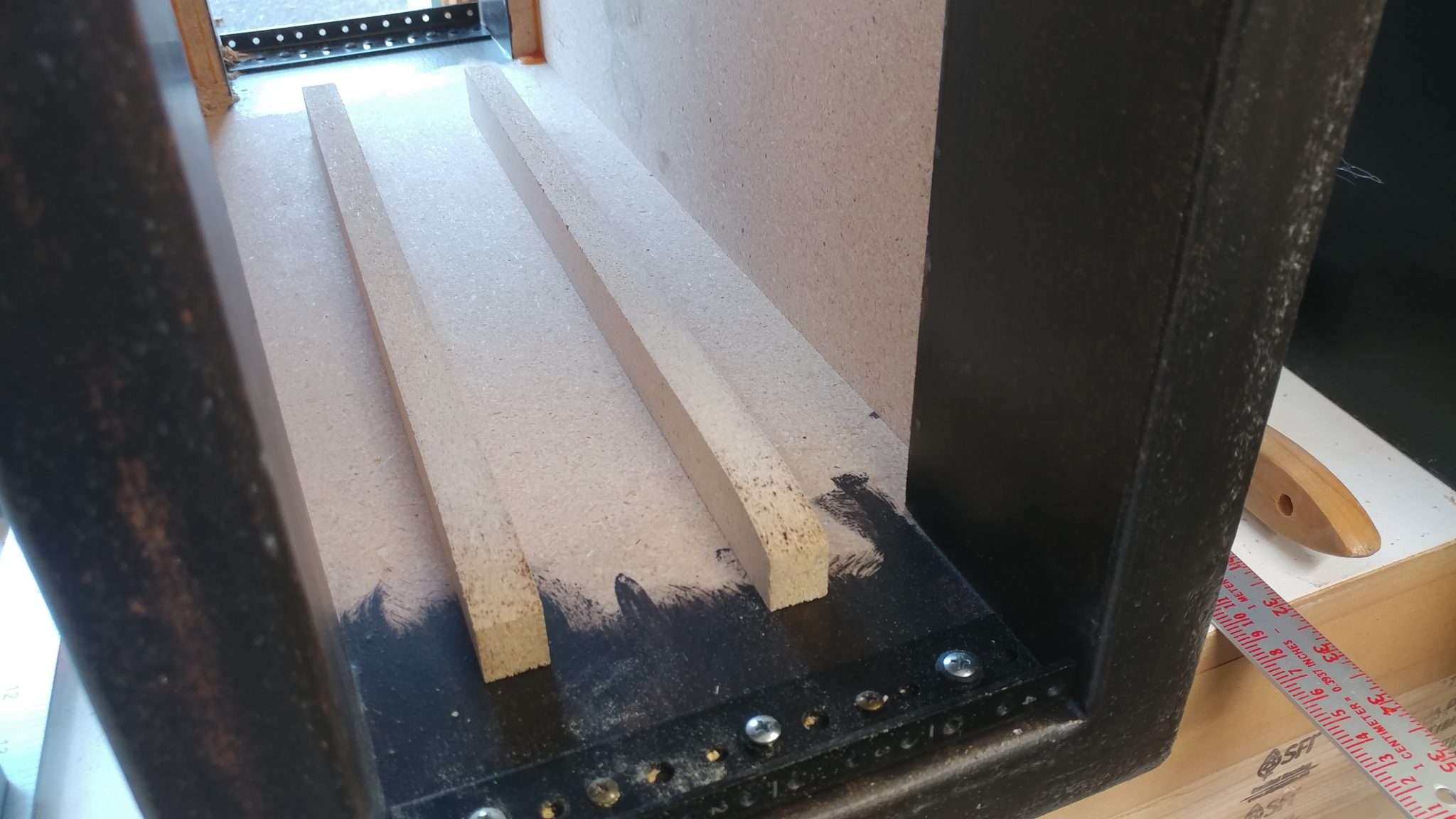
I cut two strips of MDF at that width and slightly tapered the end on a disc sander.  These will go between the computer and the rack floor to help support the computer.  The taper at the end will make it easier to insert the computer from the front.

This is where the wood supports will be placed.

13. Installing the 8-space rack rails

I installed the 8-space rack rails to the larger two racks in the same manner.  They don’t need the wooden supports added to them but I did install a few grommets on both the left and right to allow the cables to pass between the boxes.

Installing the Leg Mounts

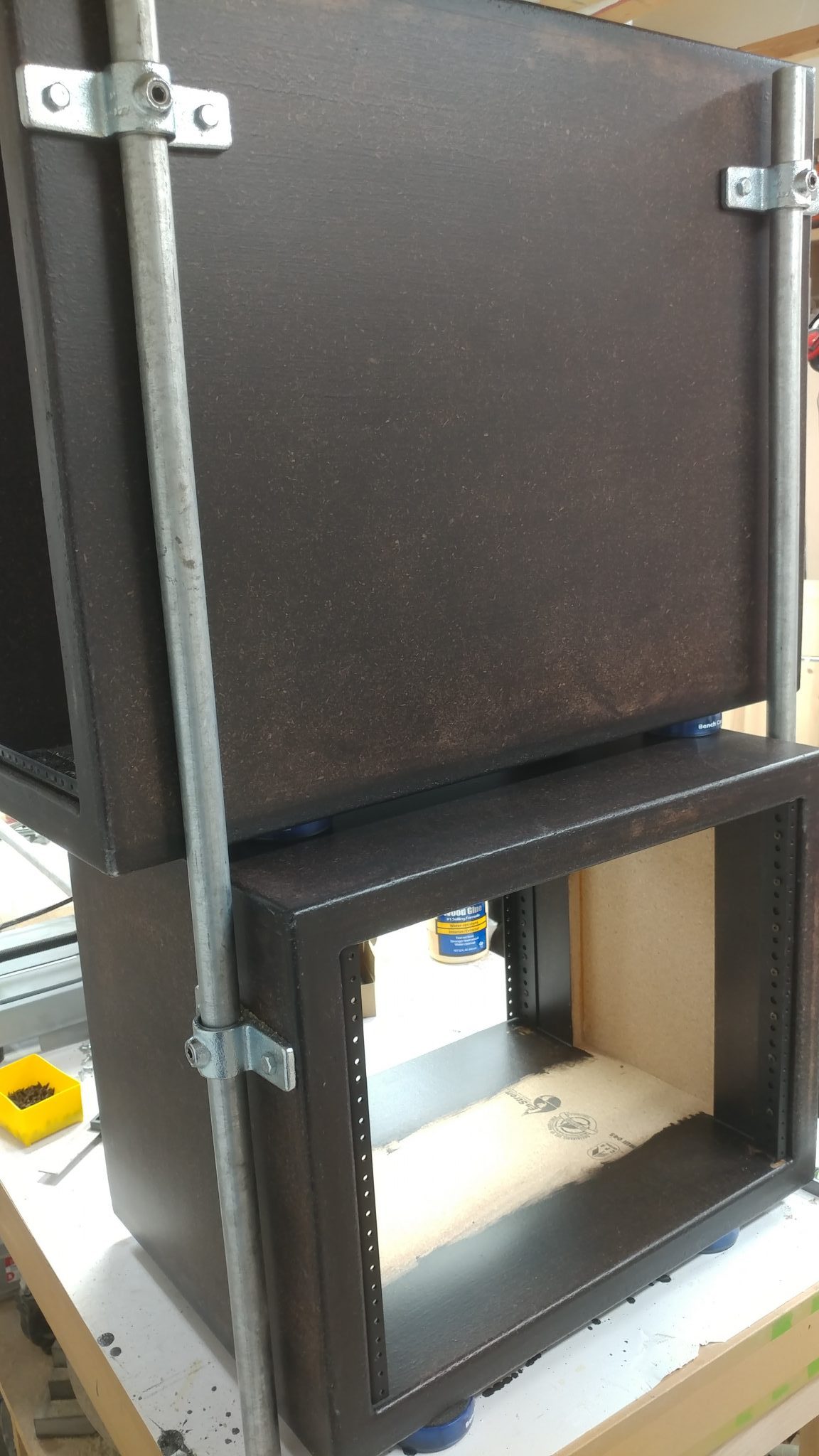
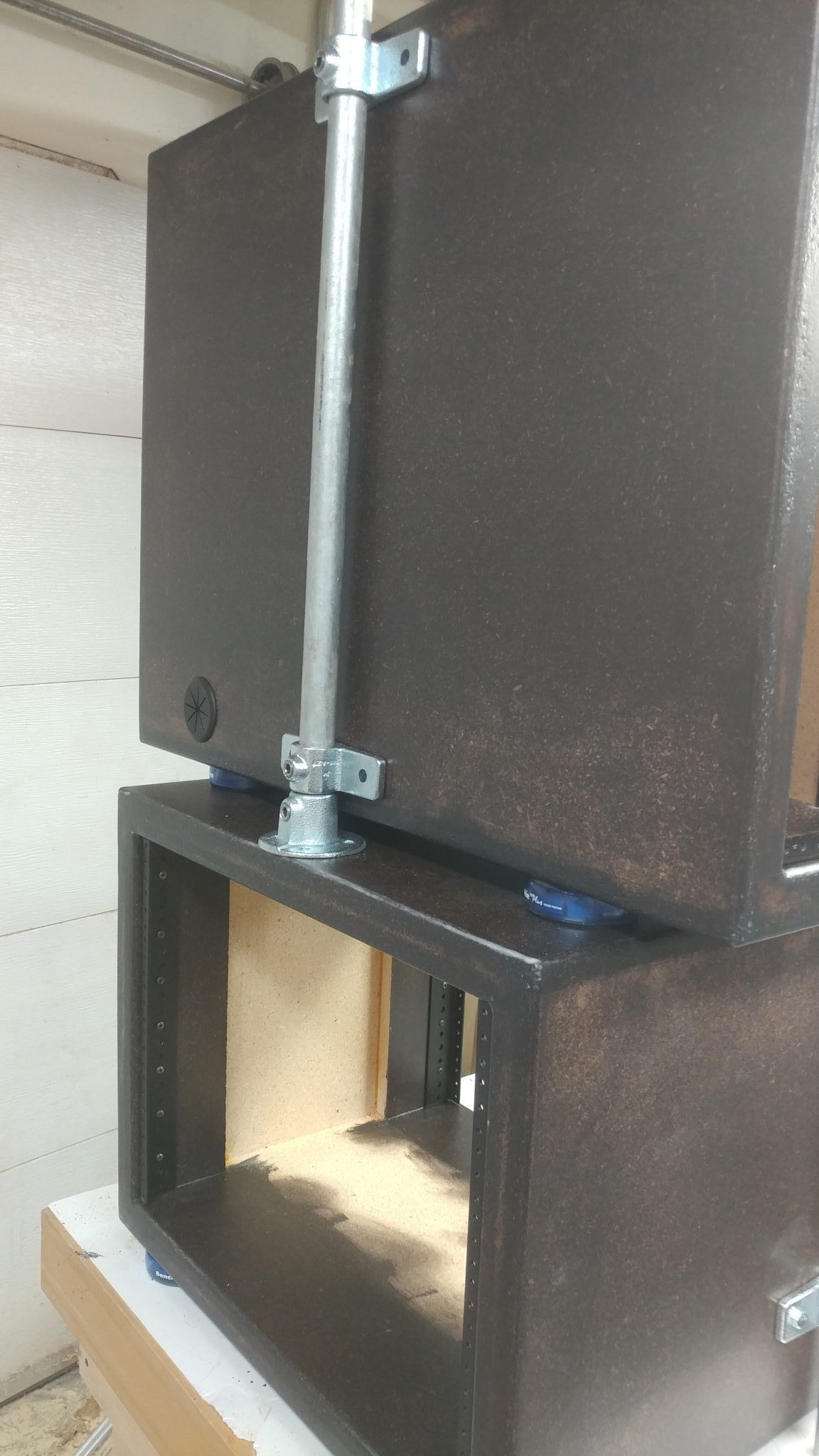
The leg mounting hardware needs to be mounted in a way that will allow each of the three racks to be installed in either location.  This didn’t seem like it would be that big of a problem but it took some thinking before I could even get started.  Each rack unit will have three legs; two on the sides towards the outside of the desk and one underneath towars the inside of the desk.  I decided to start with the legs on the sides.

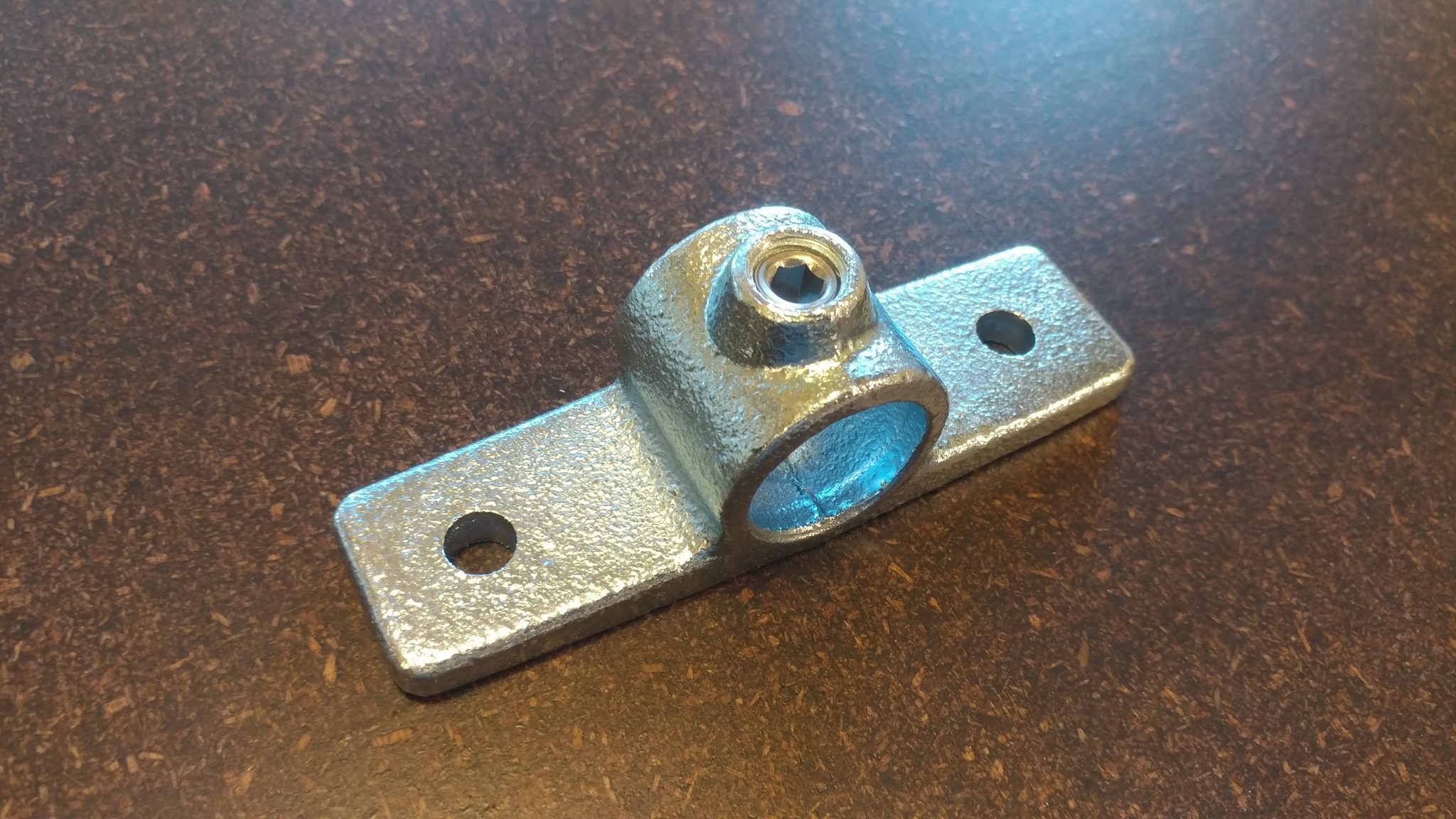
1. Steel-Tek hardware

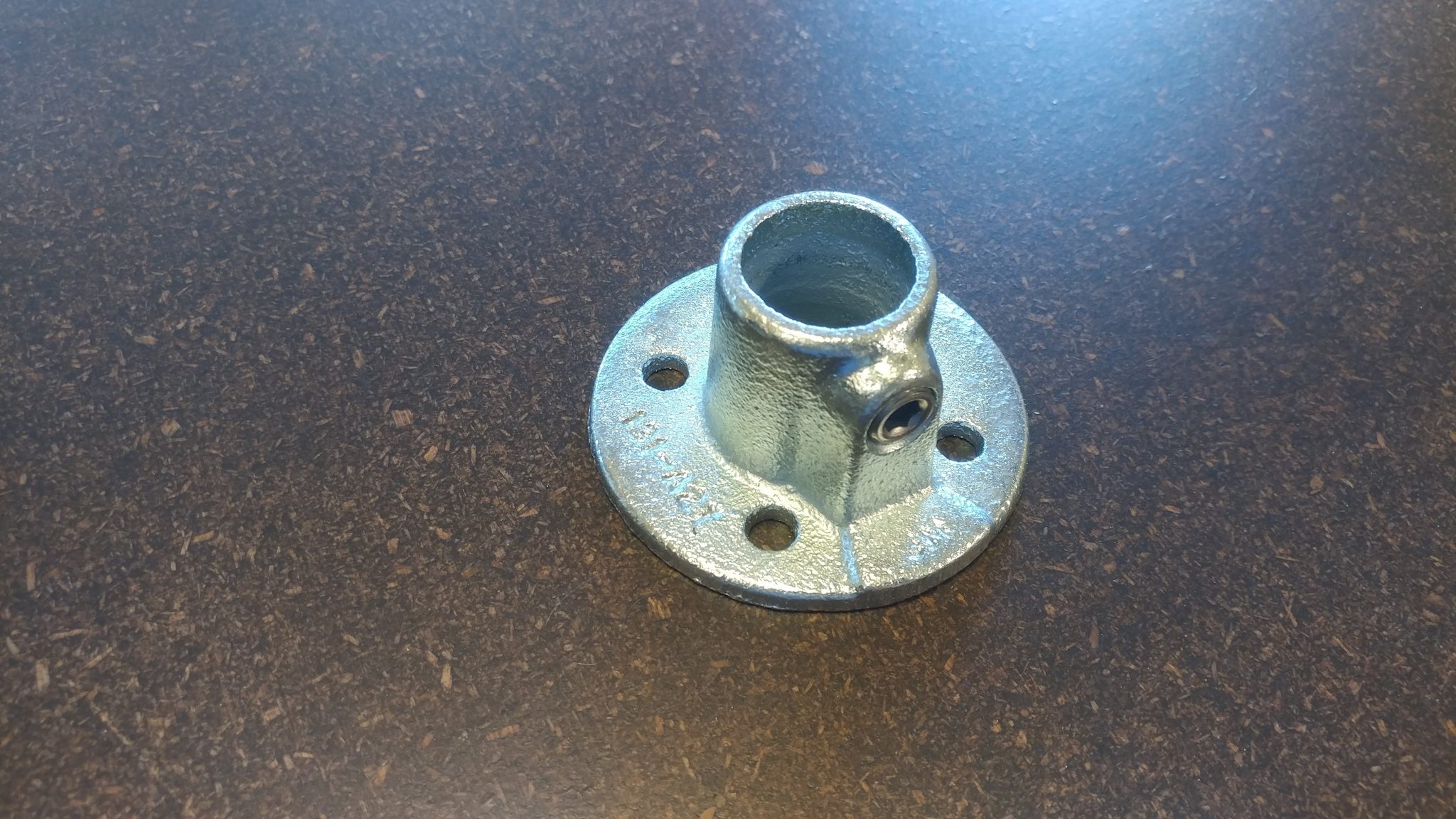
The side flange is part number 679-804HC from Steel-Tek and can be bought from Lowes.

The floor flange is part number 673-104HC from Steel-Tek and can be bought from Lowes.

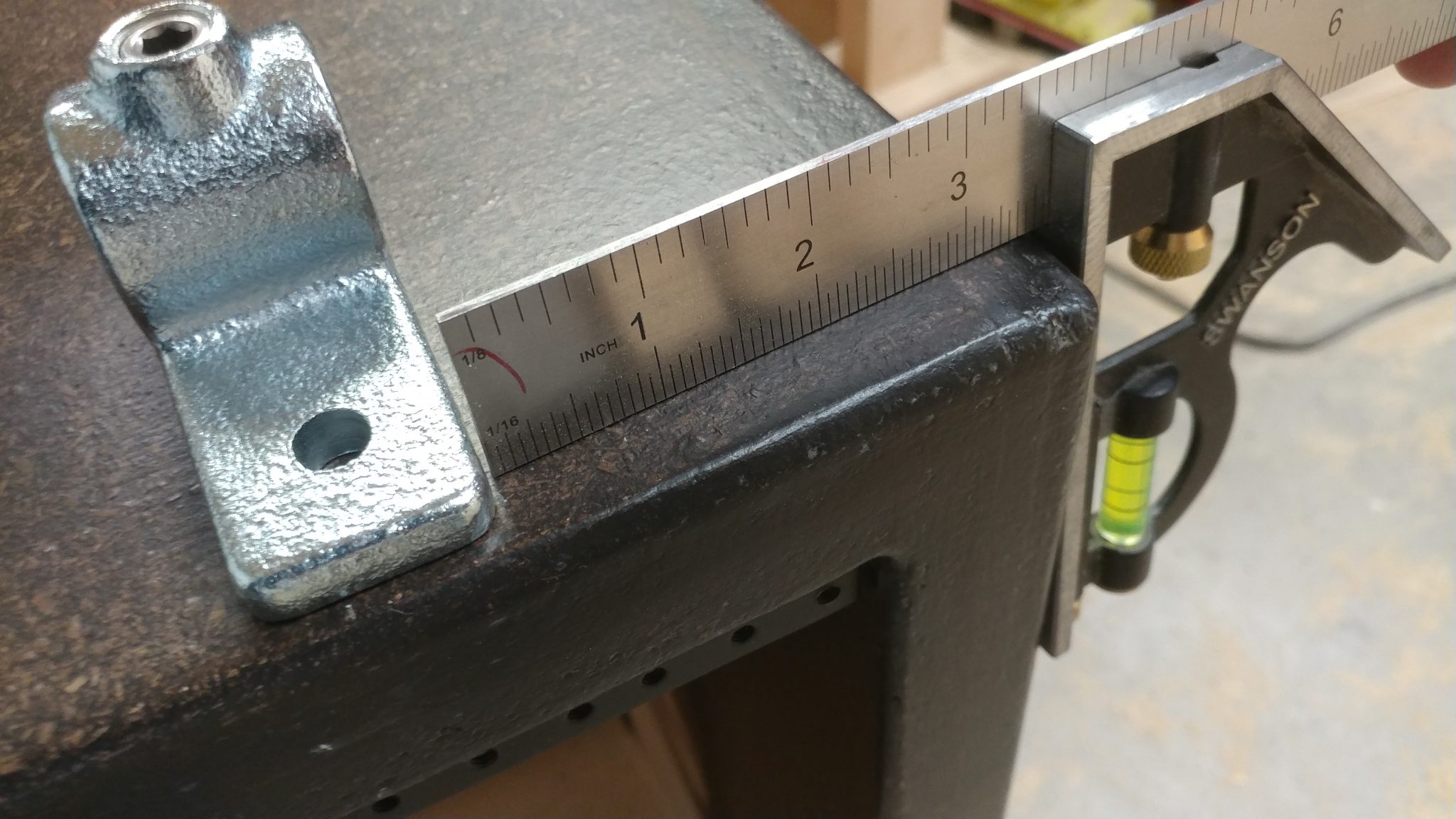
2. Determining the position of the side flanges

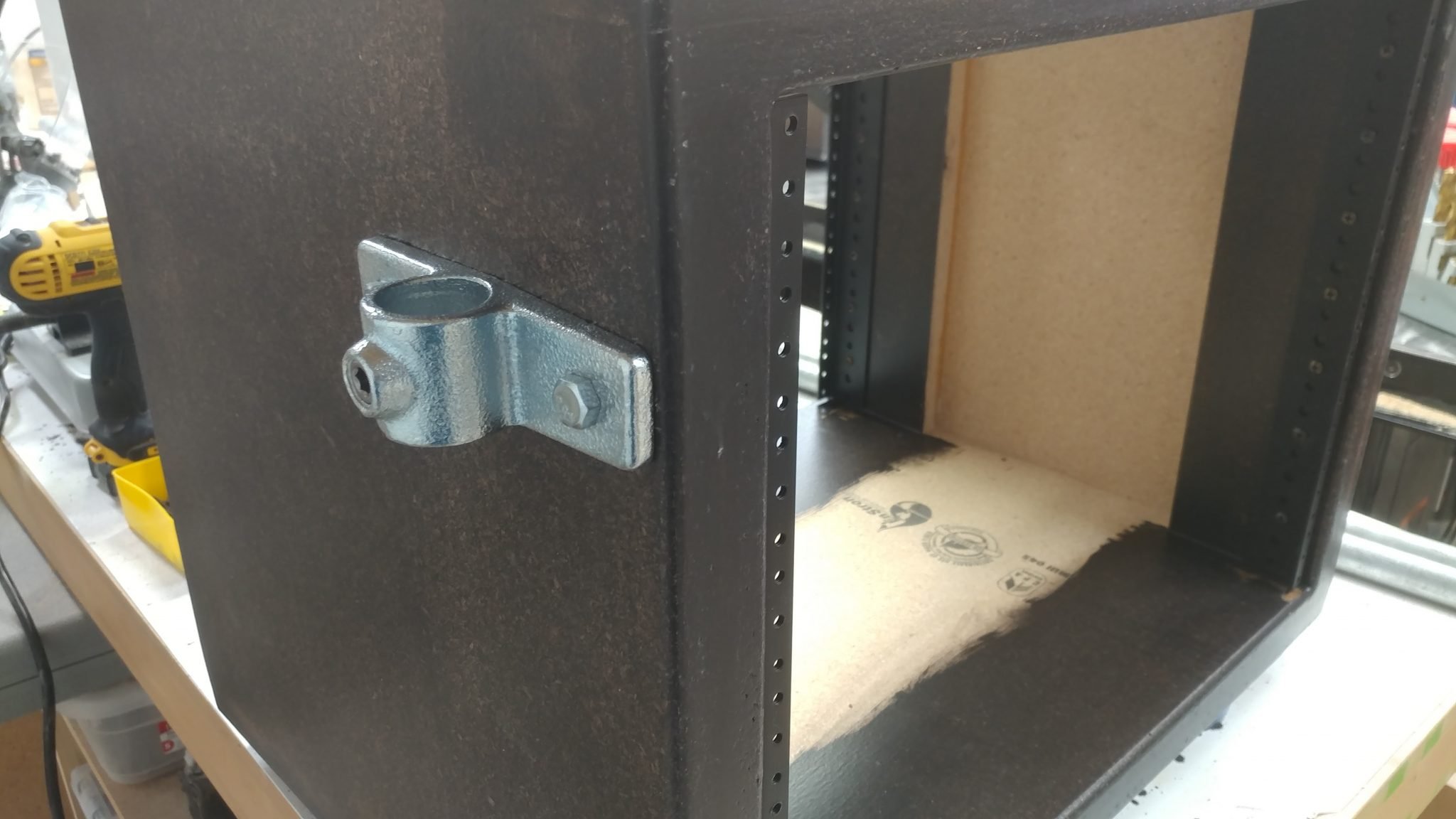
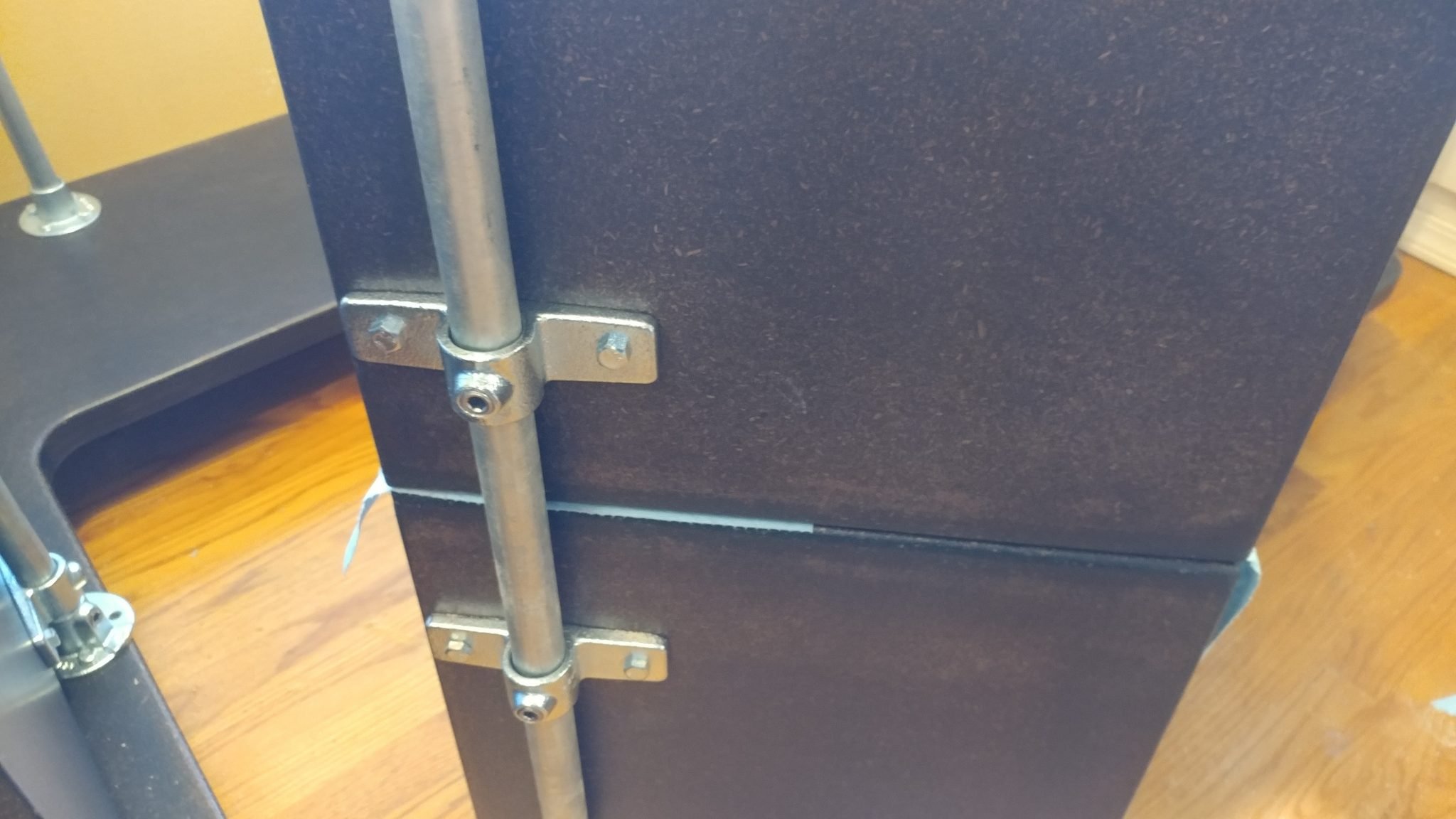
I positioned the side flange on the side of the rack as far forward as I could.  I positioned it 3-1/2″ down from the top.  This doesn’t add anything in terms of stability, it just looked best and it ensured that the bolts I used to attach the bracket wouldn’t hit the screws for the rail hardware.

3. Attaching the side flanges

The side flanges were installed on both sides of one of the larger 8-space racks.  I will install them on the other rack later.

4. Attaching the side flanges

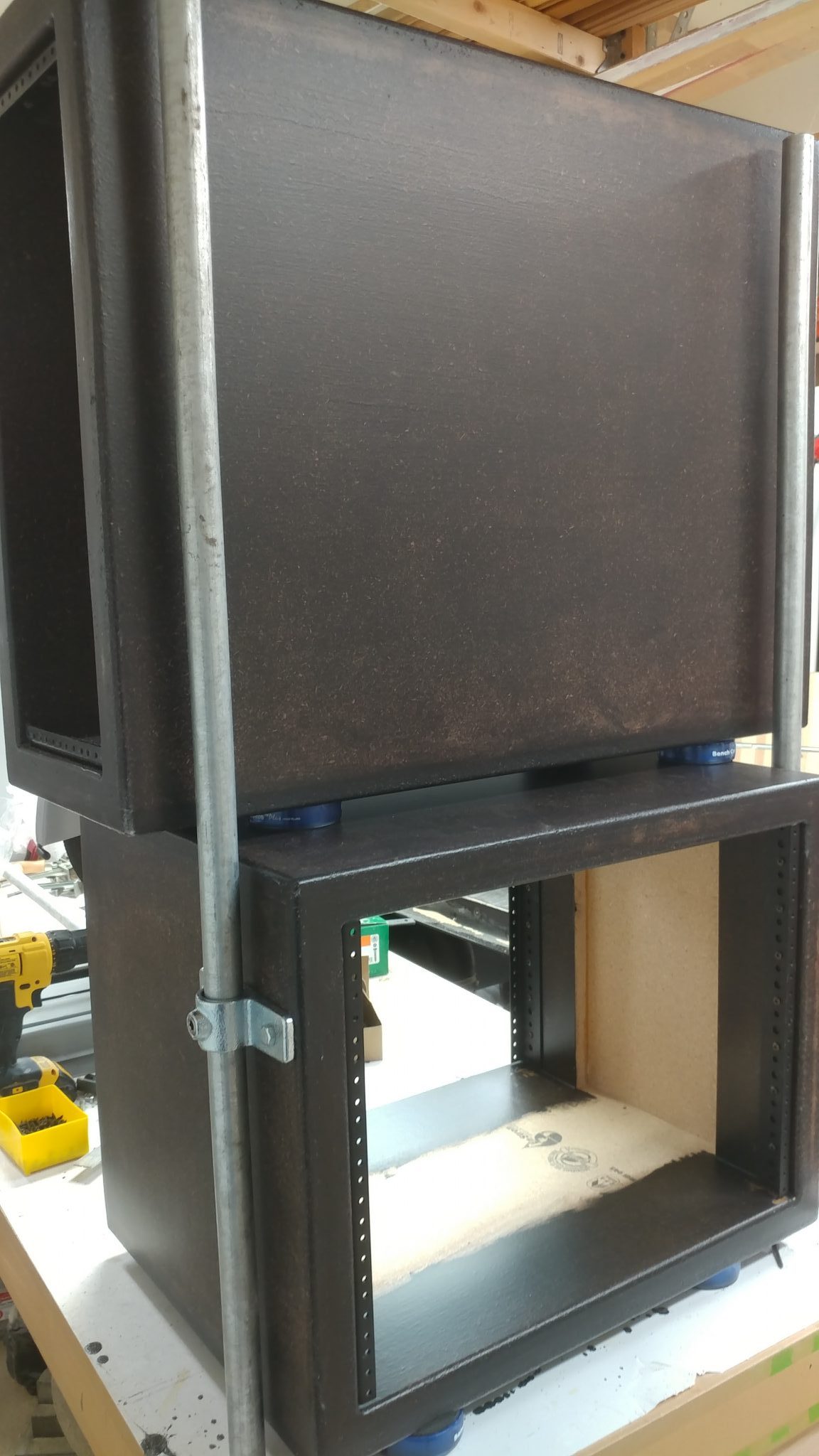
By using some temporary leg rails I was able to place the PC rack on top of one of the larger 8-space racks.  This allowed me to determine the locations for the side flanges.

The side flanges were attached three and a half inches from the top, just to be consistent.

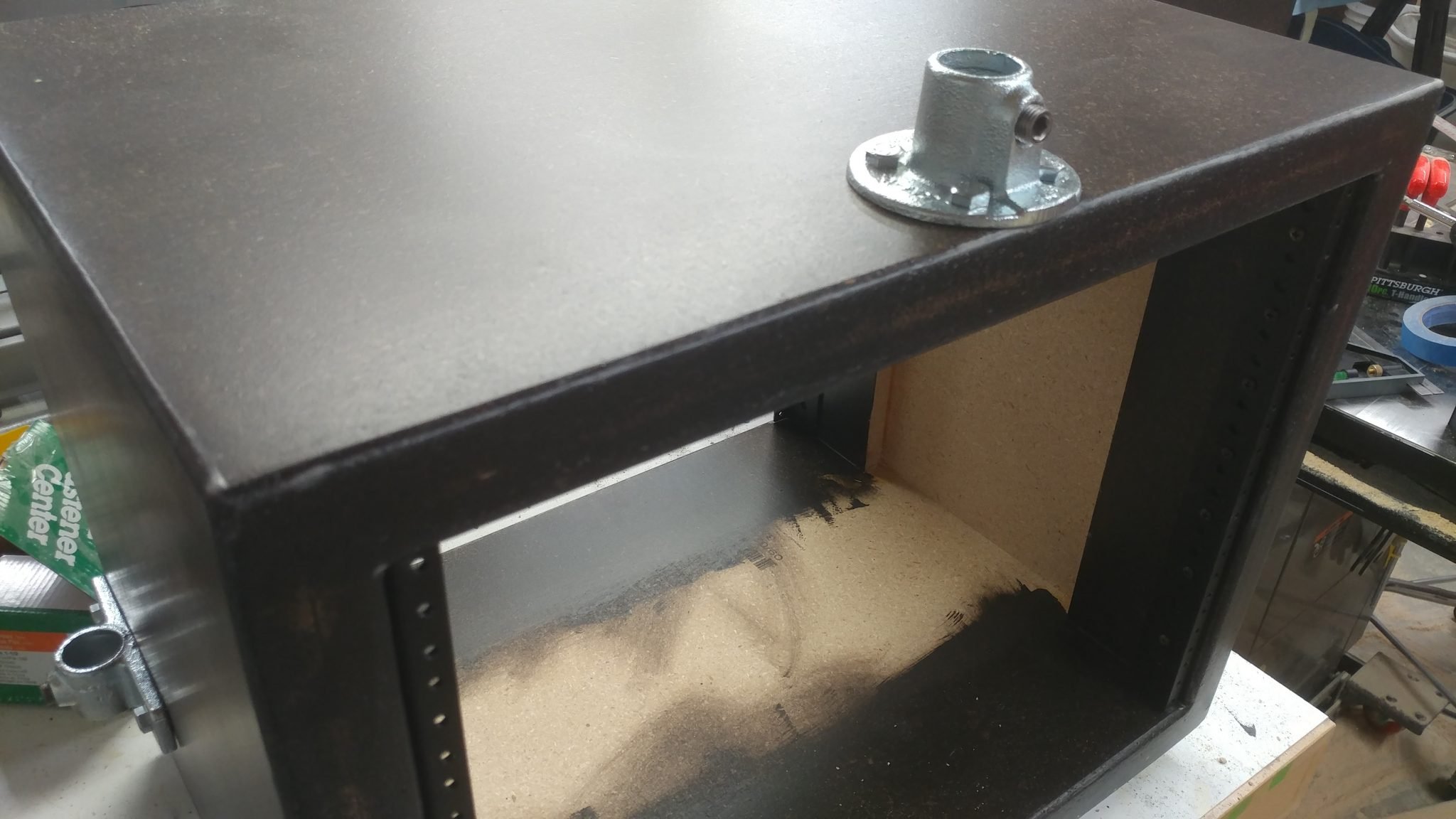
5. Positioning the first floor flange

Then it got a bit squirrely.  I took the PC rack off the larger 8-space rack.  Then I turned the 8-space rack upside down and set the PC rack back on top and installed the temporary leg rails.   I then used another temporary leg rail and two of the leg mounting brackets and one of the floor flanges, which will be installed on the underside of each of the 8-space racks.

This is how the flange looked after it was installed.

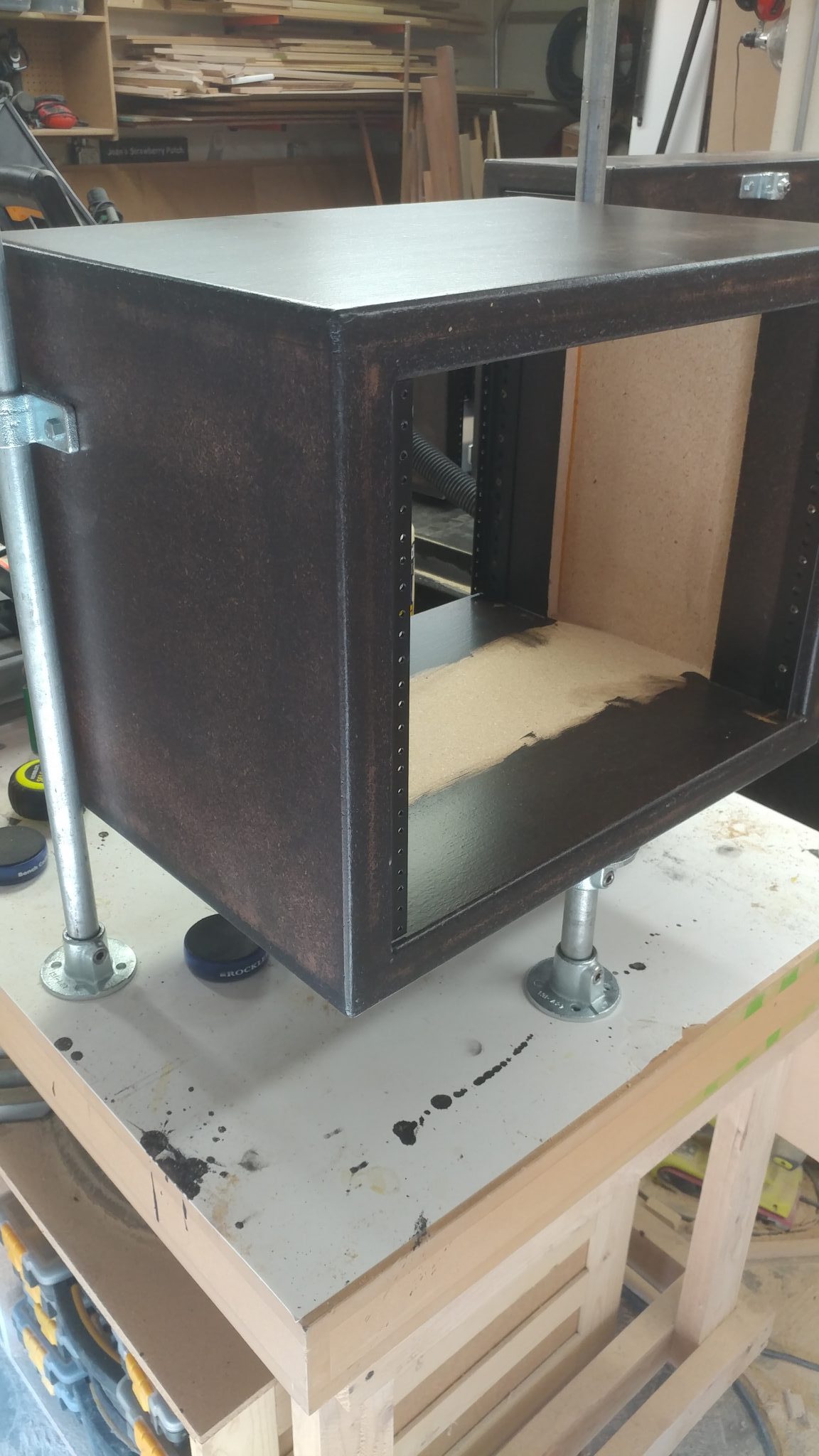
6. Installing the legs

I cut smaller tubes for the legs that will be installed in the flanges.  Then, to get an idea of how it will all look, I put it all together on the workbench, complete with the flanges that will be attached to the desk base.

Attaching the Legs to the Base

New I get to take it all out of my shop and move it into the studio.  I could almost sense my shop breathing a congested sigh of relief as I moved the components out.  Don’t worry, little shop.  I’ll fill you with tripping hazards again soon.

1. Positioning the right-side rack.

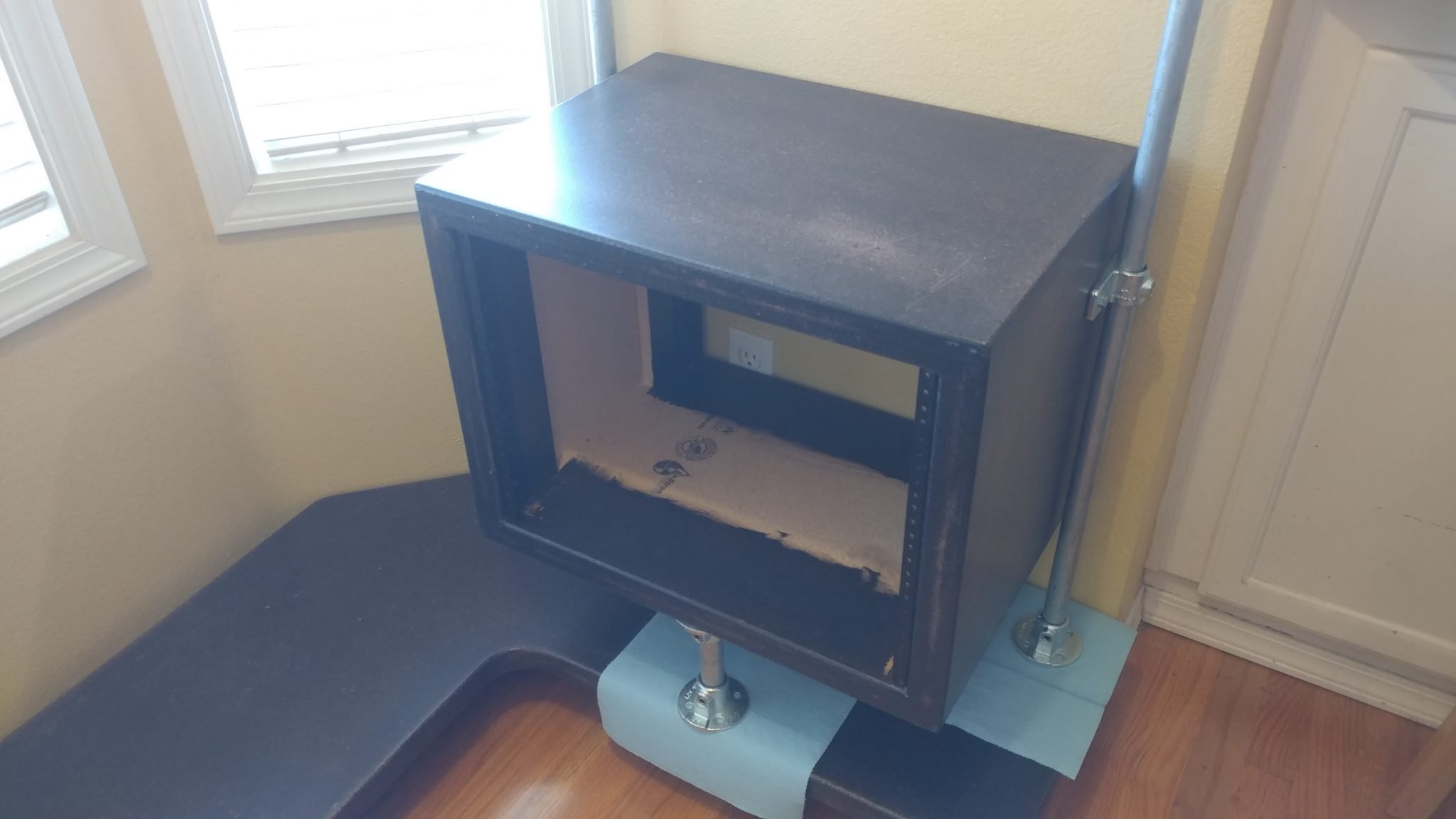
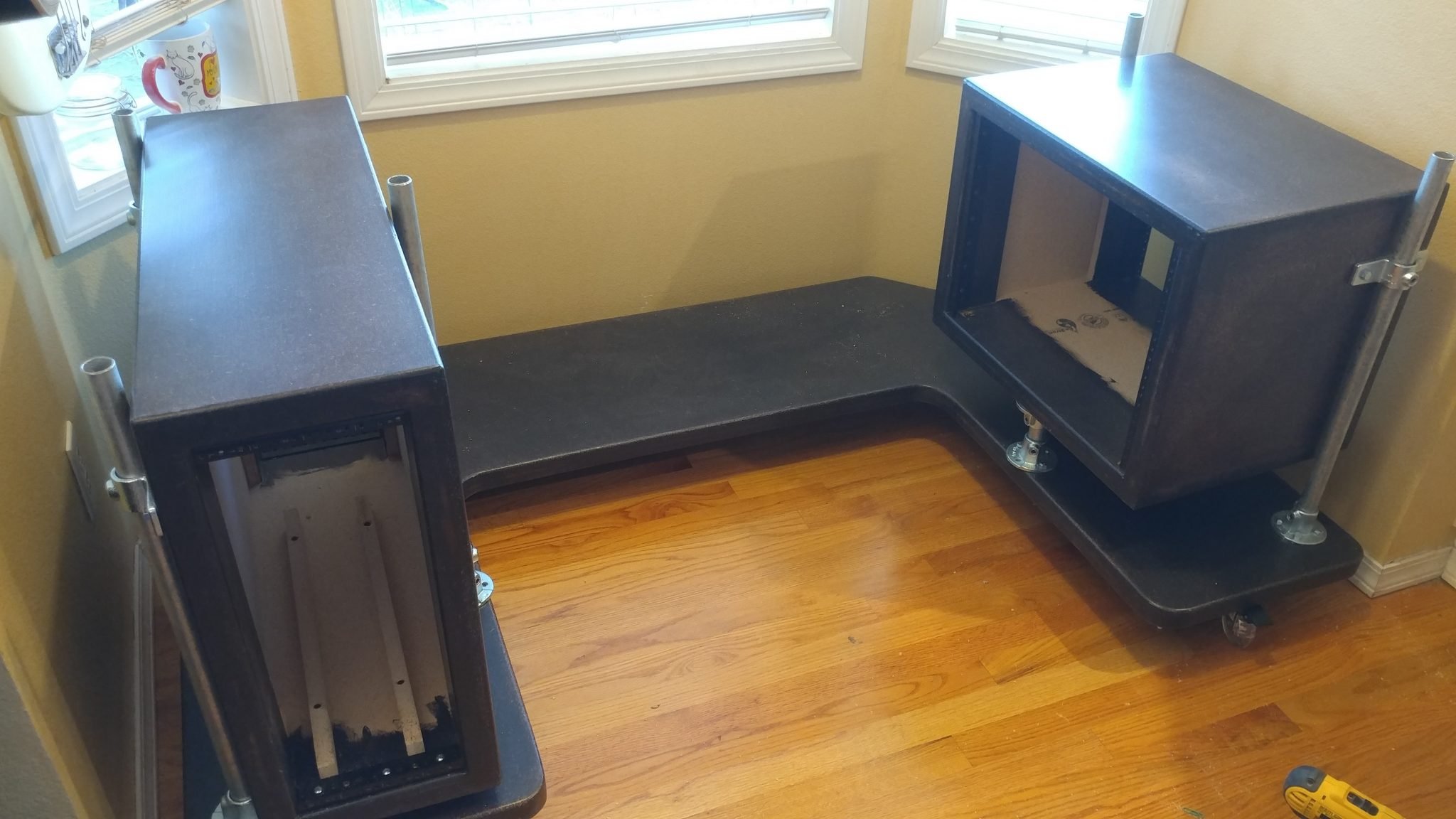
With the legs installed on one of the larger racks, I positioned the legs and flanges in position, using the wall to ensure the outside face of the rack is flush with the outside face of the base.  I set the flanges on blue shop towels to make sure I didn’t scratch the base.

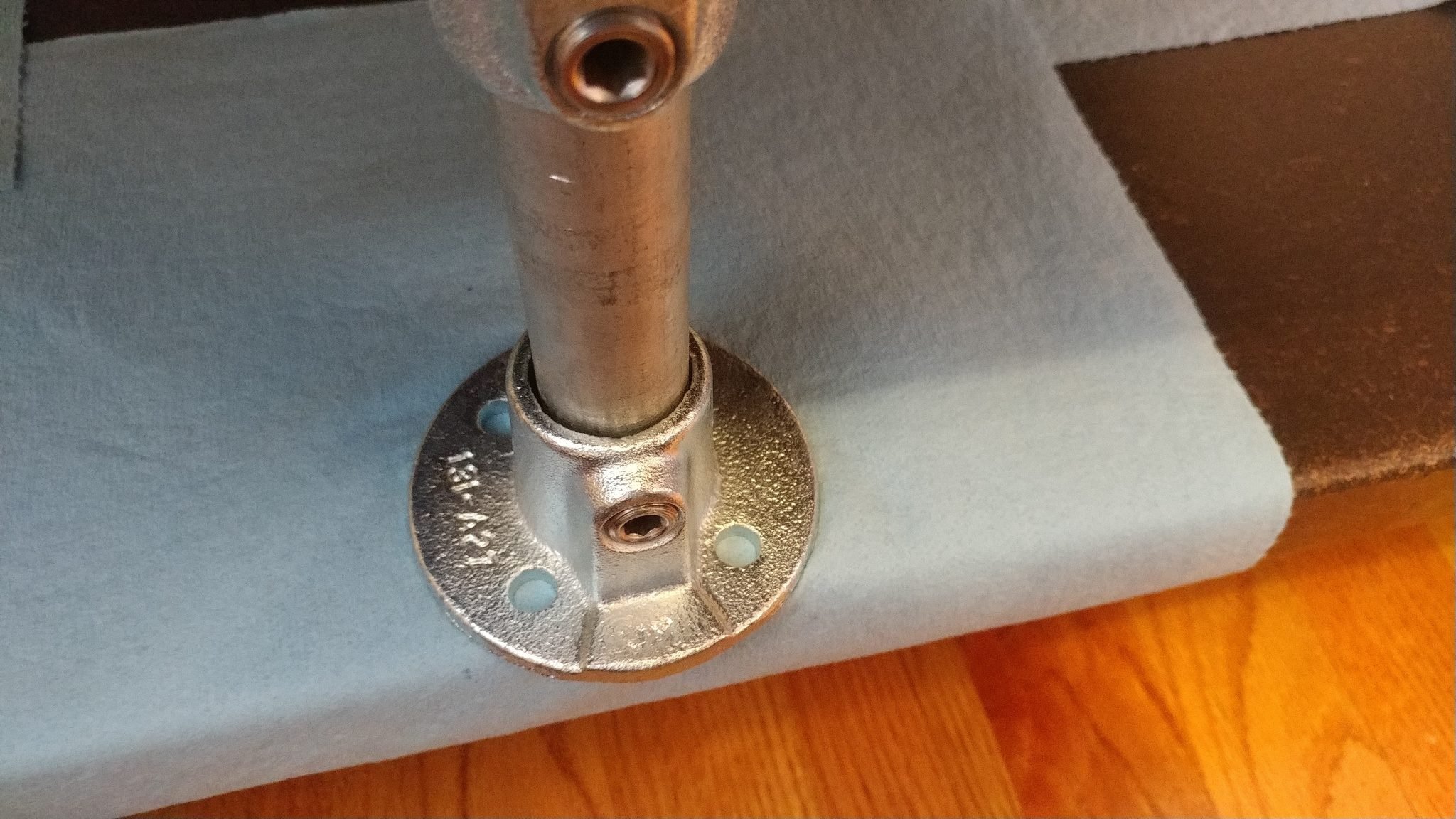
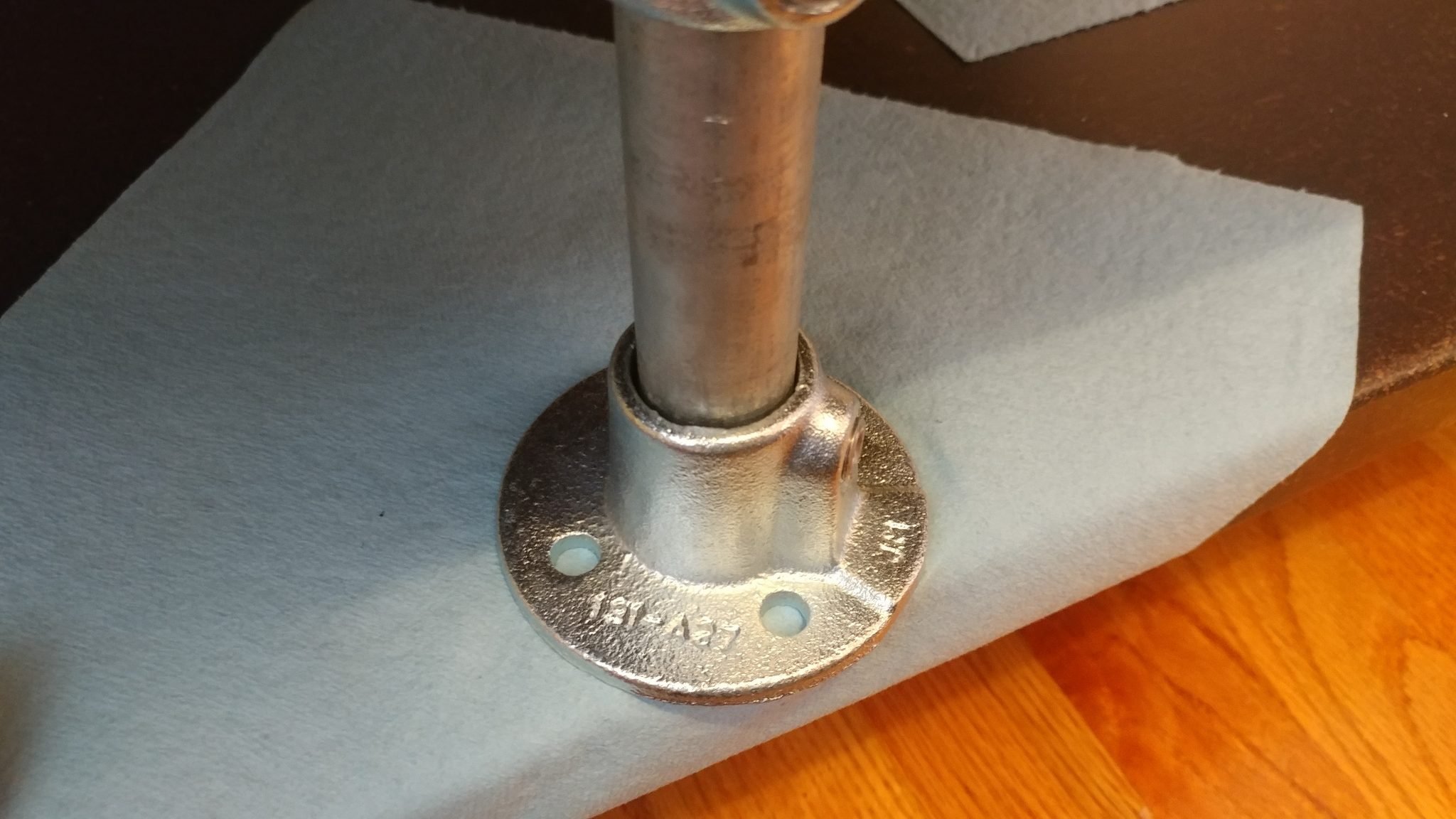
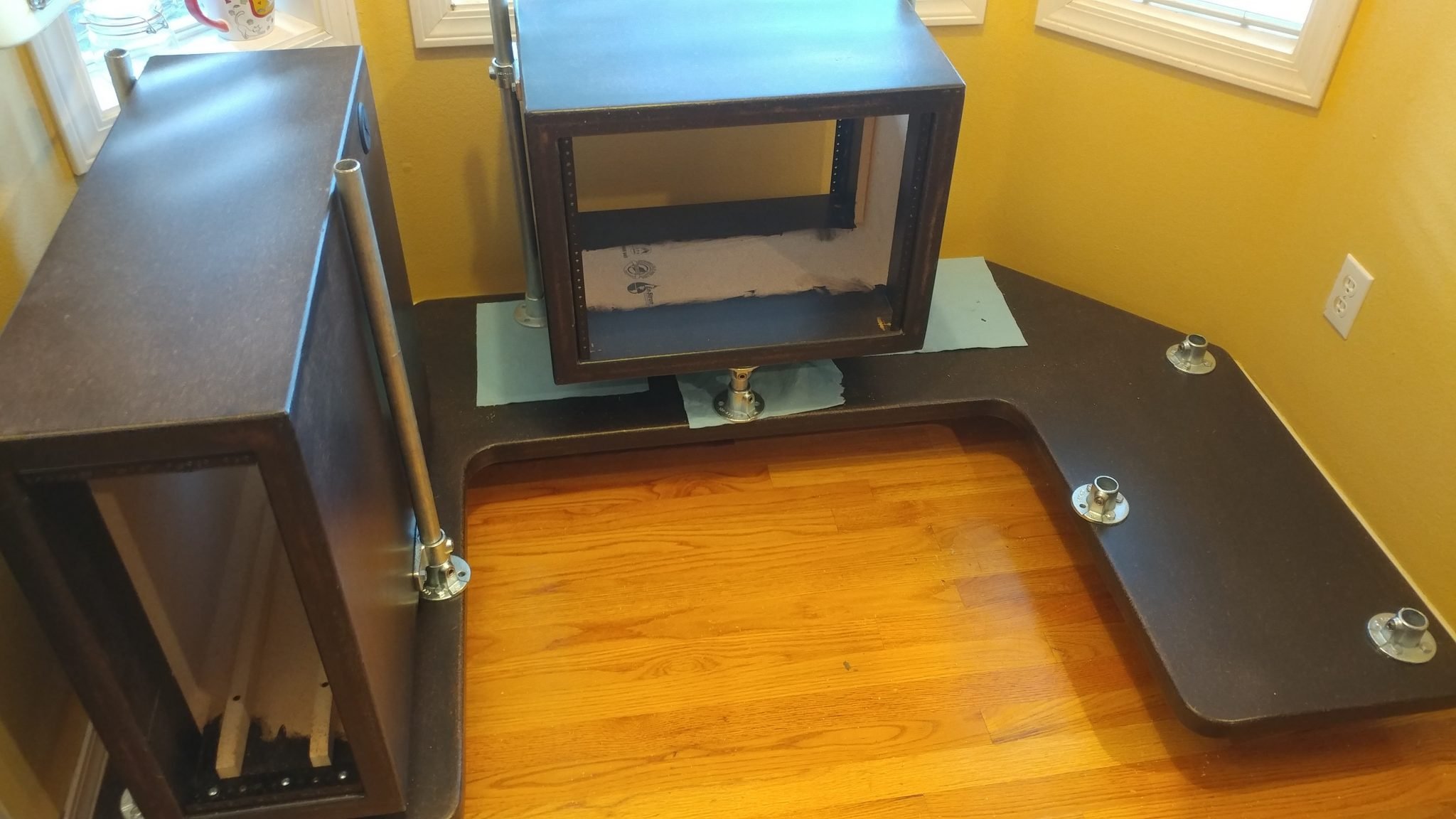
2. Dealing with another screw-up

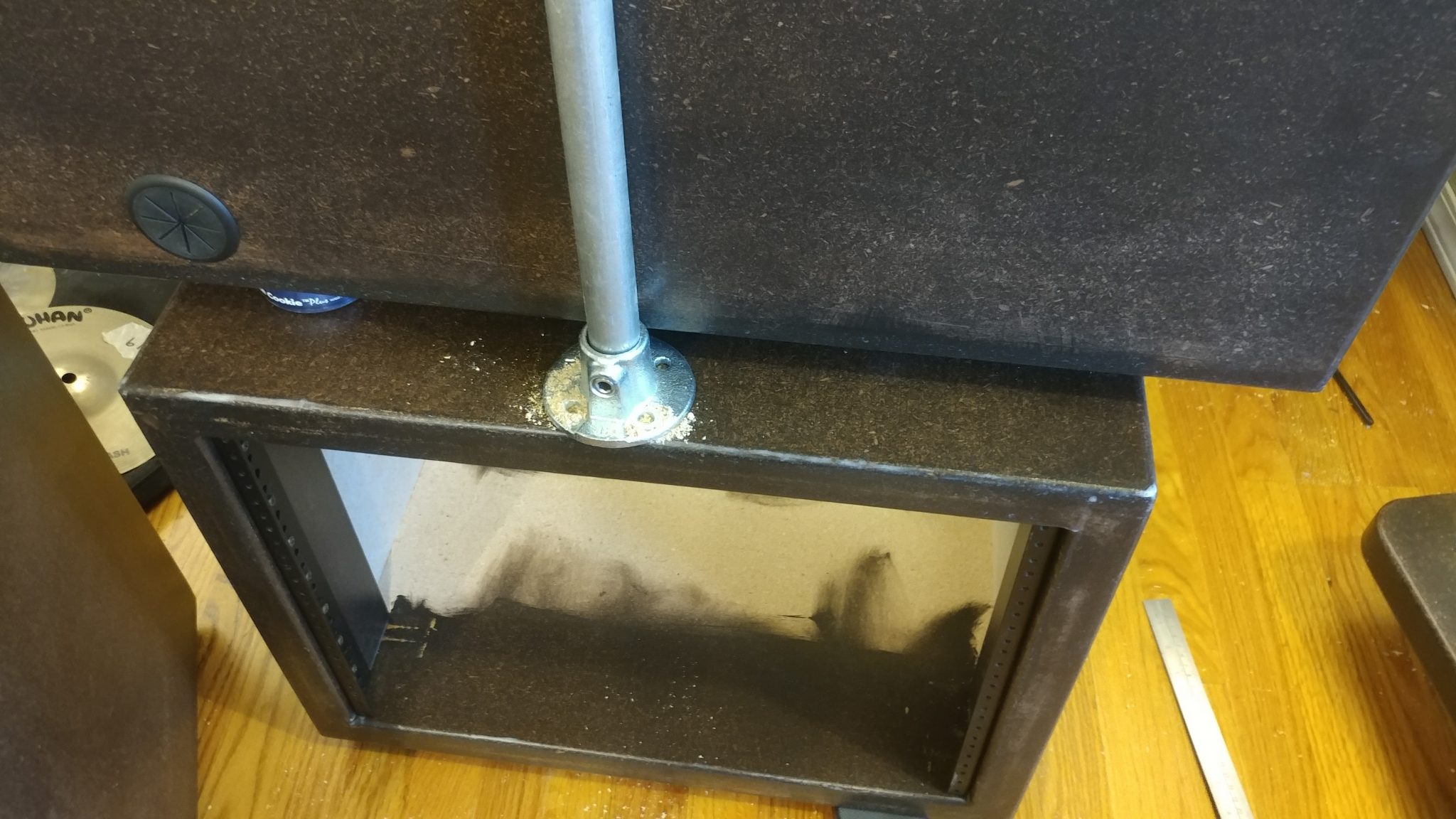
This is another area where I realized that I really screwed up.  As you can see, the flange sticks out past the edge of the base.

I rotated the flange 45-degrees so I could attach it to the base with three bolts rather than just two.

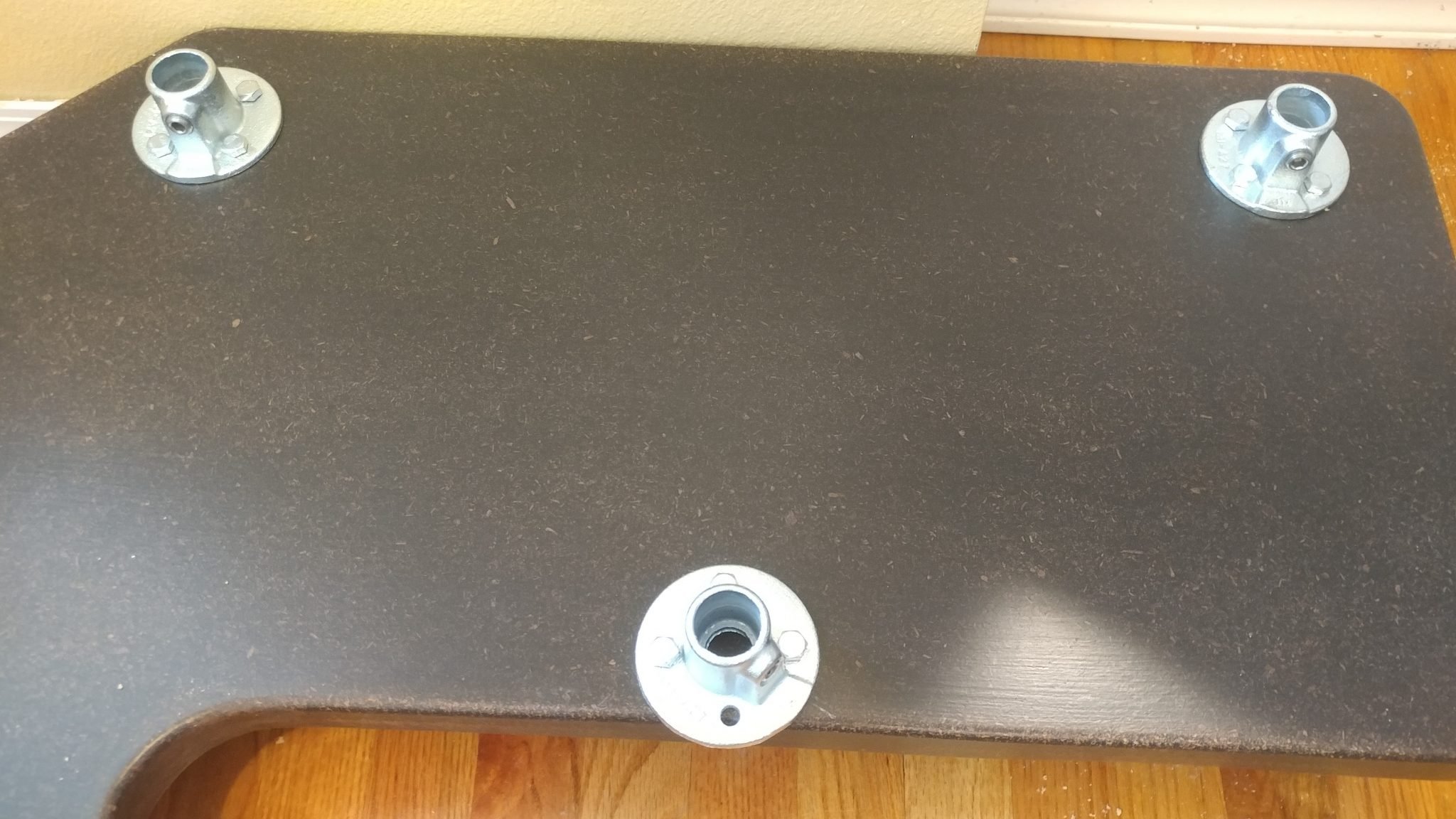
3. Attaching the right-side flanges

All three flanges were attached with 1-1/2″ lag bolts.

4. Attaching the left-side flanges

I performed the same procedure for attaching the flanges on the left side.  To test it out, I installed the PC rack.  It went into place perfectly.

5. Attaching the center flanges

I installed the flanges for the central rack using the rack from the right side.

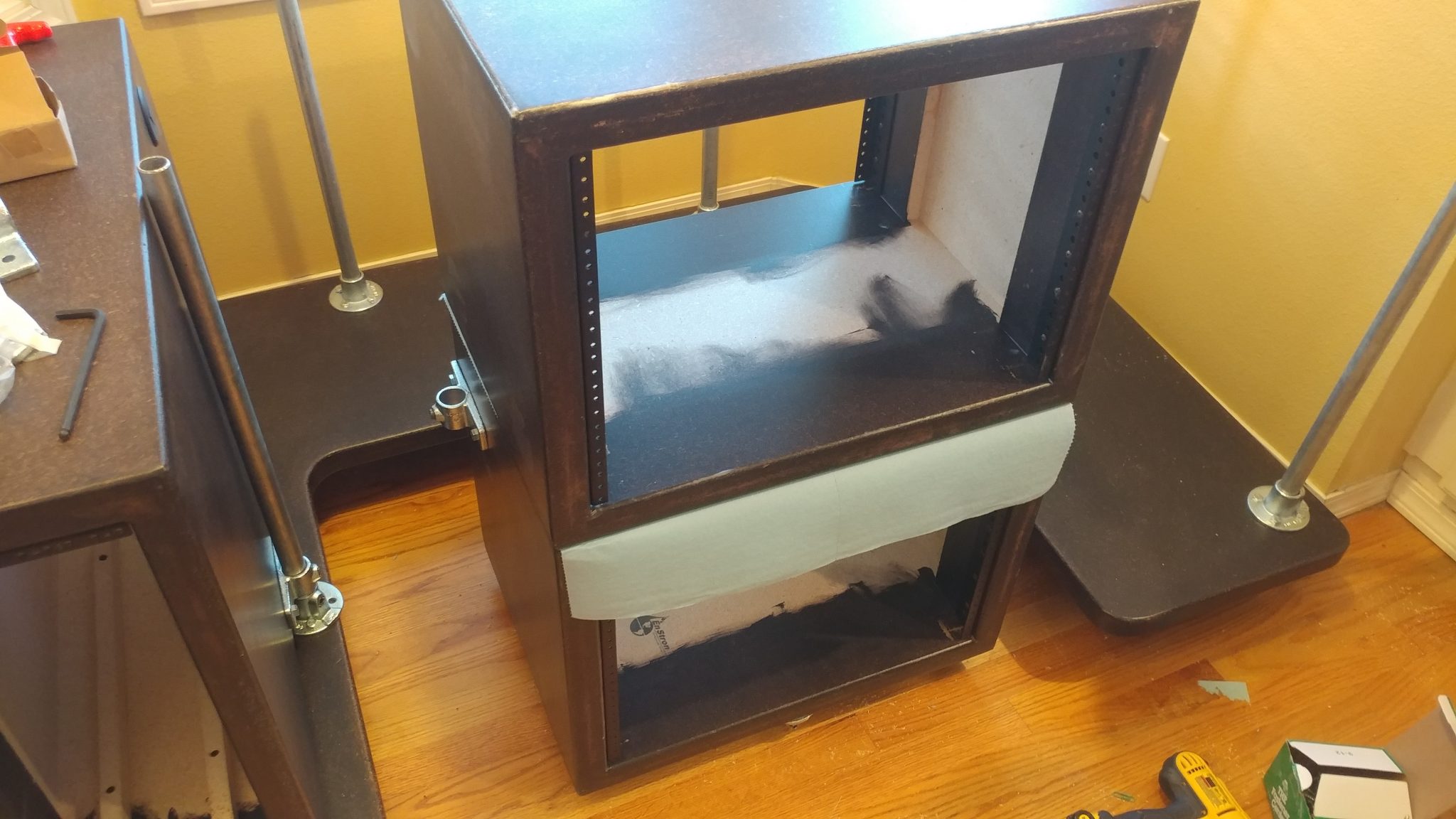
To make sure that the central rack has the side flanges installed correctly, I used the first 8-space rack to position them by removing that rack from the desk and setting the second rack upside-down on top of it.

6. Attaching the side flanges for the second 8-space rack

I inserted the leg rails in the lower rack and then attached the side flanges in place.  I positioned them 3-1/2″ from the lower edge.

7. Attaching the floor flange on the second 8-space rack

To install the central flange on the underside of the second rack, I set it upside-down on the floor and used the PC rack to position the flange just like I did with the other 8-space rack.

8. Installing the legs and upper flanges

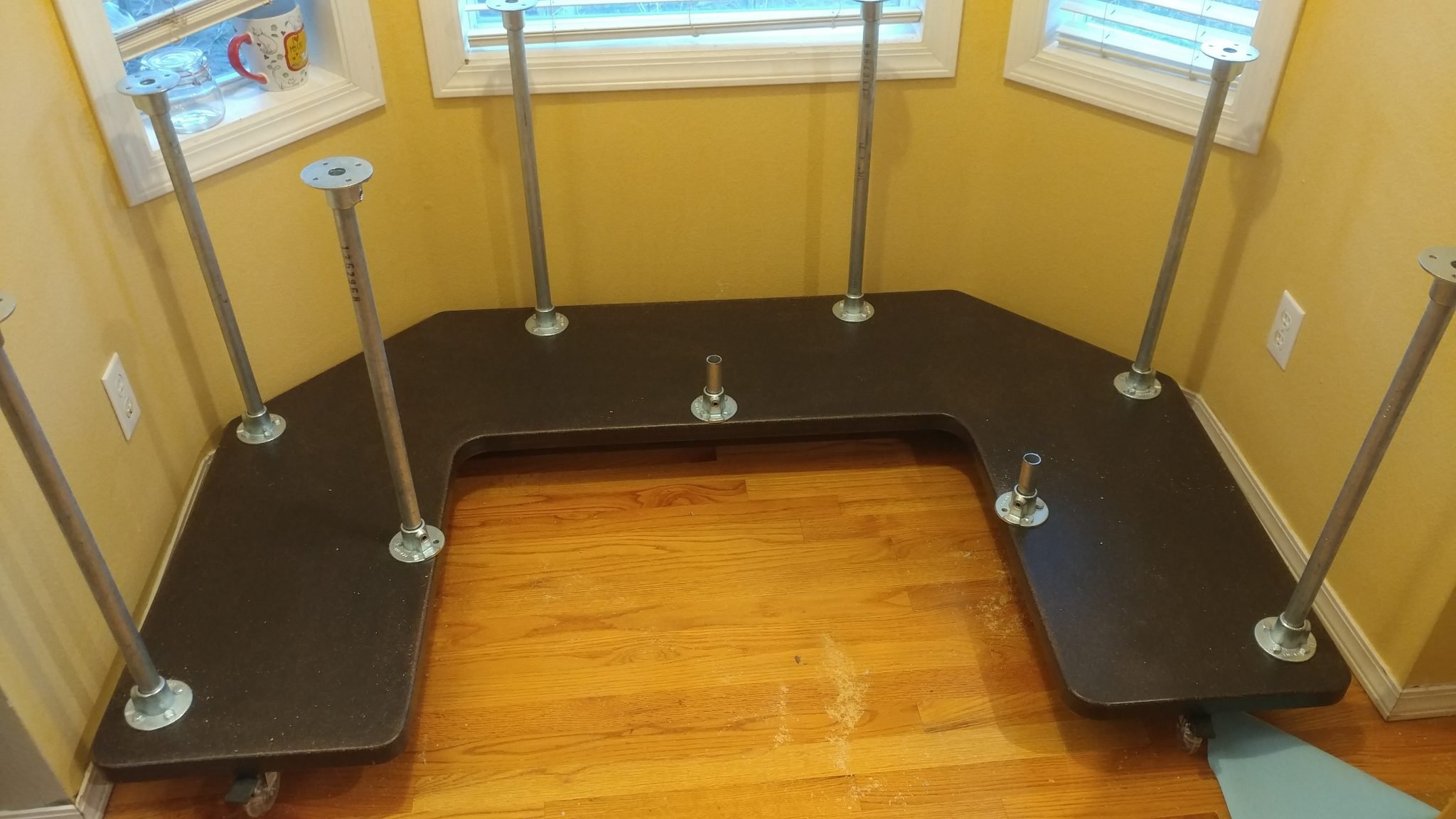
Once I was done with the racks, I set them aside and installed each of the legs and the top flanges.  I left the racks off because I need to attach the flanges to the underside of the desk top and the racks will just be in my way.

Putting it All Together

The hard work is over and now it’s time to put it all together.  I’m really getting tired of working on this, mainly because of how much space it is taking up in my shop so this is a very welcome moment.

1. Positioning the desk top

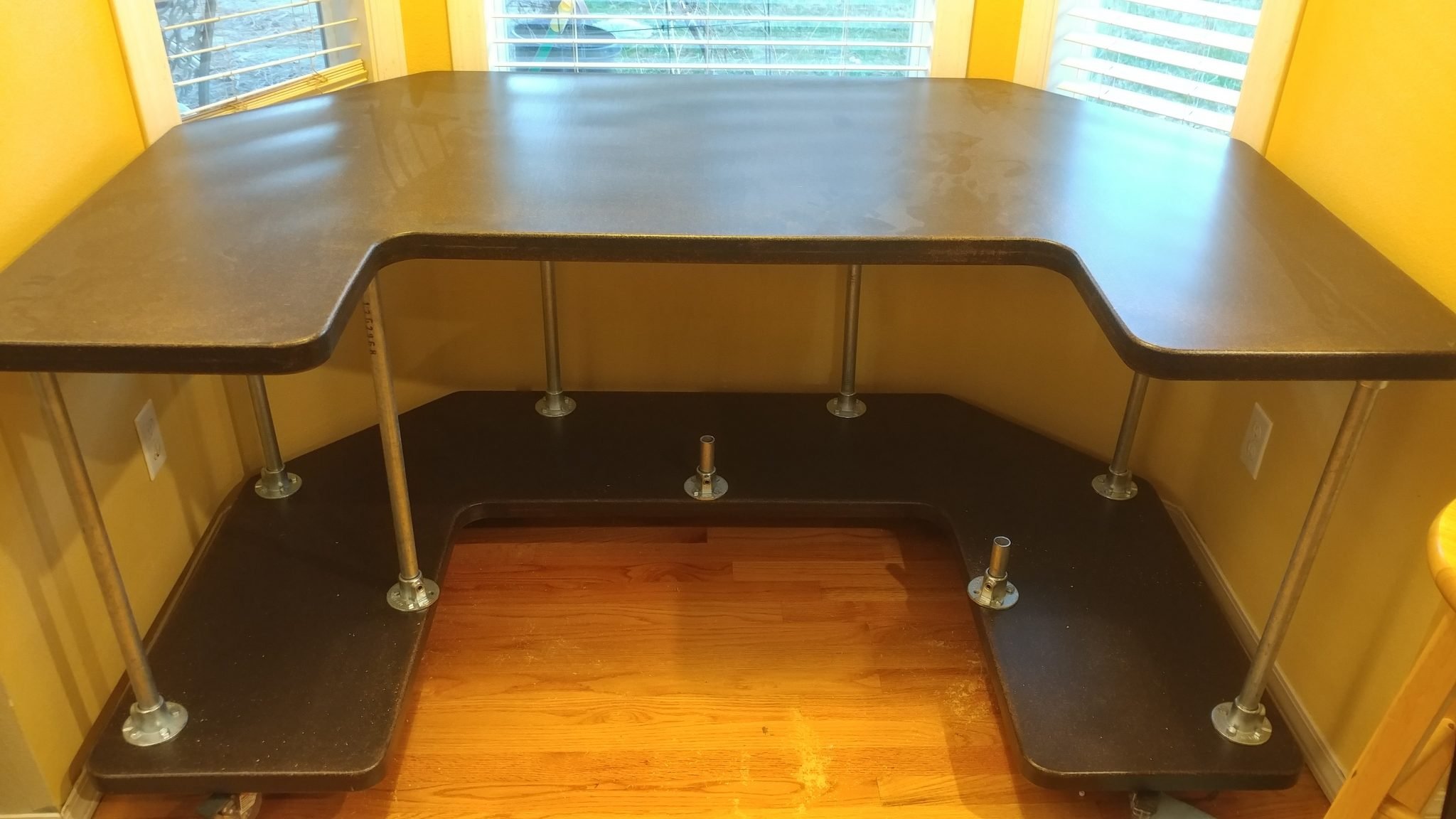
I placed the desk top loosely in place.  It actually started to resemble a desk at this point.

2. Marking the hole locations

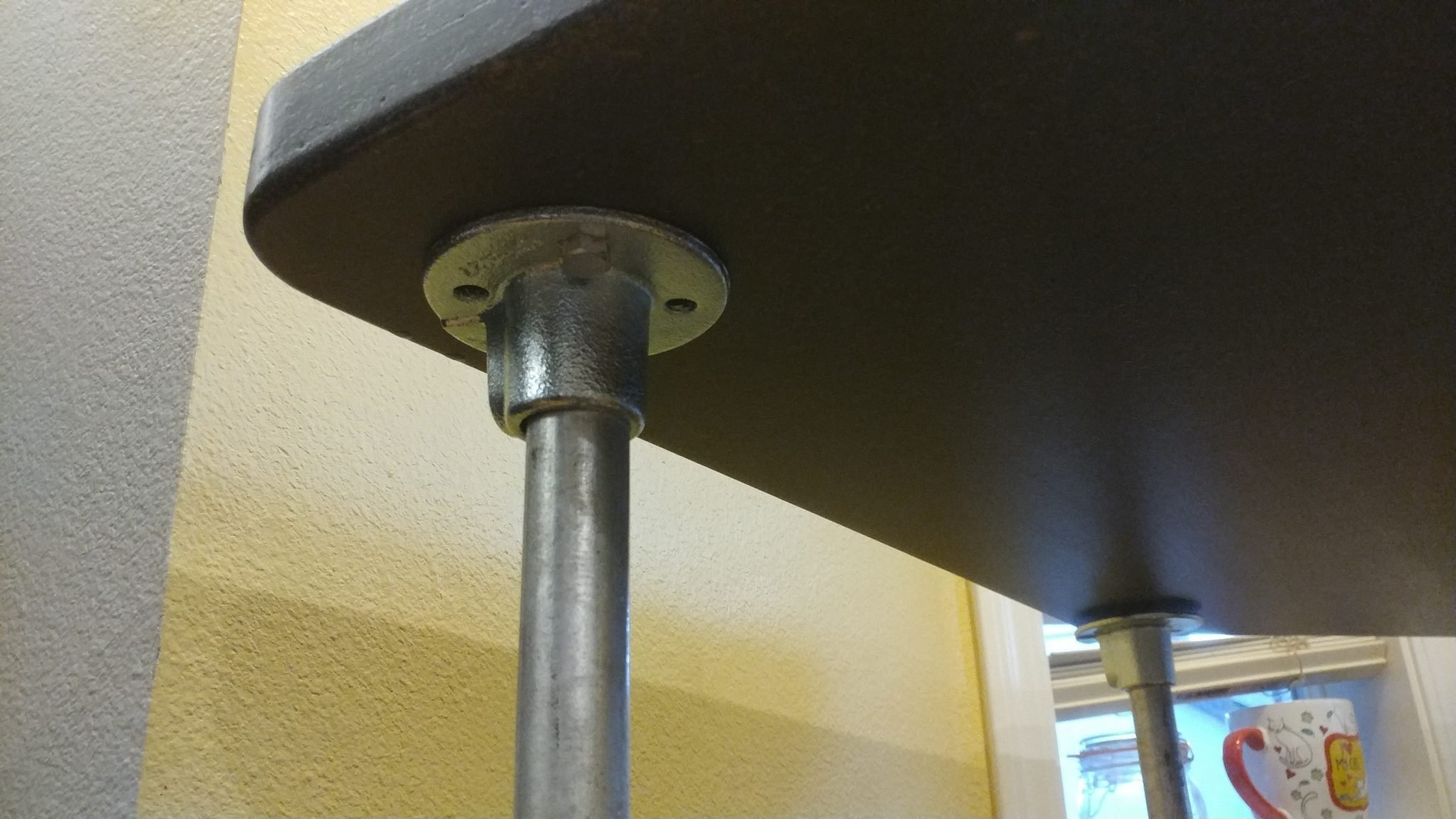
From underneath I could see where I needed to drill the holes for the lag bolts.  This is where I almost screwed up.  I realized that there was some play in the flanges and that would cause the legs to tip a bit.  In order to ensure that everything was installed correctly and that the racks would be able to go on squarely, I reinstalled the racks and placed the desktop back on then marked the holes with a silver Sharpie, then rook the top and the racks back off, put the top back on and lined up the holes, then drilled the holes for the lag bolts and attached the flanges.  These parts are very heavy and this was a LOT easier said than done.  As a result, I was too flustered to take photos of that agonizing process.

3. Installing the racks

Once the flanges were attached, I removed the top and reinstalled the racks.

4. Attaching the desk top

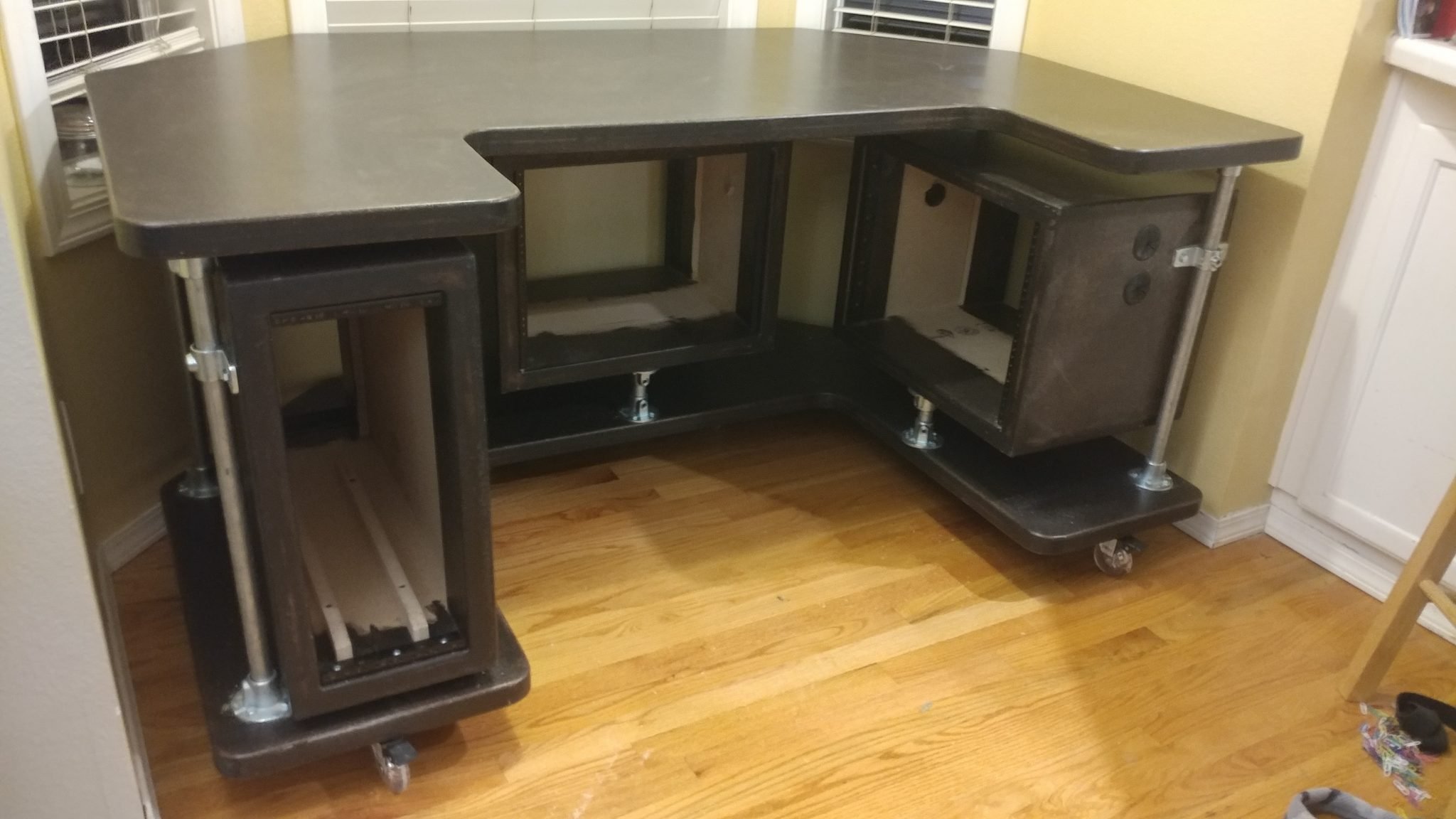
After that I finally put the top back on and the desk assembly was complete.

This concludes part 5.

Closing remarks

This was a pain in the butt.  Each of these pieces weighs a ton and was very difficult to maneuver.

This is also where I ran into a major problem.  The desk is too heavy for the casters.  It’s so heavy that the casters get a flat spot on them if the desk sits in one spot for any length of time.

I don’t know why I missed this but I think it is a good representation of the dangers of keeping your focus on one little detail and not taking in the entire picture.  I was so focused on getting polyurethane wheels that I totally missed the weight issue.

I might try doubling up on the casters.

The next step is to do the electrical.

If you have any suggestions, please leave them in the comments below.  I’d love to see any desk builds you’ve done.  Also, if you haven’t already, please consider signing up for my mailing list so you get e-mail notifications when I post new articles.

News – January 8th, 2018 – Outfeed surface, Recording, and Cthulhu

Outfeed table

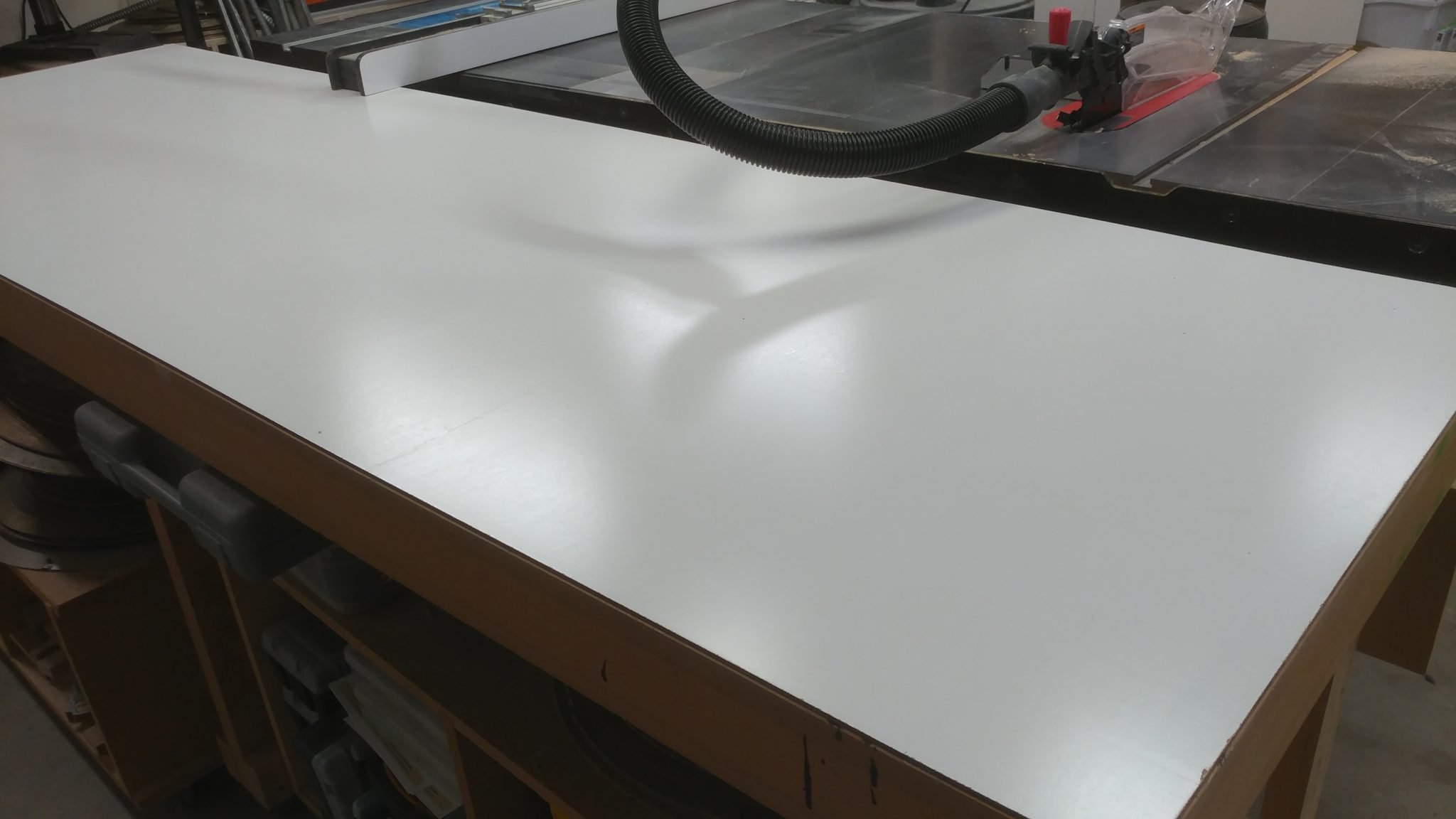
Almost a year ago I decided to try a new work surface for my outfeed/assembly table.  I wrote about this here.  After using and abusing it for almost a year, my official opinion is that I don’t really care for it much.  I found the texture to be problematic in that it retained glue and stain.  I also set my chop saw on it and it was bombarded with hot metal shavings which would melt into it and turn it into a big sheet of sandpaper.  Let me be clear; this isn’t a fault of the material.  All this shows is that it isn’t well suited for something that it wasn’t designed to handle.  Makes sense.

In the end, I decided to go back to my old standby: white hardboard.


Recording Woes

It is proving more problematic to get time to record lately.  In the meantime, I will be using that opportunity to perform and write-up the Shure SM57 right-angle-mod and also the MXL 603 capacitor mod which makes a $100 condenser mic sound like a $500 condenser mic (your mileage may vary).

My Amazing Wife

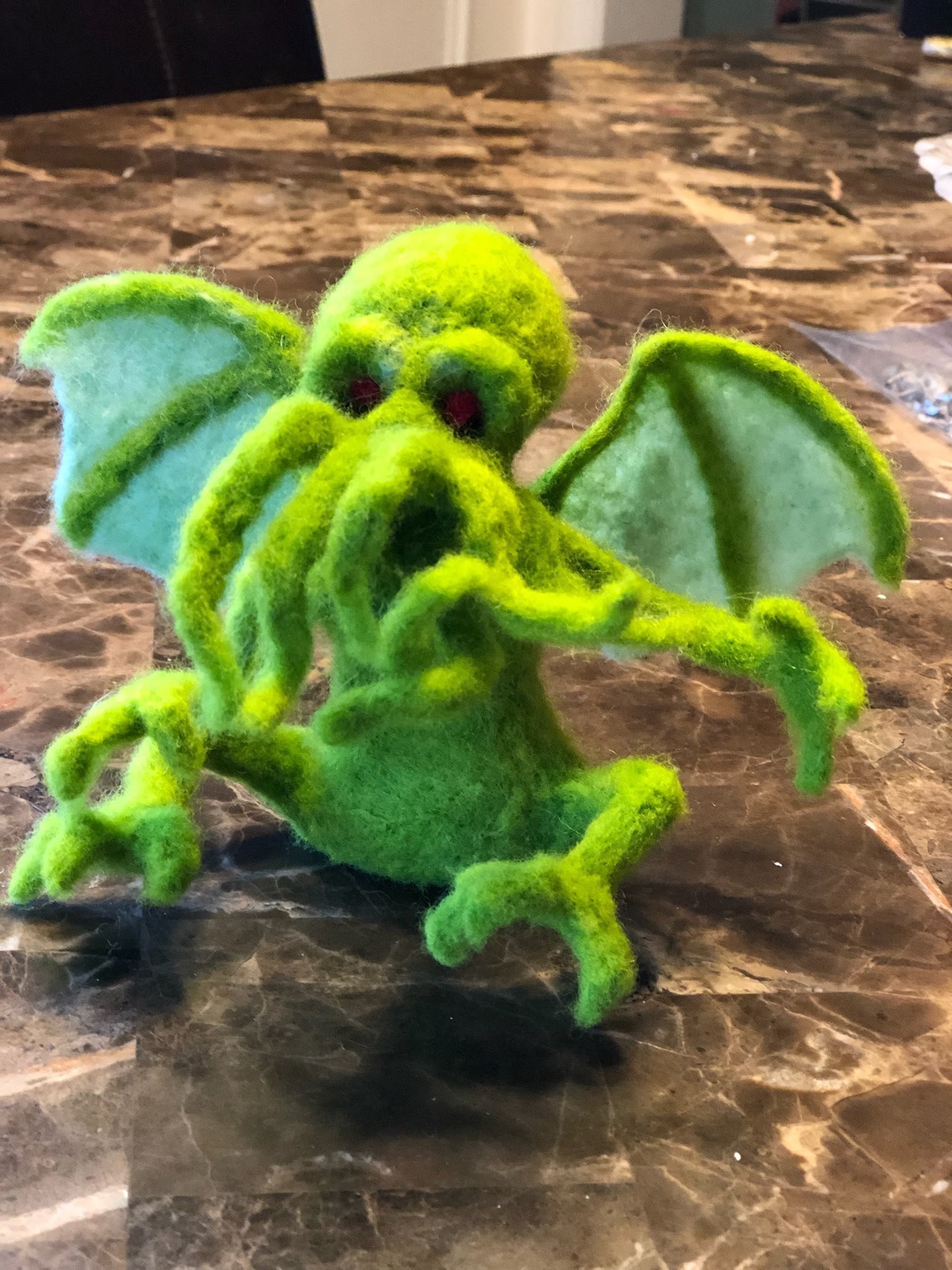
My wife doesn’t like to show off her work so I am doing it for her.  This is a felted Cthulhu that she made as a Christmas present for her brother.  I’d love for her to start a blog because she does some really amazing work.  If you’d like to see more, let me know and I’ll pass it along.


Other work…

There are a few other things in the works that I can’t speak of yet but I’ll post an update when they’re secured.


News – December 11th, 2017 – Teaching, last-minute performance, and woodturning

Sorry for the delays in my posts.  The holidays are always pretty hectic so I’ve been busy.

Teaching

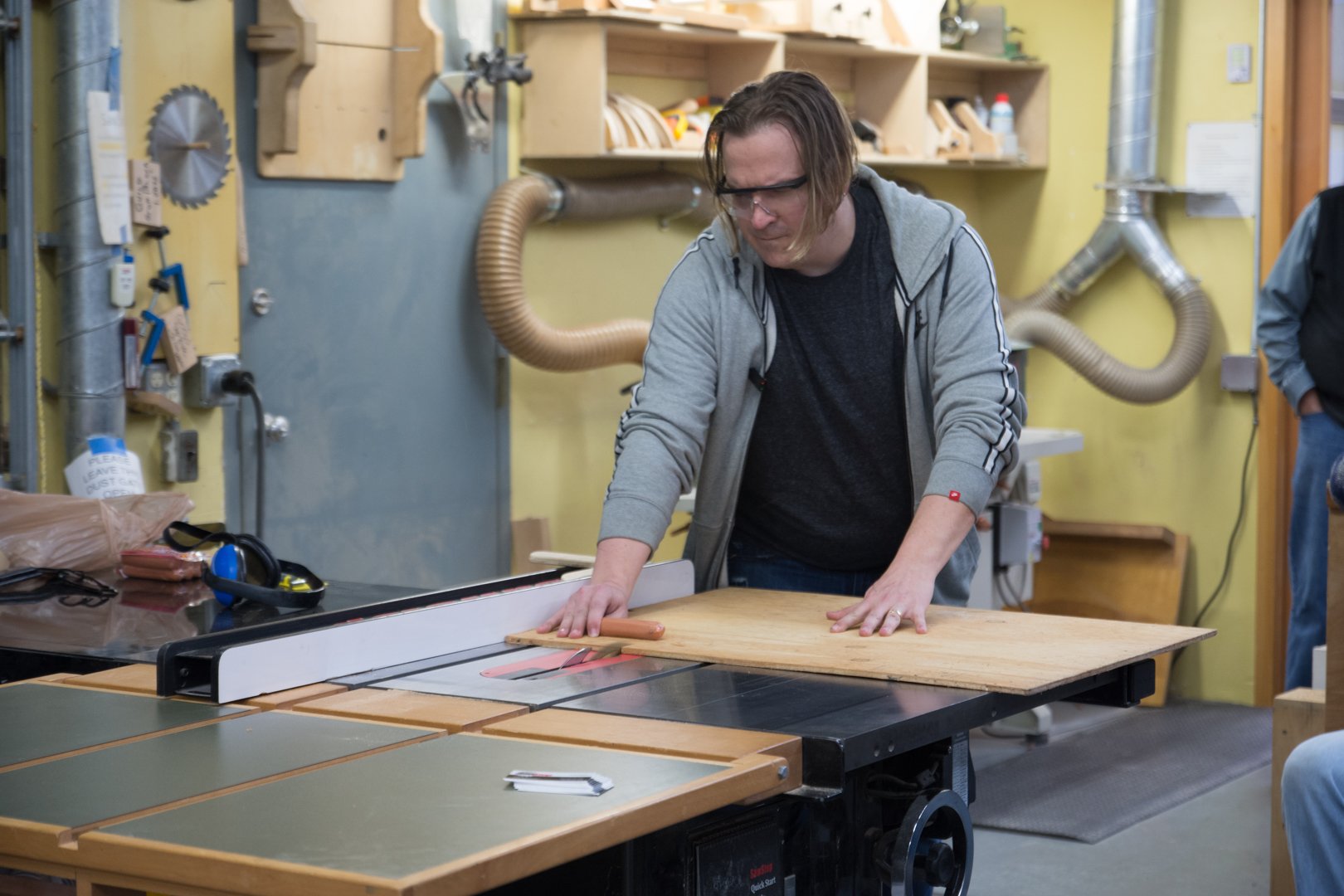
Two weeks ago I was given the opportunity to teach a class for The Guild of Oregon Woodworkers on The Care and Feeding of Your SawStop.  The class went really well, with over 20 saw owners attending.  I got to do a hot dog demo in order to demonstrate how to remove an activated brake and blade from the saw.  I will be creating an article for this blog consisting of the documentation that I created for the class in the coming weeks.


Last-Minute Gig with Cody Weathers and The Men Your Mama Warned You About

It’s short notice but I have a gig on December 16th at The 45th Street Pub & Grill in Portland starting at 9:00.   I’ve been friends with Cody for a few years now but I’ve never played with these guys so it’ll be interesting.  Swing on by if you’re in the area.

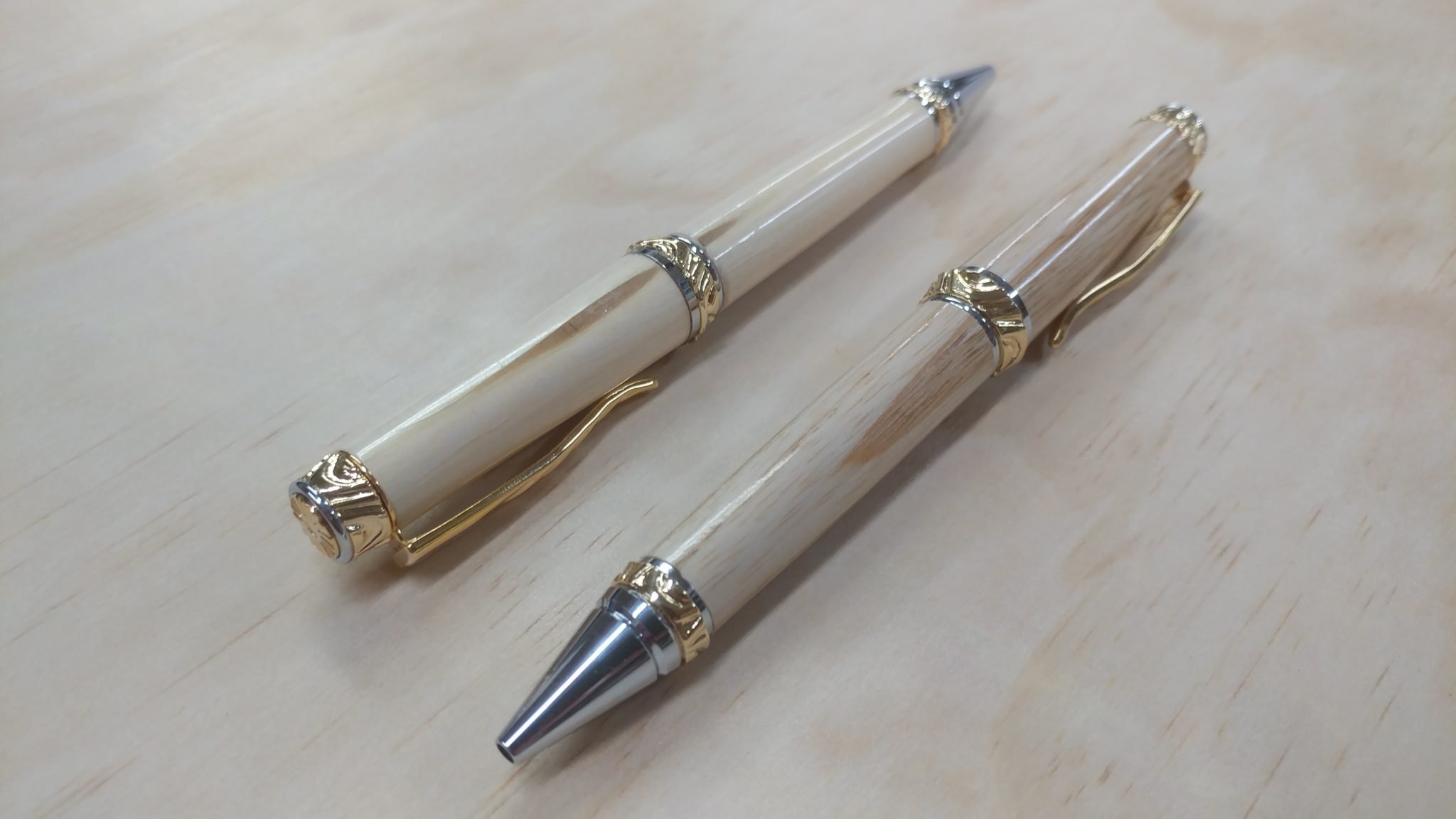
Wedding Pens

A friend of the family is getting married in a few weeks and they requested that I make them pens from their birth woods, Ash and Hazel.  I’ve never turned either of these woods and I didn’t know what to expect.  To make things even more interesting, the hazel was still wet and was already starting to warp and twist.  From what they say, they only need the pens for the actual wedding ceremony so I just need them to last a few weeks.  This is good because the hazel pen seems to be cracking in a few places already.


Studio Desk Part 5

I’m still working on the articles for the studio desk.  It’s done and I’ve been using it for over a month but there are several things I want to change about it and a few components I decided to add to it so there is a bit of a delay in updating the articles.  I hope to have part 5 posted this week.


News – November 2nd, 2017 – Wiring, teaching, and recording

I’ve been lax in posting news updates.  I’m going to try to be better about this.

Wiring

I’ve got the studio desk pretty much done, but I’m doing some additional wiring, such as adding a few electrical outlets to the desk itself.

I’m also making all new audio cables.  This includes 32 XLR cables for inside the desk, 16 XLR cables for the drum mics, dozens of 14″ TRS cables, and a 16-channel XLR snake.  I keep pushing this off since I’m not looking forward to that much soldering.  Tedious work while hunched over a workbench gets old really quick.  I’m going to do these in batches.


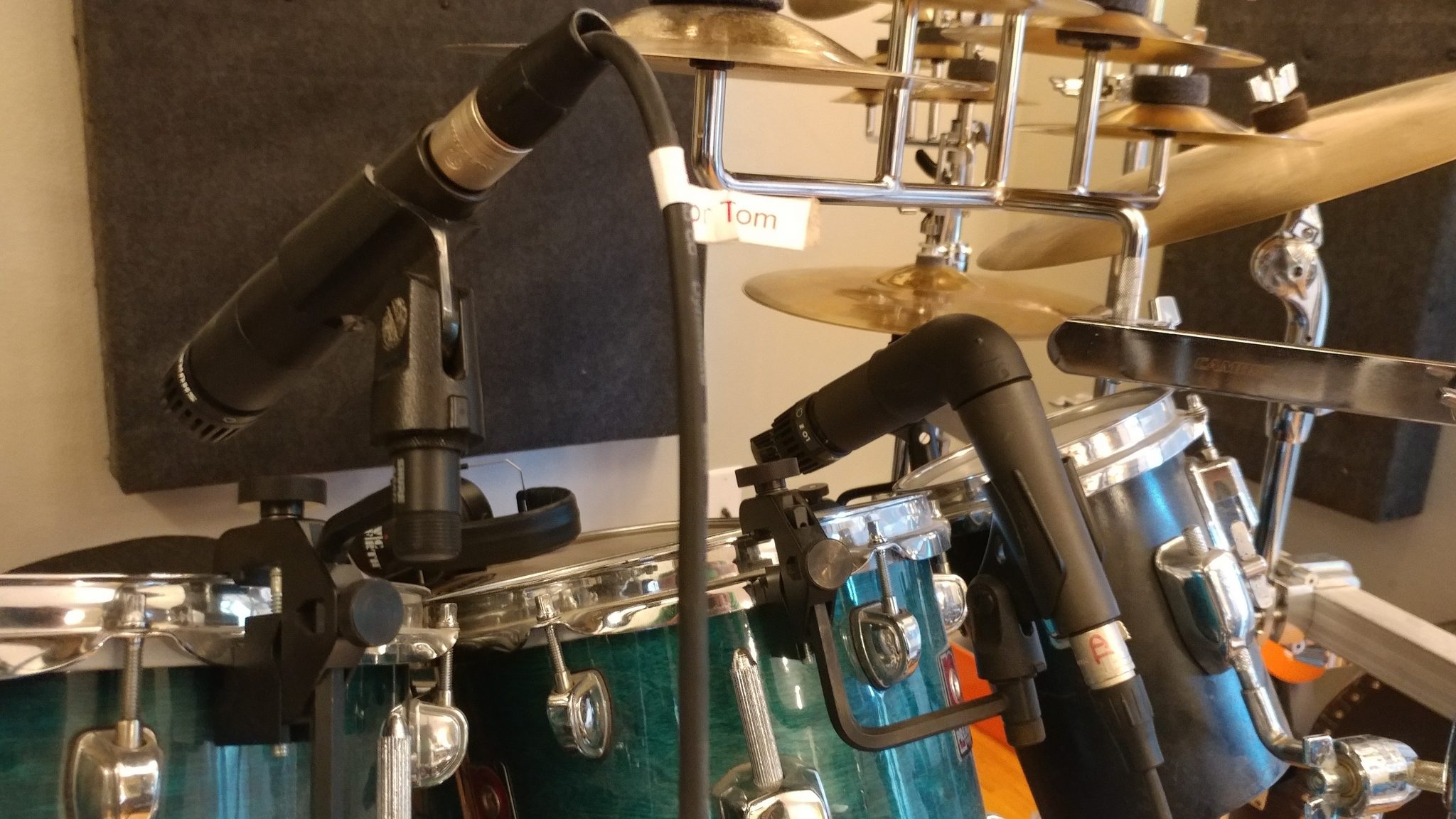
Shure SM57 Right-Angle Mod

I have several Shure SM57 microphones that I am going to perform the right-angle mod to.  I plan on documenting this thoroughly so anyone can do this.  In the following picture you can see the microphone on the right, which has the right-angle mod applied, is much more out of the way than the one on the left, which does not have the mod applied.

Teaching

On November 29th, I will be teaching a class for The Guild of Oregon Woodworkers on the care and feeding of a SawStop (the class isn’t advertised on their site yet).  It’s been a while since I taught a class so I’m really looking forward to this.  I’ll try to convert all the info into articles on my blog so if you are unable to make it to the class – due to previous commitments or the fact that you are thousands of miles away from Portland Oregon – you can still make use of the information.


Recording for Bright & Shiny

Recording is still going on for the album by Bright & Shiny.  It’s hard for me to get time to record, lately.  I only have the drum tracks to a few songs left, then I can proceed with the auxiliary percussion.  After that, I will begin posting videos of each song.


The Map of Alice

Sadly, I had to call it quits with The Map of Alice.  There were some personality conflicts and the visions for the project were just not lining up.  It was mostly fun while it lasted.

Studio Desk – Part 4: Applying the Finish


This is a continuation of Studio Desk – Part 3: Assembling the Racks


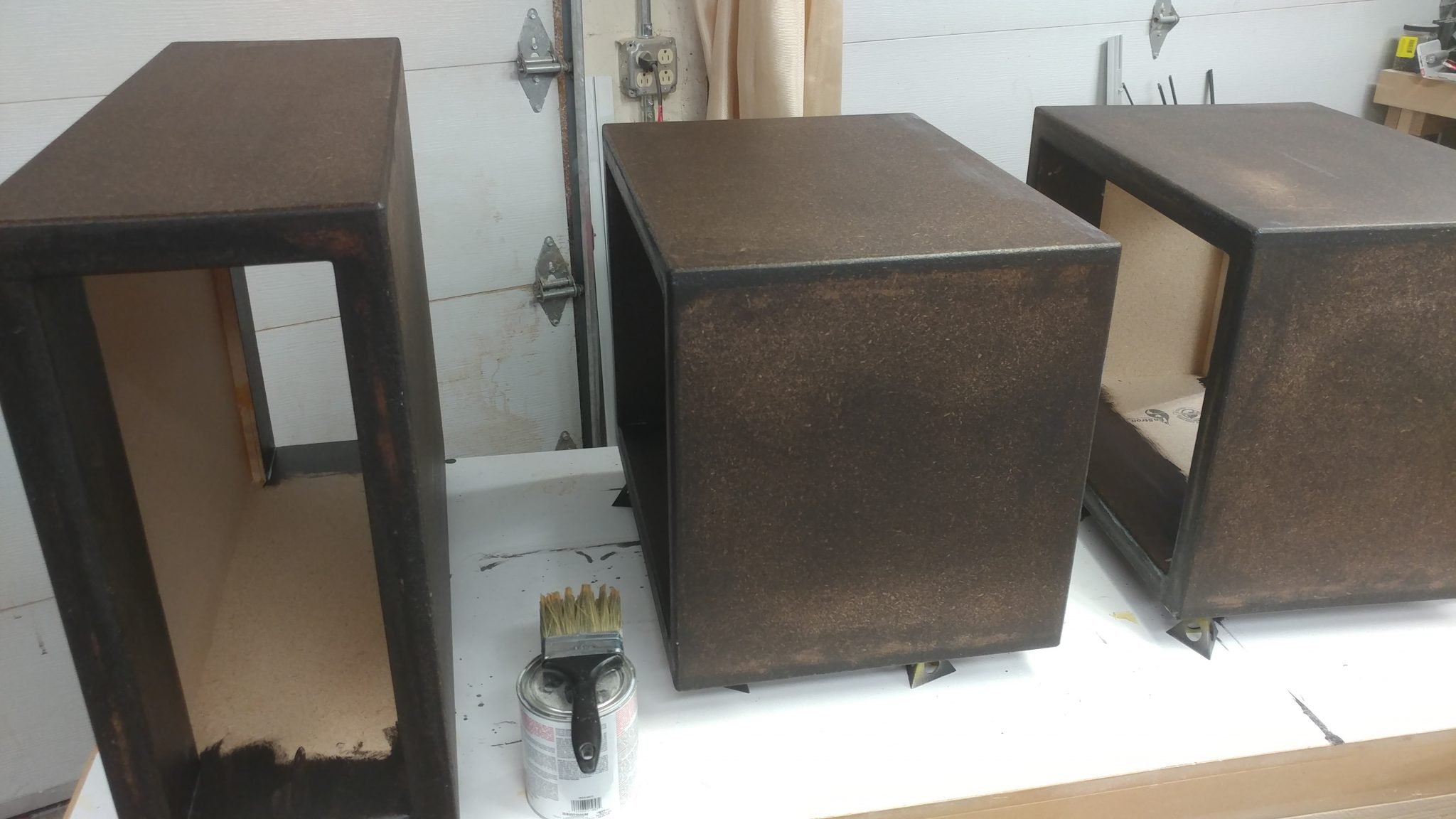
Now that the components are built, they’re ready to be stained and finished.

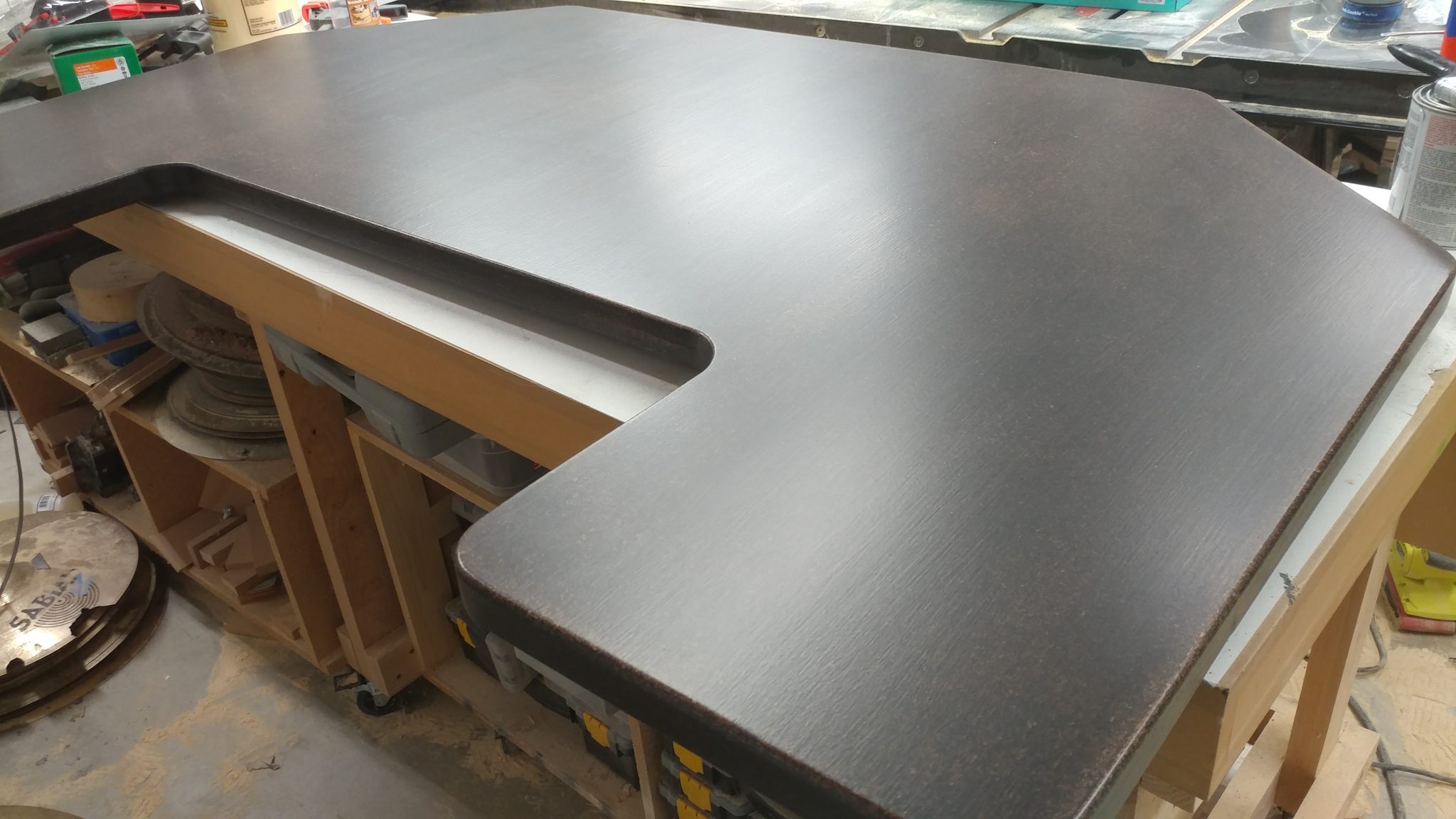
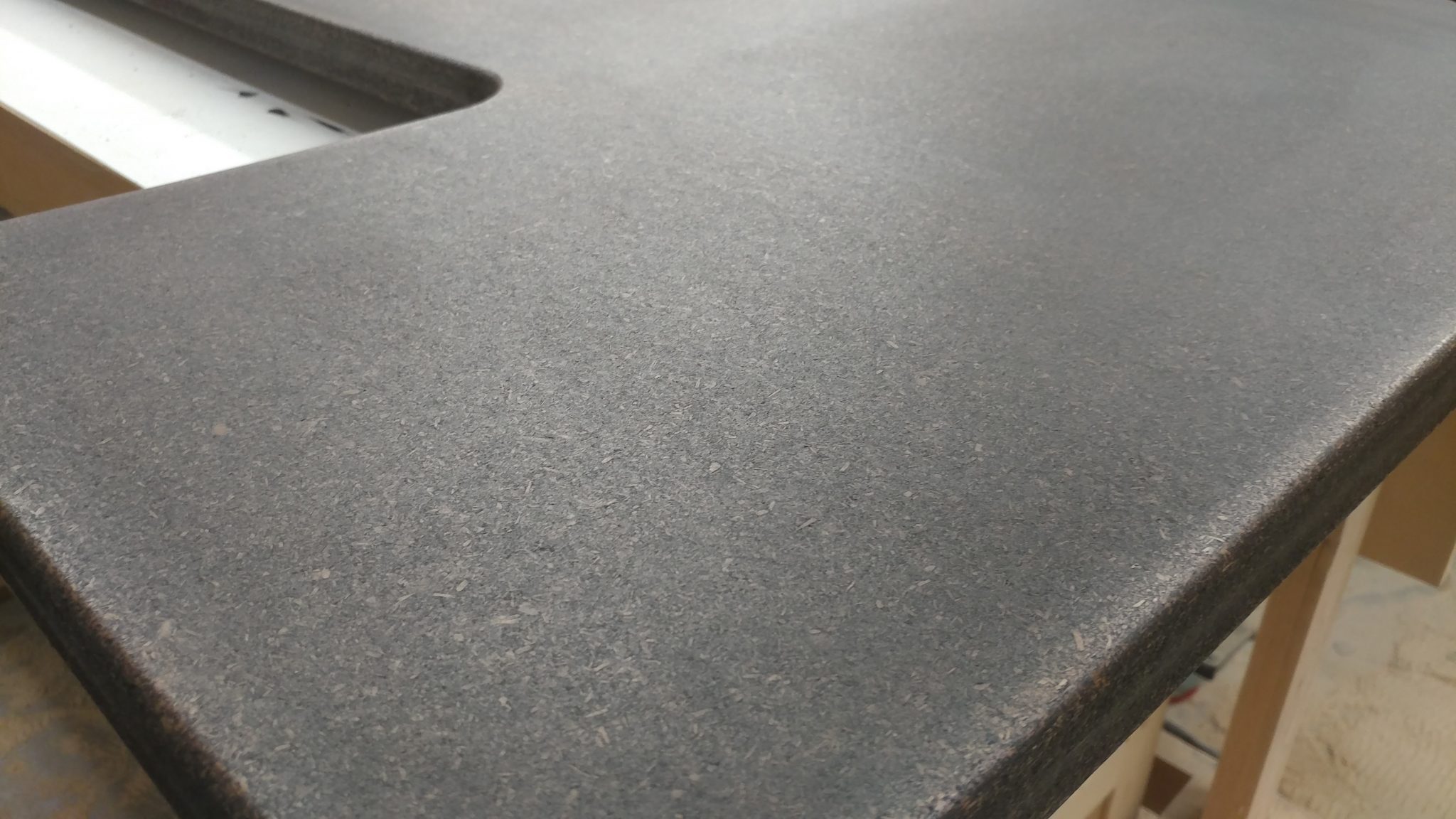
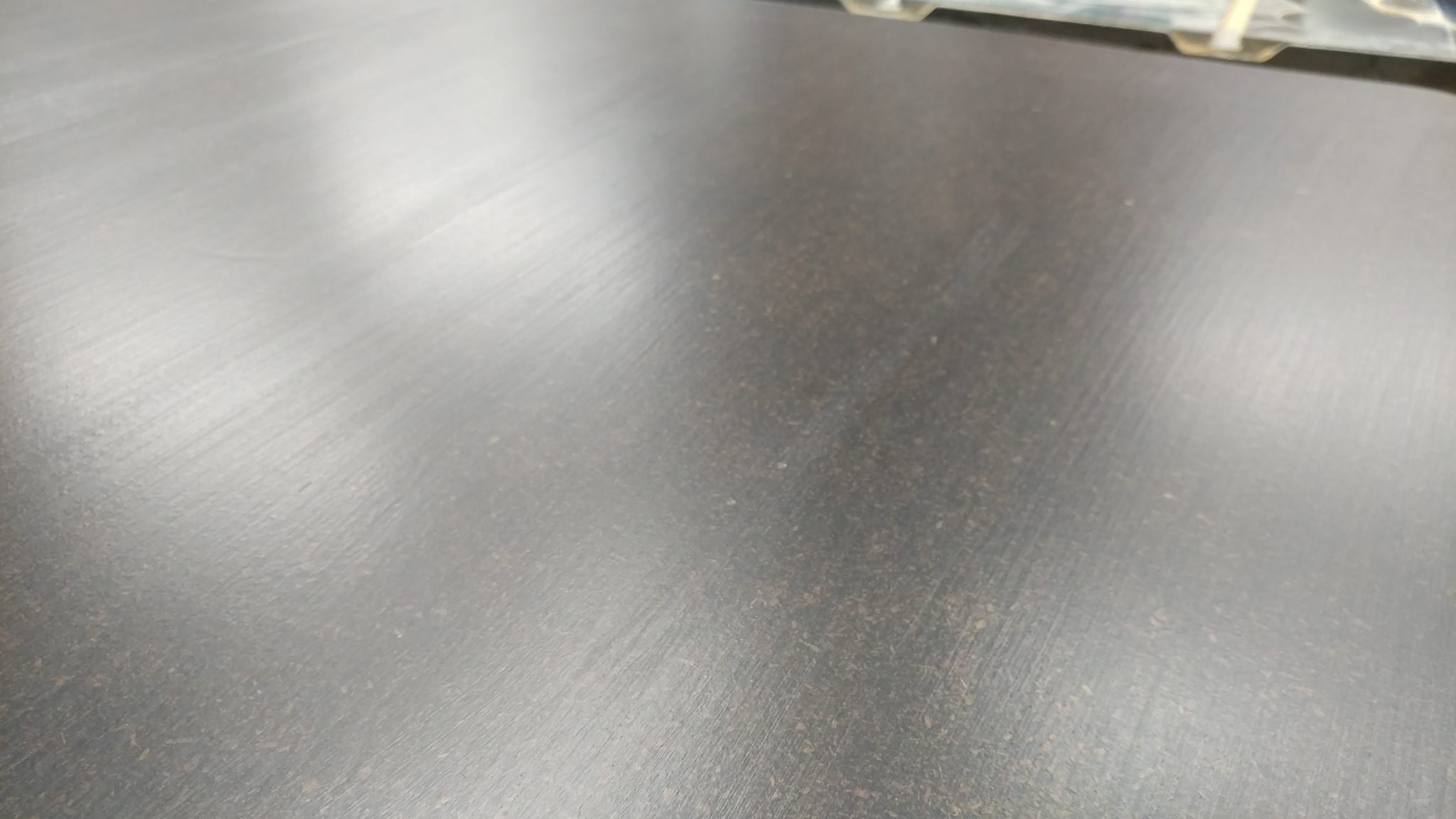
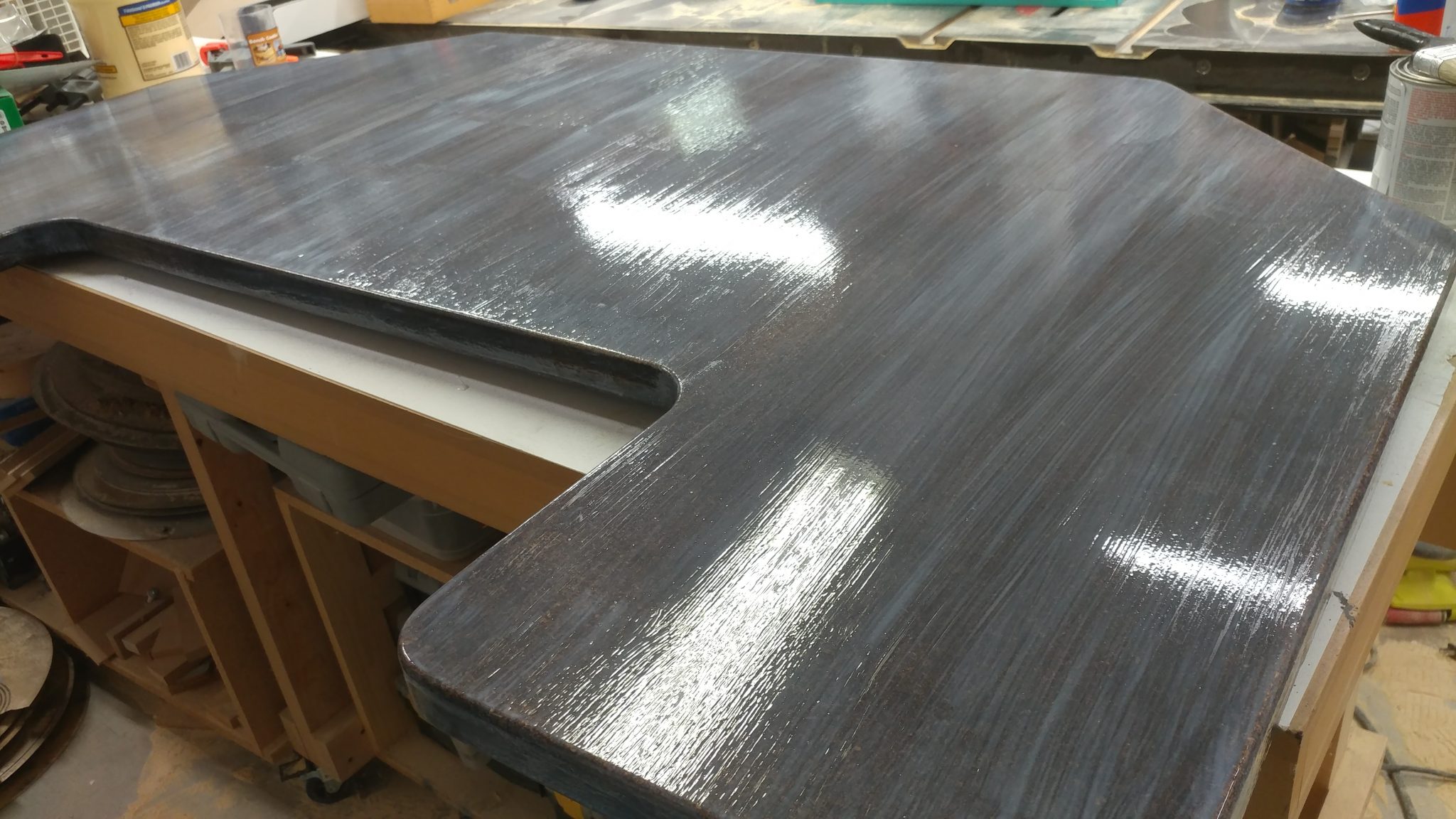
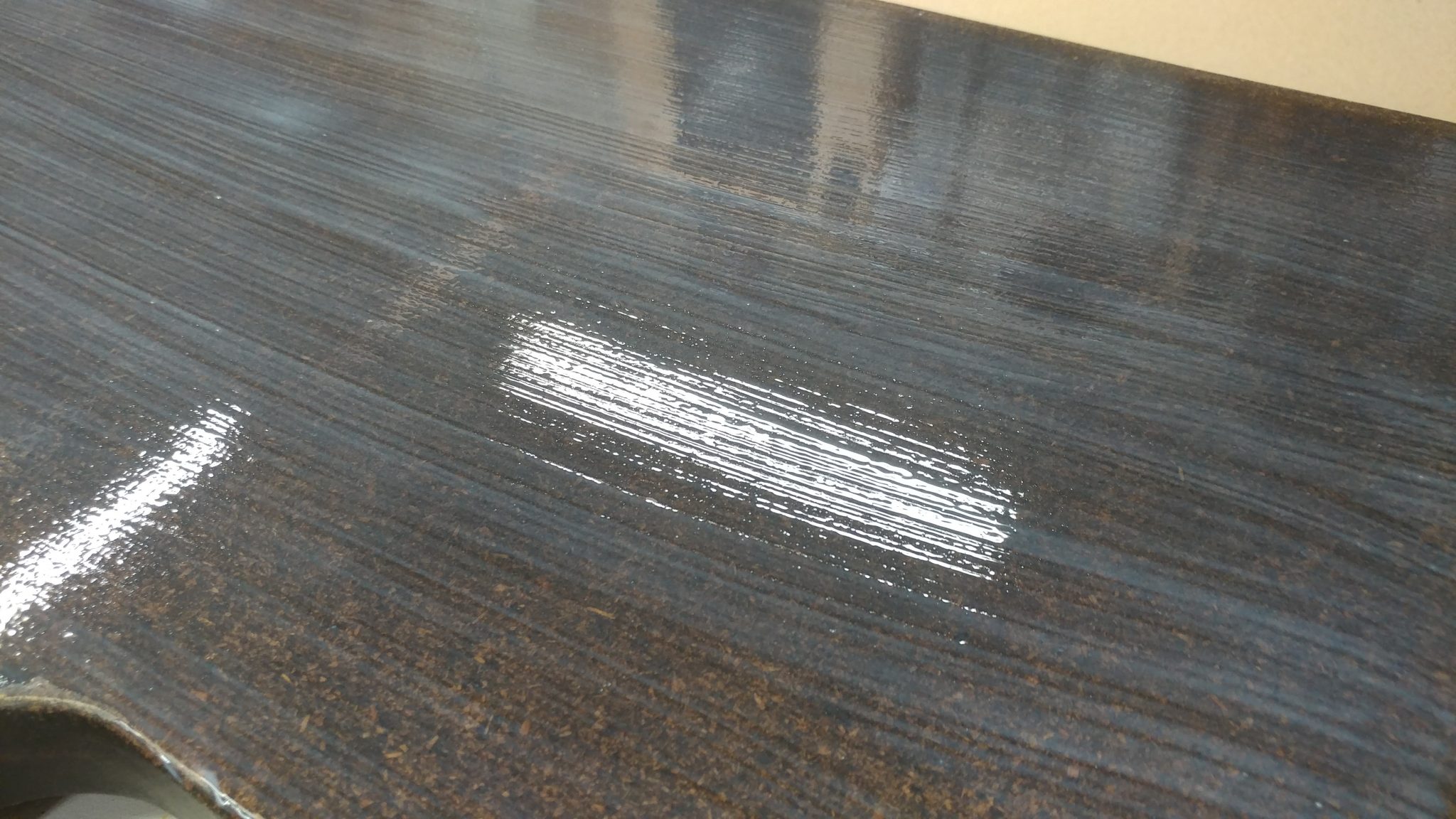
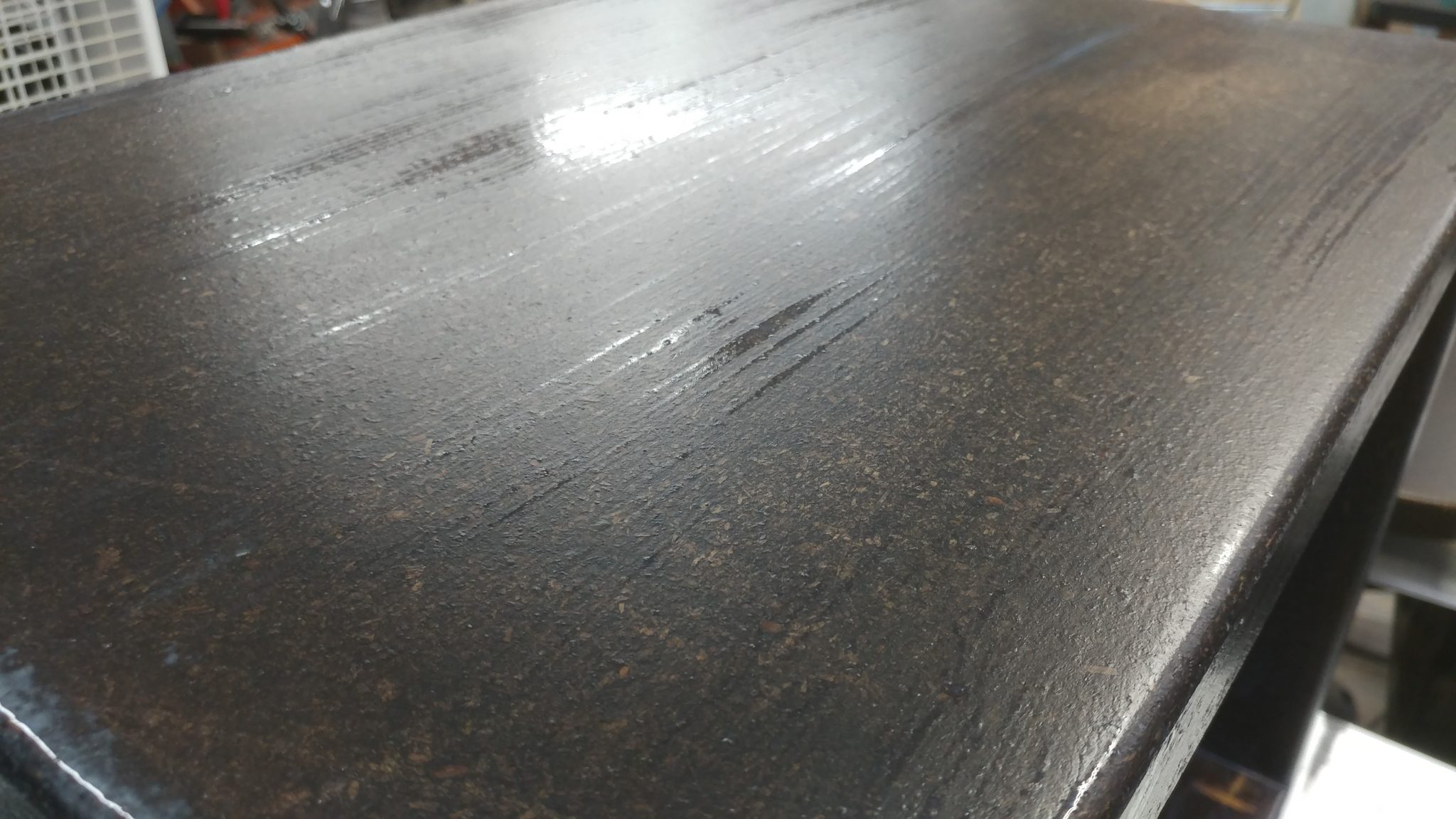
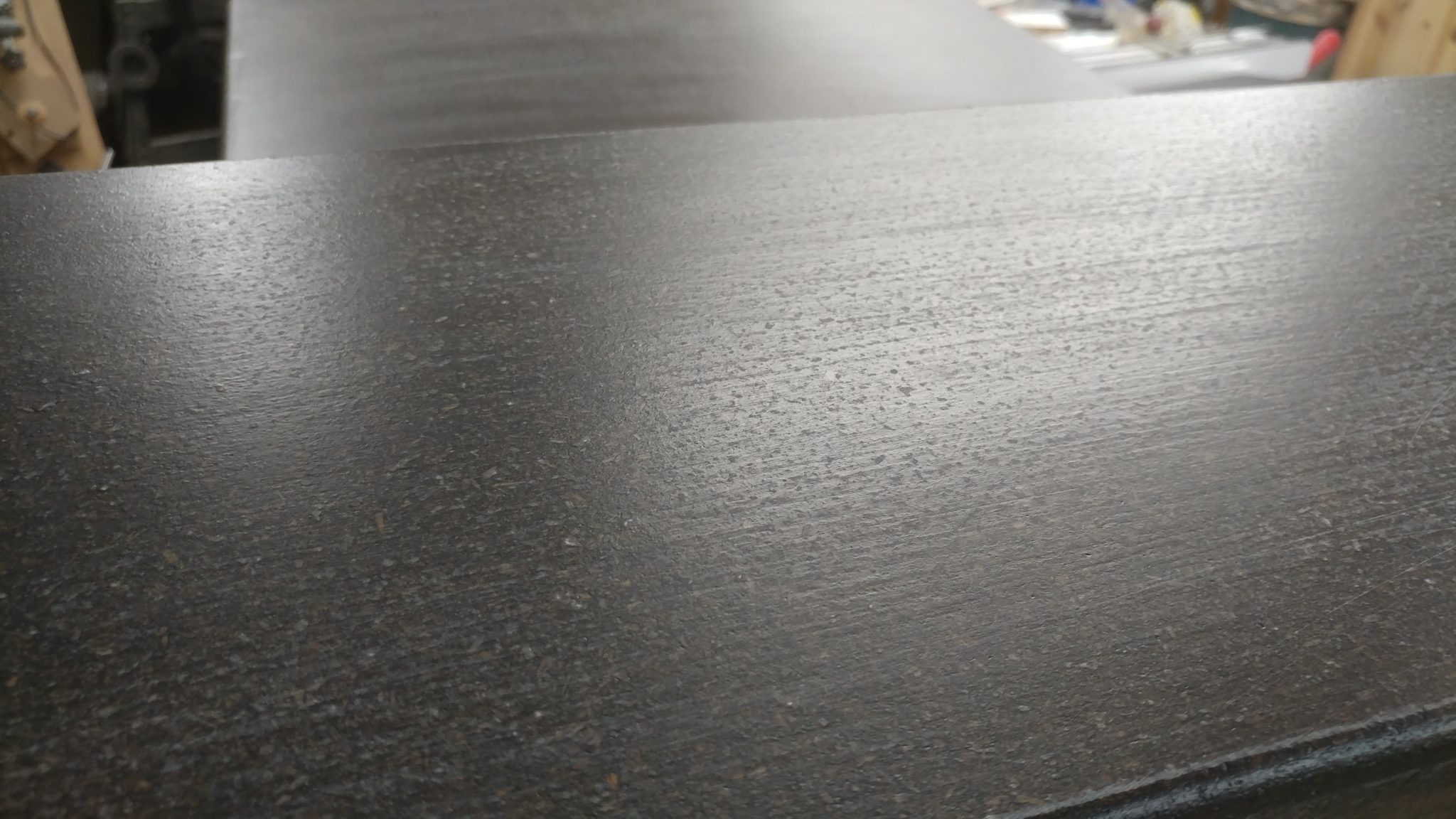
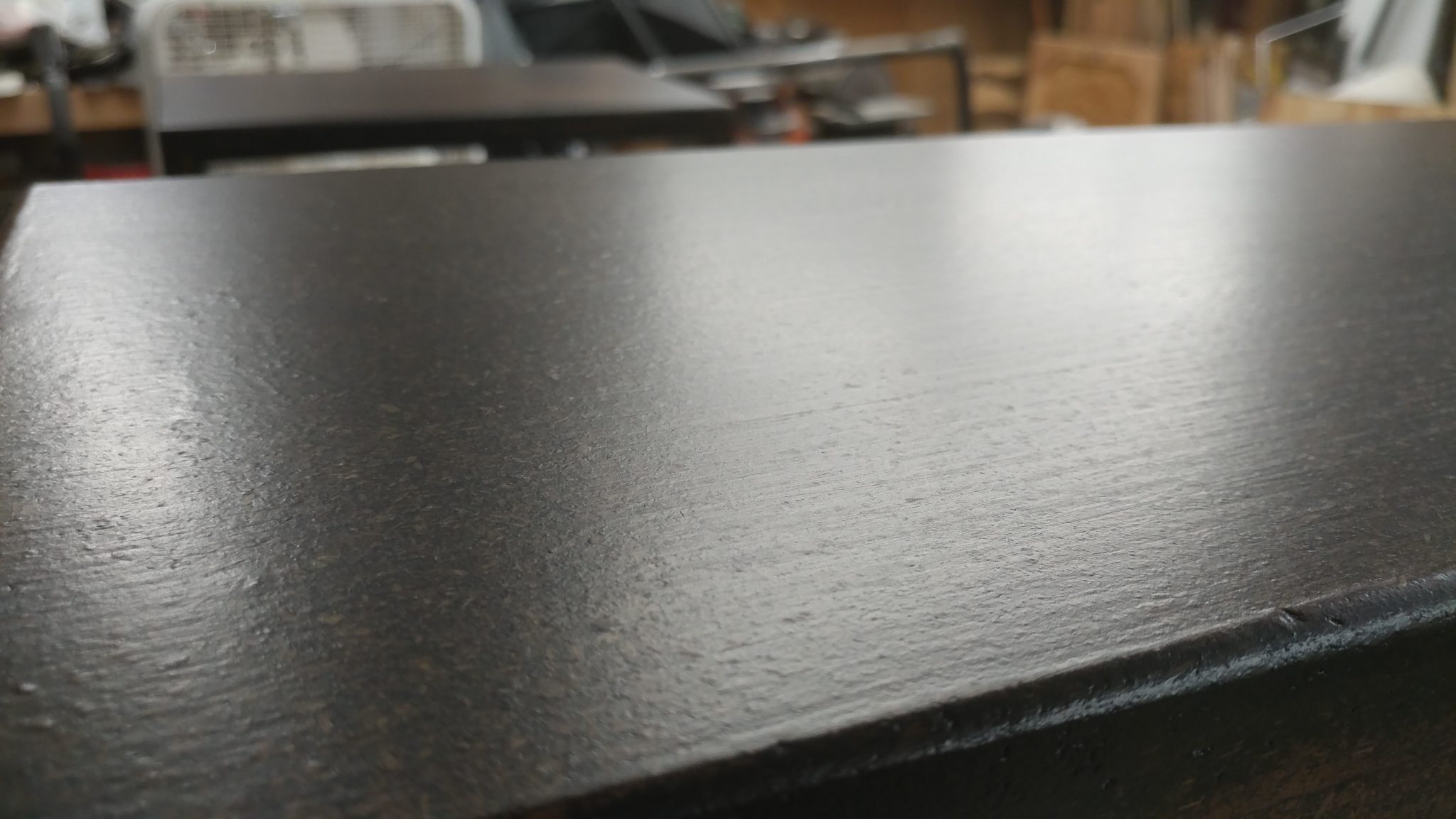
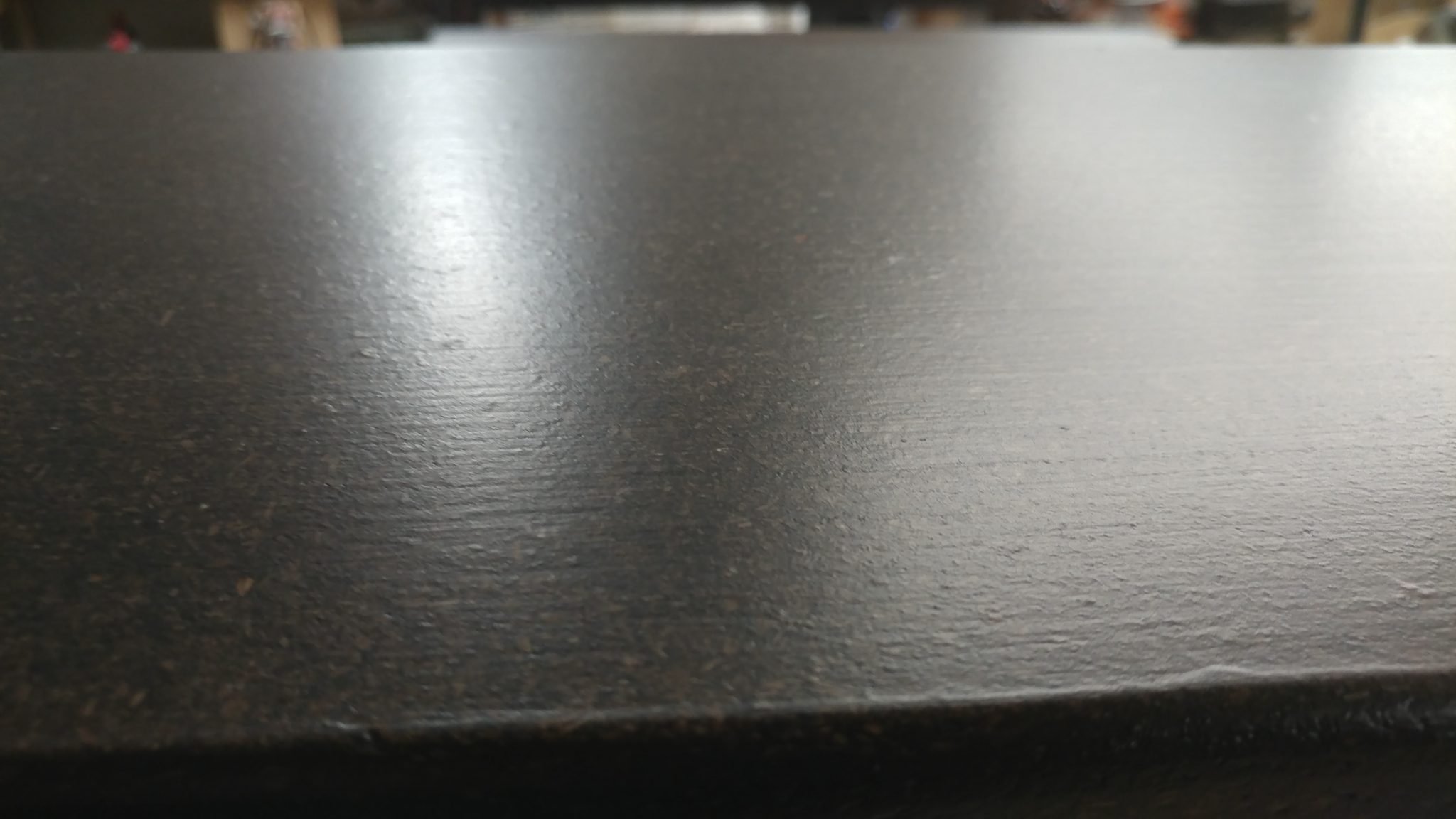
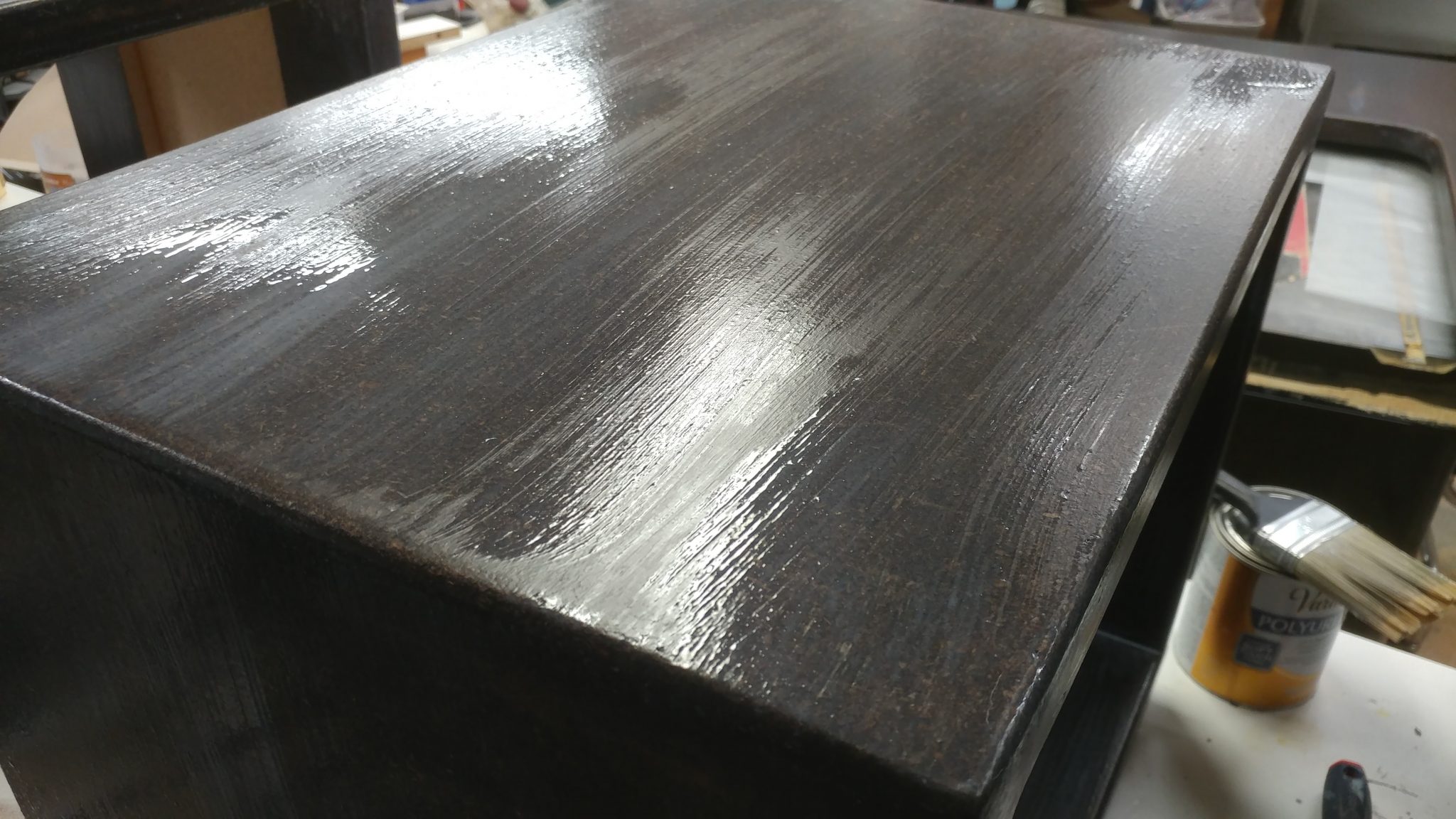
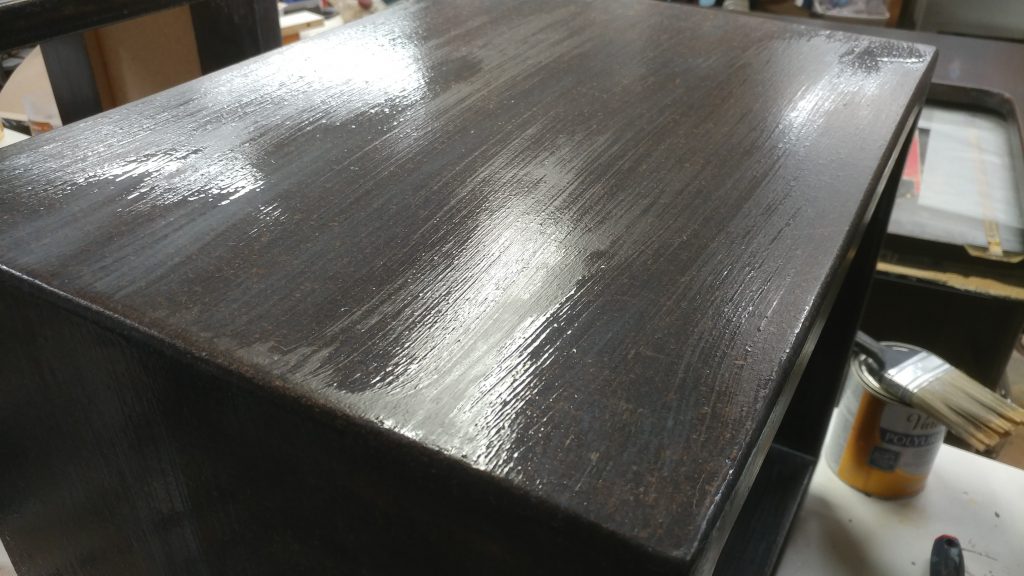
I was going for a specific look that I think worked but I’m having my doubts that I’ll be happy with it in the long run.  I was inspired by a piece that I saw at a restaurant a while ago.  They used plywood where I used particleboard but what I was drawn to was the feel of the piece.  The best way I could describe it was “too much poly with no sanding between coats”.  You couldn’t feel any wood grain through the finish but you could feel the brush marks.

I figured that for this piece, I might as well try to replicate that since I liked it so much.  I think I succeeded but now I’m not sure how much I like it.


Staining the wood

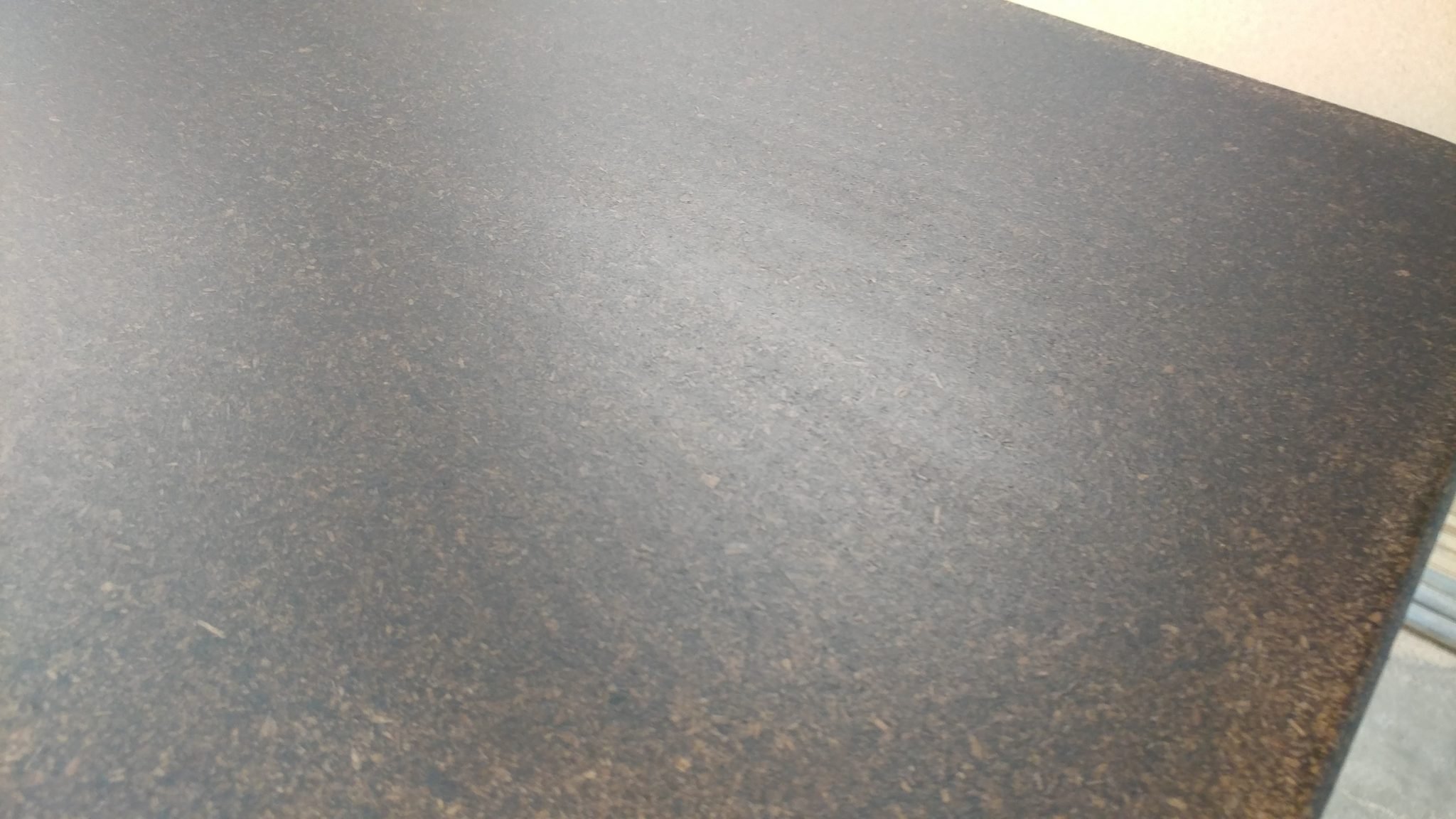
I started with the parts all sanded and ready for stain.
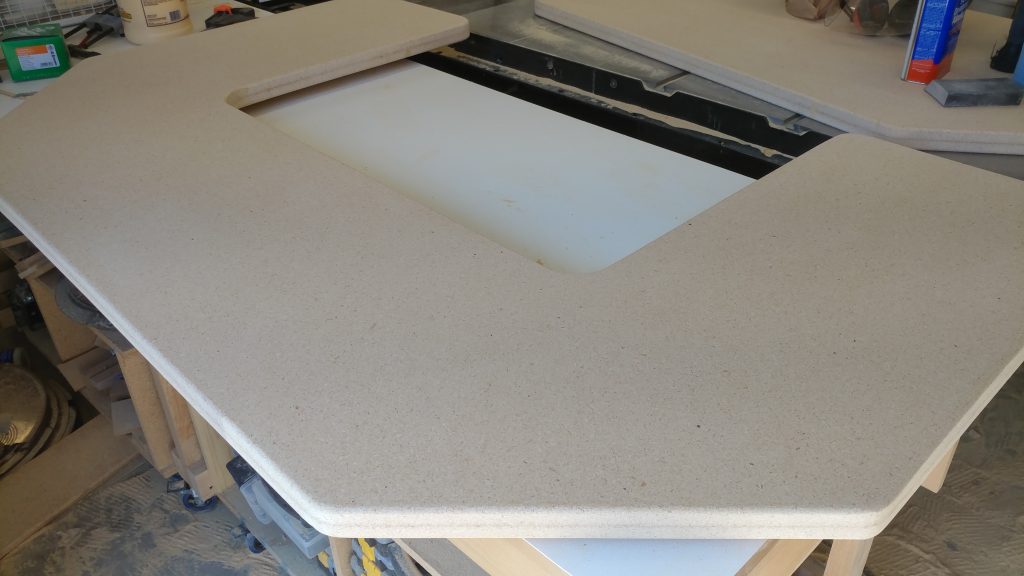
 

Before applying stain or finish, I like to wipe down the material with denatured alcohol.  This helps remove loose dust particles.

 

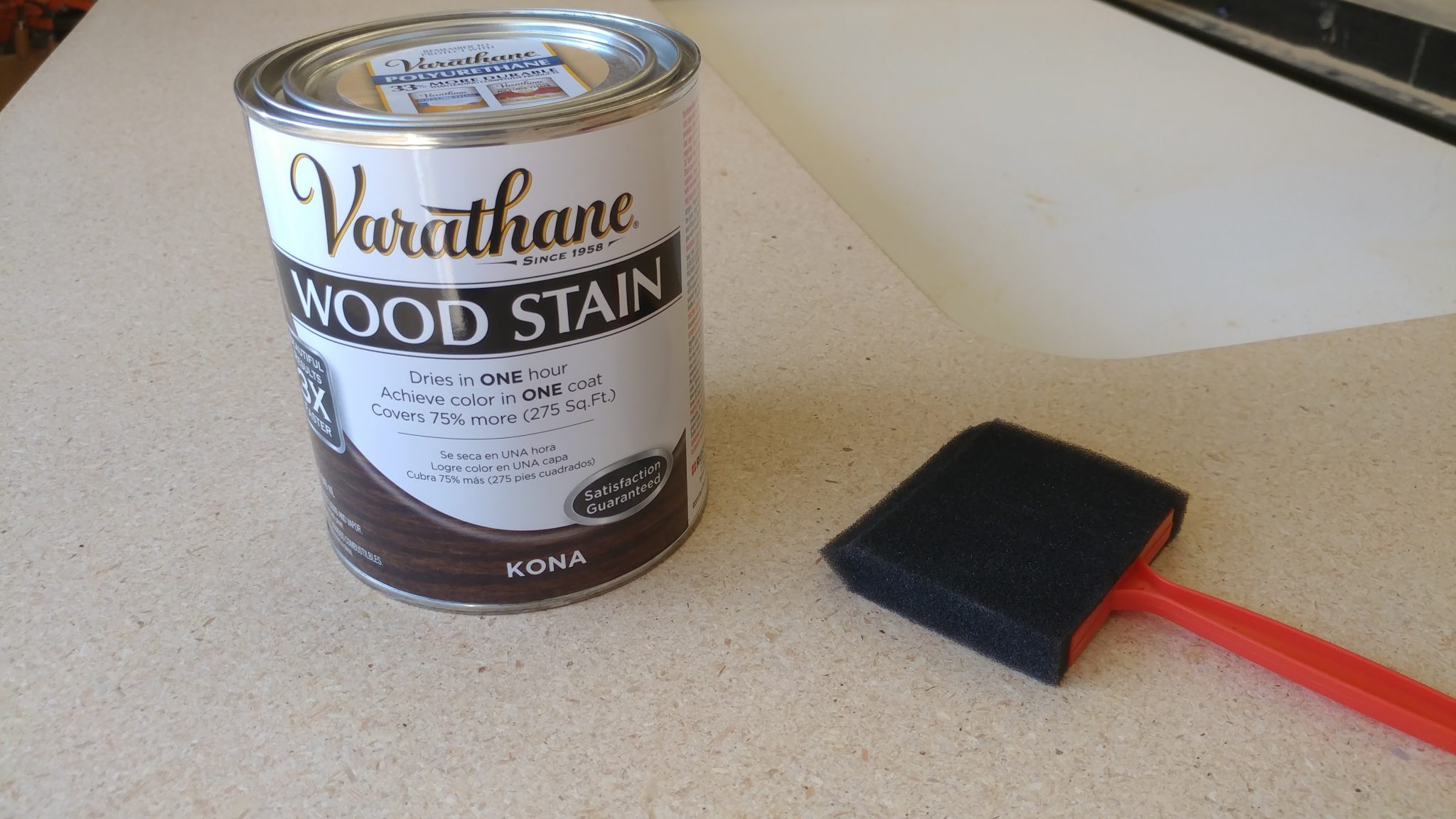
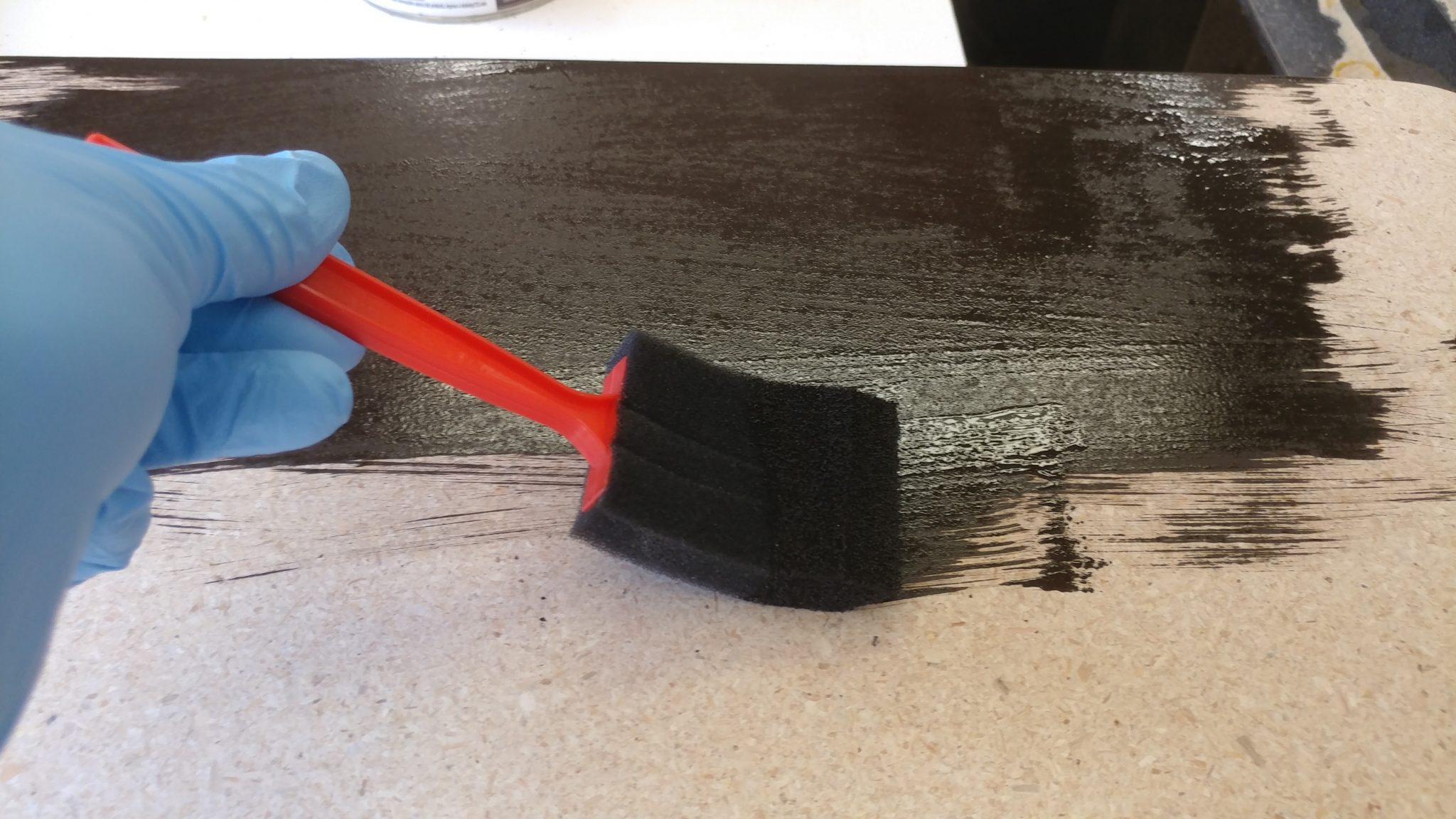
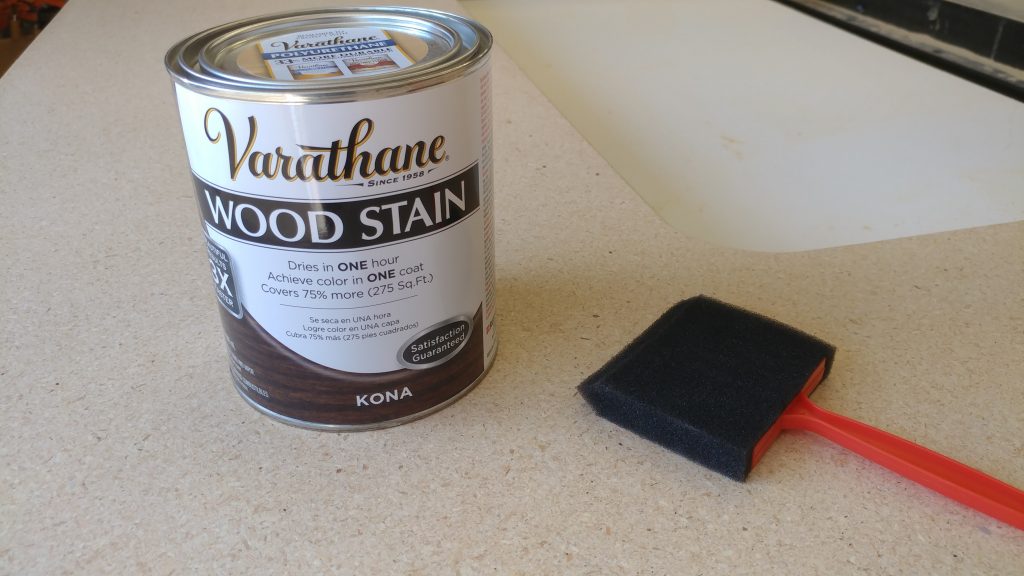
I’m applying Varathane brand Kona wood stain using a cheap foam brush.
 

I recommend having someone help when staining something this big.  One person can apply the stain and the other can follow up with a towel to remove the excess after letting it sit for a few minutes.  Since it was just me working on this, I had to apply the stain in sections and then wipe it off before moving on to the next section.  This can be tricky since the stain can overlap and make for darker sections.
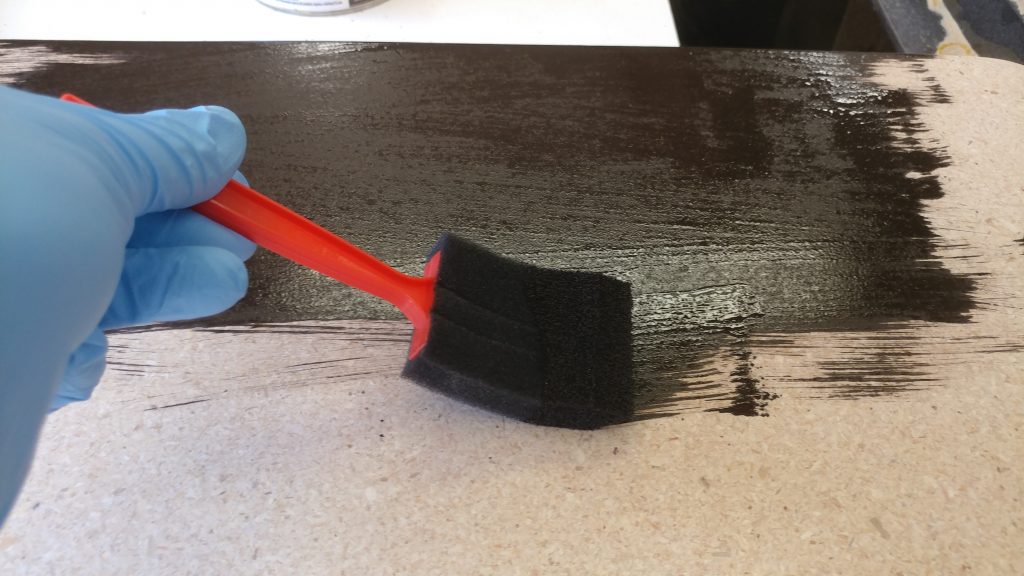
 

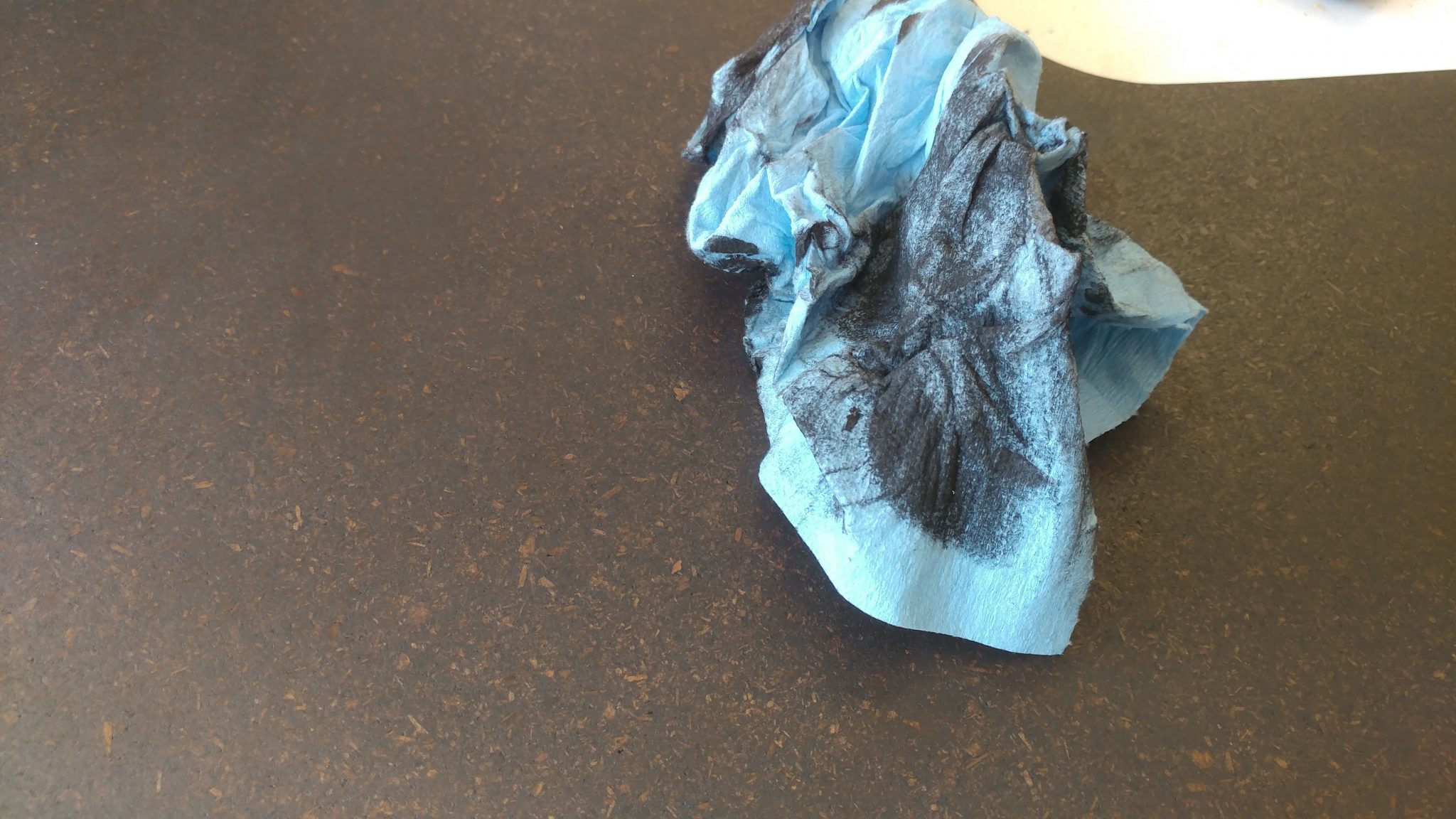
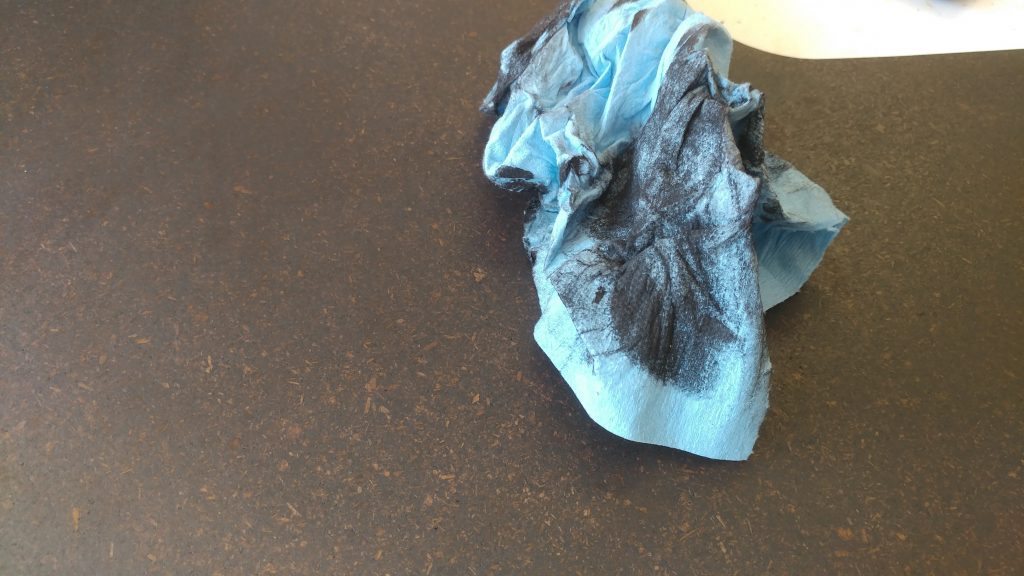
I used blue shop towels to wipe up the excess stain.
 

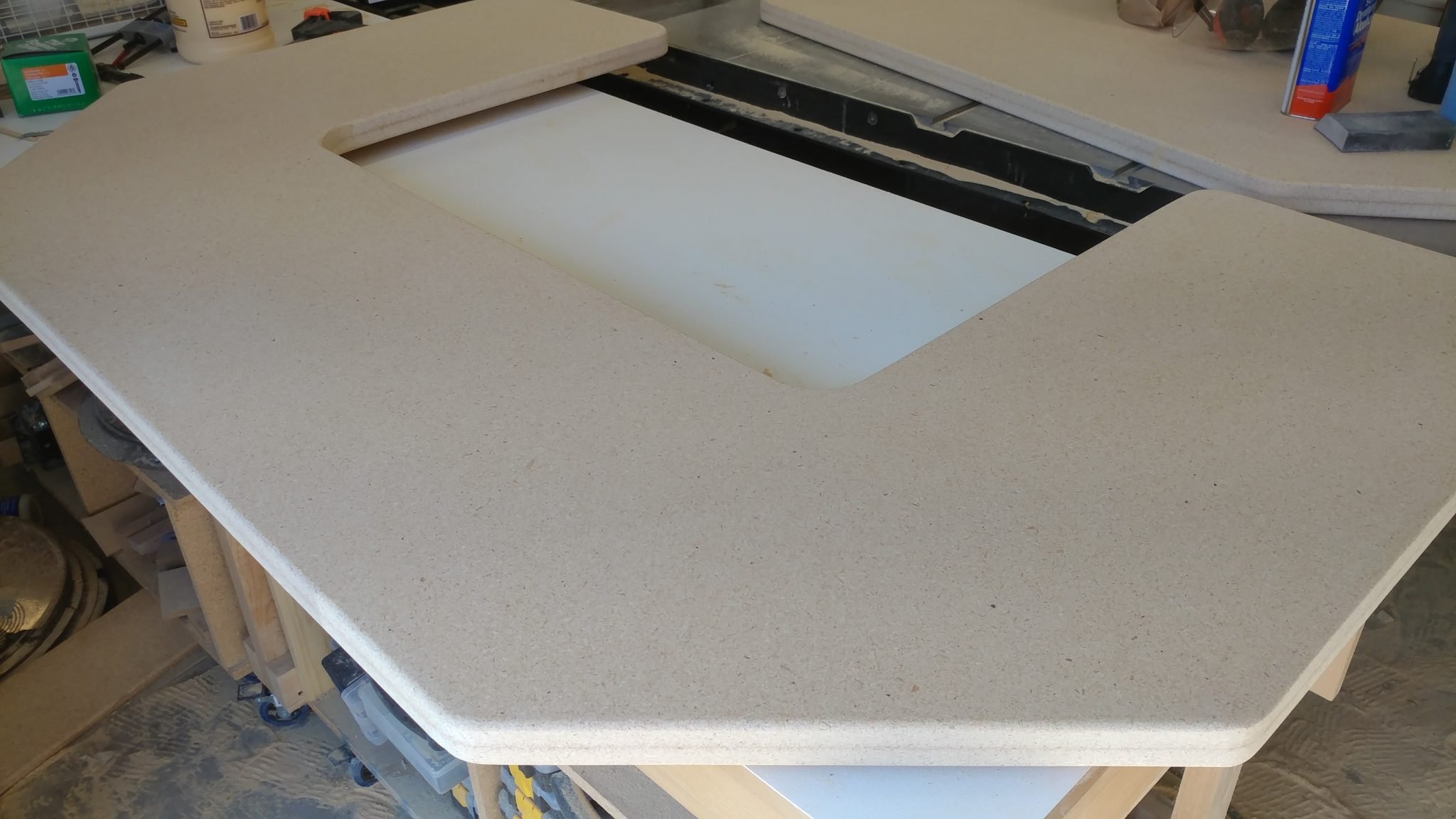
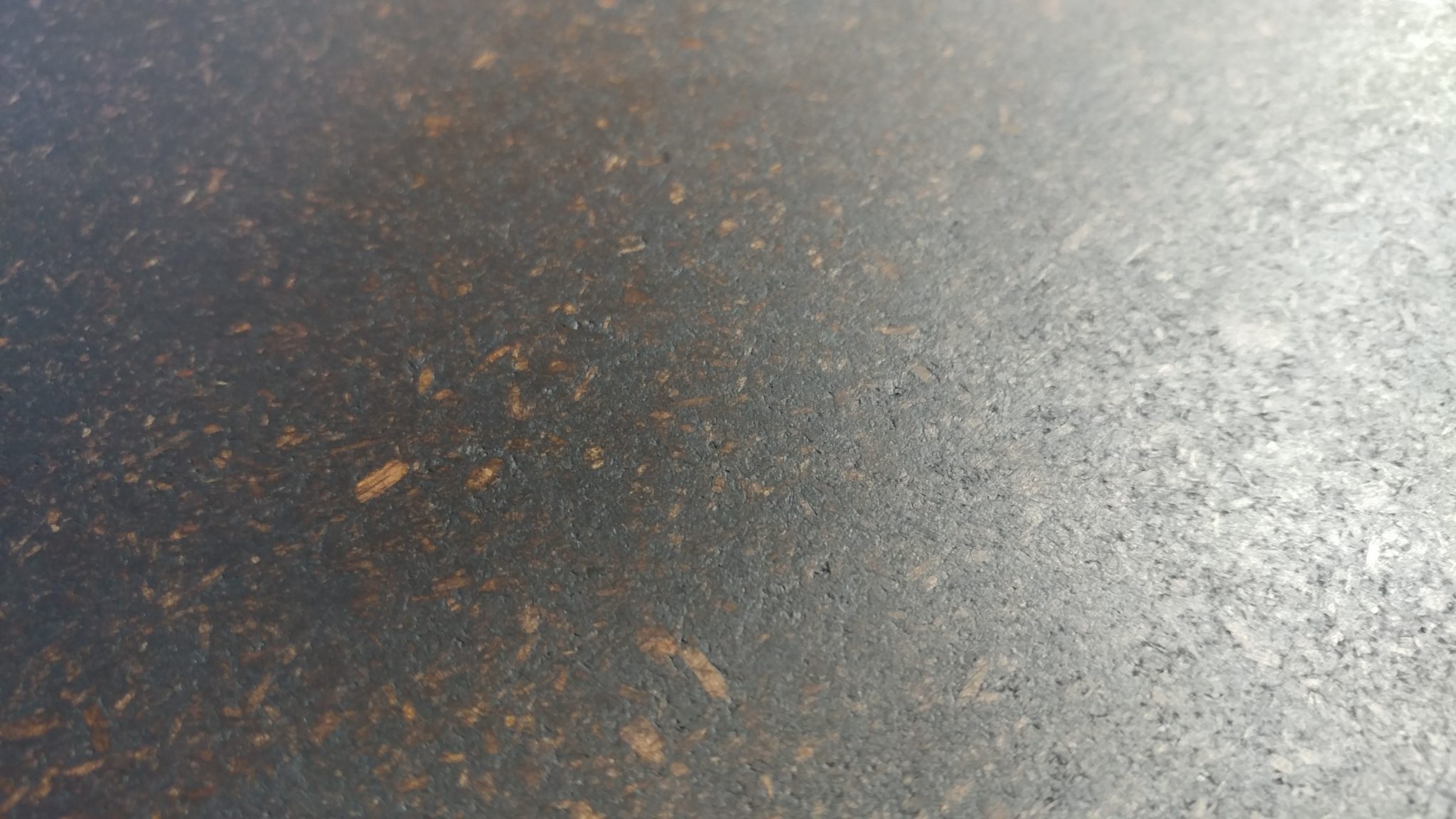
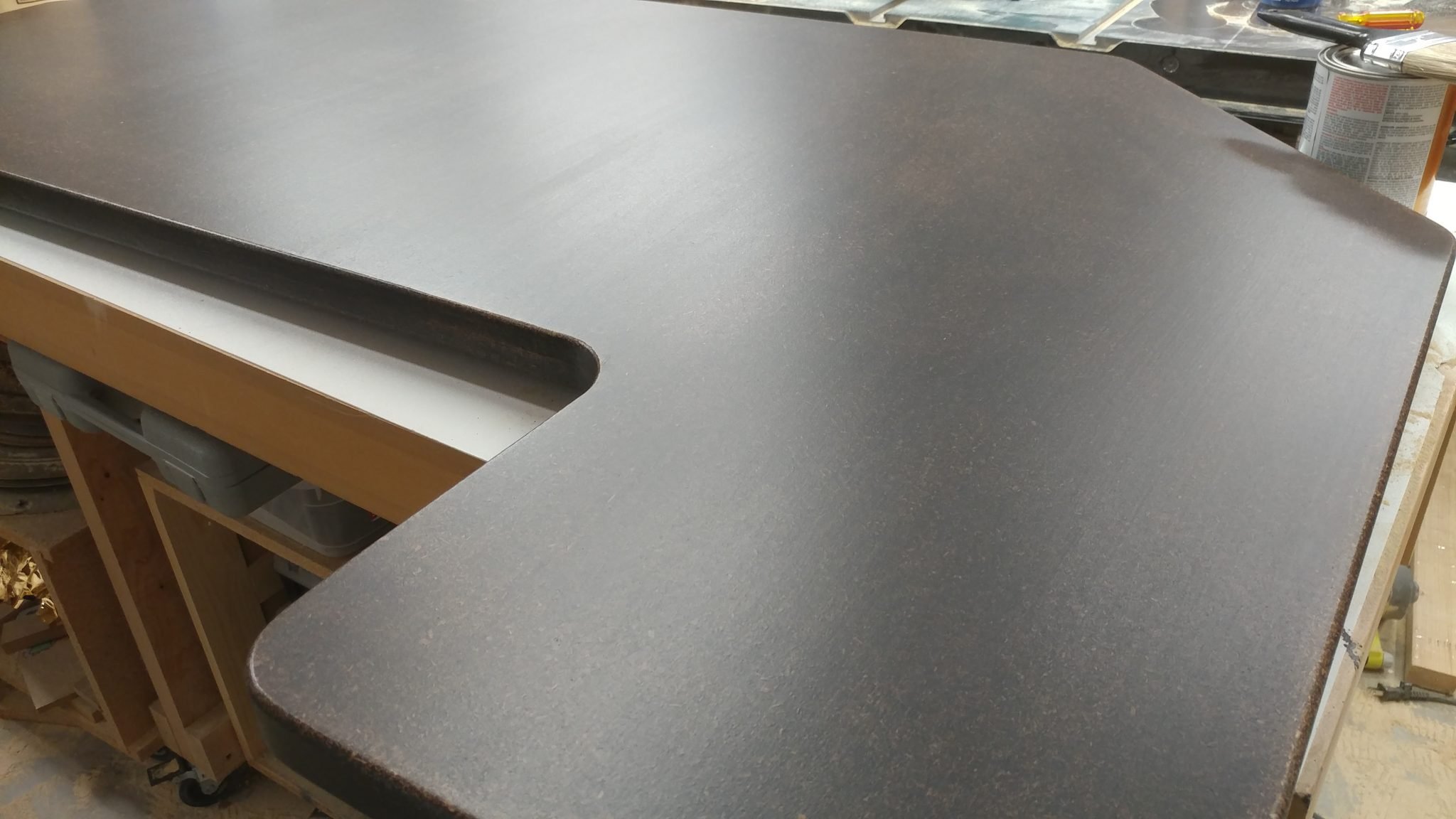
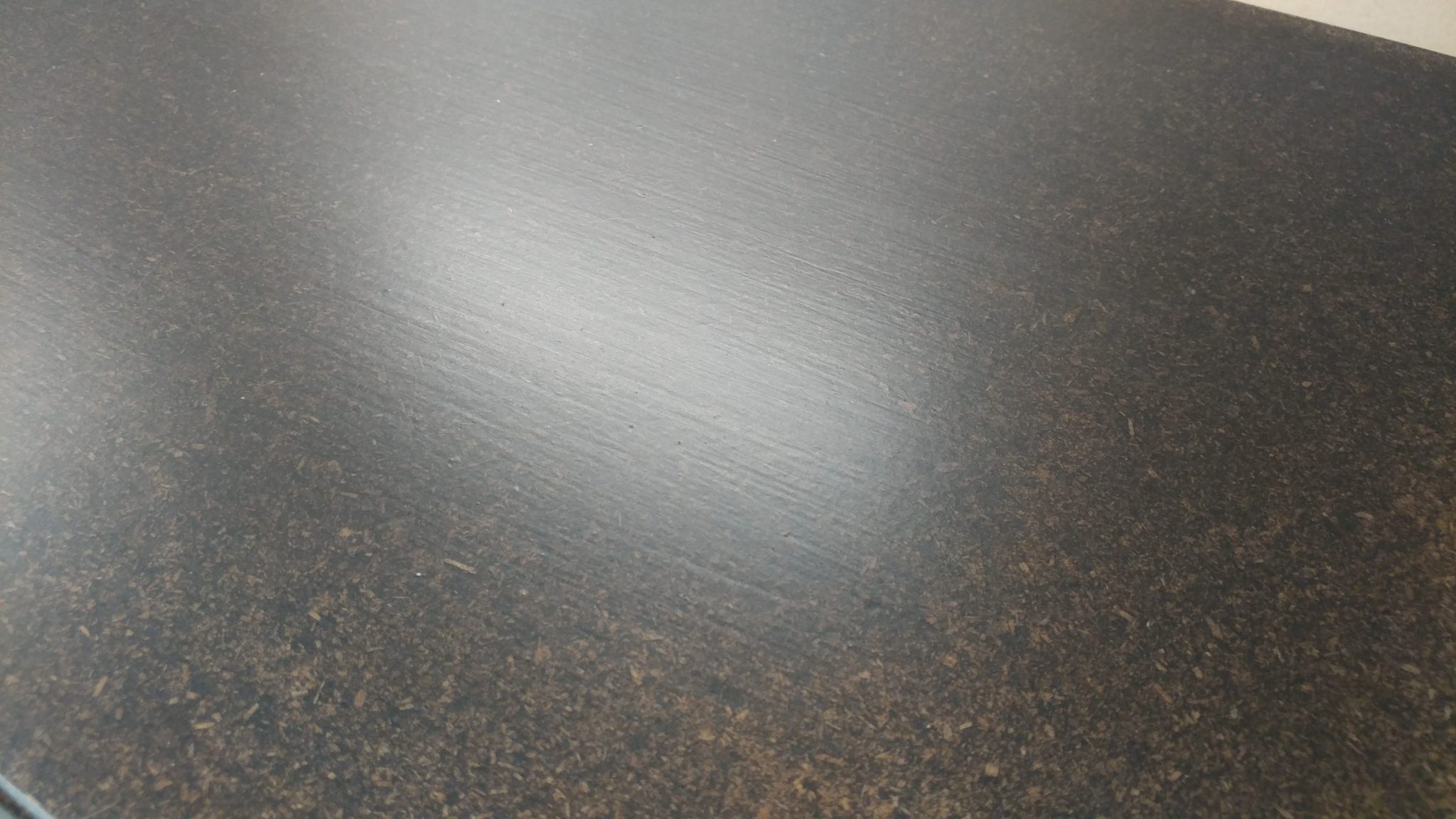
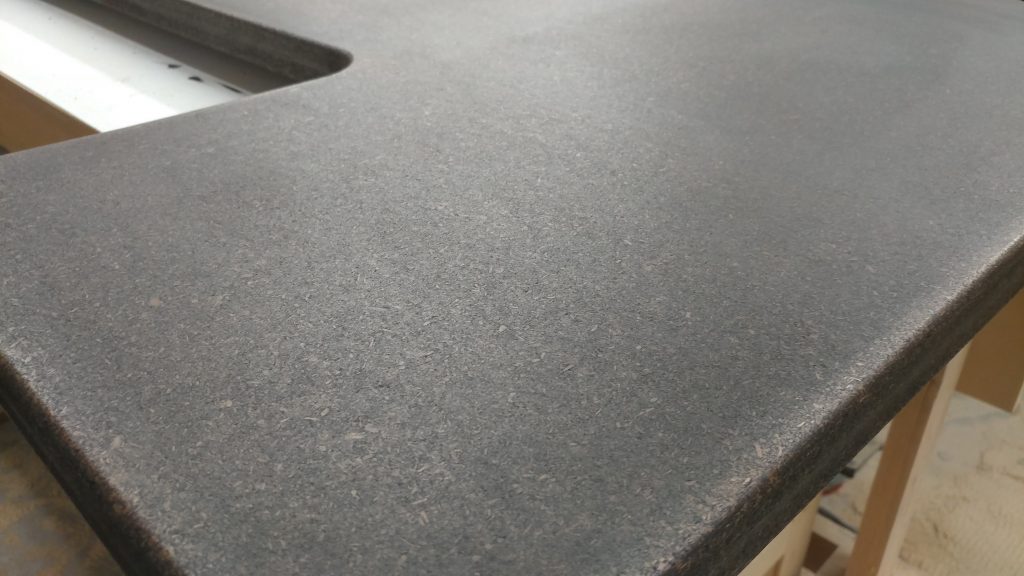
I really like the look of the particleboard with the Kona stain applied.
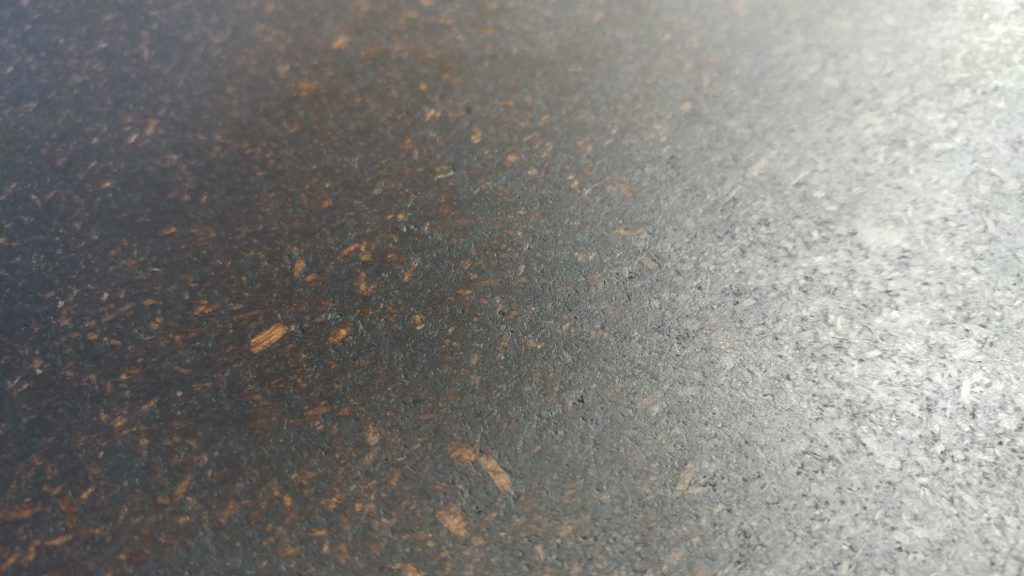
 

I applied the stain to one side and let it sit overnight, then applied to the opposite side.
 

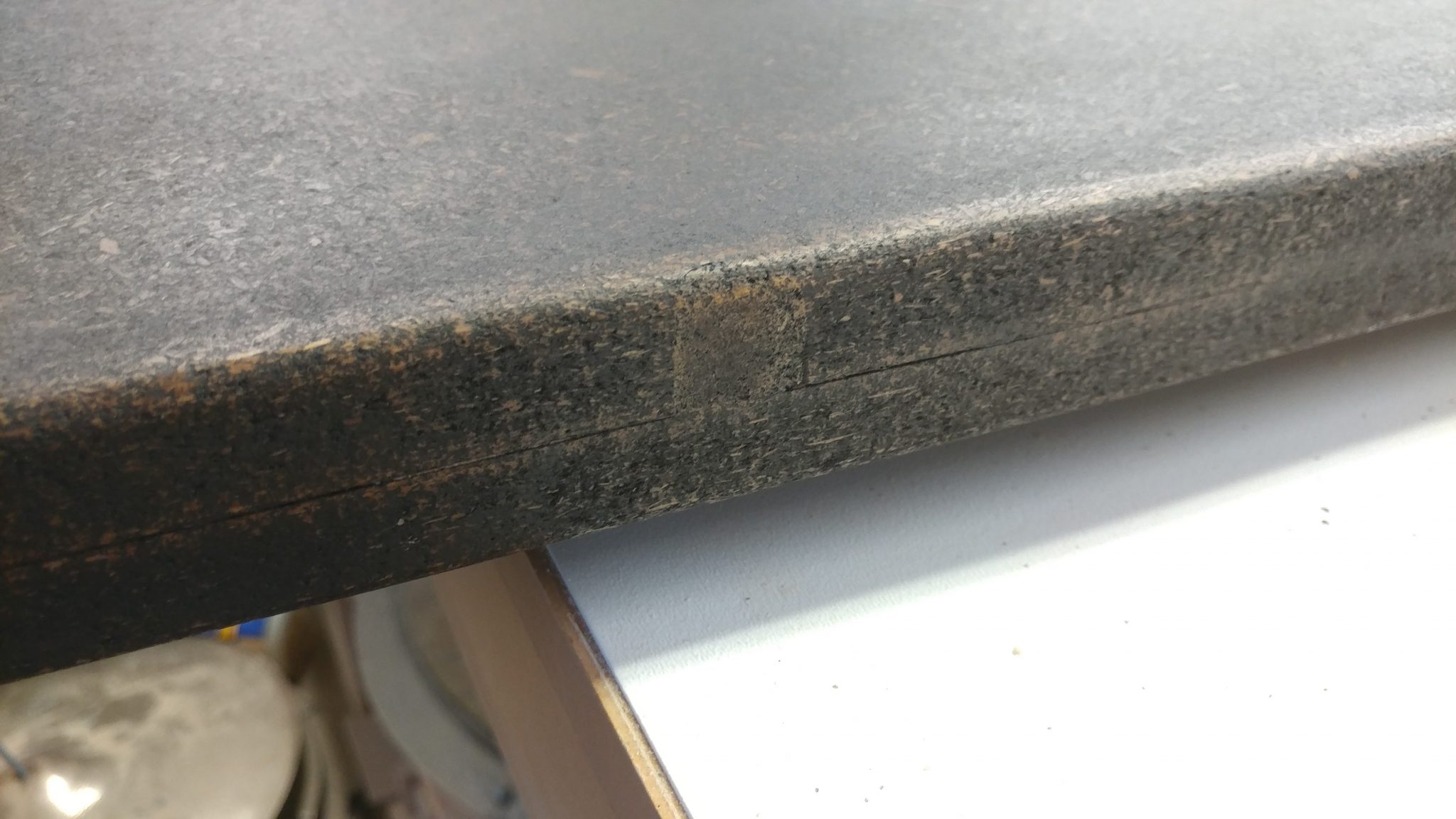
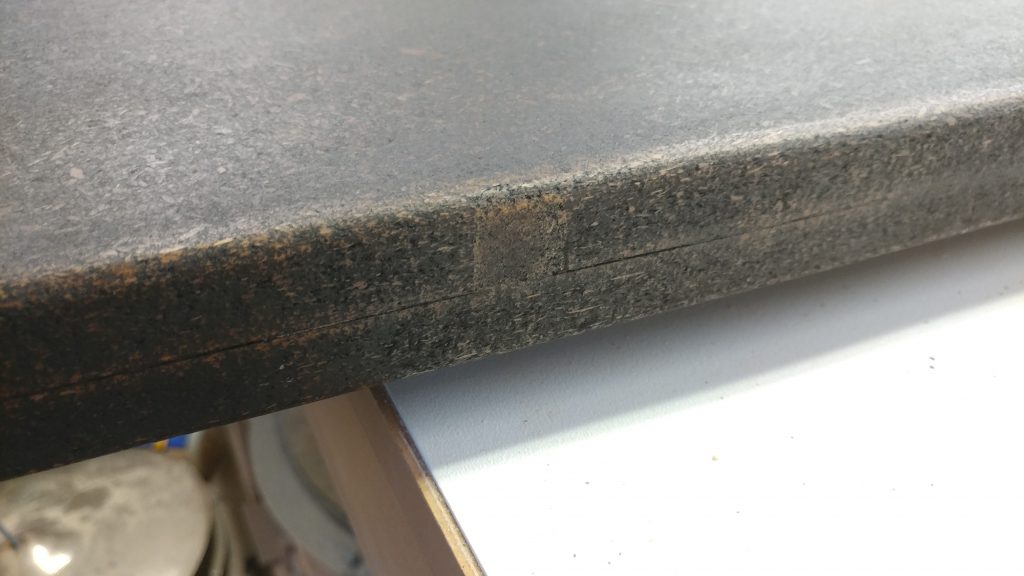
The areas that I patched up take the stain differently, as expected.


Applying polyurethane to the upper section

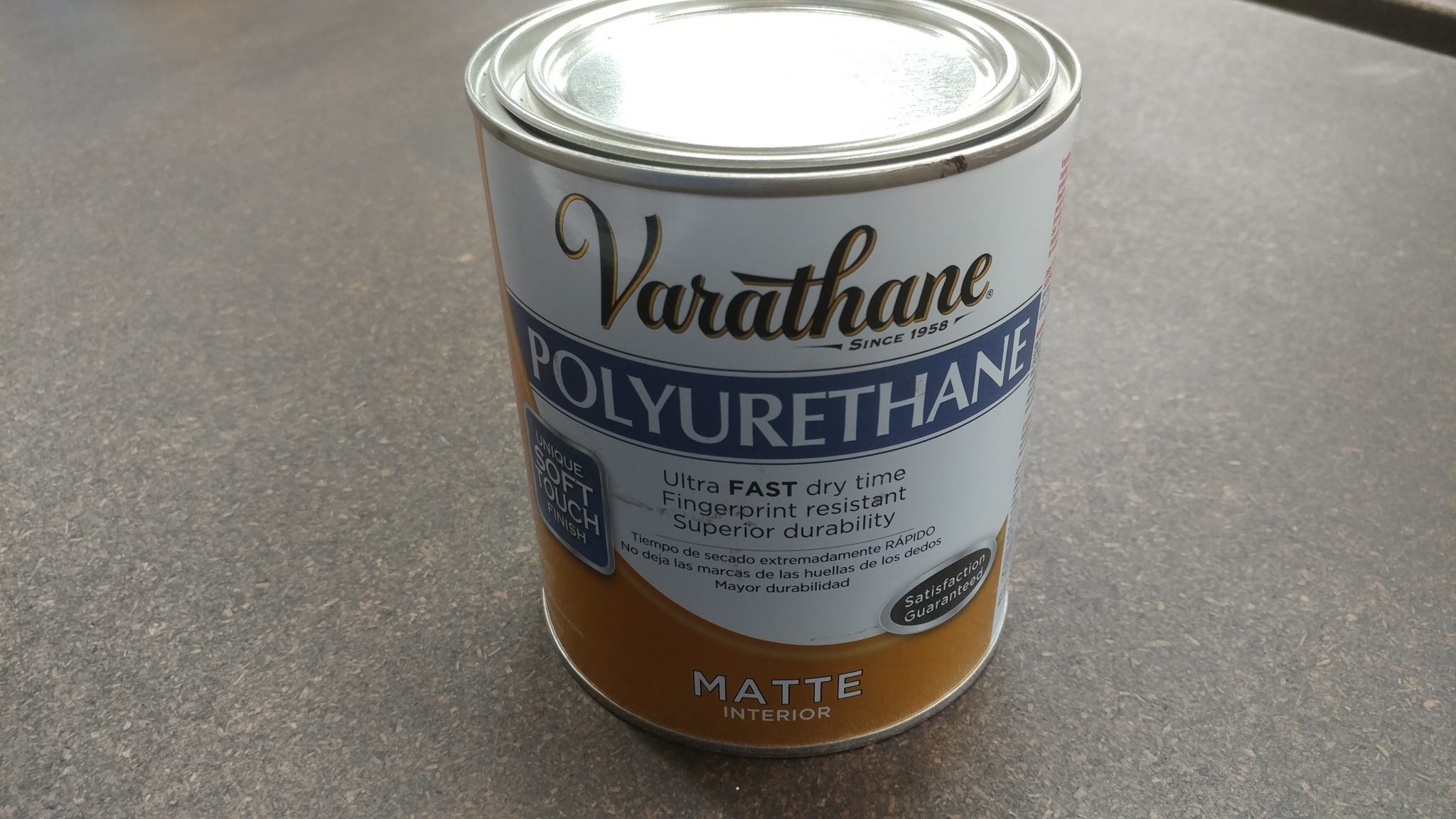
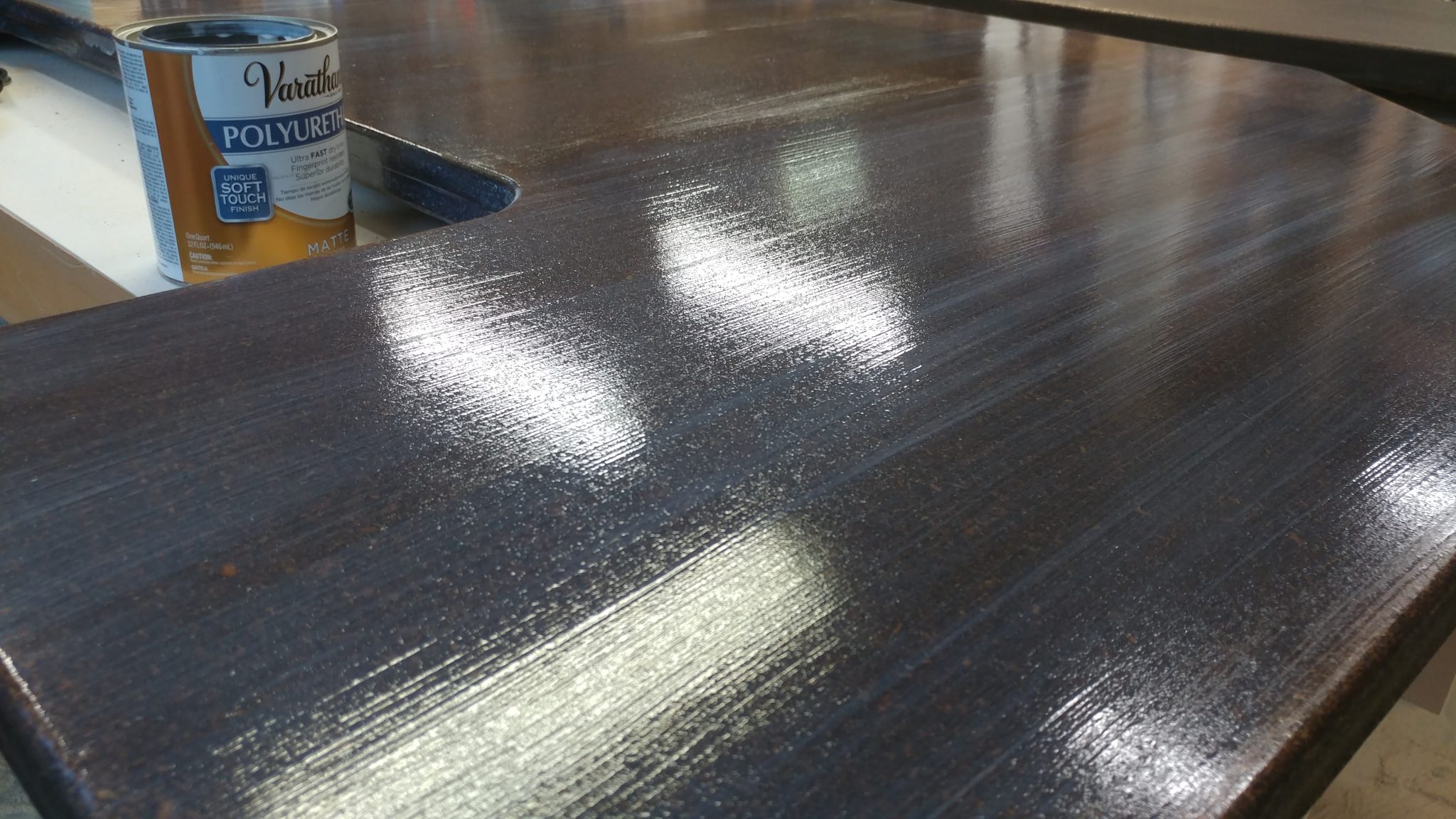
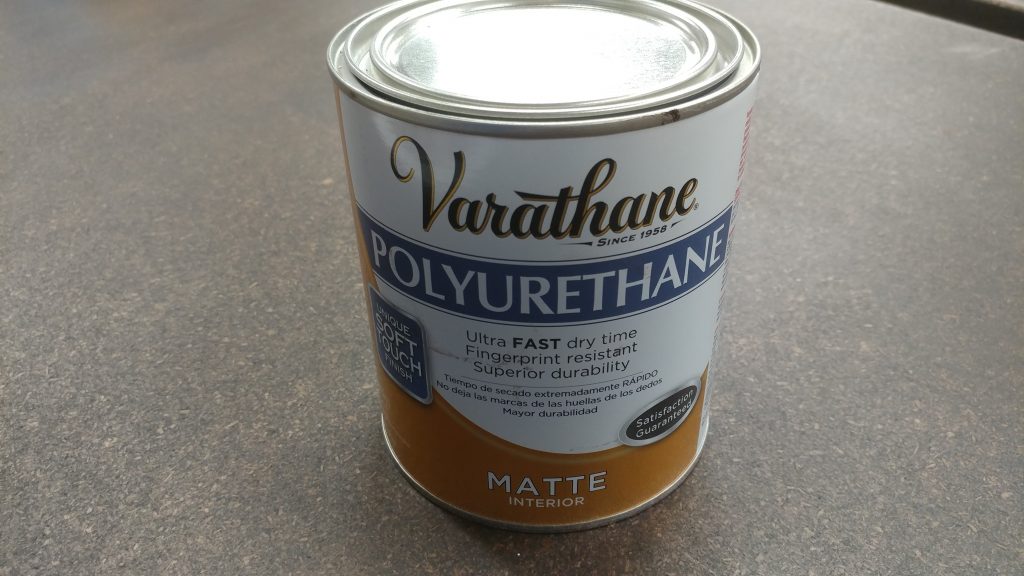
Once the stain set up, I started applying Varathane brand polyurethane matte finish.
 

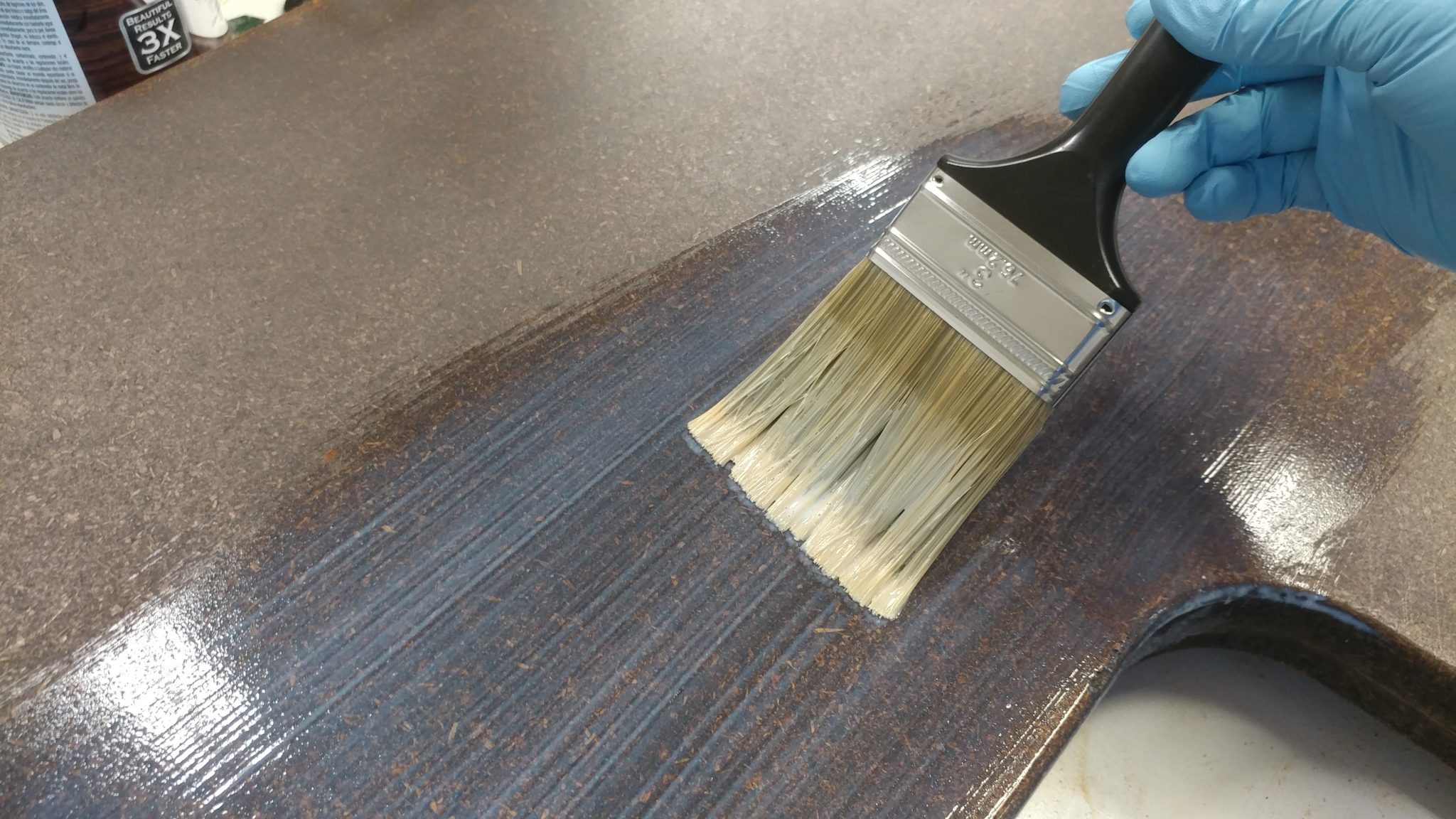
Foam brushes cause bubbles in polyurethane so you’ll want to use a decent synthetic brush.
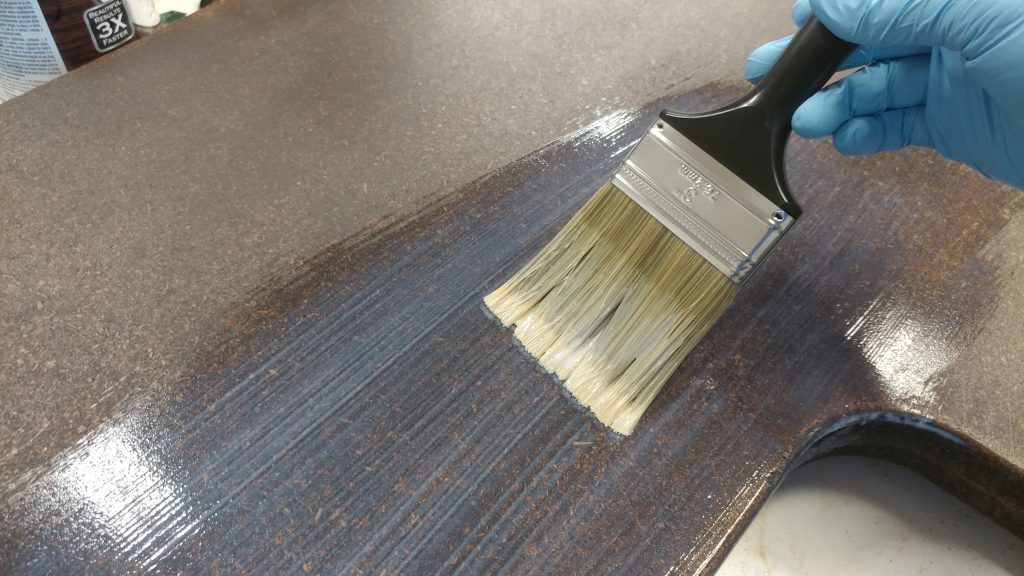
 

It goes on milky but dries clear.
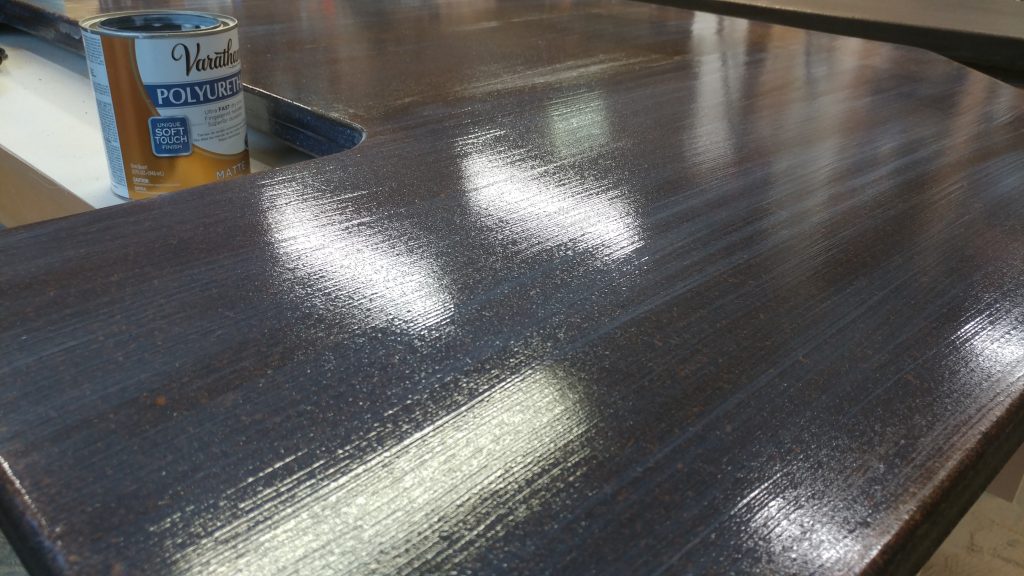
 

This is how I did the top surface of the upper section of the desk.  The underside of the upper section just had three coats of polyurethane applied.

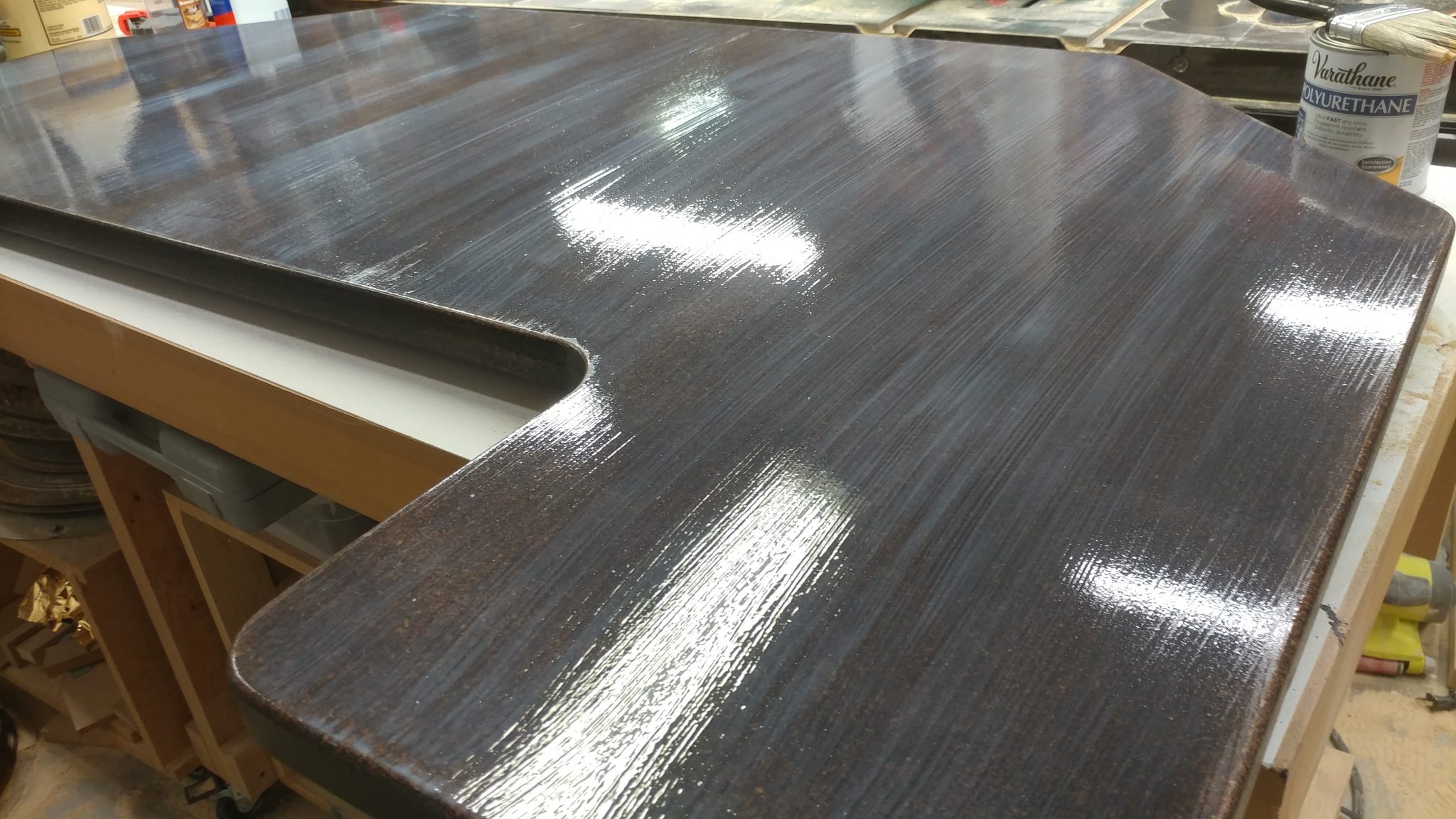
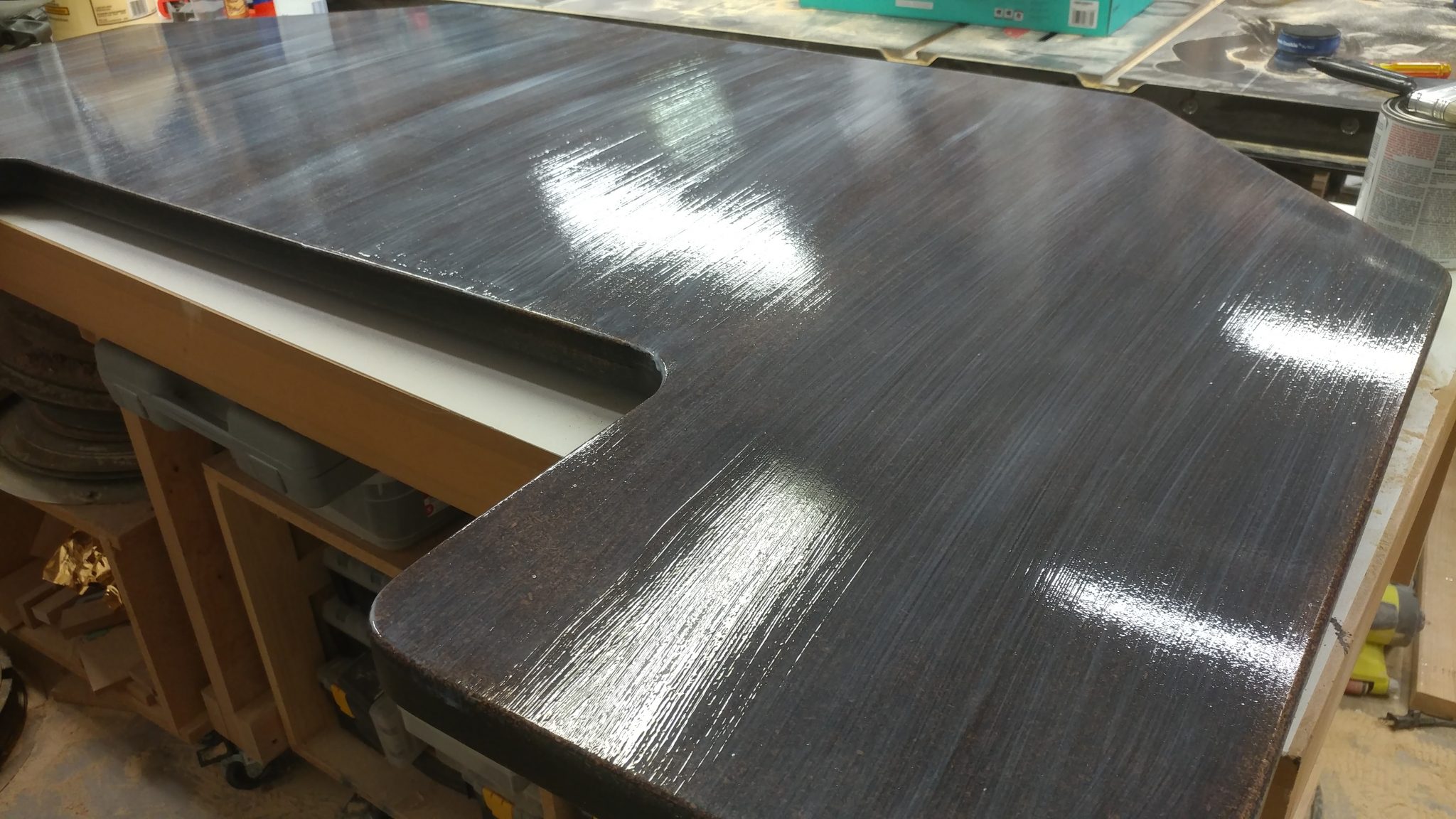
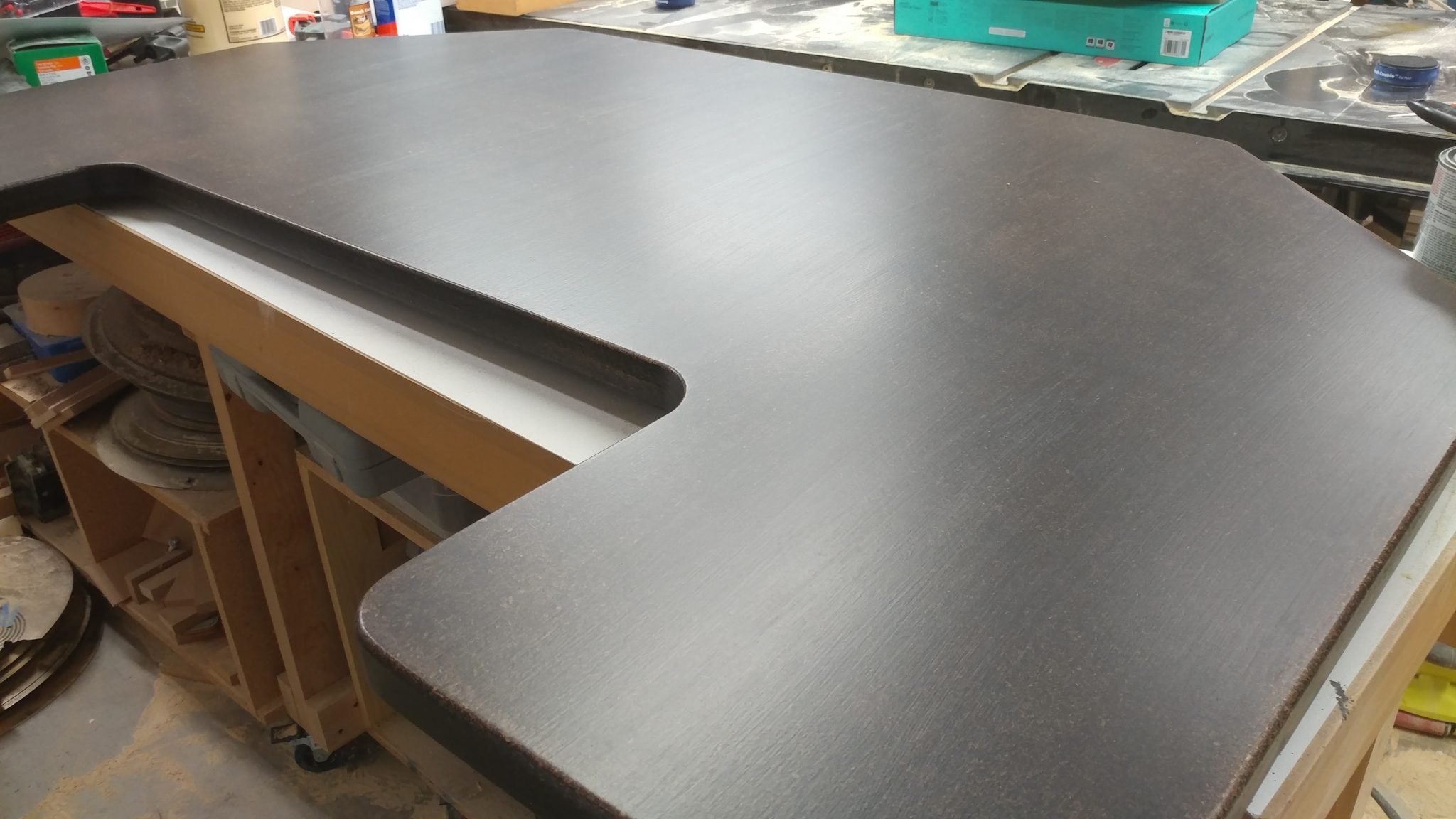
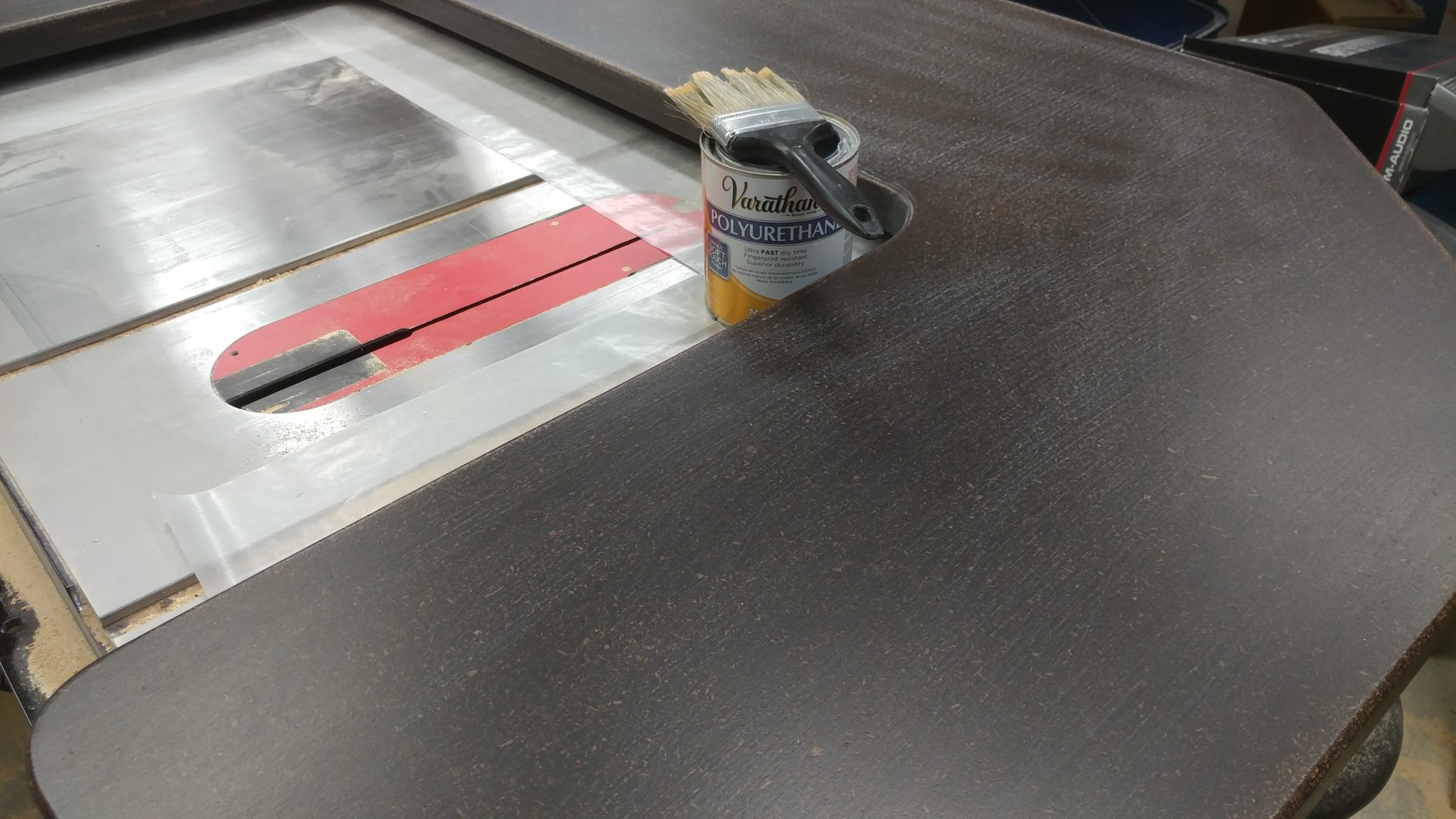
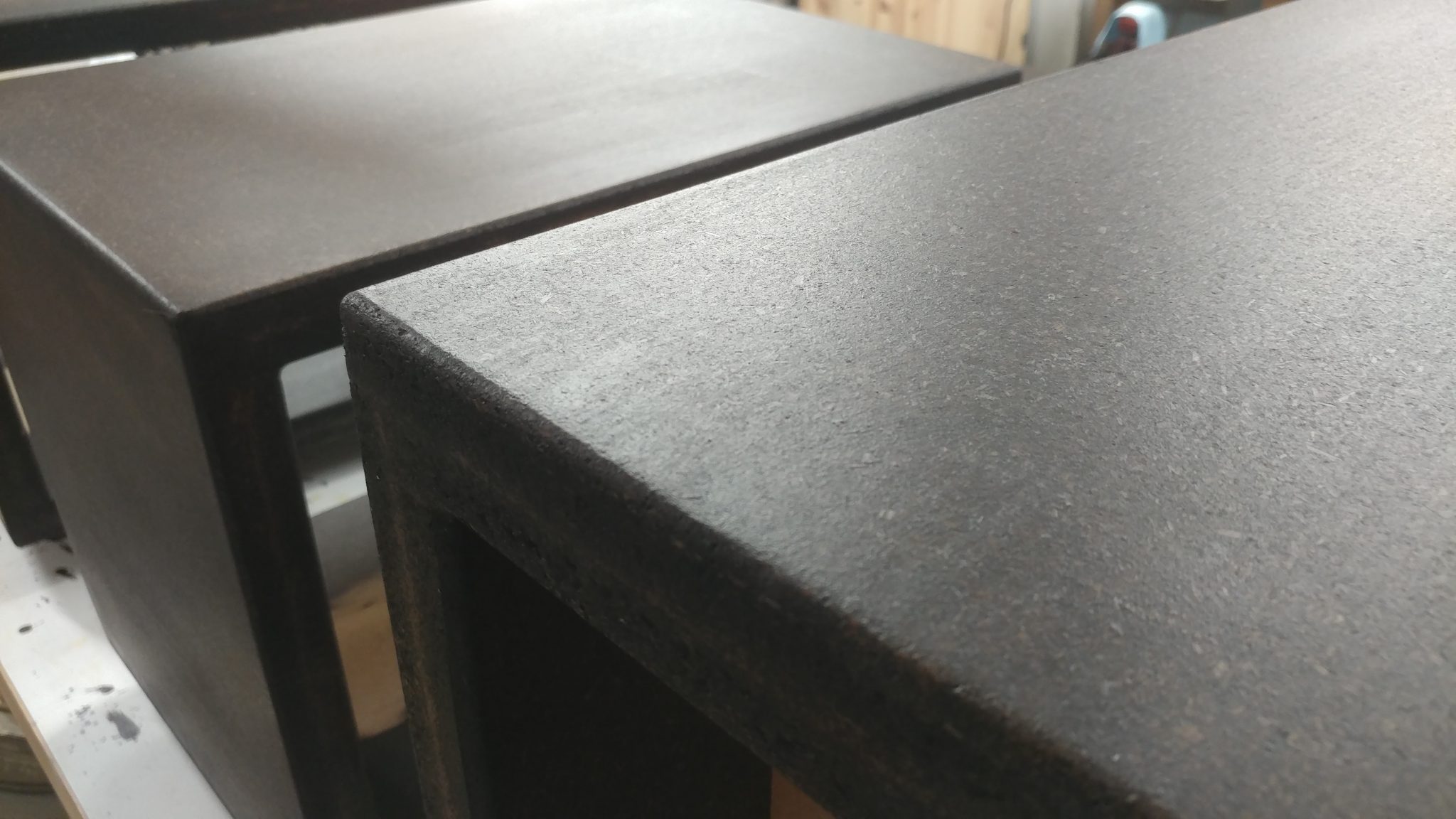
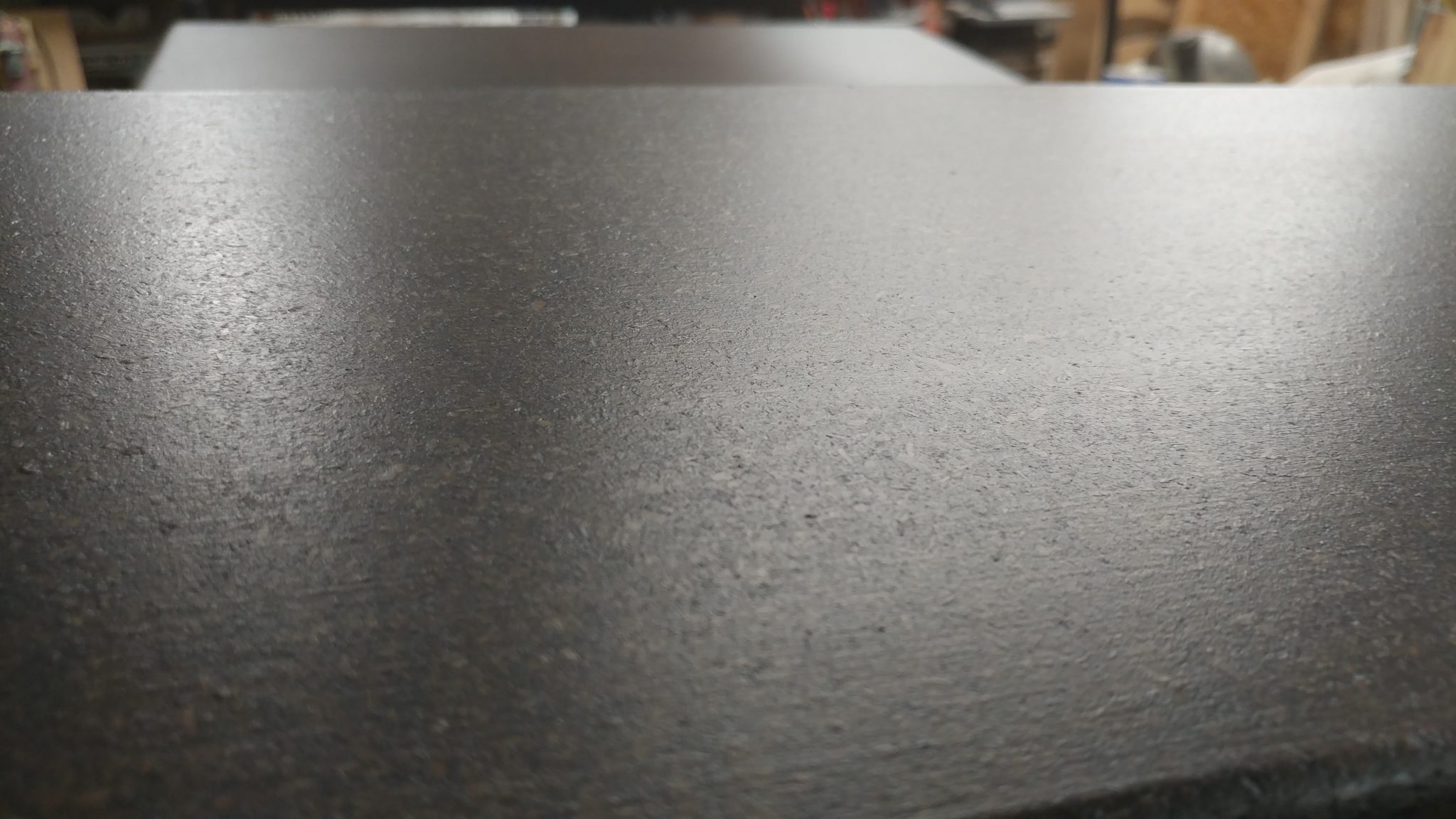
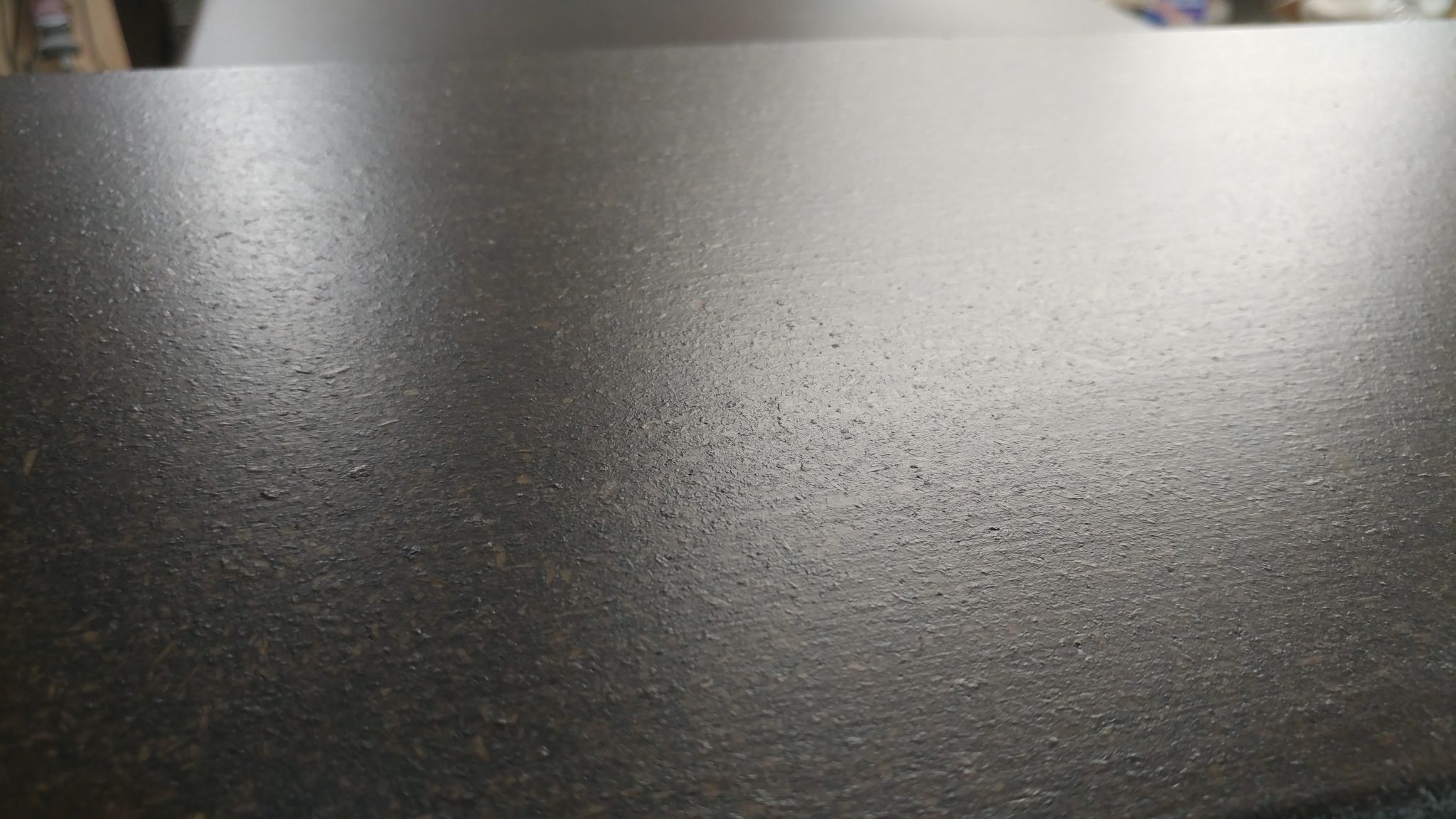
I let the first coat dry for a few hours.  You can see on closer inspection that the wood still has a bit of a rough texture that you can feel through the polyurethane.  Normally, I would lightly sand between coats, regardless what the instructions say.  I chose not to in an effort to add a subtle texture to the finish.  My goal is to apply enough finish so it has more of a plasticy feel to it.
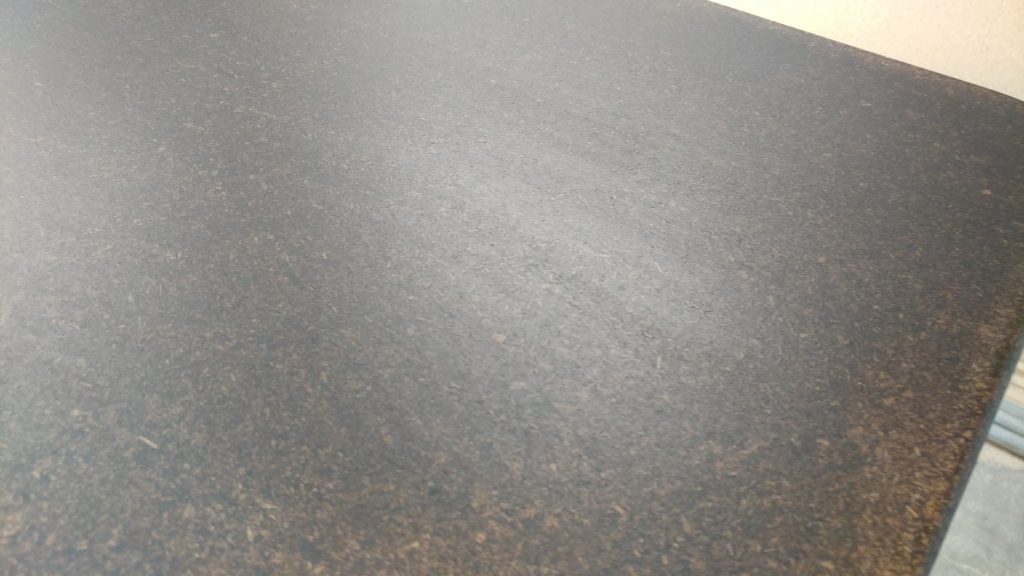
 

The second coat was applied.
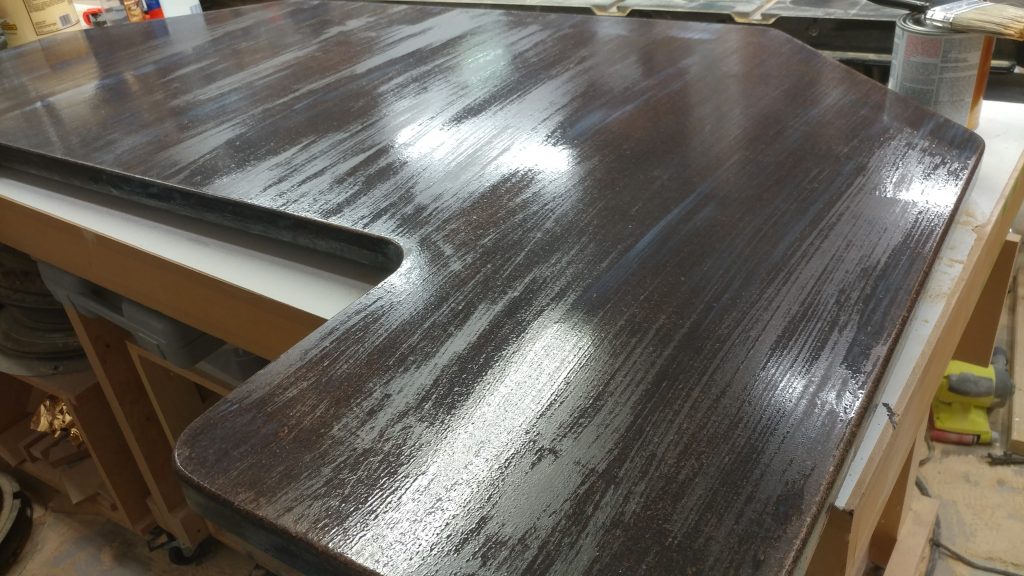
 

I let that cure for a few hours.
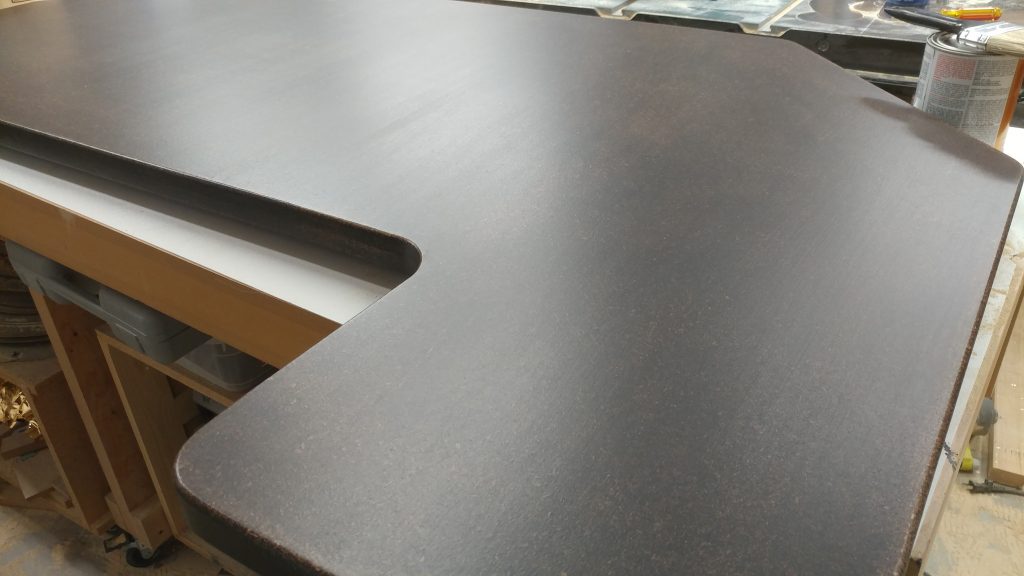
 

The third coat was applied without any sanding.
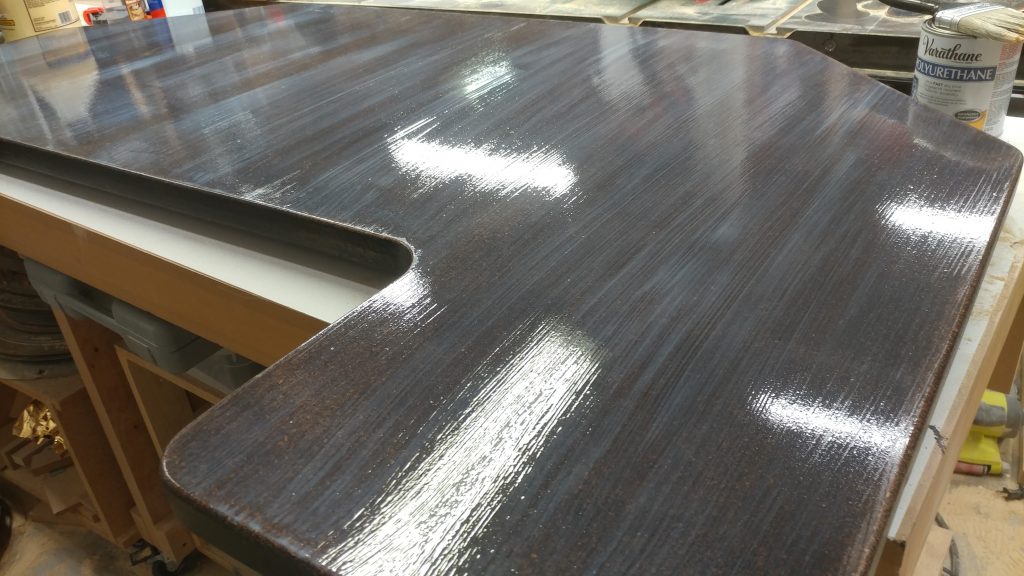
 

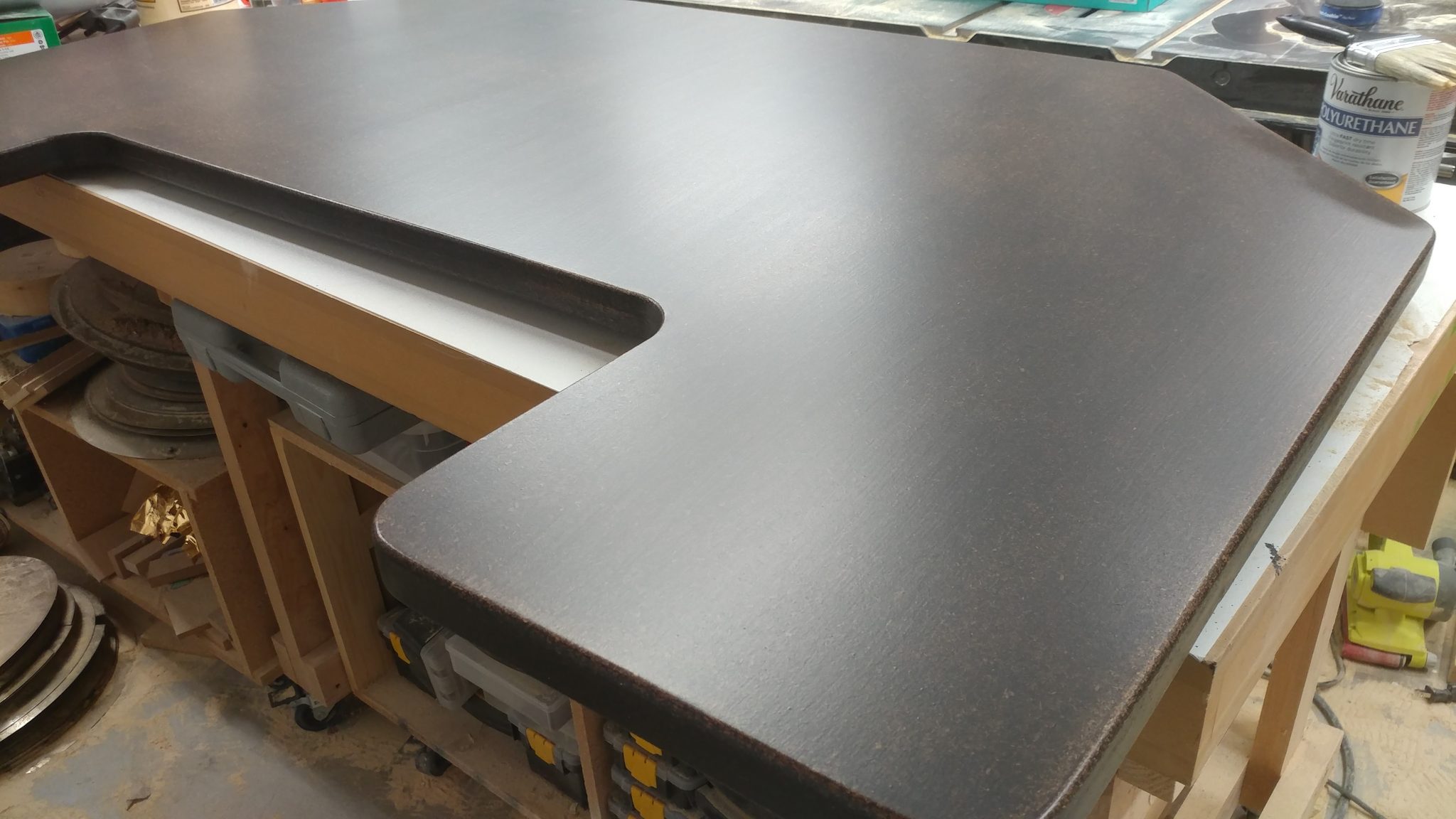
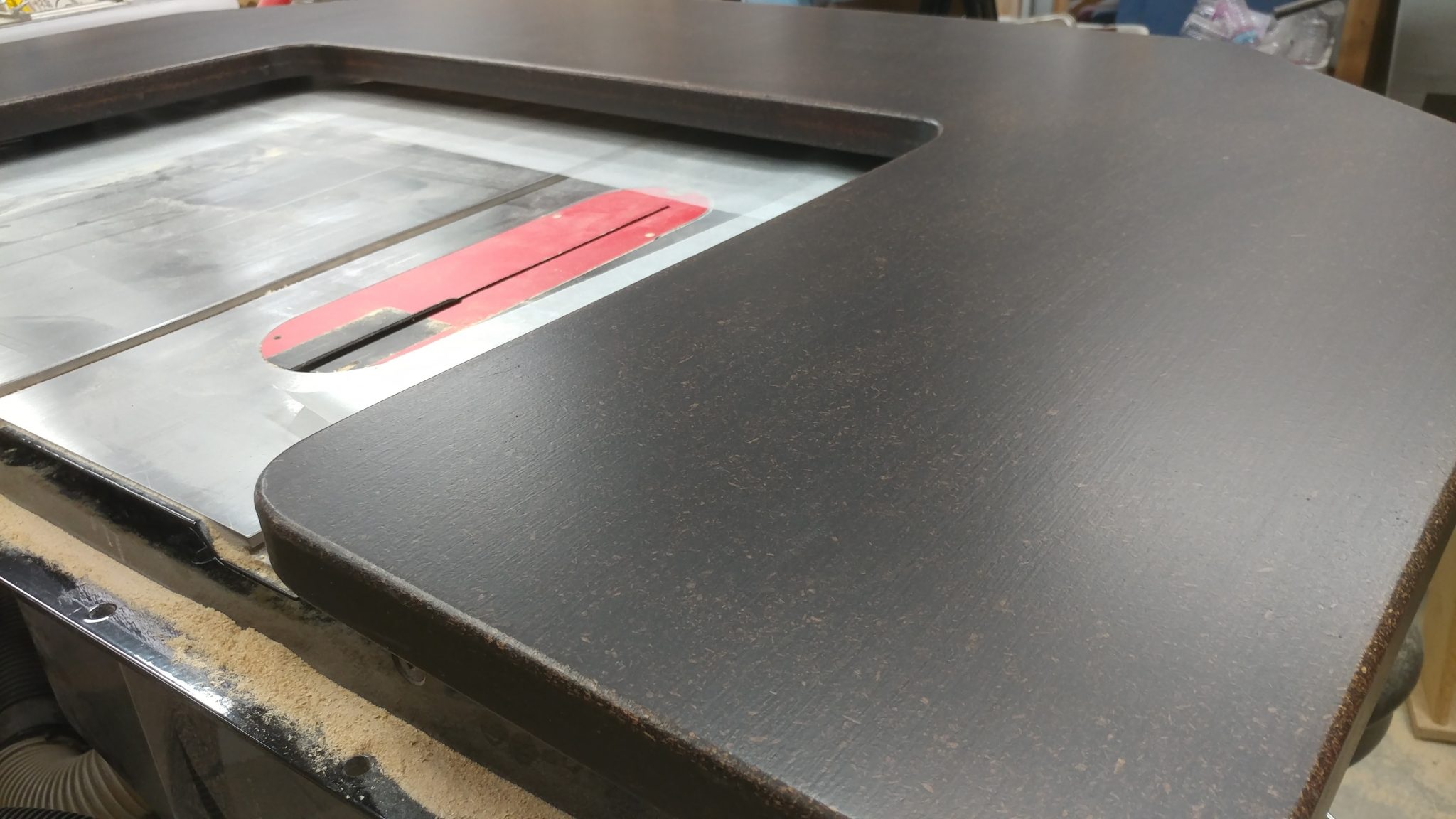
After letting it dry, I really liked the look and I could have stopped here but I wanted to add several more layers to give it the look and feel I was after.
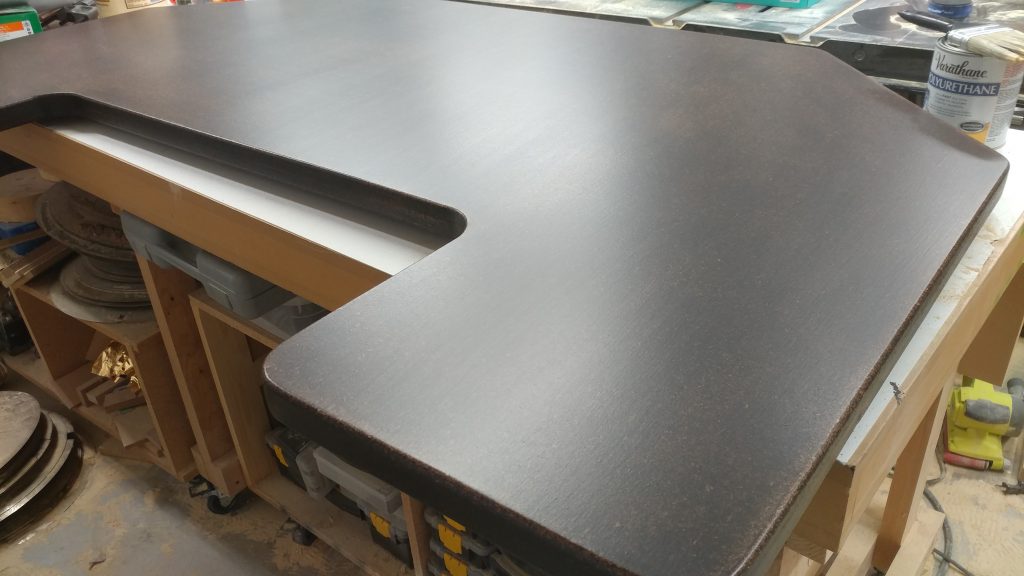
 

I added a fourth coat.
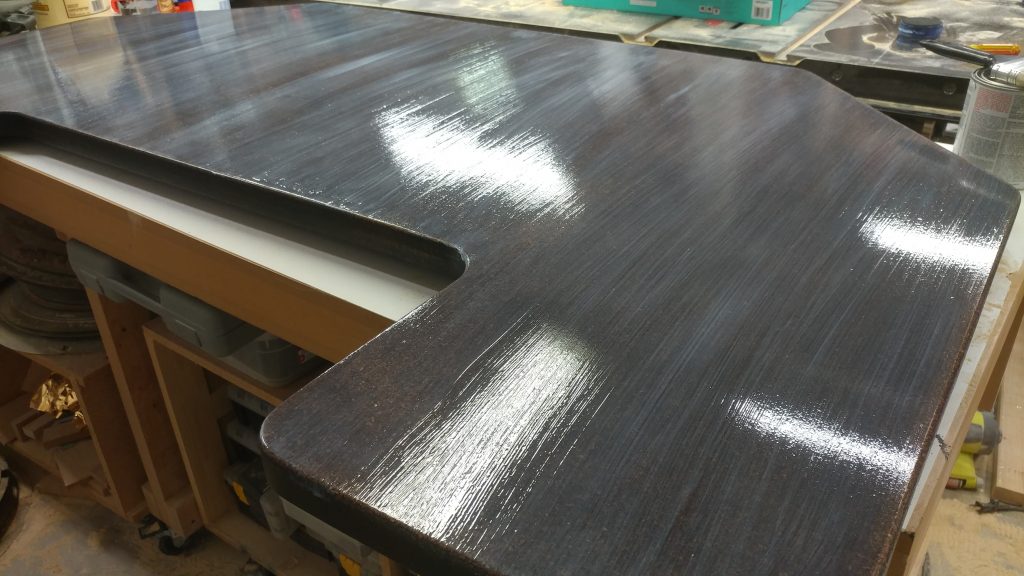
 

And let it dry.
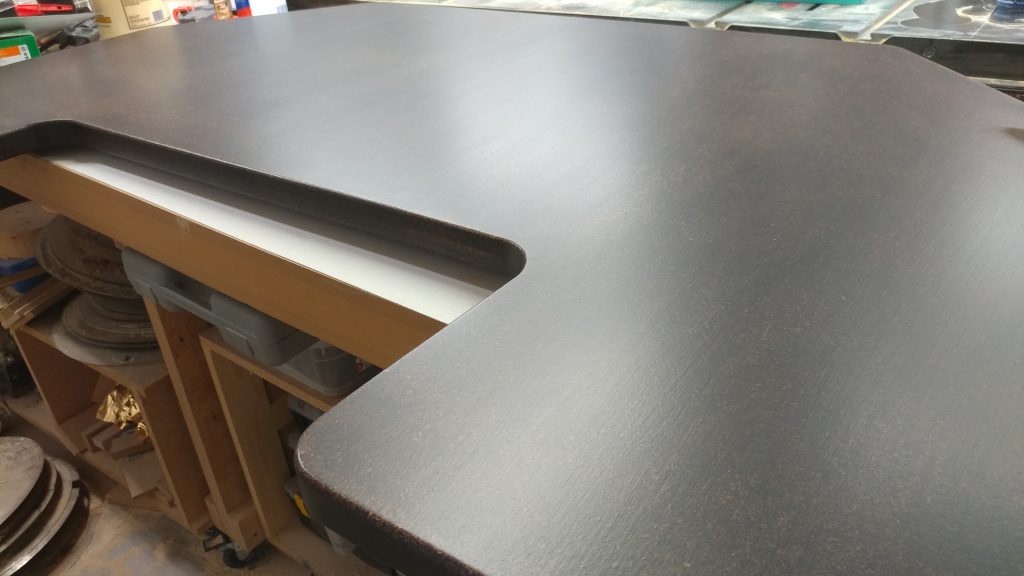
 

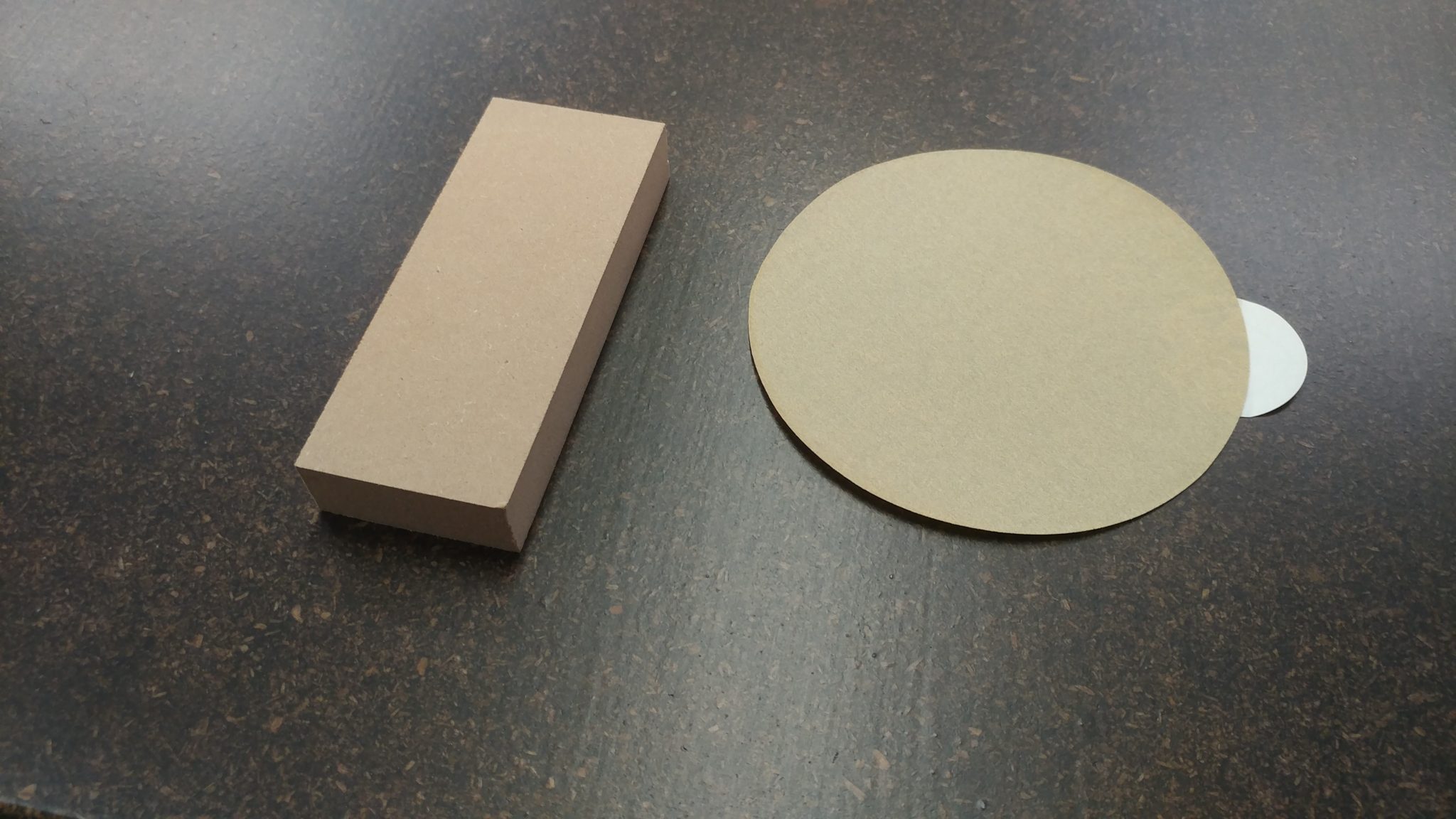
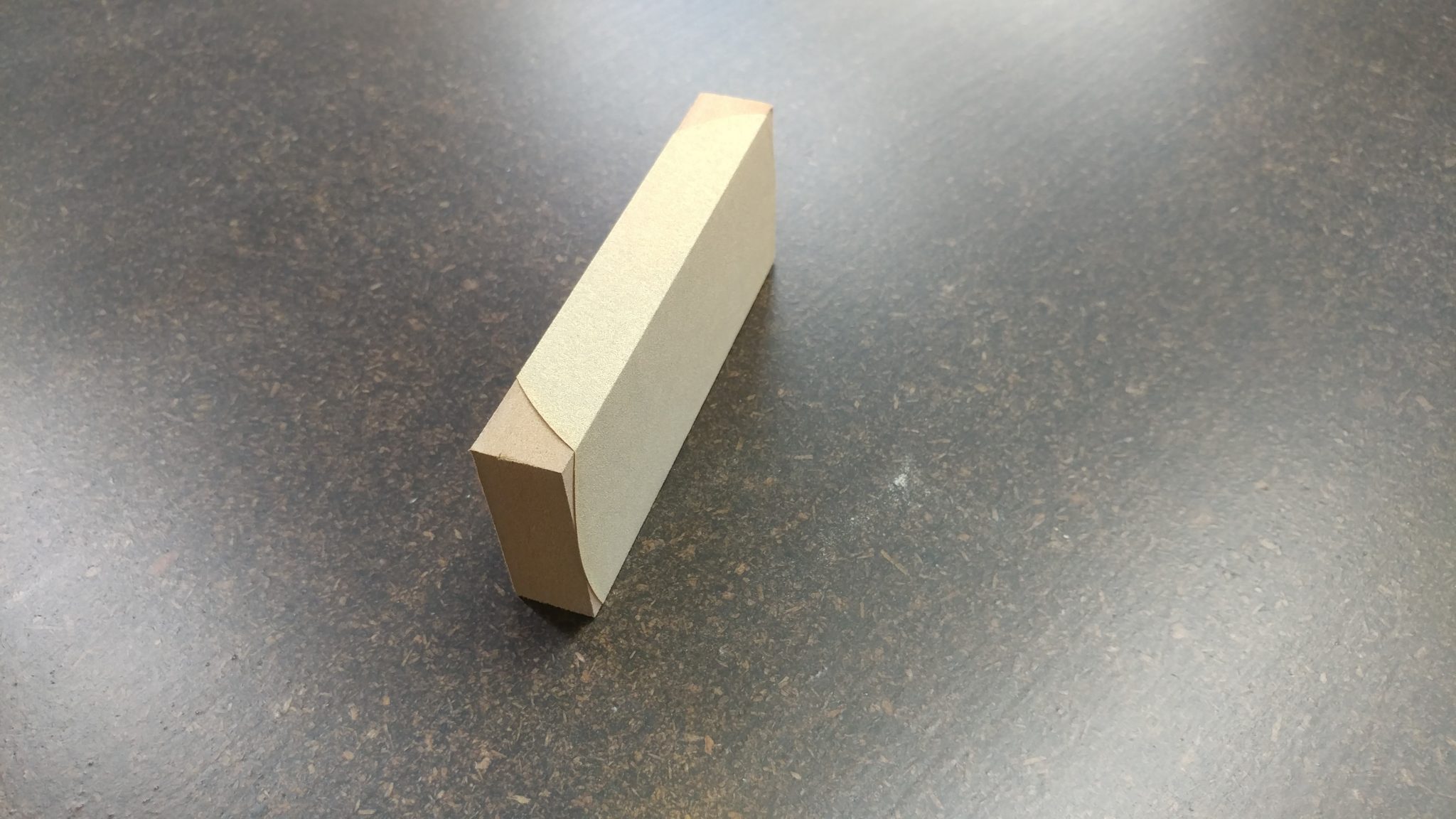
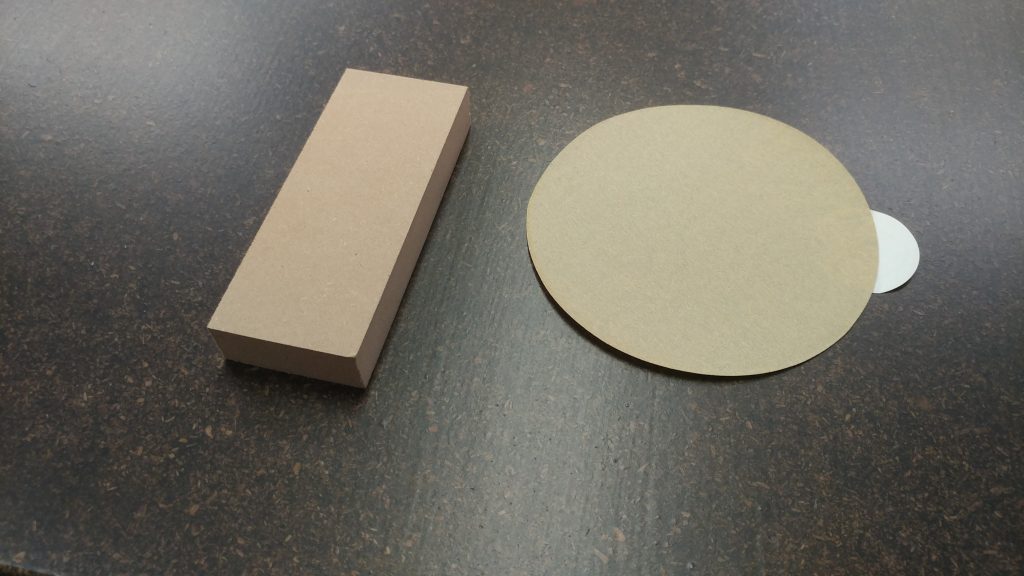
It’s starting to get that “too much poly” look that I’m after but there are a few high spots that I wanted to knock back.  I decided that I would sand the surface with a 220-grit adhesive-backed sanding disc.

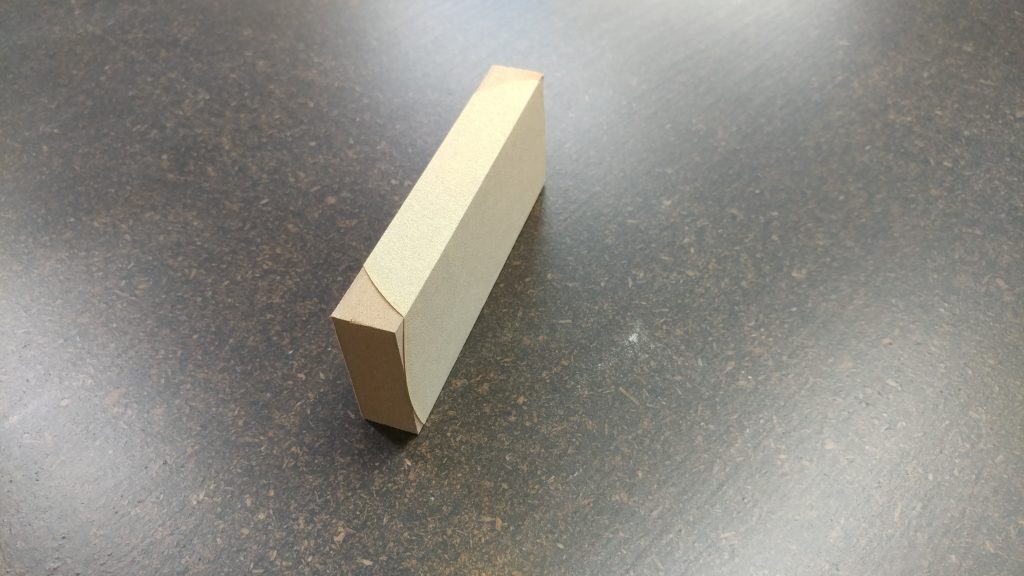
I grabbed a scrap piece of MDF to use as a sanding block and stuck the disc to it.
 

This resulted in a nice flat sanding block.
 

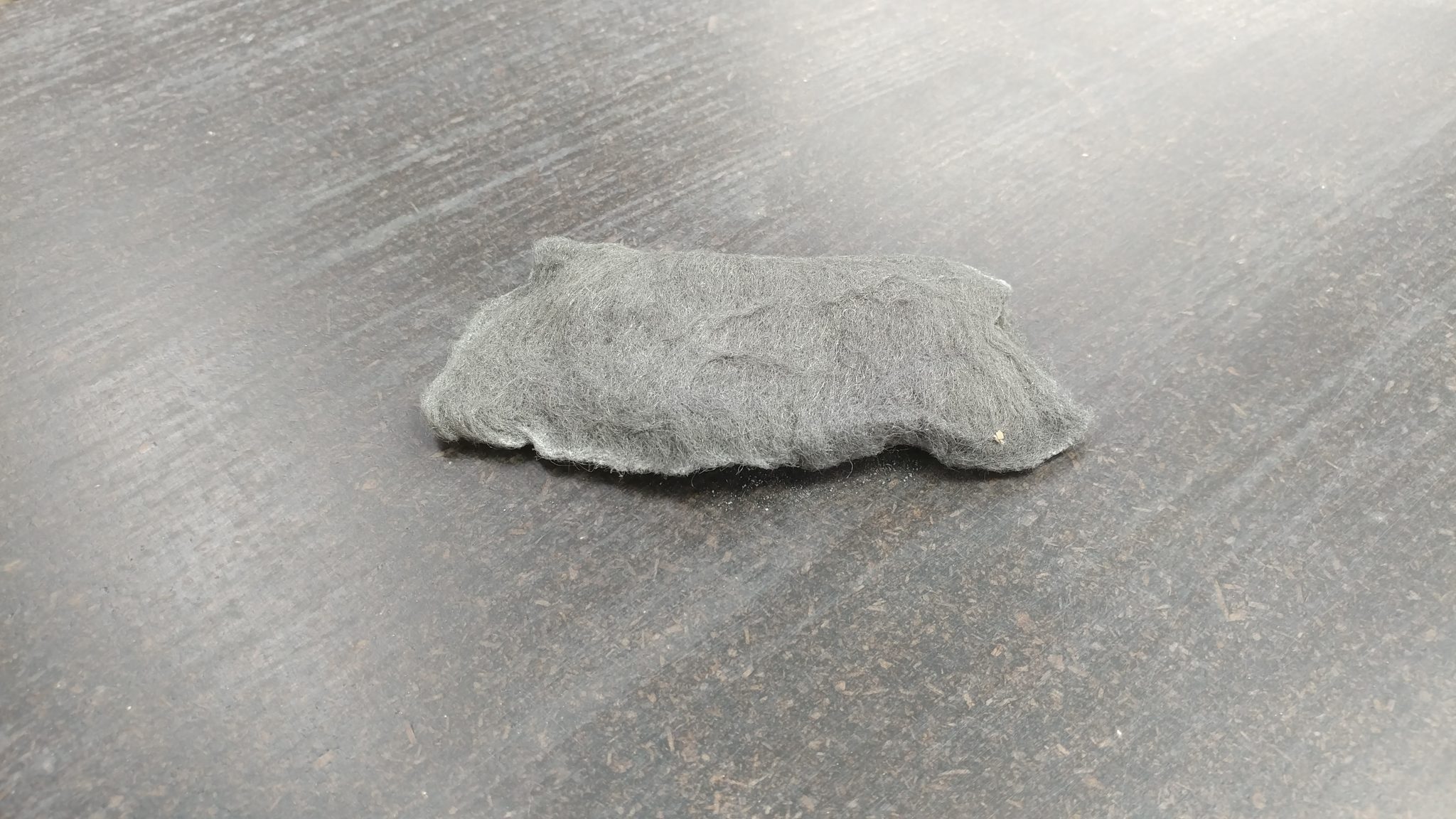
I sanded the high spots off then went over it again with a piece of 0000 steel wool.
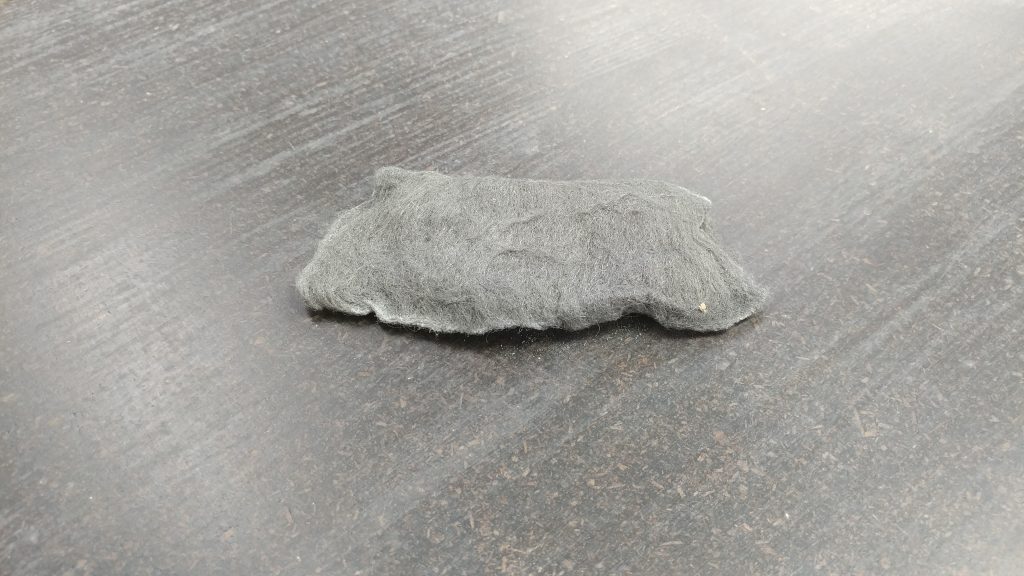
 

I made sure to wipe all the sanding dust off.  I didn’t want to introduce a chemical to the finish at this point so I just went over it a few times with blue shop towels.
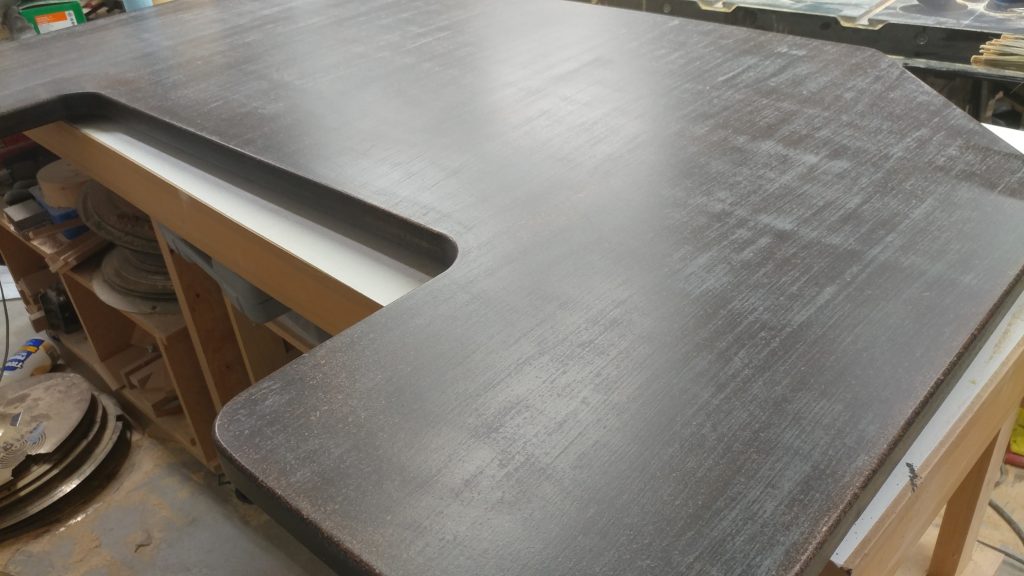
 

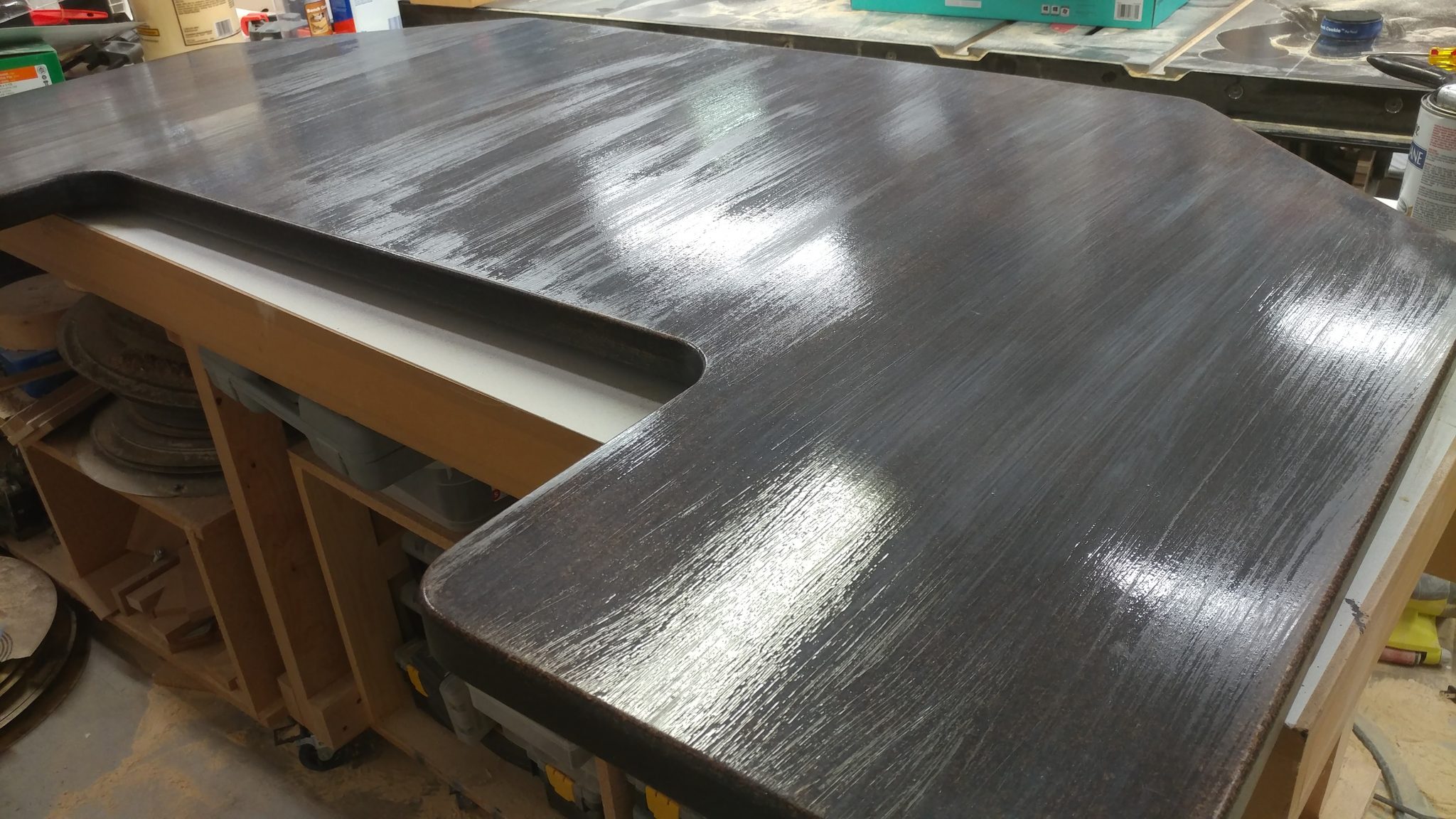
Then I applied a fifth coat of polyurethane.
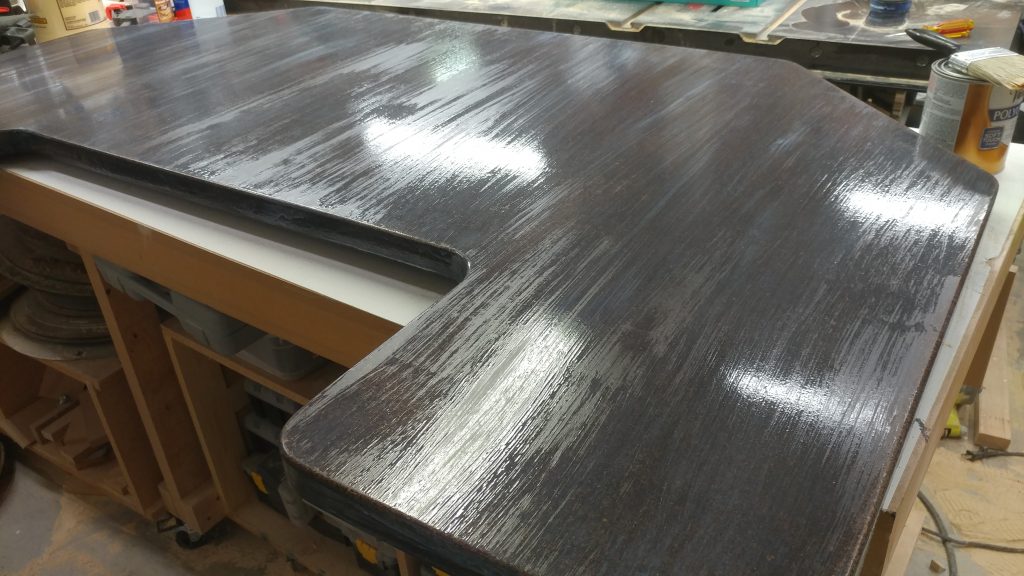
 

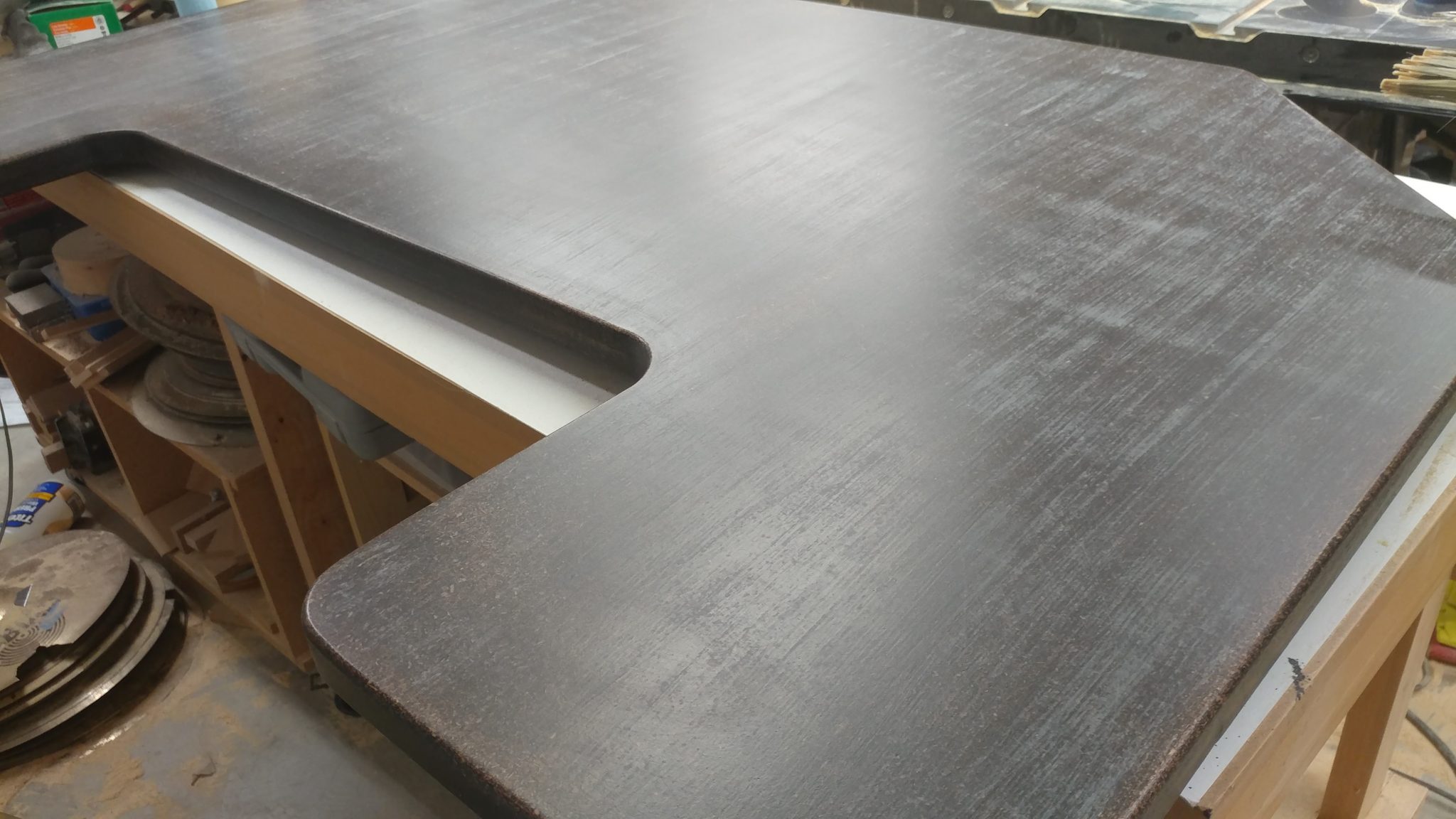
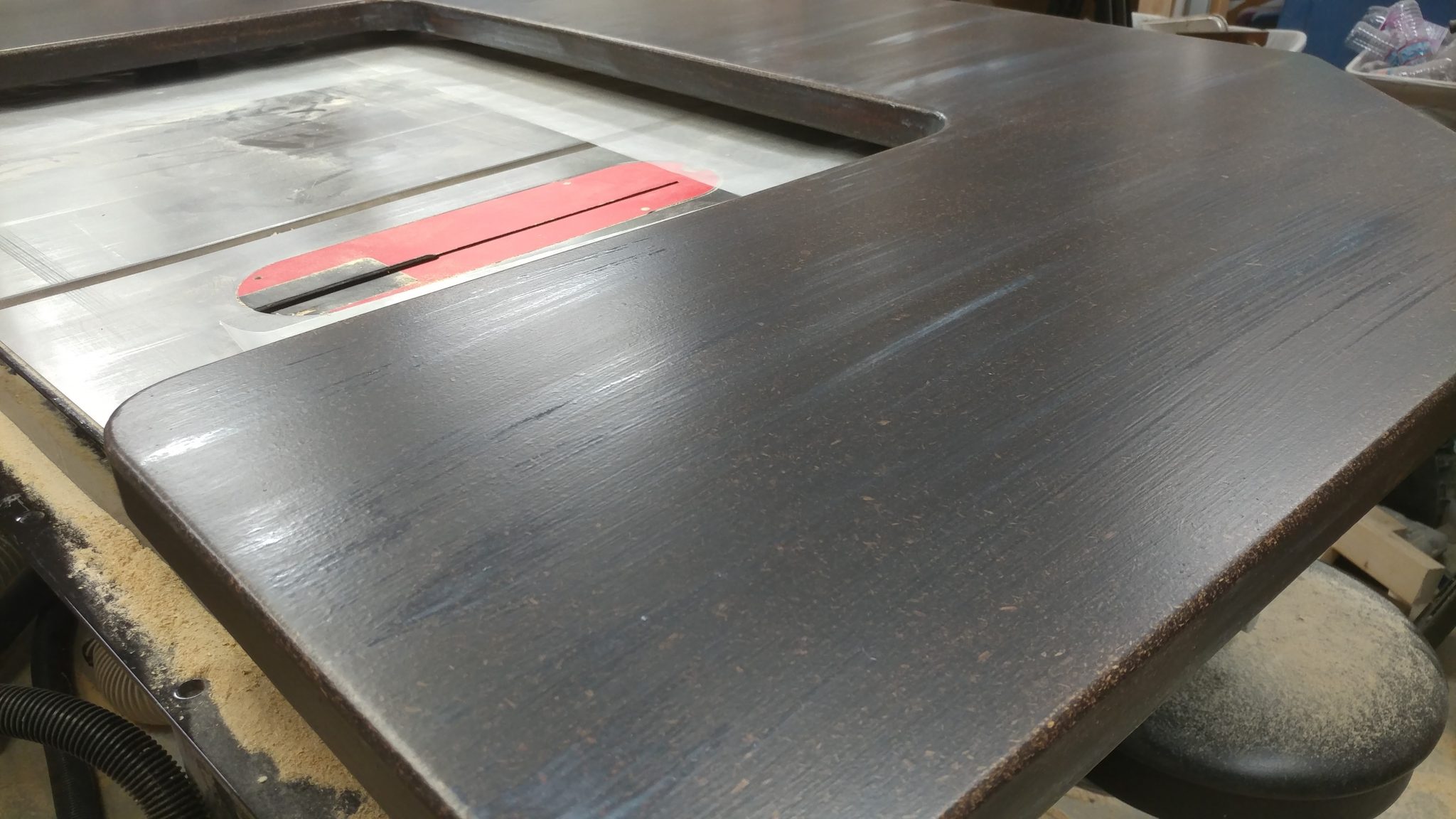
After letting it dry for a few hours I could still see some of the sanded areas through the finish.
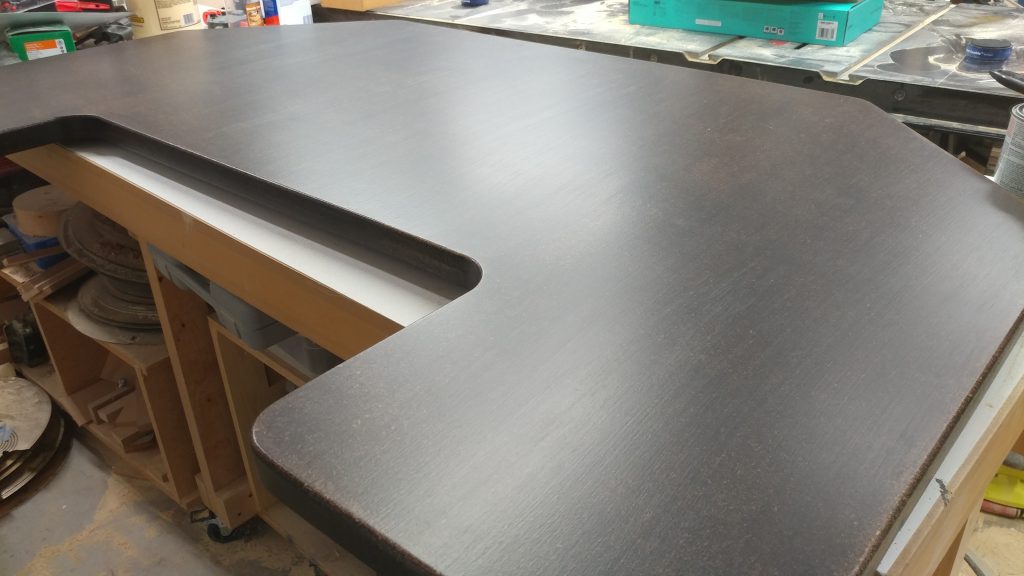
 

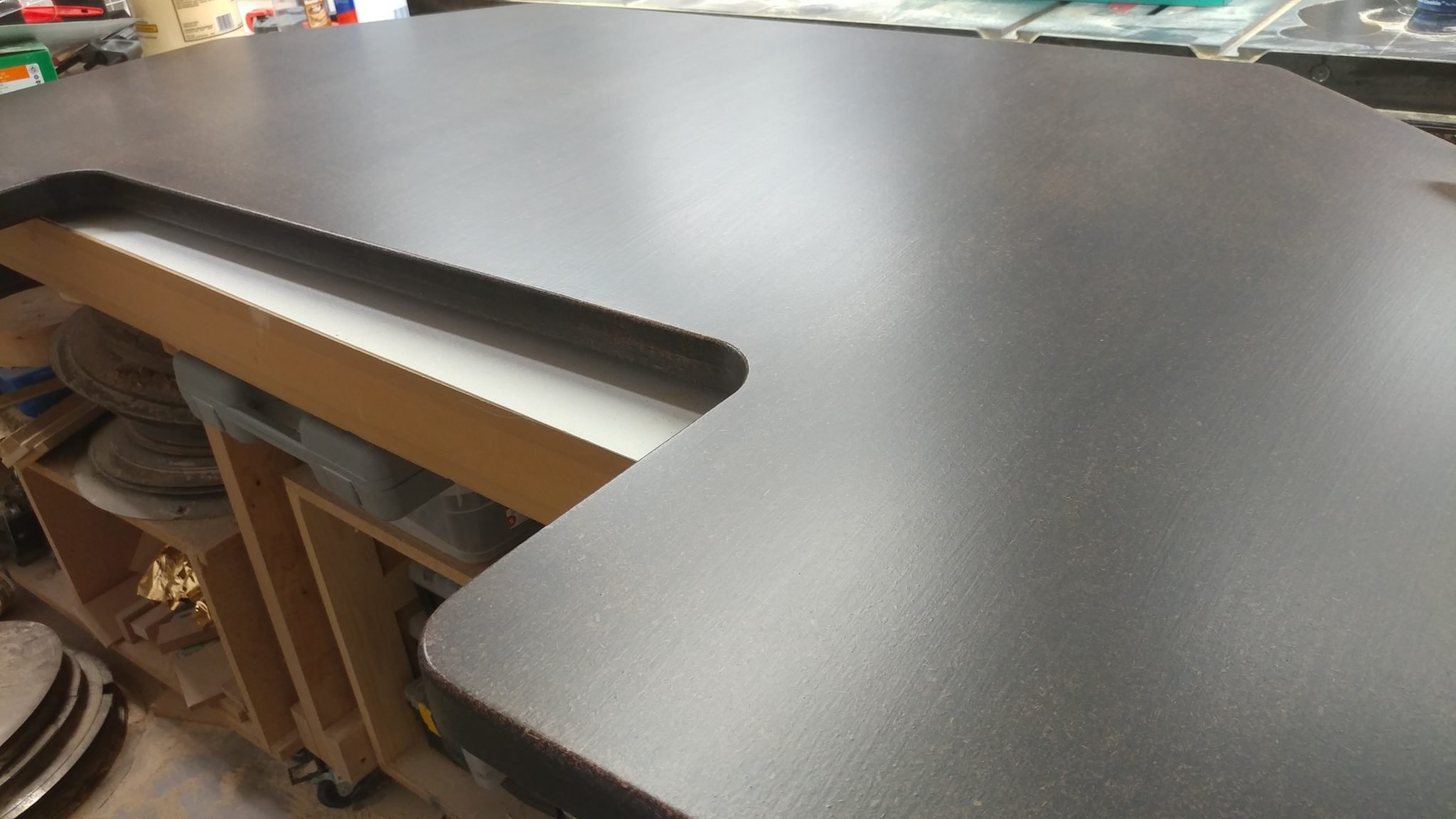
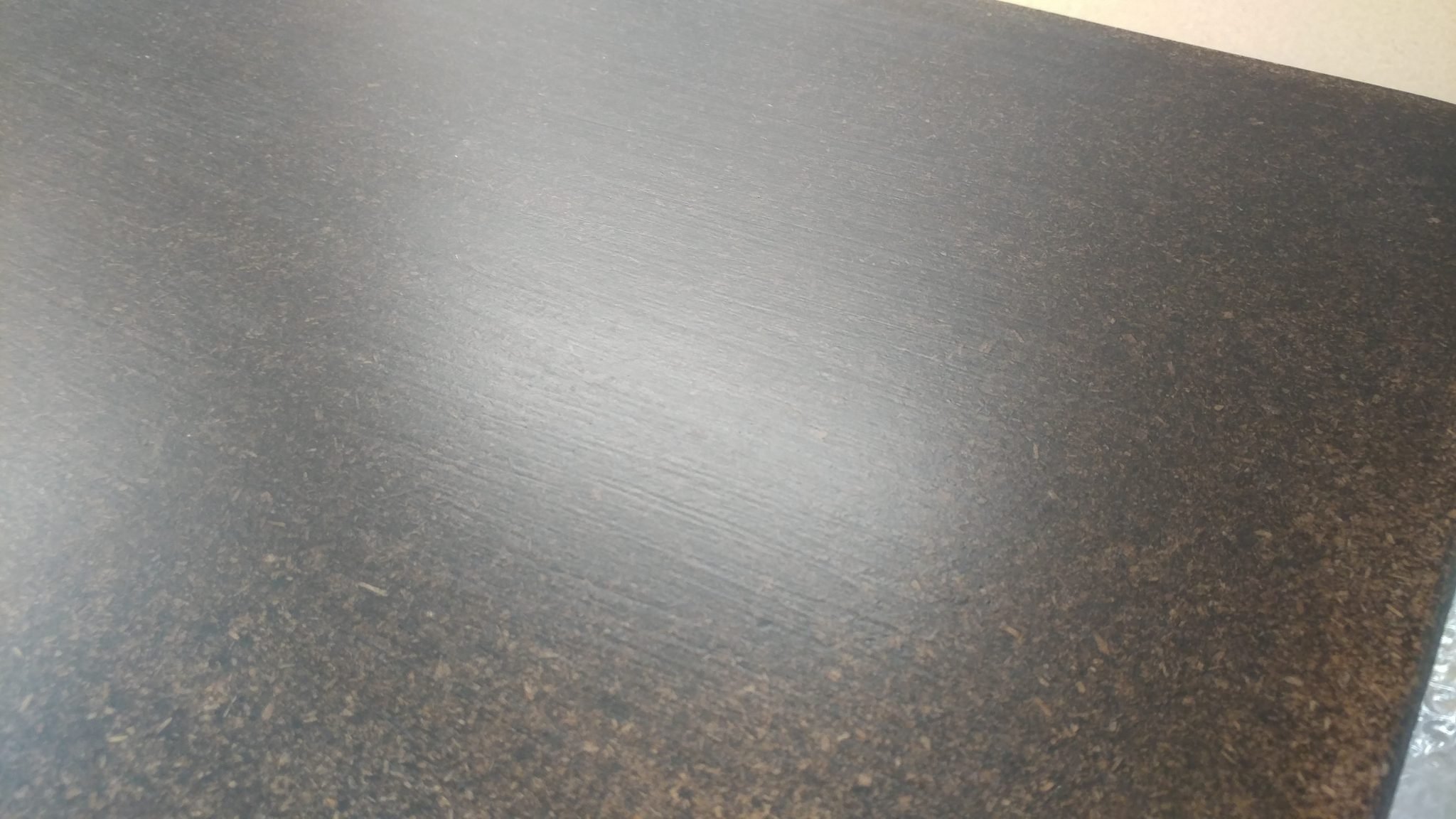
A close up shows that the finish still has a texture to it but the gritty bumps have been removed.
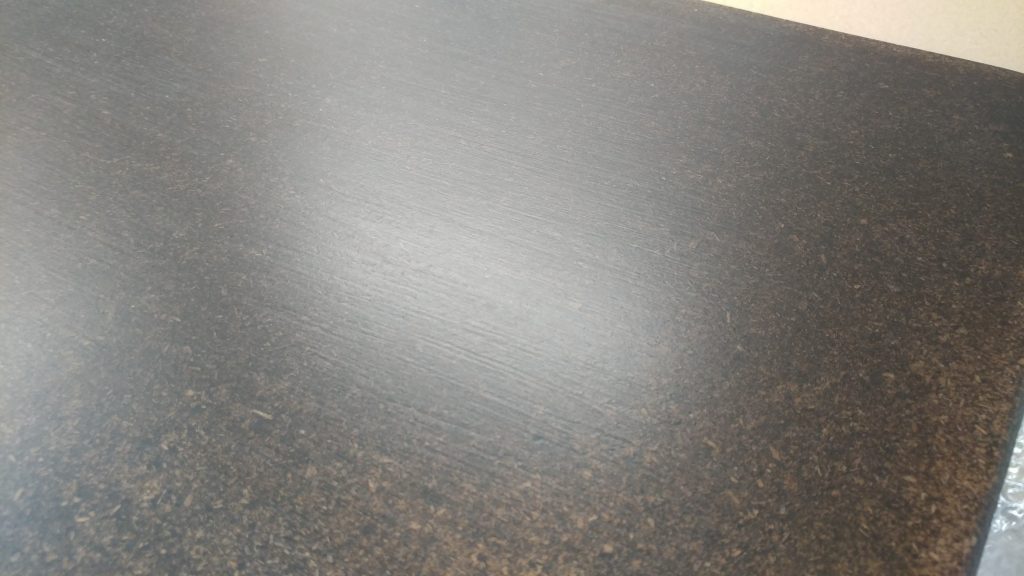
 

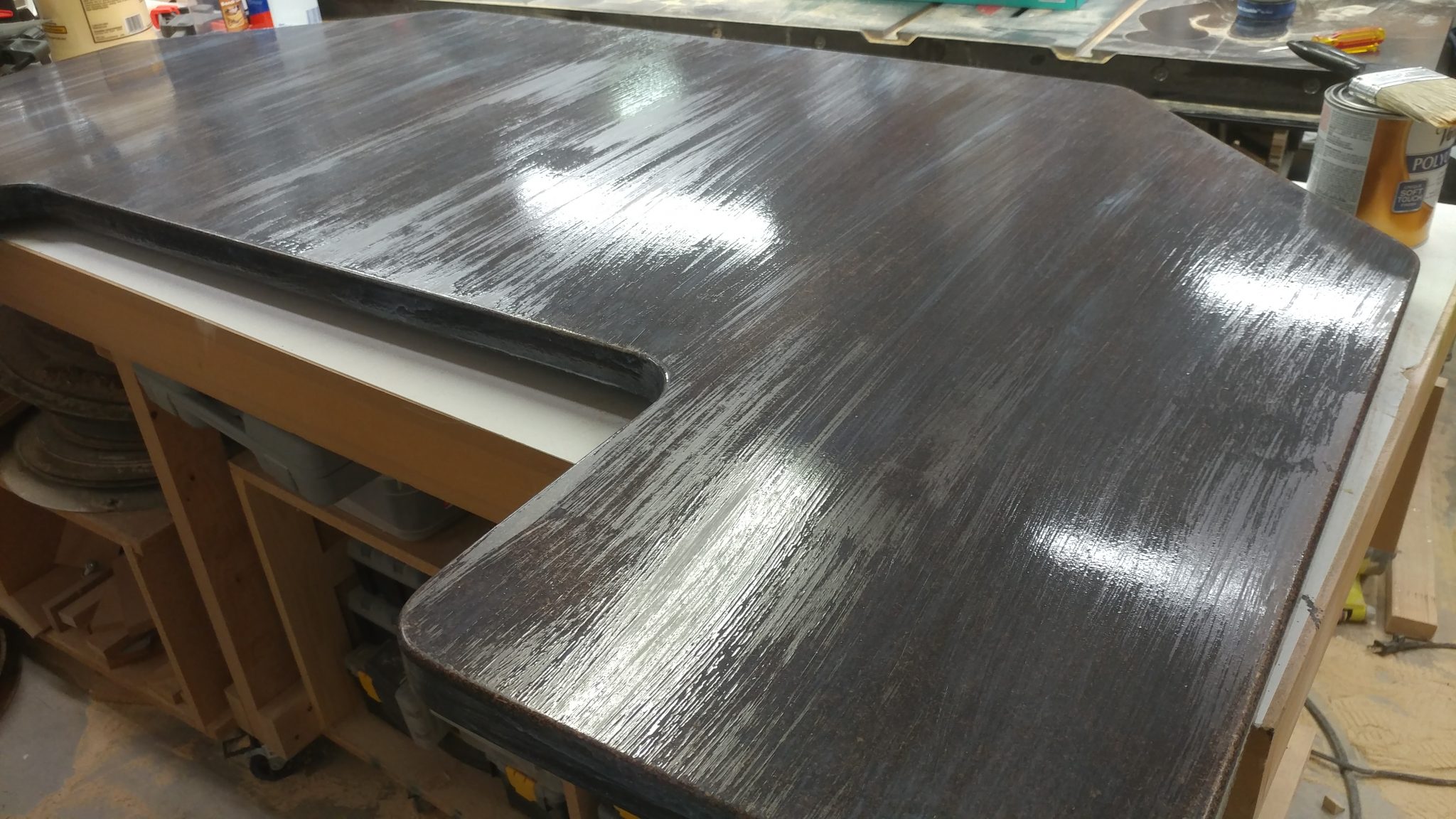
This is really starting to feel ridiculous, but I added a sixth layer of polyurethane.
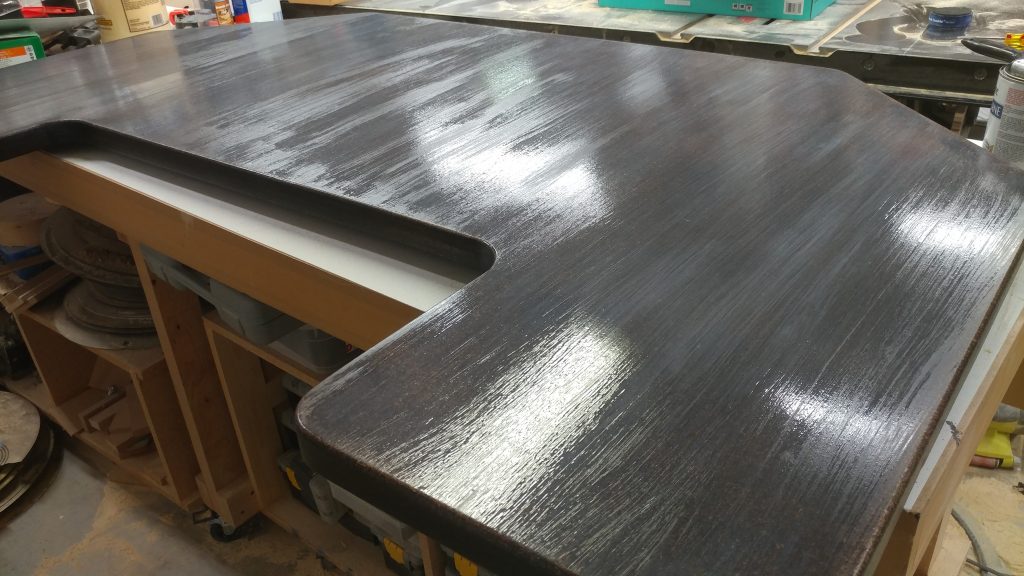
 

I can still see a few dull spots form the sanding.
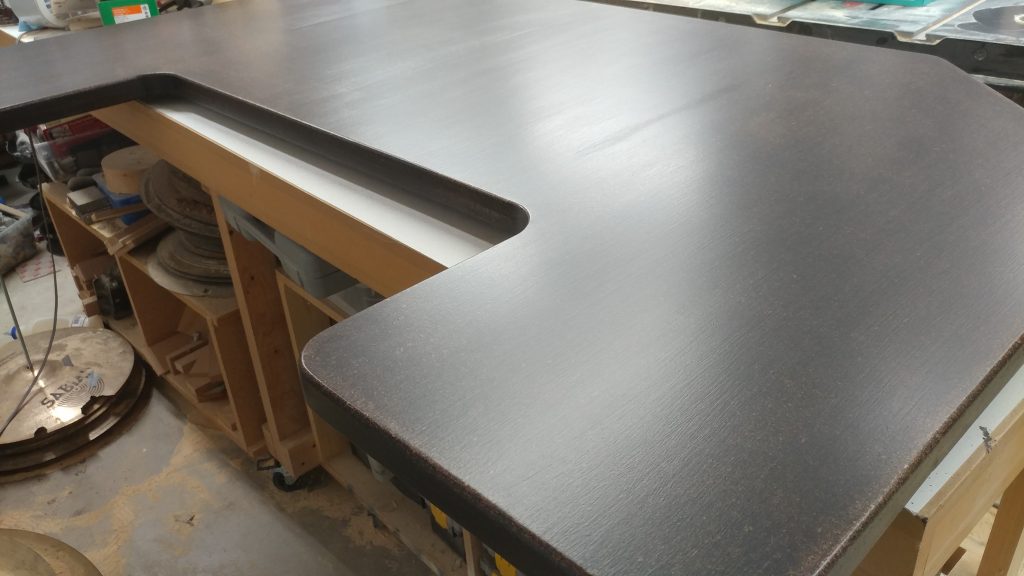
 

A closer look shows the slightly duller areas left over from the sanding.  I am actually pretty happy with the texture at this point but I figured one more coat should hide the rough spots.
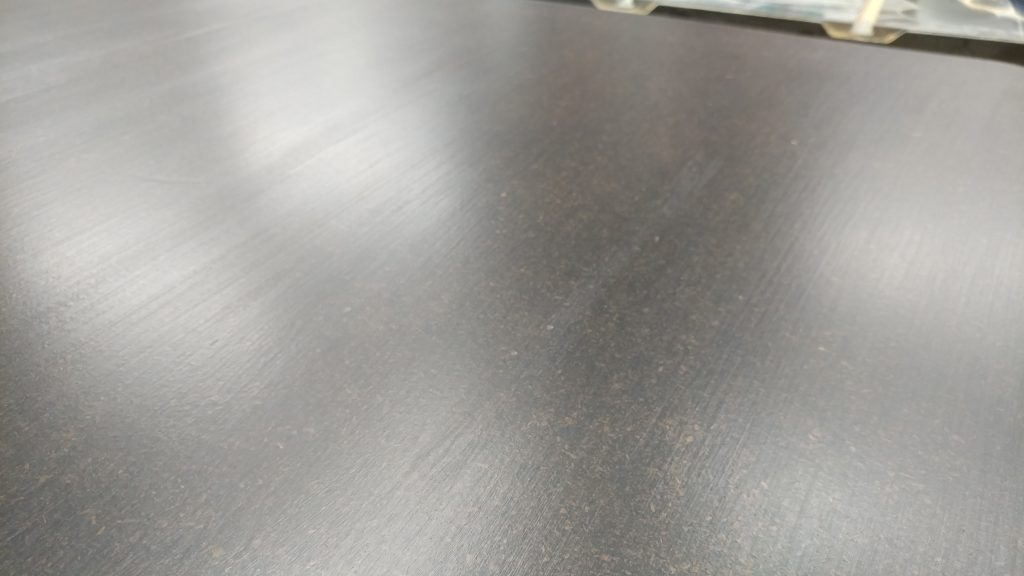
 

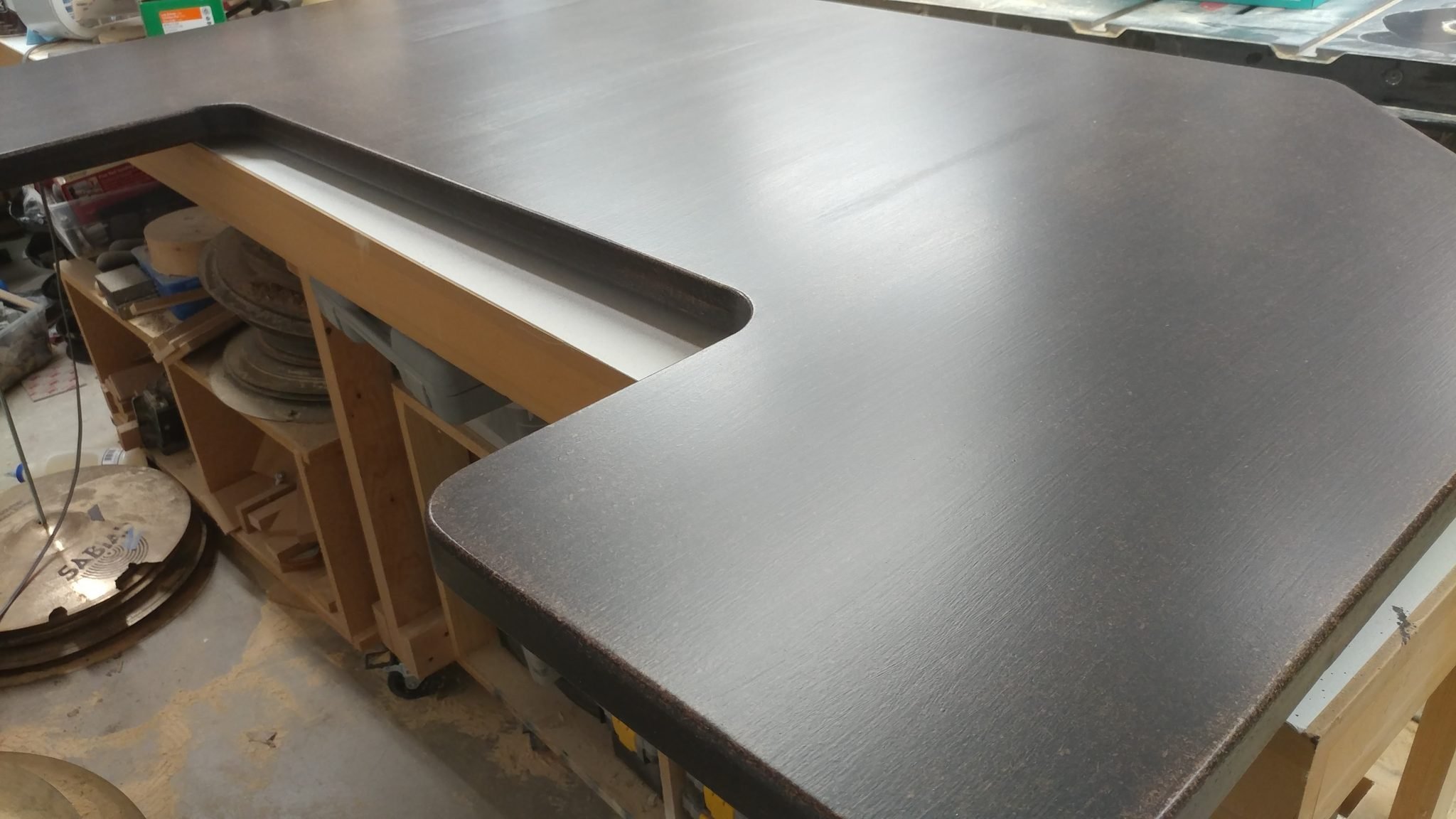
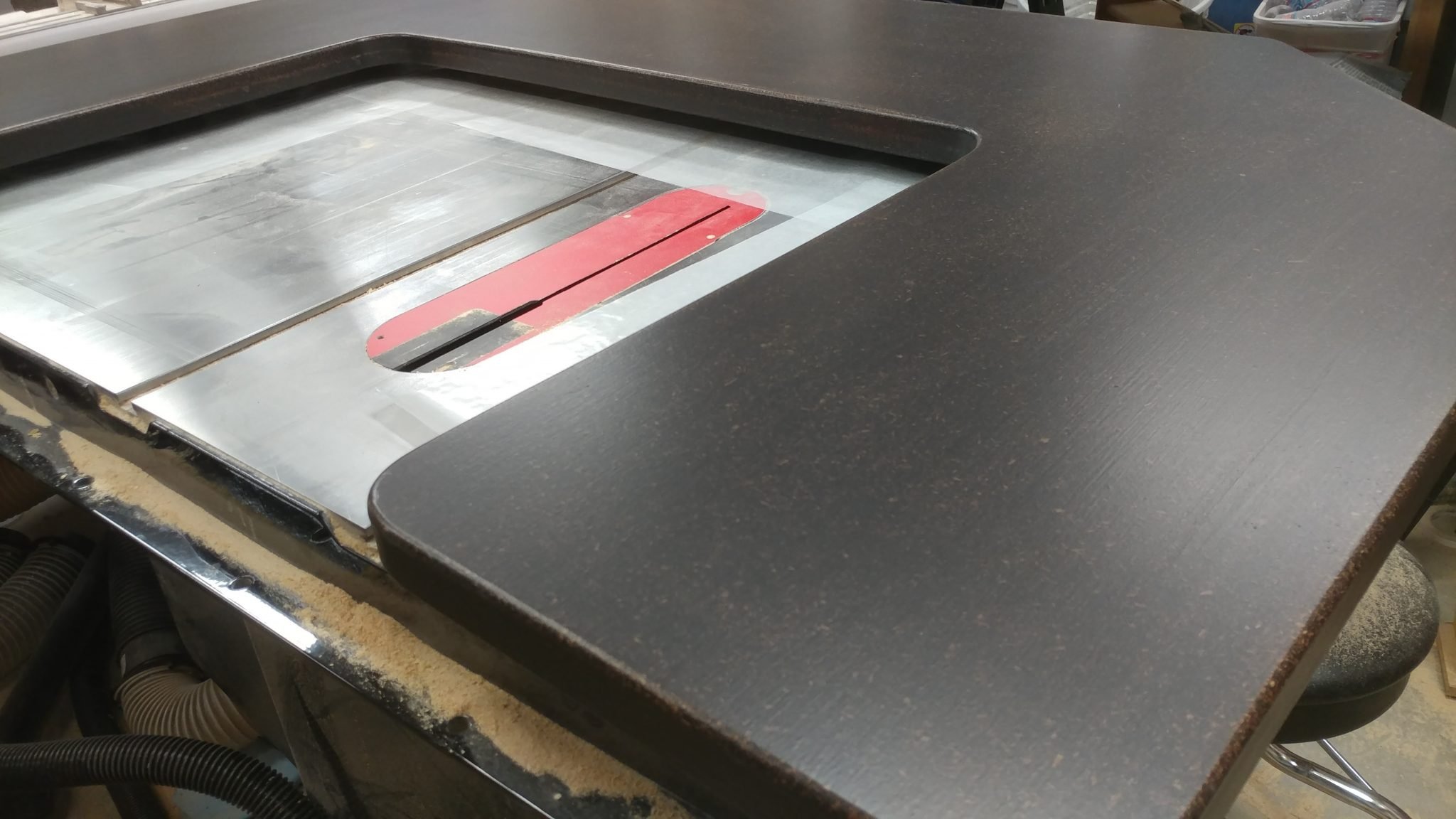
I applied the seventh and final coat.
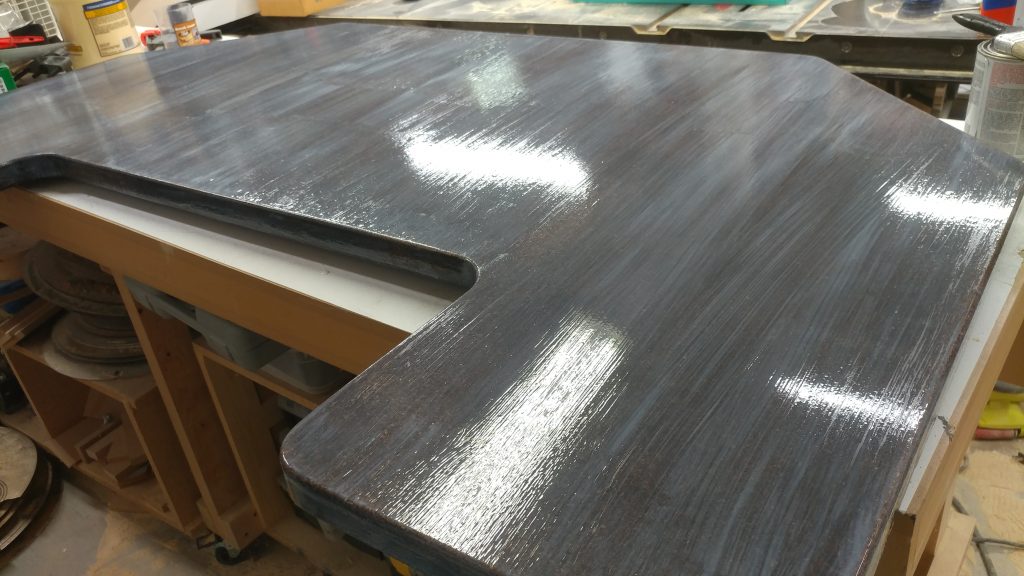
 

All done.  Now I just need to let it cure for a week.
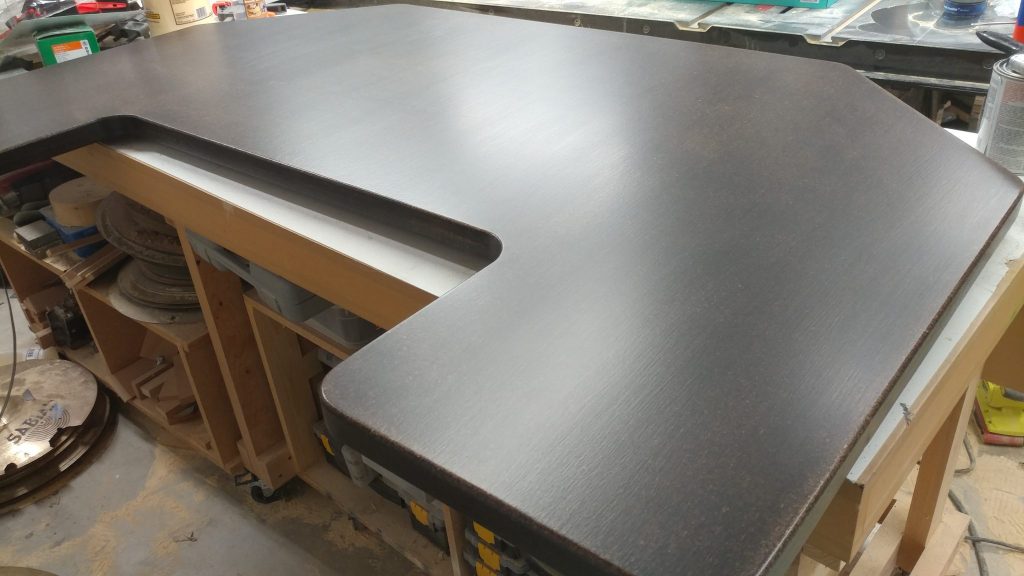


Applying polyurethane to the lower section

I applied the polyurethane to the lower section in the exact same manner as I did on the upper section.

I first tackled the underside of the lower section.  As with the upper section, I put three coats of polyurethane on the underside.
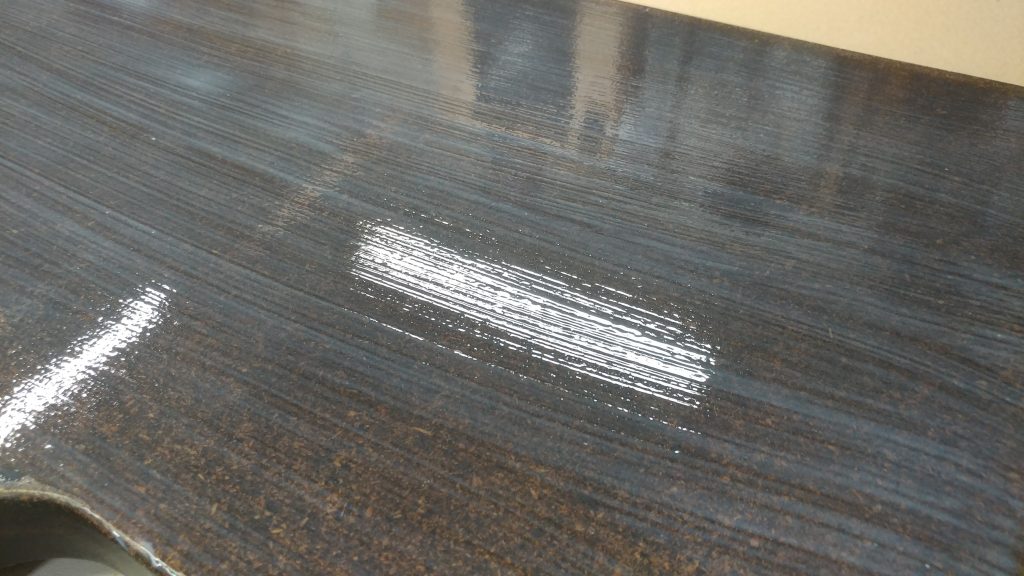
 

I let it sit for two days.                     
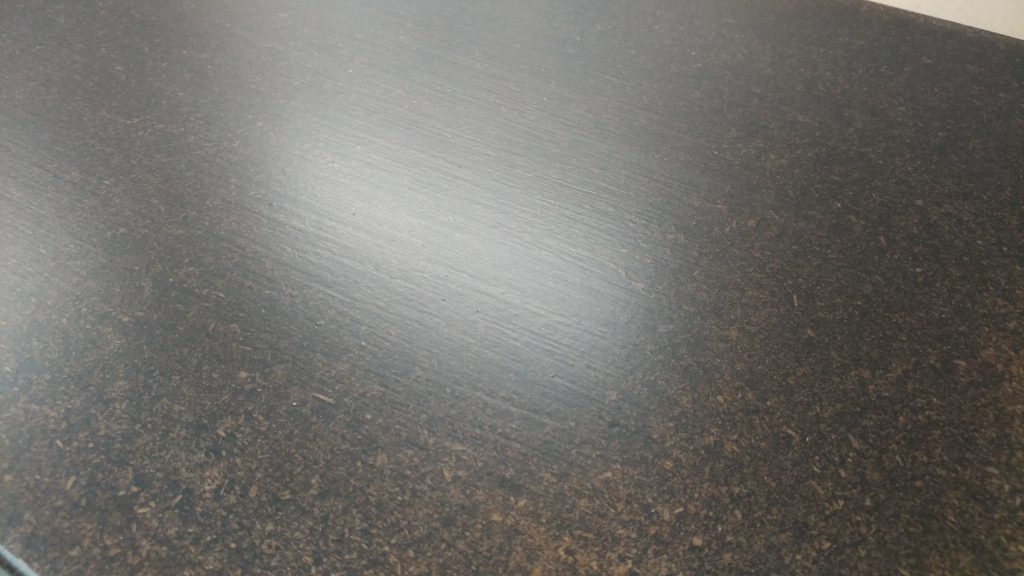
 

I flipped it over and applied the polyurethane to the underside.

The first coat.
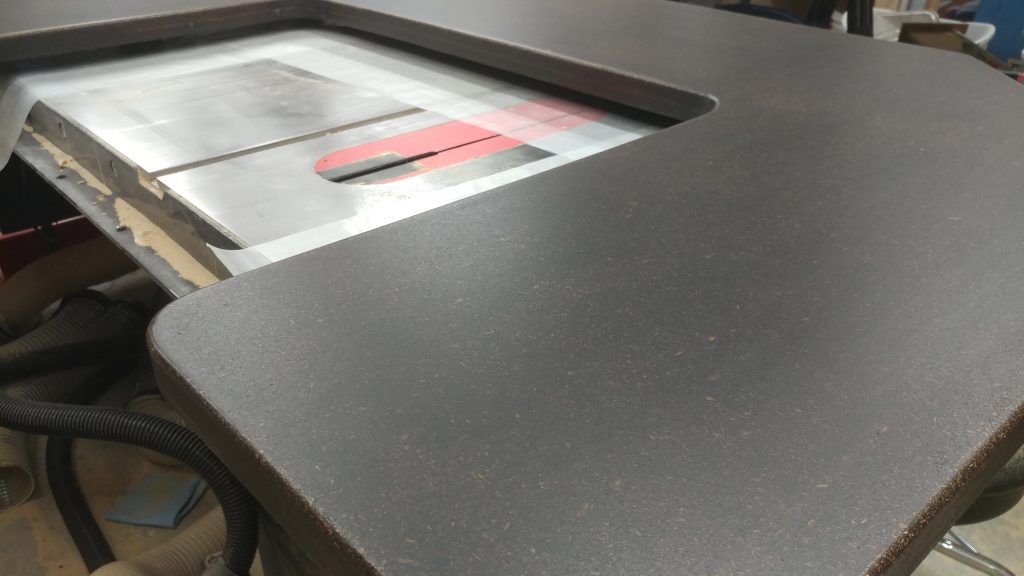
 

The second coat.
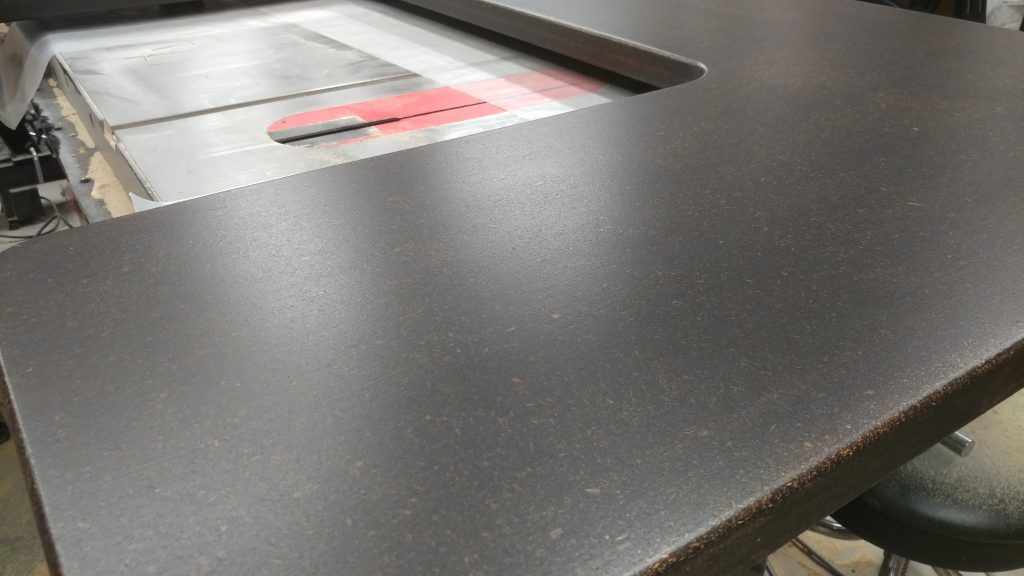
 

The third coat.
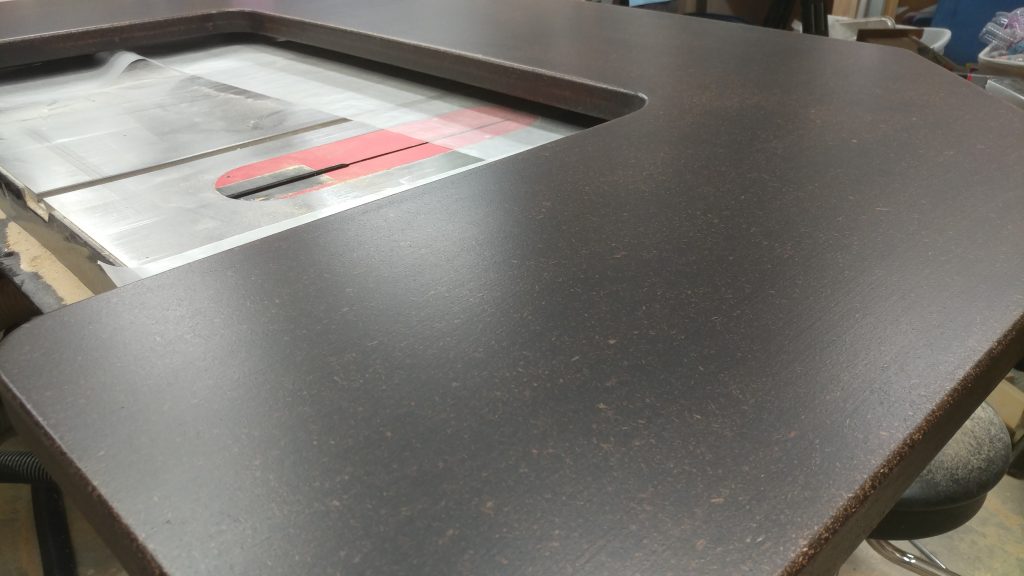
 

The fourth coat.
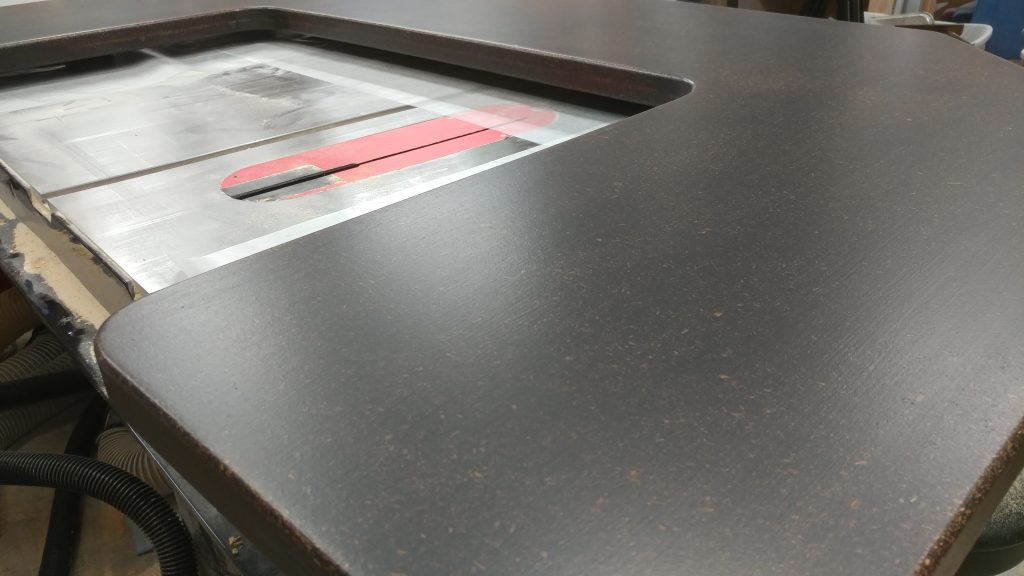
 

Like the upper section, I sanded the high spots after the fourth coat.
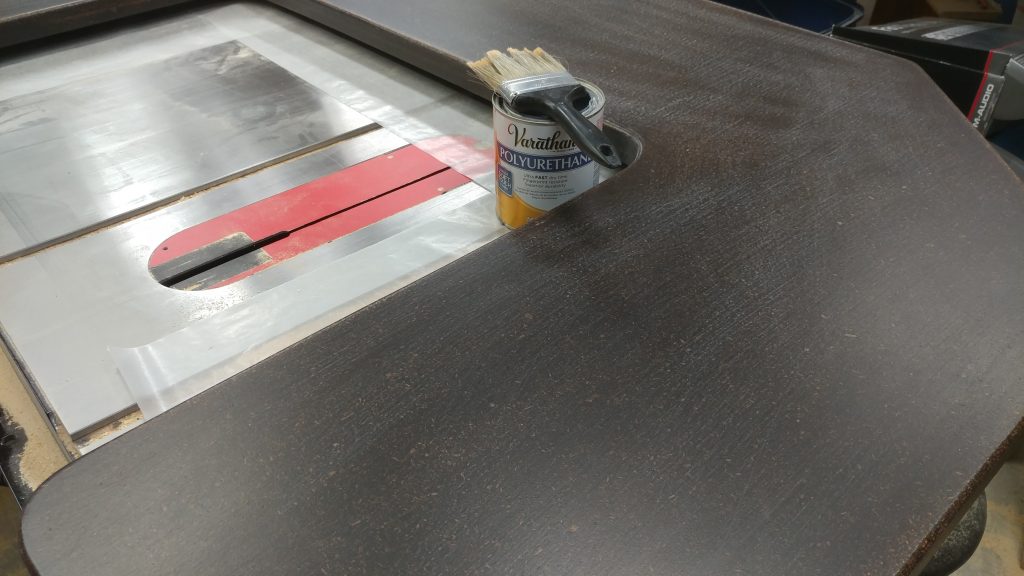
 

The fifth coat.
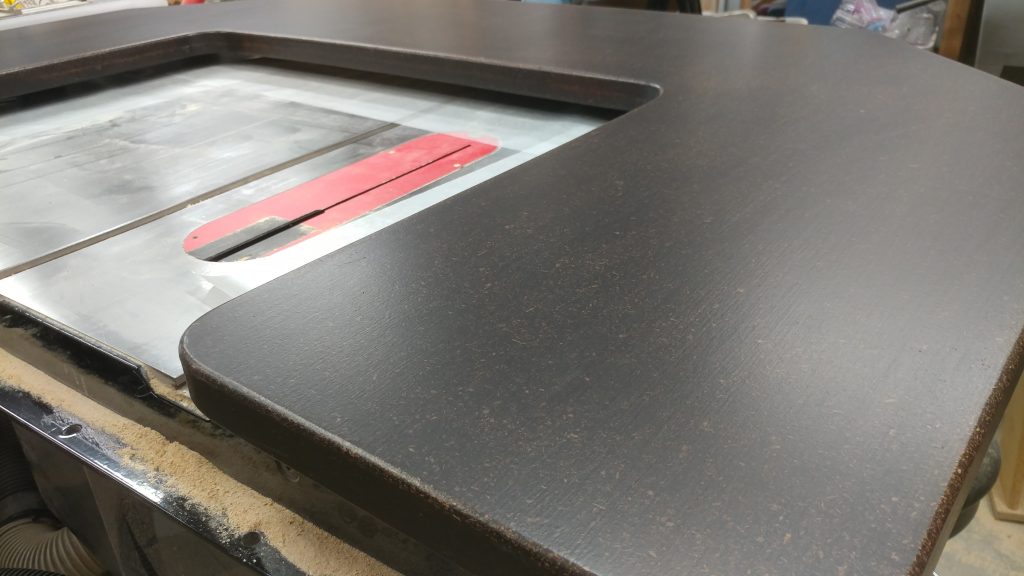
 

The sixth coat.
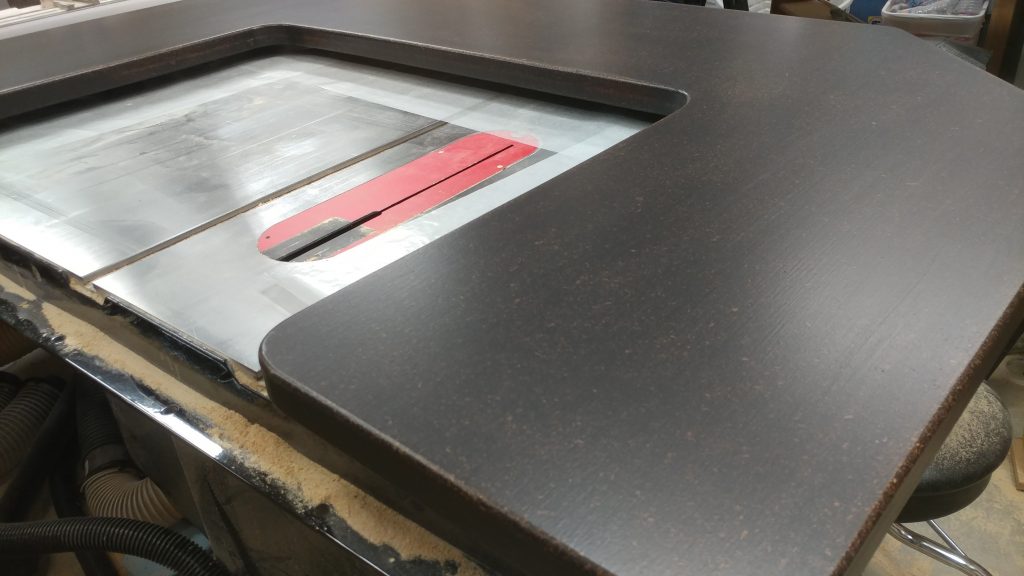
 

I didn’t get a photo of the seventh coat after it had dried but here it is shortly after applying the final coat.
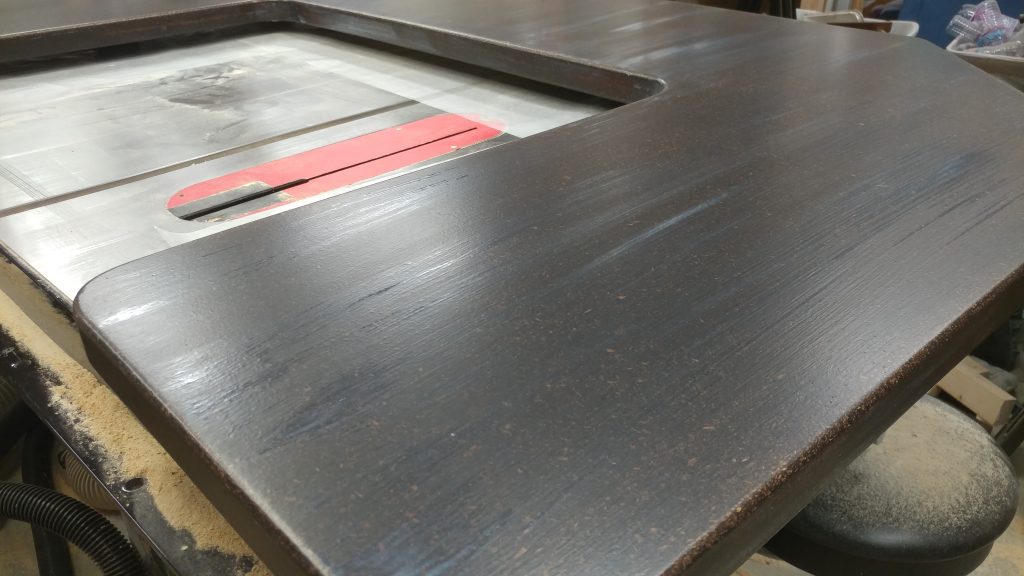
 

Applying polyurethane to the racks

Again, I applied three coats to the undersides of the racks and seven coats to the sides that will be seen.

I wanted to try something different with the racks.  Instead of using glue and sawdust, I tried Elmer’s Wood Filler.  I applied some to all of the seams then sanded it flat.  This stuff doesn’t accept stain very well and I wanted to see how it would look since I’m going for a rough industrial look.  You can see some applied near the edges of the racks.  It shows up as lighter spots.  Personally, I think they add some texture and character.  Elmer’s makes a stainable wood filler but I wanted a rough look here so I went with the regular kind.
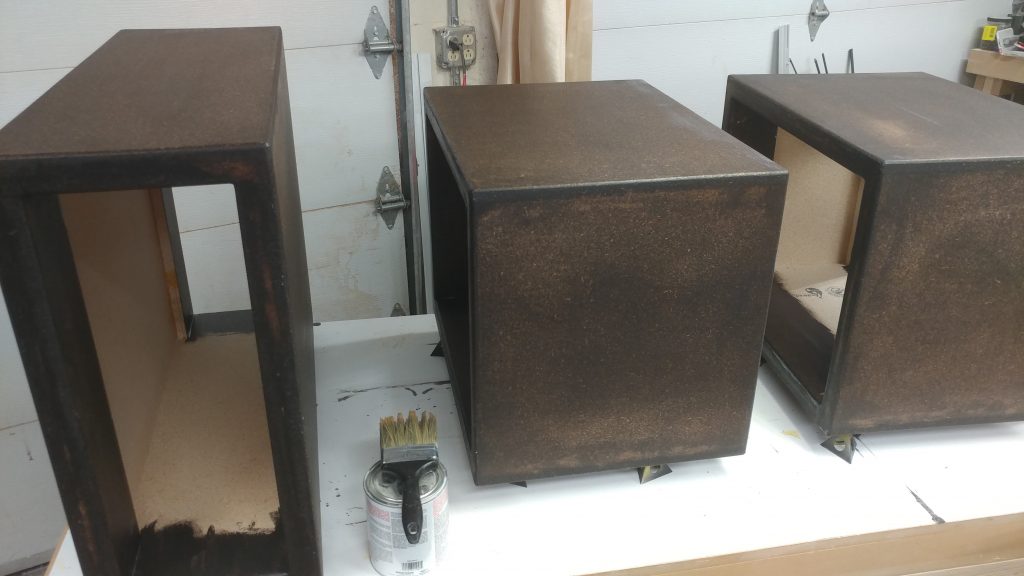
 

I added the first coat.
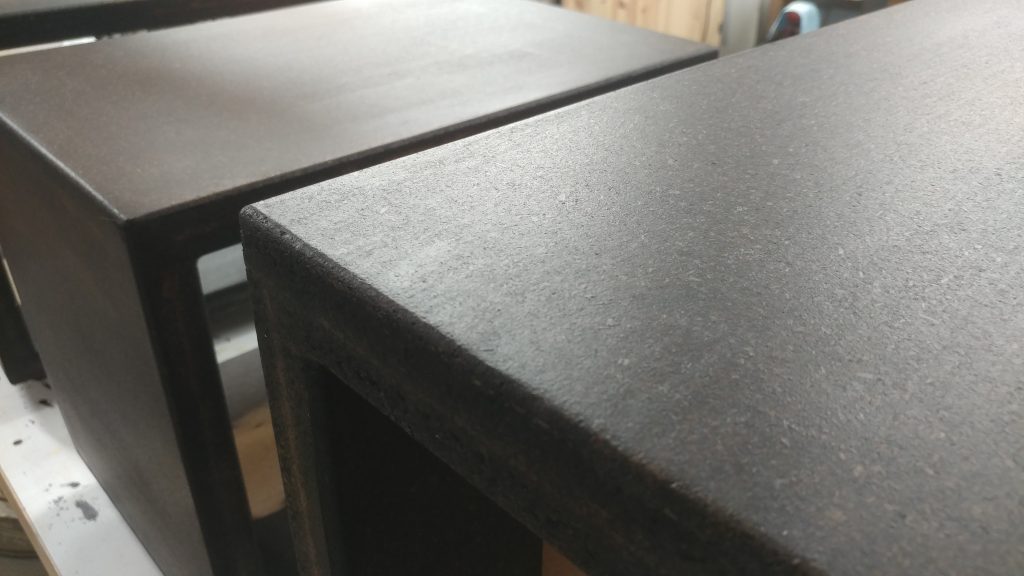
 

Then the second.
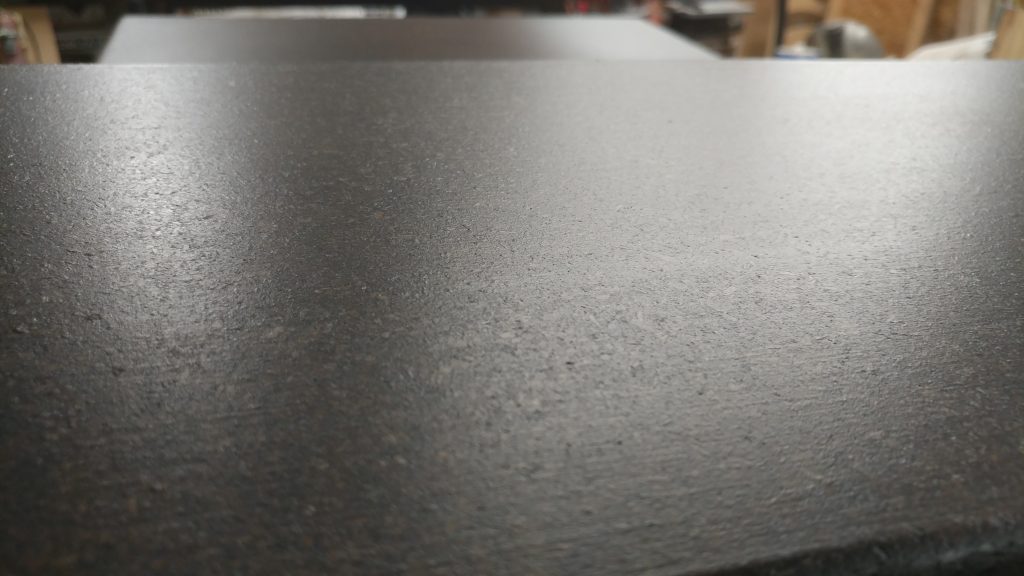
 

And the third.
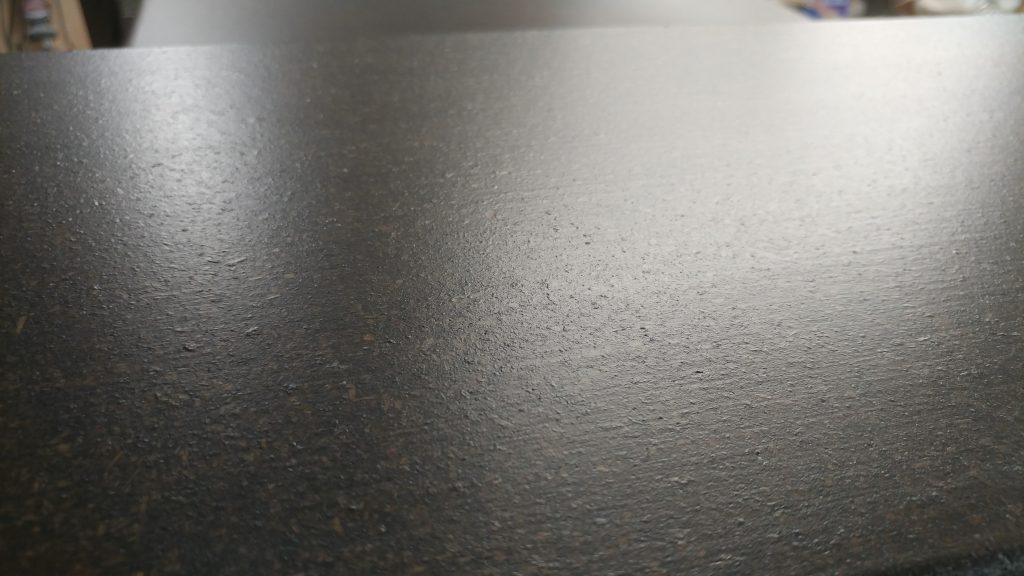
 

Then the fourth.
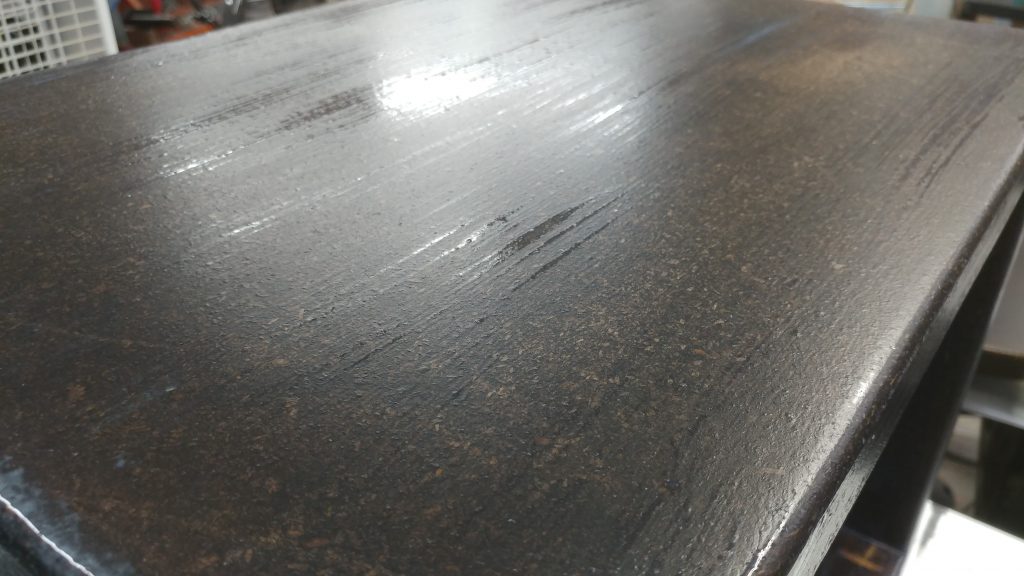
 

I lightly sanded the racks after the fourth coat.
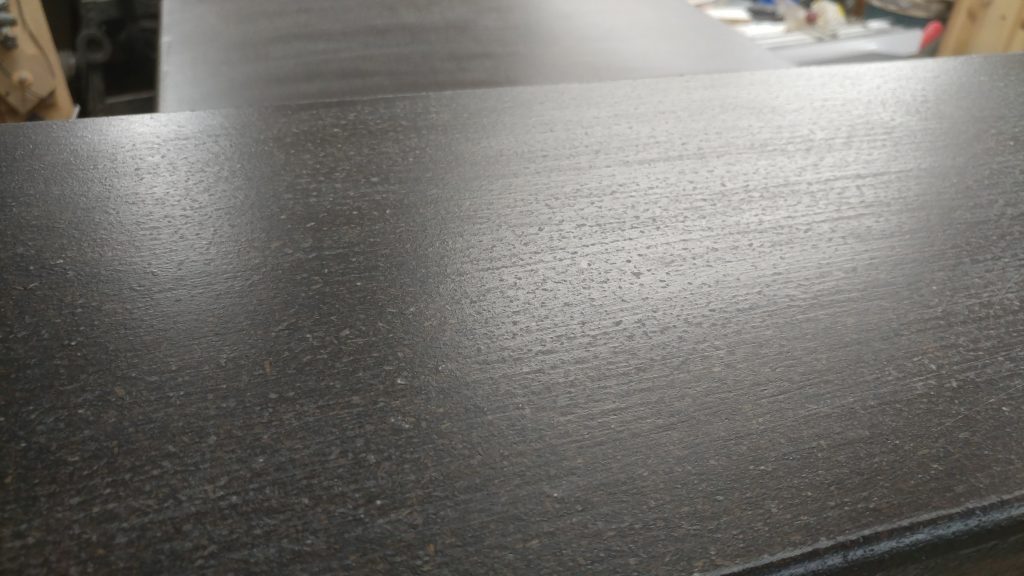
 

Then I applied the fifth coat.
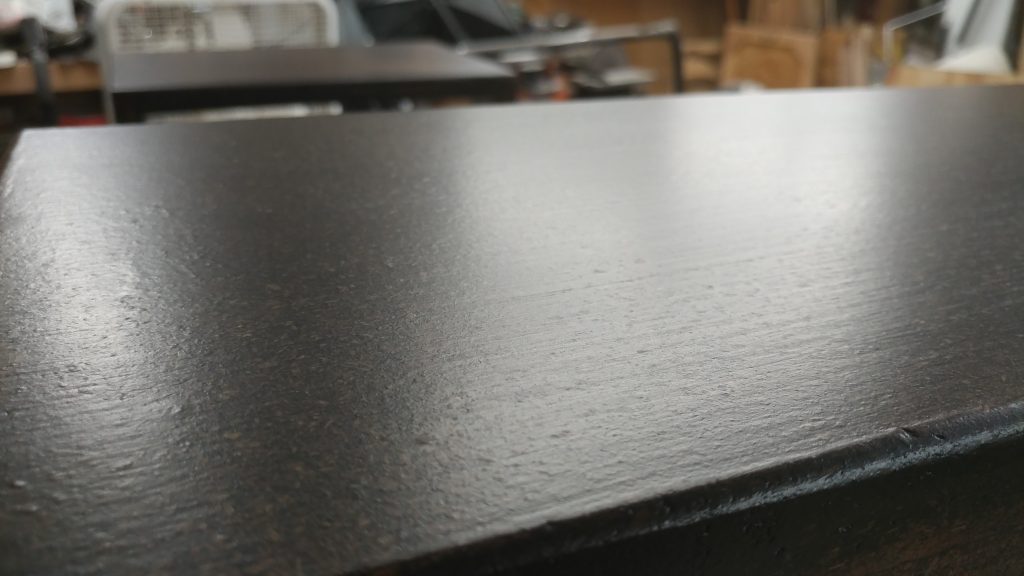
 

And the sixth.
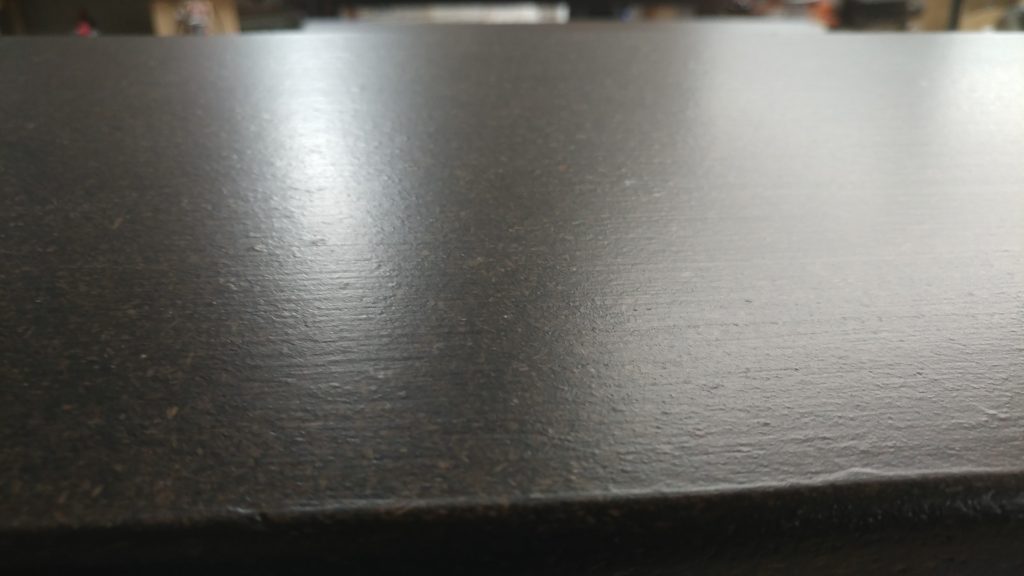
 

Then finally the seventh.
 

This concludes part 4.


Closing remarks

I think I succeeded in getting the finish how I originally wanted it, but I’m not so sure how much I like it now that it’s complete.  I guess I’ll grow accustomed to it over time.  Also, I can just remake them if I don’t like it.


The next step is to attach the hardware then install and configure the electrical components.
 

If you have any suggestions, please leave them in the comments below.  I’d love to see any desk builds you’ve done.  Also, if you haven’t already, please consider signing up for my mailing list so you get e-mail notifications when I post new articles.