Thin-Kerf Blades and Riving Knives

There are times when you may want to use a thin-kerf blade, but what about your riving knives and splitters? Won’t they be too wide? Well, not exactly.

We’re going to touch on the basics of thin-kerf blades, but the main point of this article is to address the issue of a riving knife or splitter causing the wood to bind after switching to the thin-kerf blade. Many people think they need a thin-kerf riving knife, but it may not come to that. Read on…

What Is a Thin-Kerf Blade?

Now, we’re not concerned with ultra thin blades, such as specialty fret-slot cutting blades. If you’re using those blades then you’re on your own to find a good splitter/riving knife solution. What we’re concerned with are the more common thin-kerf blades.

For th​e record, standard-kerf blades are 1/8″ thick, so thin kerf blades are only 1/32″ thinner.

If you go to the store and ask for a thin-kerf blade, chances are they will hand you a blade that has a 3/32″ wide kerf. Most, if not all, Freud Diablo blades are thin-kerf.

Why Would I Want To Use a Thin-Kerf Blade?

There are two main reasons to use a thin-kerf blade, plus a few other uncommon but valid reasons.

1. Lower horsepower saw

This includes any saw with less than 3 HP or running on 120 volts. Once you get up to 3 HP then you will most-likely be running the saw on 230 volt power but that voltage may not always be available to you. This is commonly the situation when working on a job site doing house construction or for home hobbyists who don’t necessarily need anything other than standard 120 volt service.

For various reasons, you may find yourself using a lower horsepower saw.

Since a thin-kerf blade removes 1/4 less material than a standard kerf blade, this makes it easier for lower horsepower saws to make these cuts, especially when cutting through thicker materials.

2. Less material waste

Since a thin-kerf blade removes less material, that means less material wasted.

In my mind, this is usually a silly reason to use thin-kerf blades. If you’re cutting something like ebony, where you scrape up any sawdust you make and save it, then sure, this is a valid reason. If you’re just cutting plywood or even most hardwoods then it might be time to weigh the cost savings vs. the hassles of using a thin-kerf blade.

Which brings me to…

Why Would I NOT Want To Use a Thin-Kerf Blade?

Thin-kerf blades have a tradeoff.

If you’ll forgive me a brief tangent, thin-kerf blades have been over-hyped on the internet. It’s gotten to where people who are new to woodworking are under the impression that you should always be using a thin-kerf blade because that is all anyone ever recommends.

1. Less Stable

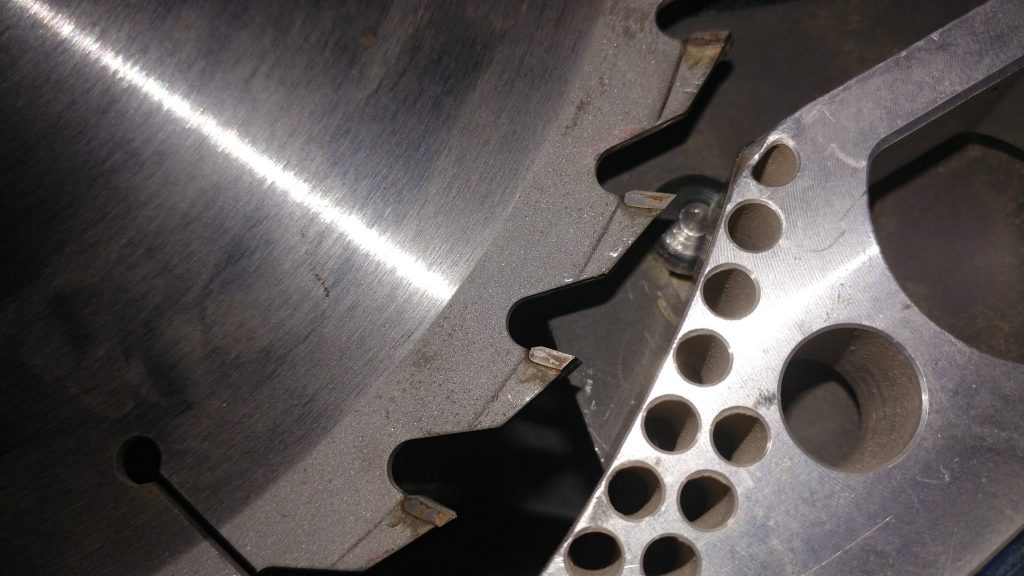
A wobbly blade can also contribute to chipping your zero-clearance insert and maybe even nicking the edges of miter gauge or crosscut sled fences. If you’re using a SawStop, we all know how that can end.

Thin-kerf blades have less mass which results in more wobbling of the blade. More wobbling of the blade results in a rougher cut. A rougher cut results in more sanding. More sanding means more wood removal. So much for saving material.

There are stabilizer (or stiffener) discs that you can add to your thin-kerf blade to help eliminate this issue. This adds to the cost so you’ll want to keep this in mind if you are using thin-kerf blades as some sort of cost-saving measure. This also limits the depth of your cut.
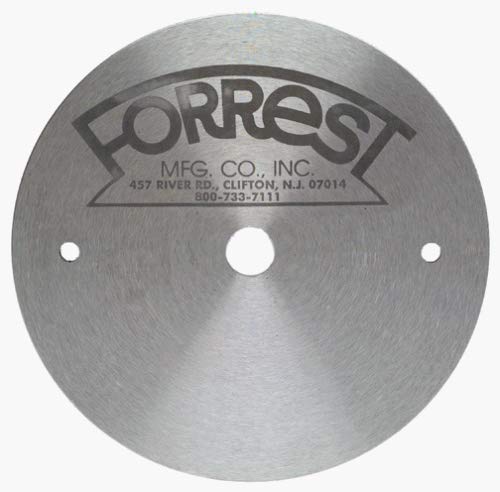
Forrest 5″ Stiffener Disc

2. Alignment With Riving Knife or Splitter

If you are using a riving knife or splitter (and you should be) then you may find that it is no longer aligned with the blade. This results in the wood binding as it clears the blade, which can be dangerous.

We’ll come back to this…

But I Really Want To Use A Thin-Kerf Blade!

Go ahead and use a thin-kerf blade if you’ve really got your heart set on it. Just keep in mind that, like everything in life, there are trade-offs.

The main point of this article is to address the issue of riving knives or splitters, so lets take a look at this subject.

Disclaimer: I am basing this on SawStop table saws because this is what I have access to and because they are the best-selling table saw in North America so they are most-likely what you have access to as well. If you are wanting to address this with another type of table saw, I recommend you contact the manufacturer to get their advice on the matter.

What Riving Knives are Available?

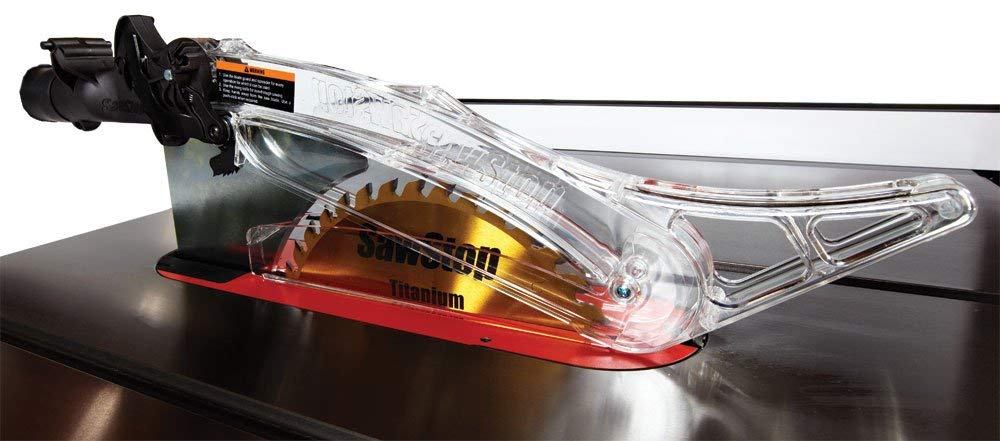
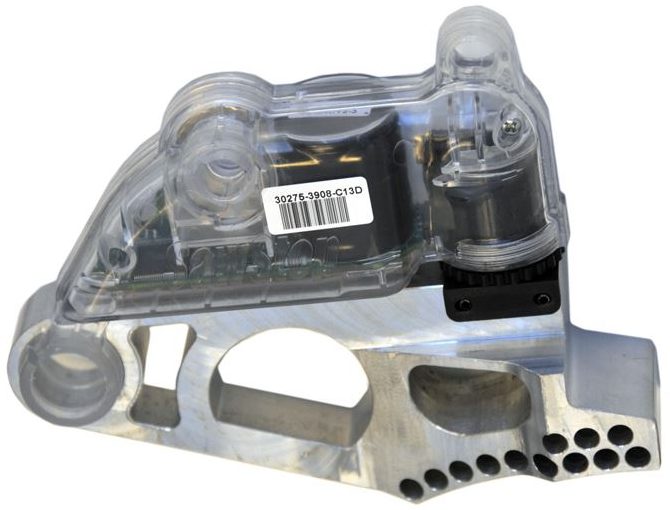
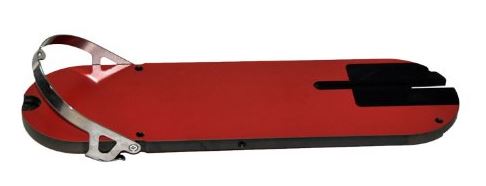
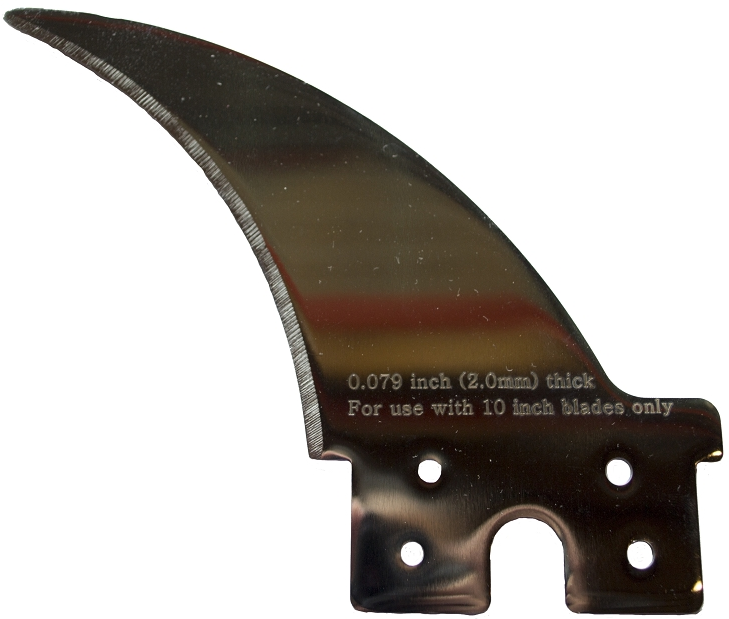
SawStop sells two different riving knives. One is 2.3 mm thick and one is 2.0 mm thick. Chances are, your saw has a 2.3 mm thick riving knife and splitter on your blade guard.
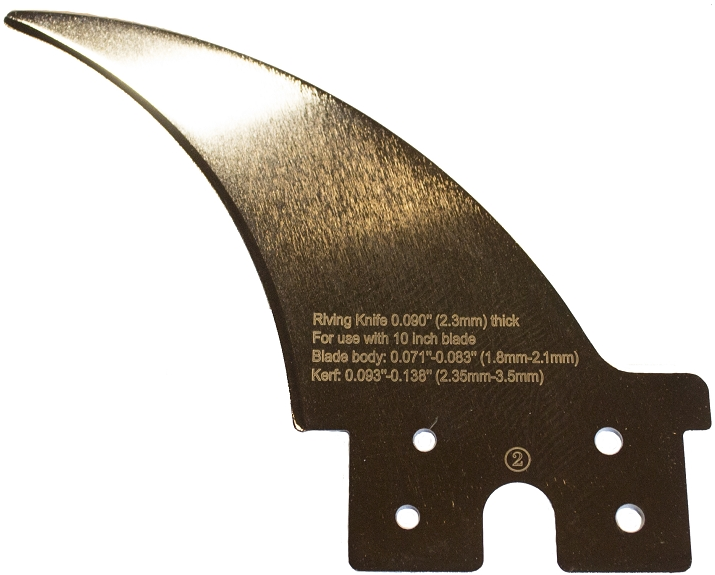
2.3 mm riving Knife
2.0 mm Riving Knife

Why the change? Well, up until 2010, the riving knives and blade guard splitters were 2.0 mm but due to government regulation it was changed to the slightly wider 2.3 mm. It may not sound like a huge difference, and it really isn’t, but 0.3 mm is enough to cause a significant issue, as we’ll address shortly.

Should I Buy a 2.0 mm Riving Knife Instead?

On one condition: you never plan on using your standard blade guard.

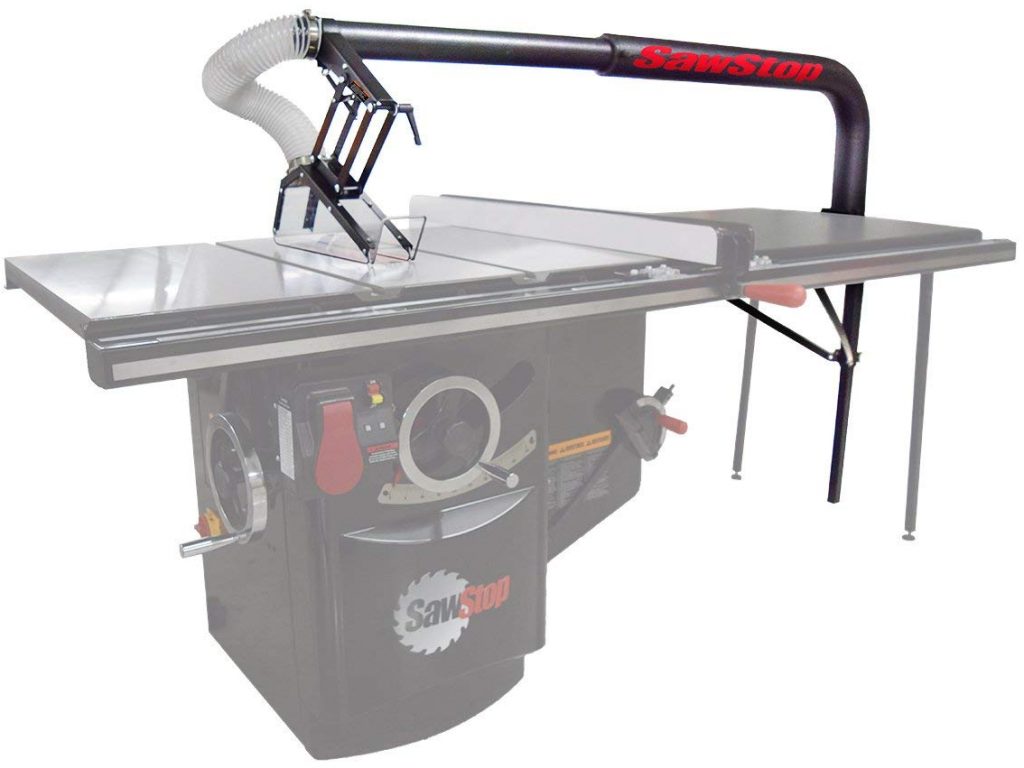
Again, we’re talking about SawStops here, but there are three blade guard options:
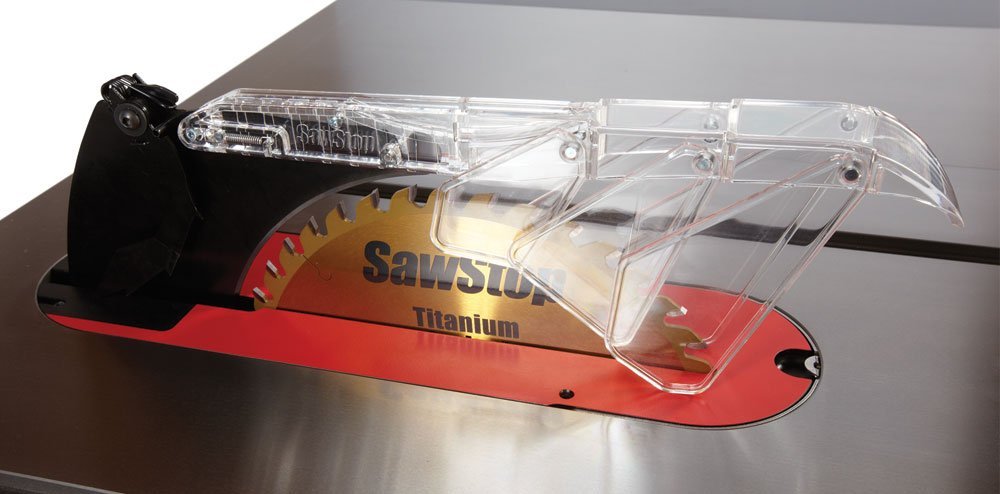
TSG-MG – Micro Blade Guard
TSG-DC – Dust Collecting Blade Guard
TSG-FDC – Floating Dust Collecting Blade Guard

It you are using the Floating Dust Collecting Blade Guard then you are fine, but if you are using either the Micro Guard or the Dust Collecting Blade Guard then you will want to steer clear of the 2.0 mm riving knife. Here’s why…

The Problem With a 2.0 mm Riving Knife

If you make the switch to a 2.0 mm riving knife then the clamp that holds it will be too loose since it is set to 2.3 mm. This can be unsafe and should be fixed by tightening the riving knife clamp. This will make it too tight to hold onto the splitter for the Micro Guard or the Dust Collecting Blade Guard.

You basically have to pick one or the other: either you’re using a 2.0 mm riving knife or you’re using a blade guard. Unless you feel like adjusting the clamping pressure of your riving knife clamp every time you switch back and forth, you’re better off just staying with 2.3 mm.

A friend of mine asked if you could just put a piece of tape on the right side of the 2.0 mm riving knife as a shim. Well…yeah. Jeeze! Don’t ruin the point I’m trying to make!

Seriously, though. If you’re comfortable putting tape on the side of the 2.0 mm riving knife, go ahead, but as you’ll read next, you shouldn’t have to do that.

But Don’t I Need a 2.0 mm Riving Knife If I’m Using a Thin-Kerf Blade?

No, you don’t. Do the math.

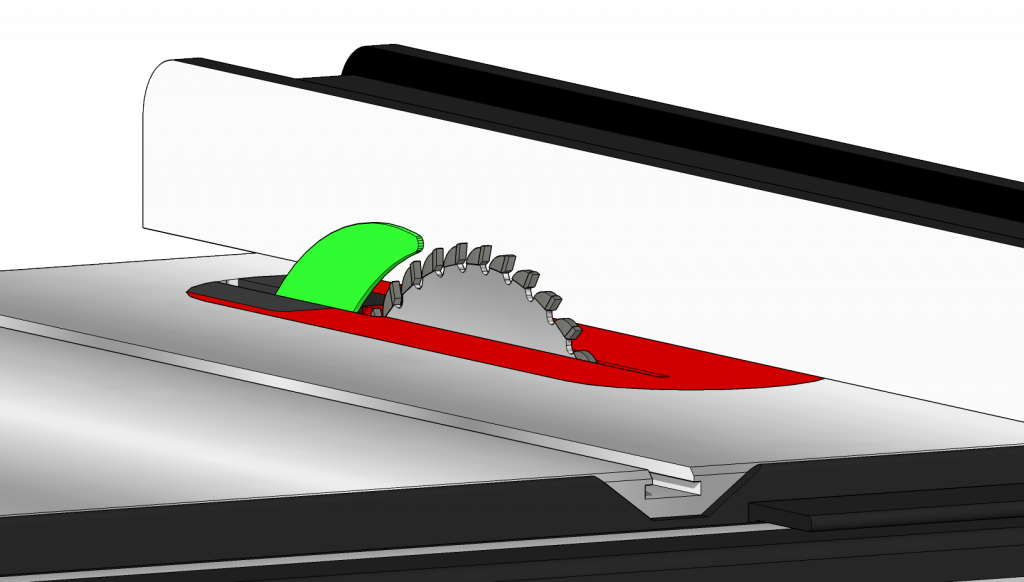
For the next few pictures, I’ve created a 3D model of the saw with a riving knife that I’ve colored green for clarity.
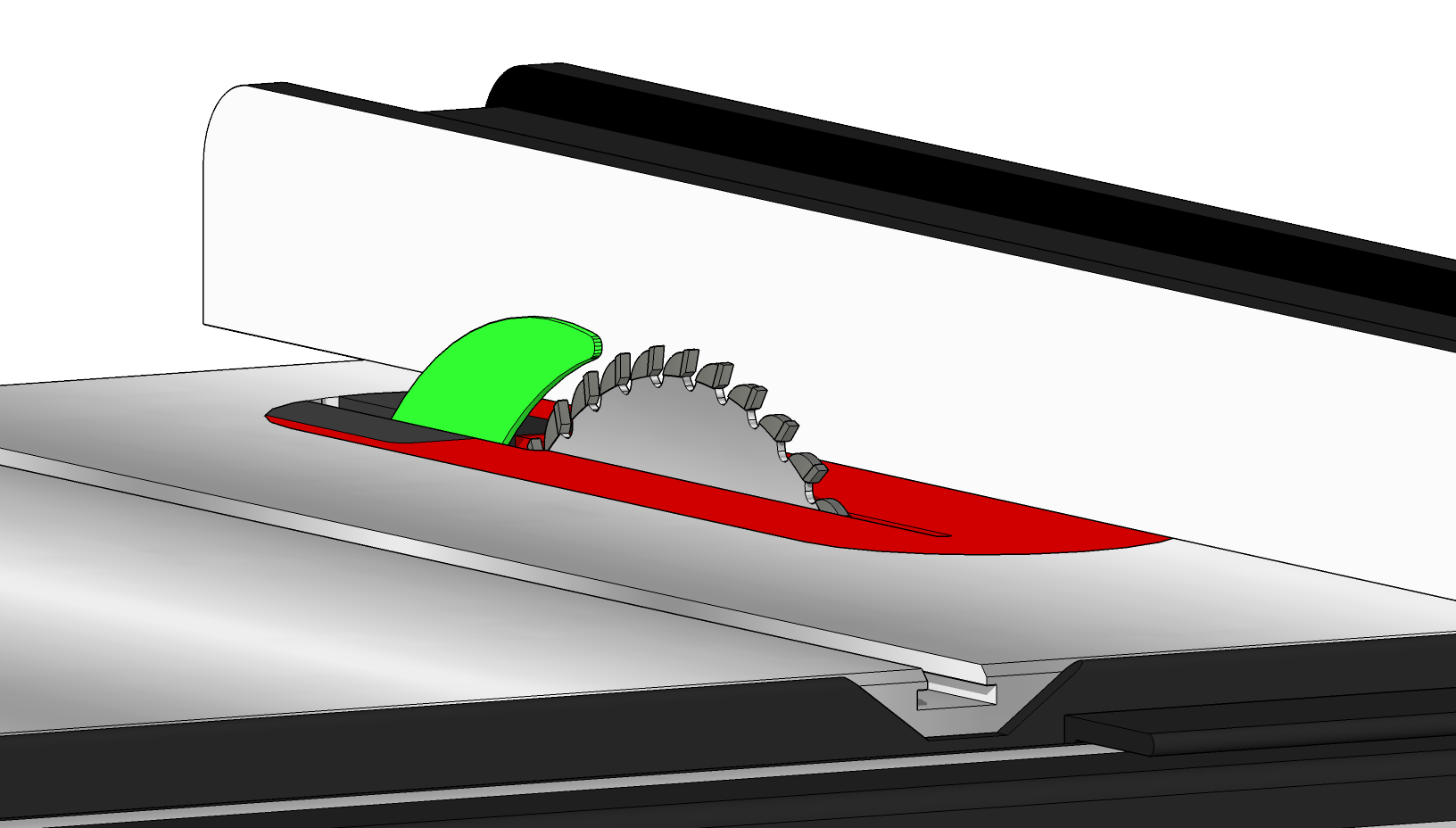
Let’s look at the standard 2.3 mm riving knife compared to both a 1/8″ standard-kerf blade and a 3/32″ thin-kerf blade.

1/8″ = 3.125 mm

3/32″ = 2.38 mm

This means that even the widest of the two riving knives is still thinner than a thin-kerf blade.

Now, if you are considering switching to a thinner riving knife, I assume it’s because you are experiencing problems. Let’s take a look at the REAL issue here…

But The Wood Is Binding Up When I Use a 2.3 mm Riving Knife!

Of course it is, but it’s not happening for the reason you think.

When the saw leaves the factory, it ships with a standard-kerf blade, (actually, it’s .118″ rather than .125″, but definitely bigger than a thin-kerf blade which is .094″). However, as we already established, the riving knife is for a thin-kerf blade. To make this a non-issue, the riving knife is centered on the blade, as shown below.
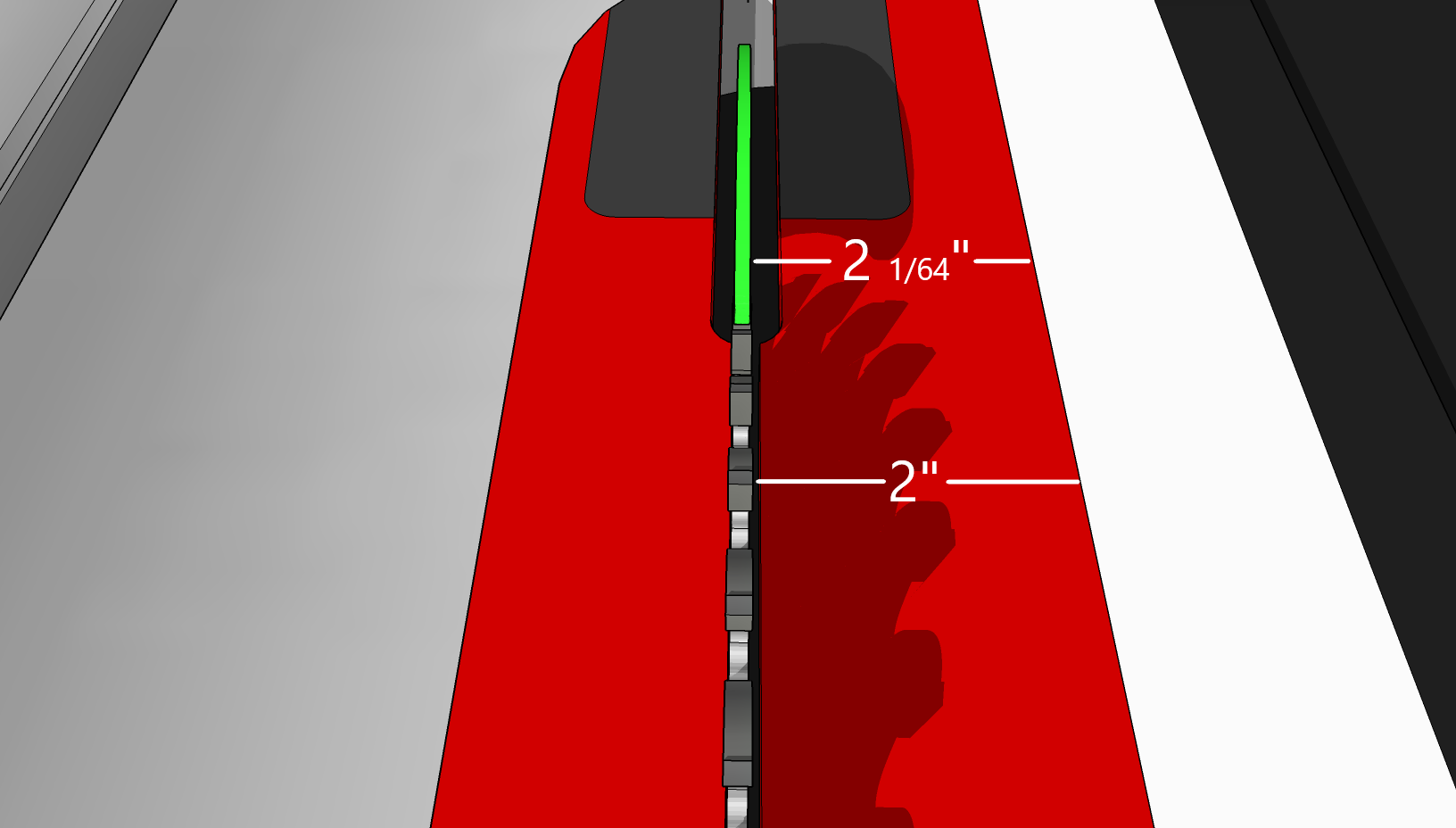
Full kerf blade with riving knife

The thing about left-tilt saws is that the blade mounts onto the arbor shaft from the right. This means that the left side of the blade is constant. It never changes. All of the change happens to the right, which is where we usually have the fence.

See where I’m going with this? If the riving knife is centered on a 1/8″ blade then that means that the blade is 1/64″ wider than the riving knife on both the left and right. If you change to a thin-kerf blade, then you are taking 1/32″ off the right of the blade, but nothing on the left. This means that the riving knife now sticks out 1/64″ to the right, making the space between the riving knife and the fence 1/64″ narrower than the space between the blade and the fence. You’re now trying to slide a board through a space that is too narrow for it. This causes the binding you are experiencing.
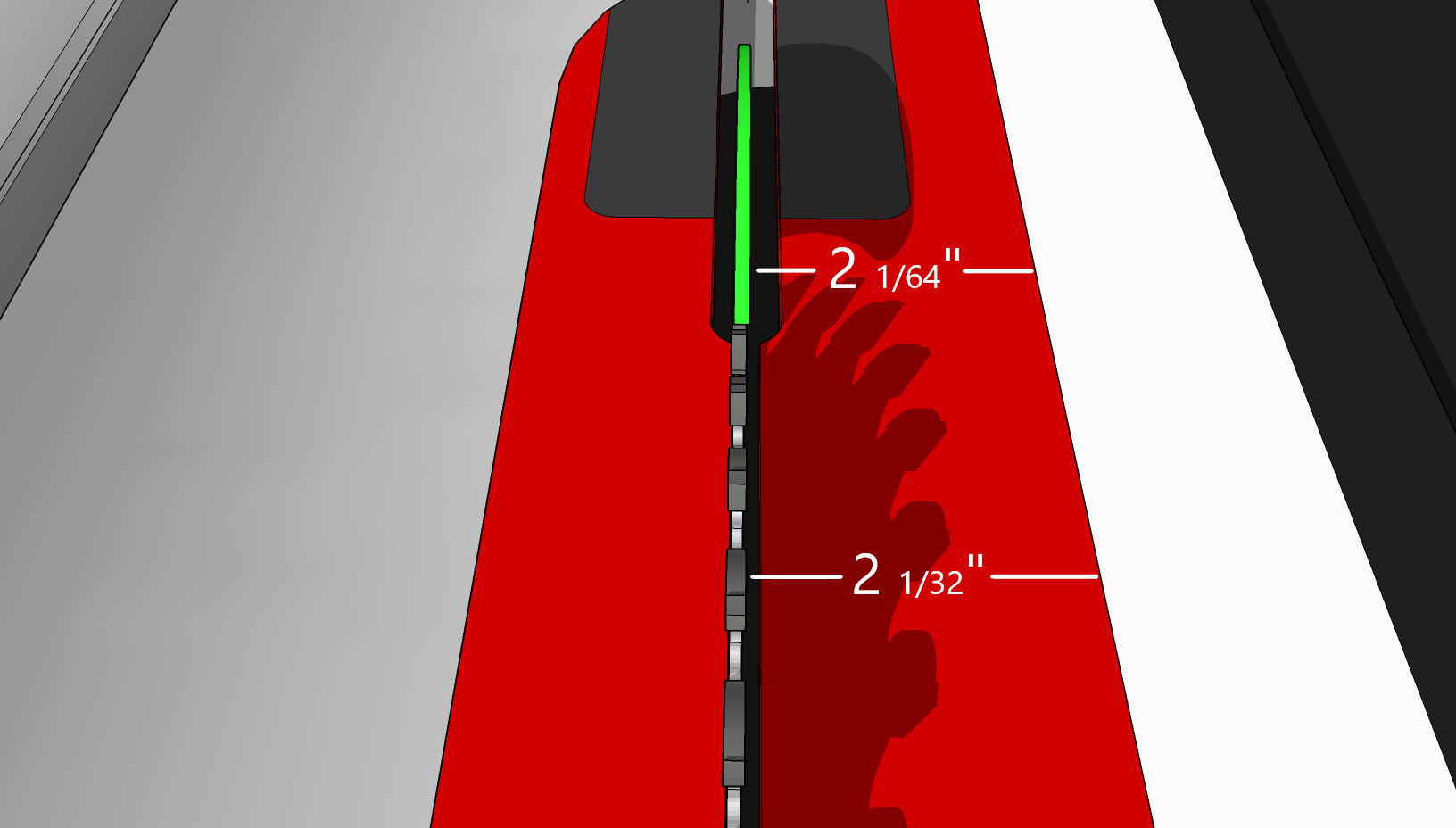
Thin-kerf blade with riving knife

To actually fix this issue, you should slide the riving knife 1/64″ to the left. Your saw may be different, but here’s how to adjust this on a SawStop.

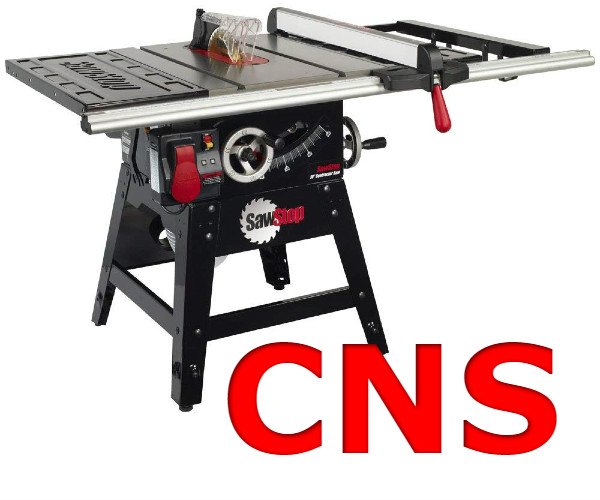
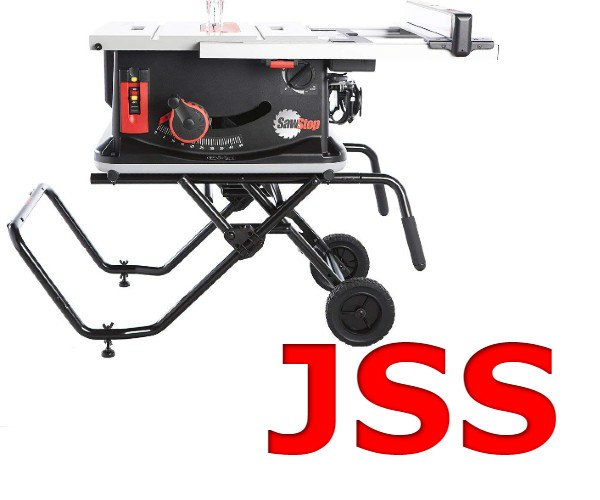
On any of the cast-iron SawStop table saws, there is a pair of 8 mm cap screws that adjust the horizontal positioning of the riving knife or splitter. Slimply loosen these slightly and nudge the clamp a little to the left. It’ll take some back and forth but the end result you are shooting for is for the left face of the riving knife to be co-planer with the left face of the blade, and for the right face of the riving knife to be no closer to the fence than the right face of the blade.

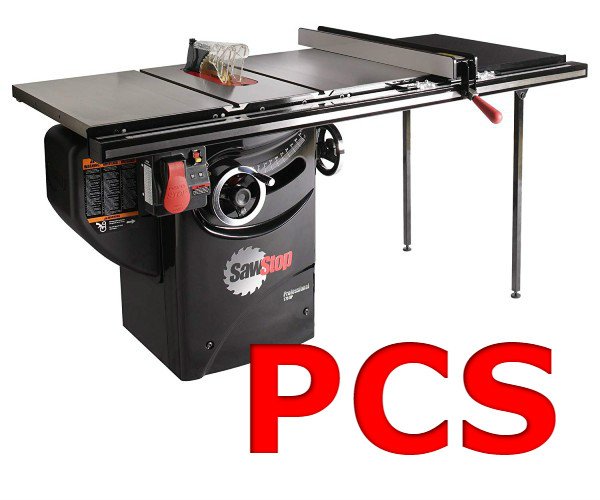
PCS
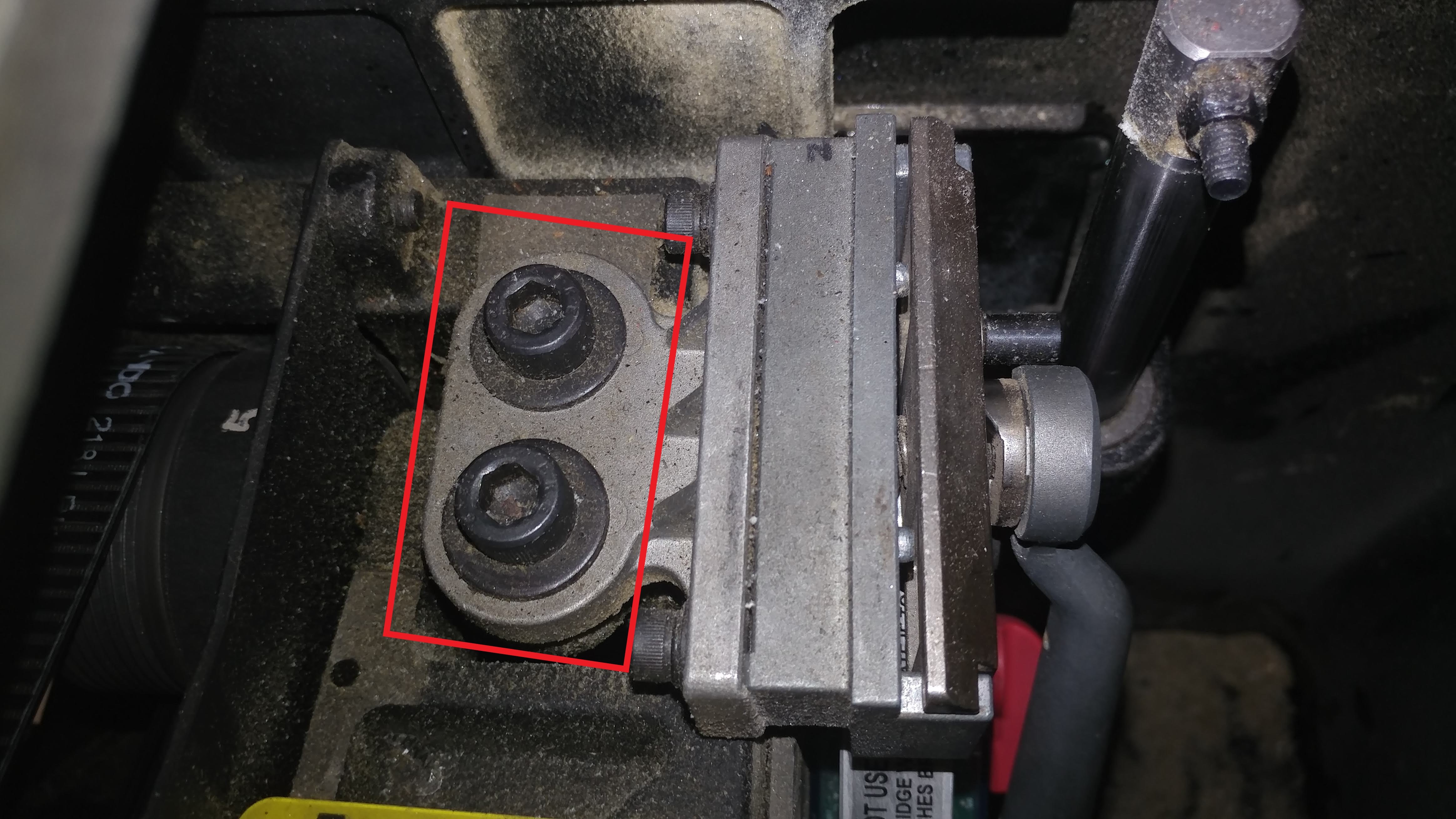
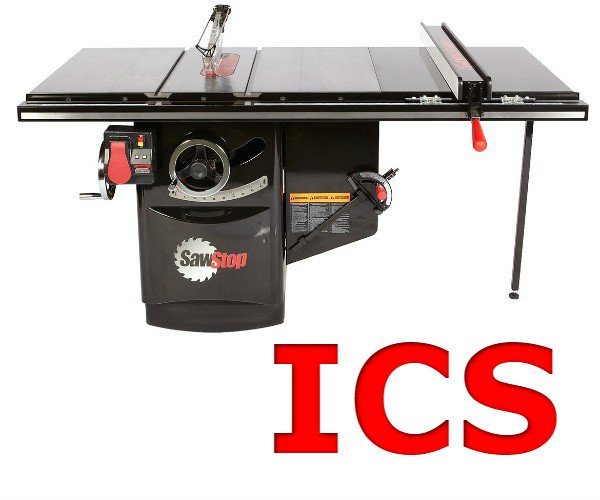
CNS or ICS
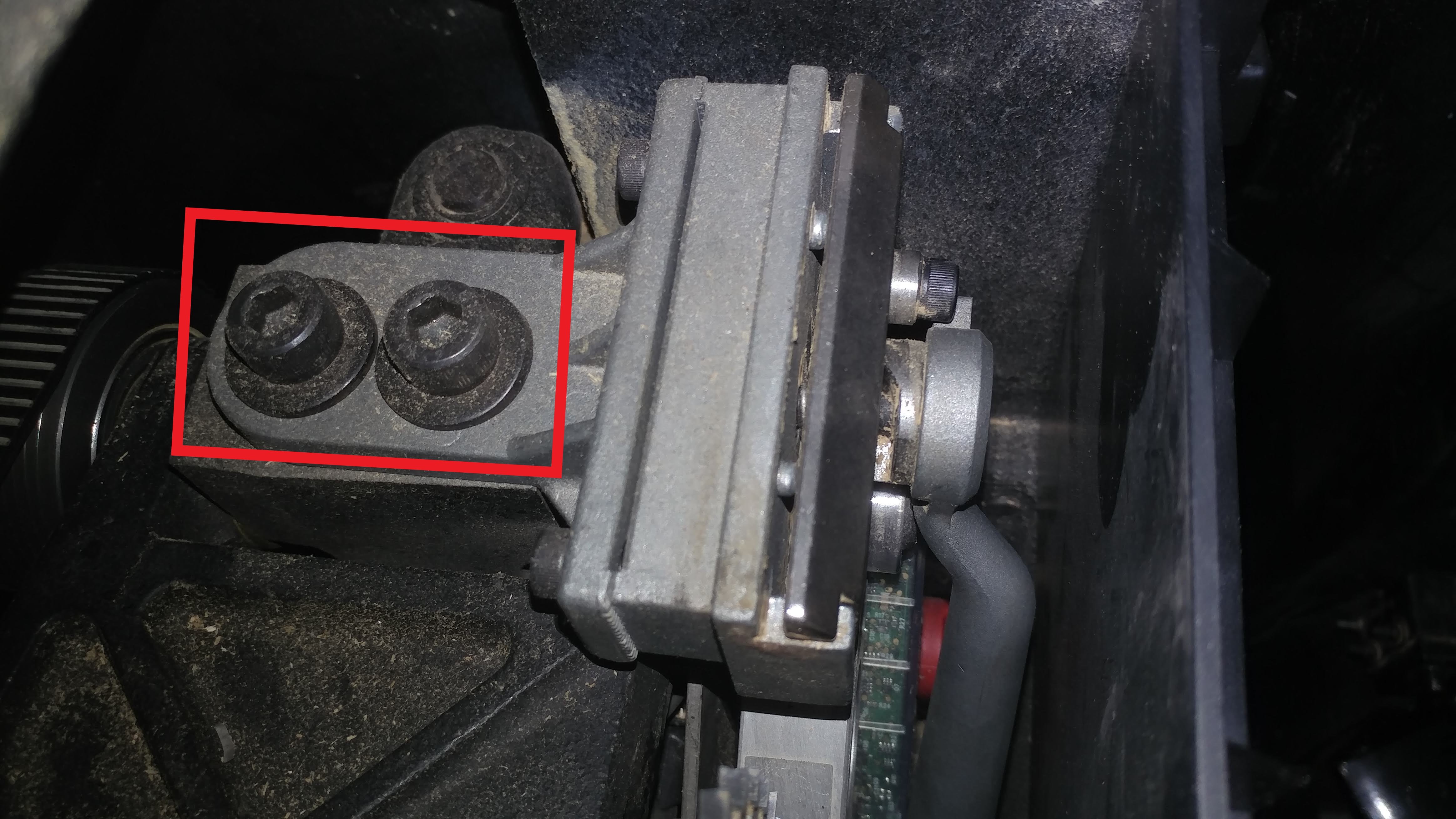
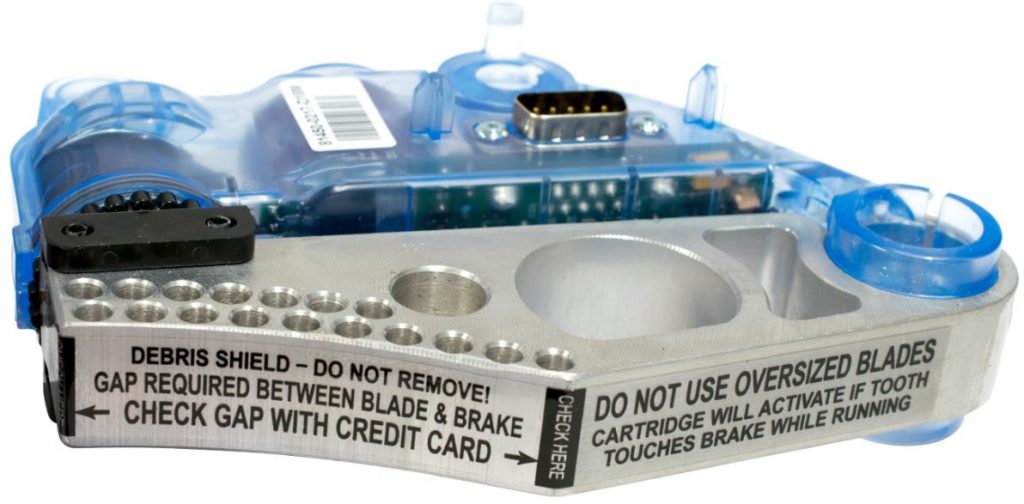
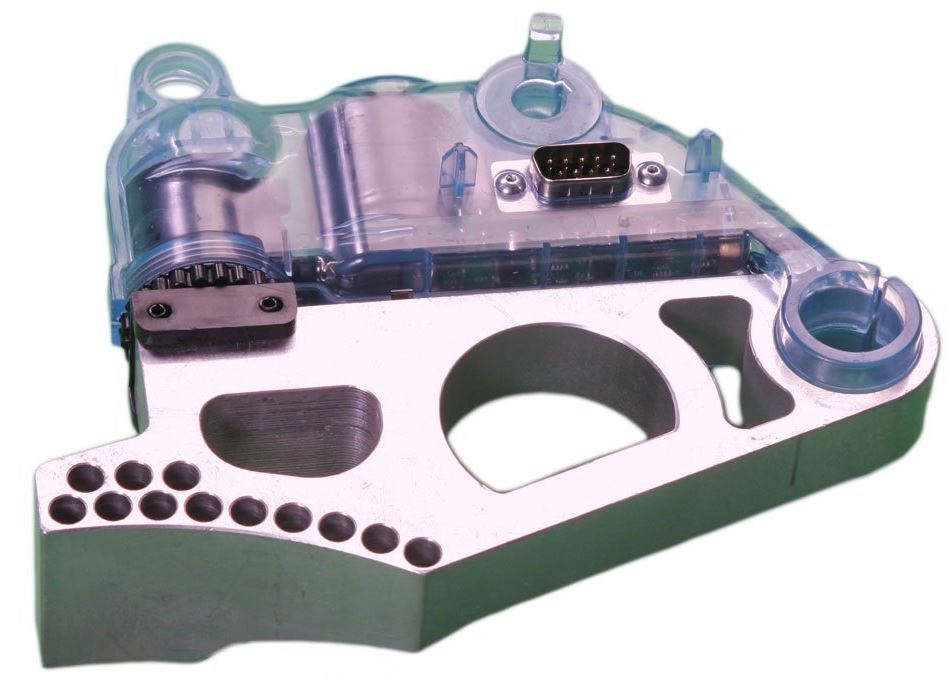
Tip: Since you have to come at these bolts at an angle, use a ball-end allen wrench, such as the one provided with your saw that you would normally use to adjust the spacing between the brake and blade.

Conclusion

As you can see, there isn’t any real reason you would need to get a 2.0 mm riving knife, even when using thin-kerf blades. I feel that it’s always best to address the real problem rather than look for an easy workaround.

I hope this has been helpful. If you feel like I should add anything, please feel free to leave a comment below. Also, I encourage you to share this article with anyone who is considering using thin-kerf blades with their table saw.

Helpful SawStop Links

Feel free to share this page with others…


Introduction

This is a list of helpful documentation and links to the cheapest places online for various SawStop consumables.

I will be regularly updating and adding to this list with the cheapest prices available online.  I will always take the shipping cost into consideration.

If you have a suggestion for a link to add to this or if you find a cheaper place to buy something online, please leave it in the comments below.


Communities

SawStop Users’ Group

I started the SawStop Users’ Group so SawStop owners or prospective owners would have a place to go with their questions without having to resort to other communities like SawMillCreek and LumberJocks, where half the answers to their questions would be met with comments such as “That’s why I use a Delta/Powermatic.” while the other half may be well-intentioned yet not necessarily pointing them in the right direction.

Documents

The Care and Cleaning of a SawStop

https://www.trentdavis.net/wp-content/uploads/2019/01/The-Care-and-Cleaning-of-a-SawStop-Full.pdf

This is a handout I made for a class I taught at the Guild of Oregon Woodworkers that covered some basic maintenance and adjustments for your saw.

Articles

Thin-Kerf Blades and Riving Knives

https://www.trentdavis.net/wp/2019/10/23/thin-kerf-blades-and-riving-knives/

If you are using thin-kerf blades and are experiencing the wood binding on you when you use a riving knife, check out this article because a fix may be cheaper than you think.

Choosing a SawStop – Contractor Vs. Professional

https://www.trentdavis.net/wp/2019/01/18/choosing-a-sawstop-contractor-vs-professional/

In this article I discuss the differences between the SawStop Contractor Saw and the Professional Saw.

Protecting A Cast-Iron Tabletop

https://www.trentdavis.net/2017/06/13/tool-maintenance-protecting-cast-iron-tabletop/

If you have rust forming on your cast-iron table top, or don’t, and want to keep it that way, check out this article.  This works on all cast-iron tools, and is especially useful with jointers since it will make the table surface very slick.

Adding an Extra Cast-Iron Wing

https://www.trentdavis.net/2017/01/27/table-saw-enhancement-attaching-extra-cast-iron-extension-wing/

I get asked about this more frequently than you would think.  Some people want to have an all-cast-iron table top.  I didn’t do all cast-iron but I did decide to show what is involved in attaching an extra cast iron wing between the existing wing and the wooden extension table.

SawStop Brake Spacing Explained

https://www.trentdavis.net/2018/07/06/sawstop-brake-spacing-explained/

All the mysteries of SawStop brake spacing have been demystified and explained in this article.

Dado information:

https://www.trentdavis.net/2016/08/31/dado-information/

This covers all the basics on choosing and using a dado stack for use on a SawStop.

Converting Extension Table into a Router Table

https://www.trentdavis.net/2017/01/27/table-saw-enhancement-converting-extension-table-into-router-table/

Here I discuss how I converted my wooden extension table into a router table.  This is helpful if you aren’t ready or interested in installing a cast-iron router table.

Router Table Enclosure: Part 1 – Carcase

https://www.trentdavis.net/2017/04/07/table-saw-modification-router-table-enclosure-part-1/

I started making an enclosure for my router.  Here I discuss the construction of the main carcase.

Router Table Enclosure: Part 2 – Laminate

https://www.trentdavis.net/2017/04/14/table-saw-modification-router-table-enclosure-part-2-laminate/

In Part 2 I discuss how I applied the laminate to the enclosure and drawers.

Router Table Enclosure: Part 3 – Hardware and Electrical

https://www.trentdavis.net/2017/04/28/table-saw-modification-router-table-enclosure-part-3-hardware-and-electrical/

In Part 3 I apply the hardware and hook up the electrical then attach the enclosure to the router table.


Parts

Brake Cartridges

For ICS, PCS, CNS, and JSS model saws

The following two brake cartridges are for any saw that takes the blue brake cartridges.  

Standard 10” brake:

http://amzn.to/2D7pJDe

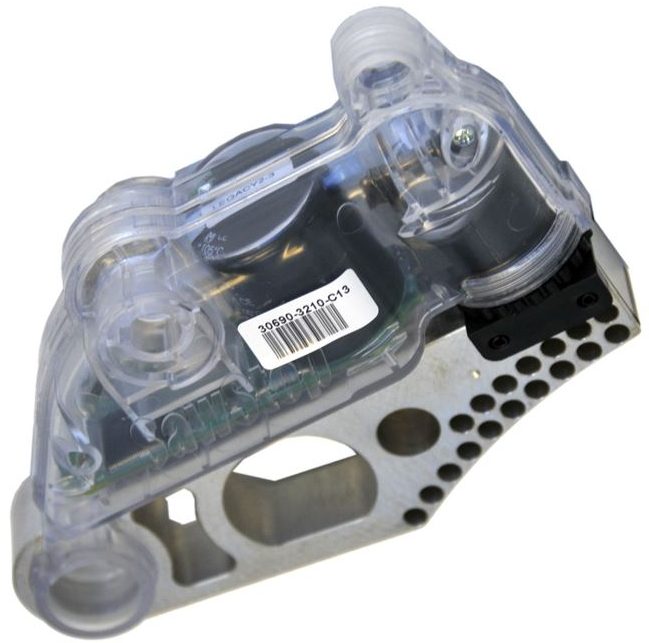
For CB model saws

The following two brake cartridges are only for any saw that takes the clear brake cartridges.  If your saw was made after 2008 then it doesn’t take these brakes.

Zero-Clearance Inserts

For ICS, PCS, CNS, and CB model saws

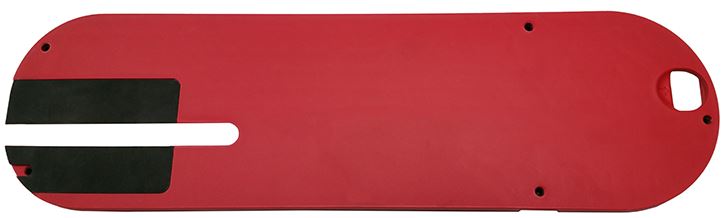
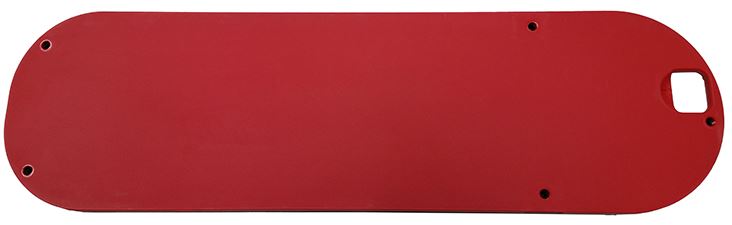
The following two zero-clearance inserts are only for any saw that has a cast-iron tabletop.  This just means that it won’t work on the JobSite saw (JSS).

For JSS model saws (Legacy or Pro)

The following two zero-clearance inserts are only for the JobSite saw (JSS).  They will not fit in any SawStop with a cast-iron tabletop.

10″ Blades

SawStop Standard Series

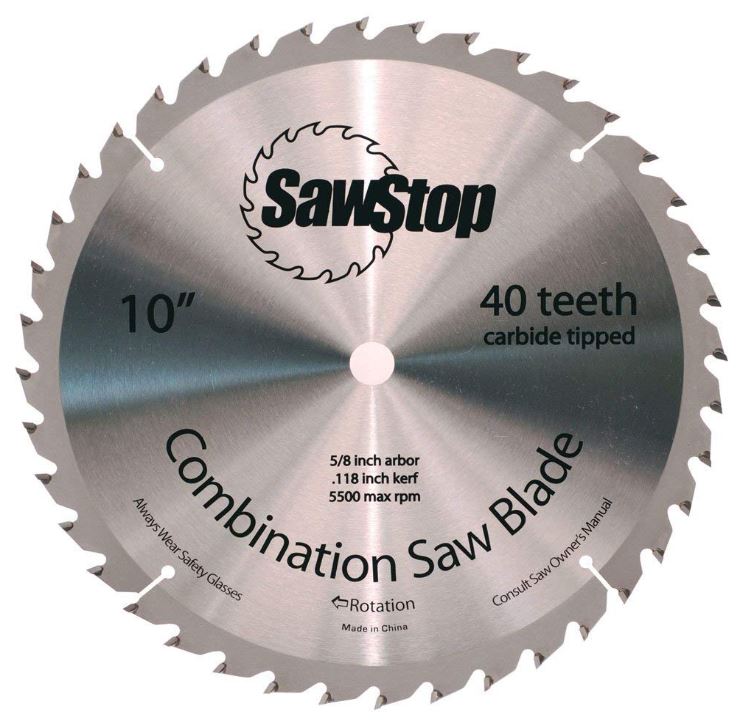
These are the standard blades, the 40-tooth is what comes on the JSS, CNS, and PCS.  They’re pretty good quality but definitely not the best.

40-Tooth Combination Blade

https://amzn.to/2LNOG70

60-Tooth Combination Blade

https://amzn.to/2uIOBef

SawStop Titanium Series

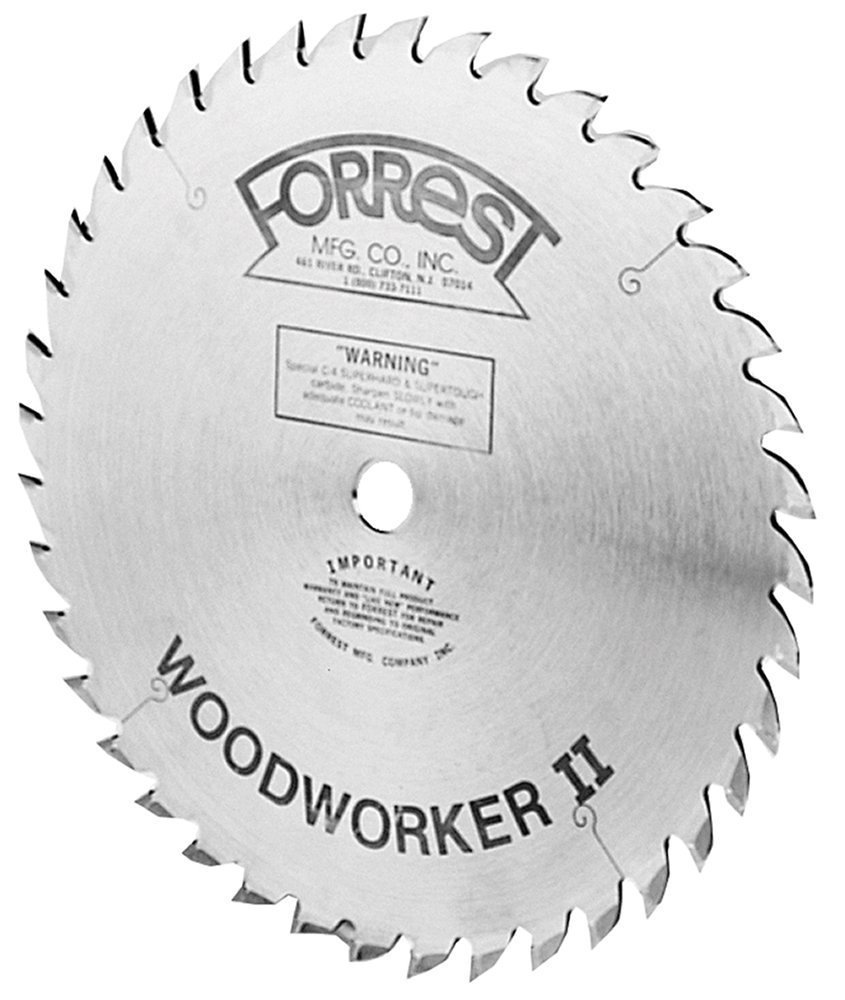
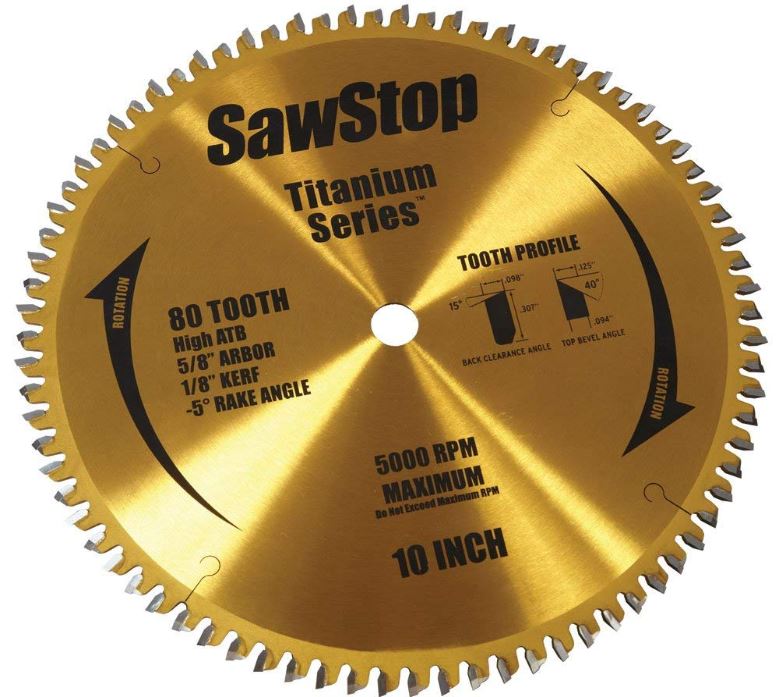
The Titanium blades are a big step up in quality.  I compare them favorably with the Forrest Woodworker II, although your mileage may vary.  They have large carbides so the blade can be sharpened multiple times and the cuts I have gotten with them has been glue-ready every time.

Titanium 40-Tooth Blade

http://amzn.to/2nEDfH4

Titanium 80-Tooth Blade

http://amzn.to/2kuf0tQ

Forrest Woodworker II

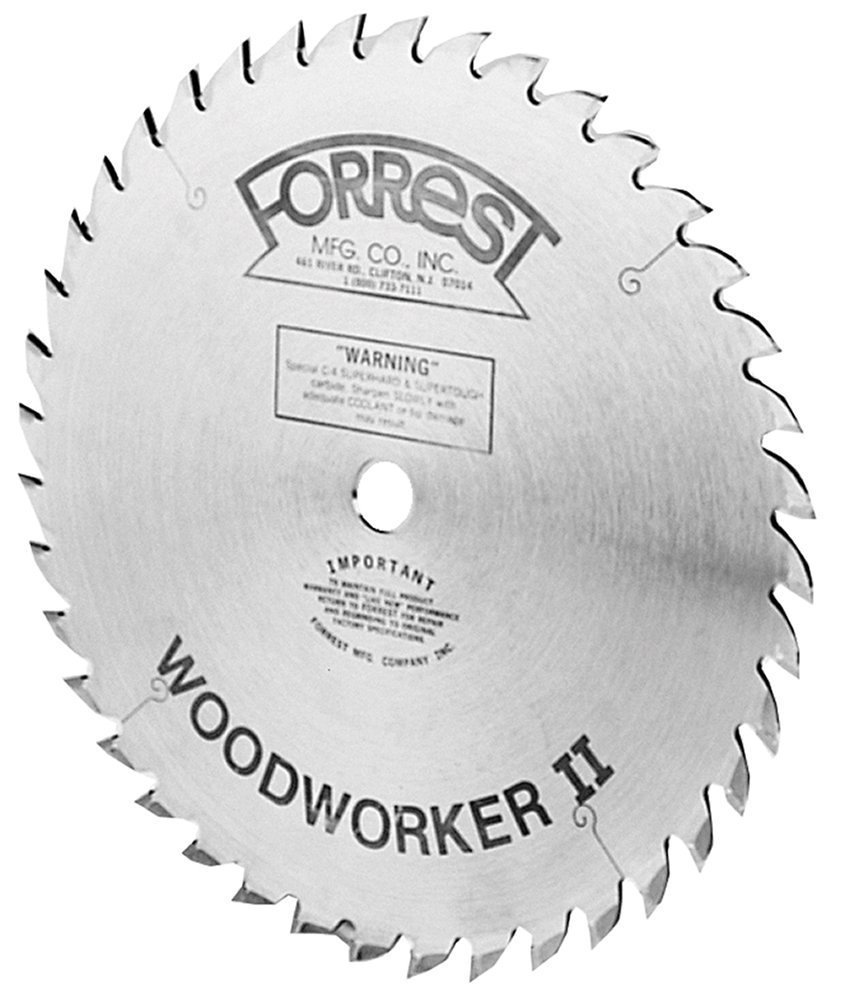
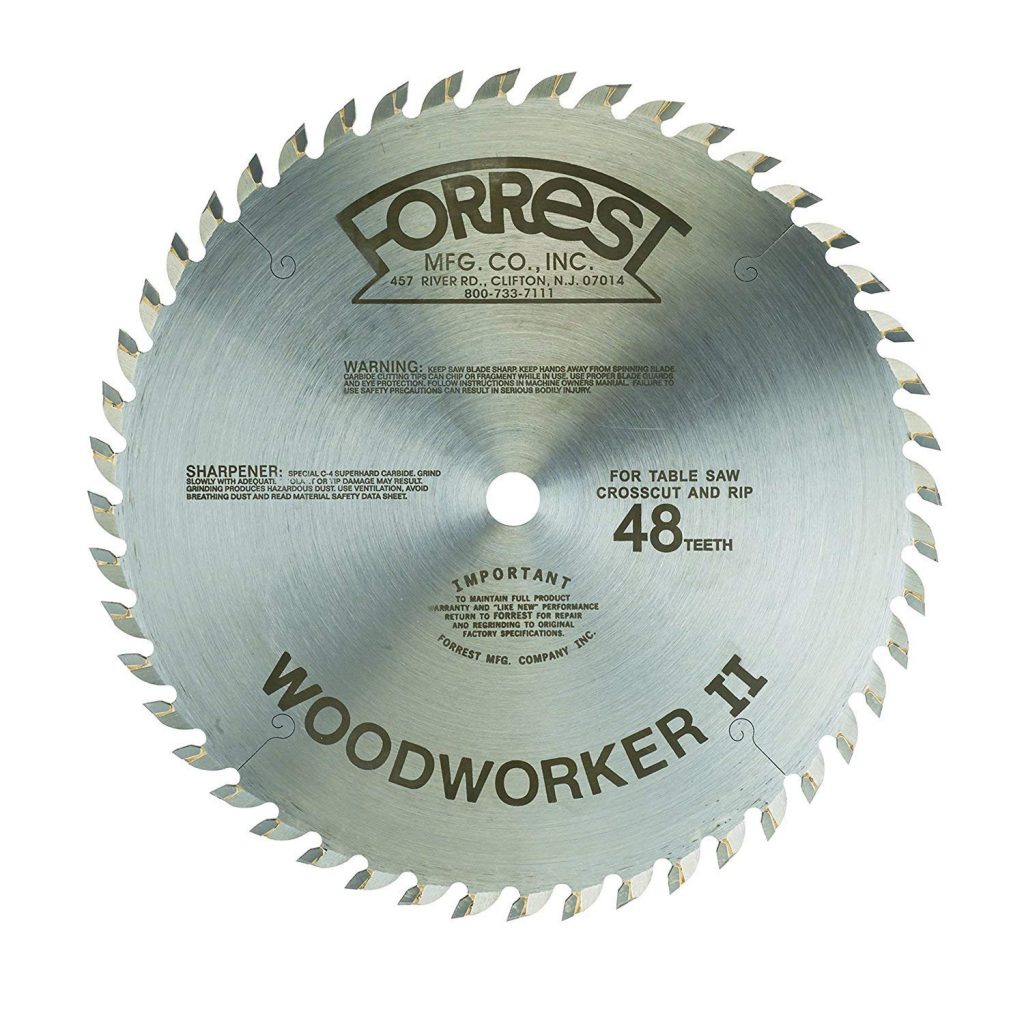
This is the go-to standard blade for most high-end woodworking.  You really can’t go wrong with these blades and they should last an insanely long time.

Freud

Freud is probably the most common blade manufacturer that I deal with. My opinion of them is that you are generally getting a better blade than you are paying for when you buy a Freud. I do, however, recommend staying away from the Diablo line by Freud. I also recommend not using a Freud blade that has anti-kickback shoulders.

A common question I get is whether or not the red coating on Freud blades will affect the safety mechanism on a SawStop saw. Red coated Freud blades work just fine on a SawStop.

Amana

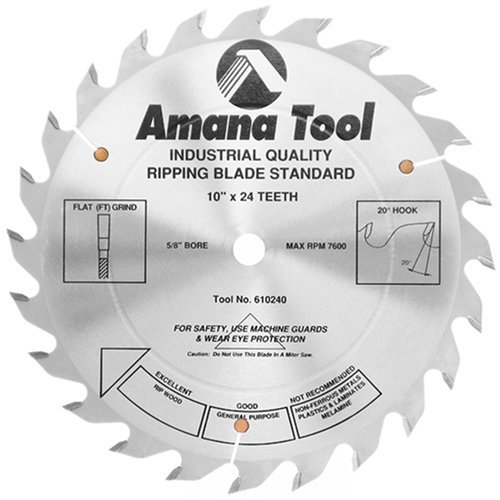
I like to think of Amana as the Subaru of blades, in that I don’t use them but I keep hearing of people who swear by them and won’t use anything else.  I’ve held them a few times and I agree that they seem like very nicely made, well-balance blades.

24-Tooth – Standard Blade

https://amzn.to/2OBfz2s

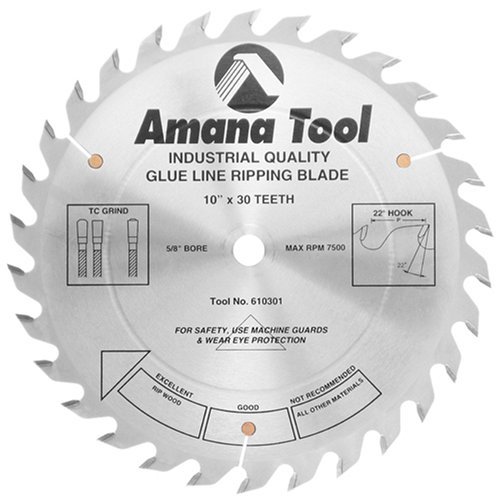
30-Tooth – Glue-Line Rip Blade

https://amzn.to/2DWrNyv

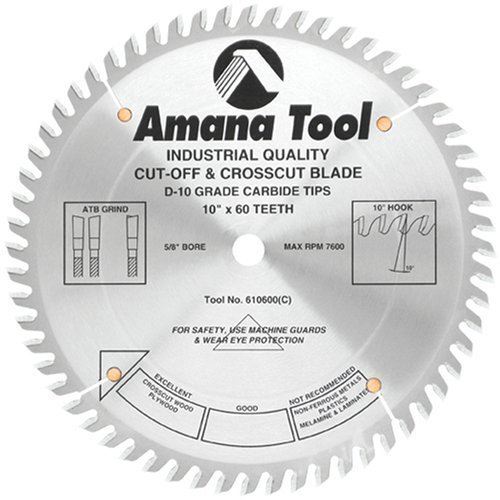
60-Tooth – Crosscut Blade

https://amzn.to/2O6kXLx

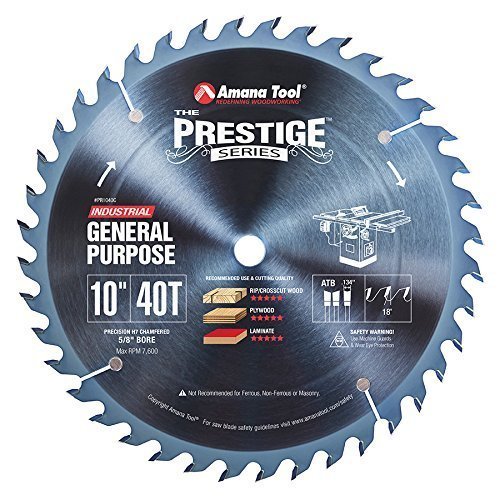
40-Tooth Blade – Electro-Blue Series

https://amzn.to/2OAXVMg

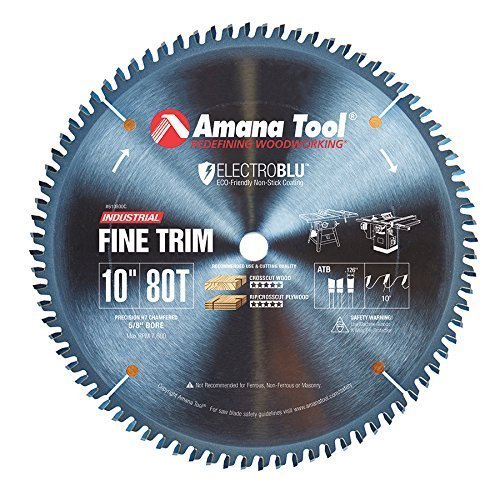
80-Tooth Blade – Electro-Blue Series

https://amzn.to/2yc9qj5

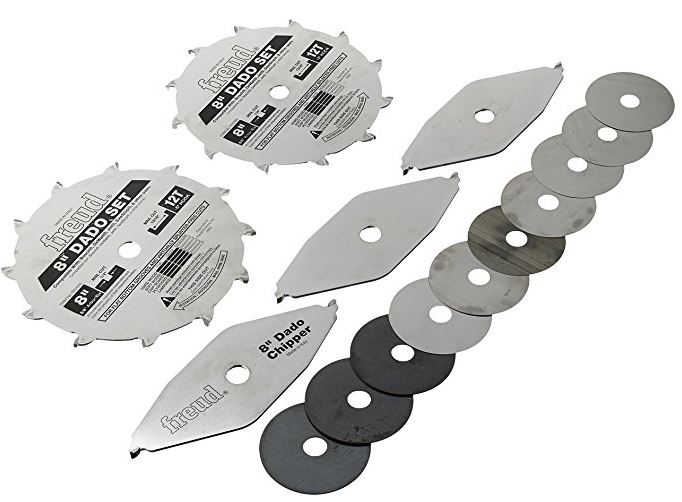
8″ Dado Stacks

The following dado stacks are all compatible with SawStop table saws, in that they are all ~8″ in diameter, have wing or plus-style chippers, and don’t have depth-limiting (anti-kickback) shoulders.  My personal recommendation is the DeWalt DW7670, which is surprising since I’m not a fan of DeWalt’s 10″ blades.

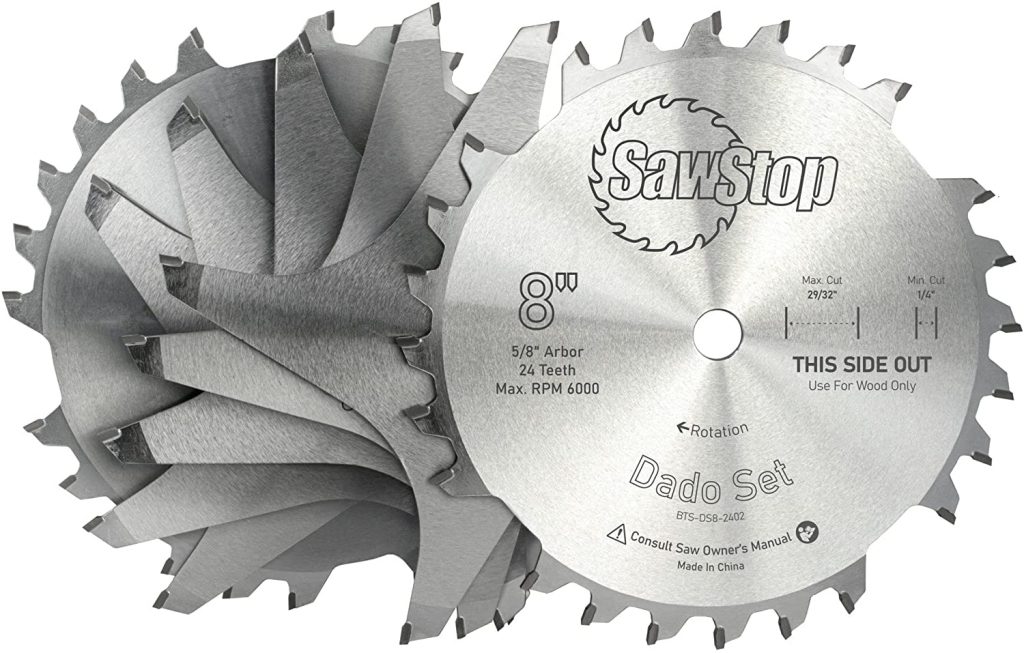
SaqwStop 8″ Premium Dado Set

http://amzn.to/2BdXiCi

A newcomer to the game, Sawstop released their own dado stack that will work well on their saws.

It is an unusual configuration in that it comes with a 1/4″ chipper which allows the dado stack to be wider than the 13/16″ that SawStop recommends.

While one of the more expensive dado stacks on this list, it definitely is a quality set. I got to test them extensively and I was quite impressed. Not enough for me to sell my old DeWalt dado stack and run out and but this, but if I was in the market for a new stack and didn’t mind paying ~$300 for one, I would definitely consider this one.

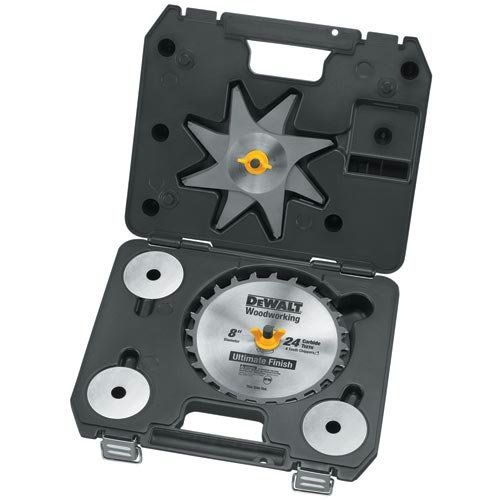
DeWalt DW7670

http://amzn.to/2BdXiCi

The DeWalt DW7670 is probably the best value in dado stacks.  I very strongly suspect that they’re just re-branded Forrest Dado Kings.  The cut-quality is phenomenal and they’re usually around 1/3 the price of the Forrest Dado King.

Side-note: once I switched to SawStop Titanium ten-inch blades and the DeWalt DW7670 dado stack, I have never needed to adjust the gap between the blade and brake.  I have it set to the maximum clearance and it’s still close enough to work.

Important note: DeWalt has recently changed this dado stack and it now has a diameter of 8 1/8″. It should still work with a CNS, PCS, or ICS, but it’ll be a bit tight. I definitely wouldn’t recommend this to anyone with a JSS or JSS Pro.

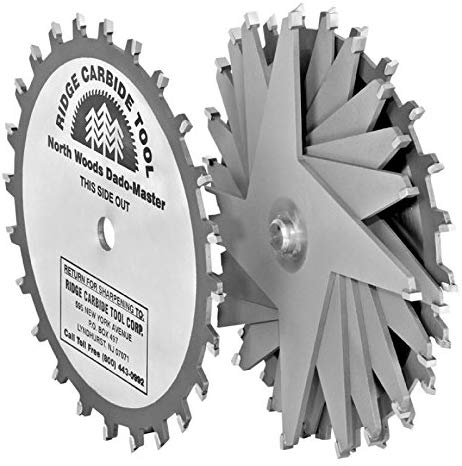
Ridge Carbide 8″ Dado Master

https://amzn.to/2zRfYaT

Ridge Carbide is one of the better blade manufacturers.

Their 8″ Dado Master meets the requirements for use on a SawStop without concern. Also, the cut quality tends to be great with all Ridge Carbide blades.

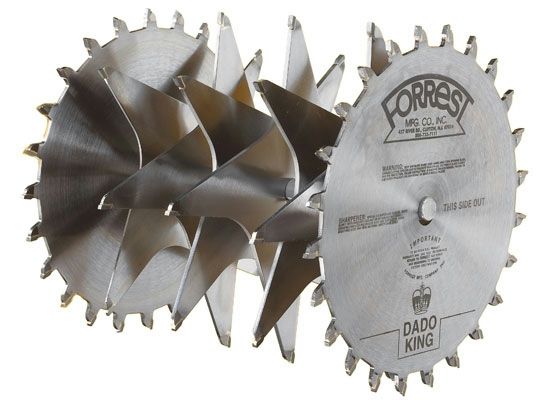
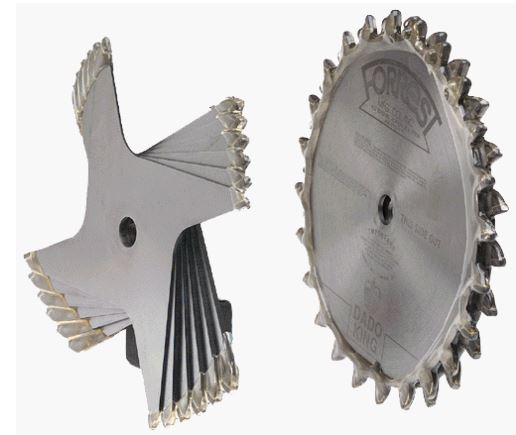
Forrest Dado King

https://amzn.to/2NqJlmo

This is the Rolls Royce of dado stacks.  At around $300 each, they’re a bit spendy for most home users, but if you make money with your woodworking and you do a good amount of dadoes then it’s a worthwhile investment.

Freud SD208S

https://amzn.to/2zRfYaT

Freud  has a reputation for inconsistency in their blade diameters, especially in regards to their dado stacks.

The SD208 has been reworked and changed to the SD208S which is sized perfectly for a SawStop.  Be sure the model number ends in an S, however.

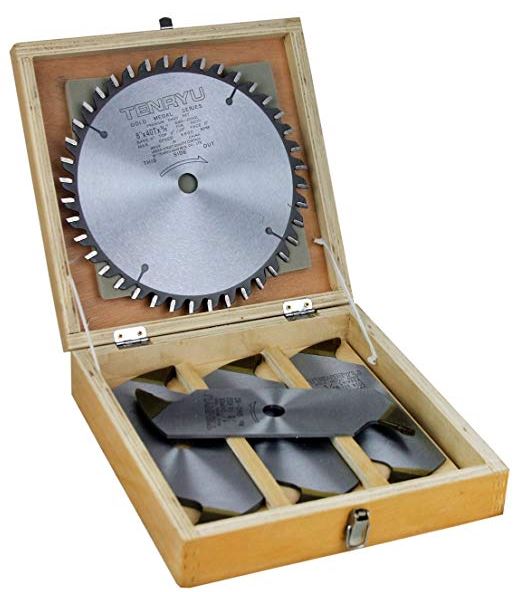
Tenryu GMD-20340

https://amzn.to/2NXJmiV

A lot of people swear by Tenryu blades.  If you haven’t heard of them, I recommend you give them a look.

King Canada KSC-8000

https://federatedtool.com/king-8-dado-blade-set-ksc-8000/

I have never used a King Canada blade but they are on the official list of compatible dado stacks so I figured I would include them here.

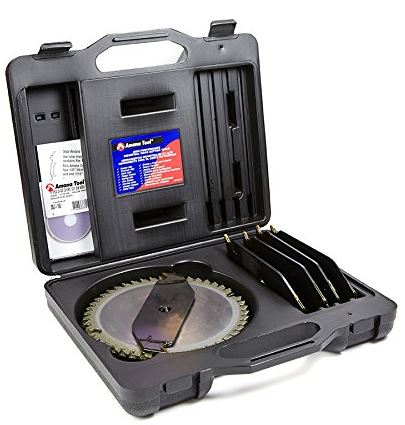
Amana 658040

https://amzn.to/2uxzO67

These are high-quality blades with a price to match.

Maintenance

Wheel Bearing Grease

http://amzn.to/2hUH7Op

This is the recommended lubricant for the gears in a SawStop.  Don’t be tempted to use a dry-lube as they are not made for heavy machinery.  White lithium grease is a little better than dry-lube, but not by much.

White Lithium Grease

https://amzn.to/2SLt1Qh

Although not recommended for lubricating the gears of a heavy tool, it will work if you don’t have any wheel bearing grease but it will need to be reapplied every few days.

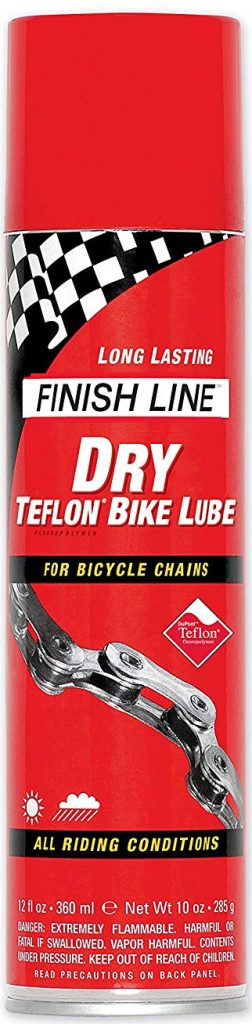
Dry Teflon Lube

https://amzn.to/2smf0g5

Definitely not recommended for lubricating the gears of your saw. However, it is handy when lubricating the fine threads and chains found in router lifts and other smaller tools.

Accessories

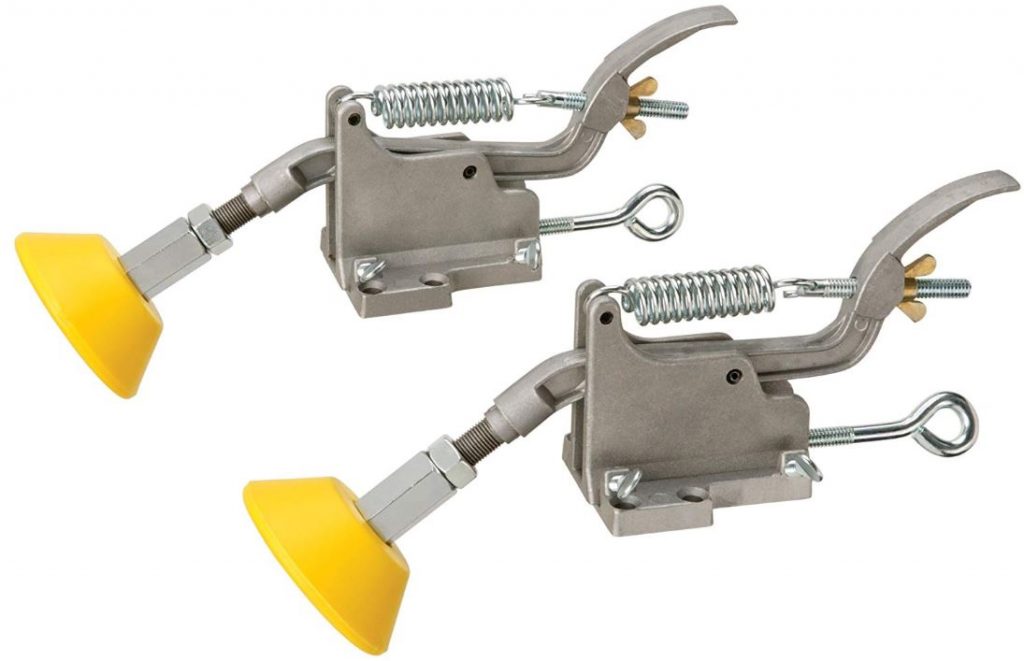
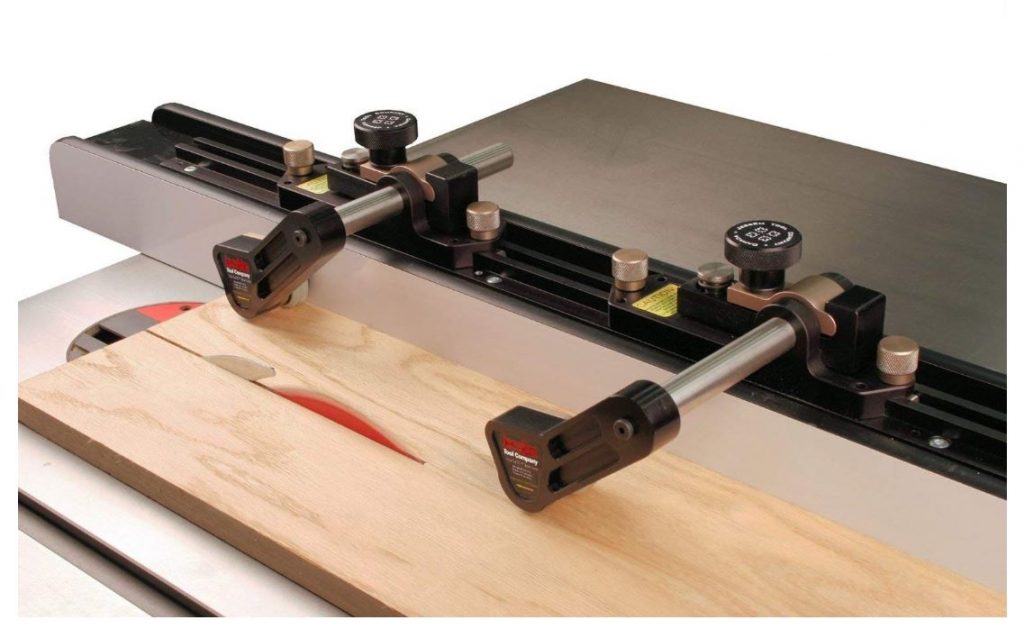
Hold-Downs

Featherboards do a good job holding the material against the fence but a better alternative may be using hold-downs.  These are configured so they not only hold the material against the fence but also flat against the table.

Board Buddies

Board Buddies are my preferred hold-down.  They’ve been around for a long time and they work great when cutting sheet goods.  They are a little bulky and may not be appropriate for every cut but they cost a lot less than some of the alternatives.

They are available in three different styles and the only real difference is which direction the wheels spin.  The yellow version turns in a clockwise direction, and is the most common.  This is what you would want to put on a table saw when the fence is to the right of the blade.  The red version turns counter-clockwise and the green version turns freely in both directions.

Board Buddies:

http://amzn.to/2j32AJc

This is what I use on my saw.  I recommend getting the track listed below as it allows you to move the board buddies front to back if needed.

Board Buddies Track:

http://amzn.to/2BKwENi

As stated above, this makes the Board Buddies more adjustable.

Jessum Clear Cut

http://amzn.to/2BcJSGo

Jessem makes their own hold-downs that are very popular.  They’re also a lot more expensive, costing almost three times what the complete Board Buddies system costs.  They do appear to be quality products, but the law of diminished returns keeps me from upgrading to these.  They look better than the Board Buddies, but not three-times better.

Conclusion


There you have it.  If you think that I missed something or if you found these parts cheaper elsewhere, please leave a comment below.

Some of the product links on this page are affiliate links. Any income earned through these links is donated to my fundraiser, which you can read more about at the following page:

Feel free to share this page with others…

The extension wing provides a lot of work surface.

Workbench: Part 7 – Installing The Hardware


<< This is a continuation of Workbench: Part 6 – Finishing the benchtop


The finish has been applied to the bench-top so now it’s time to attach the hardware.  This is a tricky subject to explain clearly.  I’m going to do my best but I’m planning on coming back and editing this post a bit in an effort to clear some things up.  That being said, if any of my explanations below are confusing, please leave me a comment and I’ll try explaining it in more detail.

This post has a lot of pictures so be patient while it loads.


Attaching the angle iron to the ends of each piece.


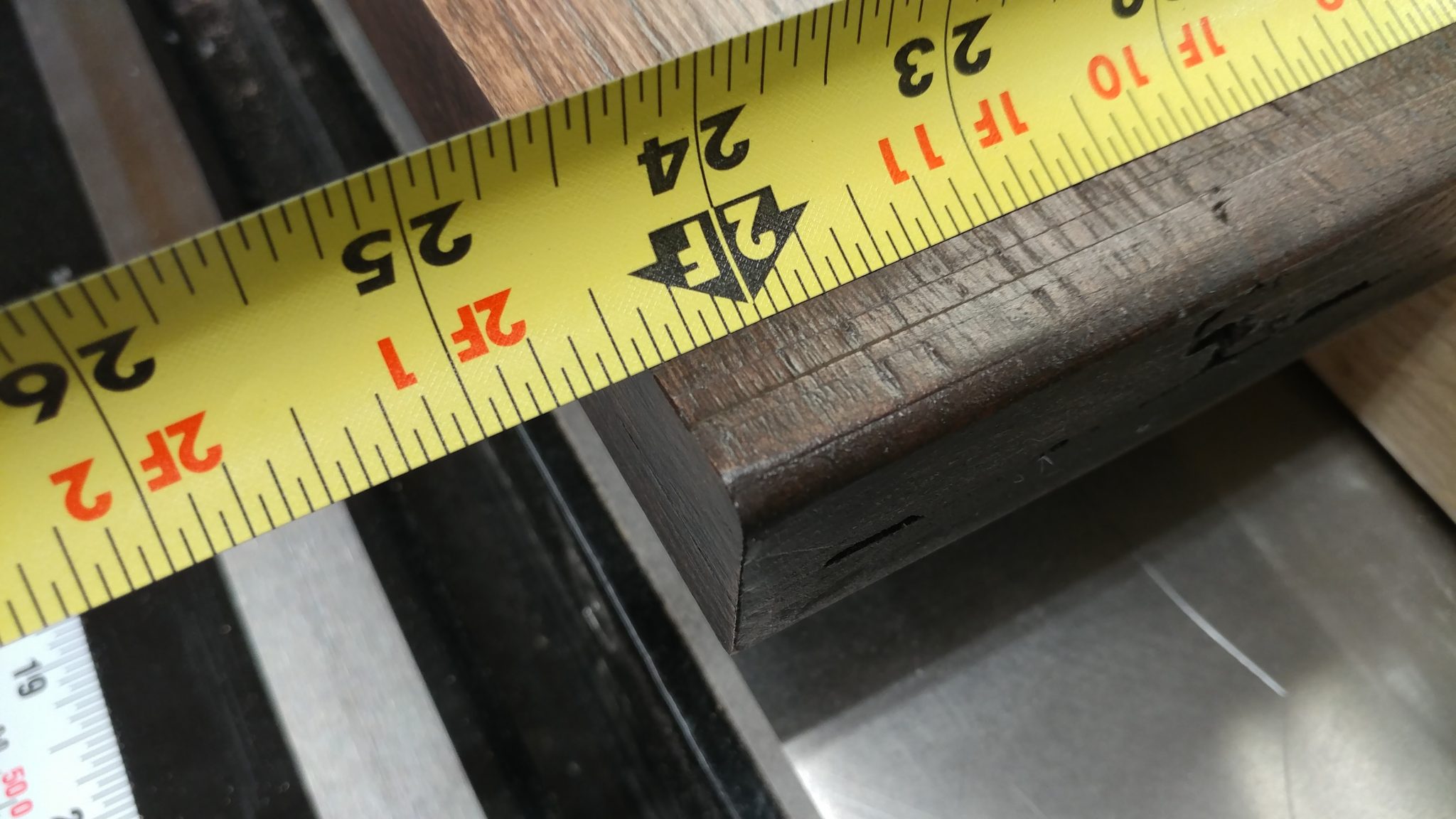
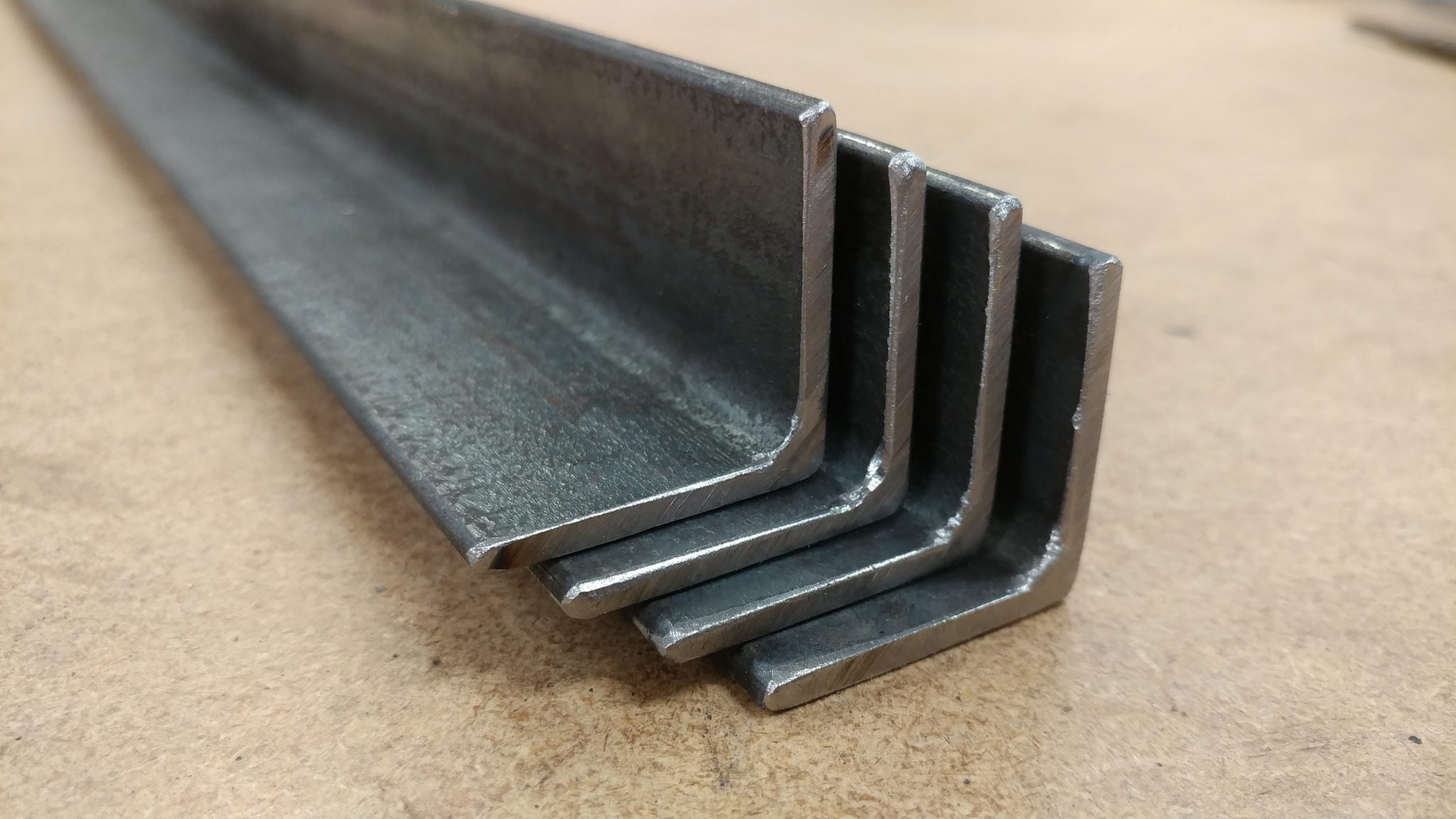
The bench-top is 23-7/16″ deep so I need to cut four pieces of angle iron to that length.

The final depth of the benchtop is 24-7/16".


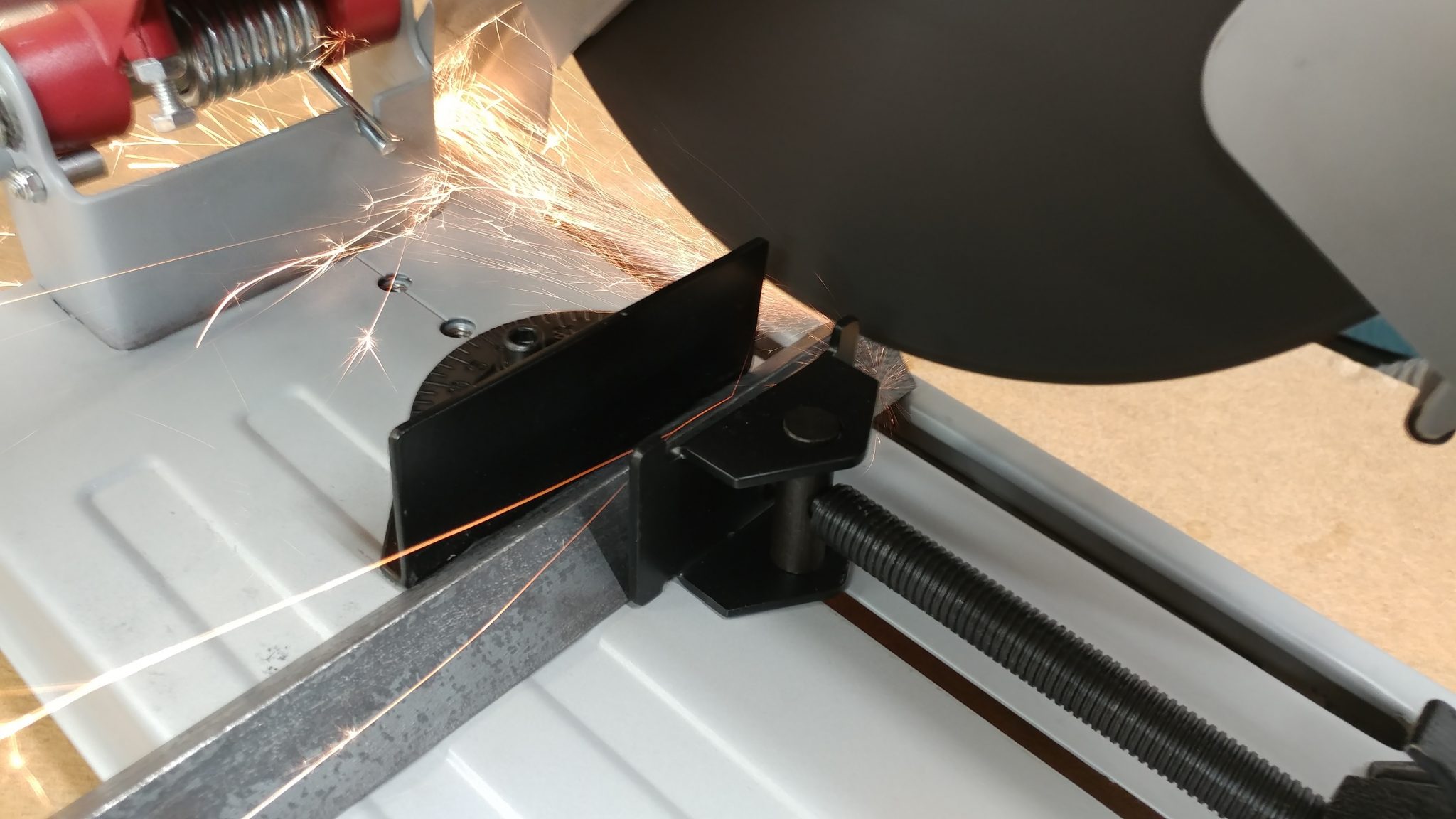
A metal chop saw was used to make all my cuts but you can do this with a hacksaw if you don’t mind the blisters and carpal tunnel.

A metal chop saw made this process go pretty quickly.


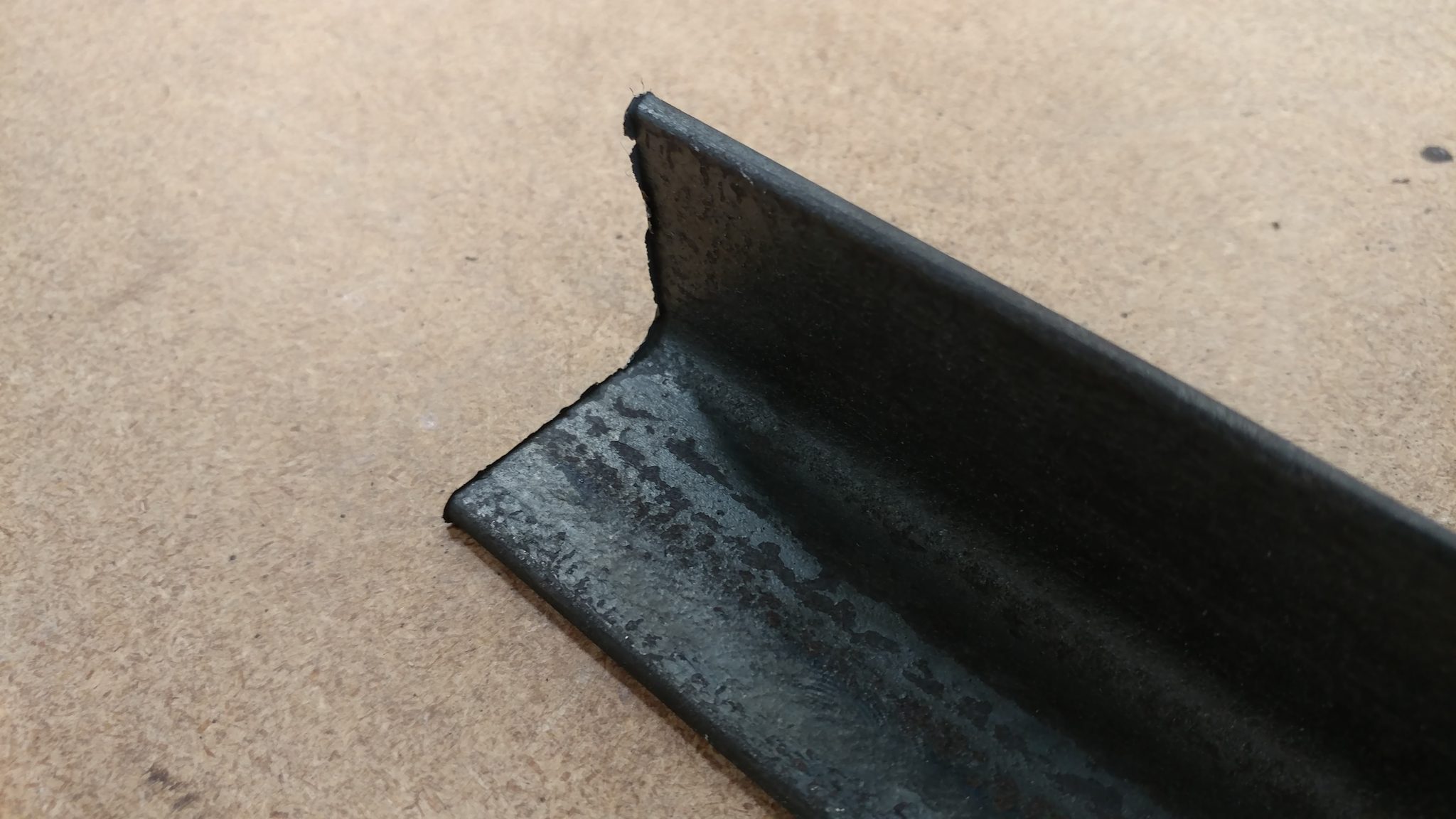
The chop saw leaves a jagged burr on the edge of the angle iron so I’ll need to knock that back.

Cutting on the chop saw left a pretty nasty burr that I needed to get rid of.


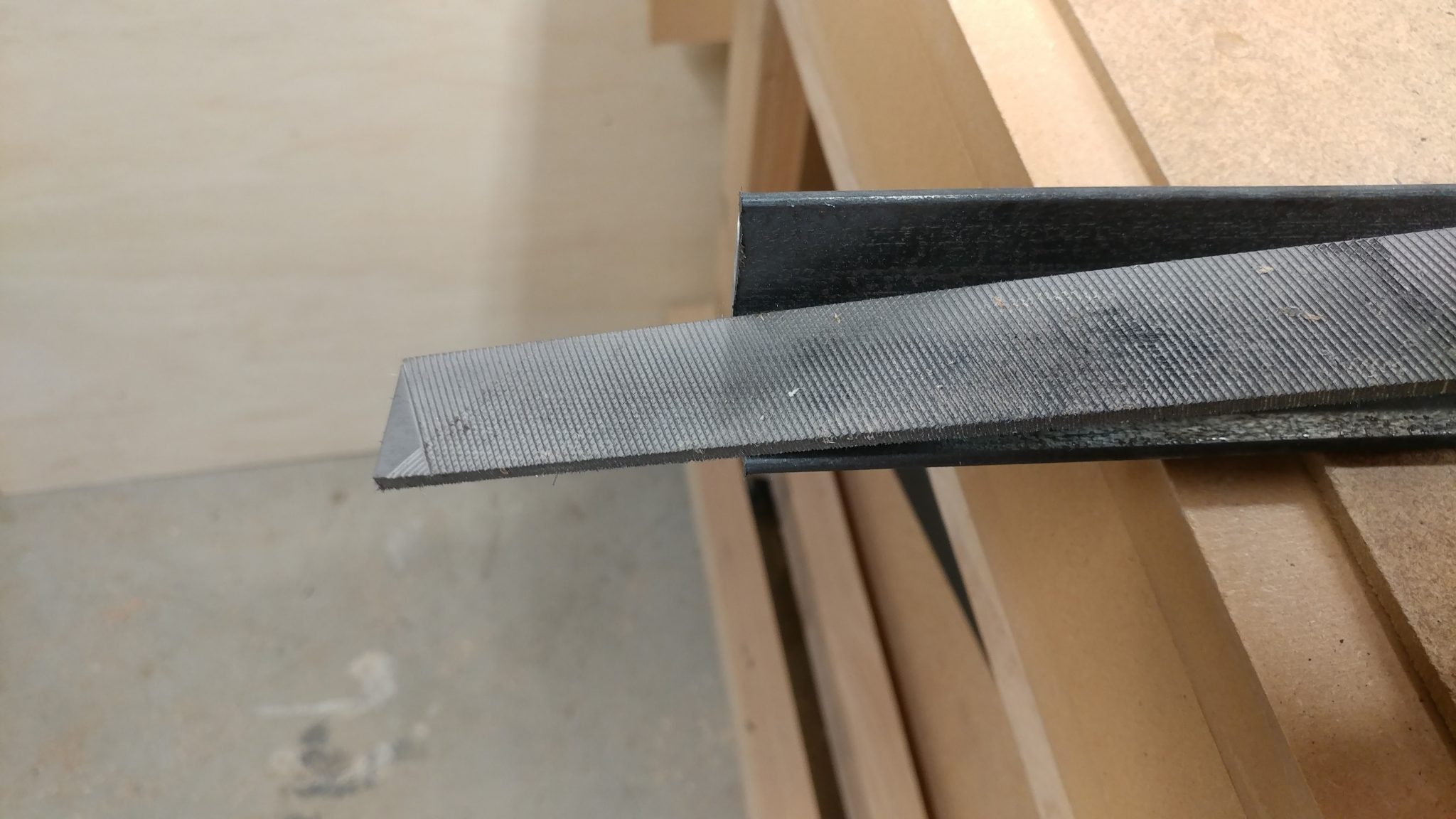
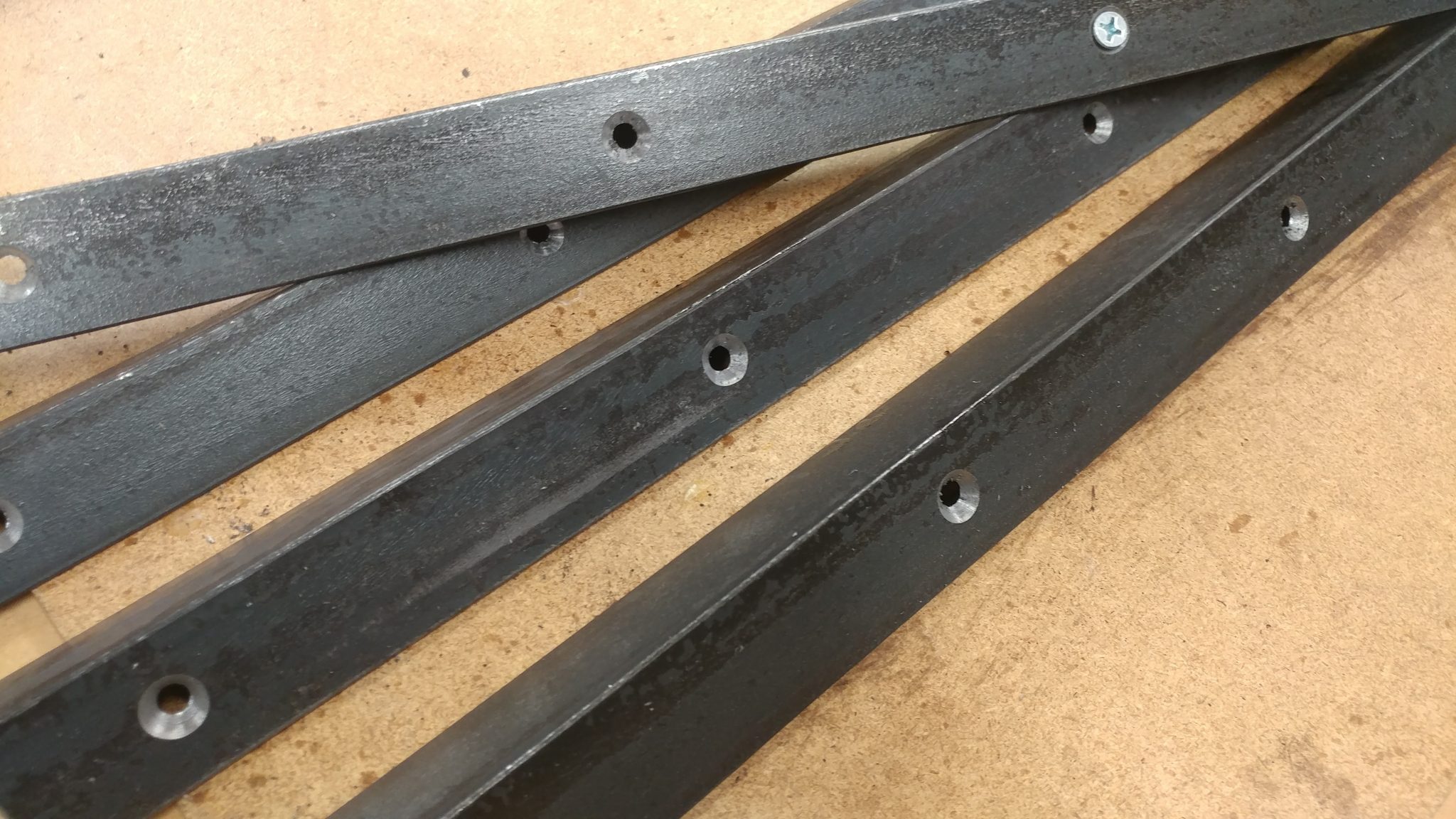
You can use a hand file to remove most of the burr from each end of the pieces of angle iron.  I did this while slightly rounding over the ends.

I used a metal file to get rid of most of the burr.


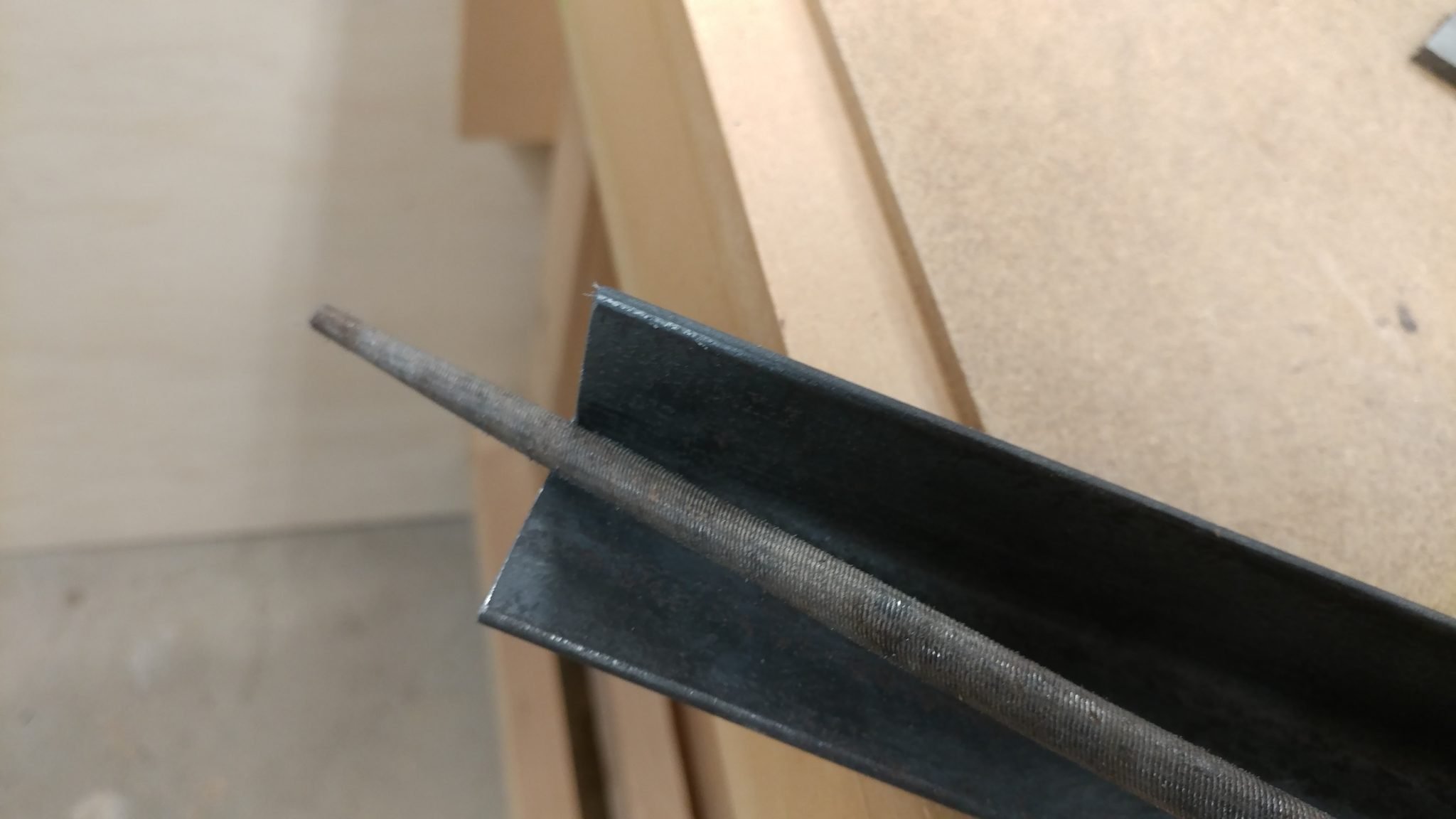
To remove the burr on the inner corner I needed to use a rat-tail file.

A rat-tail file was used to knock back the burr on the inside corner.

The burrs were removed from both ends of each piece of angle iron.

Both ends of all four angle iron pieces have been filed and slightly rounded-over.


A test fit gives a preview of how it looks and lets you make sure that none of the metal pieces are too long.

A test fit shows that these pieces fit nicely.


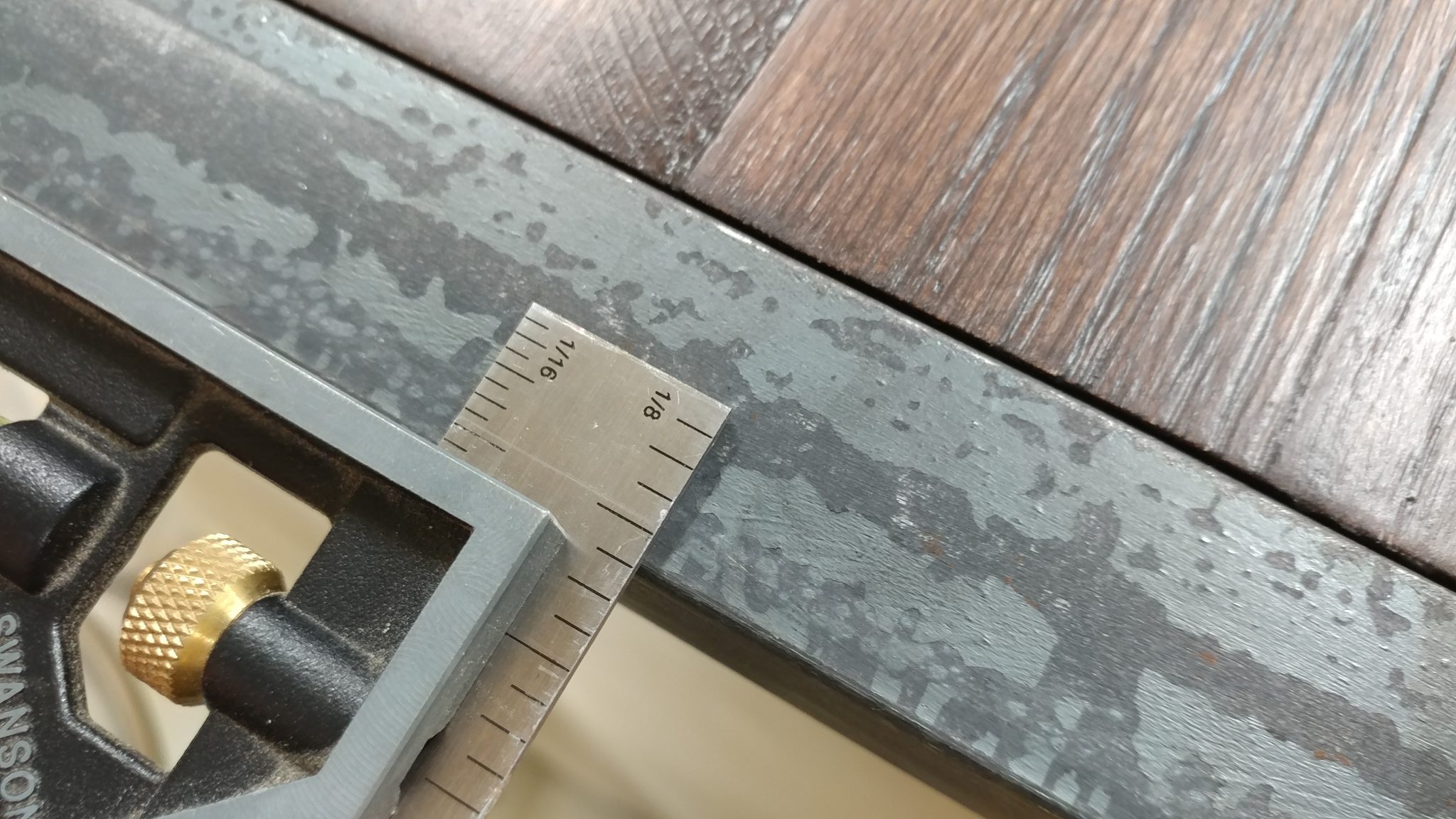
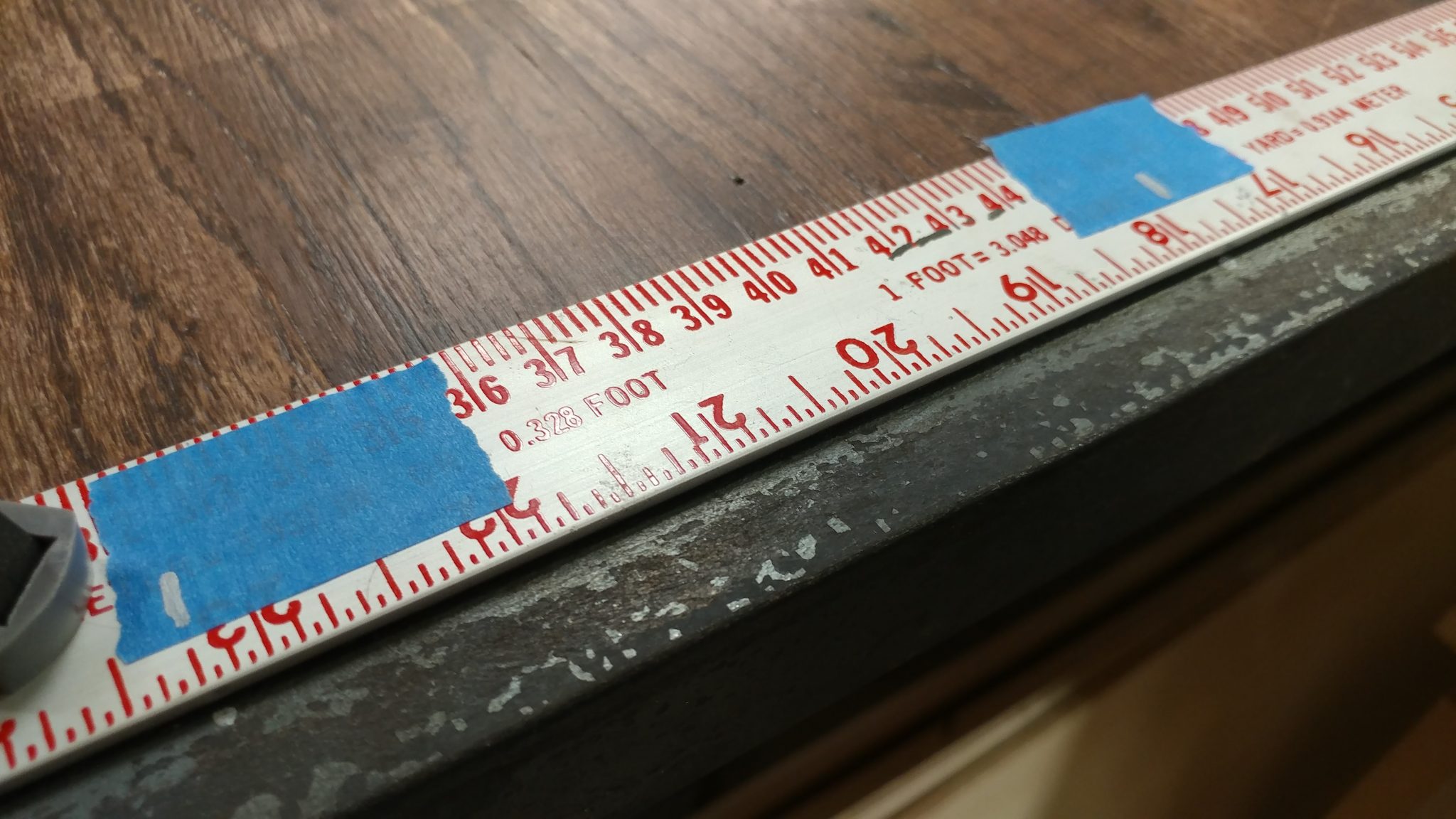
The screws will be attached in the center of the angle iron so I set my combination square to half the width which ended up being 5/8″.

I set my combination square to 5/8" which is half the depth of the angle iron.


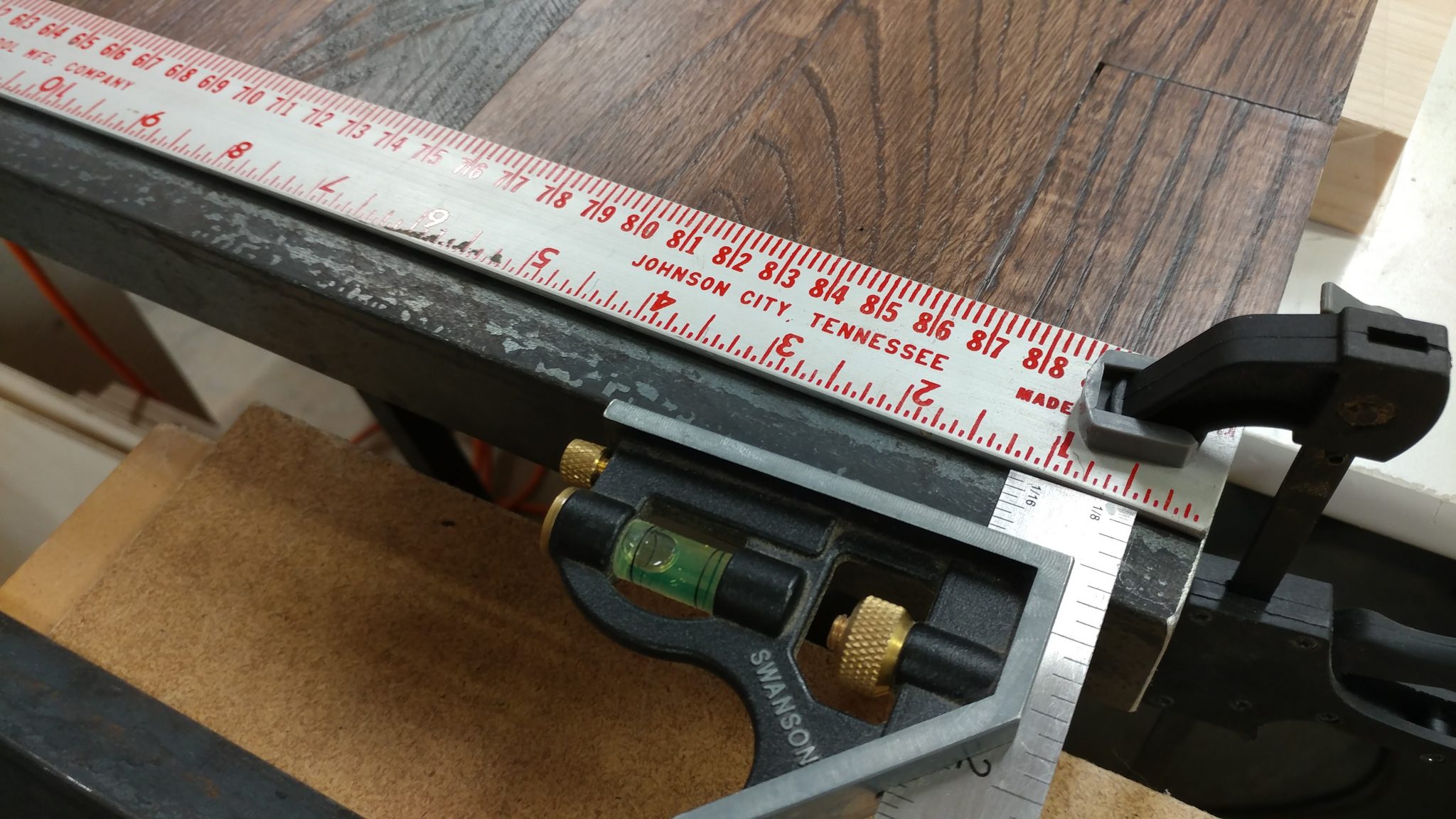
I used the combination square to set the position of a metal shop rule on the angle iron and I clamped it in place.

A straightedge clamped to the pieces at the correct depth made this process easy.


I decided on the placement of the screws by first marking where the center screw will be and then adding the marks for the outer screws about 1-1/4″ inches in from the edge.  I then found the center point between the outer marks and the central one.  I used a silver Sharpie to mark the placement of the screws with some hash marks on pieces of painters tape so I could repeat them on each piece.

I added painter's tape and made marks at the spots where I wanted to drill my holes.


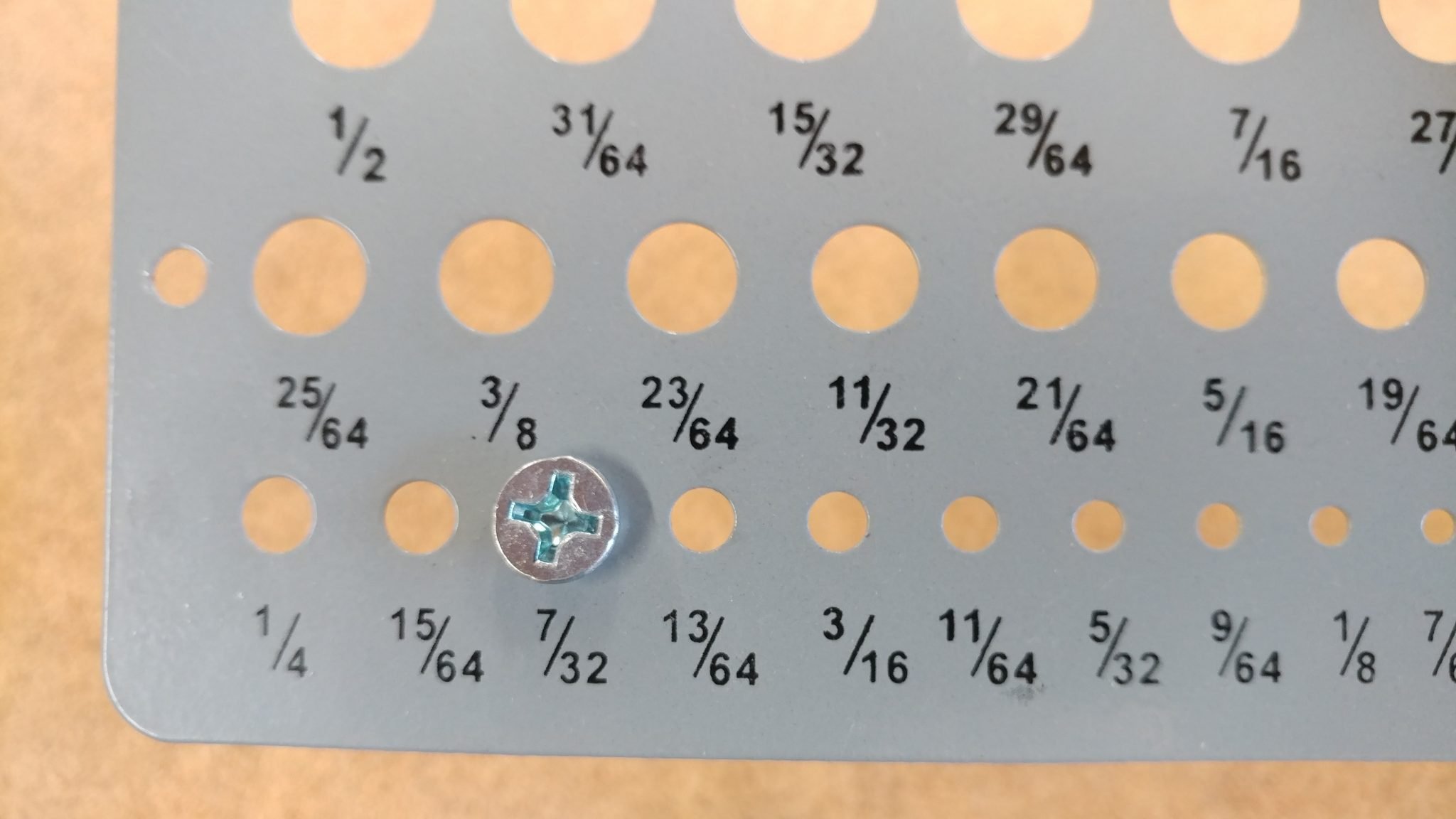
The screws that I am using to attach the metal require a 7/32″ hole.

The holes will need to be 7/32" in diameter in order to accommodate the screws.


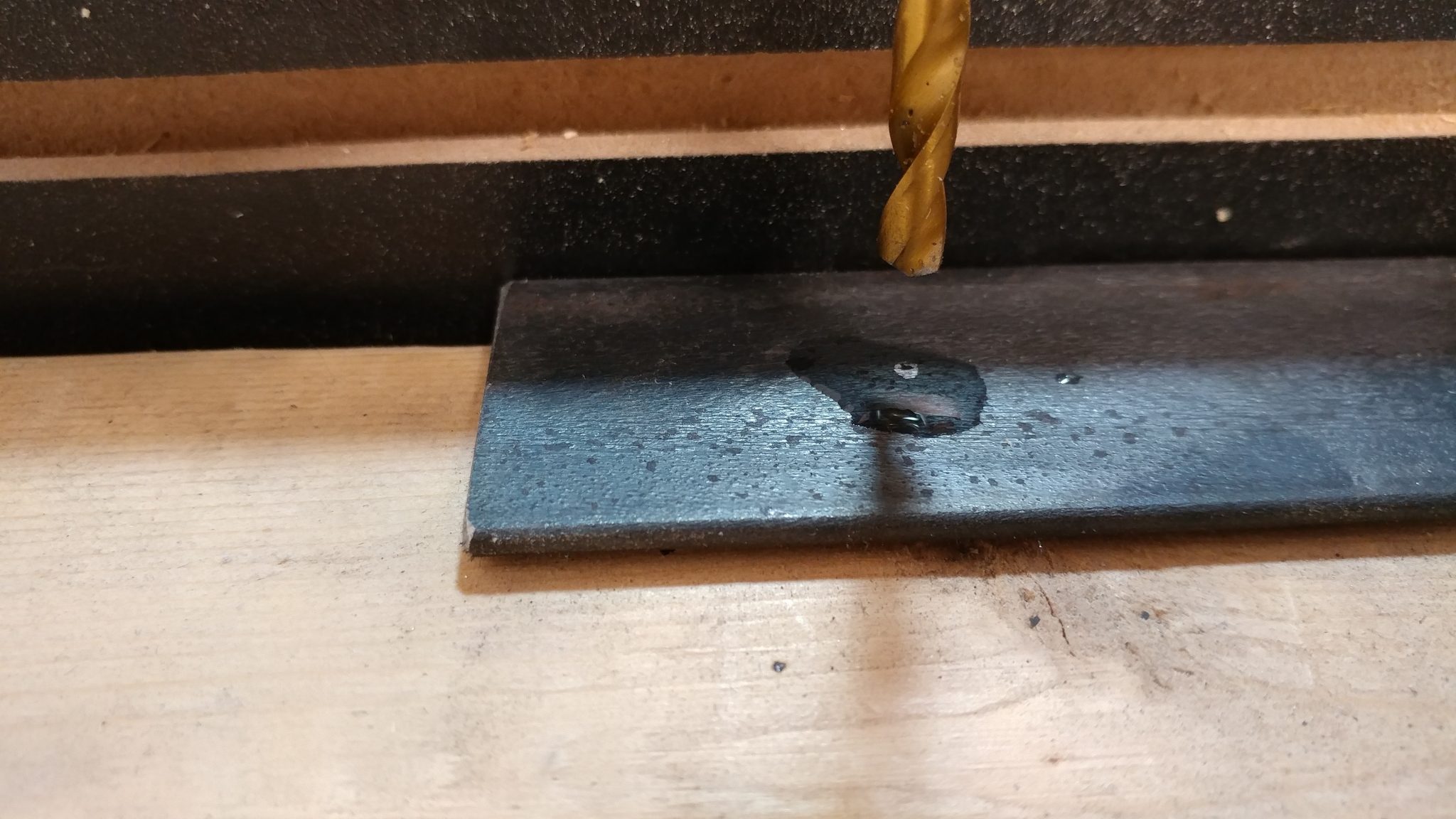
When drilling through metal you should usually apply a few drops of 3-in-1 oil to where you will be drilling out the holes.  This is what I did when I made the holes using a drill press.

I applied a few drops of 3-in-1 oil to the steel before drilling.


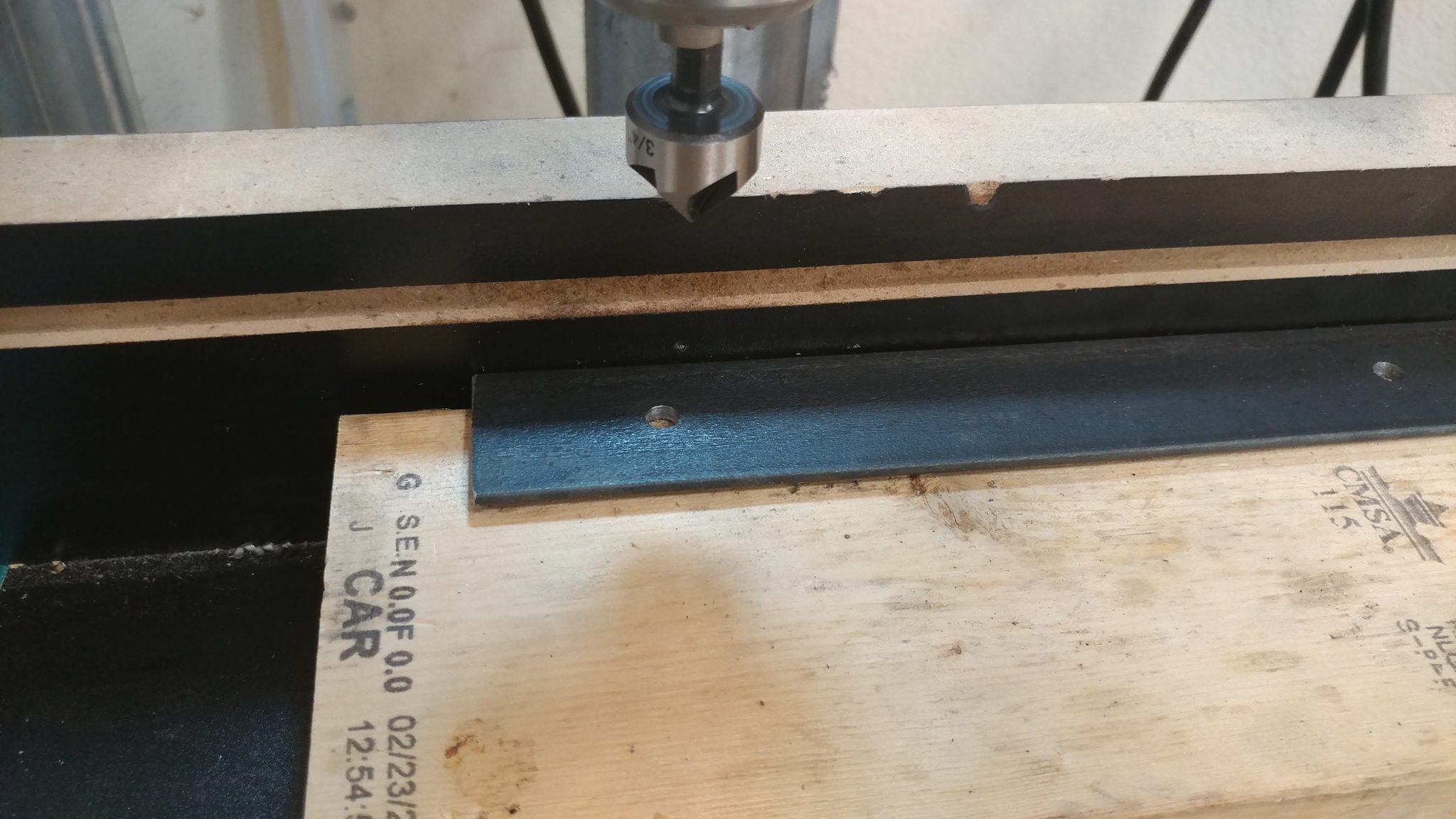
Since I wanted the screws to sit relatively flush with the top of the metal, I added a countersink to each hole using a 3/4″ countersink bit.  I went just deep enough for them to be flush but I didn’t want it too perfect since I’m going for a more used, industrial look.  Fortunately, making things “not perfect” is a specialty of mine.

I followed the 7/32" bit with a countersink so the screws sit flush.


This took quite a while. I ended up doing most of them with a hand drill which actually went much faster than the drill press and helped contribute to the imperfect look that I was going for.

All the holes are drilled and countersunk. You can see one screw inserted in one of the holes to test the fit.


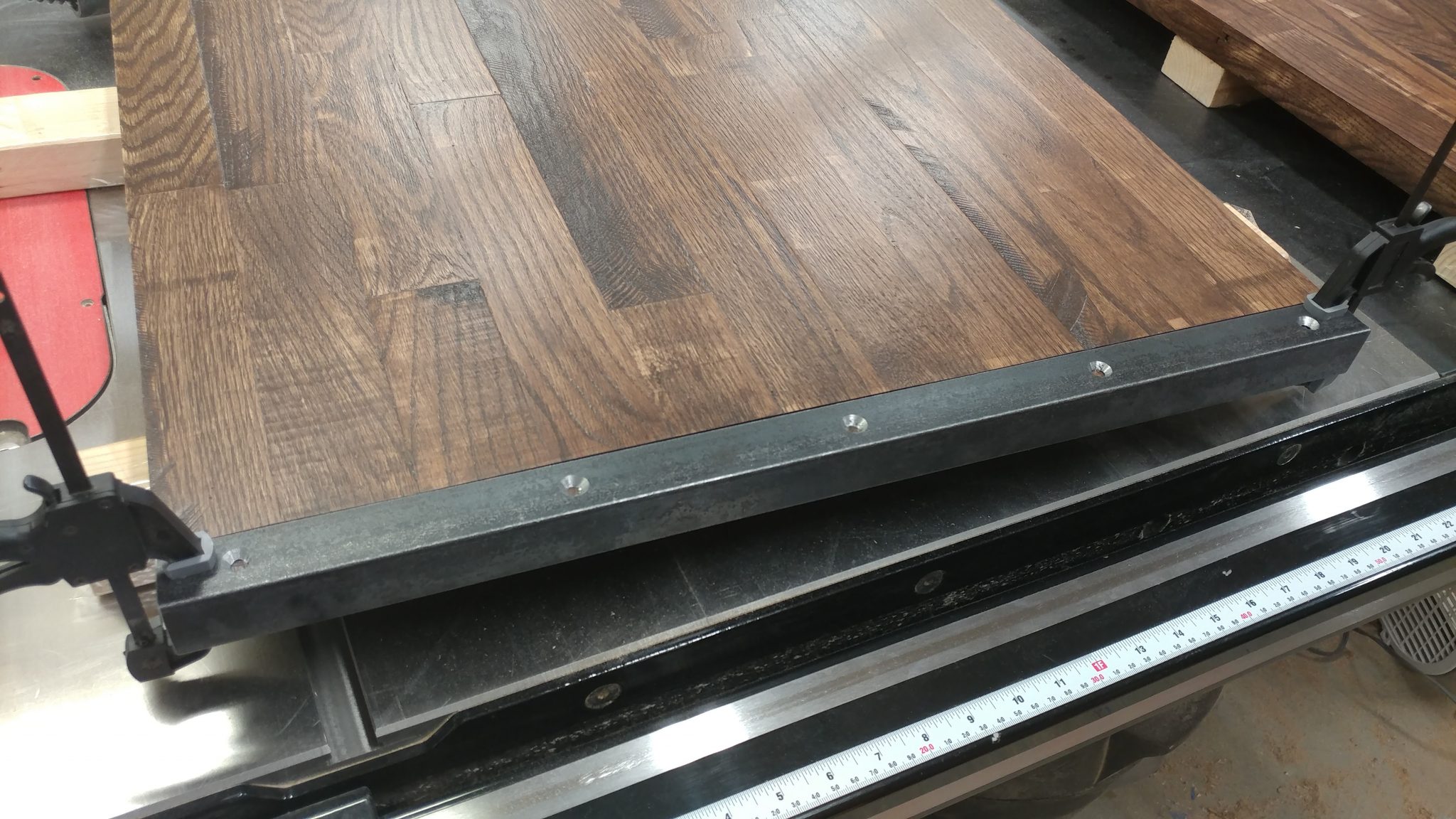
When it was time to drill the holes, I clamped the angle iron to the ends of the bench-top pieces so I could ensure their placement was correct and that it wouldn’t slip.

I clamped the metal to the wood so I can drill accurately.


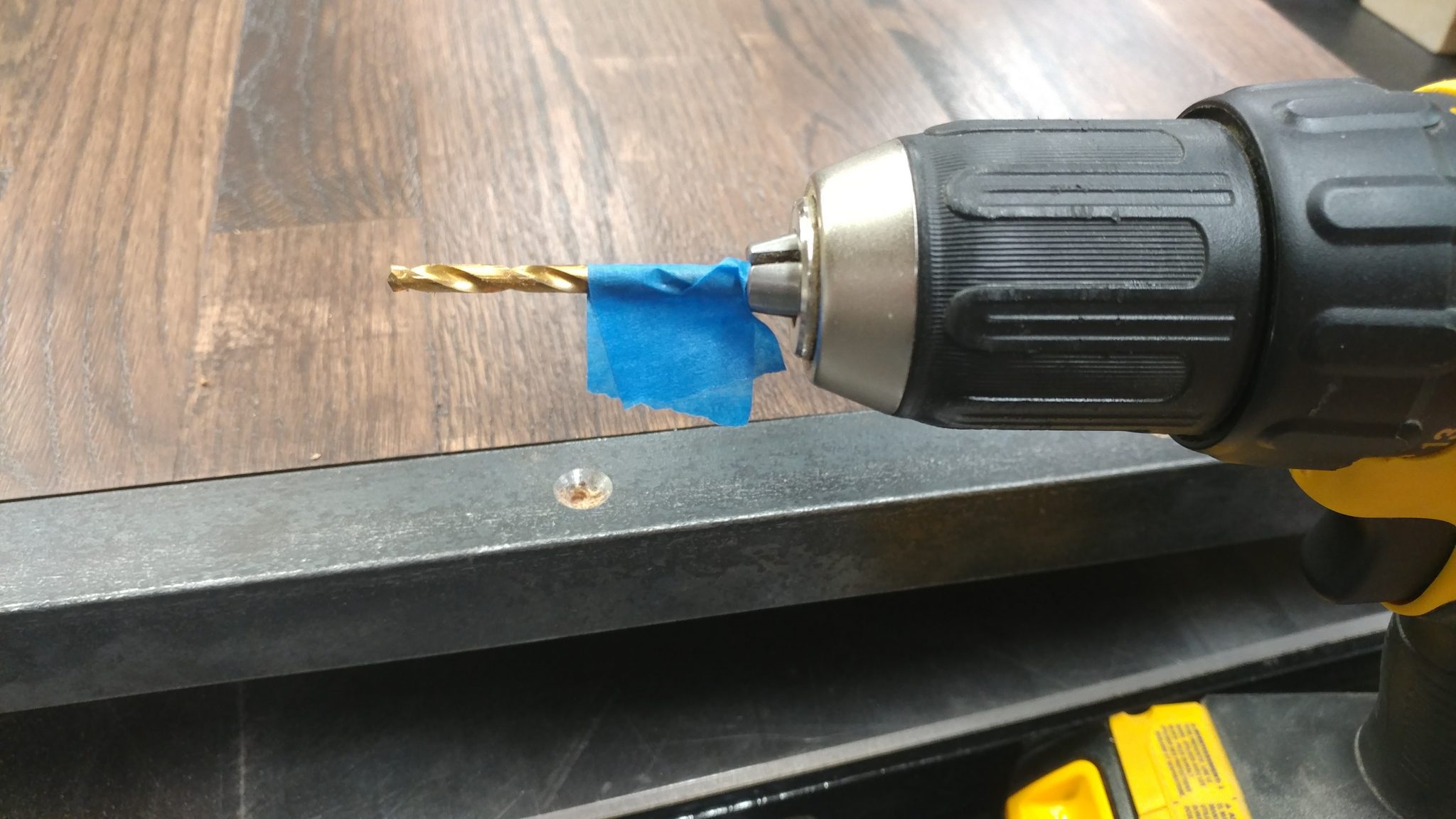
I used some blue painters tape on my drill bit to mark the depth of the hole that I needed for the screws.

I marked the desired hole-depth with some painter's tape.


I drilled just to the point that the painters tape touched the metal.  This is easy to do if you watch the shavings that gather around the hole you are drilling.  When the tape starts to brush them aside, stop drilling.

I drilled down till the tape was flush with the top of the metal.


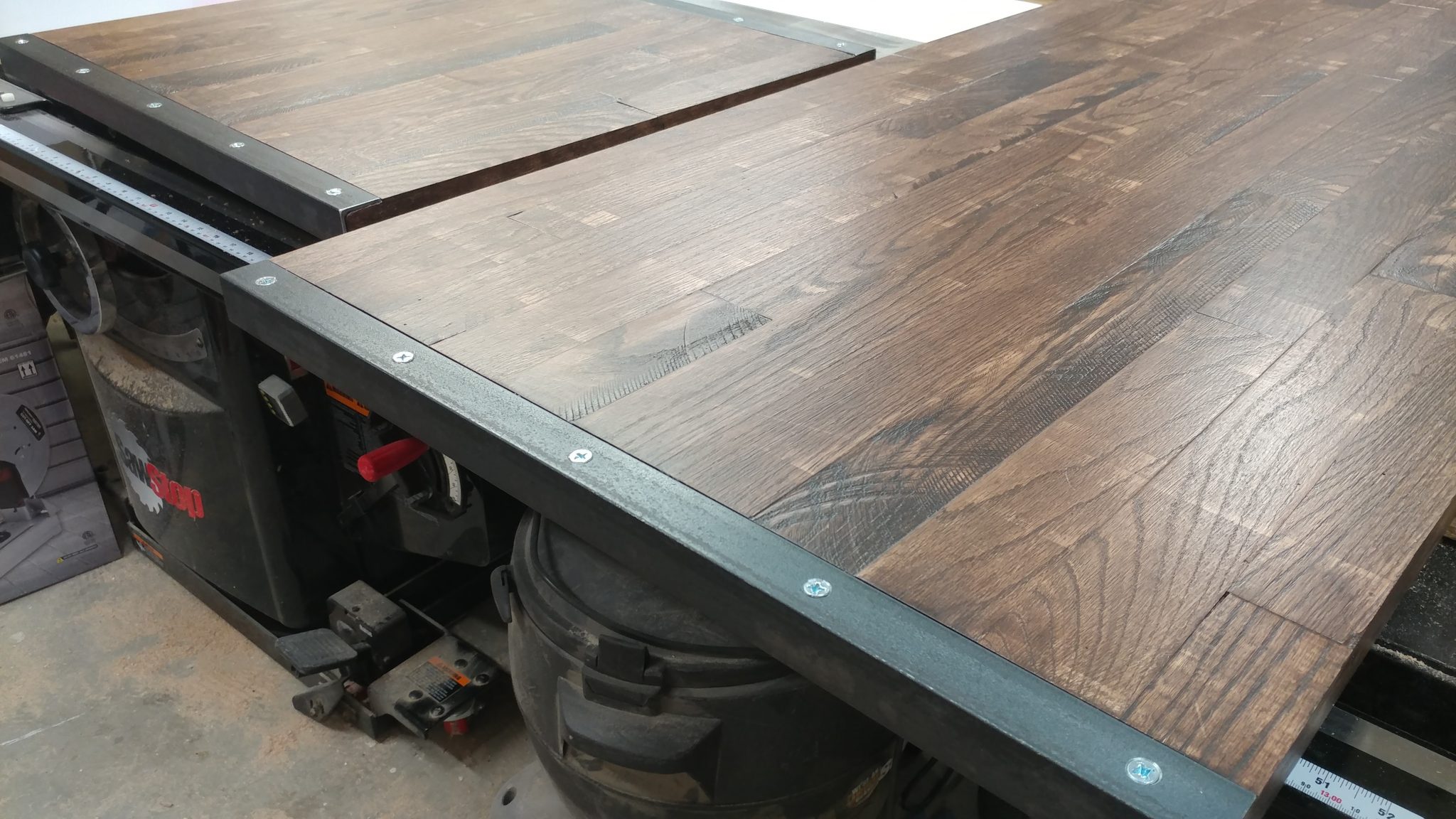
The pieces were then attached with screws. Now the bench-tops are officially done.
Twenty screws total are used to attach the angle iron.


Attaching the legs to the bench-top.


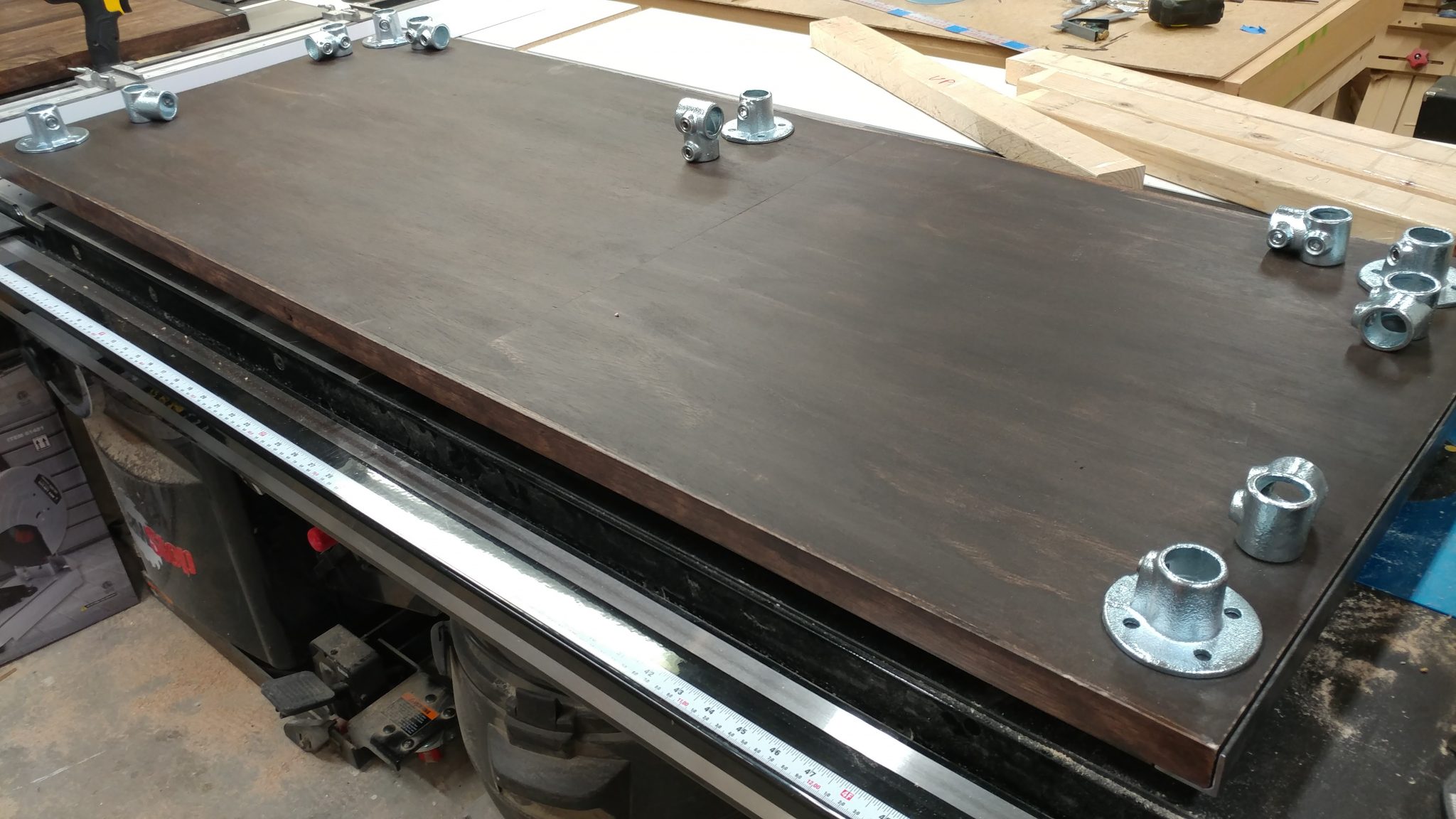
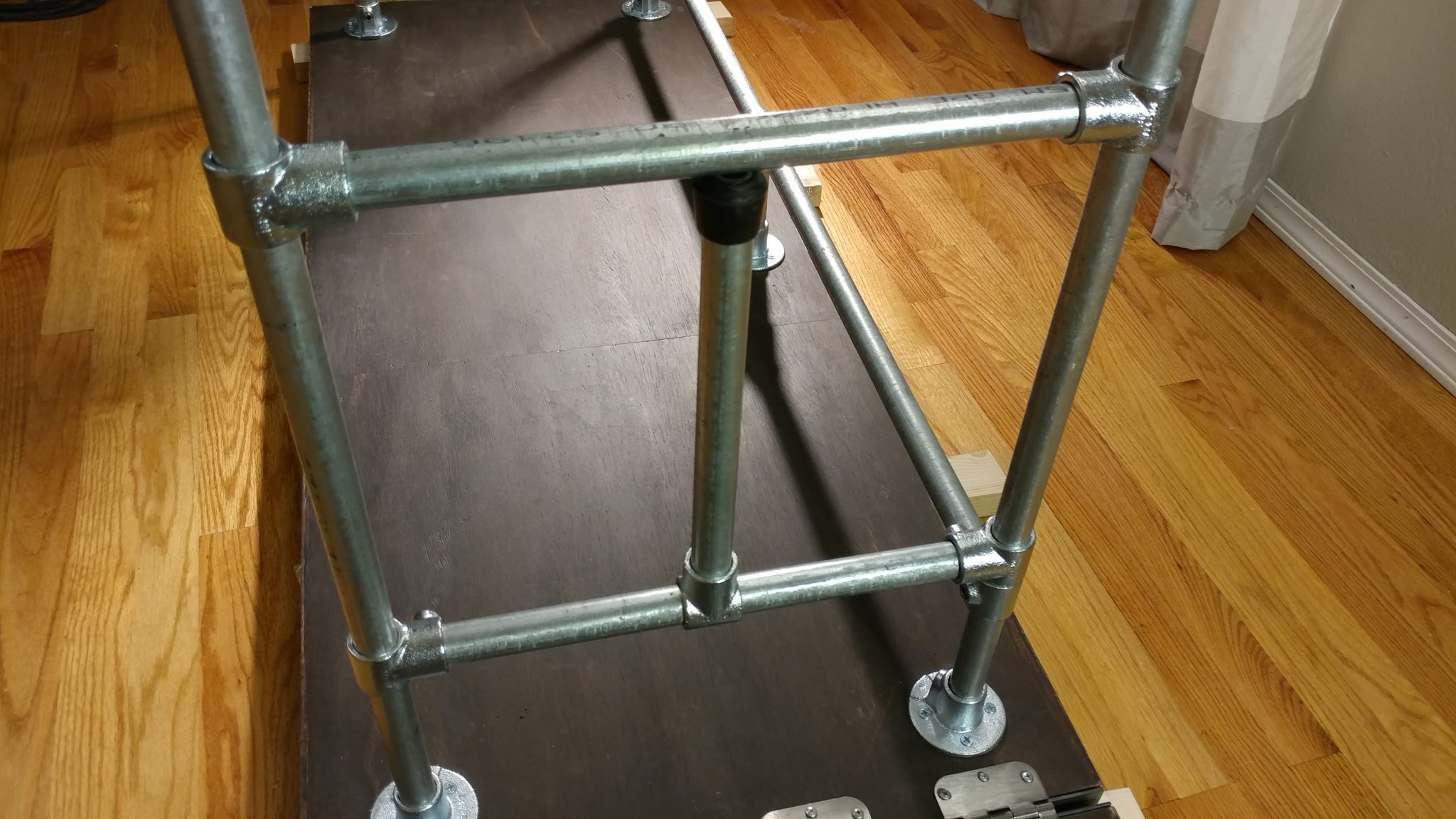
I am using hardware by Steel-Tek to create the legs for this desk. To get a visual on what pieces are needed where, I laid them out on the underside of the bench-top in the approximate area where they will be attached.

I gathered up the hardware and set them up where they were going to be installed.


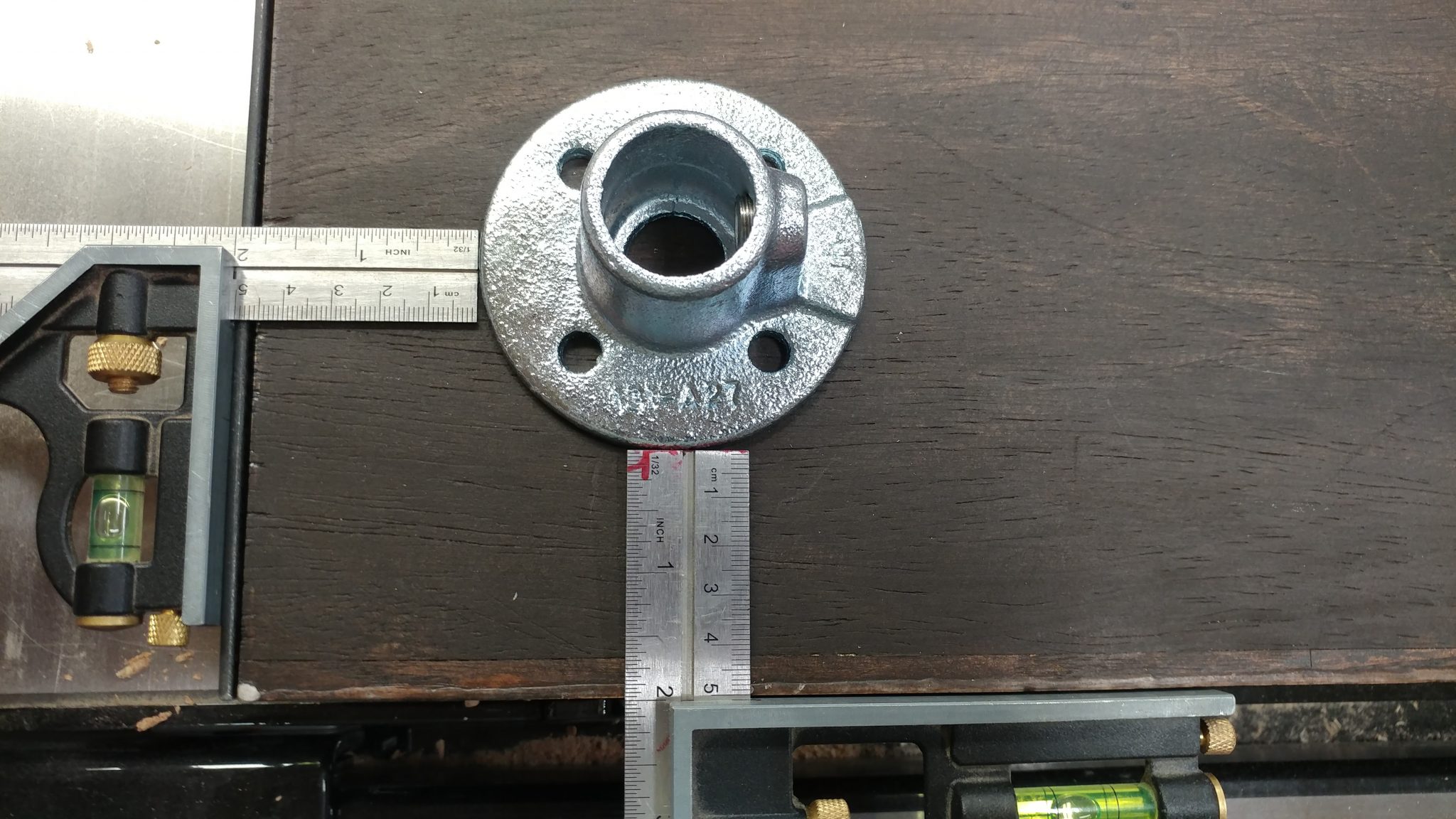
I attached a 3/4″ flange (part no. 673-104HC) in each of the four corners of the main bench-top piece. I set them 2″ in from each edge.

I arbitrarily decided to position the legs 2" in from each edge.


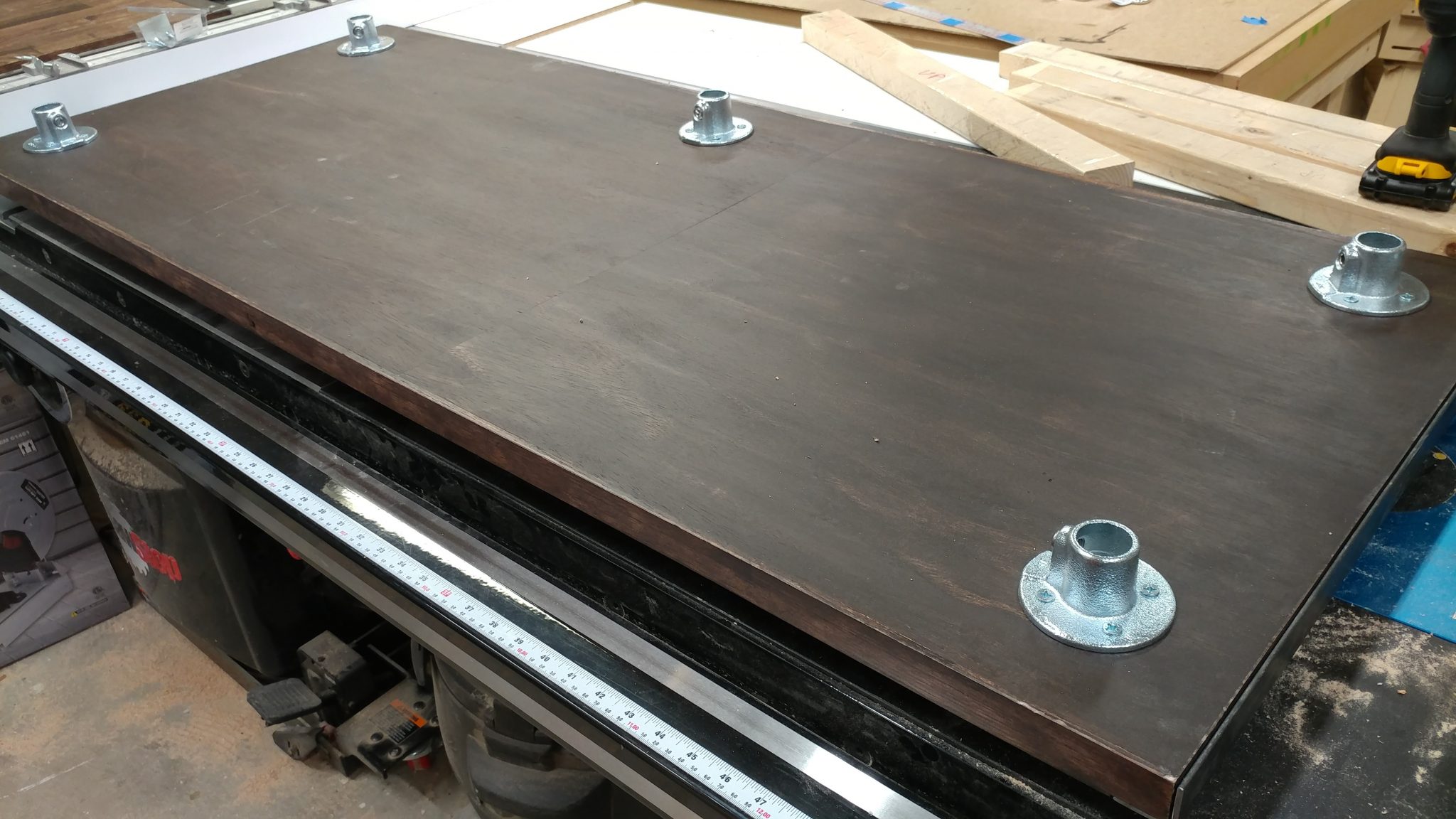
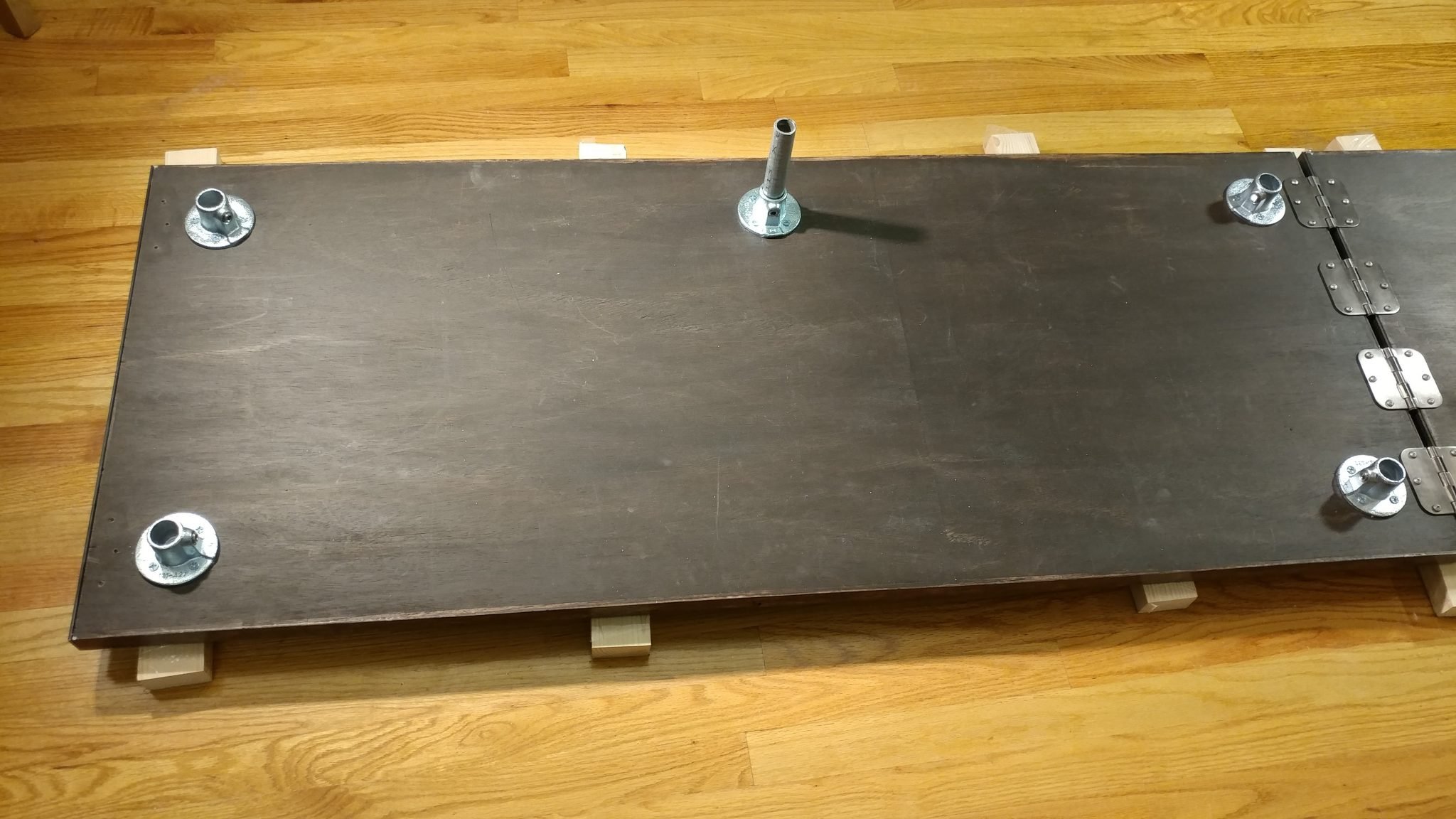
Four screws were used to attach each flange. I also added a fifth flange along the back edge which will help support the bench-top along the length.

All of the flanges have been attached to the underside of the benchtop.


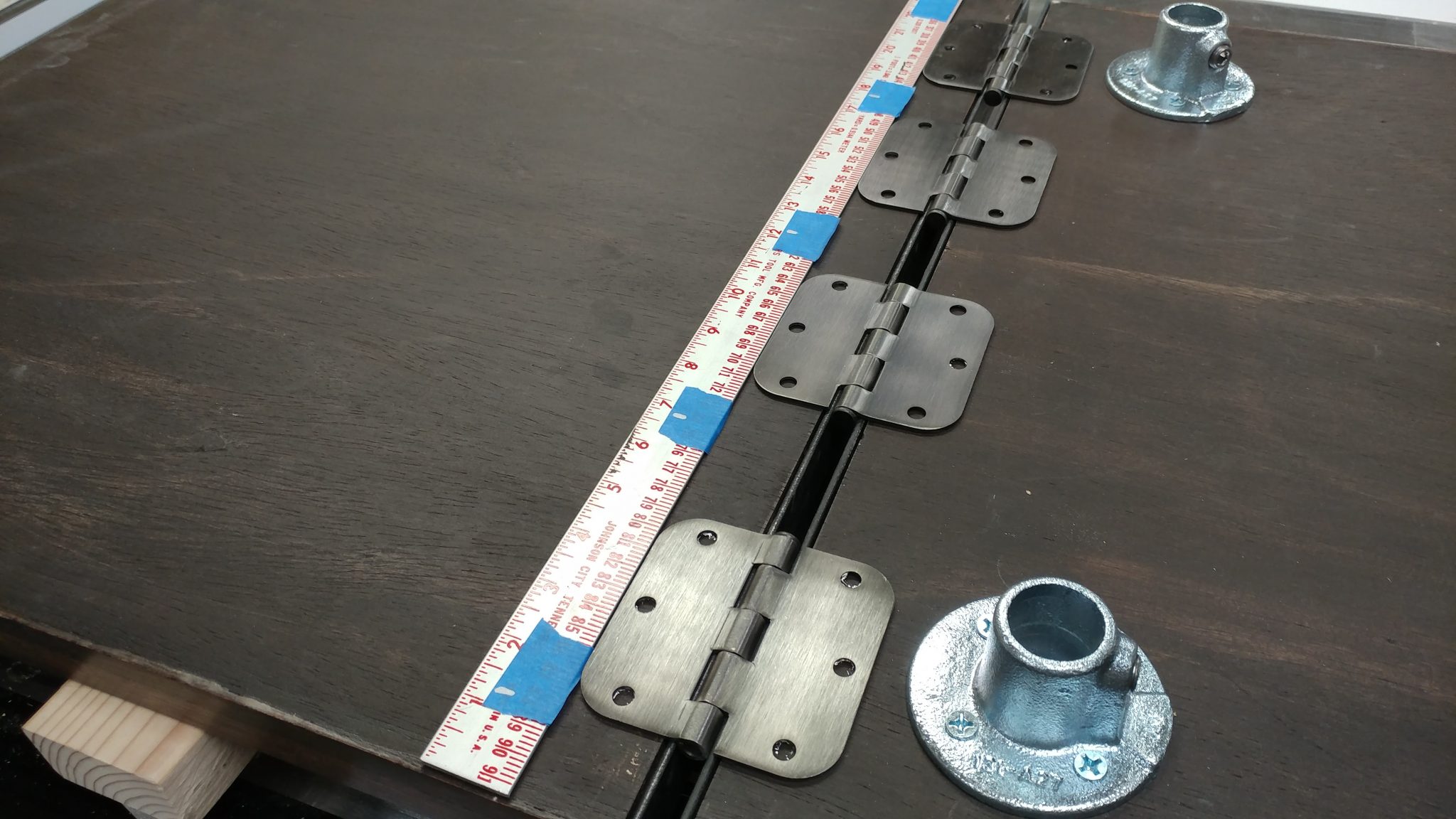
Since I still had the hash marks on my shop rule from when I drilled the holes in the angle iron, I laid that out and used it to arrange the hinges for attaching the extension wing. I debated about using a piano hinge for this as it would provide better support since it would be screwed into the side rather than from underneath. In the end, I decided to attach four hinges along the underside and I’ll just keep an eye on it. I can always come back and change it later if it starts to weaken.

Laying out the hinges in their approximate location.


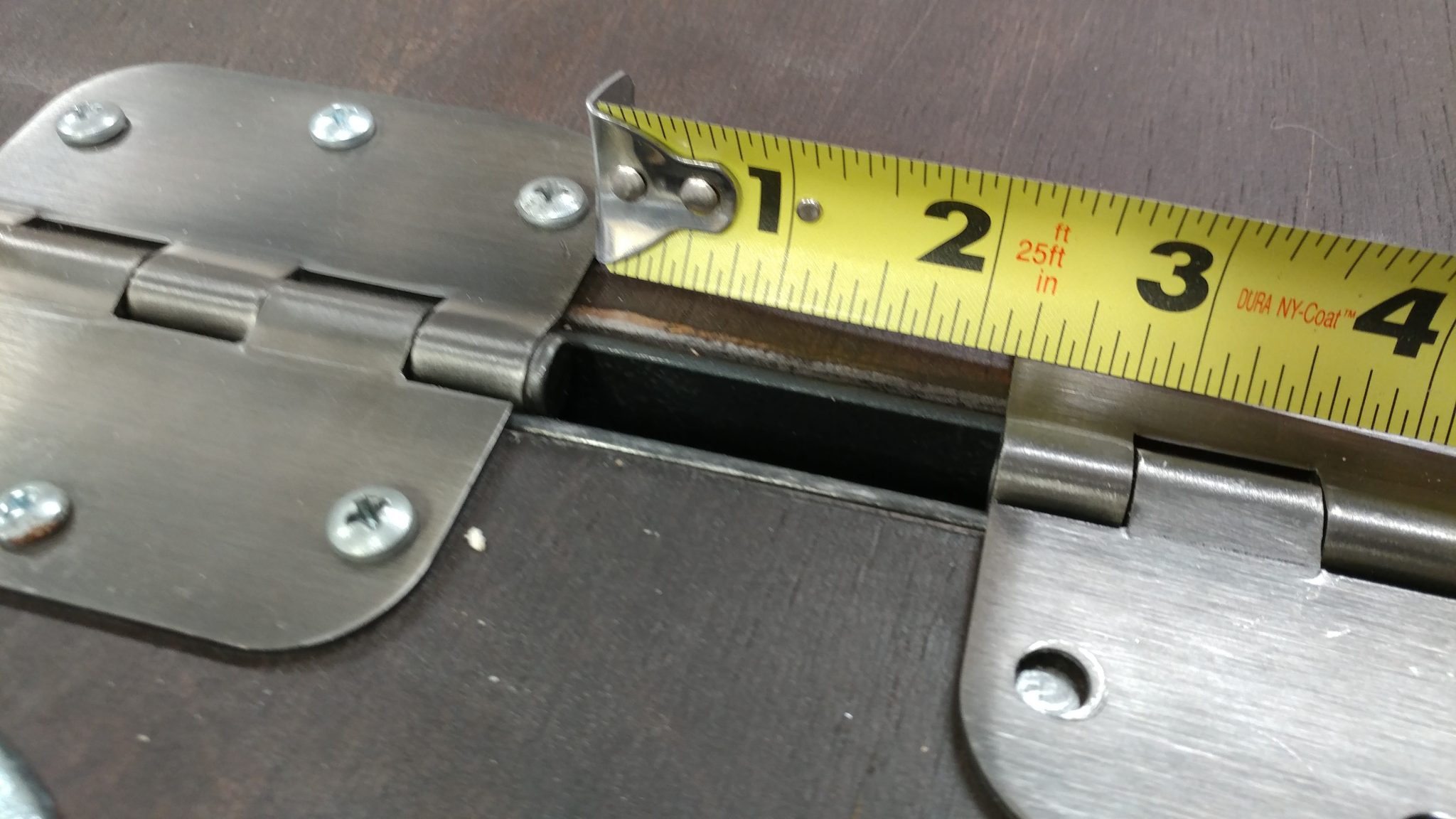
I ended up spacing the hinges a little over 2″ apart.  This measurement will vary depending on the hinge that is used.

I decided on a 2-3/16" gap between the outer hings and the inner ones.


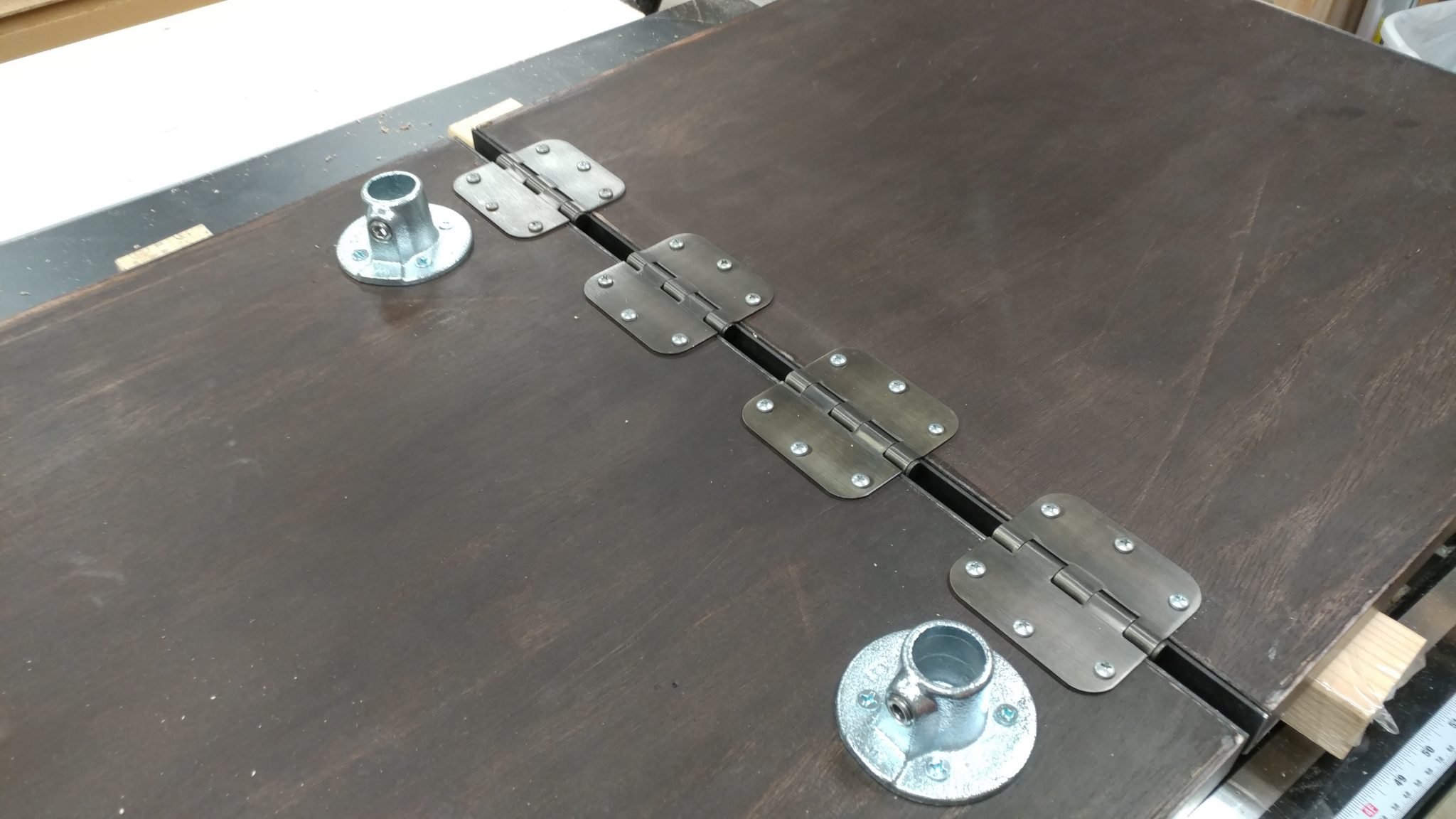
Each hinge was attached and they seem really solid so I’m not too worried. I needed a slight gap between the main table and the wing because of how the wing is going to be held upright. This will be explained later.

All of the hinges have been attached.


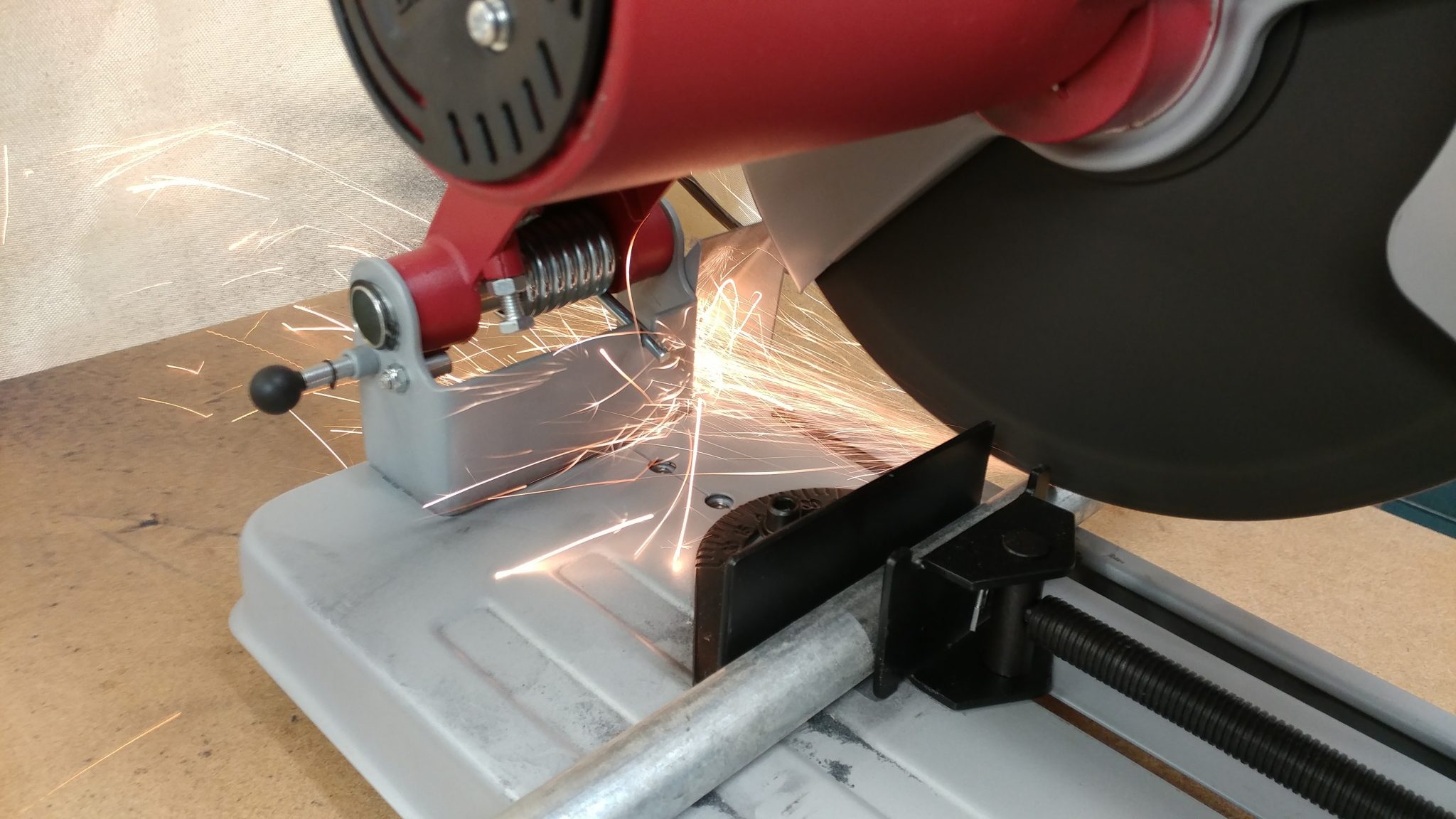
Back to my chop saw to cut down the 3/4″ tubing to the various lengths that I needed.

Cutting the steel tubing to size with a metal chop saw.


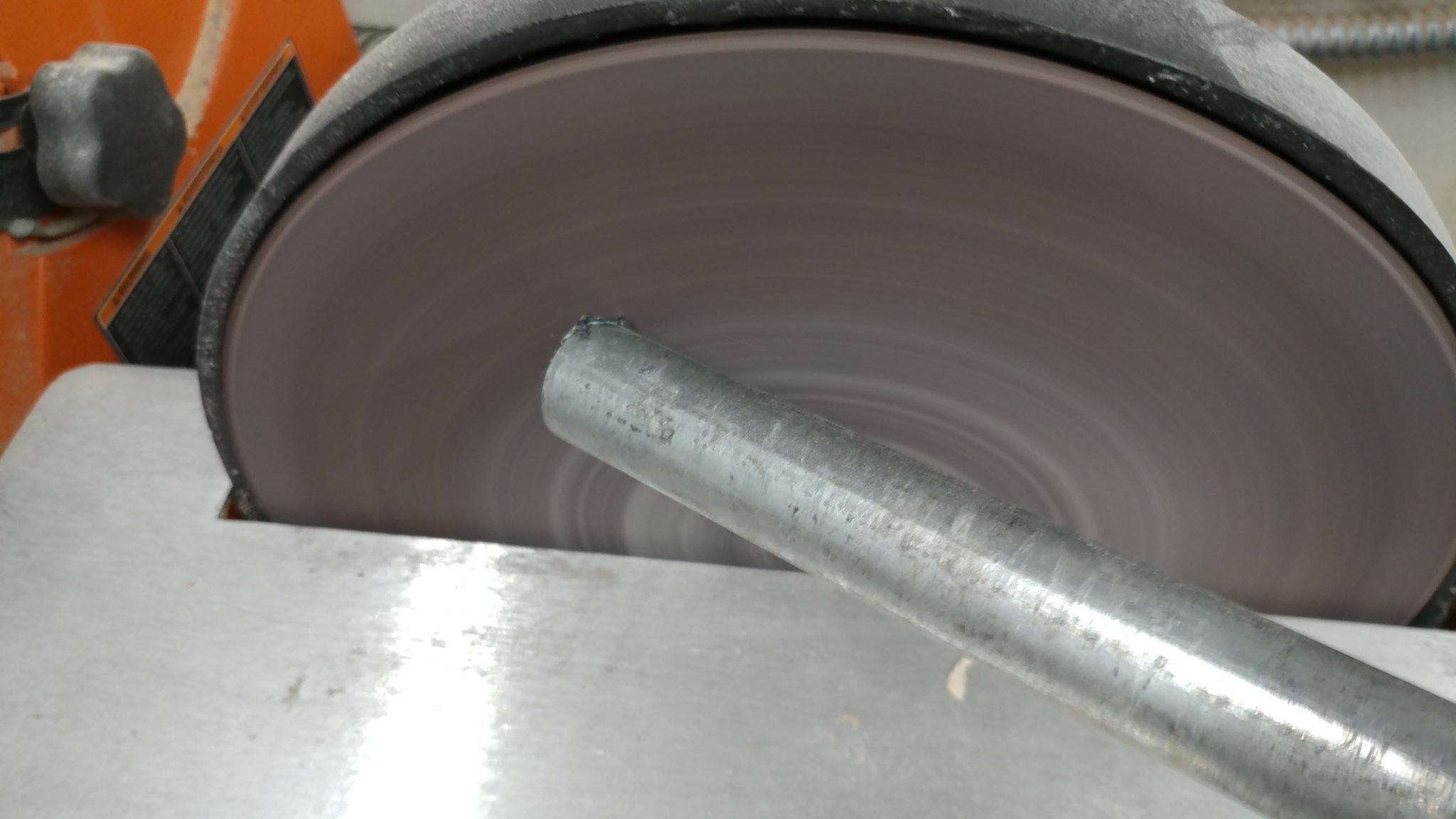
Using a disc sander, I added a slight chamfer around the edge of each piece of pipe in case anyone wants to take this bench apart in the future. I wouldn’t want anyone getting cut on the sharp edges.

Adding a slight chamfer around the ends of each piece of pipe.


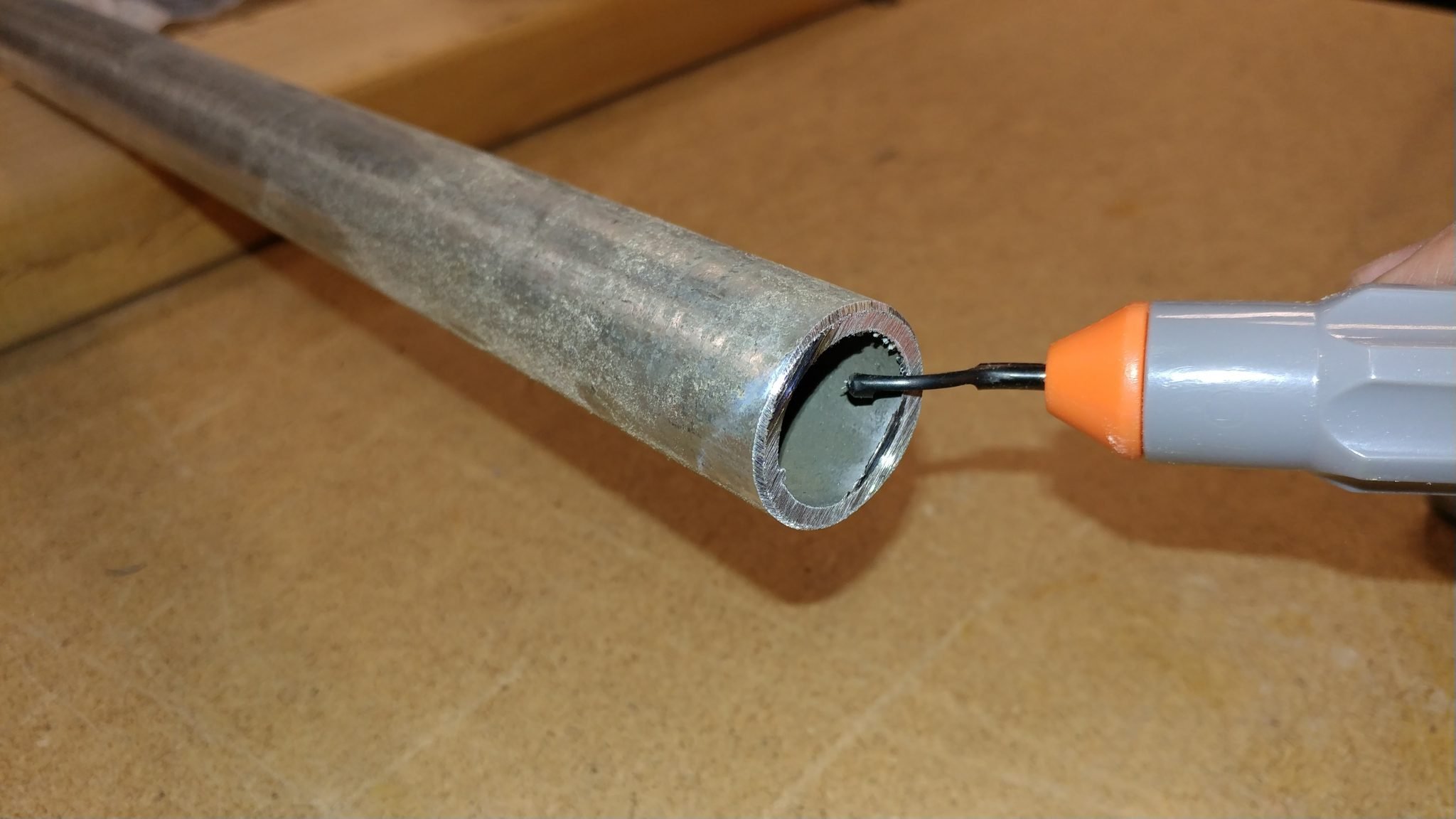
As I was cutting these down, I realized that this piping would allow me to run wires through them in case I wanted to add a few outlets along the top. If you’ve ever run conduit, you probably understand the importance of removing the jagged edge along the inside so it doesn’t damage any wires. I did this with a deburring tool.

I removed the inner jagged edge using a deburring tool.


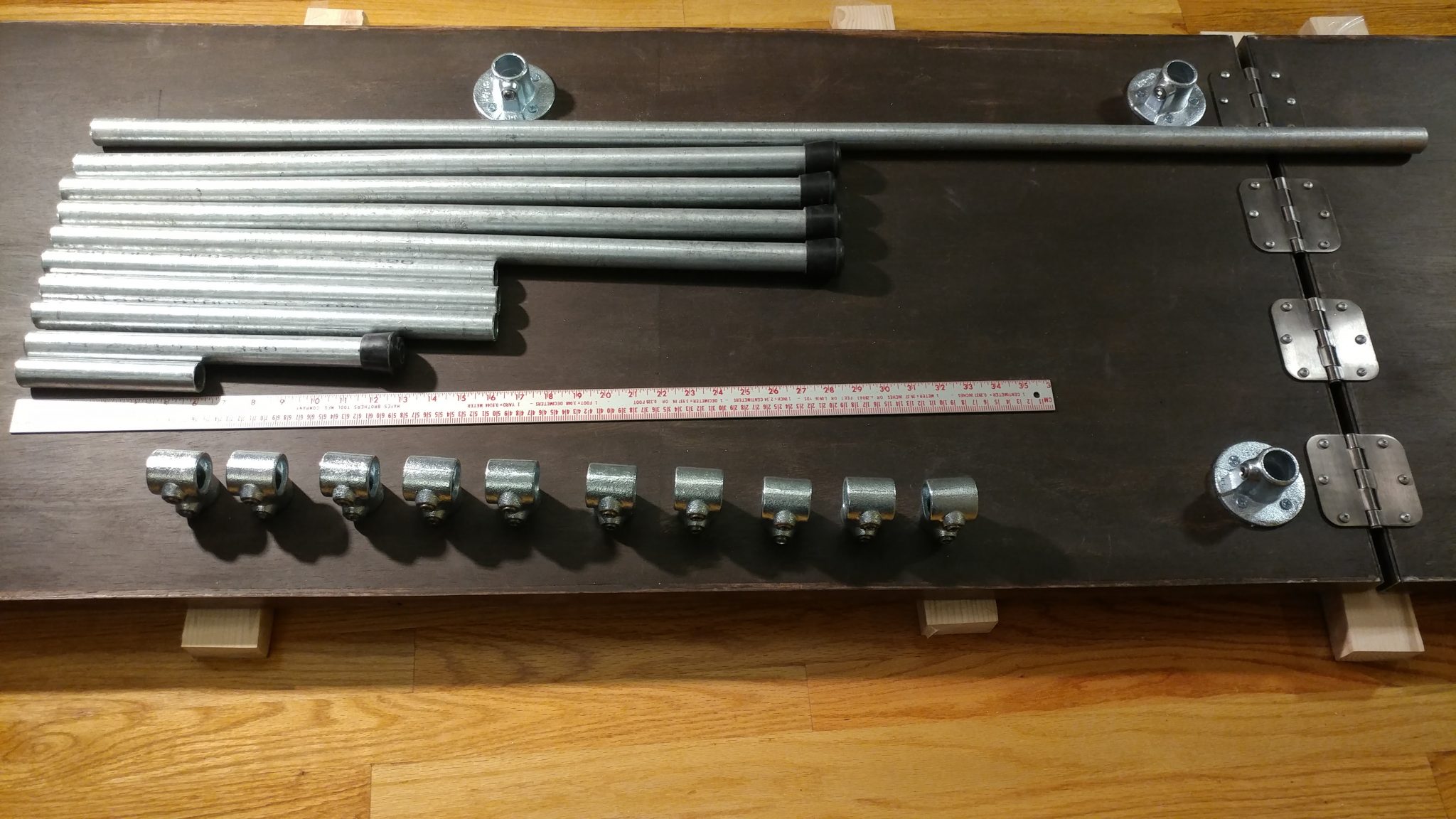
I got all my hardware gathered up. Along with ten single socket tees (670-104HC) from Steel-Tek, I used the following lengths of pipe.

  • (qty: 1) 52″
  • (qty: 4) 28 ¼”
  • (qty: 3) 16″
  • (qty: 1) 12 ½”
  • (qty: 1) 6″

Here are all the hardware pieces that I will need.


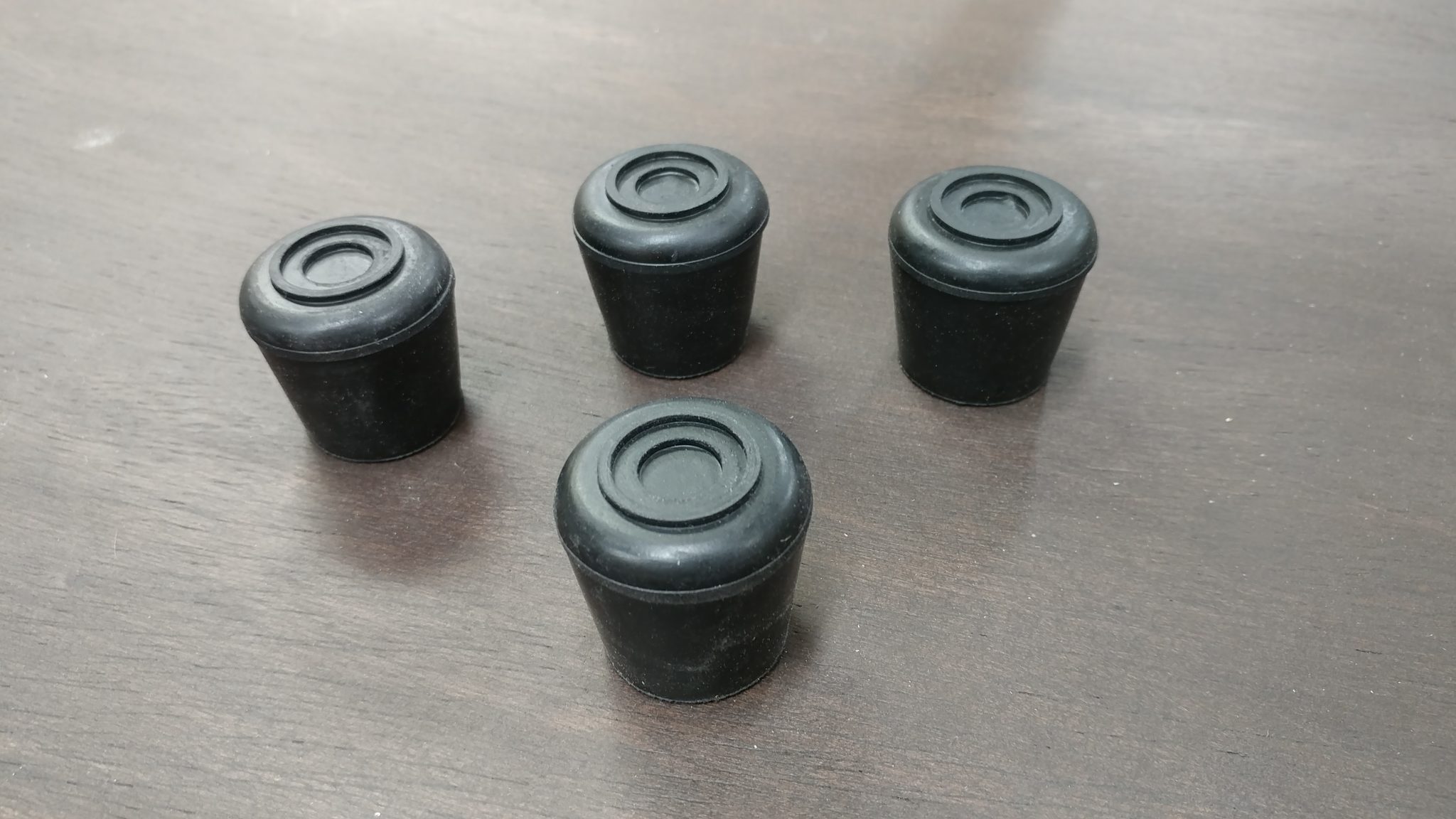
I also used 1″ rubber feet which fit perfectly over the 3/4″ pipe. Four of these were used for the legs and a fifth was used for the extension wing support arm.


I got some 1" rubber feet for the ends of the legs.


I inserted the 6″ piece of pipe into the center flange and tightened the set screw.

I inserted the shortest piece in the central flange and tightened down the set screw.


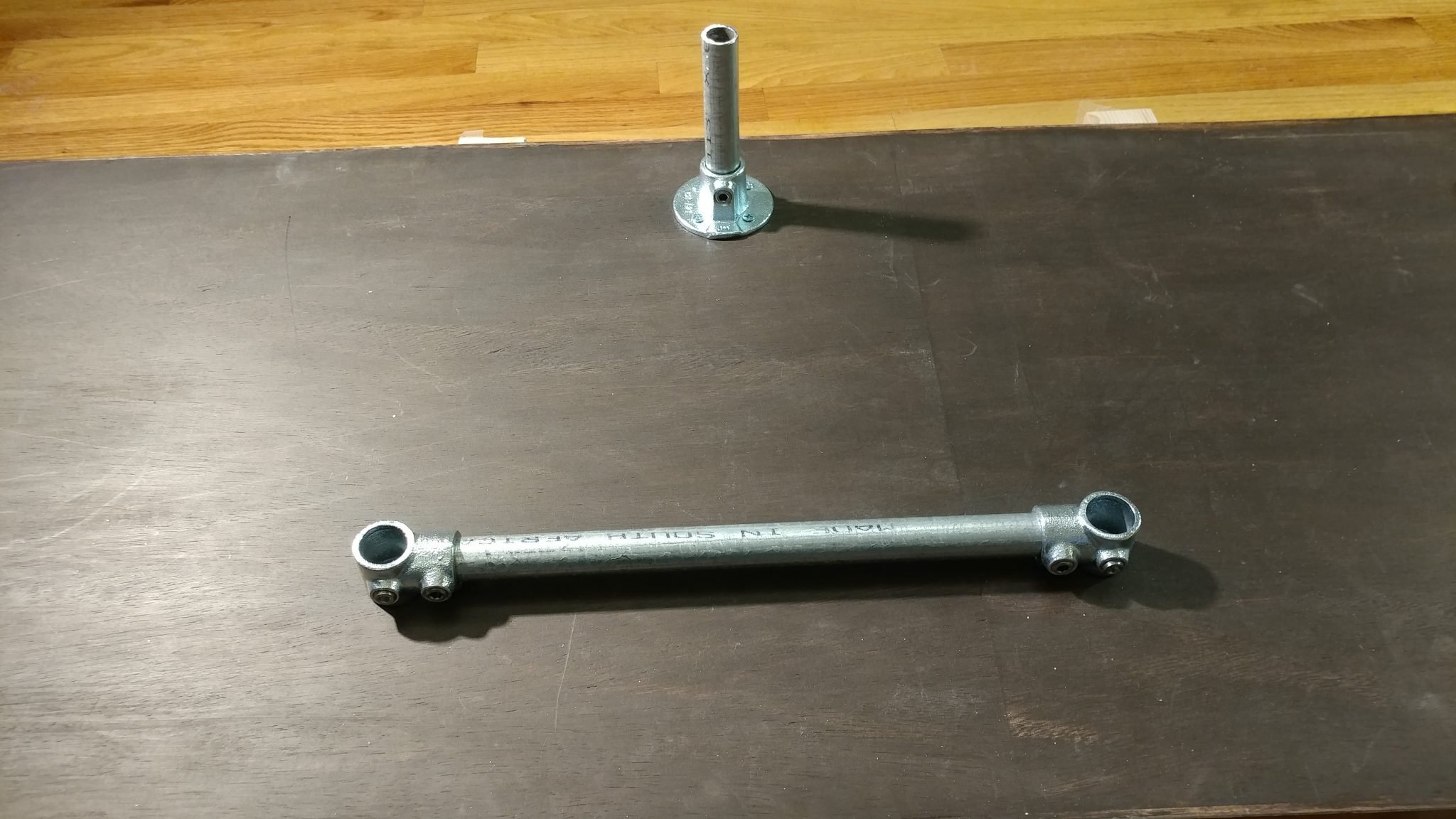
Two single socket tees are then attached to two of the three 16″ lengths of pipe and the set screws are tightened. These will be the horizontal support braces that will go between the front and rear legs.

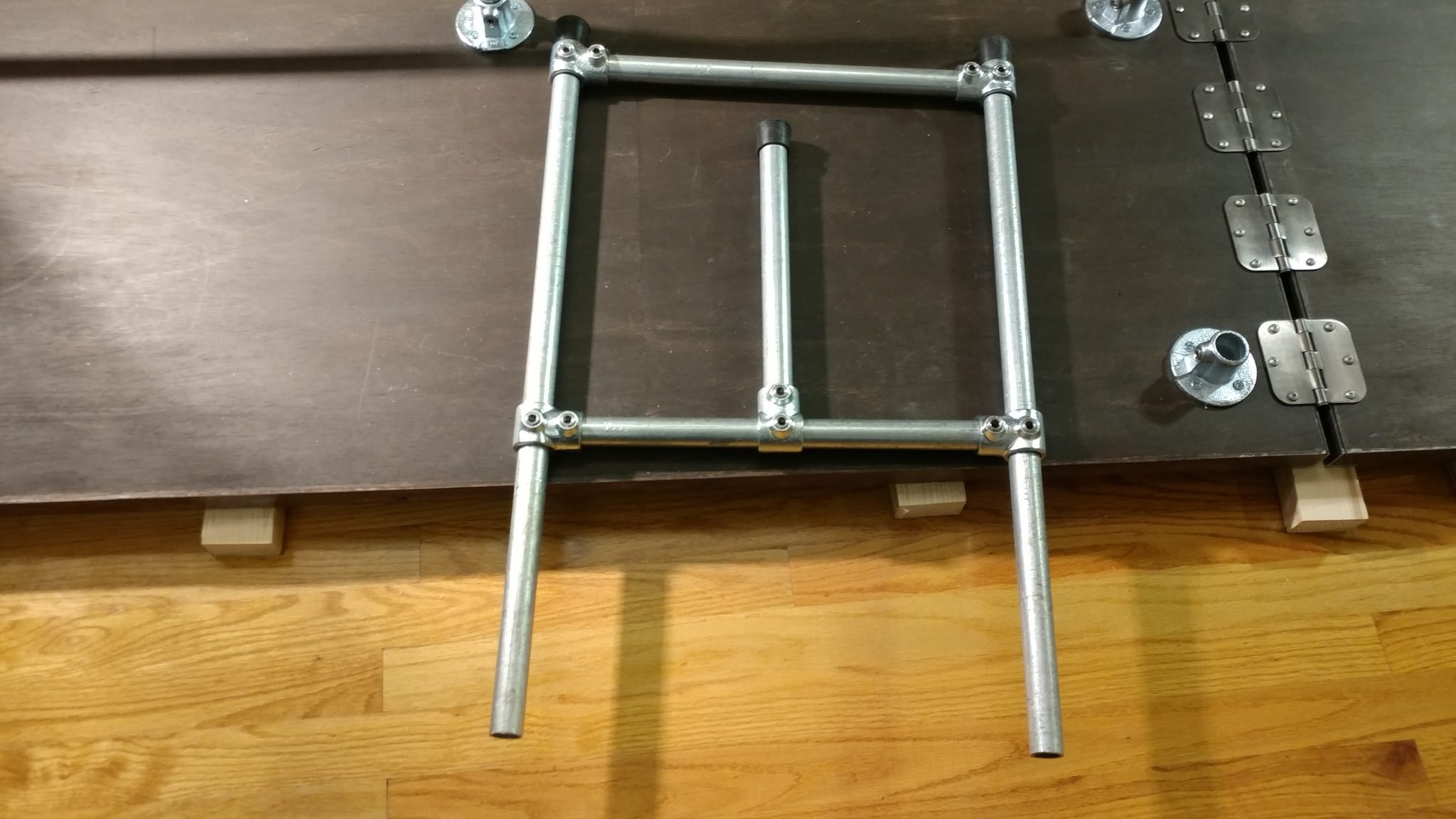
I made the two horizontal braces using one of the 16" pieces of pipe and two of the single socket tees for each brace.


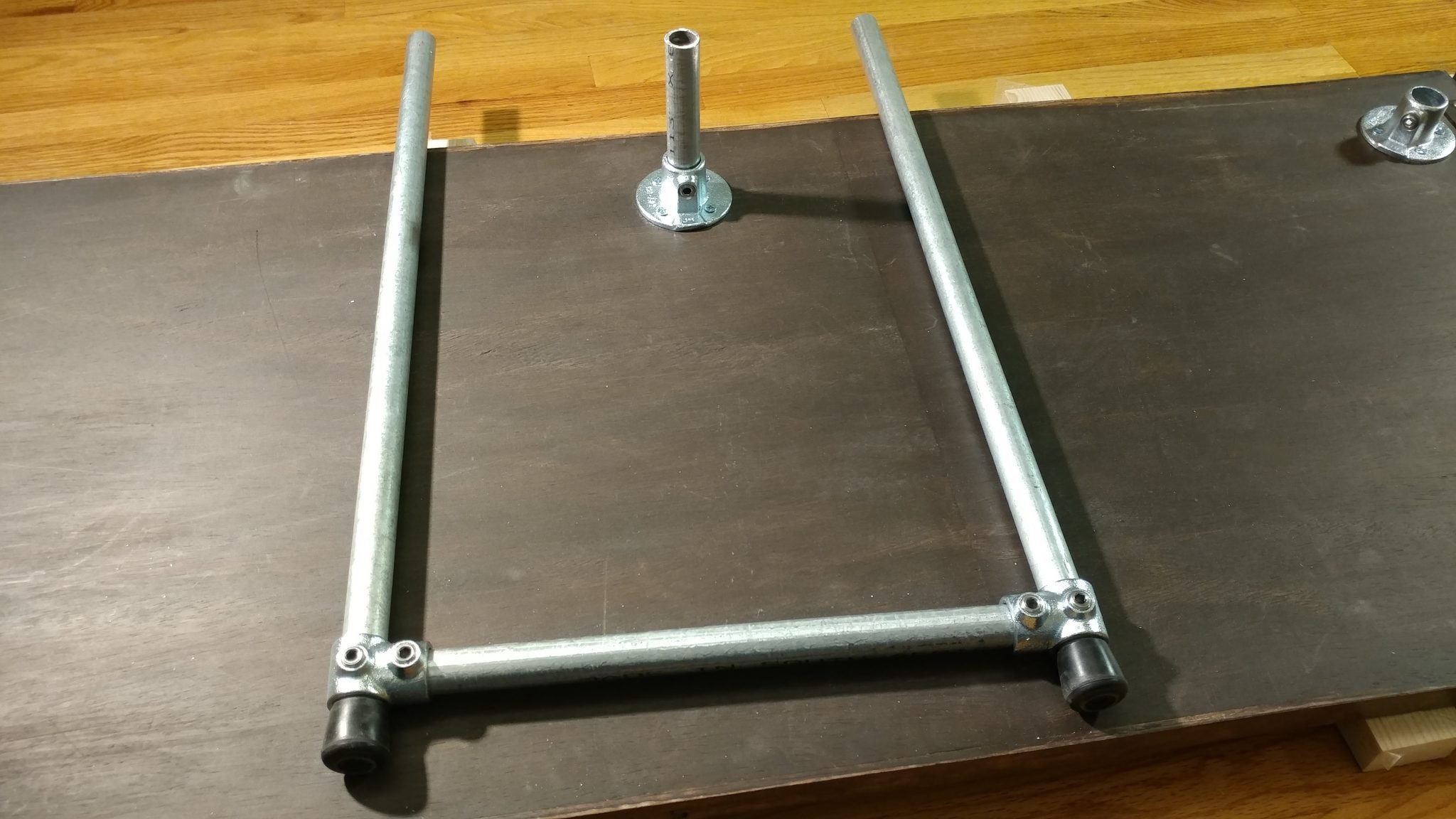
I slid two legs all the way through the tees on each of the horizontal braces and temporarily tightened the set screws. I set these aside for later.

I slid one of the braces on two of the legs and temporarily slid it to the far end and tightened down the set screws.


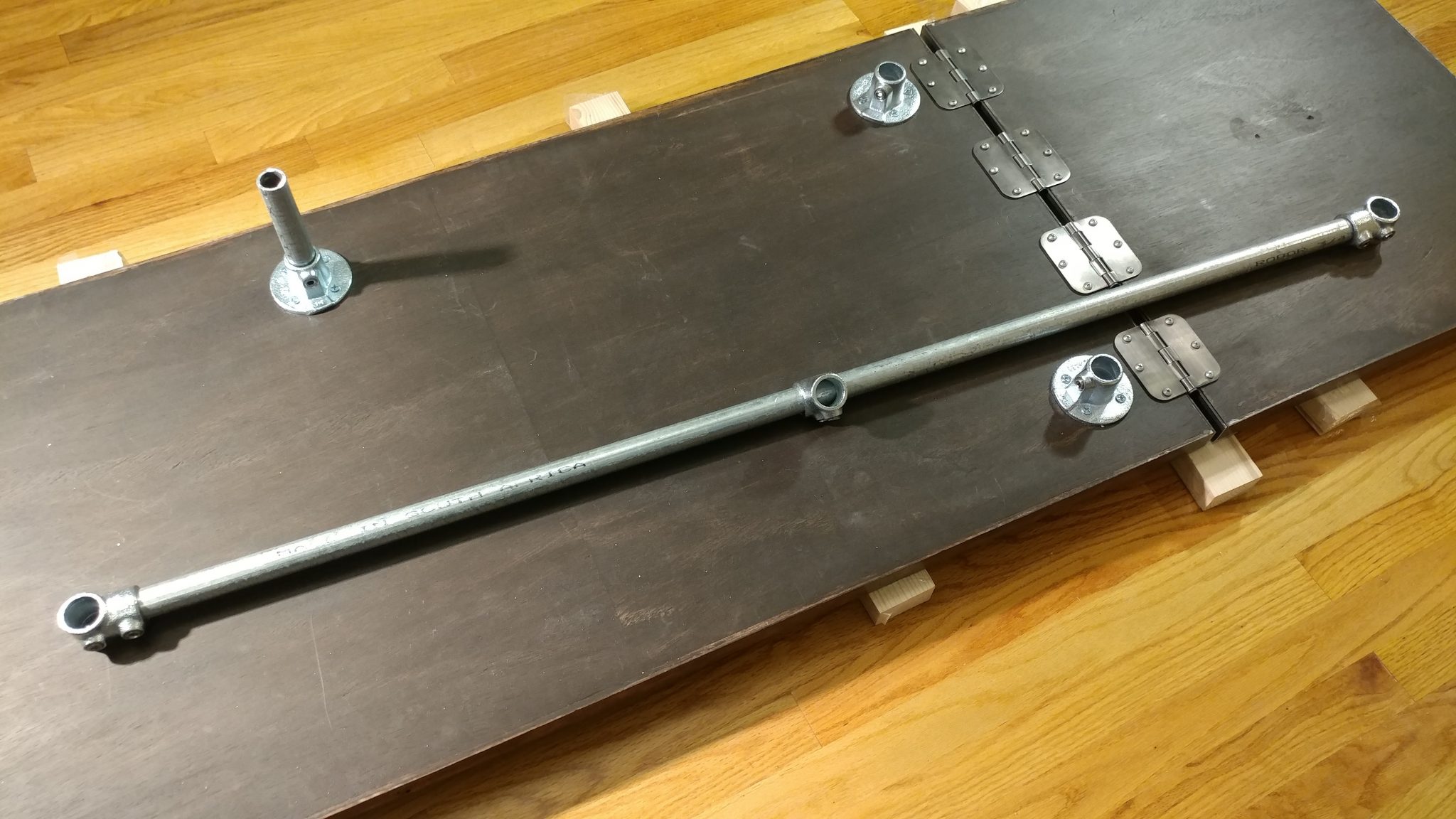
Then I attached three of the tees to the 52″ length of pipe. First I attached one on the end and tightened down the set screw. After that I slid one of the tees over the pipe and moved it towards the center but didn’t tighten it at all. I then added the last tee to this piece and tightened it up.

I then created the rear horizontal brace with the longest piece and three of the single socket tees, with the middle one fitting loosely on the bar.


Once it was all together I fit the loose central tee over the other end of the 6″ pipe and tightened the set screw but only the one that attaches it to the shorter piece.  This meant the large 52″ piece can slide around if I need it to while I’m attaching the legs.

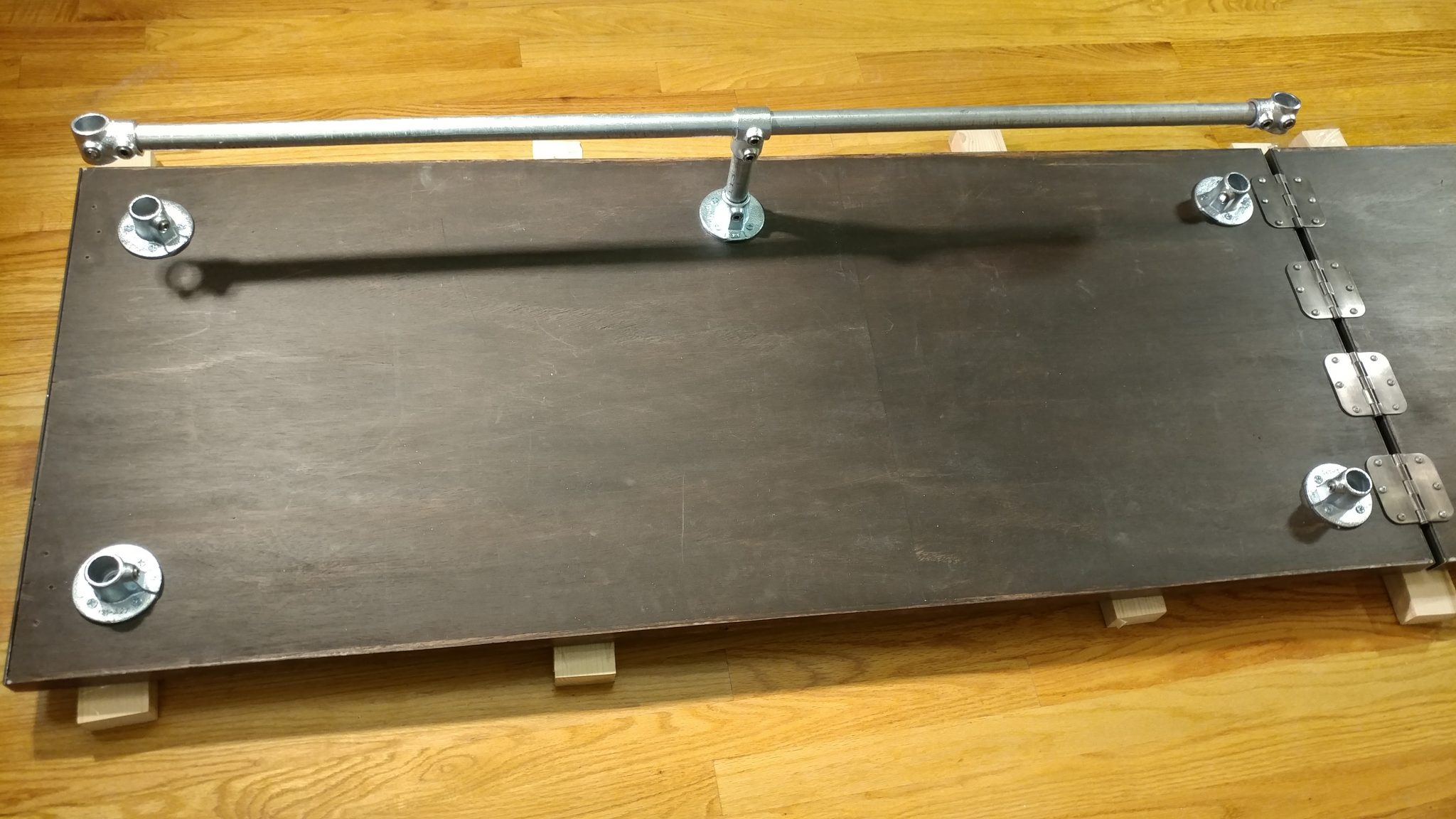
The rear horizontal brace is loosely attached to the rear vertical post.


At this point, the only piece of pipe that is secure is the 6″ piece. This let me insert one of the sets of legs into the flanges on the side without the extension wing.  I made sure the legs were square with the bench-top and tightened down the set screws in the flanges. The tee that attaches the rear rail to these legs is still loose.  It’s worth noting that I have all of the set screws one every fixture facing the inside of the desk.  This will make it easier to remove the bench-top from the legs without having to move the bench away from the wall.

I then inserted the legs for the side that doesn't have the extension wing.


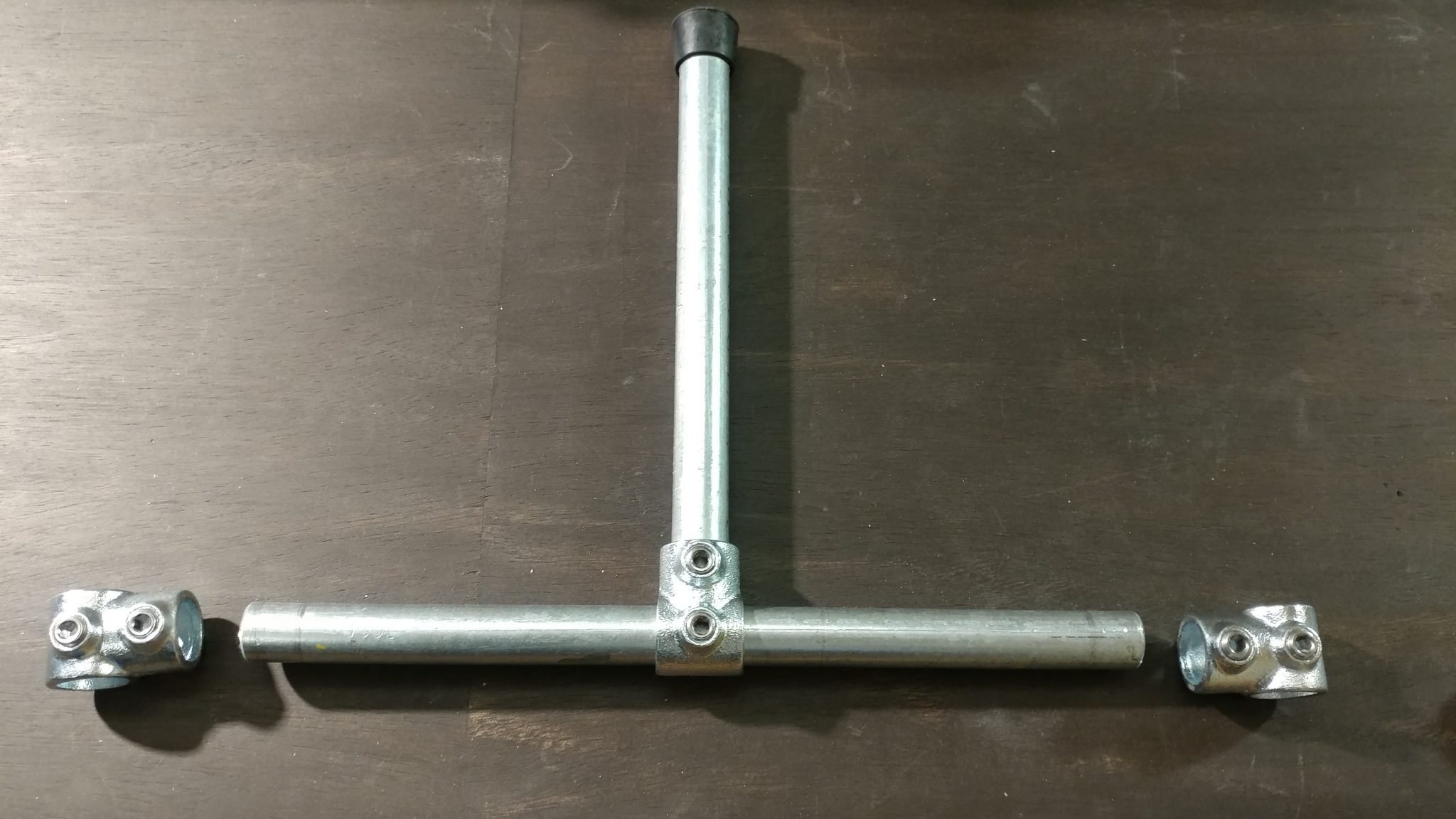
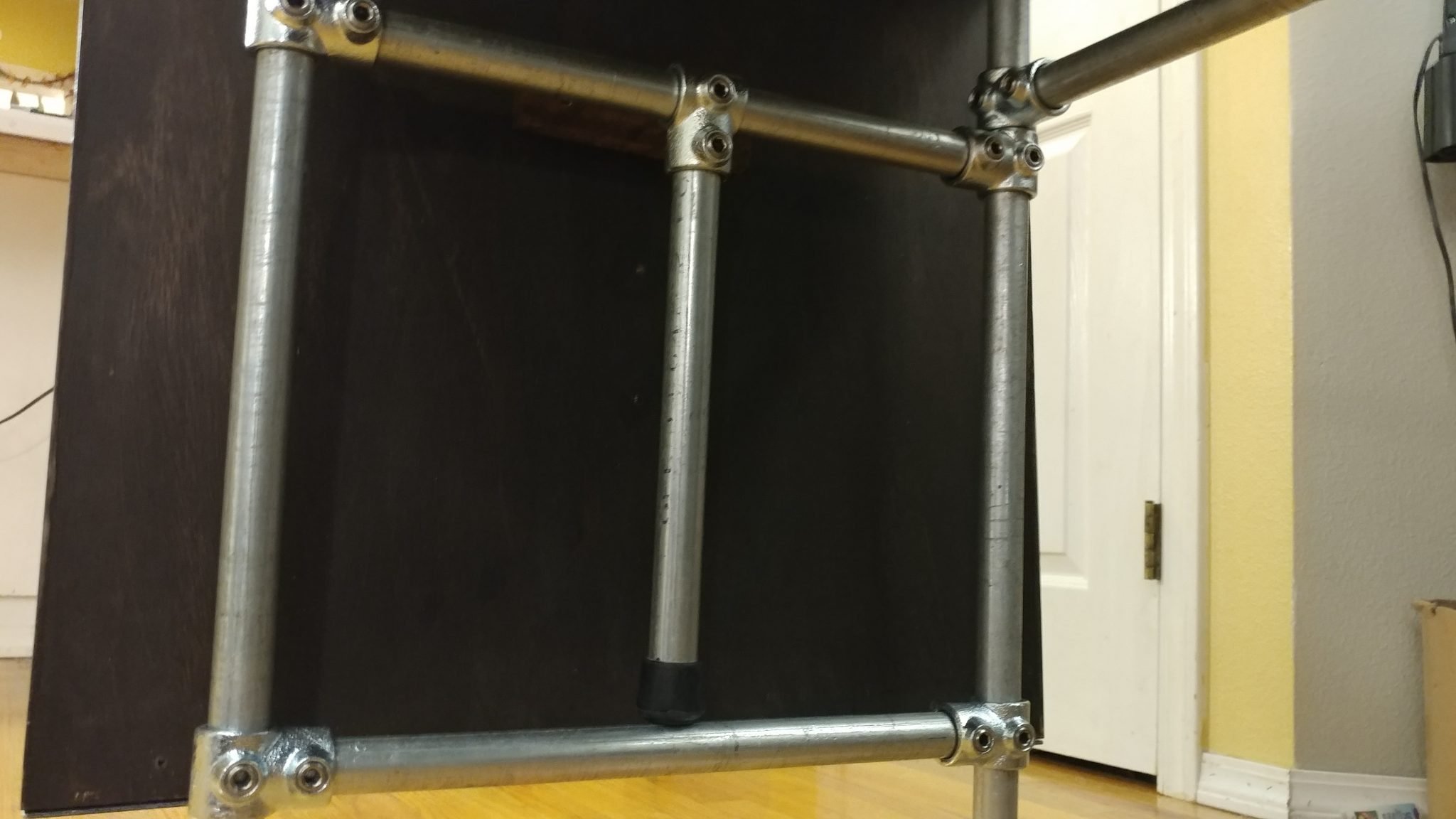
The extension wing support is next. I put this together somewhat similarly to the rear rail except I centered the tee and tightened it down. I also inserted the 12-1/2″ piece with the rubber foot on the opposite end. I tightened this set screw but knew I would probably have to come back and adjust this later. The two tees on the end are kept loose and will remain so.

The extension wing support is made from three of the single socket tees, one of the 16" bars, and the 12-1/4" bar with a rubber foot on the end.


The extension table support is then slid on to the other set of legs. To make attaching it easier, I temporarily tightened the set screws for the tees that attach it to the legs.

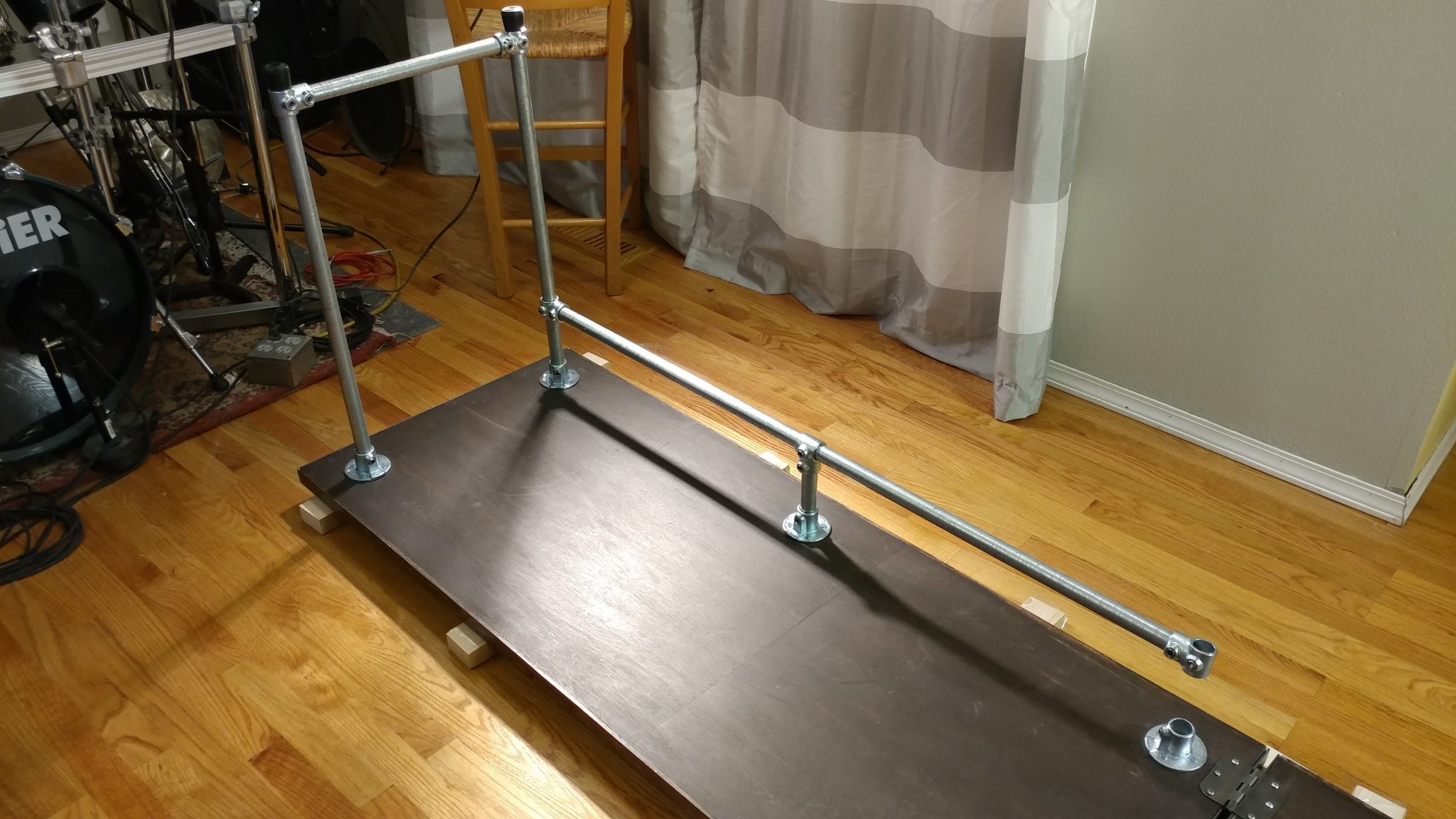
The extension wing support is loosely attached to the remaining leg assembly.


This leg assembly is inserted like the opposite one. Make sure it is square to the bench-top and tighten the set screws on the flanges. Then, I ensured that the rear rail was the same distance from the underside of the bench-top at either end and tightened the set screws on the tees at each end of the rear rail.

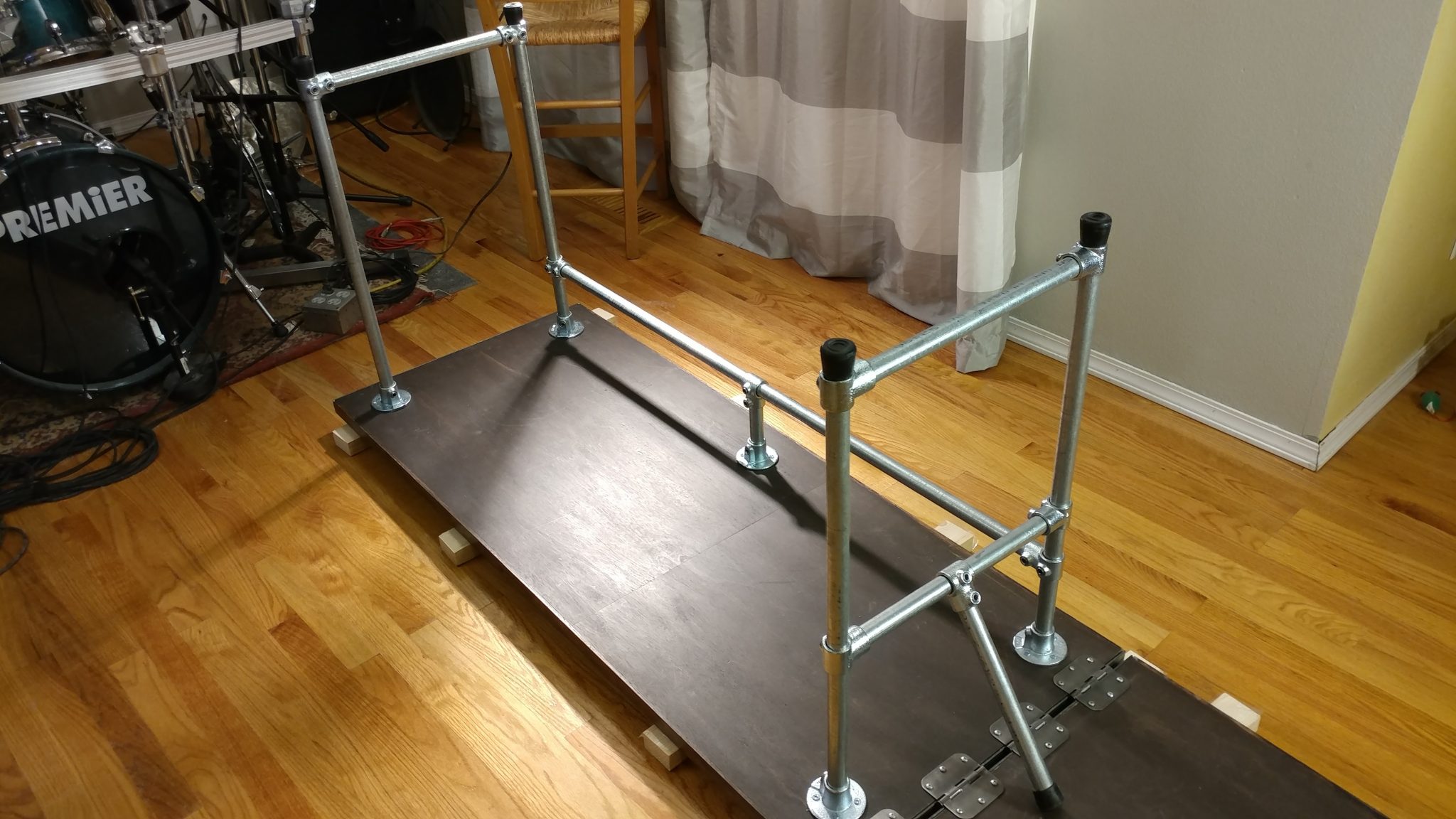
The second leg assembly is attached. Everything is tightened down except for the extension wing support.


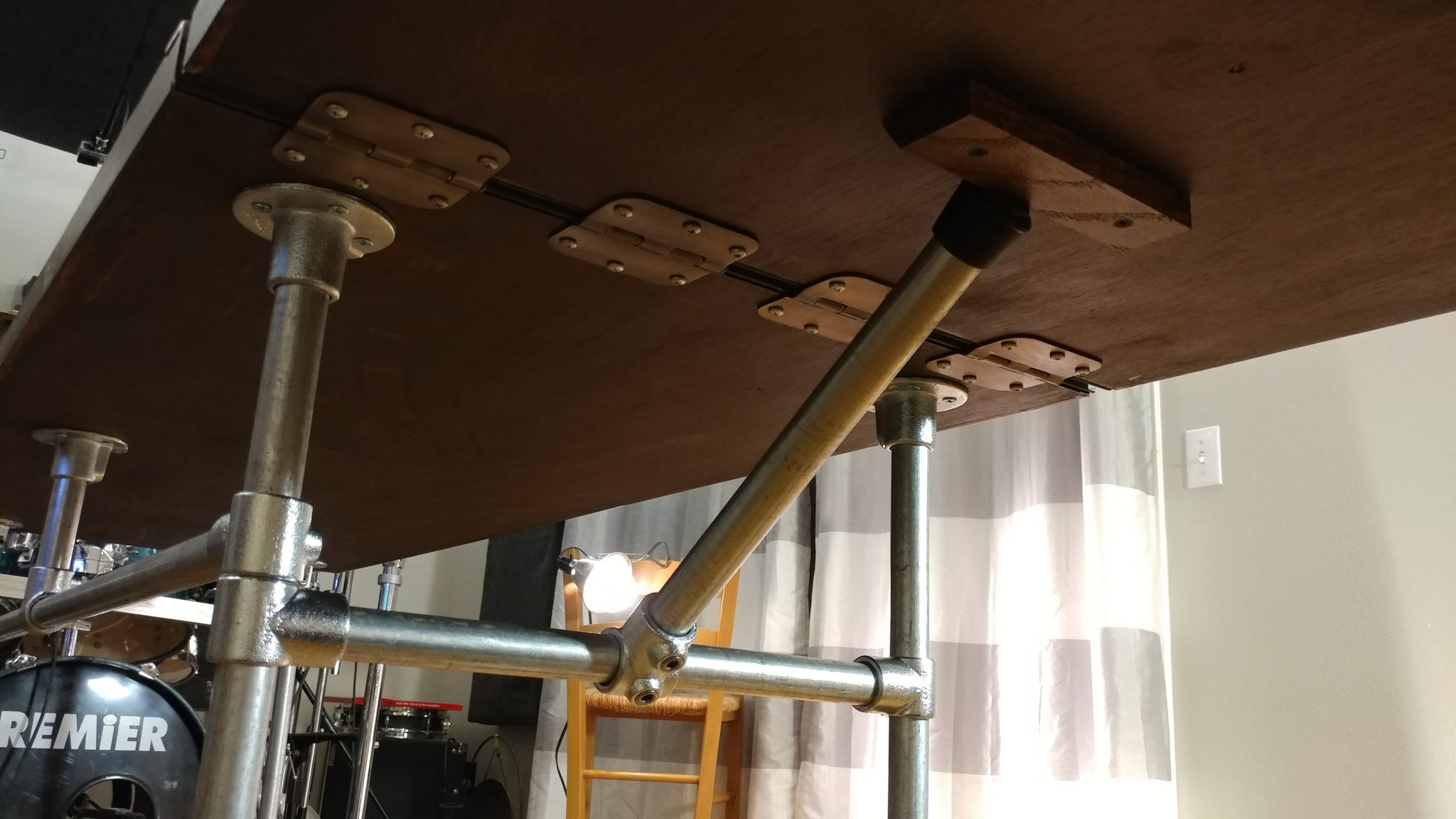
Then I loosened the set screws on the tees that attach the extension wing arm support to the legs and slid them down so the rear tee rested on top of the tee on the rear rail. I tightened it down and set the opposite tee on this piece to the same height and secured it as well. I then lowered the horizontal brace so it rested on the rubber foot of the extension wing arm and tightened it down. Once that was in the correct position, I took a measurement and duplicated this position on the horizontal brace on the other legs.

The extension wing support is raised to the point that the rubber foot presses on the lower horizontal brace, then the set screws that attach the tees to the vertical legs are tightened.


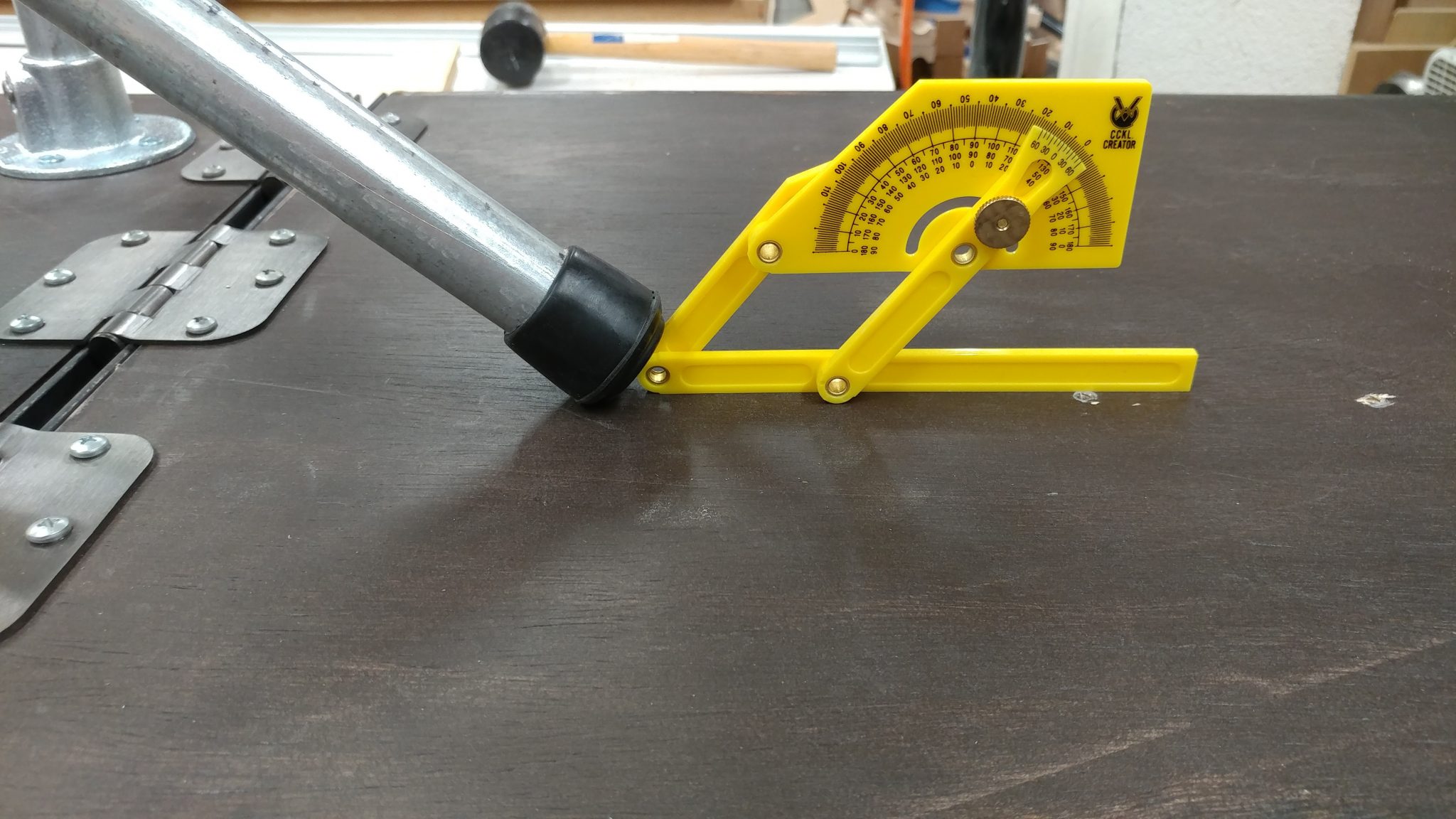
Since I didn’t tighten the set screws that hold the extension wing horizontal brace to the front and rear legs, this whole mechanism can swing up and support the wing.  I needed to make a wedge for the leg to press against.  After ensuring that the bench-top pieces were co-planar, I swung the arm down and measured the angle.

The angle of the foot is measured at about 45-degrees.


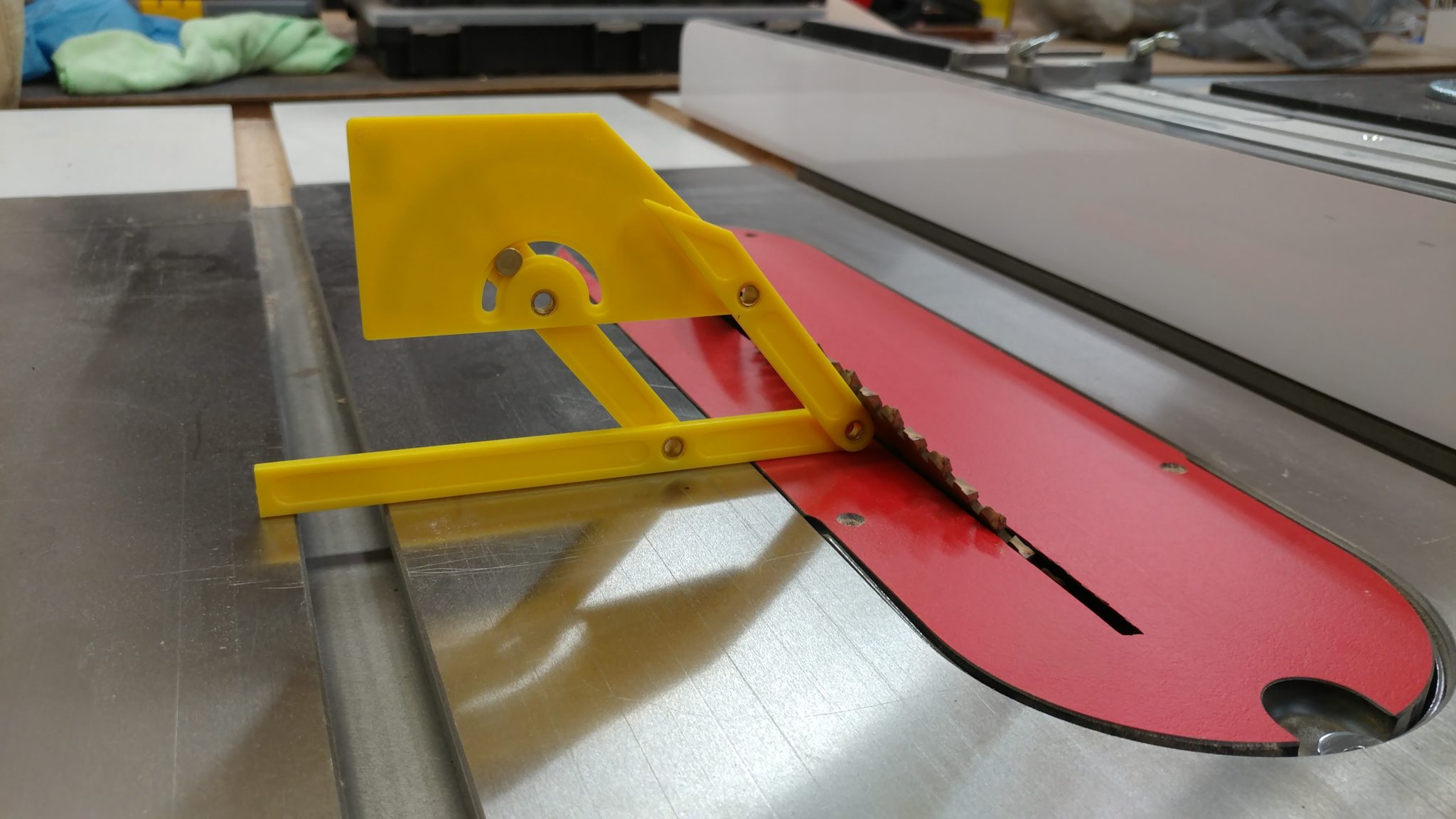
I then transferred that angle to the table saw.
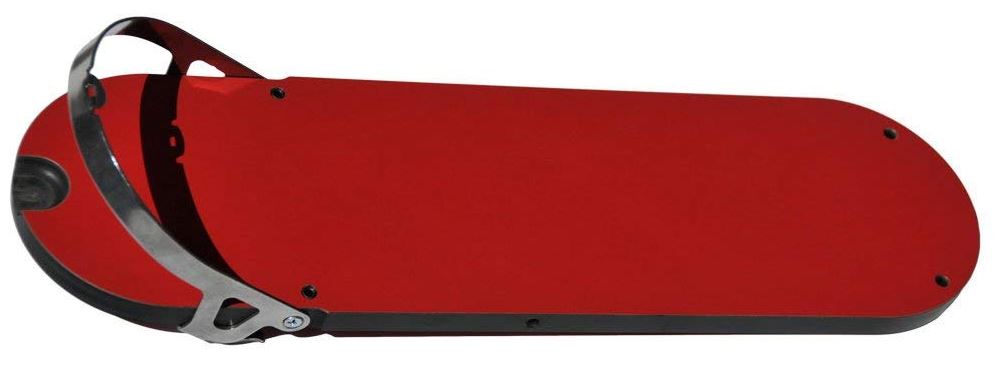
This angle is then transferred to the table saw.
 

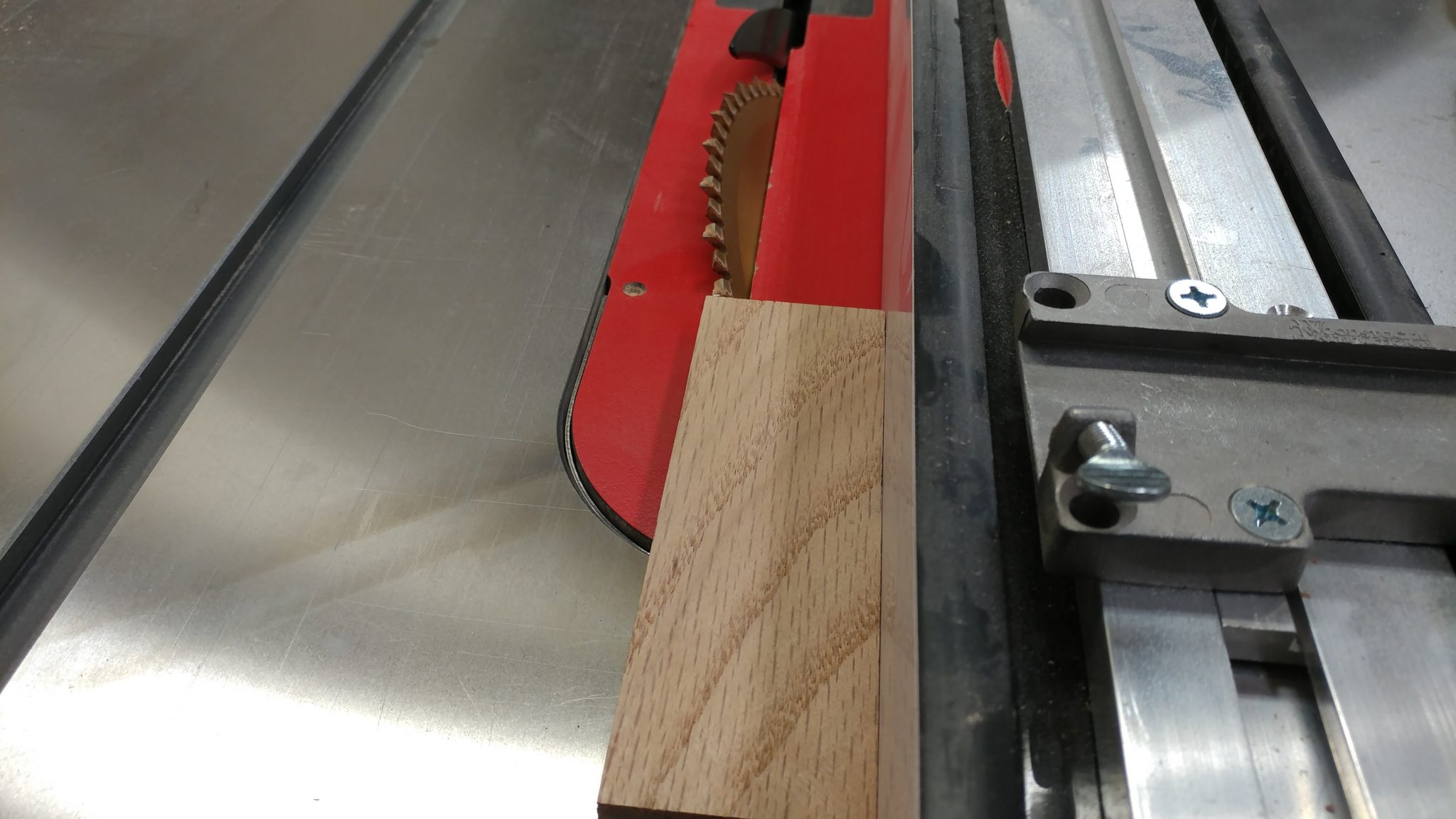
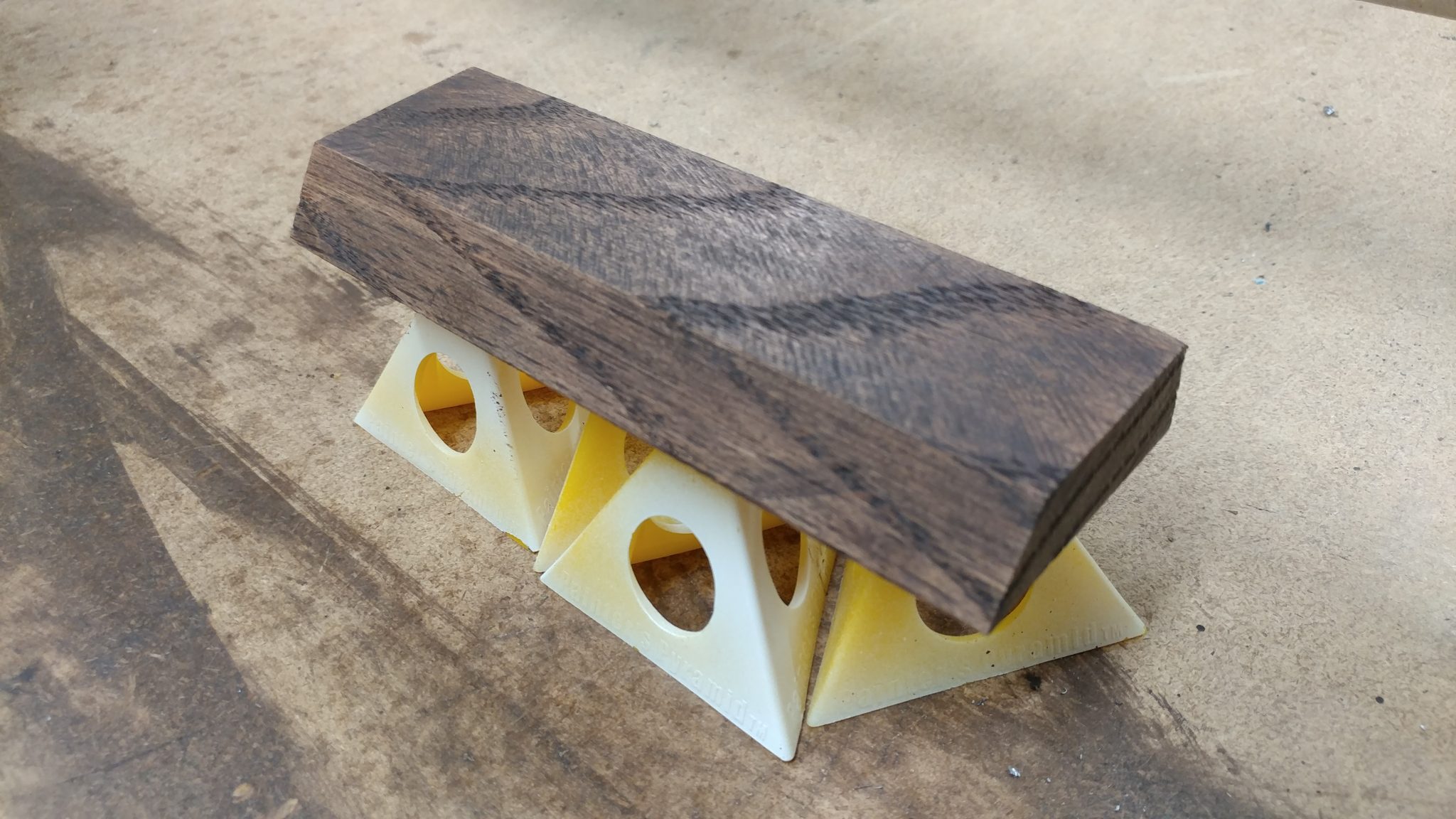
I cut a bevel of that angle on a scrap piece of oak flooring that was left over from this same project.  I left this piece longer than I needed in case I need to try attaching it in different areas.

I took a scrap piece of oak and added that angle to one edge.


Once it was cut, I applied a coat of the same stain that I used on the rest of the desk and a single coat of polyurethane.

This piece was then stained and a single coat of polyurethane was applied.


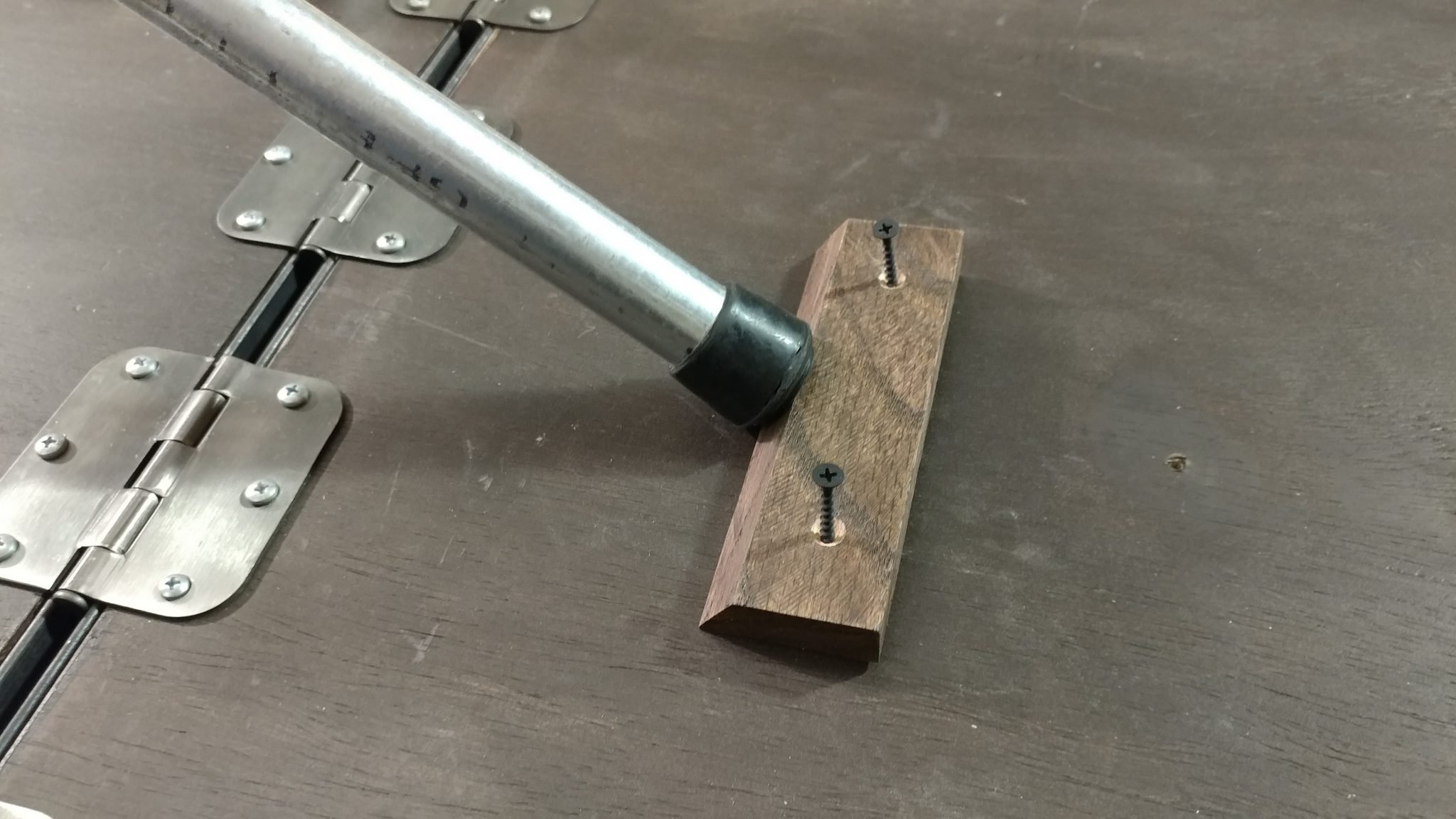
I pressed this piece firmly into the foot of the extension wing arm and secured it with drywall screws. I didn’t glue it in case I wanted to make any adjustments.

Pressing the support firmly into the foot, I secured it to the underside of the extension wing with some drywall screws.


I set the bench upright and tested it out. The wing sagged a bit but rather than remove the wooden wedge and move it forward, I loosened the set screw that holds this arm in place and slightly extended the arm a bit. I tightened the set screw again and made sure the wing was flat with the main table.

The support arm holds the extension wing up and is adjustable because of the set screw on the tee.


If you want to lower the extension wing, you simply lift the extension wing slightly and the support arm swings down out of the way.  The rubber foot on the end grabs the bottom brace and friction locks it in place.

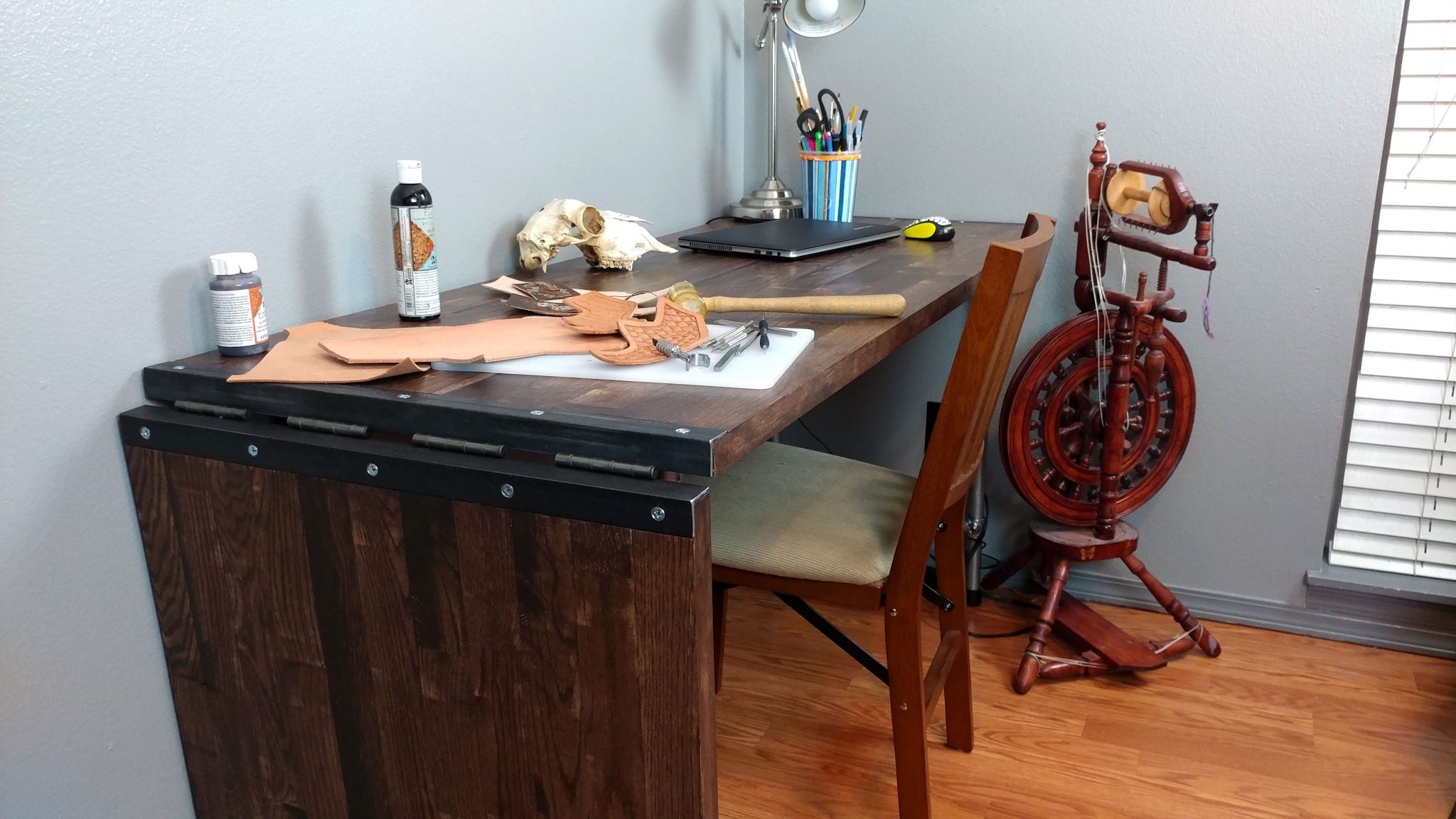
When not in use, the support arm swing down and out of the way.


All finished.


It’s time to call this project done.  My wife and I moved it up to her studio and I gave her a few days to test it out.  So far it seems to be very sturdy.  I have plans to add a shallow drawer or two but I’m going to let her use the bench for a bit to see if that is something that she really needs.

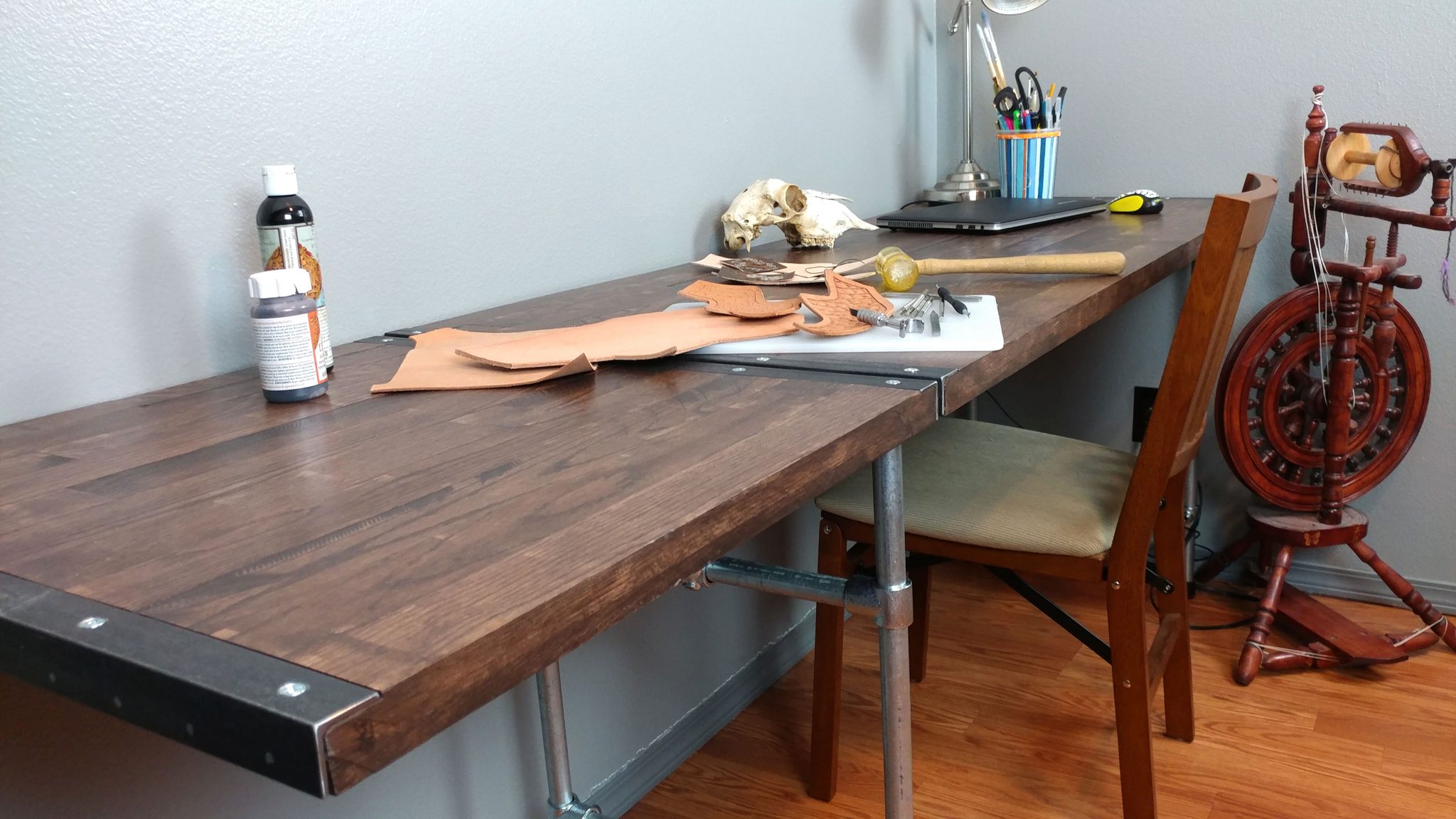
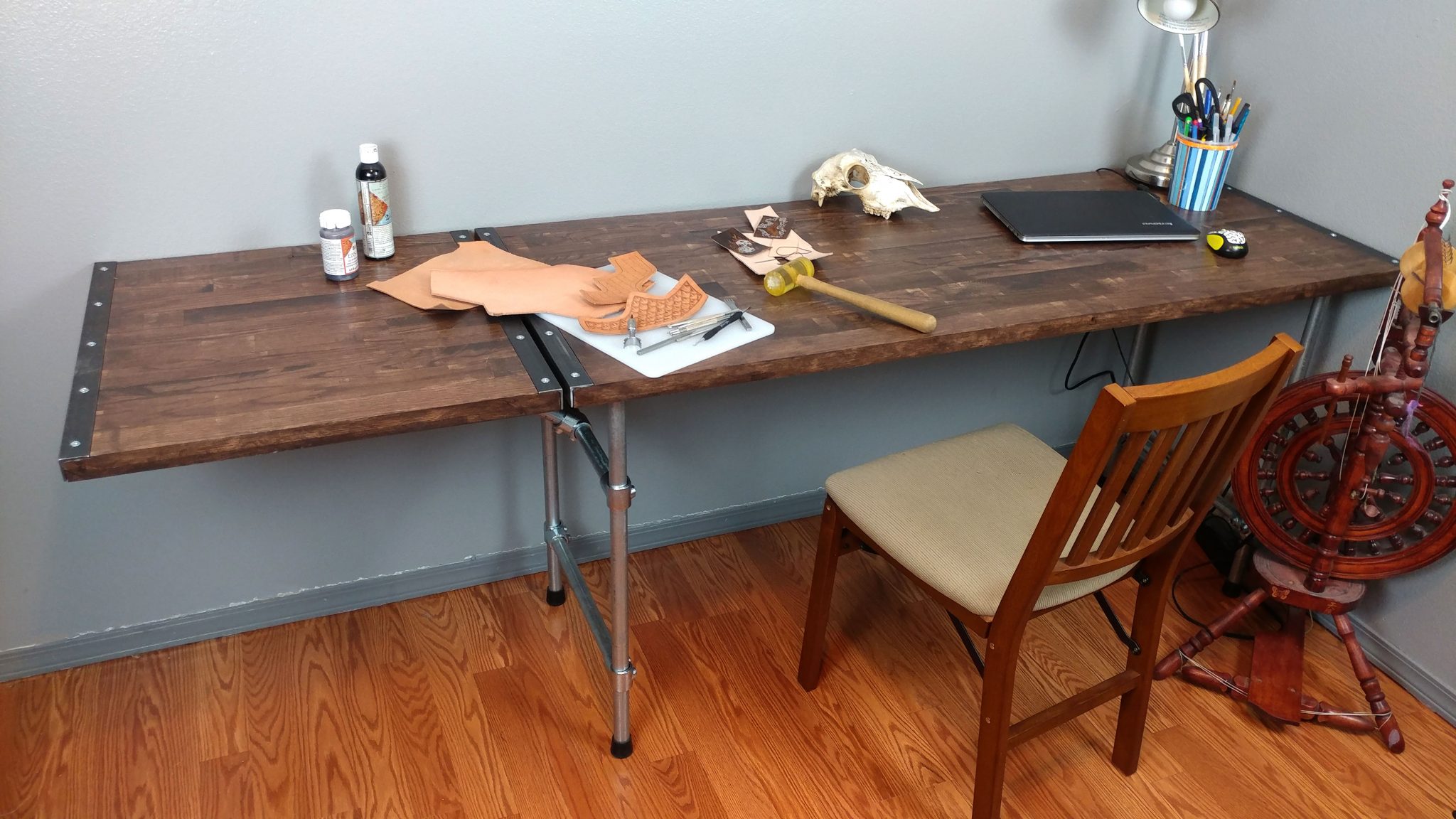
Finished desk with the extension wing in use.


It really does provide a lot of work surface.  The overall dimensions of the work surface is 24 ½” x 83 ¼” when the extension wing is up.

The extension wing provides a lot of work surface.


When the extension wing is not needed, it easily folds out of the way creating a work surface of 24 ½” x 60 ¼”.

The extension wing easily folds out of the way when not in use.


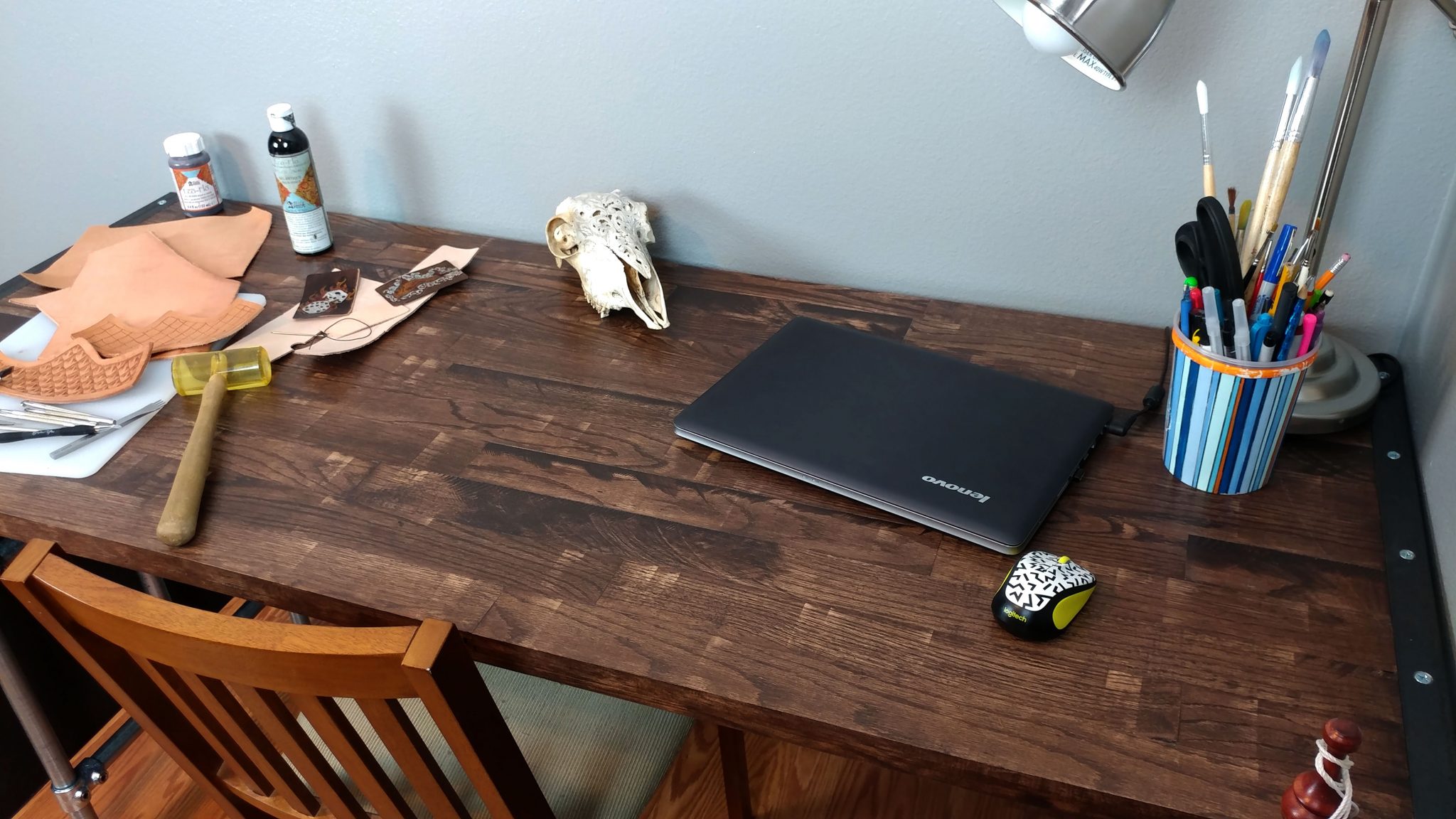
This gives her the space to work on her computer while still having her projects set up.

My wife is making good use of all this work space.


Please let me know if this helped you in any way or if you have any suggestions for how I could have done this differently.  I’m also planning on a few more projects along this same style so if you have any suggestions, please let us know in the comments section below.  I’d love to hear from you.  Also, please consider signing up for my mailing list to be notified of future articles. I am also available on social media. Stop by and say ‘Hi’. I can be reached at the links to the right.

<< Back to Workbench: Part 6 – Finishing the benchtop
<< Back to Workbench: Part 5 – Cutting the benchtop to size
<< Back to Workbench: Part 4 – Gluing up the new top
<< Back to Workbench: Part 3 – Change of plans
<< Back to Workbench: Part 2 – Gluing up the top
<< 
Back to Workbench: Part 1 – Milling down some 2 x 4s

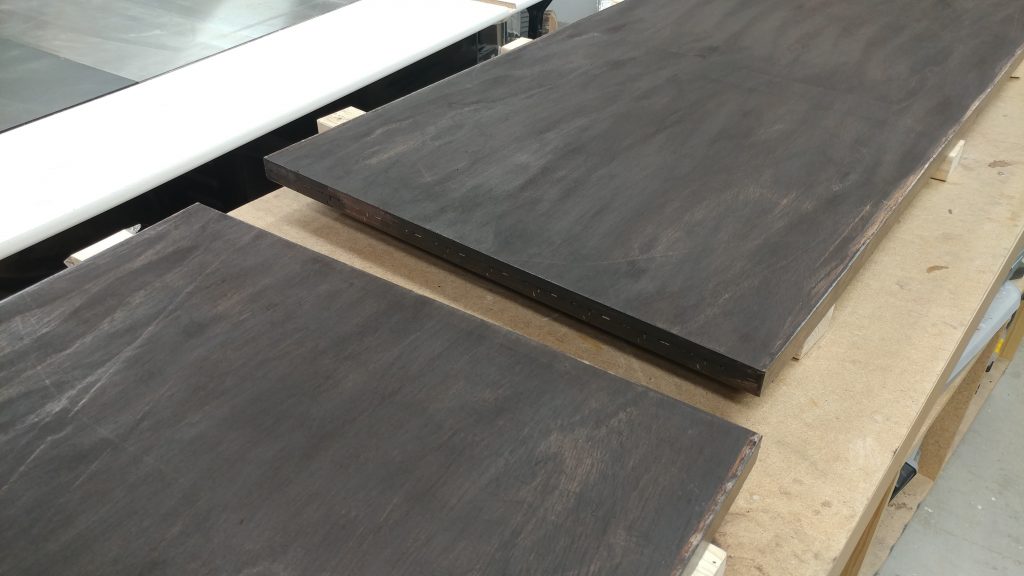
After letting it sit for 24 hours, the bench is now ready for the hardware.

Workbench: Part 6 – Finishing the benchtop

The workbench top is almost done. It’s been glued up and cut to size. Now all it needs is the finishing touches to get it ready for the hardware.

Adding a shallow rabbet on the ends of each piece.

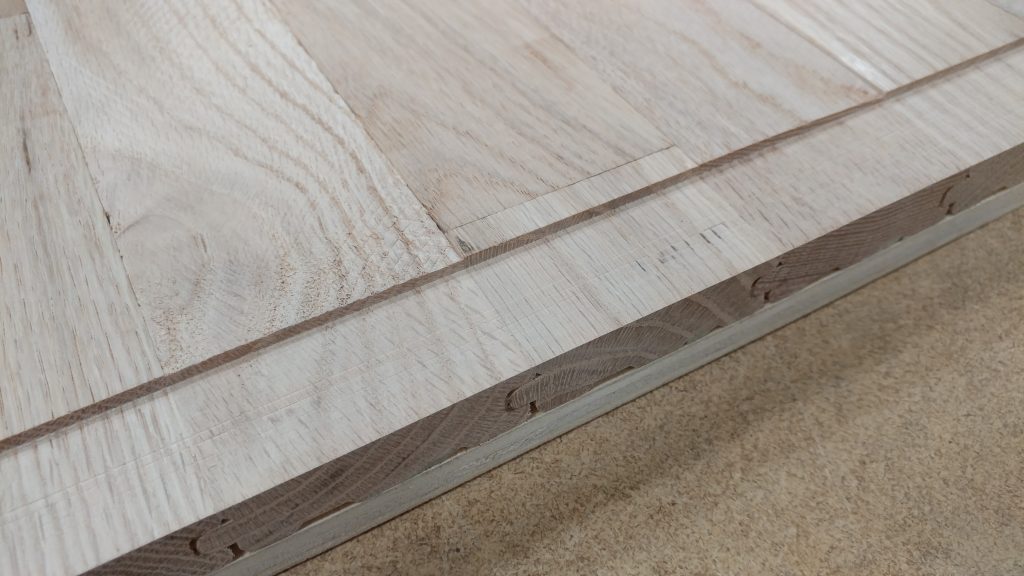
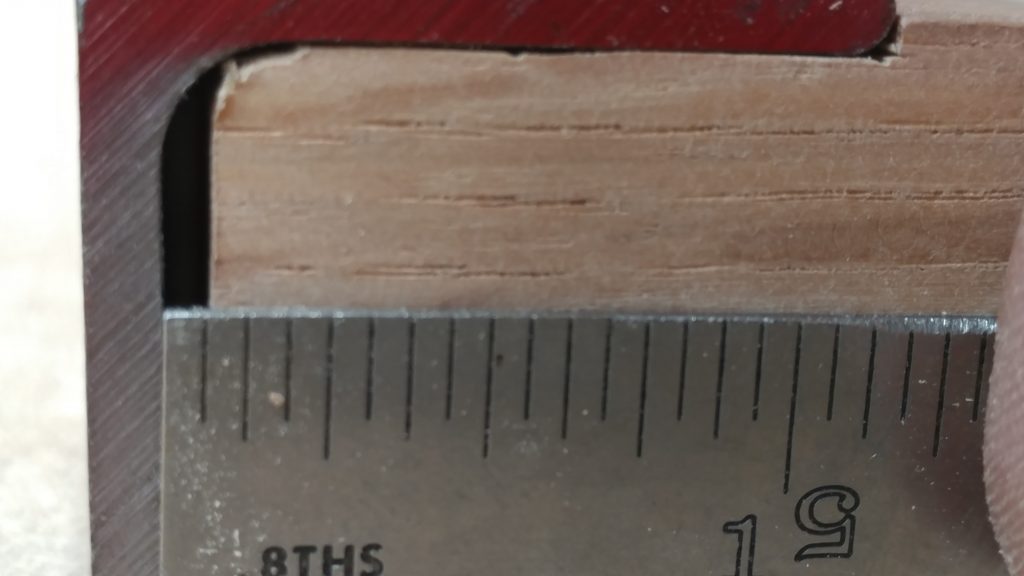
The left and right edges of each section are going to have angle-iron that wraps around the corners. Since these will be recessed, I need to add a shallow rabbet on each edge. I did this with my table saw and a dado stack. The depth was pretty crucial but the width was approximate. I knew I wasn’t going to get a final fit until I rounded the corner so I just made sure not to make it too wide.

Cut a shallow rabbet on the left and right edges of the benchtop pieces.

I did a rough-fit just to make sure it was deep enough but not too wide.

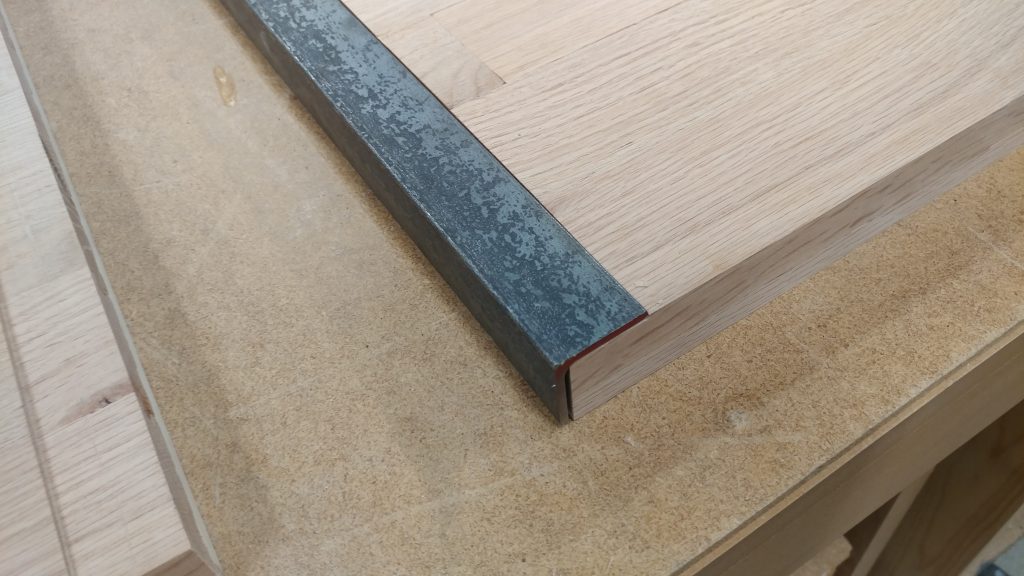
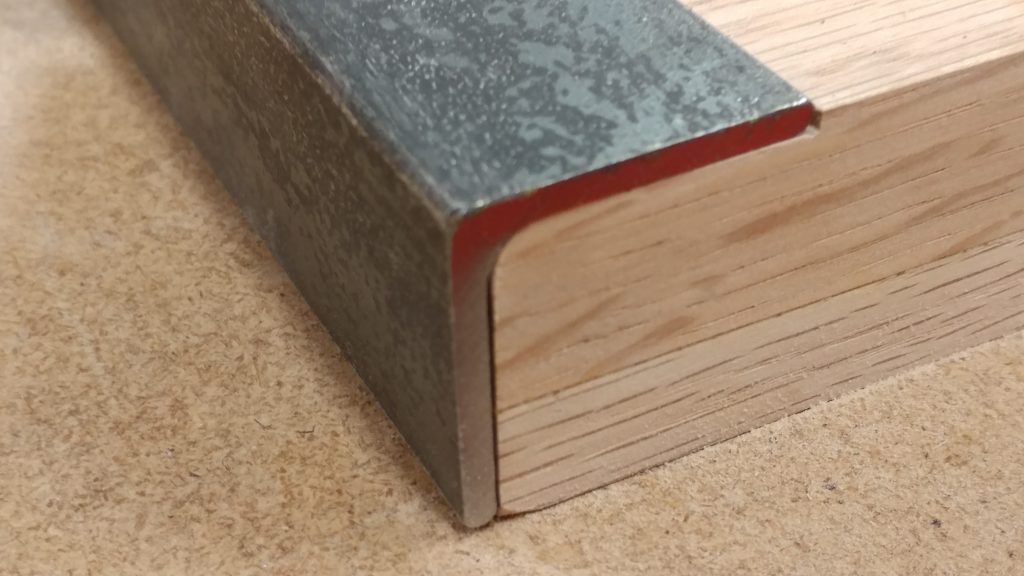
This is how the angle-iron will sit on the edge.

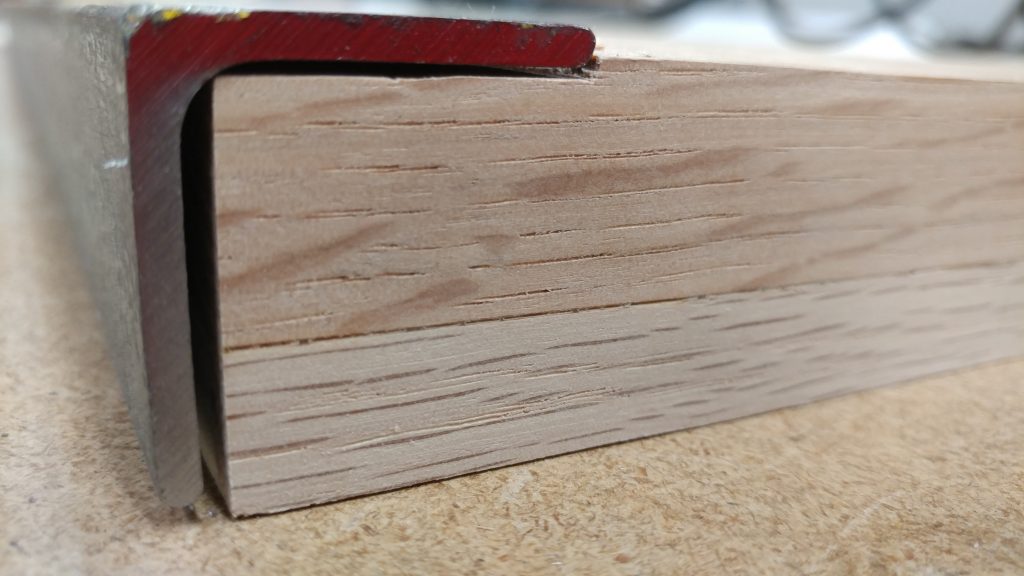
A close-up view shows how I need to apply a roundover to the corner.

I need to add a roundover in the corner so the angle-iron sits flush.

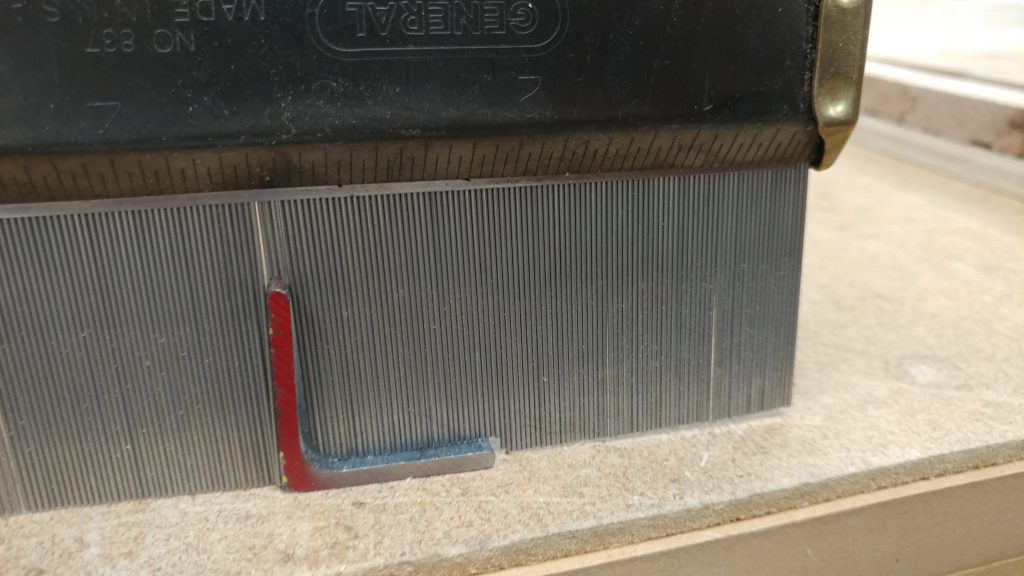
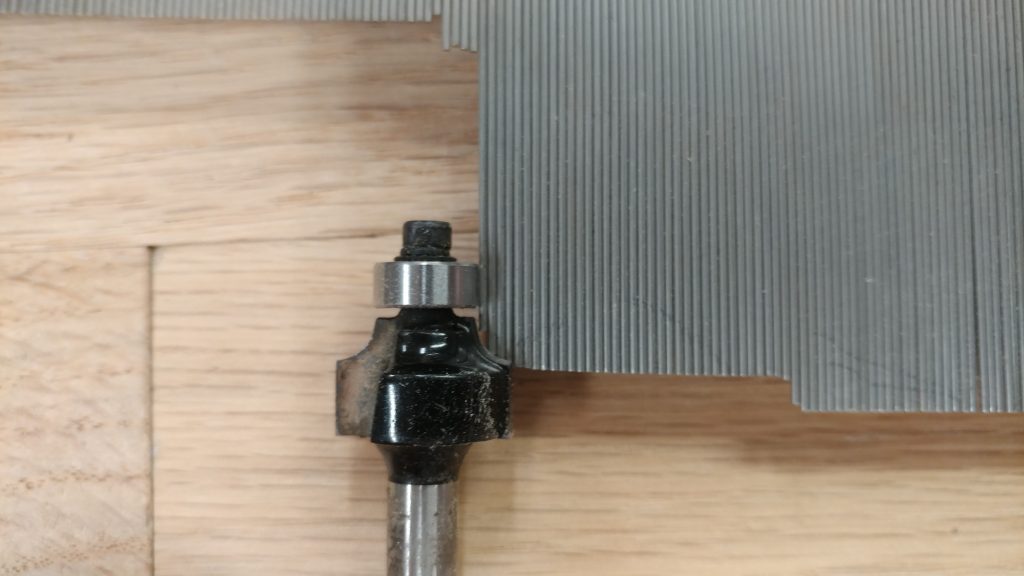
I used a contour gauge to determine the radius of the inner corner.

Using a contour gauge to determine the correct roundover to apply.

The router bit that fit best is a 1/8″ roundover bit.

It looks like a 1/8" roundover bit will work.

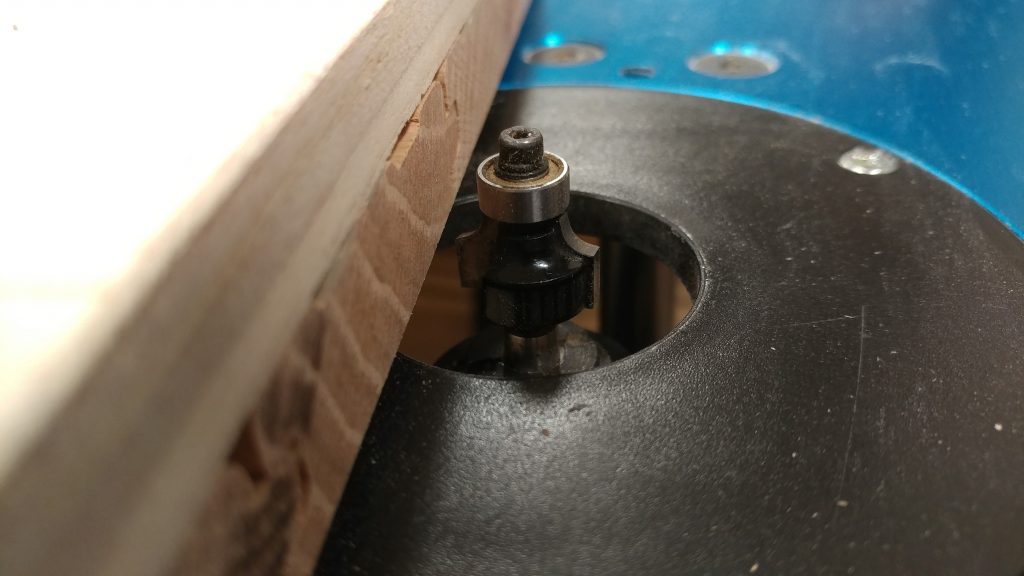
I set the benchtop upside-down on my router table and used it to set the height of the bit.

Setting the height of the router bit.

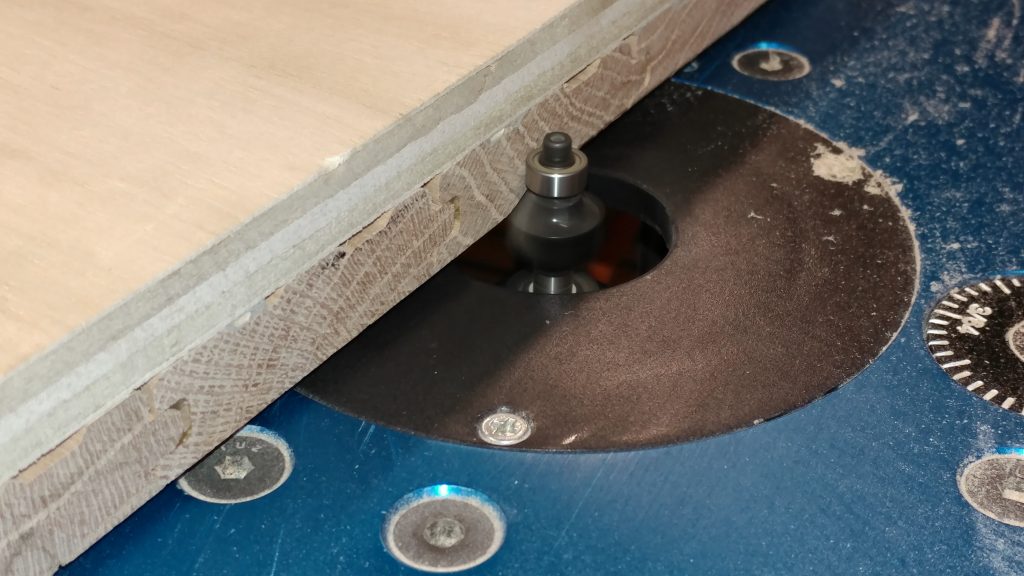
Then it was a simple matter of pushing the piece along the bit. The piece was pretty big but since my router table is mounted on my table saw, it was actually not too bad.

Cutting the roundover on the left and right edges.

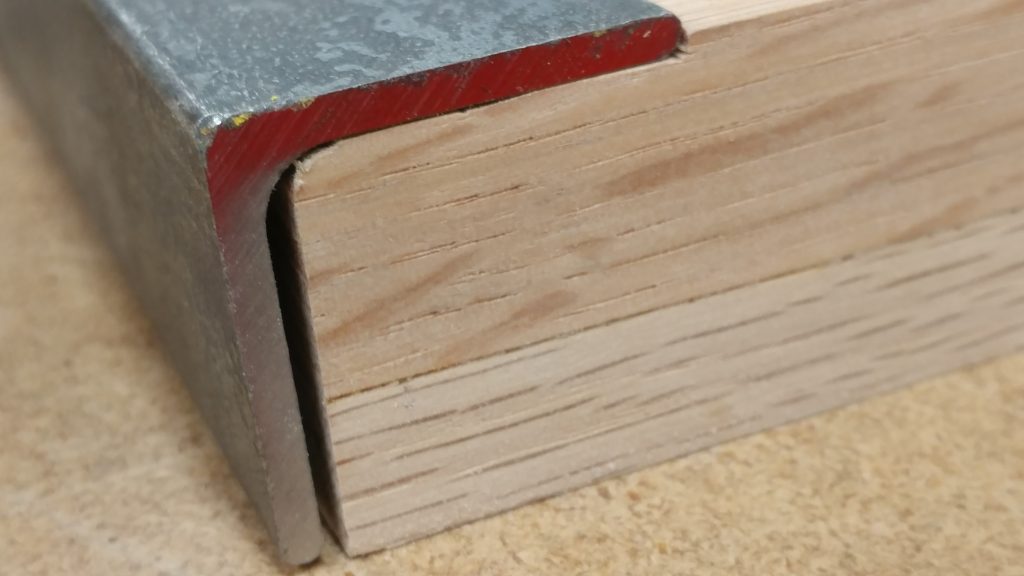
It looks like this is going to be a better fit. Now it’s time to finish the rabbet.

Now I need to take the rabbet back by a bit.

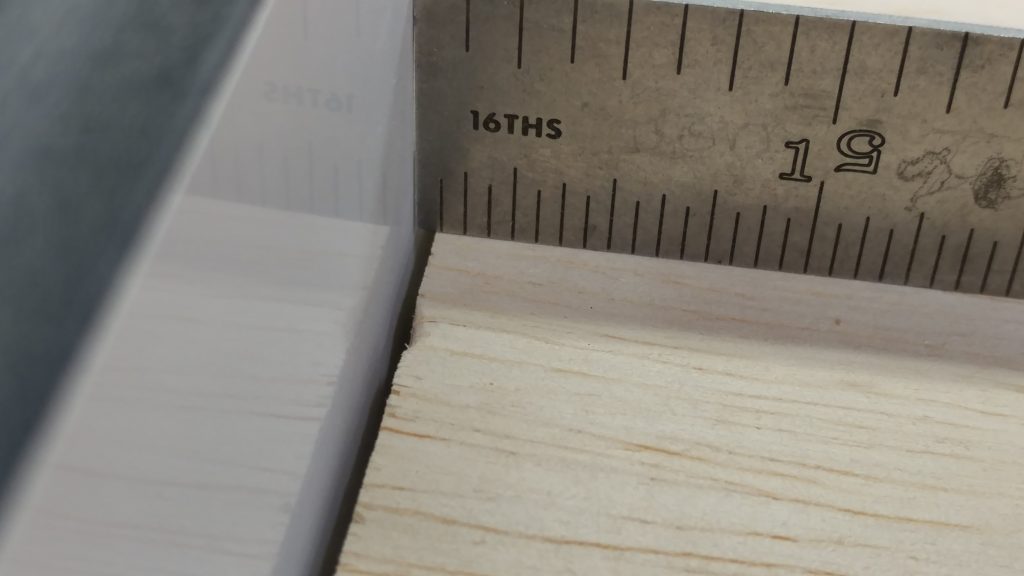
It looks like I need to take an additional 1/16″ off the top.

It looks like 1/16" will do.

I set the fence on my table saw so I would remove just a hair under 1/16″. I’d rather remove too little and have to take off just a bit more than remove too much.

Setting my fence so I can take ~1/16" off of the existing rabbet.

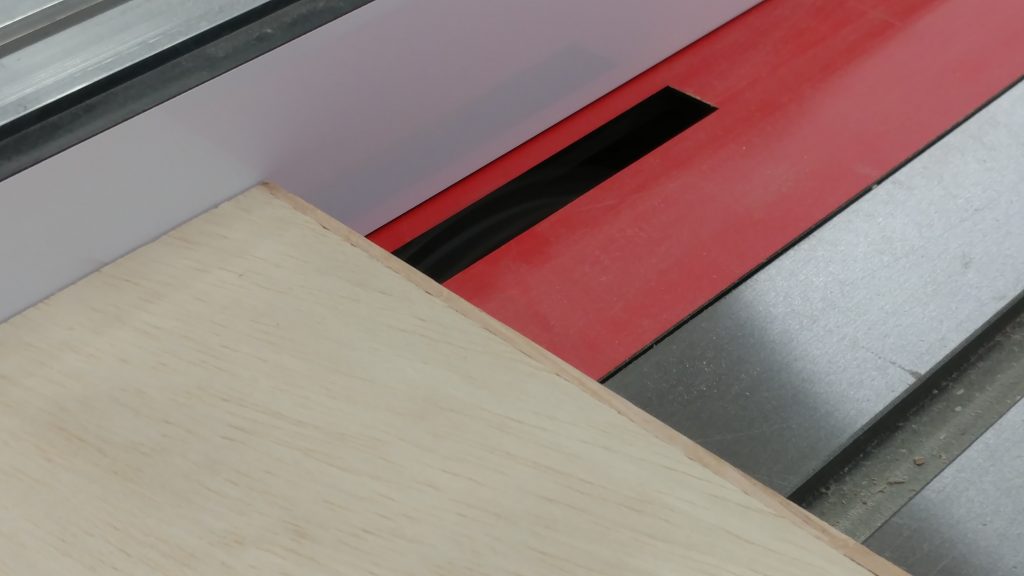
I carefully extended the rabbet just a bit. I didn’t end up needing to move the fence at all, but I did have to raise the blade up just a bit and make a second pass.

Running the pieces over the spinning dado stack.

That fits much better. It’s not perfect but it’s close enough.

That fits much better.

Applying a stain to the tops and sides.

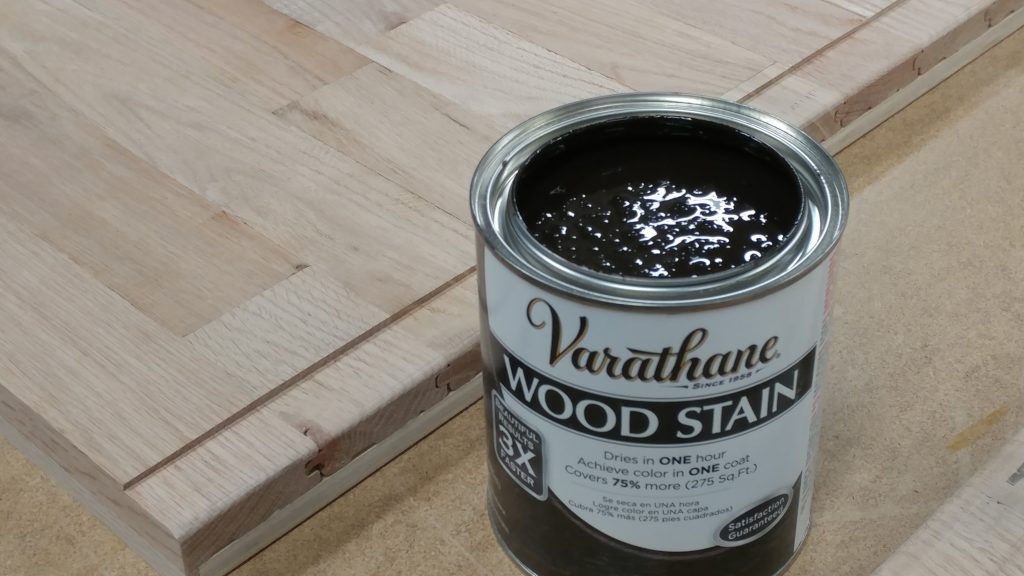
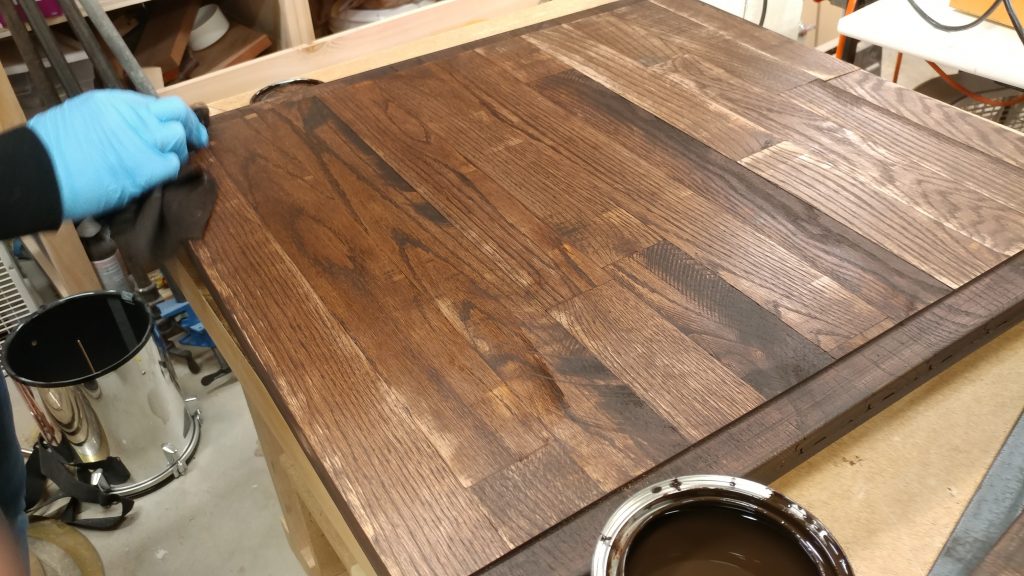
Now it’s time to apply the stain. For this, I’m using Varathane Kona wood stain.

Time to apply the stain.

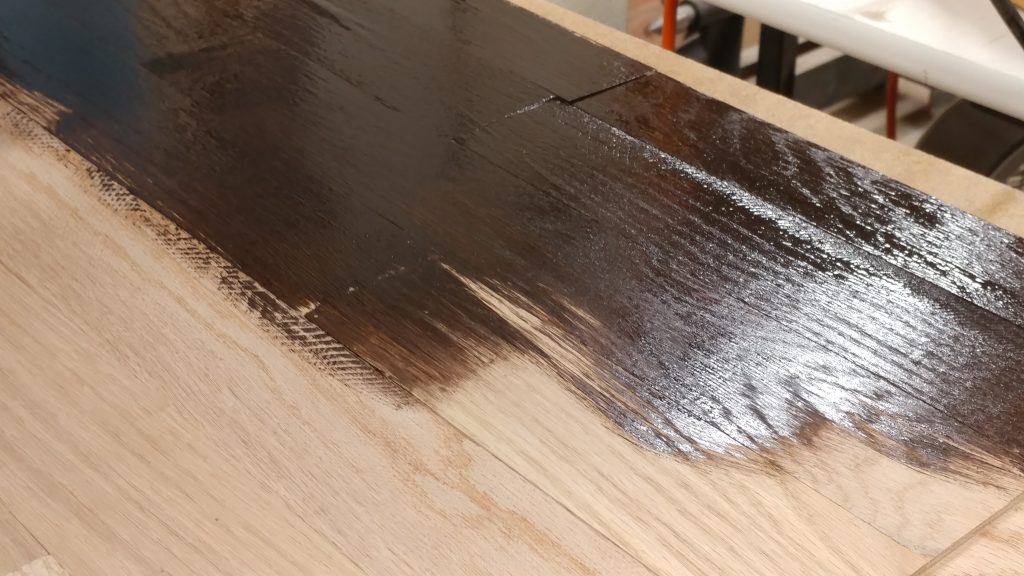
I applied a generous amount using a 3″ brush.

First I apply the stain with a 3" brush.

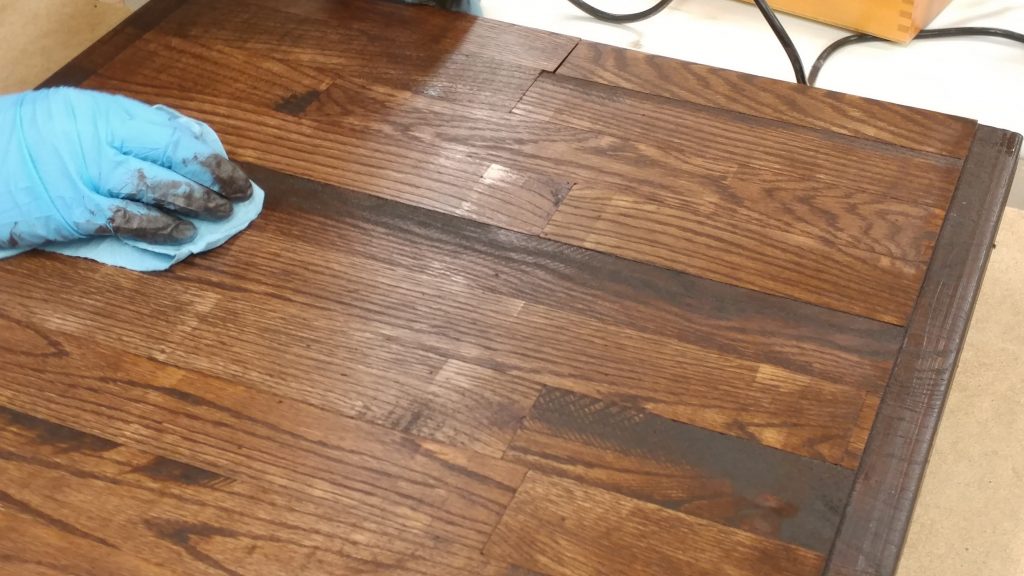
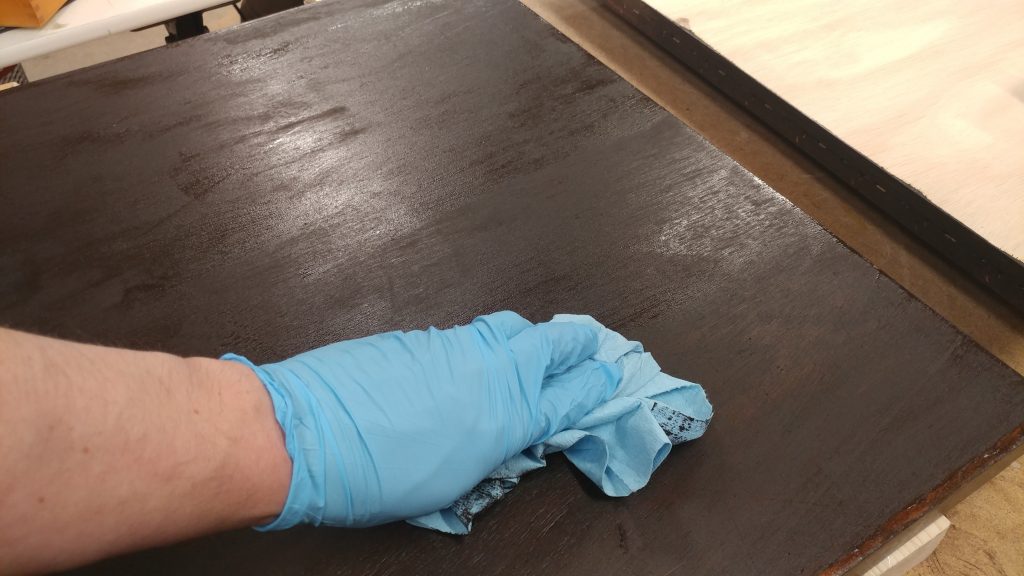
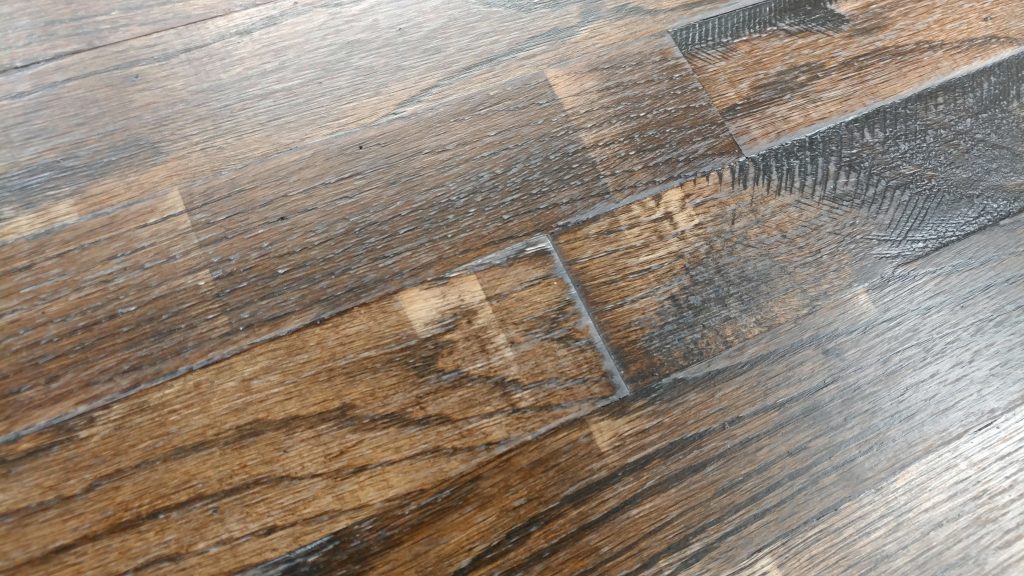
My wife followed up with a blue shop towel and dabbed up most of the stain before it could soak in too much. As you can see, this leaves a lot of the stain in the deeper spots, like the dents, mill-marks, and “worm-holes”.

The towel soaks up most of the stain but can't really get into the dents, mill-marks, or "worm-holes".

I’m pretty happy with how this looks so far.

Looks good so far.

We need to let it sit for about an hour before we do anything else to it.

Letting the stain sit for an hour.

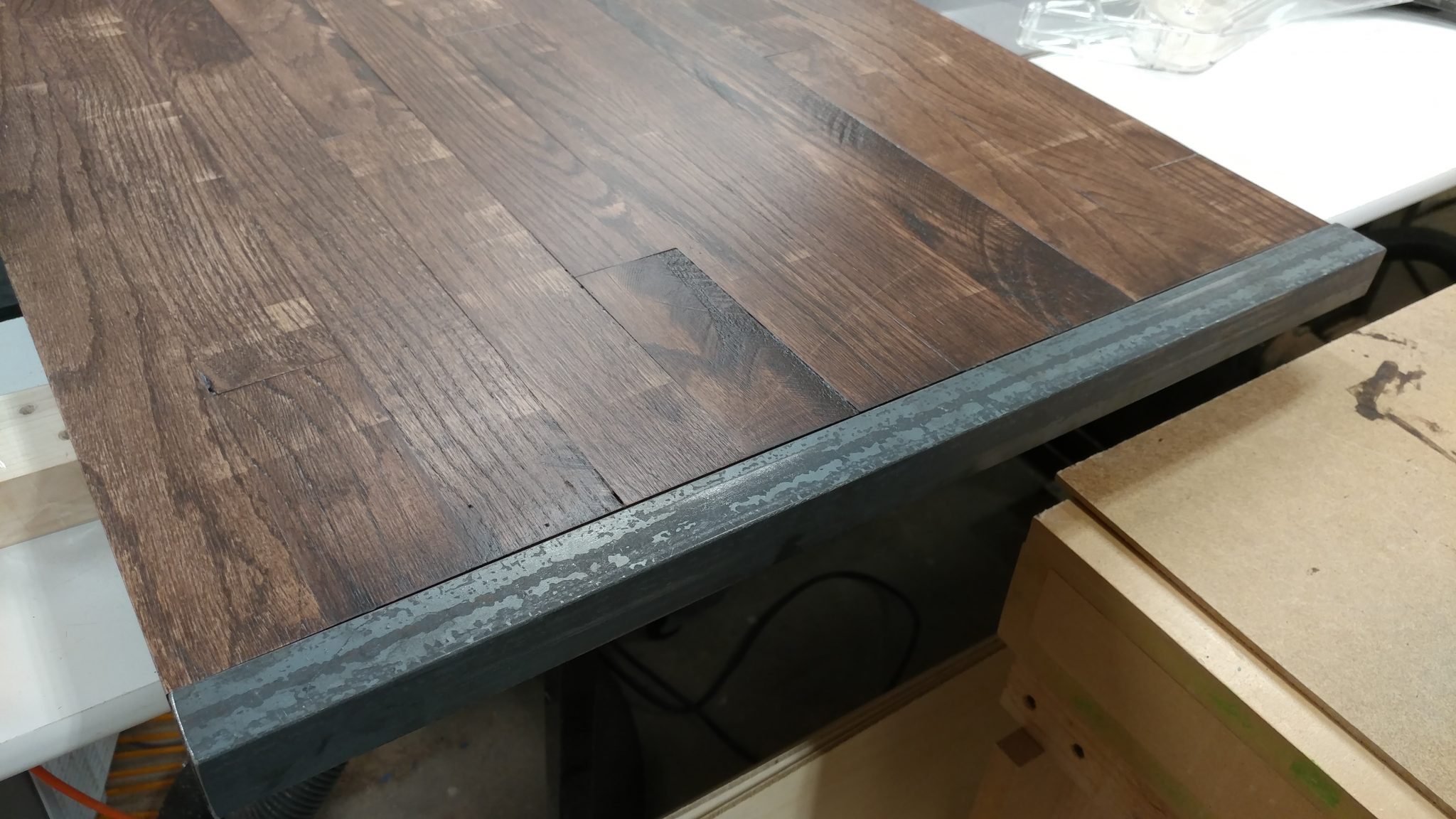
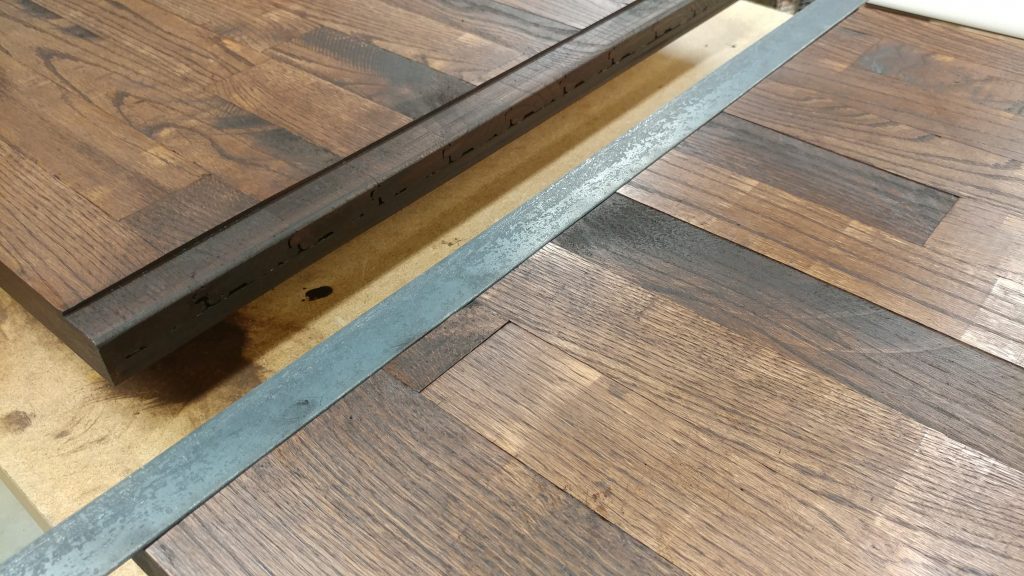
We put the angle-iron on the rabbet to get an idea of how it’s going to look when we are finished. I think it looks pretty good.

This is how the angle-iron will look next to this stain.

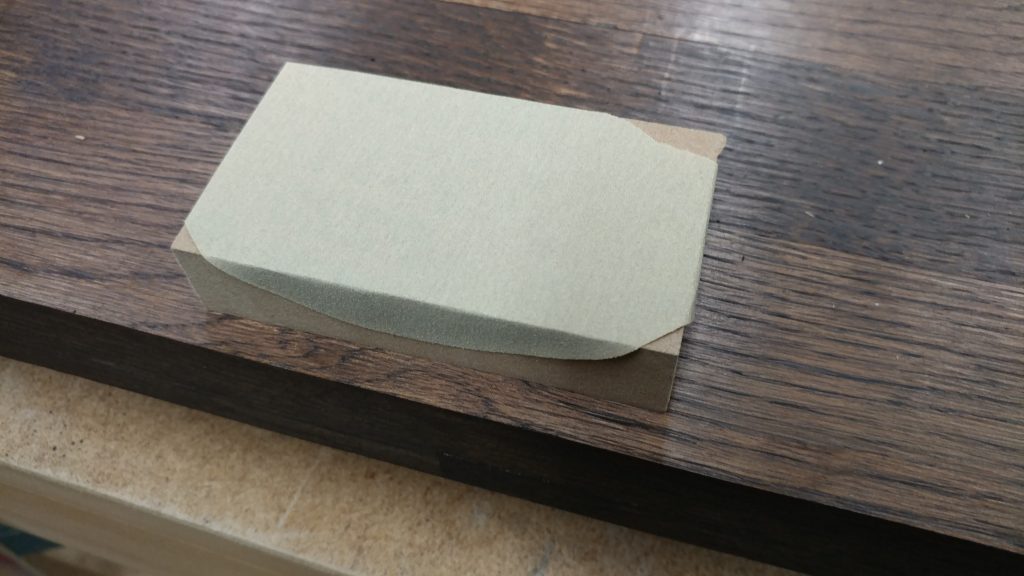
After waiting an hour, we made sanding blocks out of scrap wood and 220-grit sticky-back sanding discs.

Making a sanding block out of a scrap piece of wood and some sticky-back 220-grit sanding discs.

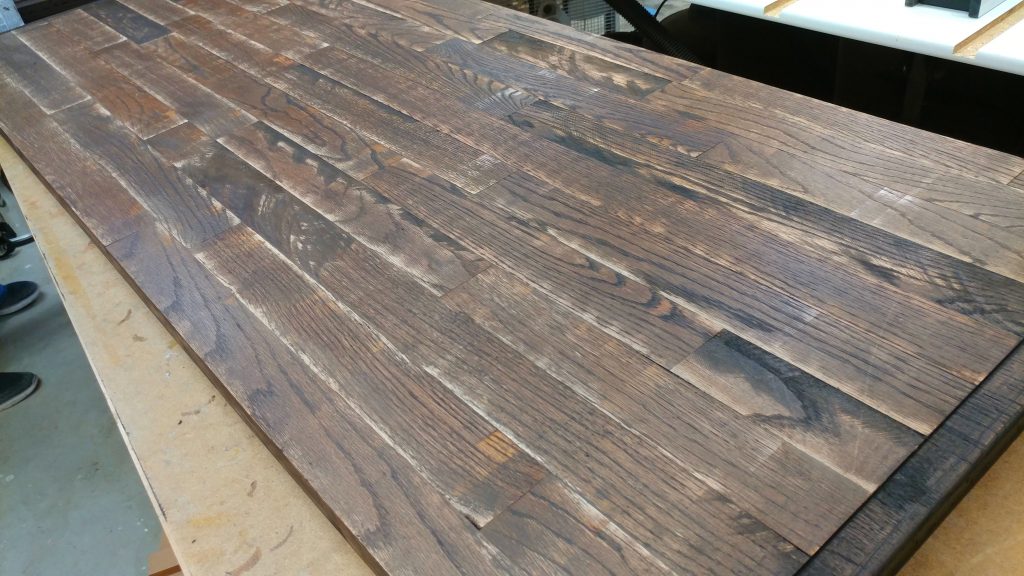
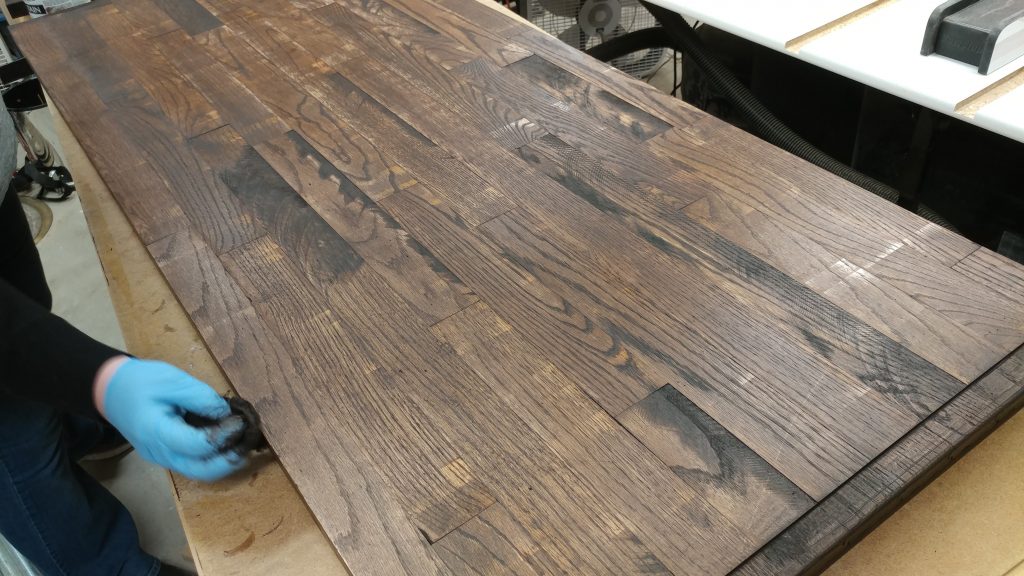
We used these to go over the benchtops and knock back the high spots a bit.

Knocked back the high spots with the sanding block.

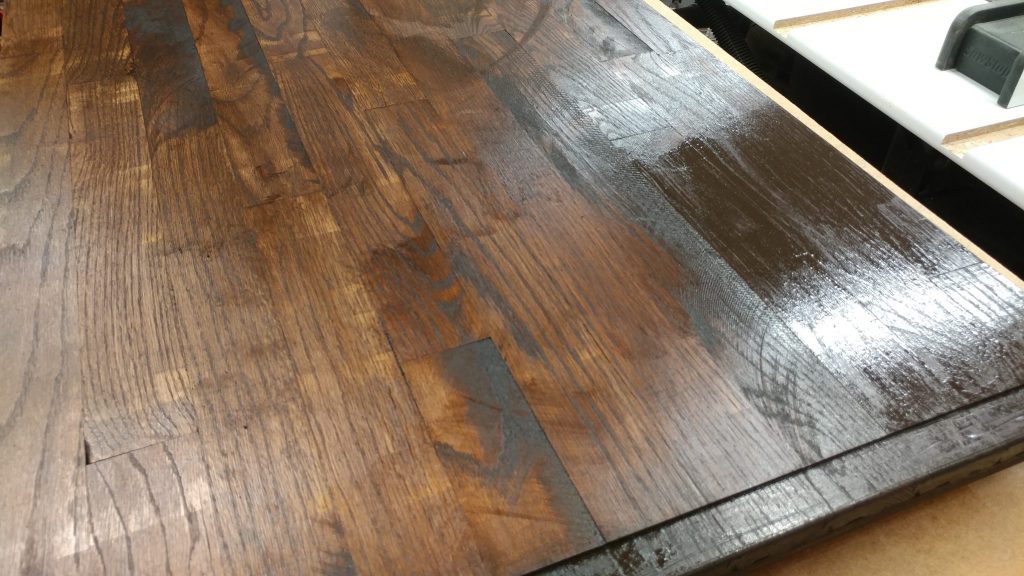
The contrast was a bit too much so my wife decided to lightly dab on some more stain in spots to bring the contrast under control.

Lightly dabbing on some more stain to reduce the contrast between the light and the dark parts.

It’s probably worth mentioning that we made sure to get the front and back of each piece.

Making sure we got the front and back of each piece.

Now we need to let it sit for a few more hours before we apply the polyurethane.

Letting it sit for another couple of hours.

Protecting it all with polyurethane.

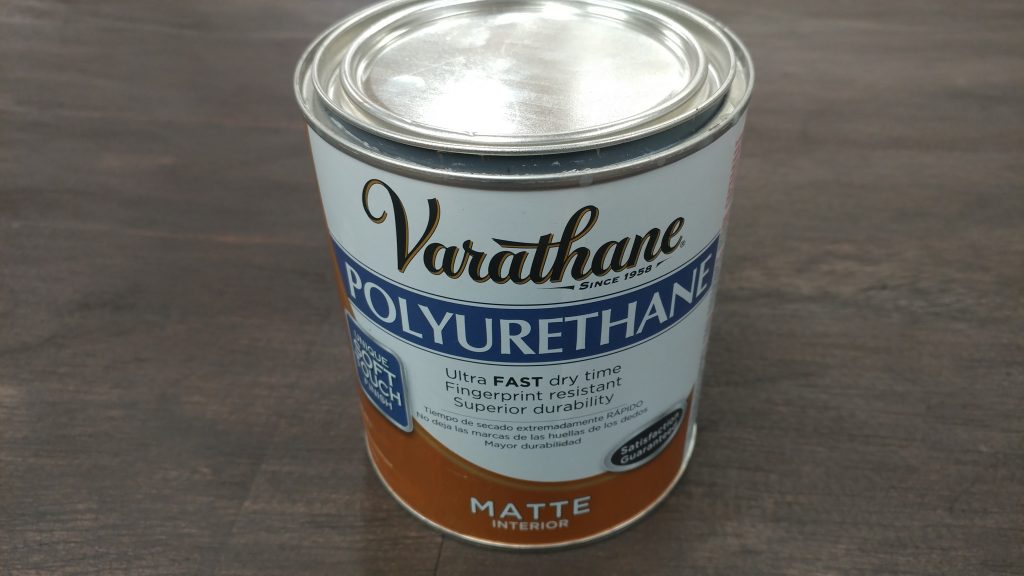
For this project I’m using Varathane brand matte finish interior polyurethane. It goes on easily and rinses out with soap and water. An added bonus is that you don’t have to sand in between coats. I still prefer to sand right before applying the final coat.

For this project I am using Varathane brand matte finish interior polyurethane.

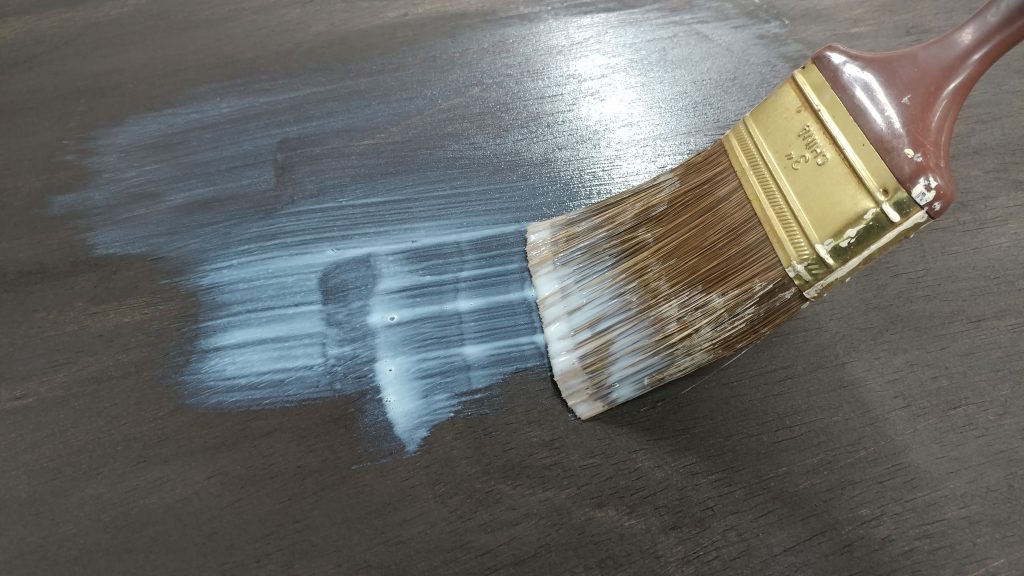
I used the same brush that I used for the stain to apply a generous first coat of polyurethane.

Applying the first coat of polyurethane.

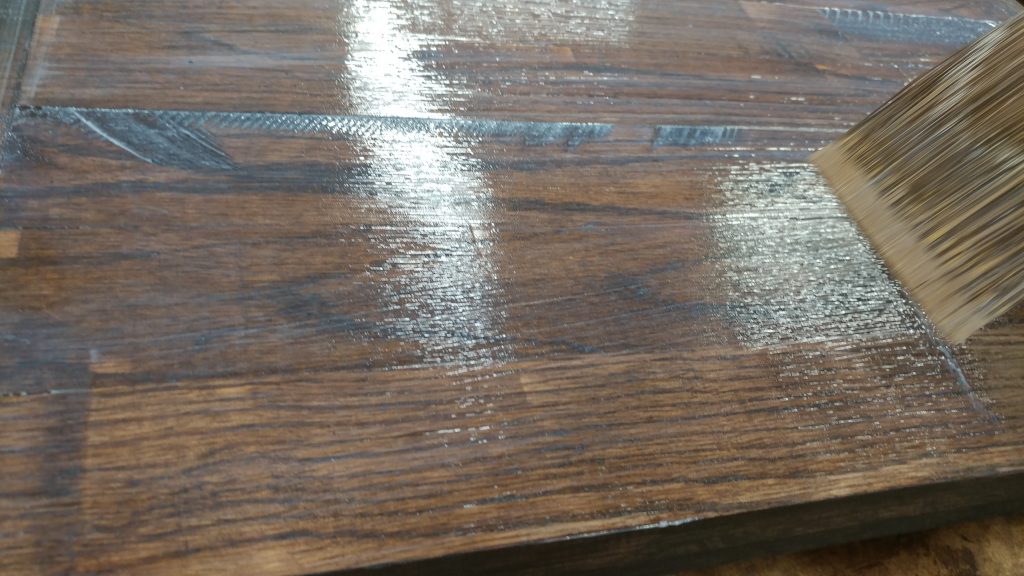
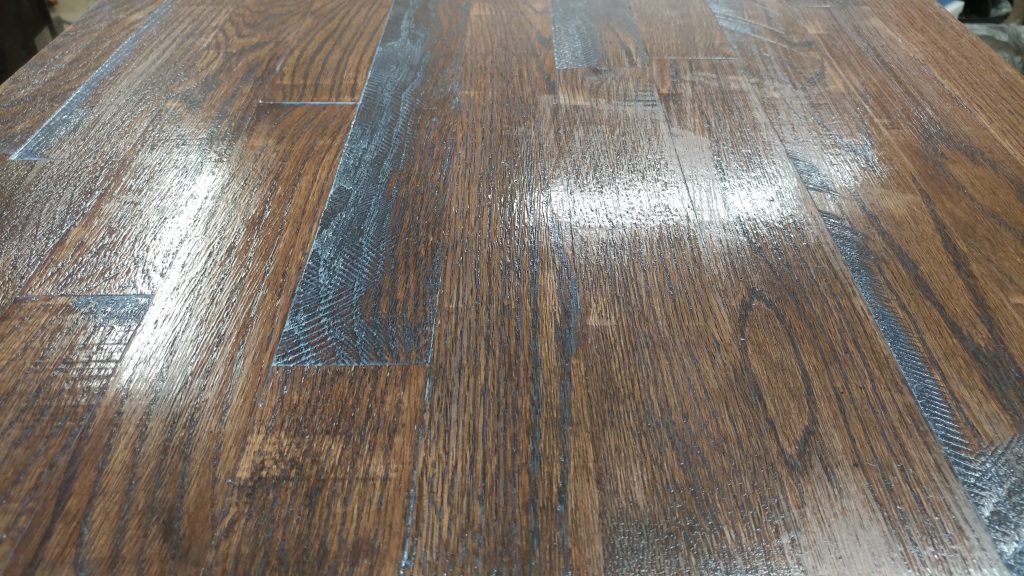
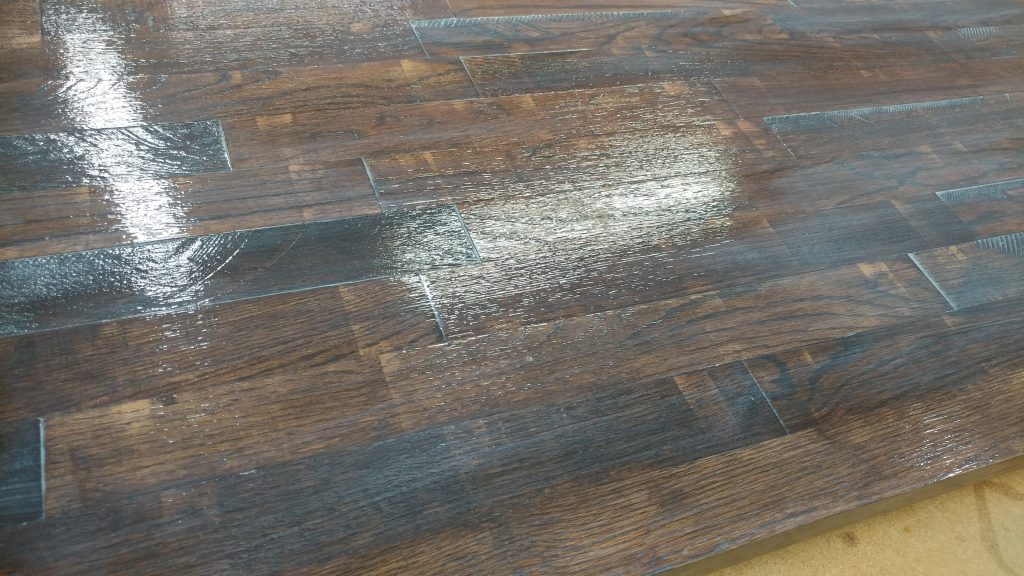
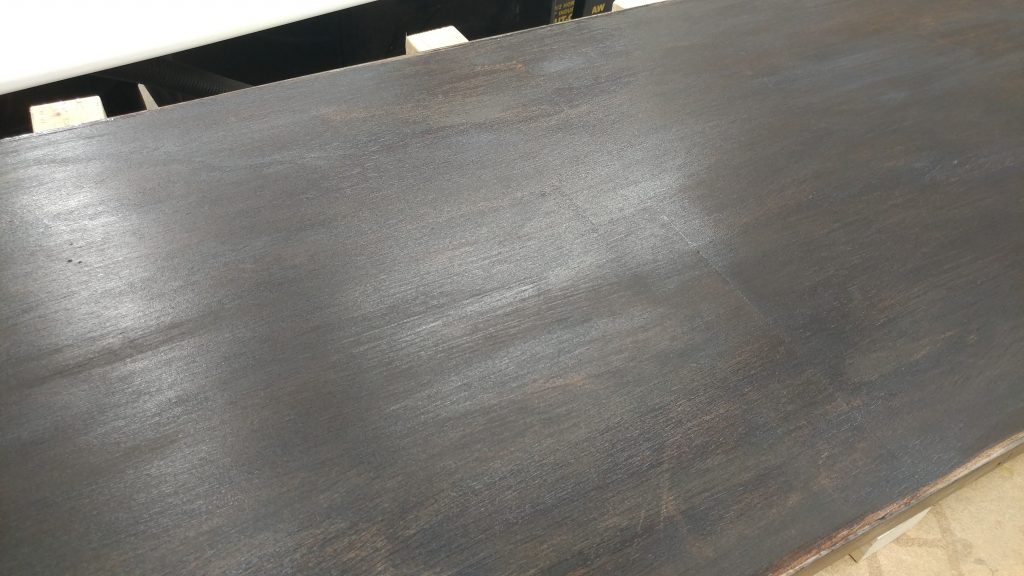
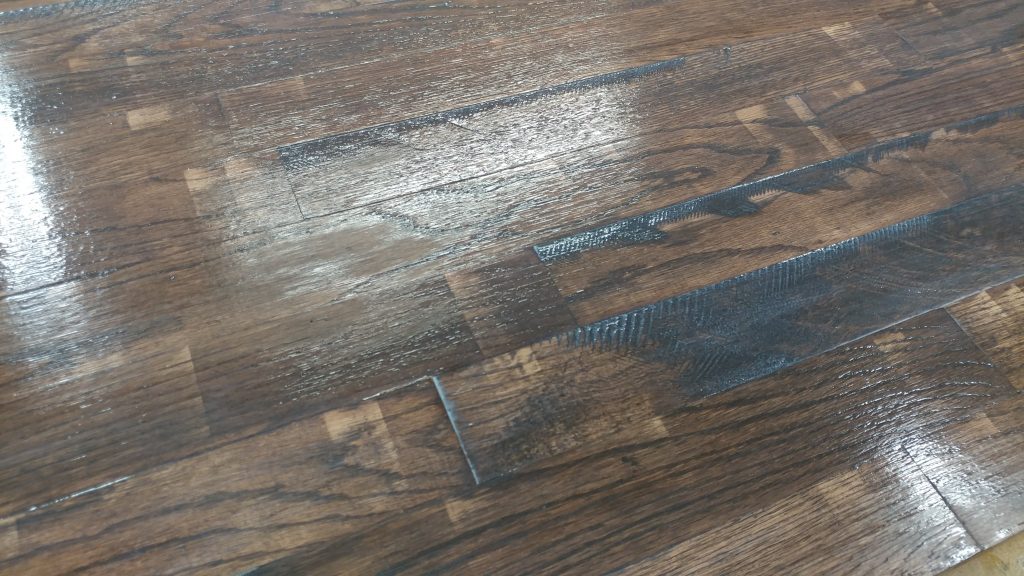
After applying the first coat, I went over it lightly with the brush to smooth it out. You can see how the poly sits in the deeper spots. Our intention is to apply enough poly that it fills in these spots, making a smoother surface.

I'm hoping it will help fill up the low spots and even out the top.

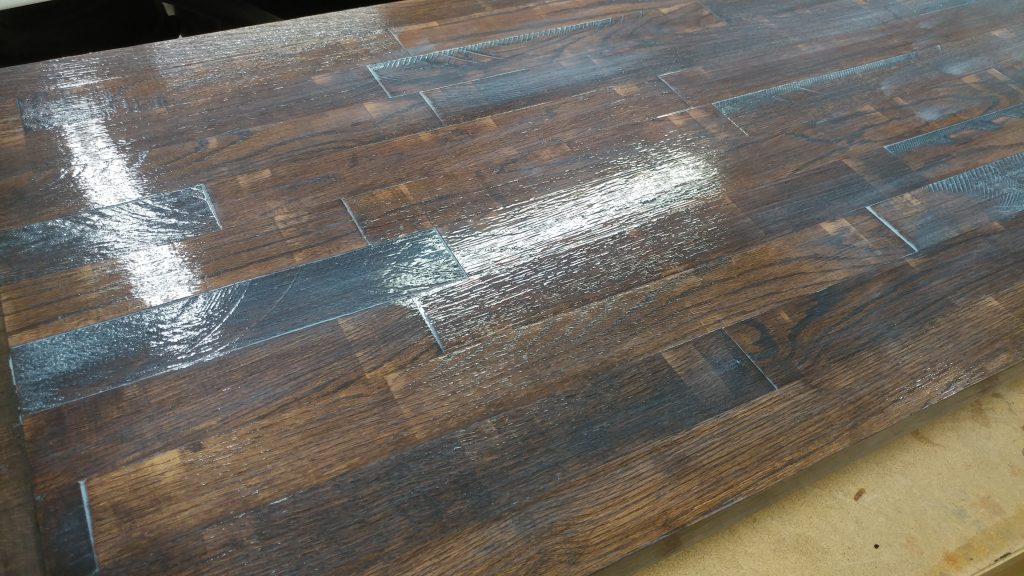
Finished applying the first coat. I’m letting that sit overnight before applying the next coat.

Got to let it sit for a few hours before adding more coats.

I applied the second coat and let that sit for a few hours.

Applied the second coat.

Applied a third coat…and waited.

Third coat has been applied.

…and a fourth.

After the fourth coat has been applied, I'm starting to wonder how many more coats this is going to take.

I let the fourth coat sit for 24 hours. It looks like it’s ready to be sanded before applying the final coat. The polyurethane has helped smooth out the high and low spots a bit. I’m not going for a writing surface here so it doesn’t need to be perfectly flat.

The fourth coat is dry and ready for sanding.

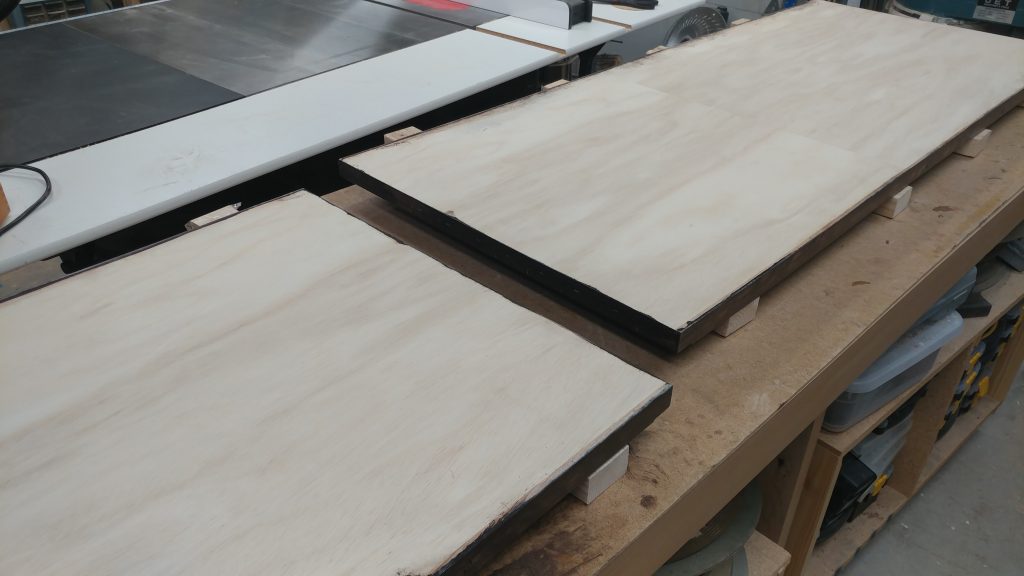
I carefully flipped the pieces over so I can stain the underside. Obviously, this isn’t as critical as the top and I could probably not worry about it at all, but the smaller piece will most likely be attached the the main piece with a piano hinge and will hang down on the side when not in use. This means that the underside of the smaller piece will be visible at these times.

Turned the bench-top pieces over so I can stain the underside.

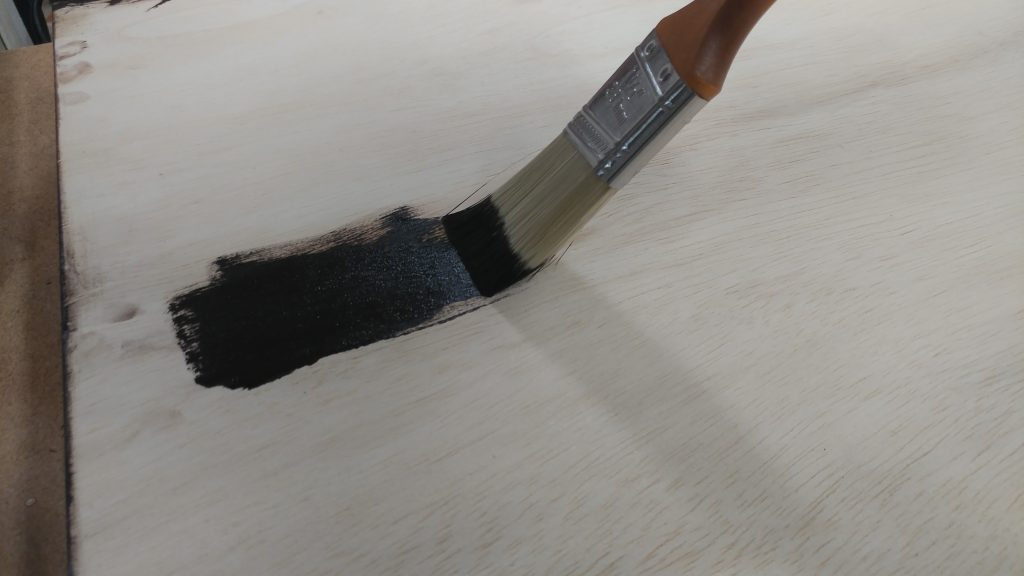
I started the tedious process of applying the stain to the underside. This piece is pine plywood and it soaks up the stain a lot faster than the oak. As a result, this is going to be much darker than the top.

Applying some stain to the underside.

I soaked up as much excess stain as I could.

Soaking up as much excess stain as I can.

After waiting about an hour and a half, I lightly sanded the underside with 220-grit sandpaper. I’m just trying to knock back any bumps before I seal them for all time under a layer of polyurethane.

I let the stain sit for about an hour and a half then I lightly sanded the undersides.

I applied a single coat of polyurethane to the undersides.

I applied a coat of polyurethane.

This is the only layer of poly that I am planning on applying to the underside. I’m going to let it sit for 24 hours before flipping the bench-top pieces back over and finishing the tops.

The polyurethane has been applied and needs to sit overnight.

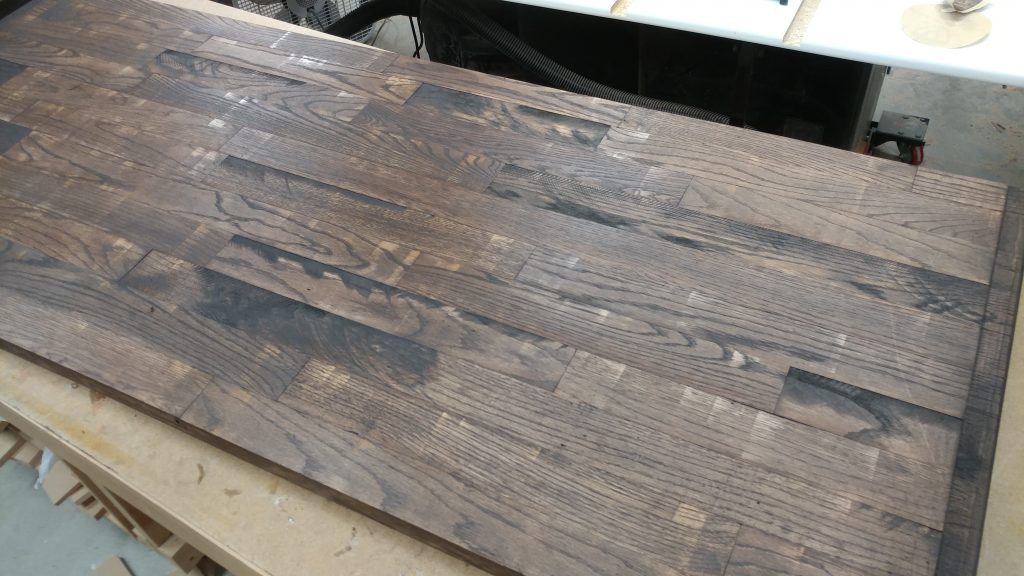
After letting the poly coat on the underside sit for 24 hours, I flipped the benchtop back over and lightly sanded the top with 220-grit sandpaper in order to knock back any bumps or high points. This also further distressed the top.

I sanded the top with 220-grit to knock down some of the high spots.

I carefully applied the fifth and final coat of polyurethane and let it sit for twenty-four hours.

I carefully reapplied the fifth and final coat of polyurethane.

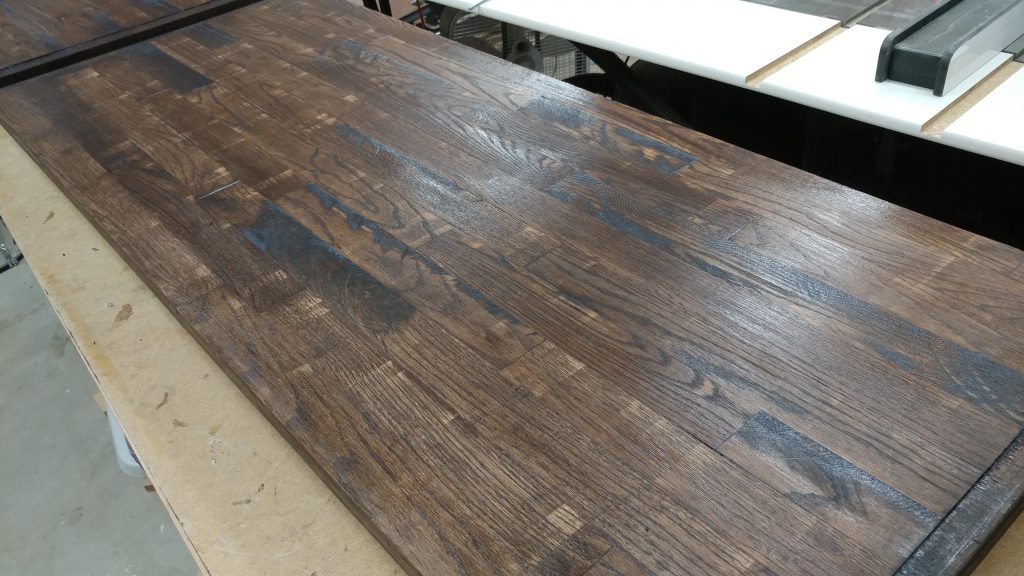
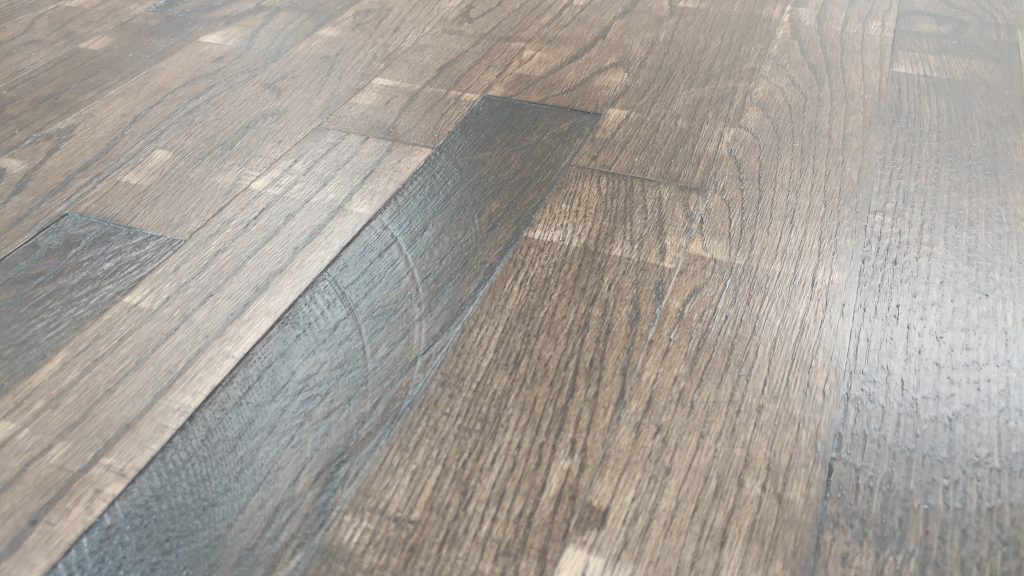
After sitting overnight, the finish on the bench-top is complete and now it’s time to attach the hardware.

After letting it sit for 24 hours, the bench is now ready for the hardware.

Do you have any tips on staining and protecting your work? What has worked for you? Let us know in the comments section below.  I’d love to hear from you. Also, please consider signing up for my mailing list to be notified of future articles. I am also available on social media. Stop by and say ‘Hi’. I can be reached at the links below.

Previous articles in this series…

Table Saw Enhancement – Converting Extension Table Into Router Table.

SawStop industrial cabinet saw with sliding crosscut table, extra wing, and router table.

This is a continuation of my other table saw enhancements, Attaching a Sliding Crosscut Table Without Cutting Down the Rails and Attaching an Extra Cast-Iron Extension Wing.

The additional cast iron wing that I attached to my table saw moved the wooden extension table another 10″ past the end of my rails. This allows me to relocate my router table to the far-right edge of the table saw without having to cut notches in my front and rear rails to accommodate the miter slot.

Converting the extension table into a router table.

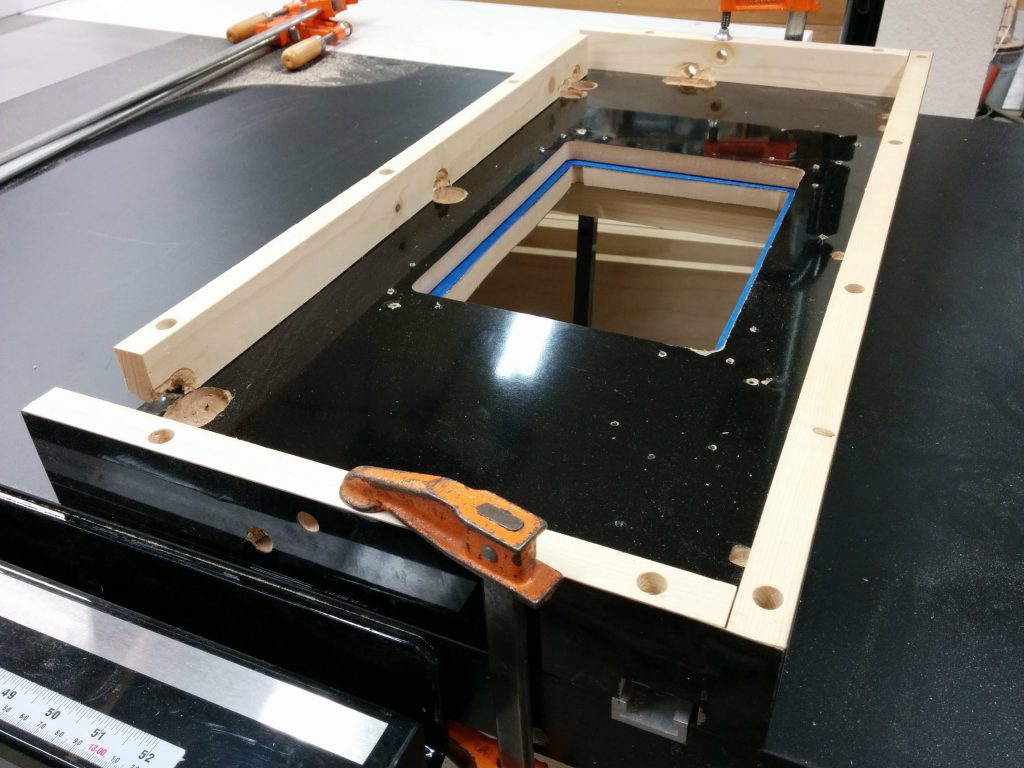
I had to remove my fence in order to attach the additional cast iron wing. I didn’t want to put my fence back on yet but I realized that I needed to so I can cut a dado in the wooden extension table for the miter slot.  This is the same extension table that I had previously removed.  I temporarily reattached the front rail and did a quick fence alignment so my cut would be parallel with the edge of the table.  This led to a slight problem as you’ll soon see.

Temporarily reattached the front tube so I can use the fence to cut a dado in the extension table.

I wanted to make sure I didn’t accidentally cut through any screws so I removed the legs for the table.

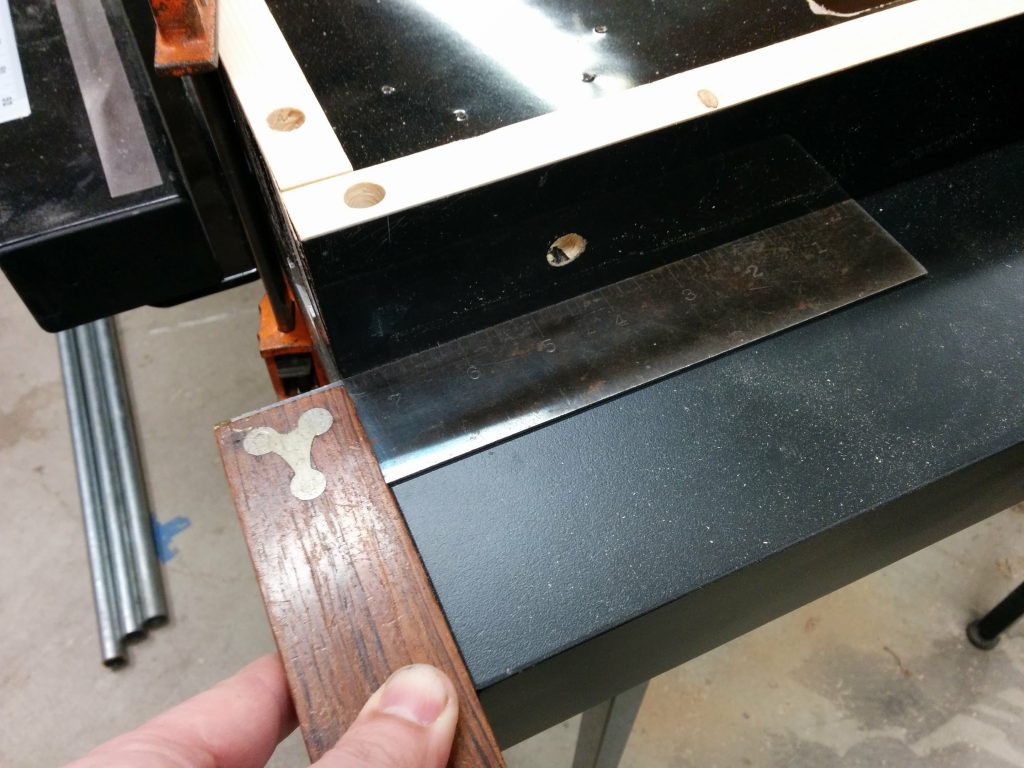
I figured that I would make the miter track 6″ from the edge of the table.  This would ensure that I didn’t hit any screws while cutting the dado.  I wasn’t worried about hitting a screw and activating the brake in the SawStop since a screw by itself is too small to activate the safety system.  I mainly didn’t want to mess up the carbides on my dado stack.  I positioned the fence at the 6″ mark.

Positioning the fence.

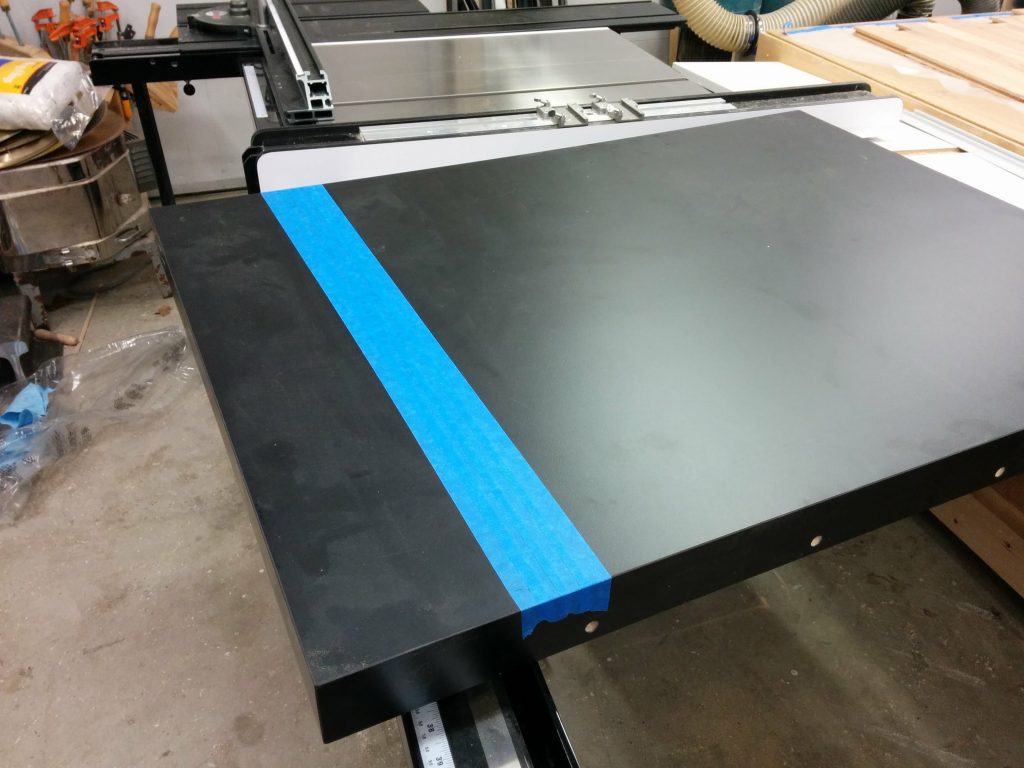
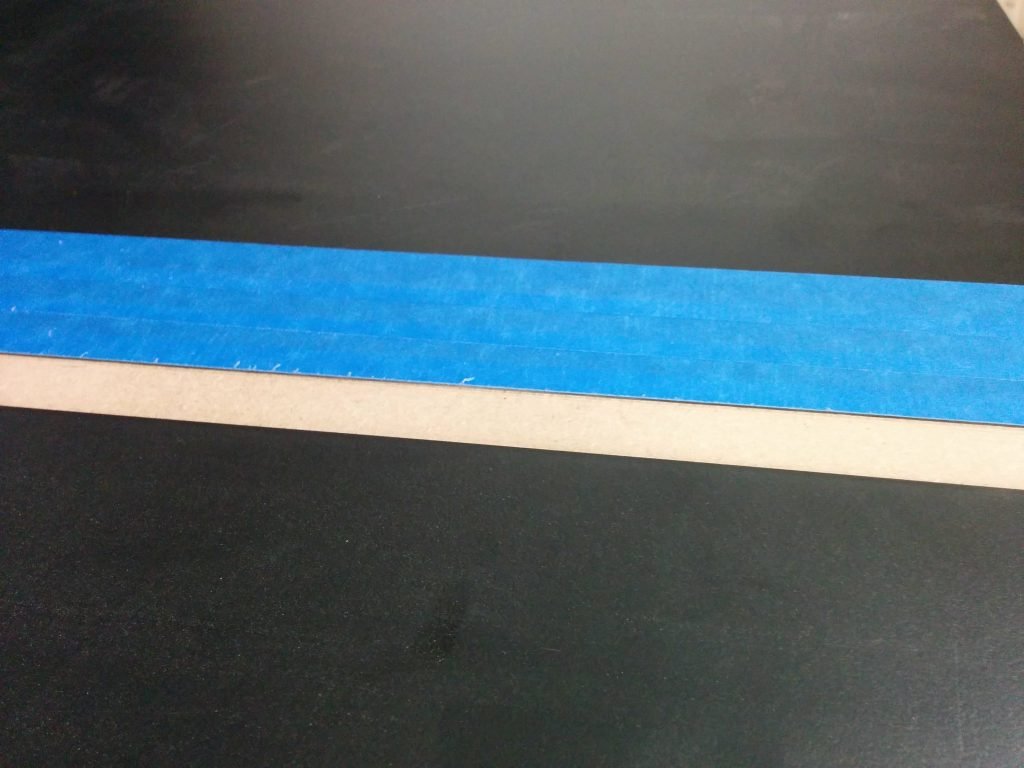
I applied some blue painters tape to help prevent chipping and scratching the laminate on the edges of the dado.  In keeping with tradition, I miscalculated where I should put the tape.  You’ll see what I mean in a second.

Taping where I'll be cutting.
Taping where I’ll be cutting.

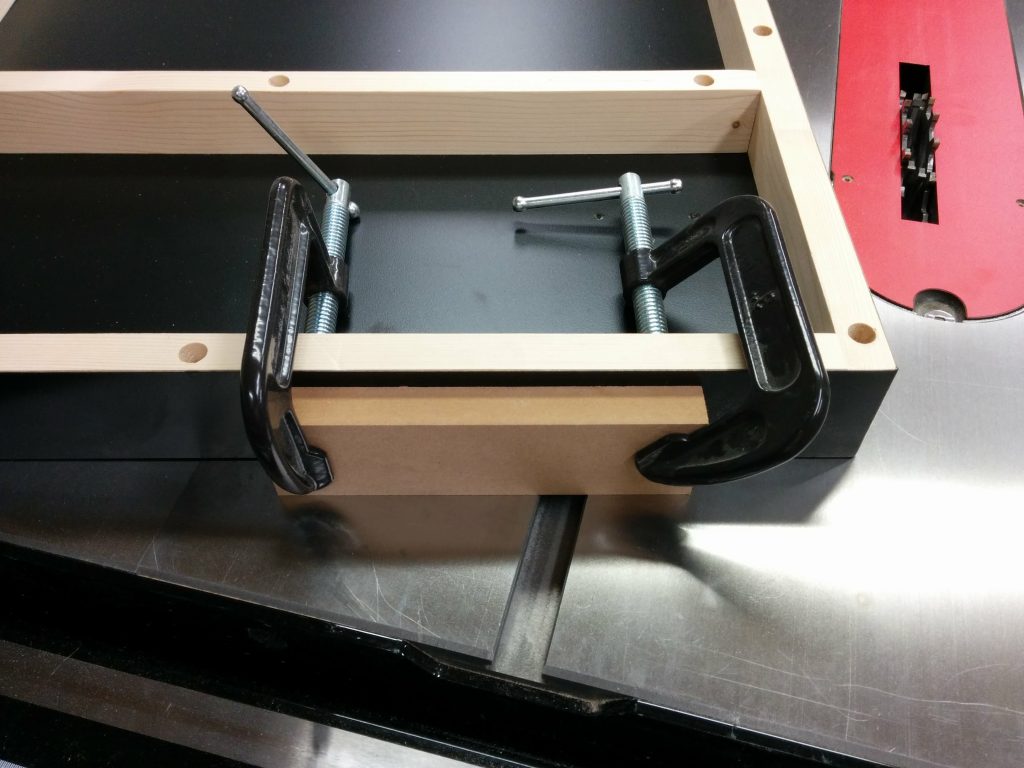
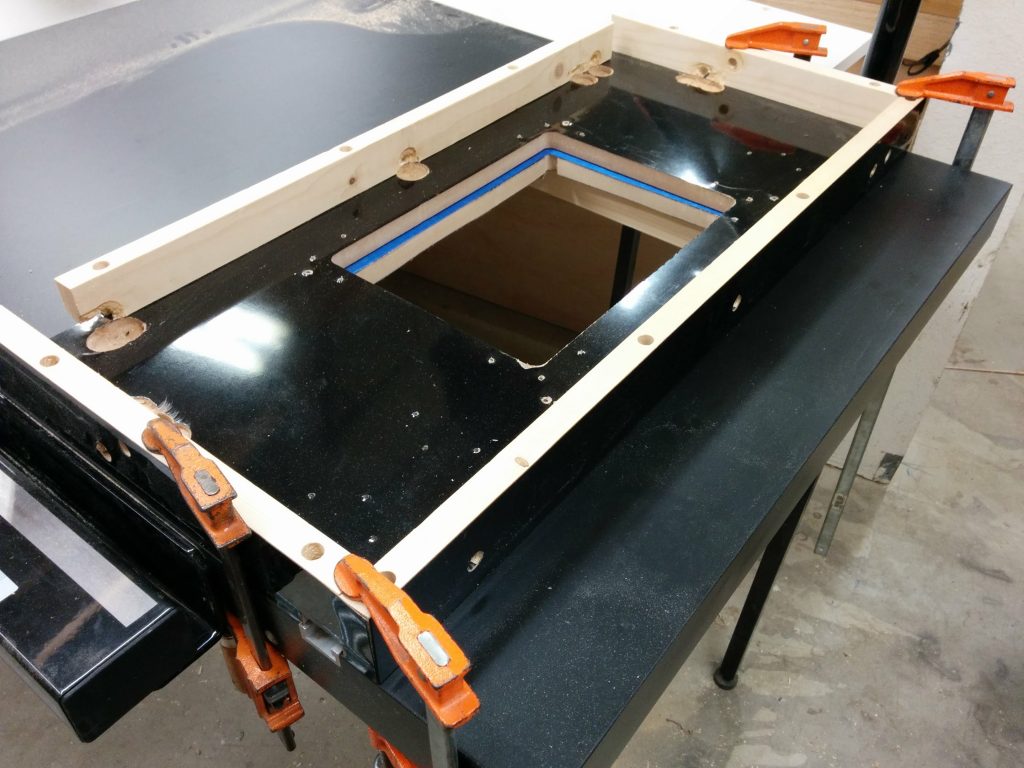
I clamped some scrap wood on the side of the table to help prevent tear-out.  I made sure the clamps were positioned where they wouldn’t get hit by the blades.

Clamping some scrap wood to help prevent tearout.

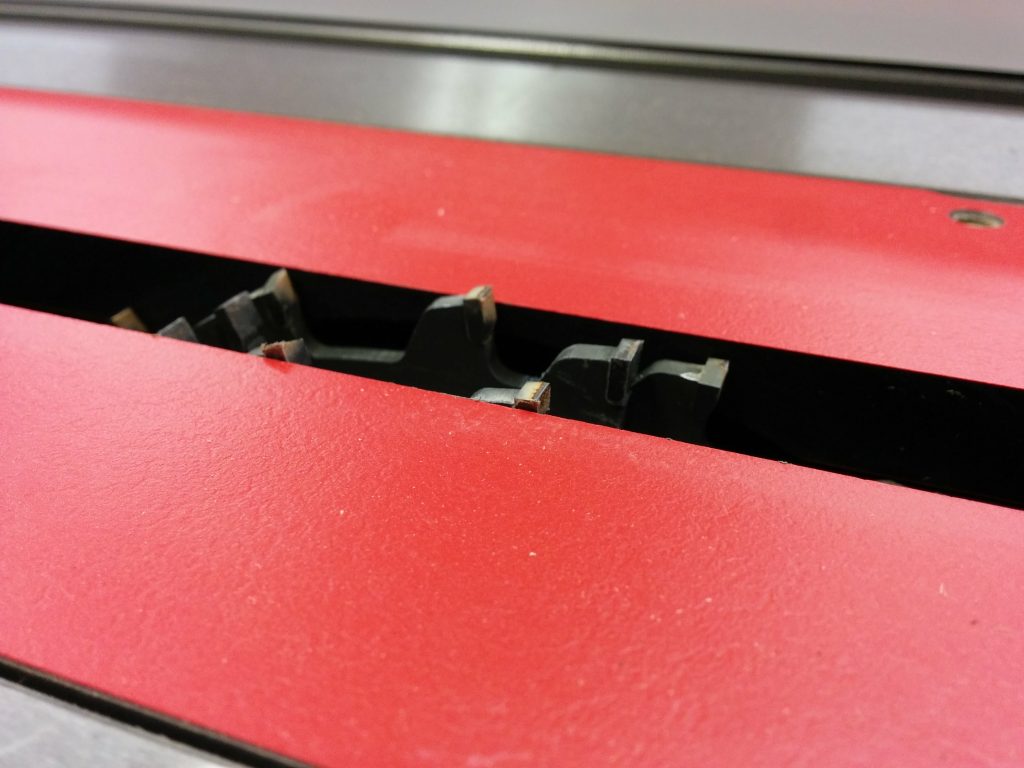
I lowered the dado stack so it would make a scoring cut first.  This is another step that can really help prevent the edge of the laminate from chipping.

Lowering the dado stack so it''ll just cut through the laminate.
Lowering the dado stack so it”ll just cut through the laminate.

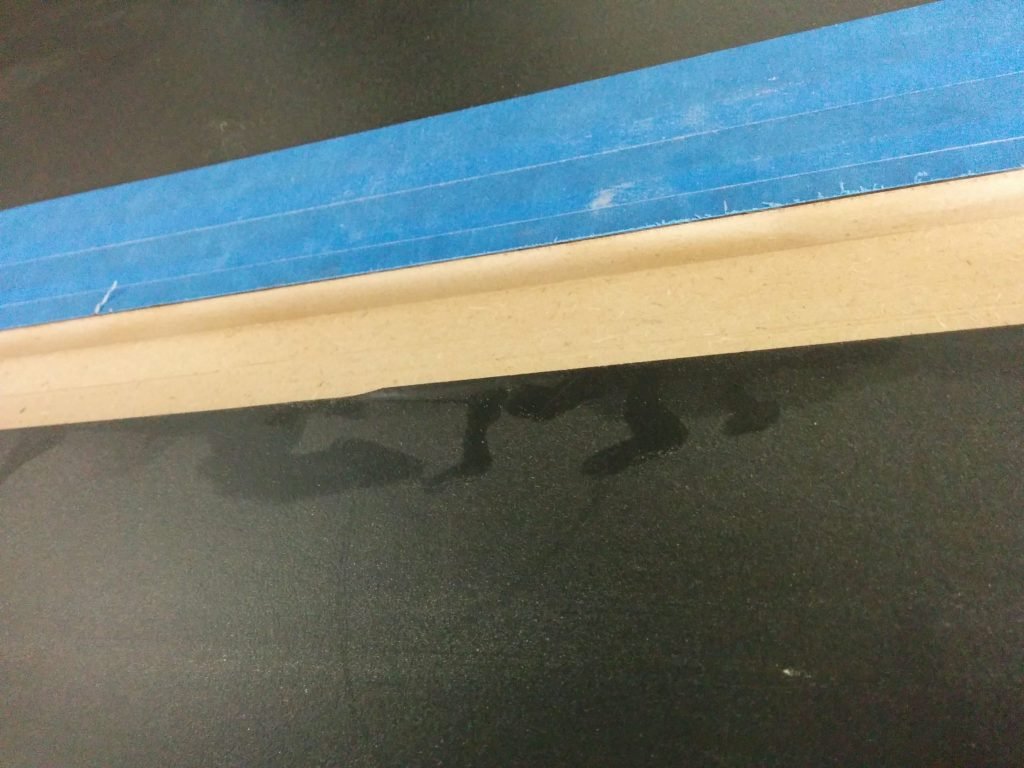
I made my first pass.  As you can see, the blue tape wasn’t positioned correctly so my first cut didn’t have tape on each edge.  As it turns out this wasn’t a big deal.  The laminate that SawStop recently switched to for use on their extension tables is some high-quality stuff and didn’t tear out at all.  I didn’t have similar luck with the laminate for their older extension tables.

Didn't position the tape correctly but it didn't matter in the end.
Didn’t position the tape correctly but it didn’t matter in the end.

Here you’ll see one of the areas where I screwed up.  Remember when I said I did a “quick fence alignment”?  Well, I should have taken my time.  If I had, I would have noticed that in aligning my fence I also slightly loosened the clamping pressure of the fence on the front tube.  This caused my fence to slide a little bit as I was cutting and caused a slight unevenness in the dado.

Fence shifted while making this cut.

As you can see, the scrap wood kept the laminate from chipping on the edge.

No tear-out!
No tear-out!

I reattached the legs and temporarily clamped the extension table to the rails and the right wing, making sure it was flush. Then I drilled new holes through the sides of the wooden extension table for the bolts to attach it to the rails.

Lined up the table and drilled holes for the mounting bolts.

I then did the same thing on the back. After the holes were drilled, I reattached the table to the rails using the appropriate bolts, washers, and nuts.

Drilled the mounting holes on the back of the extension table.

I then reattached my outfeed table to the rear rail.

Reattached my outfeed table.

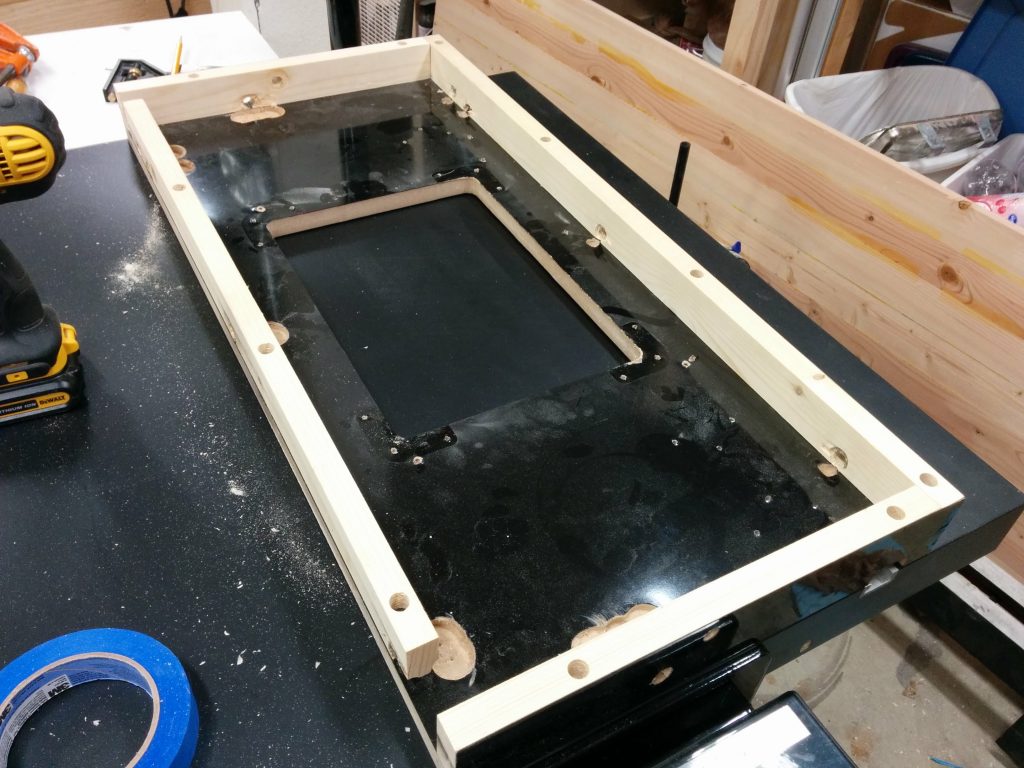
Now it’s time to mark the opening that I’ll be removing. I’m going to remove most of it with my jigsaw then clean up the rest with my trim router and a pattern bit.

Using the old router table as a template.

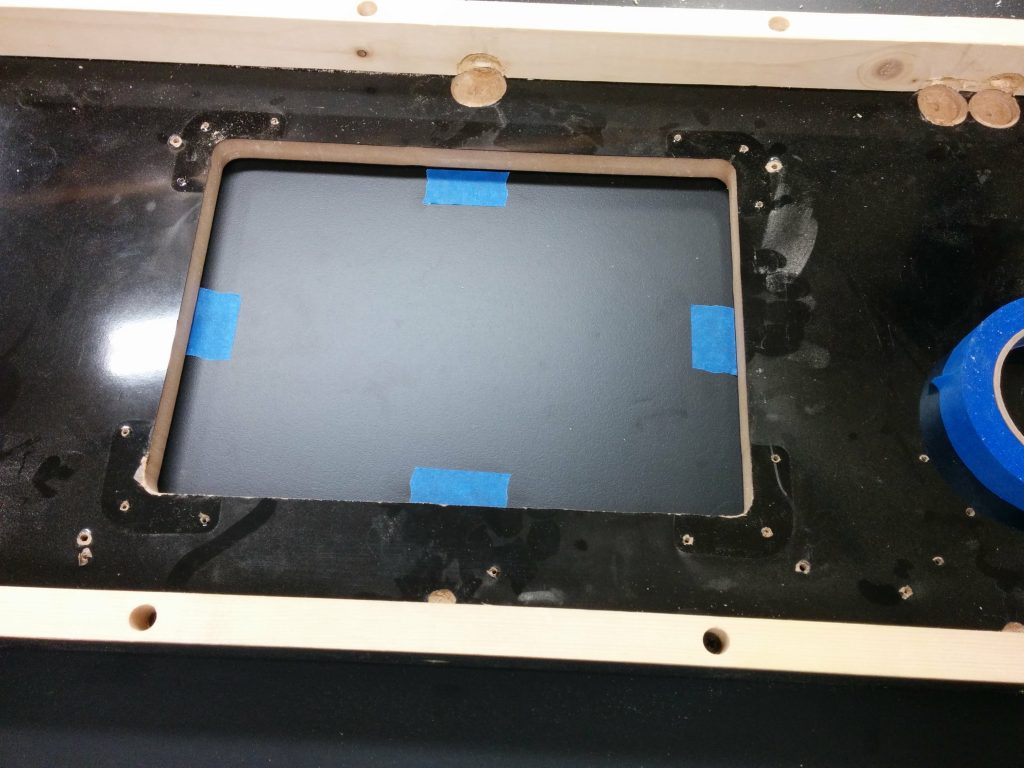
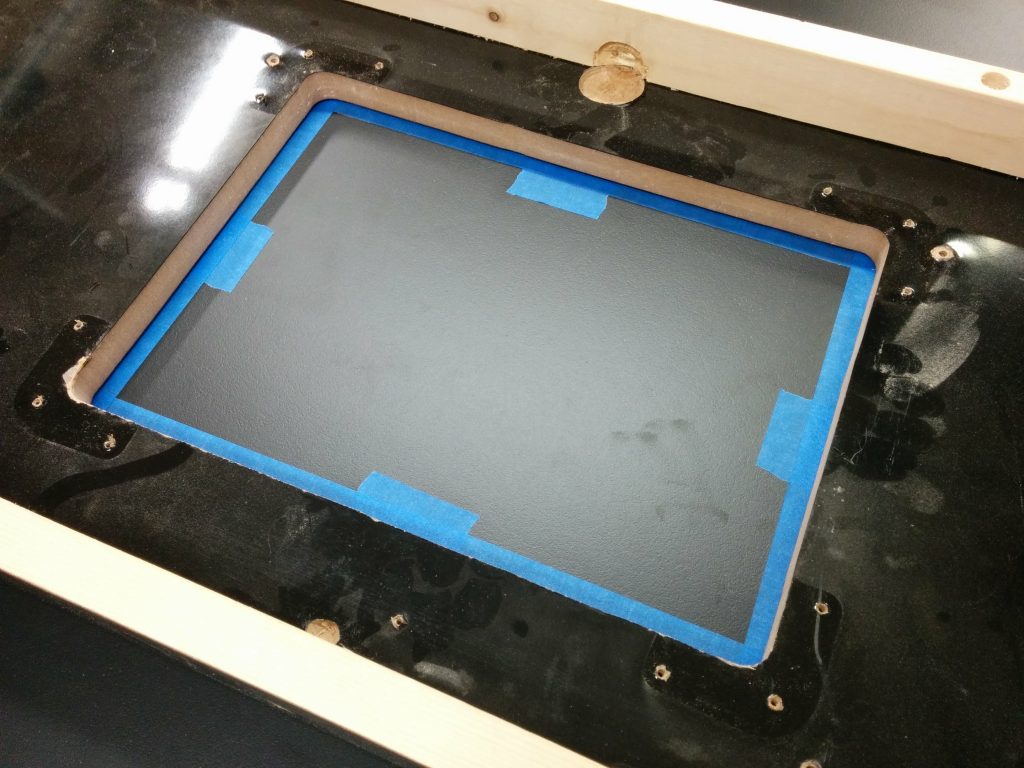
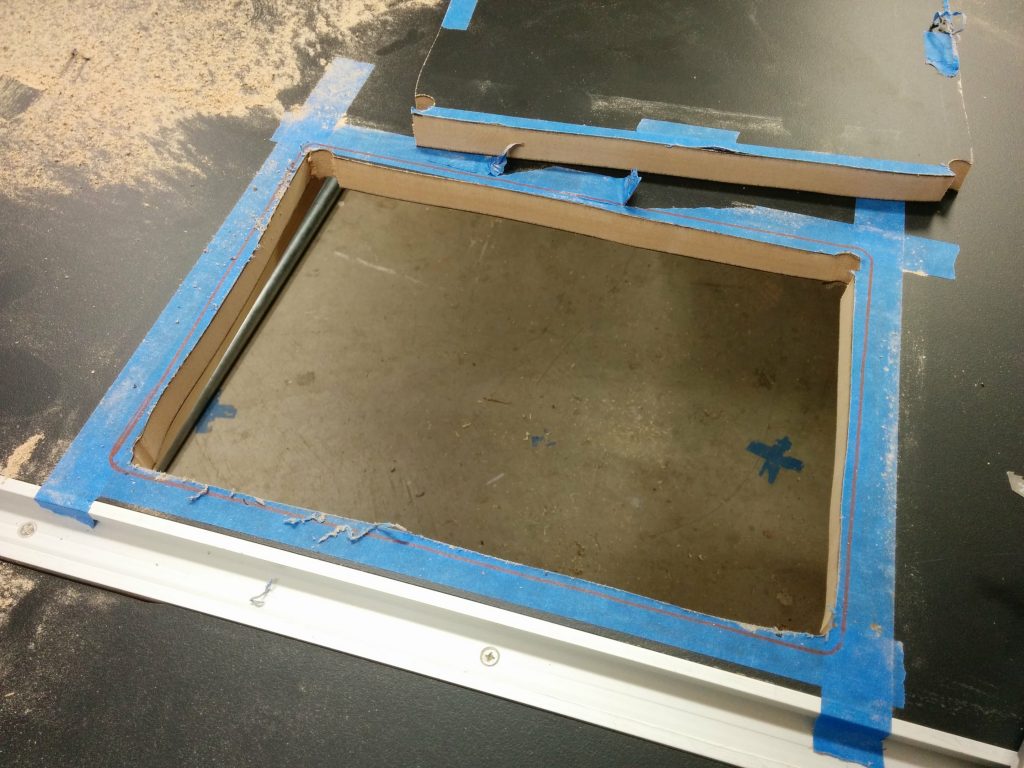
I laid the pattern on the tabletop in the spot where I am going to remove the material. Absolute precision is not critical at this point. I used a few pieces of painters tape to mark the inner edges of the opening.

Temporarily marking the inner edges of the template.

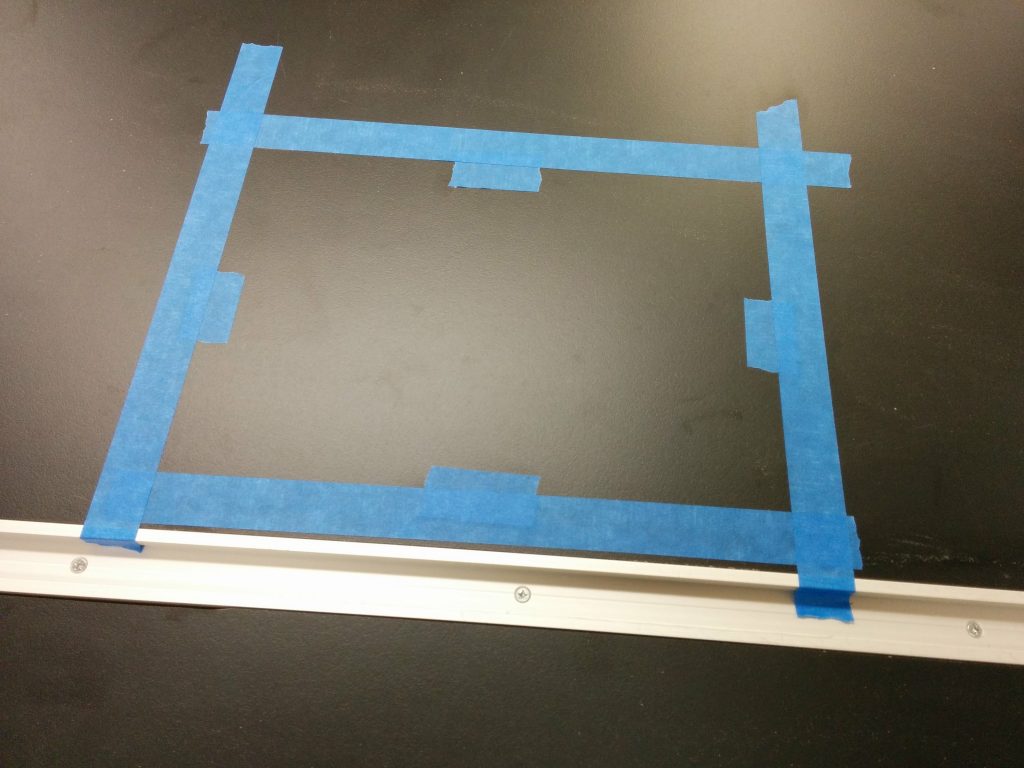
I then took the template off and ran some strips of painters tape over where the edges will be. The actual edges should be somewhat centered in the strips of tape.

Applied blue painters tape over the edges where I will cut out the insert opening.

Then I put the template back in place. Again, absolute precision isn’t critical at this point.

Set the template in place.

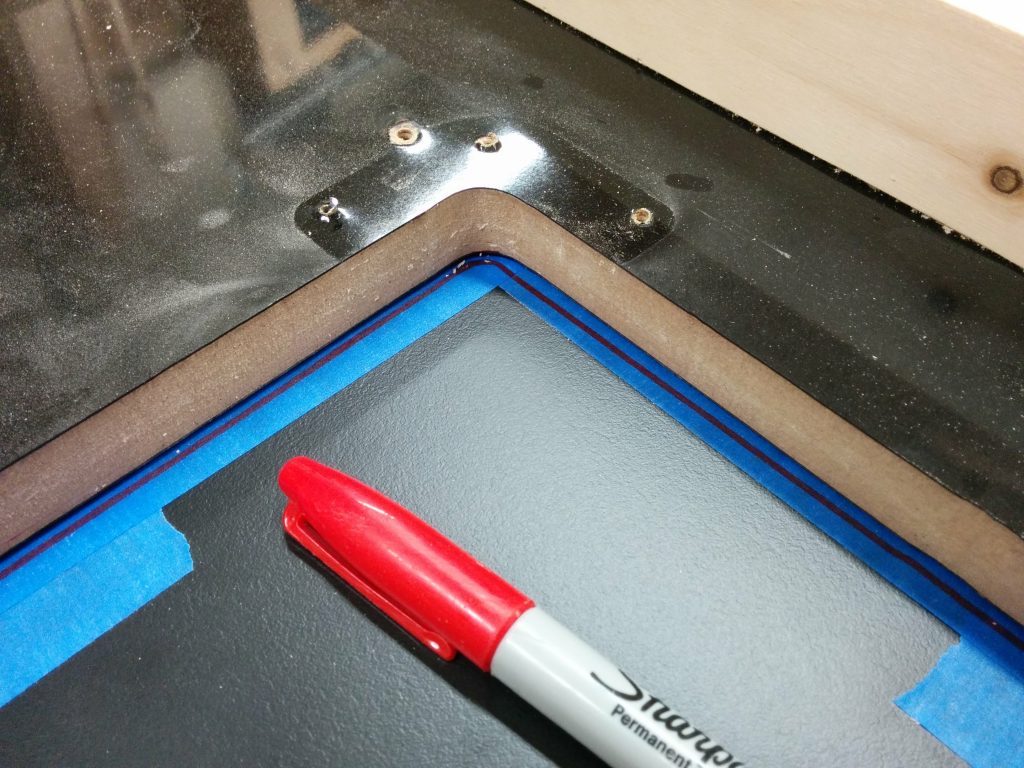
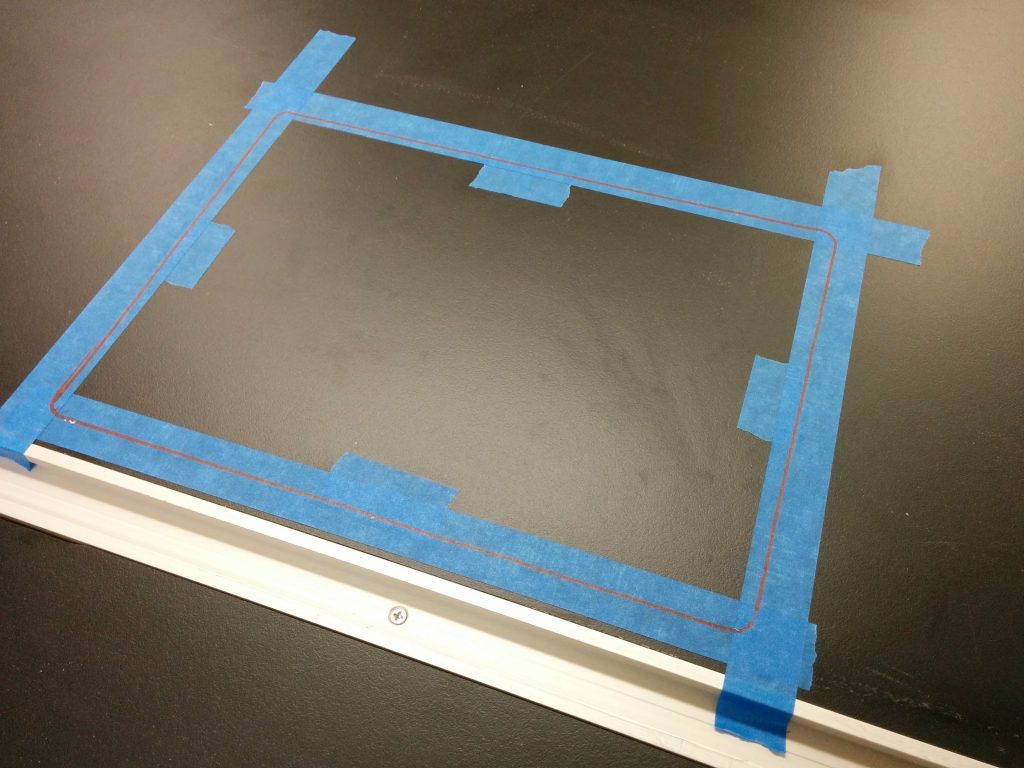
I used a red Sharpie to trace the opening on the blue painters tape.

Traced the outline of the opening with a red Sharpie.

I then removed the template yet again so I can see the outline I just traced.

Removed the template after tracing the outline.

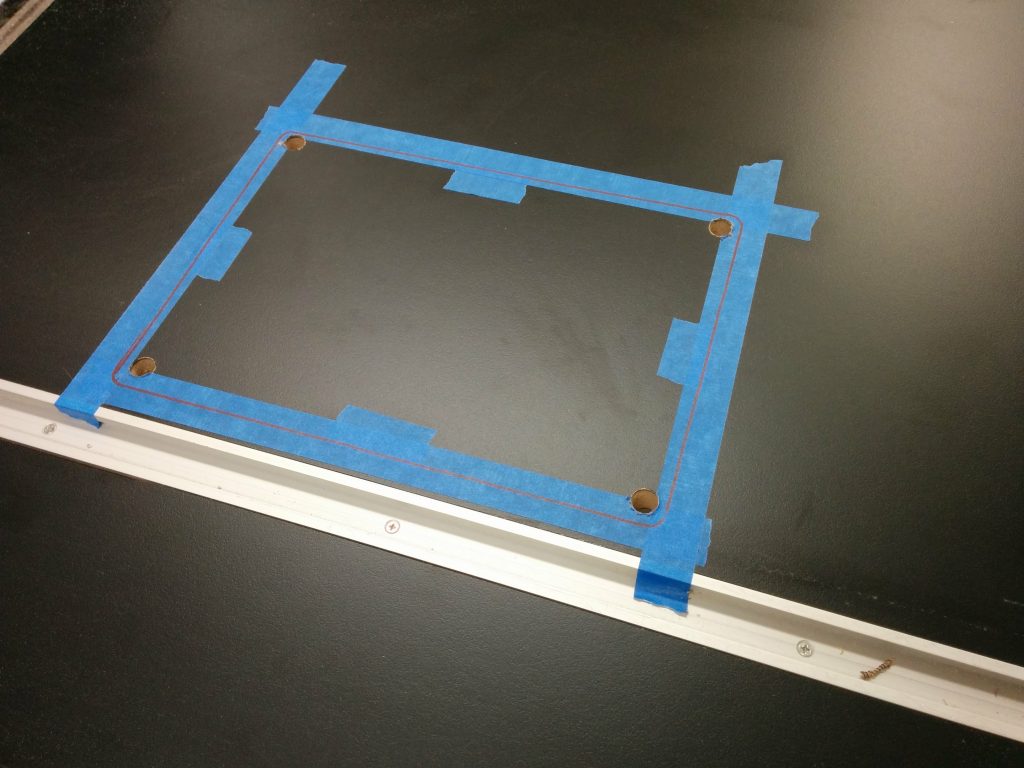
I drilled 1/2″ holes near the inner corners.

The holes have been drilled.

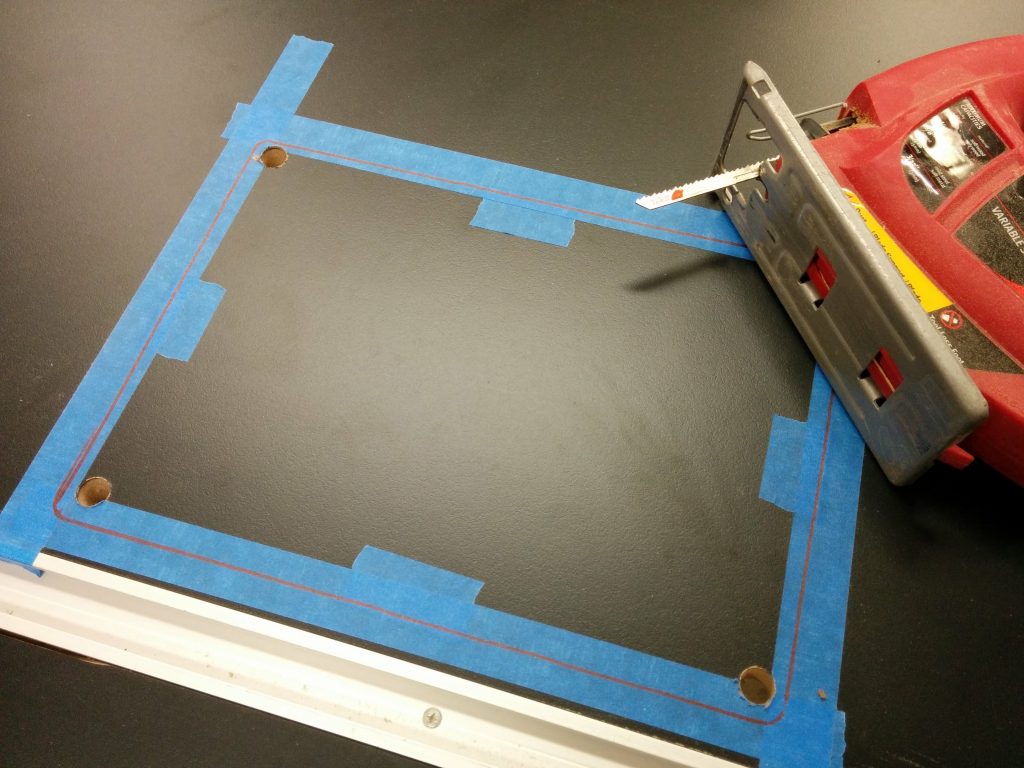
I’m using a jigsaw to remove the bulk of the material, roughly cutting it out about 1/4″ inside the lines.

I'm going to rough-cut out the opening with a jigsaw.
I’m going to rough-cut out the opening with a jigsaw.

Nice and sloppy. The critical thing is not crossing over the line.

The piece has been removed.

I reapplied the painters tape since it got a bit chewed up then laid out the template. This time positioning is critical so I took my time. I got one end clamped down…

Carefully positioned the left edge of the template and clamped that side in place.

…then used a try square to make sure the template was square with the table.

Using a try square to ensure the template is square with the table.

Once I was satisfied that it was square, I clamped down the opposite end then applied one more clamp to each edge just for good measure.

Carefully clamped the other end in place and secured with additional clamps.

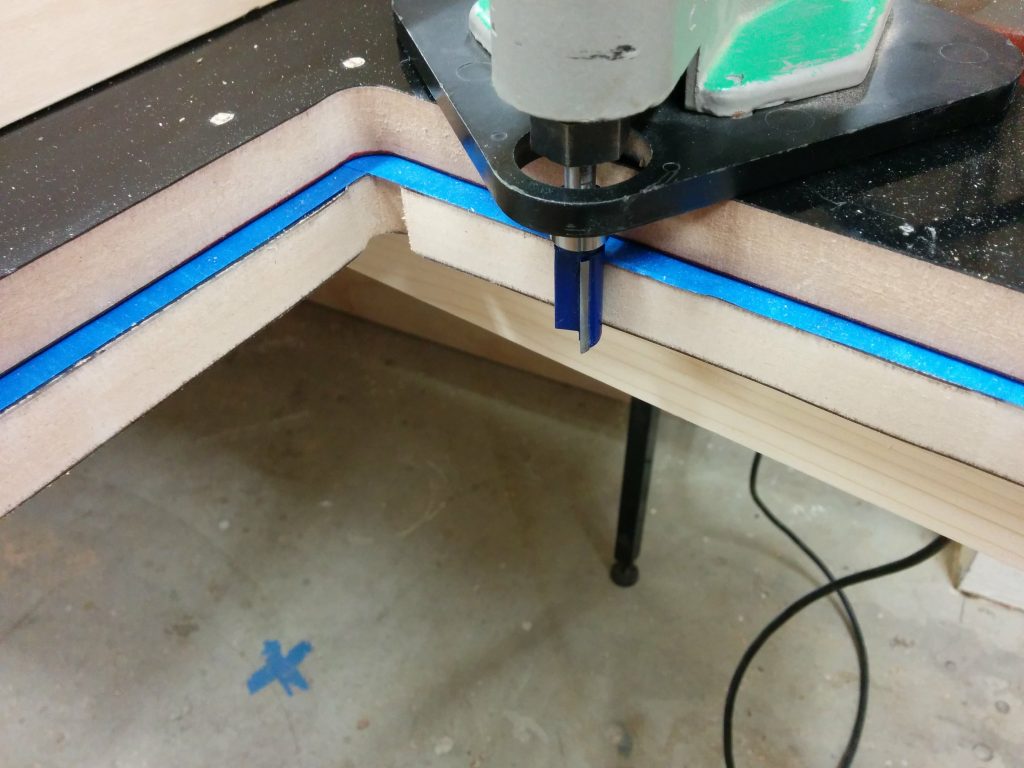
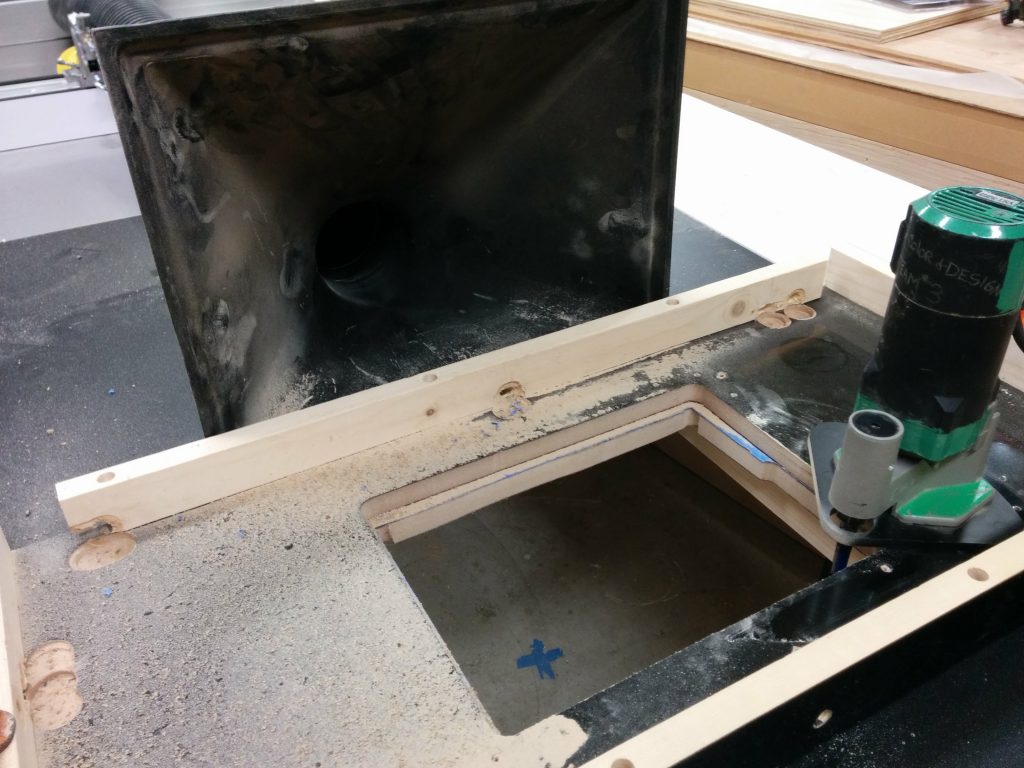
I outfitted my trim router with a 1/2″ pattern bit.

Positioning the router to cut out the opening.

It was throwing up quite a bit of dust so I set up a dust collection hood to grab most of it out of the air.

Getting pretty dusty so I set up my dust shroud.

I had a problem with the bearing on this pattern bit coming loose and the whole bit slipping. This caused a little gouge on the inner-right edge of the opening.

Chewed up the opening a bit when the bearing came loose. Otherwise, it looks okay.

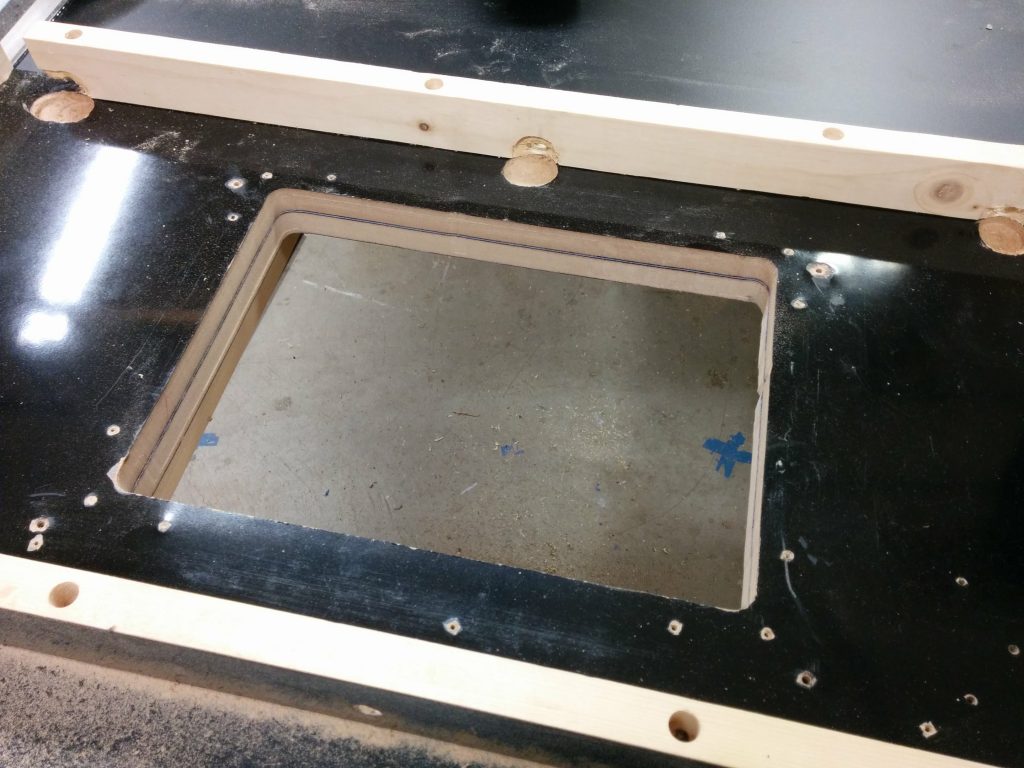
I removed the template and the painters tape so I could inspect the edge. There was a little divot where the bearing came loose but other than that, it wasn’t bad.

Removed the painters tape. Other than the small goober on the right, it didn't turn out bad at all.
Removed the painters tape. Other than the small goober on the right, it didn’t turn out bad at all.

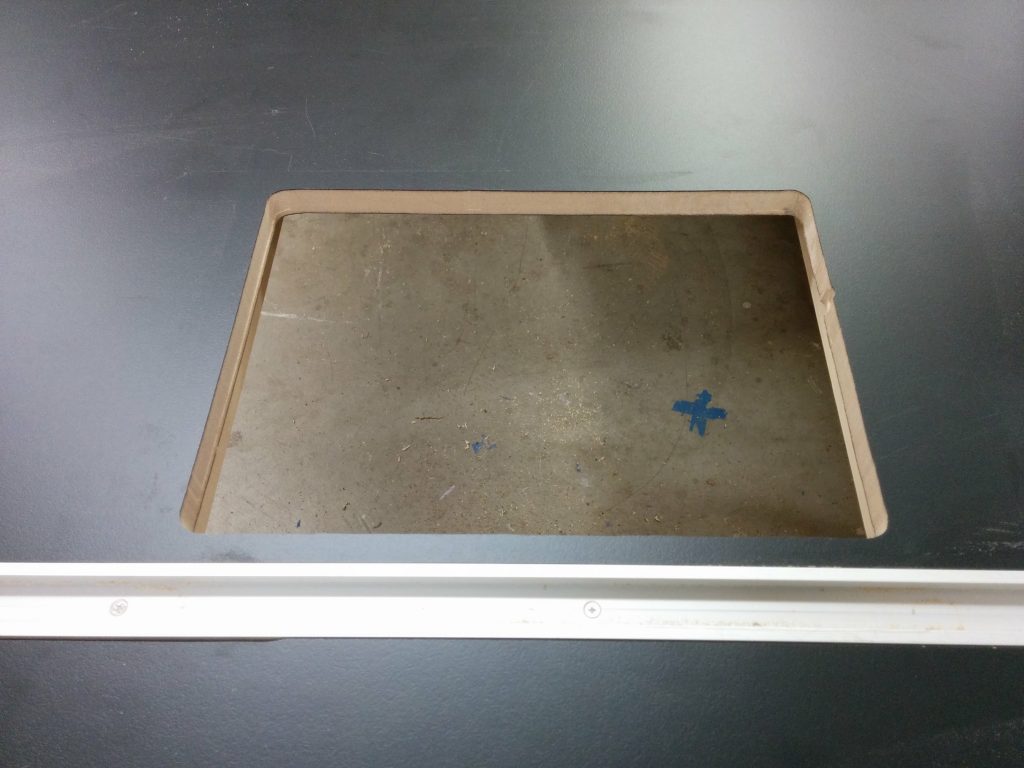
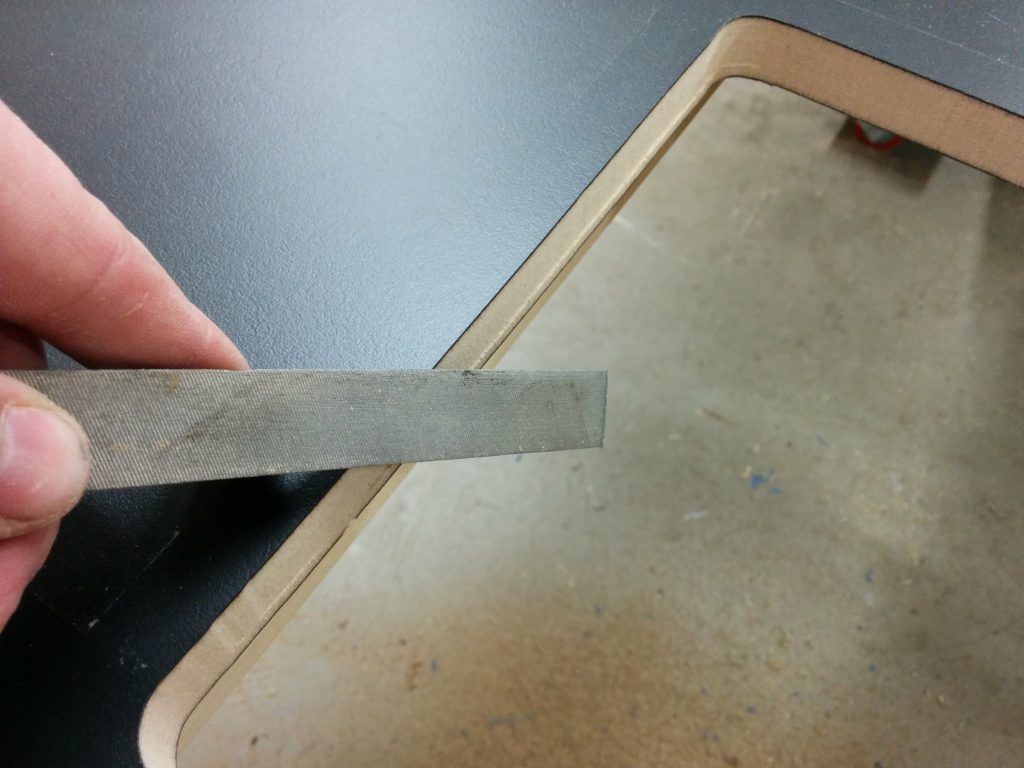
I used a file to break the edge a bit.

Broke the edges a bit with a file.

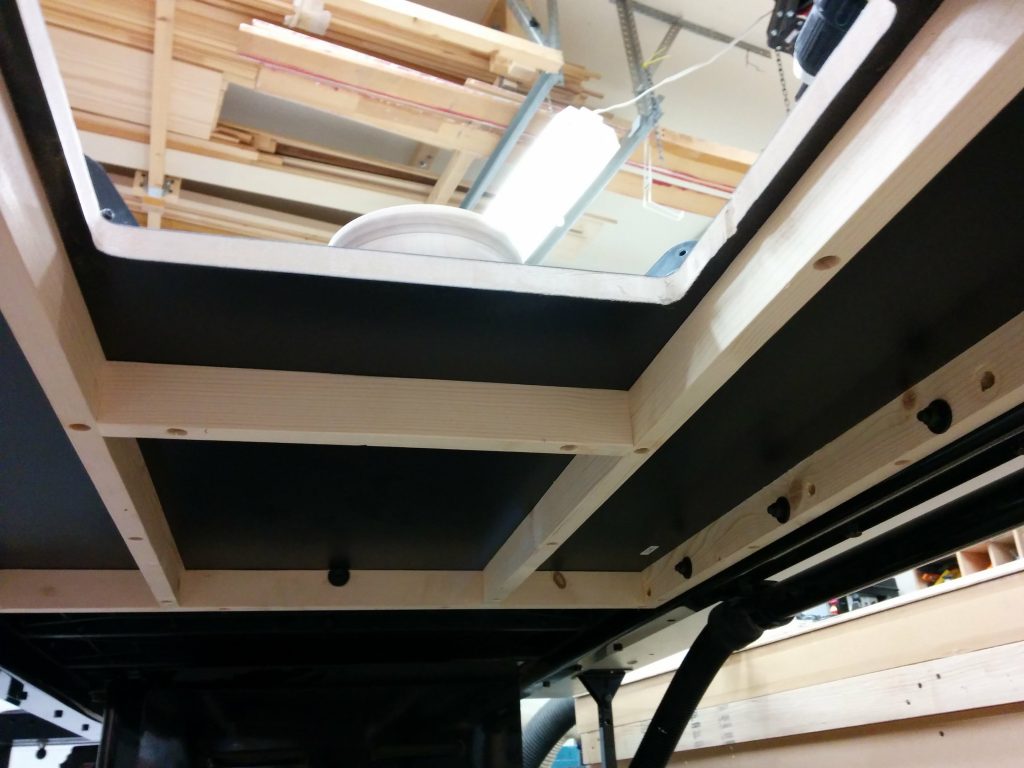
This particular extension table has some support bars underneath. They are only screwed in and are easy to remove.

The table braces are going to get in the way so I'm going to move them.
The table braces are going to get in the way so I’m going to move them.

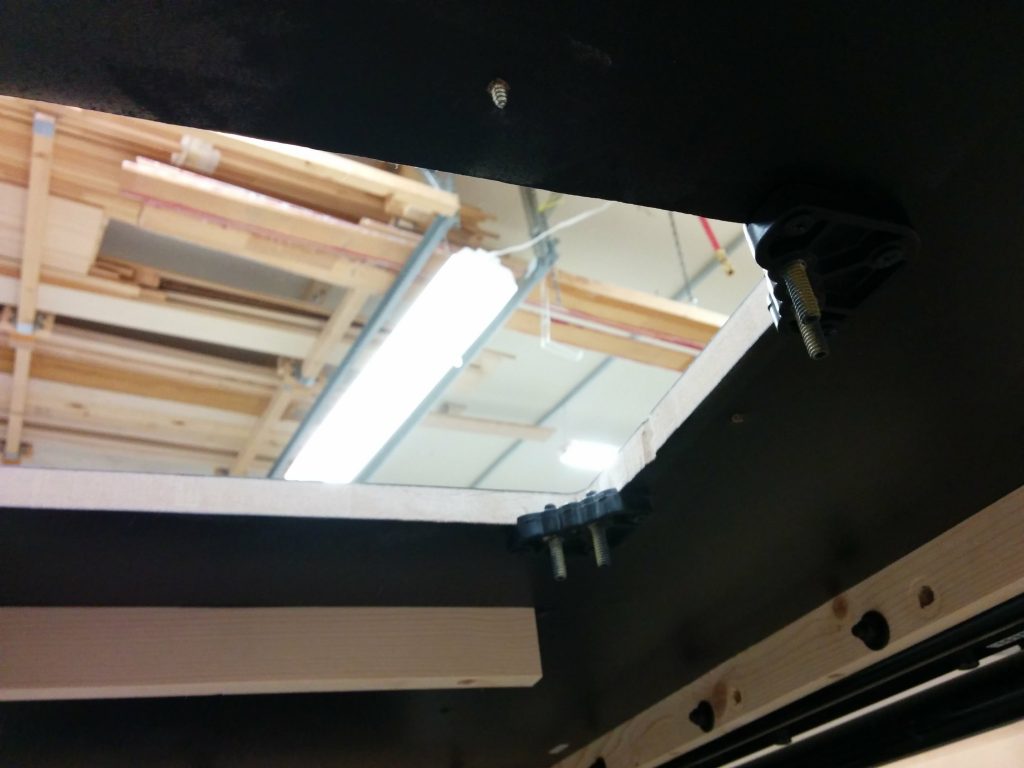
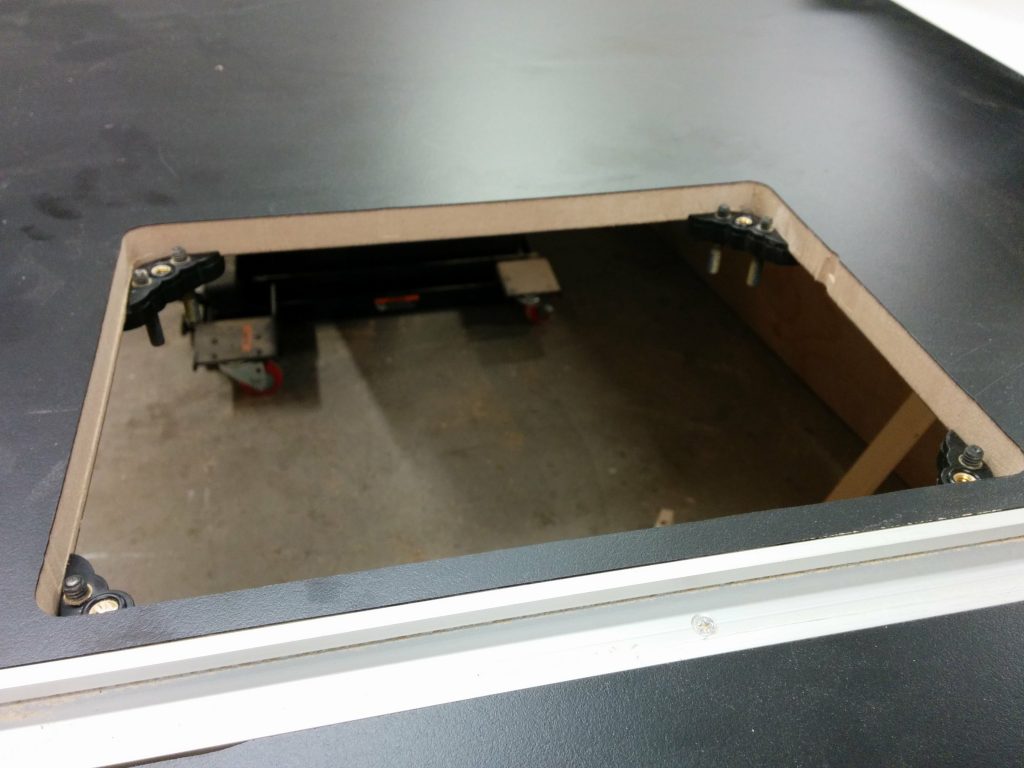
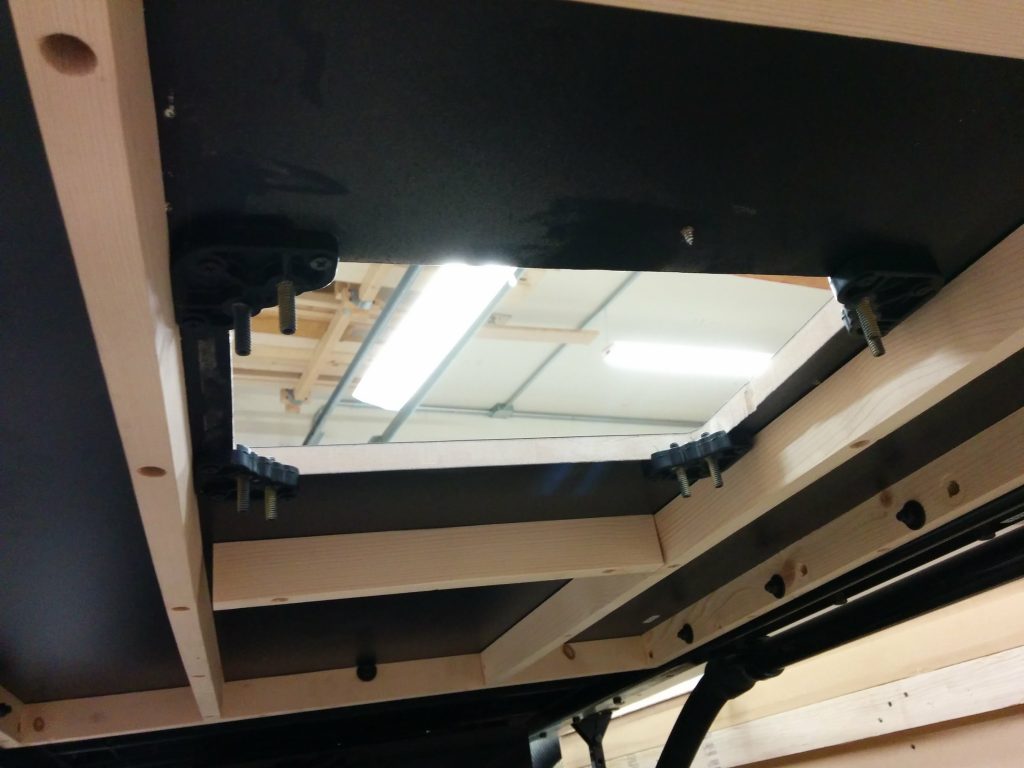
I removed the support bars so I would have room for the Kreg PRS3040 Precision Router Table Insert Plate Levelers which installed easily from underneath the table.

Installed the Kreg PRS3040 Precision Router Table Insert Plate Levelers.

Each leveler has two set screws that are used for leveling the router insert.

The Kreg levelers went in easily.

I reinstalled the support bars. I had to move them by about 1/4″ from their usual spot.

I reattached the supports under the table.

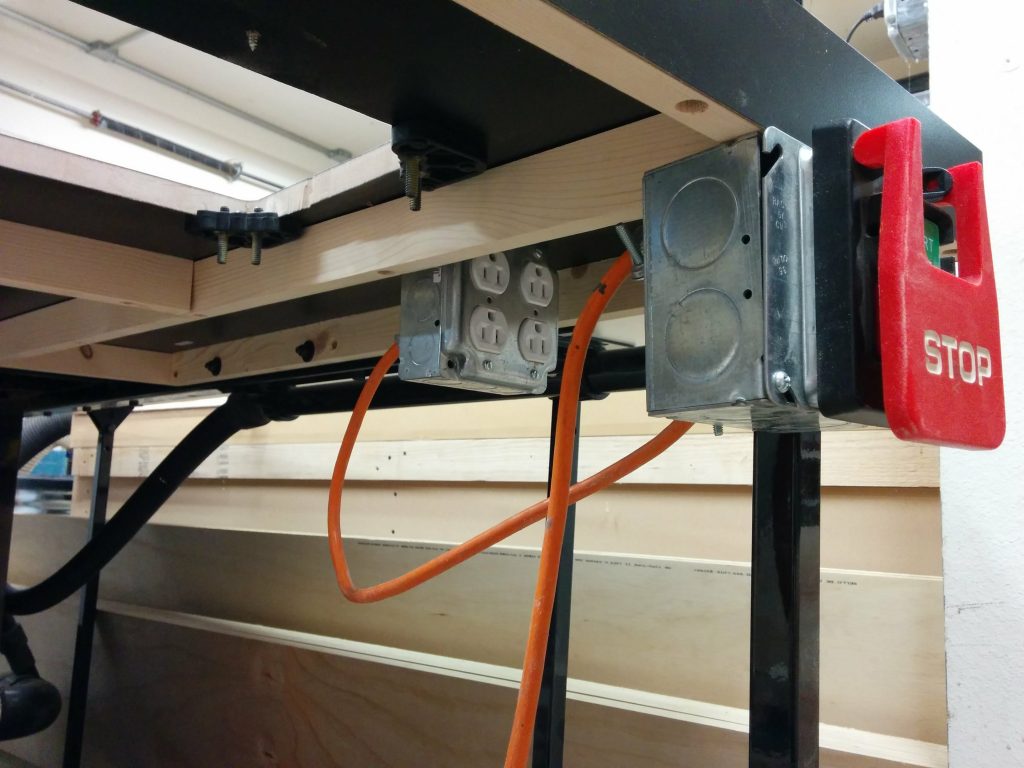
The next step was to start hooking things up. I installed a 4-outlet electical box that was wired to a motor power switch.

I hooked up an electrical outlet and a knee switch under the table.

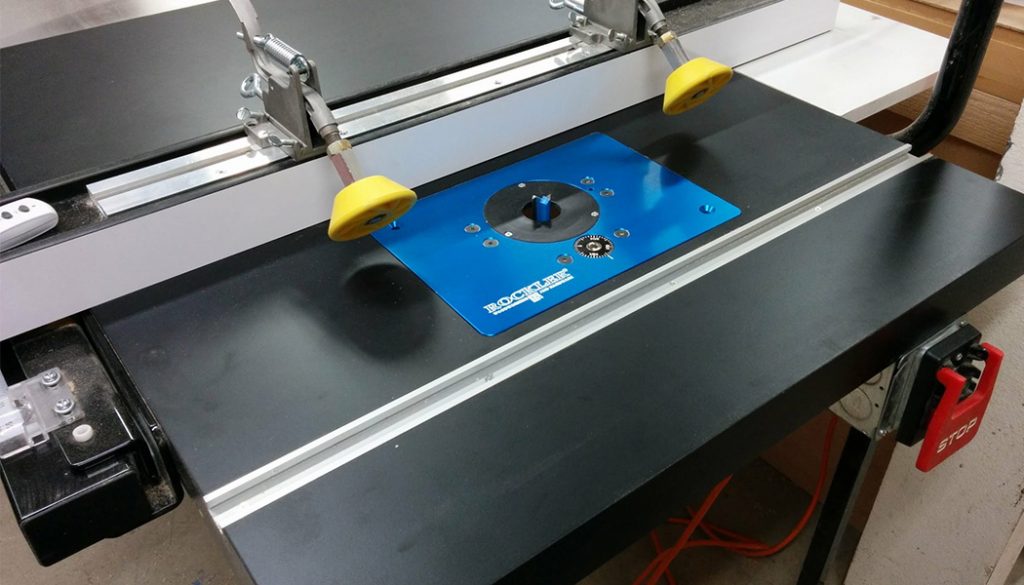
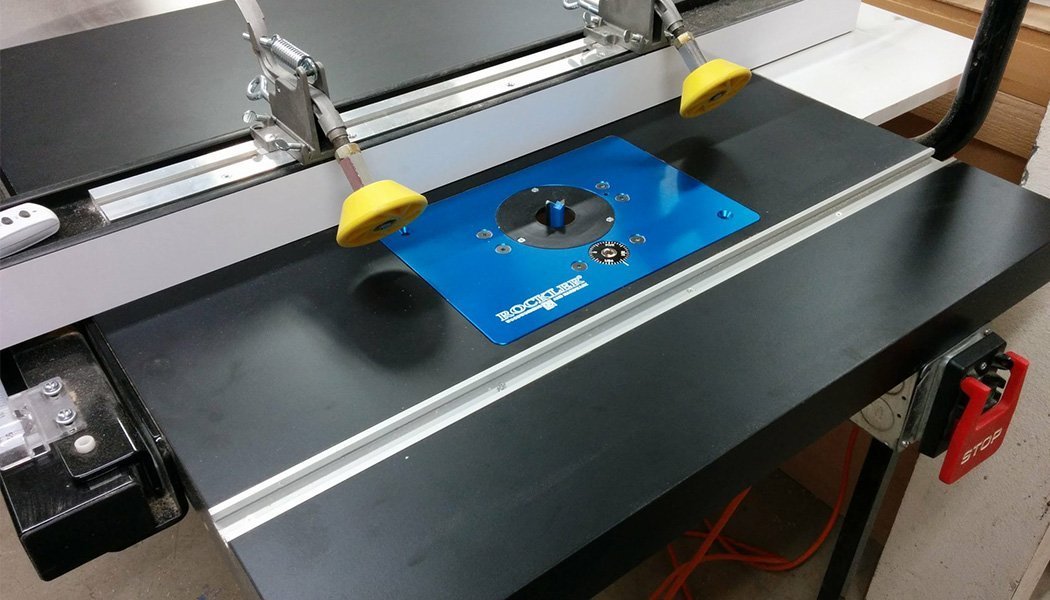
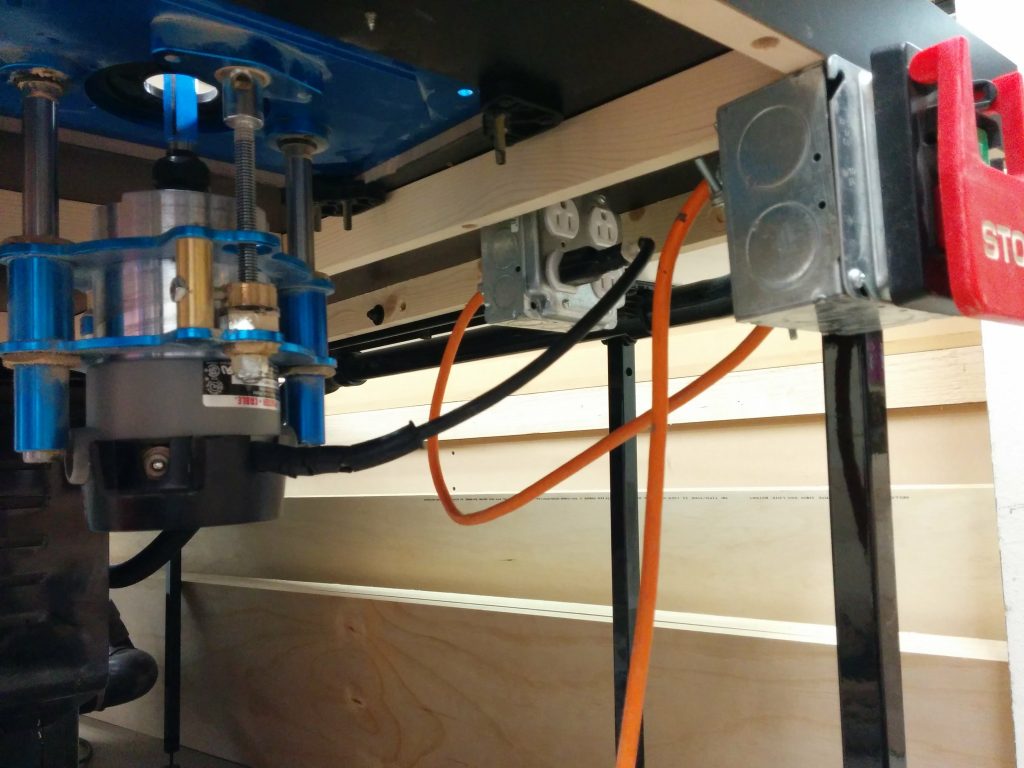
Then it was simply a matter of dropping the Rockler router lift in place and plugging in the router.

The router lift has been placed in the table and the router plugged into the outlet.

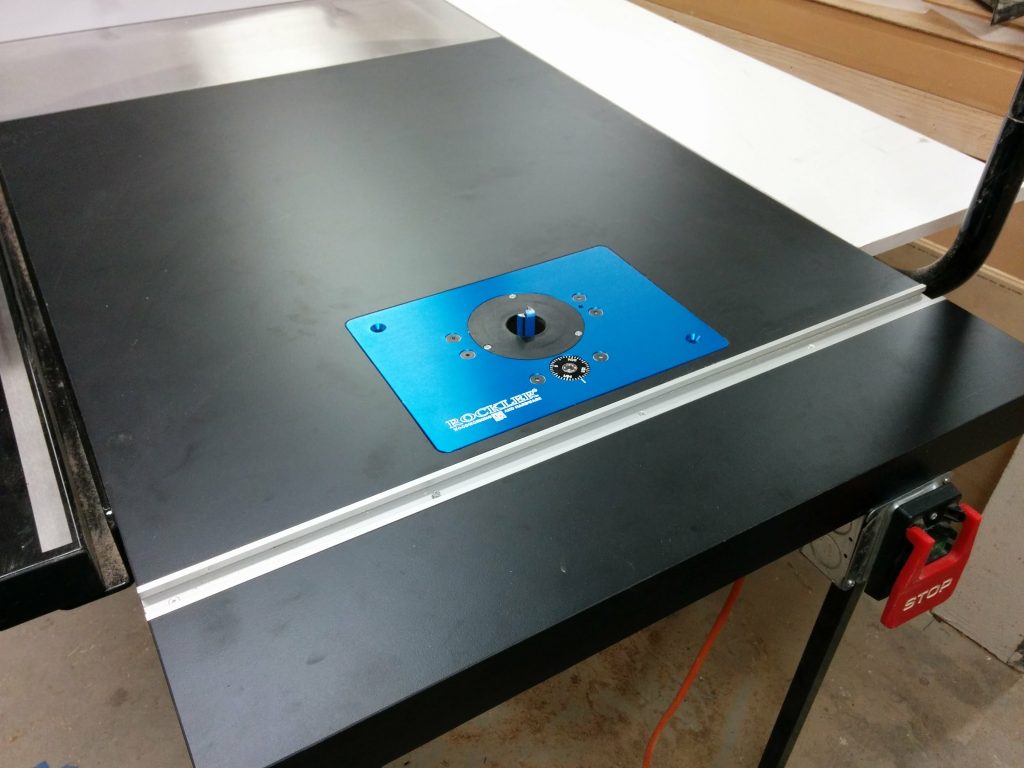
A little bit of leveling and I’m all done.

The router table is all finished.

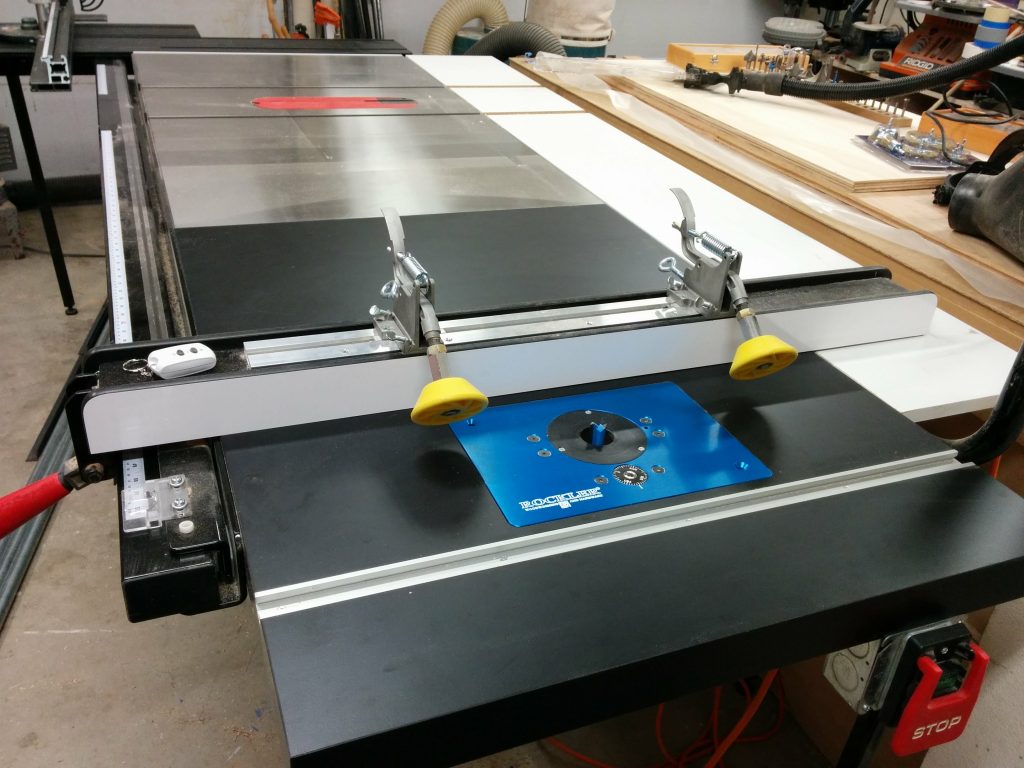
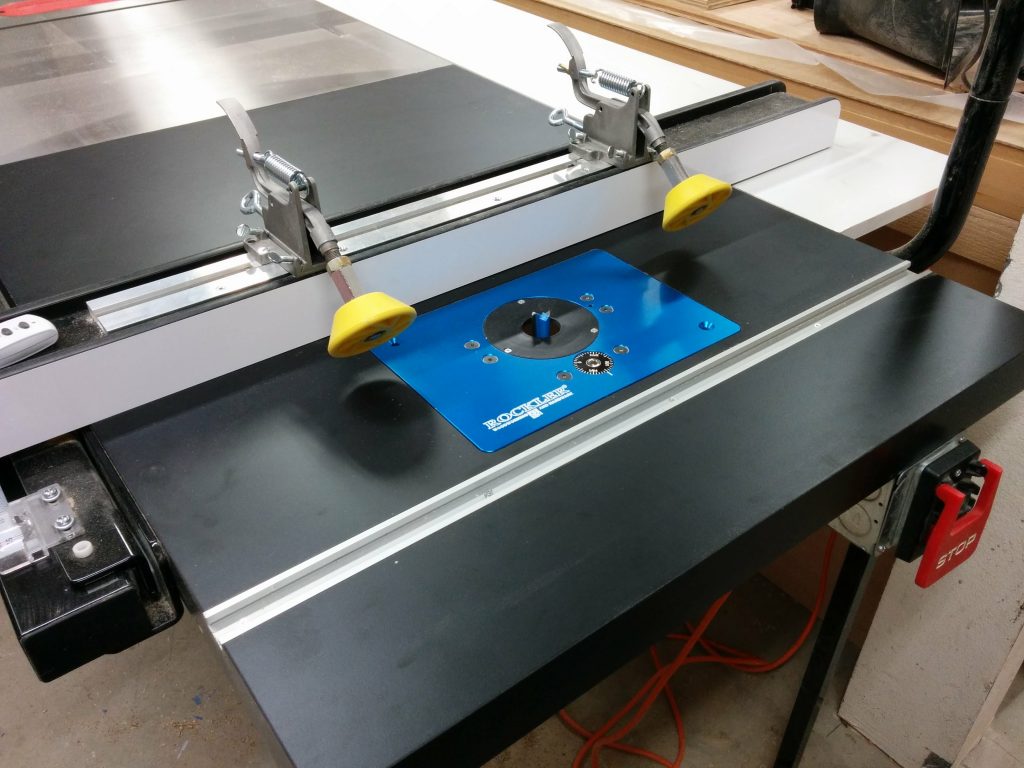
I can use the table saw fence with the router table. This photo shows how close I can get it to the router bit. I will be making an auxiliary router table fence with built-in dust collection that I can attach to my table saw fence, but that’s a project for another day.

I can use the table saw fence with the router table as well.

That’s it! Up next is an enclosure for the router and maybe some drawers for storing router bits. For now, I’ve got some other projects that require my attention.

If any of this has been helpful to you, or if you have any suggestions or questions, please take a minute to post a comment below. I’d especially like to hear any suggestions for projects that you’d like to see me tackle.

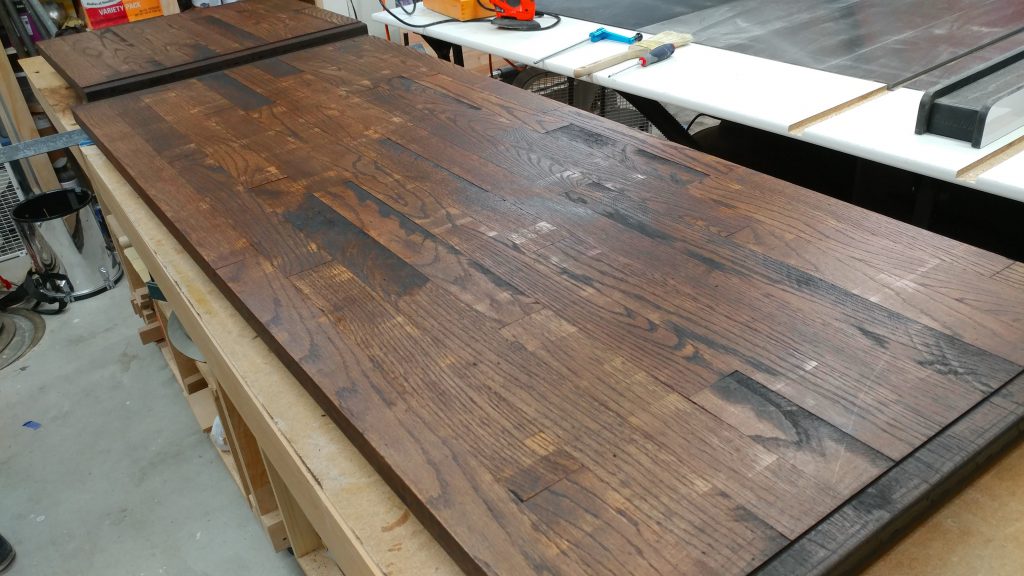
All done with two slabs cut to 5' and 2' in length.

Workbench: Part 5 – Cutting the benchtop to size

The top is all glued up so now I need to strengthen it by attaching 1/2″ plywood to the underside. I can then cut it down to the final size to prepare it for finishing.

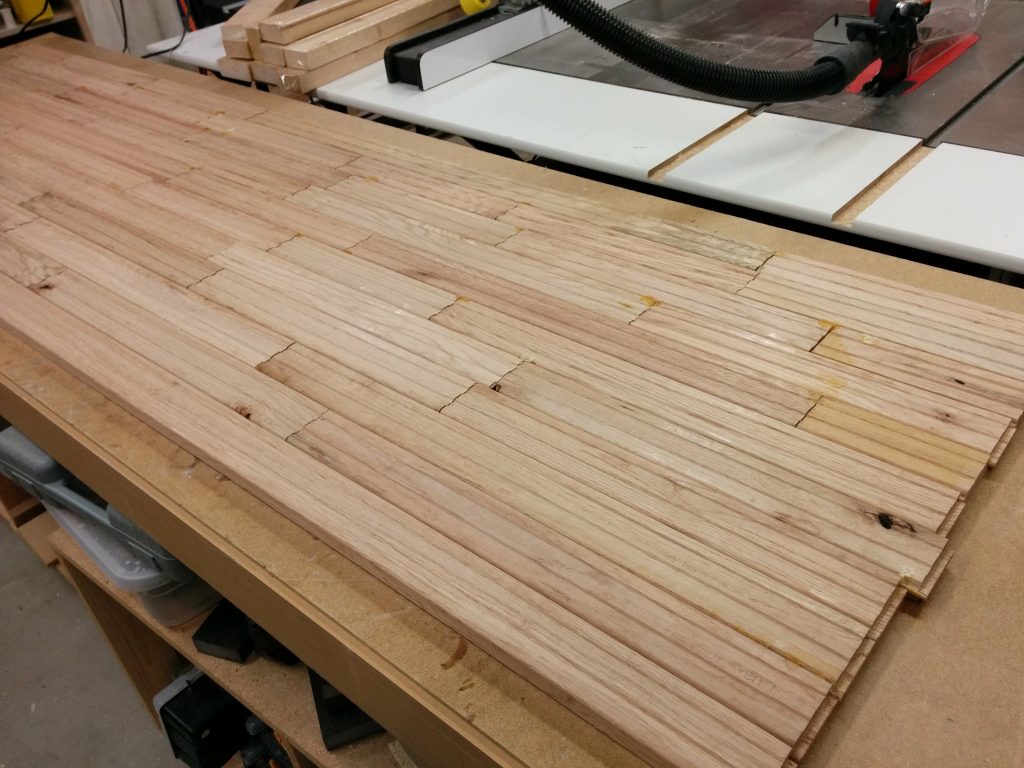
Looking at the underside of the glued up benchtop.

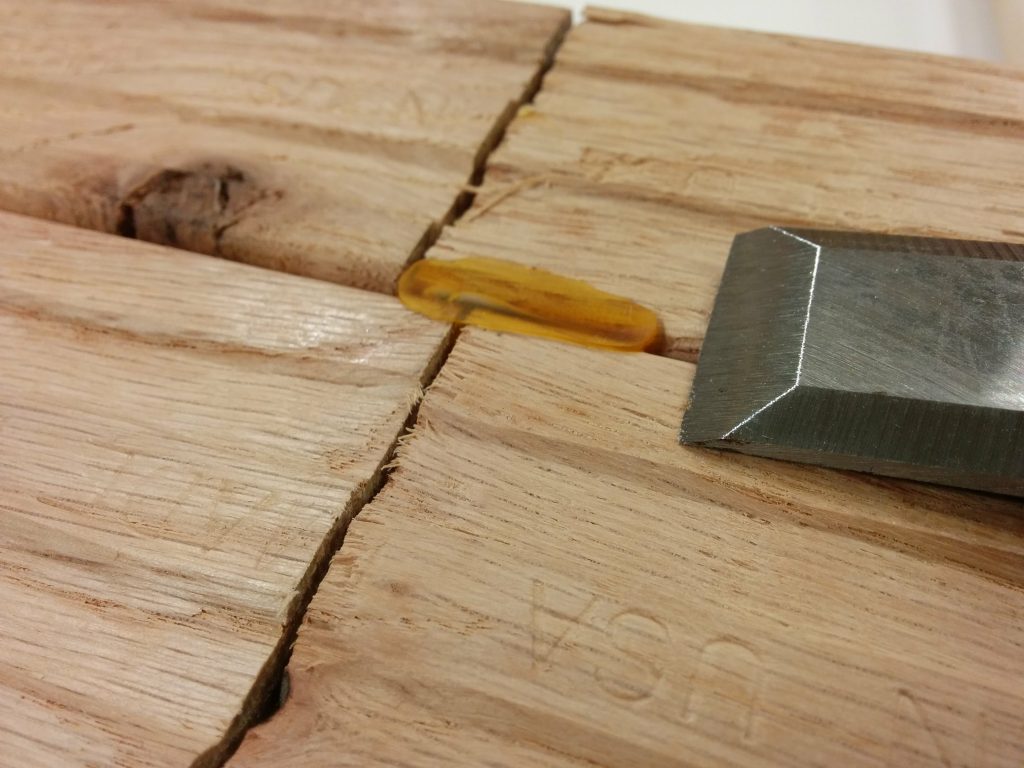
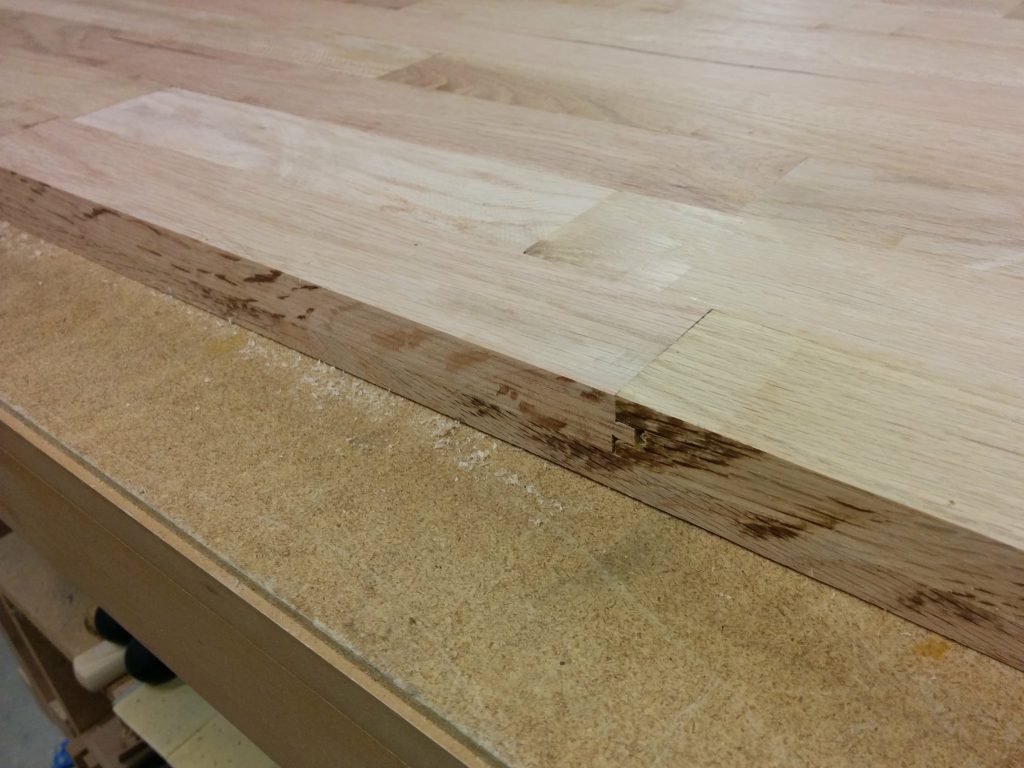
There were a few spots of glue squeeze-out that I decided to remove so they don’t interfere with attaching the benchtop to the plywood. I just scraped them flat with a chisel.

Removing the glue squeeze-out with a chisel.

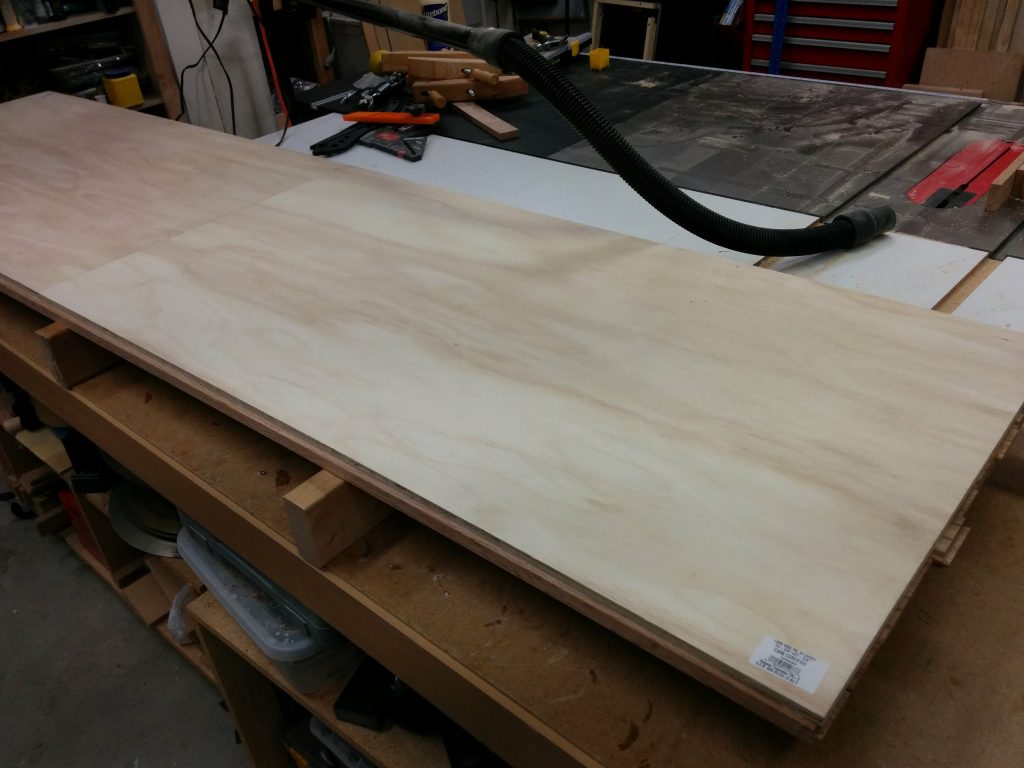
I am attaching two sheets of 1/2″ plywood cut to 2′ X 4′ pieces. I laid them out to see which would be the best placement for them. The benchtop so far is about 25″ deep so there will be a lip overhanging the plywood at both the front and back. My initial plan was to cut the front and back edges flat then attach a border, but that plan changed, as you’ll see in a moment.

Laying out the 1/2" plywood.
Laying out the 1/2″ plywood.

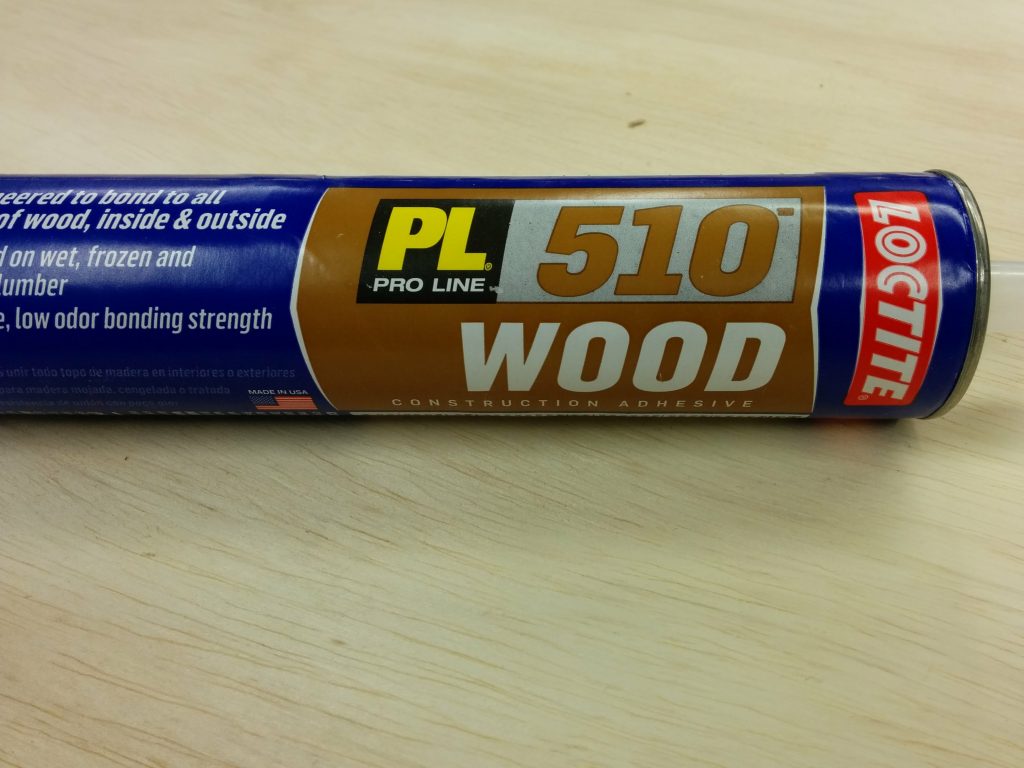
I am using Loctite PL 510 construction adhesive to attach the plywood to the benchtop.

LocTite PL 510 construction adhesive for attaching the plywood.

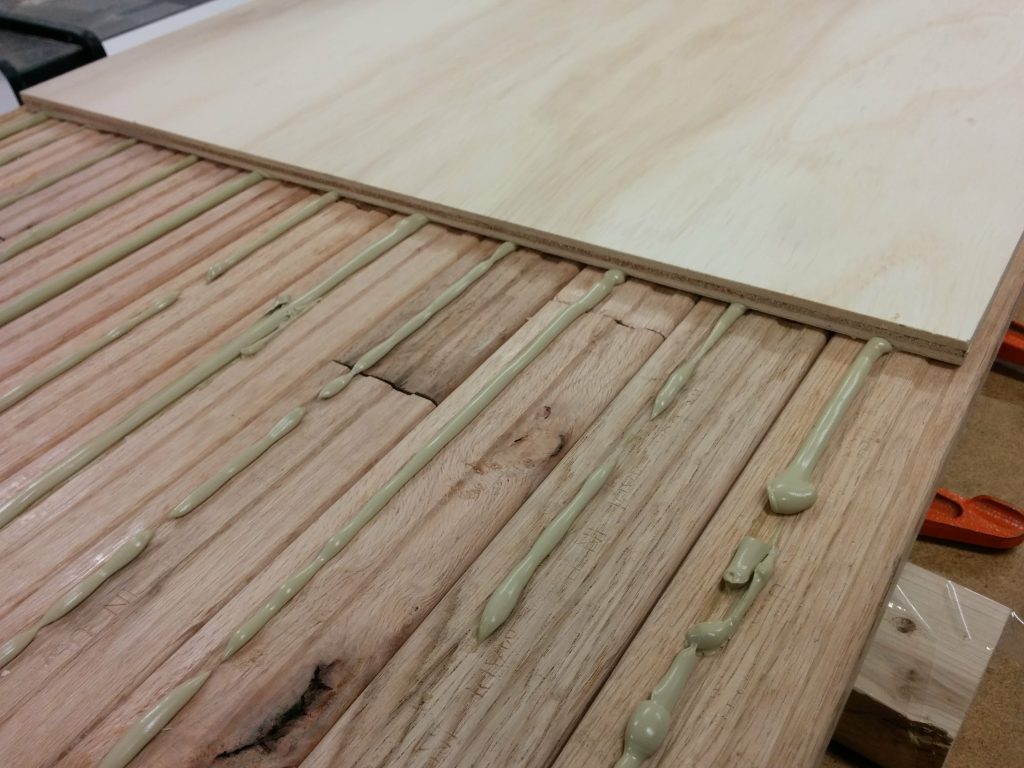
I ran a bead of the construction adhesive down the length of each strip of flooring. This is, of course, working on the underside of the benchtop. Then I placed the plywood sheets on top of that. I tried to get it relatively centered.

Attaching the plywood with the construction adhesive.

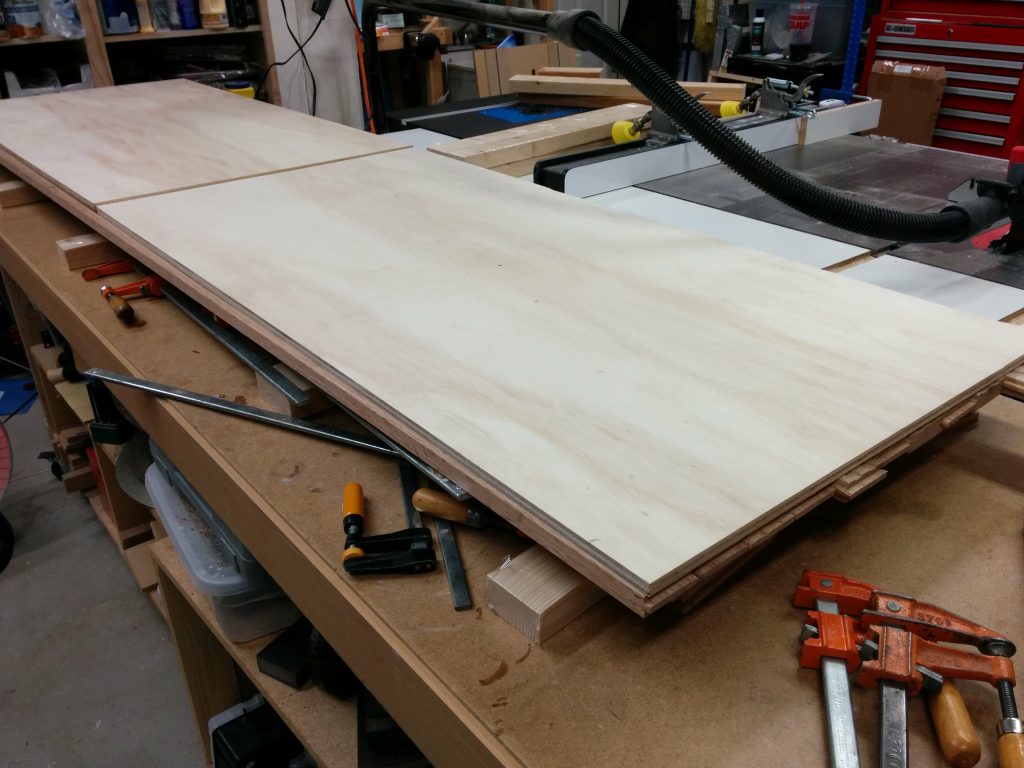
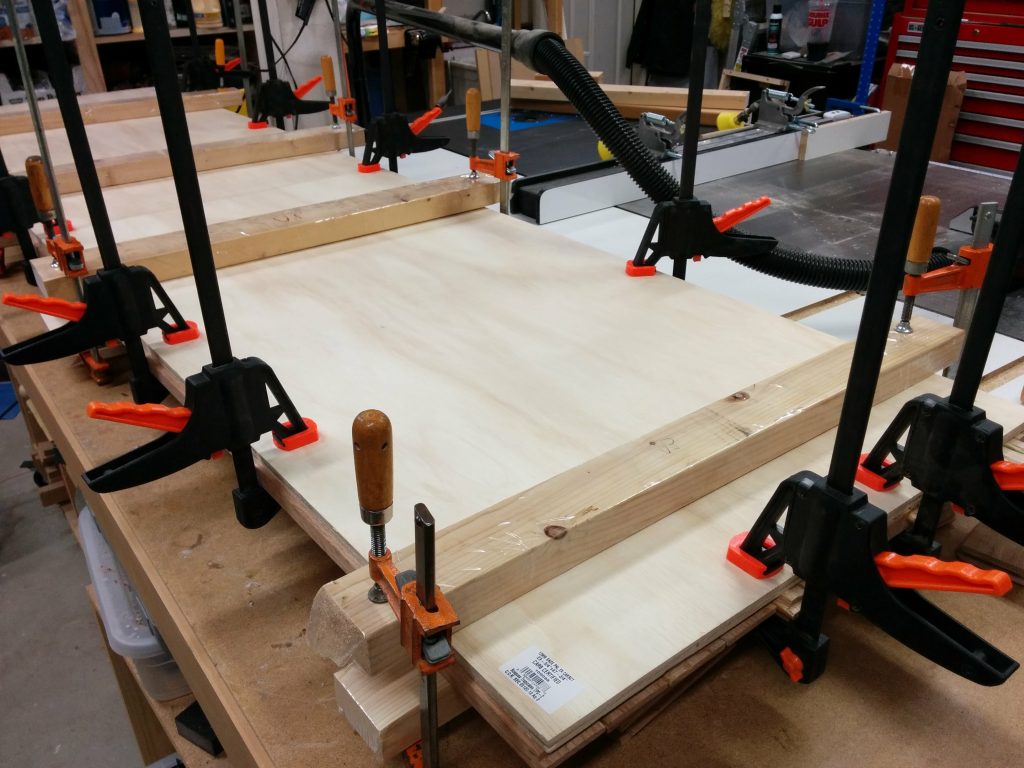
I clamped and cauled the plywood sheets to the benchtop and let it dry for 24 hours.

Clamping the edges.
Clamping the edges.

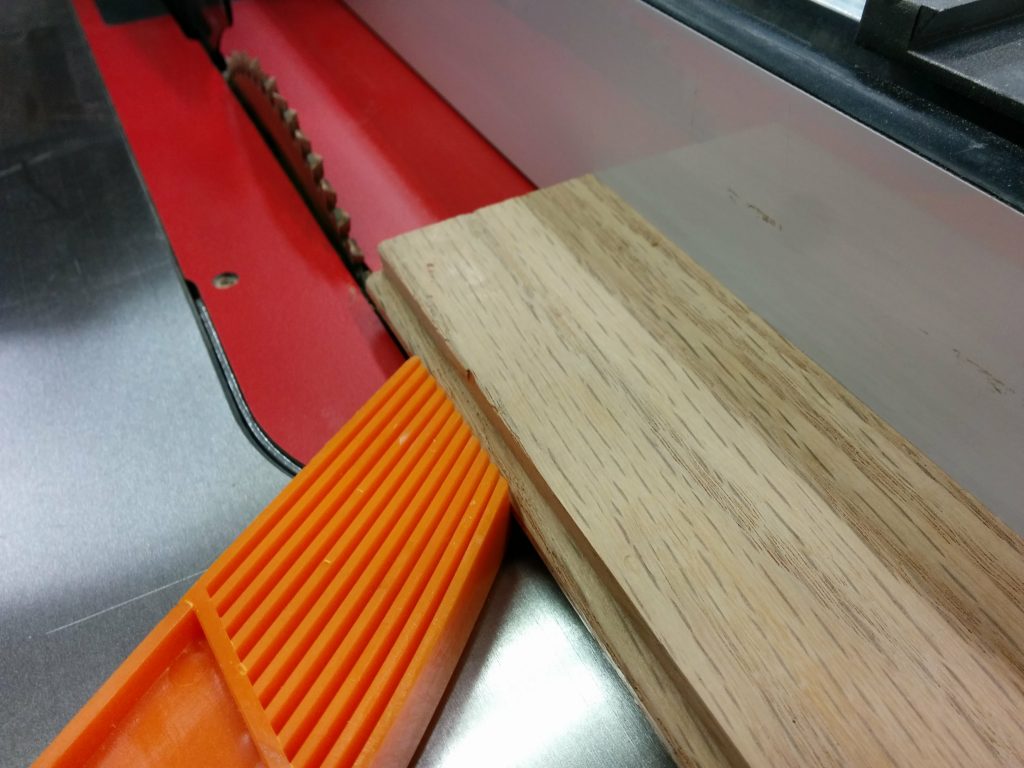
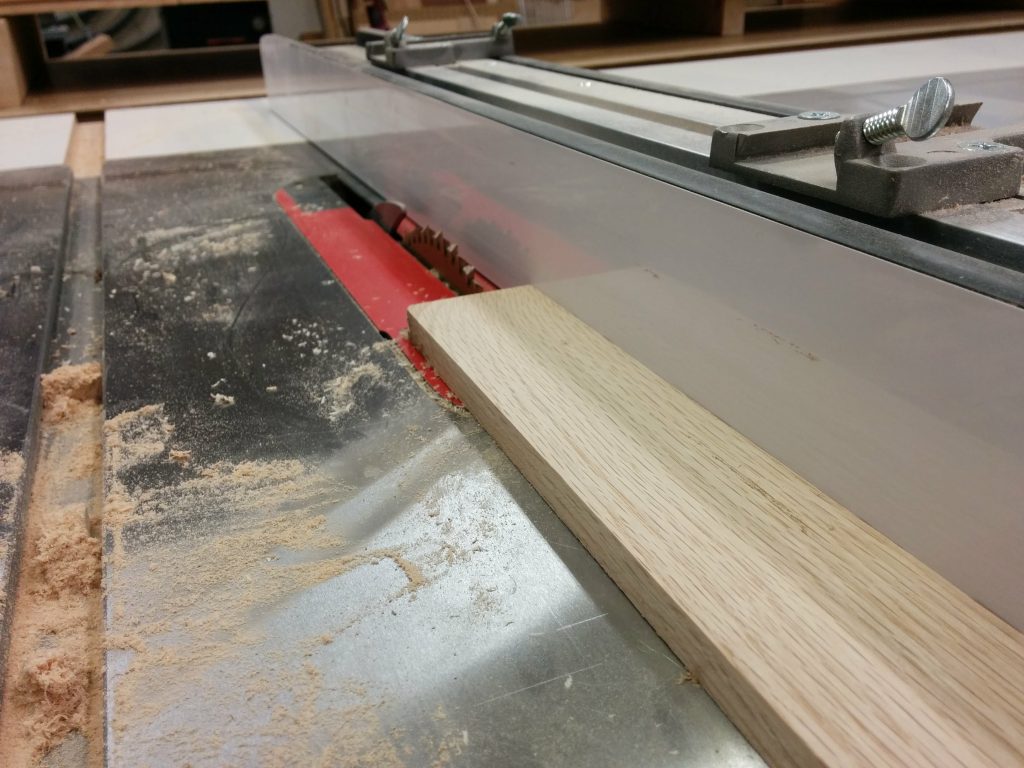
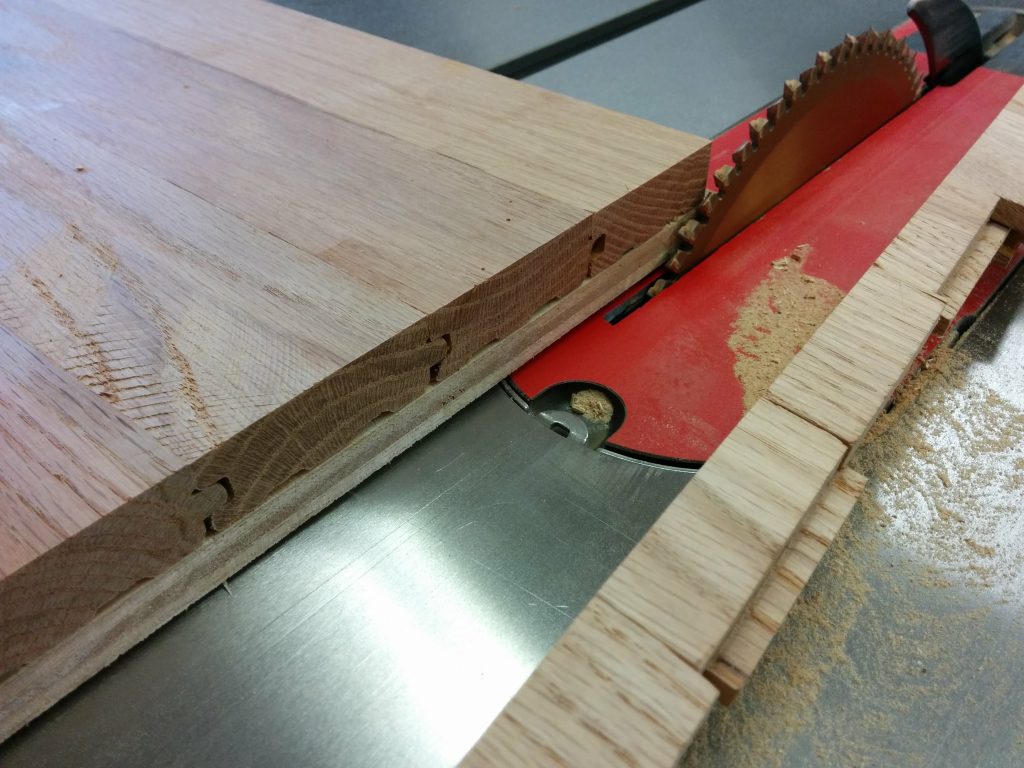
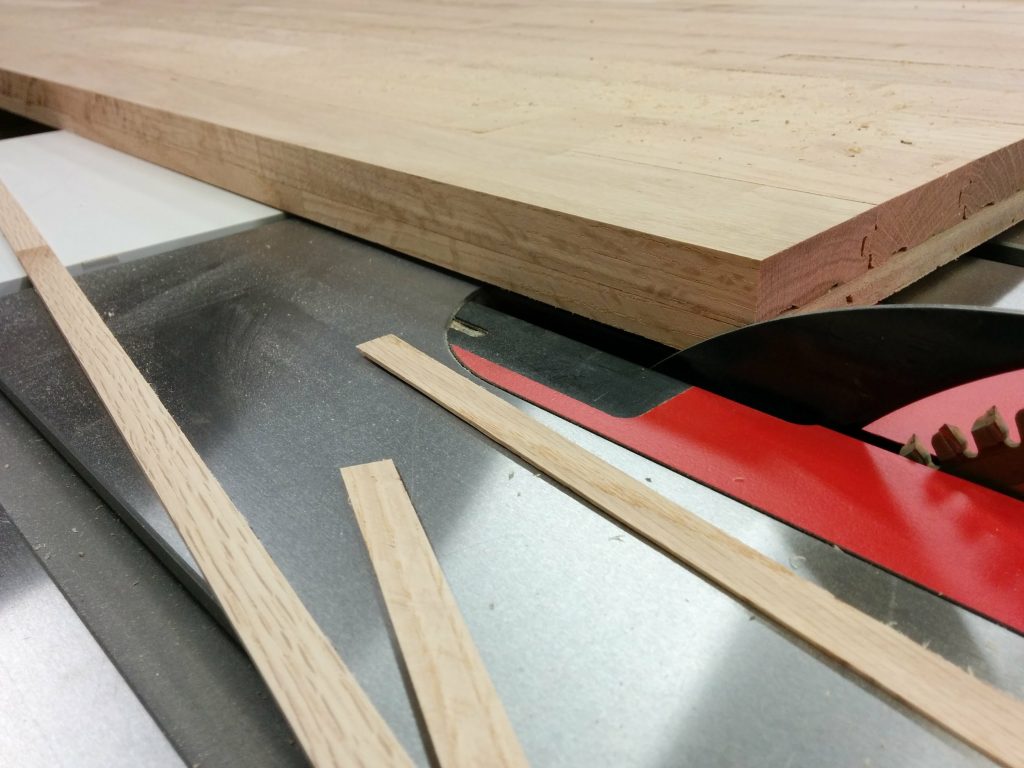
My original plan was to mill down some more of the flooring scraps and make a border along the front and back of the benchtop that was 1-1/4″ tall and 1/2″ deep. This was mostly to cover the plywood that is being attached to the underside of the benchtop. I started by cutting the tongue off the side of the flooring pieces.

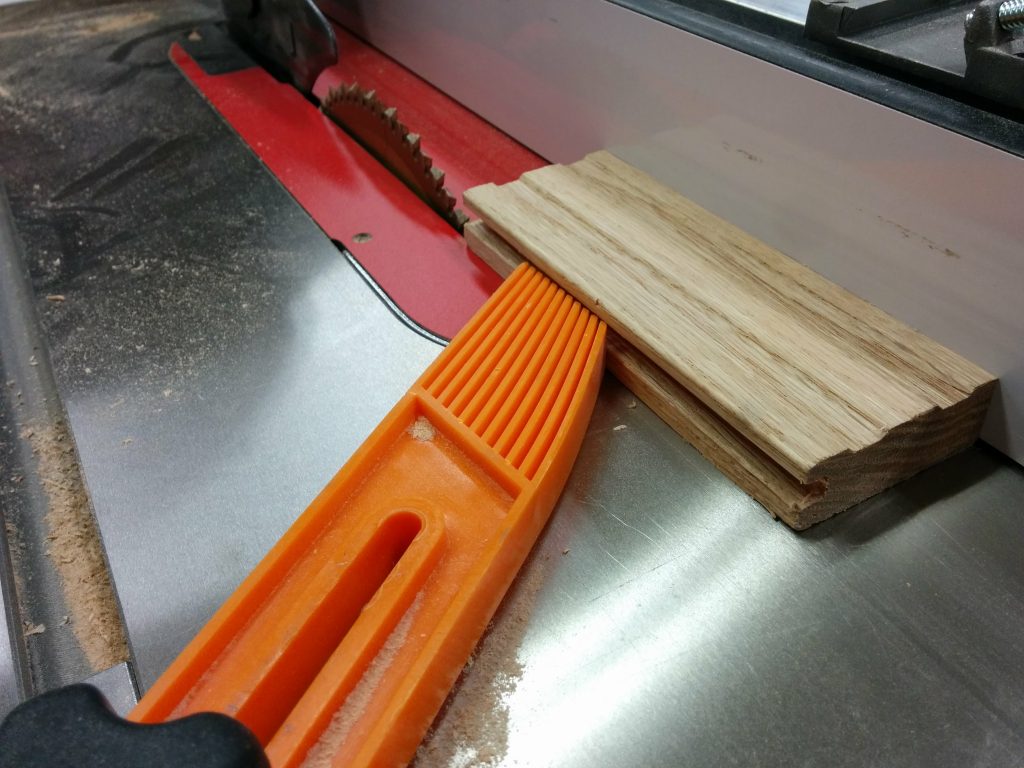
Cutting the tongue off several pieces of flooring.

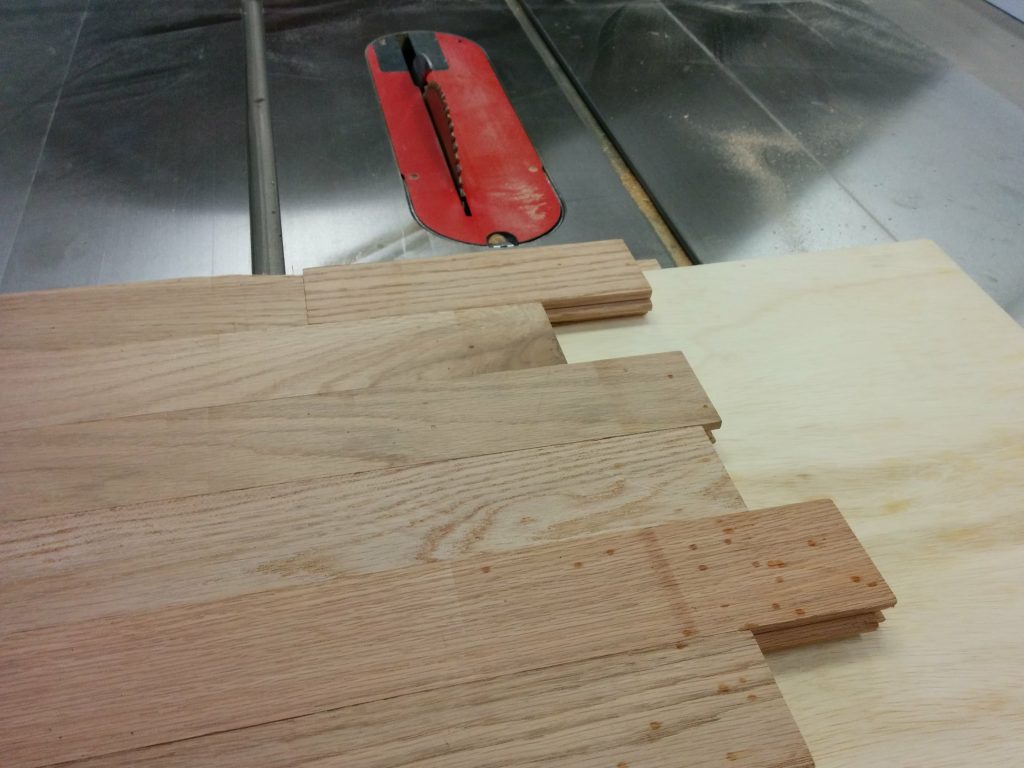
After that I cut off the groove on the opposite side.

Removing the groove from several pieces of flooring.

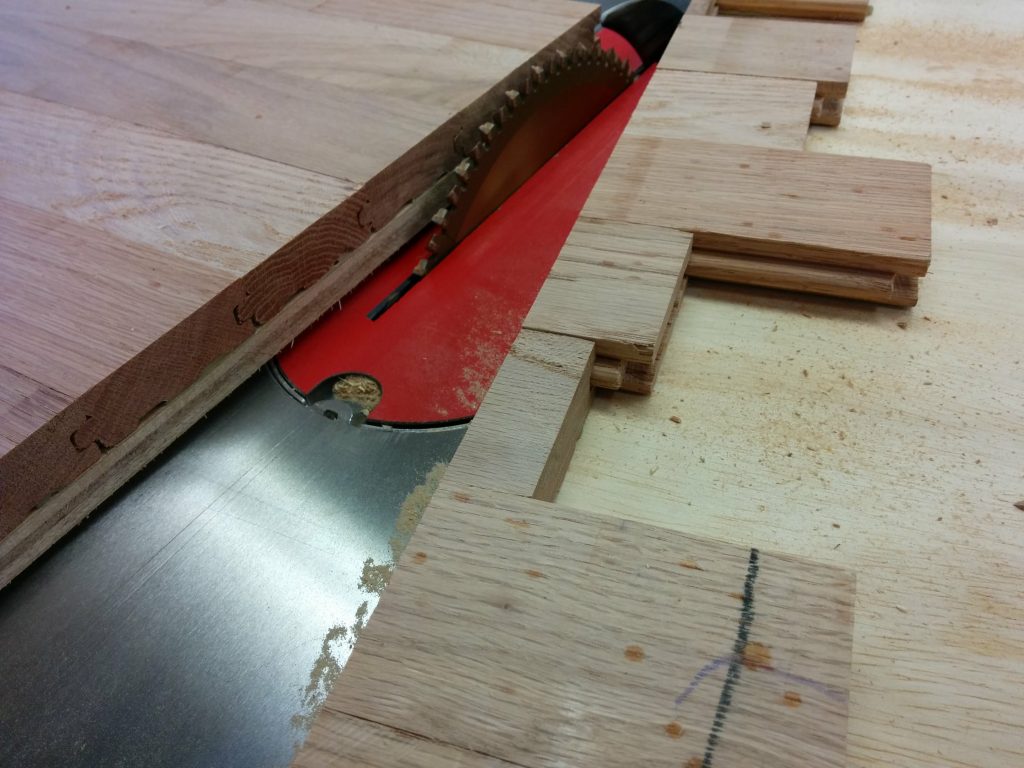
Then I trimmed the tongues and grooves off each of the ends.

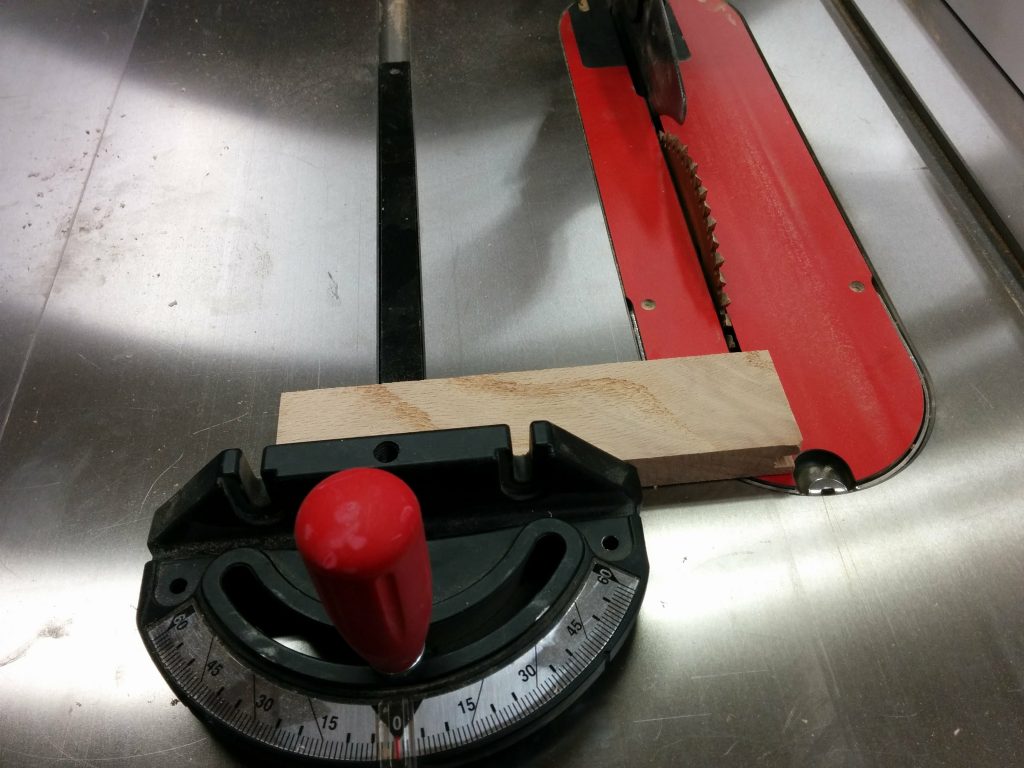
Using the miter gauge to remove the tongues and grooves from the ends.

Finally I trimmed off the grooves along the bottom of the flooring pieces. I also ended up shaving a bit off the tops just to clean them up.

Cutting the grooves off the bottoms of the flooring pieces.

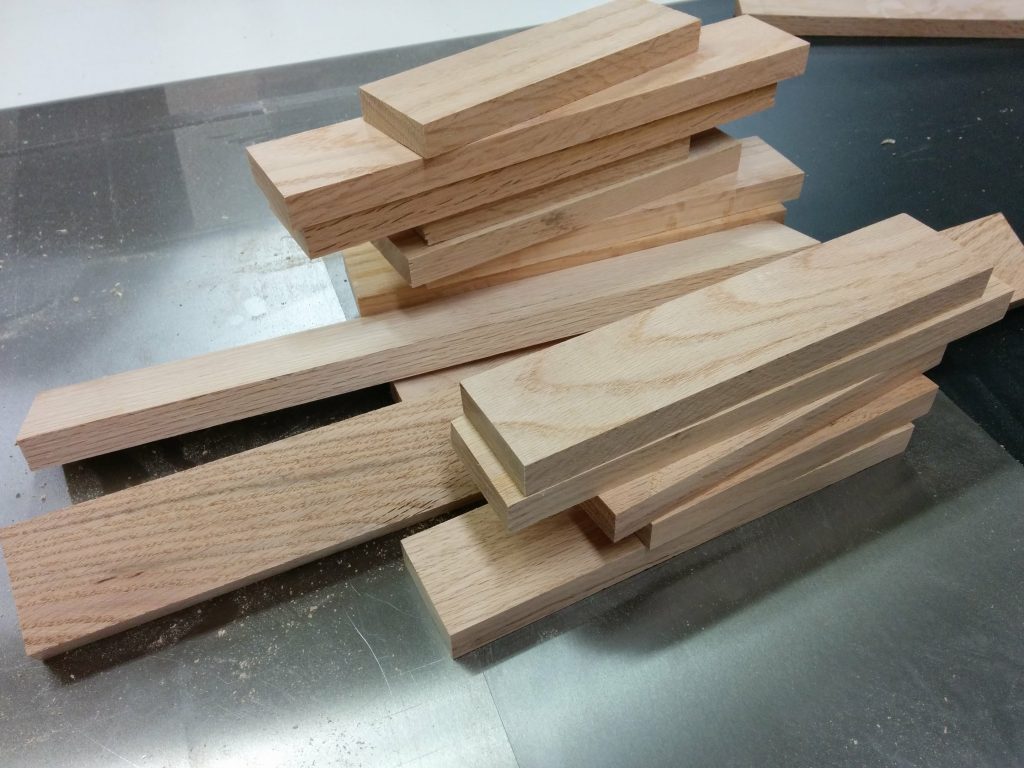
This left me with some nice oak stock to use for the front and rear trim.

Now this gives me some nice usable stock to work with.

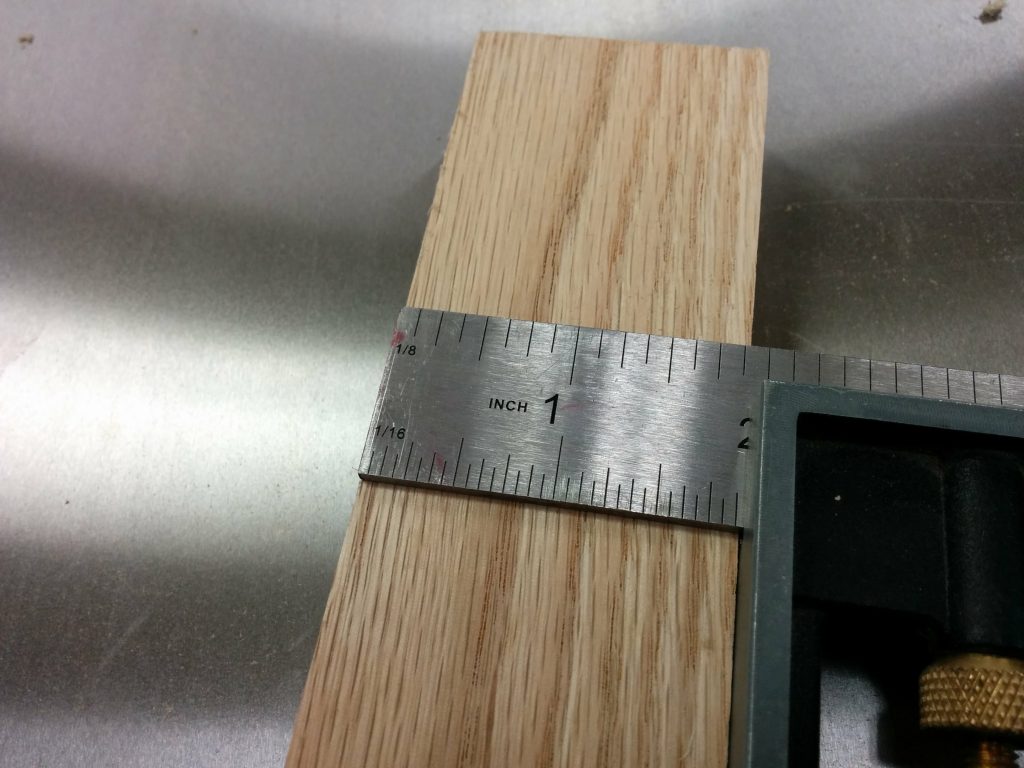
The final width of each piece was a little over 1-7/8″ wide…

This leaves me with ~1-7/8" of material to work with.
This leaves me with ~1-7/8″ of material to work with.

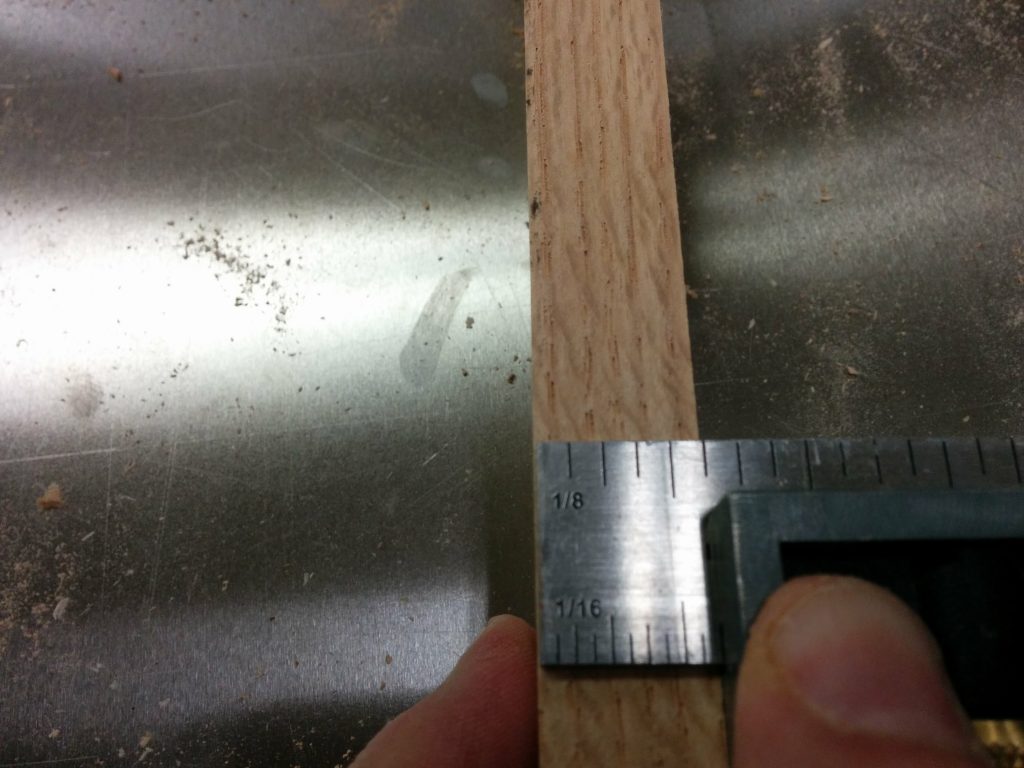
…and 5/8″ thick.

This gives me some nice 5/8" stock.
This gives me some nice 5/8″ stock.

I removed the clamps and cauls and decided to get my wife’s opinion on the front and rear trim idea. I’m glad I did. She had the idea of just cutting the milled stock into strips and gluing them to the lip, therefore just covering the plywood and not the edges of the oak flooring.

The lip runs the whole length of the benchtop on both the front and back.

I cut some of the milled oak stock down to usuable pieces. I decided to just make them 5/8″ X 5/8″.

Cutting the oak stock into 5/8" X 5/8" strips.
Cutting the oak stock into 5/8″ X 5/8″ strips.

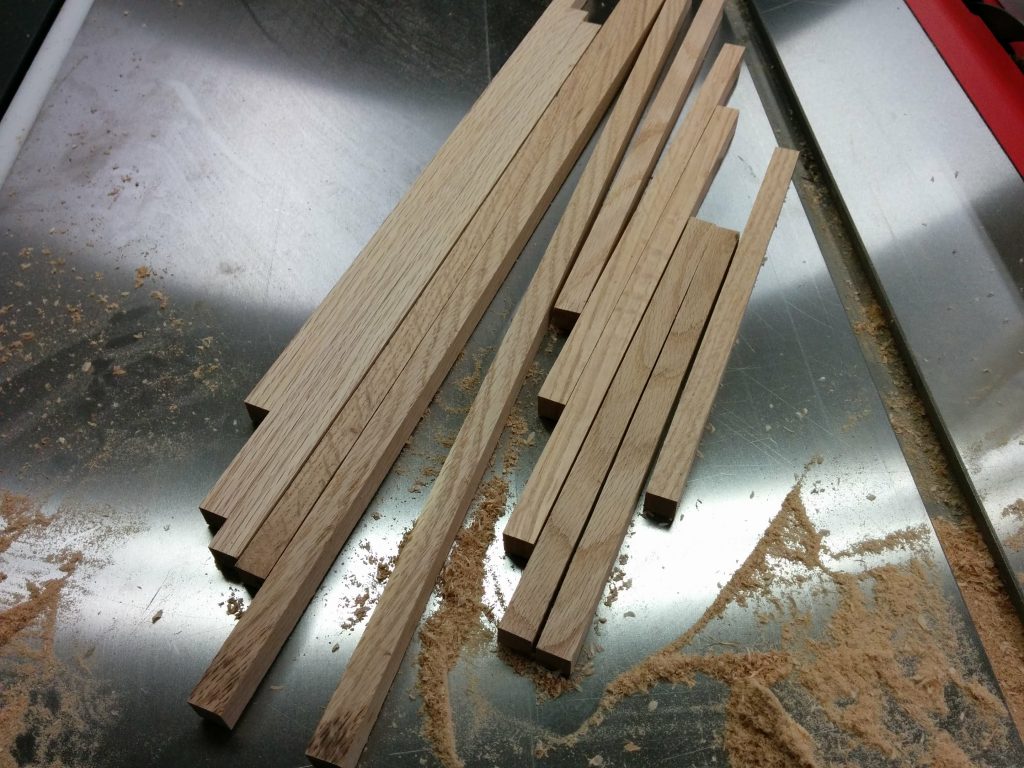
I was able to get enough strips by cutting down just 4 of the milled oak pieces. This leaves me with some more milled oak stock to use for other projects.

All the strips cut.
All the strips cut.

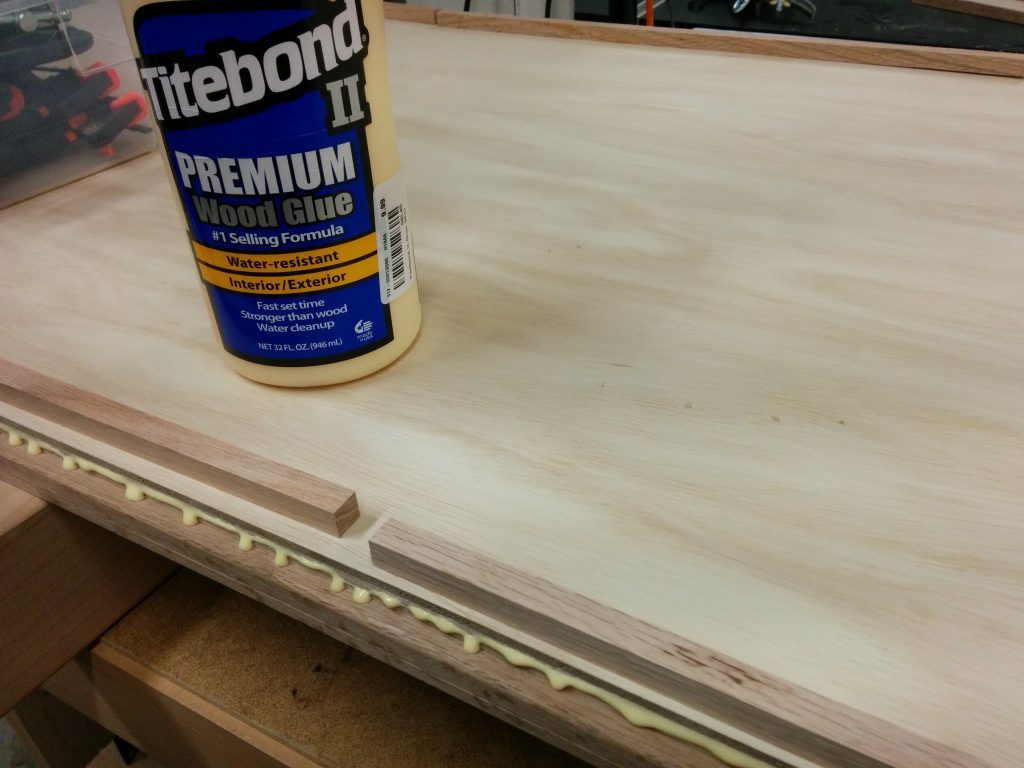
I laid out the pieces and applied a bead of Titebond 2 to the lip.

Applied a bead of Titebond 2 to the lip on the underside of the workbench.

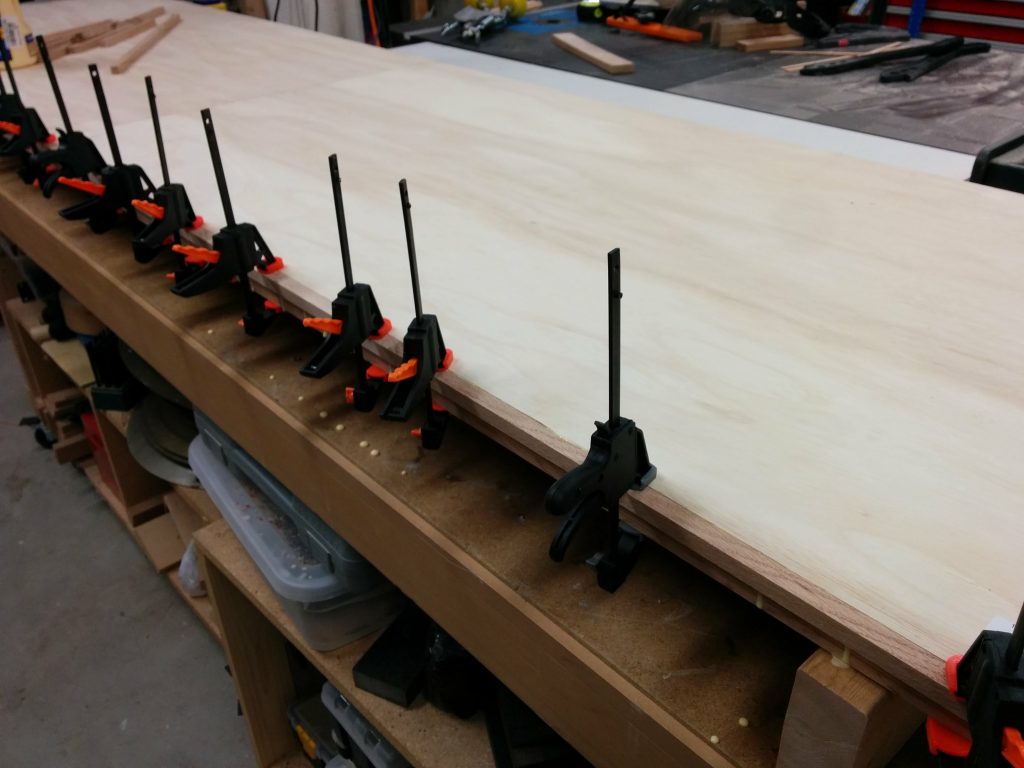
I attached the oak strips and clamped them in place with small quick-release clamps.

Holding the strip in place with some small clamps.

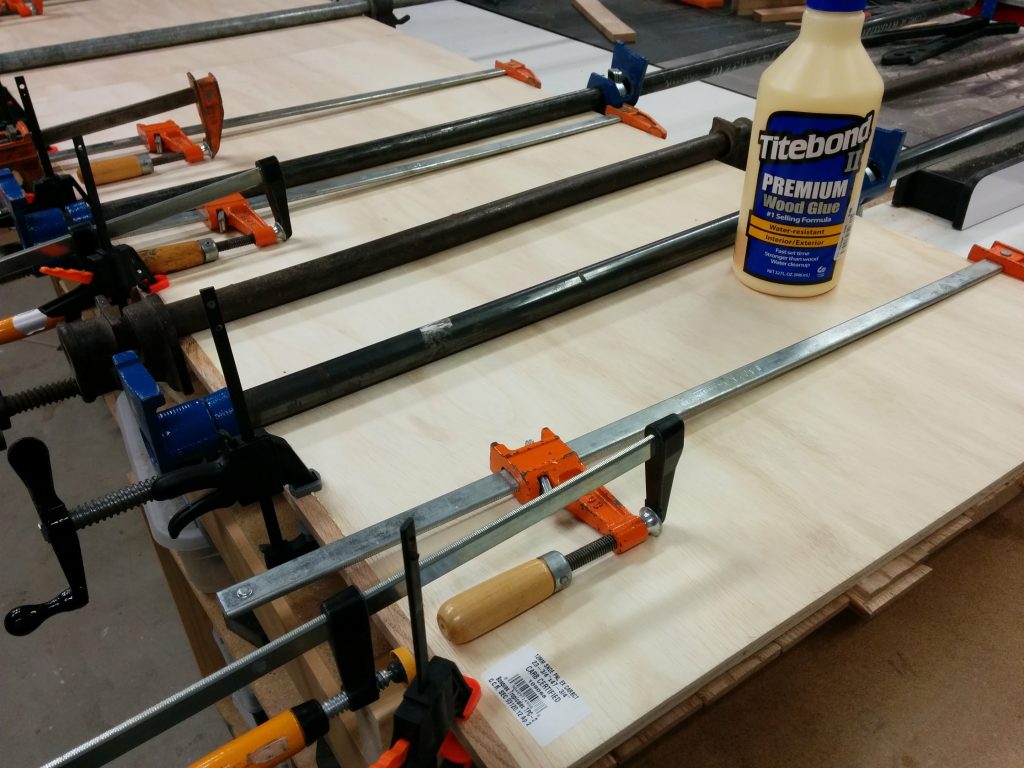
The strips wanted to pull away from the plywood in a few spots so I used some larger clamps to apply lateral pressure. I don’t have a lot of clamps that are over 24″ so I had to get creative with some of them, but it all worked fine in the end.

Getting creative with some clamps that are just a bit too short.

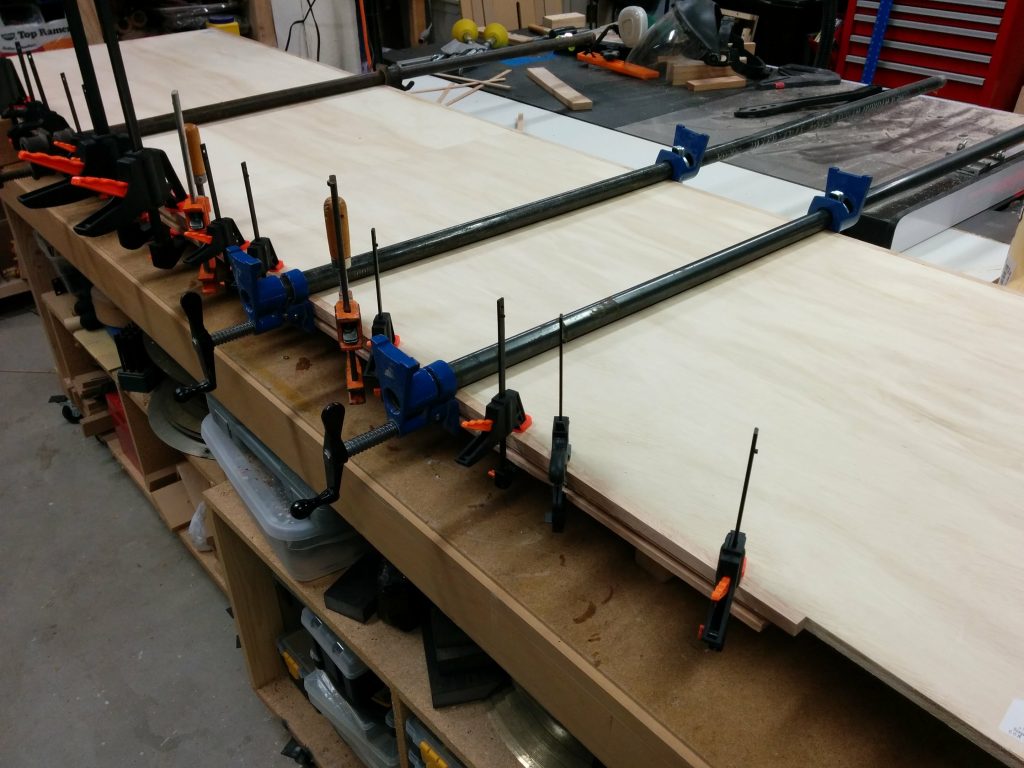
After the glue dried I did the same thing for the back of the bench.

Applying some lateral pressure with some larger clamps.

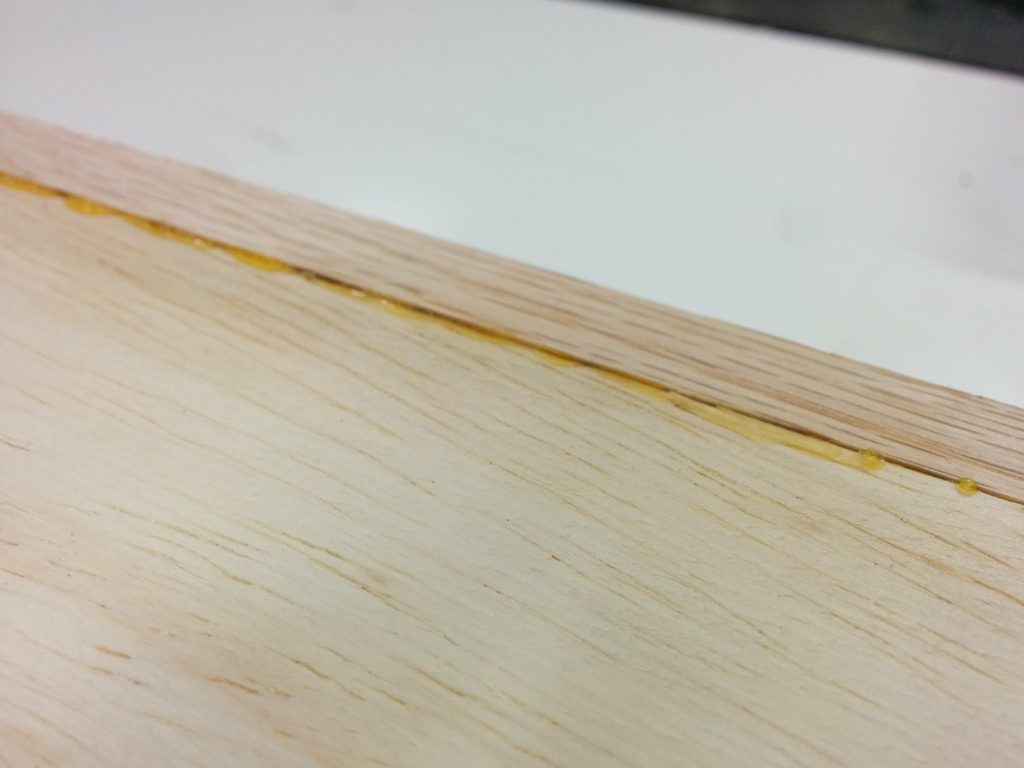
There was some glue squeeze-out on the underside of the benchtop.

Got some glue squeeze-out to clean up.

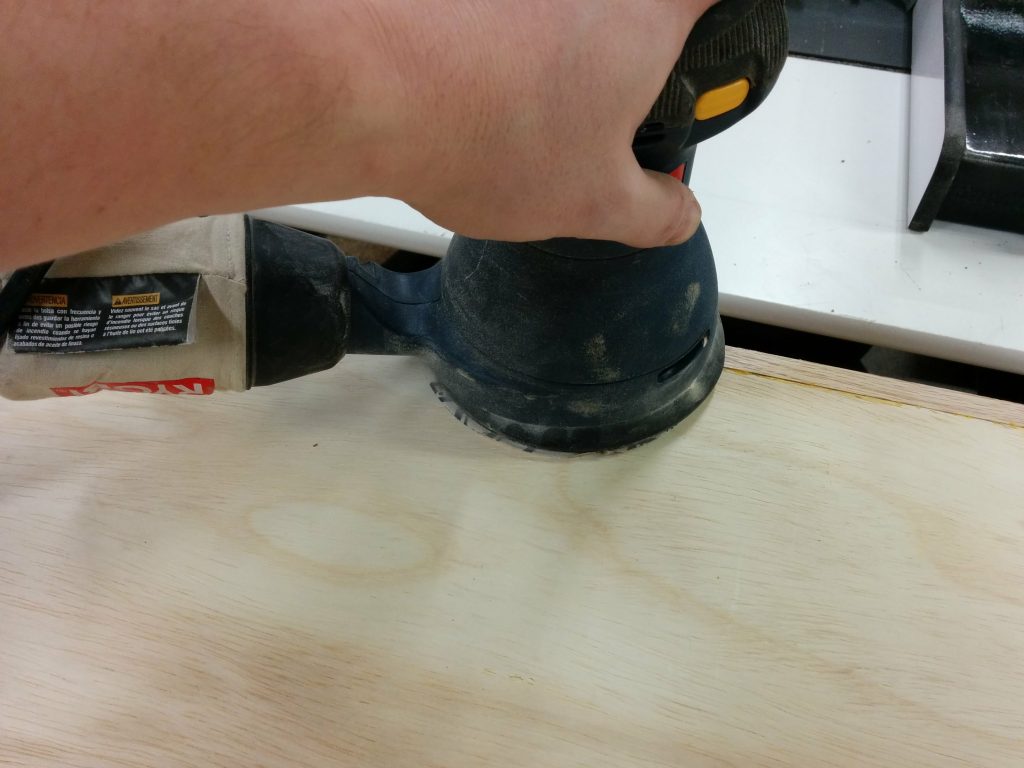
I used a random orbital sander on the entire surface of the underside and…

Sanding the bottom smooth to get rid of the glue squeeze-out.

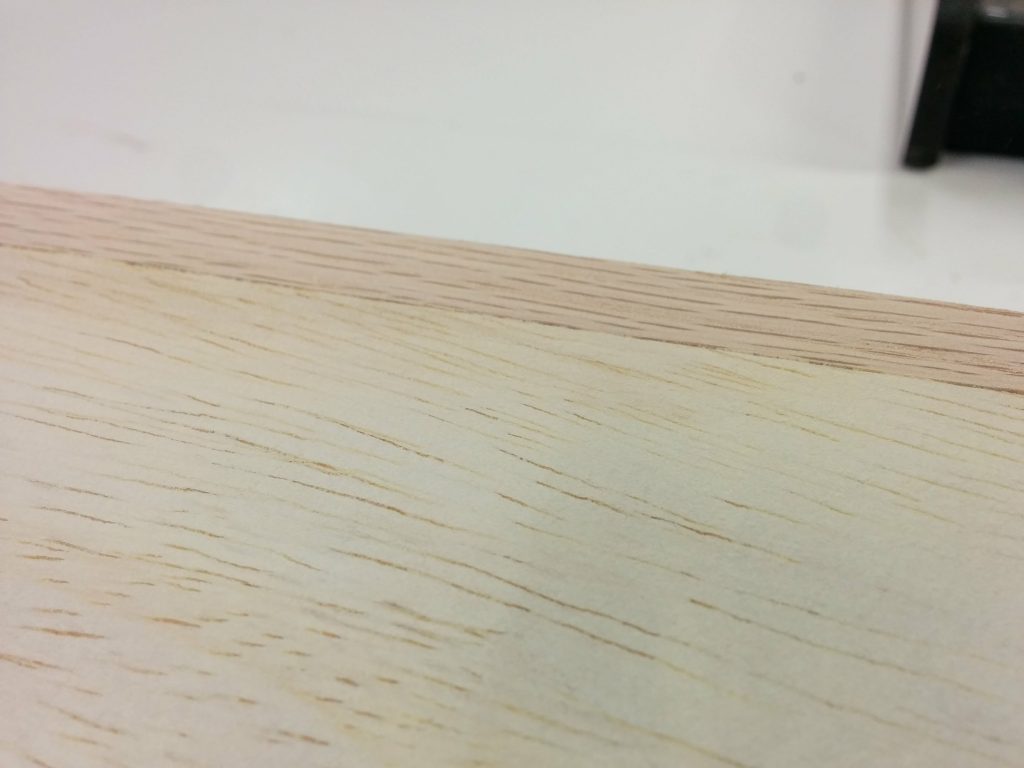
…it looks a lot better now.

Edges look good from the underside.

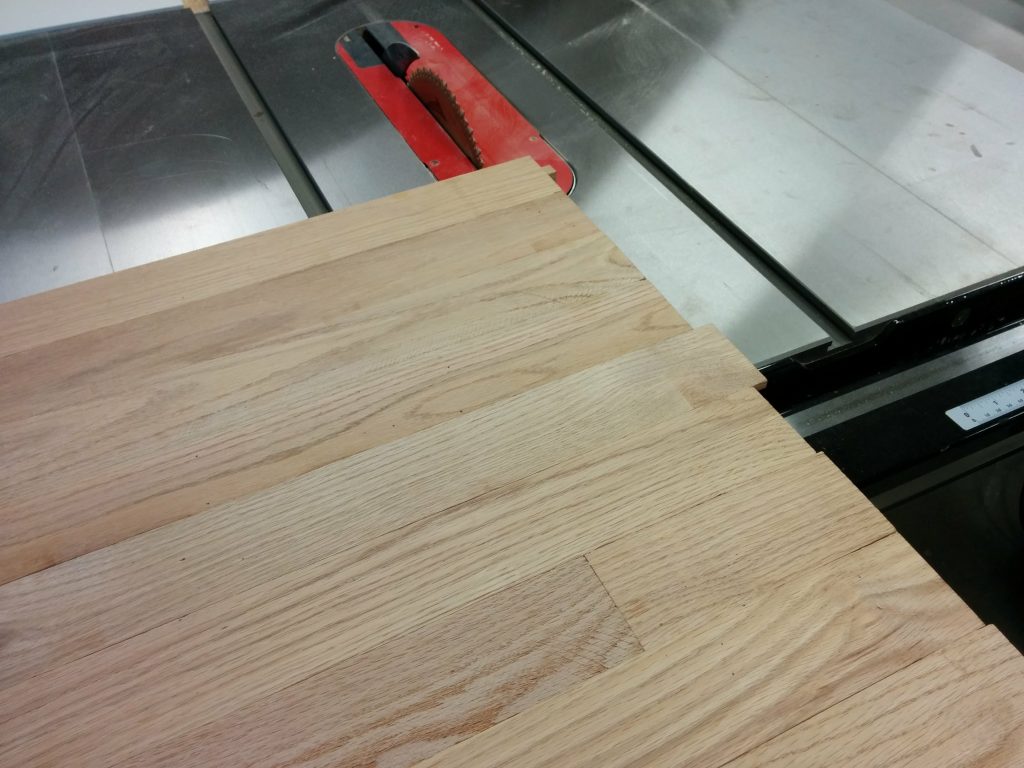
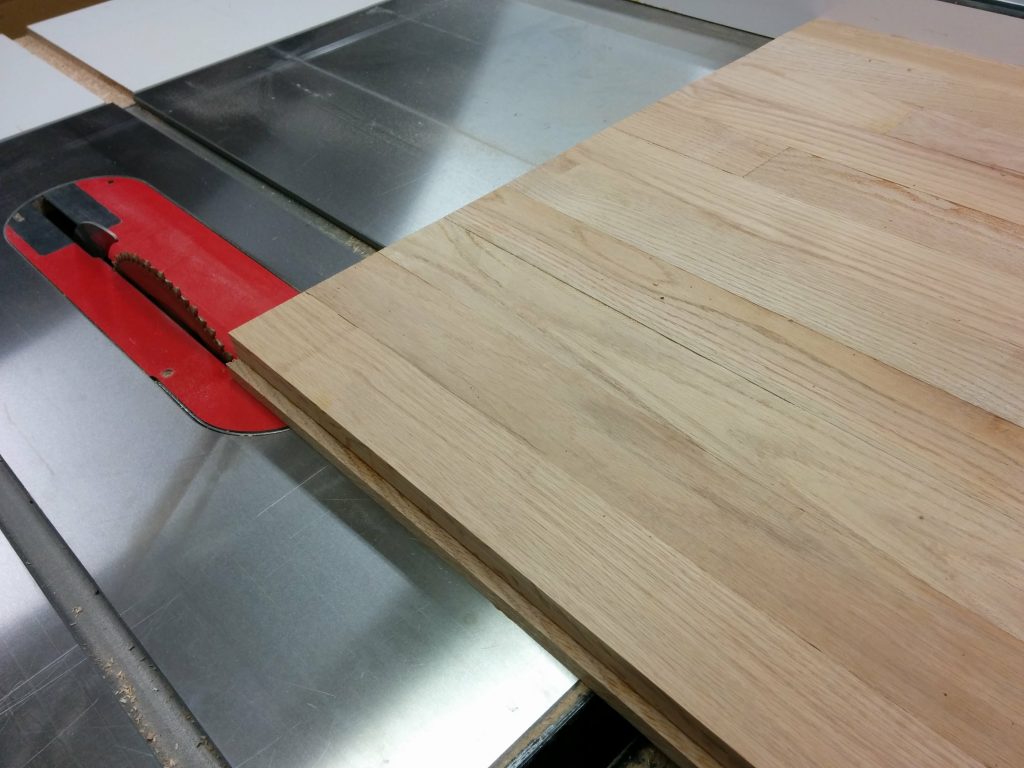
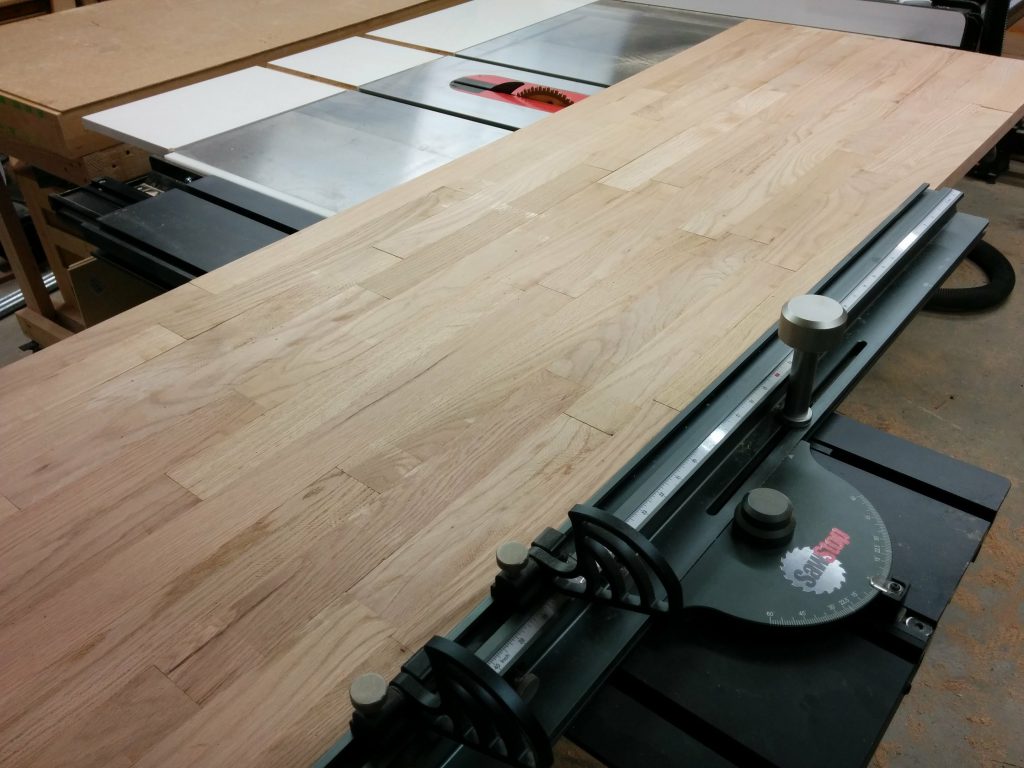
Now it was time to cut everything down to size. I took the glued up benchtop to my SawStop table saw so I could trim off one end.

Trimming off the edges of the benchtop at the SawStop table saw using my sliding crosscut table.

The ends of the workbench will be covered in metal. I’ll get to that in a future article. All I need now is for them to be flat.

Edge is nice and flush now.

I then trimmed off the opposite end.

Trimming off the opposite edge at the table saw.
It looks so much better now that I have trimmed off the excess on the ends.

Both edges are nice and flush.

I then trimmed the excess material off the front and the back.

Trimming the front edge at the table saw.


This was the look I was going for.

The front is nice and flush now.

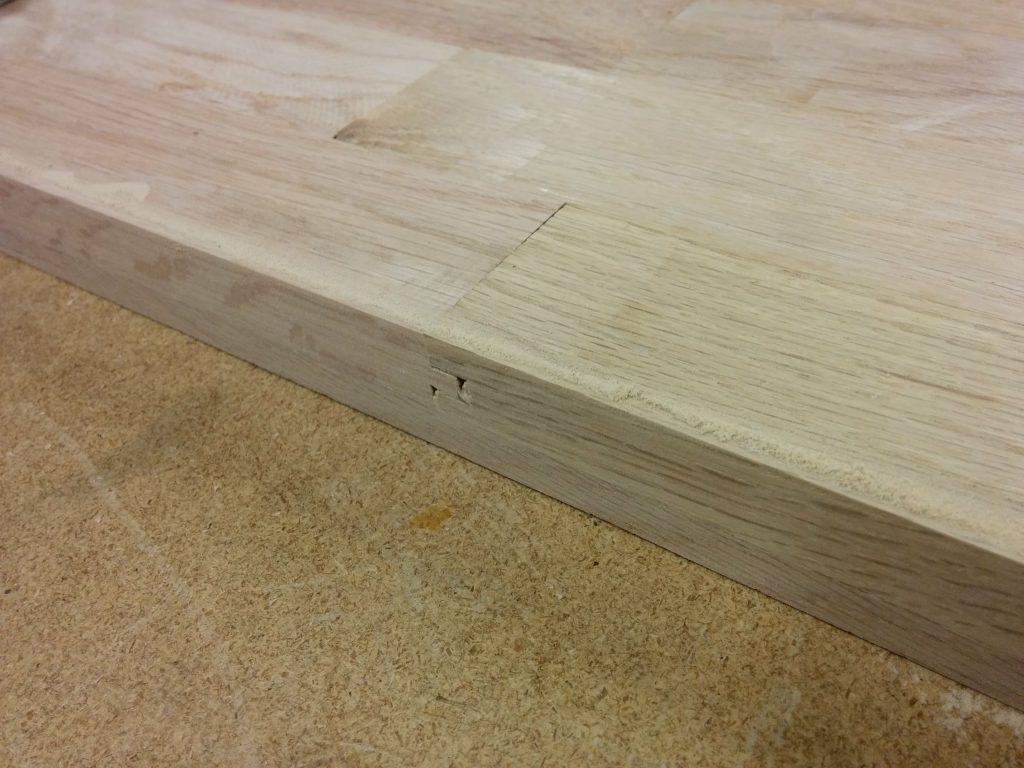
The benchtop was pretty unwieldy since it was so huge. As a result, the table saw left some burning on the edges.

The table saw caused a little burning on the edges.

The random orbital sander easily removed the burn marks.

The burning is easily removed with a random orbital sander.

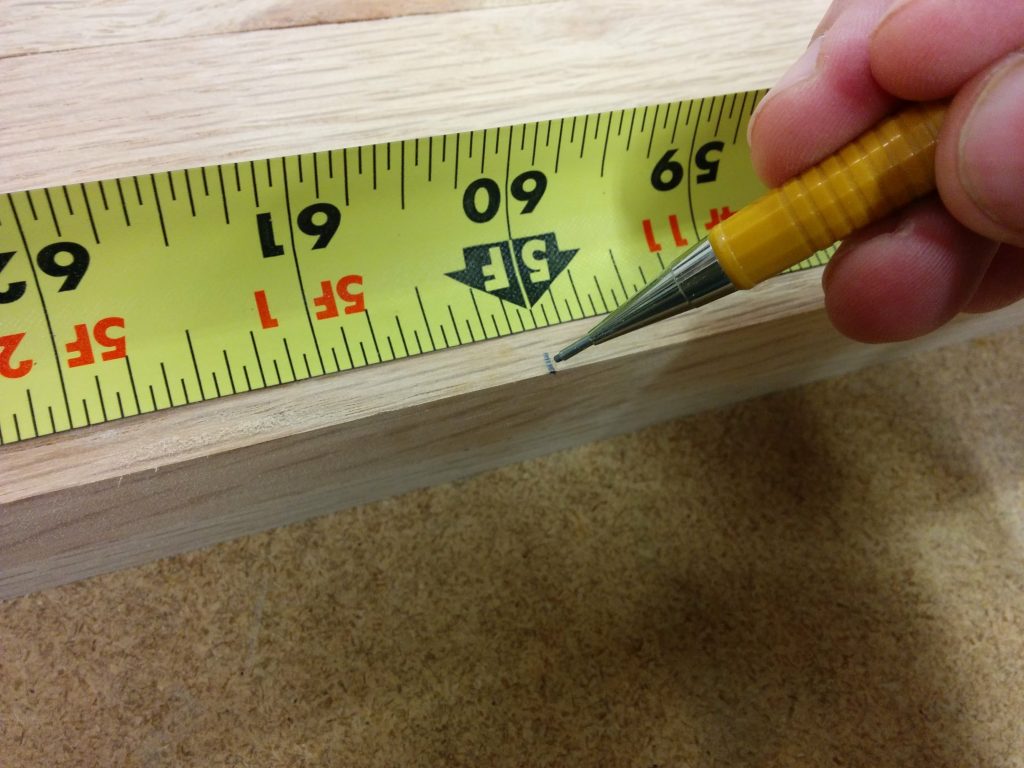
The plan was to turn this into a 5′ long workbench with a 2′ long flip-down wing. I marked the benchtop at 5′.

Marking the benchtop at 5'.
Marking the benchtop at 5′.

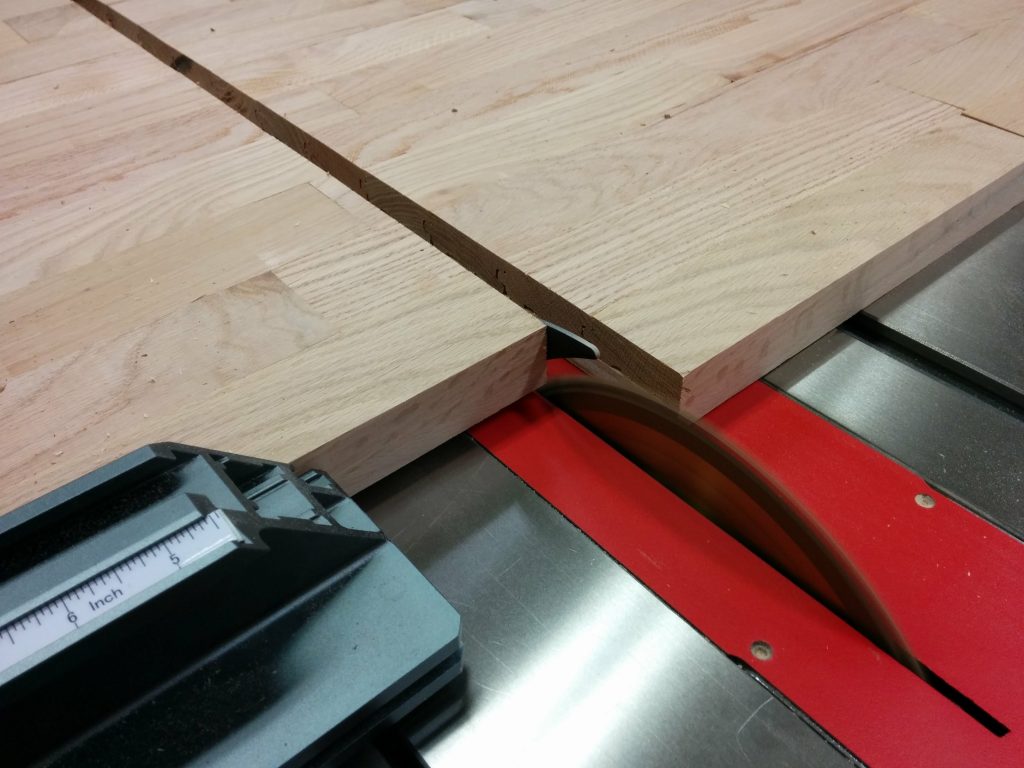
I used my SawStop sliding crosscut table to cut the workbench at the 5′ mark.

Cutting the benchtop to length using the SawStop sliding crosscut table.

The sliding crosscut table makes it very easy to perform this type of cut.

Cutting it down at 5'.
Cutting it down at 5′.

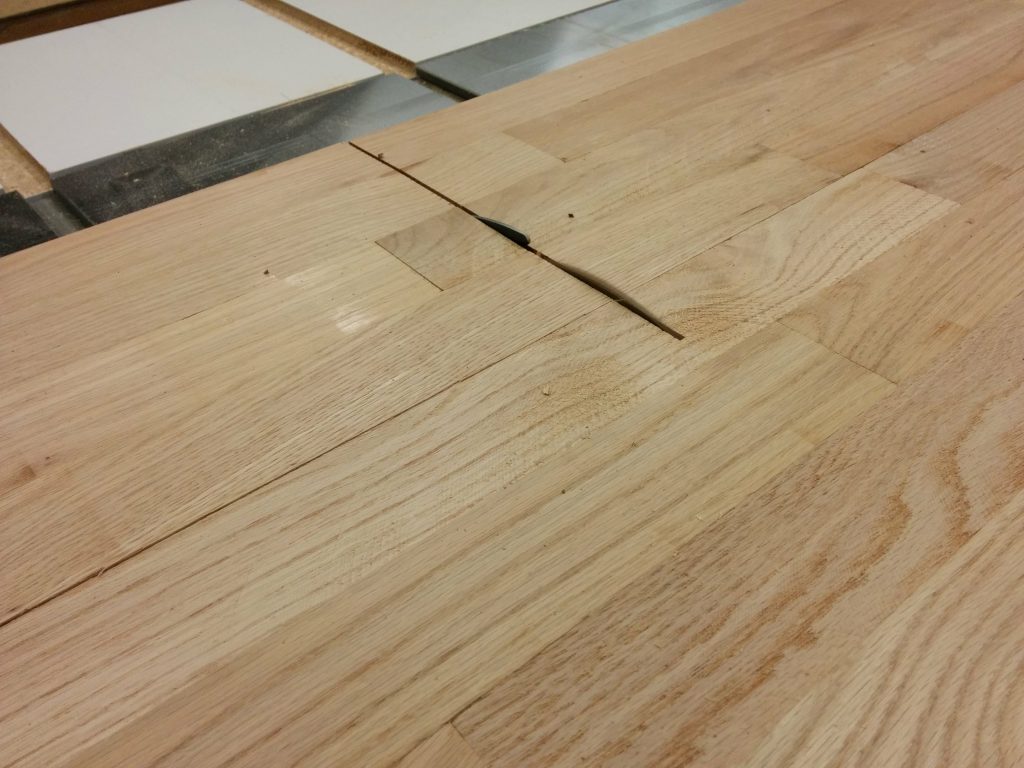
It cut cleanly and didn’t really burn it except for where I stopped pushing the material so I could take the picture above. A little sanding and it disappeared.

Finishing the cut.
Finishing the cut.

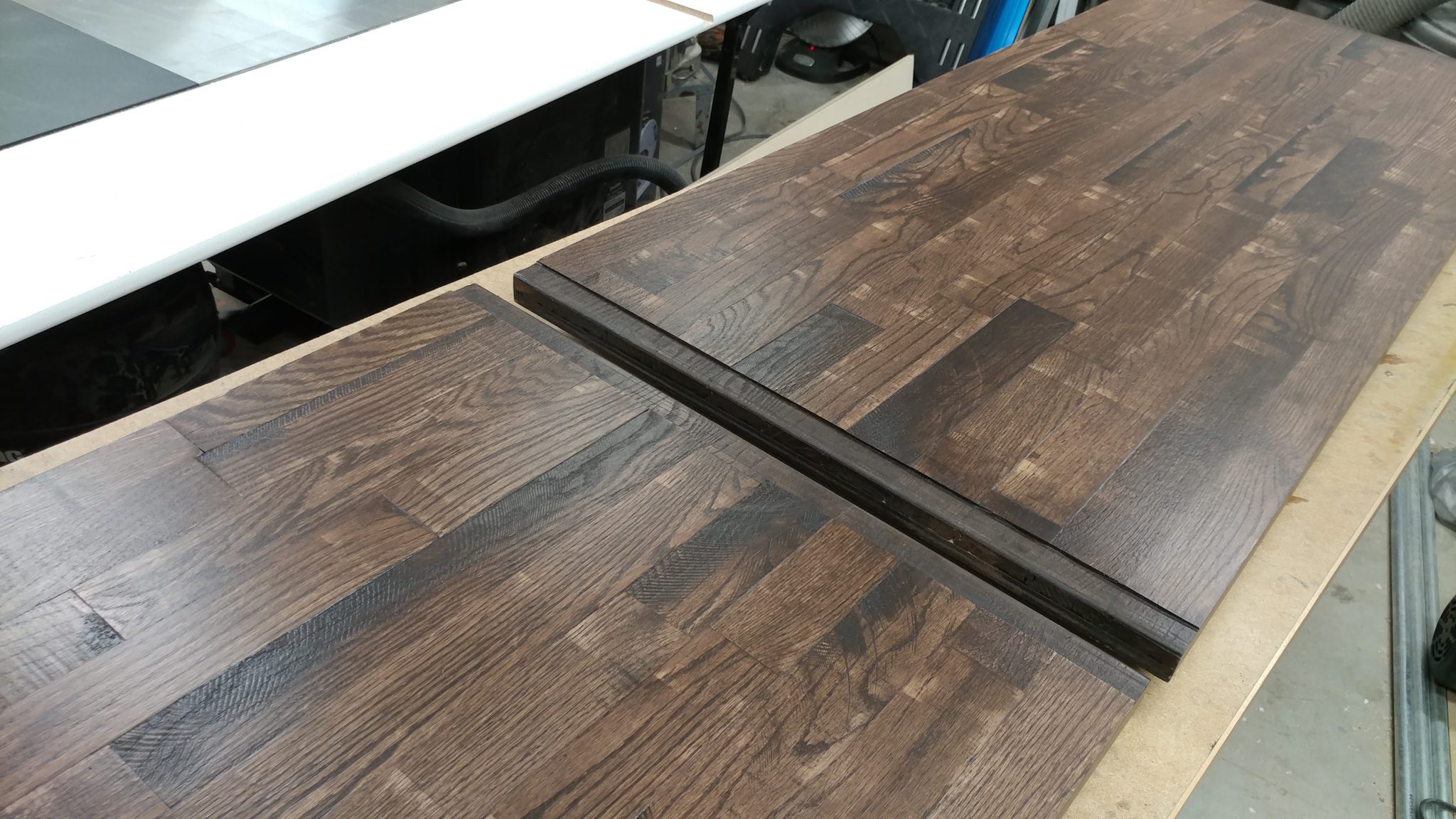
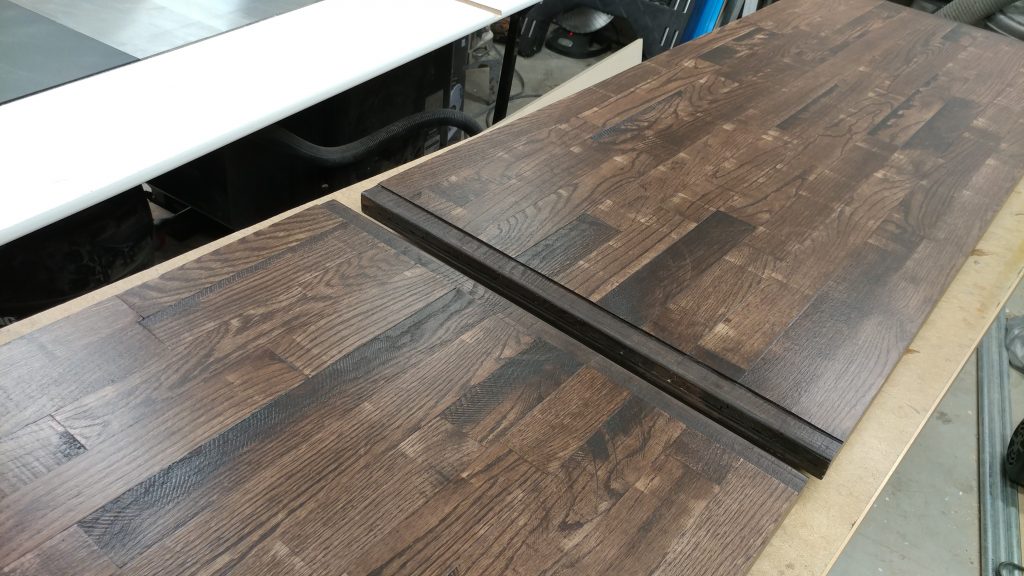
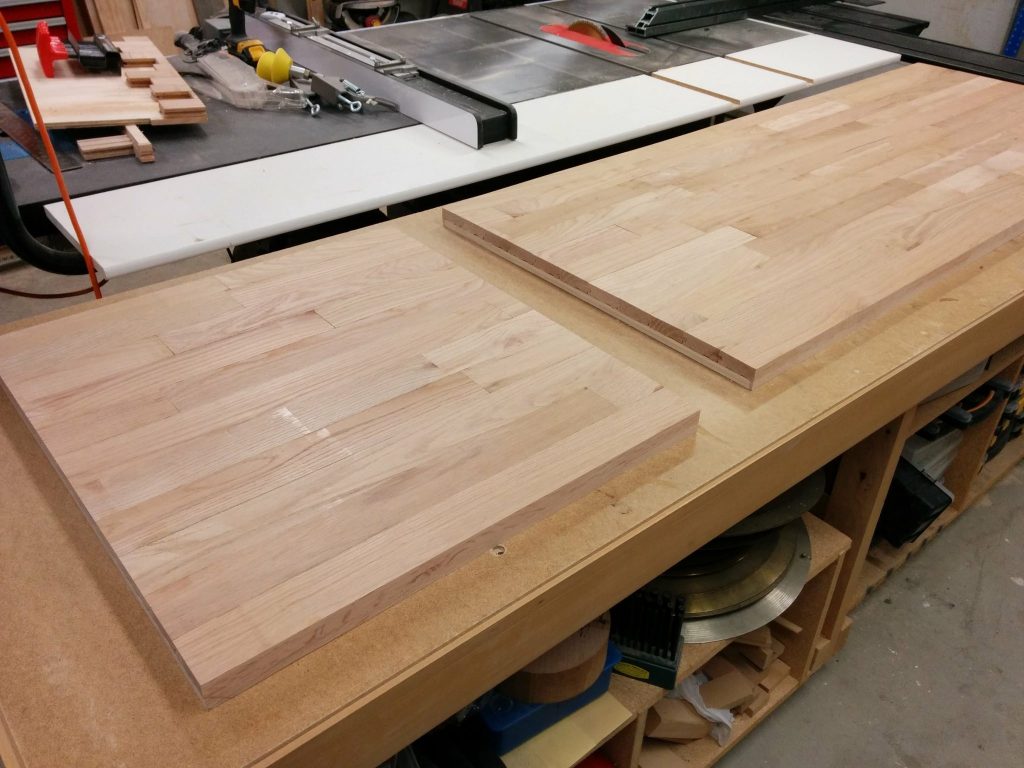
The workbench is now cut to the final size and is ready to be finished.

All done with two slabs cut to 5' and 2' in length.
All done with two slabs cut to 5′ and 2′ in length.

If you have any questions or comments, please leave them below.  I’d love to hear from you.

Making a guitar pick from a cracked cymbal – Part 2

This is an update to my original post titled Making a guitar pick from a cracked cymbal.

I learned a few things since making that first pick.  Here’s what I did differently.

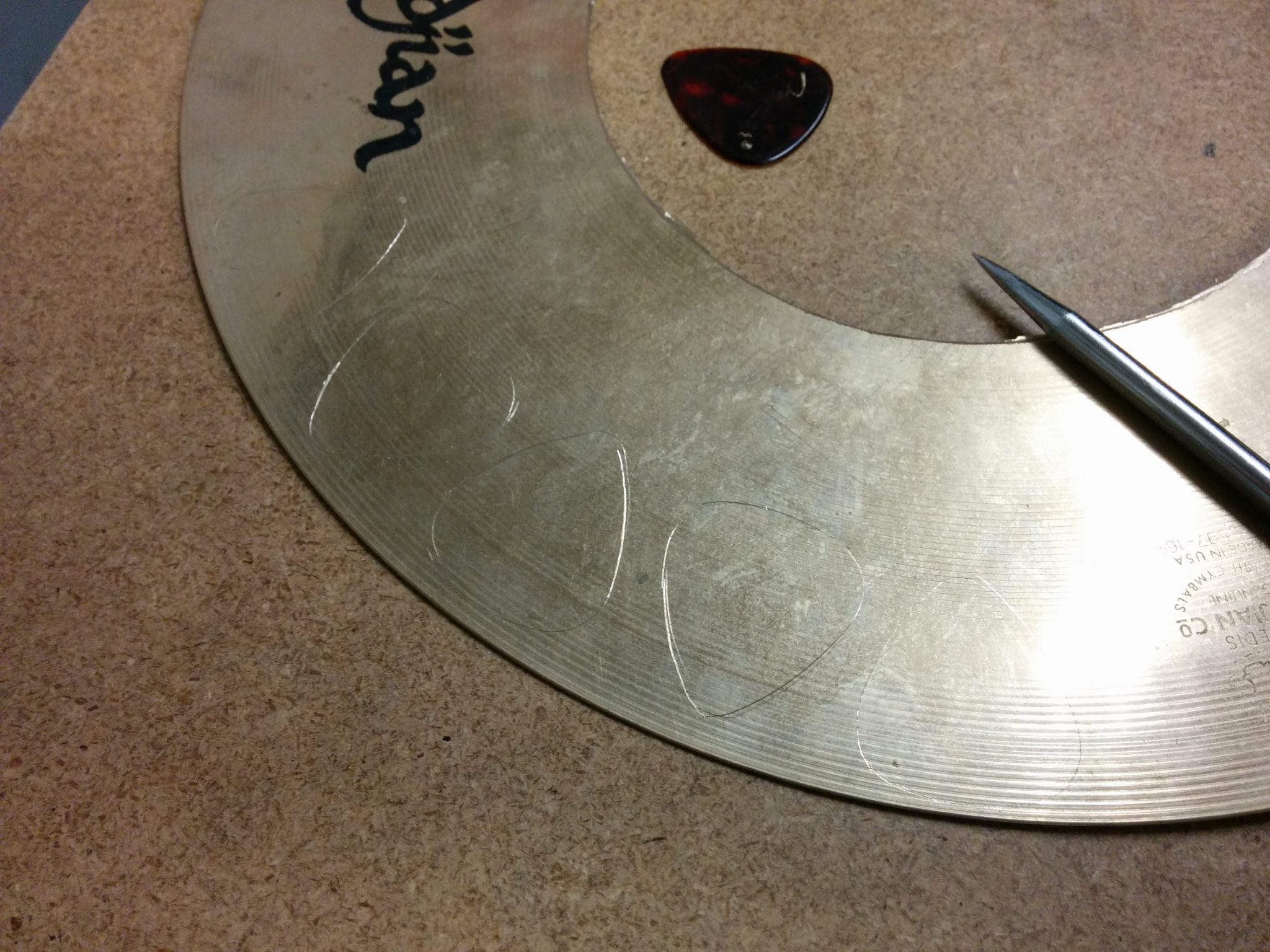
First, I decided to trace an outline of the pick using an awl.  This works better since the red Sharpie kept getting rubbed off the cymbal as I was sanding it down.  You need to be careful when doing this but it seems to work okay.

The pick outline traced with an awl.


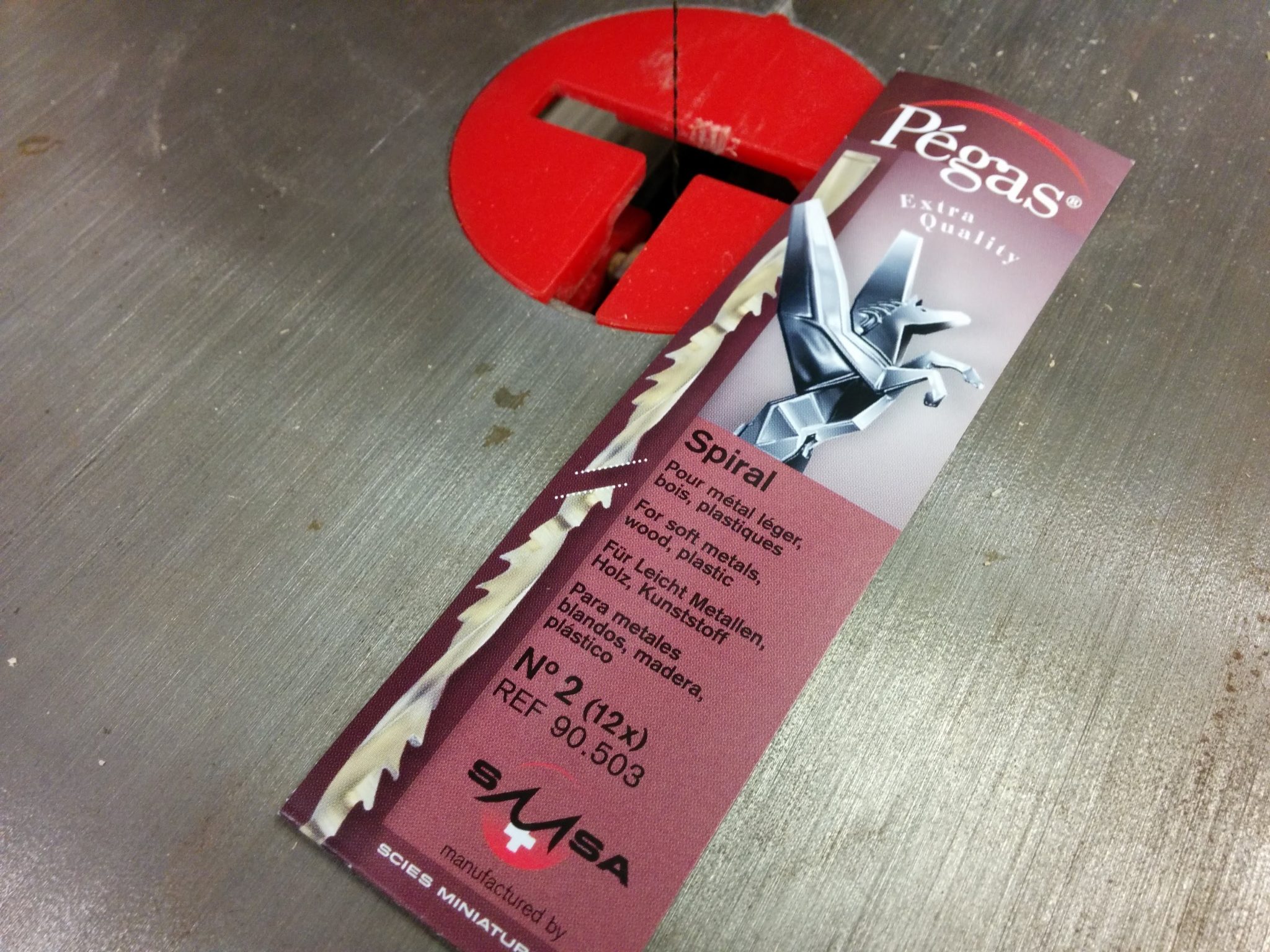
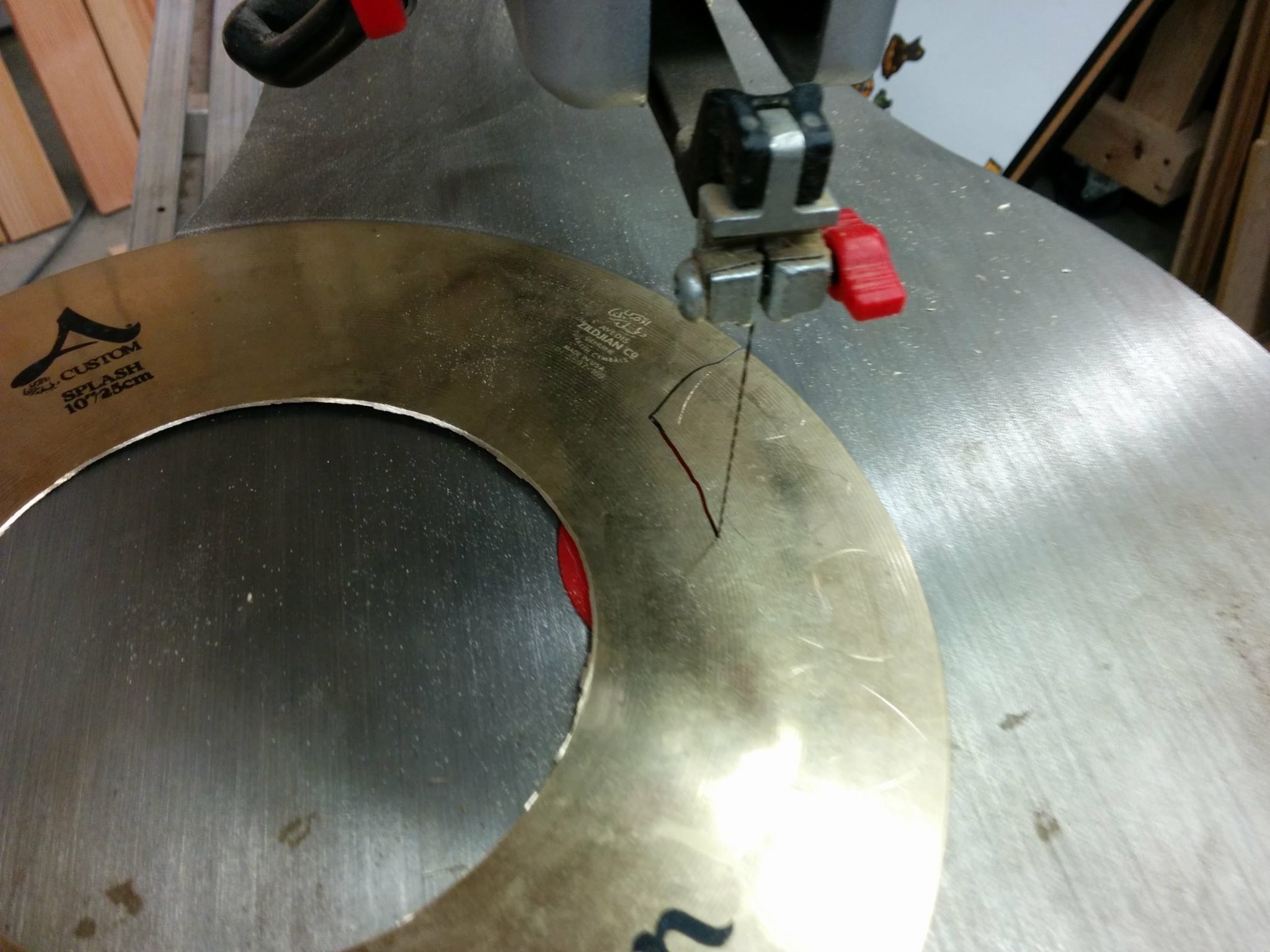
Second, I decided to use a scroll saw with a metal cutting blade.  This will allow me to cut closer to the line which will result in less waste and less material that needs to be removed with sanding.  I bought three different types of blades.  The one I started with is the Pegas 90.503 45-tooth blade.

Pegas spiral No 2 blades. (Ref 90.503)


Again, I’m using the off-cut from a Zildjian A Custom 10″ Splash.

Getting ready to start cutting.


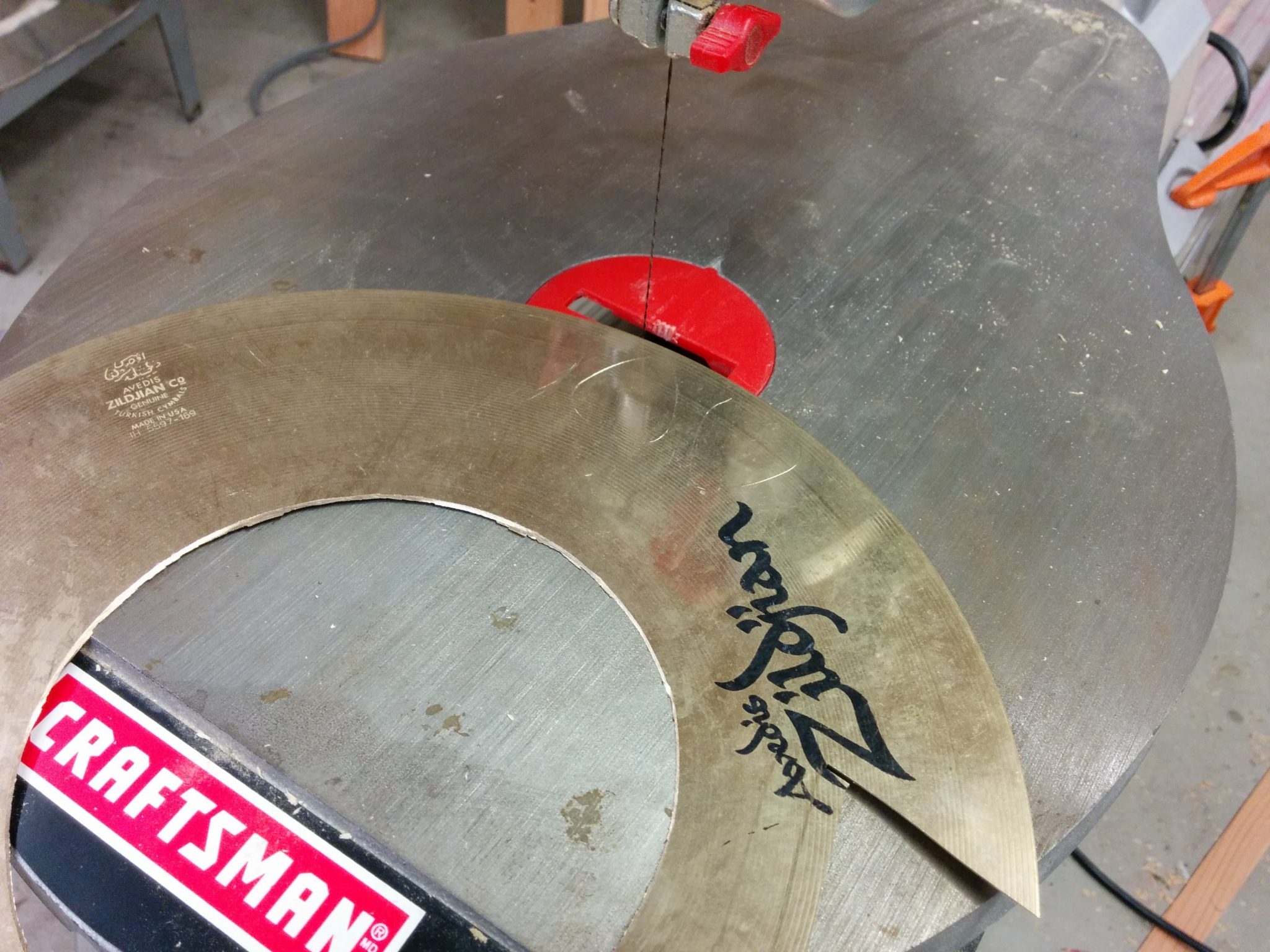
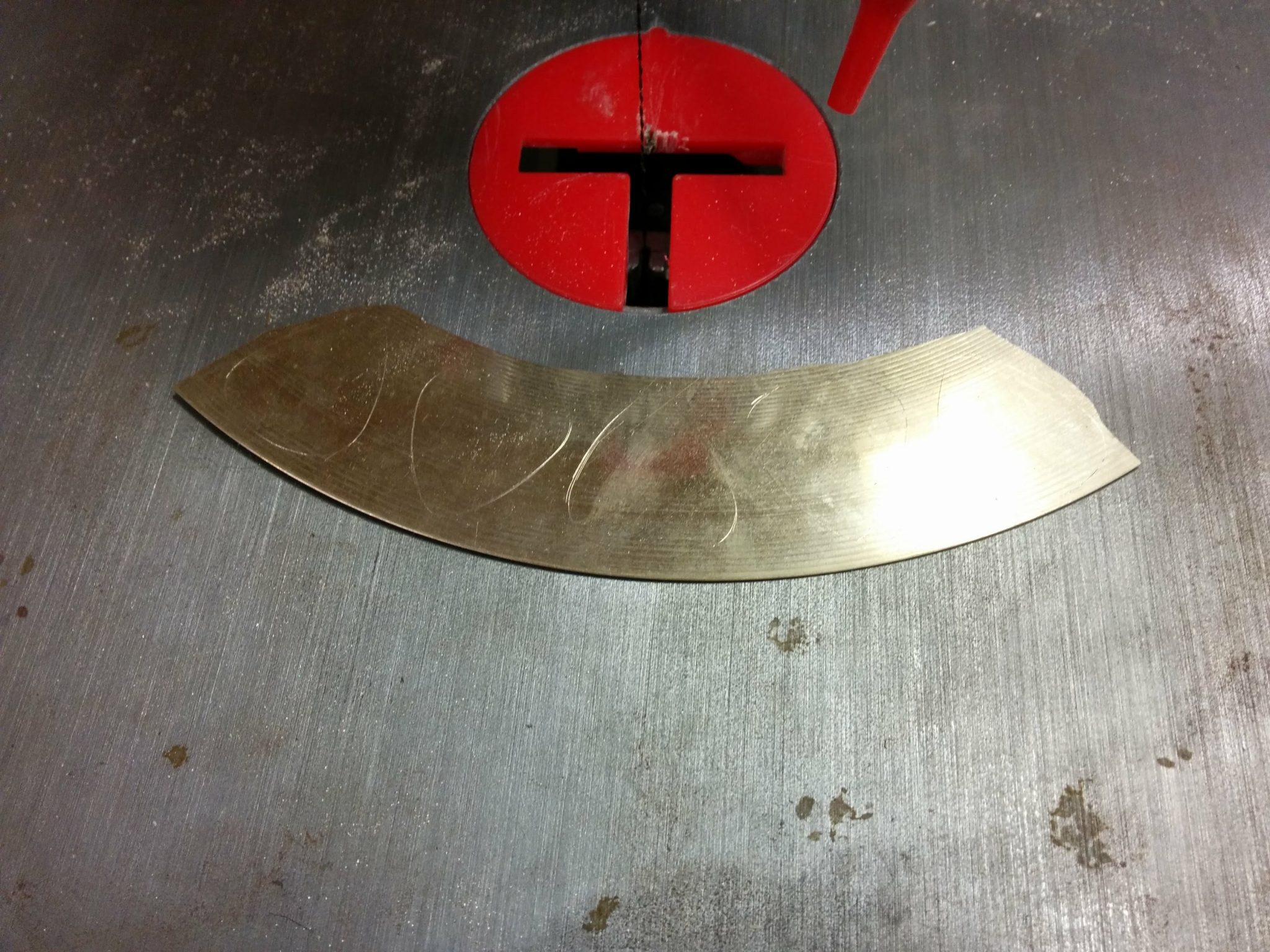
Cutting with the scroll saw was much easier.  The important thing to remember was to let the saw do the work.  I forgot this and got a little eager.  I ended up breaking a blade on this cut as a result.

Cutting out a the material.


Now that I had a smaller piece to work with, I was able to more precisely cut out each pick.  Once again, I ended up breaking a blade.  At that point I switched to a Pegas No. 4 90.505 38-tooth blade which was a little more aggressive.

A more manageable piece to work with.


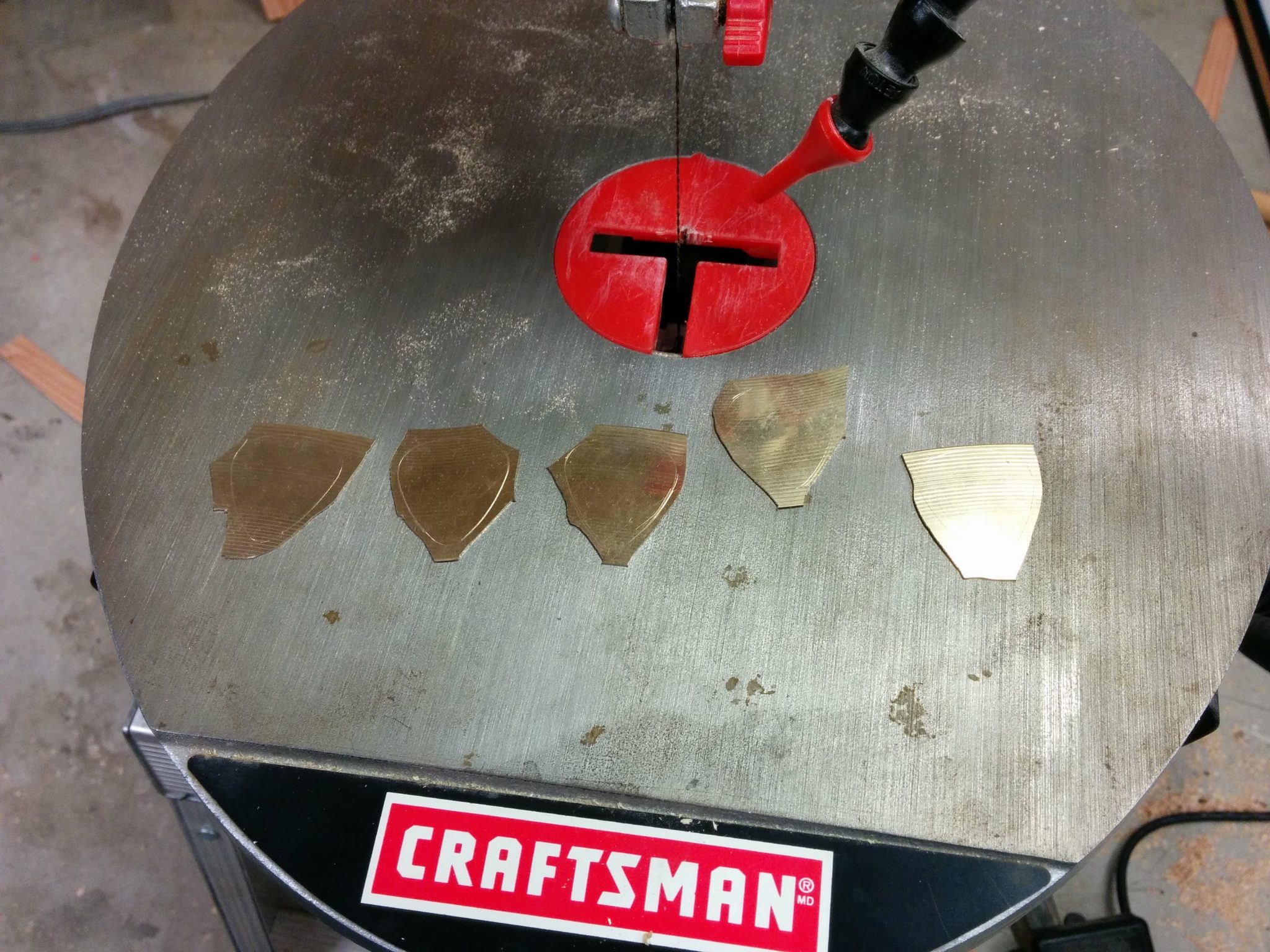
The scroll saw was able to get the pieces closer to the final shape, which allowed me to save some of the small scraps in between each pick.  I’ll use these for something else, such as melting them down and casting them.

After rough-cutting on the scroll saw.
 

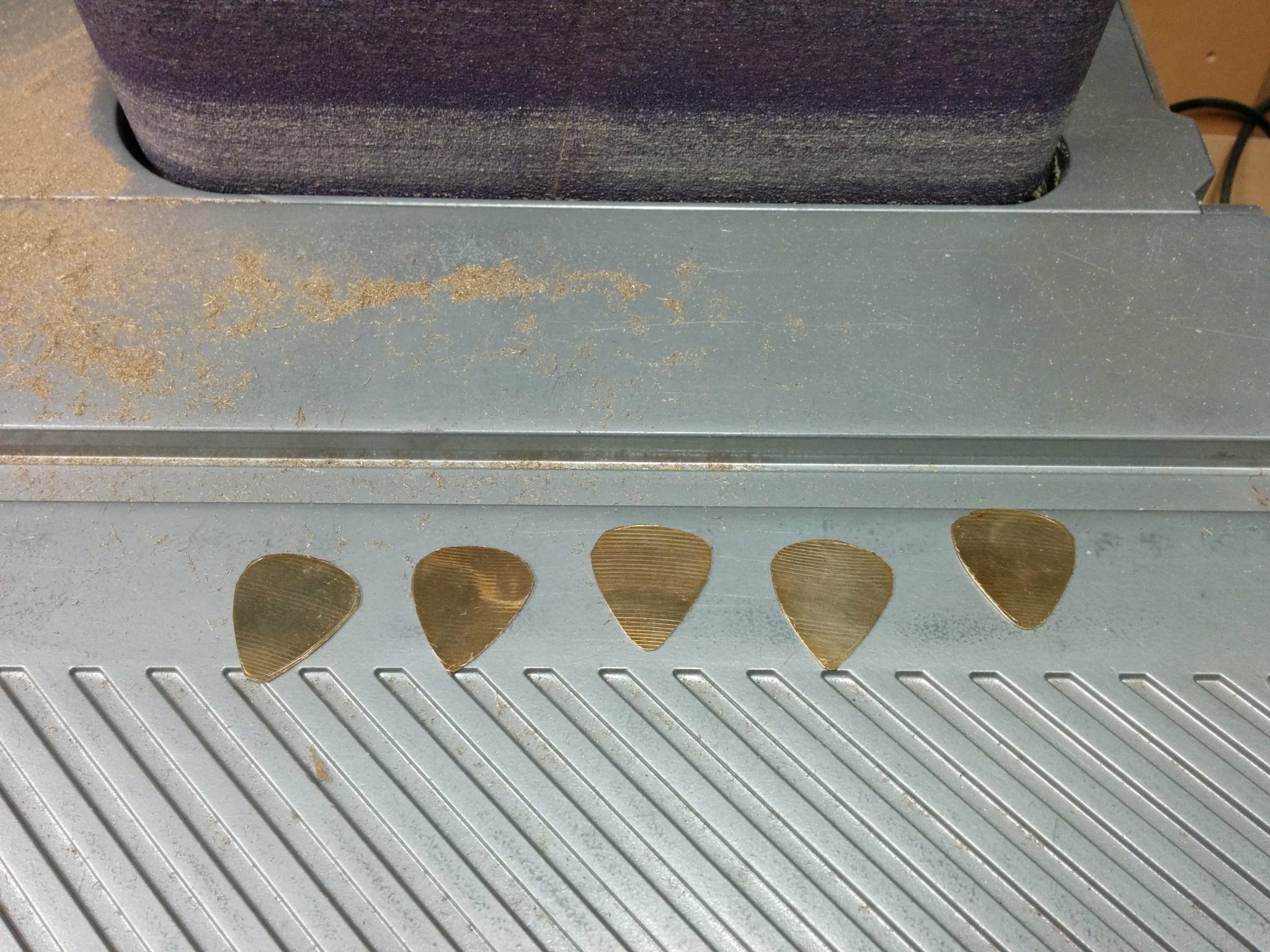
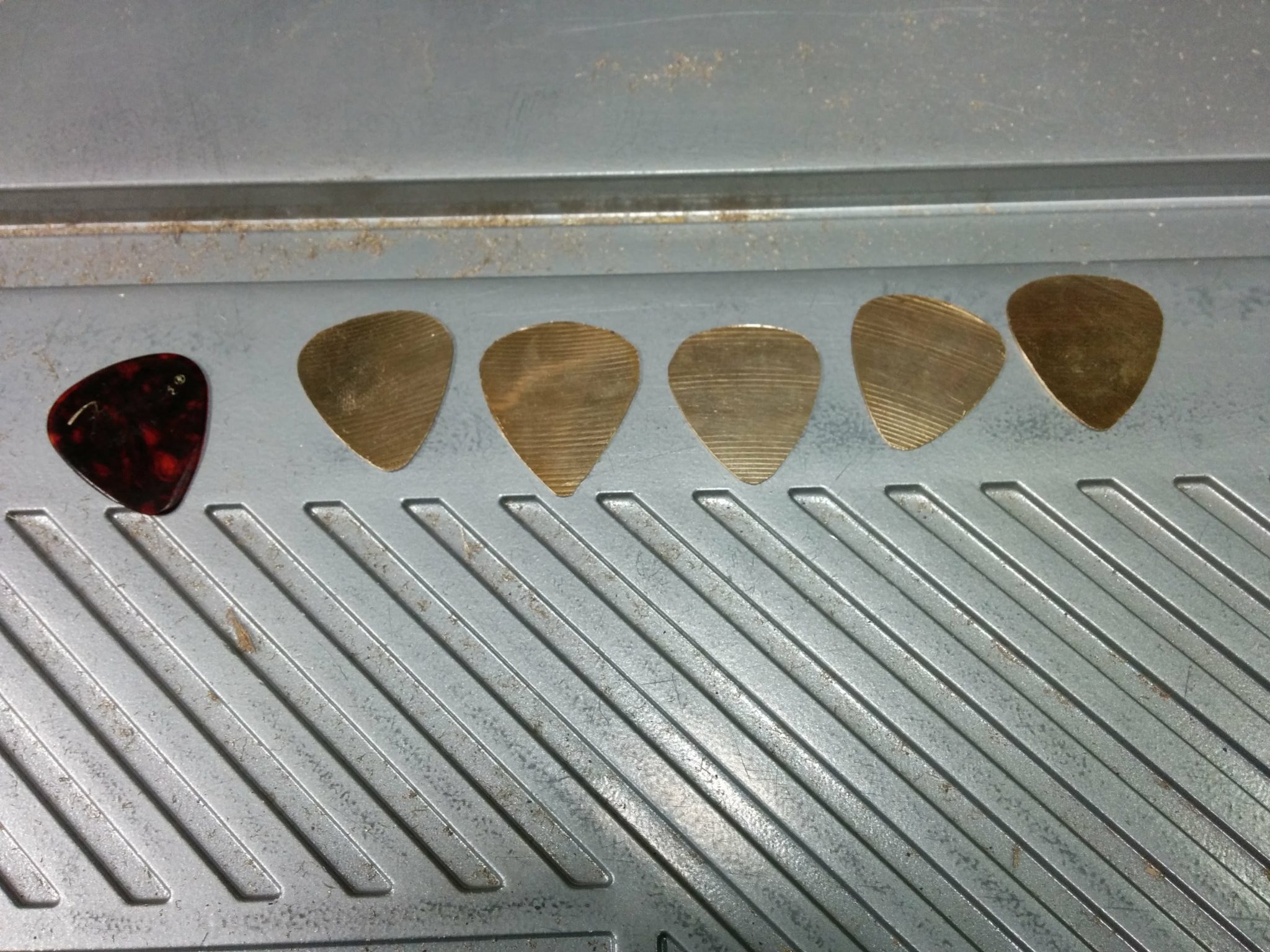
I found that it is actually easier to make several of these at a time simply because of the sanding process.  The problem with the sanding is that the metal heats up fairly quickly.  I got into a routine where I would sand one down and once it started to get warm, I would set it down to cool and grab the next one in line.  I would sand that one down a bit then switch to the next when it got warm, and so on.  I would just keep looping through the line until I got them pretty close to the final size.

After getting them close to the final size.


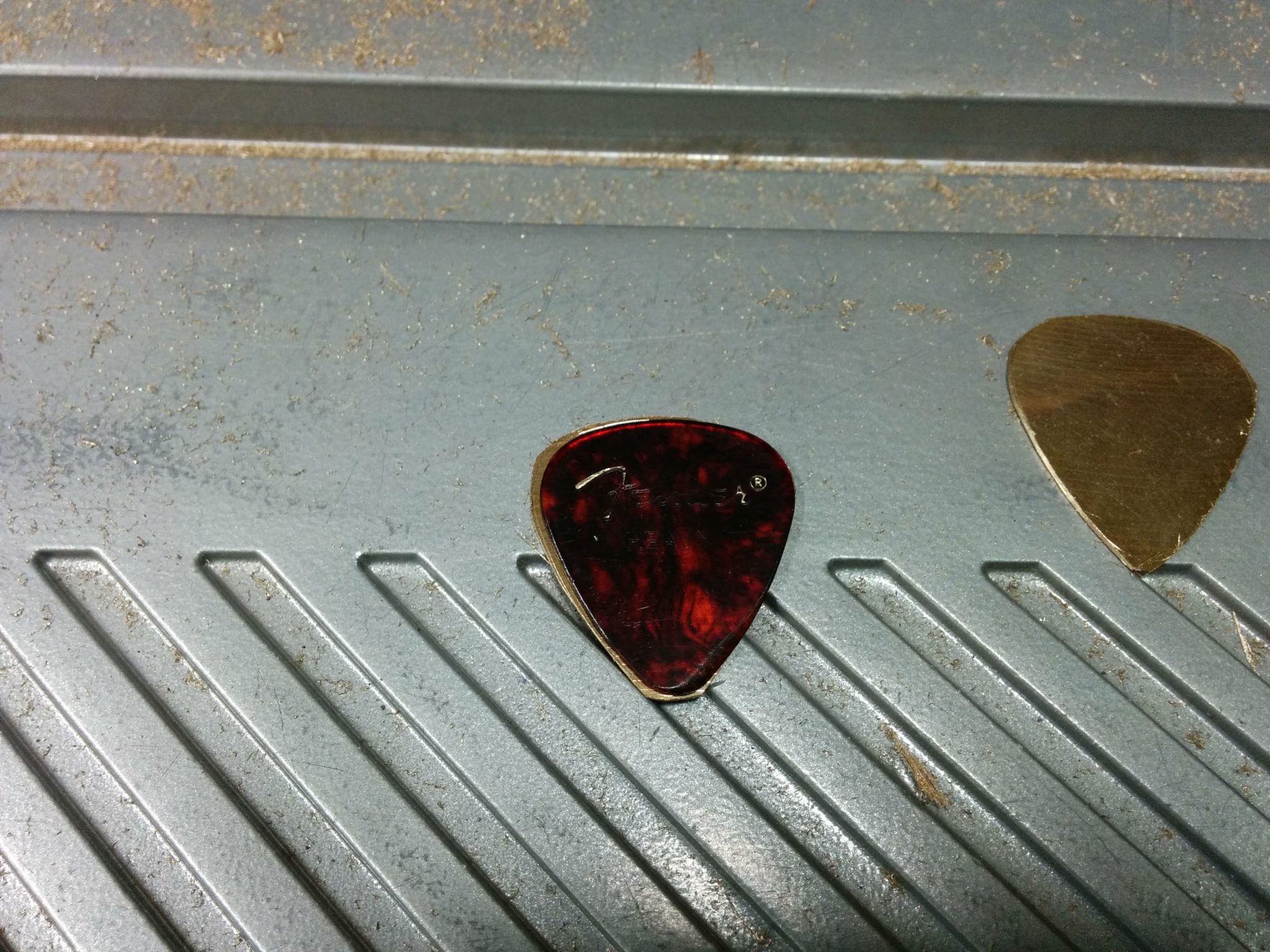
After getting them close to the finished size, I used the original pick as a template by holding it in front of the sanded shape and see where I needed to take it down some more.

Lining up the original pick as a template.


After using the pick as a template, they were really close to the final shape (the second pick in this photo had yet to go through this step).

After using the original pick as a template.


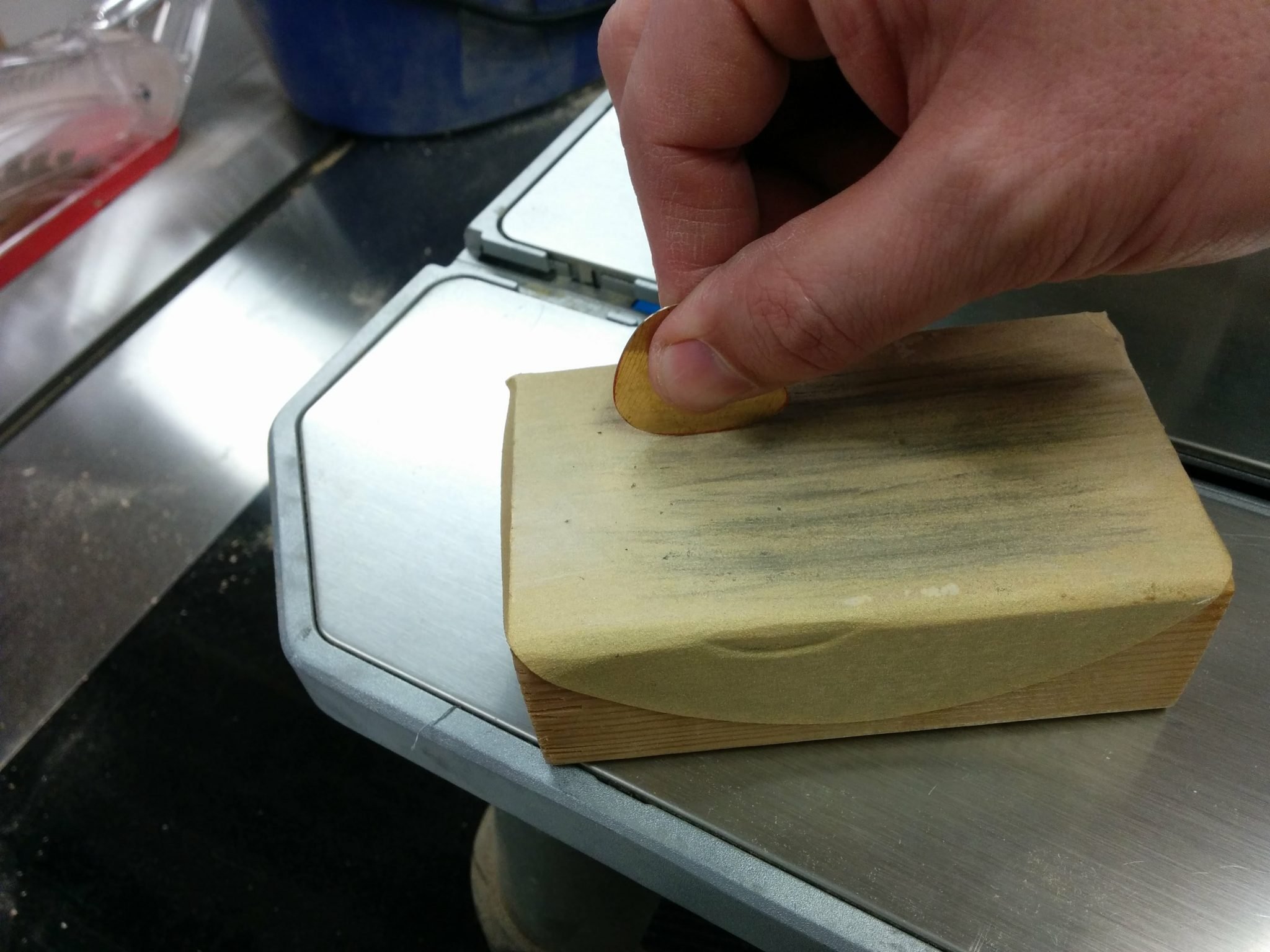
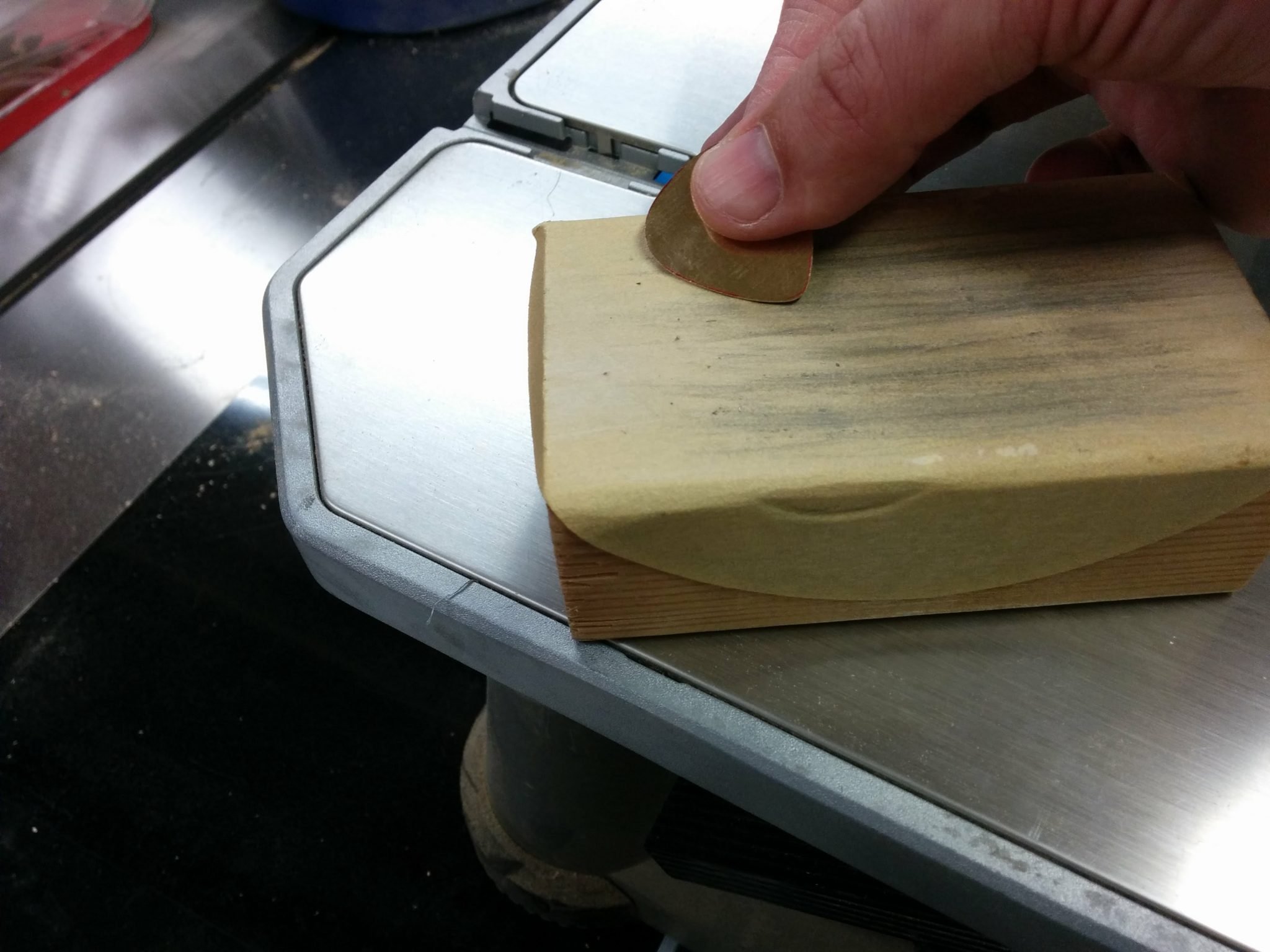
Then I took them to my sanding block and manually sanded them down so they would have smooth edges.

Ready to be polished.


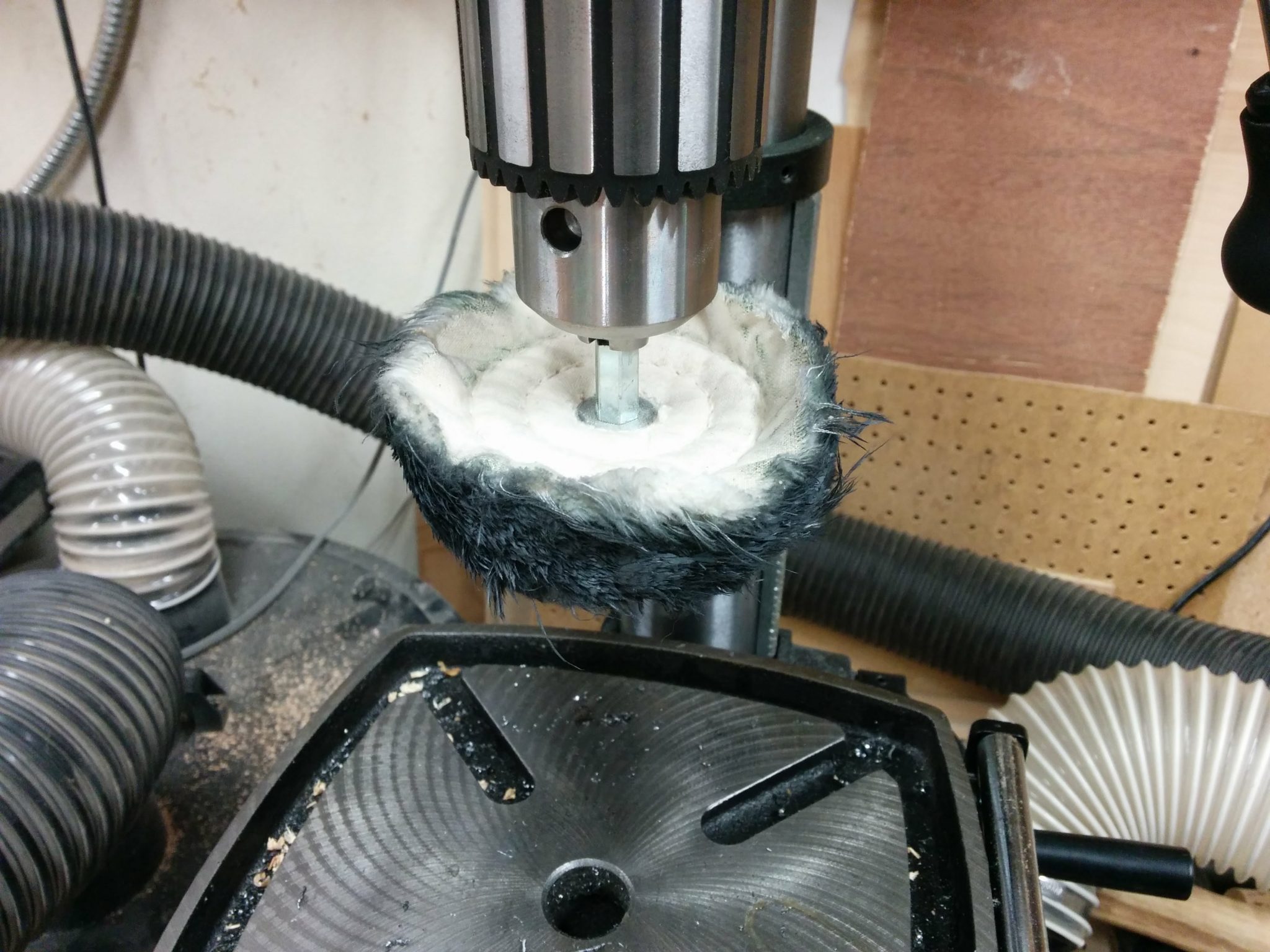
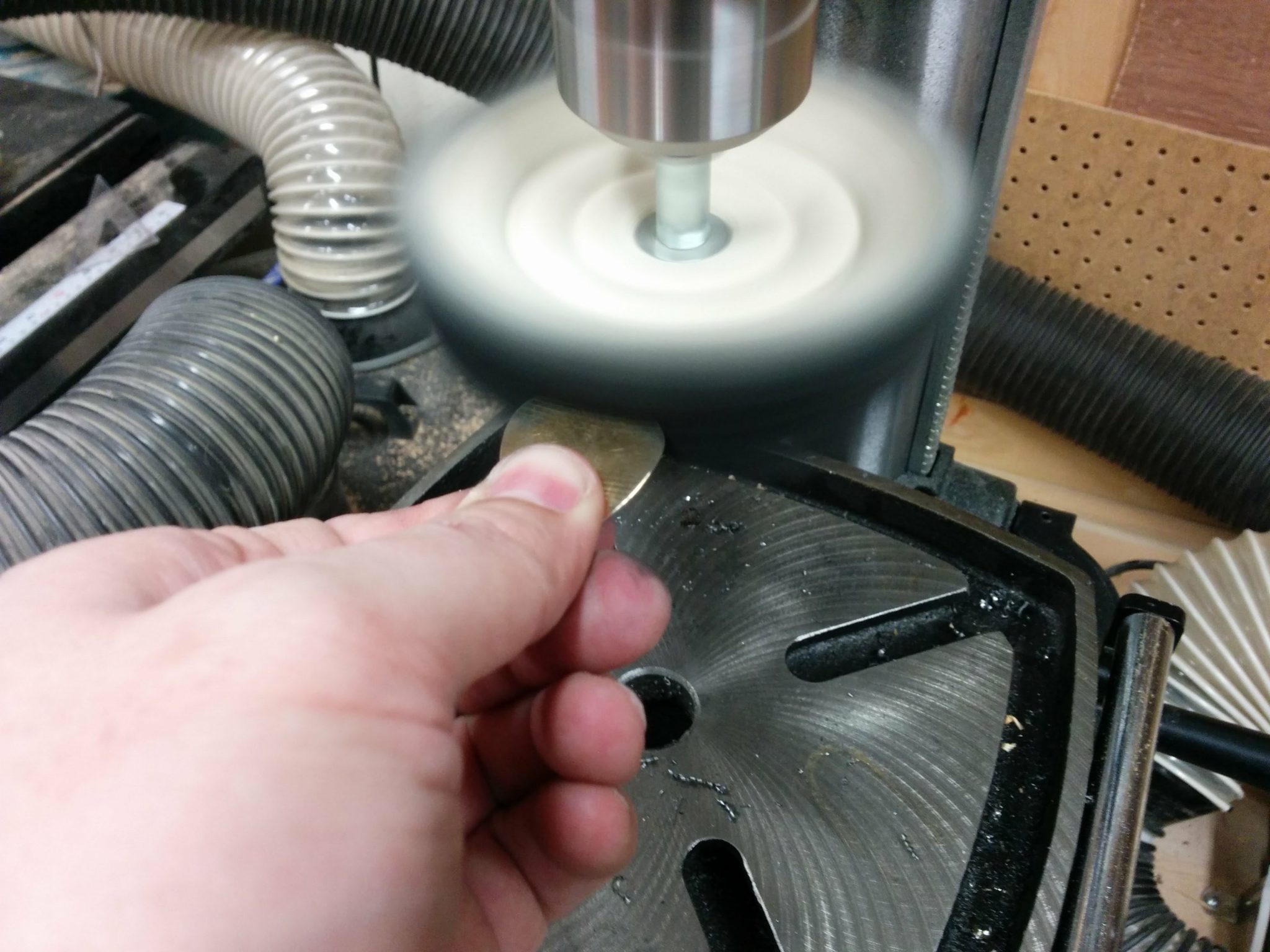
After that, I took them to the buffing wheel on my drill press.

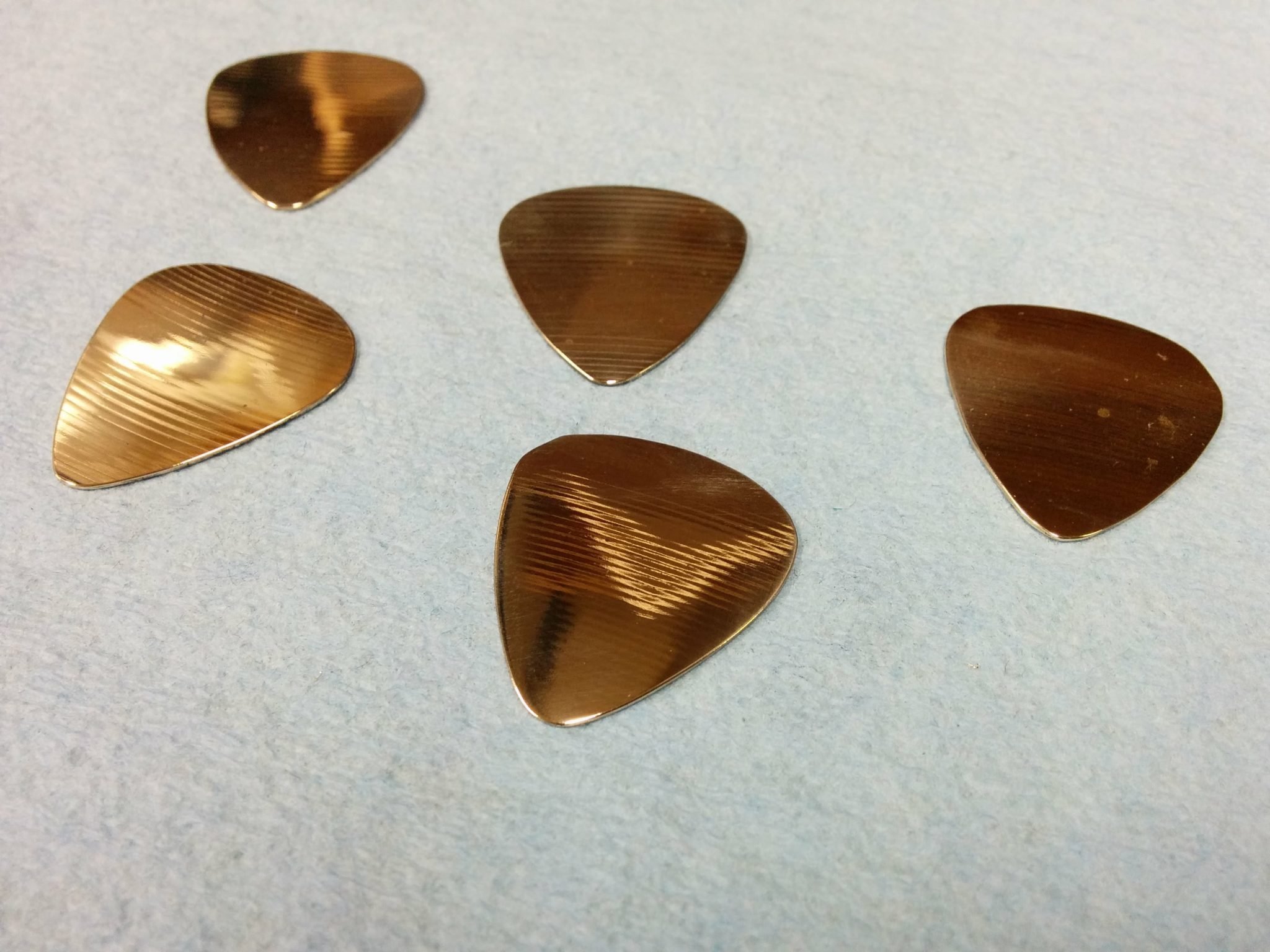
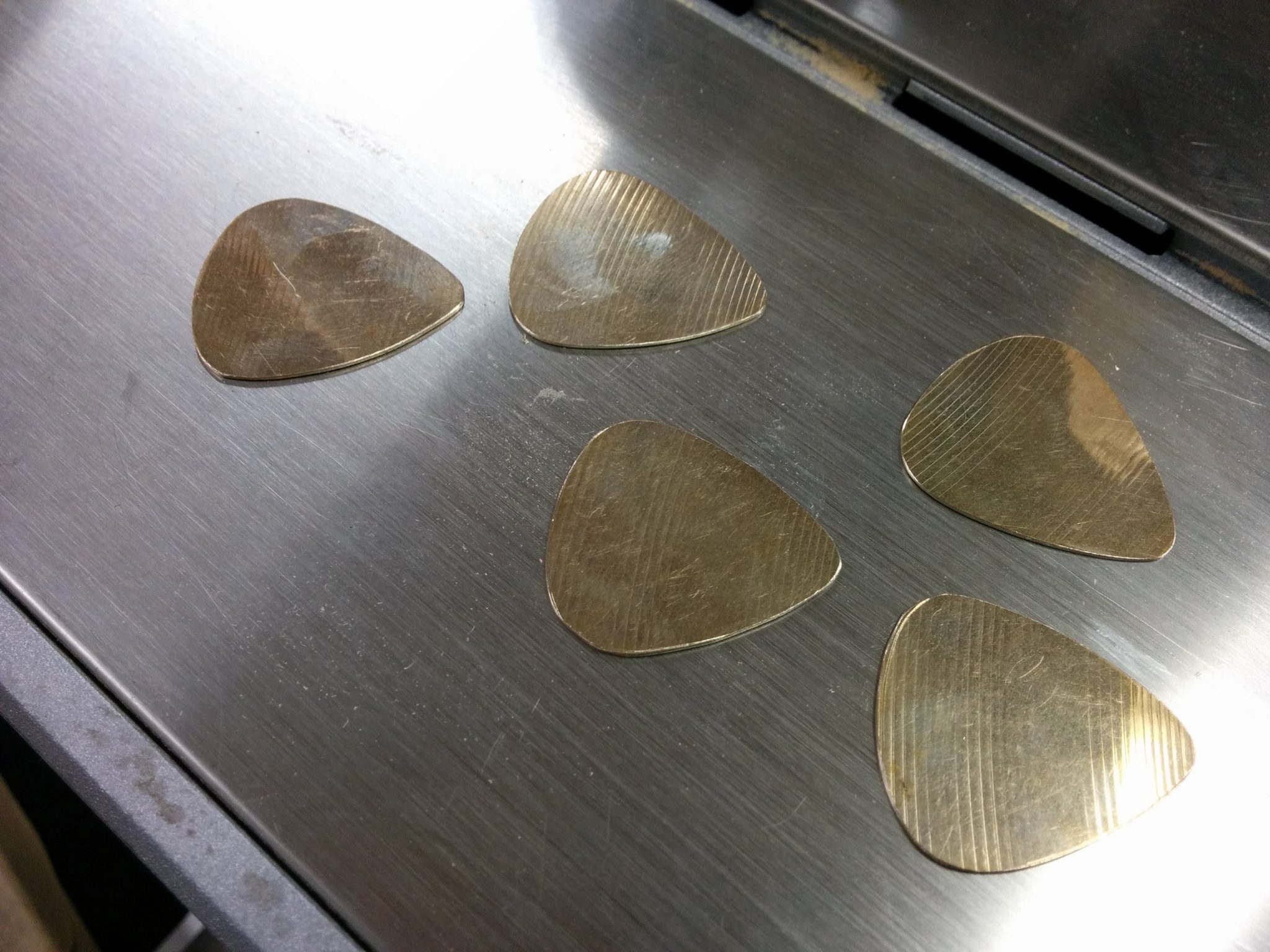
5 more picks almost done being polished.


And that’s it.  I think I’ve got this process down.  I’ve got a few picks being tested by other guitarists so I’ll compile the feedback and see how people like them.

Making a guitar pick from a cracked cymbal

Update: I created a follow-up post with a few things I did differently.  You can find that here.

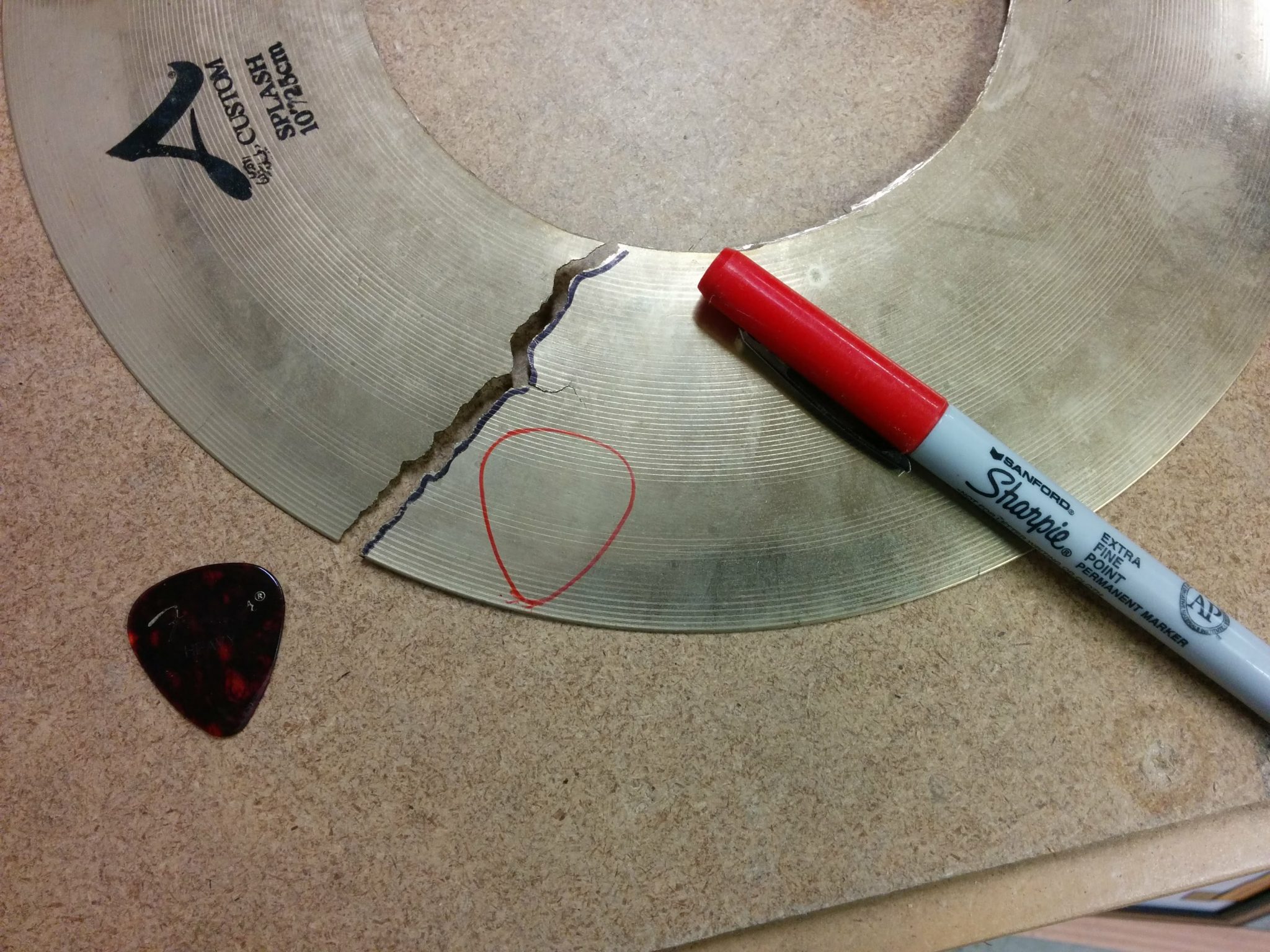
I started with the remnant from a cut-down cymbal.  I chose a cut-off from a Zildjian A Custom 10″ Splash because of how thin it was and how it didn’t have much of a bow to it.

Zildjian A Custom 10" Splash.
Zildjian A Custom 10″ Splash.


Using a red extra fine point Sharpie, I traced the outline of one of my existing guitar picks.

Outline of the pick traced on the cymbal.


This worked out okay but the red ink started to come off pretty quickly.  I think for future picks I will carefully scratch the outline with an awl.

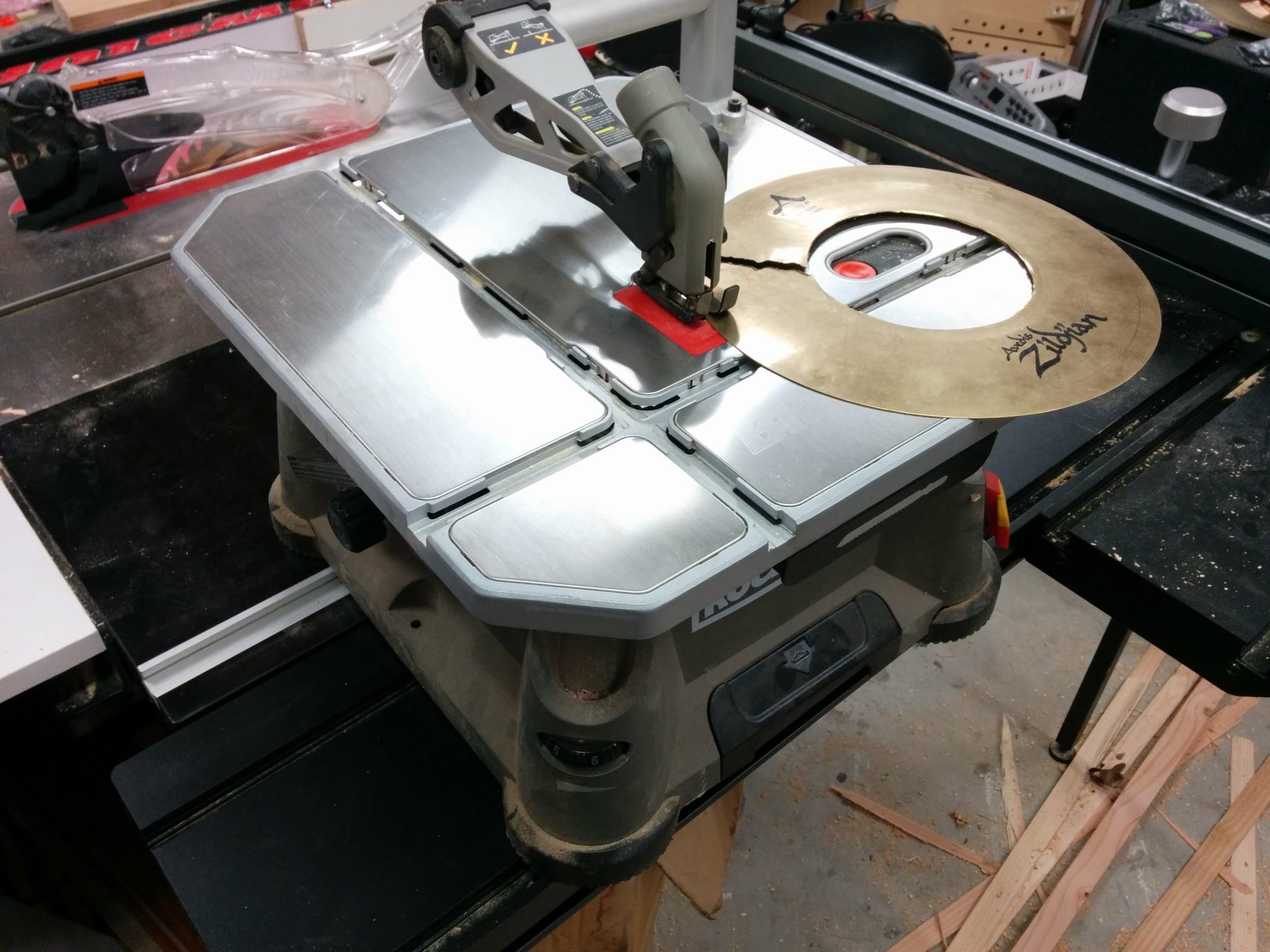
Once the outline was traced, I took the cymbal to my Rockwell BladeRunner equipped with a metal cutting blade.

Rockwell BladeRunner


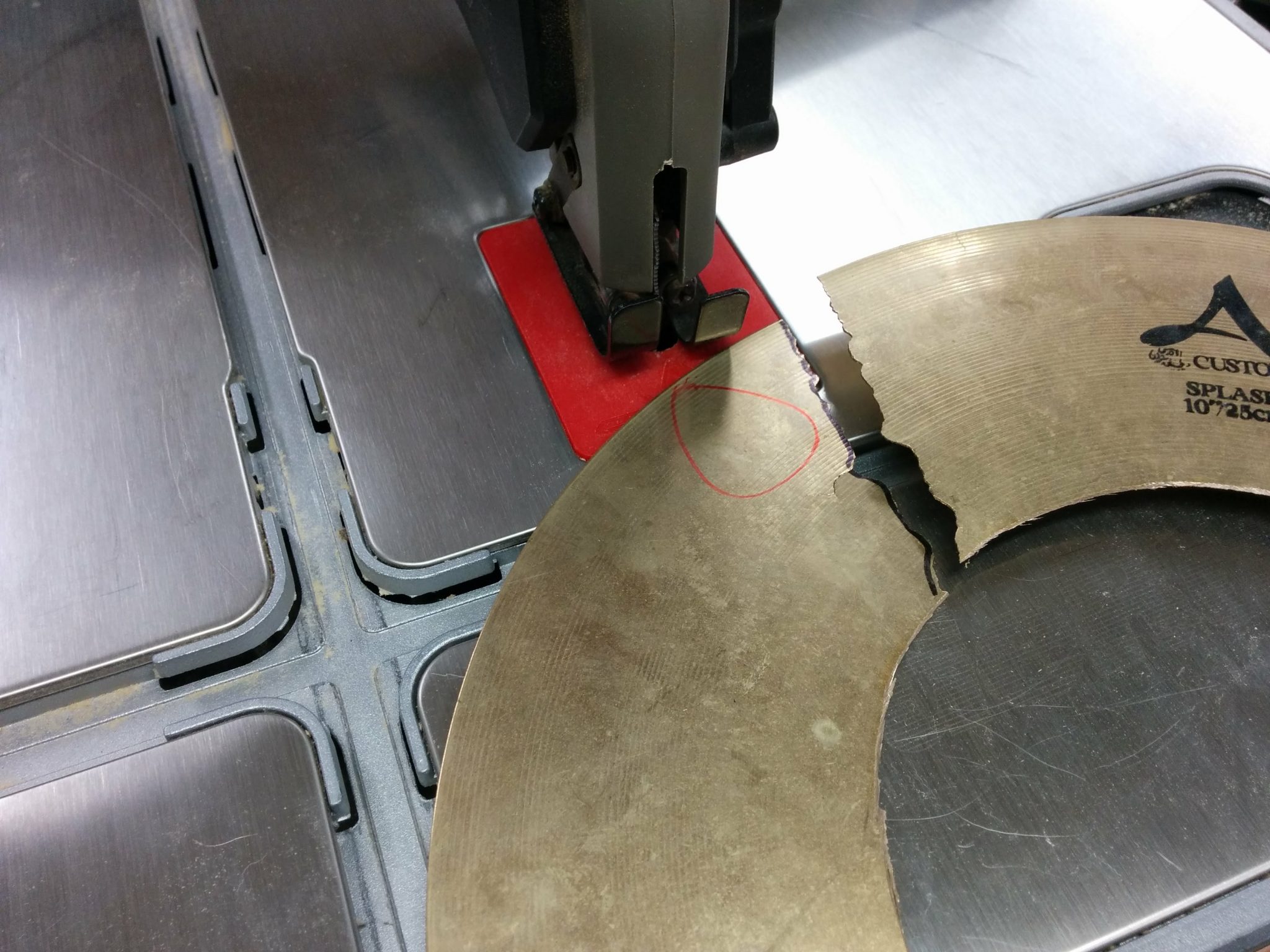
I didn’t need to cut it exactly on the lines.  In fact, it wouldn’t be possible with this type of tool.

Ready to rough cut the pick out of the cymbal.


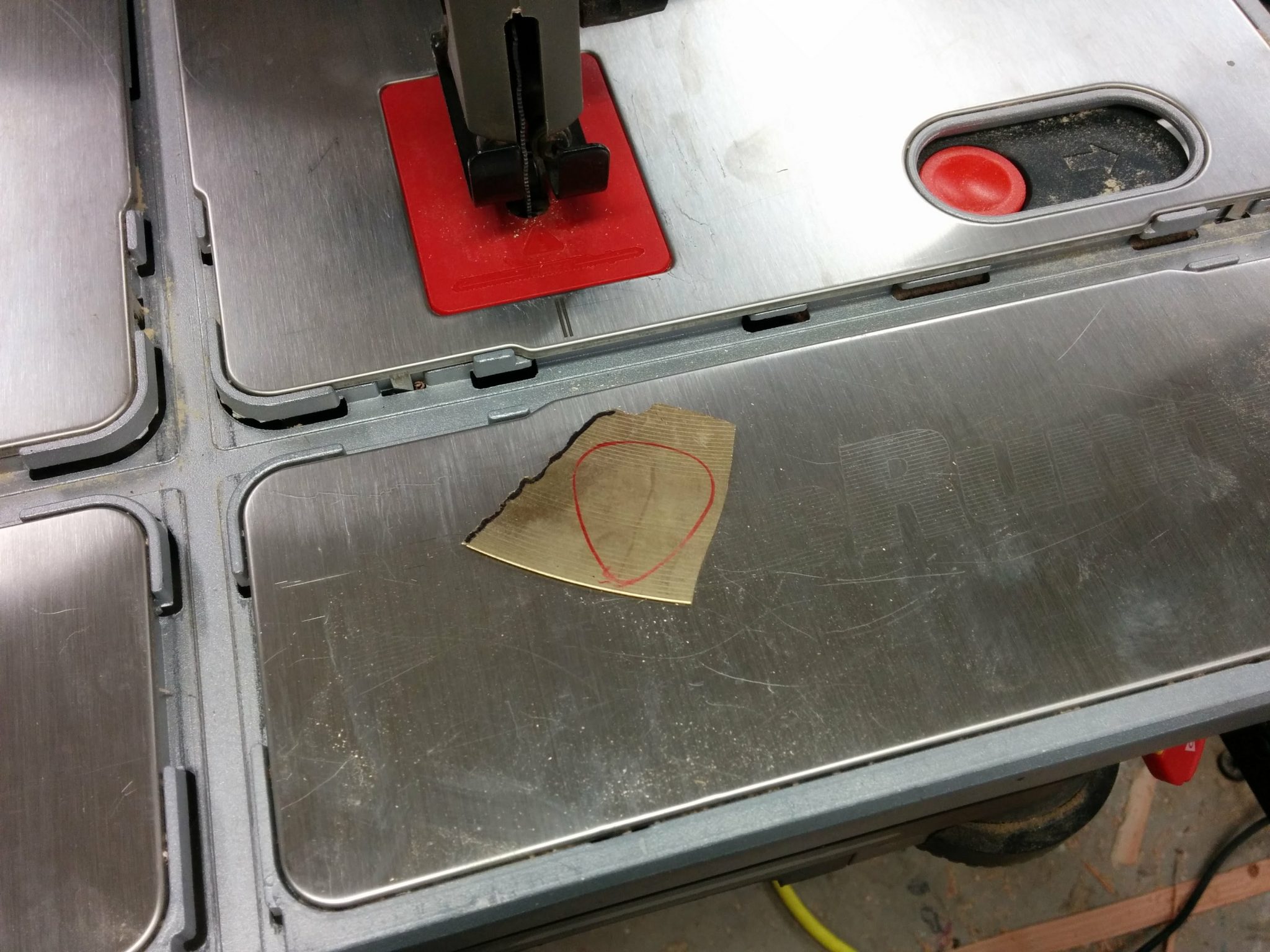
All I was going for was a smaller section that I can take to my sanding tools for the final shaping.  When cutting something like a small cymbal remnant, it’s difficult to safely get it down to it’s final size using larger tools.  This was definitely an exercise in finding the right tool for the job, as you’ll see…

The rough cut.
The rough cut.


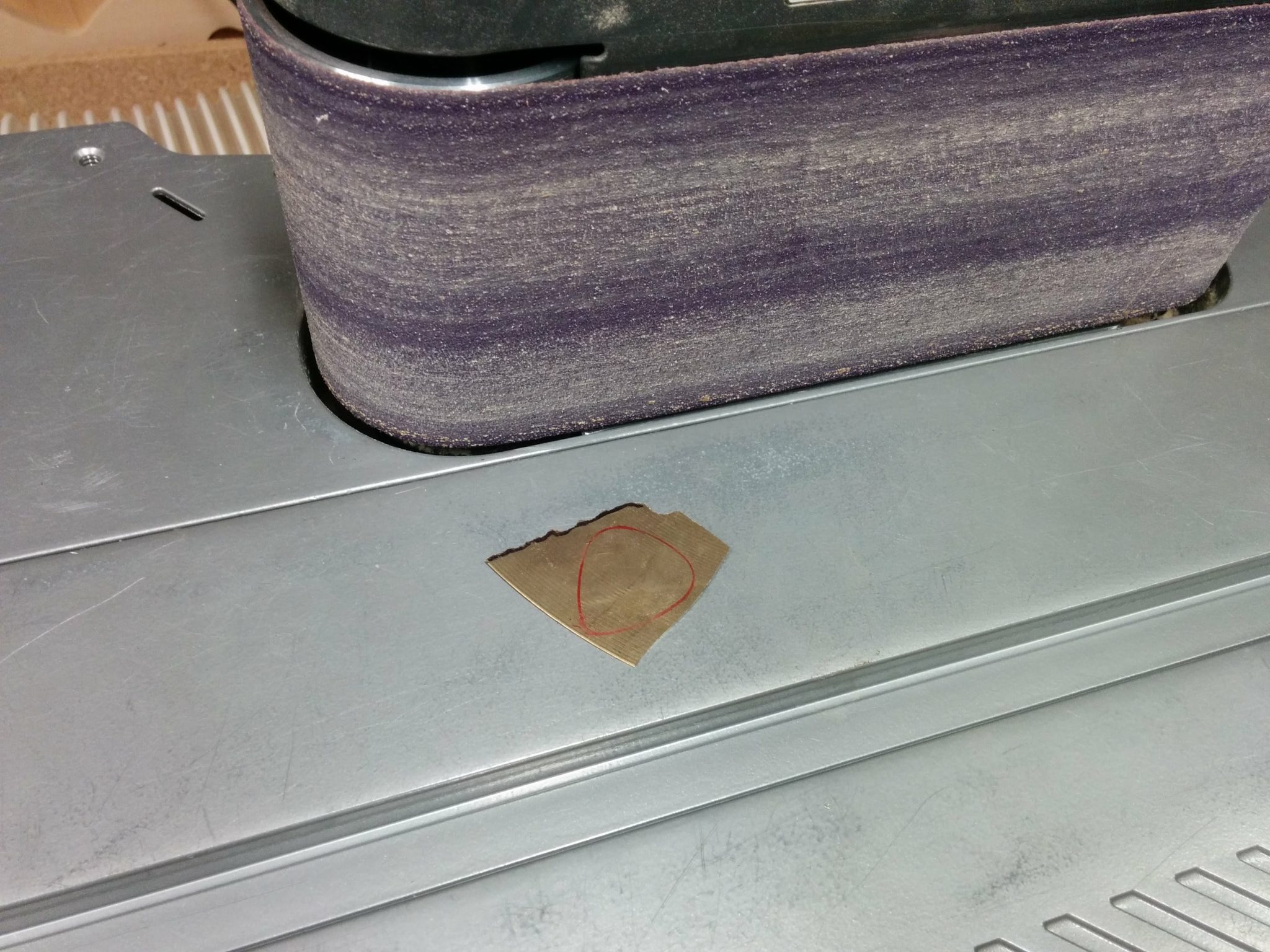
After getting it cut to a manageable size, I took it to my Ridgid oscillating belt sander.  My plan was to use this to get it to it’s final shape.

Taking the rough cut to my Ridgid Oscillating Belt Sander.


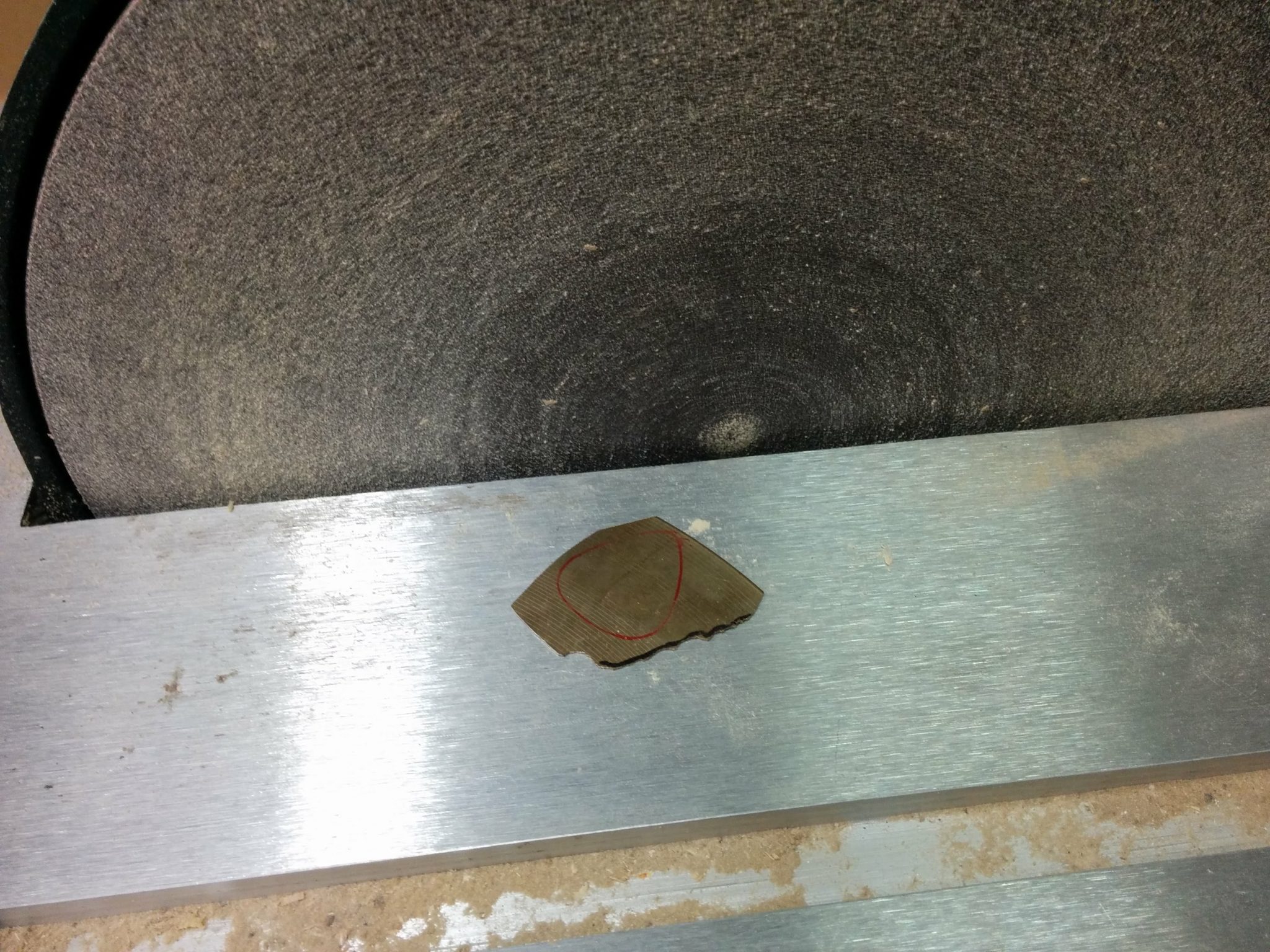
This proved to be too slow so I tried taking it to my disc sander instead.

Trying the disc sander instead.


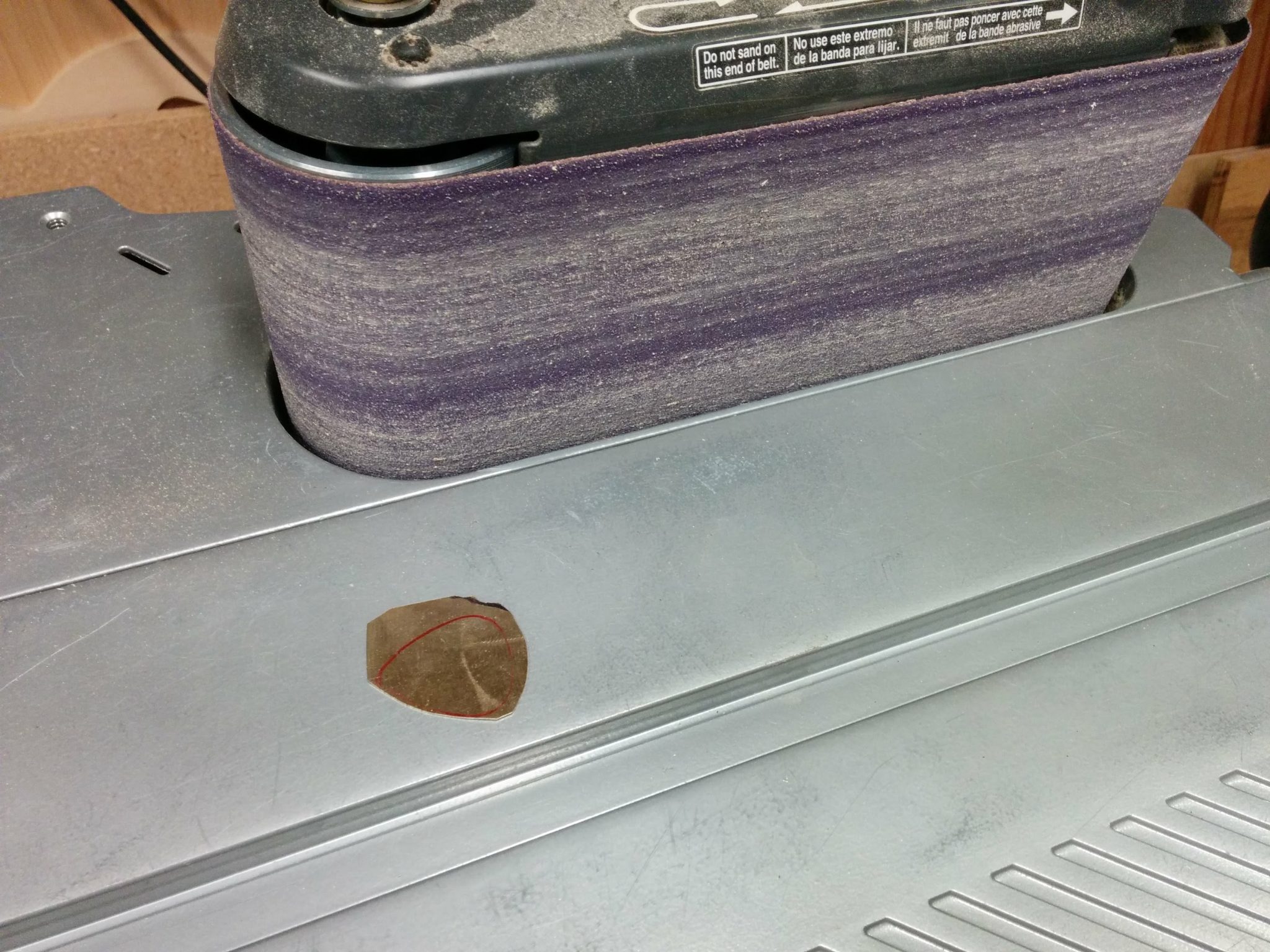
The disc sander was too aggressive and not quite precise enough so I took it back to the oscillating belt sander.

Back at the belt sander.


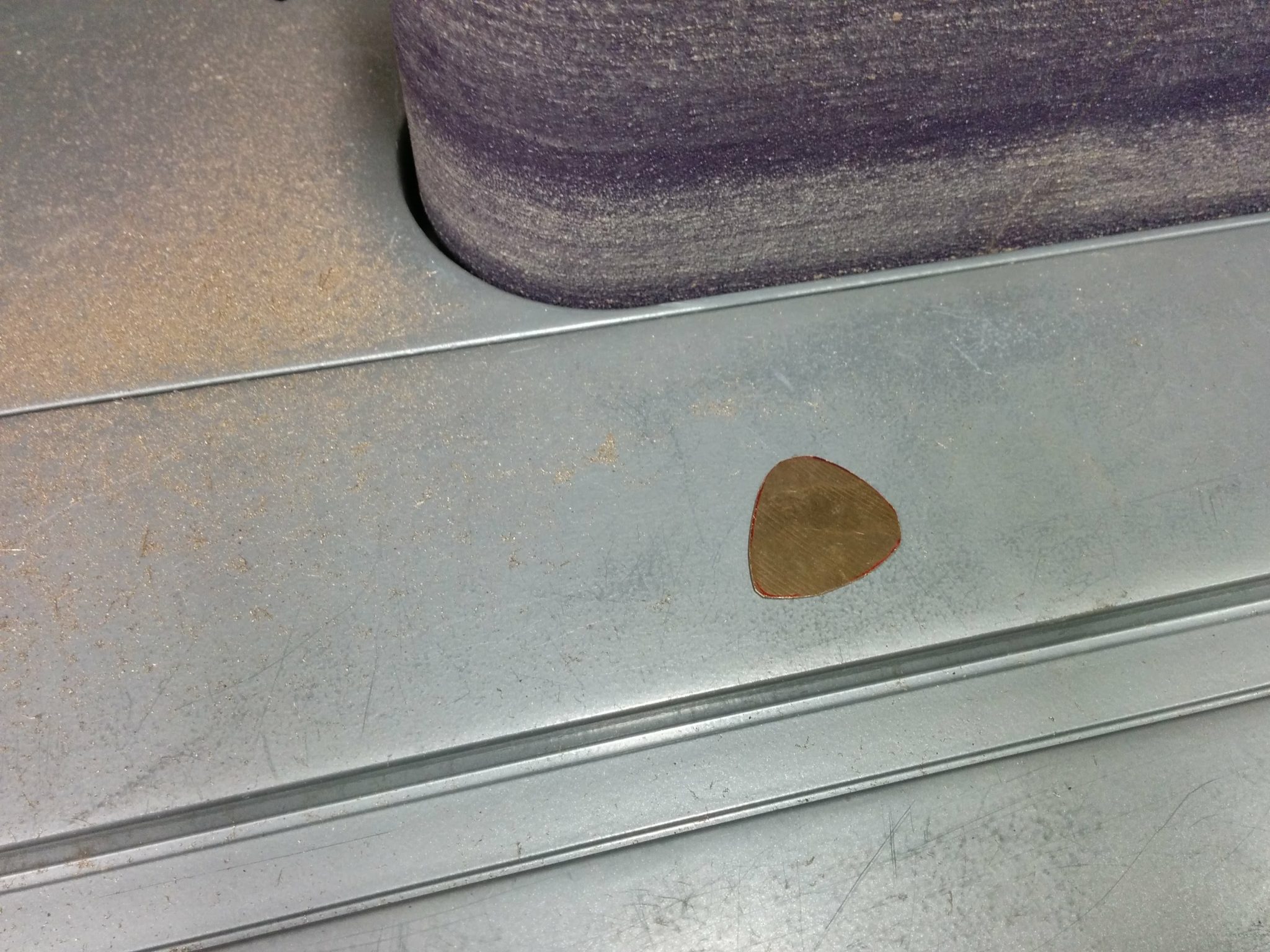
I found the trick to getting it just right.  I would hold the pick in my hands a few inches off the table, rather than right on the table top.  This gave me more control but I needed to stop every few seconds to let the pick cool off since the friction would make it get extremely hot pretty quickly.

Rough shaping is done.


This got the pick to be pretty much the right shape, but the edges weren’t all that smooth.  I decided to do the final shaping by hand so I would have more control.  For this I used a sanding block.  I believe this block had 220 grit on it but I’m not entirely sure.

Final shaping is done on a sanding block.


After getting the edges nice and smooth, they were left with a slight burr that was fairly jagged.  For this I just angled the pick so I could break down those burrs and get a smooth edge.

Knocking back the burr.


The final result was nice and smooth.  Now it just needed to be polished.

Final shaping is done.


I equipped my drill press with a buffing wheel.

Buffing wheel on the drill press.


I started with the edges.  I did this in case I found any jagged spots that I missed.  If I did, I would take it back to the sanding block before finishing the pick on the buffing wheel.  After the edges were polished, I did the same thing to the front and back faces.

Polishing the edge.
Polishing the edge.


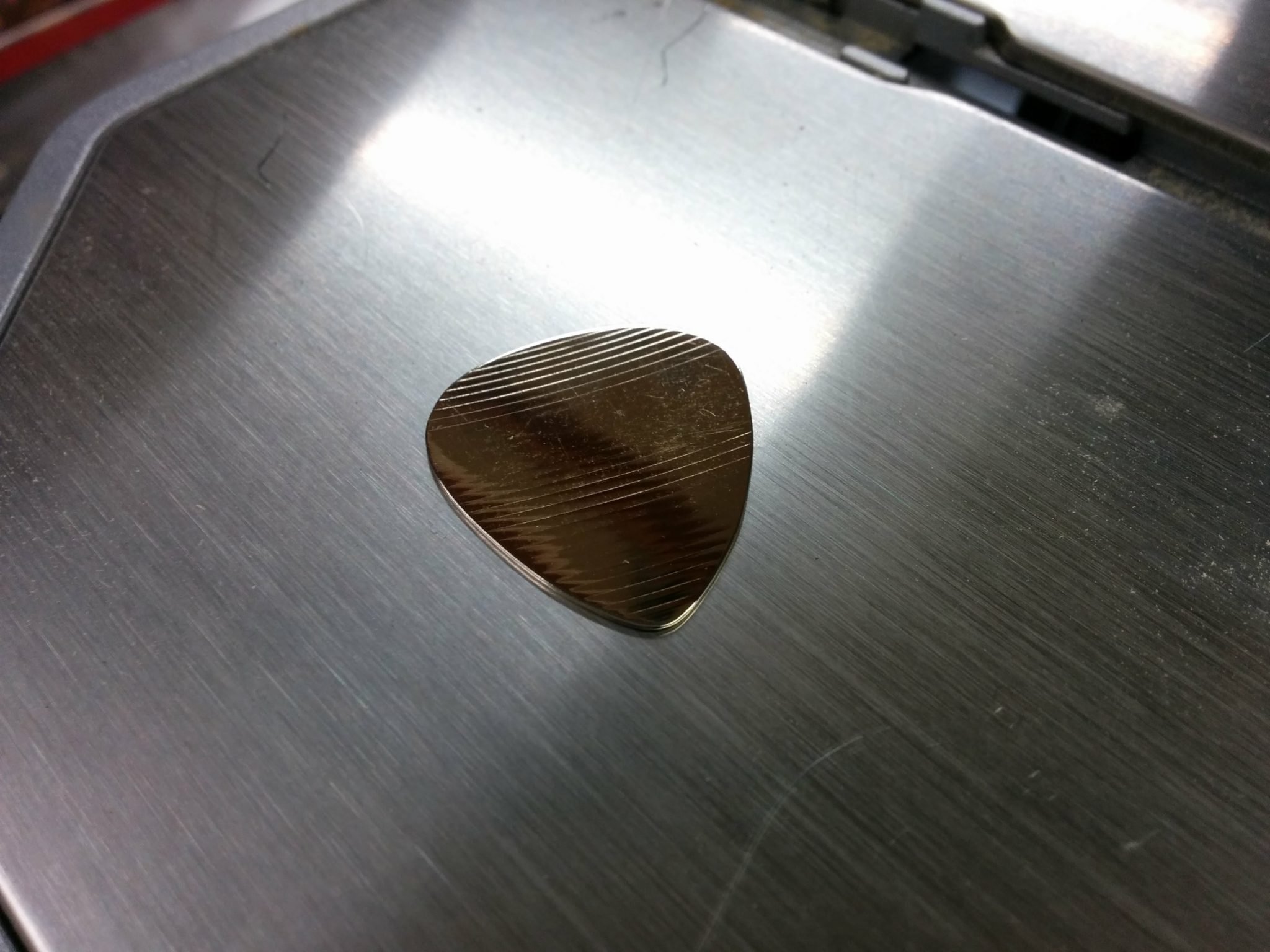
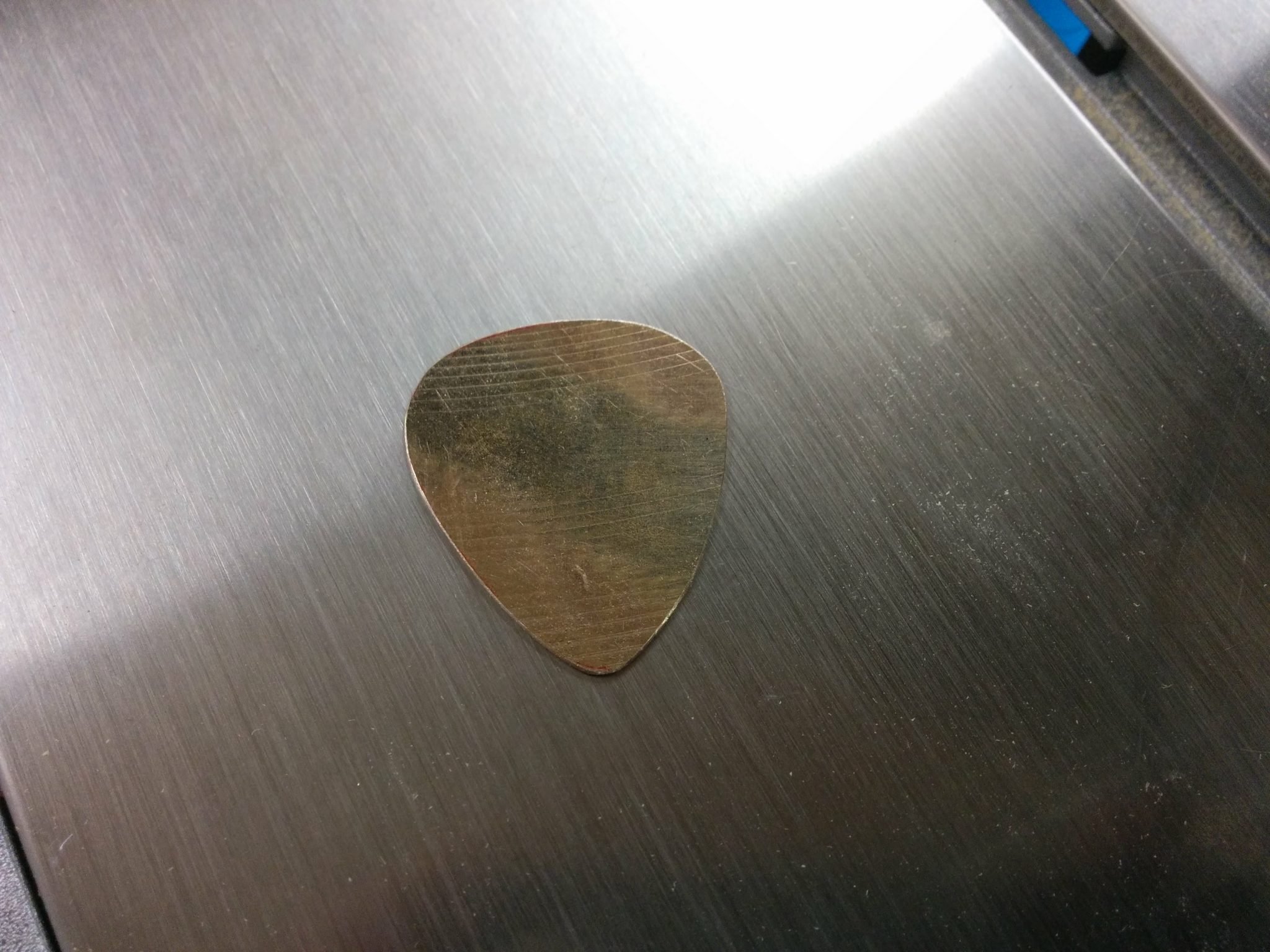
All done.

The final product.
The final product.


All in all, this worked out better than I expected.  Now it’s time to get into production mode and crank out a bunch more.


I’m going to test these out but I don’t have a lot of experience playing with metal picks.  They almost feel too slick so I may need to experiment with adding some texture somehow..  Have any of you made these before?  If so, how did they work as actual guitar picks?  Let me know in the comments below.
Update: I created a follow-up post with a few things I did differently.  You can find that here.