News – February 11th, 2019 – Cymbal Cart, Wood Paste, New Docs, Studio Desk, and Router Table Article

Progress on the Cymbal Cart
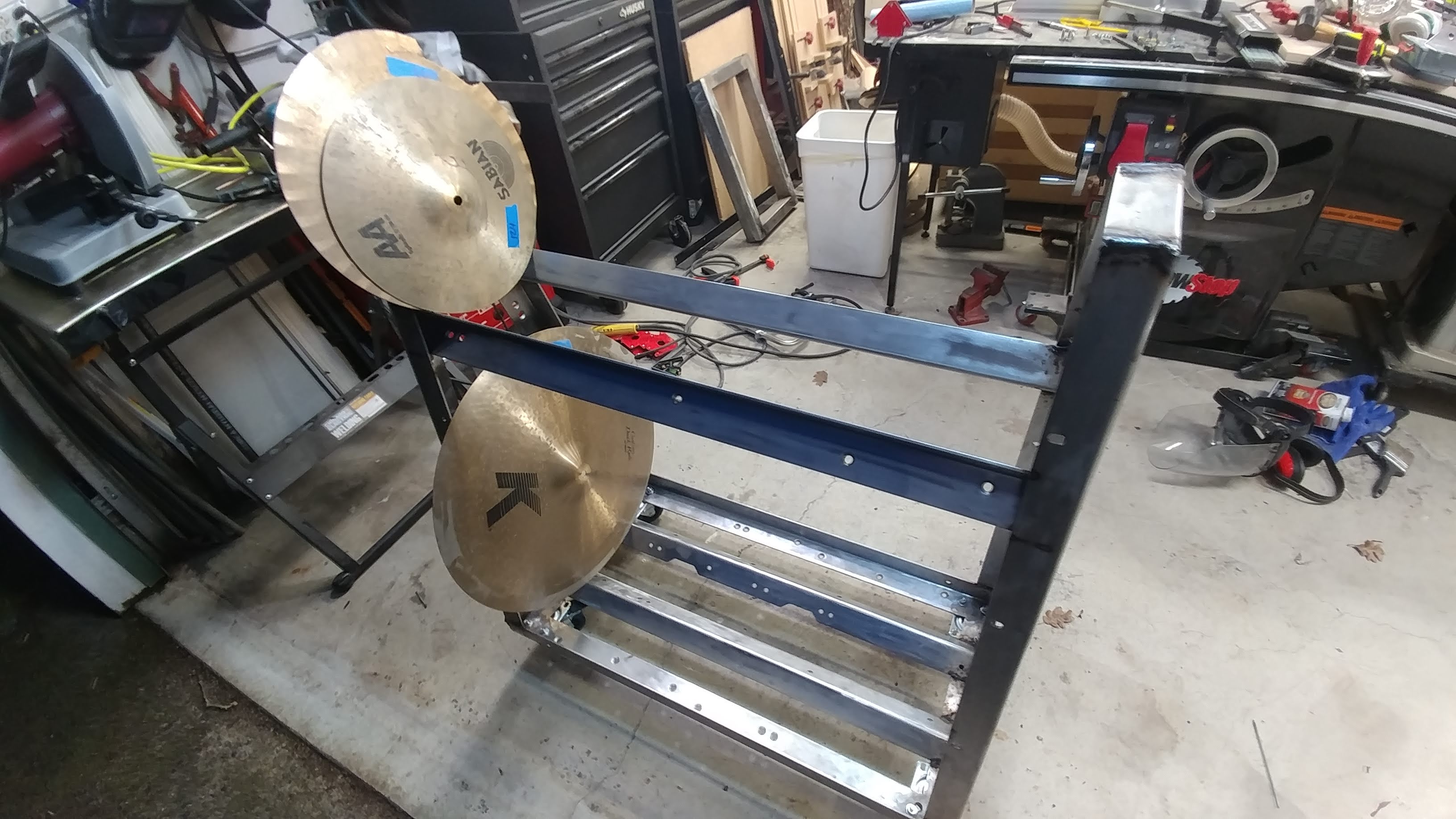
I got the cymbal cart all welded together. I just need to clean it up by grinding down the welds, protect the steel so it doesn’t rust, and attach some non-slip material to the bars so the cymbals don’t slide all over the place.

I should probably state that I really suck at welding, but projects like this are good practice and force me to get better.

Trying out some new products
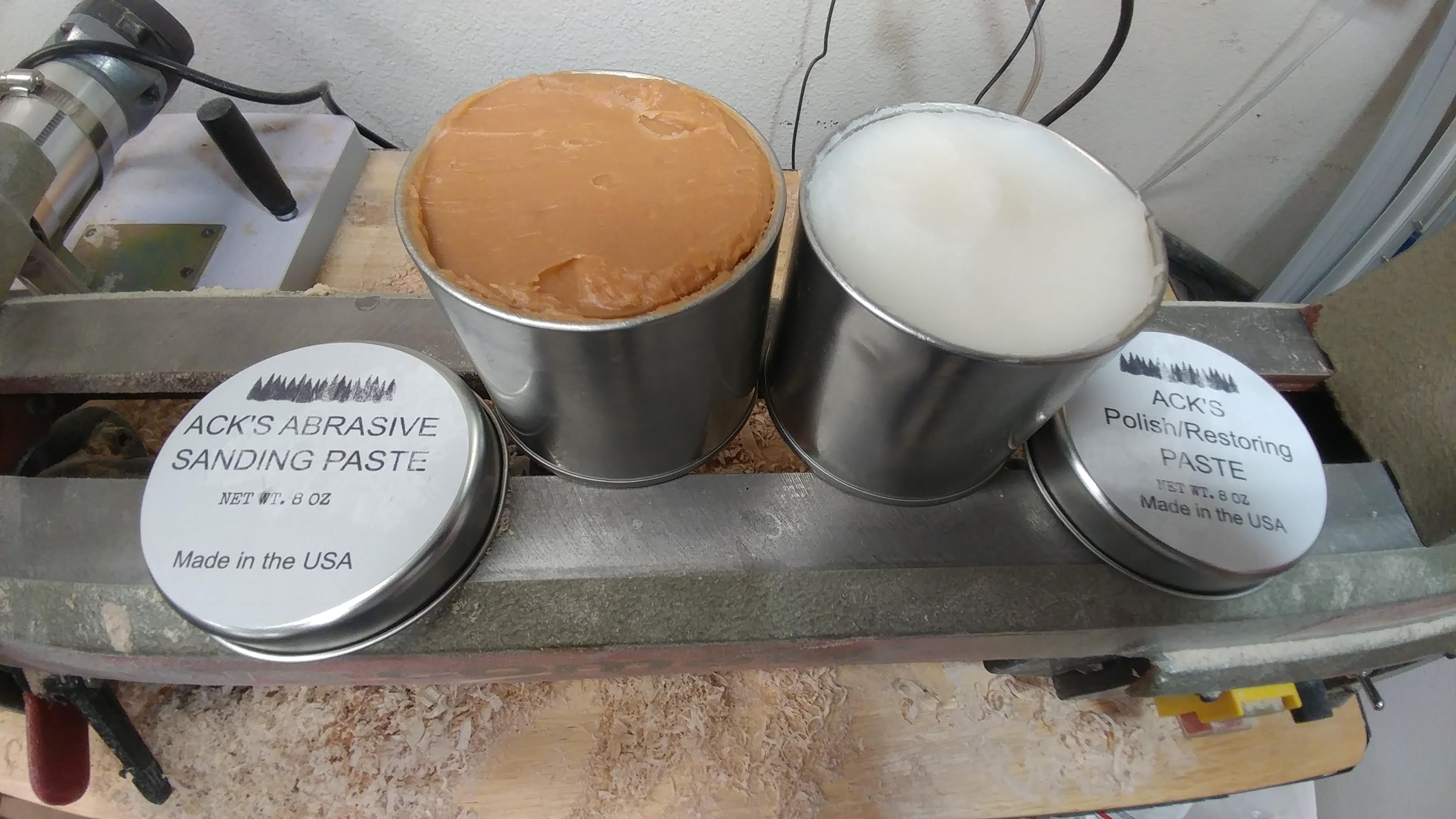
At the suggestion of Gord Rock, I am going to be trying some of Ack’s Abrasive Sanding Paste and Polish/Restoring Paste. From what I’ve seen online, it seems to work really well.

My shop is in disarray right now due to the cymbal cart project so I can’t do any woodturning for a few days. I’ll be sure to write up a review after I run it through its paces.

Gord Rock

https://ackswoodpaste.com/

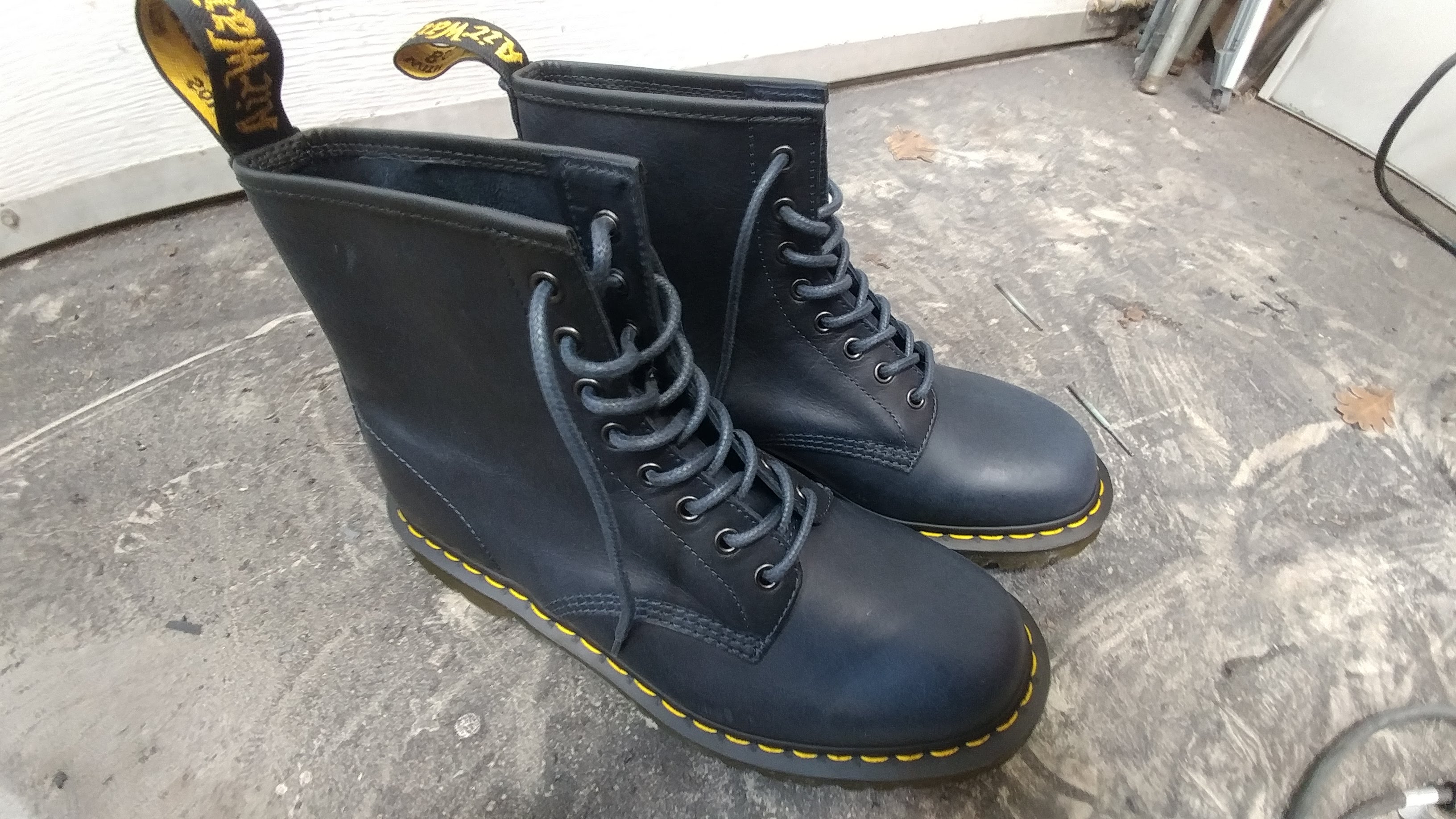
New Doc Martens!

My black Docs have finally retired after two and a half years of constant abuse. I got a new pair of Navy Docs and for the very first time in my life a pair of Docs doesn’t need any breaking in. I’m used to spending a few months painfully wearing a new pair of Docs for a few hours a day until they are finally comfortable enough to wear all day. I put these on and they’re perfect right out of the box!

No More Studio Desk
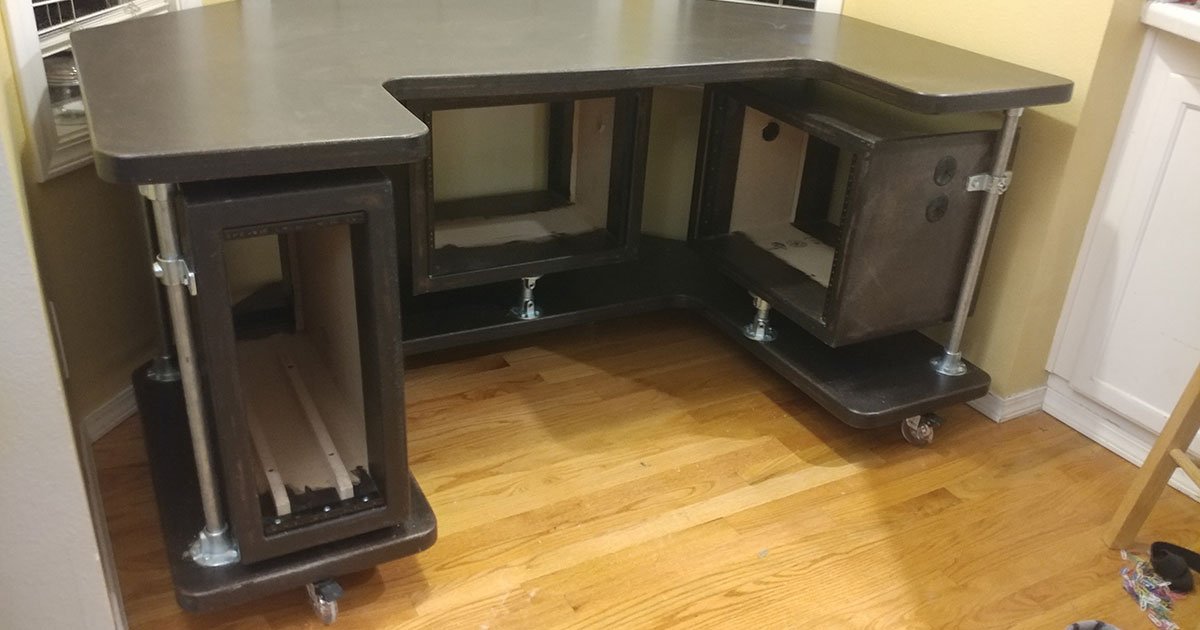
I have gotten rid of my studio desk after much debate. I really liked it but it was just too big and I didn’t end up using it the way I had hoped I would. I’m replacing it with a new desk with a separate rolling rack for all my gear. I’m looking to make something much more compact and portable. I’m still in the designing phase now but I’ll post some updates here soon.

If you aren’t familiar with my studio desk, below are the articles showing how I put it all together

Router Table Article
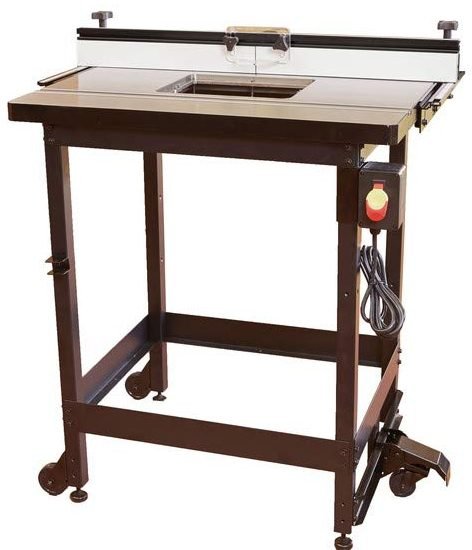
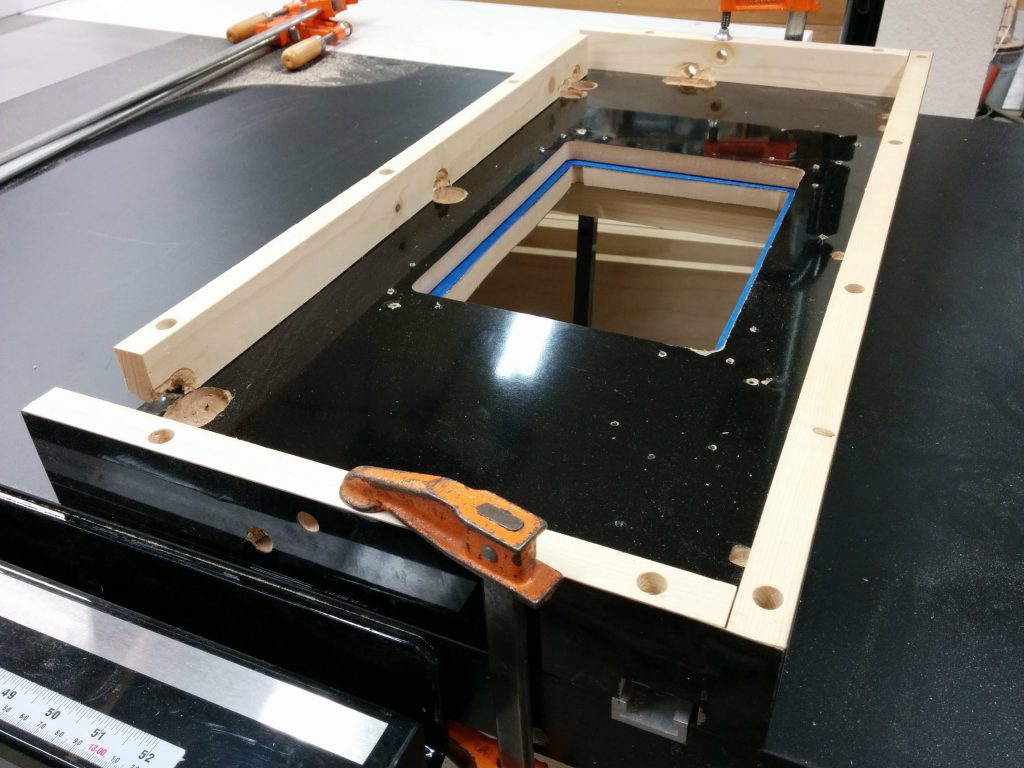
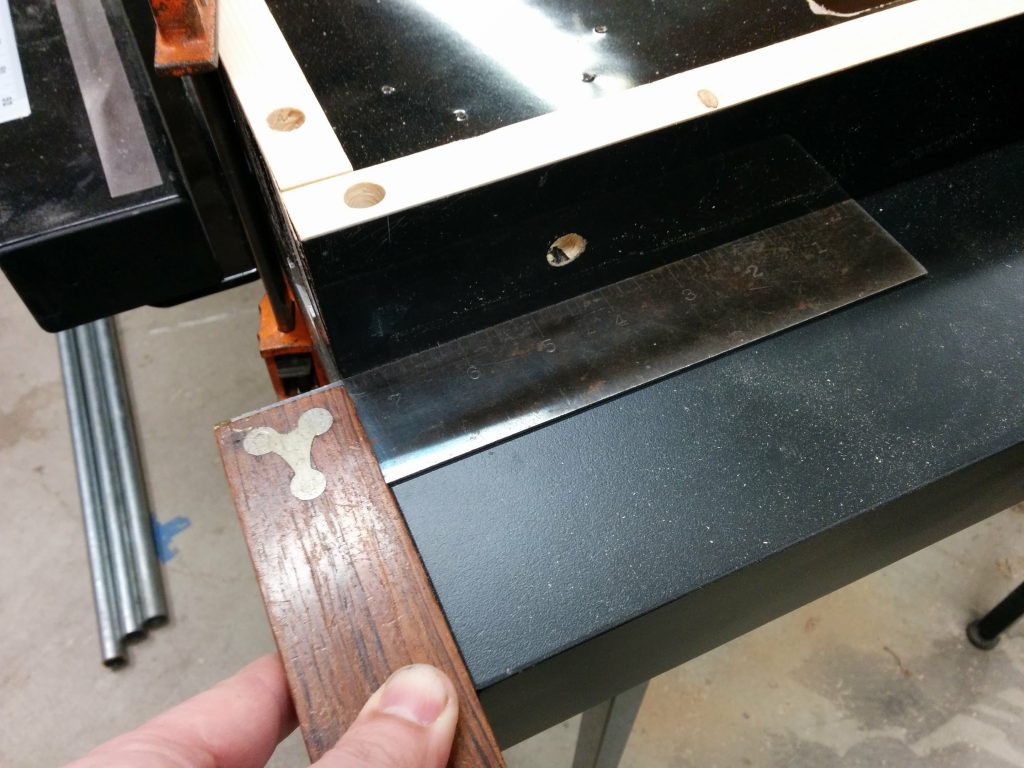
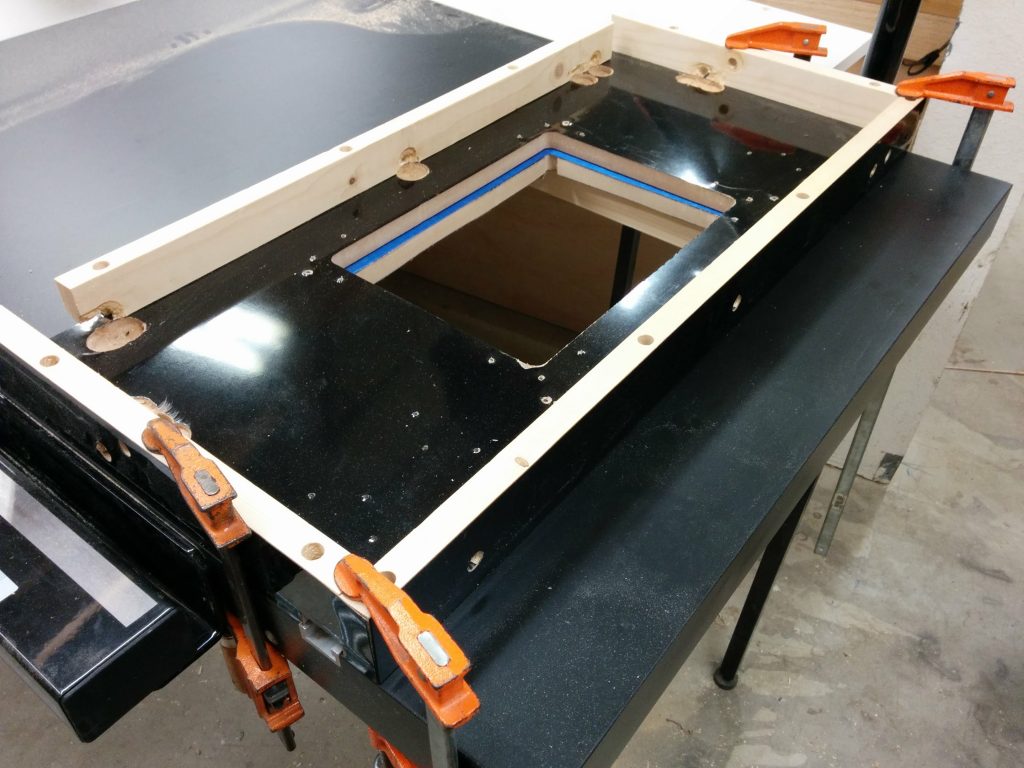
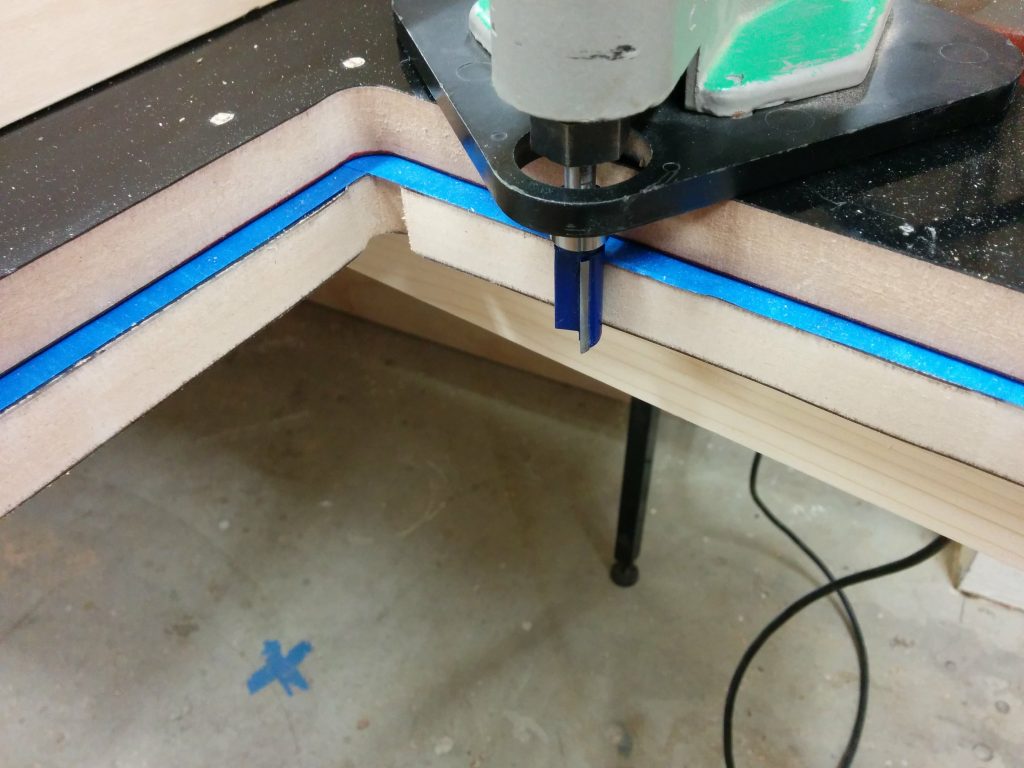
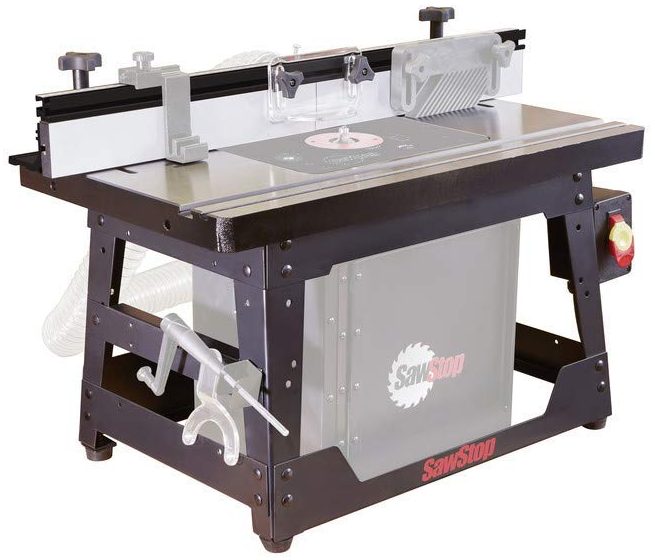
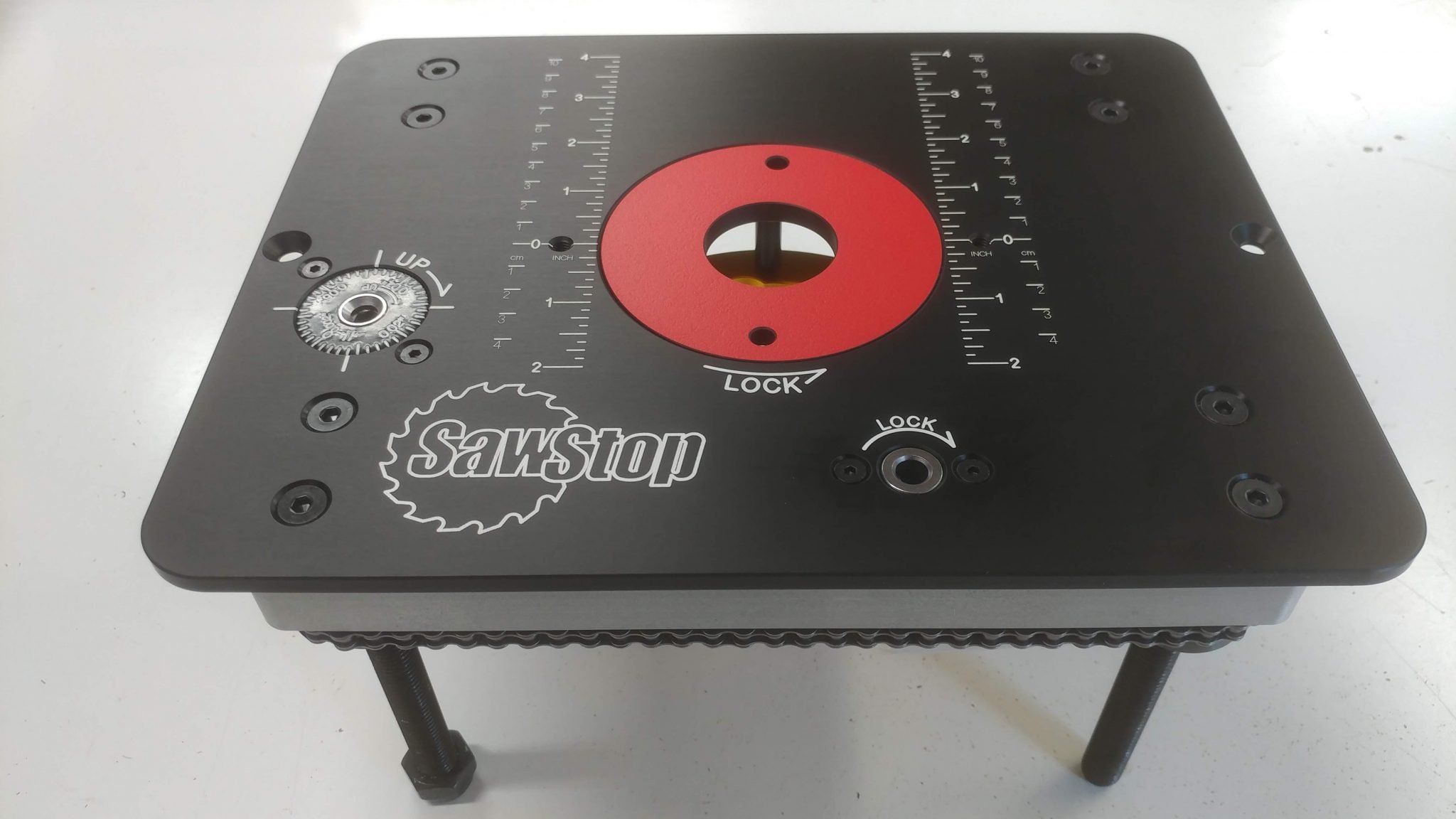
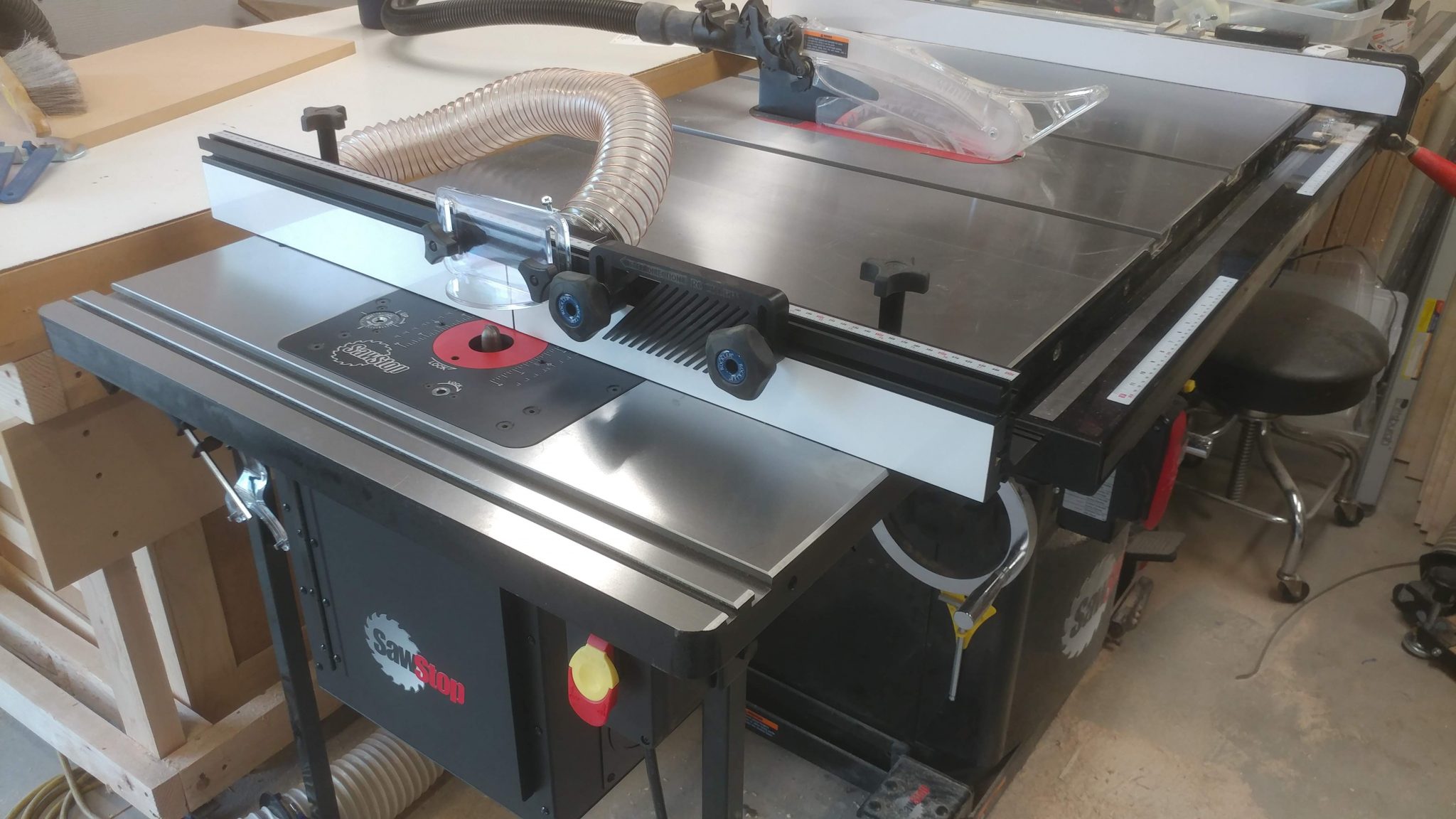
Due to the popularity of my Choosing a SawStop – Contractor Vs. Professional article, I have begun writing up an article that covers the SawStop router table options, including any incompatibilities you may run into. I hope to have this article out in the following week or two.
News – May 31st, 2018 – Finished Router Table and a Pleasant Surprise

Finished the Router Table

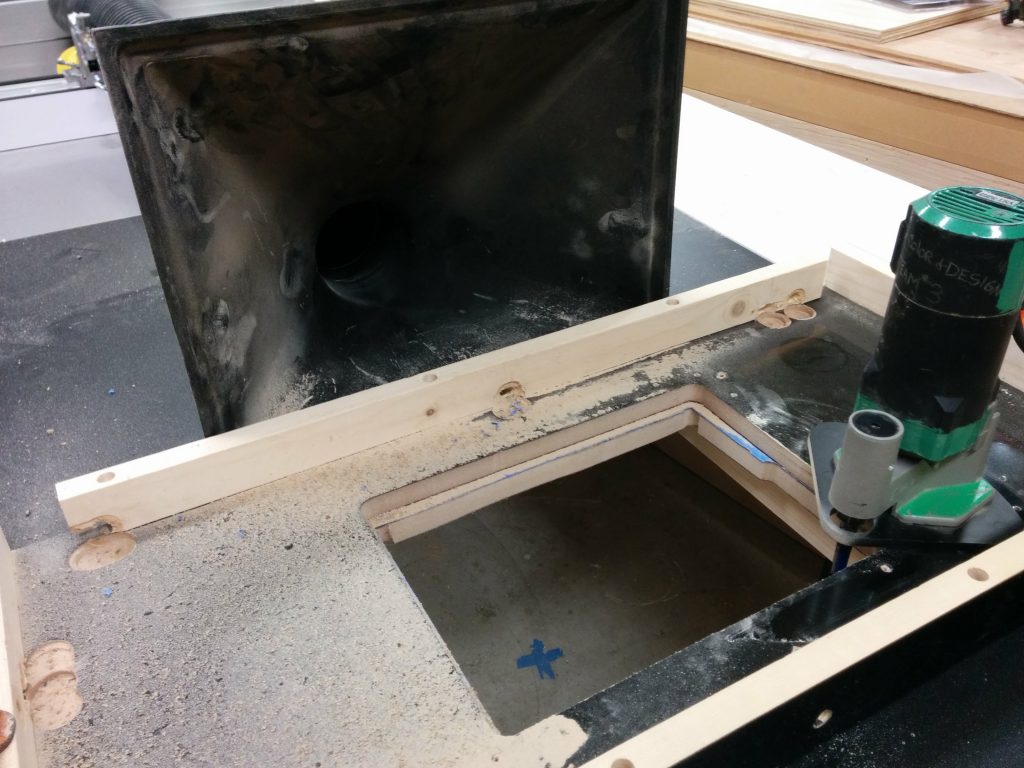
I managed to get my hands on a SawStop router lift and downdraft dust collection box.  This finishes up my SawStop Router Table

I’m putting together a detailed write-up on the assembly of each of the components as well as some of the tests I ran on it afterward.  My initial impressions are good.  I’m particularly happy with the dust collection capabilities.

Surprise Present from a Customer

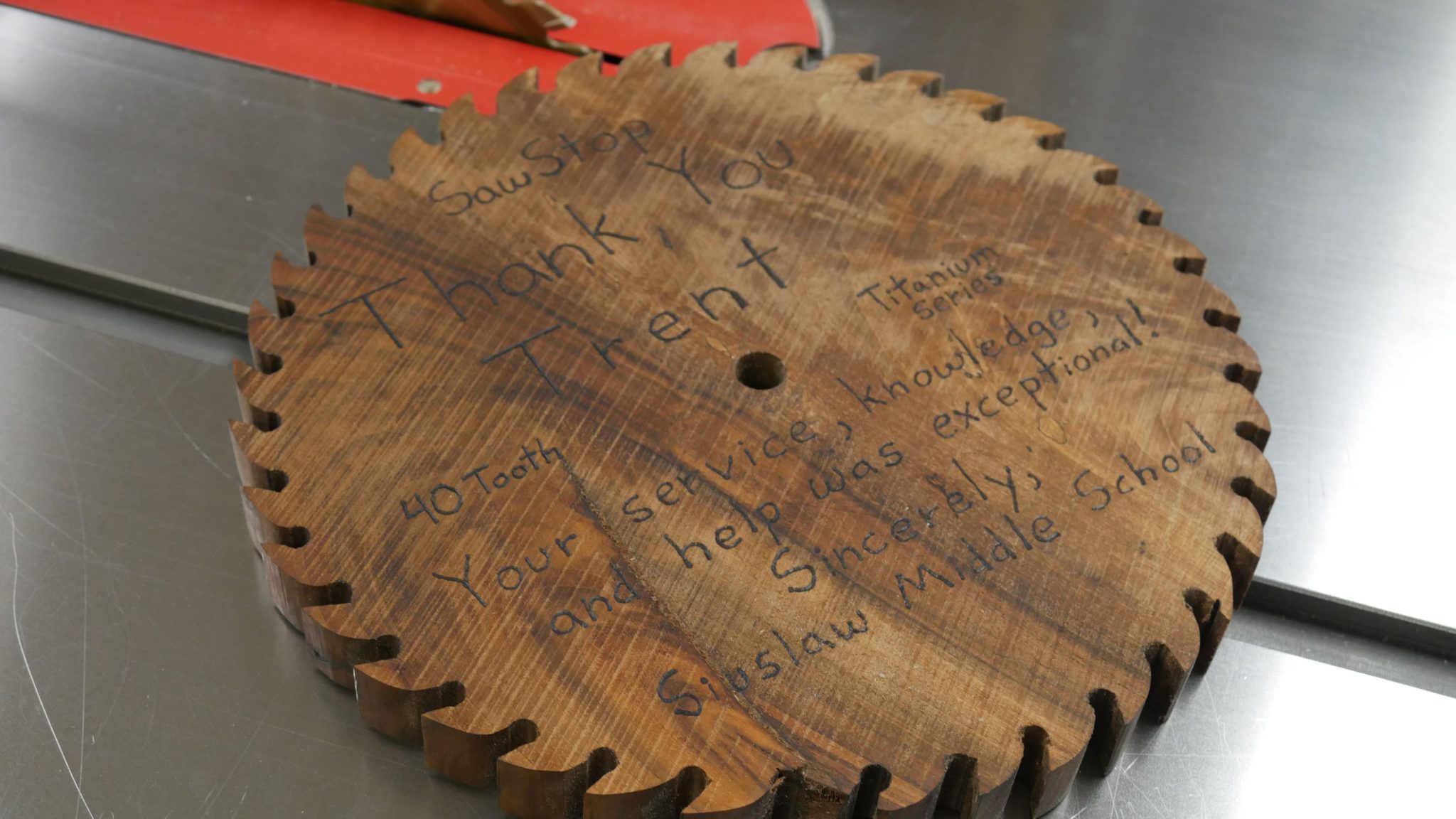
In mid-April, I got a call from Siuslaw Middle School in Florence, Oregon.  They needed assistance with their blade guard.  I’ll spare you the boring details but the end result is that their problem was solved.  All in a day’s work.  No big deal.

Fast forward a few weeks later and something cool arrived for me in the mail.  As you can see in the picture above, it is a saw blade.  Not just any saw blade, mind you, this one was hand made for me by the awesome students in the Community Wood program at Siuslaw Middle School.  The blade is made from English Walnut and finished in Linseed Oil.  This is now my prized possession and hangs proudly on my cubicle wall.  I get lots of people stopping by to look at it.  I’ve gotten things from customers before but this is my new favorite.

The Community Wood Class is a woodworking class with a focus on community service.  They do woodworking projects for people in the school district and even in the general community.  According to their teacher Tod Graham, “We also like to do simple acts of kindness involving wood.”  I think it’s safe to say that this counts as an act of kindness.

The craftsmanship on this blade is great.  I could never produce something of this quality when I was in middle school.  I really want to see some more of their work.  I’m particularly impressed that they actually cut out all 40 teeth and each of the teeth looks great.  Being able to focus on a mundane task and perform it at a consistent quality level, as is evident on this blade, is very impressive.  These kids are good at what they do and their community is lucky to have them.

I’ll explain why this is so important to me…

We take customer service very seriously at SawStop, where I work.  We have a reputation in the industry for handling customers better than the competition.  I love this company but if they ever change their approach then I would probably leave (not that they’re planning on changing).  I made sure to show this blade to my superiors as a nice reminder that we are doing the right thing and we should continue to do so.  We don’t get bonuses or even praise for taking a certain number of calls or keeping the calls under a specific time-limit.  Our job is to take care of the customer.  Period.
Where else can you call for free support for, say, a 10-year old used saw that you bought at an auction, not have to go through an annoying call-tree, and get someone who not only speaks English but who also uses a table saw regularly and can talk shop with you?  I love my job.  My coworkers feel the same.  This may sound cheesy but my passion is helping people achieve their goals.

It makes me feel good to know that there are people like the students in the Community Wood Class out there, and that I can help them do what they need to do in order to have a positive impact on their community.

News – May 7th, 2018 – New Router Table and Emptying The Coffee Cans

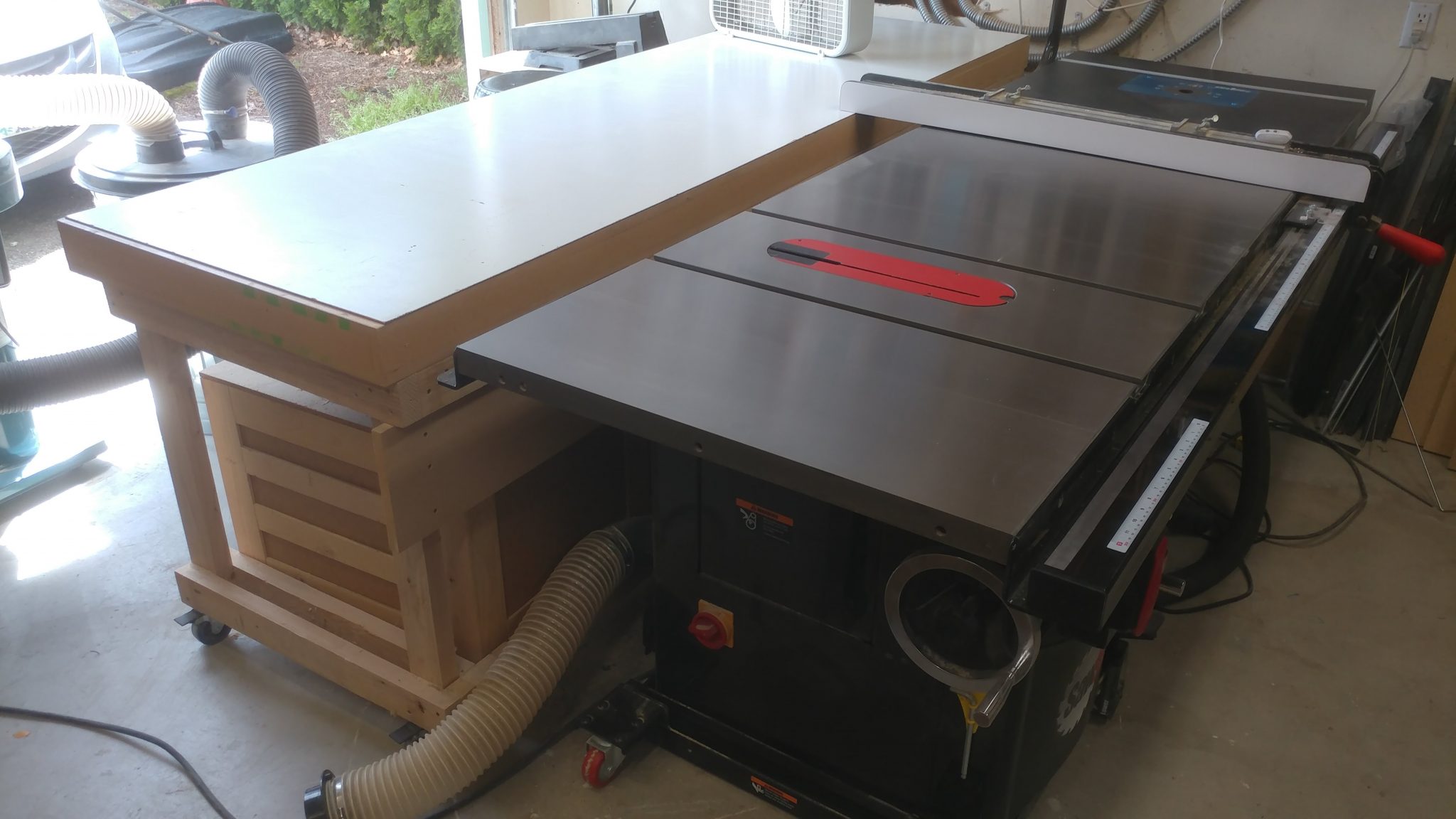
There have been some major changes in my shop.  Unfortunately, I haven’t been able to actually build anything but that should change soon.  The picture above shows my table saw and outfeed table.  I took this photo because I knew that this was the cleanest my shop would be for quite a while.

New Cast-Iron Router Table

I finally gave in and upgraded to a cast-iron router table attachment for my table saw.

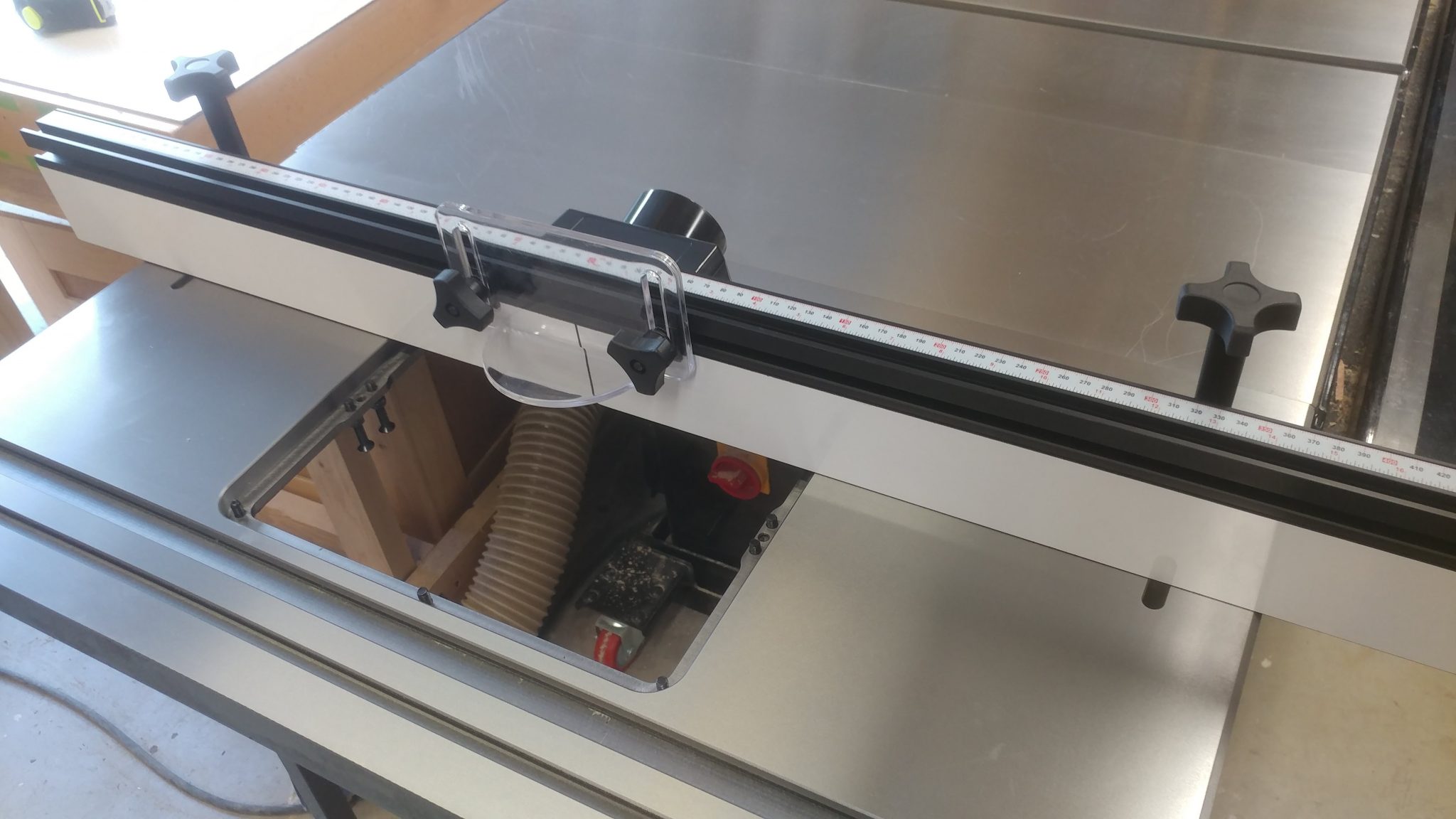
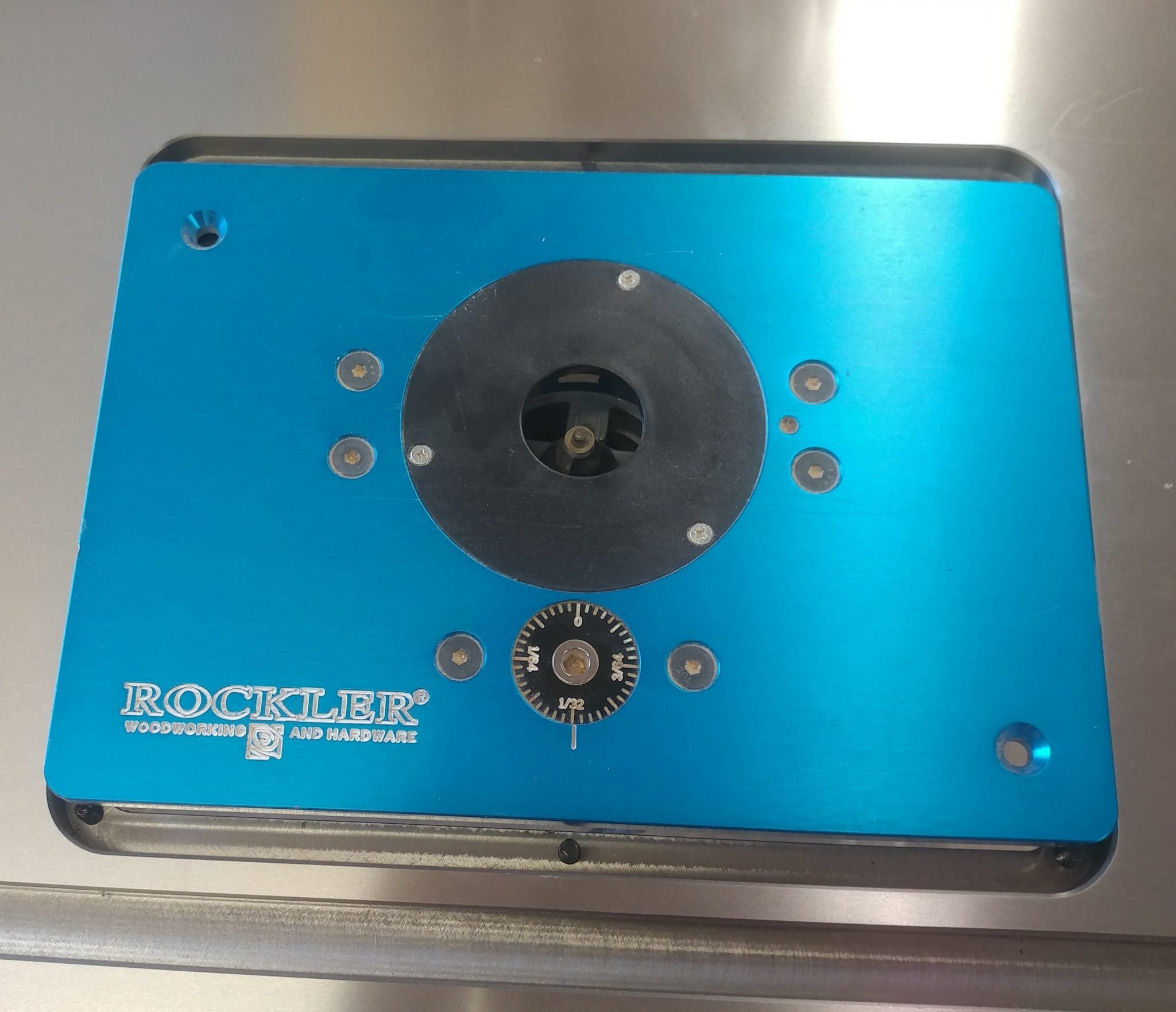
I bought the ICS Inline Router Table from SawStop.  I bought it without the router lift and the dust enclosure for a few reasons.  One is financial; we just put a new roof on our house.  The other is that I wanted to see if my existing router lift would fit in it and if so, how tight of a fit was it.  In the area of router lift/insert dimensions, there doesn’t appear to be any “official” standard.  As you can see, my lift doesn’t fit.  It’s totally the lifts fault.  Time to get a new one.  Fortunately, I already found a good home for my old lift and even the router table I built.

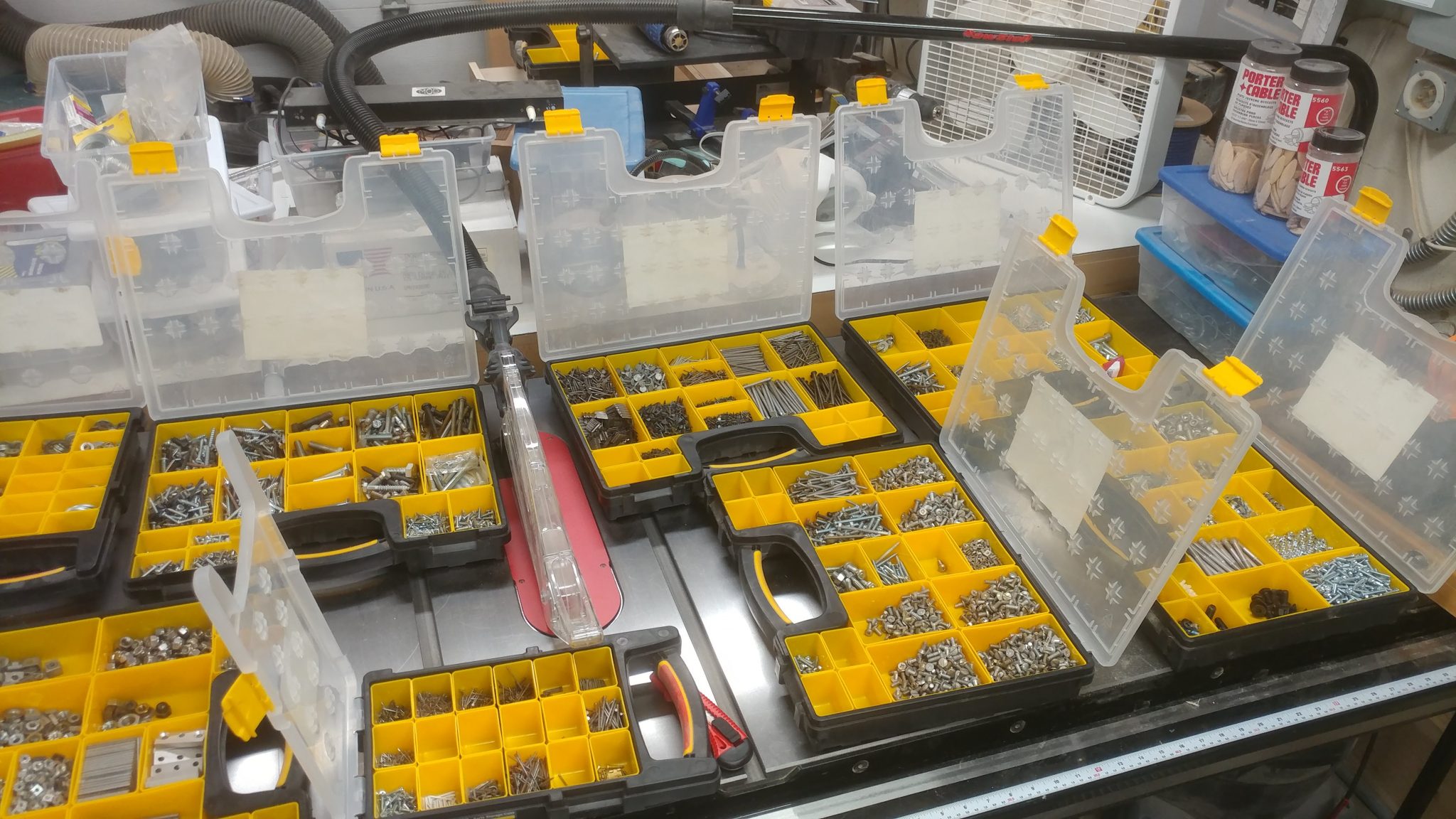
Cleaning Out my Coffee Cans of Hardware

I spent the past week going through all of the coffee cans of hardware that I have been accumulating over the past few years and sorting them out.  What you see here is how it looked about halfway through the process.

This is all part of a new phase in my shop.  I’m going through everything and getting rid of things that I don’t or won’t use.  I’m actually considering getting rid of my jointer since I only use it once or twice a year and it takes up a ton of space.  I haven’t decided yet.

I dismantled my electronics workbench.  This consisted of a torsion box top that sat above my jointer and was my attempt at utilizing the space of my jointer into something more usable.  As it turns out, it was just another horizontal surface that gathered junk.  I’m hoping that limiting myself in this way will make for a tidier shop.

I feel like I’m at a turning point.  I’m going to focus my woodworking into the areas that interest me rather than trying to cover a bit of all of it.  I plan on doing a mental inventory of what tools I do and don’t use in my shop.  I have access to other tools at work so I may just decide to get rid of some of them that I don’t use that often, such as my jointer, scroll saw, and maybe even my metal lathe.

How about you?

Do you think it’s better to have as many tools as possible or to limit yourself to just your areas of interest?  Let me know by leaving a comment below.

Table Saw Enhancement – Converting Extension Table Into Router Table.

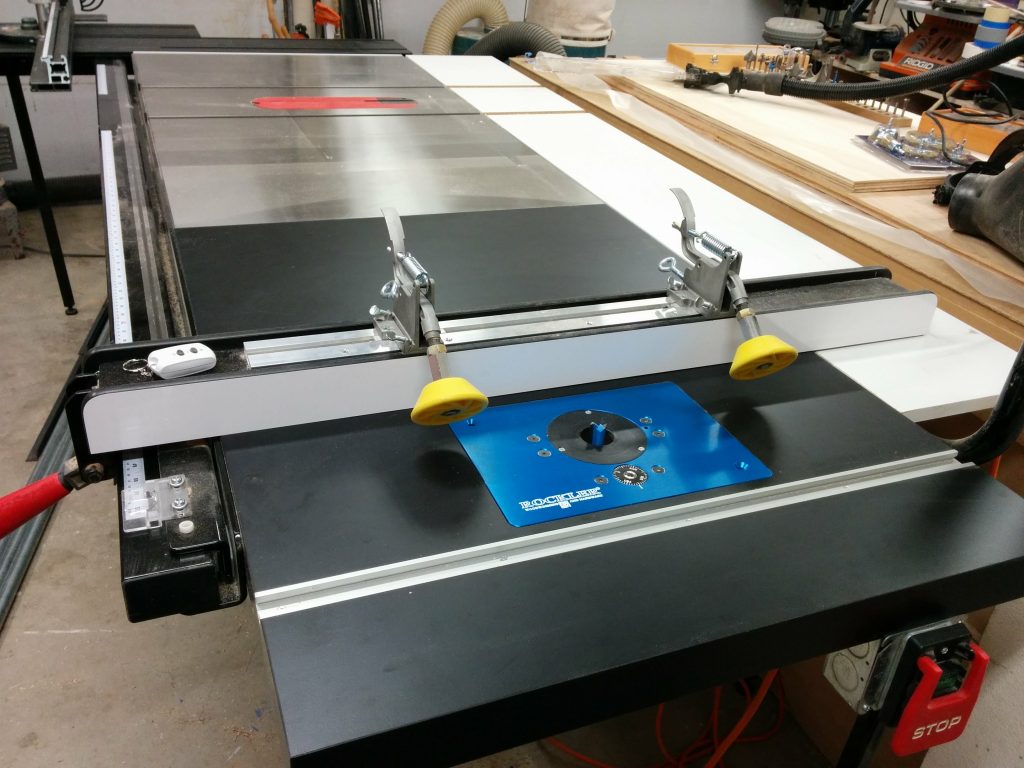
SawStop industrial cabinet saw with sliding crosscut table, extra wing, and router table.

This is a continuation of my other table saw enhancements, Attaching a Sliding Crosscut Table Without Cutting Down the Rails and Attaching an Extra Cast-Iron Extension Wing.

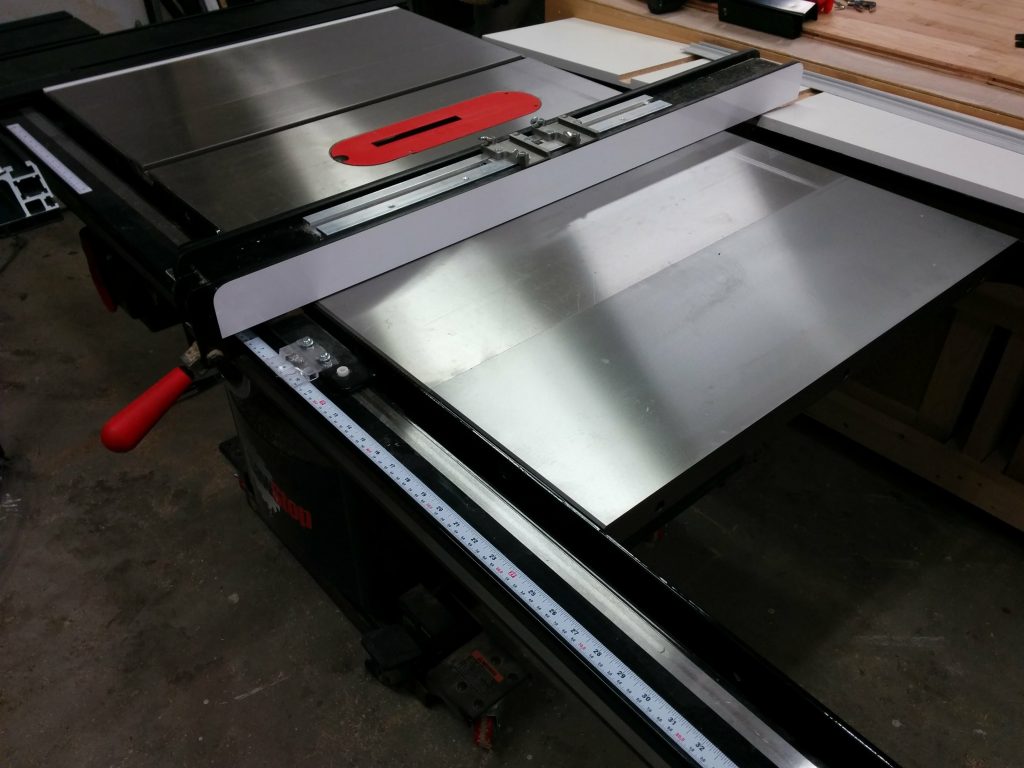
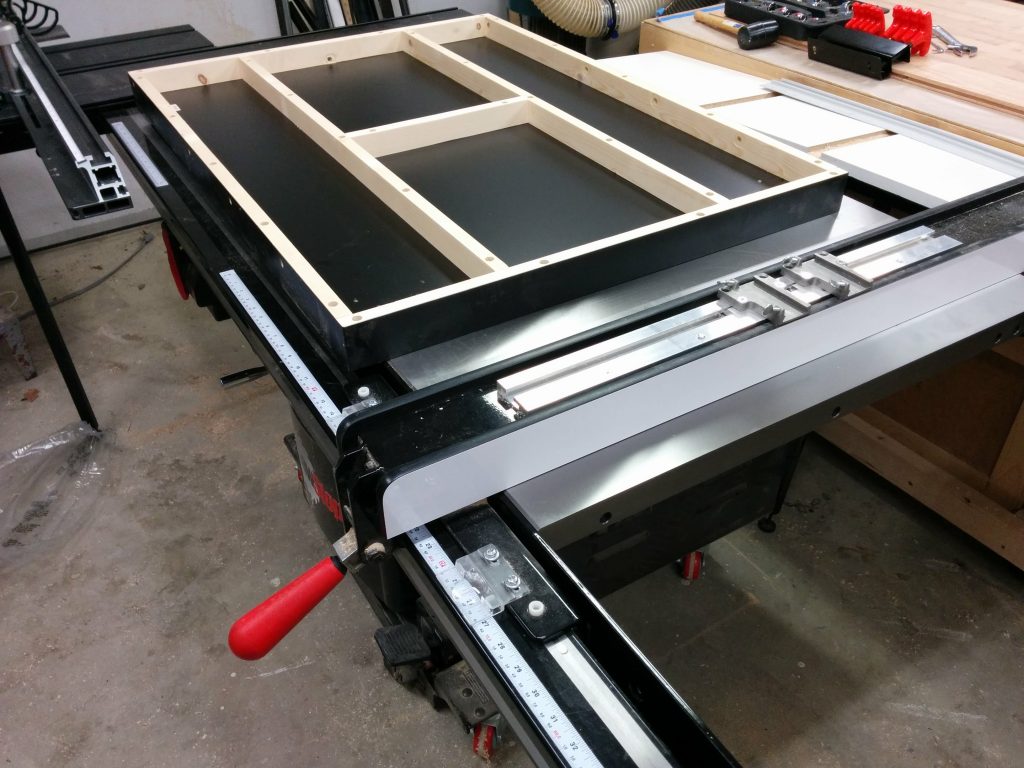
The additional cast iron wing that I attached to my table saw moved the wooden extension table another 10″ past the end of my rails. This allows me to relocate my router table to the far-right edge of the table saw without having to cut notches in my front and rear rails to accommodate the miter slot.

Converting the extension table into a router table.

I had to remove my fence in order to attach the additional cast iron wing. I didn’t want to put my fence back on yet but I realized that I needed to so I can cut a dado in the wooden extension table for the miter slot.  This is the same extension table that I had previously removed.  I temporarily reattached the front rail and did a quick fence alignment so my cut would be parallel with the edge of the table.  This led to a slight problem as you’ll soon see.

Temporarily reattached the front tube so I can use the fence to cut a dado in the extension table.

I wanted to make sure I didn’t accidentally cut through any screws so I removed the legs for the table.

I figured that I would make the miter track 6″ from the edge of the table.  This would ensure that I didn’t hit any screws while cutting the dado.  I wasn’t worried about hitting a screw and activating the brake in the SawStop since a screw by itself is too small to activate the safety system.  I mainly didn’t want to mess up the carbides on my dado stack.  I positioned the fence at the 6″ mark.

Positioning the fence.

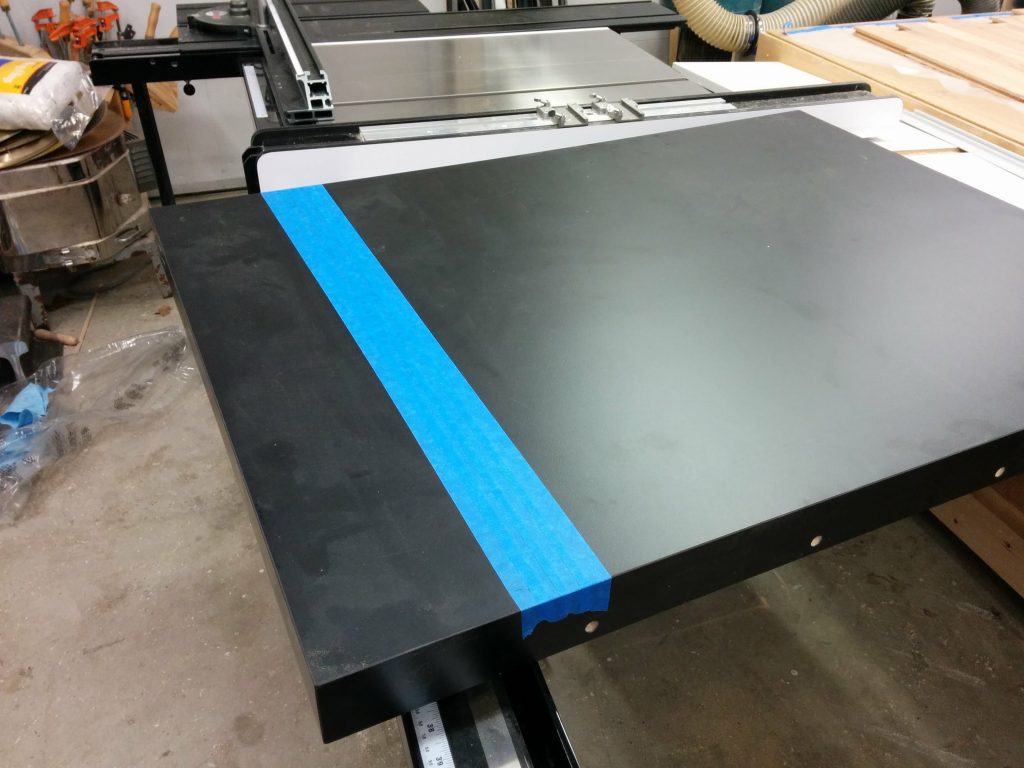
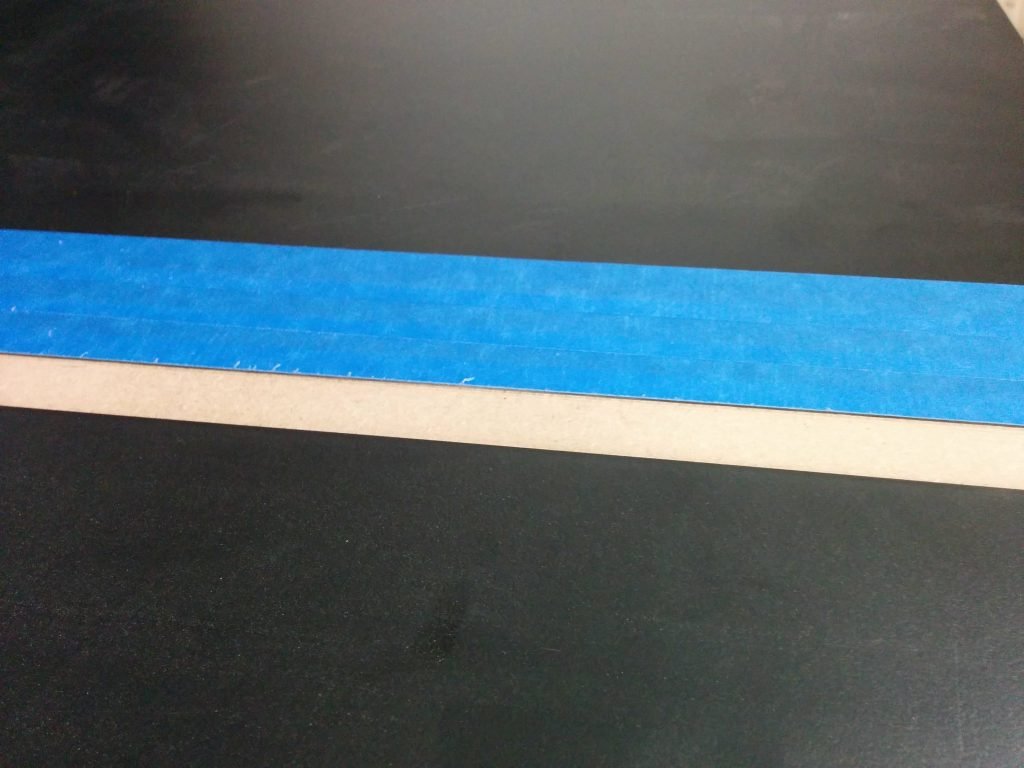
I applied some blue painters tape to help prevent chipping and scratching the laminate on the edges of the dado.  In keeping with tradition, I miscalculated where I should put the tape.  You’ll see what I mean in a second.

Taping where I'll be cutting.
Taping where I’ll be cutting.

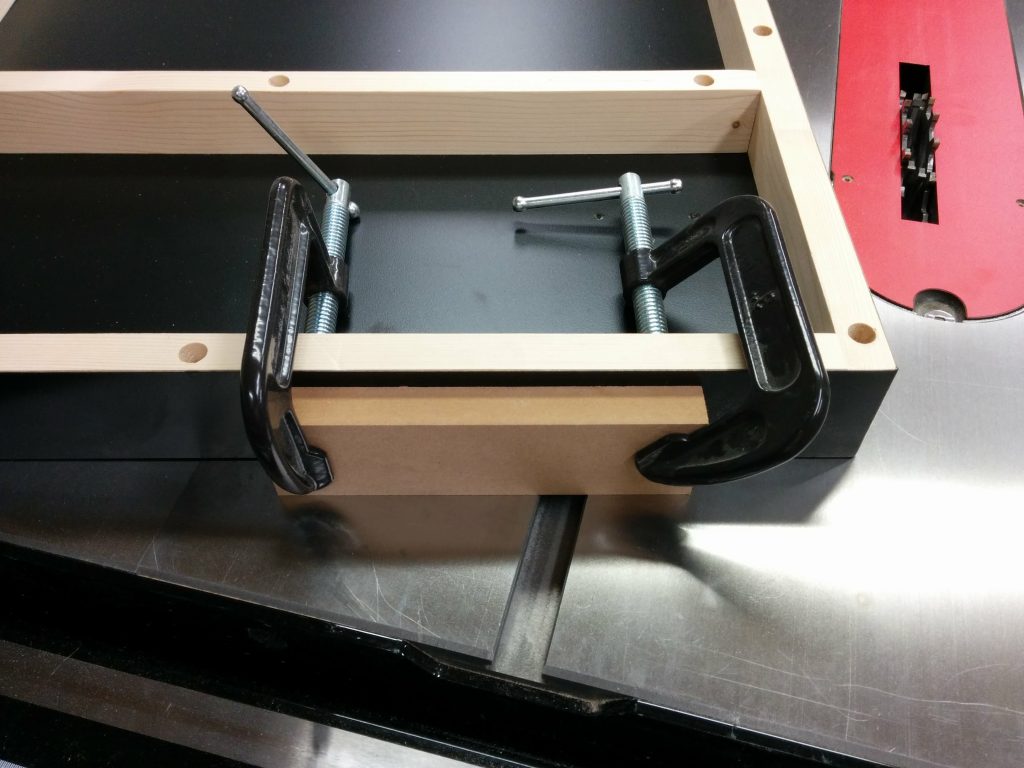
I clamped some scrap wood on the side of the table to help prevent tear-out.  I made sure the clamps were positioned where they wouldn’t get hit by the blades.

Clamping some scrap wood to help prevent tearout.

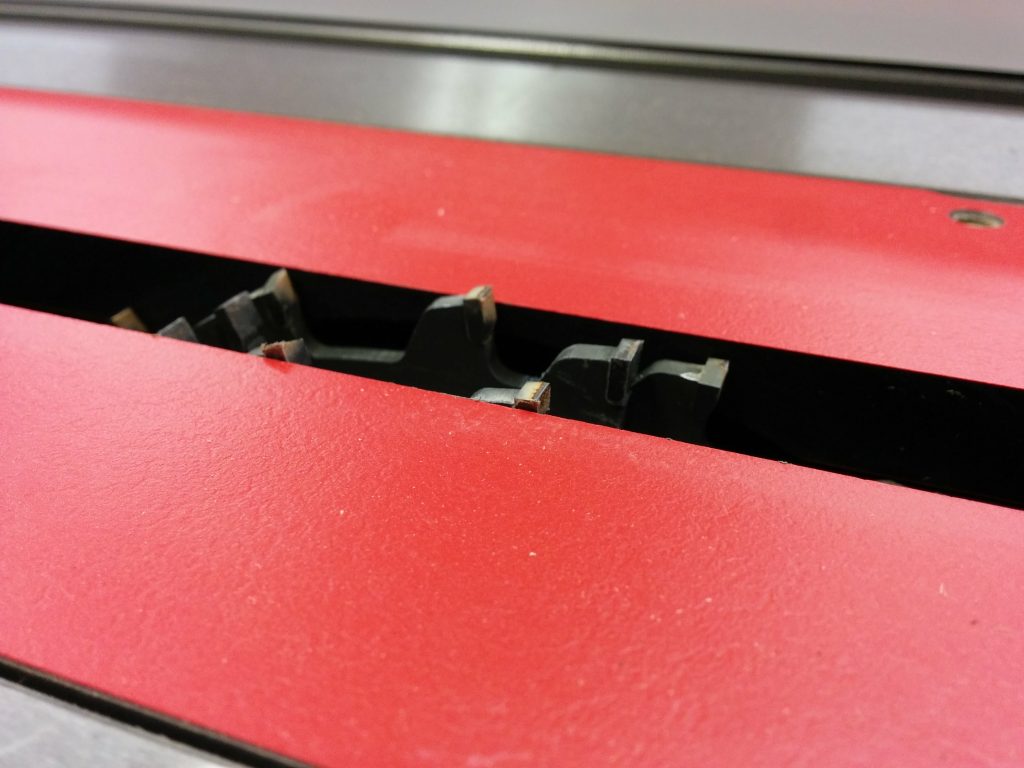
I lowered the dado stack so it would make a scoring cut first.  This is another step that can really help prevent the edge of the laminate from chipping.

Lowering the dado stack so it''ll just cut through the laminate.
Lowering the dado stack so it”ll just cut through the laminate.

I made my first pass.  As you can see, the blue tape wasn’t positioned correctly so my first cut didn’t have tape on each edge.  As it turns out this wasn’t a big deal.  The laminate that SawStop recently switched to for use on their extension tables is some high-quality stuff and didn’t tear out at all.  I didn’t have similar luck with the laminate for their older extension tables.

Didn't position the tape correctly but it didn't matter in the end.
Didn’t position the tape correctly but it didn’t matter in the end.

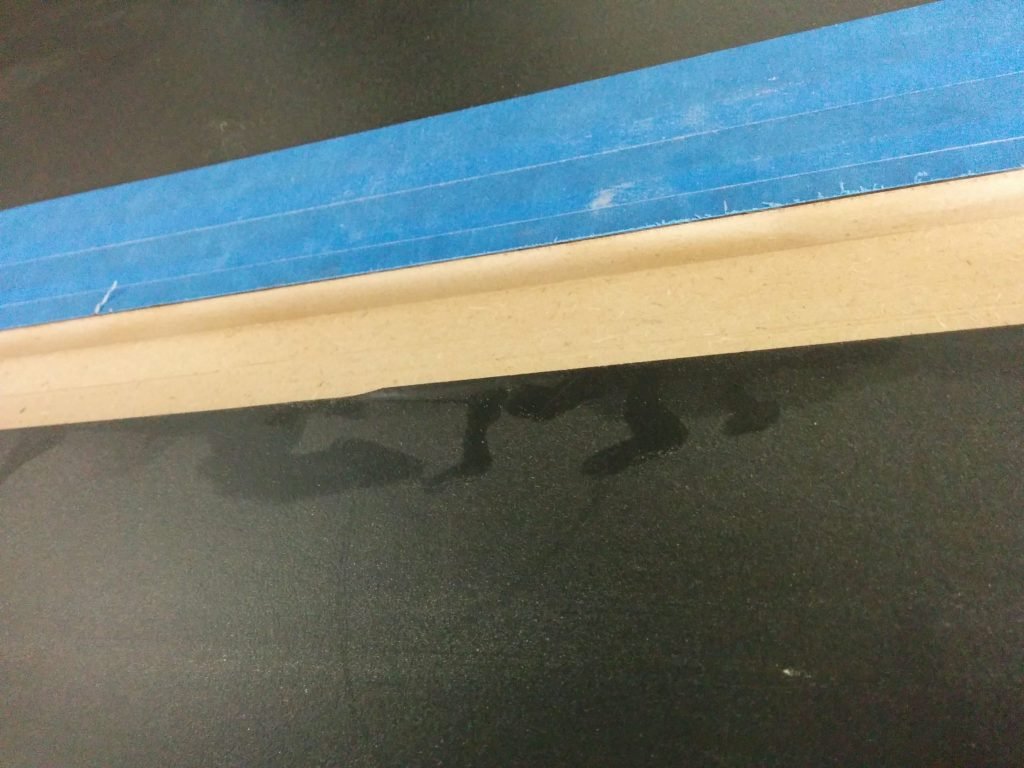
Here you’ll see one of the areas where I screwed up.  Remember when I said I did a “quick fence alignment”?  Well, I should have taken my time.  If I had, I would have noticed that in aligning my fence I also slightly loosened the clamping pressure of the fence on the front tube.  This caused my fence to slide a little bit as I was cutting and caused a slight unevenness in the dado.

Fence shifted while making this cut.

As you can see, the scrap wood kept the laminate from chipping on the edge.

No tear-out!
No tear-out!

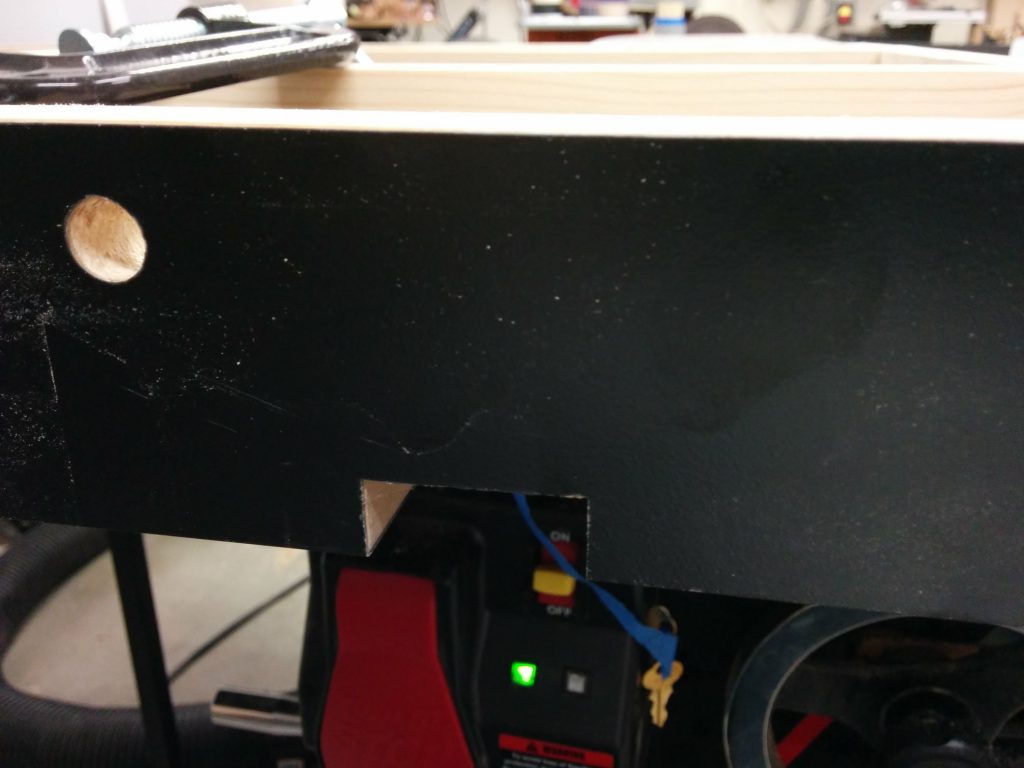
I reattached the legs and temporarily clamped the extension table to the rails and the right wing, making sure it was flush. Then I drilled new holes through the sides of the wooden extension table for the bolts to attach it to the rails.

Lined up the table and drilled holes for the mounting bolts.

I then did the same thing on the back. After the holes were drilled, I reattached the table to the rails using the appropriate bolts, washers, and nuts.

Drilled the mounting holes on the back of the extension table.

I then reattached my outfeed table to the rear rail.

Reattached my outfeed table.

Now it’s time to mark the opening that I’ll be removing. I’m going to remove most of it with my jigsaw then clean up the rest with my trim router and a pattern bit.

Using the old router table as a template.

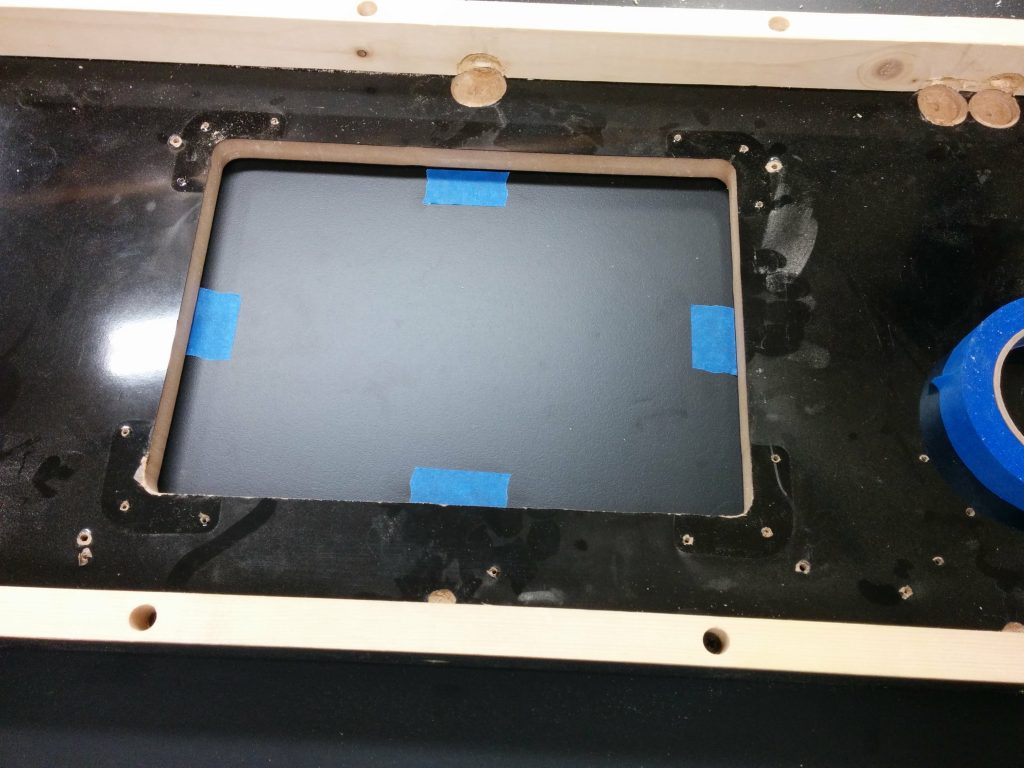
I laid the pattern on the tabletop in the spot where I am going to remove the material. Absolute precision is not critical at this point. I used a few pieces of painters tape to mark the inner edges of the opening.

Temporarily marking the inner edges of the template.

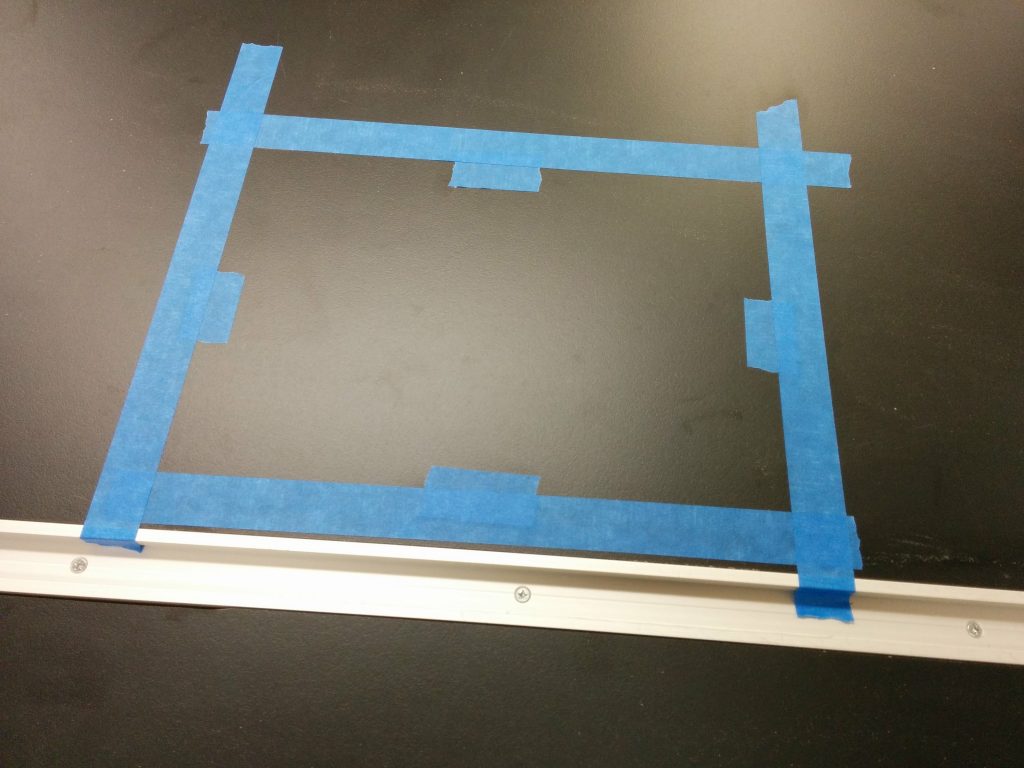
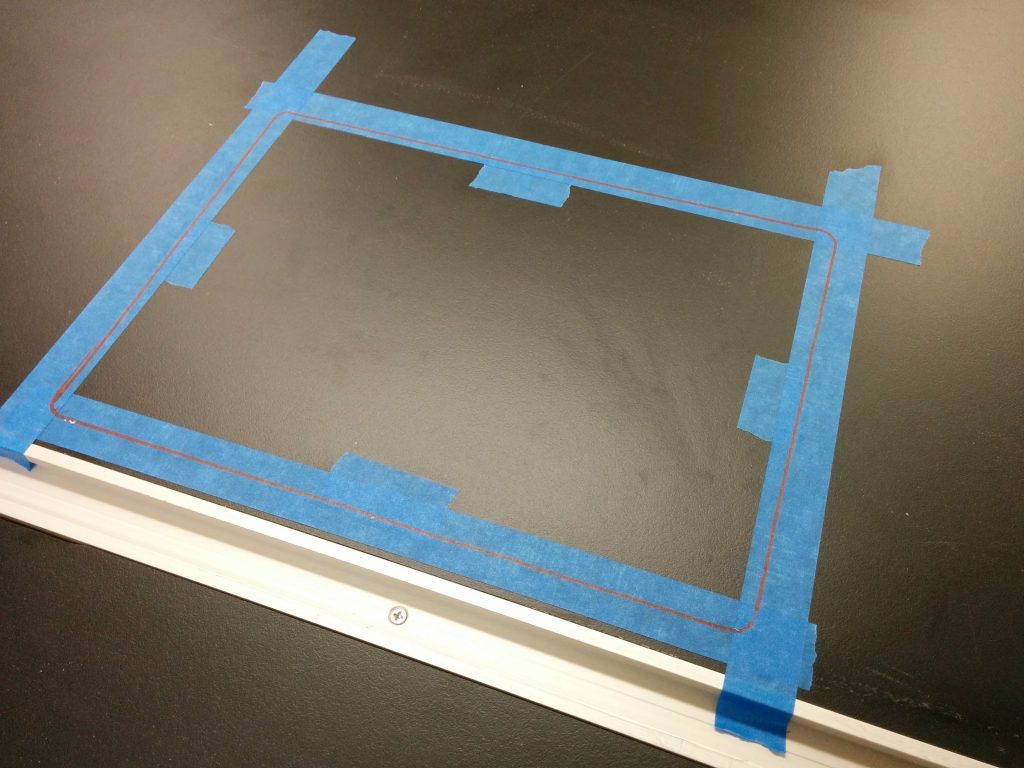
I then took the template off and ran some strips of painters tape over where the edges will be. The actual edges should be somewhat centered in the strips of tape.

Applied blue painters tape over the edges where I will cut out the insert opening.

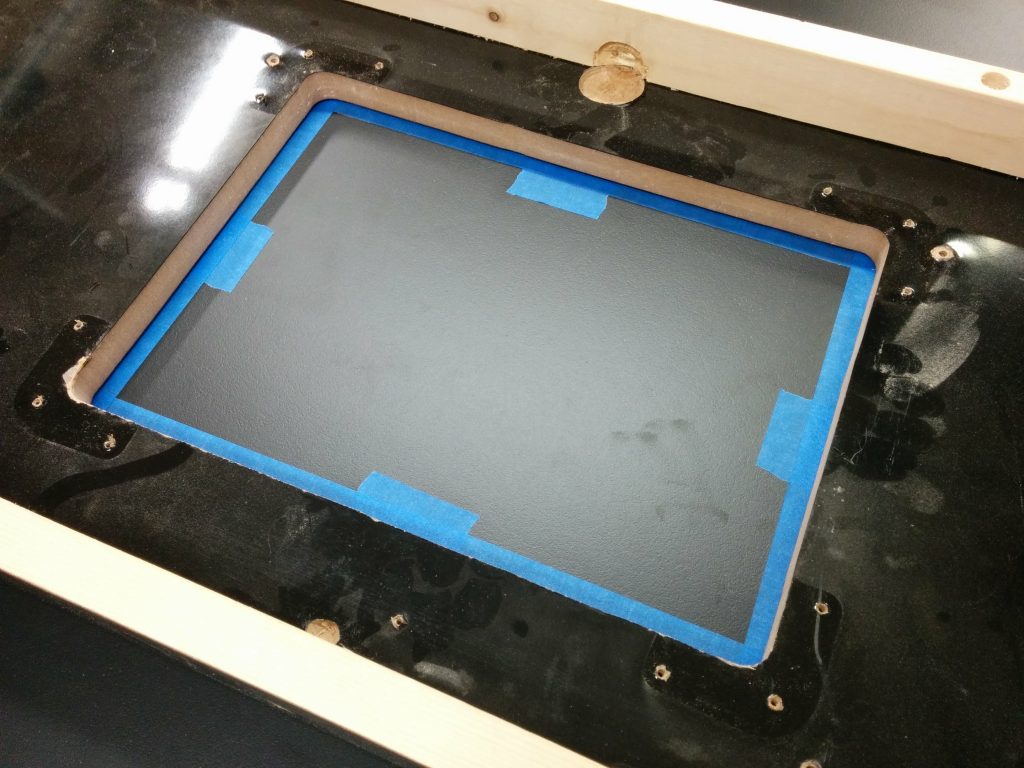
Then I put the template back in place. Again, absolute precision isn’t critical at this point.

Set the template in place.

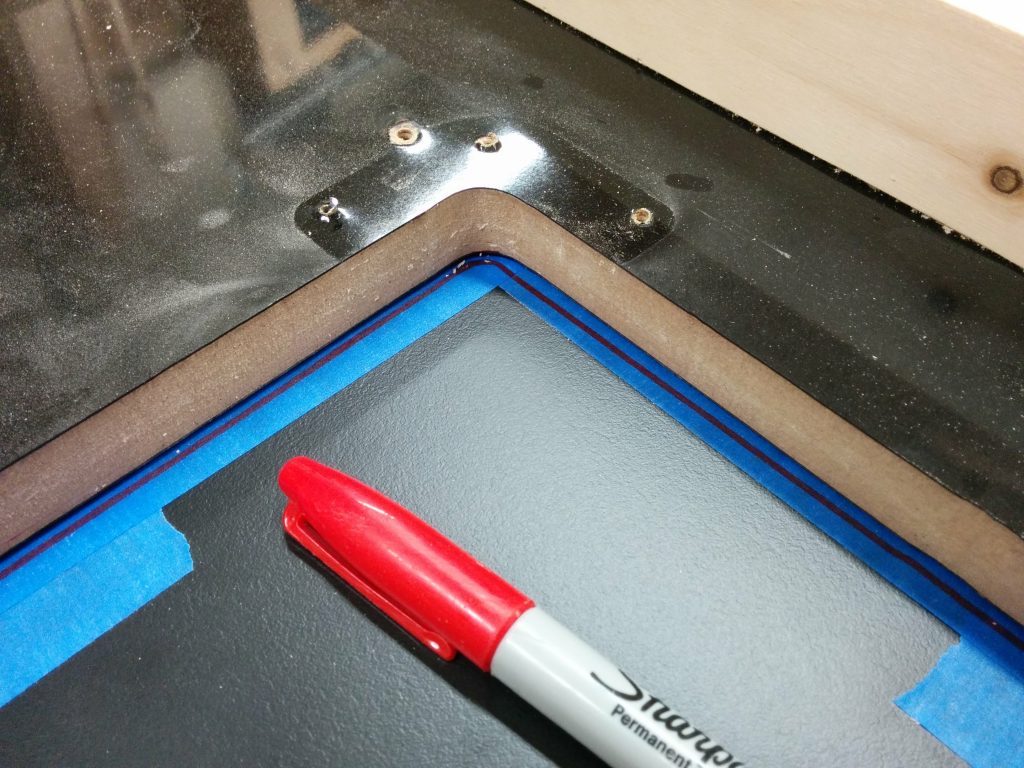
I used a red Sharpie to trace the opening on the blue painters tape.

Traced the outline of the opening with a red Sharpie.

I then removed the template yet again so I can see the outline I just traced.

Removed the template after tracing the outline.

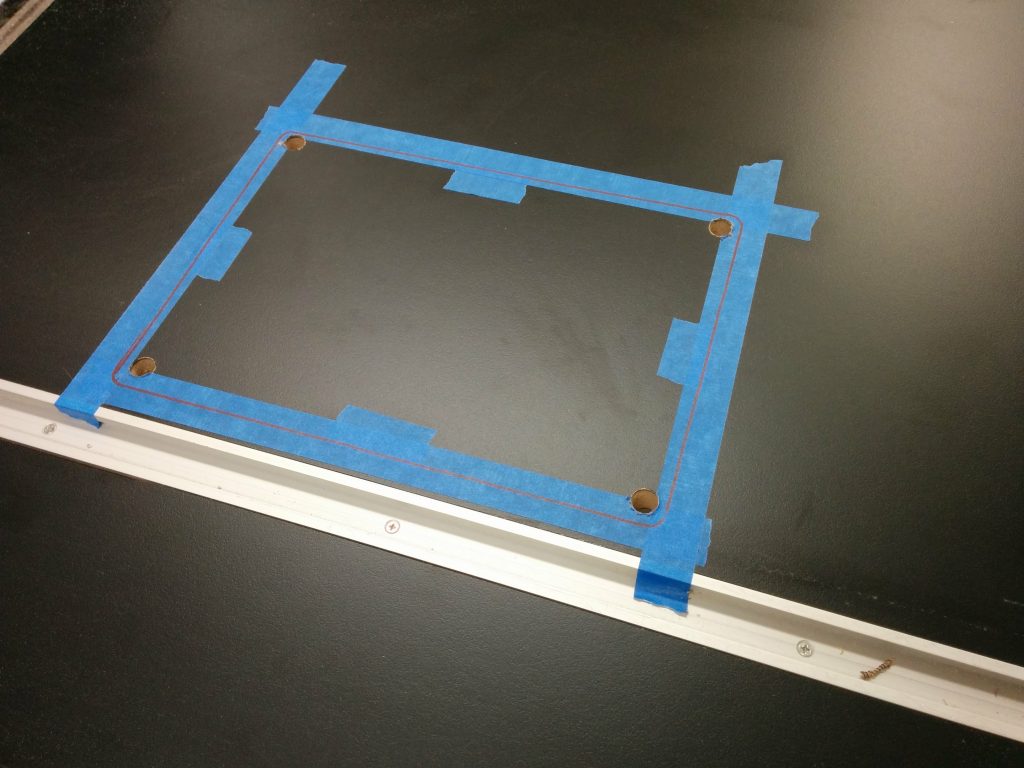
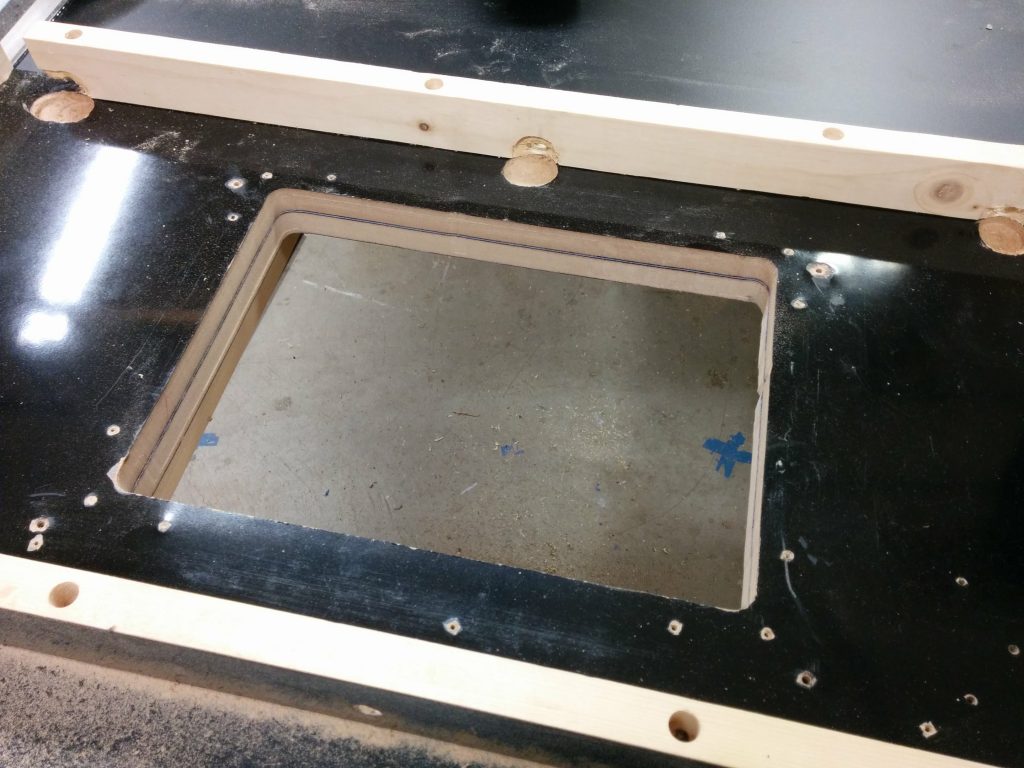
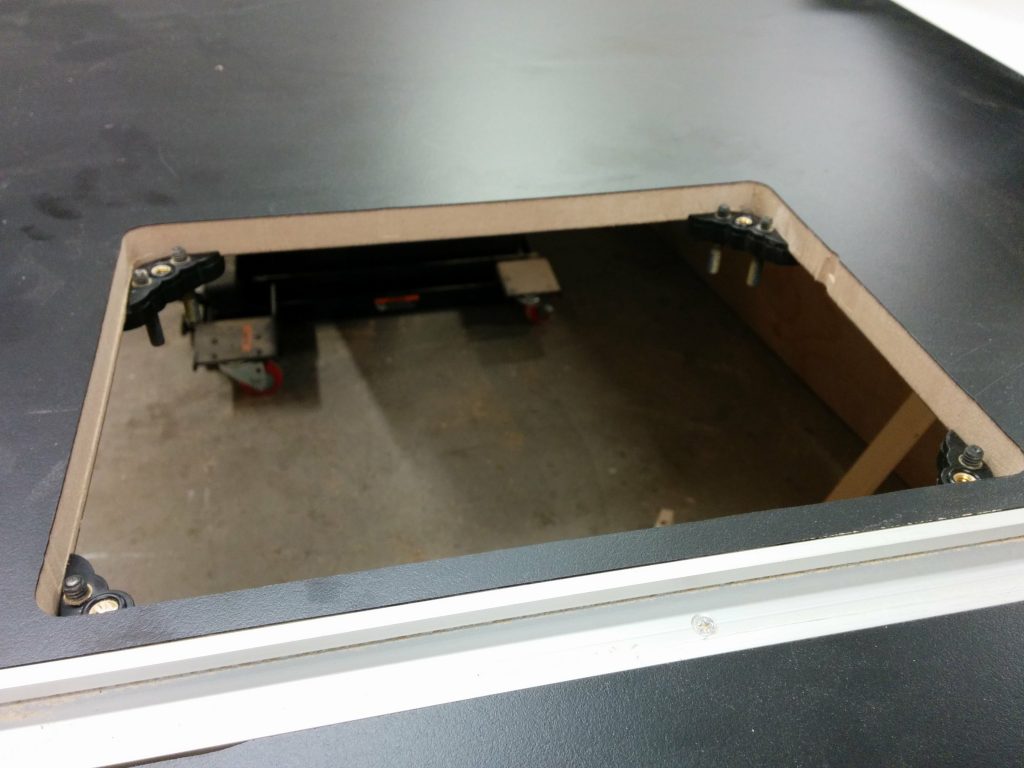
I drilled 1/2″ holes near the inner corners.

The holes have been drilled.

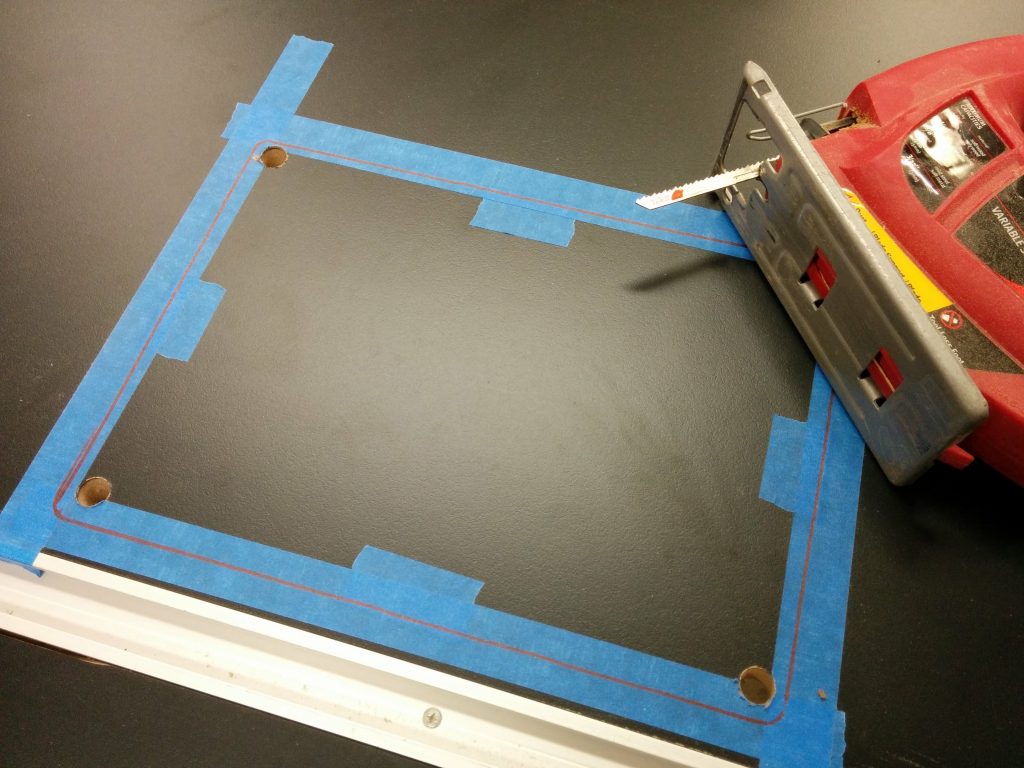
I’m using a jigsaw to remove the bulk of the material, roughly cutting it out about 1/4″ inside the lines.

I'm going to rough-cut out the opening with a jigsaw.
I’m going to rough-cut out the opening with a jigsaw.

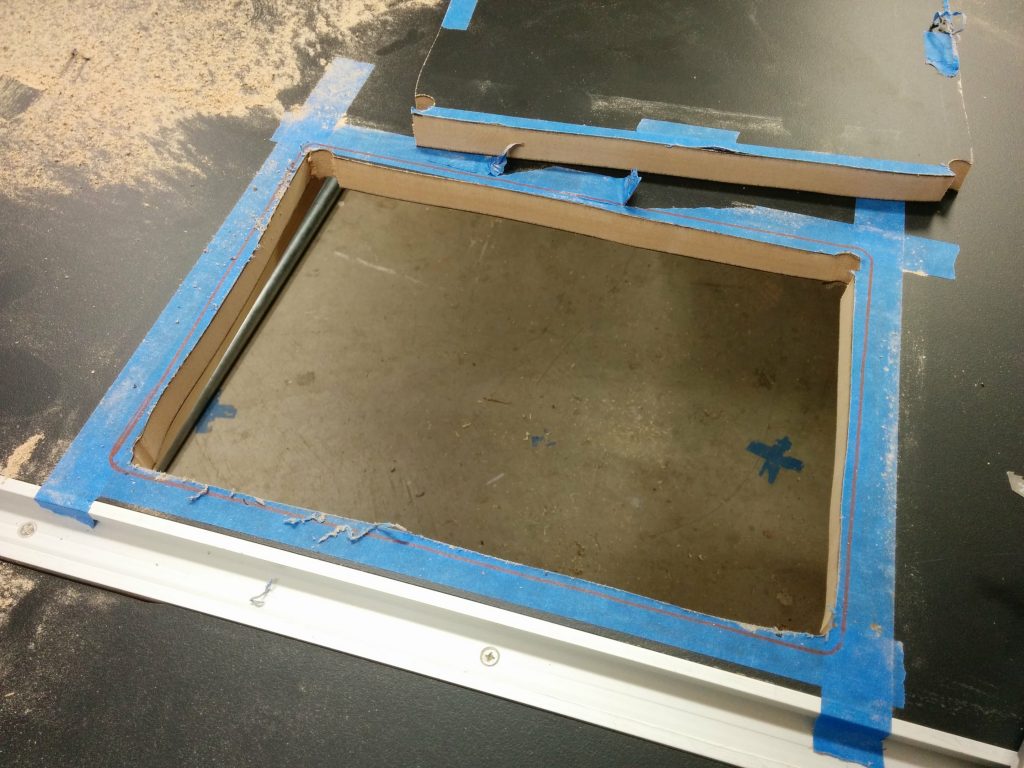
Nice and sloppy. The critical thing is not crossing over the line.

The piece has been removed.

I reapplied the painters tape since it got a bit chewed up then laid out the template. This time positioning is critical so I took my time. I got one end clamped down…

Carefully positioned the left edge of the template and clamped that side in place.

…then used a try square to make sure the template was square with the table.

Using a try square to ensure the template is square with the table.

Once I was satisfied that it was square, I clamped down the opposite end then applied one more clamp to each edge just for good measure.

Carefully clamped the other end in place and secured with additional clamps.

I outfitted my trim router with a 1/2″ pattern bit.

Positioning the router to cut out the opening.

It was throwing up quite a bit of dust so I set up a dust collection hood to grab most of it out of the air.

Getting pretty dusty so I set up my dust shroud.

I had a problem with the bearing on this pattern bit coming loose and the whole bit slipping. This caused a little gouge on the inner-right edge of the opening.

Chewed up the opening a bit when the bearing came loose. Otherwise, it looks okay.

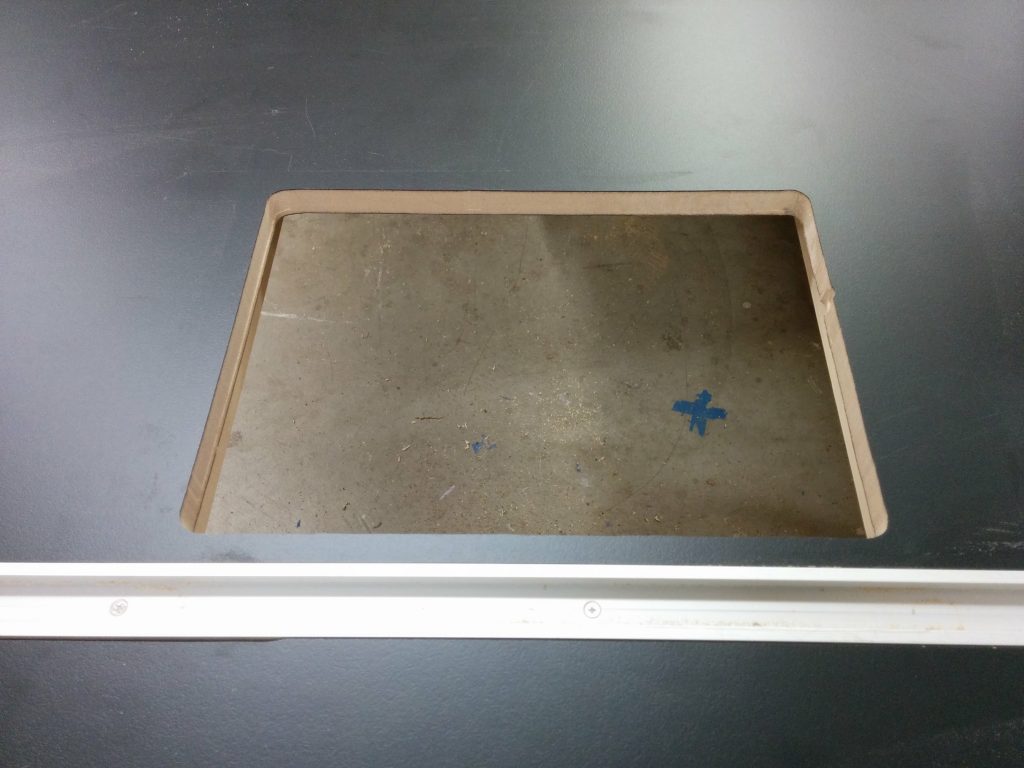
I removed the template and the painters tape so I could inspect the edge. There was a little divot where the bearing came loose but other than that, it wasn’t bad.

Removed the painters tape. Other than the small goober on the right, it didn't turn out bad at all.
Removed the painters tape. Other than the small goober on the right, it didn’t turn out bad at all.

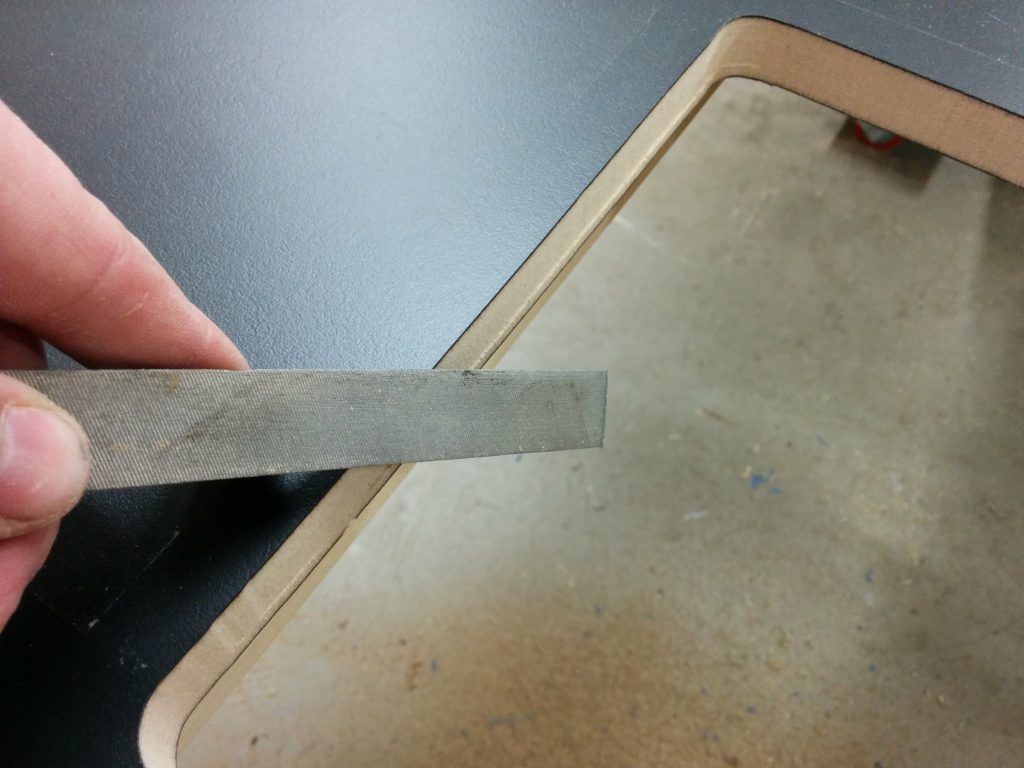
I used a file to break the edge a bit.

Broke the edges a bit with a file.

This particular extension table has some support bars underneath. They are only screwed in and are easy to remove.

The table braces are going to get in the way so I'm going to move them.
The table braces are going to get in the way so I’m going to move them.

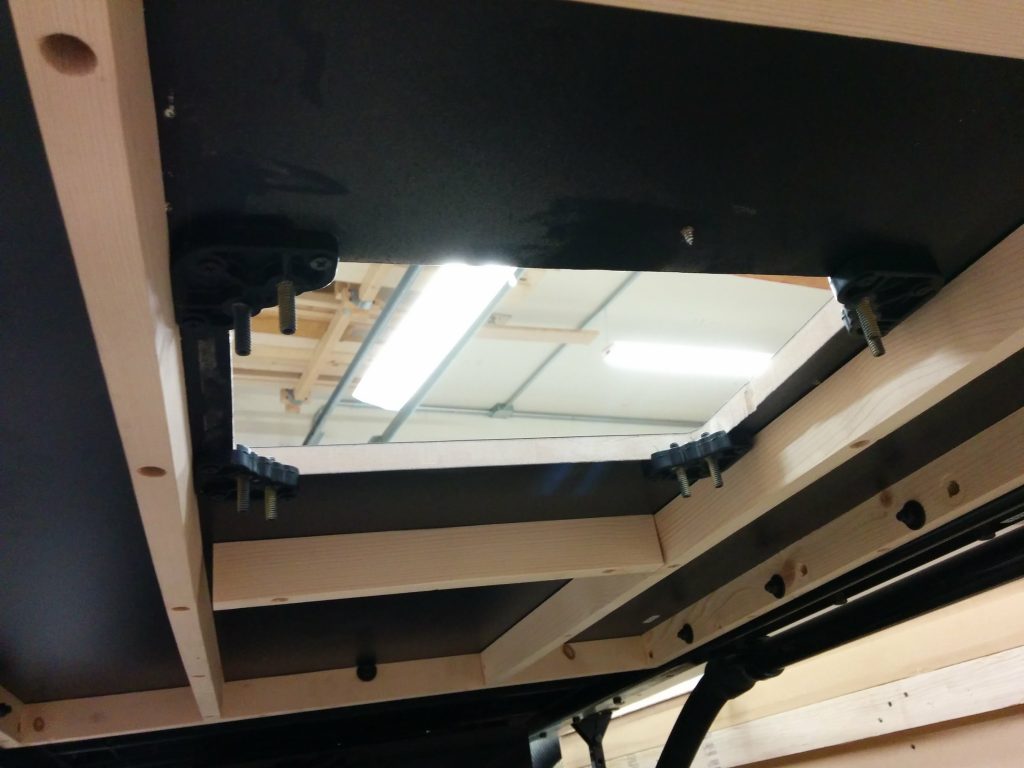
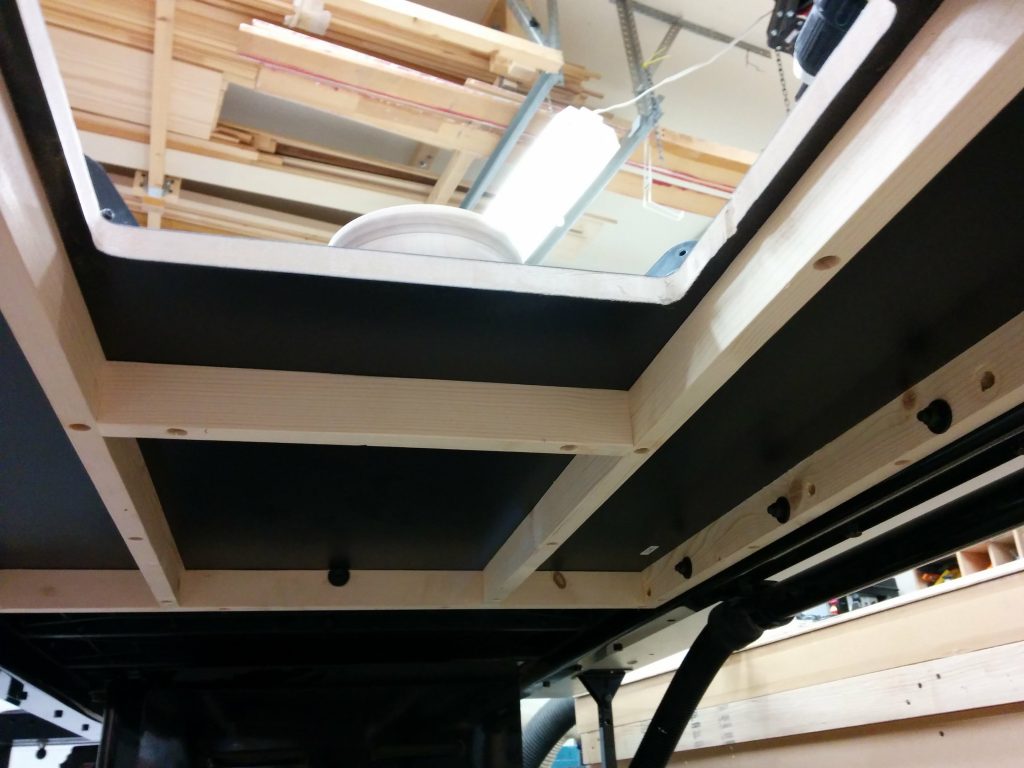
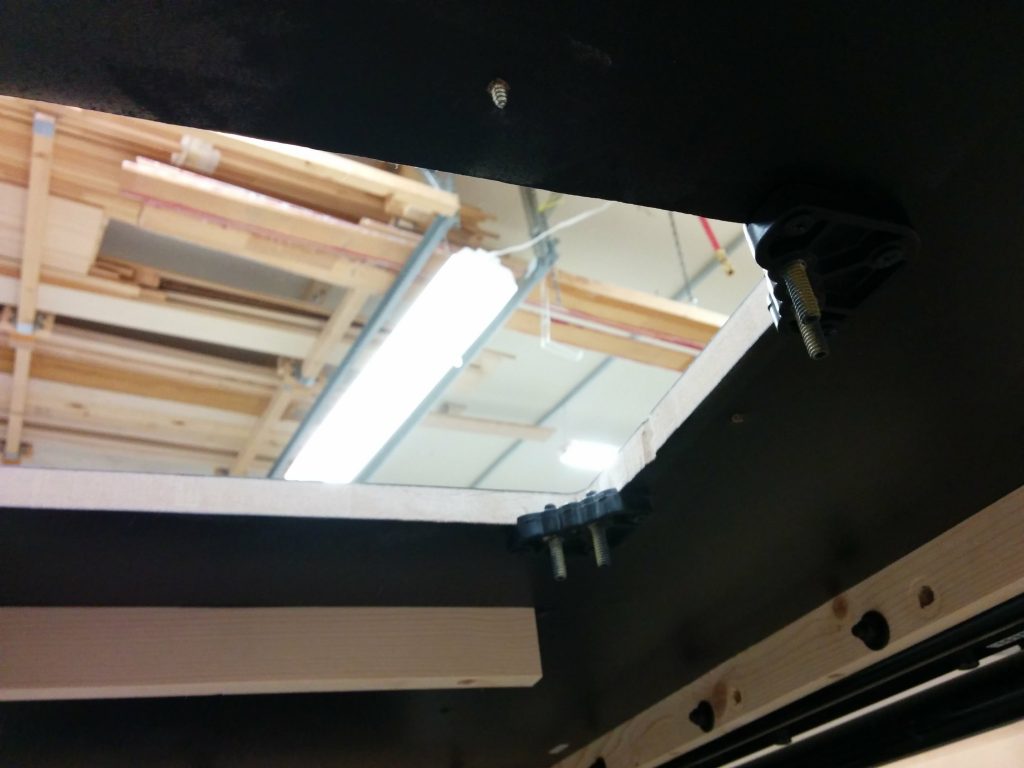
I removed the support bars so I would have room for the Kreg PRS3040 Precision Router Table Insert Plate Levelers which installed easily from underneath the table.

Installed the Kreg PRS3040 Precision Router Table Insert Plate Levelers.

Each leveler has two set screws that are used for leveling the router insert.

The Kreg levelers went in easily.

I reinstalled the support bars. I had to move them by about 1/4″ from their usual spot.

I reattached the supports under the table.

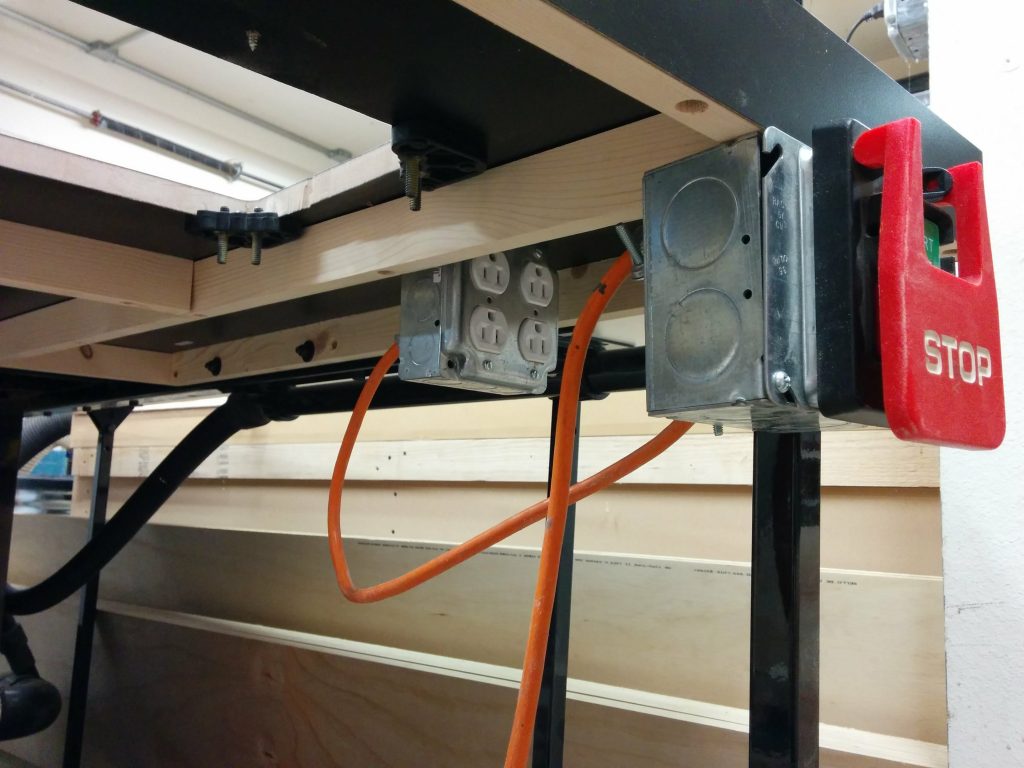
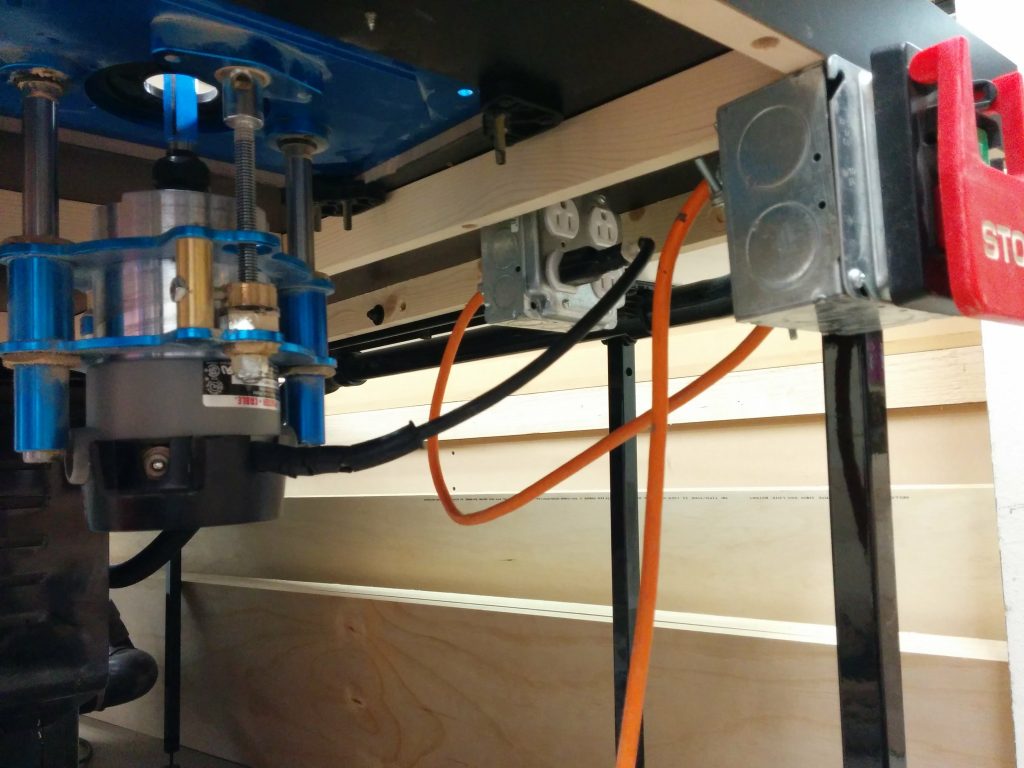
The next step was to start hooking things up. I installed a 4-outlet electical box that was wired to a motor power switch.

I hooked up an electrical outlet and a knee switch under the table.

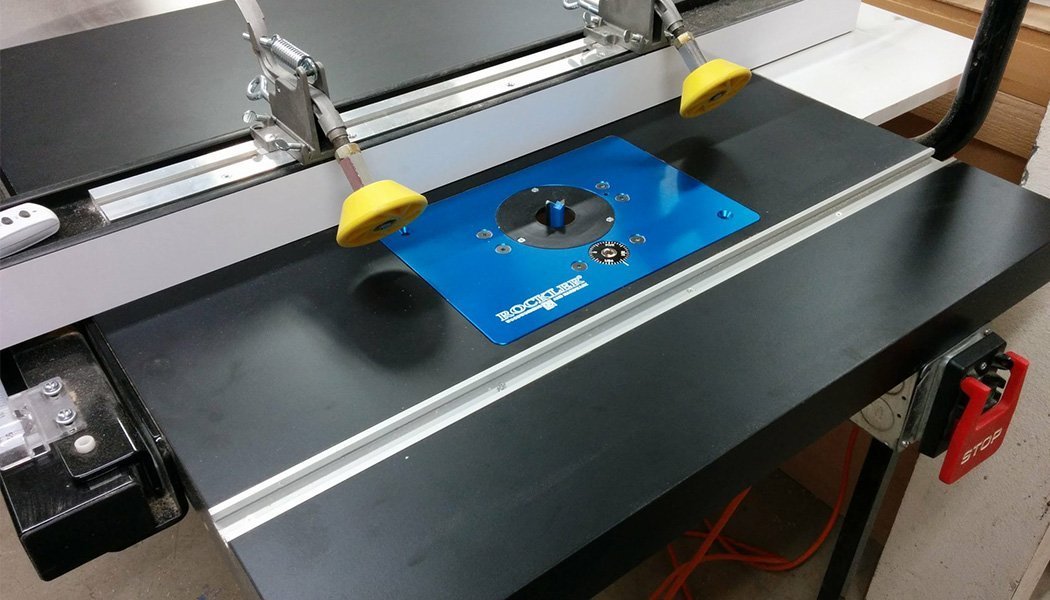
Then it was simply a matter of dropping the Rockler router lift in place and plugging in the router.

The router lift has been placed in the table and the router plugged into the outlet.

A little bit of leveling and I’m all done.

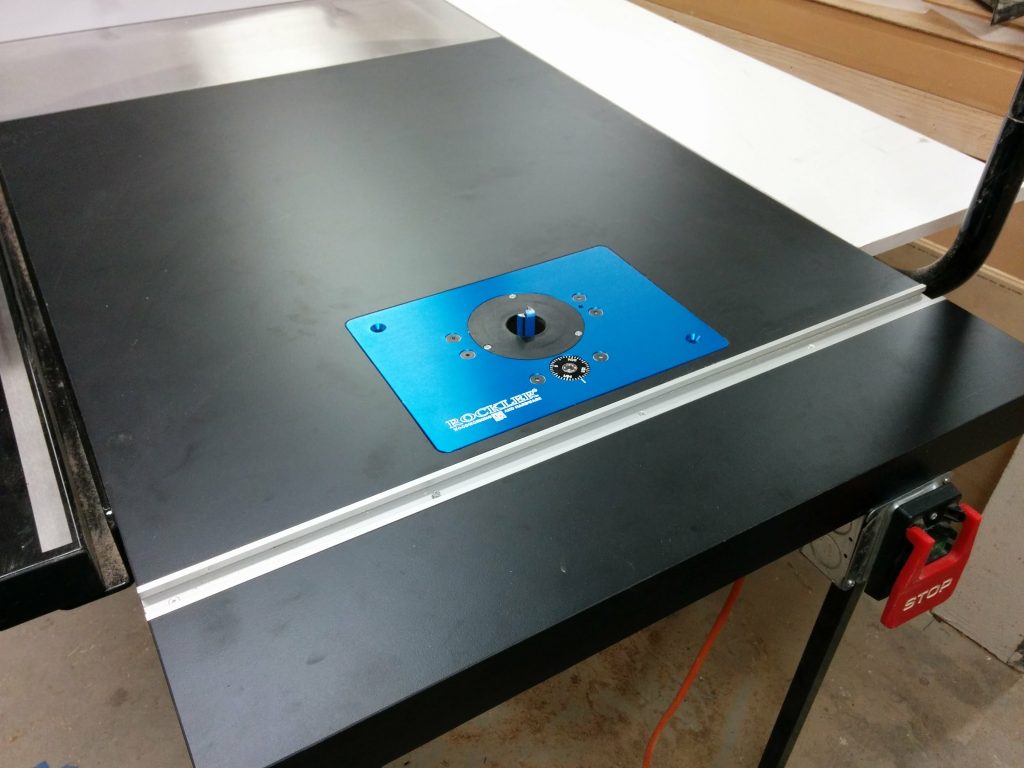
The router table is all finished.

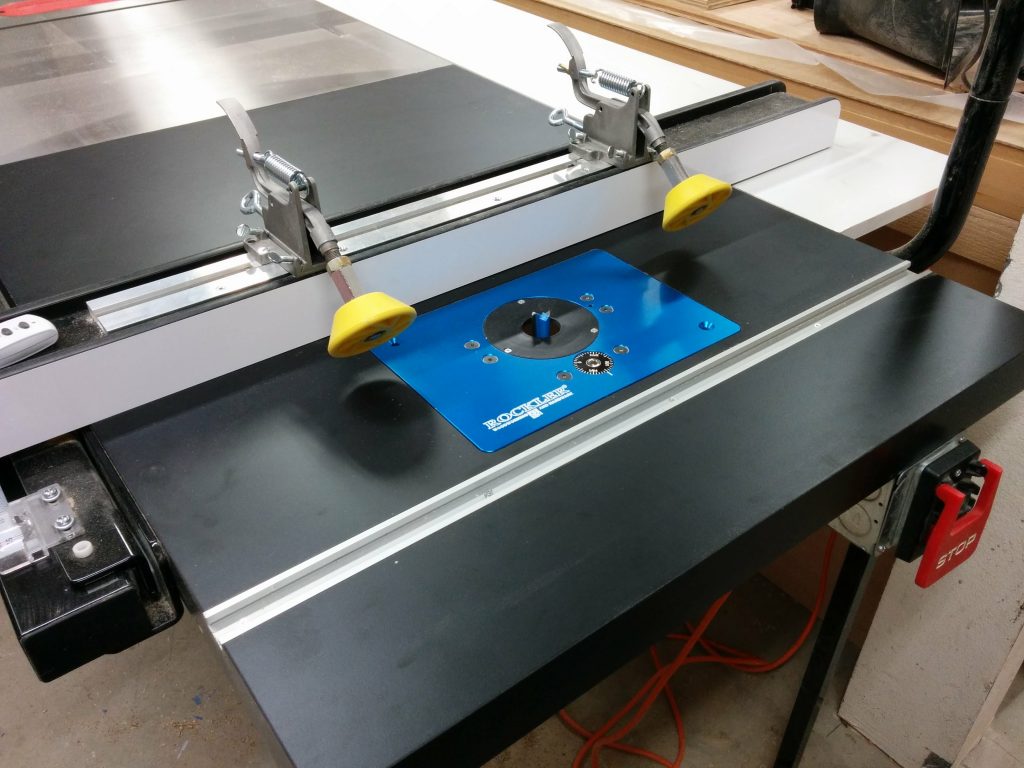
I can use the table saw fence with the router table. This photo shows how close I can get it to the router bit. I will be making an auxiliary router table fence with built-in dust collection that I can attach to my table saw fence, but that’s a project for another day.

I can use the table saw fence with the router table as well.

That’s it! Up next is an enclosure for the router and maybe some drawers for storing router bits. For now, I’ve got some other projects that require my attention.

If any of this has been helpful to you, or if you have any suggestions or questions, please take a minute to post a comment below. I’d especially like to hear any suggestions for projects that you’d like to see me tackle.