News – January 8th, 2018 – Outfeed surface, Recording, and Cthulhu

Outfeed table

Almost a year ago I decided to try a new work surface for my outfeed/assembly table.  I wrote about this here.  After using and abusing it for almost a year, my official opinion is that I don’t really care for it much.  I found the texture to be problematic in that it retained glue and stain.  I also set my chop saw on it and it was bombarded with hot metal shavings which would melt into it and turn it into a big sheet of sandpaper.  Let me be clear; this isn’t a fault of the material.  All this shows is that it isn’t well suited for something that it wasn’t designed to handle.  Makes sense.

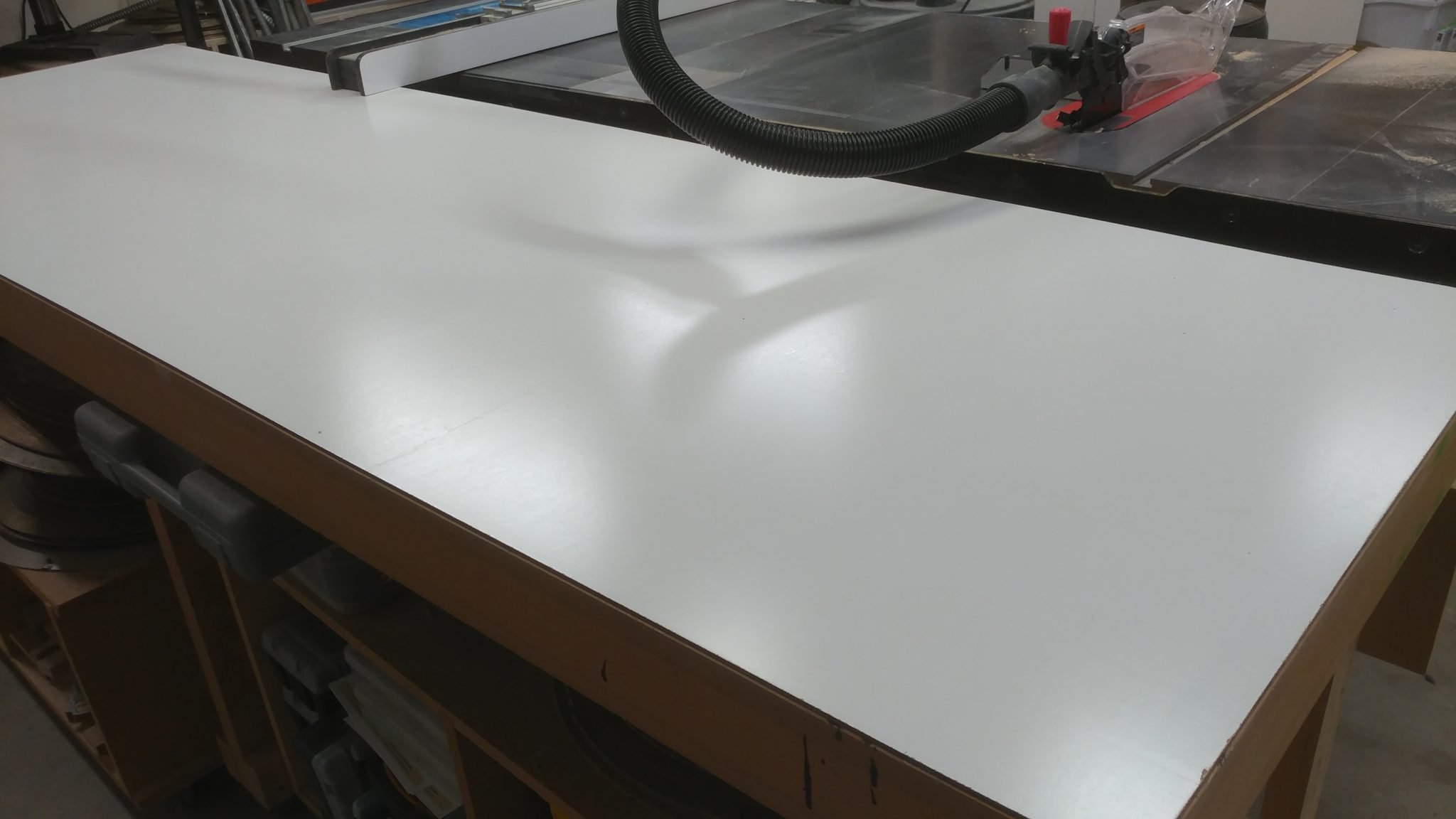
In the end, I decided to go back to my old standby: white hardboard.


Recording Woes

It is proving more problematic to get time to record lately.  In the meantime, I will be using that opportunity to perform and write-up the Shure SM57 right-angle-mod and also the MXL 603 capacitor mod which makes a $100 condenser mic sound like a $500 condenser mic (your mileage may vary).
My Amazing Wife

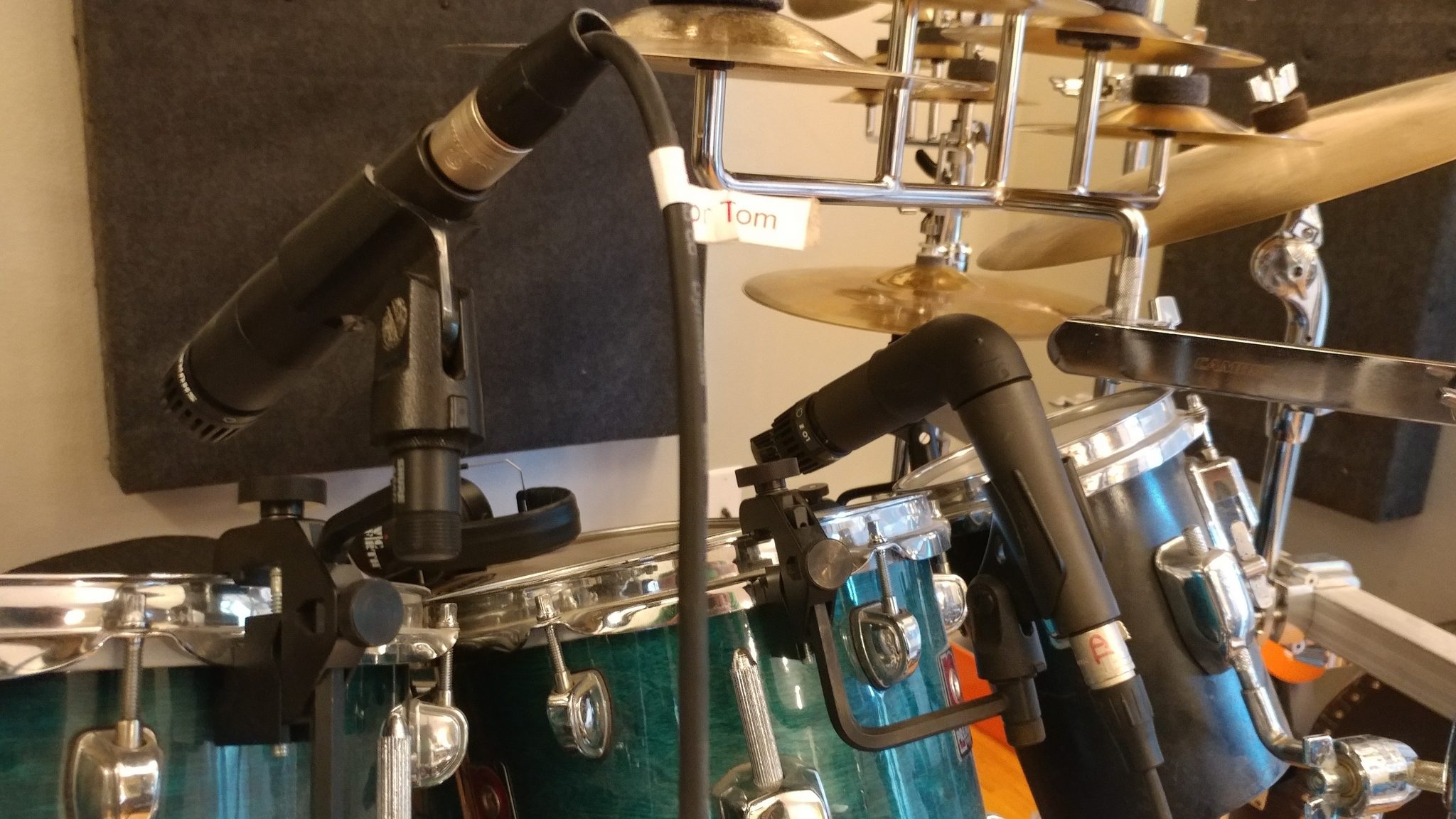
My wife doesn’t like to show off her work so I am doing it for her.  This is a felted Cthulhu that she made as a Christmas present for her brother.  I’d love for her to start a blog because she does some really amazing work.  If you’d like to see more, let me know and I’ll pass it along.
 

Other work…

There are a few other things in the works that I can’t speak of yet but I’ll post an update when they’re secured.



News – December 11th, 2017 – Teaching, last-minute performance, and woodturning

Sorry for the delays in my posts.  The holidays are always pretty hectic so I’ve been busy.

Teaching

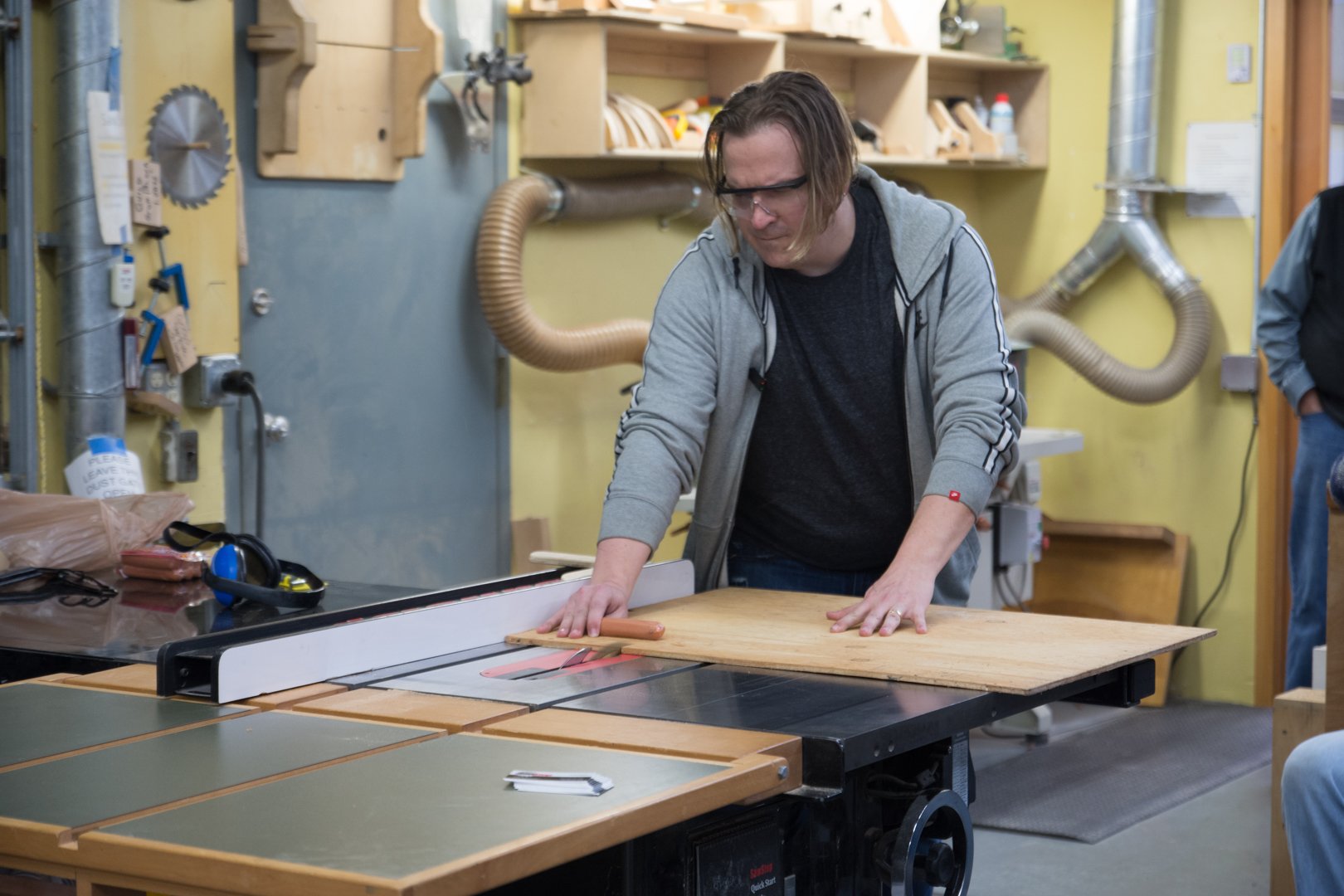
Two weeks ago I was given the opportunity to teach a class for The Guild of Oregon Woodworkers on The Care and Feeding of Your SawStop.  The class went really well, with over 20 saw owners attending.  I got to do a hot dog demo in order to demonstrate how to remove an activated brake and blade from the saw.  I will be creating an article for this blog consisting of the documentation that I created for the class in the coming weeks.


Last-Minute Gig with Cody Weathers and The Men Your Mama Warned You About

It’s short notice but I have a gig on December 16th at The 45th Street Pub & Grill in Portland starting at 9:00.   I’ve been friends with Cody for a few years now but I’ve never played with these guys so it’ll be interesting.  Swing on by if you’re in the area.

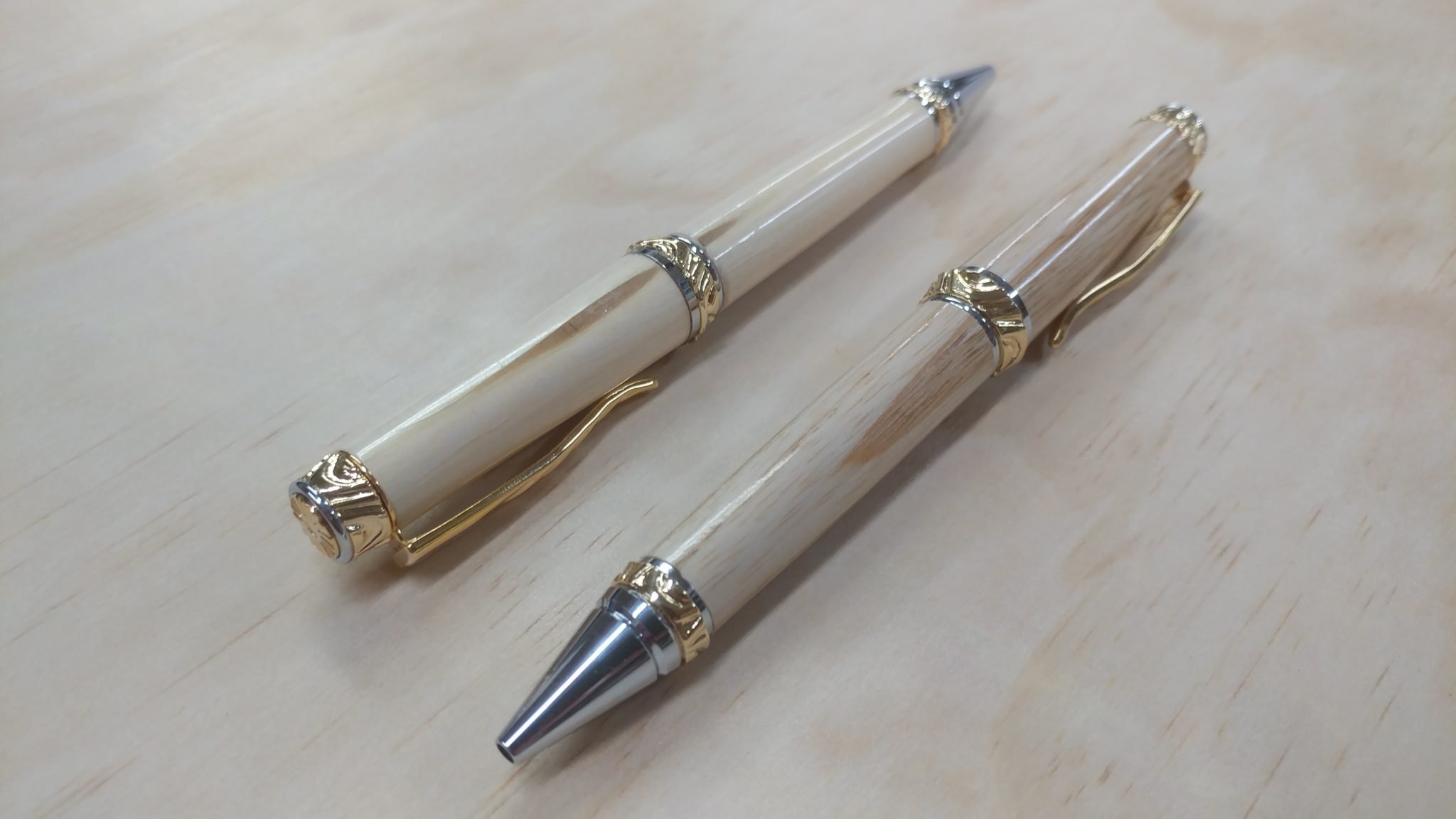
Wedding Pens

A friend of the family is getting married in a few weeks and they requested that I make them pens from their birth woods, Ash and Hazel.  I’ve never turned either of these woods and I didn’t know what to expect.  To make things even more interesting, the hazel was still wet and was already starting to warp and twist.  From what they say, they only need the pens for the actual wedding ceremony so I just need them to last a few weeks.  This is good because the hazel pen seems to be cracking in a few places already.


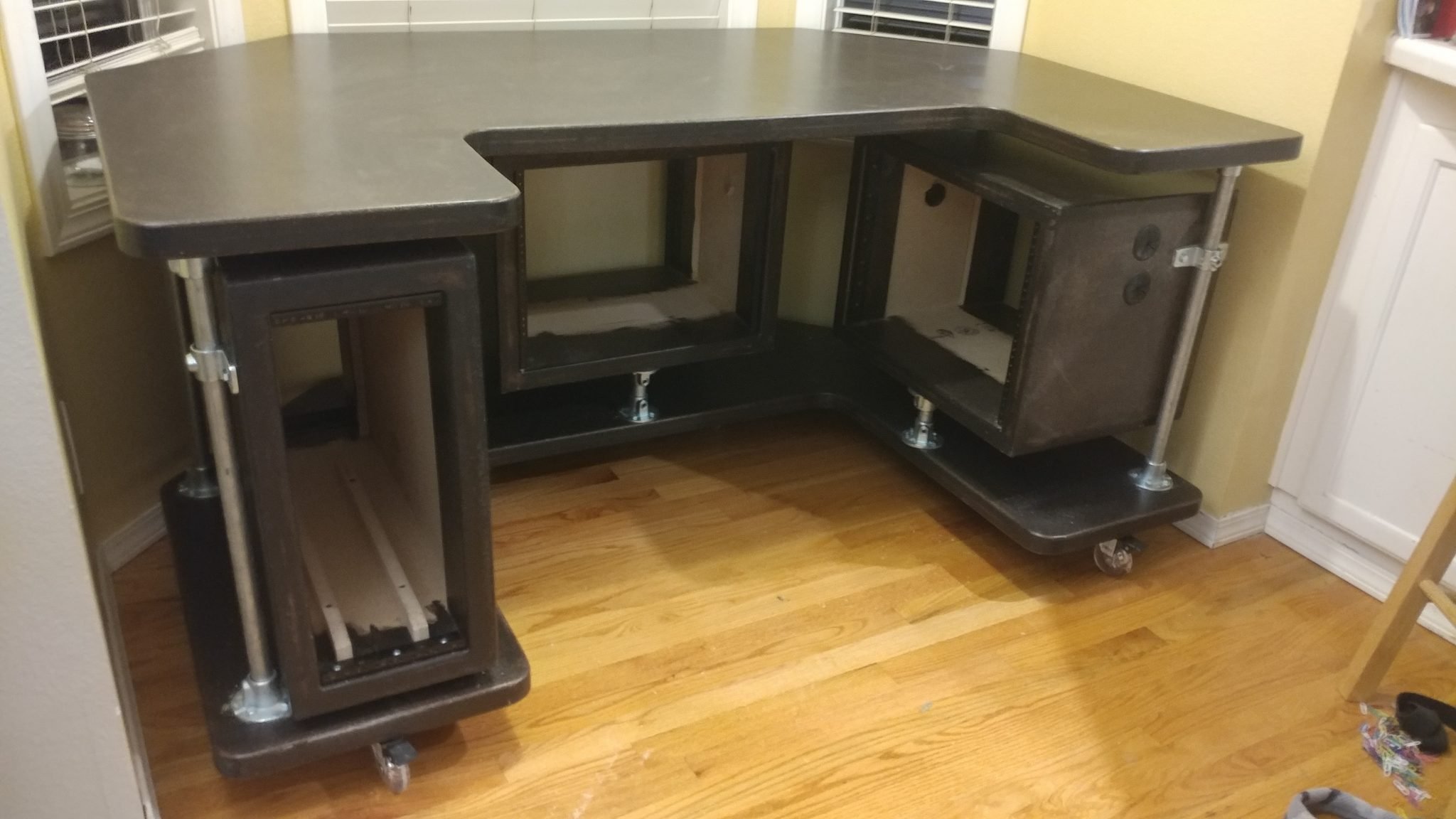
Studio Desk Part 5

I’m still working on the articles for the studio desk.  It’s done and I’ve been using it for over a month but there are several things I want to change about it and a few components I decided to add to it so there is a bit of a delay in updating the articles.  I hope to have part 5 posted this week.


News – November 2nd, 2017 – Wiring, teaching, and recording

I’ve been lax in posting news updates.  I’m going to try to be better about this.

Wiring

I’ve got the studio desk pretty much done, but I’m doing some additional wiring, such as adding a few electrical outlets to the desk itself.

I’m also making all new audio cables.  This includes 32 XLR cables for inside the desk, 16 XLR cables for the drum mics, dozens of 14″ TRS cables, and a 16-channel XLR snake.  I keep pushing this off since I’m not looking forward to that much soldering.  Tedious work while hunched over a workbench gets old really quick.  I’m going to do these in batches.


Shure SM57 Right-Angle Mod

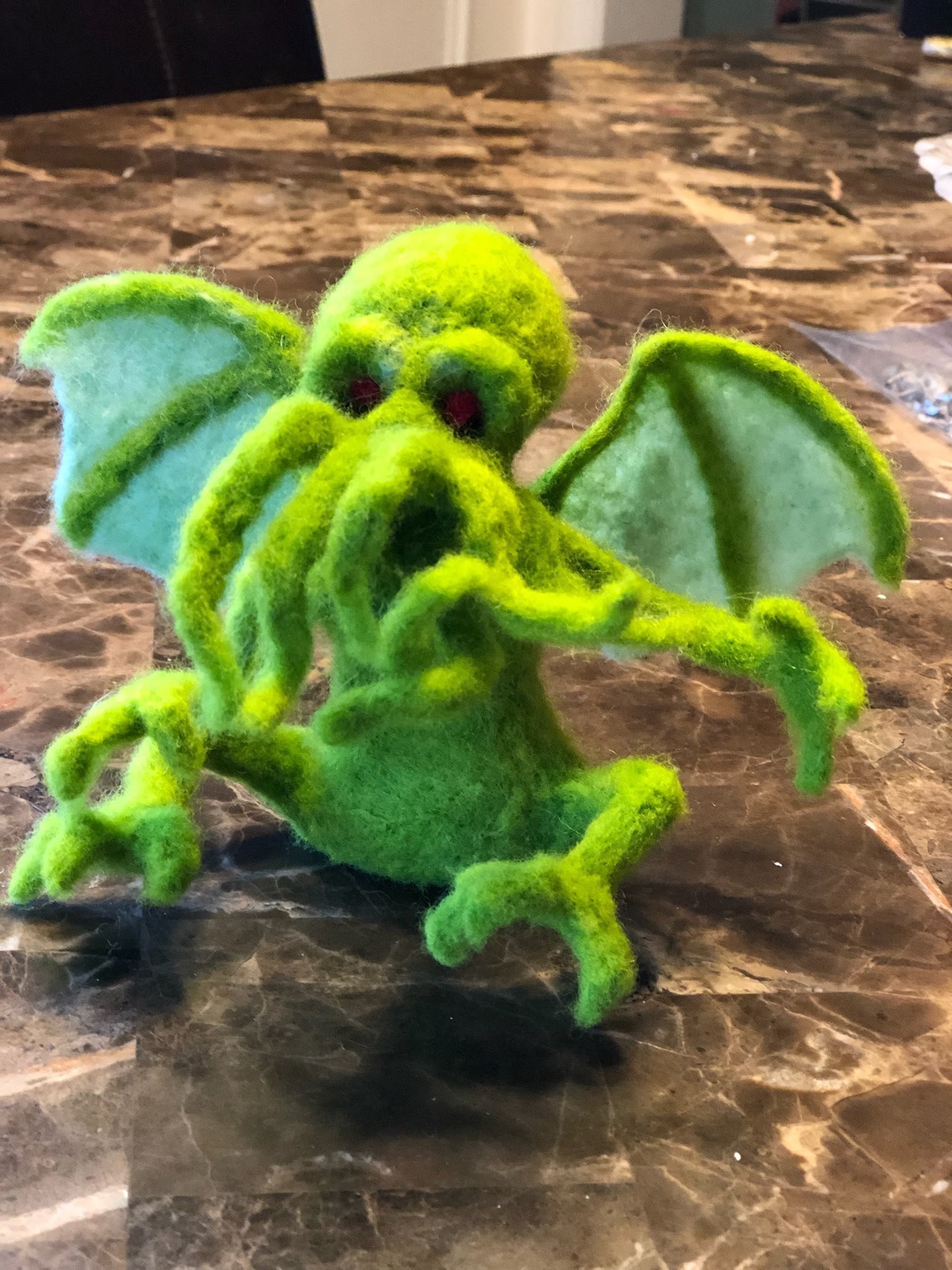
I have several Shure SM57 microphones that I am going to perform the right-angle mod to.  I plan on documenting this thoroughly so anyone can do this.  In the following picture you can see the microphone on the right, which has the right-angle mod applied, is much more out of the way than the one on the left, which does not have the mod applied.

Teaching

On November 29th, I will be teaching a class for The Guild of Oregon Woodworkers on the care and feeding of a SawStop (the class isn’t advertised on their site yet).  It’s been a while since I taught a class so I’m really looking forward to this.  I’ll try to convert all the info into articles on my blog so if you are unable to make it to the class – due to previous commitments or the fact that you are thousands of miles away from Portland Oregon – you can still make use of the information.


Recording for Bright & Shiny

Recording is still going on for the album by Bright & Shiny.  It’s hard for me to get time to record, lately.  I only have the drum tracks to a few songs left, then I can proceed with the auxiliary percussion.  After that, I will begin posting videos of each song.


The Map of Alice

Sadly, I had to call it quits with The Map of Alice.  There were some personality conflicts and the visions for the project were just not lining up.  It was mostly fun while it lasted.

News – July 24th, 2017 – New Sabian Ride

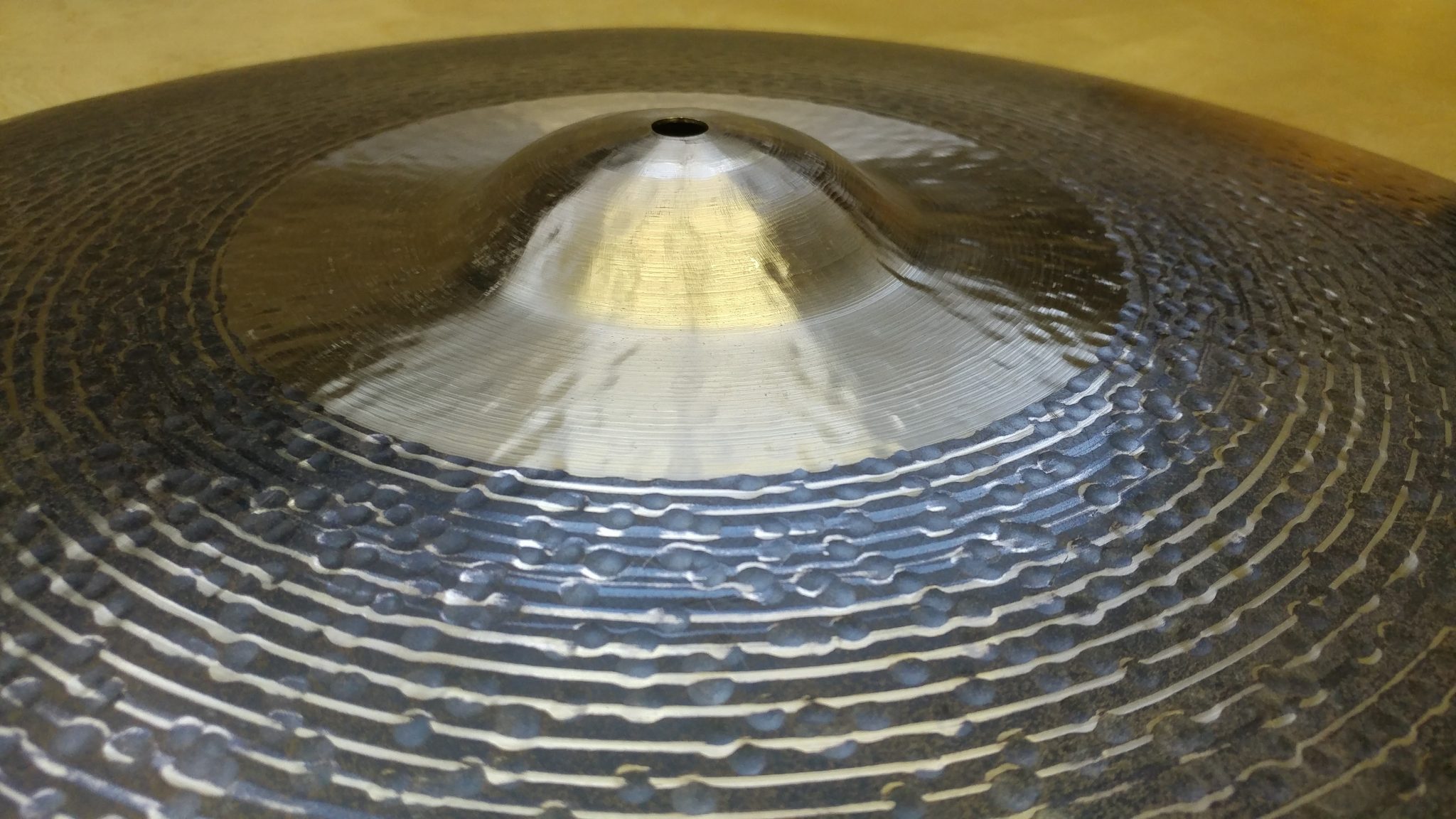
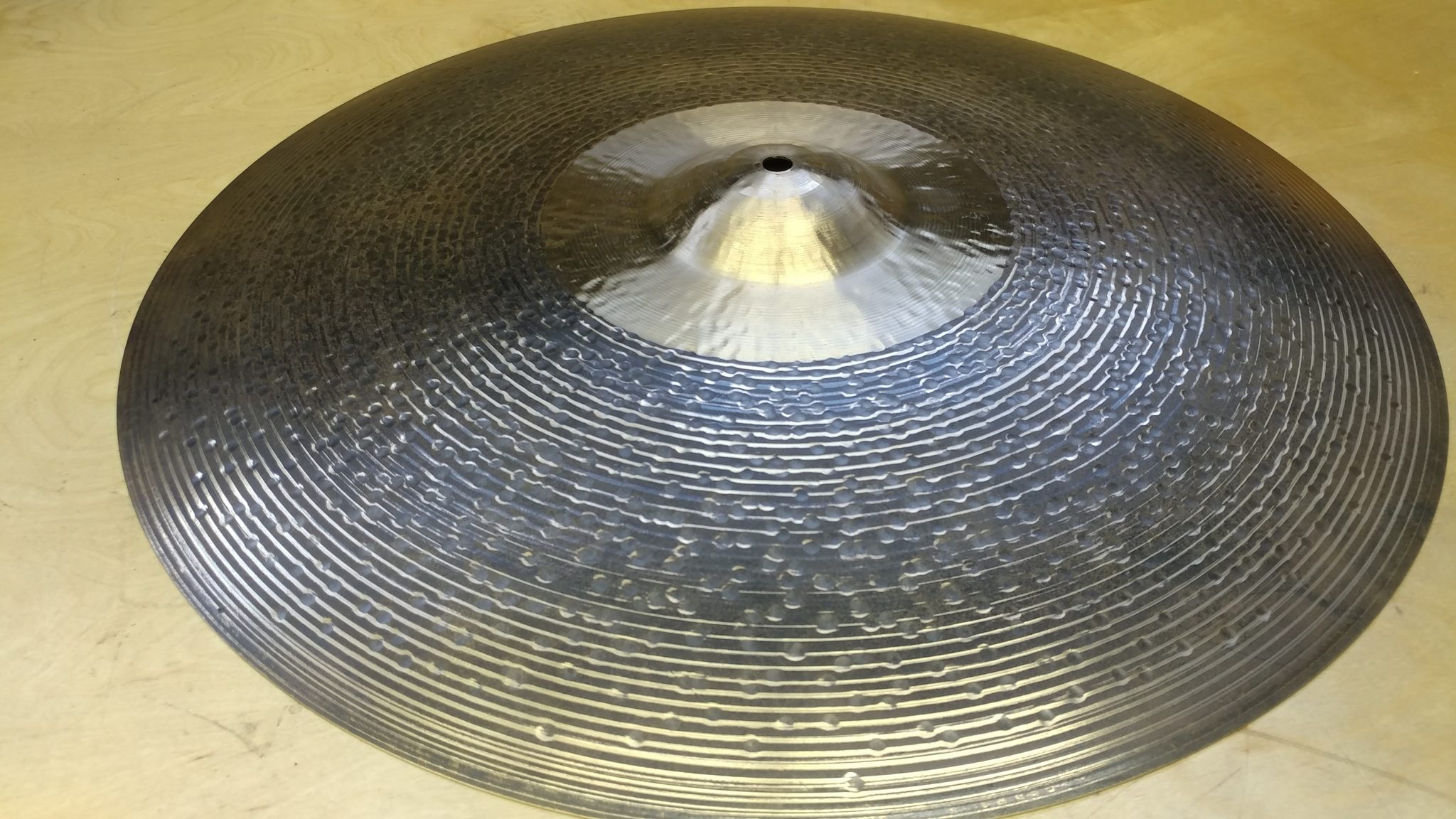
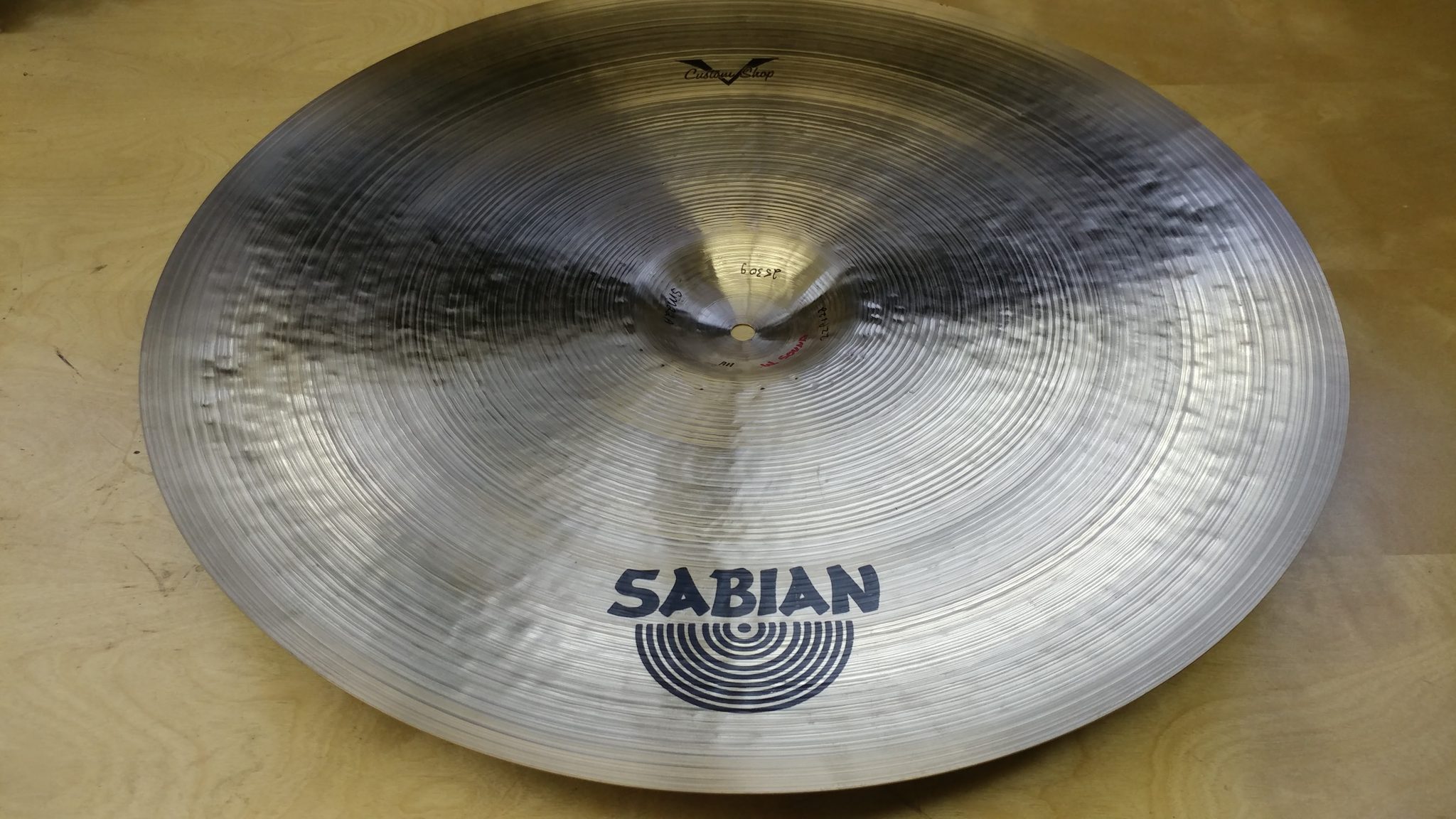
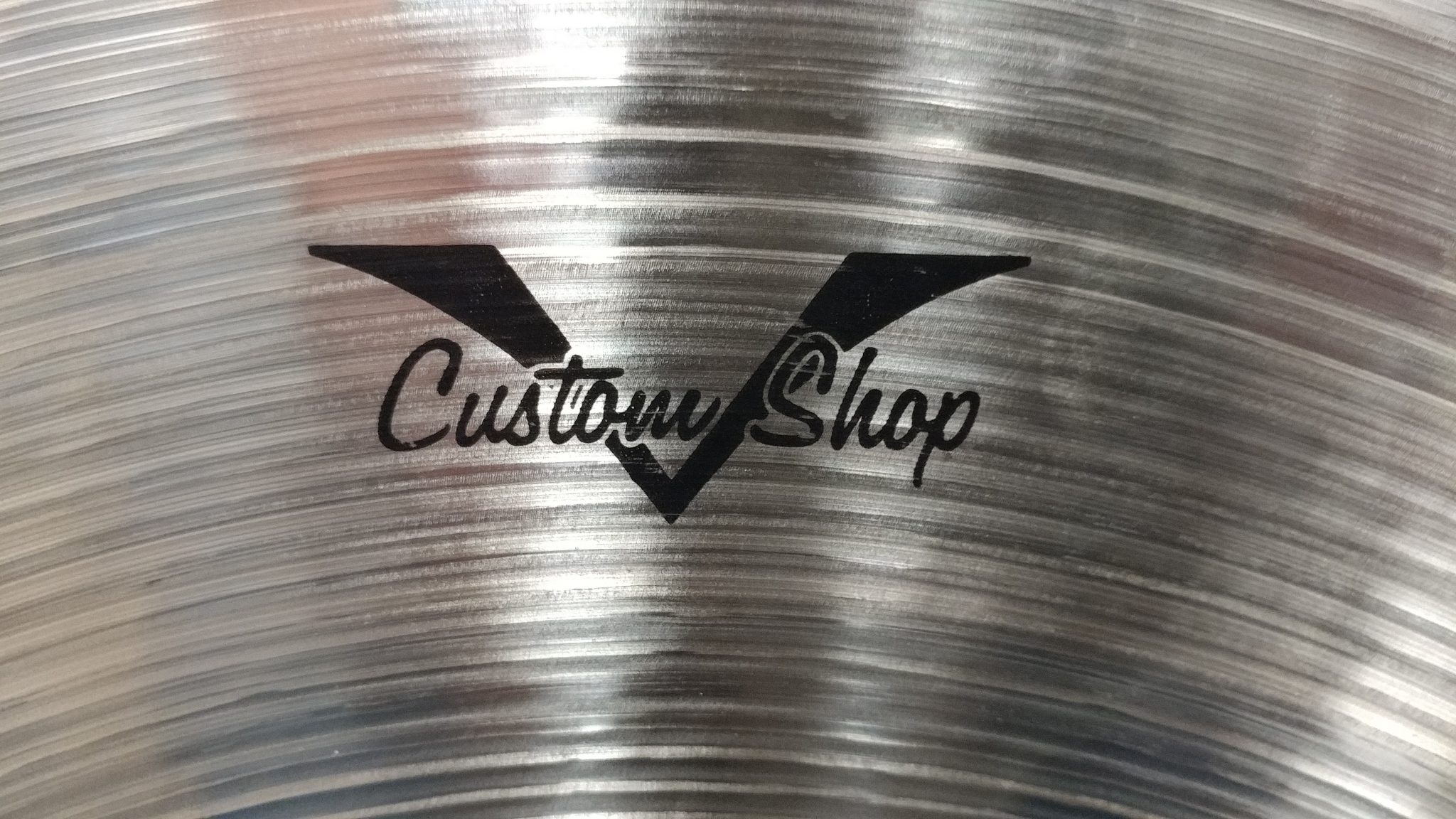
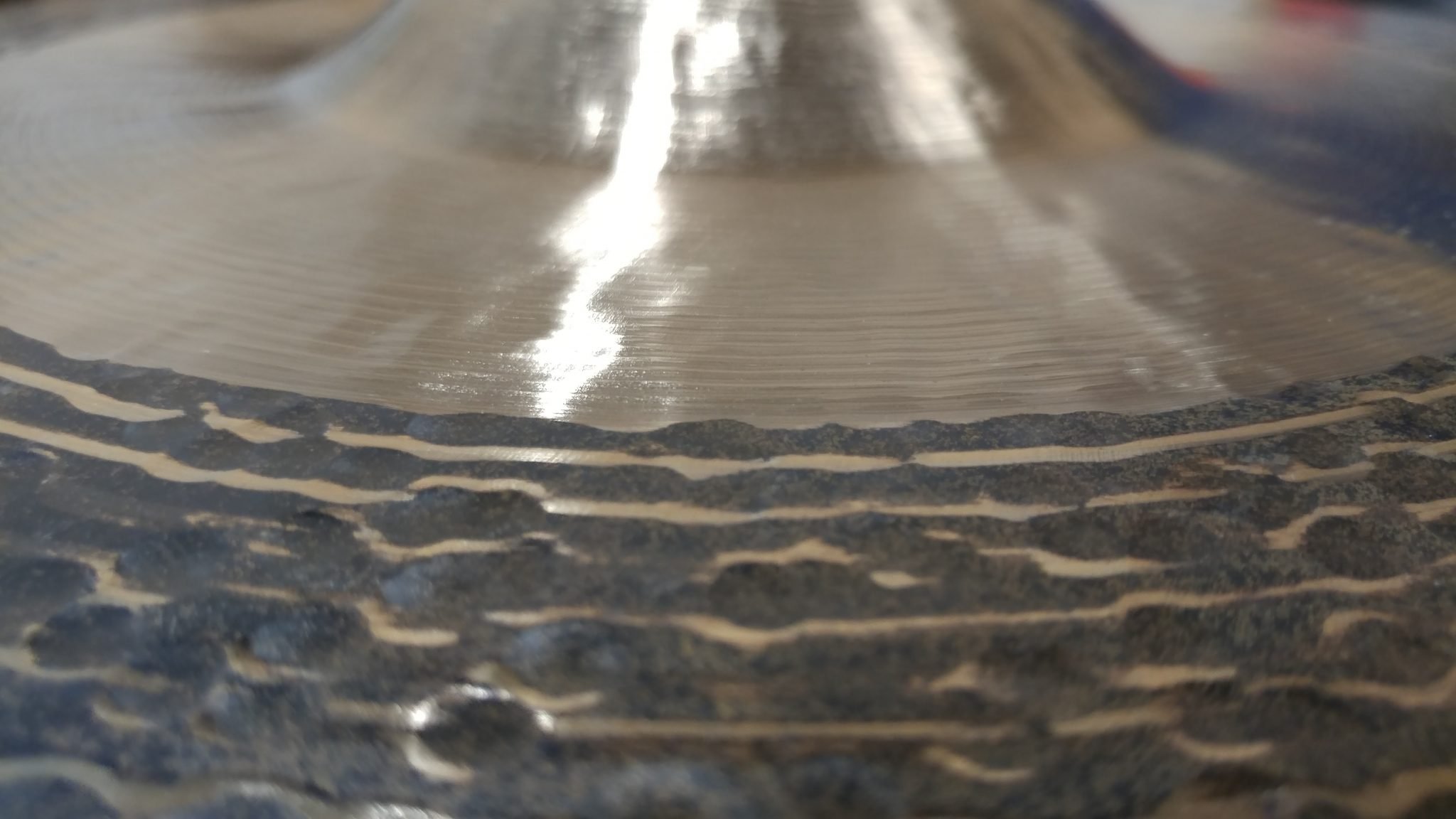
This weekend I added a new cymbal to my setup.  It’s a Sabian Vault Custom Shop HH 22″ ride with a semi-lathed pattern on the top and a completely lathed underside.


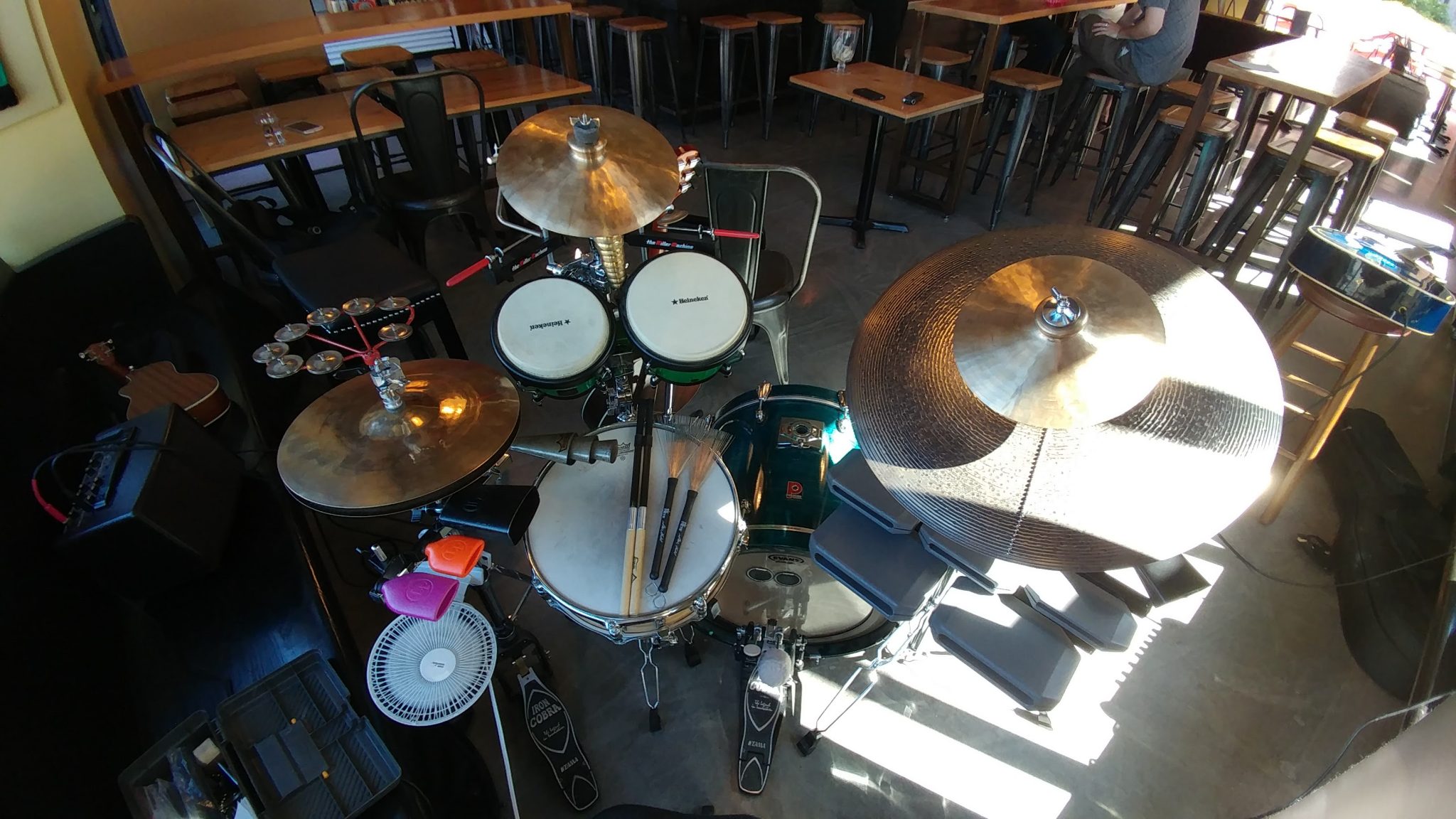
I used it at our regular Sunday gig at McNallly’s Taproom (we play each Sunday from 3:00 – 5:00).  The band plays Gypsy Jazz so it was a good venue to try out this cymbal.  I added a Pro-Mark Sizzler to it to see how it would work and it performed admirably.  I typically use a 20″ Sabian Ed Thigpen Crystal Ride with the sizzler but this 22″ cymbal is my new favorite.  Tapping it with my brushes caused it to sizzle for quite a while and it didn’t get the annoying vibrato sizzle towards the end that other, thicker cymbals get.  It complimented the cut-down Wuhan cymbals well, although it made my LP Granite Blocks rather hard to reach.

The lathing and hand hammering make for a beautiful cymbal, but also of note is the pronounced bell.  I haven’t had a chance to use this at higher volumes yet but some preliminary tests show that the cymbal crashes well, and even though I’m not one who crashes their ride cymbals, I ended up crashing on it several times and I loved the sound.


I’ll post some video of the cymbal soon.  It’s got a nice satisfying wobble to it when you hit it and a nice, dry, smoky sound.


News – June 15th, 2017 – Performance video update

The recording for the upcoming album by Bright & Shiny is progressing well.  I have been playing around with the video for a few songs and although it isn’t finished, I decided to share an early version of one of the videos.

I’m playing around with the title sequence and cutting back and forth between different camera angles.  Although the drum performance is pretty much finalized, the rest of the song is not the finished version.  Also, none of this has been mixed and mastered.
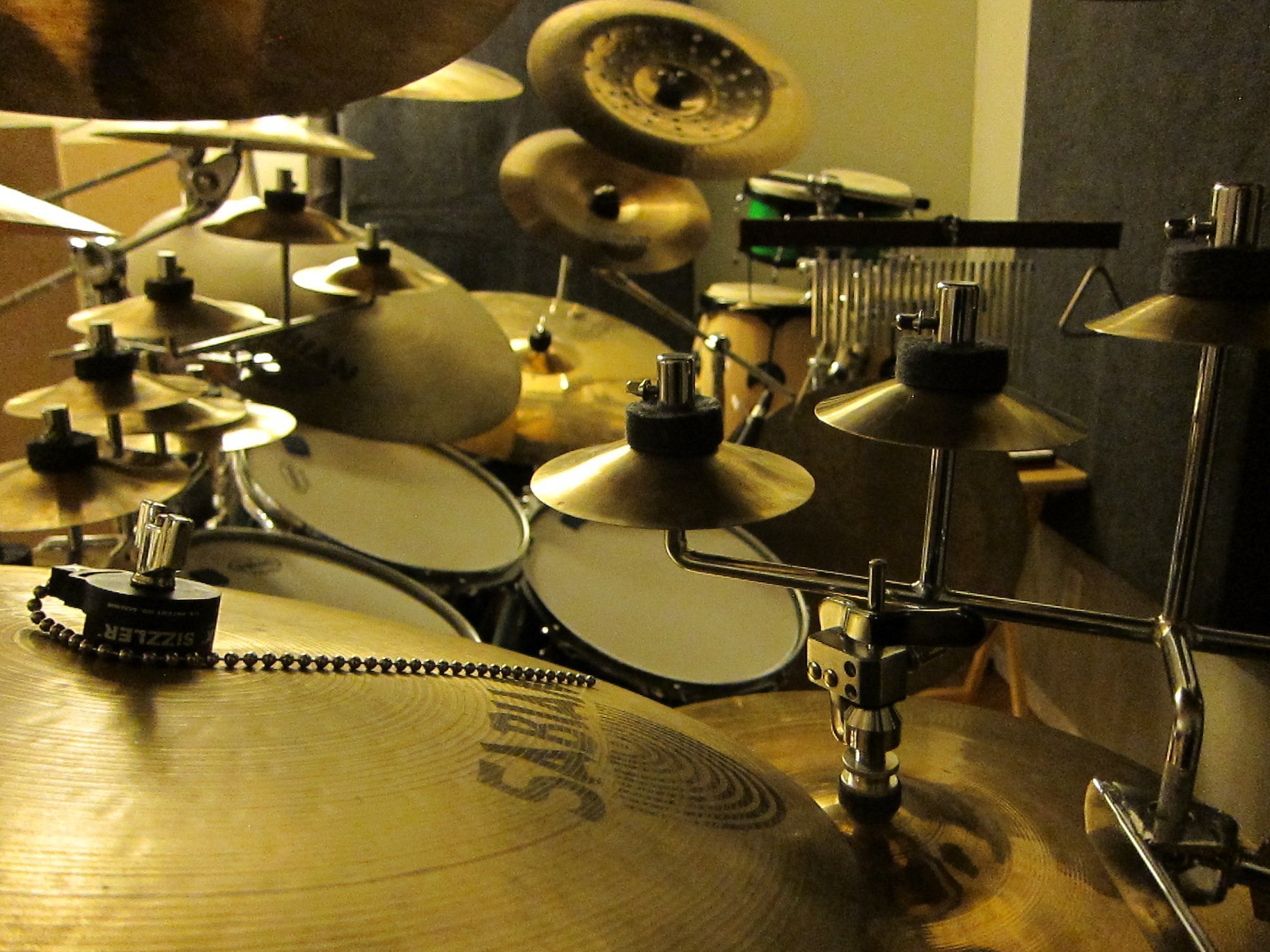
A few interesting things to note with this song is the use of some of my “Rescued Cymbals”.  In addition to the small chime cymbals that I use in pretty much every song, I am also using two cut down Wuhan Lion (or China) cymbals which are positioned above my two main rack toms.  I’m also using a 12″ Glennie’s Garbage positioned above my hi-hat.  This is quickly becoming one of my favorite cymbals.

Enjoy…

12" Wuhan "Lion" cymbals cut down to 8 1/4" hand cymbals.

Cutting down a pair of Wuhans

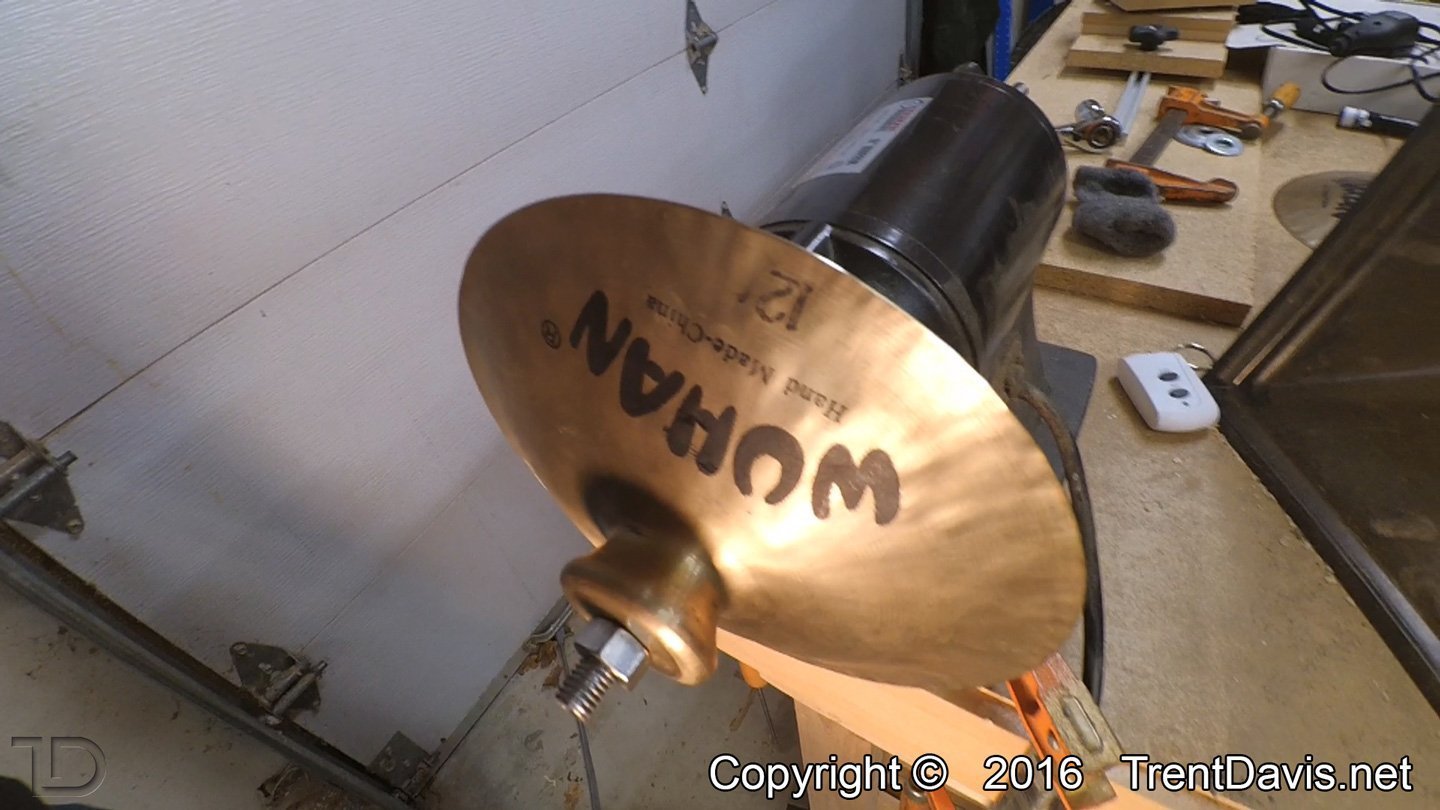
I was asked by a friend of mine to cut down her pair of 12″ Wuhan China (or “Lion” cymbals, as they call them) into a smaller set to use as hand cymbals.

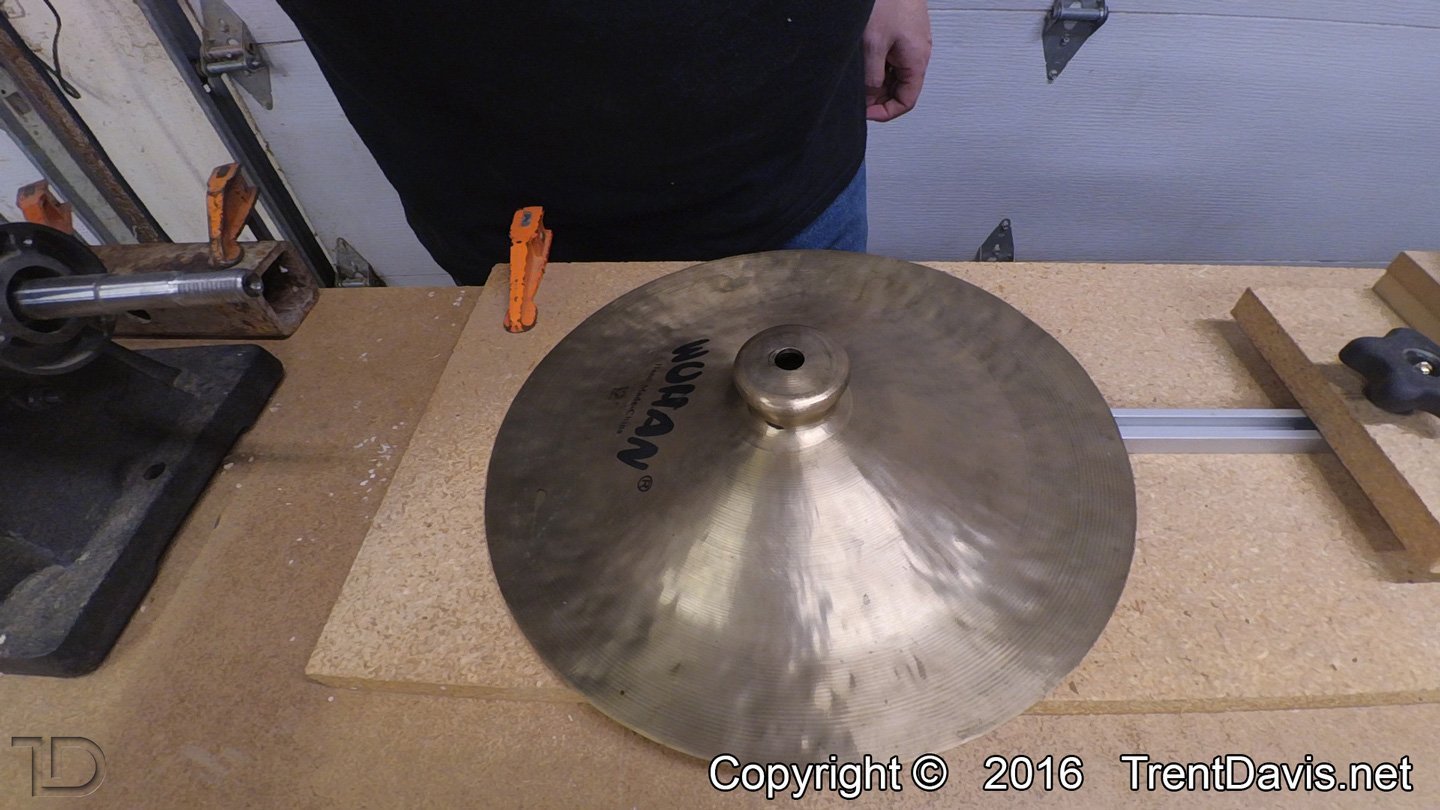
Fig. 1 - One of the unaltered Wuhan "Lion" cymbals.
Fig. 1 – One of the unaltered Wuhan “Lion” cymbals.


There was one slight problem.  Years ago when I first got into repairing cymbals I took my own version of the Hippocratic oath where I swore to “do no harm” to a set of undamaged cymbals.  I was a little conflicted but I figured that since these cymbals aren’t for me and that the owner really wanted this to be done, I was okay to do this procedure.  Plus, she had been using these as a set of hand cymbals already and they sounded truly awful.  Therefore, I was only making improvements.  Much like adding rivets to a cymbal.

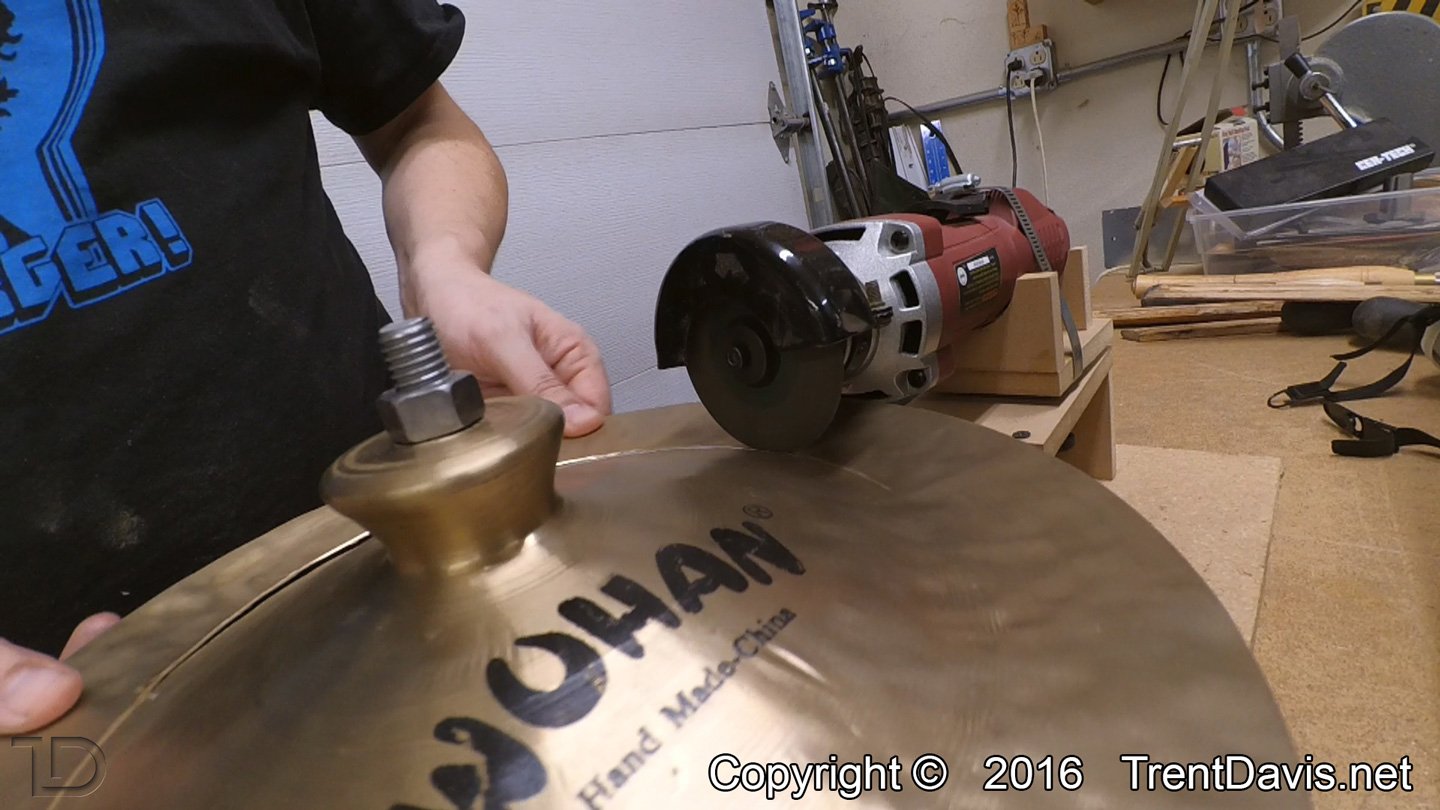
I started by putting both cymbals on my cutting jig and finding the best diameter to use.  I wanted to retain as much of the cymbal as I could but eliminate the flare.  Once a diameter was decided upon I started cutting.

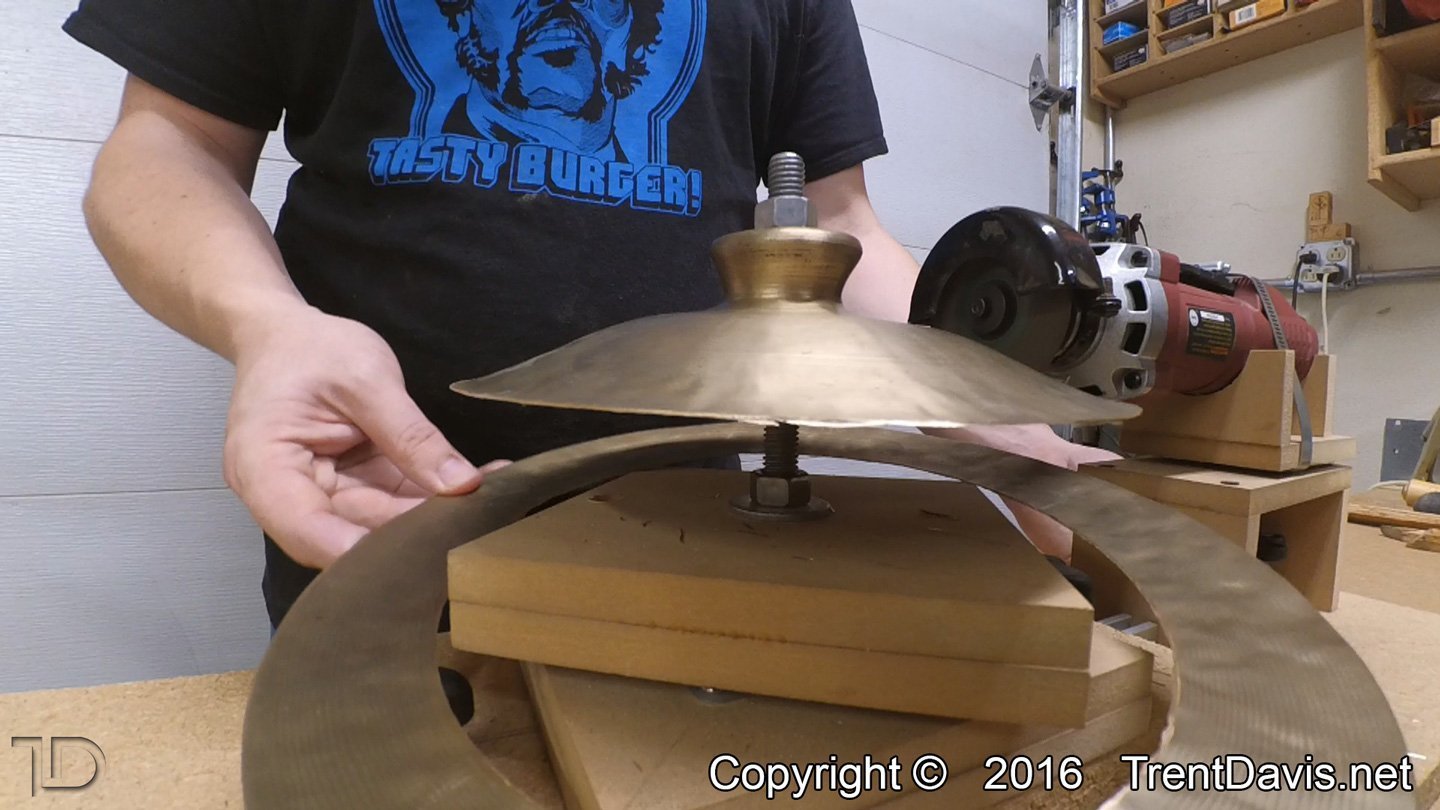
Fig. 2 - The first cymbal on the cutting jig.
Fig. 2 – The first cymbal on the cutting jig.
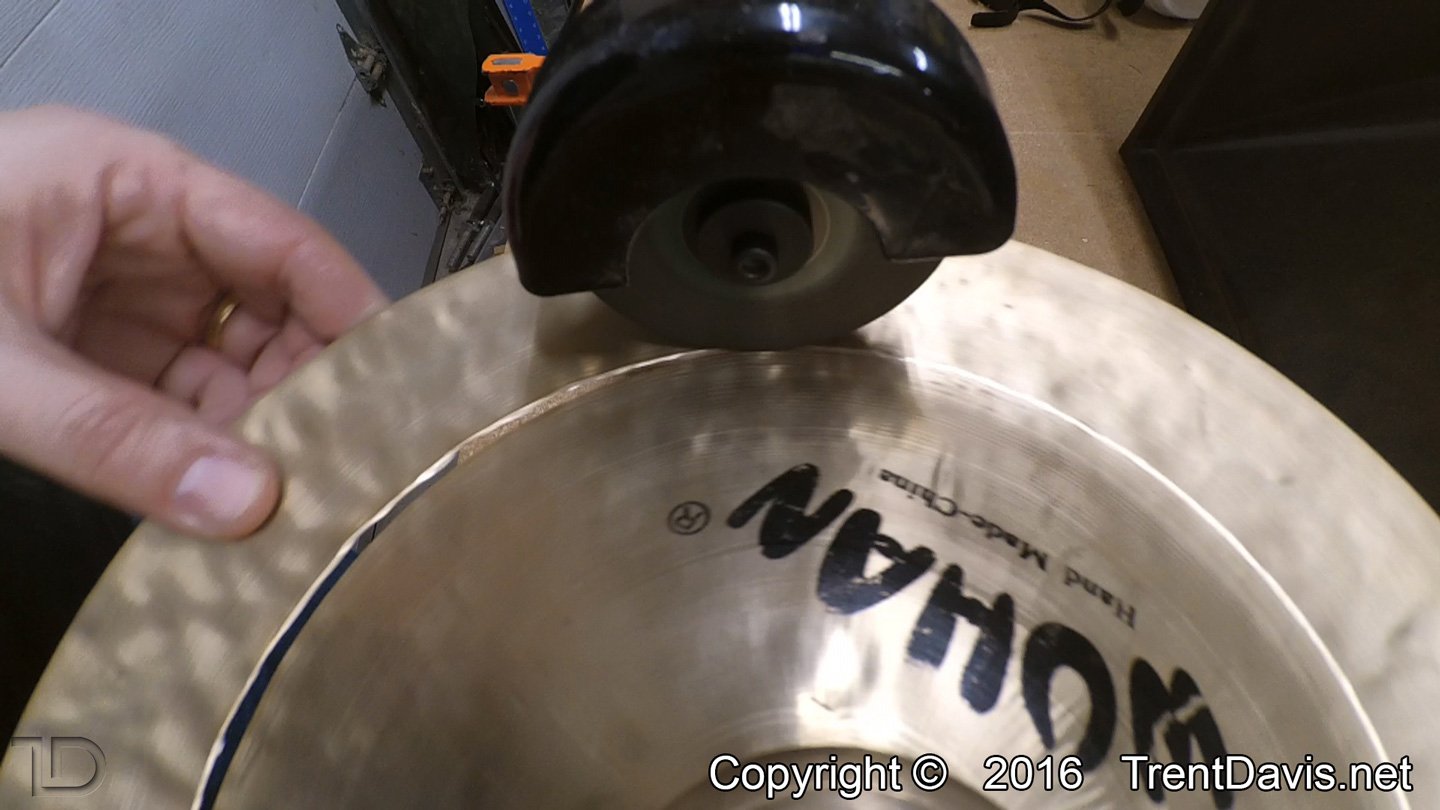
Fig. 3 - Getting close to finishing the cut on the first cymbal.
Fig. 3 – Getting close to finishing the cut on the first cymbal.


The cutting went pretty smoothly although the imperfect nature of Wuhan cymbals tends to affect how balanced the cut-down cymbal is.  For example, the mounting hole was off-center on each cymbal which really caused a lot of warping and vibration.  You can see this in some of the pictures.

Fig. 4 - Just finished cutting down the second cymbal.
Fig. 4 – Just finished cutting down the second cymbal.


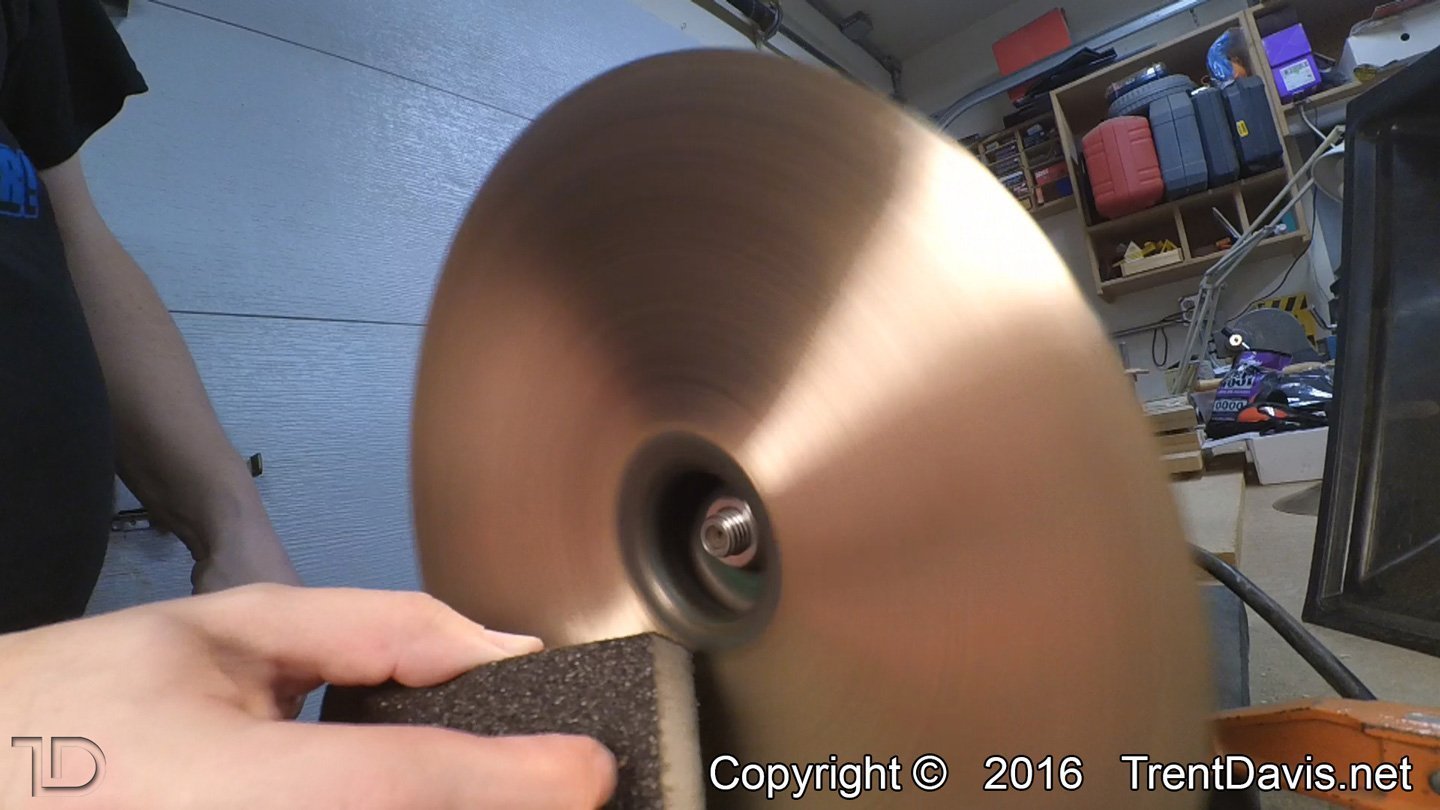
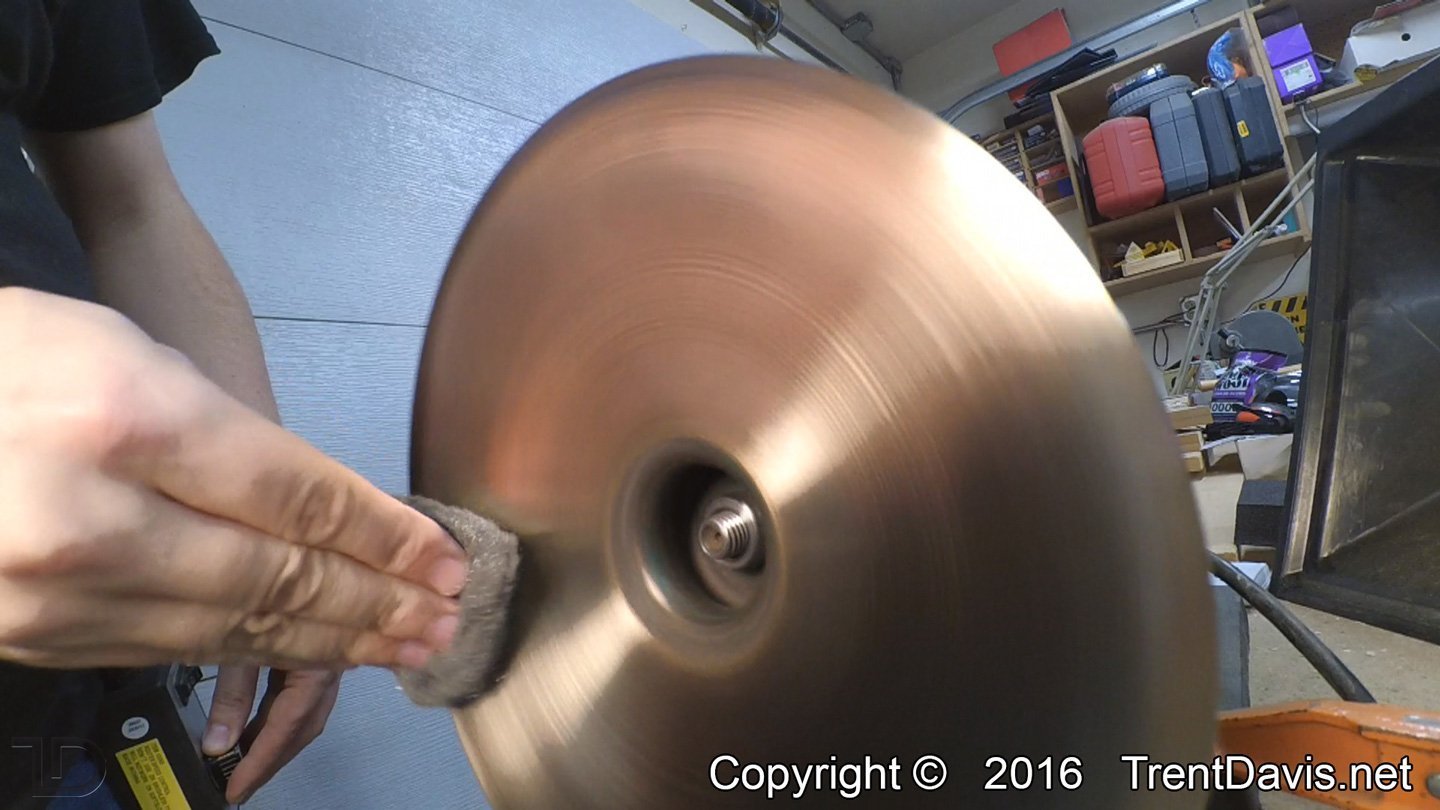
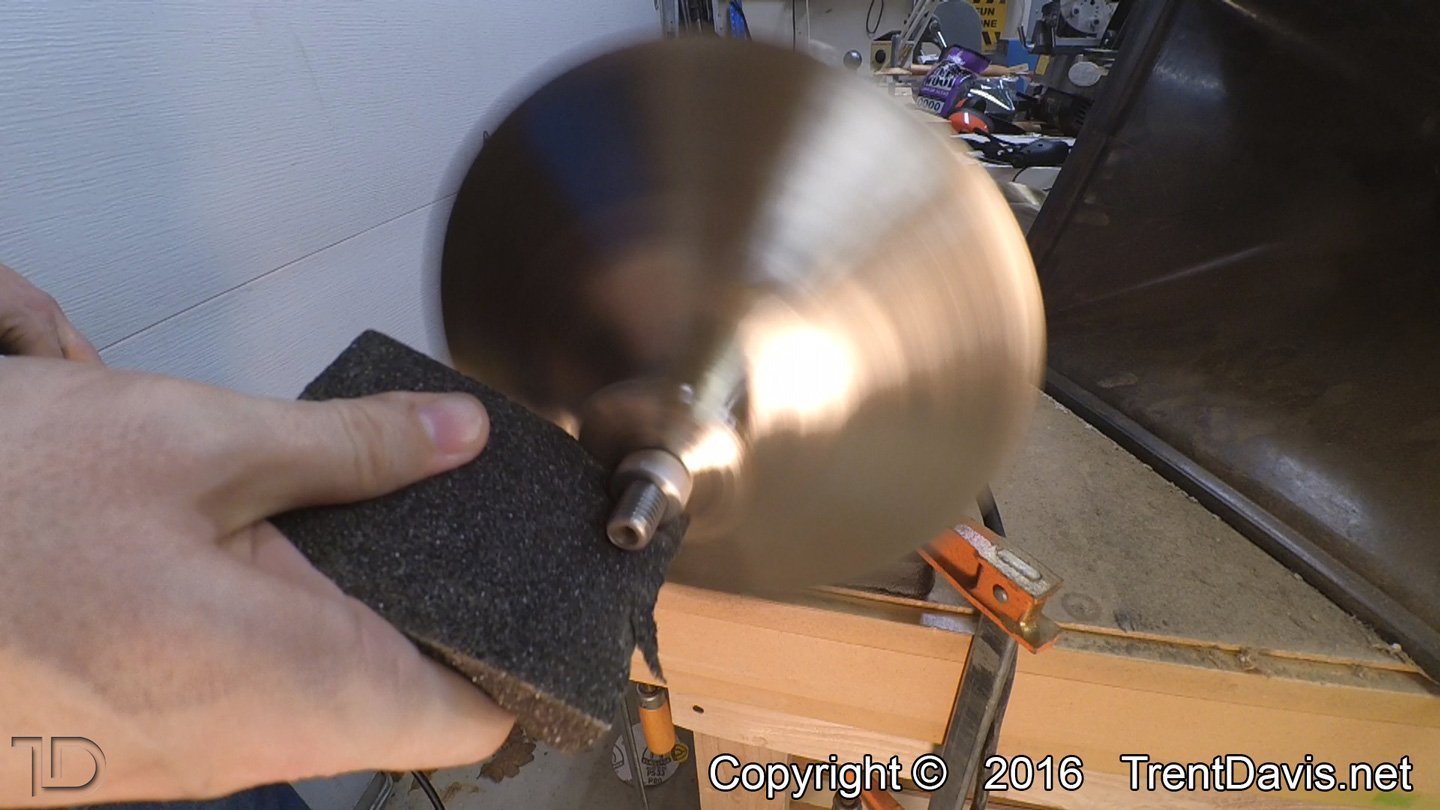
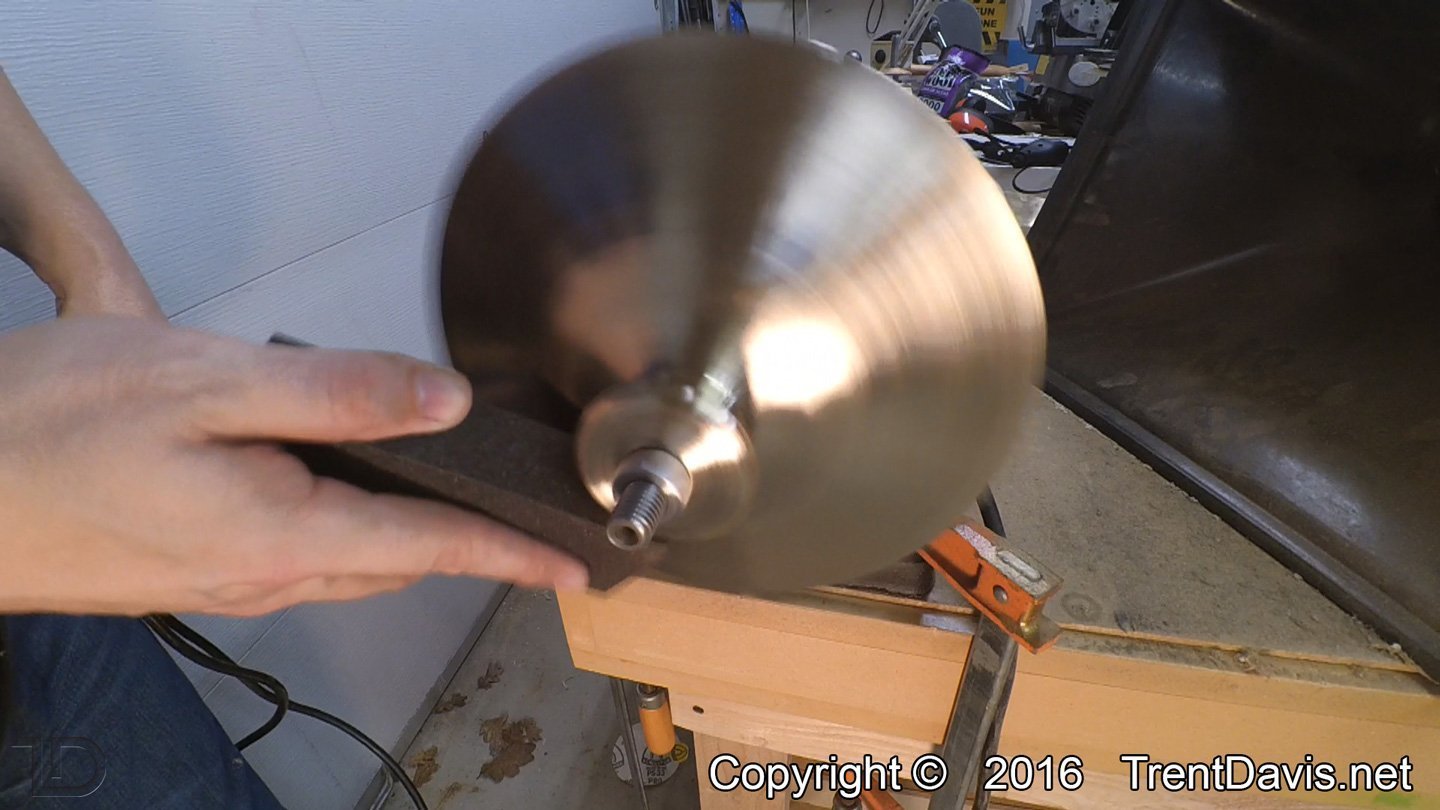
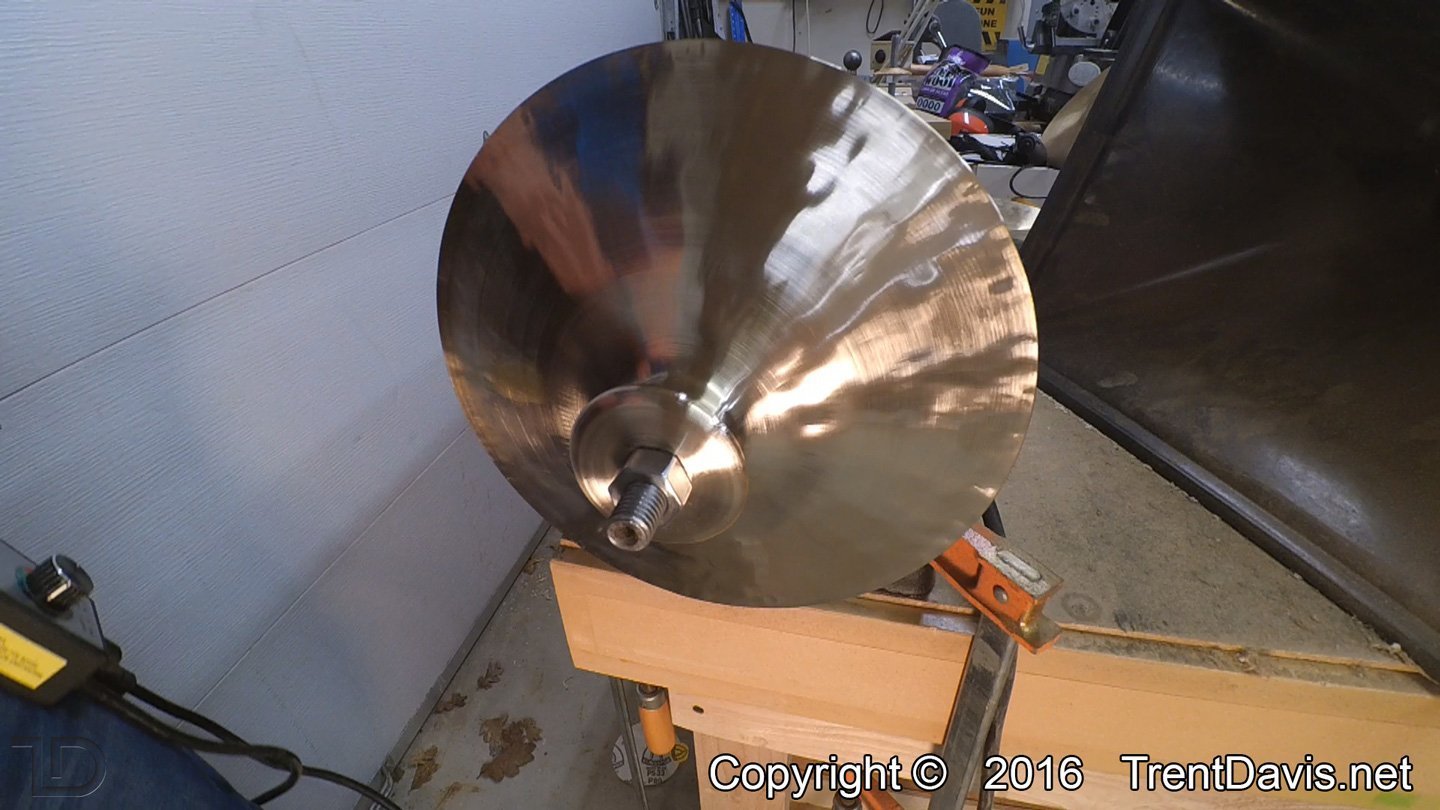
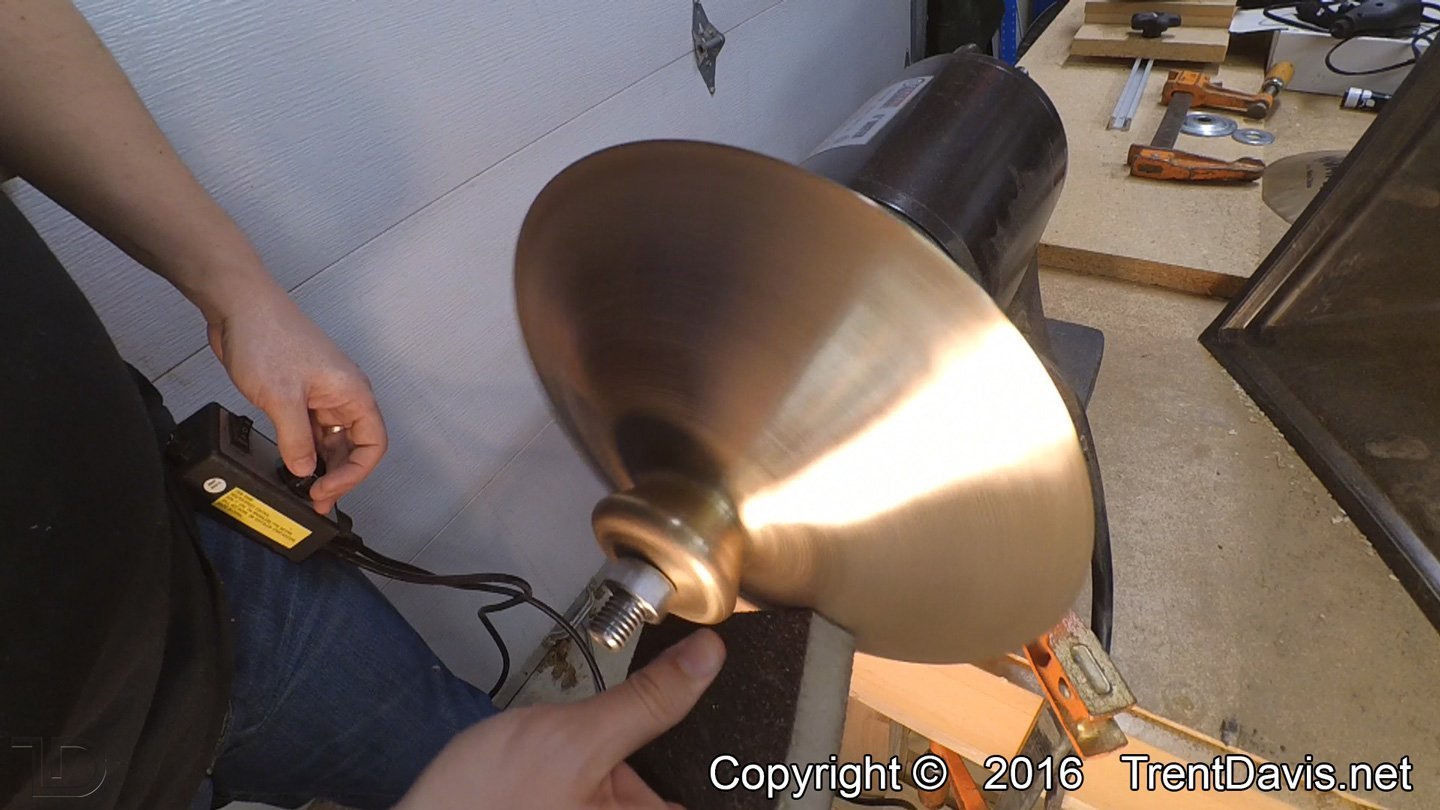
After they were cut down I mounted them on my buffing wheel and de-burred the edges.  My friend also wanted me to polish them and remove the logos.  This was more trouble than it usually is since these cymbals are so out of balance.  I used both a coarse and fine grained sanding sponge then finished up with 0000 steel wool.  I finished that up with a thin coat of polyurethane to protect them and they are ready to go.

Fig. 5 - Taking the coarse sanding block to the underside of the first cymbal.
Fig. 5 – Taking the coarse sanding block to the underside of the first cymbal.
Fig. 6 - Finishing up the underside of the first cymbal with some 0000 steel wool.
Fig. 6 – Finishing up the underside of the first cymbal with some 0000 steel wool.
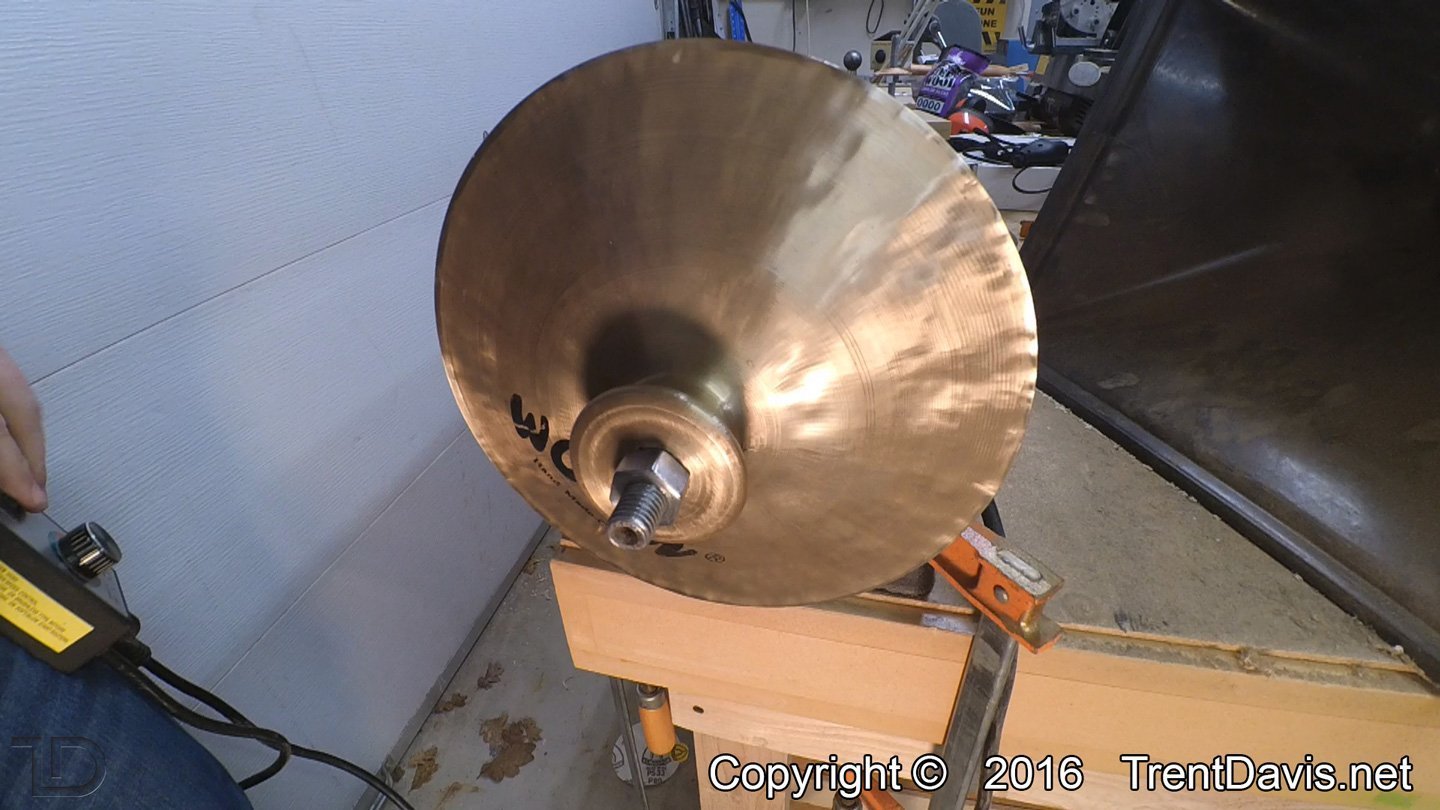
Fig. 7 - The top of the first cymbal ready to be polished.
Fig. 7 – The top of the first cymbal ready to be polished.
Fig. 8 - Taking a coarse sanding block to the top of the first cymbal.
Fig. 8 – Taking a coarse sanding block to the top of the first cymbal.
Fig. 9 - Following up with a fine-grit sanding sponge.
Fig. 9 – Following up with a fine-grit sanding sponge.
Fig. 10 - All done after finishing up with some 0000 steel wool.
Fig. 10 – All done after finishing up with some 0000 steel wool.
Fig. 11 - Time to start cleaning up the second cymbal.
Fig. 11 – Time to start cleaning up the second cymbal.
Fig. 12 - Cleaning up the top of the second cymbal with a coarse-grit sanding sponge.
Fig. 12 – Cleaning up the top of the second cymbal with a coarse-grit sanding sponge.
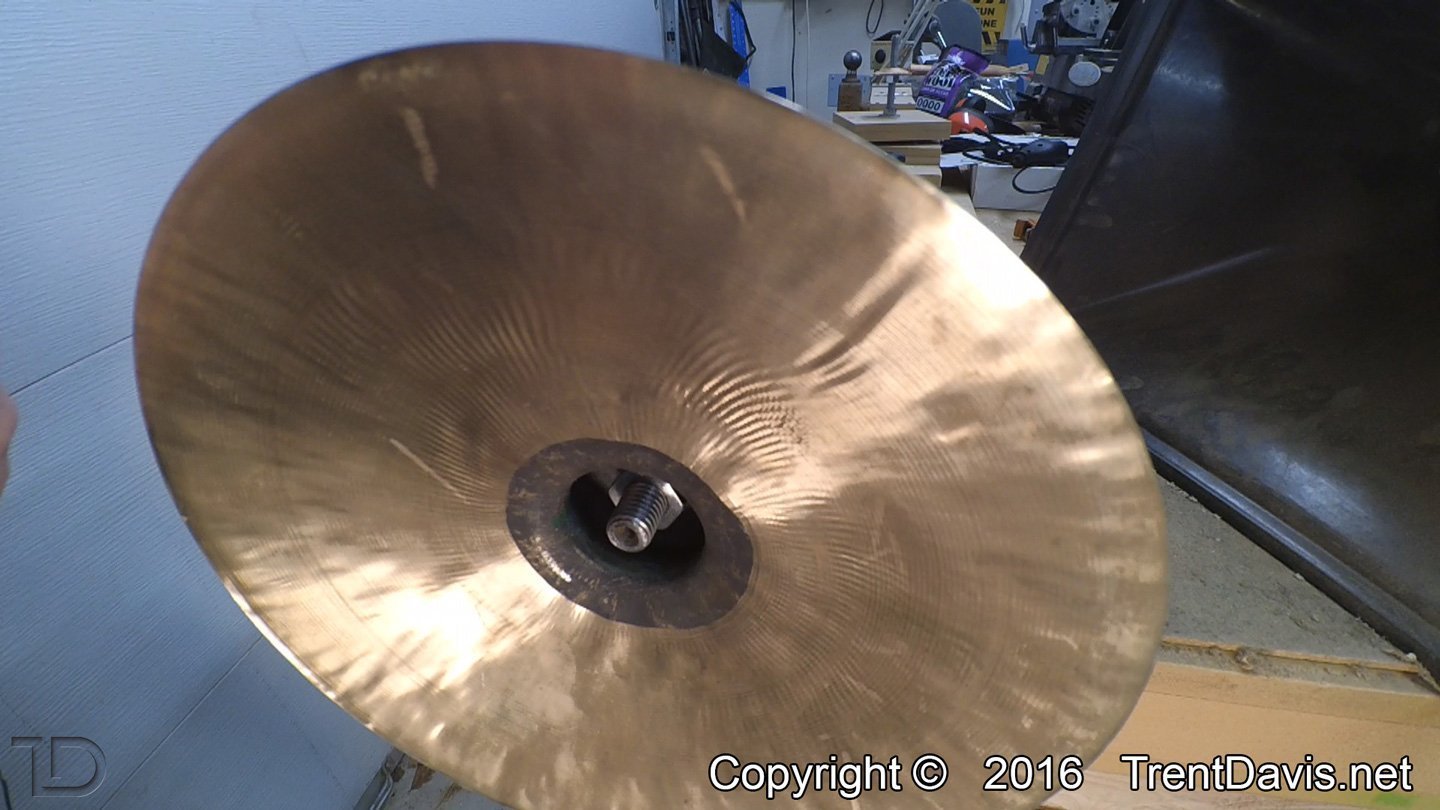
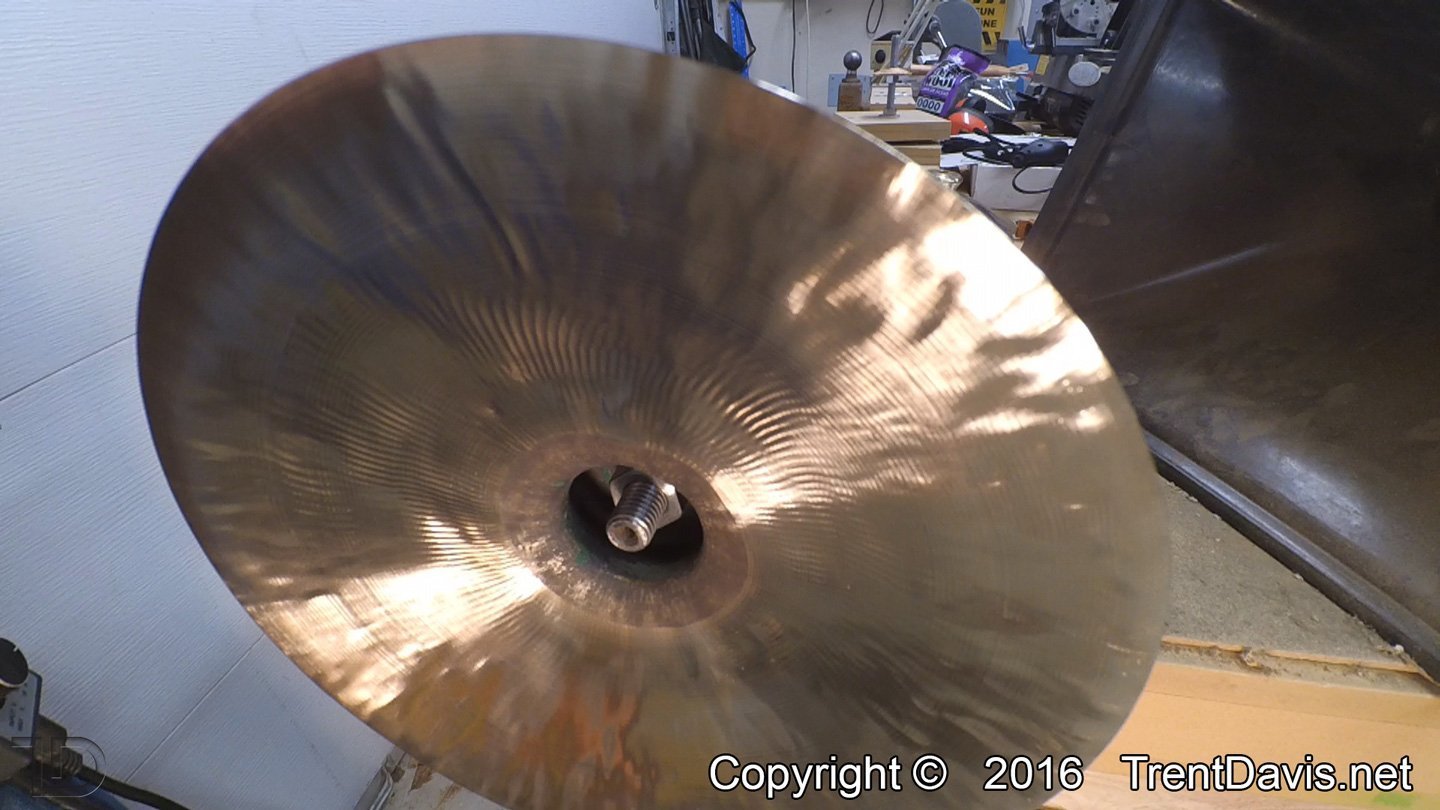
Fig. 13 - the underside of the second cymbal. Before...
Fig. 13 – the underside of the second cymbal. Before…
Fig. 14 - ... and after.
Fig. 14 – … and after.
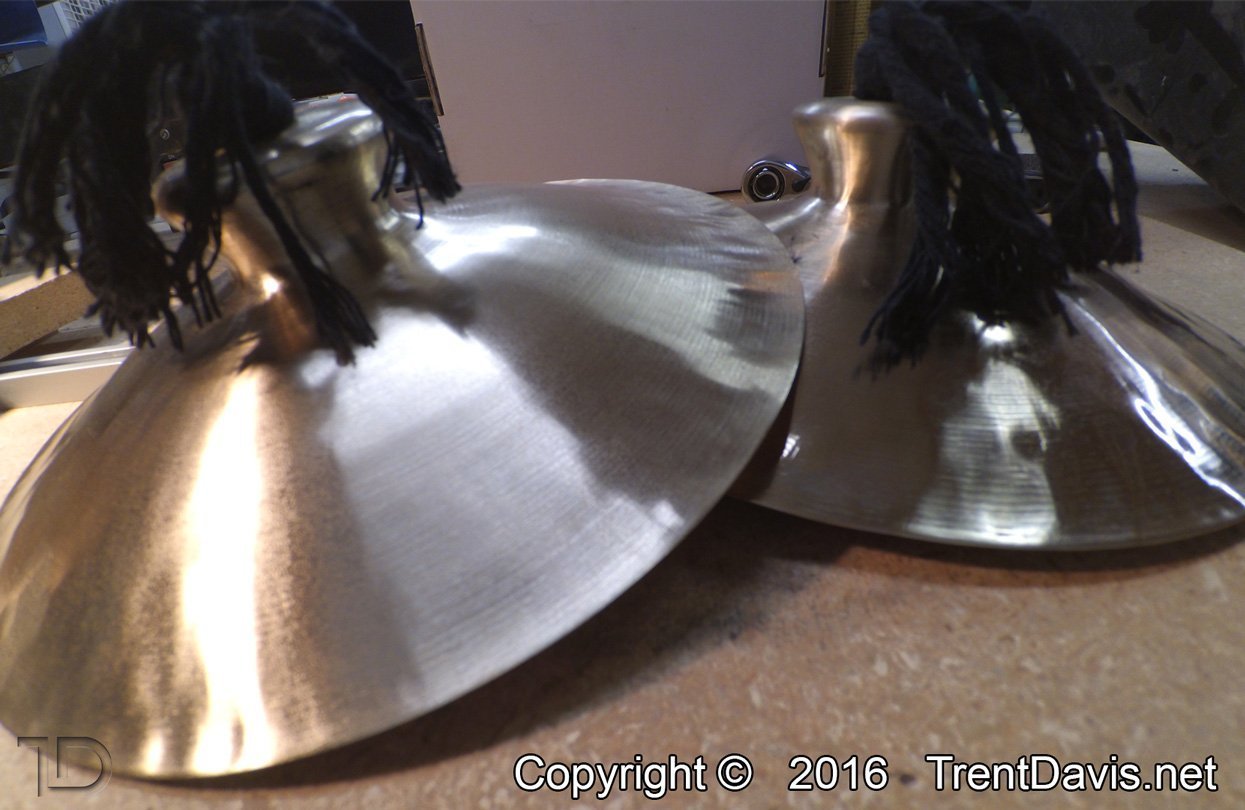
Fig. 15 - This is a shot of both cymbals. The one on the left is halfway through cleaning up the top. This was problematic due to the imbalance in that cymbal which is caused by the mounting hole being so far off-center.
Fig. 15 – This is a shot of both cymbals. The one on the left is halfway through cleaning up the top. This was problematic due to the imbalance in that cymbal which is caused by the mounting hole being so far off-center.
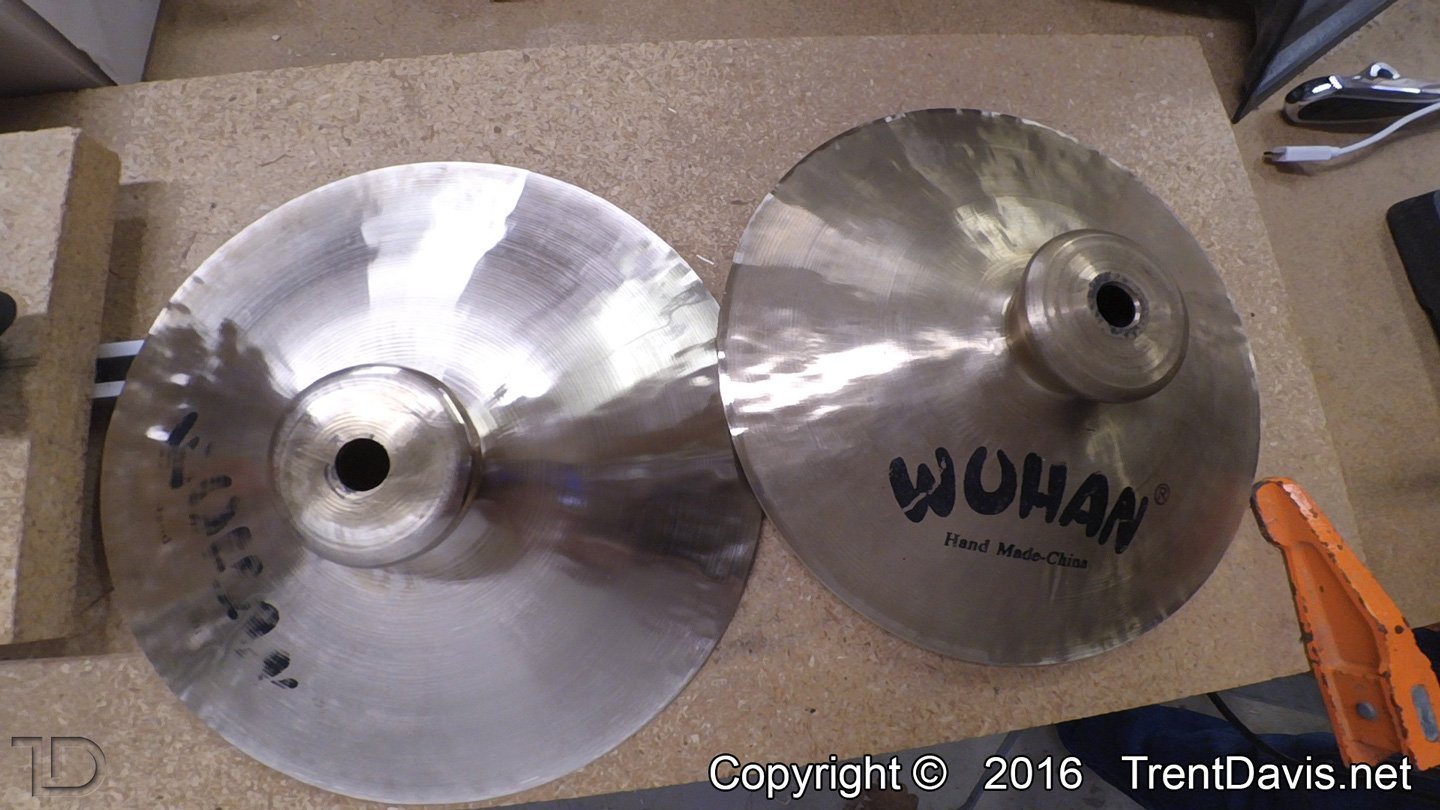
Fig. 16 - A close-up of the two cymbals. The one on the left has been polished up a bit. The one on the right only has the edge de-burred which actually polishes up the area around the edge a bit.
Fig. 16 – A close-up of the two cymbals. The one on the left has been polished up a bit. The one on the right only has the edge de-burred which actually polishes up the area around the edge a bit.


The finished product ended up being 8 1/4″ in diameter.  They look cool and they sound a lot better.

Fig. 17 - Top-down view of the finished product.
Fig. 17 – Top-down view of the finished product.
Fig. 18 - The finished product.
Fig. 18 – The finished product.


Let me know in the comment section below if this was helpful and if you have any questions.  Also, if you cut down your own cymbals, feel free to share your techniques.


Every Time I Fall – Performance video

I recorded the drum tracks for Every Time I Fall, a song I’m working on with Jongwon Kim.


I have a somewhat peculiar way of recording.

I actually record the drum tracks a total of eight times, one after the other without any breaks in between.  Typically, the first two tracks are throw-aways.  I use them as a chance to warm up while also re-familiarizing myself with the structure of the song and the ideas that I wanted to incorporate into it.  The reason I like these takes to be recorded rather than just playing it a few times on my own is because I might spontaneously (or accidentally) play something that is just perfect for the song that I may not remember afterwards so it’s nice to have it documented.

I don’t actually expect to have a “keeper” take until the fifth or sixth time through the song.  Once I get these, I use them as my safety net.  Now I have two more takes where I can get crazy and try things that may not work but would be fun to at least attempt and listen to later.  These two takes are usually filled with screw-ups but every now and then I hear something that I really like and I will actually incorporate it into the song, either with editing or doing a few more takes.

On this particular song, I had gotten a keeper take by the fifth run-through.  The sixth and seventh were nice but didn’t really speak to me.  Then on the eighth take I just didn’t worry about anything and focused on just playing comfortably.  I wasn’t going for flashy.  It was just one of those moments where you realize you know the song well enough to play it without even thinking about it.  Actually, while I was doing this take, I believe I was thinking about a few metalworking projects I have planned.  In my subconscious I was just enjoying the song.  It was like background music that I was controlling.  This ended up being the take that I’m going to use for the final recording.

Anyway, here are a few videos.  I recorded the tracks in Ableton and didn’t do any real mixing or mastering other than the basic levels that I have set up for my drum recording template.  The first version includes the temporary guitar backing tracks.  The second version is only the drums.


Every Time I Fall (With backing tracks)

Every Time I Fall (Without backing tracks)

https://youtu.be/XfvmdlpETMM

Video Performance – Test

This is just a test of the over-the-head GoPro setup.  The audio was recorded in Ableton and edited into the video.

This was when we were auditioning a new keyboard player so it’s a pretty low-key performance.  I was also just getting over the flu so I didn’t have a lot of energy.  To top it all off, I was also breaking in a new pair of Doc Martens, which I normally really love to wear when I’m playing but which are rather unforgiving when they’re fairly new.

Only The Strong – 2016-10-06