Tool Maintenance – Protecting A Cast Iron Tabletop

Materials Needed

  1. WD-40
  2. Grey Scotch-Brite Pads (7448)
  3. Some sort of treatment such as…

Optional

  1. 0000 Steel Wool (instead of the Scotch-Brite pads)
  2. Denatured Alcohol
  3. Bag Of Rags
  4. Blue Painters Tape
  5. Blue Shop Towels
  6. Hand Pad Holder or Sanding Block

Setting Up

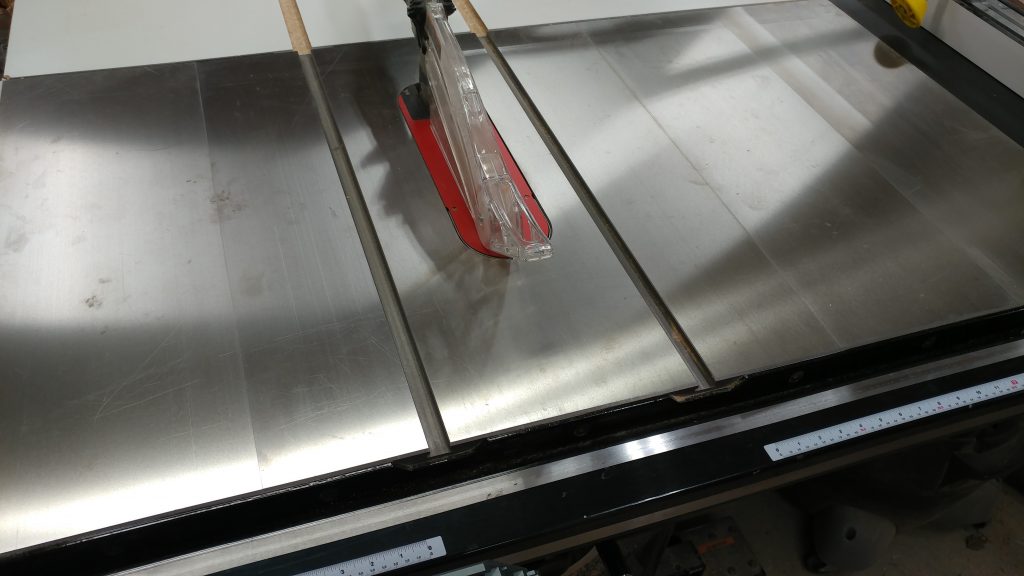
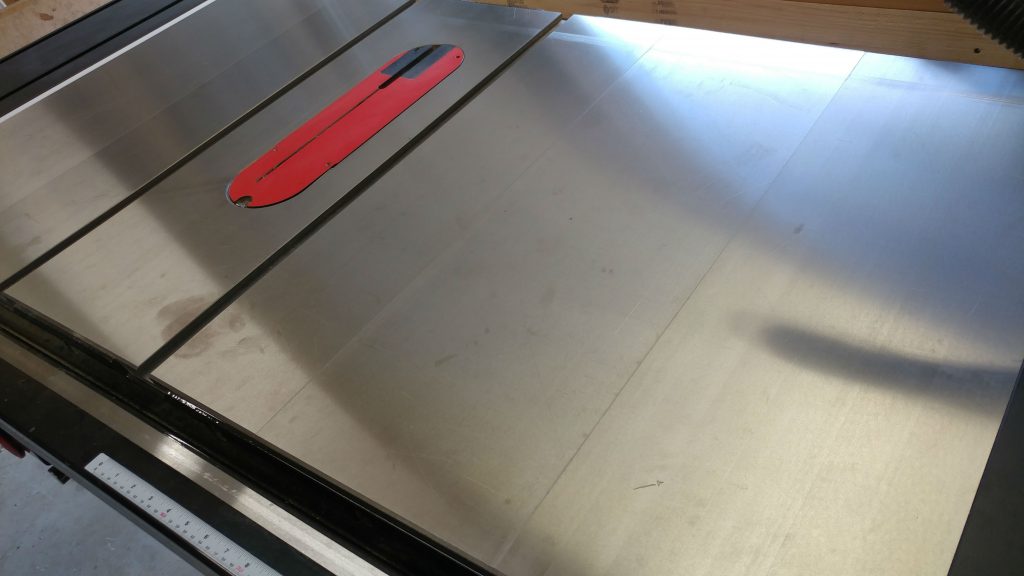
Cast iron gets rusty.  Period.  You can take steps to help prevent it but you’ll still have to deal with it eventually.

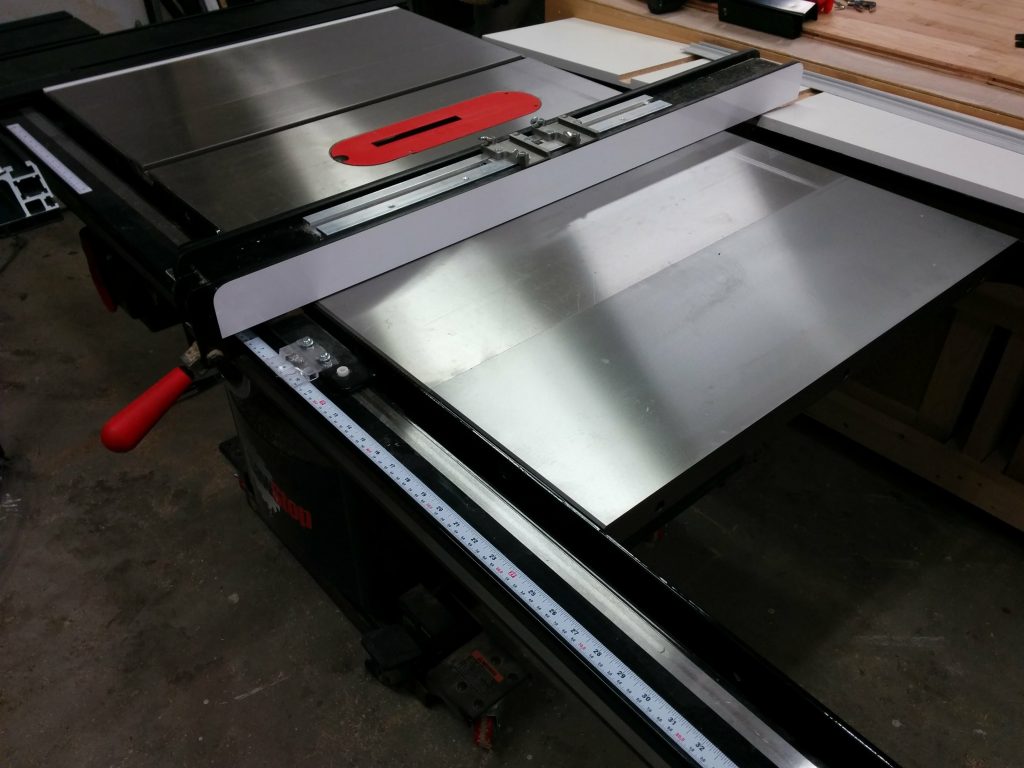
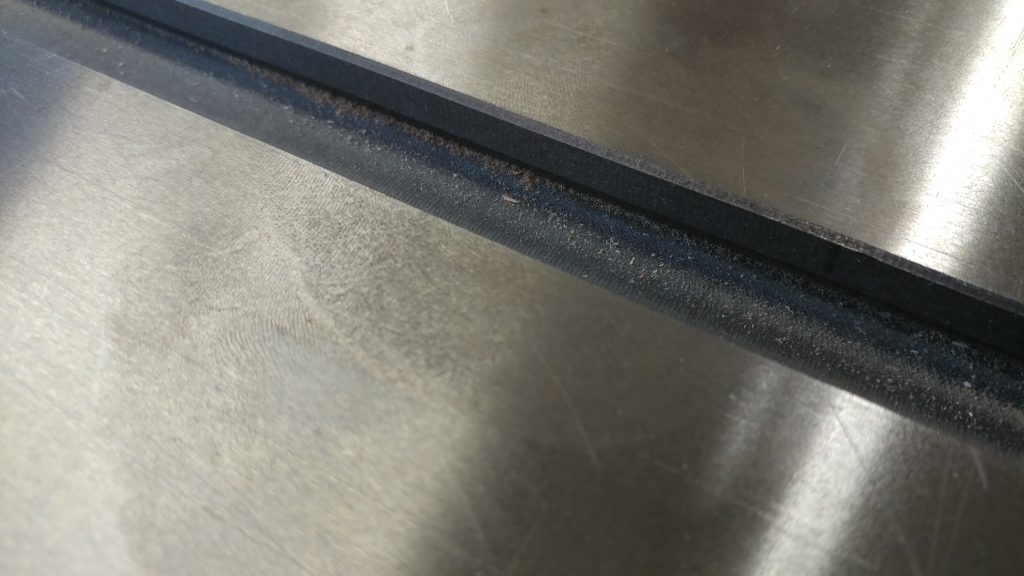
In my case, I have a SawStop Industrial Cabinet Saw with an additional 10″ cast iron wing that has some rust forming on it.  It’s not too bad but I should definitely do something about it.  You can see a big greasy hand print right on my right miter slot.  (How that happened is a long story but rest assured, our lights work now.)
A close-up of the hand print shows that it isn’t pitting yet so it should mostly come off.
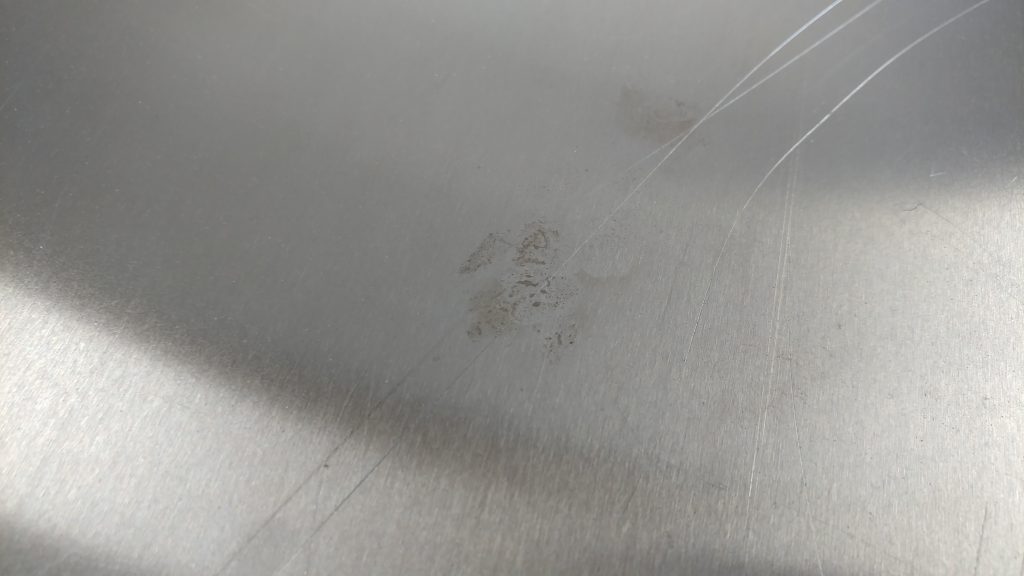
The paw prints are a bit more severe.  I don’t see any pitting but I won’t know for sure until I scrub it away.
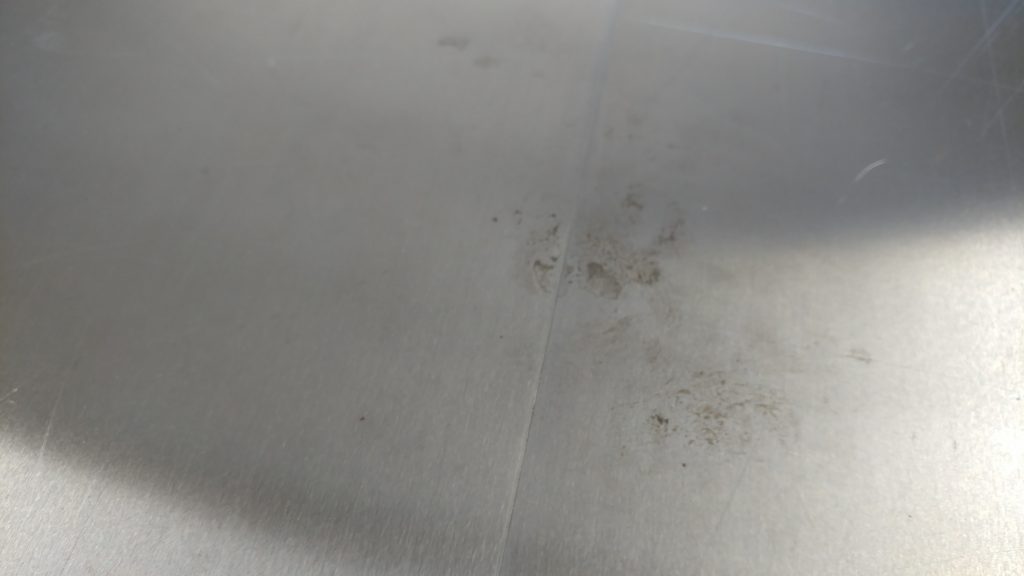
Here are a few more paw prints.
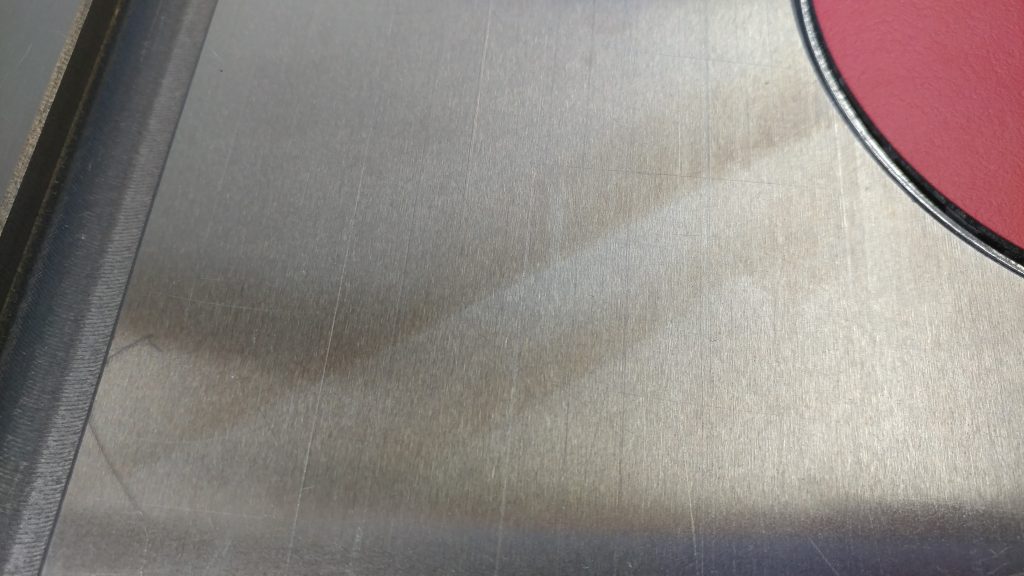
I don’t know exactly what caused these rust bands but I am assuming that this is from moisture being locked under boards that sat on the table top for a day or two.  This is why you shouldn’t leave wood sitting on cast iron overnight, especially during the summer.
Another mysterious rust spot.  It isn’t too bad so it should mostly come off.
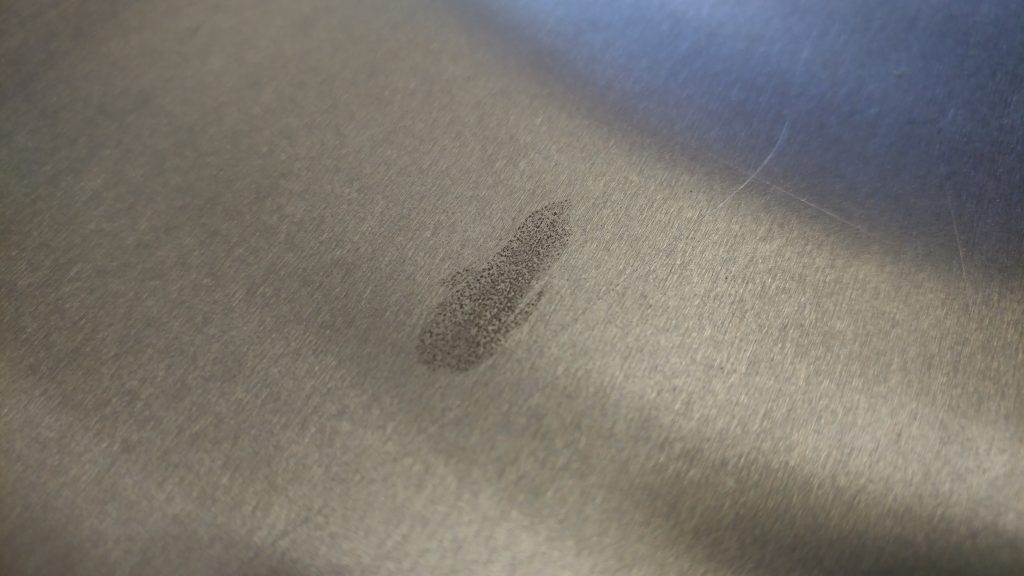
Removing The Rust

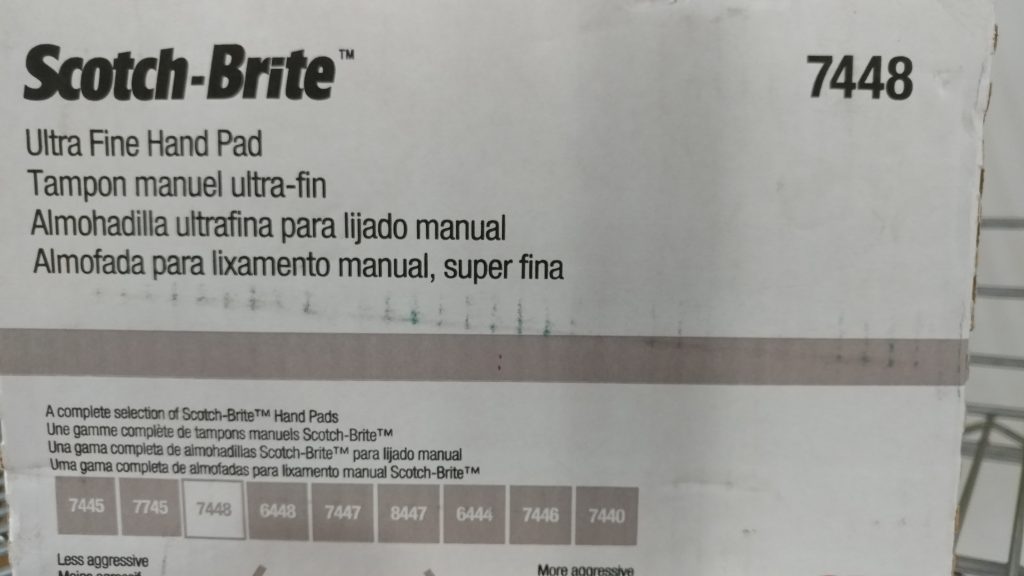
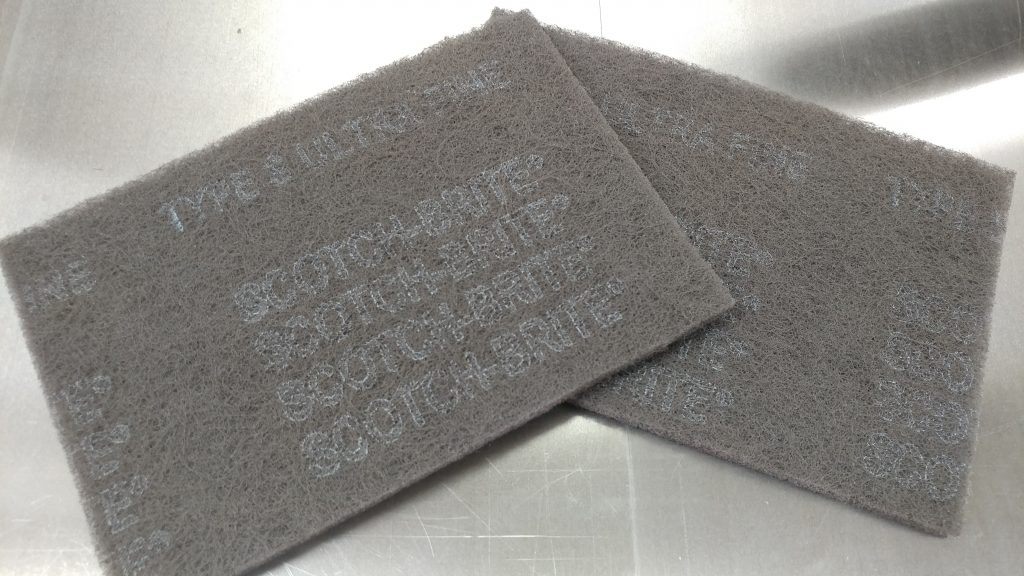
Some people prefer to use 0000 steel wool to remove rust, and it will do a pretty good job.  Personally, I prefer to use Scotch-Brite 7448 pads.  These are the grey pads, not the green ones you use in your kitchen.  They are the same grit as 0000 Steel Wool but you can use a sanding block to apply even pressure over the entire pad.  This is a lot harder to do with steel wool.
The grey Scotch-Brite pads are pretty big so I prefer to cut them in half.  A box of these will last a long time and can be used on pretty much any tool with a cast-iron top.  I also use them for woodturning in place of steel wool.
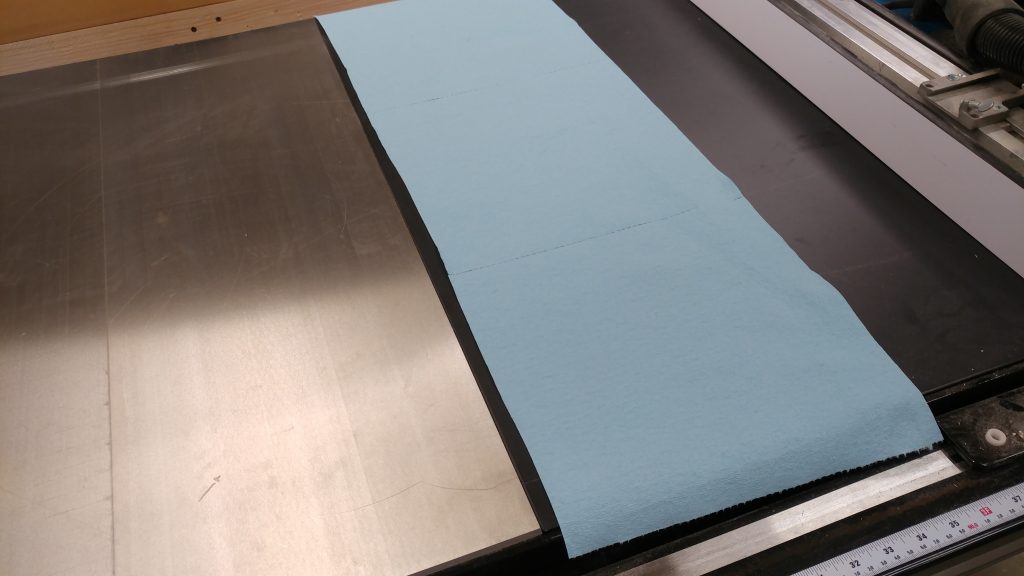
I’m going to be applying WD-40 and it tends to splatter.  I’m not a big fan of getting that gunk off of my wooden extension table so I am going to tape it off to protect it.  I start by laying down some blue shop towels along the edge of the extension table.
I then use some blue painters tape to mark off the end of the extension table and secure the shop towels down.  This should help protect it during the next step.
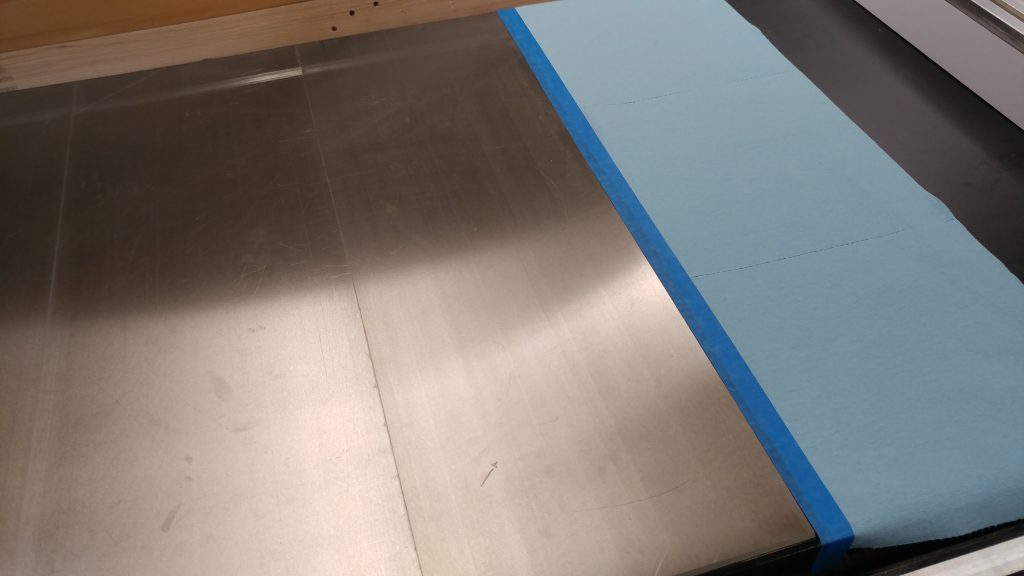
Next, I apply a generous coating of WD-40 to the entire table top.  You want to let it sit for a while so it can penetrate the iron and start to break apart the rust and even some of the slight discoloration that cast iron can sometimes get.  I will typically let it sit for at least 15 minutes but in this case I let it sit for about an hour and a half.
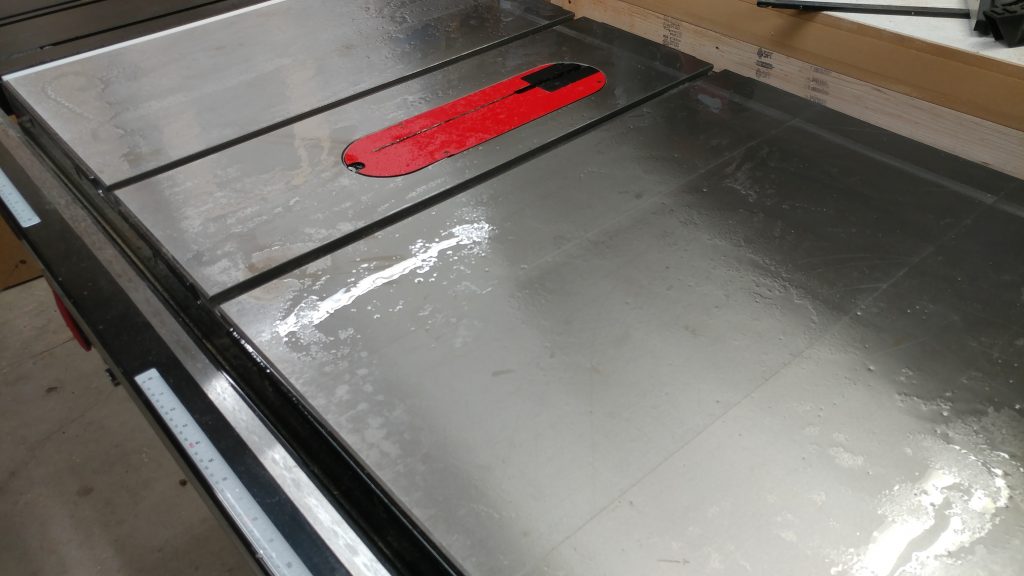
After it has sat like this for a while, I take my grey Scotch-Brite pad and a hand pad holder, or in my case I just use a scrap block of 2 X 4 and start scrubbing.
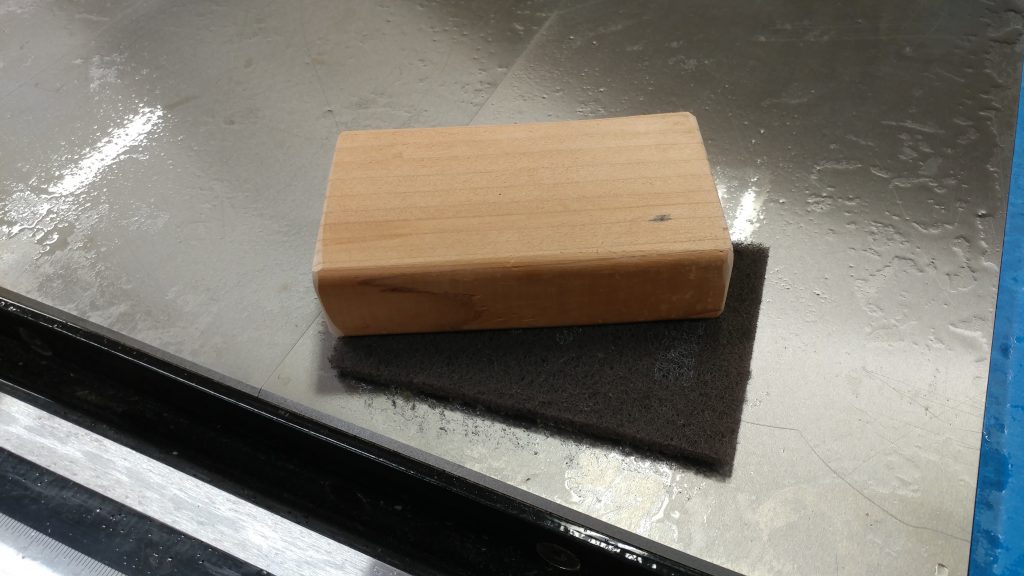
You should scrub in a front-to-back-to-front motion.  Try not to focus on one little spot since that will lead to an inconsistent shiny spot.  Instead, use some elbow grease and cover the entire depth of the cast iron.
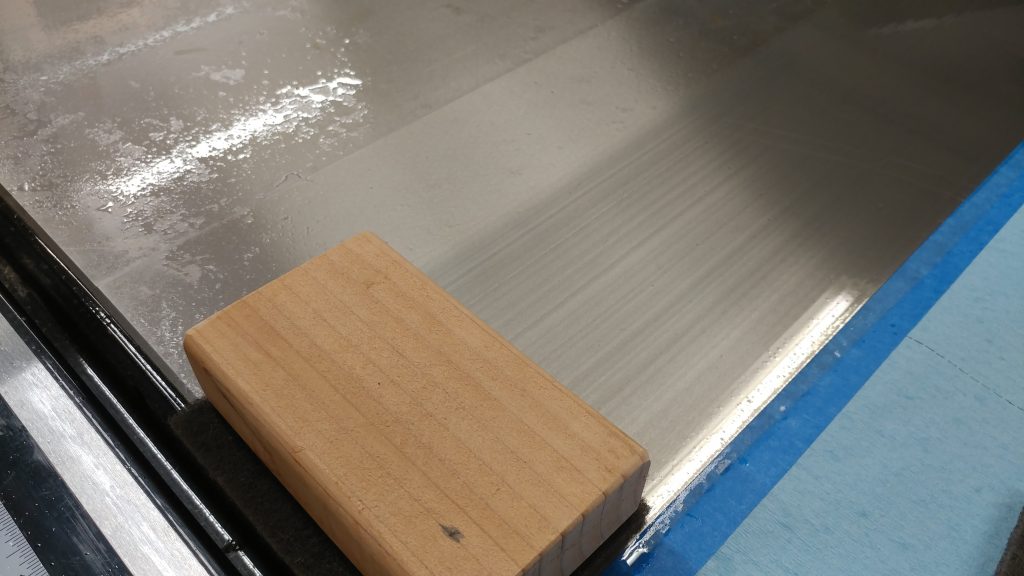
I like to scrub until I at least get a dark slurry started.  It will typically require more scrubbing if your table top is as rusty as mine was.
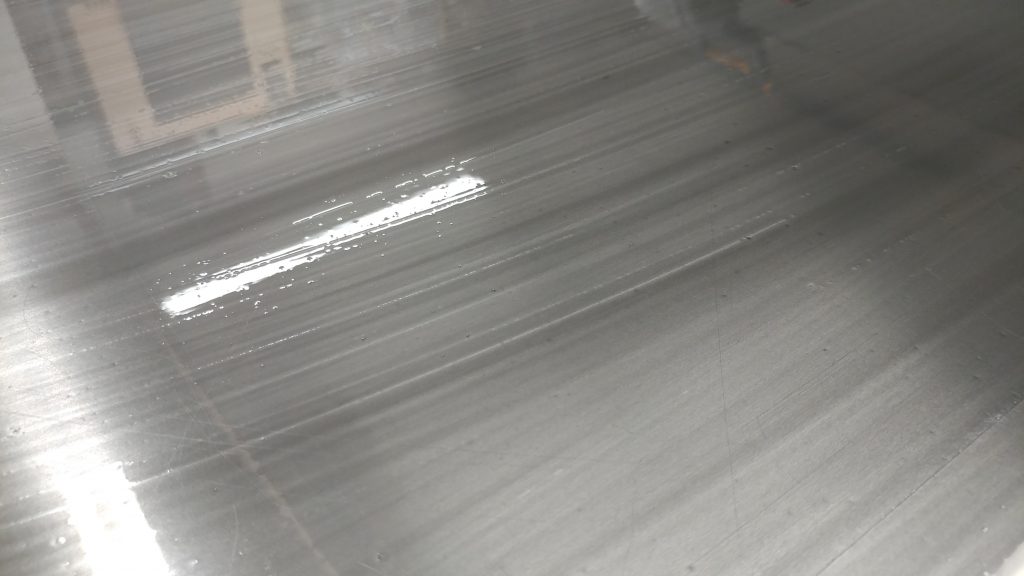
After tackling the entire table top, I do the bulk of the clean-up with blue shop towels.  The table top should look a lot better at this point.
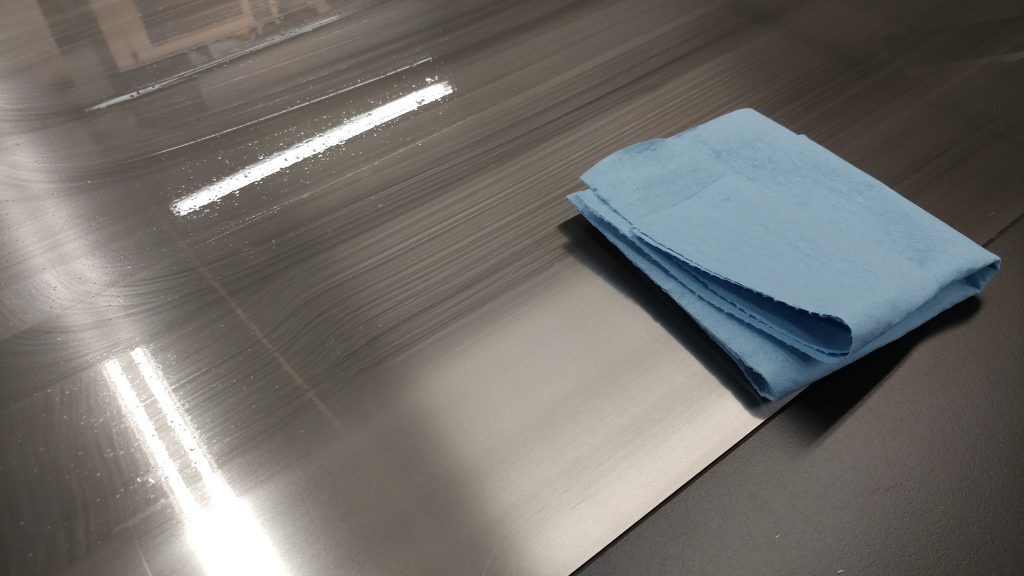
If rust sits for a while it can permanently discolor the cast iron.  You can see this here.  The rust is gone but the iron is stained.  Personally, I’m cool with this.  It doesn’t affect the usability of the saw.
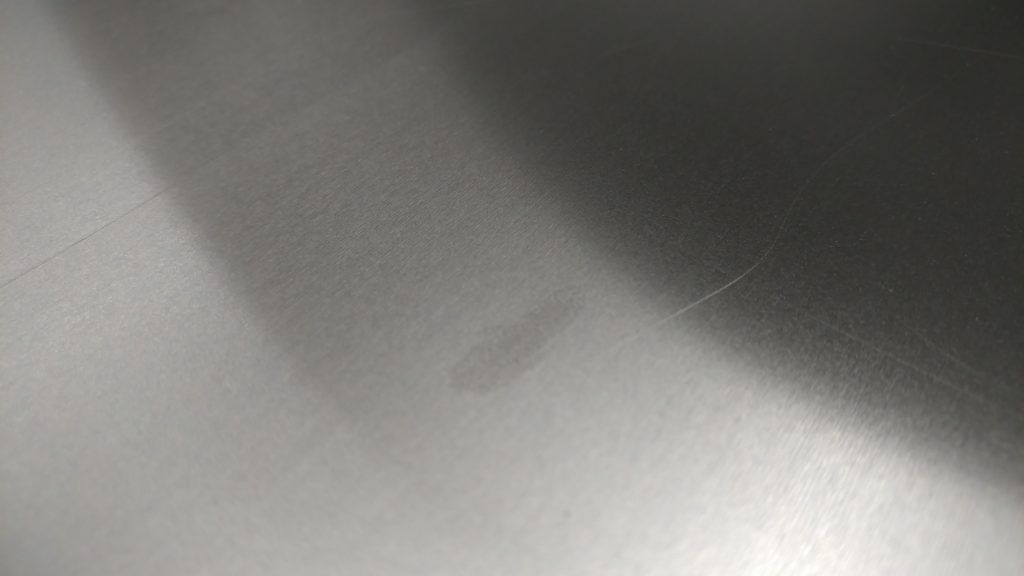
The hand print is mostly gone.  I can still see a slight shadow but you have to know it’s there in order to see it.
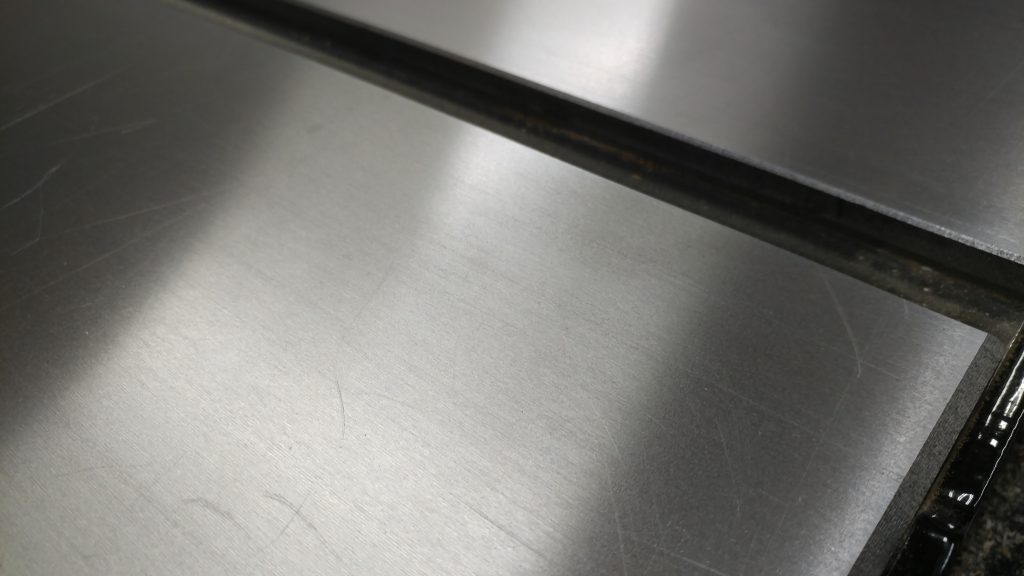
Surprisingly, the paw prints are completely gone.  I thought these were going to be there forever.
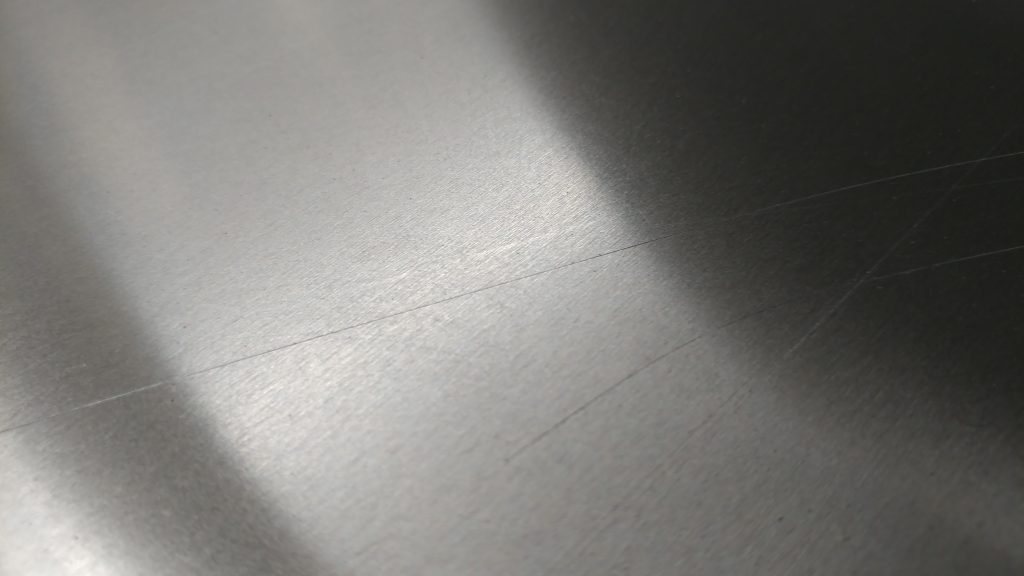
Technically, you can stop here.  I find that no matter how much I scrub with shop towels I can never quite get all the WD-40 up.  This leaves a slightly greasy feeling to the table top which can transfer to the material you are cutting.  I find that the best way to clean this up is with denatured alcohol.
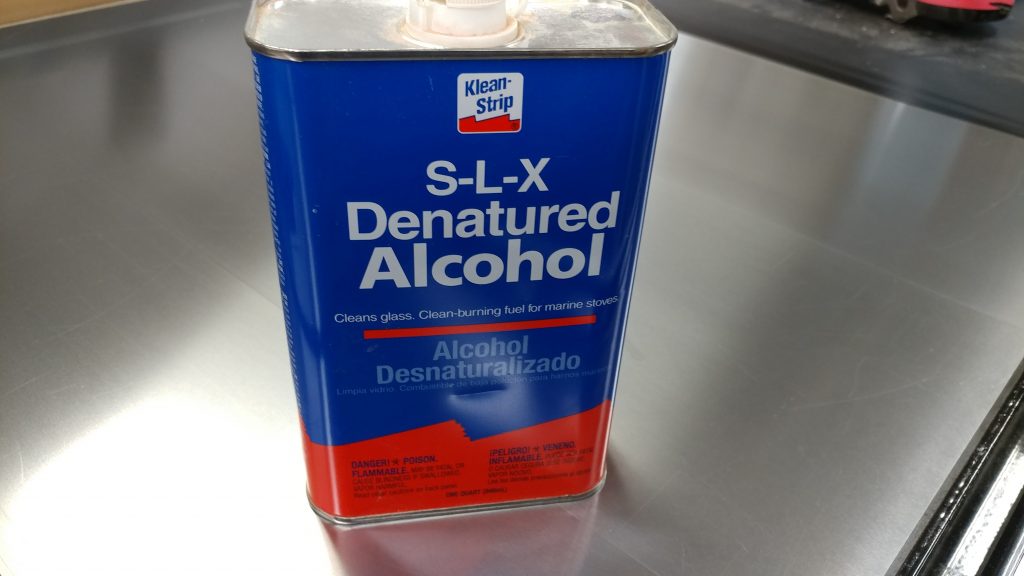
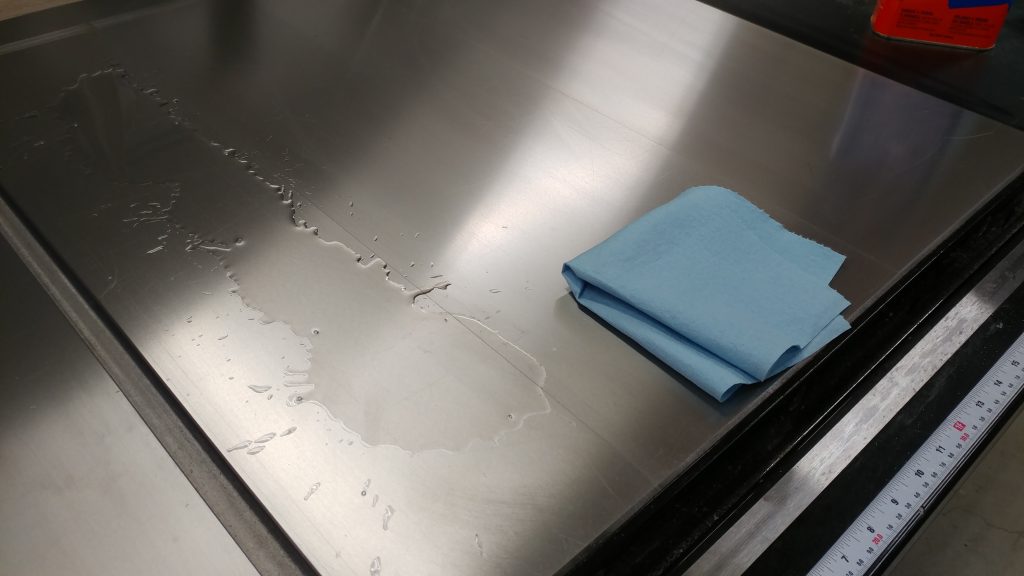
I start by pouring some denatured alcohol on the table top.  This picture may be cringe-worthy but worry not.  This won’t cause your table to get rusty at all.  Then, use a shop towel to wipe it all up.  This should get the rest of the WD-40 off the cast iron.
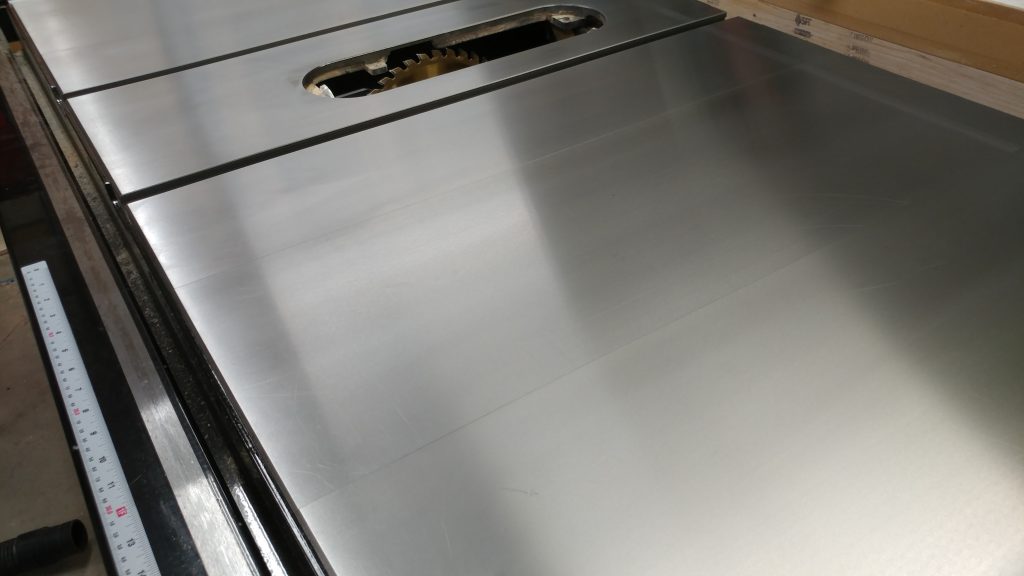
The cast iron is now completely exposed and needs to be protected.
Protecting The Surface

There are many ways to protect the surface of cast iron tools.  I’ve had good experiences with T-9 BoeShield or GlideCote, but I personally prefer using a furniture wax like Johnson Paste Wax, although MinWax and Renaissance Wax will work as well.  I like Johnson Paste Wax since it is softer, which means it applies easier and also buffs out a LOT easier than either MinWax or Renaissance.
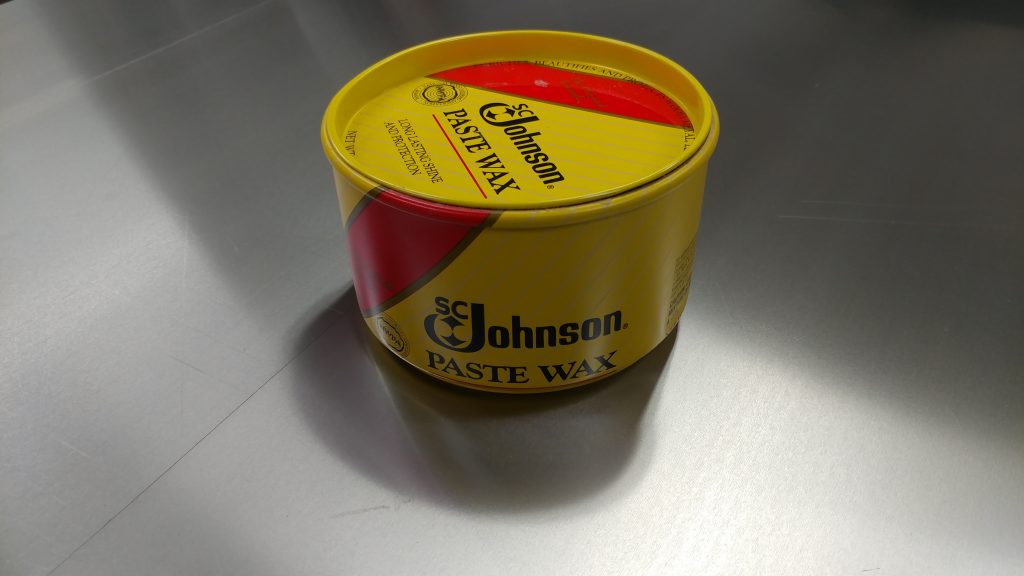
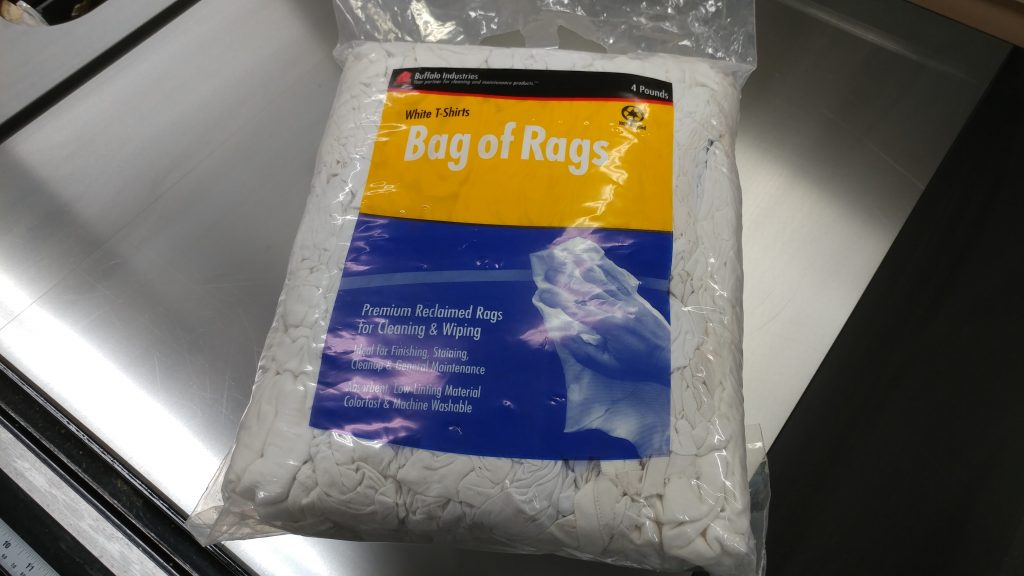
You can use shop towels to apply the wax but you’ll have better luck with a cloth rag.  I try to always keep a Bag of Rags on hand.  These are just scraps of white tee shirts so if you have any shirts you’re just going to throw out you can use them for this instead.
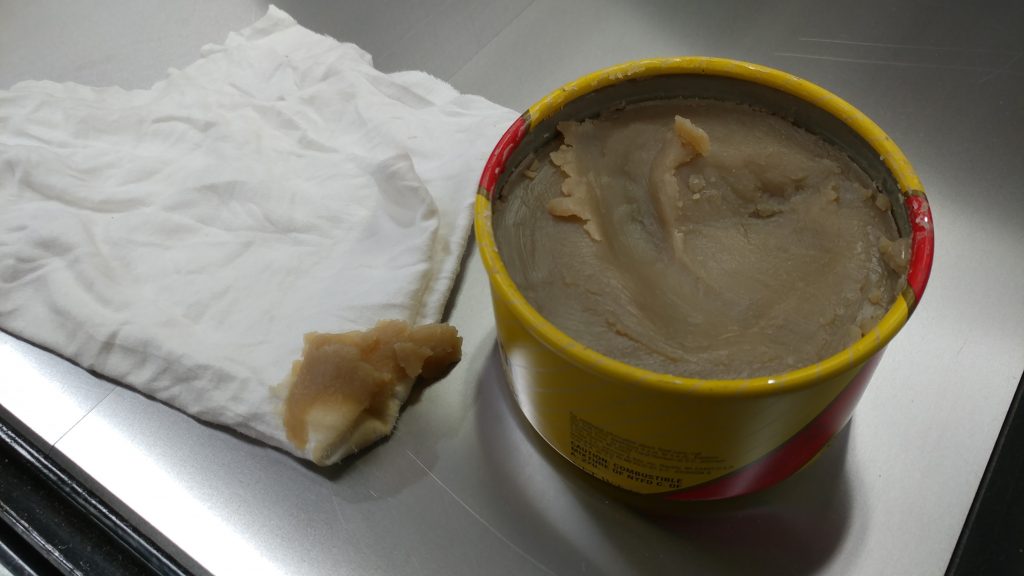
Use the rag to scoop up a generous amount of the paste wax.
Apply the paste wax to the cast iron.  You don’t need to apply it in any particular fashion, just be sure to get it all over.
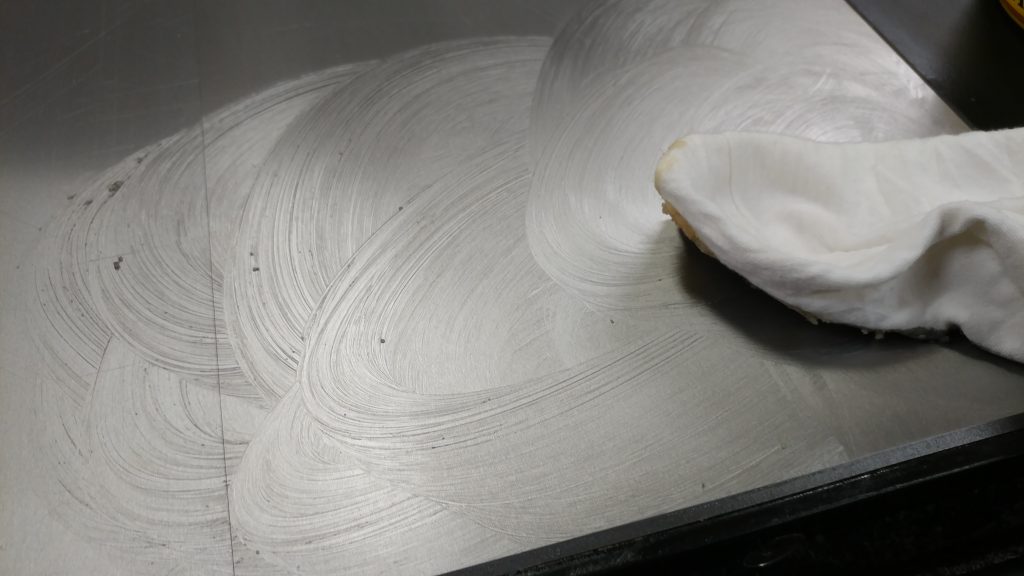
After you have the table top coated, let it sit for a while.  I usually let it sit for about 15 minutes.
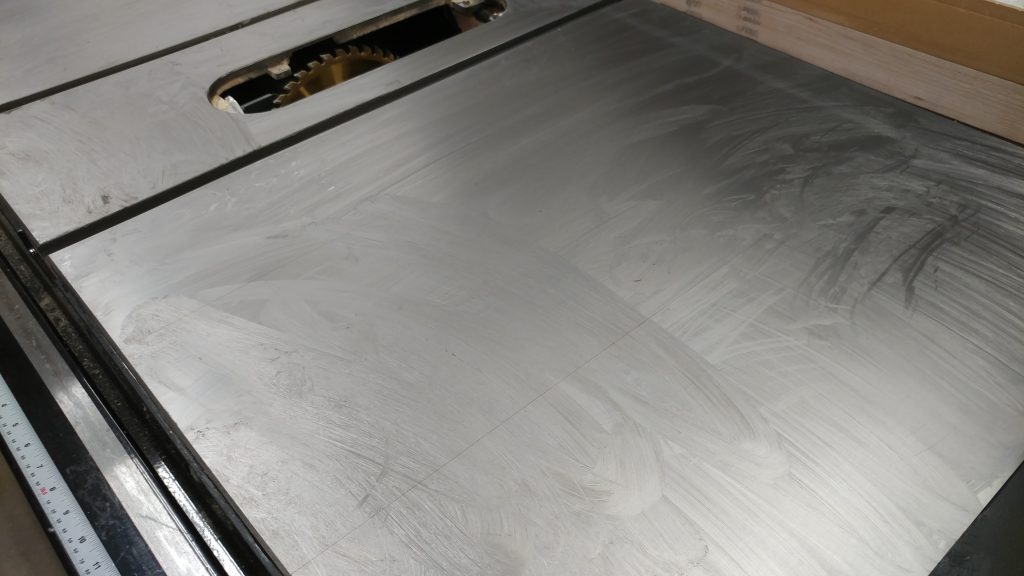
You’ll know it’s ready to buff out when the paste wax gets a cloudy look to it.
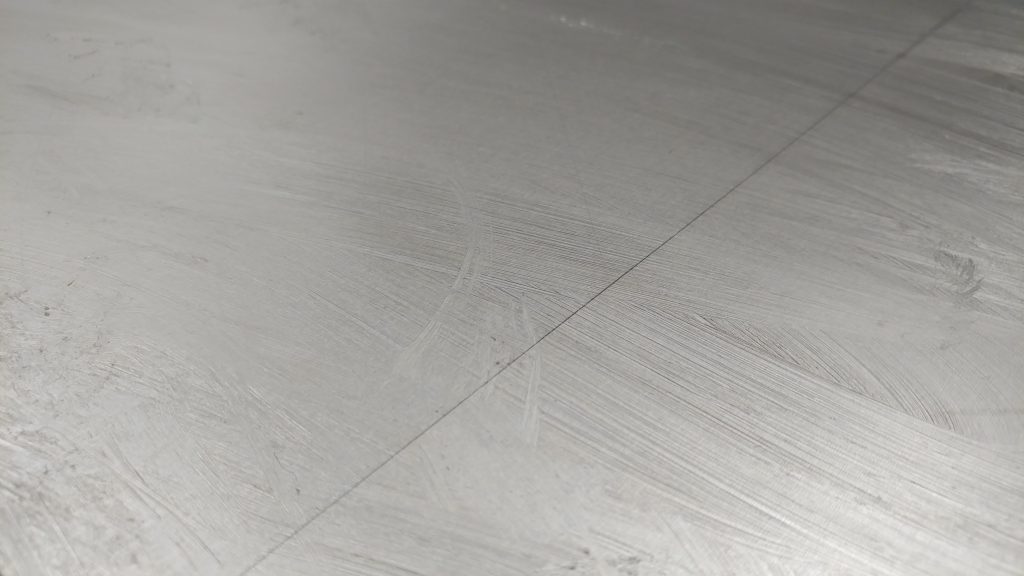
Use a fresh rag to wipe the wax off and buff it out.  This can take some experimentation but the way I handle it is to use one rag to wipe the bulk of the wax off but I don’t worry about it looking good yet.  You’ll still have some streaks and maybe a few missed blobs of wax.  After that, I take another fresh rag and wipe it down to buff it out.  You’ll notice that when you first start buffing it, the table will be slightly “grabby” with the rag.  Just keep buffing.  You don’t really need to apply much pressure or buff in any particular direction, just go back-and-forth for a while to build up some friction.  You’ll find that eventually the table will get very slippery.  That means you’re done and ready to move on to the next section.
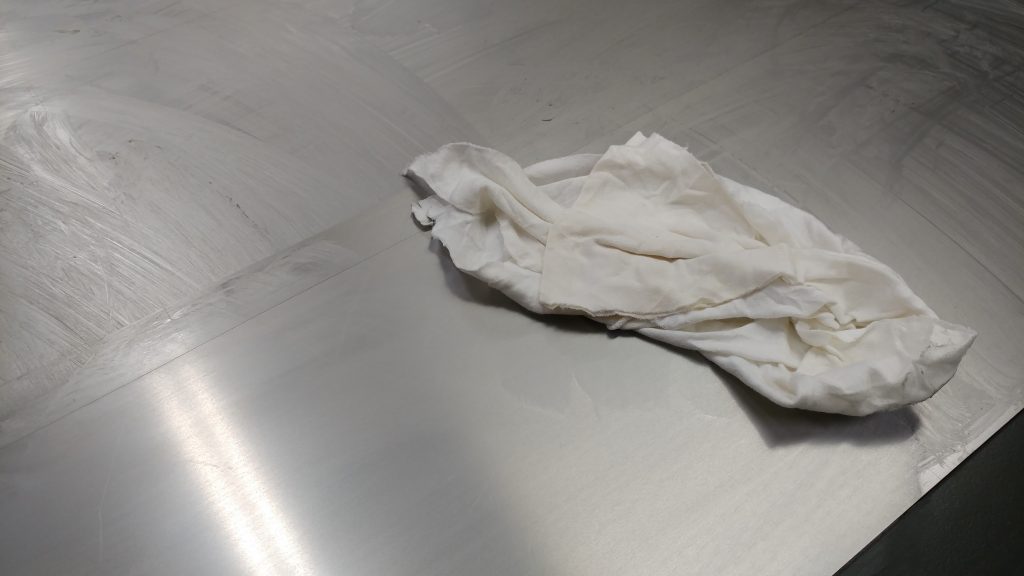
After you finish, I recommend that you apply at least two more coats of wax.
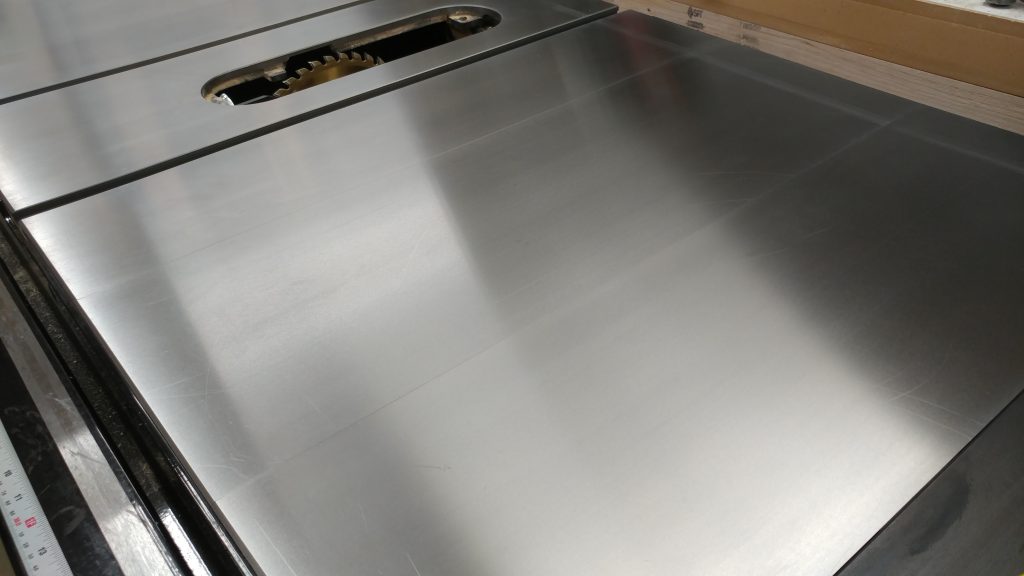
That’s it.  You’re done.  You now have a nice slippery cast iron table top that won’t rust up as quickly (if at all).  I like to repeat this process as needed, which may be every six months or every six years.  It all depends on how you use your saw.

Also, it is a good idea to apply some paste wax to the exposed metal on the front tube where the fence rides back and forth.
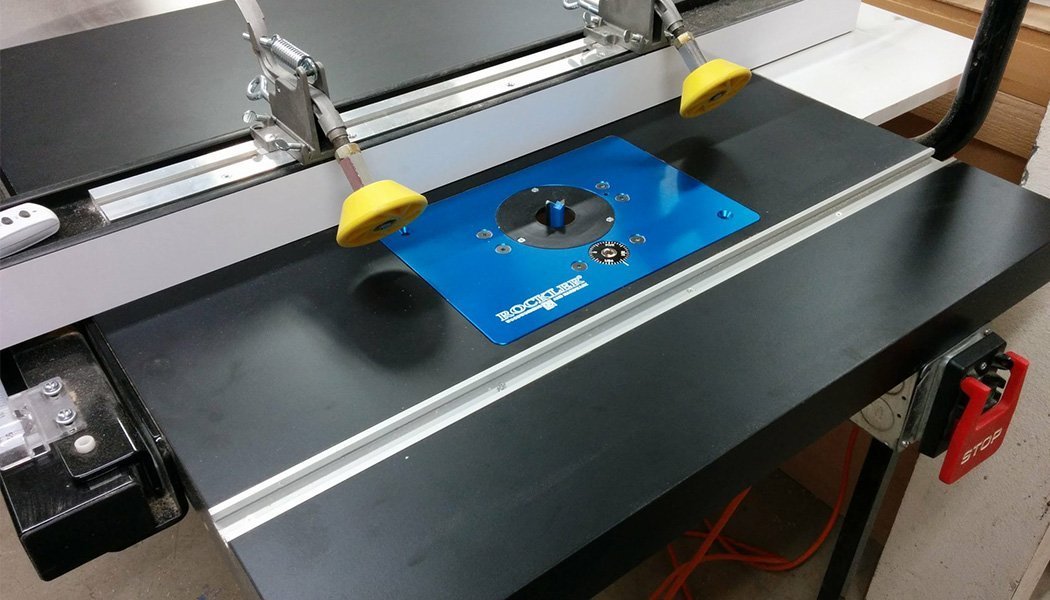
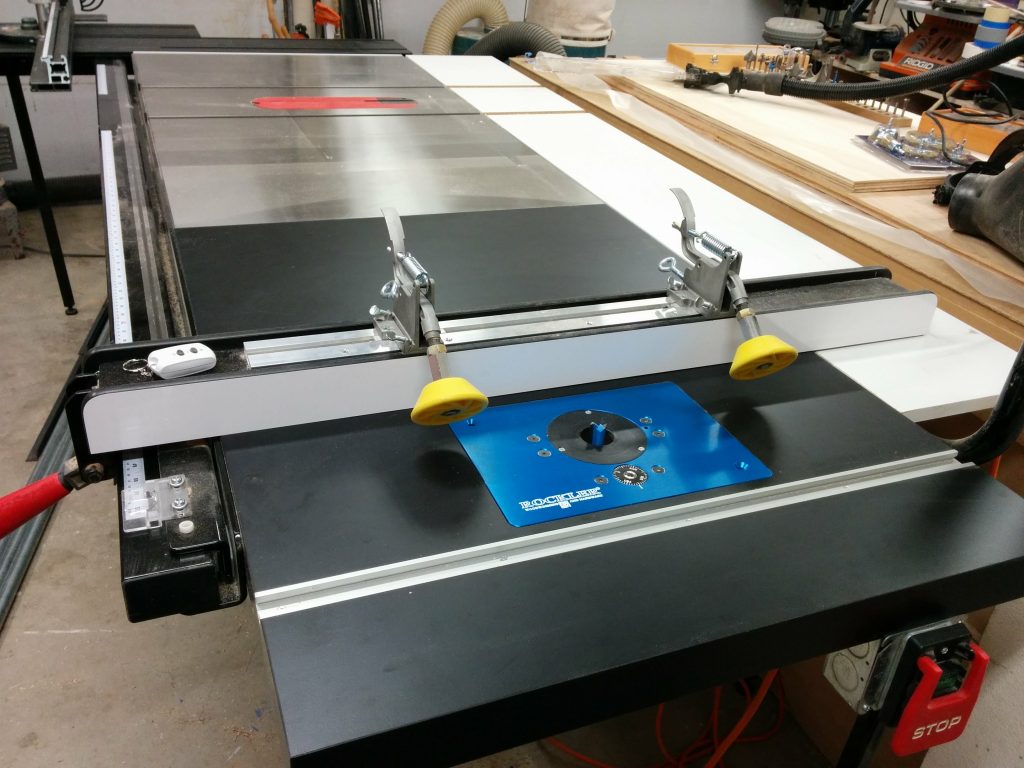
Table Saw Enhancement – Converting Extension Table Into Router Table.

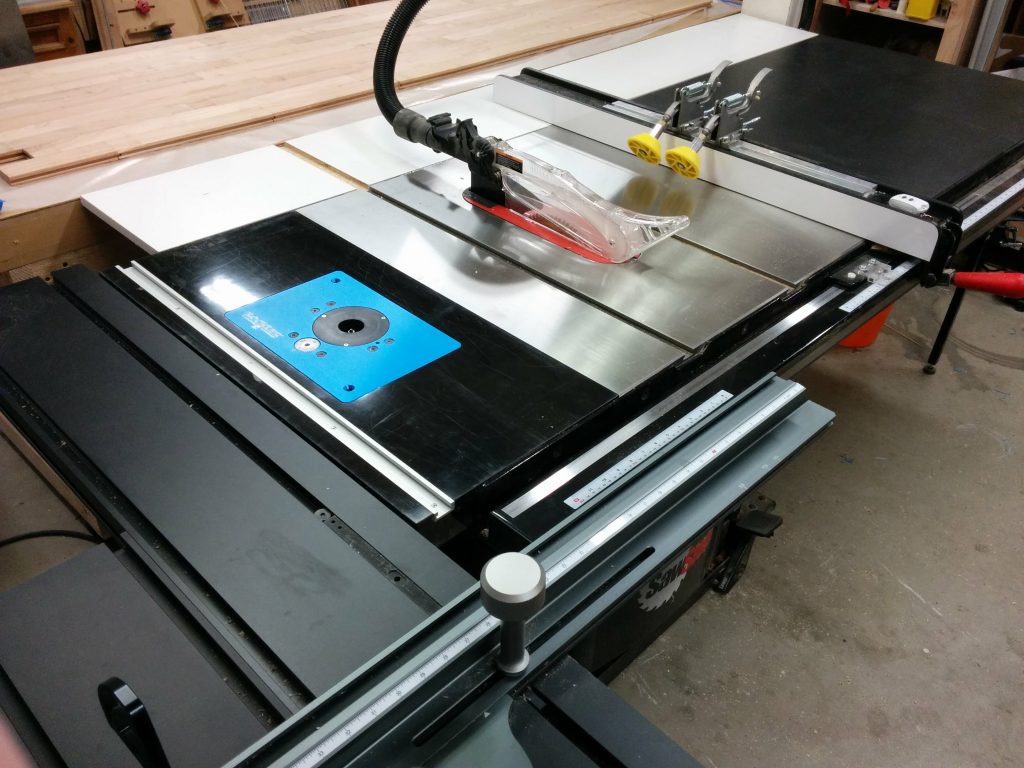
SawStop industrial cabinet saw with sliding crosscut table, extra wing, and router table.

This is a continuation of my other table saw enhancements, Attaching a Sliding Crosscut Table Without Cutting Down the Rails and Attaching an Extra Cast-Iron Extension Wing.

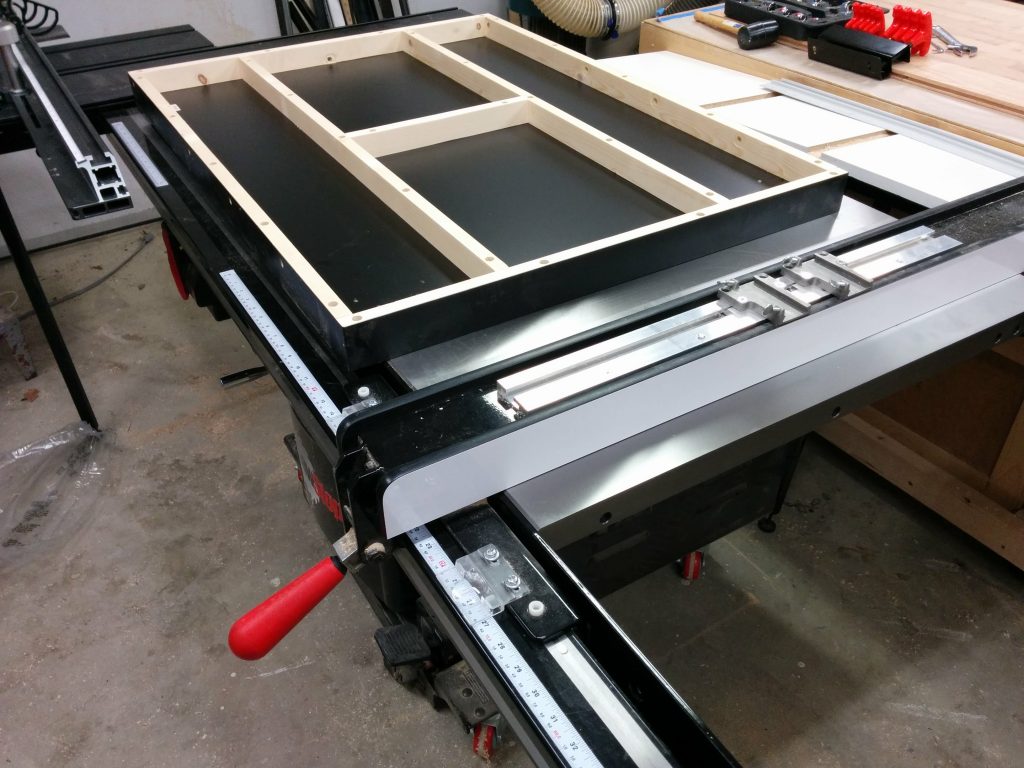
The additional cast iron wing that I attached to my table saw moved the wooden extension table another 10″ past the end of my rails. This allows me to relocate my router table to the far-right edge of the table saw without having to cut notches in my front and rear rails to accommodate the miter slot.

Converting the extension table into a router table.

I had to remove my fence in order to attach the additional cast iron wing. I didn’t want to put my fence back on yet but I realized that I needed to so I can cut a dado in the wooden extension table for the miter slot.  This is the same extension table that I had previously removed.  I temporarily reattached the front rail and did a quick fence alignment so my cut would be parallel with the edge of the table.  This led to a slight problem as you’ll soon see.

Temporarily reattached the front tube so I can use the fence to cut a dado in the extension table.

I wanted to make sure I didn’t accidentally cut through any screws so I removed the legs for the table.

I figured that I would make the miter track 6″ from the edge of the table.  This would ensure that I didn’t hit any screws while cutting the dado.  I wasn’t worried about hitting a screw and activating the brake in the SawStop since a screw by itself is too small to activate the safety system.  I mainly didn’t want to mess up the carbides on my dado stack.  I positioned the fence at the 6″ mark.

Positioning the fence.

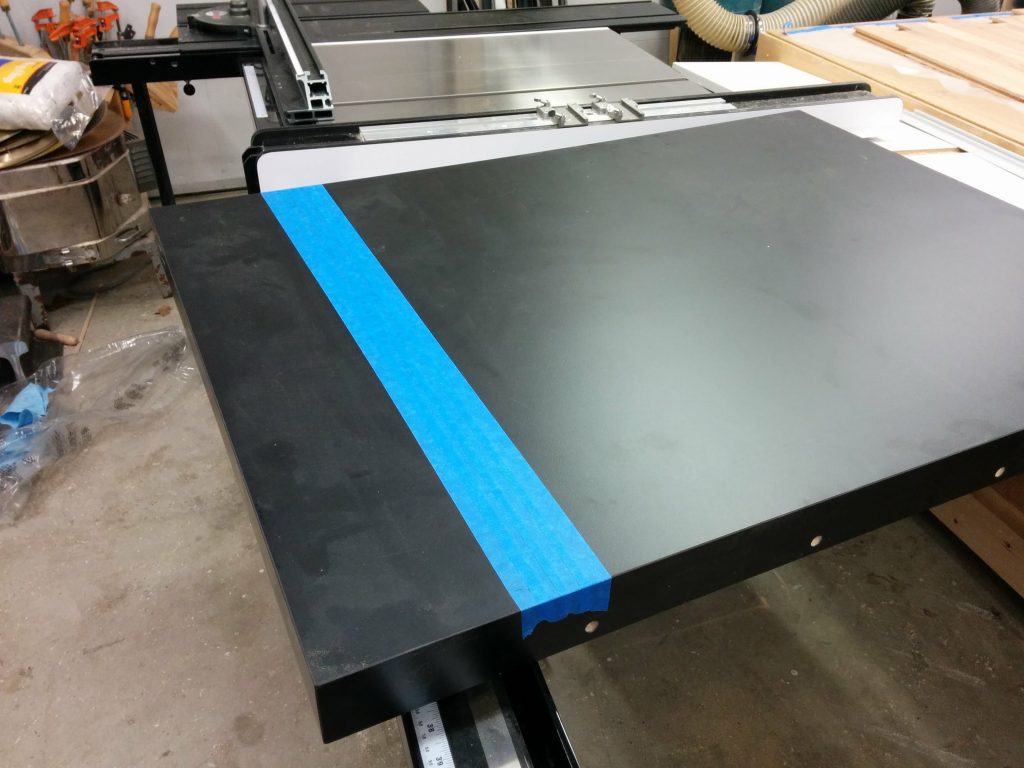
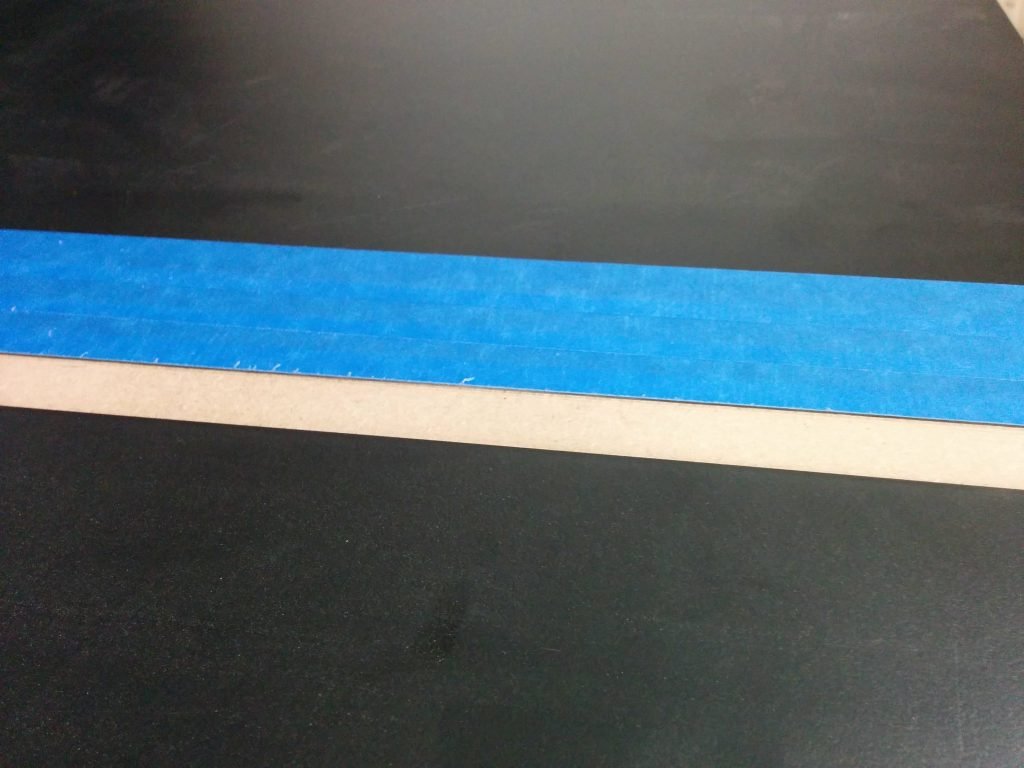
I applied some blue painters tape to help prevent chipping and scratching the laminate on the edges of the dado.  In keeping with tradition, I miscalculated where I should put the tape.  You’ll see what I mean in a second.

Taping where I'll be cutting.
Taping where I’ll be cutting.

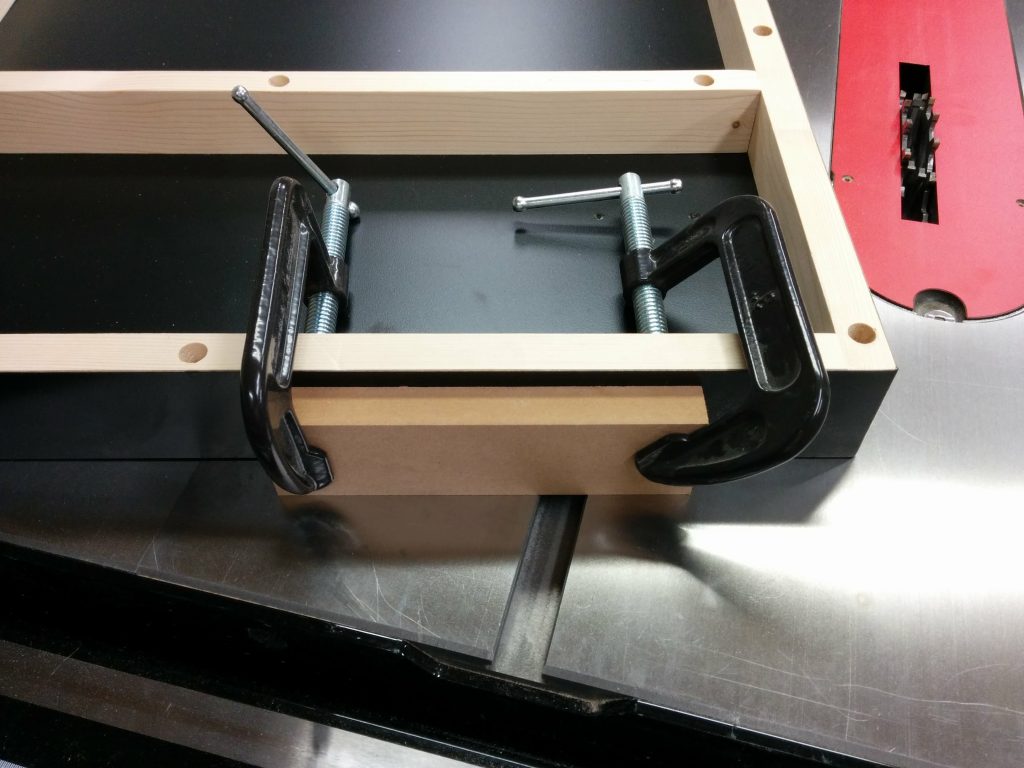
I clamped some scrap wood on the side of the table to help prevent tear-out.  I made sure the clamps were positioned where they wouldn’t get hit by the blades.

Clamping some scrap wood to help prevent tearout.

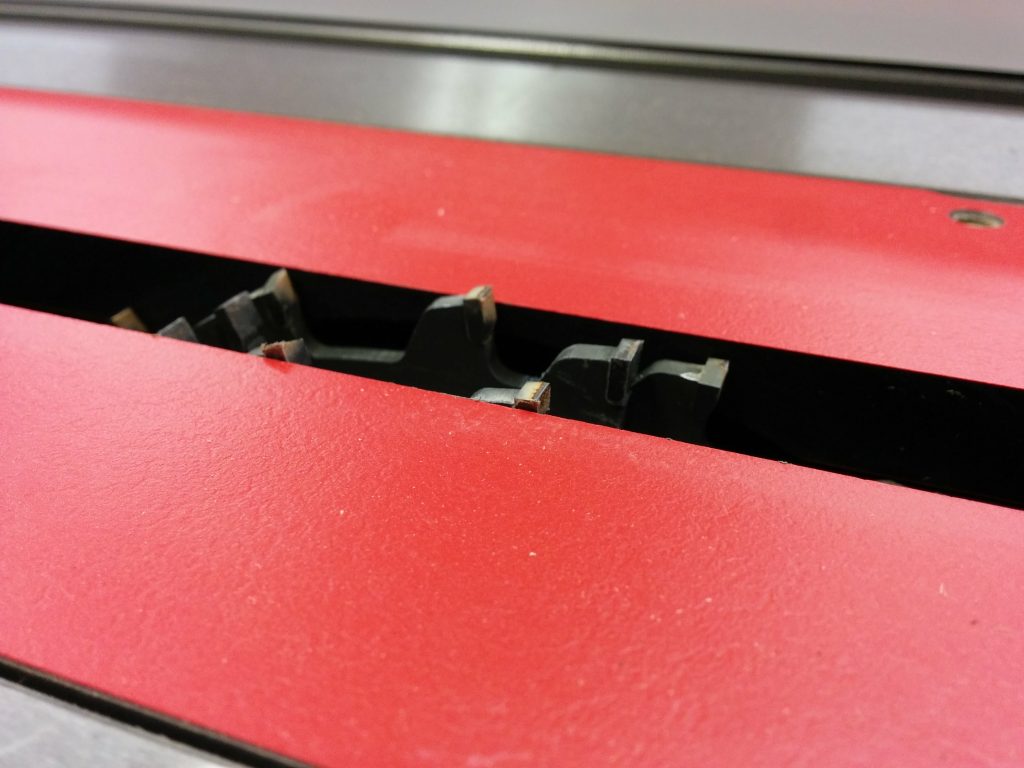
I lowered the dado stack so it would make a scoring cut first.  This is another step that can really help prevent the edge of the laminate from chipping.

Lowering the dado stack so it''ll just cut through the laminate.
Lowering the dado stack so it”ll just cut through the laminate.

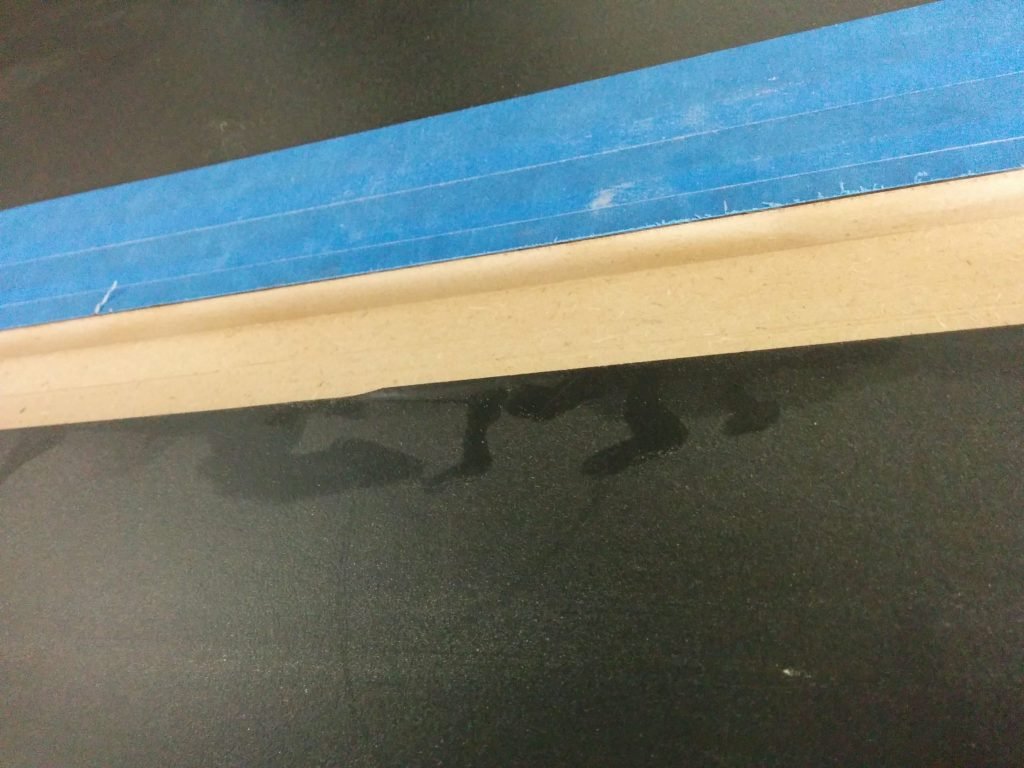
I made my first pass.  As you can see, the blue tape wasn’t positioned correctly so my first cut didn’t have tape on each edge.  As it turns out this wasn’t a big deal.  The laminate that SawStop recently switched to for use on their extension tables is some high-quality stuff and didn’t tear out at all.  I didn’t have similar luck with the laminate for their older extension tables.

Didn't position the tape correctly but it didn't matter in the end.
Didn’t position the tape correctly but it didn’t matter in the end.

Here you’ll see one of the areas where I screwed up.  Remember when I said I did a “quick fence alignment”?  Well, I should have taken my time.  If I had, I would have noticed that in aligning my fence I also slightly loosened the clamping pressure of the fence on the front tube.  This caused my fence to slide a little bit as I was cutting and caused a slight unevenness in the dado.

Fence shifted while making this cut.

As you can see, the scrap wood kept the laminate from chipping on the edge.

No tear-out!
No tear-out!

I reattached the legs and temporarily clamped the extension table to the rails and the right wing, making sure it was flush. Then I drilled new holes through the sides of the wooden extension table for the bolts to attach it to the rails.

Lined up the table and drilled holes for the mounting bolts.

I then did the same thing on the back. After the holes were drilled, I reattached the table to the rails using the appropriate bolts, washers, and nuts.

Drilled the mounting holes on the back of the extension table.

I then reattached my outfeed table to the rear rail.

Reattached my outfeed table.

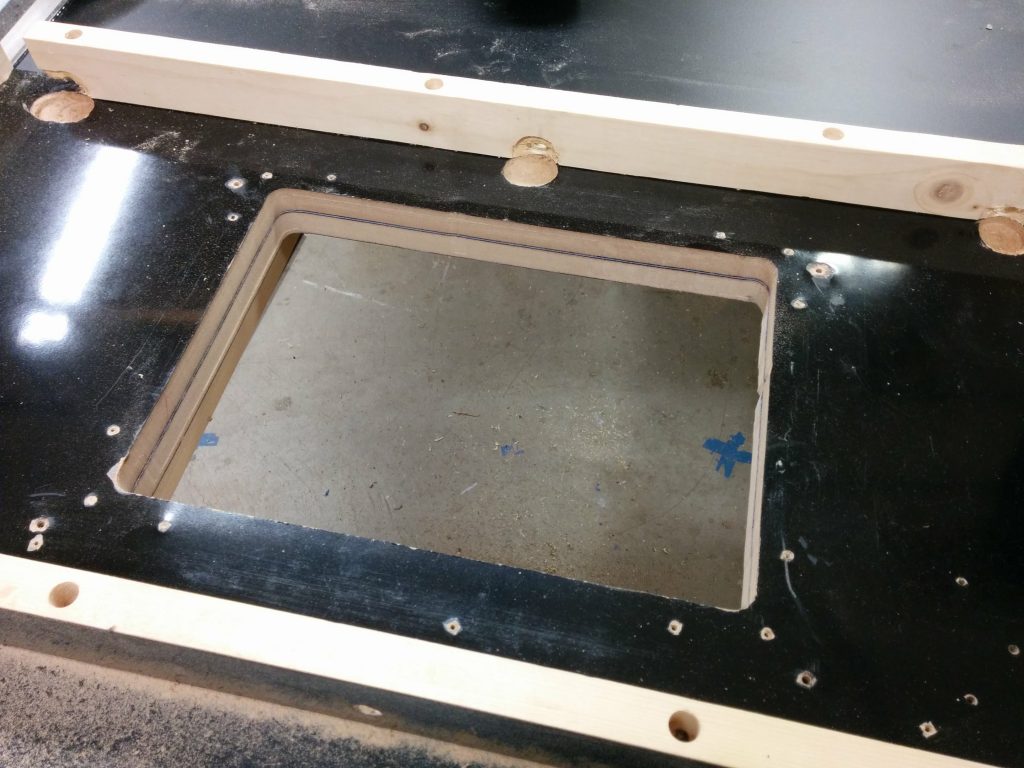
Now it’s time to mark the opening that I’ll be removing. I’m going to remove most of it with my jigsaw then clean up the rest with my trim router and a pattern bit.

Using the old router table as a template.

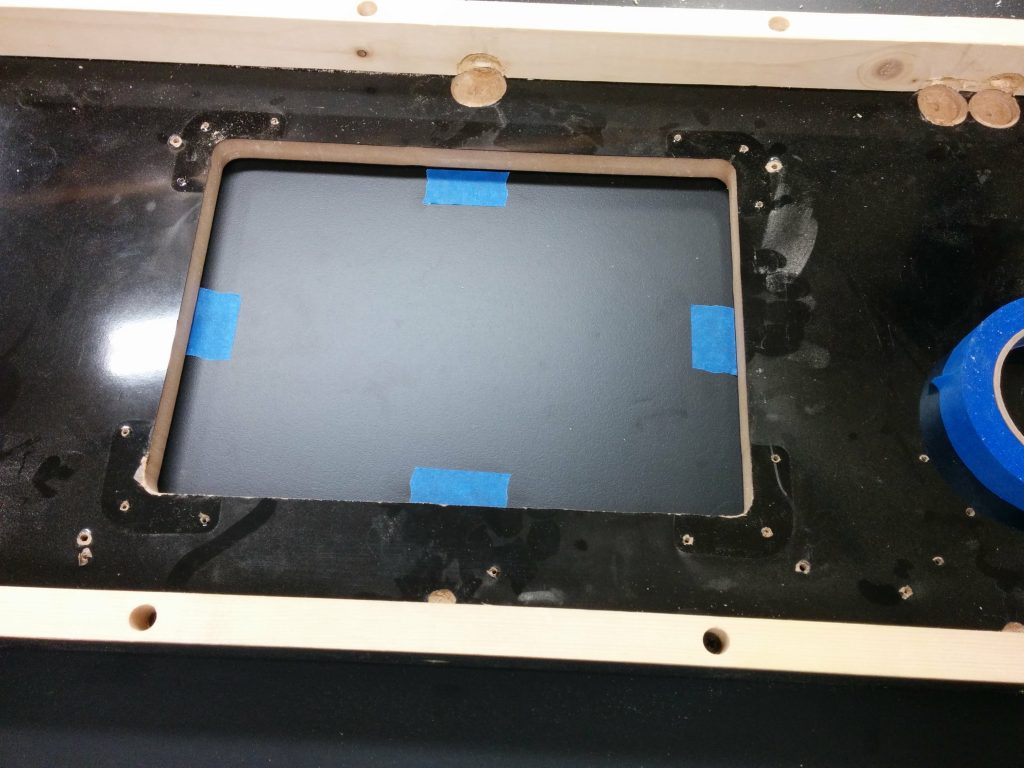
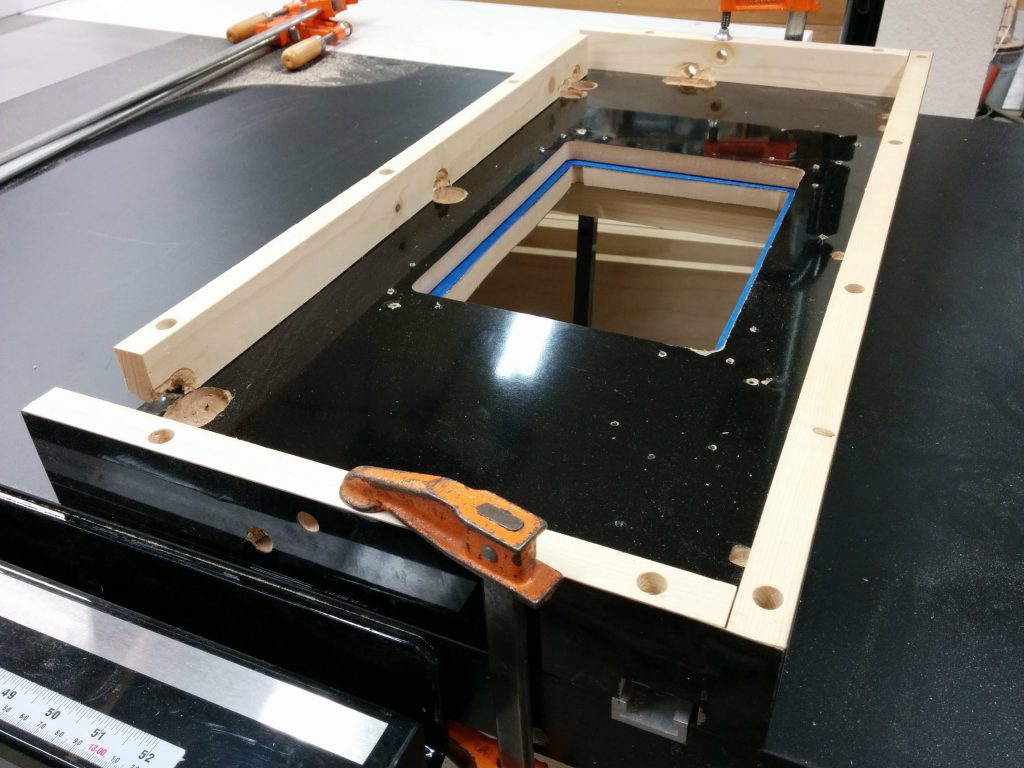
I laid the pattern on the tabletop in the spot where I am going to remove the material. Absolute precision is not critical at this point. I used a few pieces of painters tape to mark the inner edges of the opening.

Temporarily marking the inner edges of the template.

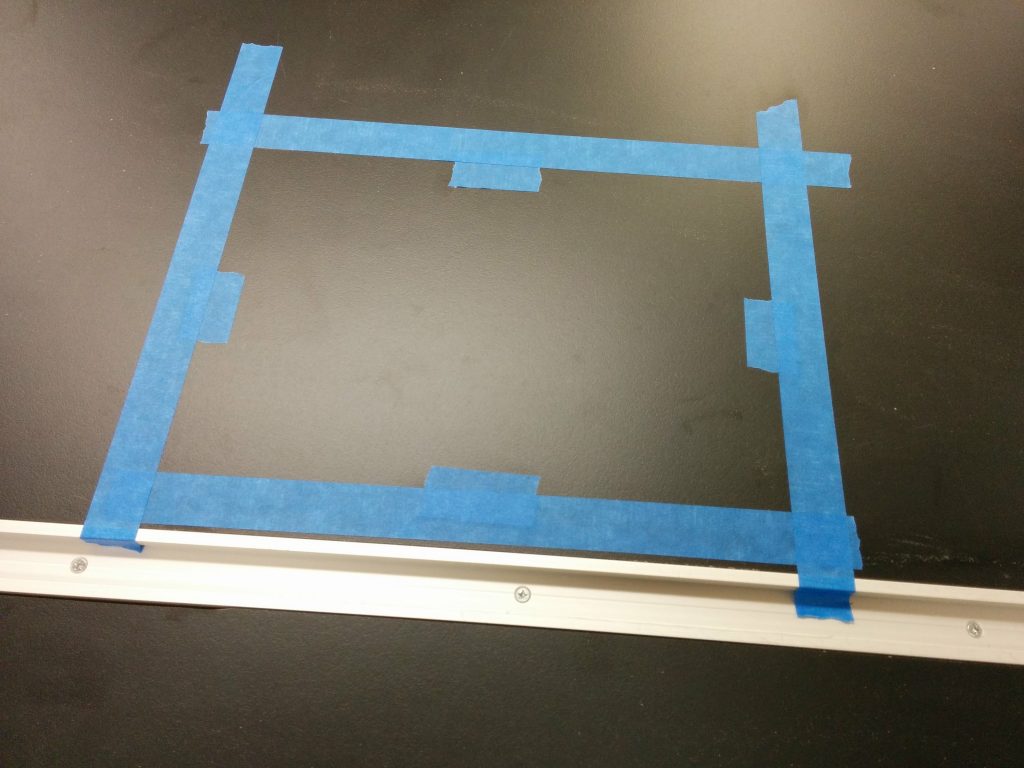
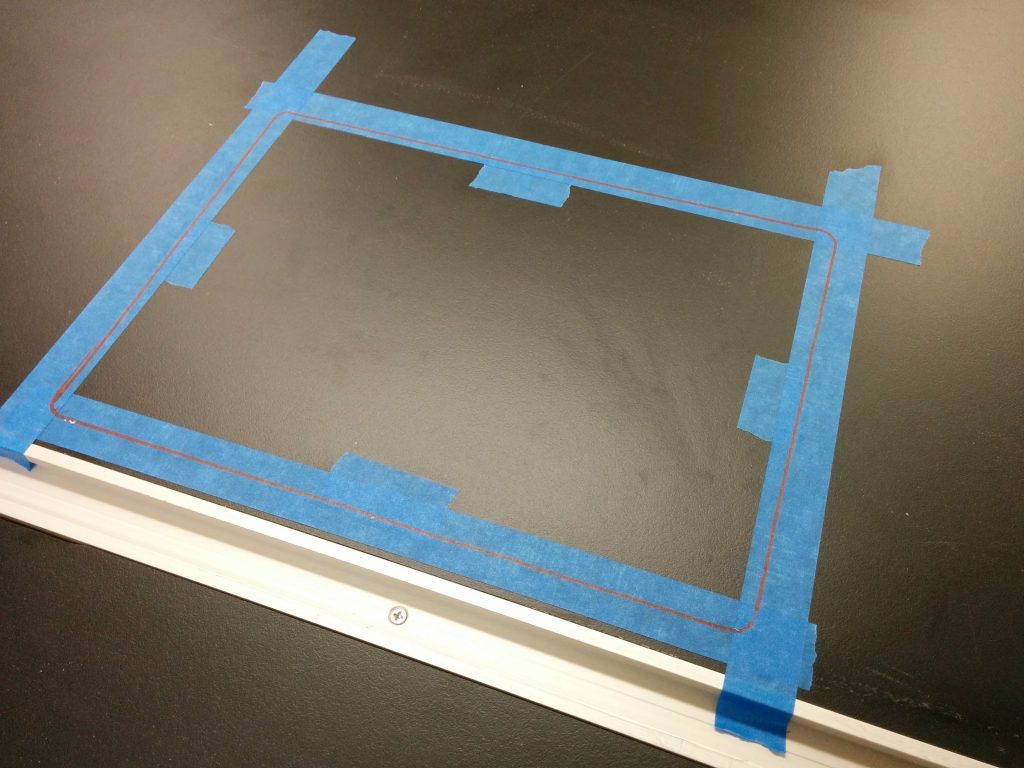
I then took the template off and ran some strips of painters tape over where the edges will be. The actual edges should be somewhat centered in the strips of tape.

Applied blue painters tape over the edges where I will cut out the insert opening.

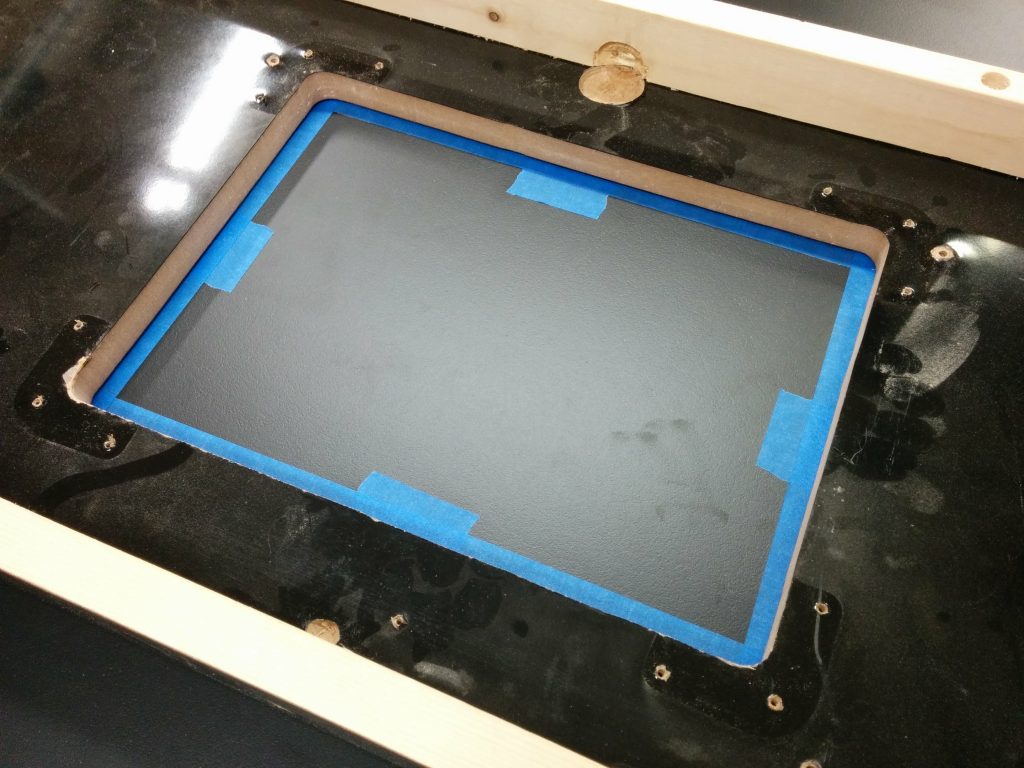
Then I put the template back in place. Again, absolute precision isn’t critical at this point.

Set the template in place.

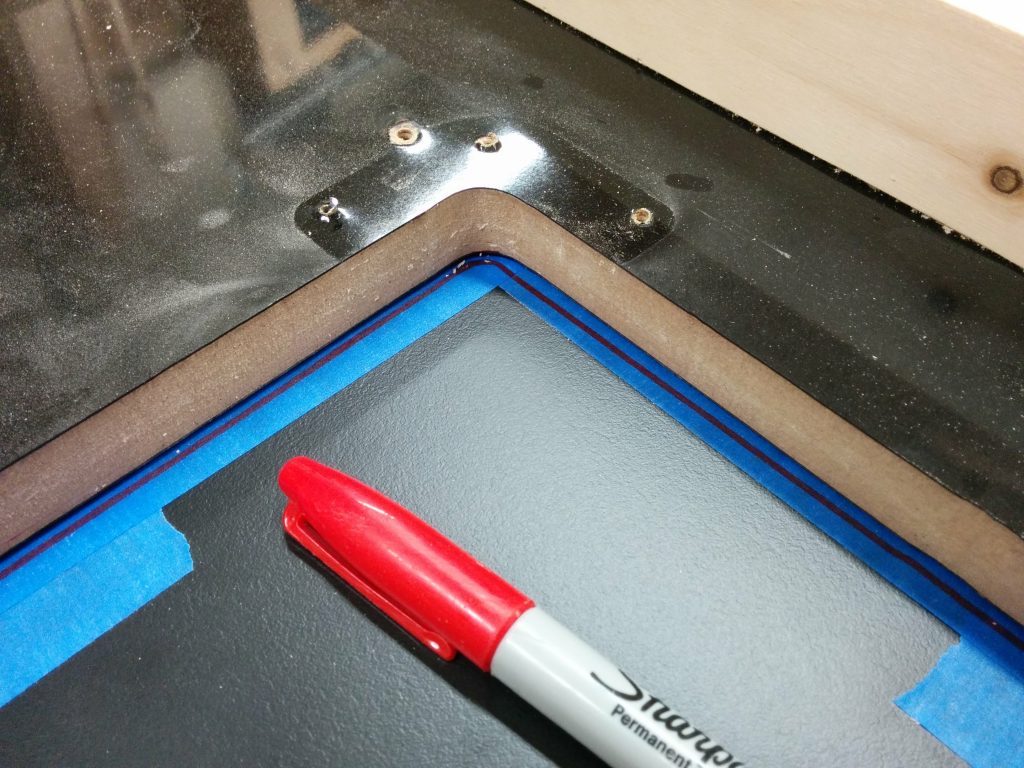
I used a red Sharpie to trace the opening on the blue painters tape.

Traced the outline of the opening with a red Sharpie.

I then removed the template yet again so I can see the outline I just traced.

Removed the template after tracing the outline.

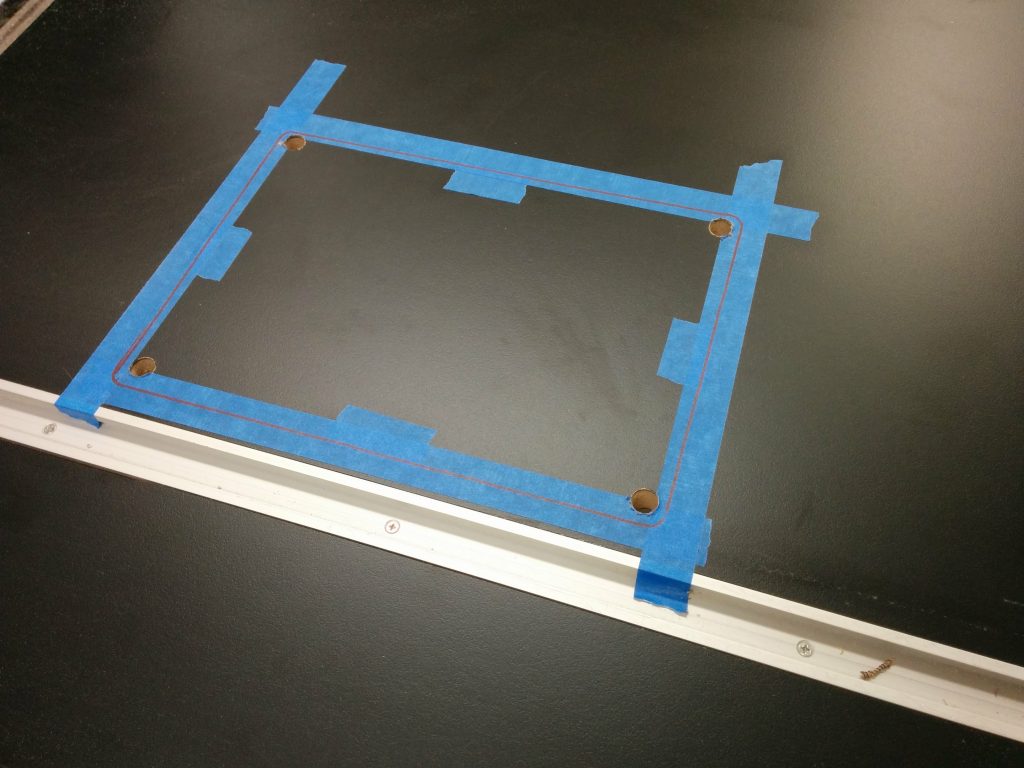
I drilled 1/2″ holes near the inner corners.

The holes have been drilled.

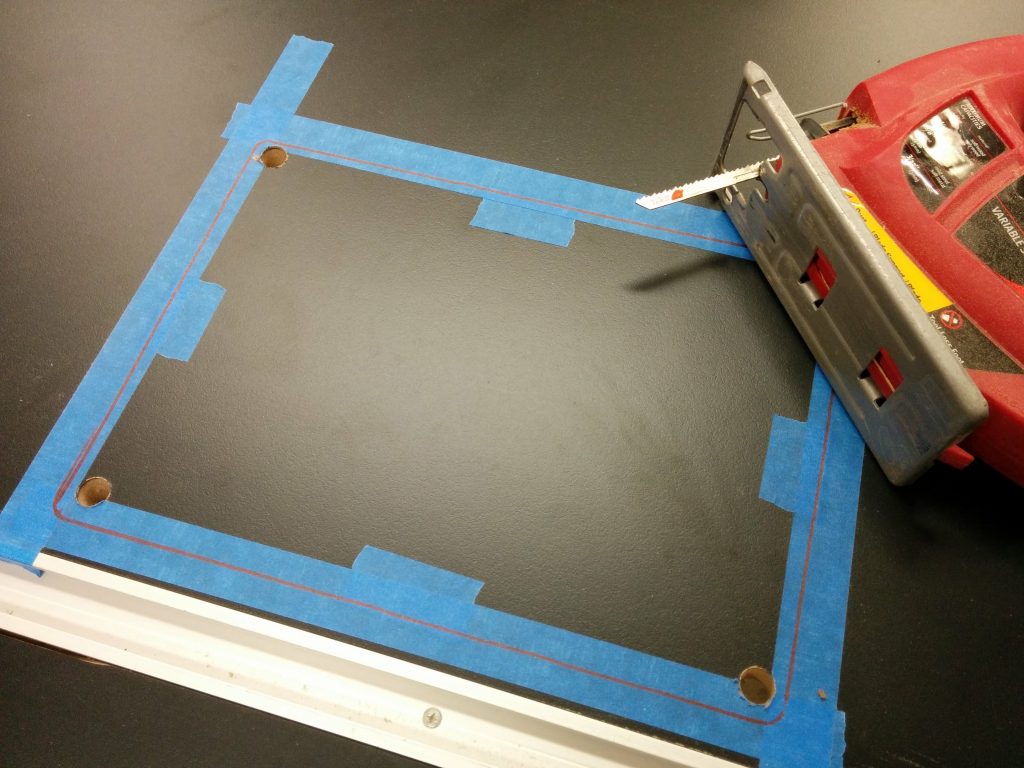
I’m using a jigsaw to remove the bulk of the material, roughly cutting it out about 1/4″ inside the lines.

I'm going to rough-cut out the opening with a jigsaw.
I’m going to rough-cut out the opening with a jigsaw.

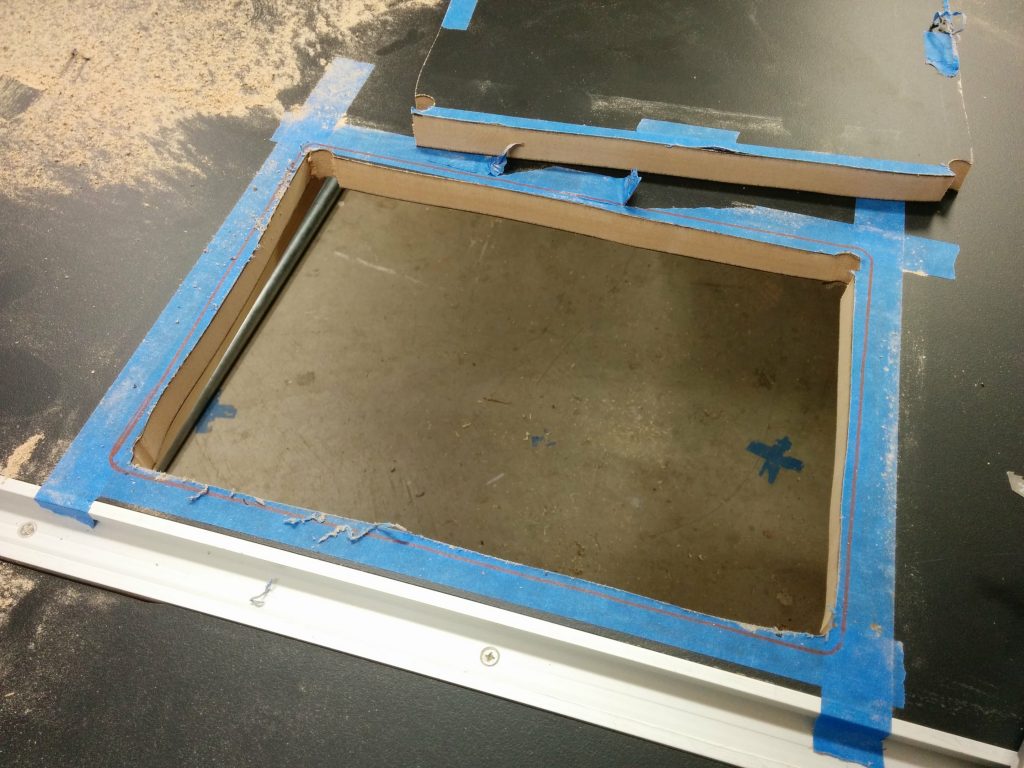
Nice and sloppy. The critical thing is not crossing over the line.

The piece has been removed.

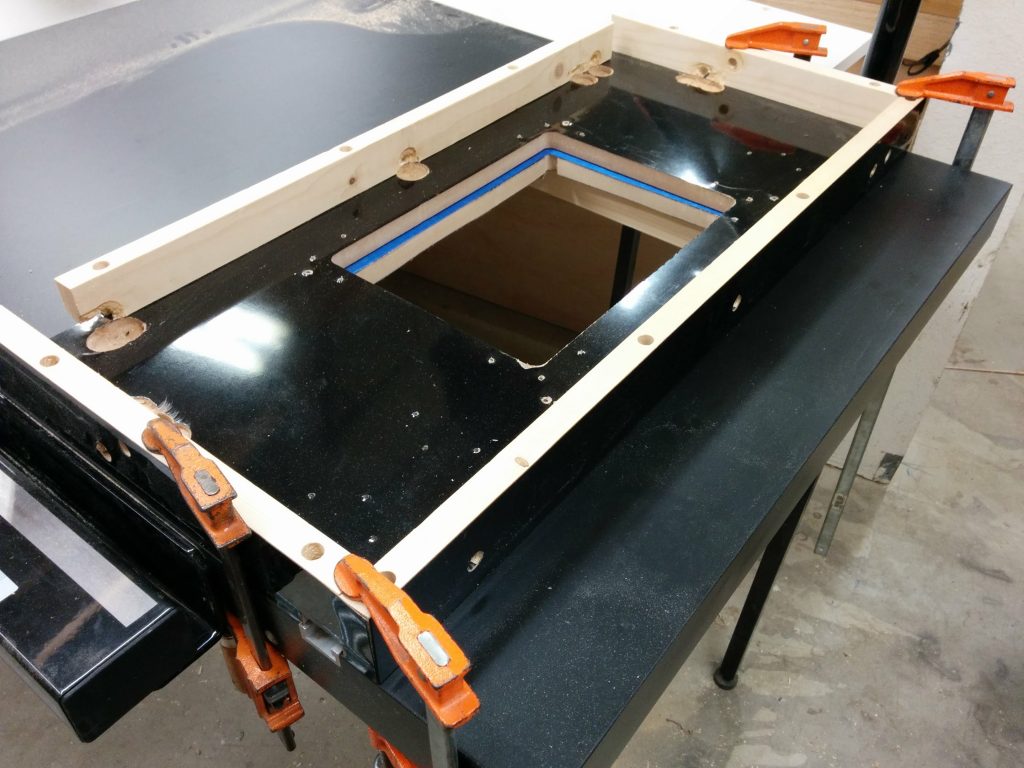
I reapplied the painters tape since it got a bit chewed up then laid out the template. This time positioning is critical so I took my time. I got one end clamped down…

Carefully positioned the left edge of the template and clamped that side in place.

…then used a try square to make sure the template was square with the table.

Using a try square to ensure the template is square with the table.

Once I was satisfied that it was square, I clamped down the opposite end then applied one more clamp to each edge just for good measure.

Carefully clamped the other end in place and secured with additional clamps.

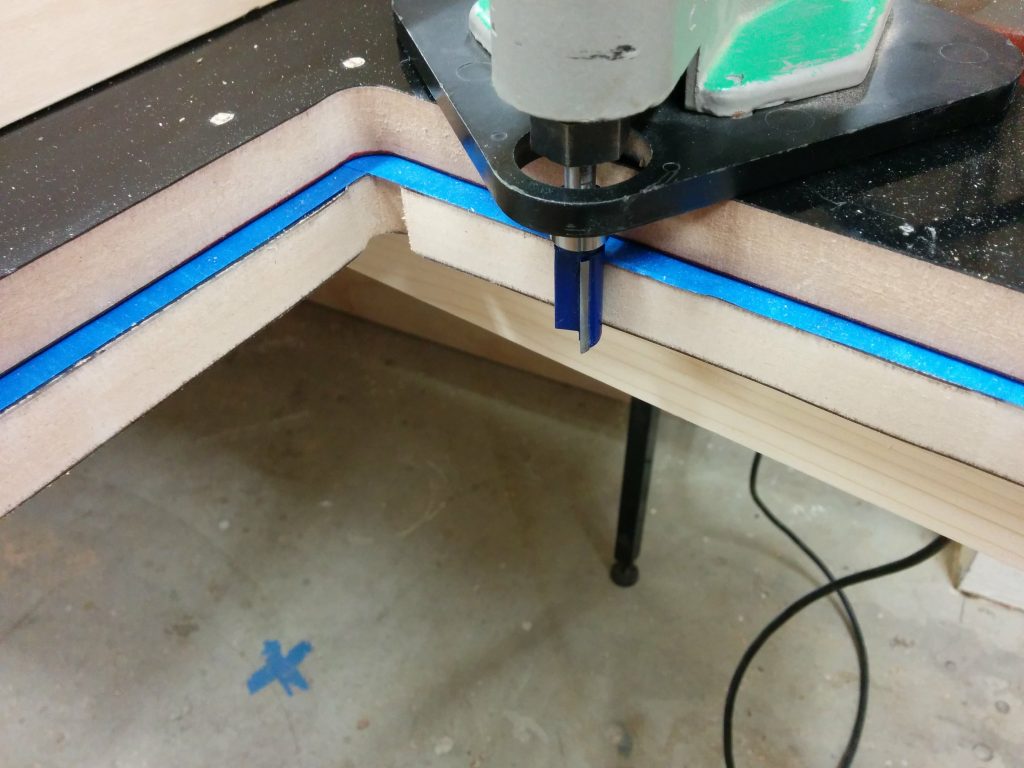
I outfitted my trim router with a 1/2″ pattern bit.

Positioning the router to cut out the opening.

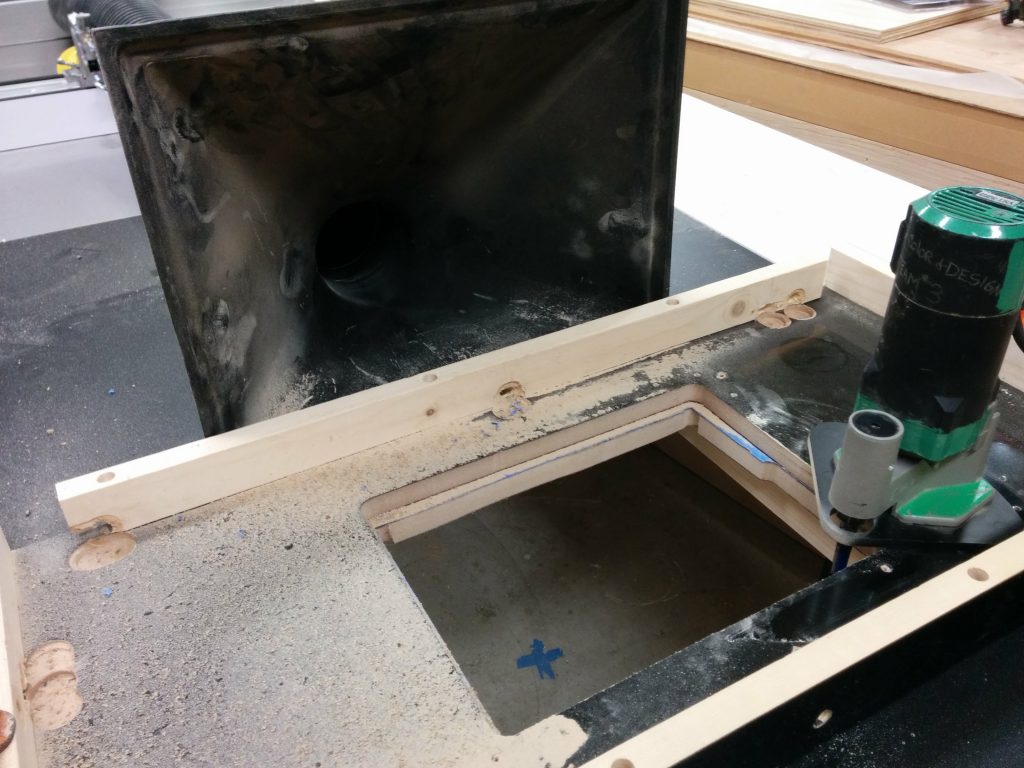
It was throwing up quite a bit of dust so I set up a dust collection hood to grab most of it out of the air.

Getting pretty dusty so I set up my dust shroud.

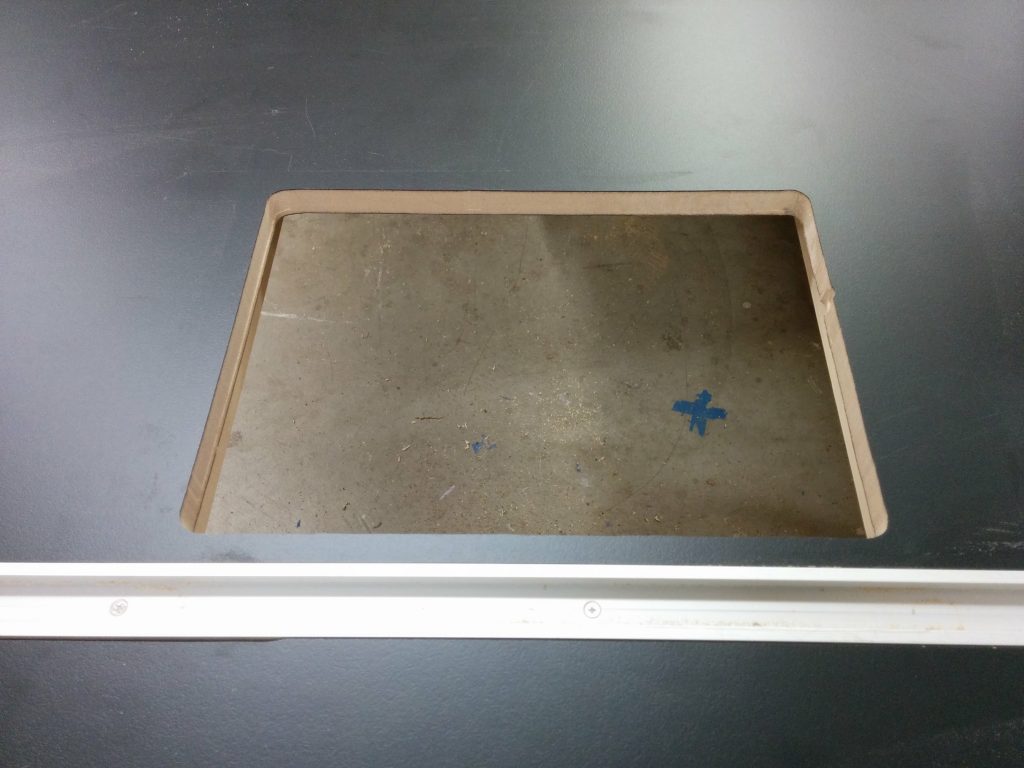
I had a problem with the bearing on this pattern bit coming loose and the whole bit slipping. This caused a little gouge on the inner-right edge of the opening.

Chewed up the opening a bit when the bearing came loose. Otherwise, it looks okay.

I removed the template and the painters tape so I could inspect the edge. There was a little divot where the bearing came loose but other than that, it wasn’t bad.

Removed the painters tape. Other than the small goober on the right, it didn't turn out bad at all.
Removed the painters tape. Other than the small goober on the right, it didn’t turn out bad at all.

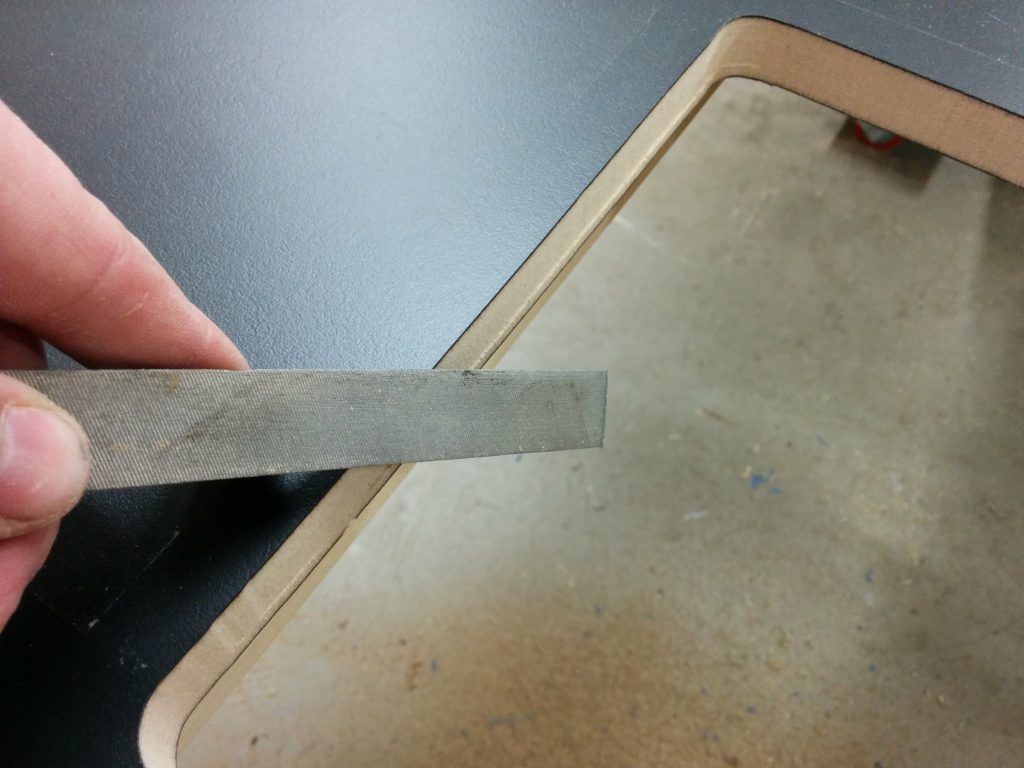
I used a file to break the edge a bit.

Broke the edges a bit with a file.

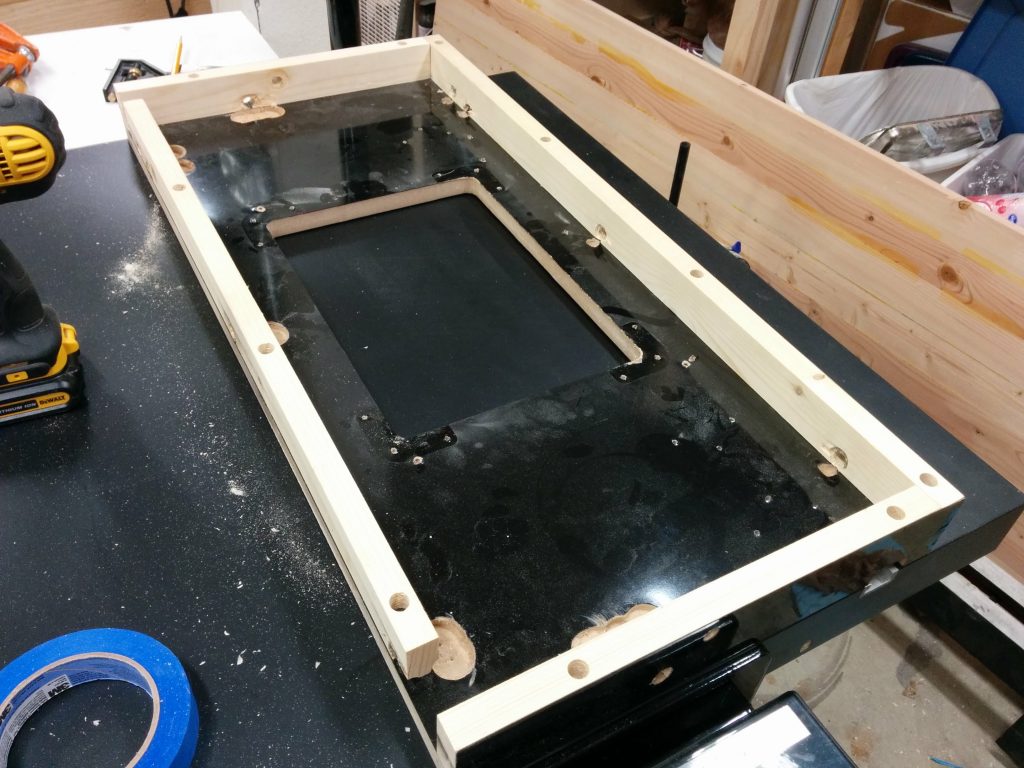
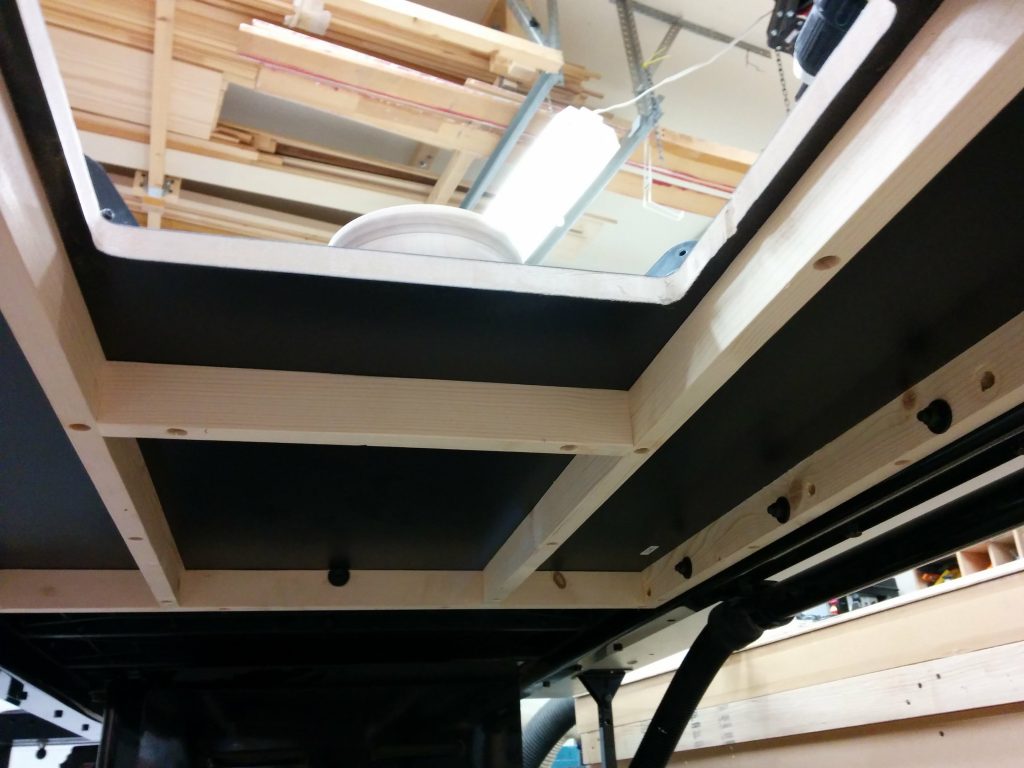
This particular extension table has some support bars underneath. They are only screwed in and are easy to remove.

The table braces are going to get in the way so I'm going to move them.
The table braces are going to get in the way so I’m going to move them.

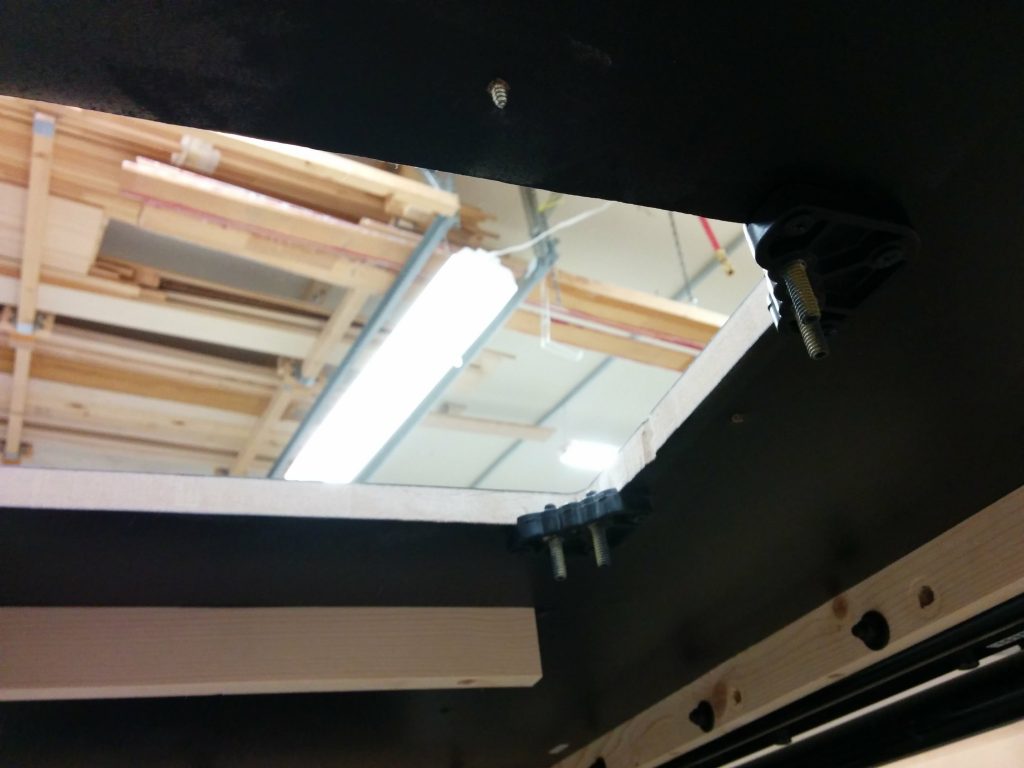
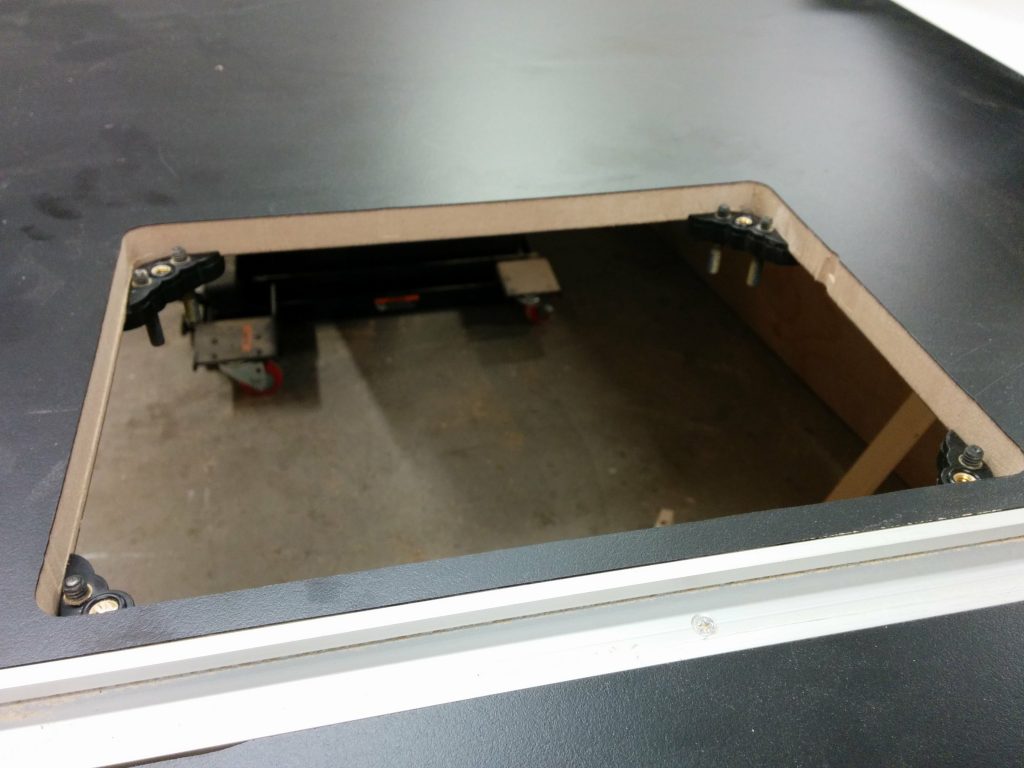
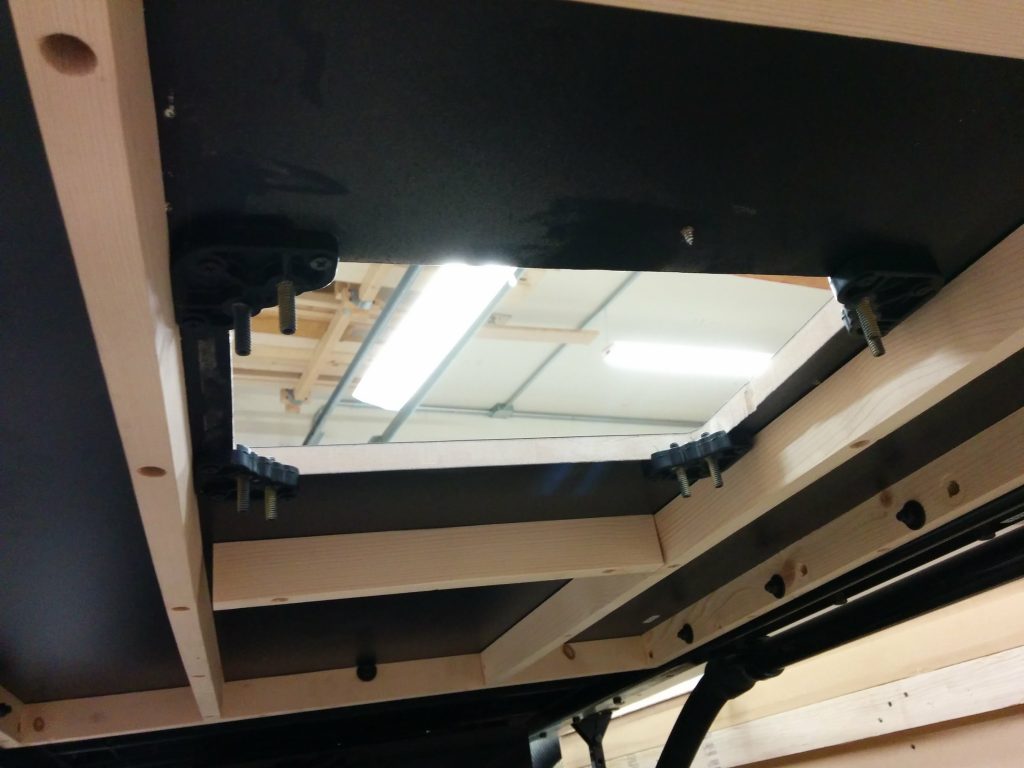
I removed the support bars so I would have room for the Kreg PRS3040 Precision Router Table Insert Plate Levelers which installed easily from underneath the table.

Installed the Kreg PRS3040 Precision Router Table Insert Plate Levelers.

Each leveler has two set screws that are used for leveling the router insert.

The Kreg levelers went in easily.

I reinstalled the support bars. I had to move them by about 1/4″ from their usual spot.

I reattached the supports under the table.

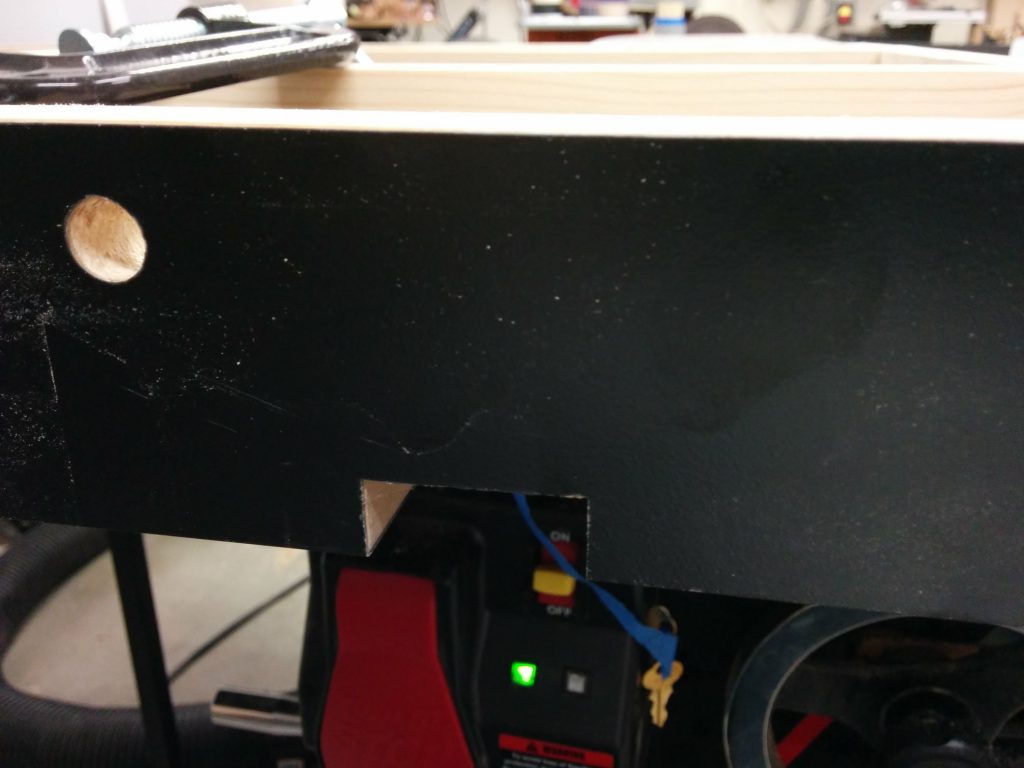
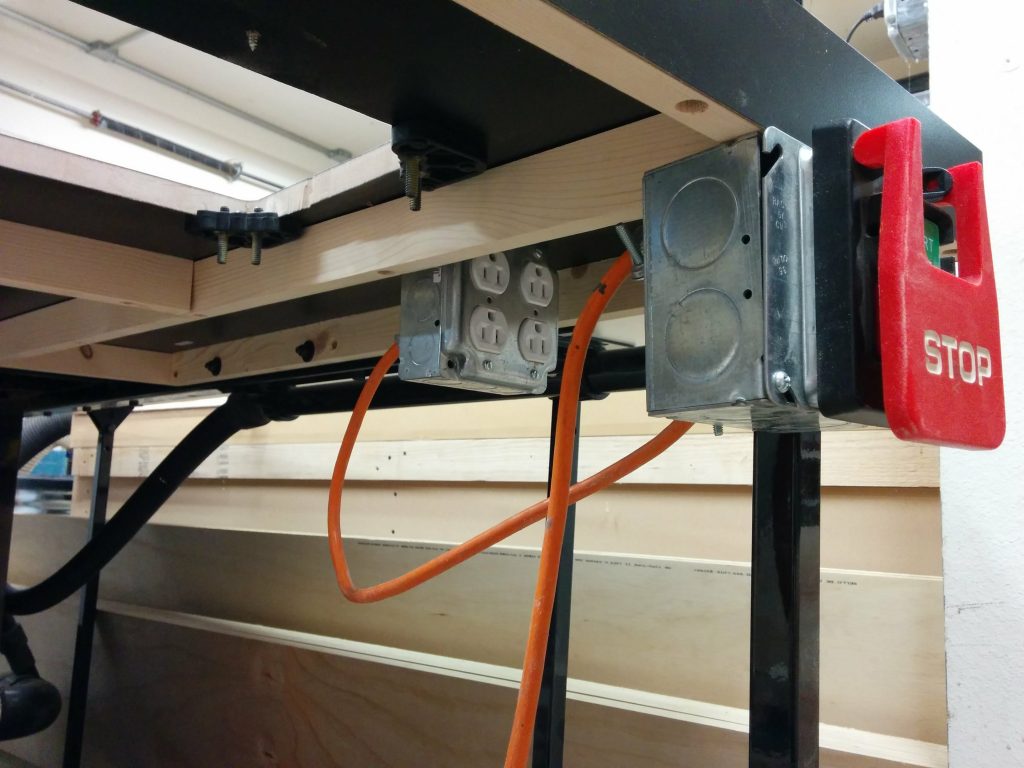
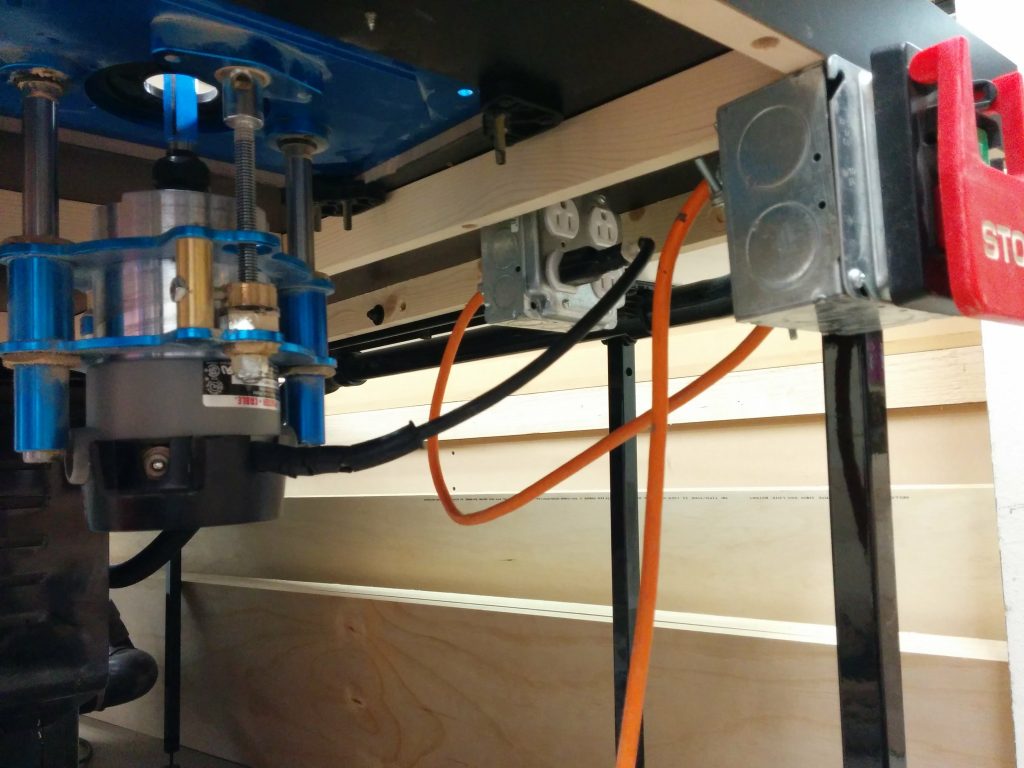
The next step was to start hooking things up. I installed a 4-outlet electical box that was wired to a motor power switch.

I hooked up an electrical outlet and a knee switch under the table.

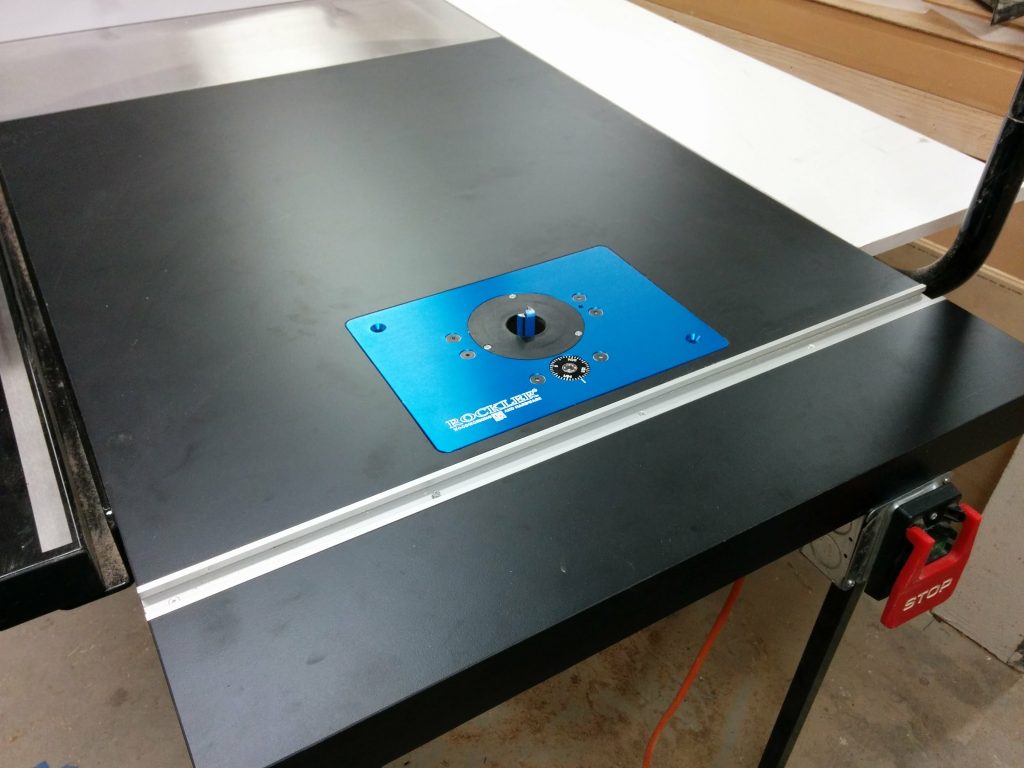
Then it was simply a matter of dropping the Rockler router lift in place and plugging in the router.

The router lift has been placed in the table and the router plugged into the outlet.

A little bit of leveling and I’m all done.

The router table is all finished.

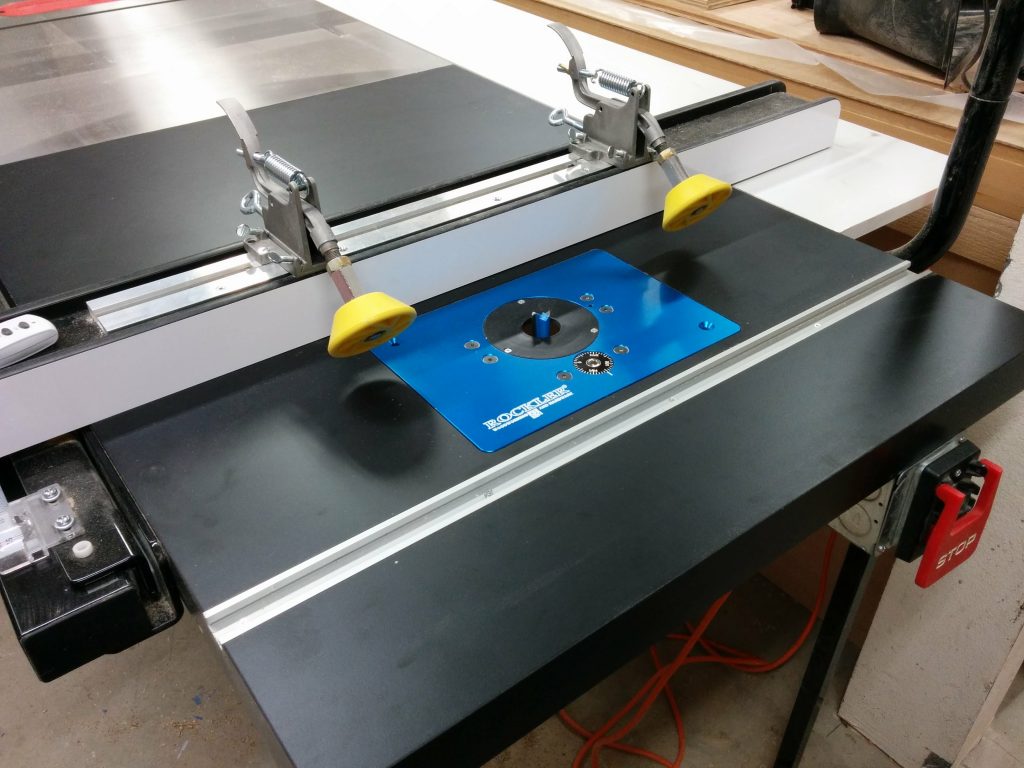
I can use the table saw fence with the router table. This photo shows how close I can get it to the router bit. I will be making an auxiliary router table fence with built-in dust collection that I can attach to my table saw fence, but that’s a project for another day.

I can use the table saw fence with the router table as well.

That’s it! Up next is an enclosure for the router and maybe some drawers for storing router bits. For now, I’ve got some other projects that require my attention.

If any of this has been helpful to you, or if you have any suggestions or questions, please take a minute to post a comment below. I’d especially like to hear any suggestions for projects that you’d like to see me tackle.

Table Saw Enhancement – Attaching Extra Cast-Iron Extension Wing.

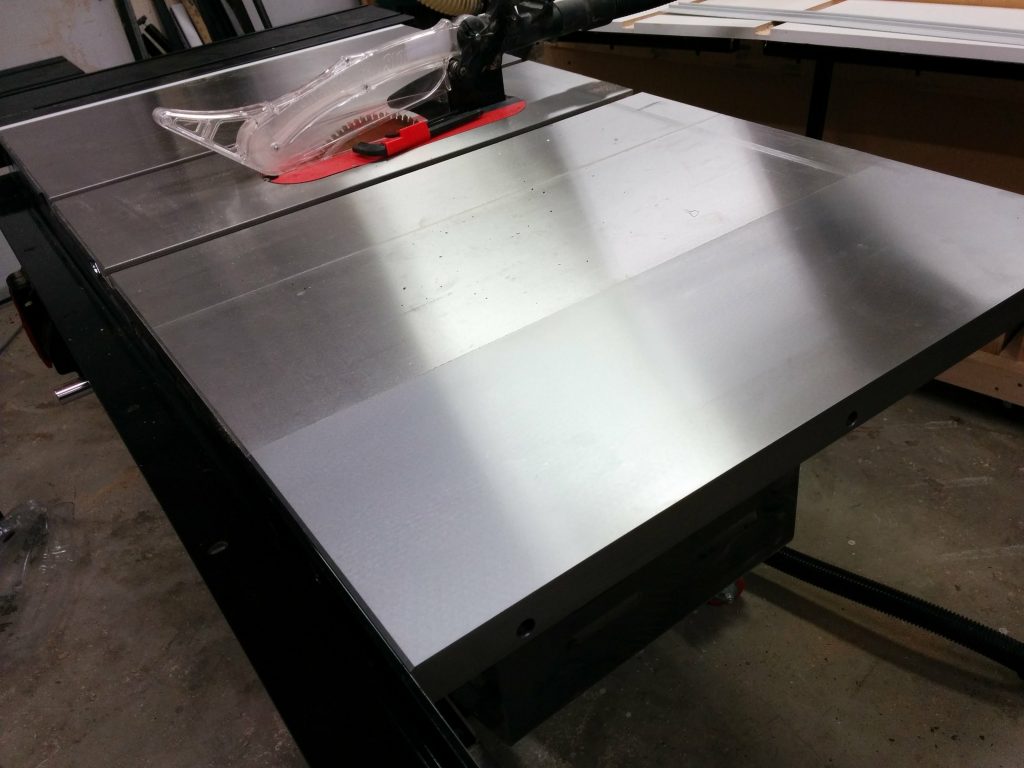
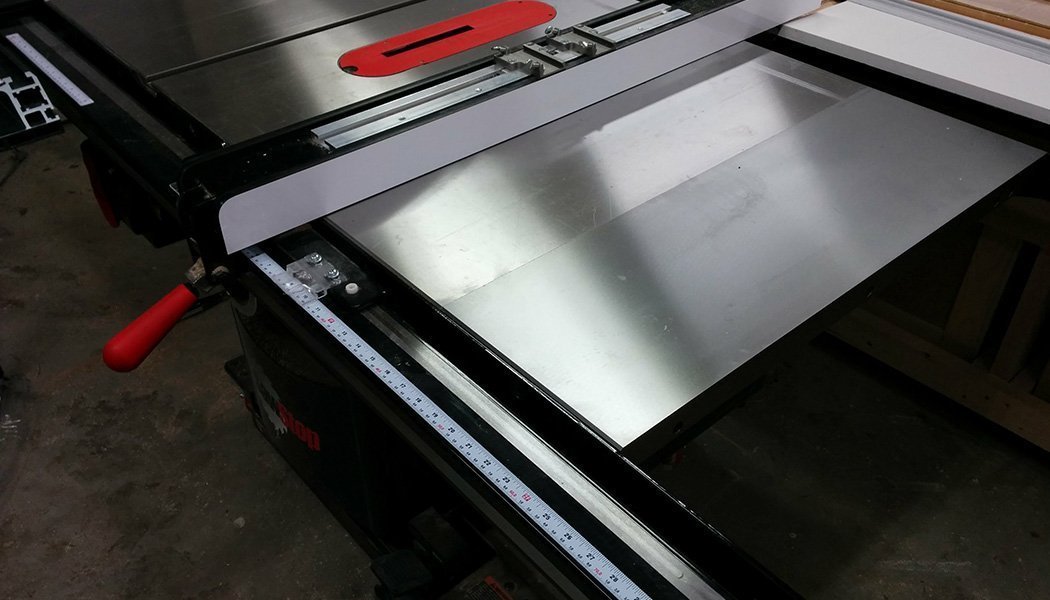
SawStop Industrial Cabinet Saw with an extra cast iron wing.


This is a continuation of Table Saw Enhancement – Attaching Sliding Crosscut Table Without Cutting Down the Rails.

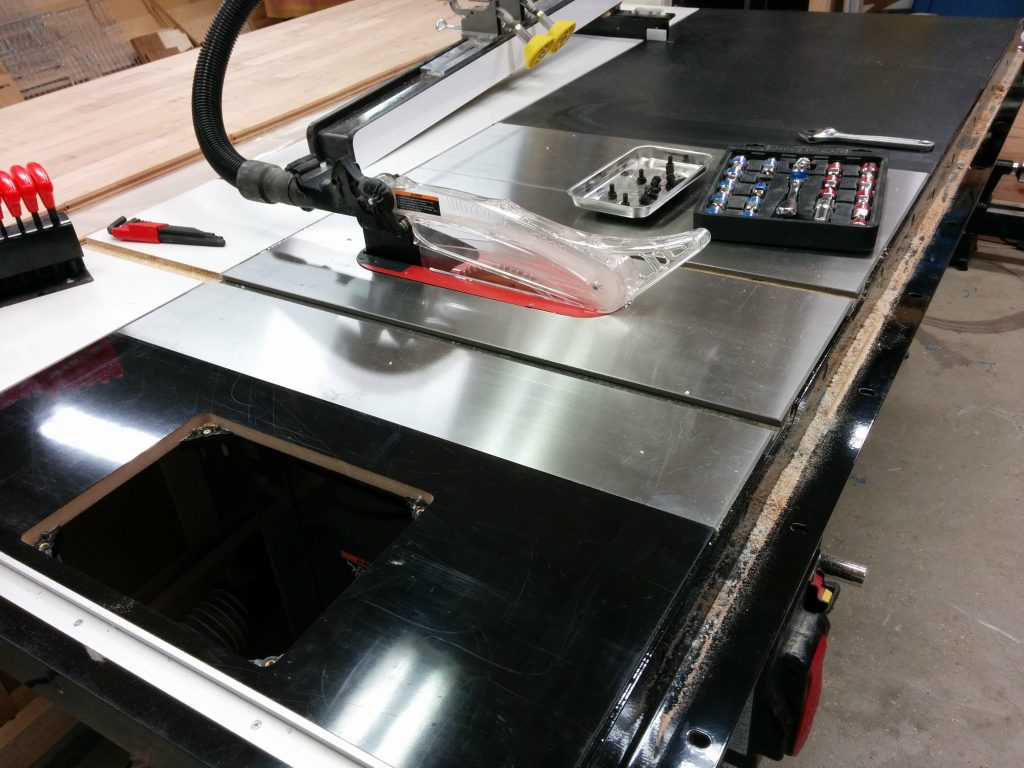
Now that I’d removed my existing router table, I needed to relocate it to the right edge of my table saw. Since I use a miter slot on my router table and I wanted to avoid cutting notches in my front and rear fence rails, I decided to add an additional cast-iron extension wing to the right of my main saw table.

Installing an extra cast iron wing.

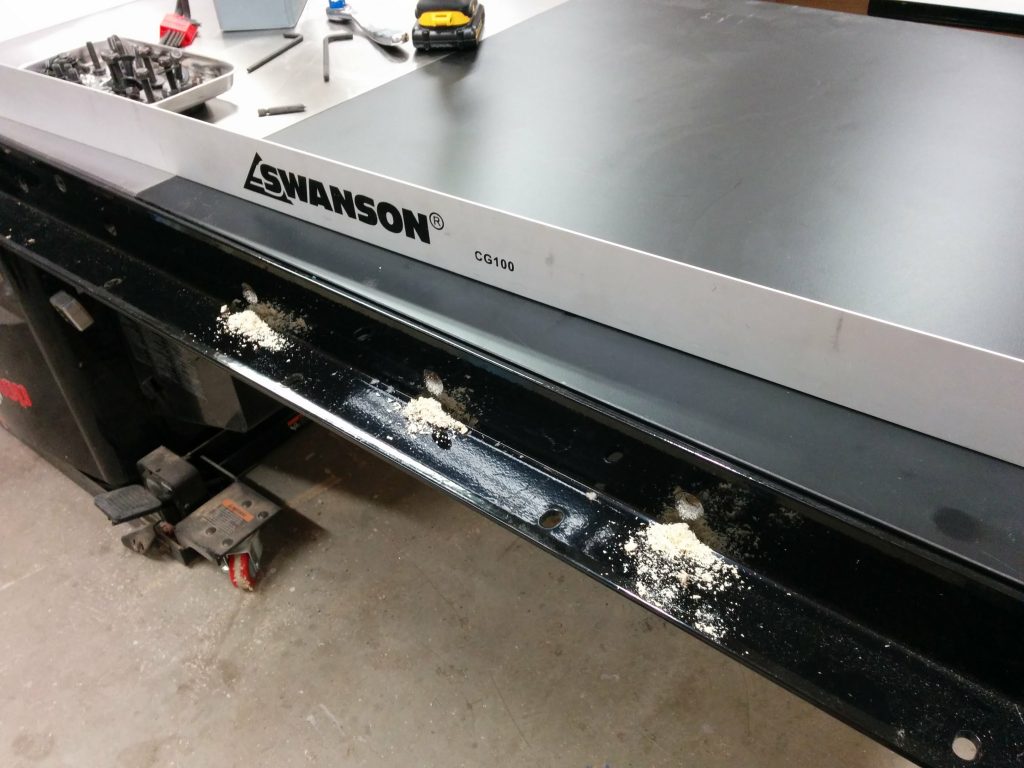
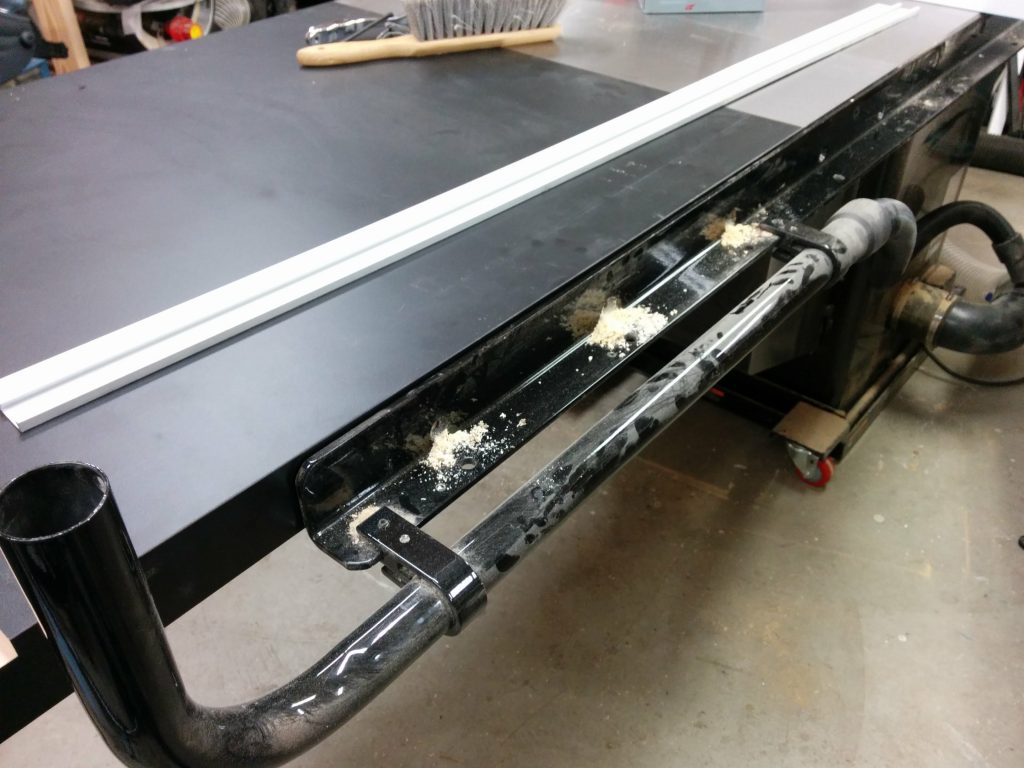
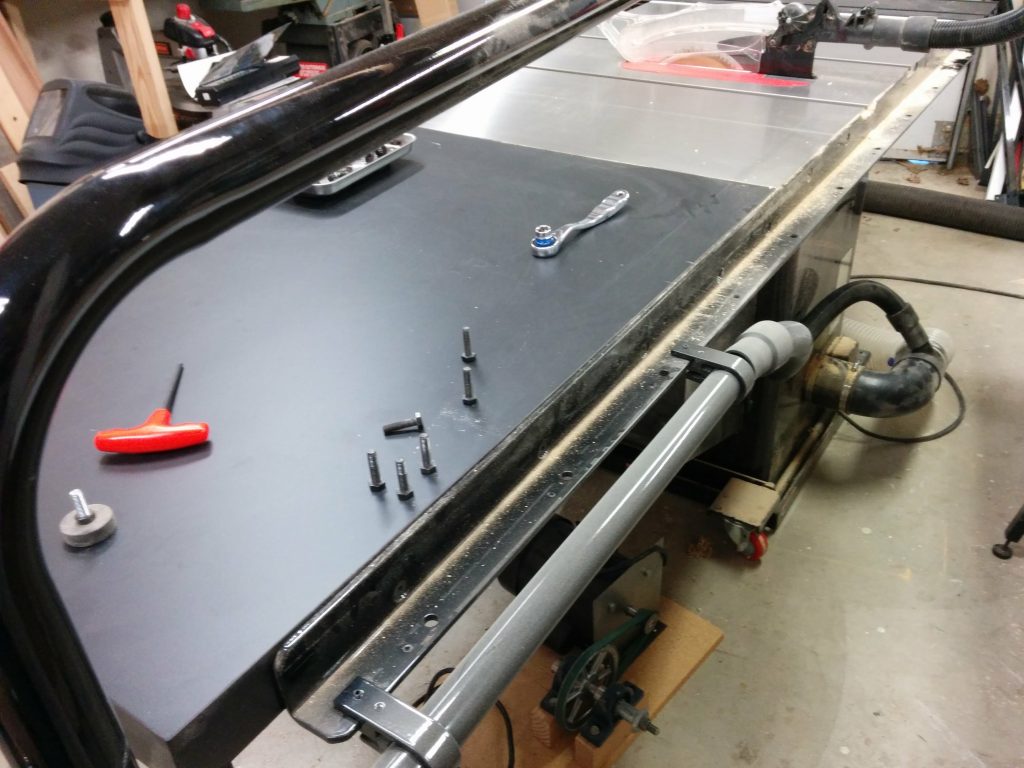
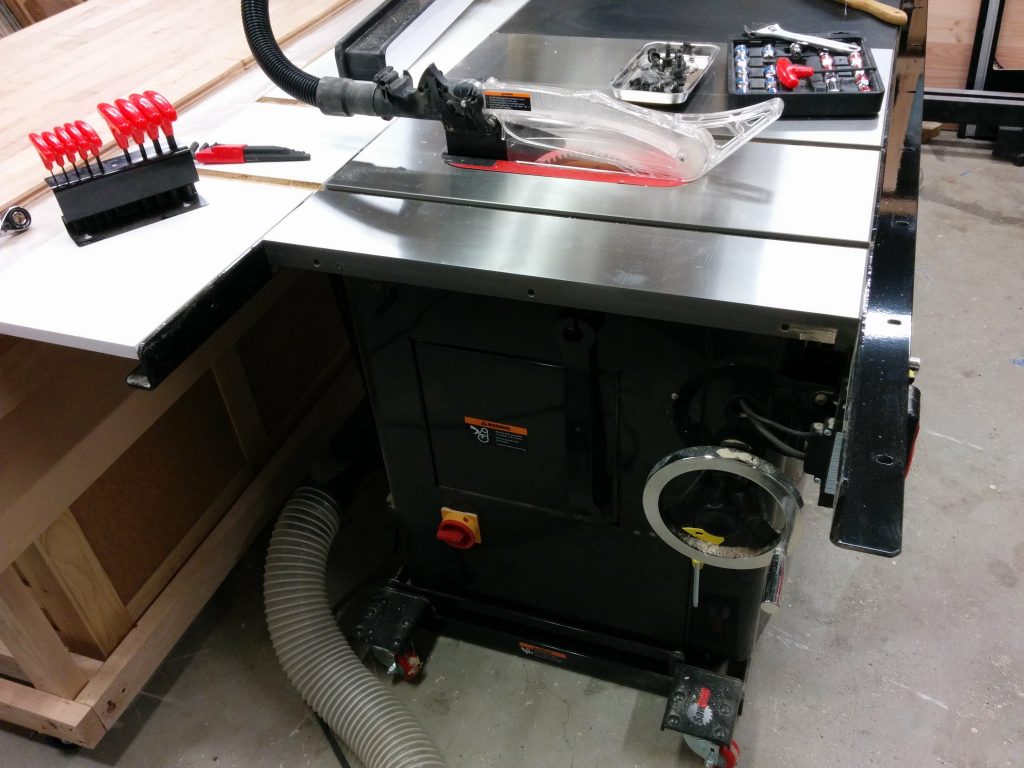
I had to remove the wooden extension table in order to attach the new cast-iron wing.  As a result, I needed access to the bolts in the rear rail so I took off my outfeed table.  This is giving me a good opportunity to clean some neglected areas of my saw as well.

Removed the outfeed table so I could access the rear bolts.

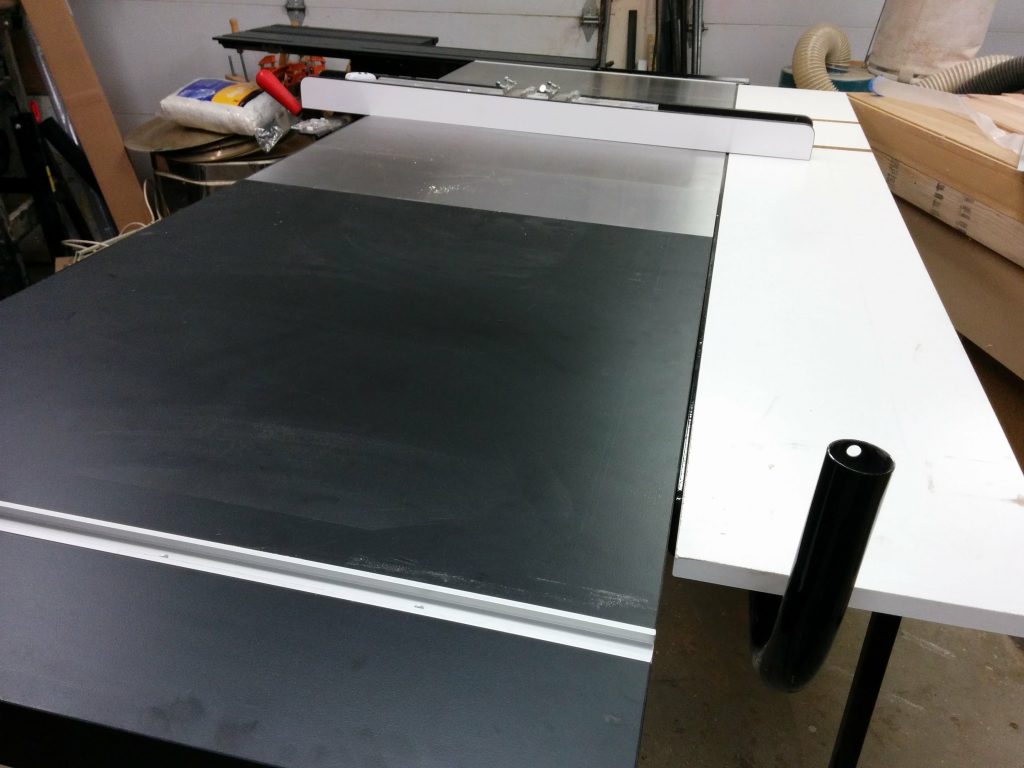
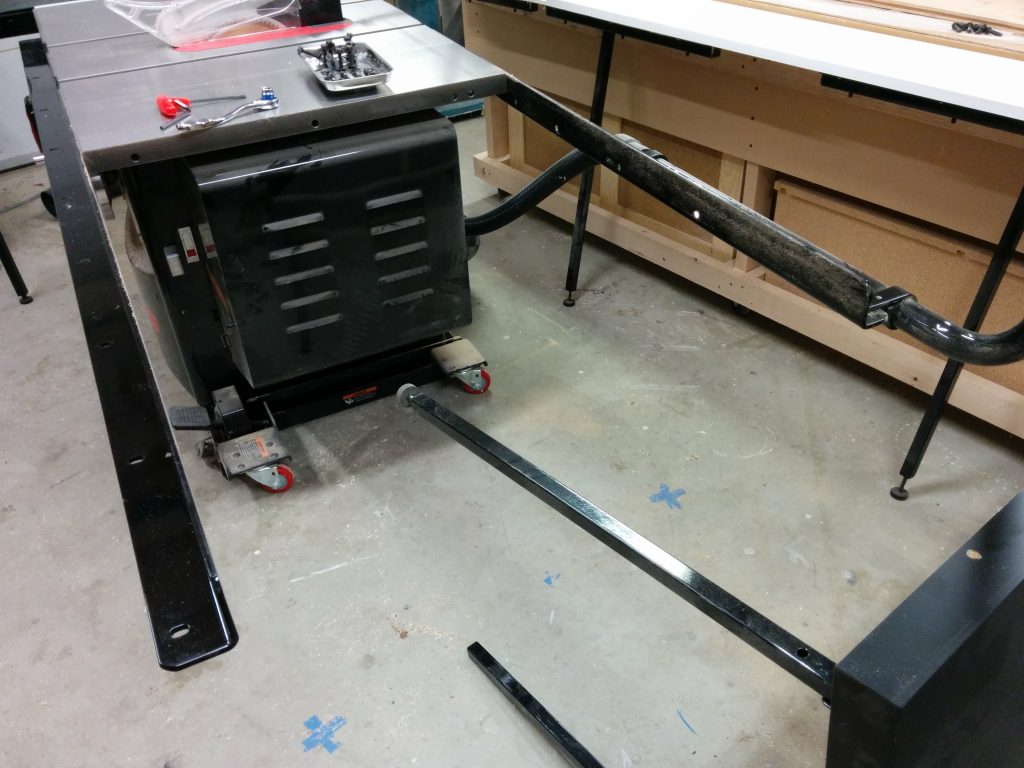
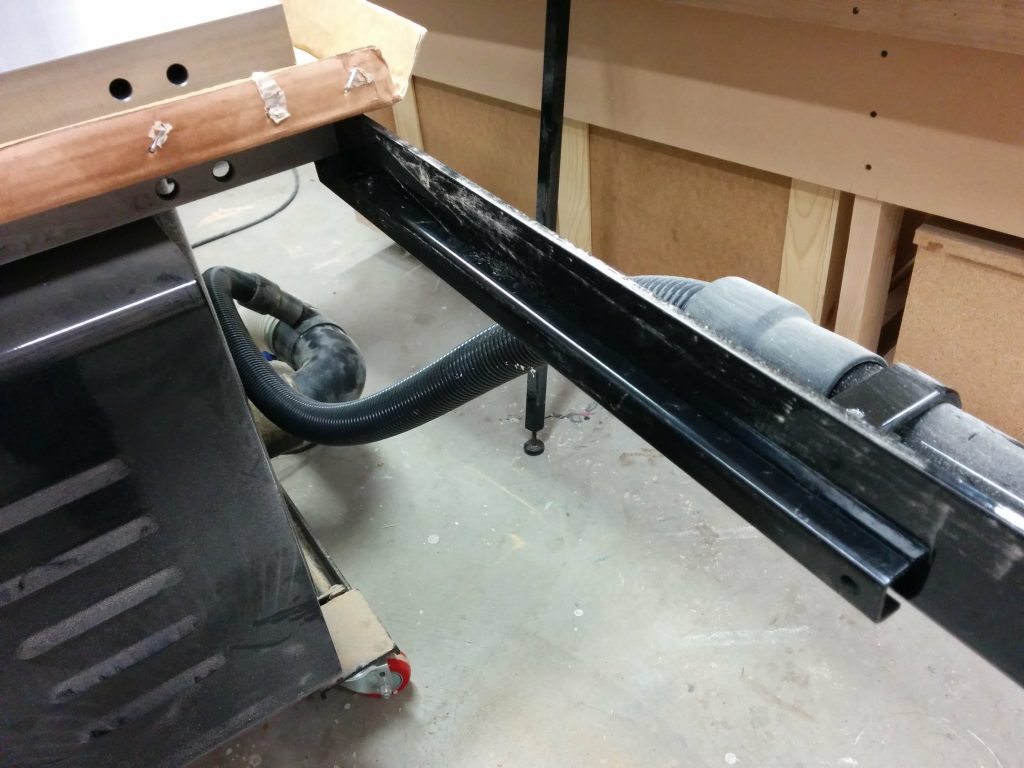
I then removed my wooden extension table.

Removed the wooden extension table.

I used some magnetic tool holders and attached them to the inside of the front and rear rails.  These will help hold up the cast iron extension wing while I get it bolted to the table.

Magnetic tool holders help to support the new cast-iron wing.

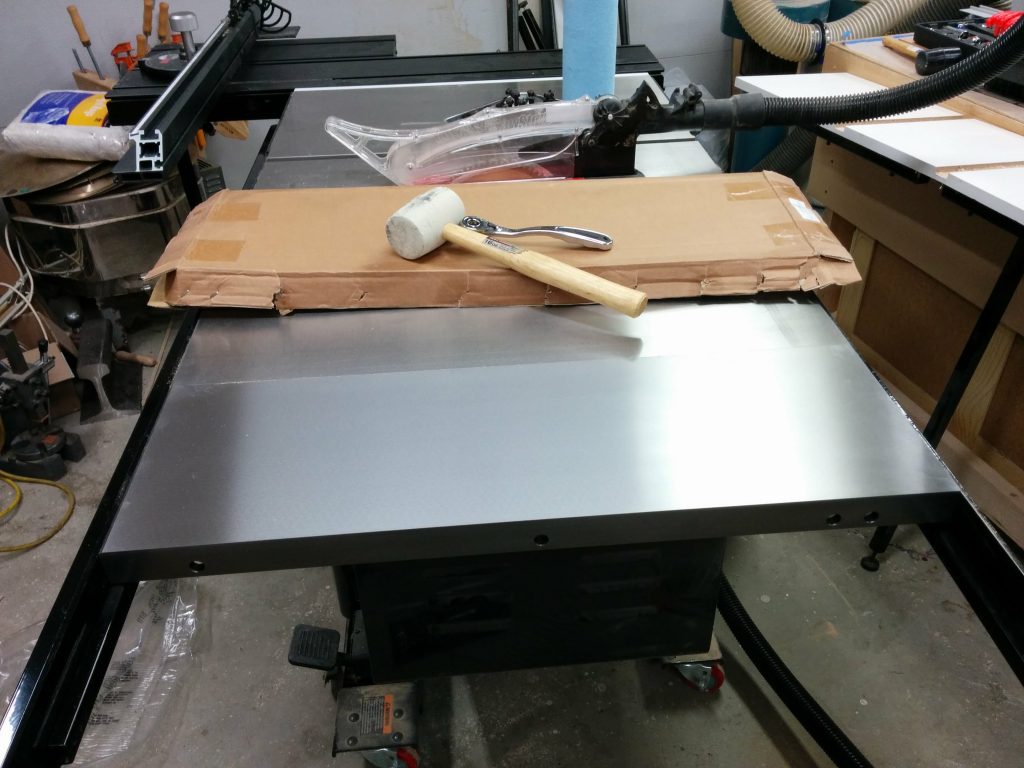
I temporarily attached the new wing to the existing wing using three bolts along with washers and lock nuts.  I was very careful to get the seam between the two cast iron wings nice and flush.  There wasn’t anything holding the new wing to the front and rear rails yet.  That was my next step.  I marked the holes in the new wing on the inside of the rails using a silver Sharpie.  Then I took this new wing back off.

Temporarily attaching the new wing to the existing wing.

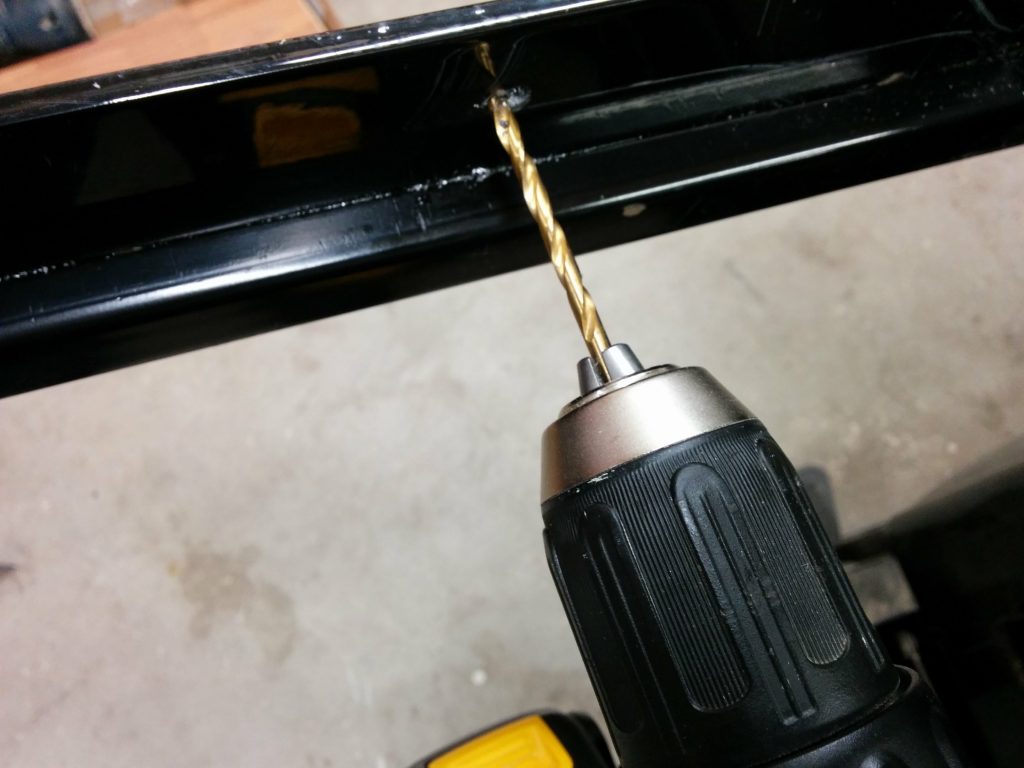
I used a small drill bit (somewhere in the neighborhood of 1/8″ in diameter) to drill a starter hole.  You will want to take your time and use plenty of cutting oil when drilling through powder-coated steel.

Drilling the ~1/8" starter hole.
Drilling the ~1/8″ starter hole.

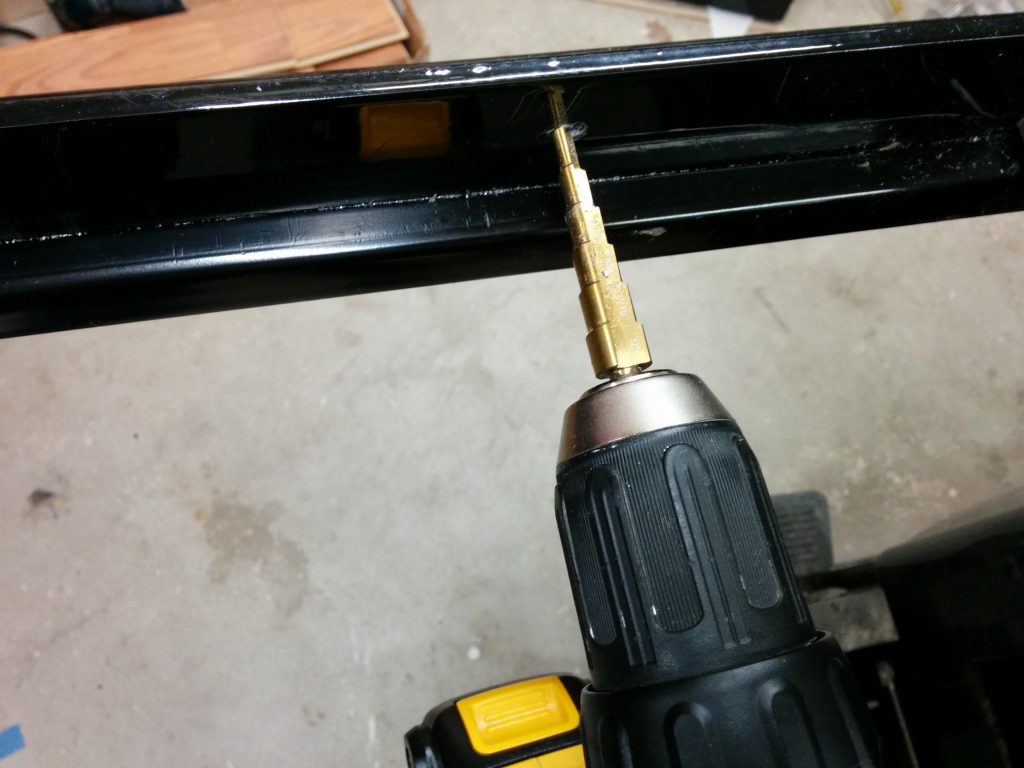
I then moved up to a step bit once the starter hole was drilled.  I believe I drilled this to be 3/8″ in diameter.  Again, take your time.

Expanding the hole with a step bit.

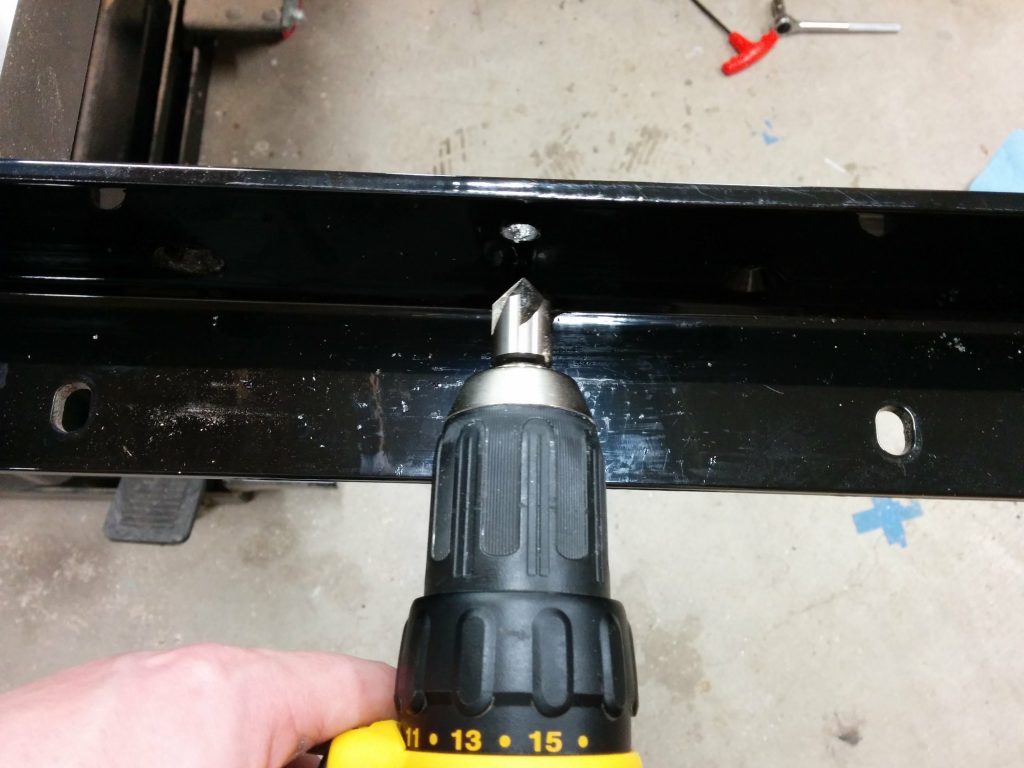
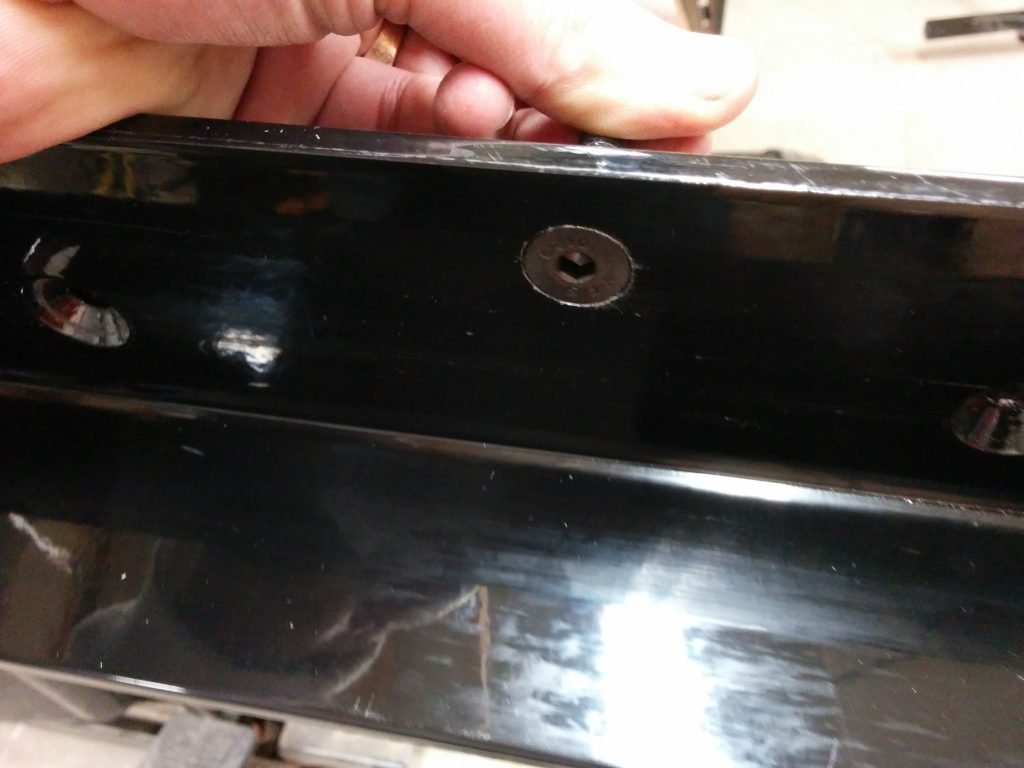
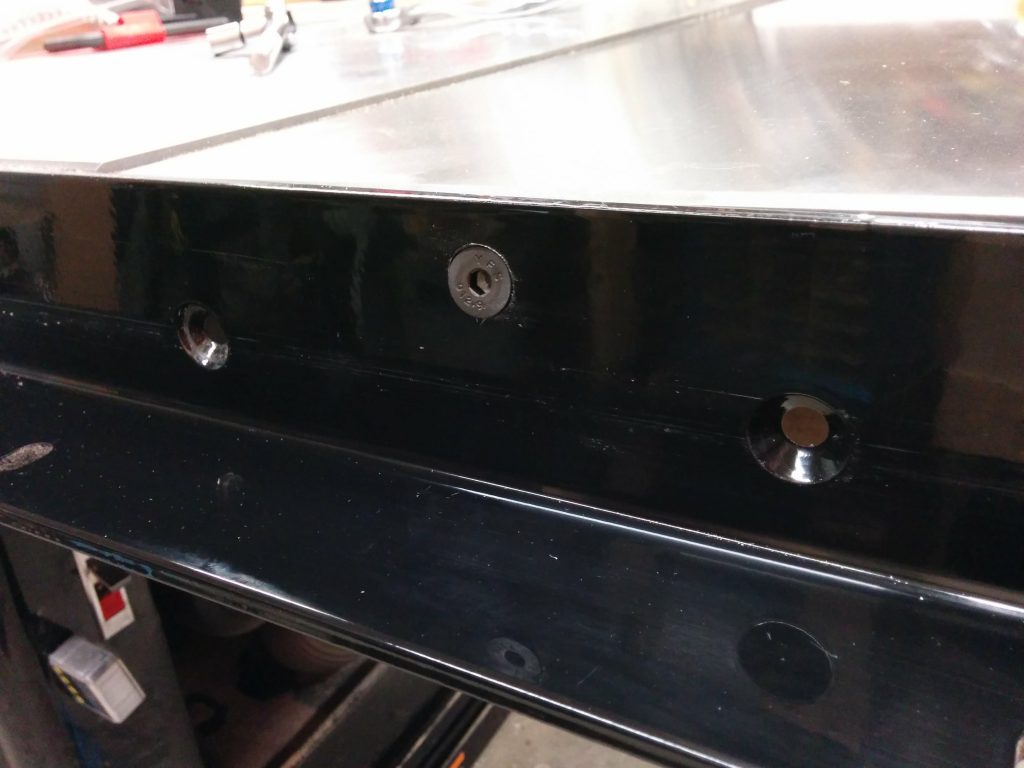
I added a countersink to the front of the hole once the hole was the correct diameter.  The bolts that are used for attaching the cast-iron wing to the rails are countersunk allen bolts.

Adding a countersink to the front of the hole.

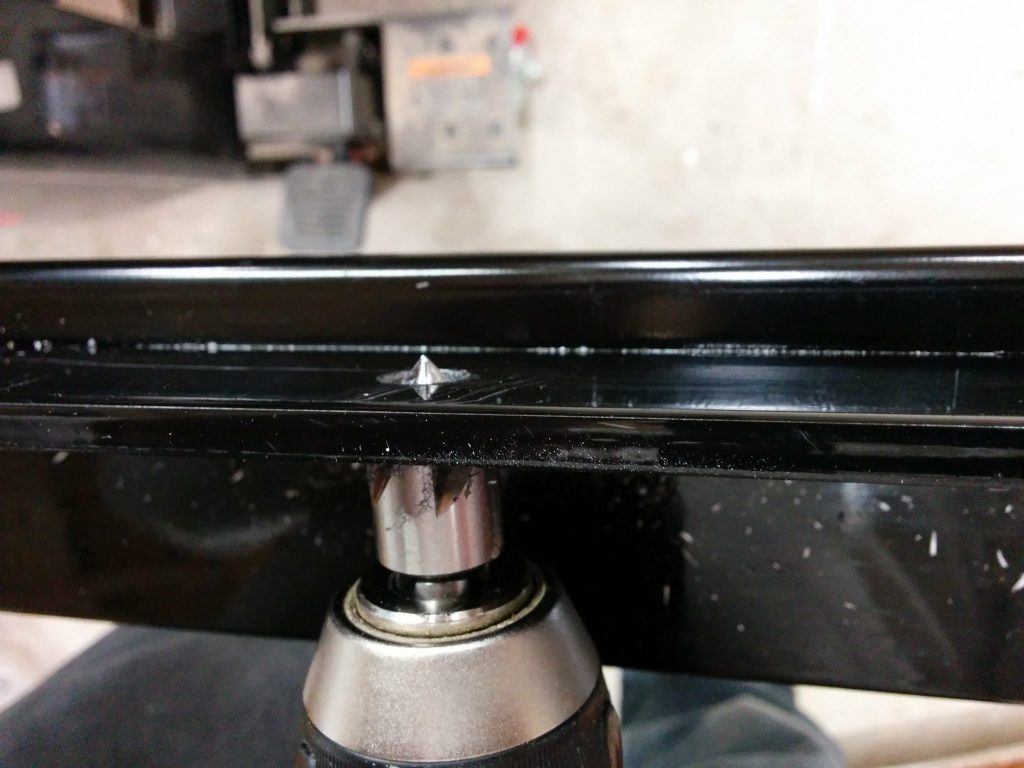
This took a long time to do.  The steel on the SawStop rails is pretty tough stuff and I wanted to avoid having the powder-coating start to chip off.

Take your time with this so you don't chip the powder-coating.
Take your time with this so you don’t chip the powder-coating.

It took a while but finally the countersink was deep enough so the bolts didn’t stick out at all.  This is important so they don’t interfere with moving the fence back and forth.
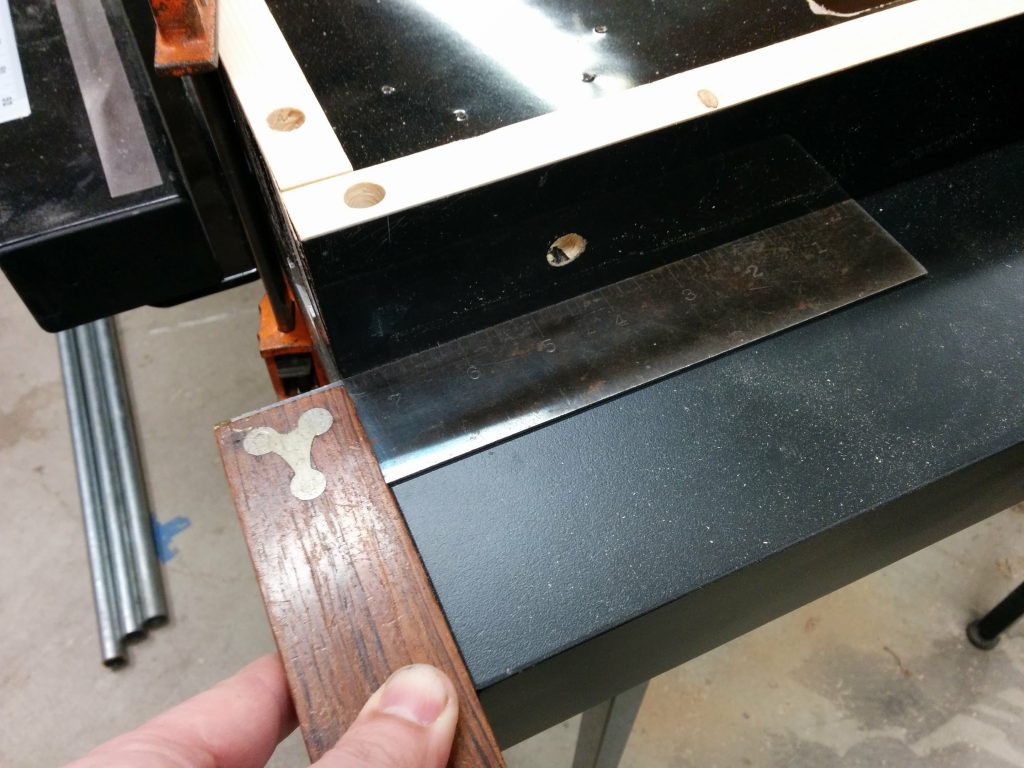
Took a while but I'm done.
Took a while but I’m done.

I loosely  reattached the wing and started tightening up the bolts.  The holes in the cast iron wing are over-sized and not threaded so I had a little bit of wiggle room to help with alignment.

Loosely attaching the bolts.

I got the wing all tightened up and aligned properly.

Tightened and aligned.

The additional cast-iron has been nice to work on. Drilling through the powder-coating wasn’t as bad as I was expecting it to be. I’ll most likely add one or two more cast-iron wings in the future. I know that there is a limit to how much I can add before the saw starts to tip when I try to move it but the sliding crosscut table may help offset the weight of all the cast iron.

If this has been helpful or if you have any questions that I failed to answer, please leave a comment below.

Up next, I’m adding a router table to the right end of my table saw extension table.

Table Saw Enhancement – Attaching Sliding Crosscut Table Without Cutting Down the Rails.

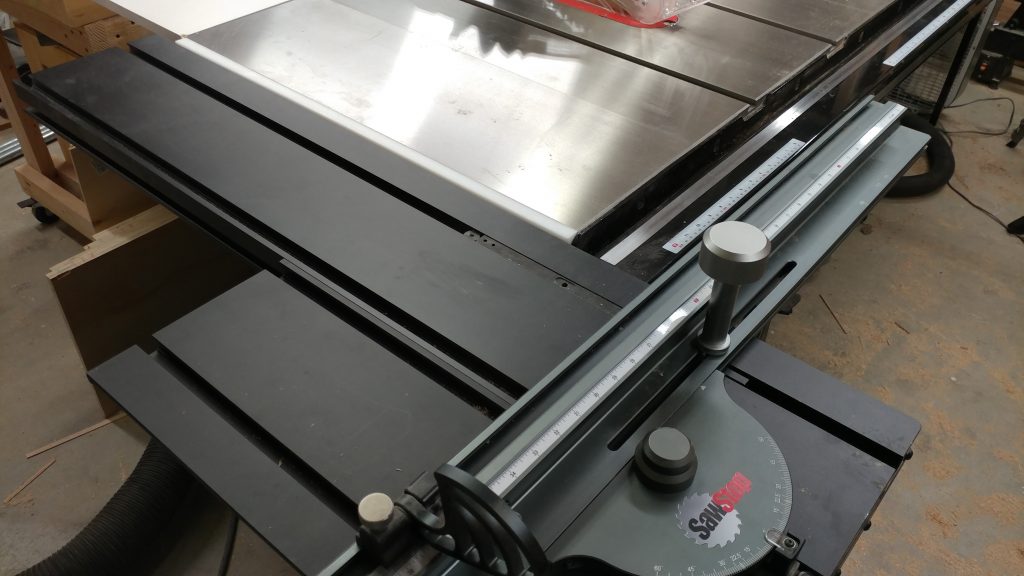
SawStop Sliding Crosscut Table installed without having to cut down the front or rear rails.


My table saw is fairly decked out and I’ve made some modifications to it in the past but some of them weren’t working that well for me.

My saw is a SawStop Industrial Cabinet Saw 3 HP single-phase, 230 VAC machine (ICS31230) with a 52″ fence system and the sliding crosscut table.  As an experiment, I had previously taken the left cast-iron wing off and replaced it with a custom router table.  The reason behind having the router table in that spot is because I didn’t have any room on the far-right edge of the saw the way my shop was set up previously.  I needed to have it on the left but I wasn’t sure if it would work with the sliding crosscut table or if that would be in the way.

As it turns out, it wasn’t too awkward having the router table there. It did, however, affect the accuracy of the sliding crosscut table since it wasn’t supported by anything but a wooden table.

After I rearranged my shop I decided to move the router table to the far right edge of the table saw and reattach the sliding crosscut table to the left cast-iron wing as originally intended. In order to accommodate the router table miter slot without having to cut notches in the front and rear rails, I decided to add another cast-iron wing to my saw thereby pushing the extension table out another ten inches.

I also decided to use this opportunity to document how I attach the sliding crosscut table to the left cast-iron wing without having to cut my rails down. Since this is a fairly long post, I decided to break it up into individual posts. The links to the other modifications are at the end if this article.

Removing the router table and installing the Sliding Crosscut Table.

This is how my sliding crosscut table was attached previously. Notice that the cast-iron wing on the left of the main saw table has been removed and replaced with a wooden router table.

Time to undo this mess.

The sliding crosscut table mounted to a router table on the left of the saw.

I started by removing the router lift from my existing router table as well as the sliding crosscut table.  I also removed the front tube that the fence clamps to.

Removed the slider and the front tube.

Then I removed the old router table.  I’m using this as my routing template on my new table so I’m not getting rid of it just yet.

Removed the old router table.

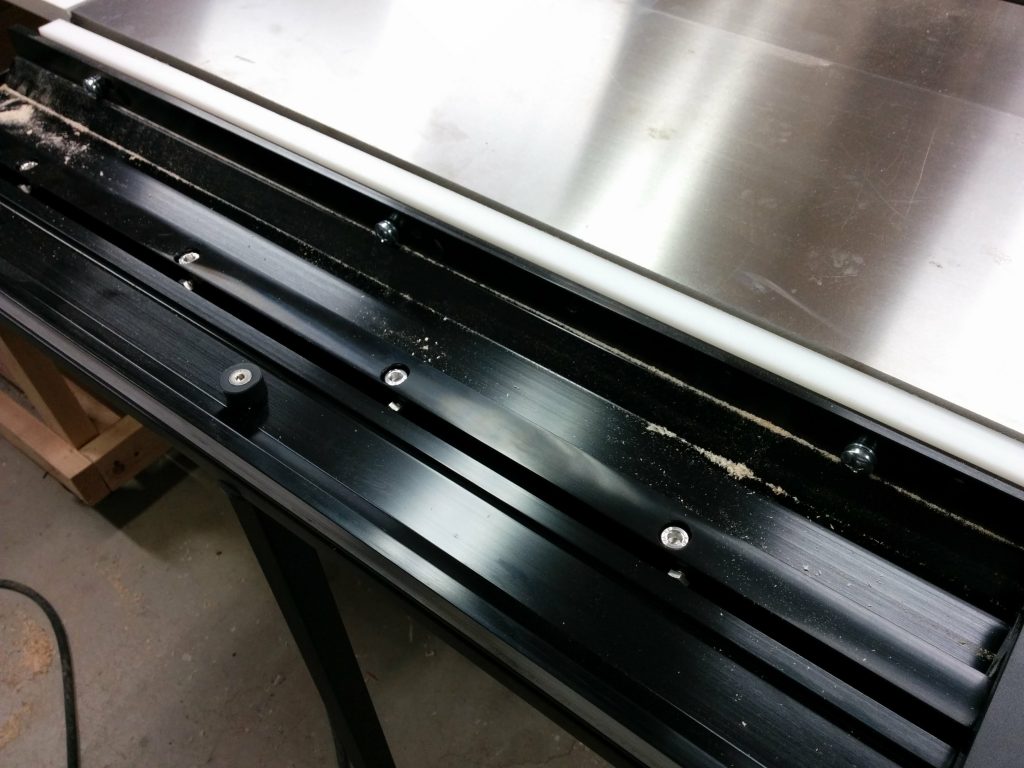
I reattached the cast iron wing.  The problem with adding a sliding crosscut table to a table saw is that you will typically have to cut your rails and tube down since they will usually stick out past the cast iron.  

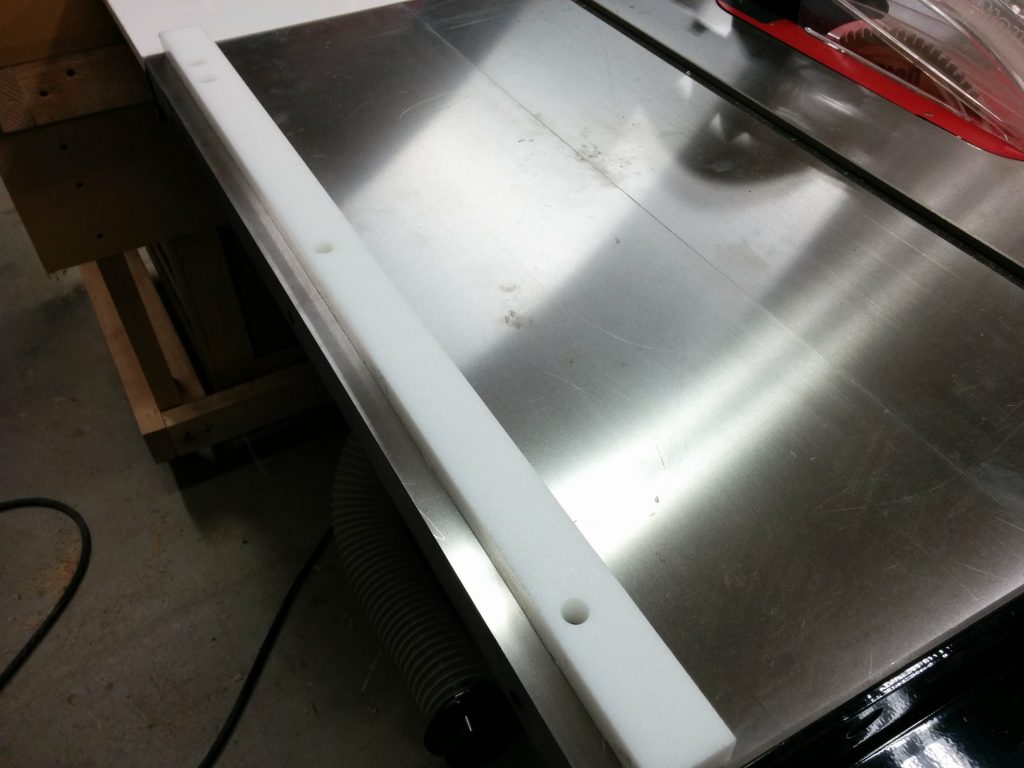
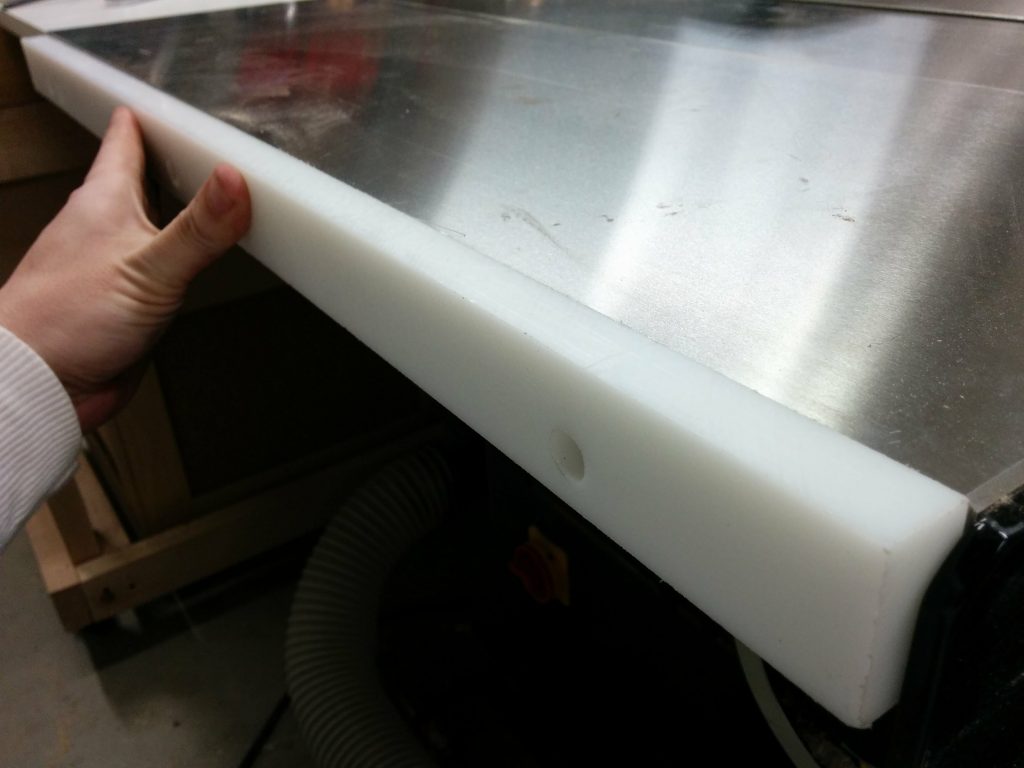
I got some 3/4″ thick HDPE and cut it to the dimensions for the side of my saw, which is 1-1/2″ thick and 30″ deep.  After cutting this down I drilled holes to match the side of the table.

HDPE spacer for attaching the sliding crosscut table to the left wing.

Once it’s drilled, you can hold it in place on the side of the cast iron wing and attach the sliding crosscut table to it.

Holding the spacer in place.

You’ll most likely need to get longer bolts for this.  With the SawStop sliding crosscut table, the bolt type and size isn’t too critical.  You just need to make sure they don’t interfere with the sliding mechanism.

Loosely fitting the sliding crosscut table and the HDPE spacer to the left cast-iron wing.

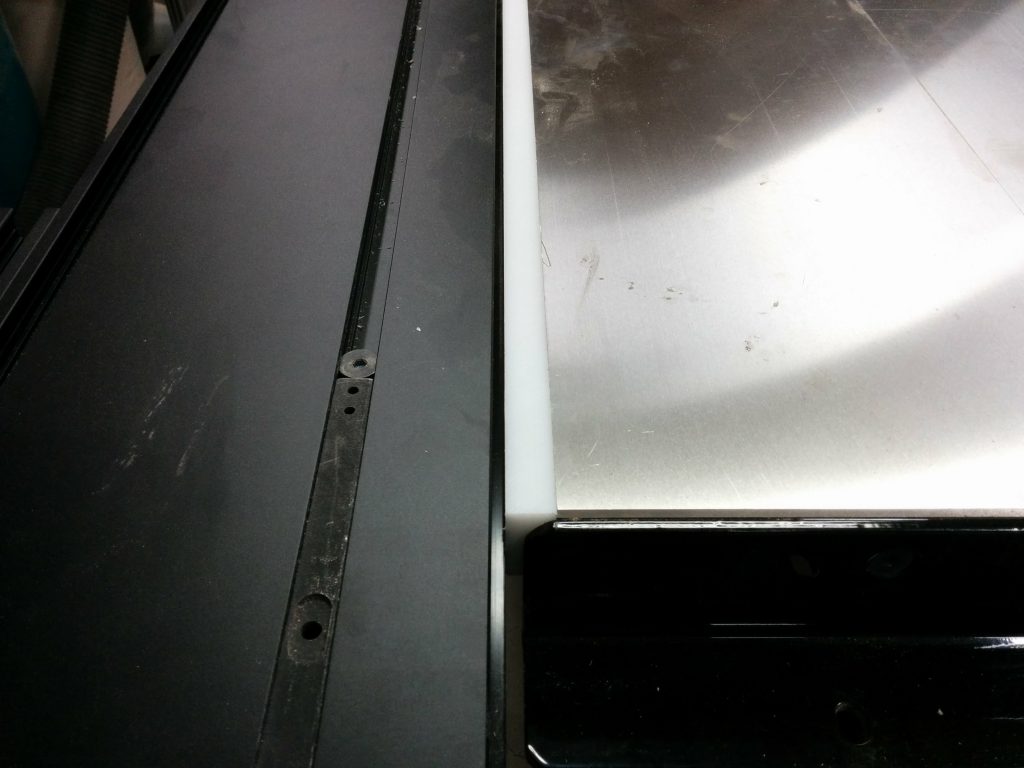
Get it all tightened up and flush and you are good to go.  I recommend using a pretty dense material for this spacer.  You could probably use some sort of hardwood but you really want to be particular with how you cut it since any discrepancies can cause your table to be out of alignment.

Tighten it up and you're done
Tighten it up and you’re done

This is the first of three table saw enhancements that I implemented this time. Check out the next two below. Did this help you? Do you have any suggestions or a completely different way of attaching a sliding crosscut table to your saw? If so, please leave a comment.