Workbench: Part 3 – Change of plans


This is a continuation of Workbench: Part 2 – Gluing up the top.

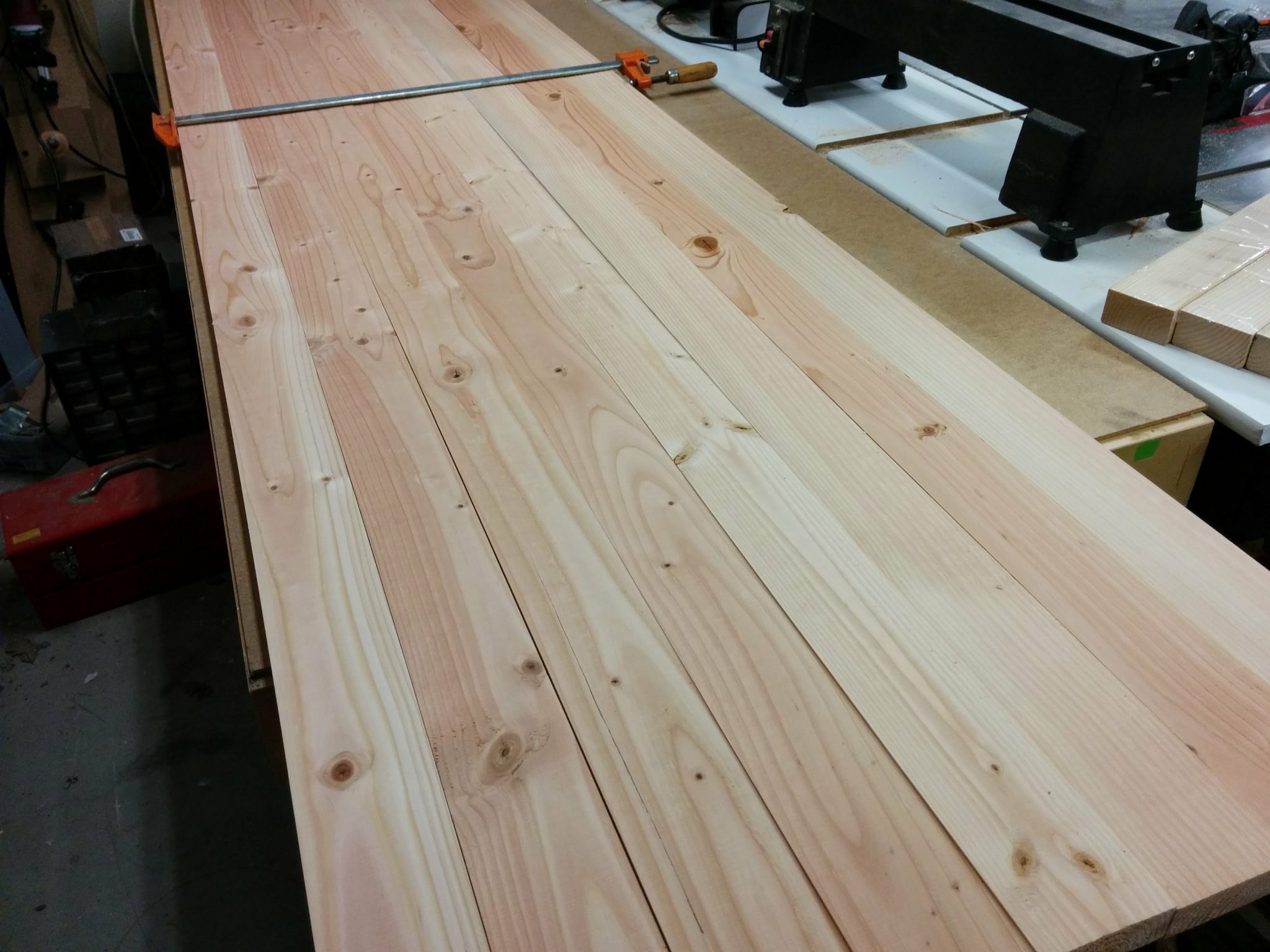
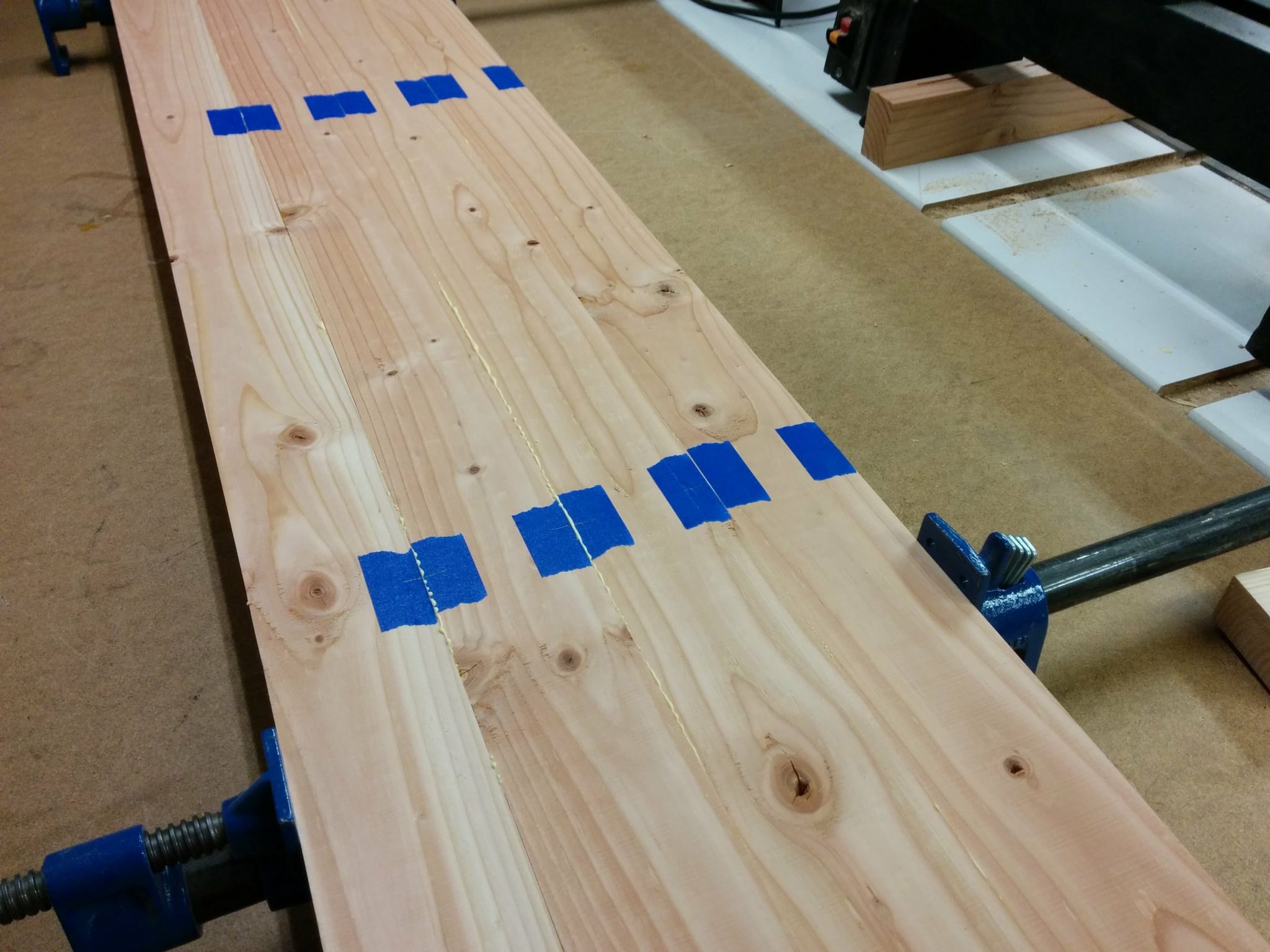
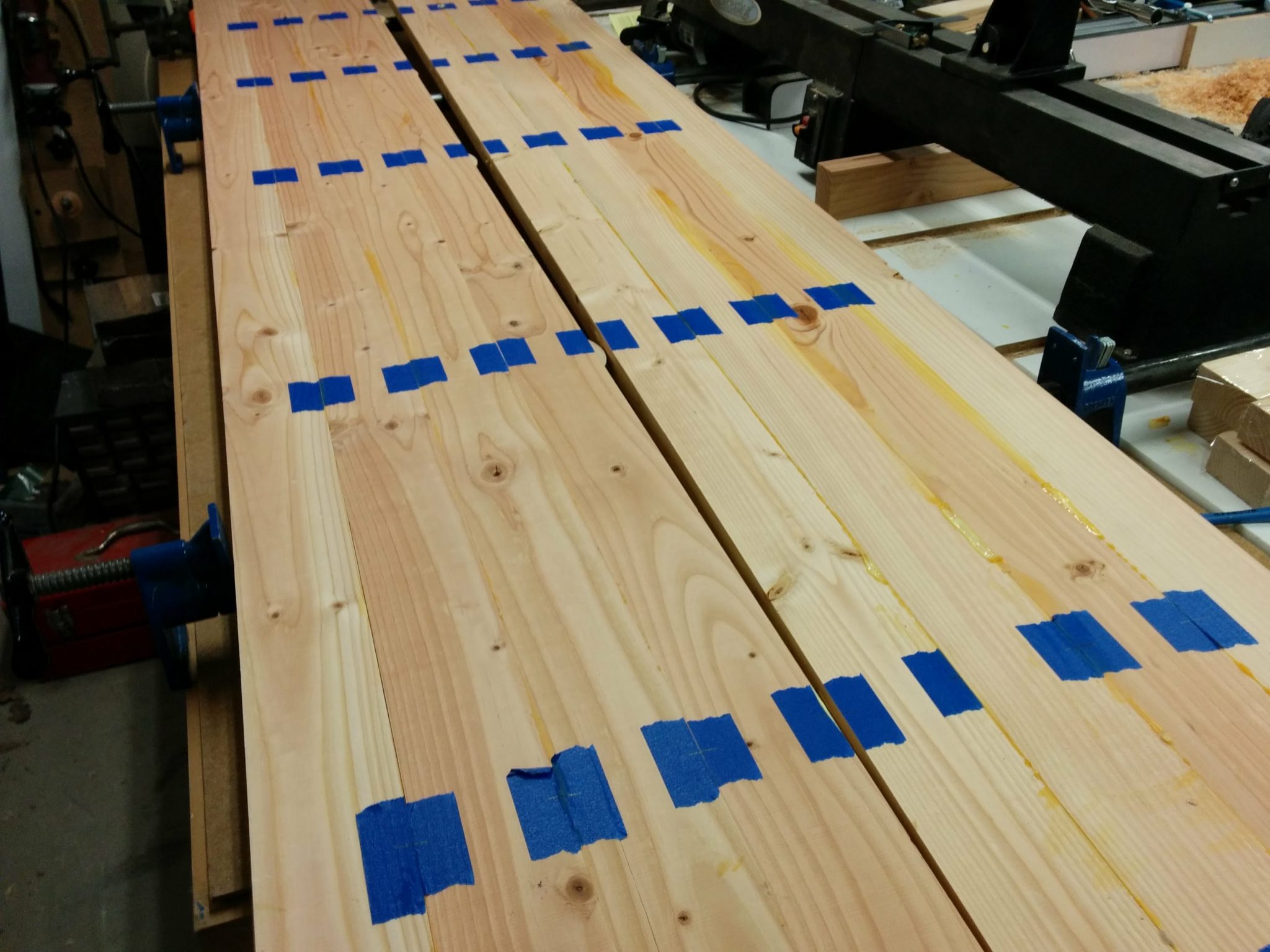
After gluing up half of the top, I repeated the process and got the other half glued up as well.
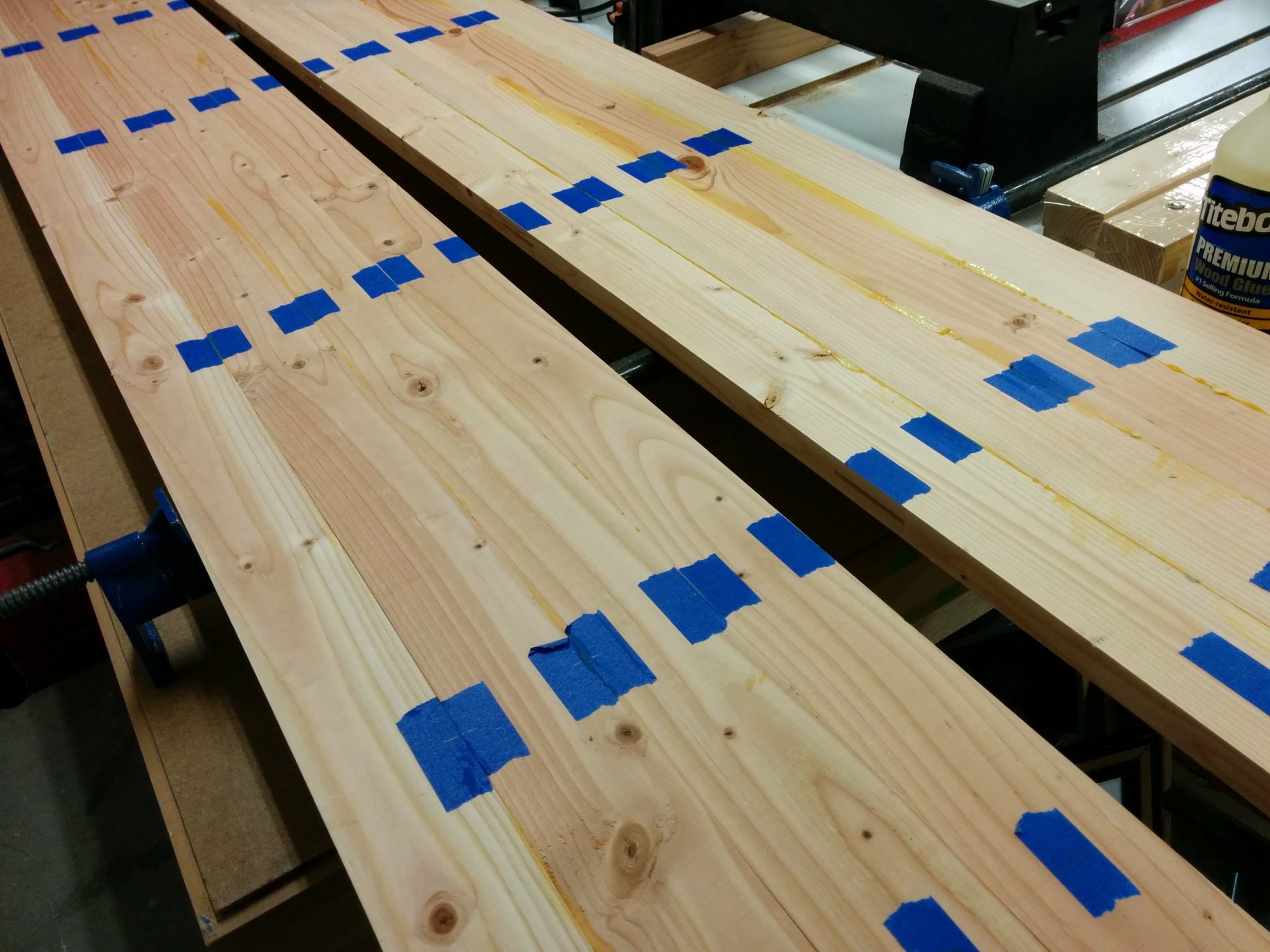
Both halves, ready to be glued together.


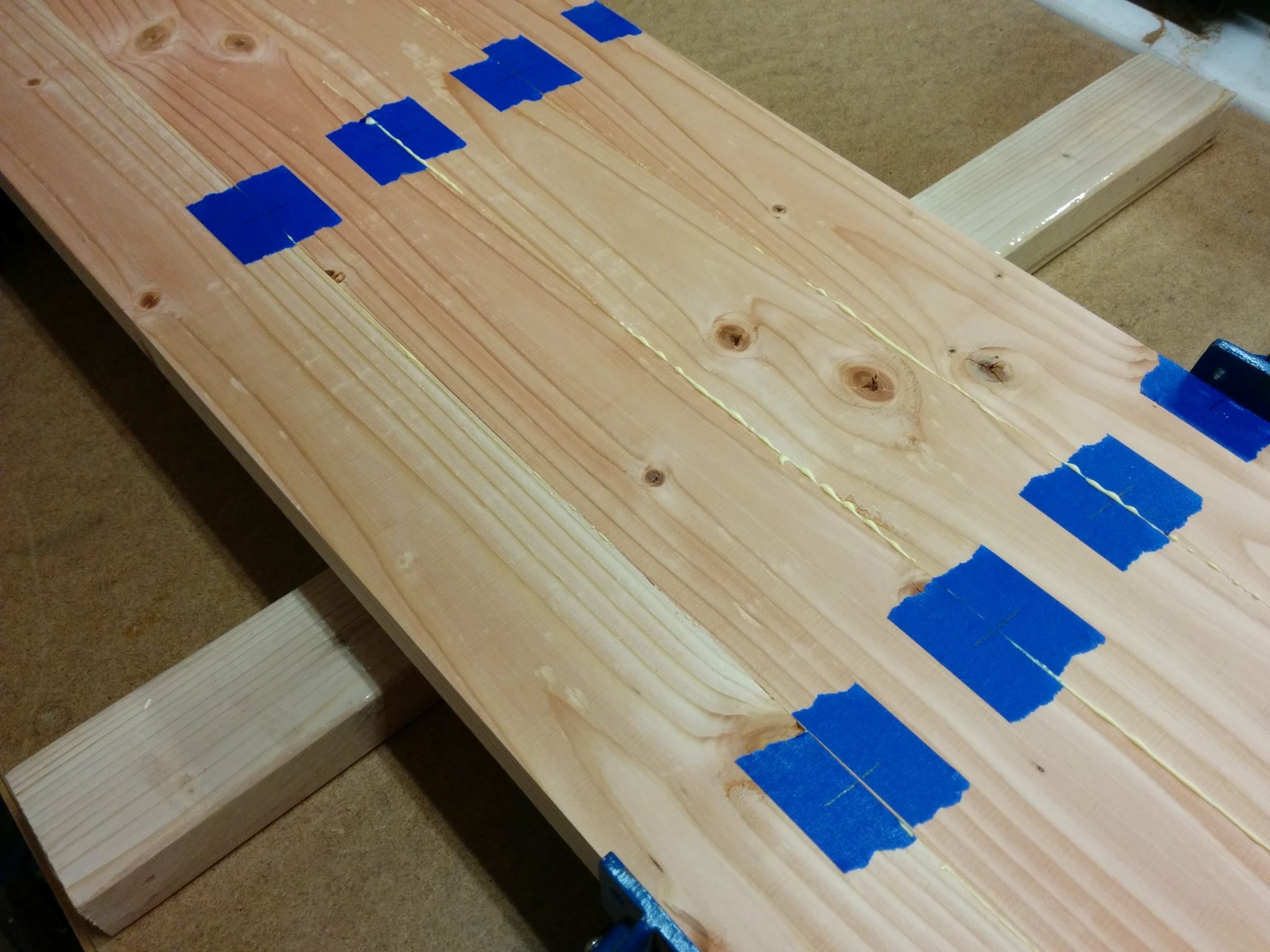
Once it was dry I joined them together with glue and biscuits just like I did for the individual boards.
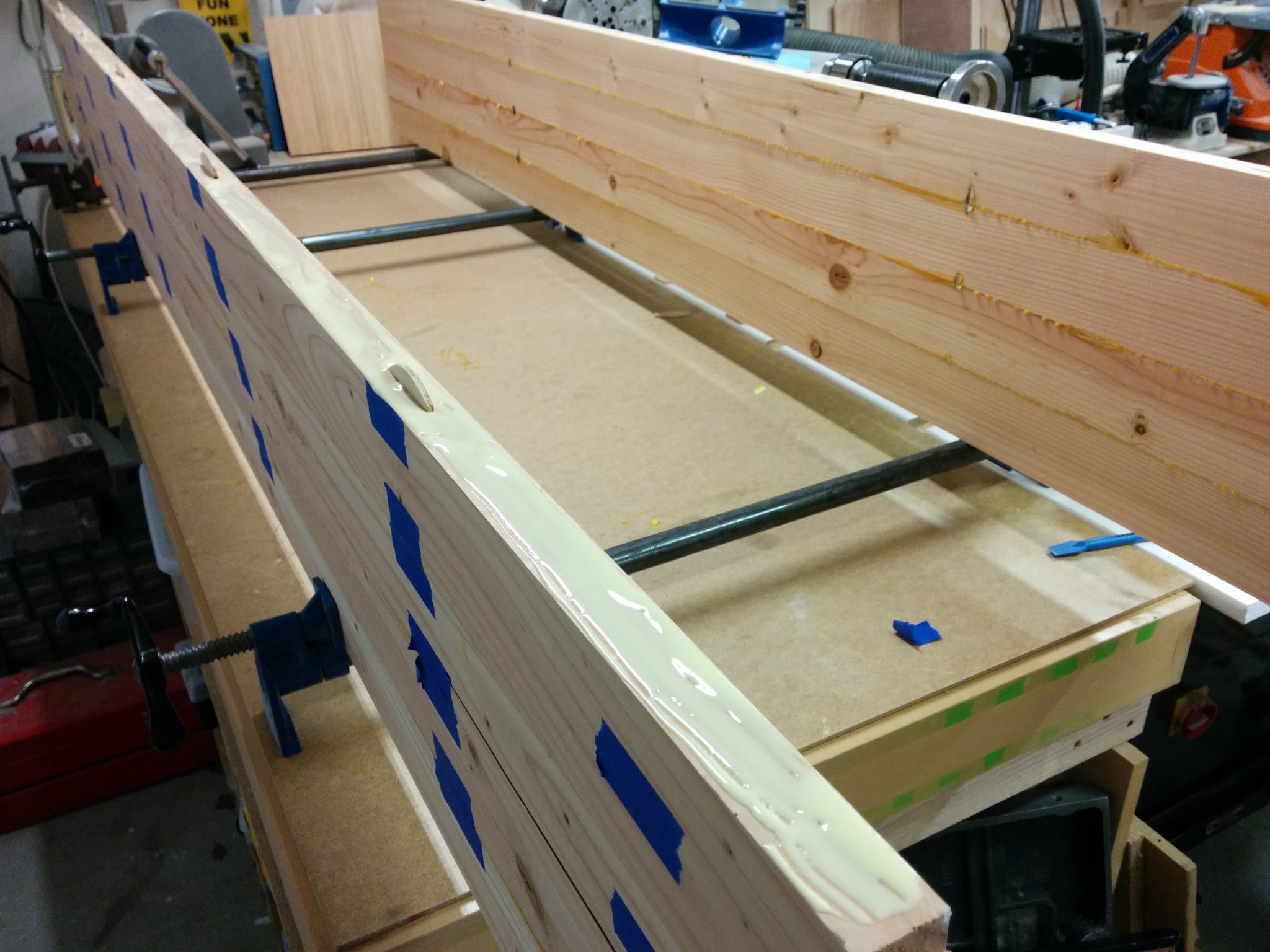
Glue and biscuits applied to one half.
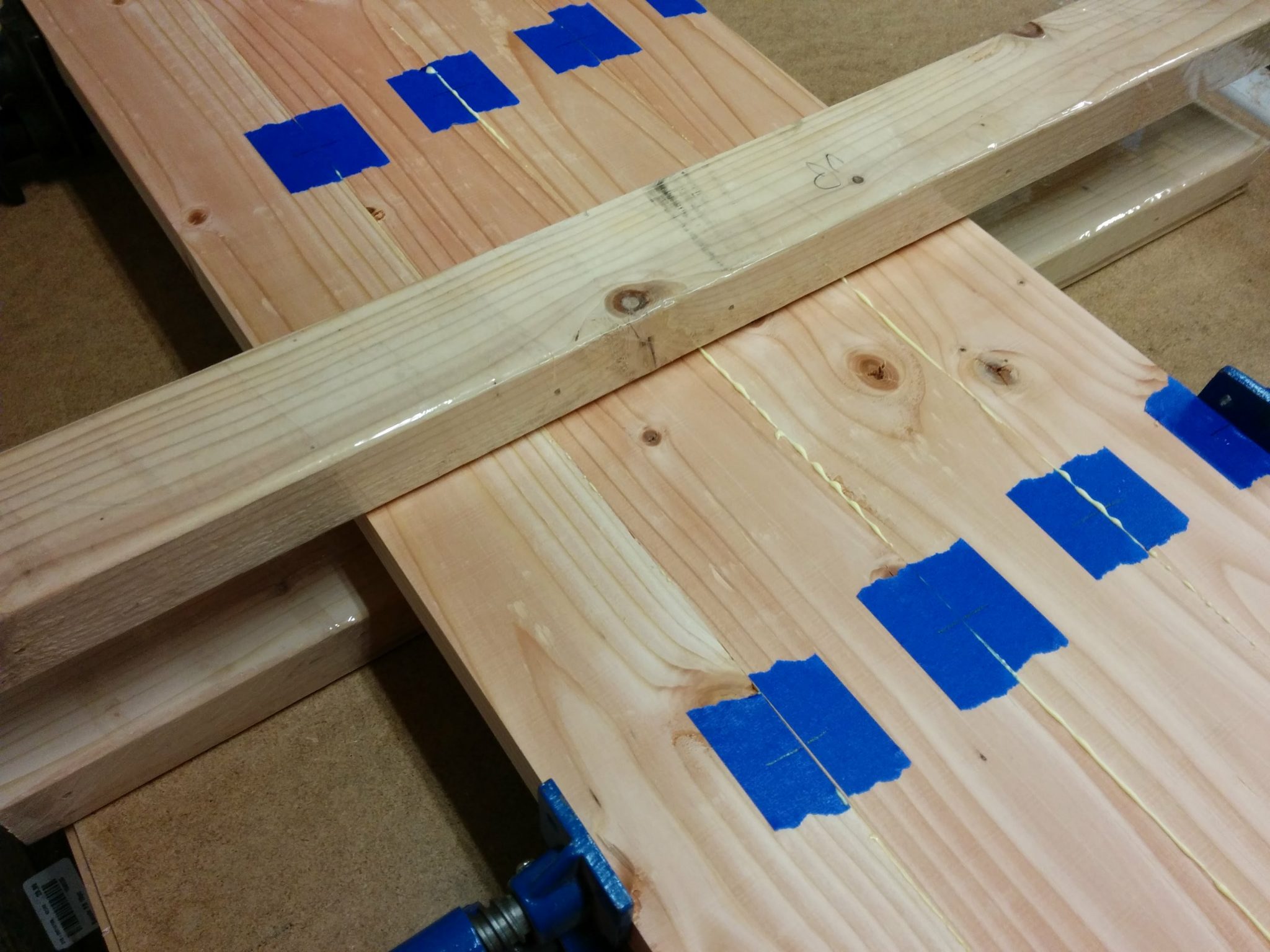
Pressing both halves together.
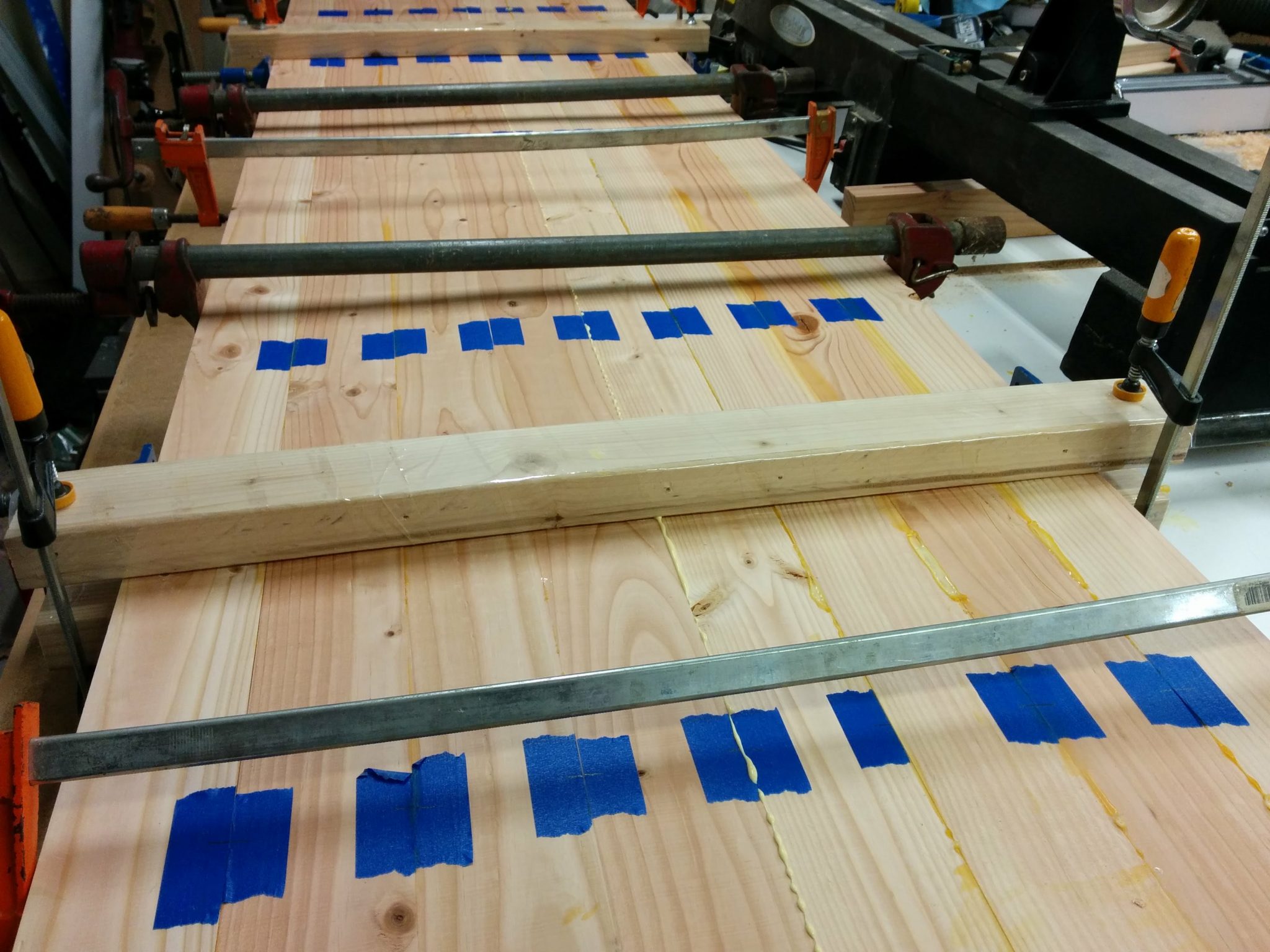
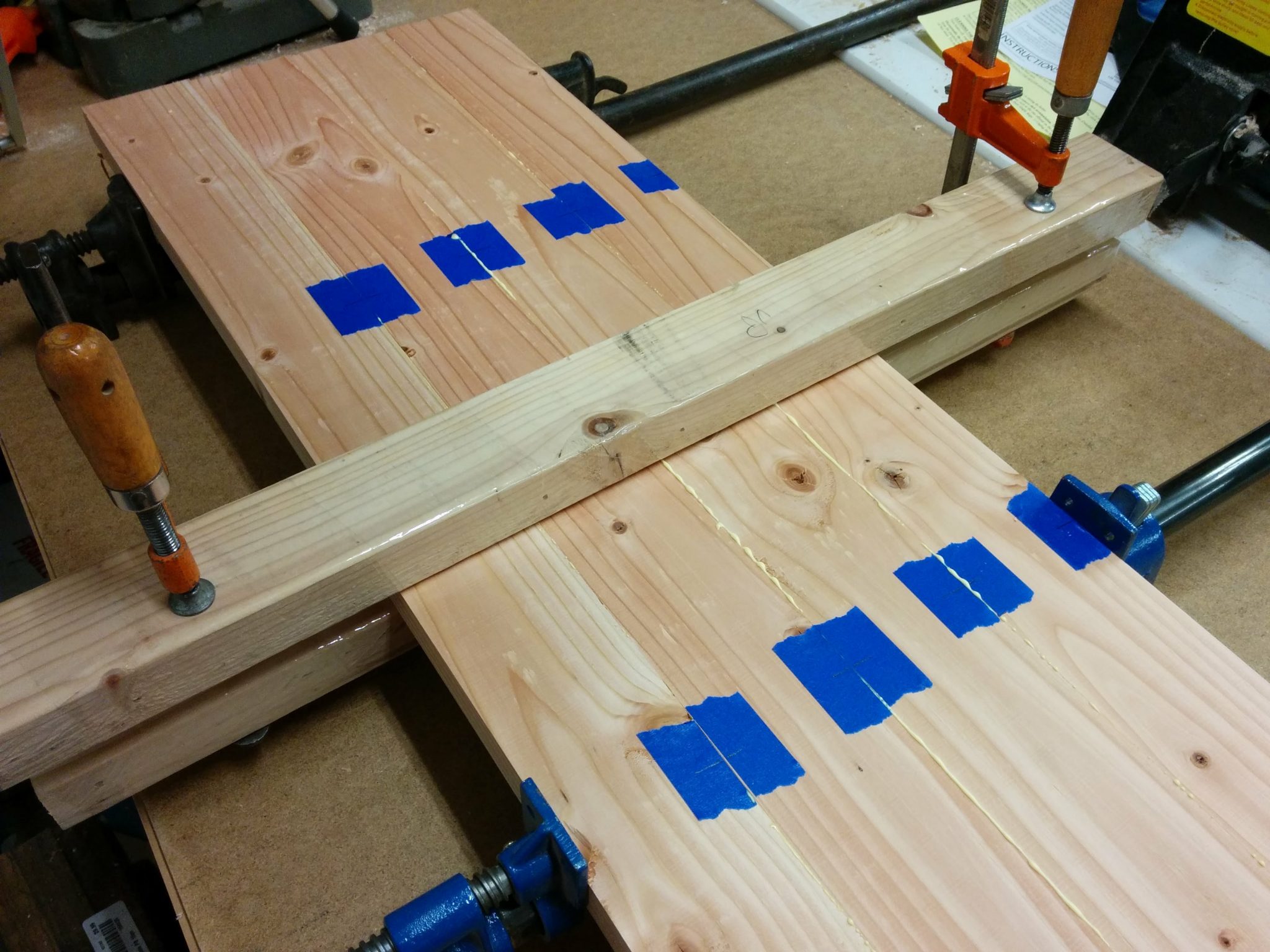
Both halves clamped and cauled.


After taking the clamps and cauls off I was left with a fairly warped but completely glued up benchtop.
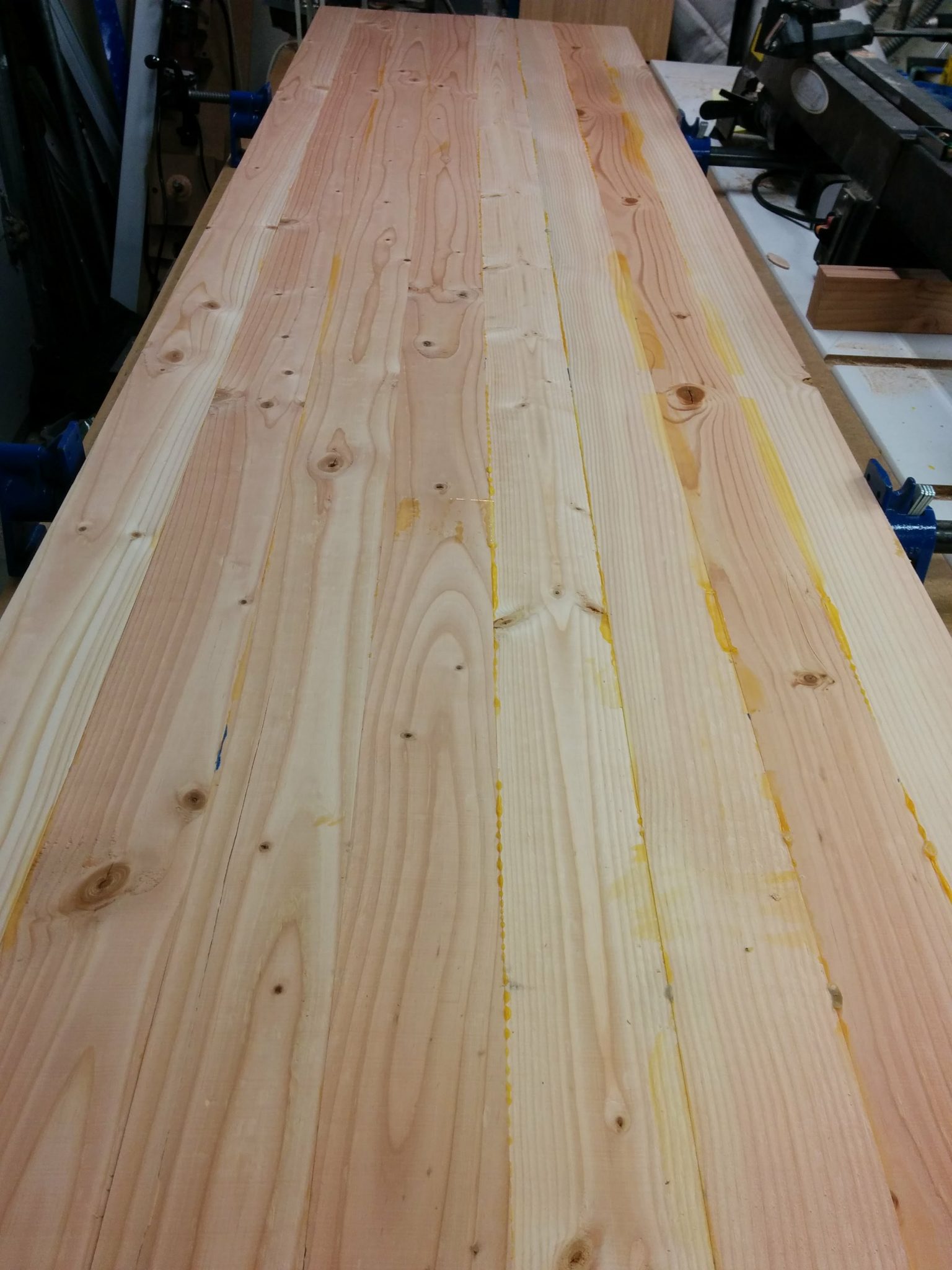
Clamps and cauls removed.


At this point, the project wasn’t looking too promising.  My goal was not only to make a benchtop but to see if it can be reasonably accomplished using common 2 X 4 material.  Unfortunately, they are so dimensionally unstable that they do a lot of twisting and warping as they dry.  Maybe if I had these sitting in my shop for a few seasons so they can thoroughly dry then the end result would have been better.  Still, I was somewhat determined to make this work.


I started sanding it using a random orbital sander.
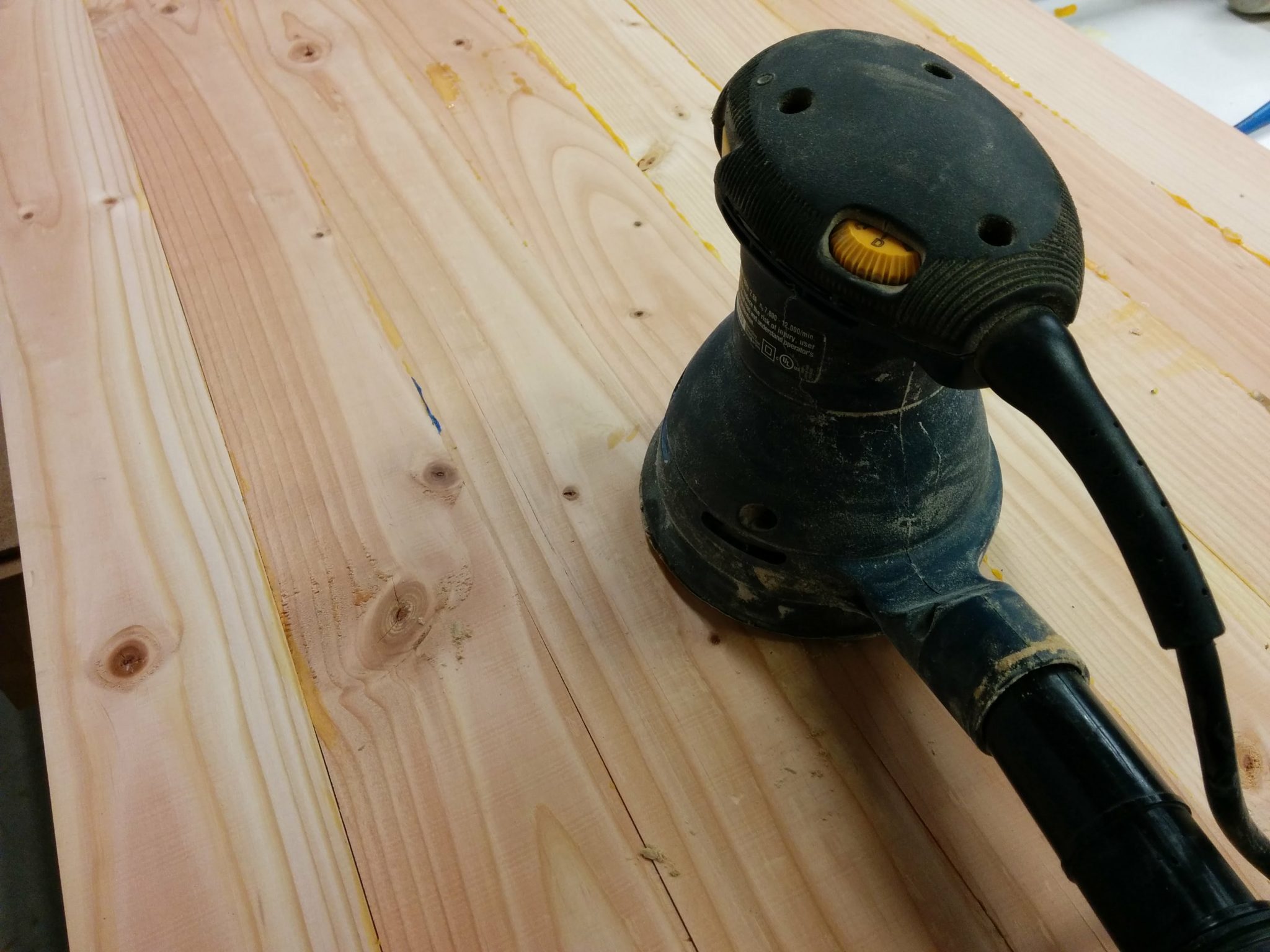
Started with a random orbital sander.


This was taking a long time so I switched to a belt sander.  This want a lot faster but I was still unhappy with the results since there was so much warpage to this.  I know I can eventually get it to work but I’ll have to remove so much material that  it won’t be as sturdy as I want it.
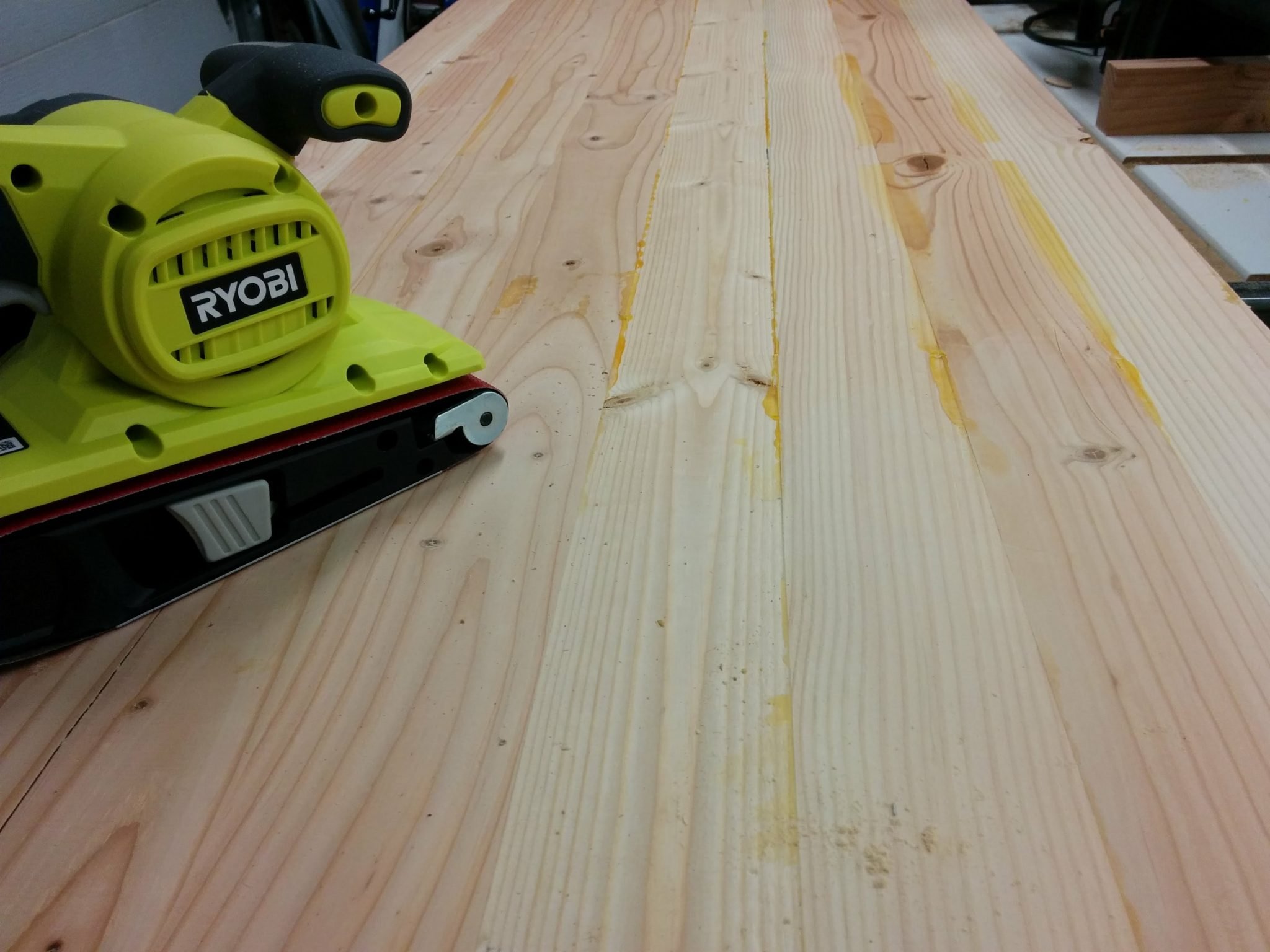
Switched to a belt sander.


It was at this time that my wife asked if I had any of the leftover wood from our newly installed hard-wood floors.  She had the idea that I can just use that since it already has the tongue-and-groove in place, plus she likes the look of oak more than fir.  Normally, I’m not a fan of oak but I had to agree that this would look better and be stronger even though the tabletop would be 3/4″ rather than 1″.

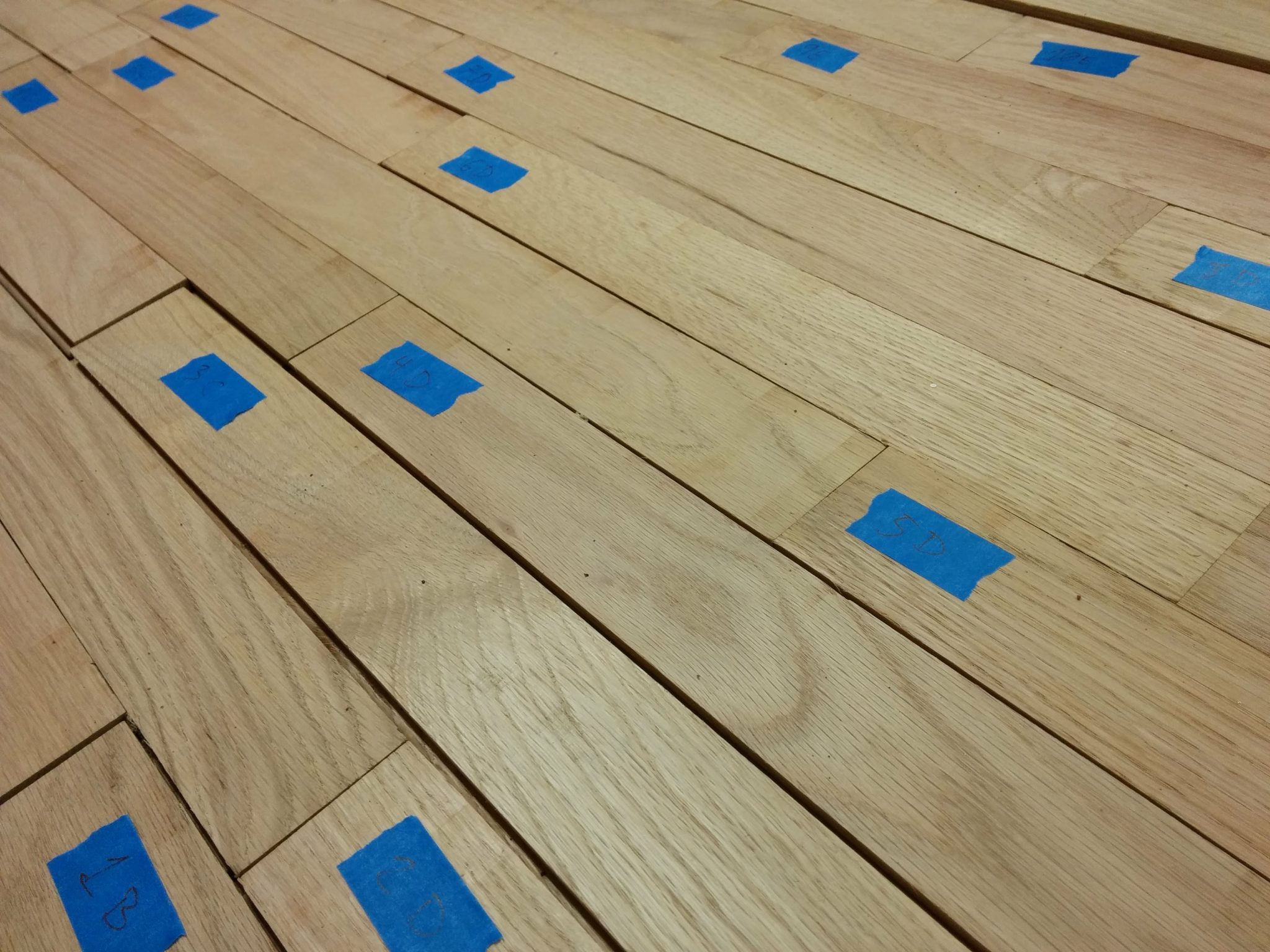
I decided to give it a shot.  I gathered up the scrap wood flooring and started laying it out.  I needed to get enough material to make a 7′ X 2′ section.  The plan is to have a 5′ wide bench with a 2′ wide flip up extension.
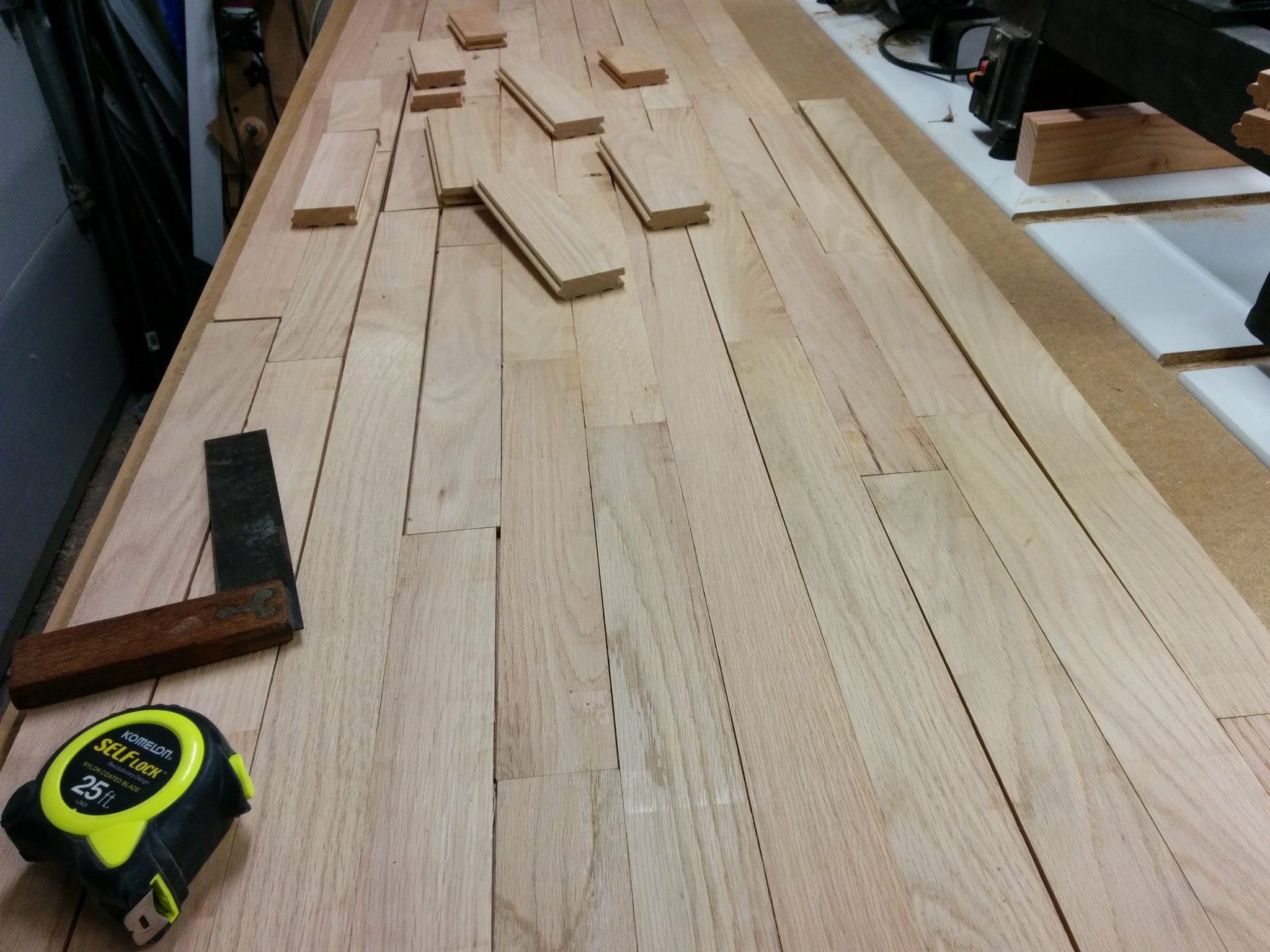
New plan! Laying out the oak flooring.


I had to cut some mating grooves in a few of the pieces but I was able to get enough material.  Once it was laid out, I attached a piece of blue painters tape to each piece so I could label them.
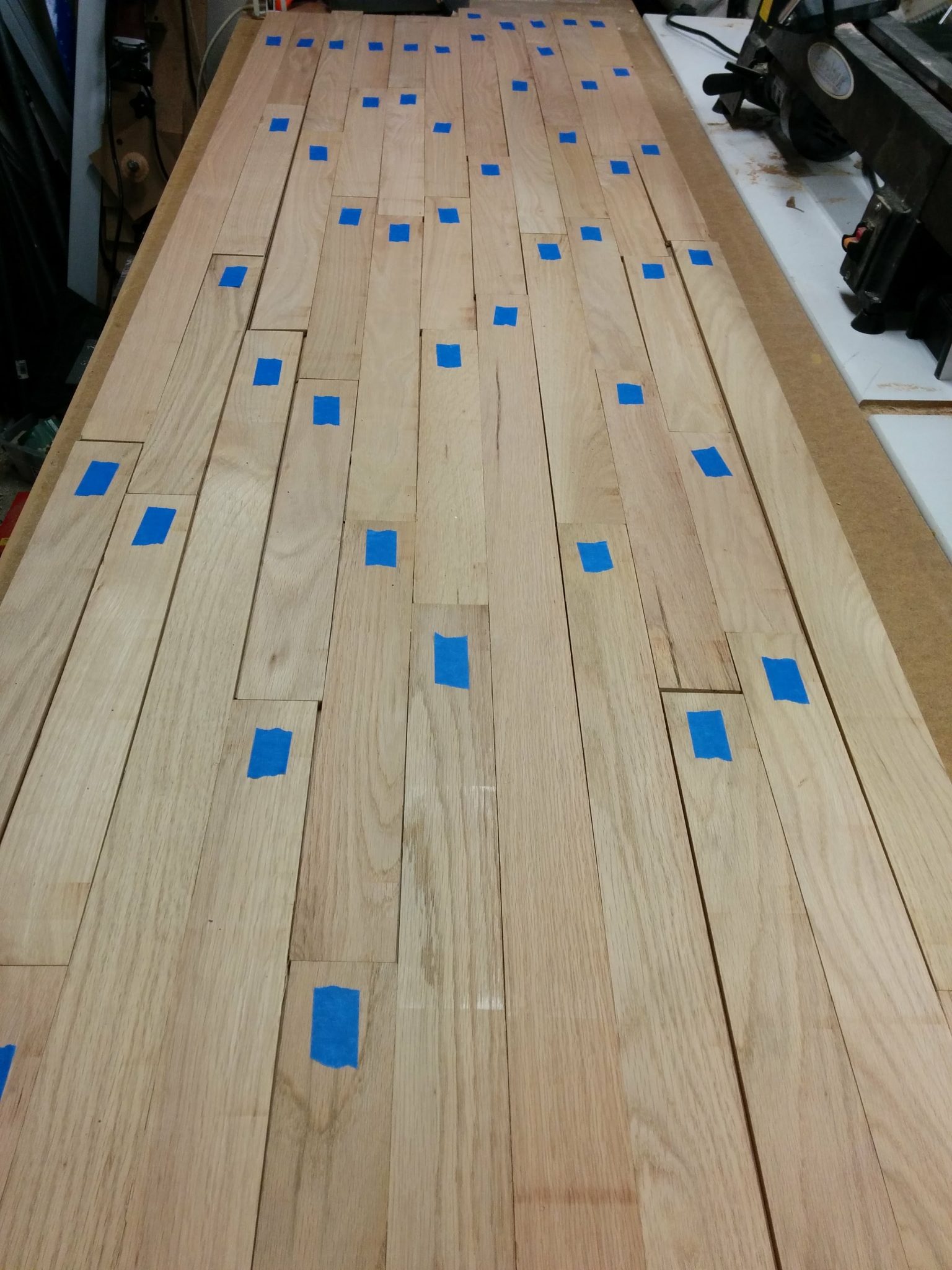
Painters tape applied for labeling.


I labelled each piece with the row (number) and which order it is in from left to right (letter)
Each piece labeled.
Each piece labeled.


Now, this is where this gets interesting.  One of the reasons my wife wanted me to use the oak flooring is because she wanted me to try to get “mill marks” on some of the boards.  Normally, I’m not a fan of faux-finishes and antiquing techniques, but this was an interesting challenge.

I tried approximating it by hand with 24 grit sanding pads and the result wasn’t pretty (as I expected).  The other technique I wanted to try was to put actual milling marks on the wood.

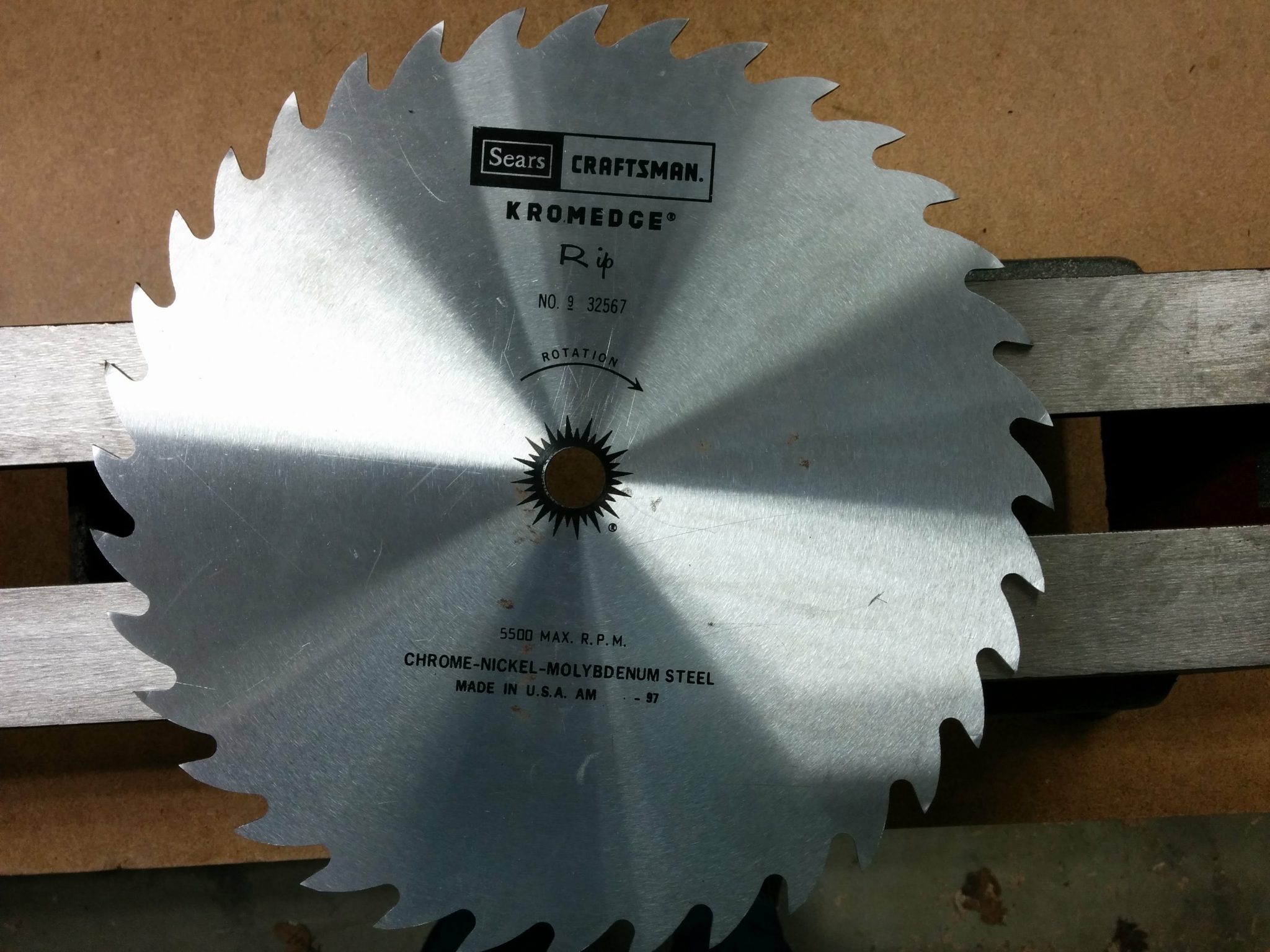
To accomplish this, I needed to get a blade that I could damage.  Specifically, I needed a 10″ table saw blade without carbides.  I knew I wasn’t going to find this in the store so I would have to look for a used blade.  I started my search at Habit for Humanity ReStore.  I couldn’t find anything there that was 10″ so I decided to try at a pawn shop.  I eventually found an old Craftsman blade that had all of my requirements and was new in the box.  To top it all off, after I told them why I was getting it, they knocked $6.00 of the price.
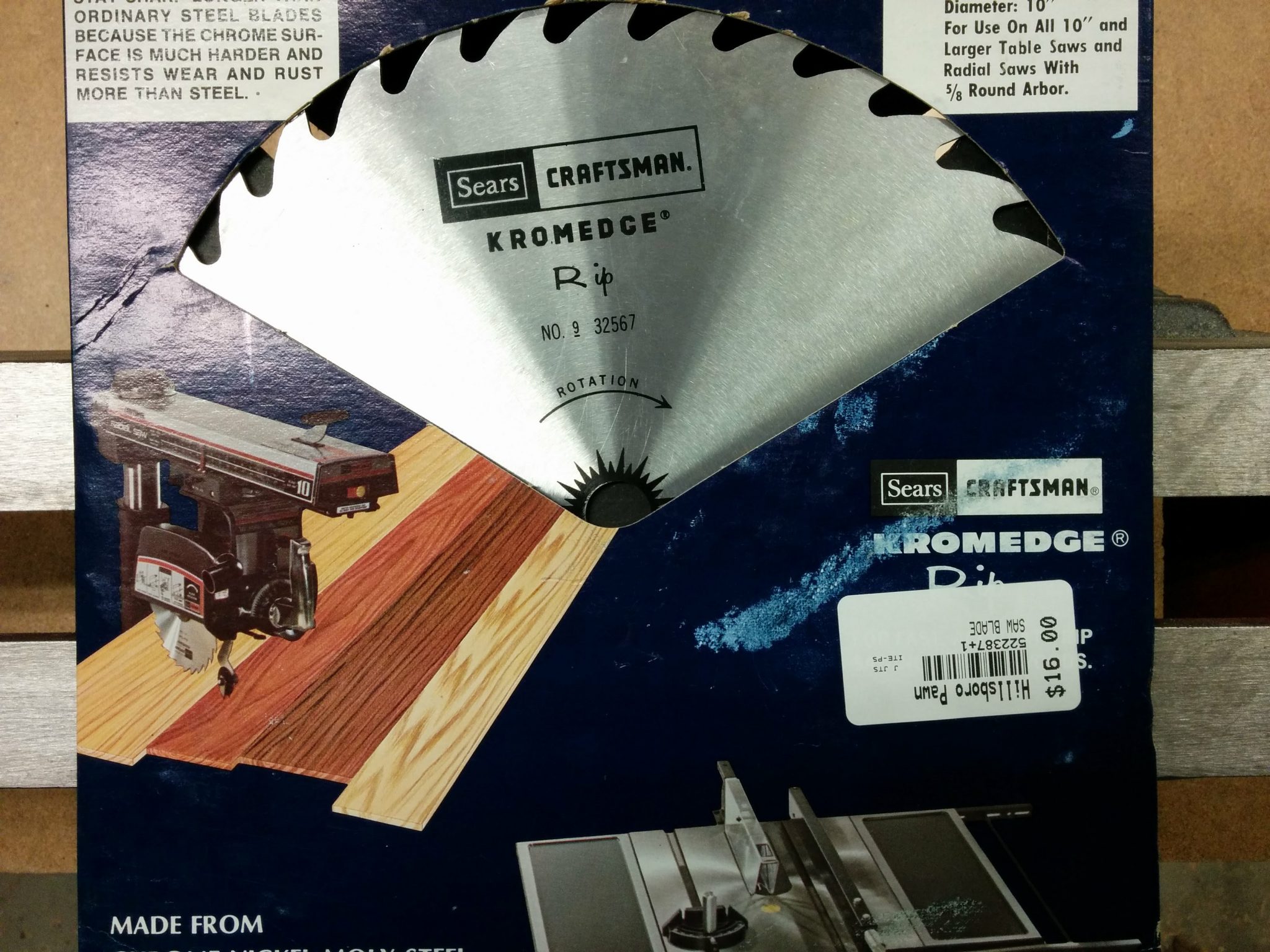
Found a cheap 10" blade with no carbides.
Found a cheap 10″ blade with no carbides.
As you can see, it's cheap but in decent shape.
As you can see, it’s cheap but in decent shape.


To add the mill marks I took one of the teeth and bent it towards what would be the right of the blade after it was installed on the saw.
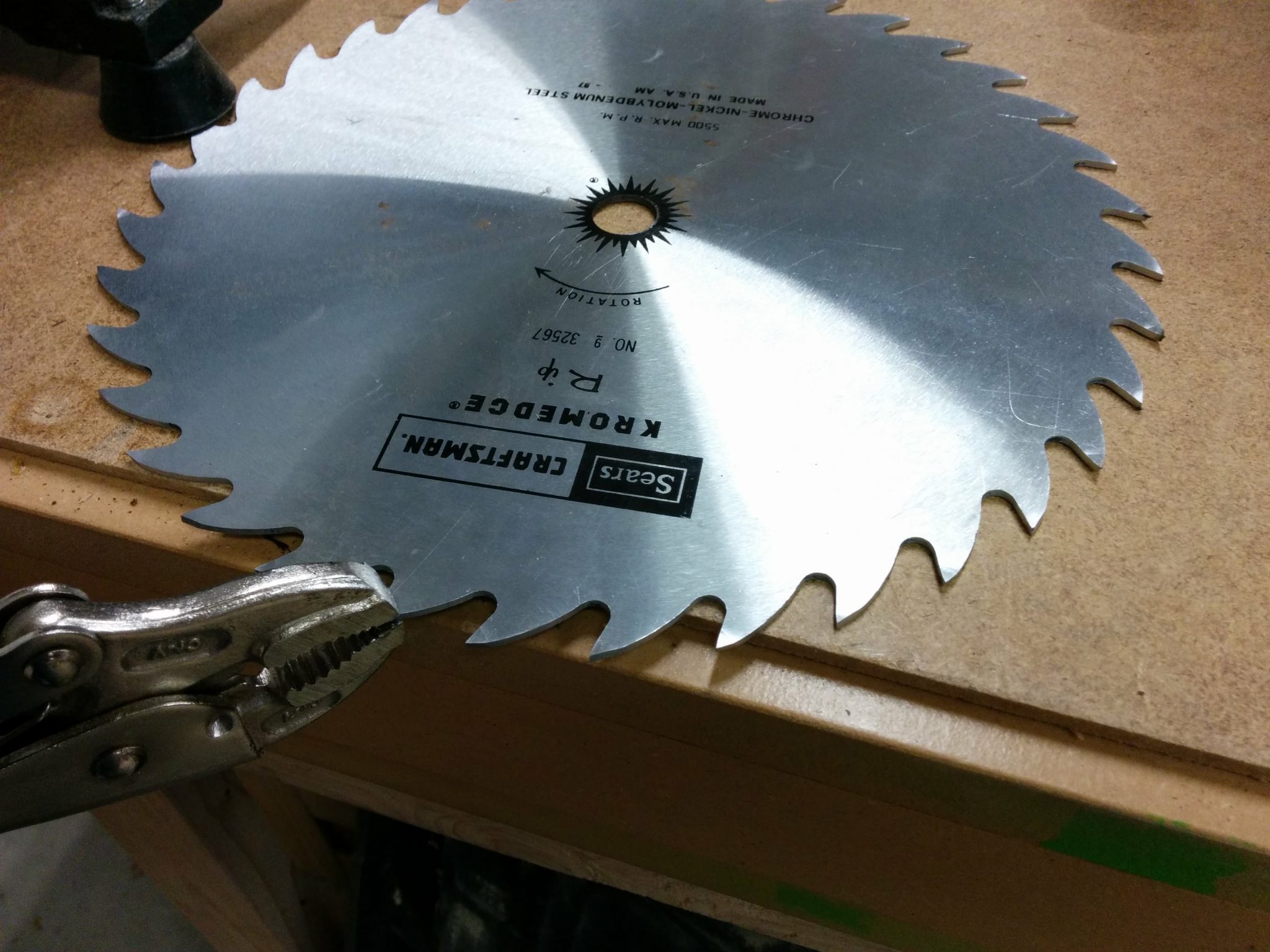
Bending one of the teeth with a pair of vice grips.


Then I installed it on my saw and made a few test cuts.  I then bent it a few more times until I found the right amount.
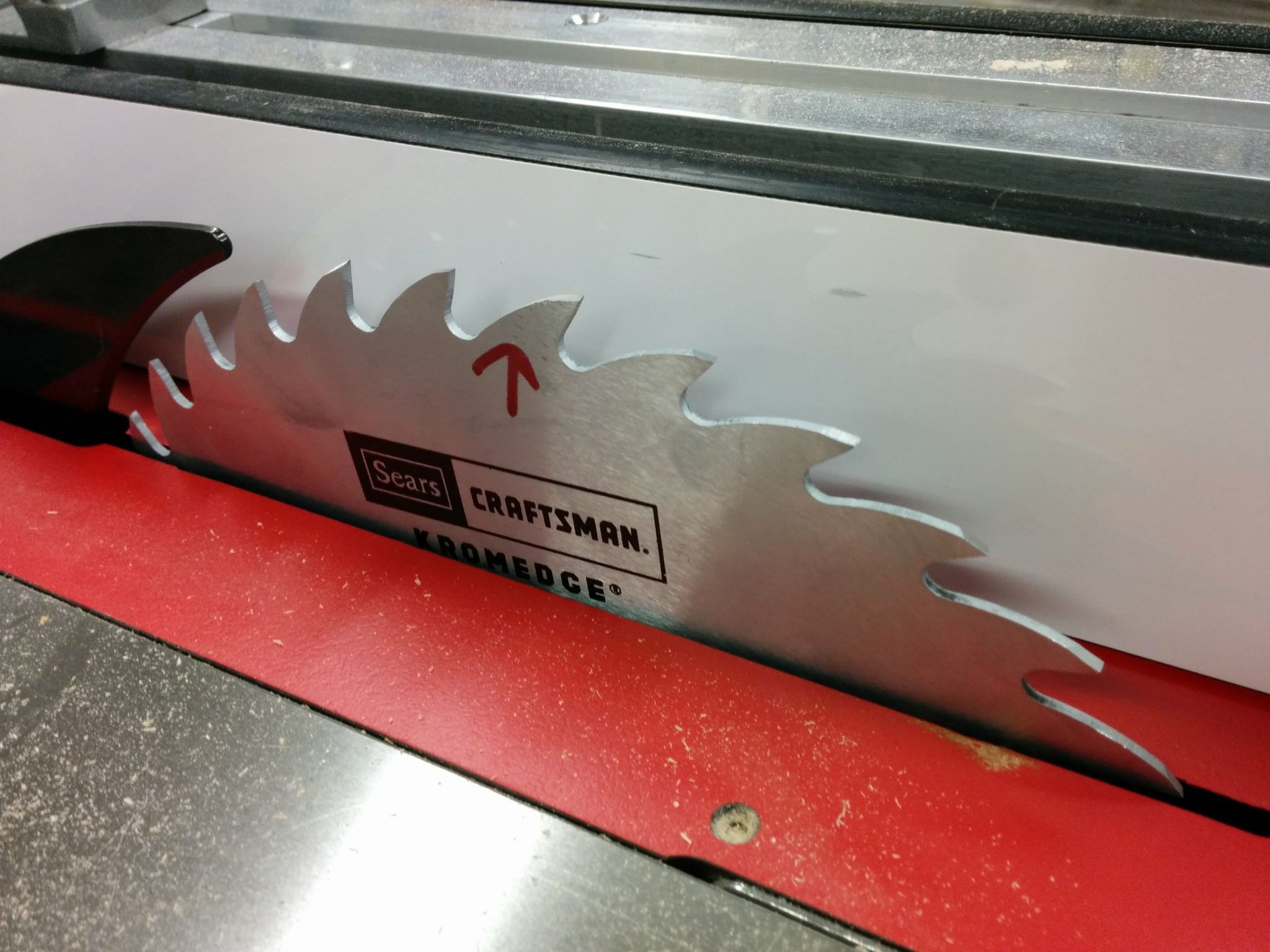
The blade installed. The bent tooth is marked with an arrow.


Here’s a test cut.  I’m going to do a bit more distressing and see the final result after I stain this wood.
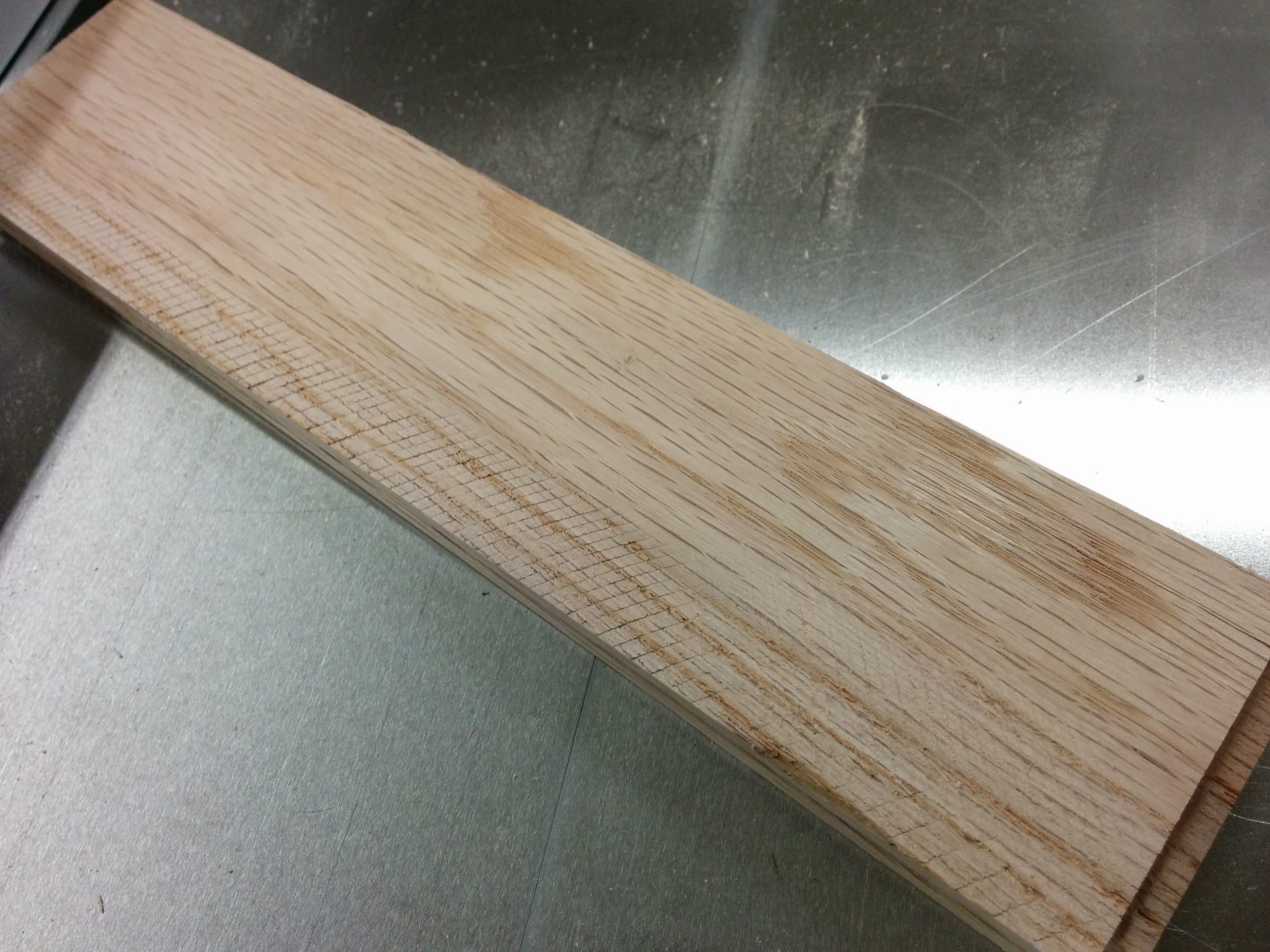
Sample mill-marks.
Sample mill-marks.


Feel free to leave a comment below and let me know if you’ve tried this technique or have any other ways of distressing wood that have worked for you.
Up next: Workbench: Part 4 – Gluing up the new top.


Back to Workbench: Part 2 – Gluing up the top.

Back to Workbench Part 1 – Milling down some 2 x 4s.
 

Workbench: Part 2 – Gluing up the top

This is a continuation of Workbench Part 1 – Milling down some 2 x 4s.
We got another snow day so this gave me an opportunity to work some more on my wife’s workbench.

Now that the boards have all been milled down, it’s time to start gluing them together.


For this project, I knew I was going to need a few sets of cauls.  If you are unfamiliar with a clamping caul, read on…

A clamping caul is simply a set of boards that are used to keep the top and bottom of a wide glue-up relatively flat.  Their use will make sense at the end of this article.  They are extremely easy to make.  I made two sets for this glue up.  I started with some 1 X 3 stock that I cut down to be a few inches longer than the width of the final glue up.

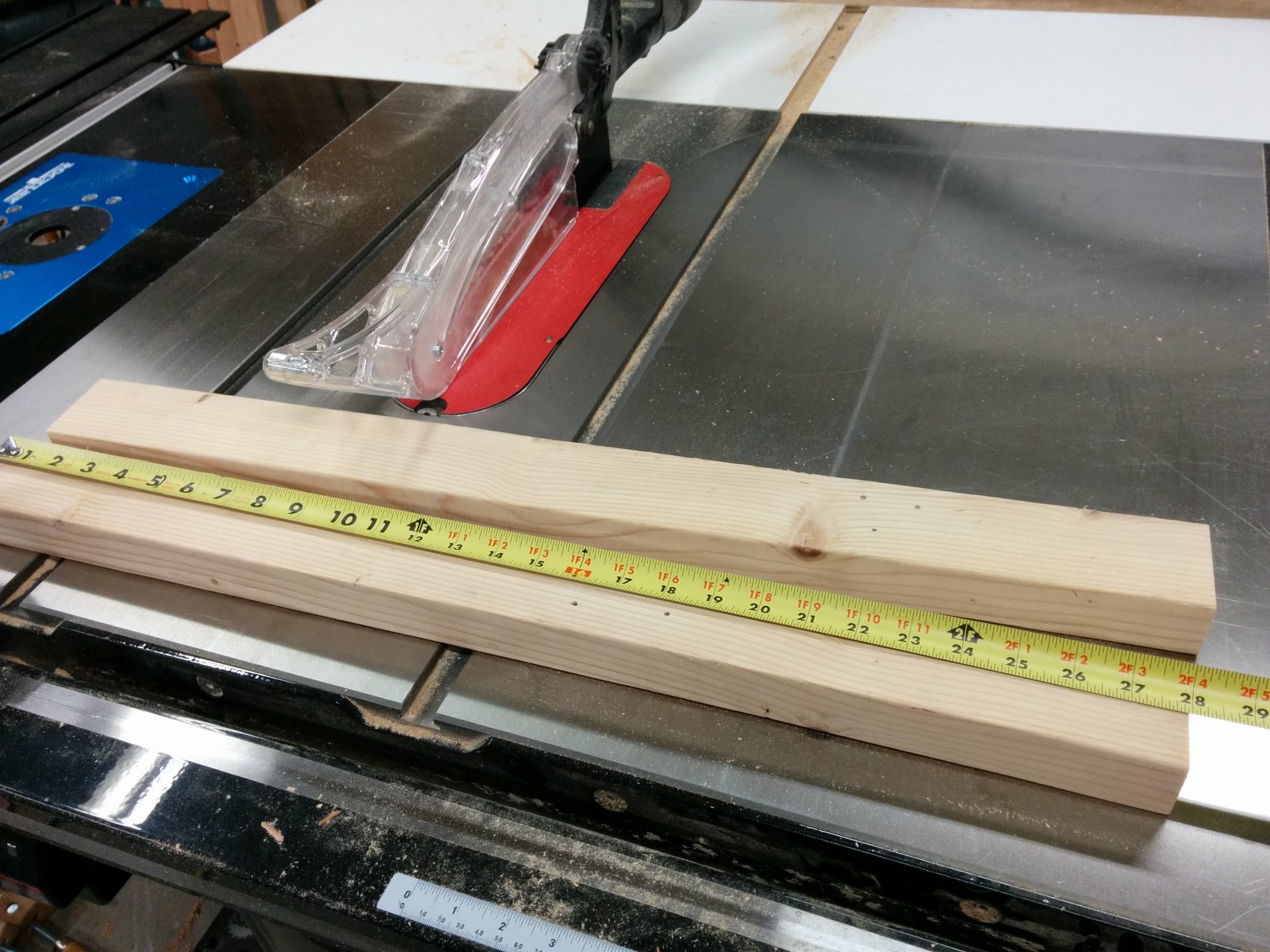
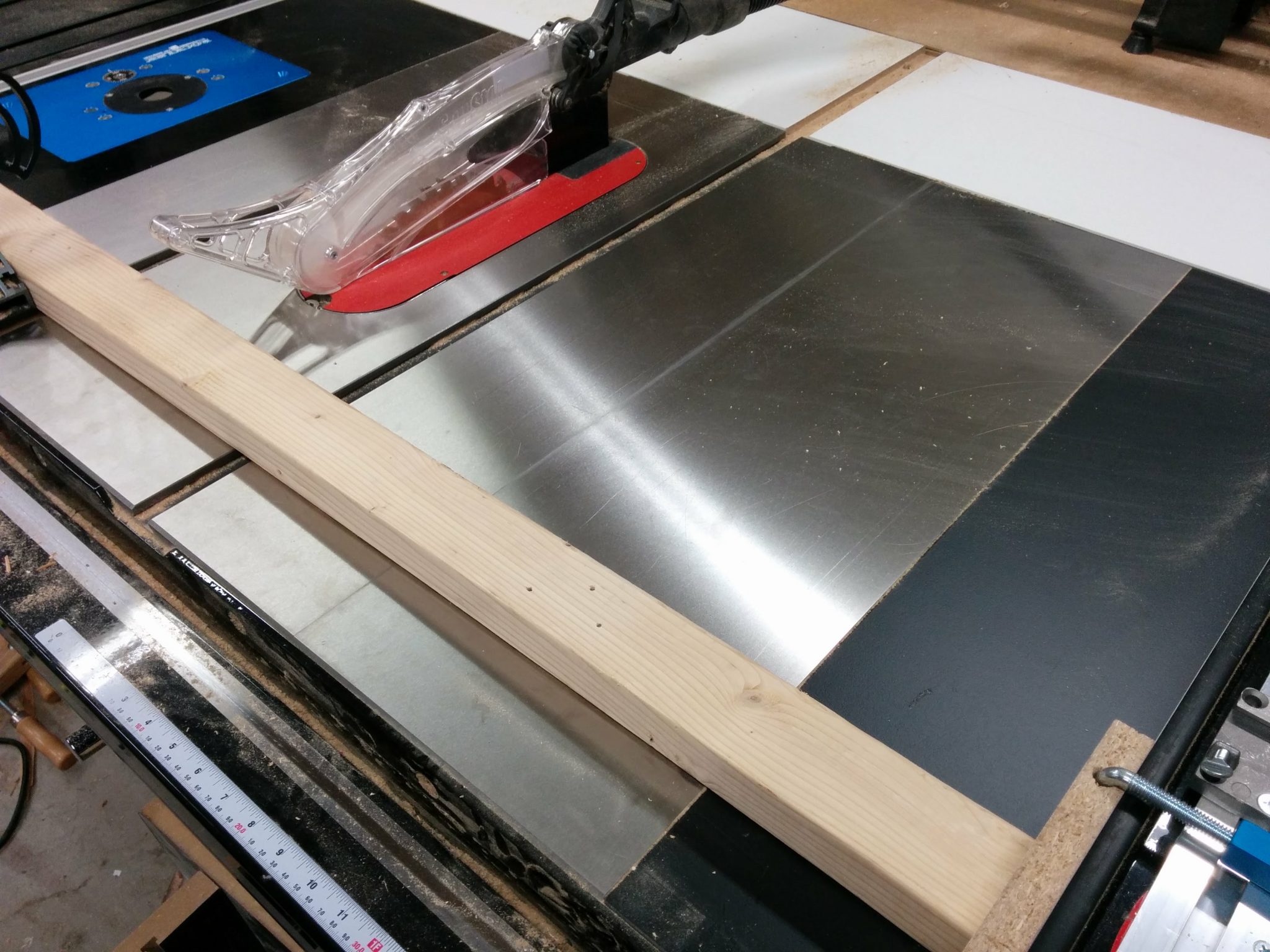
Cutting down the 2 X 3.

The benchtop I am making is going to be 24″ deep so I made my cauls about 28″ long.  There’s no need to be exact, just make it a bit longer than the final glue up.

The boards have been cut to 28" long.
The boards have been cut to 28″ long.

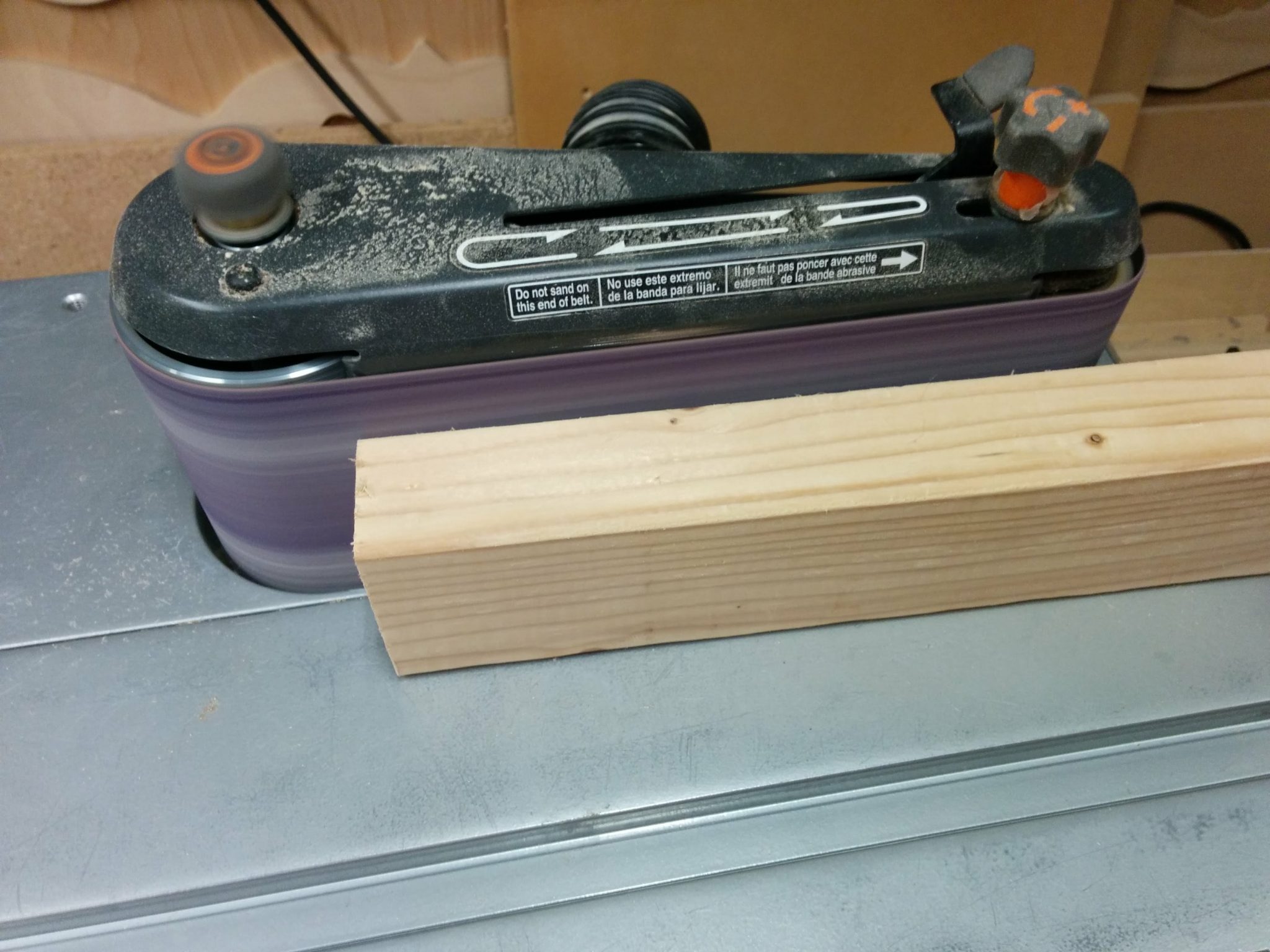
After cutting four pieces that are 28″ long, I took them to my oscillating belt sander.  This step is optional but I find it really helps.  What you want to do is add a little bit of a slope at both ends of one side of each caul.

Sanding a slope at the ends.

The end goal is a set of boards that have a gap between them at the ends.  This is so when you attach them, the clamps will pull them together but it won’t bow up in the middle.

The gaps at the ends of the cauls.

After I shaped them with the sander, I covered them in packing tape so the glue won’t stick to them.

Packing tape applied to the cauls.

Now, time to work on the actual benchtop.  First I laid the milled boards out how they will be glued together.

Arranging the boards.

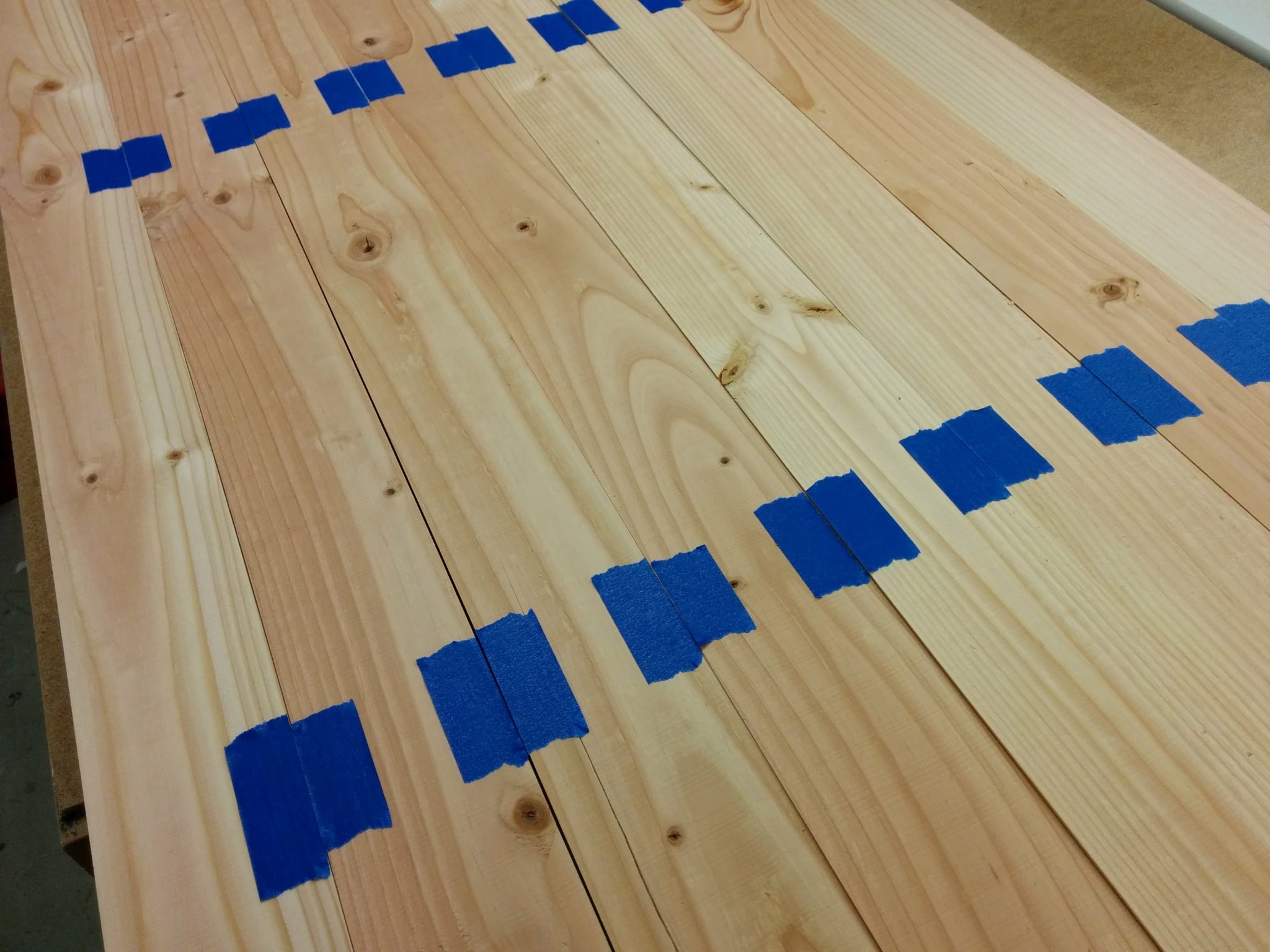
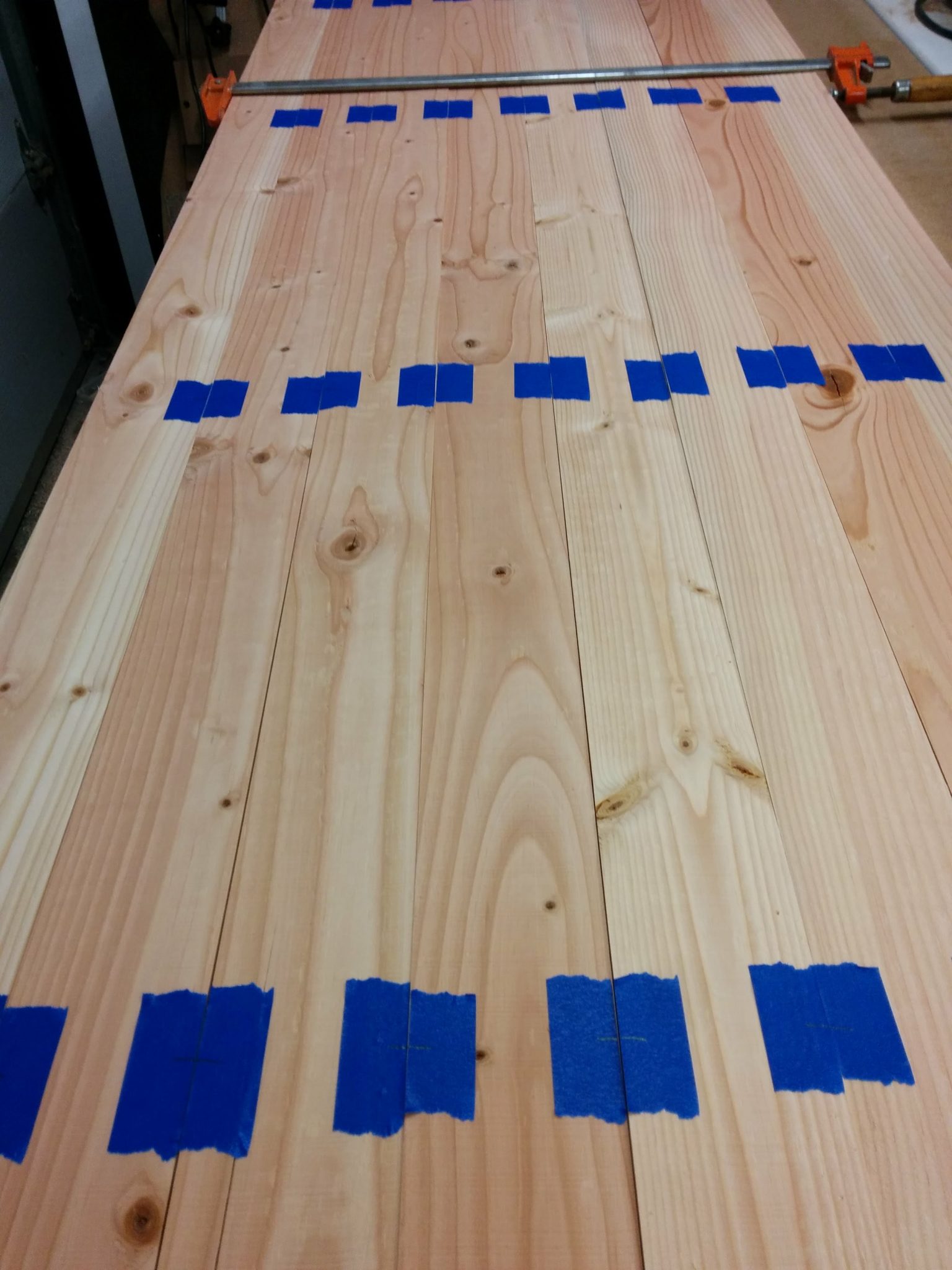
I am going to be using biscuits to align everything so I put little pieces of painters tape on the edges of the boards where I was planning on putting the biscuits.

Tape applied to the boards.

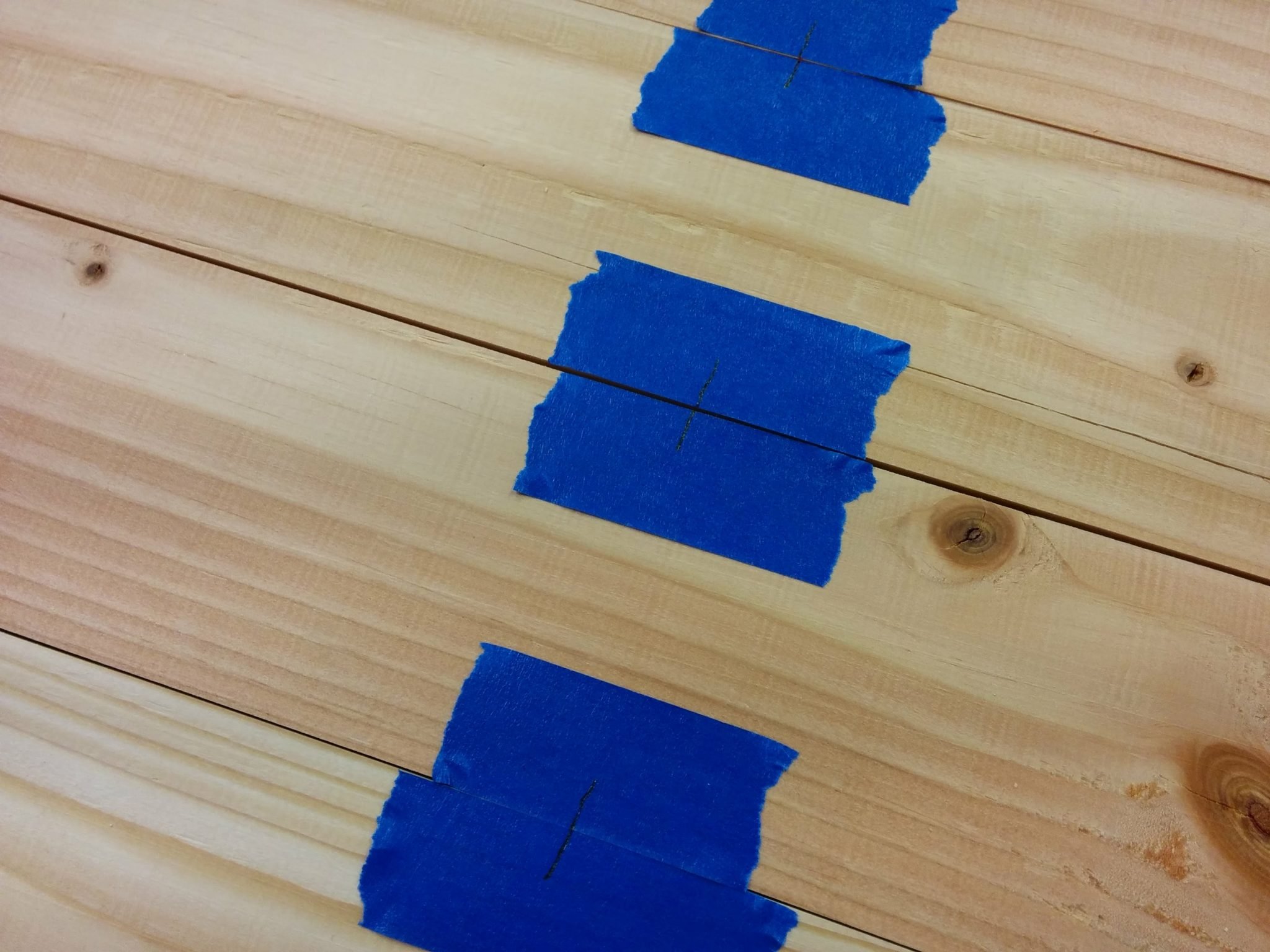
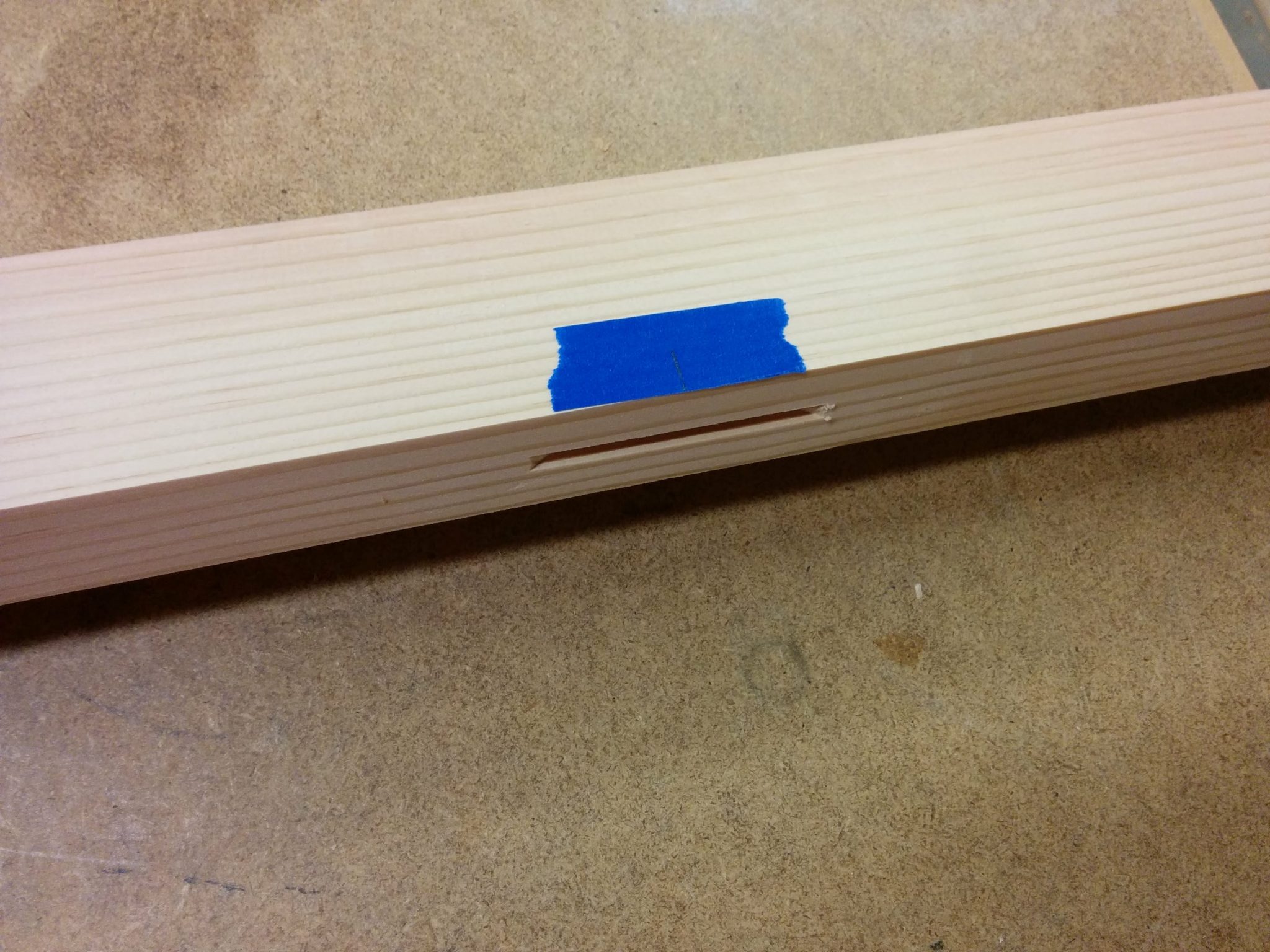
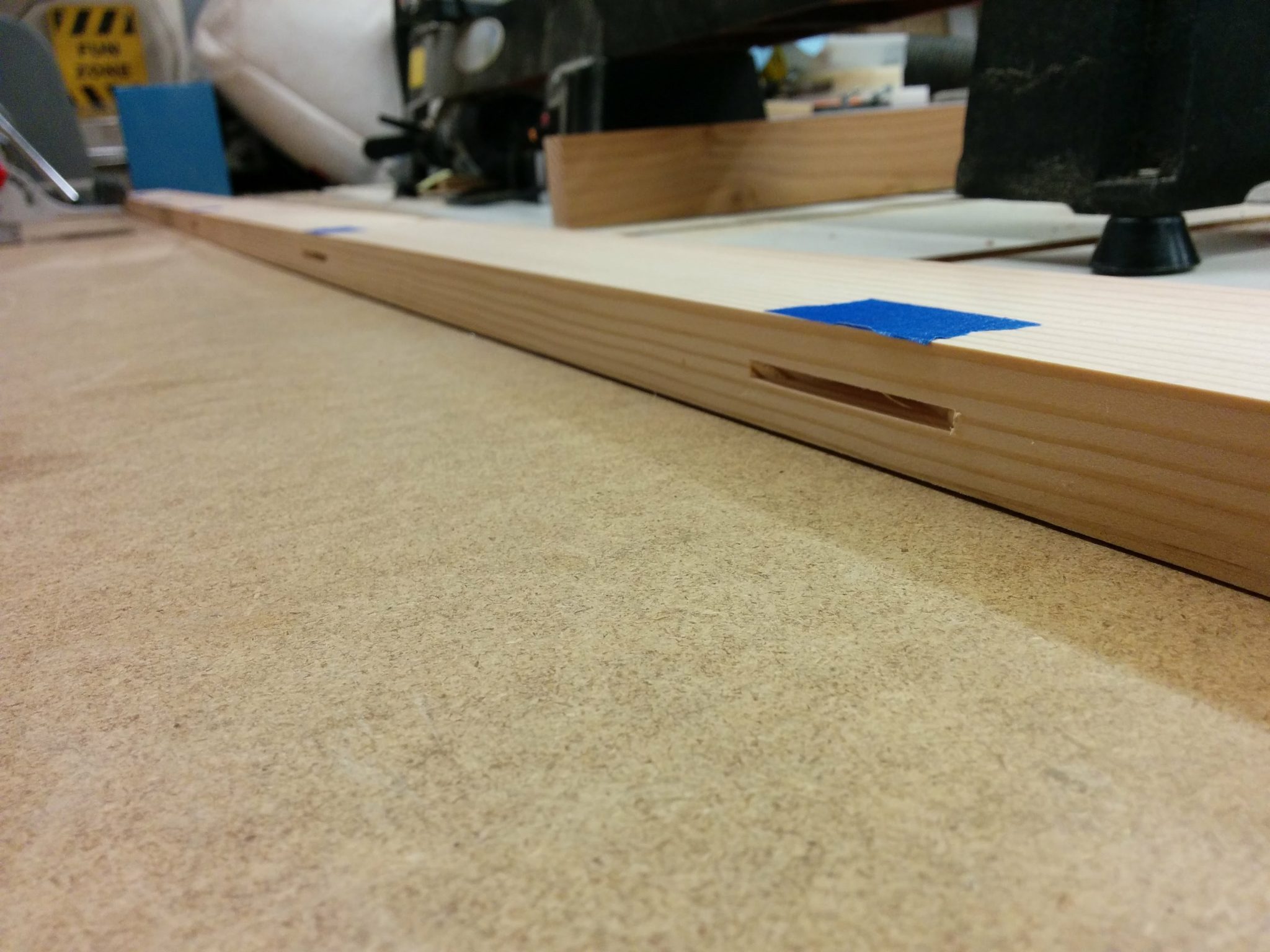
Afterward, I made marks where I should center the slot for the biscuits.  The placement here isn’t critical.

The biscuit slot alignment marks.
Biscuit slot alignment marks.

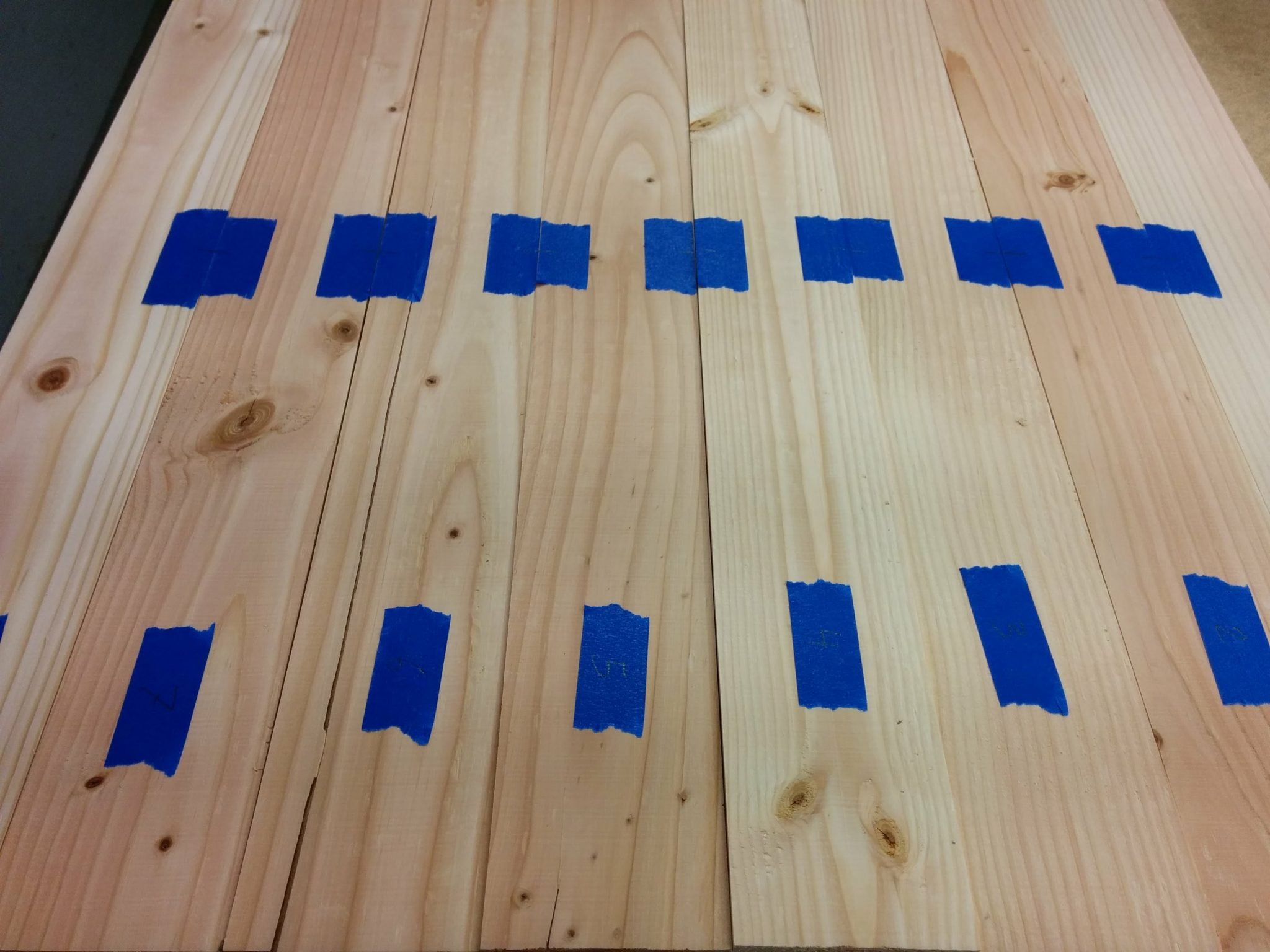
Next I added some tape so I could number each board.  The reason I’m doing this with tape rather than just writing directly on the boards is because these boards are douglas fir and are pretty soft.  I didn’t want to make indentations from a pencil on them if I could avoid it.

The boards are all numbered and in order

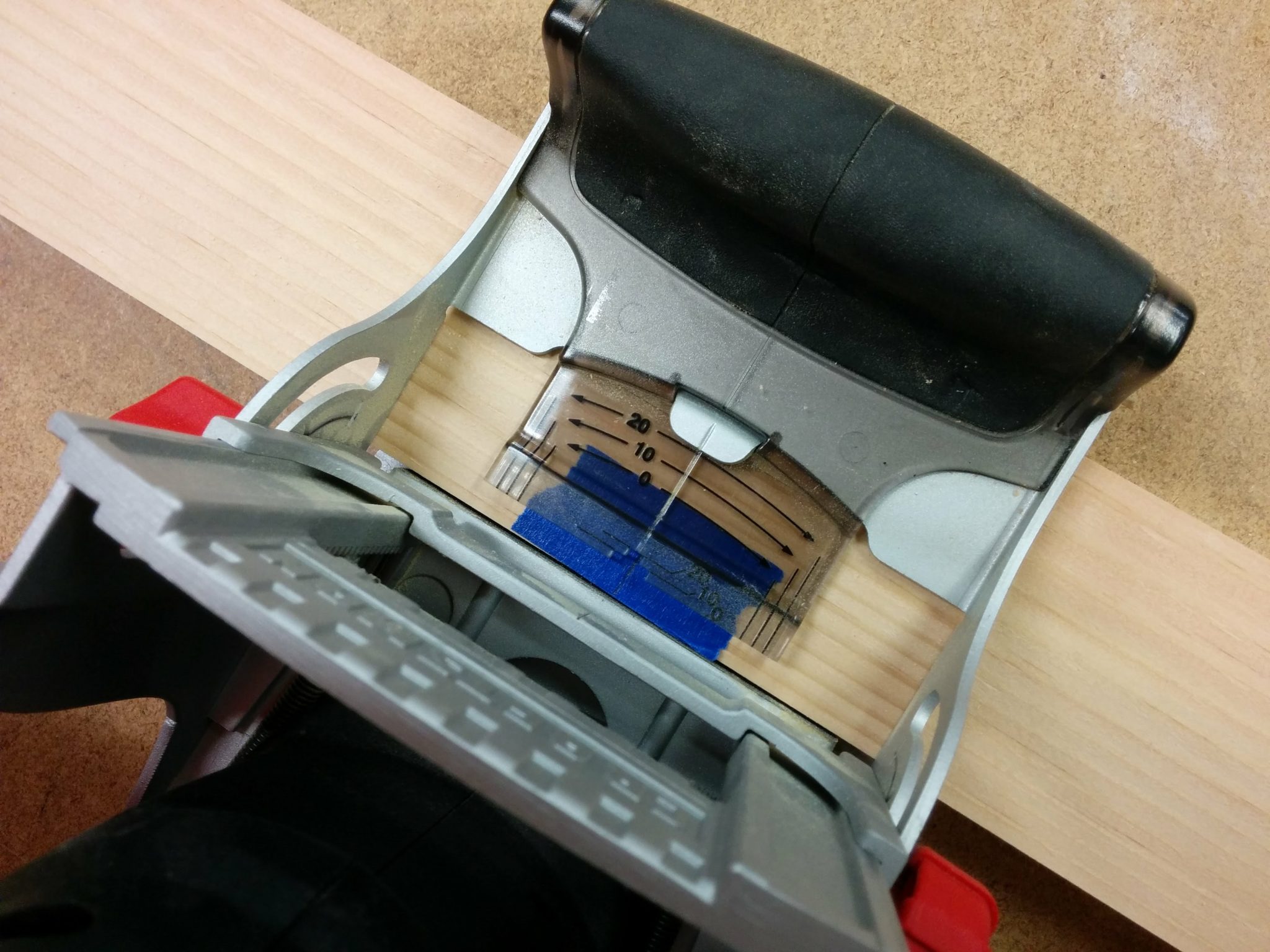
Using the marks I had drawn, I used my biscuit joiner to make slots at all of the marks.

Lining up the biscuit joiner to cut the slot on the mark.
One of the biscuit slots.
Biscuit slots cut into one of the edges.

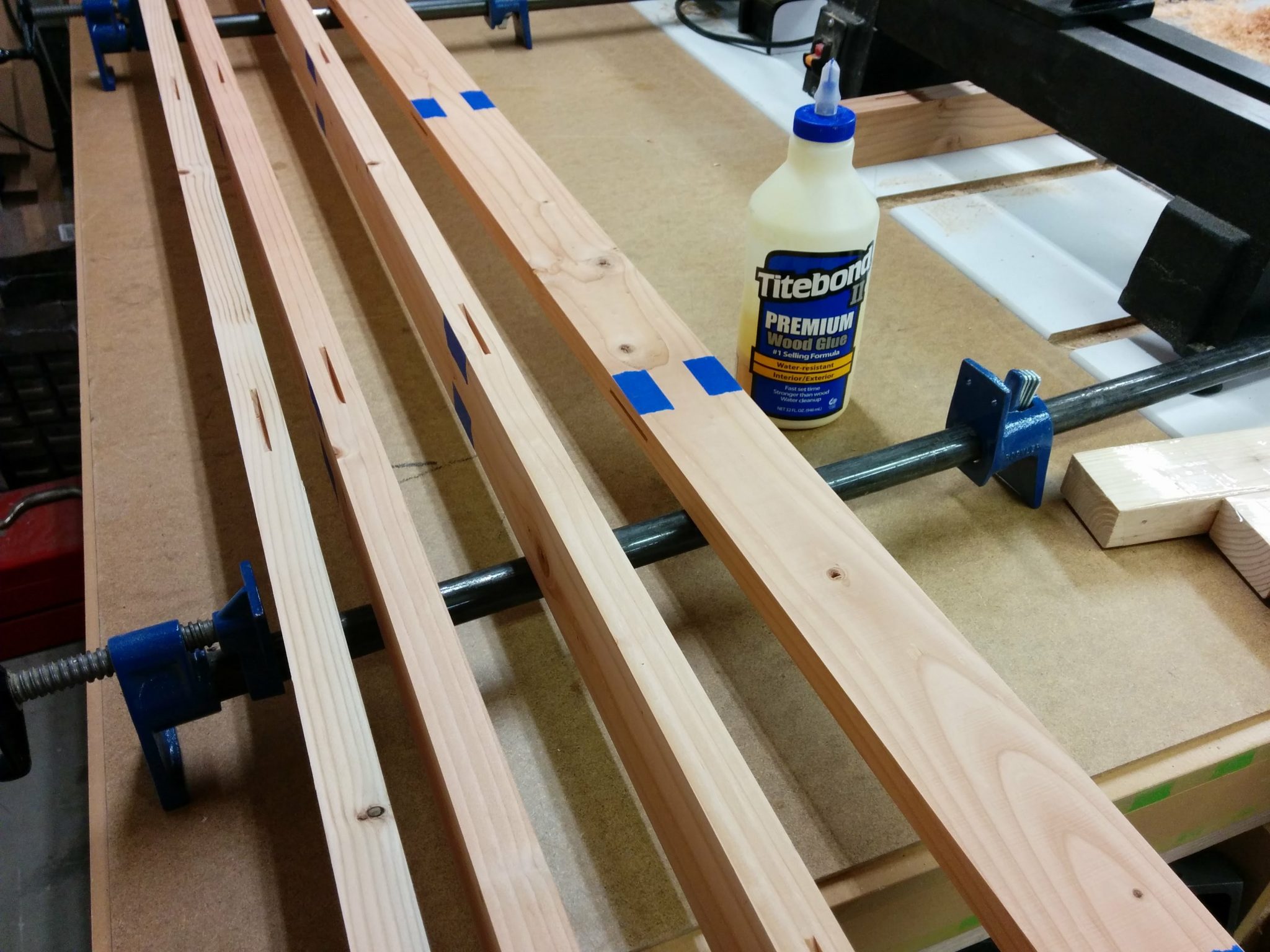
Now it’s time to try gluing this all together.  I decided to do this in sections, gluing up half at a time.  Setting up a few pipe clamps, I arranged the boards up so I could glue up four of the eight boards.

The boards are arranged so that the glue can be applied.

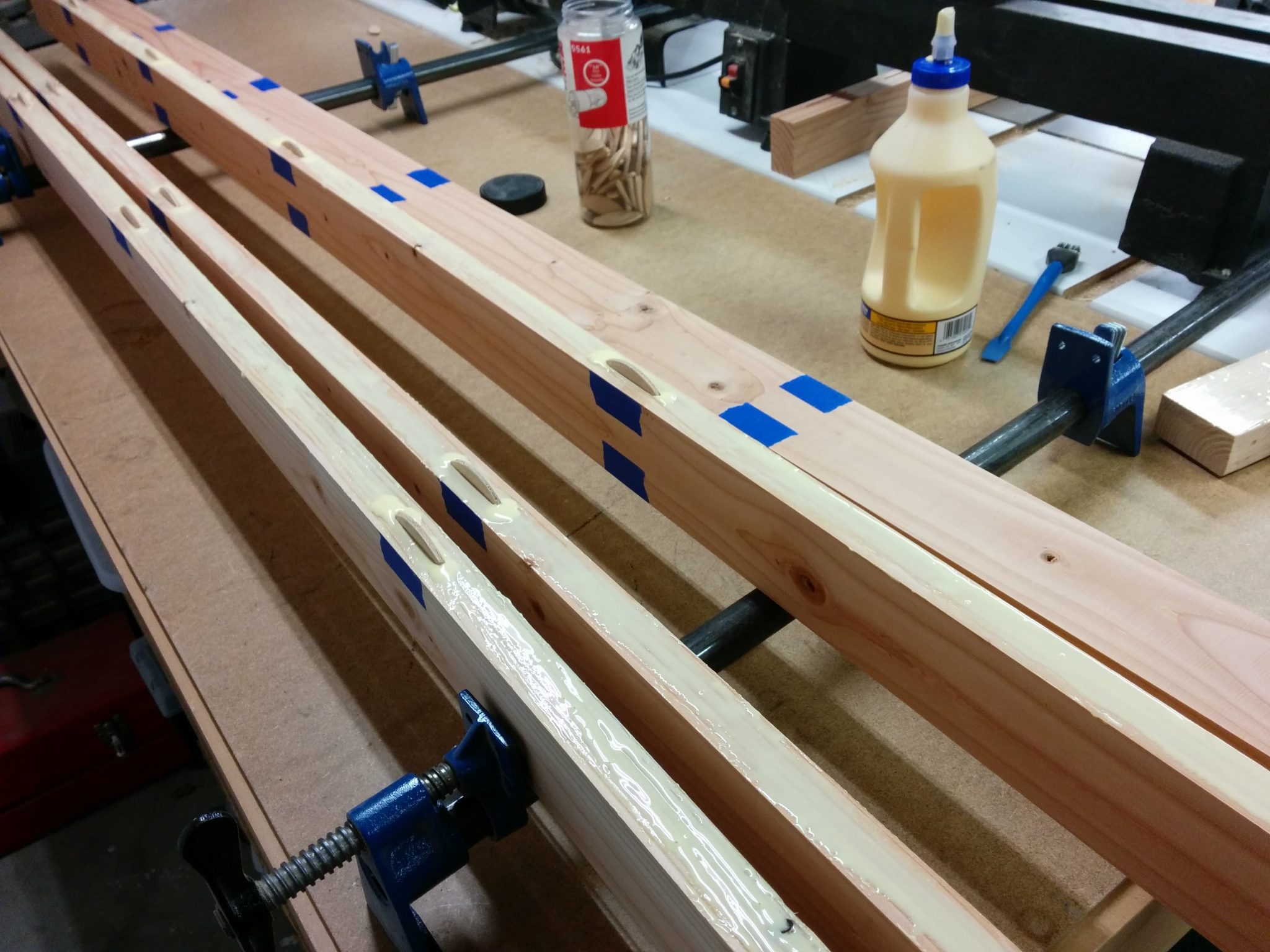
I applied a liberal amount of glue to the edges of three of the boards, including some extra glue in the biscuit slots.  Then I inserted a size 10 biscuit in each slot on the three boards with glue applied.

The biscuits are in place after the glue was applied to three of the edges.

Then I carefully rotated the second, third, and fourth board and inserted some glue in those biscuit slots.  After that, I laid the boards out on the clamps so the biscuits inserted into the slots on the adjacent board and started to bring the clamps together.  I didn’t really tighten them that much since I needed to nudge a few of the boards with a rubber mallet to get the marks on the tape to line up again.


I got them all aligned and started to tighten up the clamps.

The glued up pieces being aligned to the marks on the tape.

Now it’s time to attach the cauls.  I started by sliding one of the cauls under the glued up boards.  The side of the caul that I sanded the slope onto is facing up.

The bottom part of the caul set in place.

Then I set another caul on top of the glue up with the sloped edge facing down.

Setting the top of the caul in place.

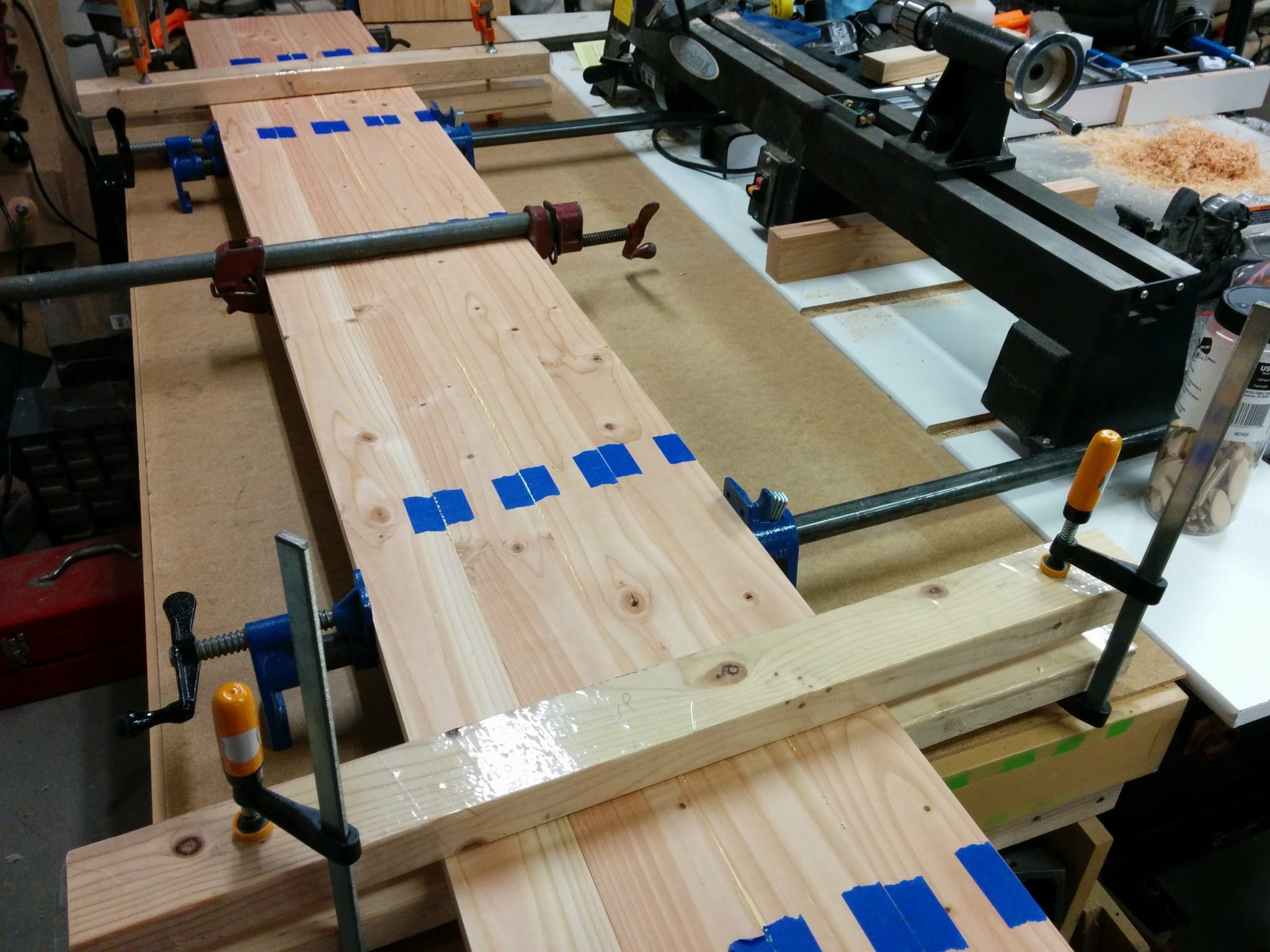
Then I clamped them together.  The slopes on the edges allows the cauls to bend as they “give” a little bit but will direct most of that deformity to the edges of the cauls instead of raising up off the glue up in the middle.

Both parts of the caul clamped together.

I attached the second set of cauls at the other end along with a few more clamps.

The second caul attached near the other end.


Time to wait…

After this sets up, I’ll do the same to the other half.  That’s going to have to wait until another day.


Up next: Workbench Part 3 – Change of plans.


Back to Workbench Part 1 – Milling down some 2 x 4s.