Pen-making on my lathe – Christmas 2016

For Christmas 2016, I decided to make some pens for my co-workers.

I remember when I first got started turning, and pen-making in particular, I would scour the web looking for different approaches and techniques from various wood-turners. I made a lot of expensive kindling in my attempt to learn to turn. Although I still have a lot to learn, I feel that I pretty much mastered the finish that I put on my pens.

In an effort to educate, I have roughly documented my technique below. This isn’t intended as a complete tutorial; more of an outline of my process. If this post generates enough interest, I will make a more detailed walk-through and an accompanying video. If you are interested in such a tutorial, please leave a comment at the end of this post.

I started by choosing a pen blank to go along with the kit.  I try to look for pen blanks that have a lot of character, although sometimes a flat walnut will look good with the correct hardware.

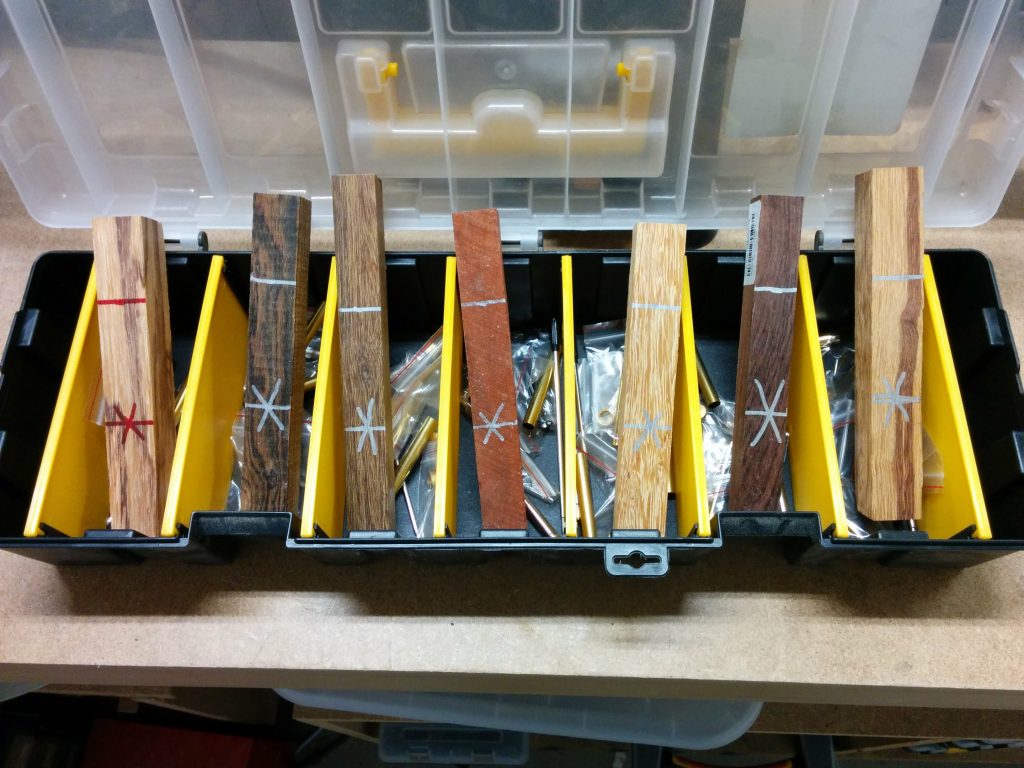
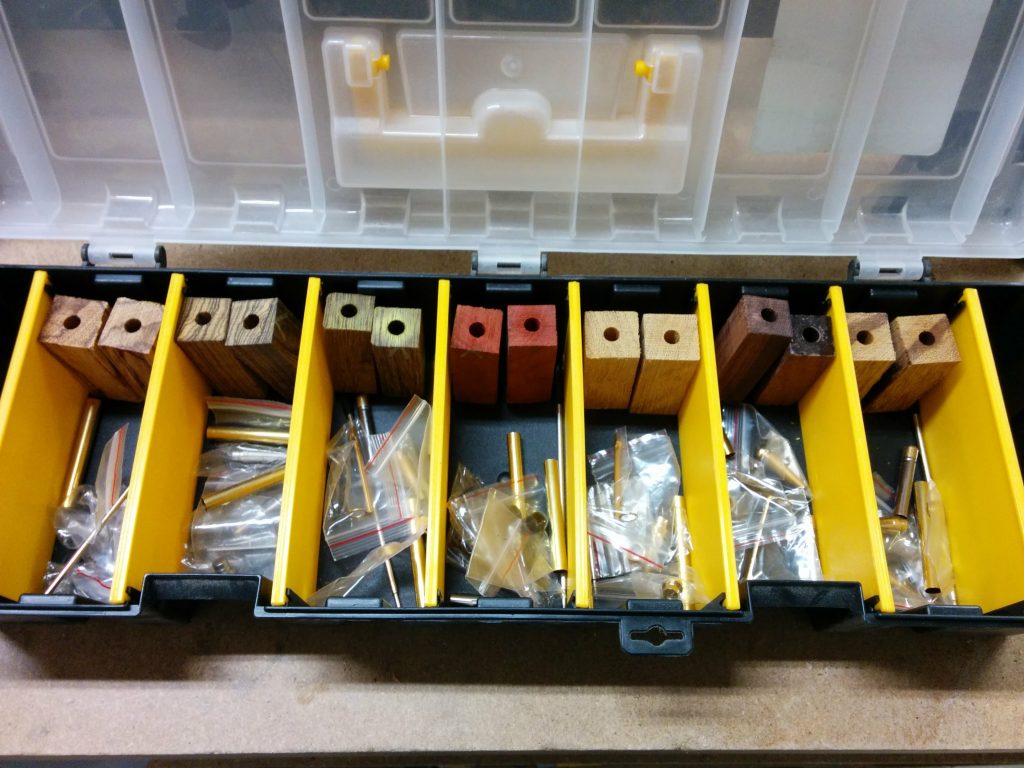
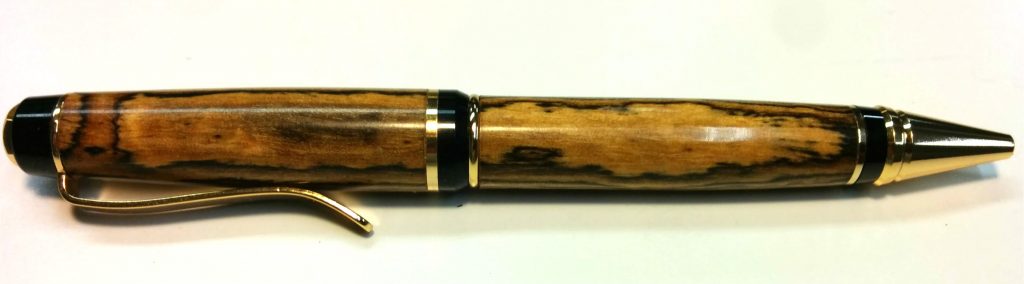
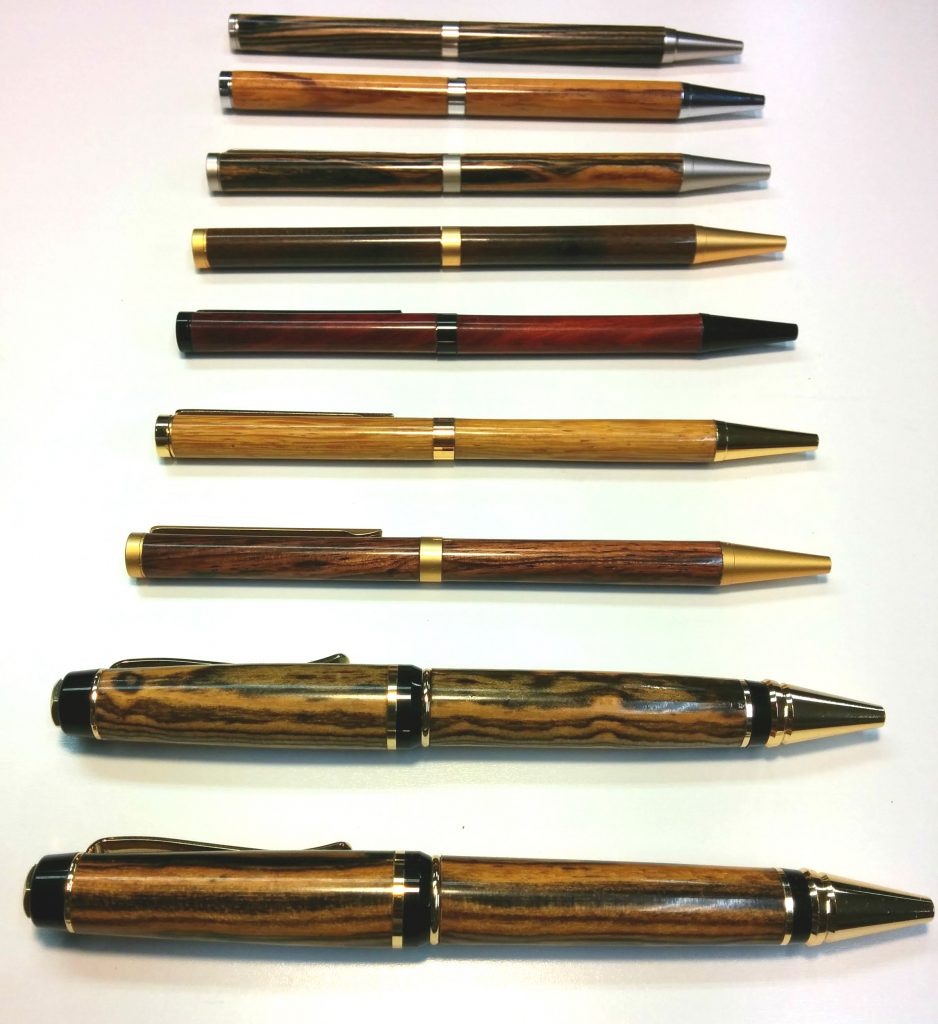
For this project, I used a storage caddy to hold the pen kits and blanks.  Seven of the nine kits are classic slimlines.  Two of them are Cigar pen kits from Woodcraft.
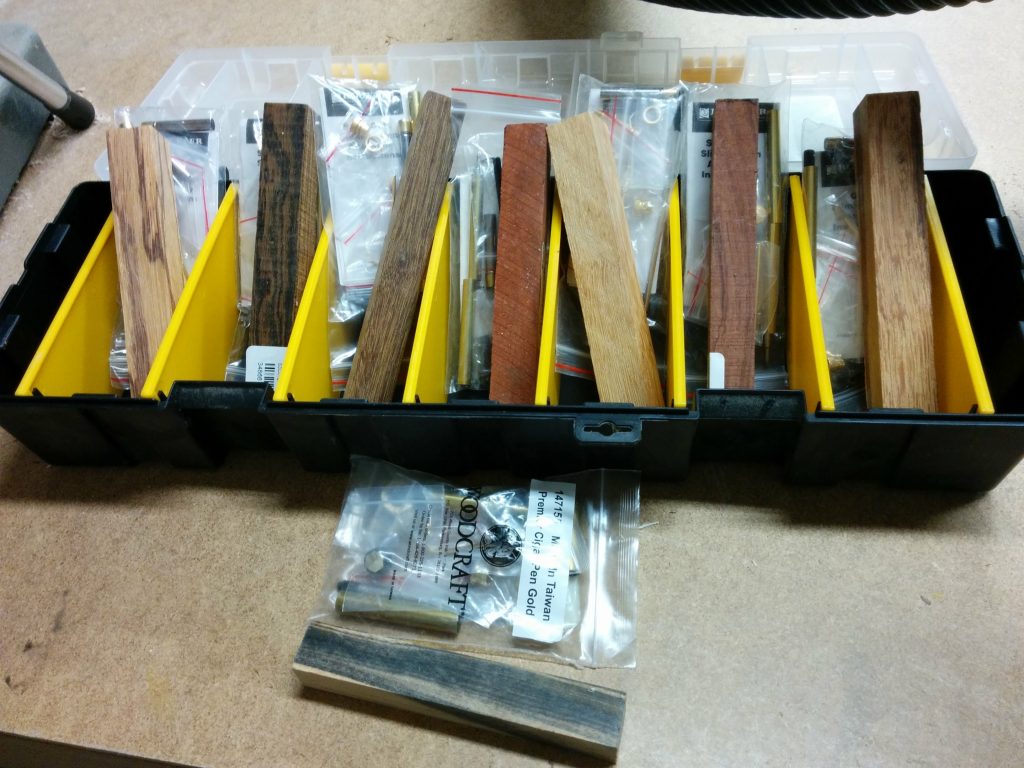
Pen kits and blanks organized.
Kits and blanks all organized.

For each kit I lay out the blank and the tubes.  I look for any markings in the wood that look interesting and focus there.  Of course, the outer grain is going to most likely be different from the inner grain, but a look at the end of the blank can help show what type of character the finished pen will have.
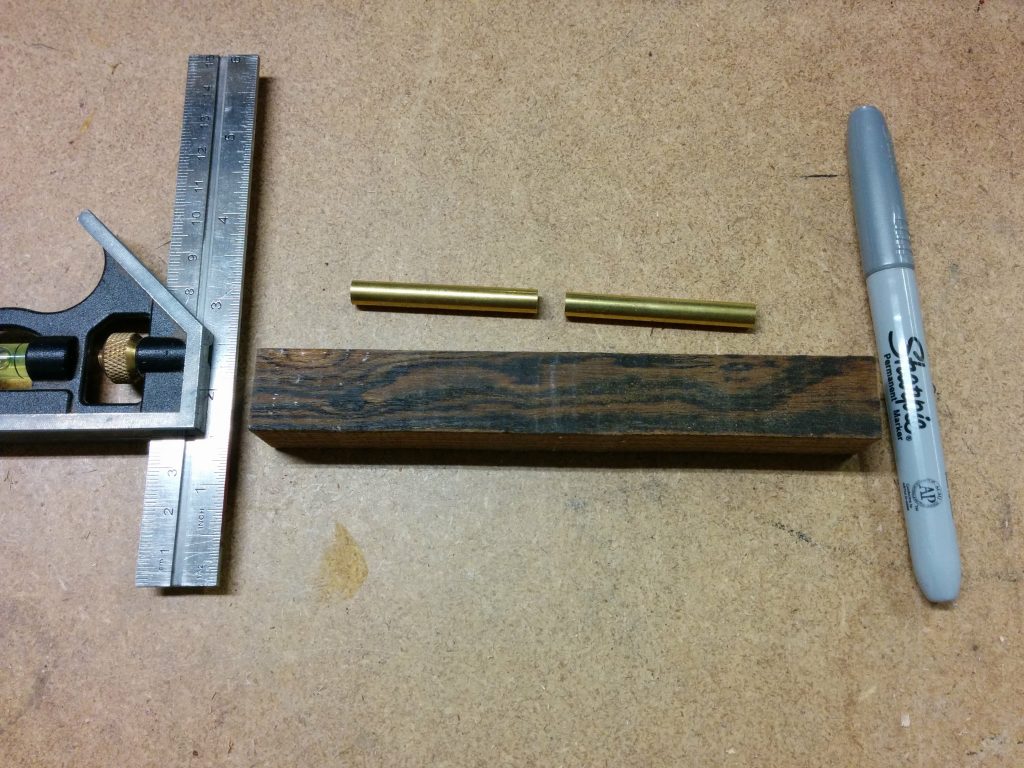
Pen blank marking tools.
Tools for marking pen blanks.

Using one of the pen tubes and a silver Sharpie, I make a mark just past the length of the first tube.  You’ll notice that the tube isn’t right up to the end of the pen blank.  I’m not going for precision in this step.  I just want to make sure that I have enough material for both tubes.
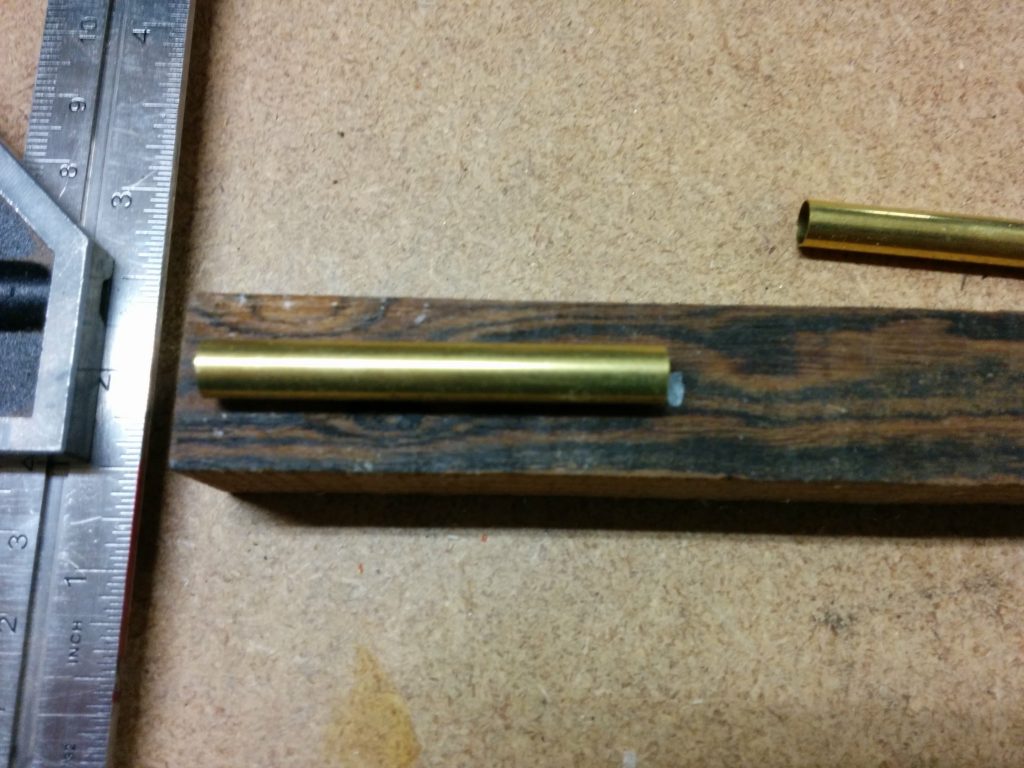
Marked at the end of the first tube.

I draw a line over the mark using a 6″ combination square.
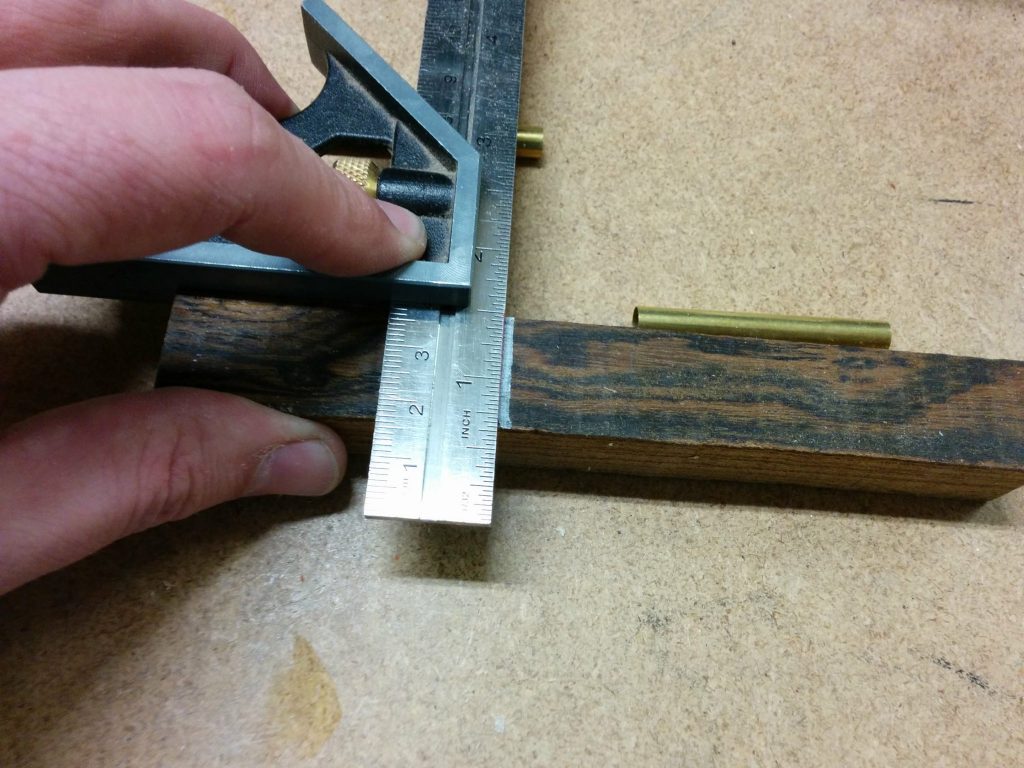
Tracing a line on the pen blank.
Tracing a line where the blank will be cut.

Then I lay the other tube on the blank using the newly drawn line and make another mark.
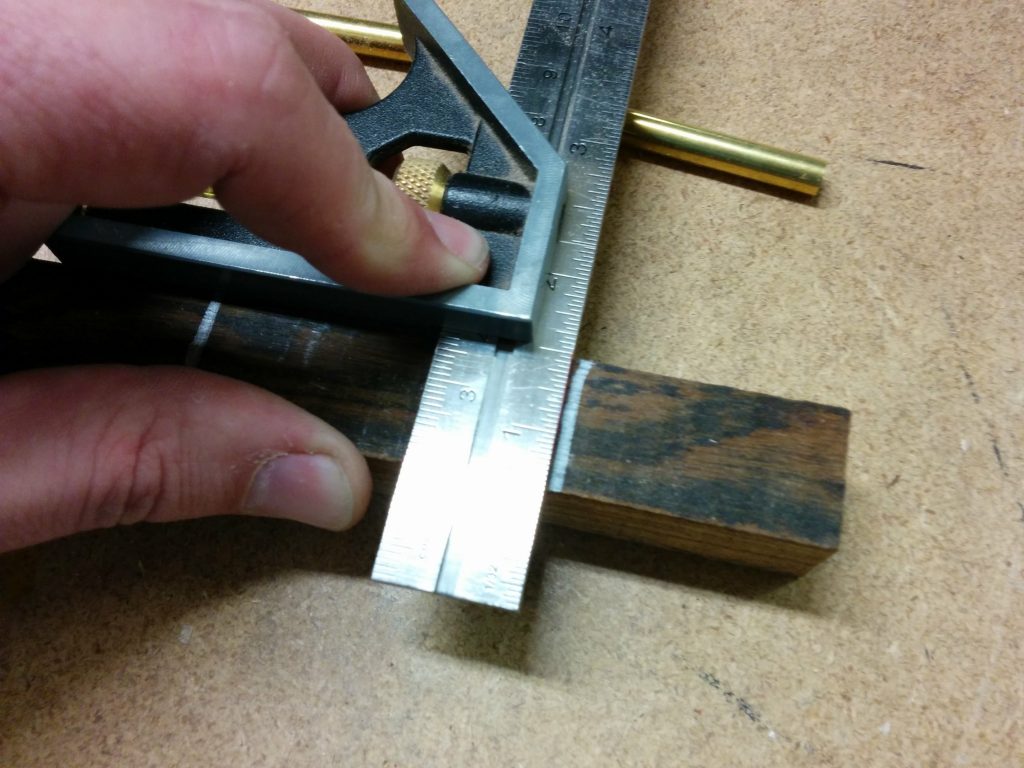
Tracing a line where the blank will be cut.

One trick that I picked up is that I make an “X” over the first line.  This makes it easier to line up the wood grain once you put it on the lathe.  You’ll see what I mean later…
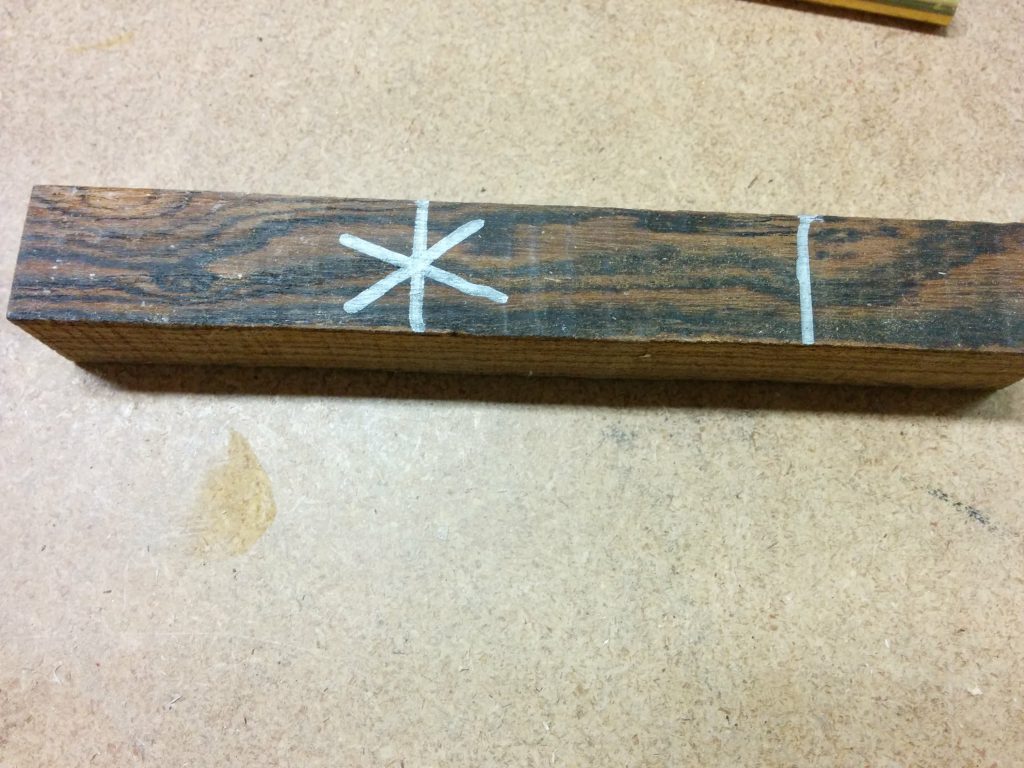
Marked an "X" through the first line.
Marked an “X” on the first line.

Here are the wood blanks all marked.

All of the pen blanks marked.

Once they’re marked, I take the wood blanks to the band saw and cut on the lines I made.  Here you can see them cut.  The X that I made is now split in two, making it much easier to match up the wood grain.
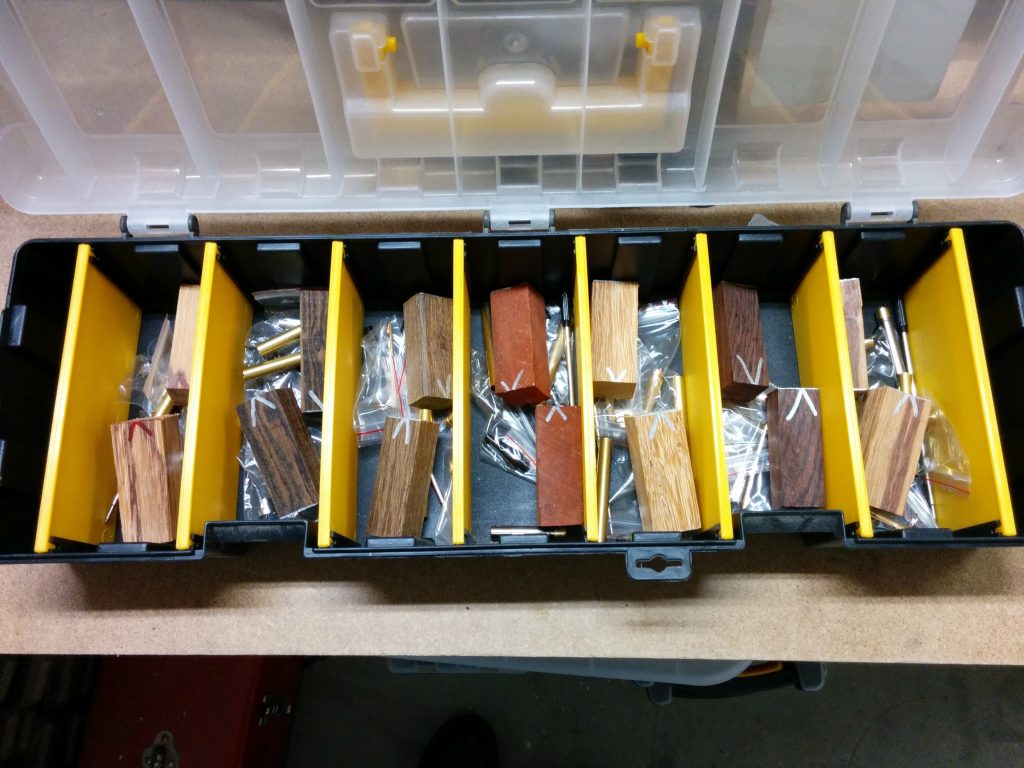
The blanks after being cut along the first line.

I drill the holes for the tubes on my lathe.  There are many ways to go about this but this is the method I prefer.

I try to stay consistent with how the blanks are lined up.  For example, you’ll notice in the following picture that the wood has half of the “X” facing me and on the right end.   After I finish drilling this piece I’ll put the other half in but I’ll make sure that the other half of the “X” is still facing me but this time it goes on the left end.
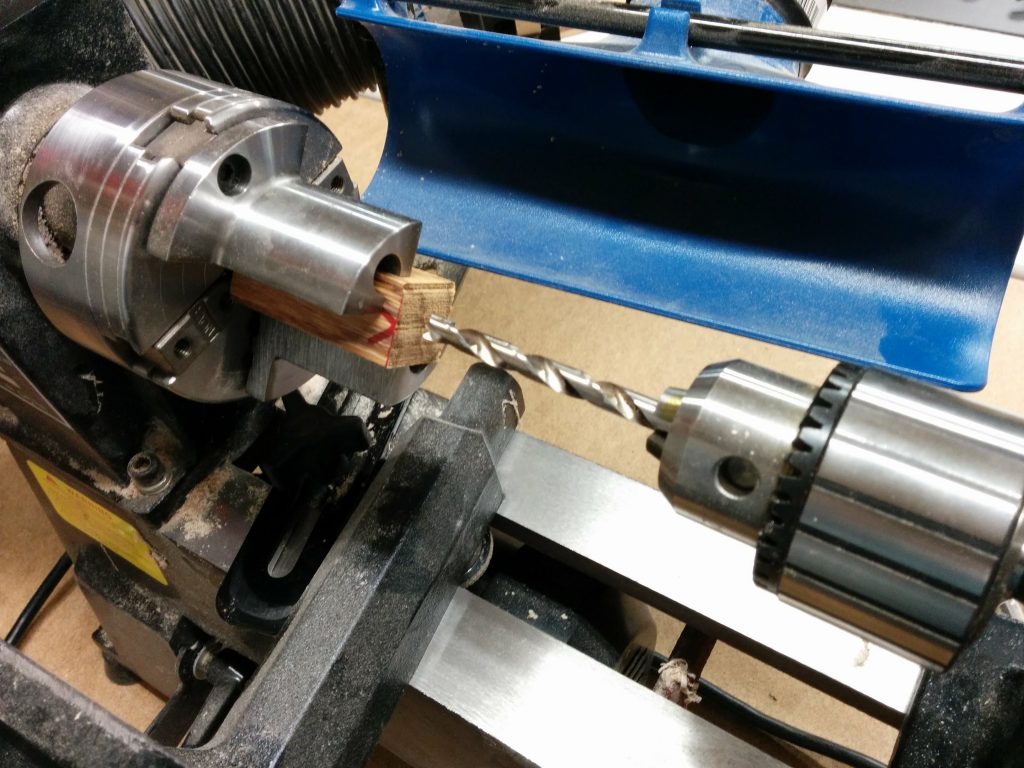
Mounted the pen blank on my lathe for drilling.

I drill out the blank being careful not to let the bit get too hot.  I also have dust collection going and although it doesn’t get all of the big shavings, it does get the fine dust.
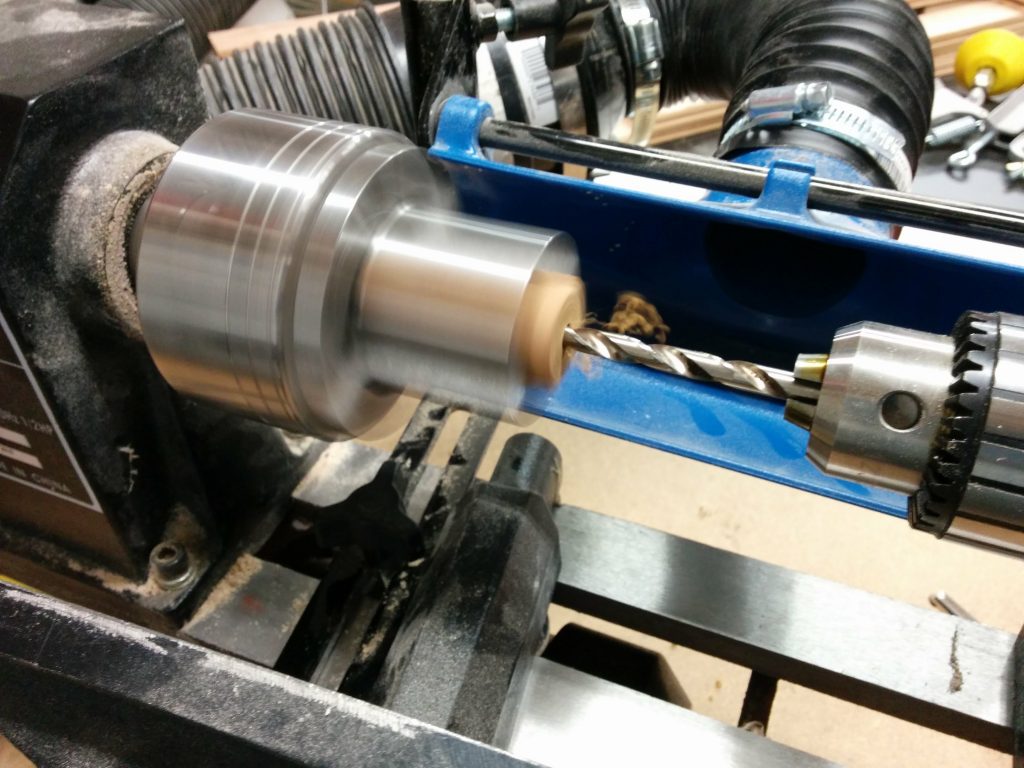
Drilling the hole in the pen blanks.

All the holes drilled.

The holes are drilled.

Another trick I picked up is to sand the tubes before inserting.  I do this by wrapping a piece of 150 grit sanding strip around the tube and spinning it while pulling it through.  Just be careful not to use that piece of sandpaper for anything other than the tubes.
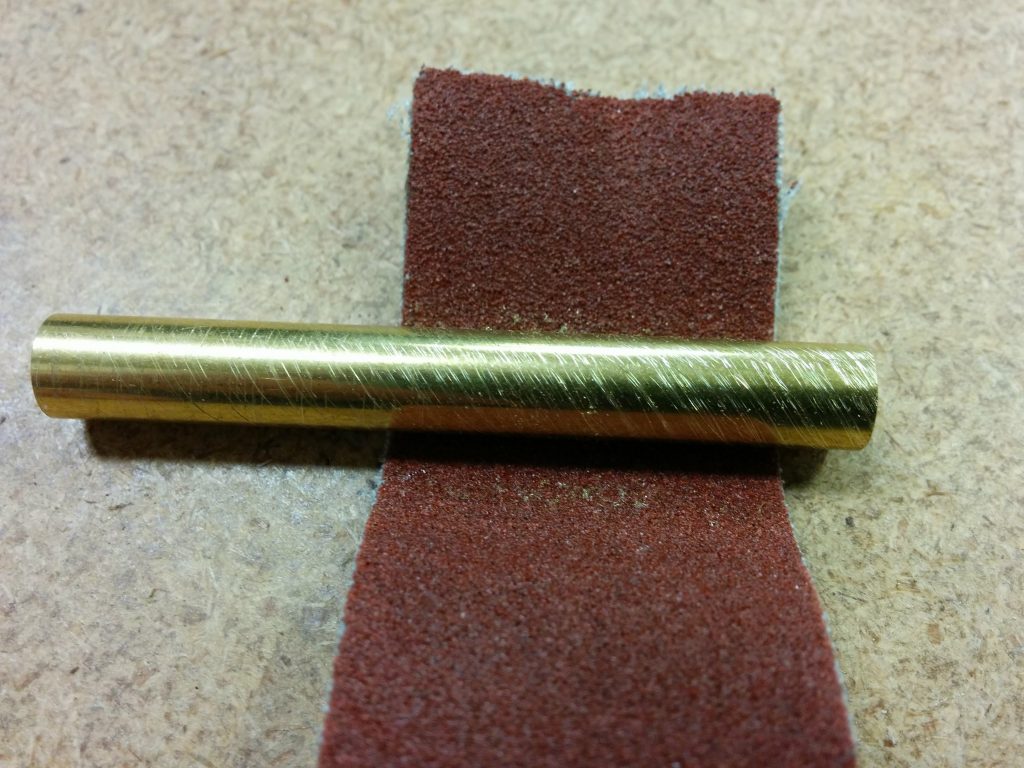
Sanding a texture onto the brass tube.

Now it’s time to glue the tubes in place.  I use a few cheap IKEA kids plates, which you’ll see later, while I’m making my pens.  I use one with a blue shop towel or just a plain paper towel over it.  This doesn’t necessarily protect the plate, but rather the plate keeps the blue towel from getting glued to the workbench.  For gluing the tubes in place, I use Titebond Medium cyanoacrylate glue.  I recently learned from another pen turner that he’s had problems with the chemicals in stabilized woods causing the cyanoacrylate to cure before getting the tube fully inserted.  This results in a wasted tube and possibly the pen blank.  Instead, he uses 5-minute epoxy.
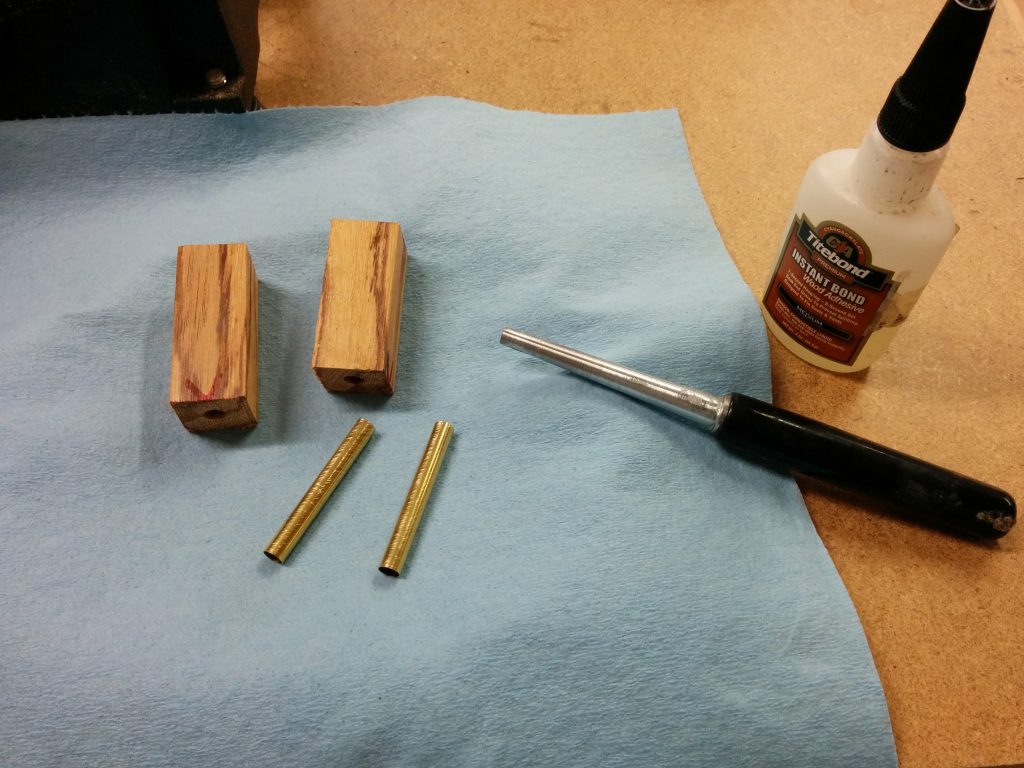
Materials for gluing the tubes in place.

I put a coat of the cyanoacrylate glue on the sanded tube and use an insertion tool to push the tube into the wood.
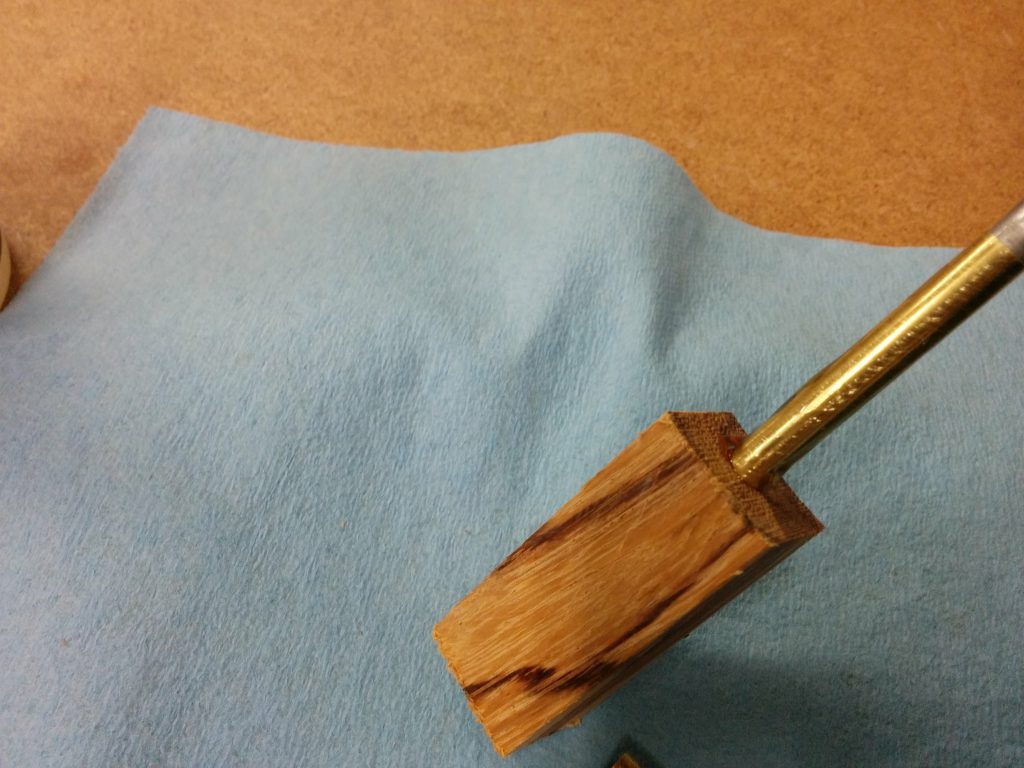
Inserting the tube.
Inserting the tube.

I always try to have some extra material.  This gives me room to true up the edge but also helps the grain flow more smoothly by taking up the room that the center band takes up on the final pen.
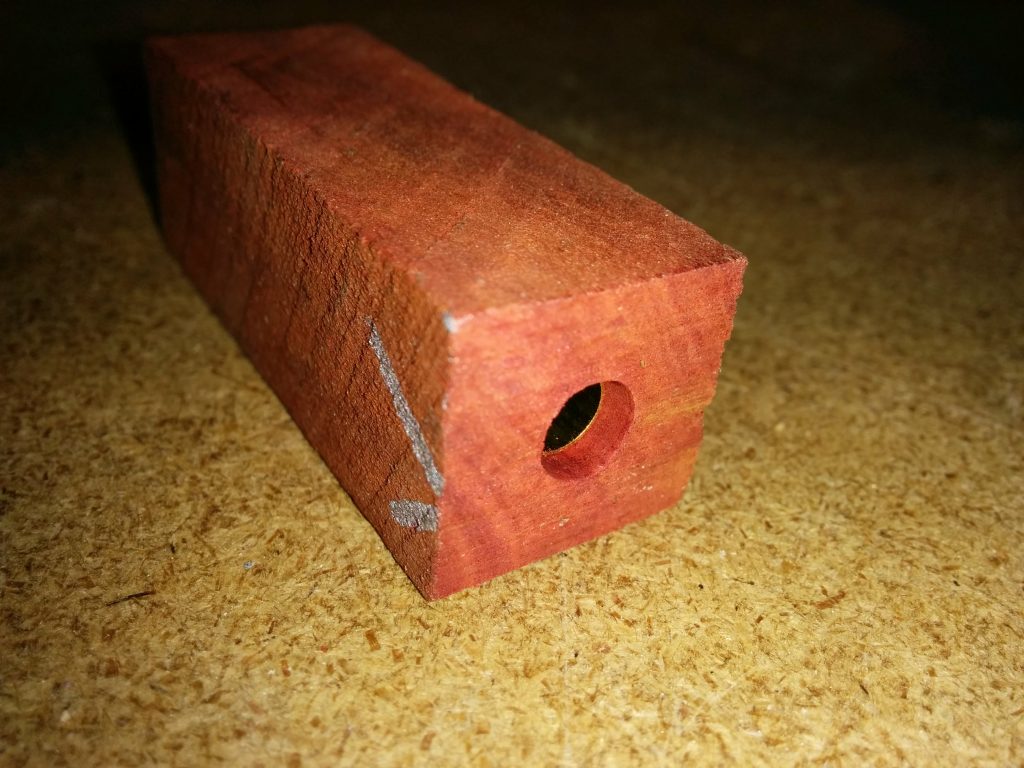
Pen blank is longer than the tube.

Once I’ve allowed sufficient time for the glue on the tubes to cure, I mount each of the blocks in the lathe and use a pen mill to trim down the edges.  This ensures that the end of the finished pen section is nice and flat where it meets up with the pen hardware.
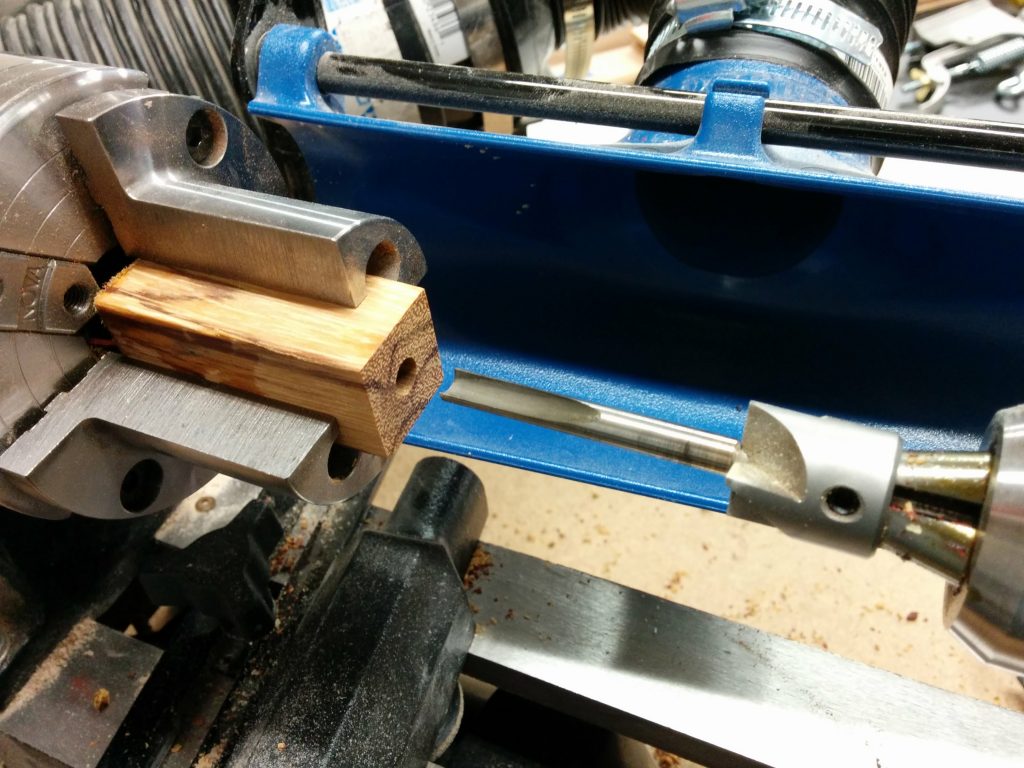
Mounted the blank on the lathe for milling.

Take your time with this.  I’ve had certain woods, such as zebrawood, use this as an opportunity to split.  You want to trim it down to the edge of the tube.  If you see any brass shavings coming off with the wood shavings, you’ve gone too far.  Not the end of the world, but still…calm down there, tiger.
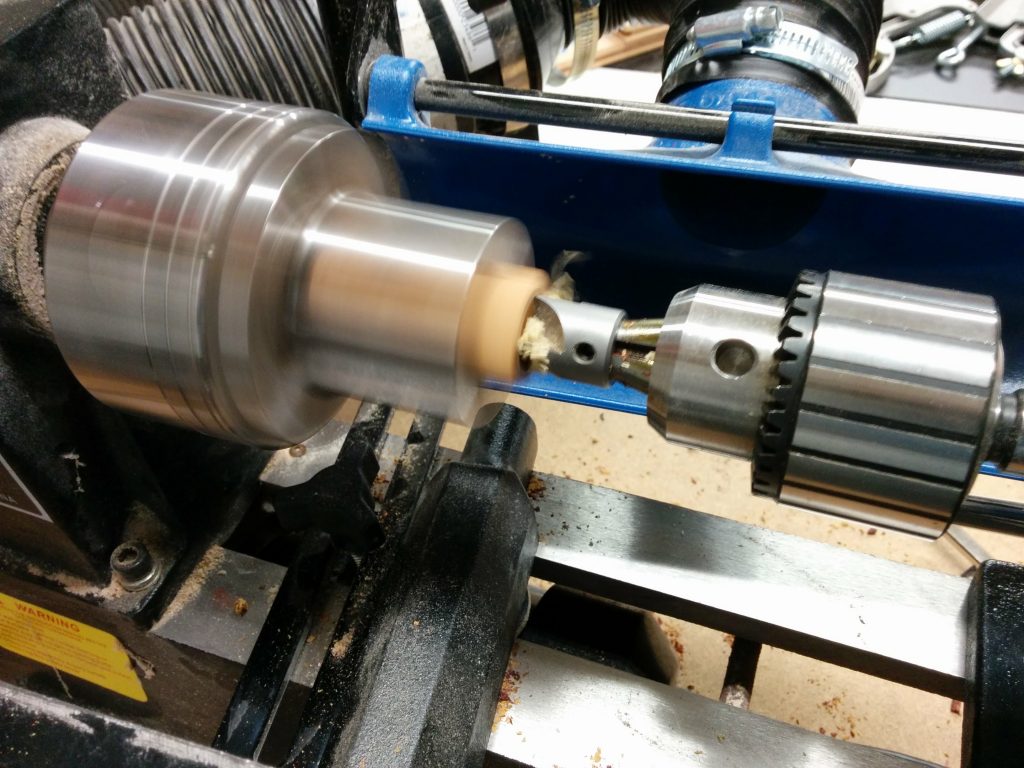
Milling the edges of the blank.

Here you can see the edge of the brass tube showing.  This is what I look for.
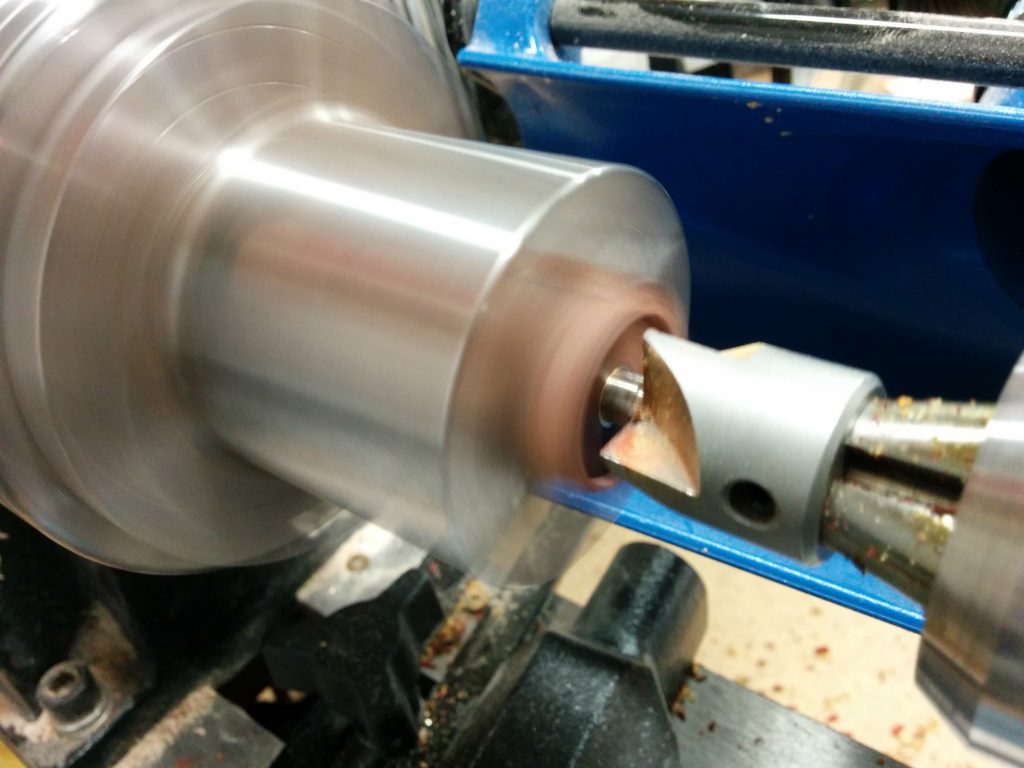
When you can see the edge of the brass tube, you're done.
When you can see the edge of the brass tube, you’re done.

I could take this one down just a bit more but it isn’t necessary.
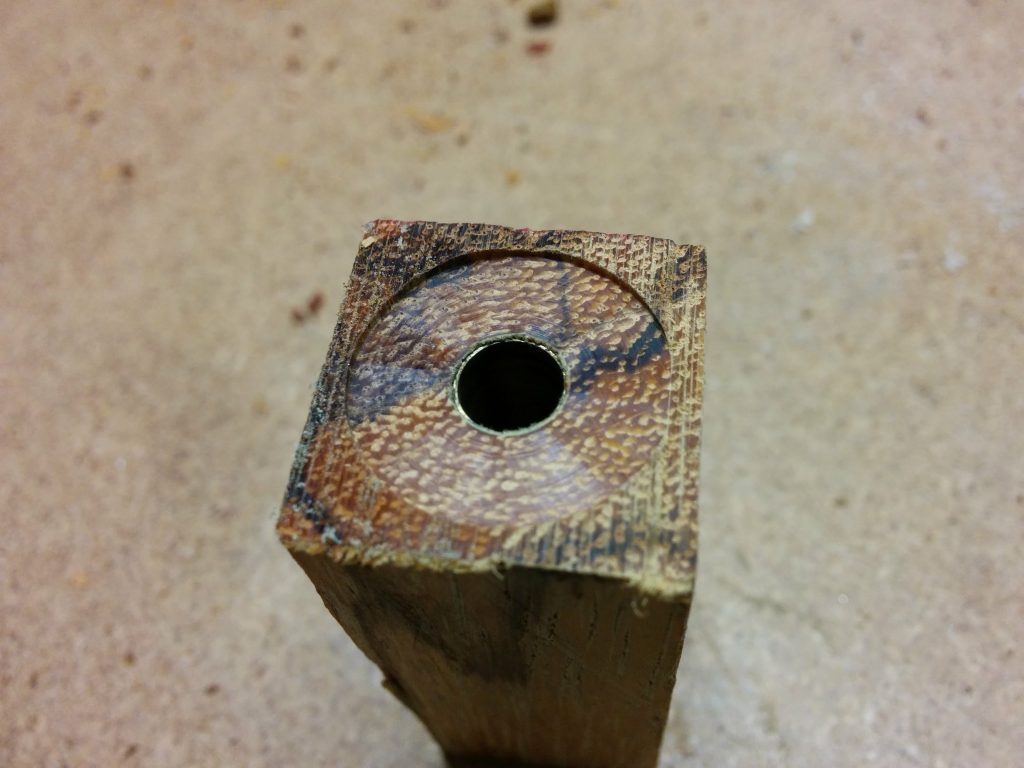
Close enough.
Close enough.

All the pieces are now ready to go on the lathe.
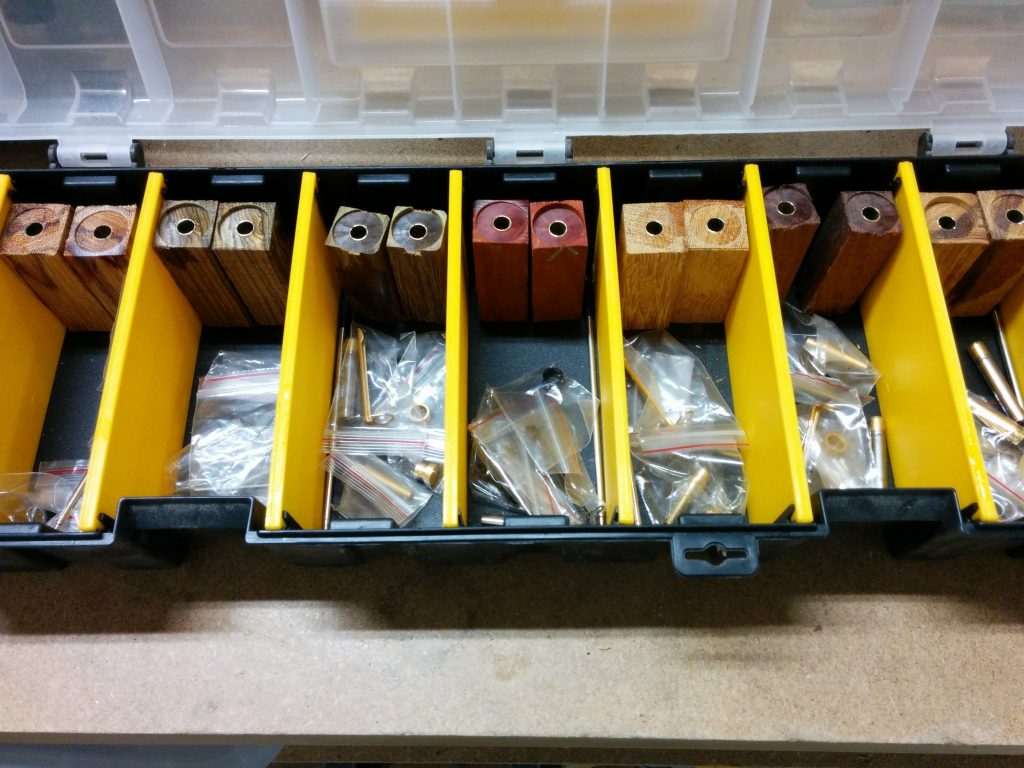
Done preparing the blanks.

I mount the blanks on the pen mandrel using the “X” that I drew before to line up the pieces.  I tend to turn my pens with the left side being the tip of the pen and the right being the end cap.  It doesn’t matter how you do this, but I prefer to stay consistent.  For slimline pens it doesn’t matter at all.
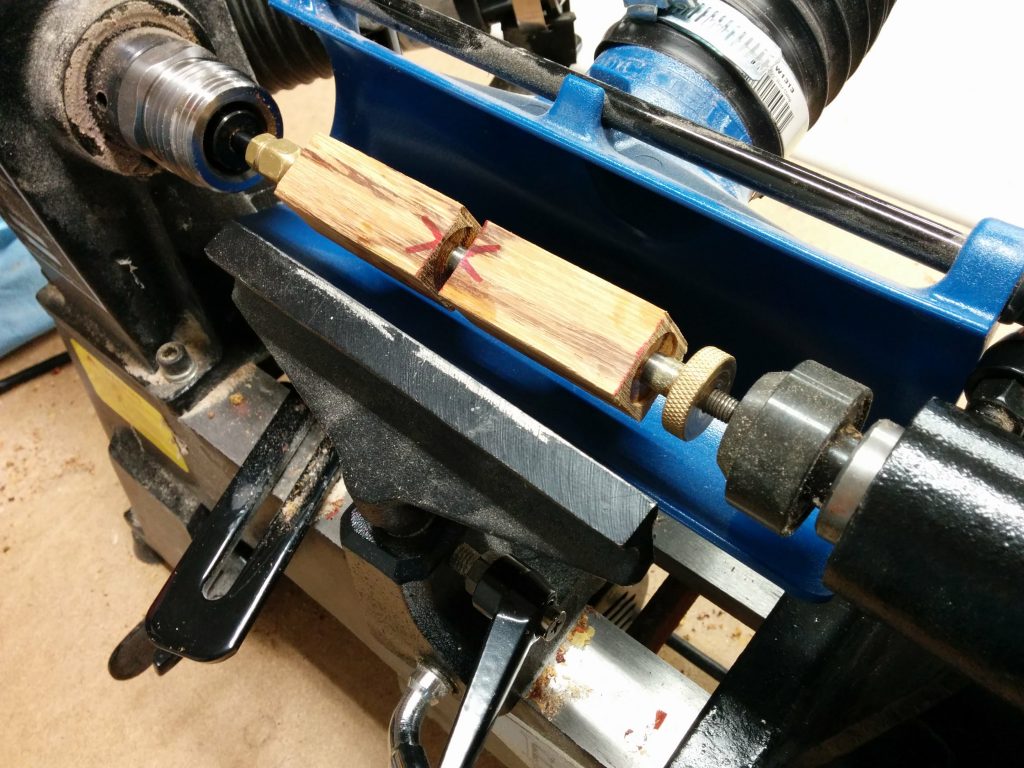
Mounted the blanks on the lathe.

I’m not going to go into detail how I turn them.  There are much better woodturners that you can learn that from.  The important thing is that I turn it down to where it’s almost the final diameter.
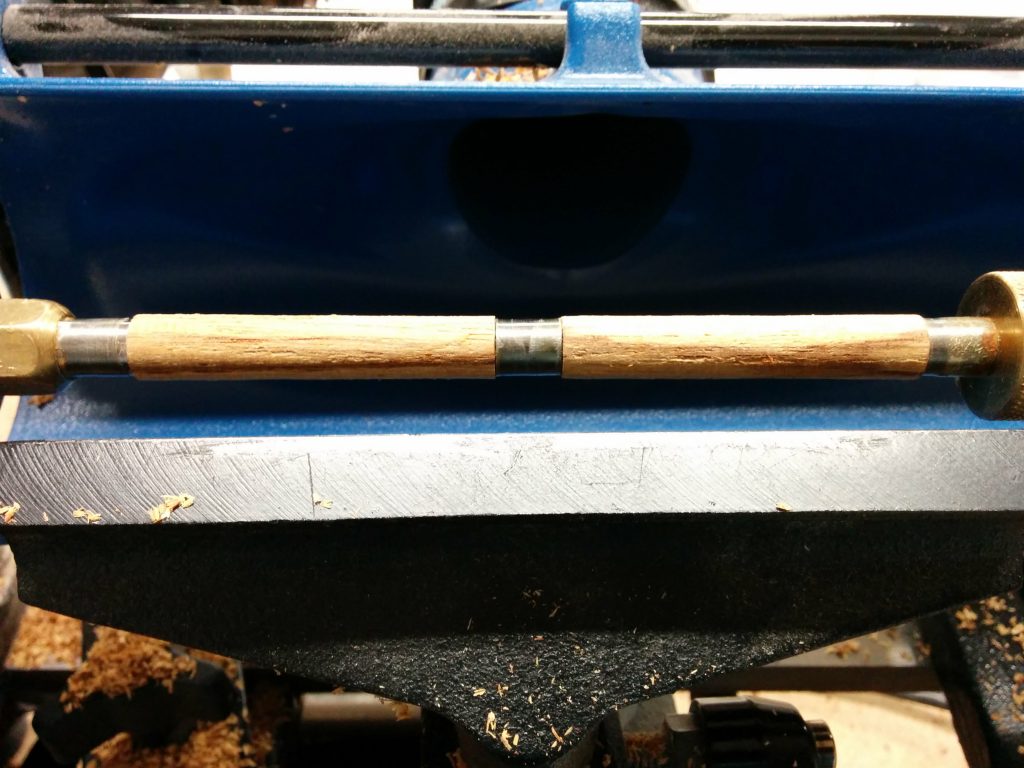
Turned it down to close to the final size and shape.

I sand it to it’s final diameter and shape using cloth-backed 150-grit sanding strips.  This is where having the dust collector on my lathe really comes in handy.
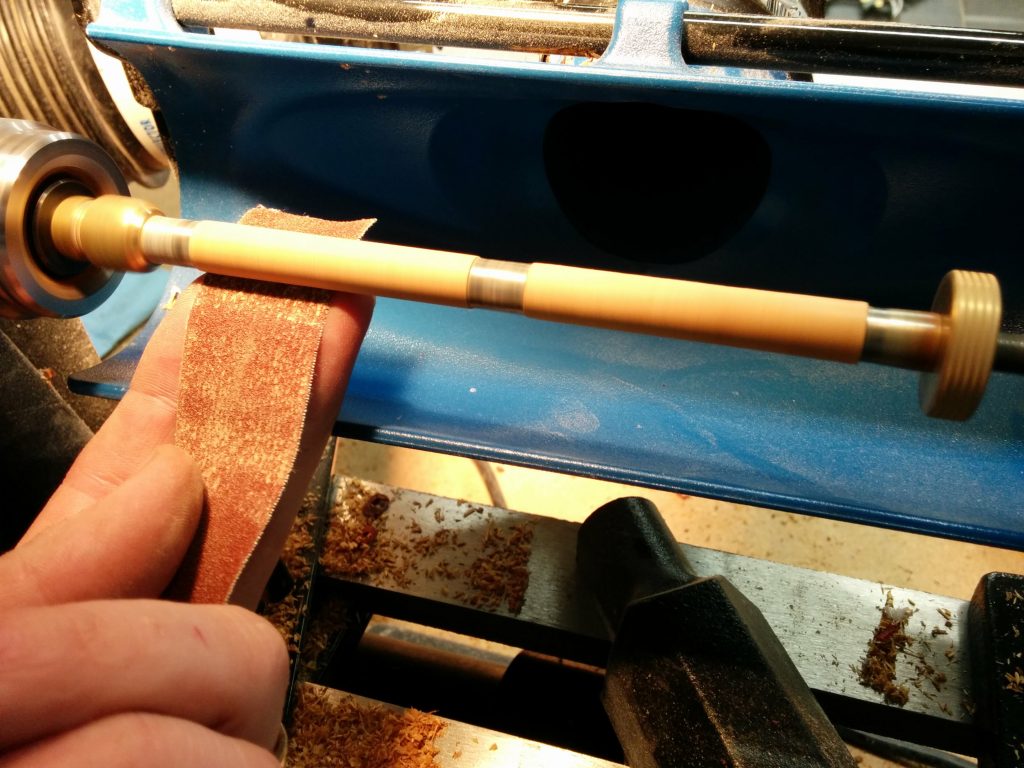
Sanding the pen blanks to their final diameter.

After sanding with 150-grit, I move on to 240, 320, 400 and finally 600.  After each grit, I always stop the lathe and sand it left-to-right, or “with the grain”.  This removes banding that can occur which is very visible since it goes across the grain of the wood.
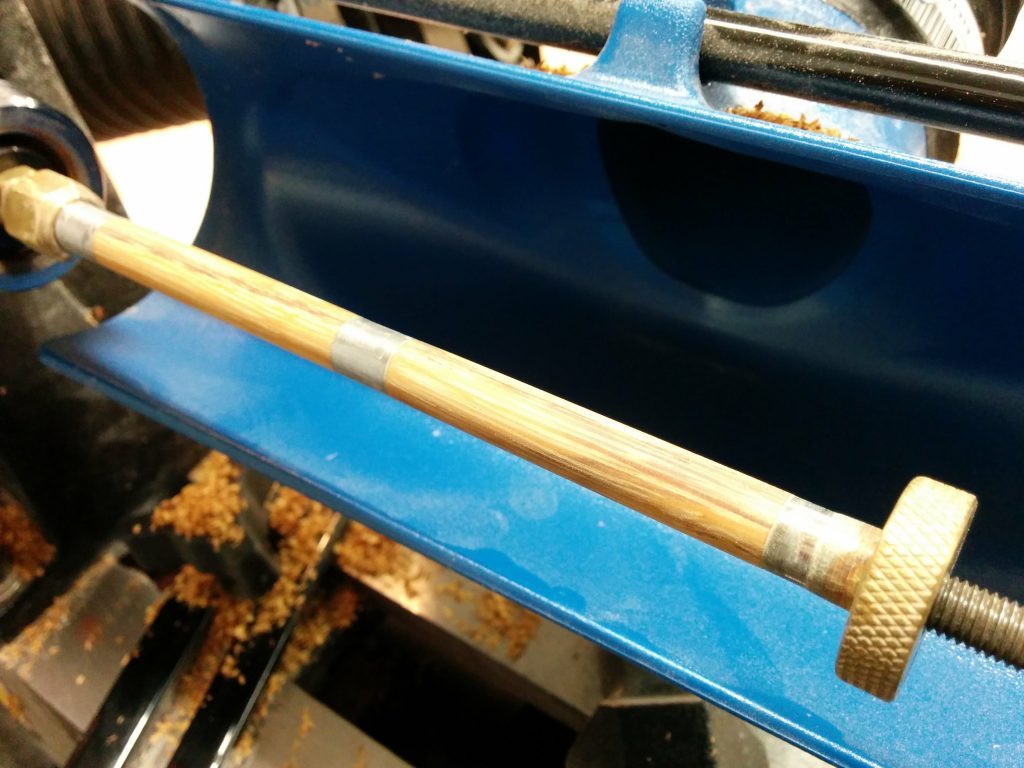
Done sanding...for now.
Done sanding…for now.

Then I do a quick sanding with 0000 steel wool.  One very important step at this point is to wipe down the sanded blank with denatured alcohol.  This removes the extra sawdust while giving you a sneak peak at what the finish will do to the colors in the wood.  Also, this removes surface oil from certain wood species that may keep the finish from adhering to the wood.  If you skip this step with wood like Olivewood, you may find that the CA finish you apply will start to peel off at the edges almost immediately.
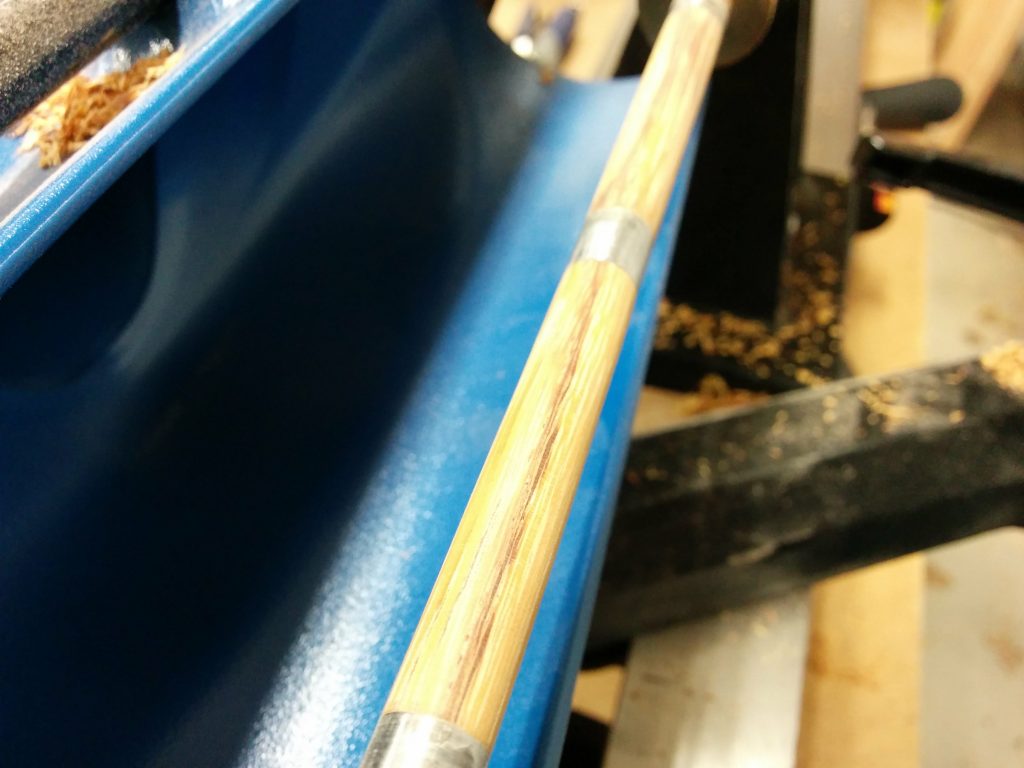
Wiped with denatured alcohol.

Here you can see one of the crappy IKEA plates that I put on my lathe for the remainder of the pen project.  This thing is beat to hell.  It is there to help protect the cast iron bed of the lathe.
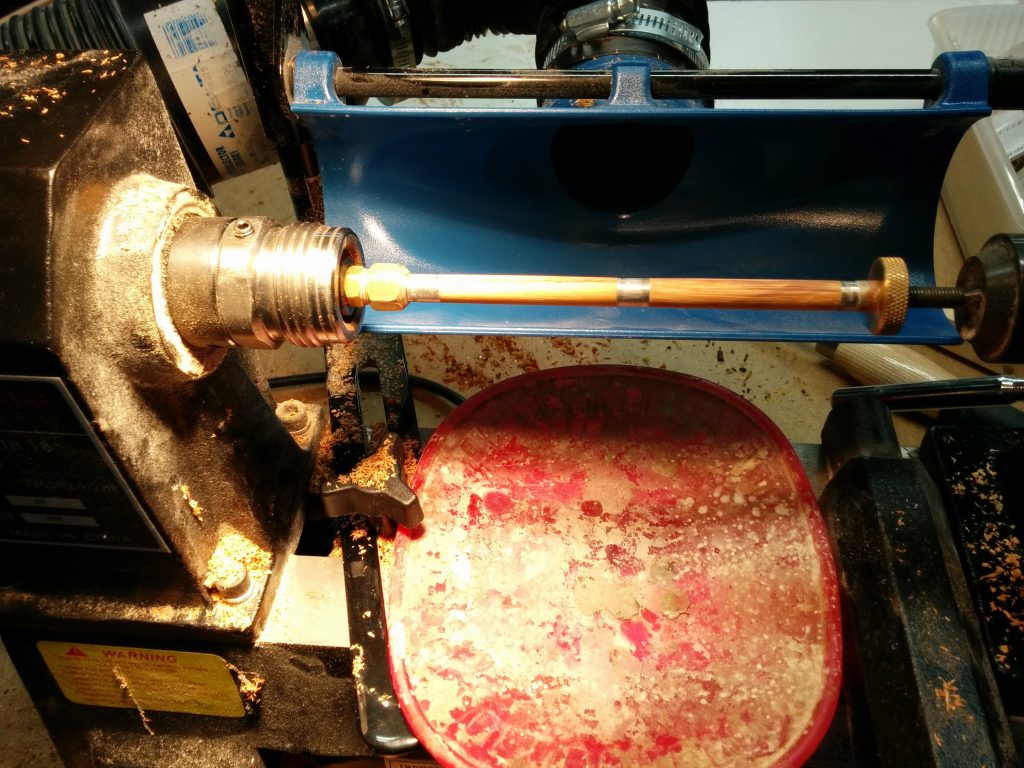
Protecting the bed of my lathe.

To apply the finish you’re going to want a few things.  I use a thin CA glue and a spray activator.
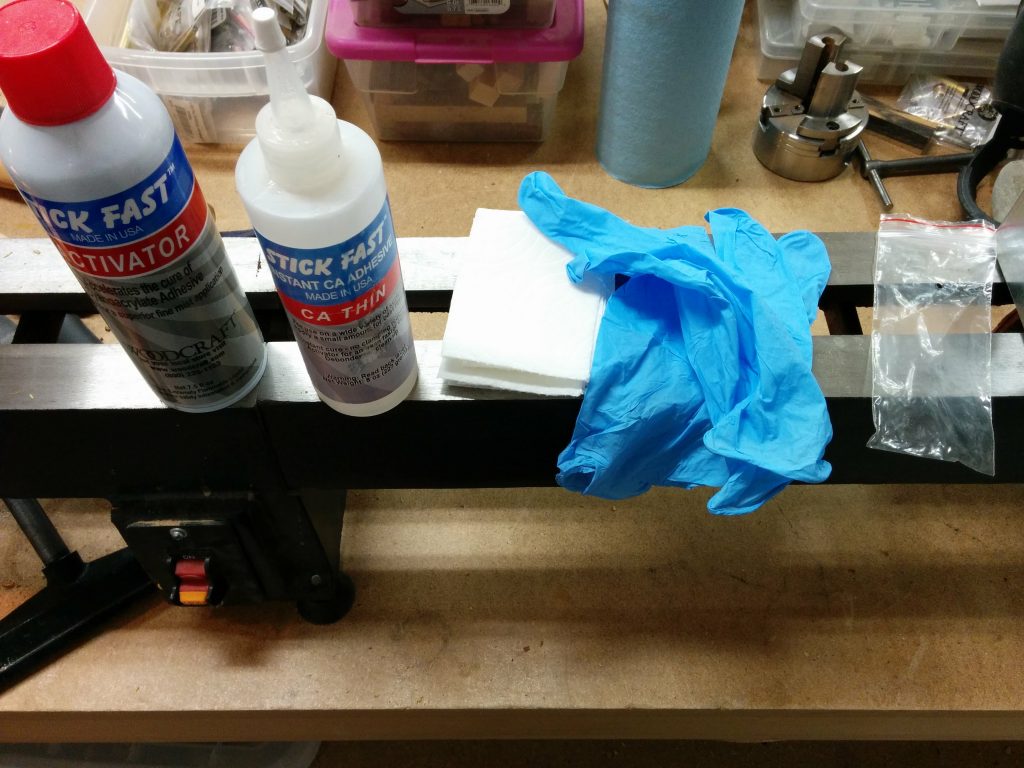
Materials for the CA finish.

Additionally, I use a pair of nitrile gloves and an extra baggie that the pen kit came in.  This is another trick that I picked up.  I put the baggie over my first two fingers.  Then I hold little pieces of paper towel that I use to wipe on the thin CA glue.  When you apply CA glue, it gets pretty warm and can actually melt through the gloves.  I find that using the baggies over my fingers helps the gloves last longer.  Before doing this, I was typically changing my right glove with every coat of CA glue that I applied.
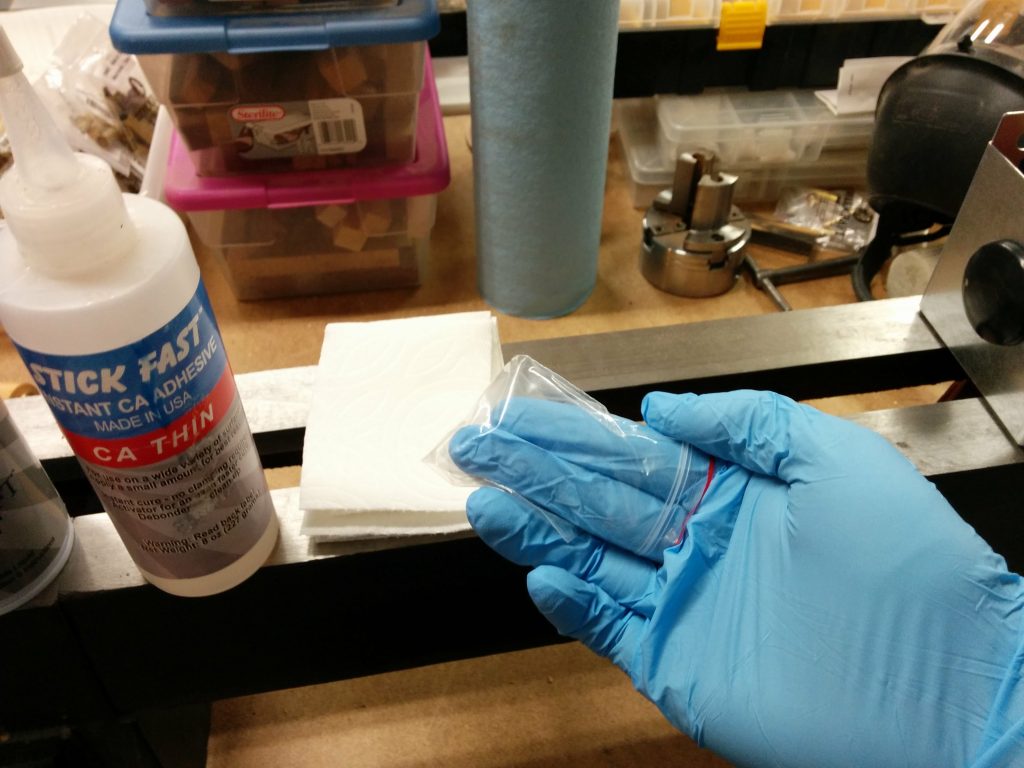
A little extra protection.

I will go into more detail on actually applying the CA glue in a later article.  This is a photo of a pen after 8 coats of thin CA glue have been applied.
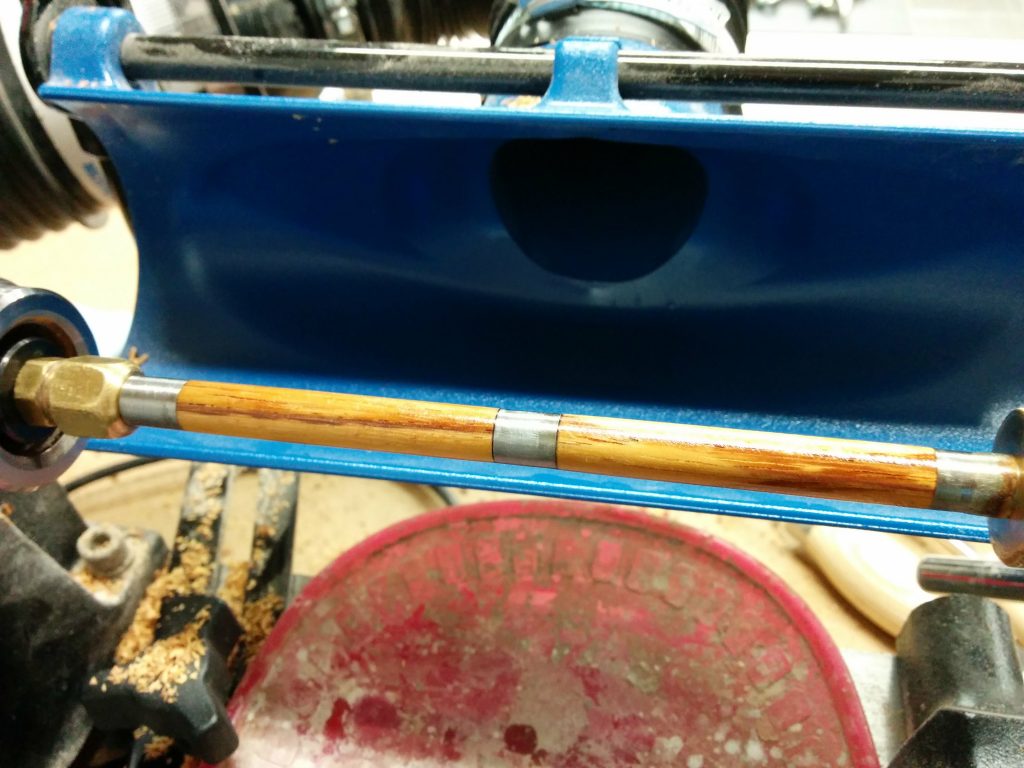
8 coats of CA have been applied.

I then use a micro mesh sanding system to polish the CA glue.  I sand it down using 1,500, 1,800, 2,400, 3,200, 3,500, 4,000, 6,000, 8,000 and 12,000 grit sanding sponges.  I use the 1,500 grit sponge to do the bulk of the final shaping and smoothing.  Also, as with the dry sanding done before, I always stop the lathe after sanding with each sponge and sand the pen going with the grain as well.
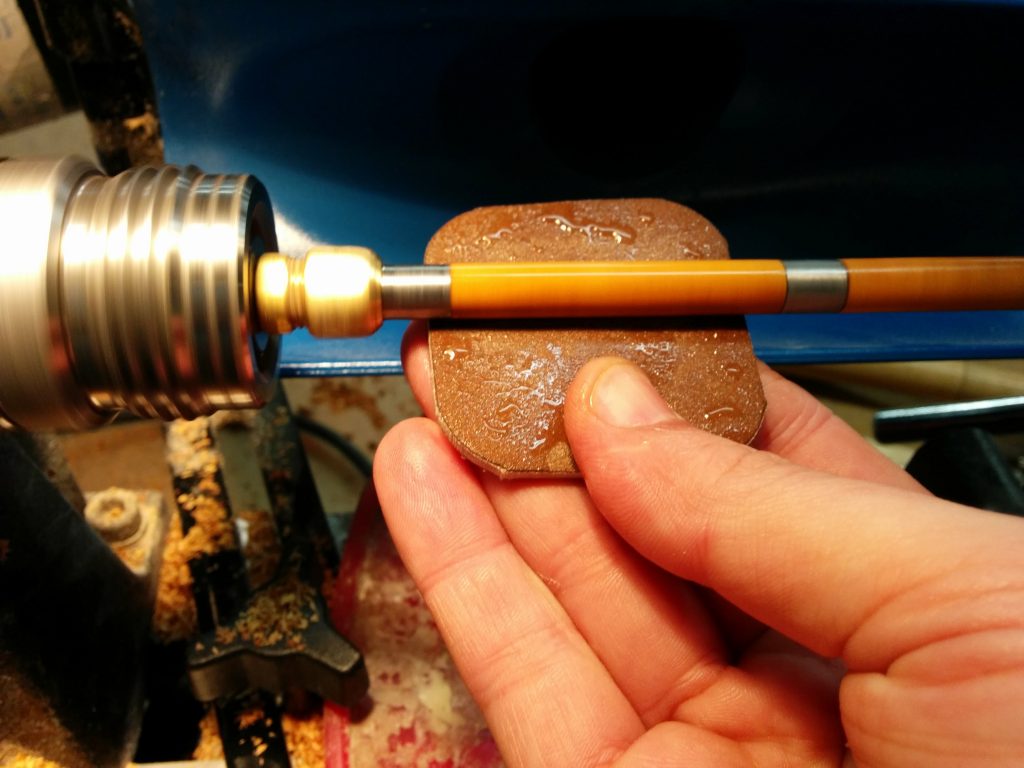
Sanding with MicroMesh pads.

After sanding, it is ready to come off the lathe.
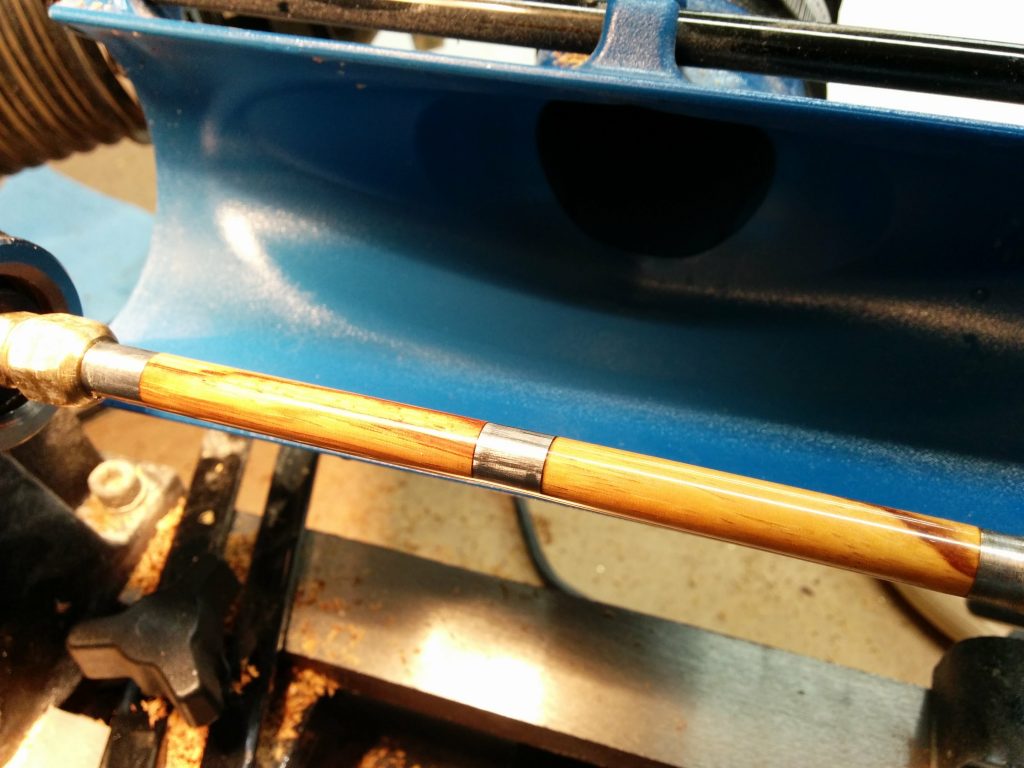
Ready to come off the lathe.

I lay out the pen blanks carefully so I don’t lose the orientation of each piece.  Otherwise, the “X” that I drew earlier would be for nothing.  I use a little scrap of 600-grit sandpaper to break the edges of the finish.
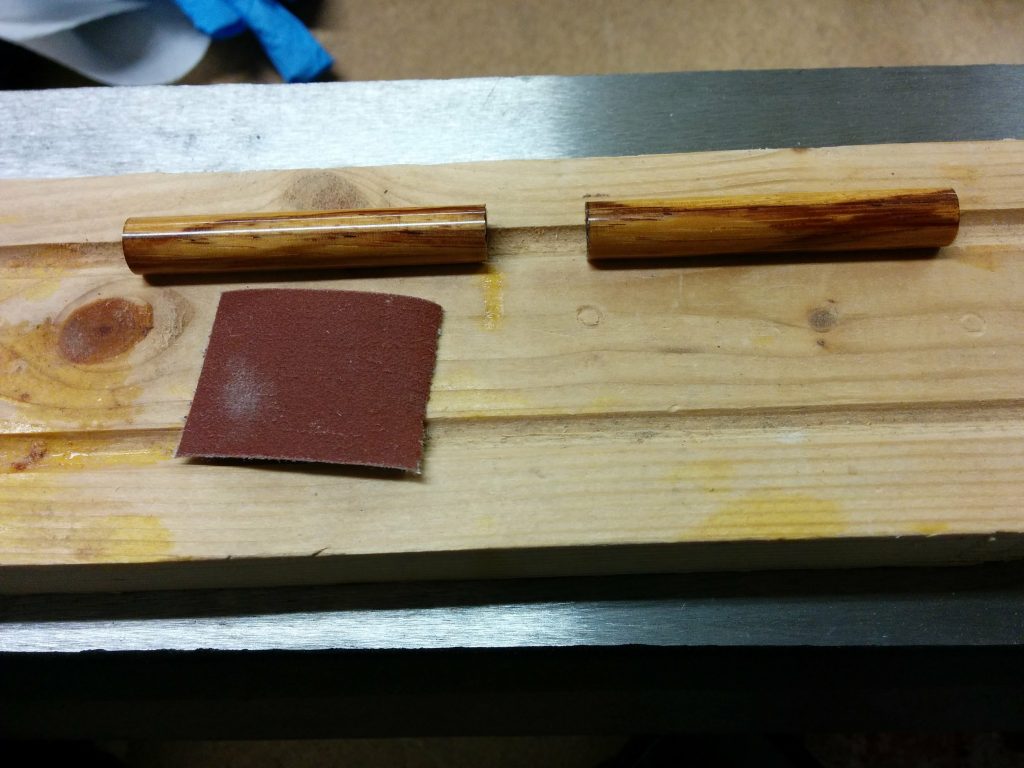
Careful not to lose the orientation.

I simply angle the pen blank and carefully rotate it on the sandpaper.  This removes the CA burr that has formed which if left in place can cause the finish to chip off when I press the pen together.
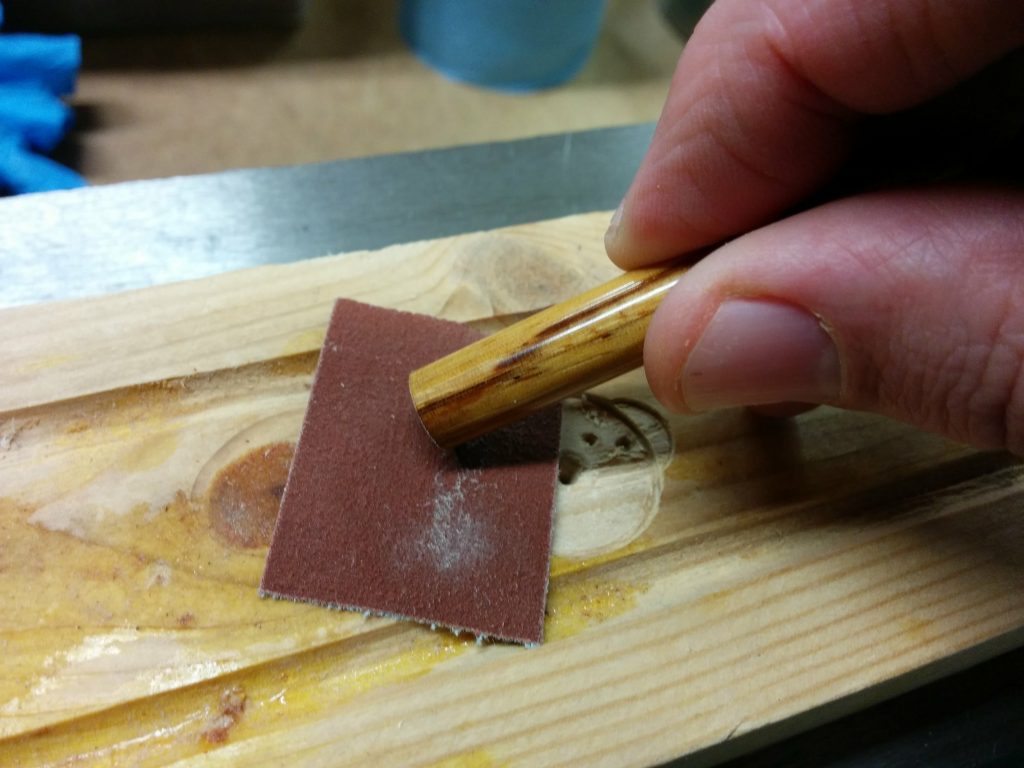
Breaking the edge a bit.

I have a beat up piece of scrap wood that I routed a few coves in so I can lay out the pieces without losing anything.
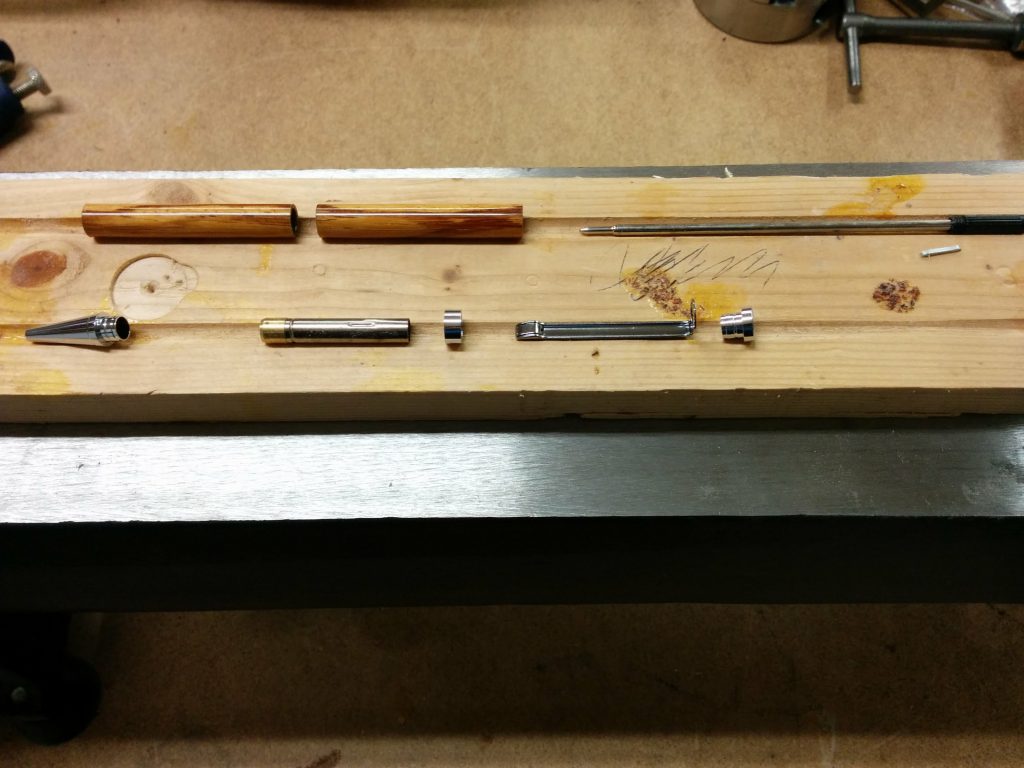
Careful not to loose the orientation.

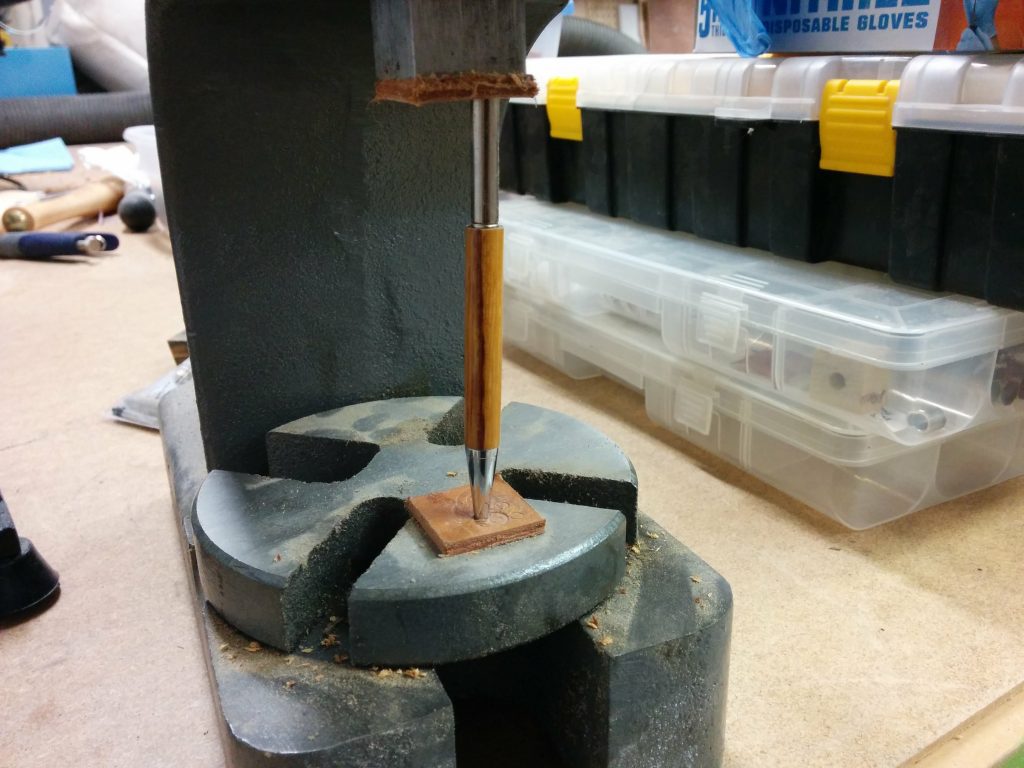
I use my small arbor press and a few scrap pieces of leather to put the pen nib in place.
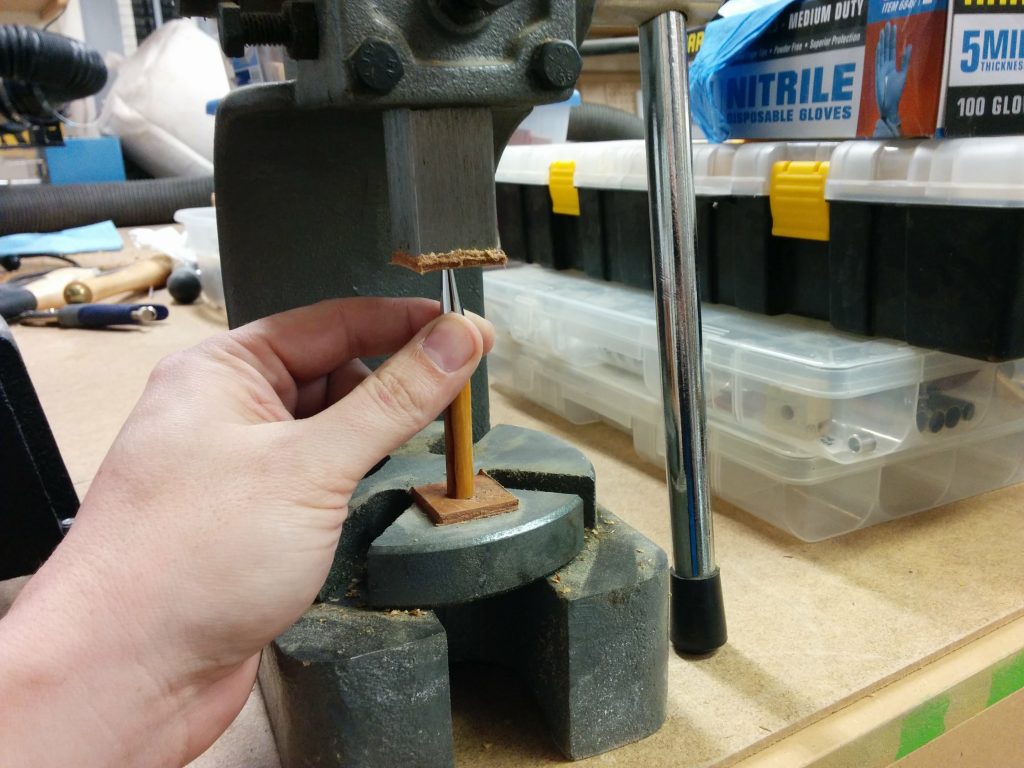
Pressing the nib in place.

Be careful not to put too much pressure on the pen and to guide the nib in straight.
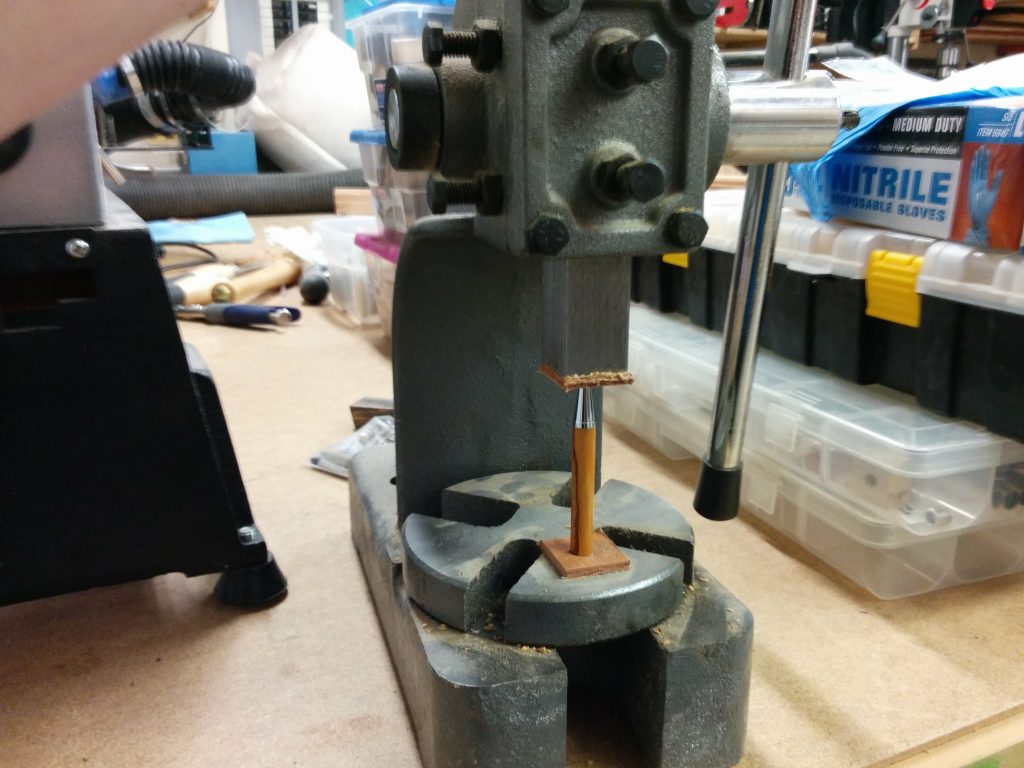
Don’t go crazy here.

Then I turn it upside down and press the twist mechanism into the pen.  I push it in so the groove that is visible lines up with the top of the blank.  It’s best to err on the side of caution.  I usually press it in so it sits above the blank by a hair, then I insert the pen refill and twist it to see how the tip looks when fully extended.  I also make sure that when the pen is twisted closed, the tip doesn’t still stick out past the end of the nib.
A little bit of trial and error to get this right.

Then I grab the other half of the pen and attach the clip and end cap.  You want to be careful that you have the orientation right.  I also look for a part of the wood that had rather boring features and line up the clip there, although that can be adjusted after assembly.
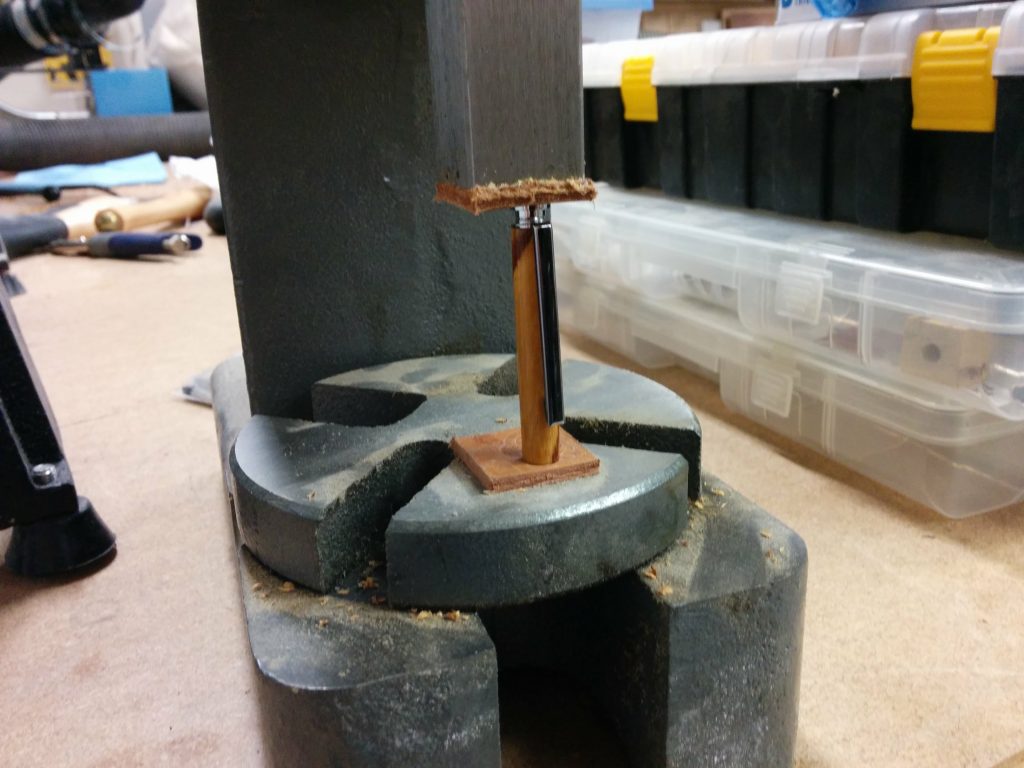
Pressing in the cap and clip.

Then I’m done.

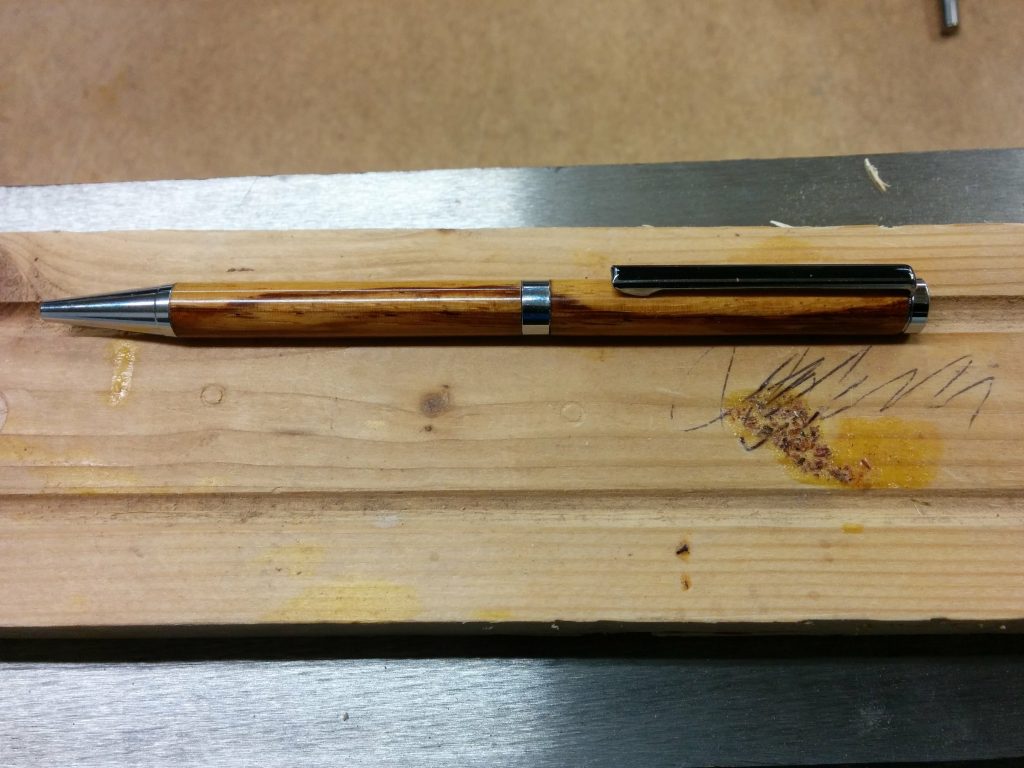
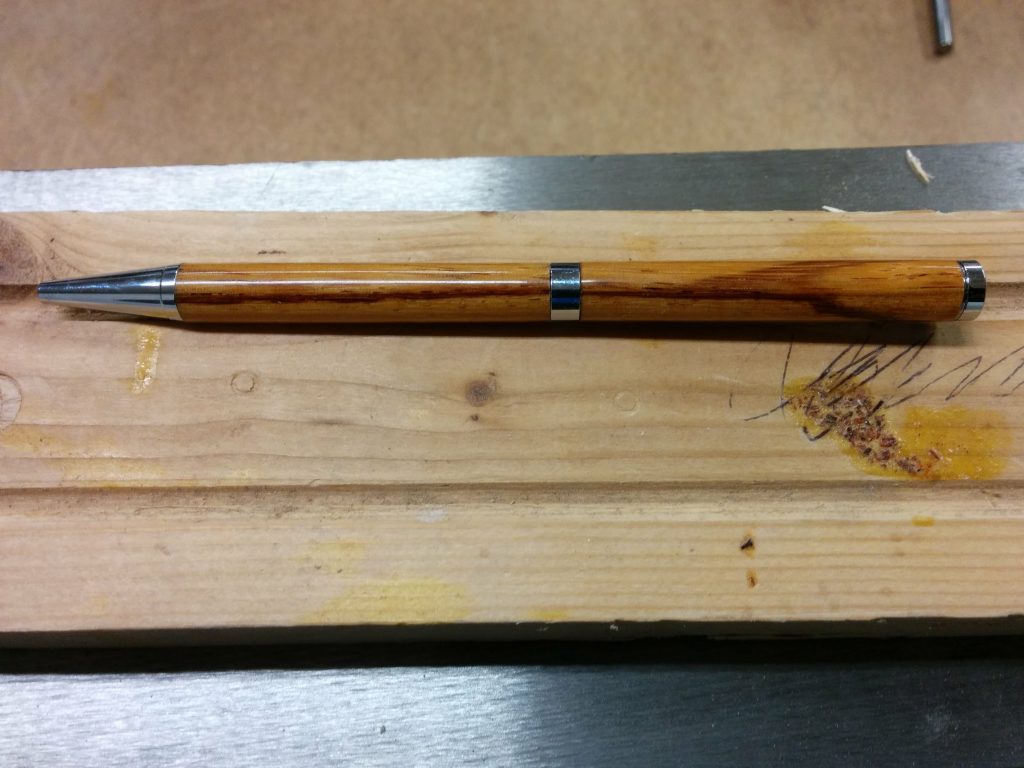
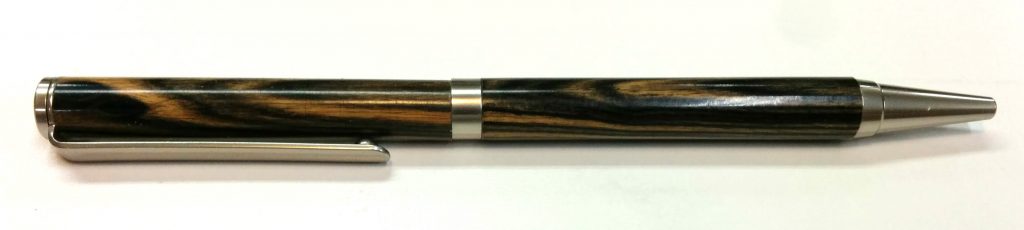
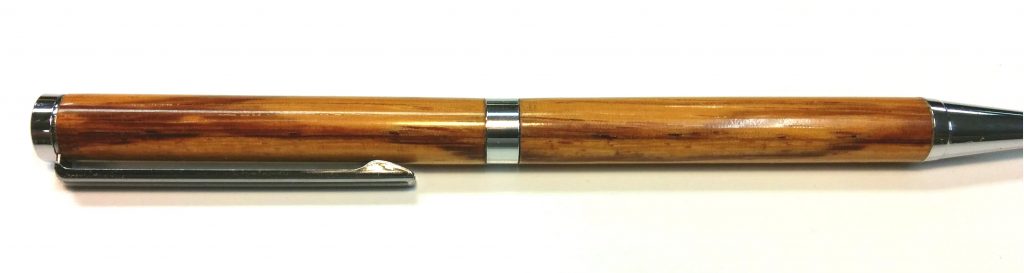
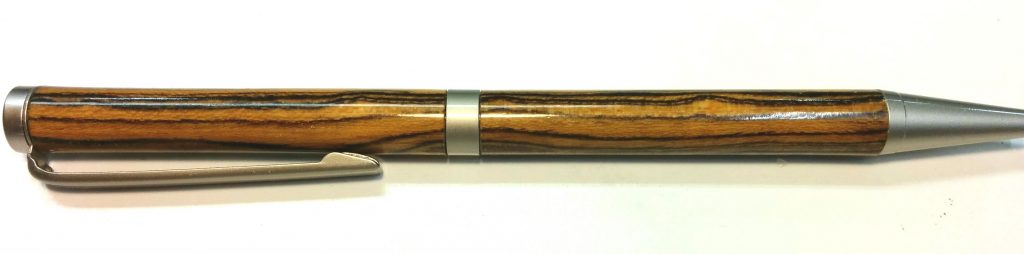
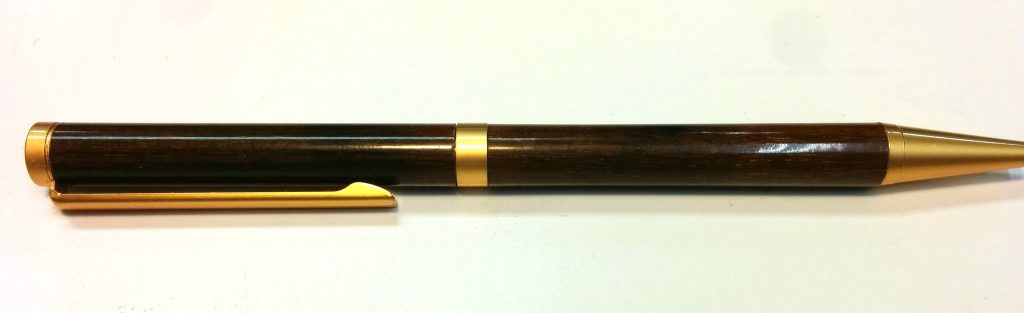
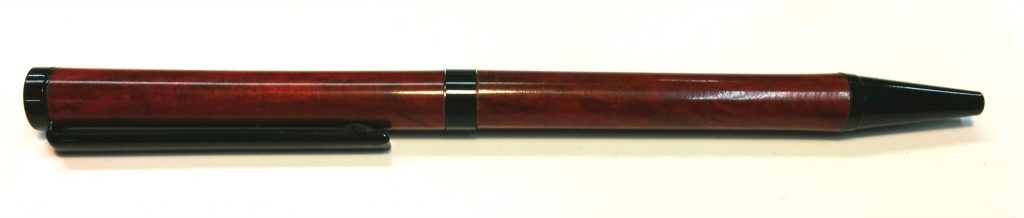
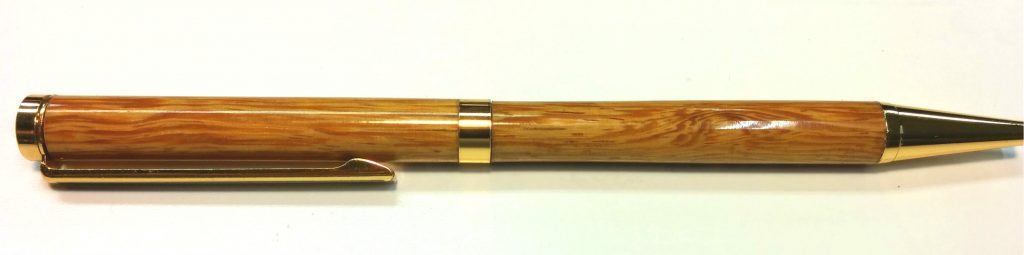
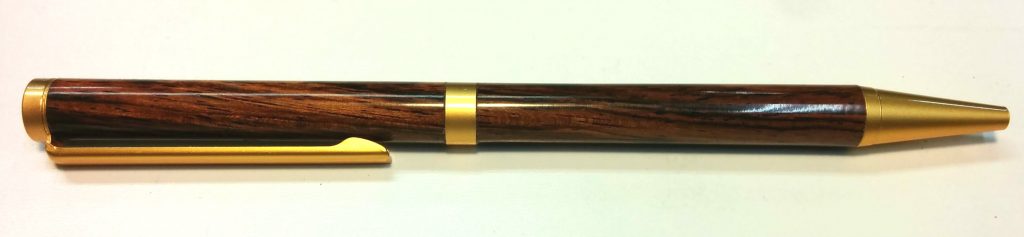
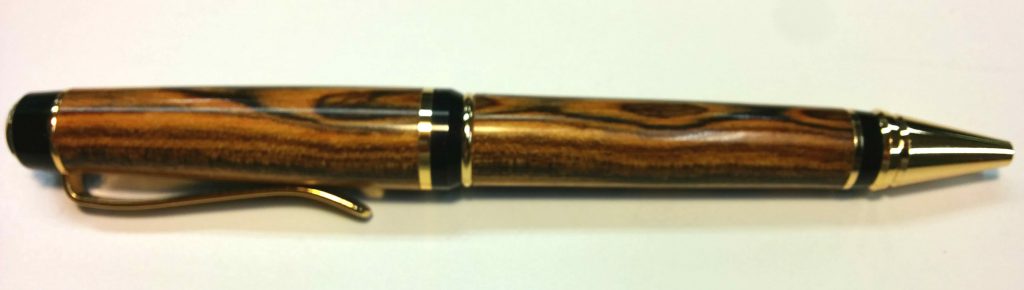
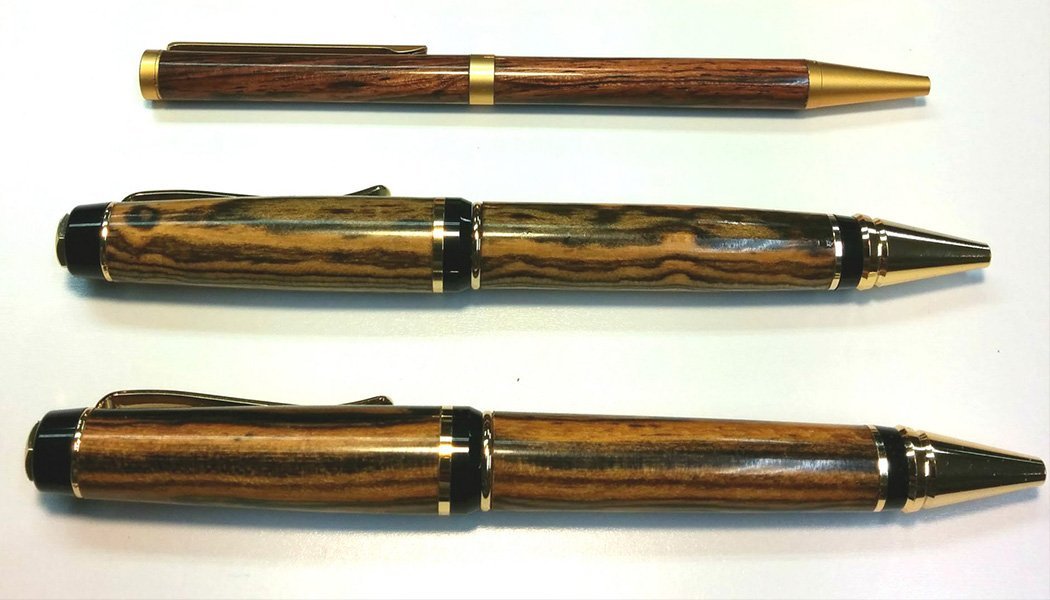
Here are some photos of the finished pens.
I hope that this was helpful. If you have any techniques or tricks to share, please leave them in the comments section below. Also, please consider signing up for my mailing list to be notified of future articles. I am also available on social media and can be reached at the links below.
Making a guitar pick from a cracked cymbal – Part 2

This is an update to my original post titled Making a guitar pick from a cracked cymbal.

I learned a few things since making that first pick.  Here’s what I did differently.

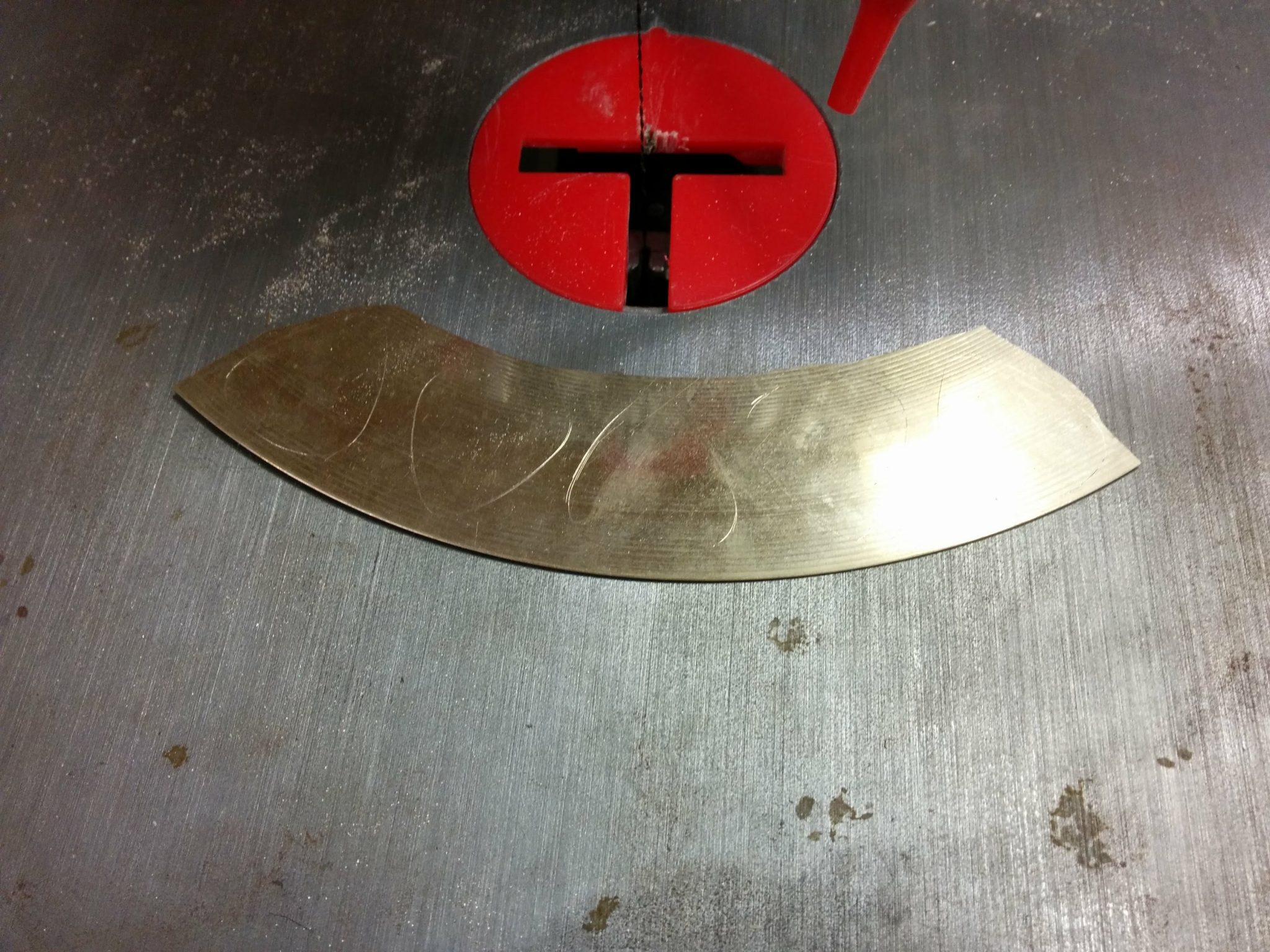
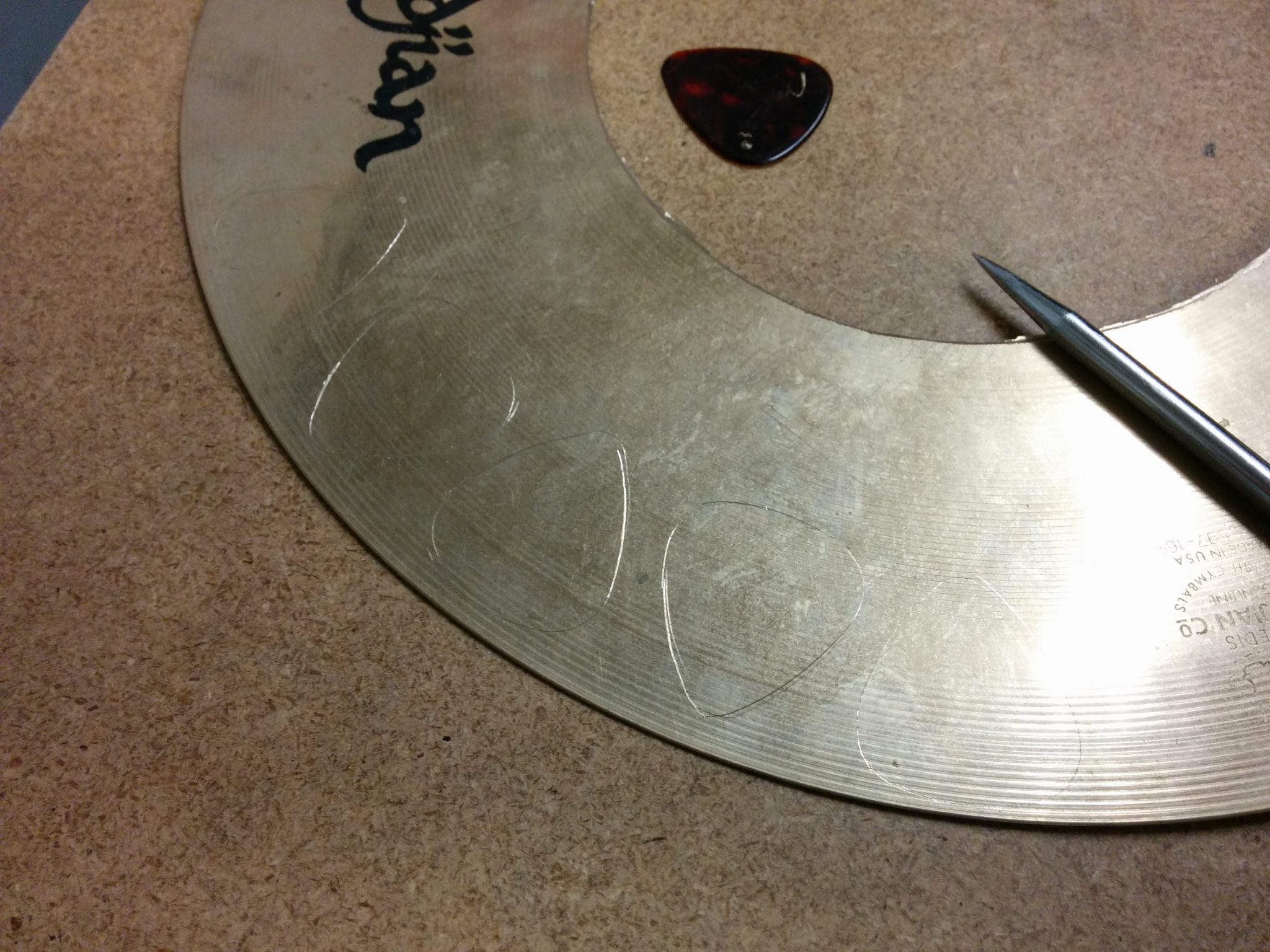
First, I decided to trace an outline of the pick using an awl.  This works better since the red Sharpie kept getting rubbed off the cymbal as I was sanding it down.  You need to be careful when doing this but it seems to work okay.

The pick outline traced with an awl.


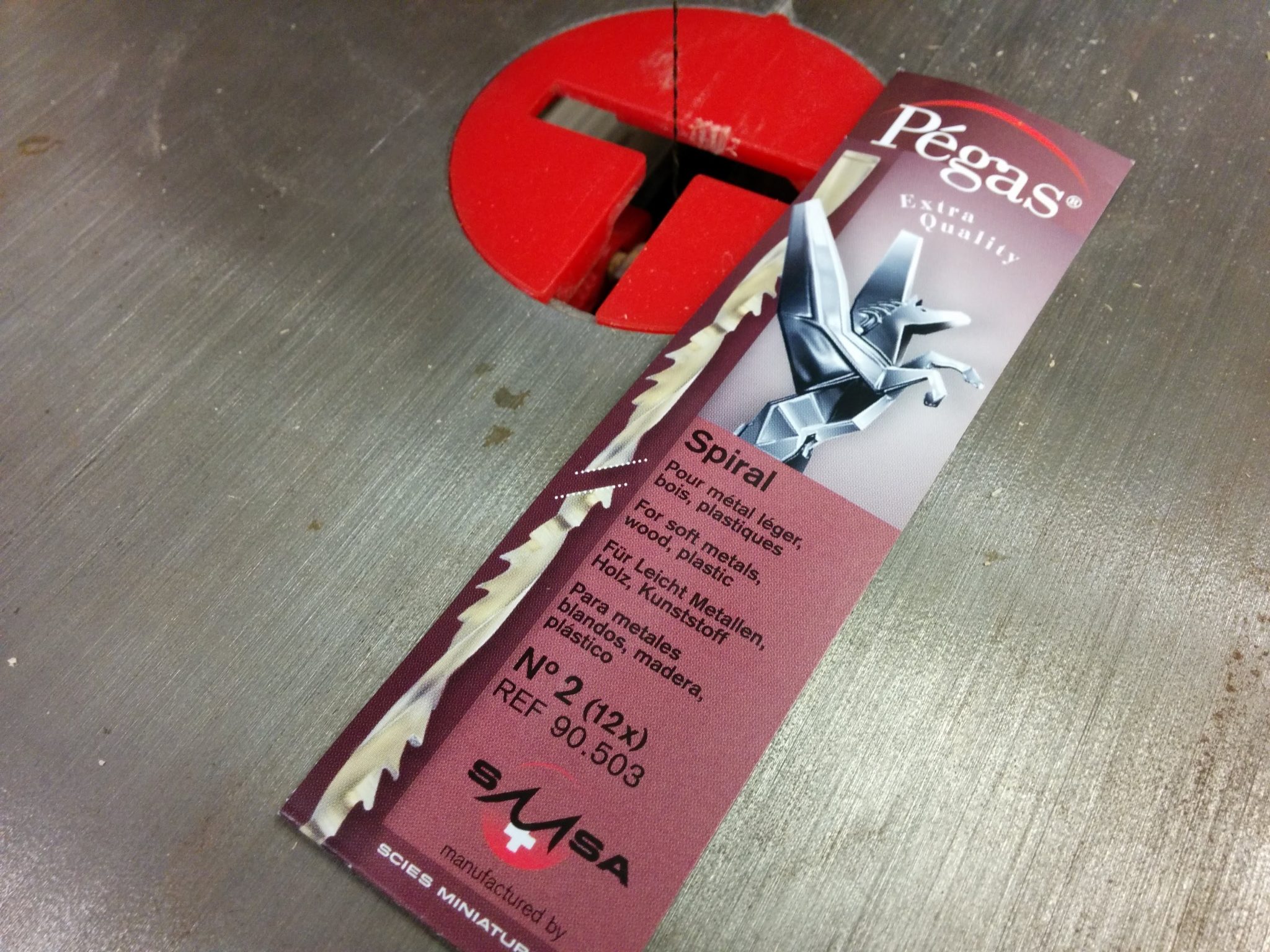
Second, I decided to use a scroll saw with a metal cutting blade.  This will allow me to cut closer to the line which will result in less waste and less material that needs to be removed with sanding.  I bought three different types of blades.  The one I started with is the Pegas 90.503 45-tooth blade.

Pegas spiral No 2 blades. (Ref 90.503)


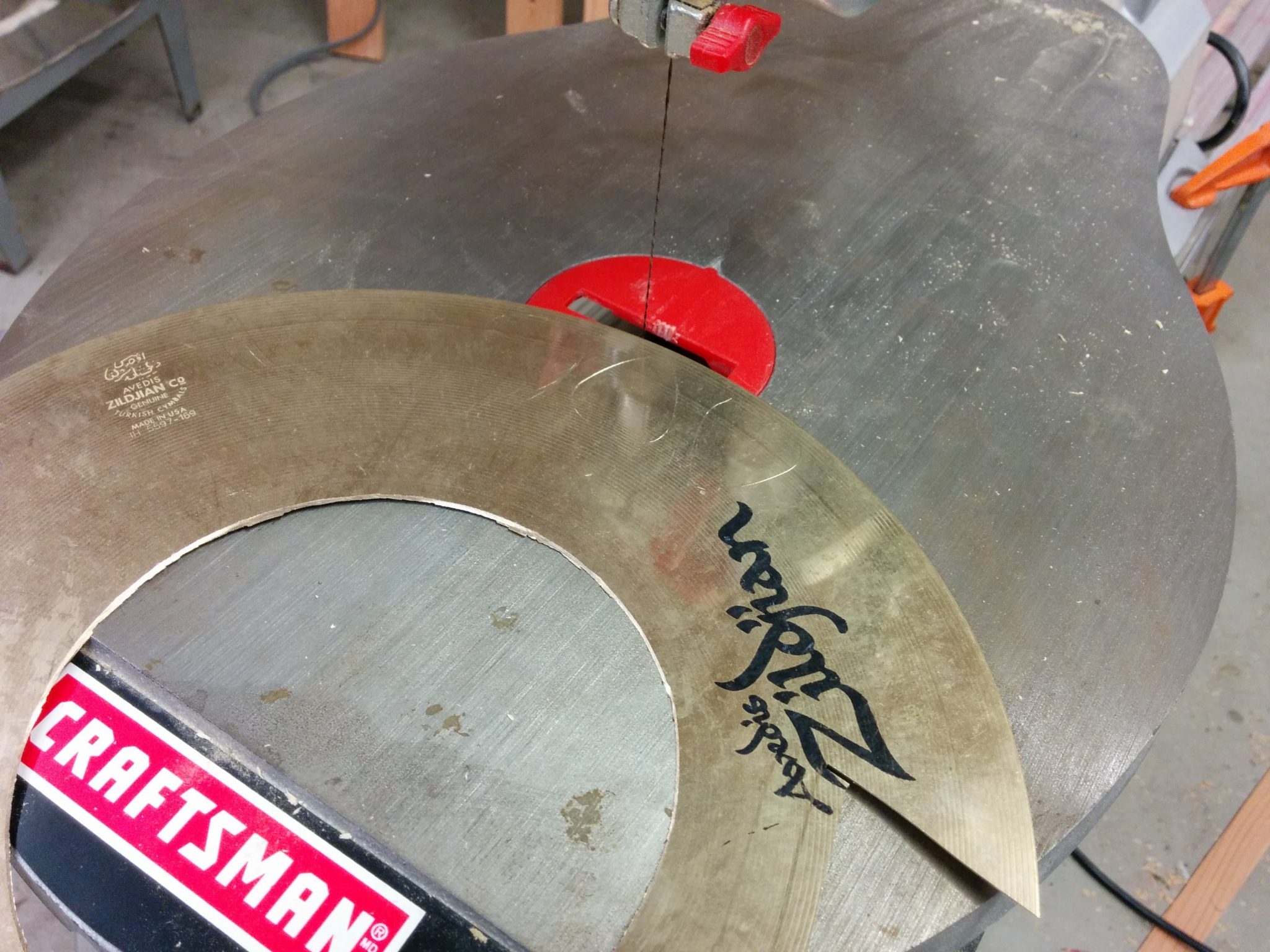
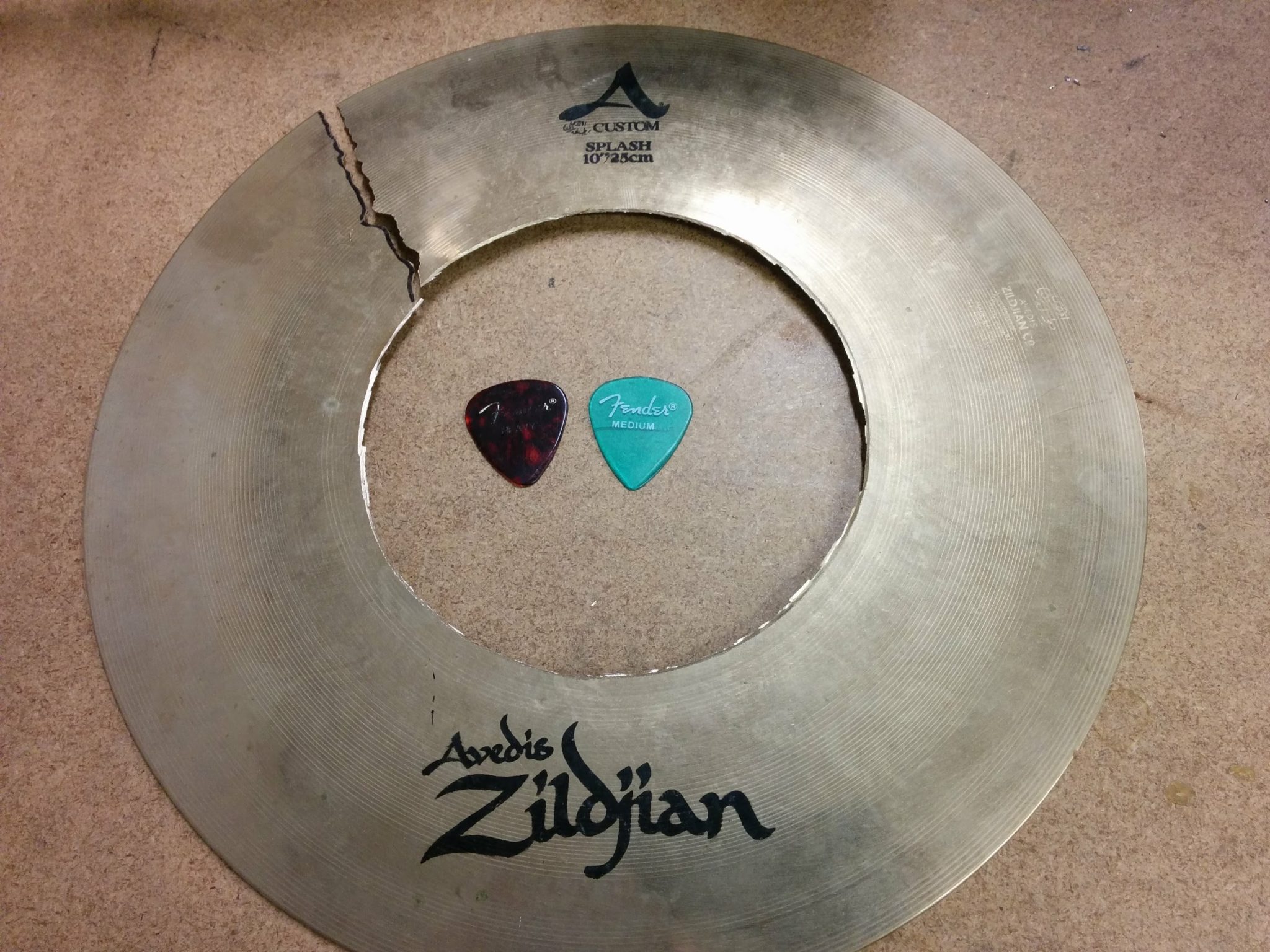
Again, I’m using the off-cut from a Zildjian A Custom 10″ Splash.

Getting ready to start cutting.


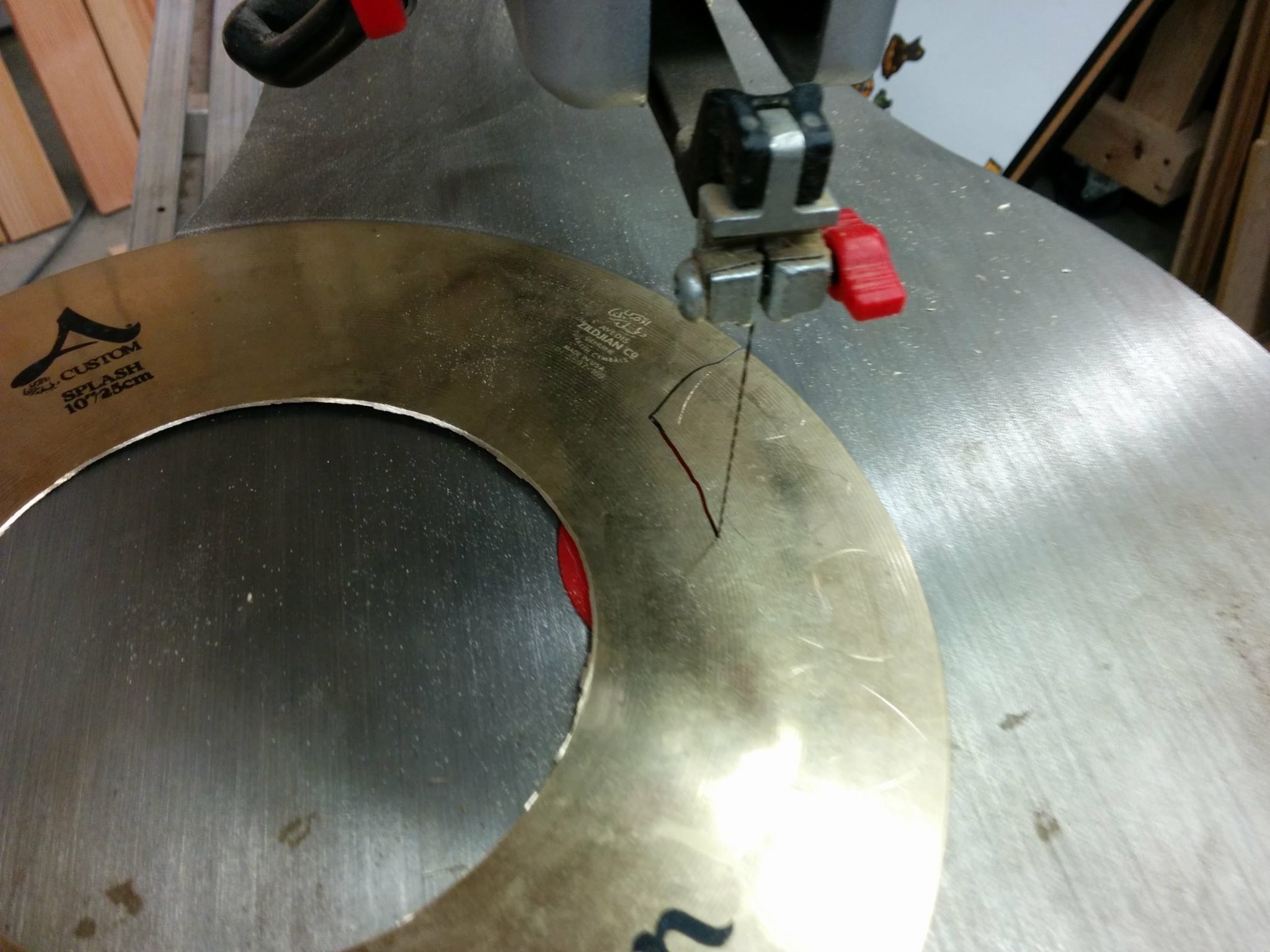
Cutting with the scroll saw was much easier.  The important thing to remember was to let the saw do the work.  I forgot this and got a little eager.  I ended up breaking a blade on this cut as a result.

Cutting out a the material.


Now that I had a smaller piece to work with, I was able to more precisely cut out each pick.  Once again, I ended up breaking a blade.  At that point I switched to a Pegas No. 4 90.505 38-tooth blade which was a little more aggressive.

A more manageable piece to work with.


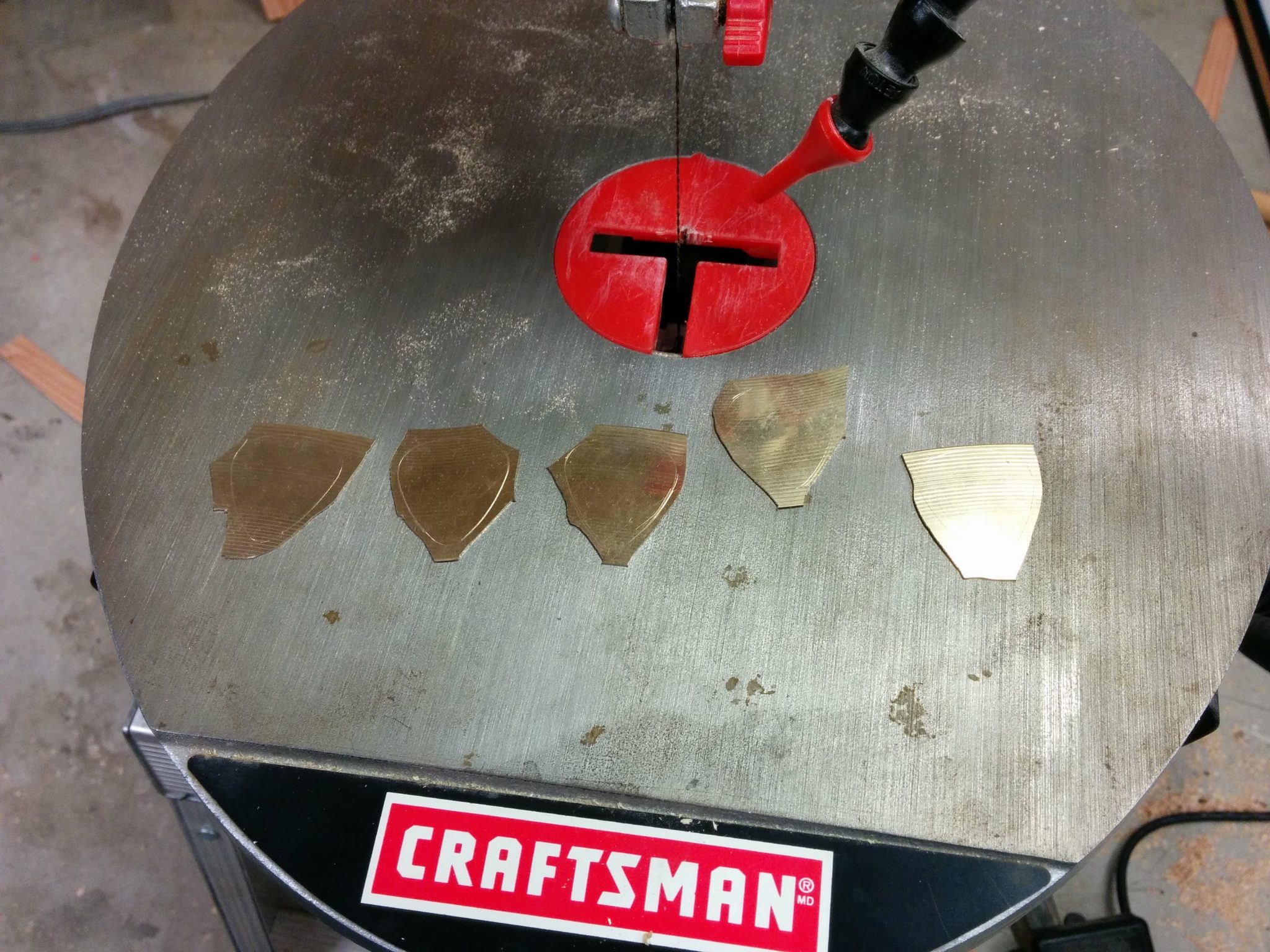
The scroll saw was able to get the pieces closer to the final shape, which allowed me to save some of the small scraps in between each pick.  I’ll use these for something else, such as melting them down and casting them.

After rough-cutting on the scroll saw.


I found that it is actually easier to make several of these at a time simply because of the sanding process.  The problem with the sanding is that the metal heats up fairly quickly.  I got into a routine where I would sand one down and once it started to get warm, I would set it down to cool and grab the next one in line.  I would sand that one down a bit then switch to the next when it got warm, and so on.  I would just keep looping through the line until I got them pretty close to the final size.

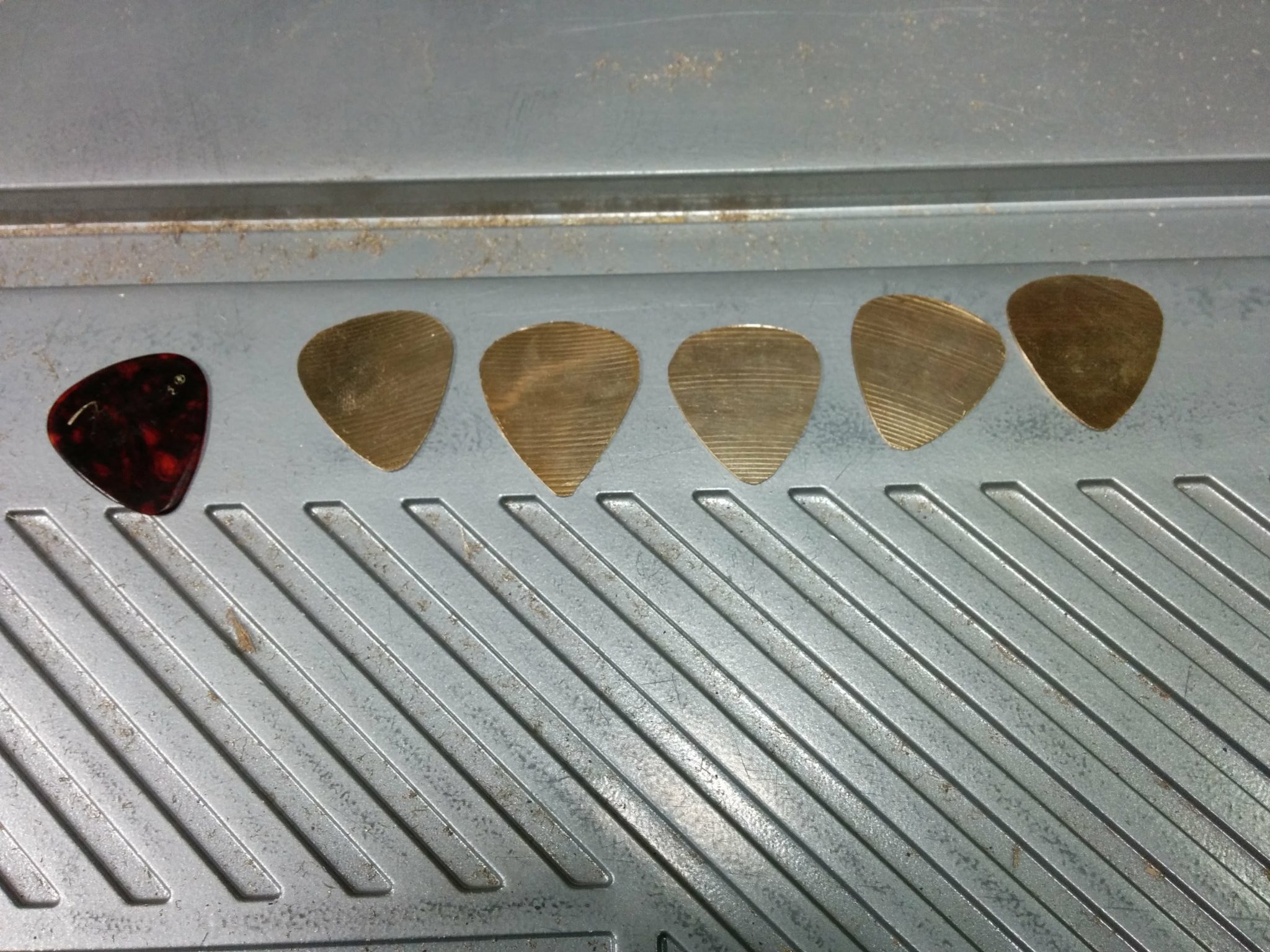
After getting them close to the final size.


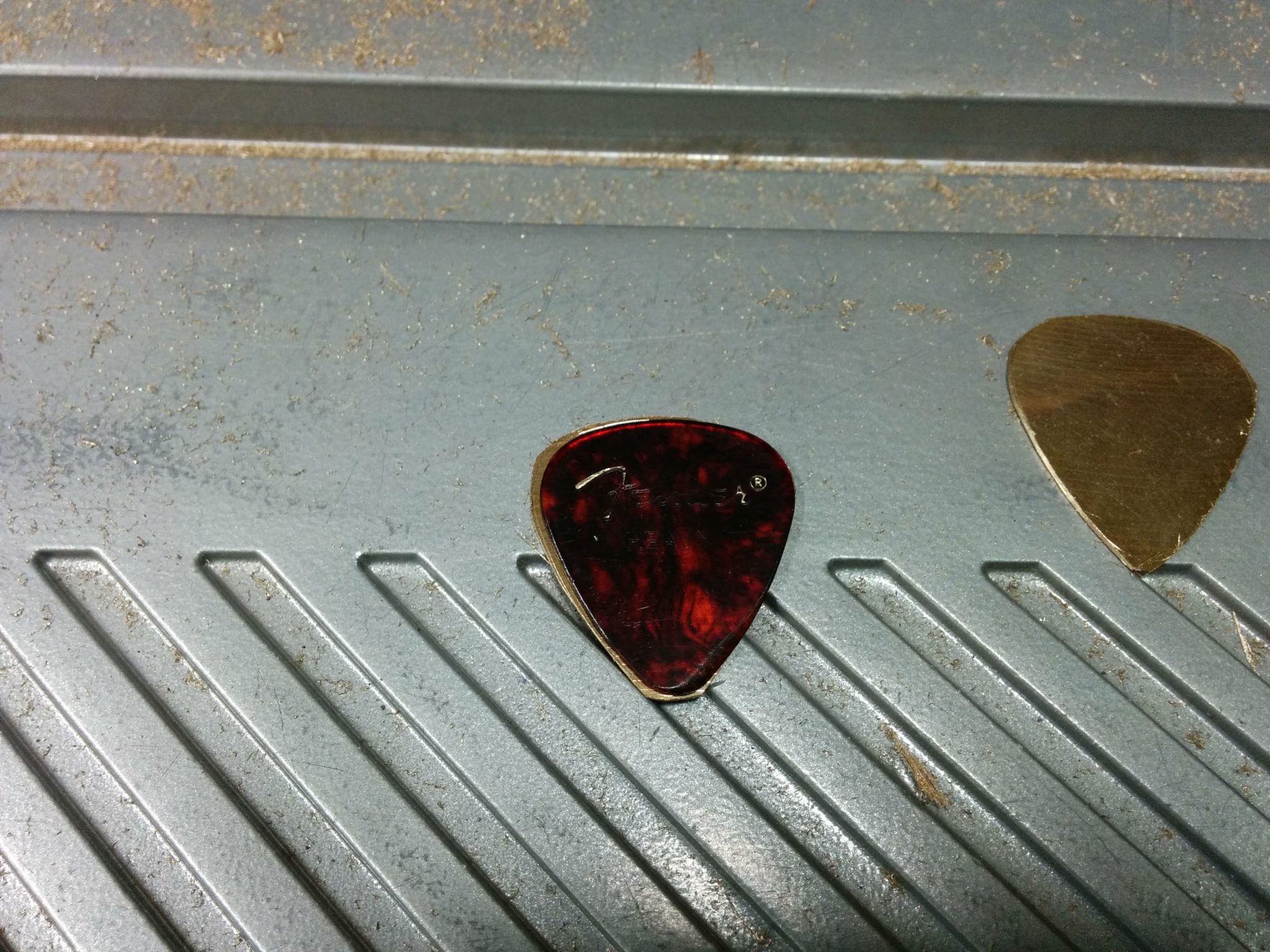
After getting them close to the finished size, I used the original pick as a template by holding it in front of the sanded shape and see where I needed to take it down some more.

Lining up the original pick as a template.


After using the pick as a template, they were really close to the final shape (the second pick in this photo had yet to go through this step).

After using the original pick as a template.


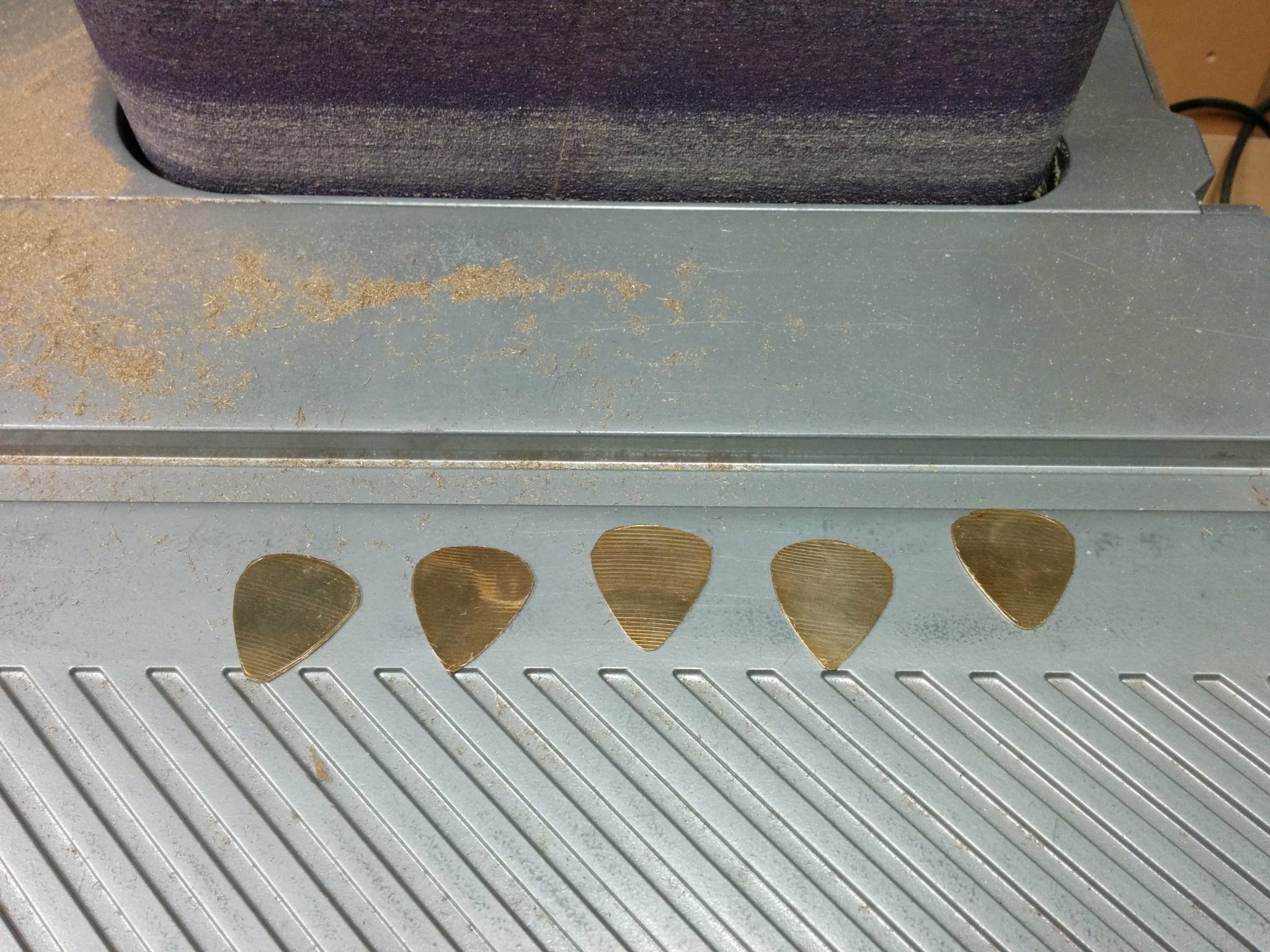
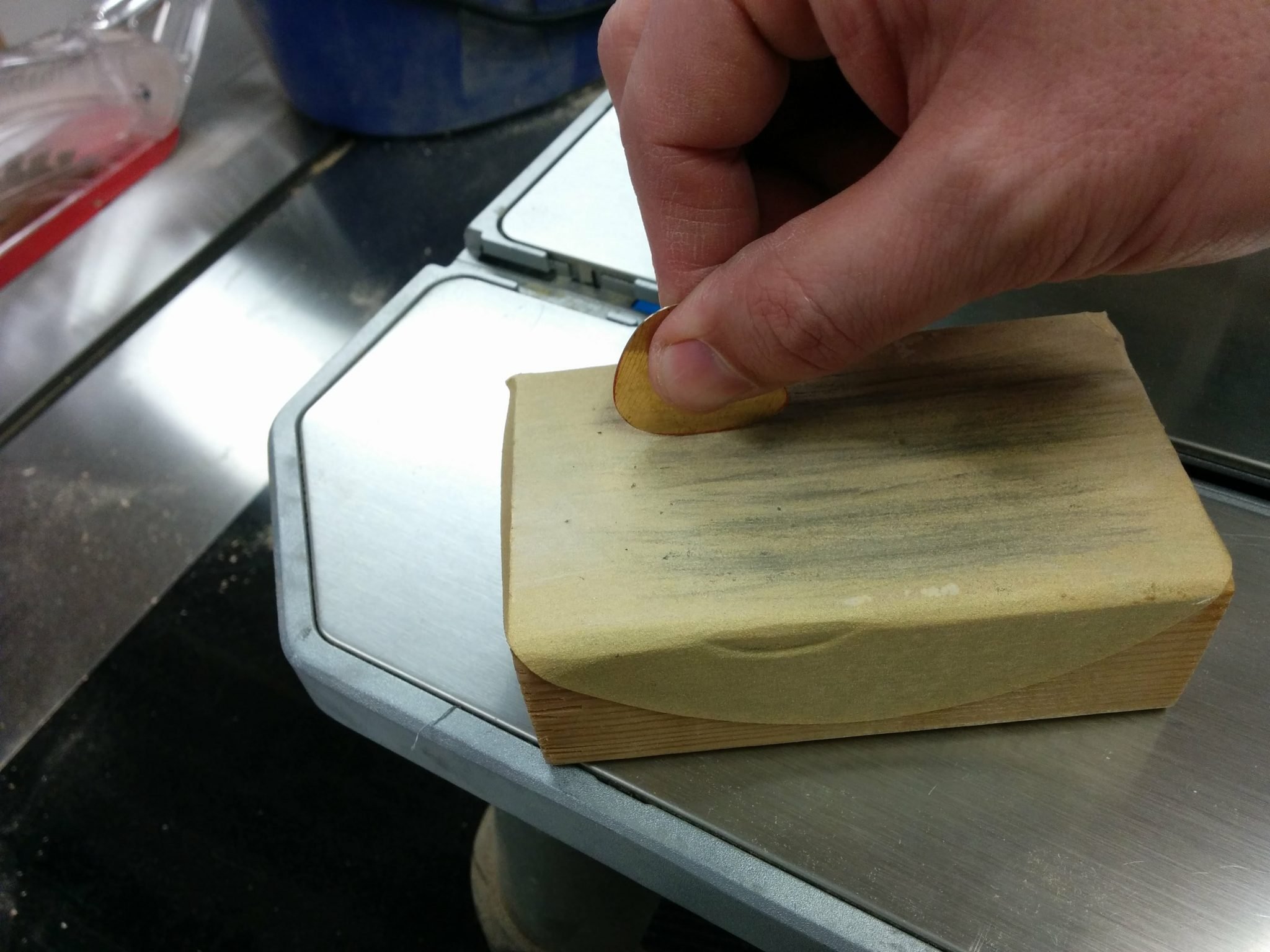
Then I took them to my sanding block and manually sanded them down so they would have smooth edges.

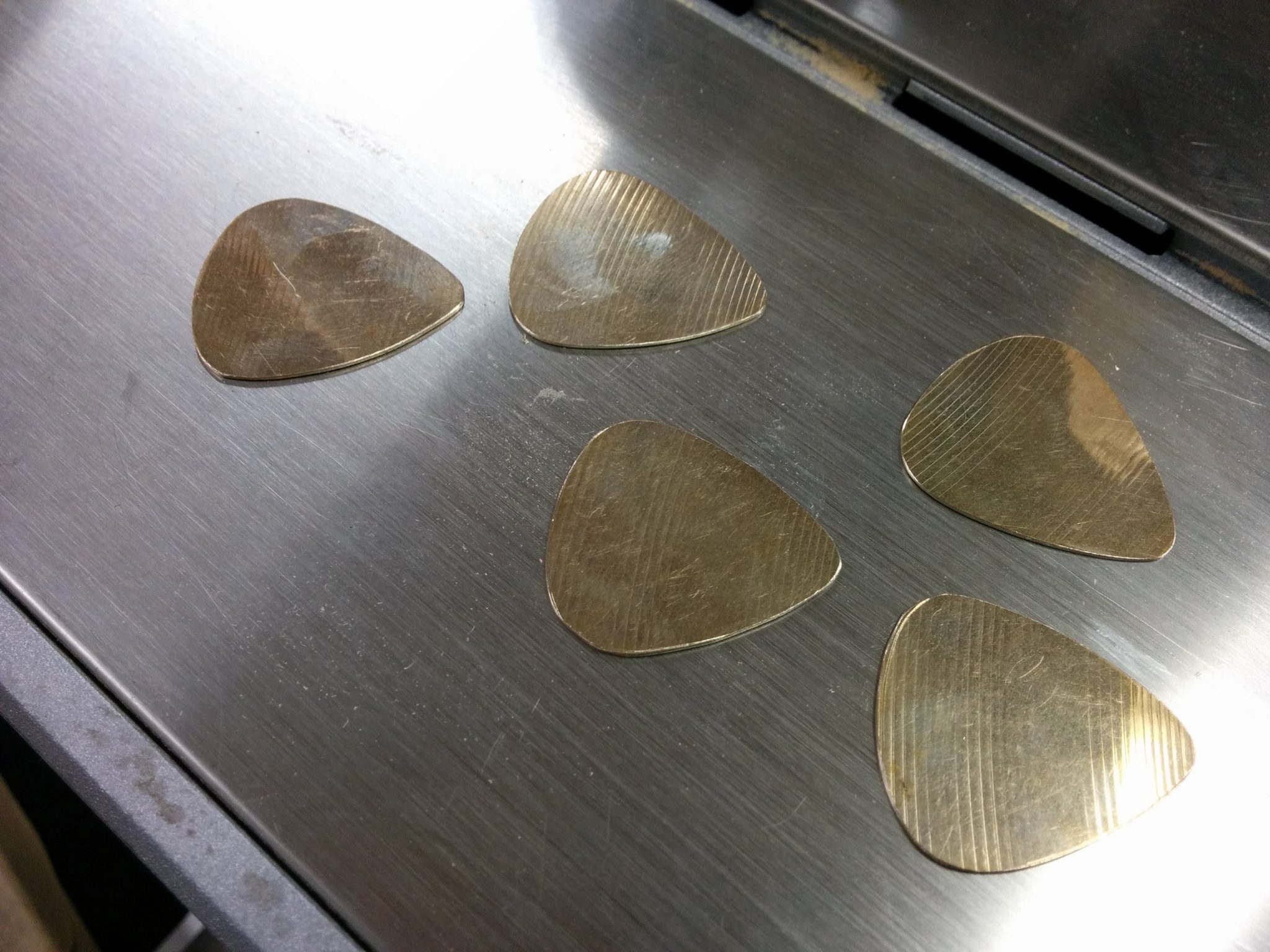
Ready to be polished.


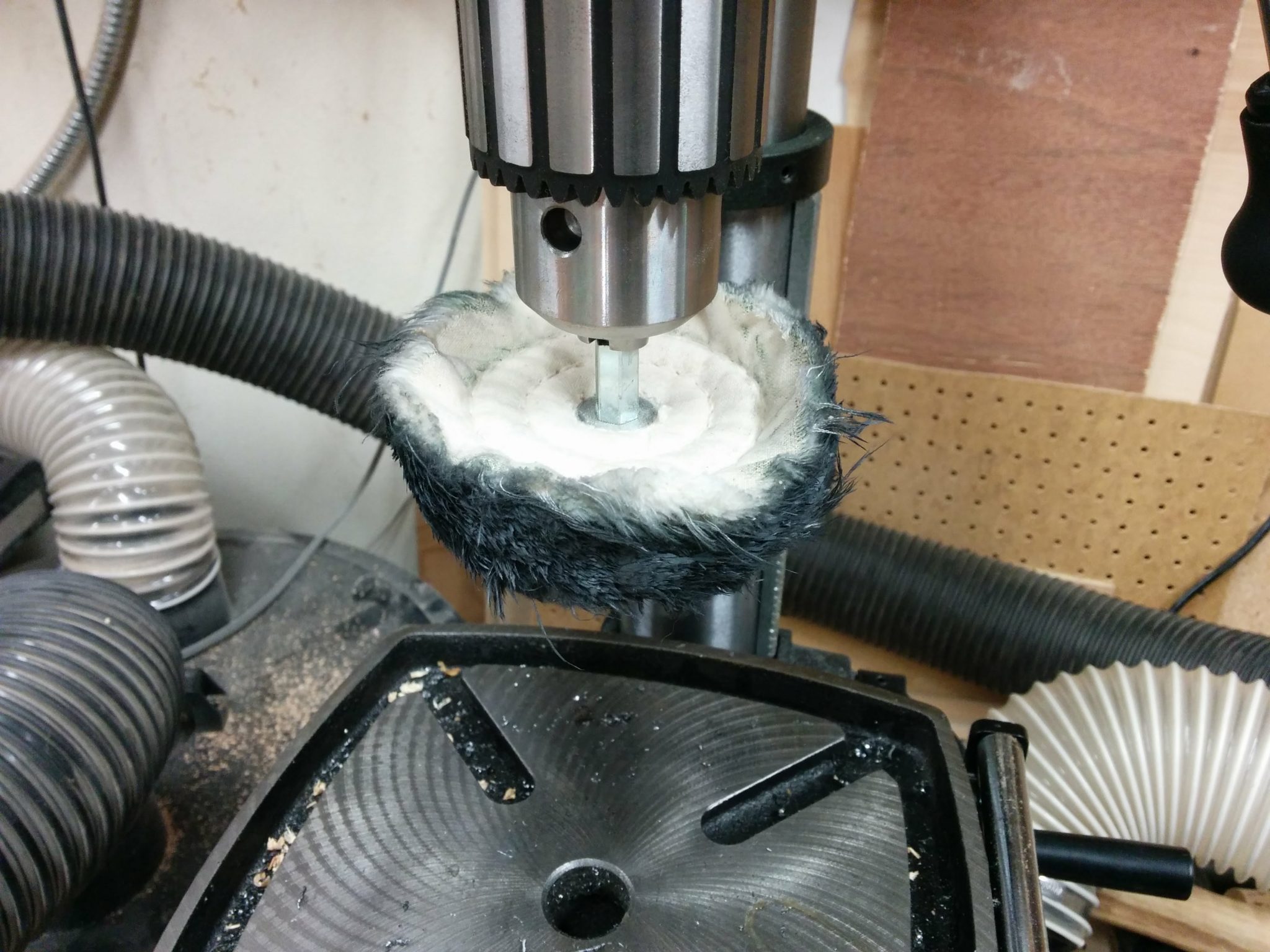
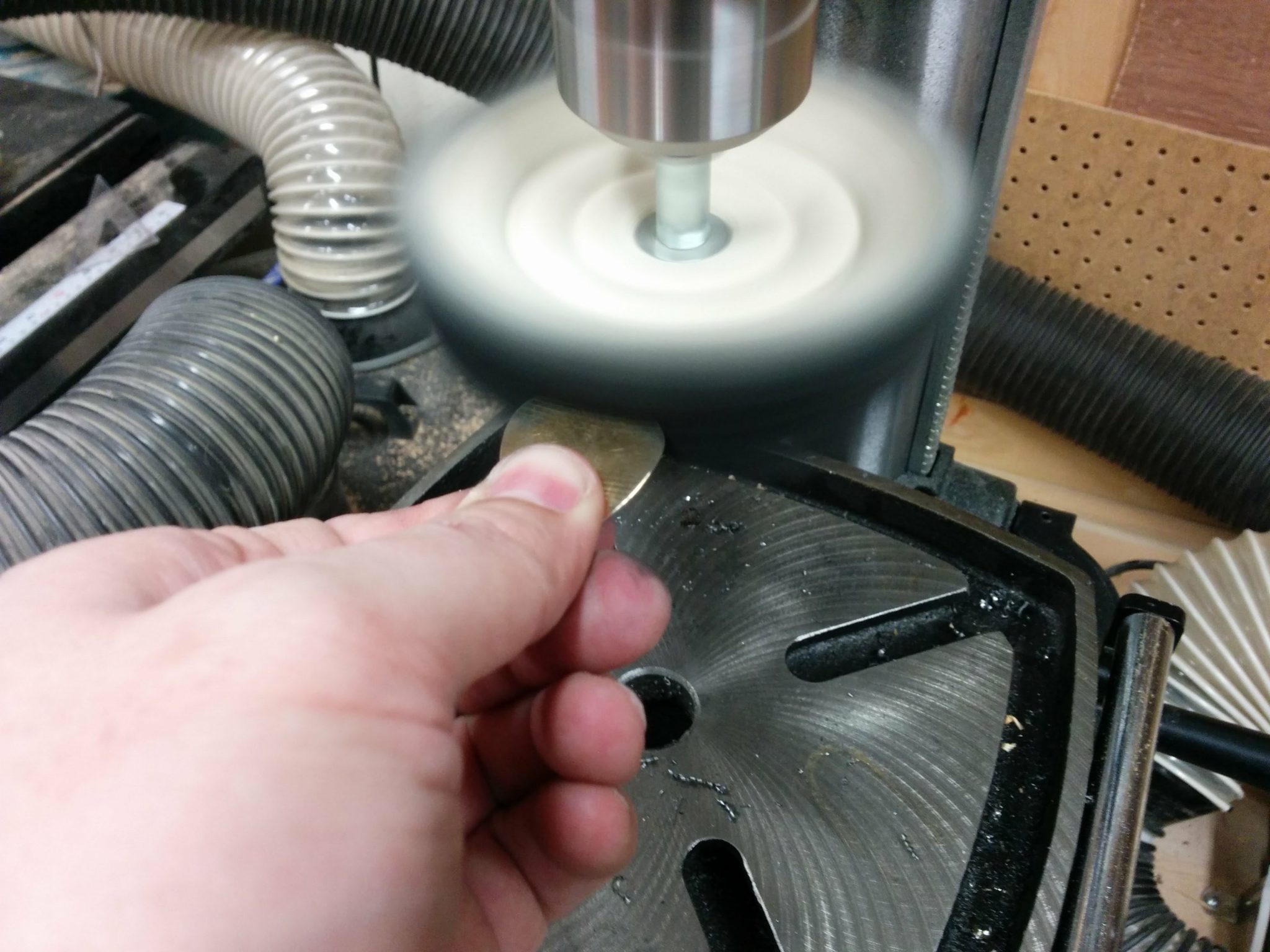
After that, I took them to the buffing wheel on my drill press.

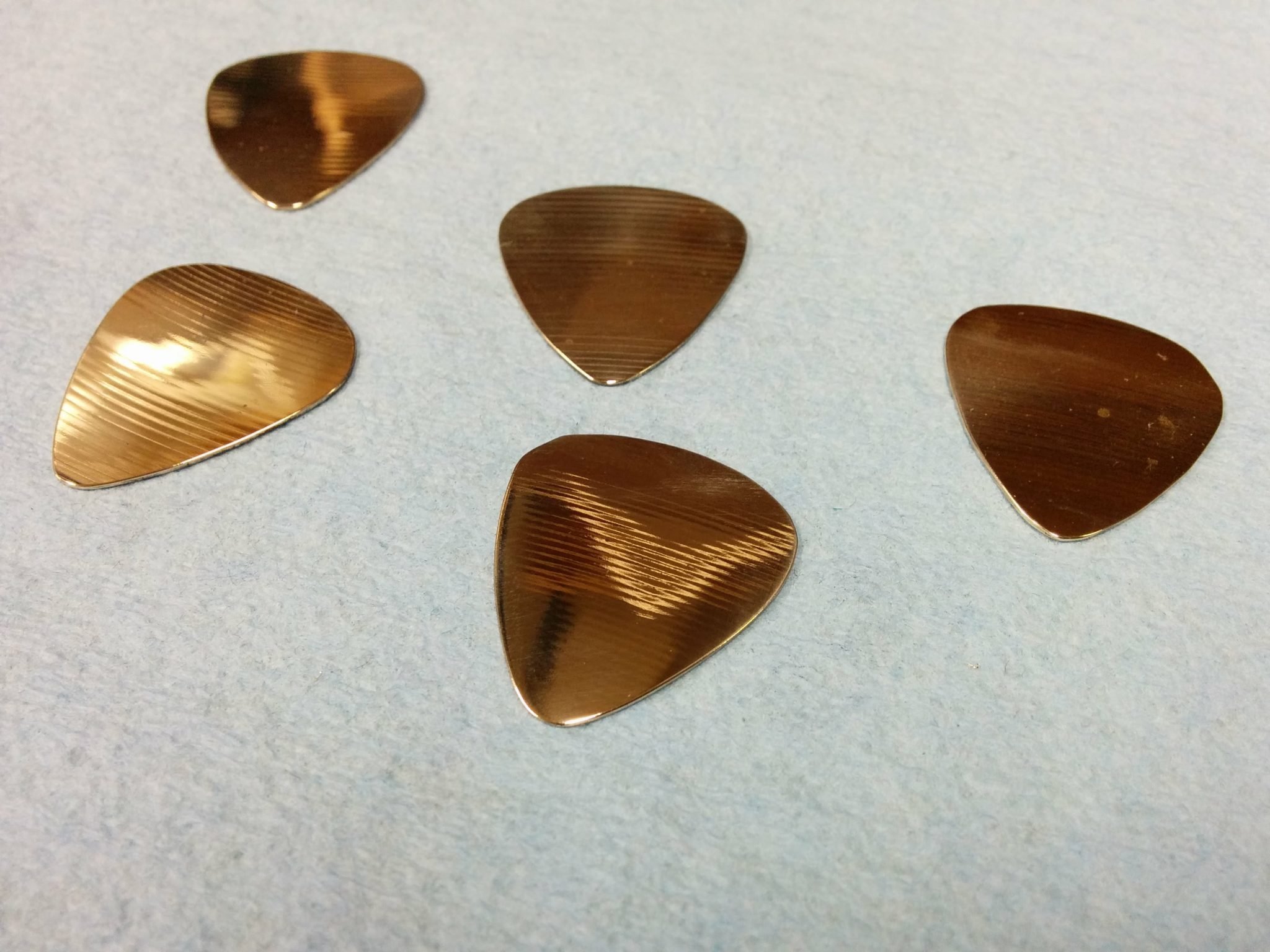
5 more picks almost done being polished.


And that’s it.  I think I’ve got this process down.  I’ve got a few picks being tested by other guitarists so I’ll compile the feedback and see how people like them.

Making a guitar pick from a cracked cymbal

Update: I created a follow-up post with a few things I did differently.  You can find that here.

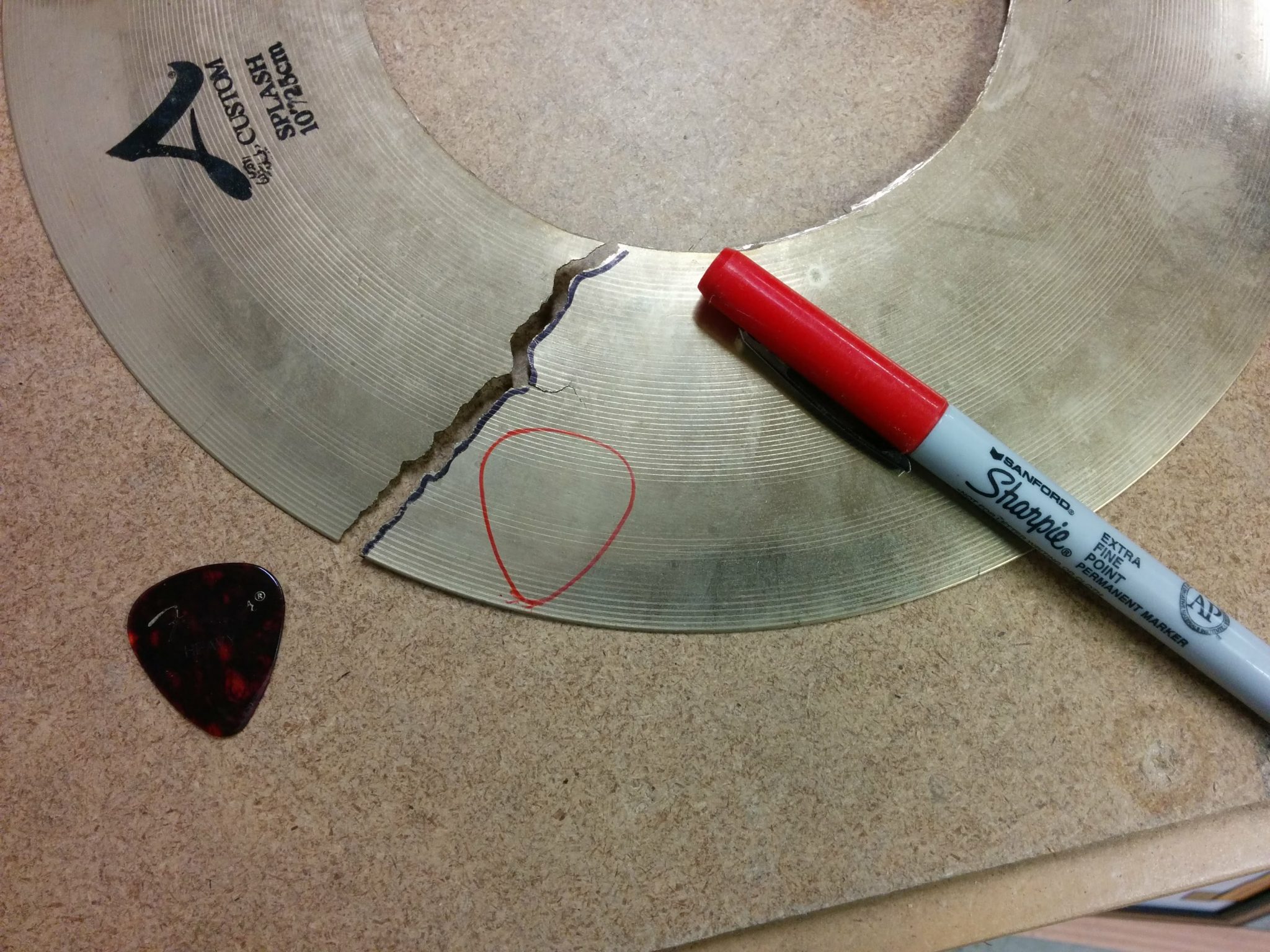
I started with the remnant from a cut-down cymbal.  I chose a cut-off from a Zildjian A Custom 10″ Splash because of how thin it was and how it didn’t have much of a bow to it.

Zildjian A Custom 10" Splash.
Zildjian A Custom 10″ Splash.


Using a red extra fine point Sharpie, I traced the outline of one of my existing guitar picks.

Outline of the pick traced on the cymbal.


This worked out okay but the red ink started to come off pretty quickly.  I think for future picks I will carefully scratch the outline with an awl.

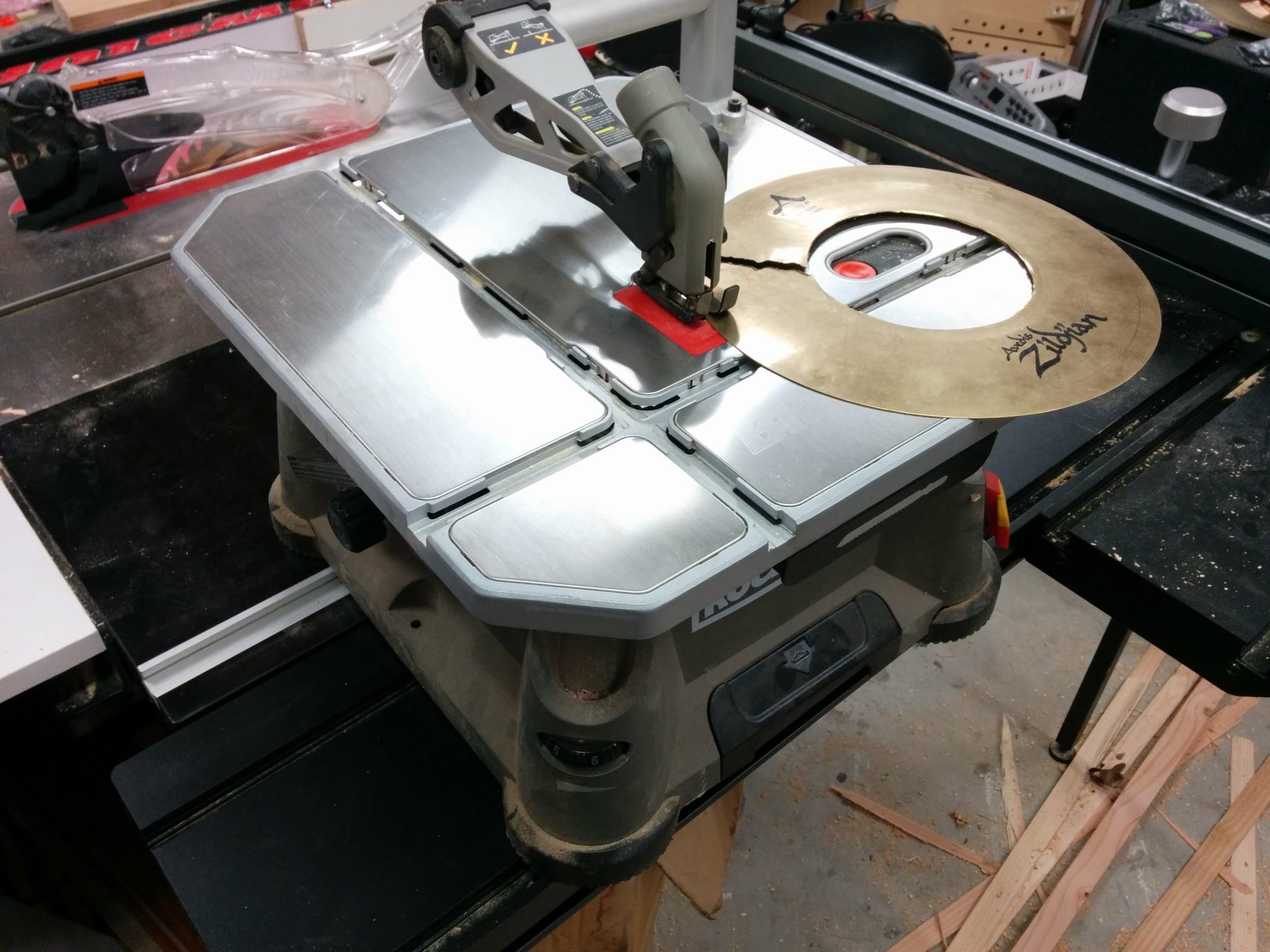
Once the outline was traced, I took the cymbal to my Rockwell BladeRunner equipped with a metal cutting blade.

Rockwell BladeRunner


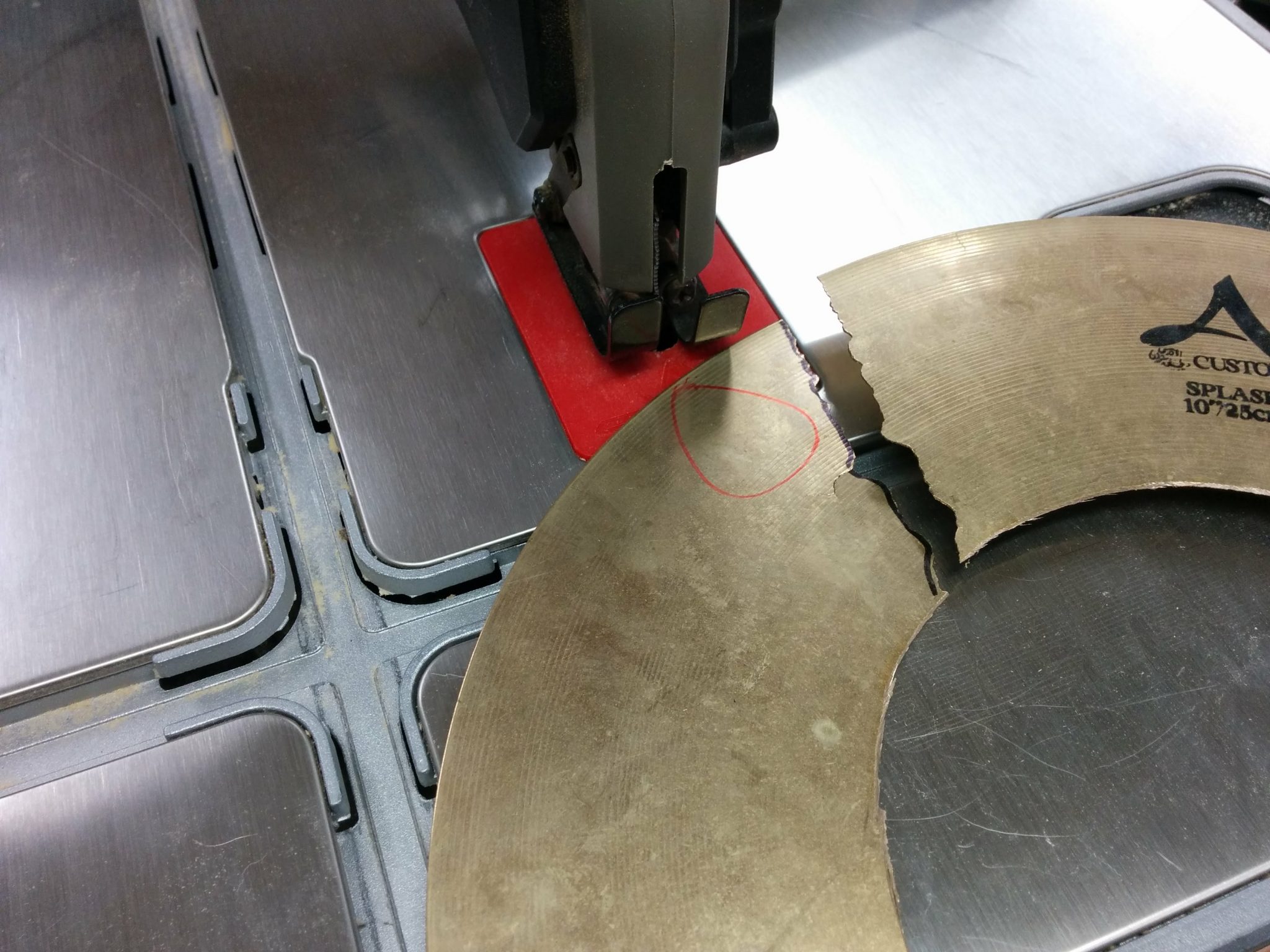
I didn’t need to cut it exactly on the lines.  In fact, it wouldn’t be possible with this type of tool.

Ready to rough cut the pick out of the cymbal.


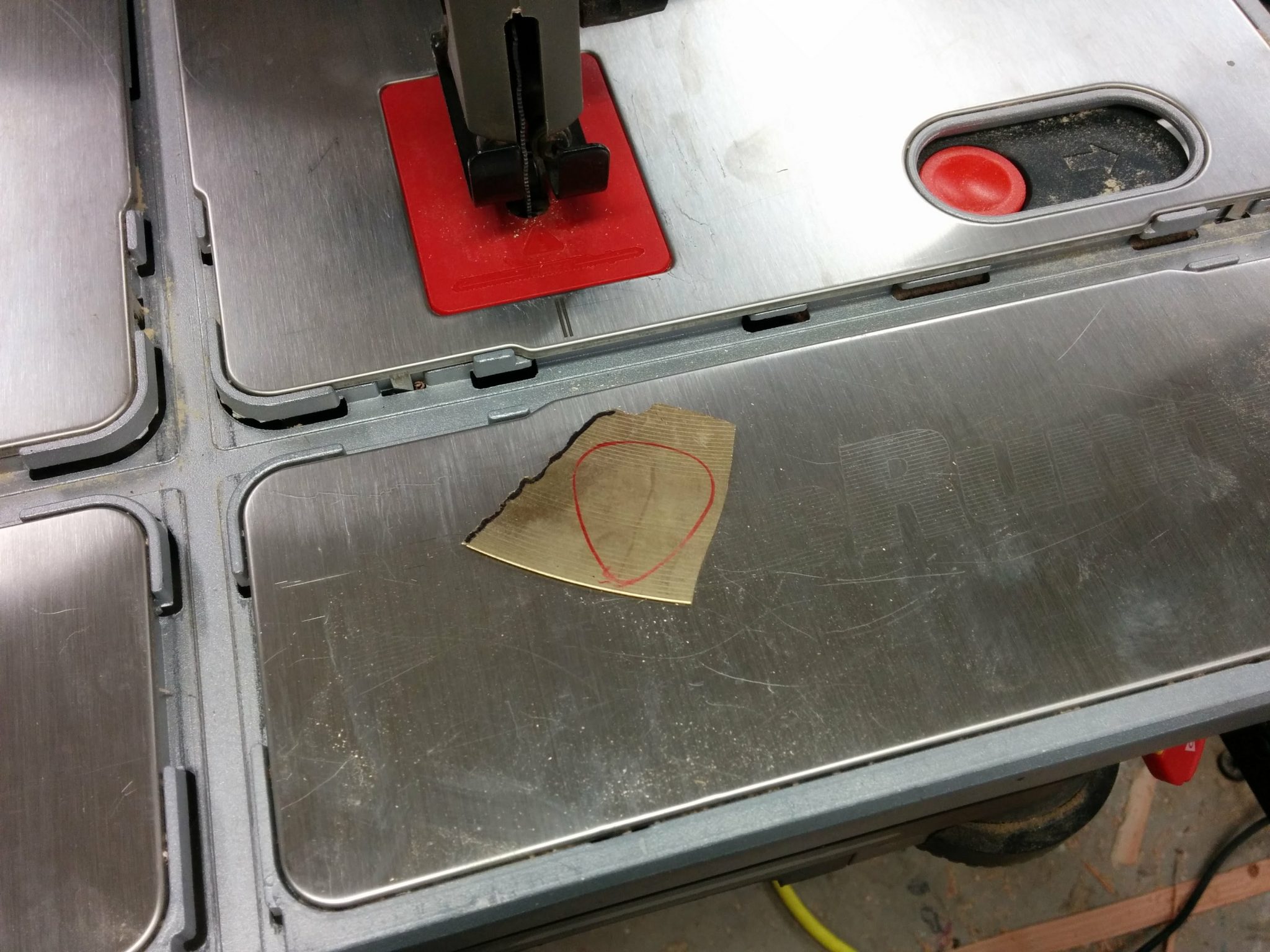
All I was going for was a smaller section that I can take to my sanding tools for the final shaping.  When cutting something like a small cymbal remnant, it’s difficult to safely get it down to it’s final size using larger tools.  This was definitely an exercise in finding the right tool for the job, as you’ll see…

The rough cut.
The rough cut.


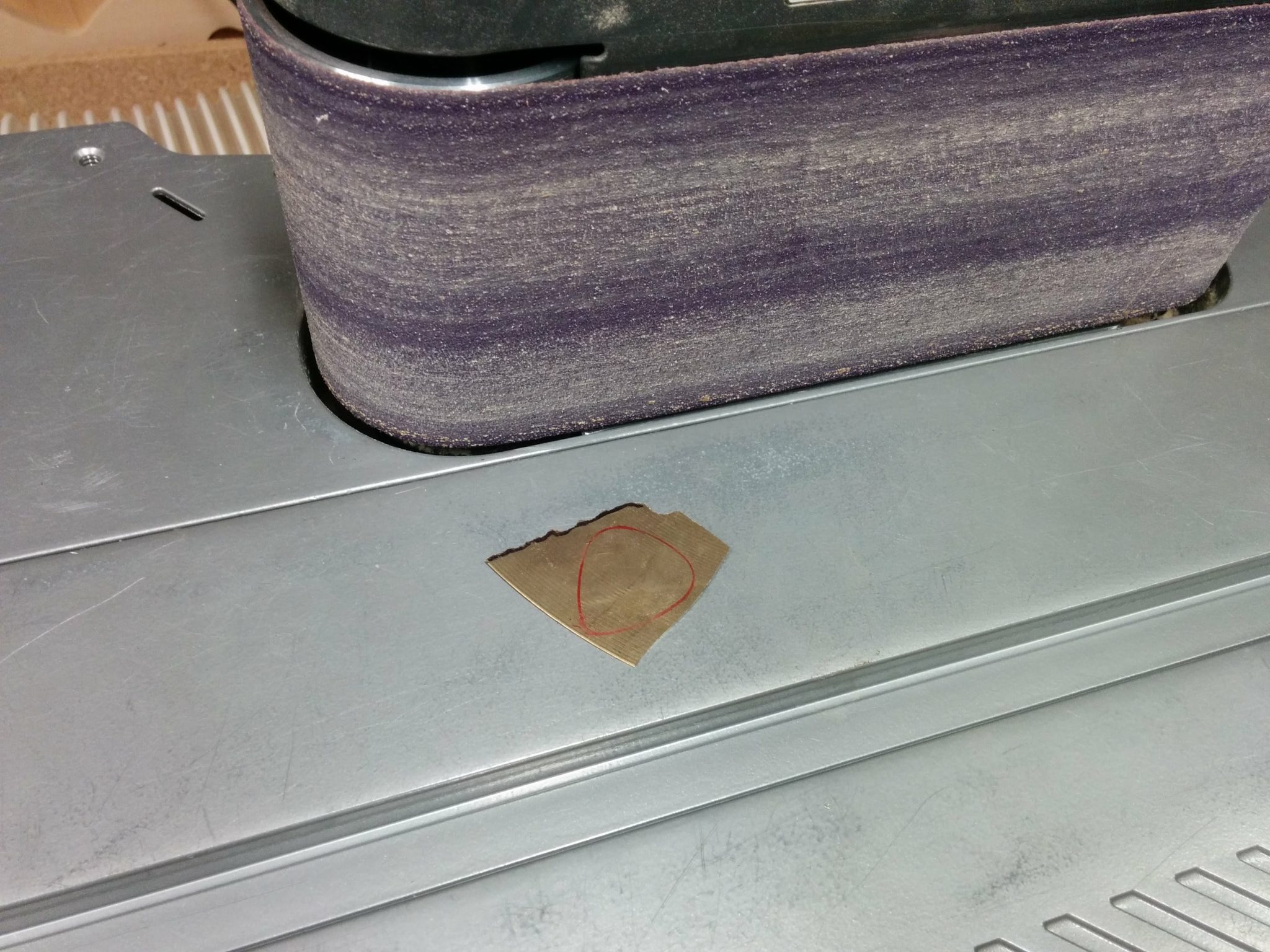
After getting it cut to a manageable size, I took it to my Ridgid oscillating belt sander.  My plan was to use this to get it to it’s final shape.

Taking the rough cut to my Ridgid Oscillating Belt Sander.


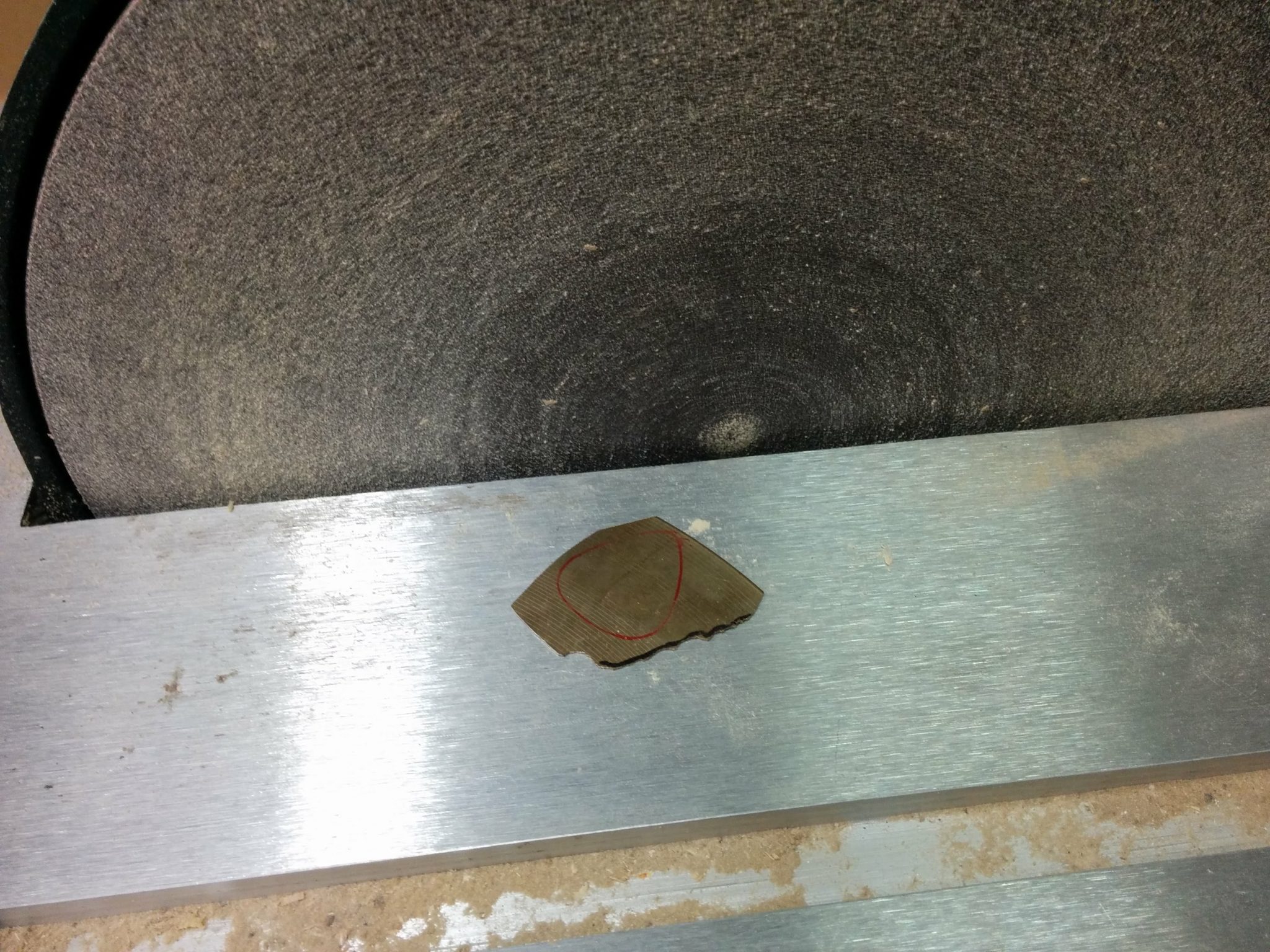
This proved to be too slow so I tried taking it to my disc sander instead.

Trying the disc sander instead.


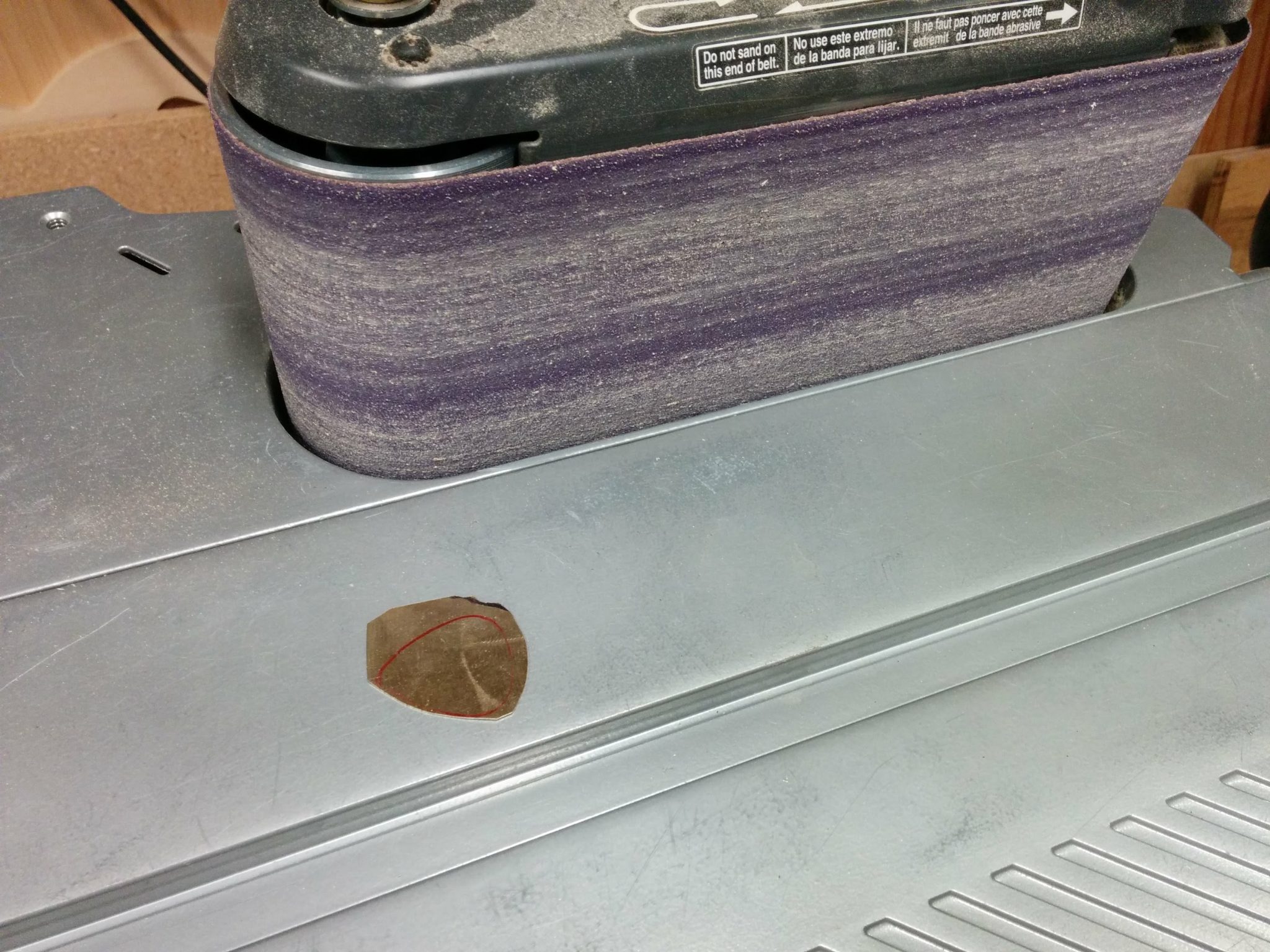
The disc sander was too aggressive and not quite precise enough so I took it back to the oscillating belt sander.

Back at the belt sander.


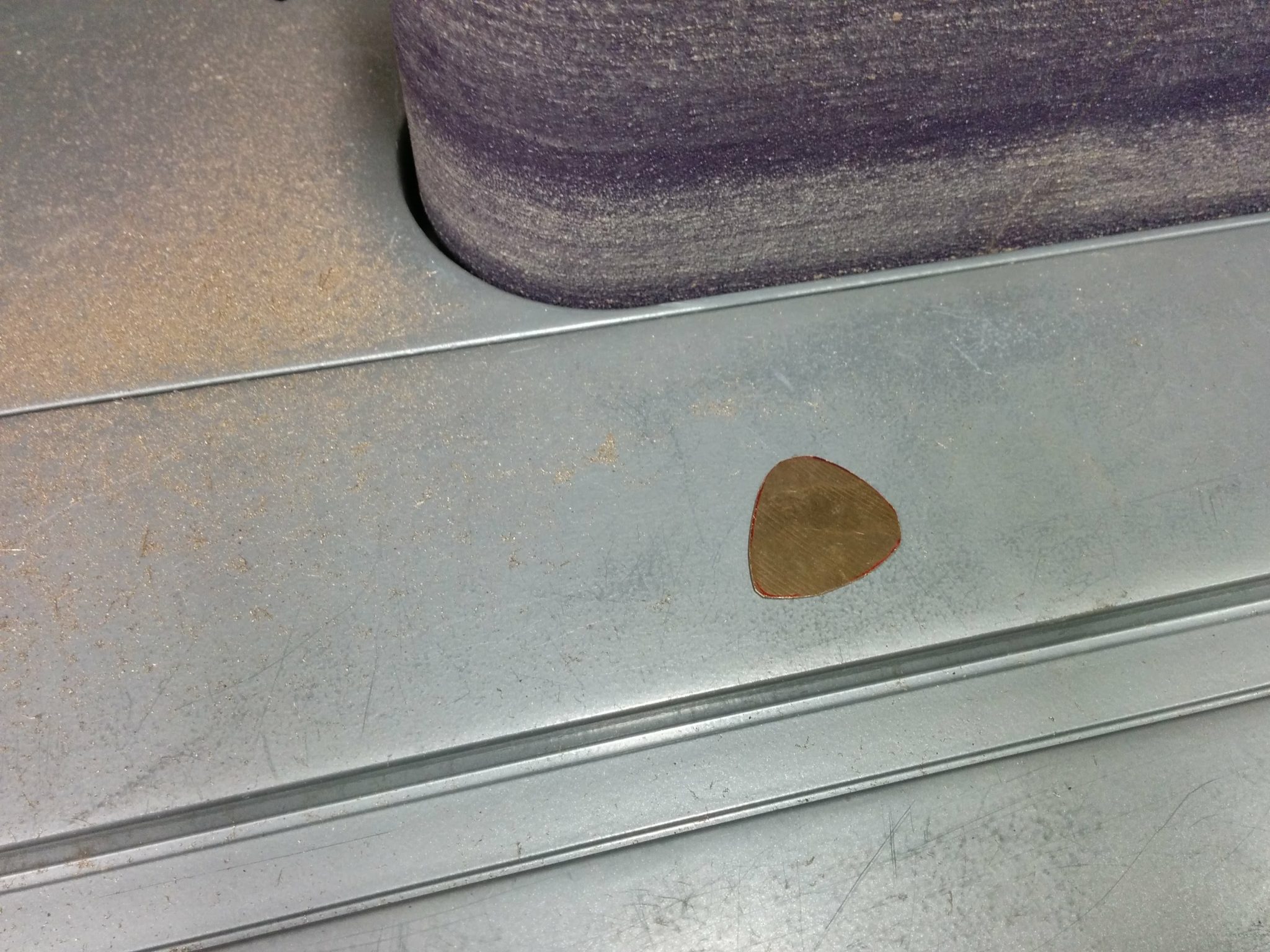
I found the trick to getting it just right.  I would hold the pick in my hands a few inches off the table, rather than right on the table top.  This gave me more control but I needed to stop every few seconds to let the pick cool off since the friction would make it get extremely hot pretty quickly.

Rough shaping is done.


This got the pick to be pretty much the right shape, but the edges weren’t all that smooth.  I decided to do the final shaping by hand so I would have more control.  For this I used a sanding block.  I believe this block had 220 grit on it but I’m not entirely sure.

Final shaping is done on a sanding block.


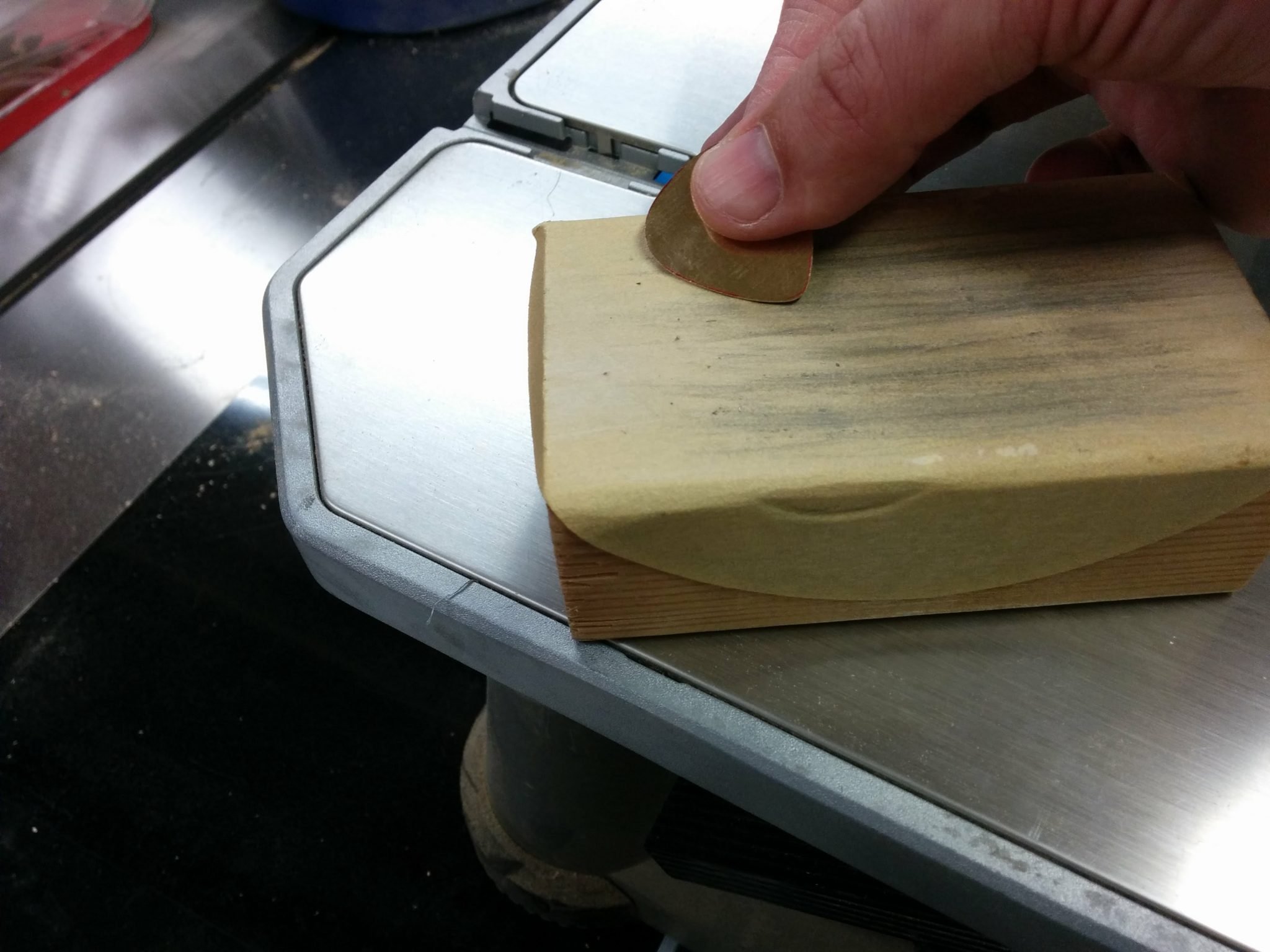
After getting the edges nice and smooth, they were left with a slight burr that was fairly jagged.  For this I just angled the pick so I could break down those burrs and get a smooth edge.

Knocking back the burr.


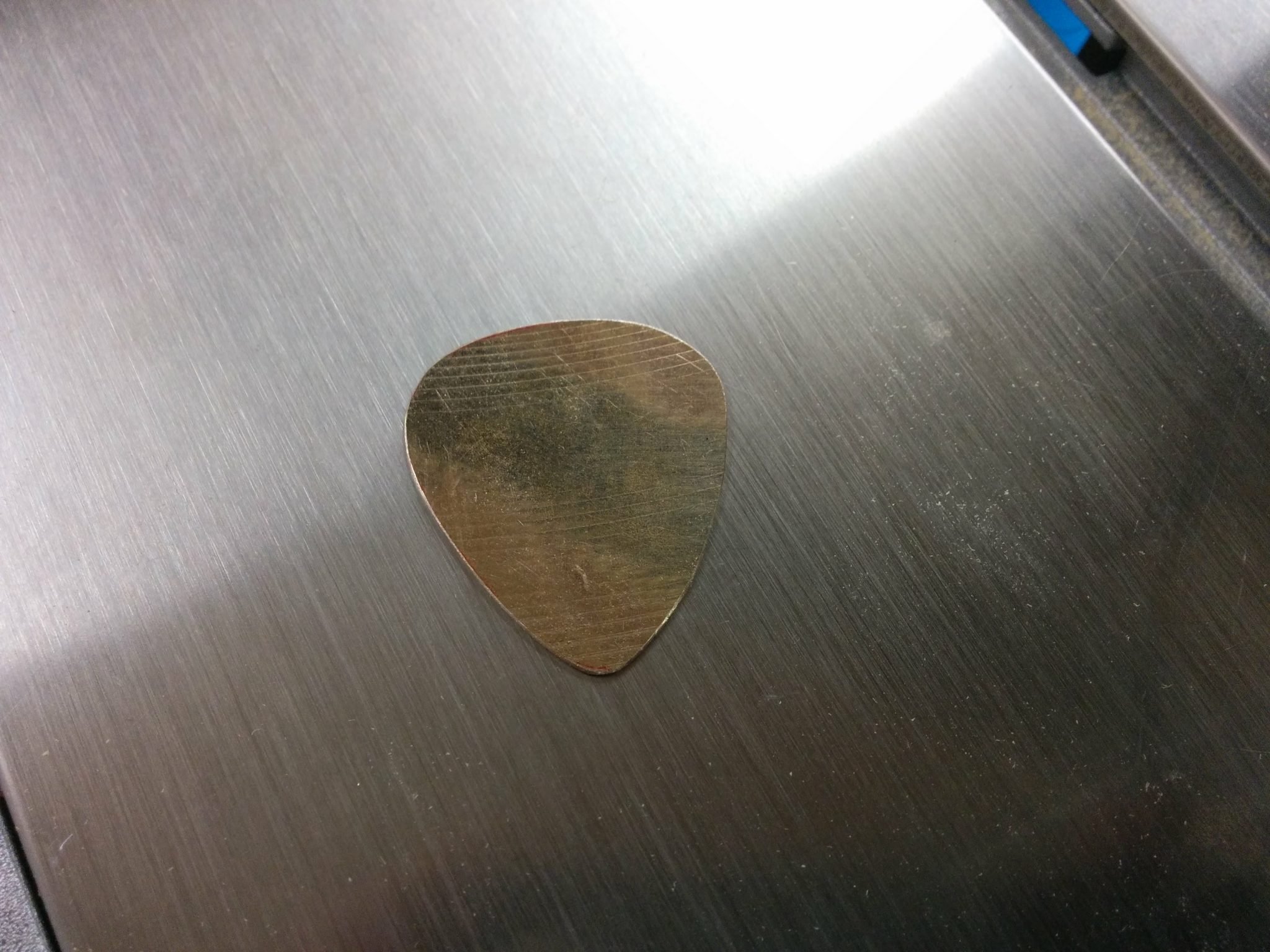
The final result was nice and smooth.  Now it just needed to be polished.

Final shaping is done.


I equipped my drill press with a buffing wheel.

Buffing wheel on the drill press.


I started with the edges.  I did this in case I found any jagged spots that I missed.  If I did, I would take it back to the sanding block before finishing the pick on the buffing wheel.  After the edges were polished, I did the same thing to the front and back faces.

Polishing the edge.
Polishing the edge.


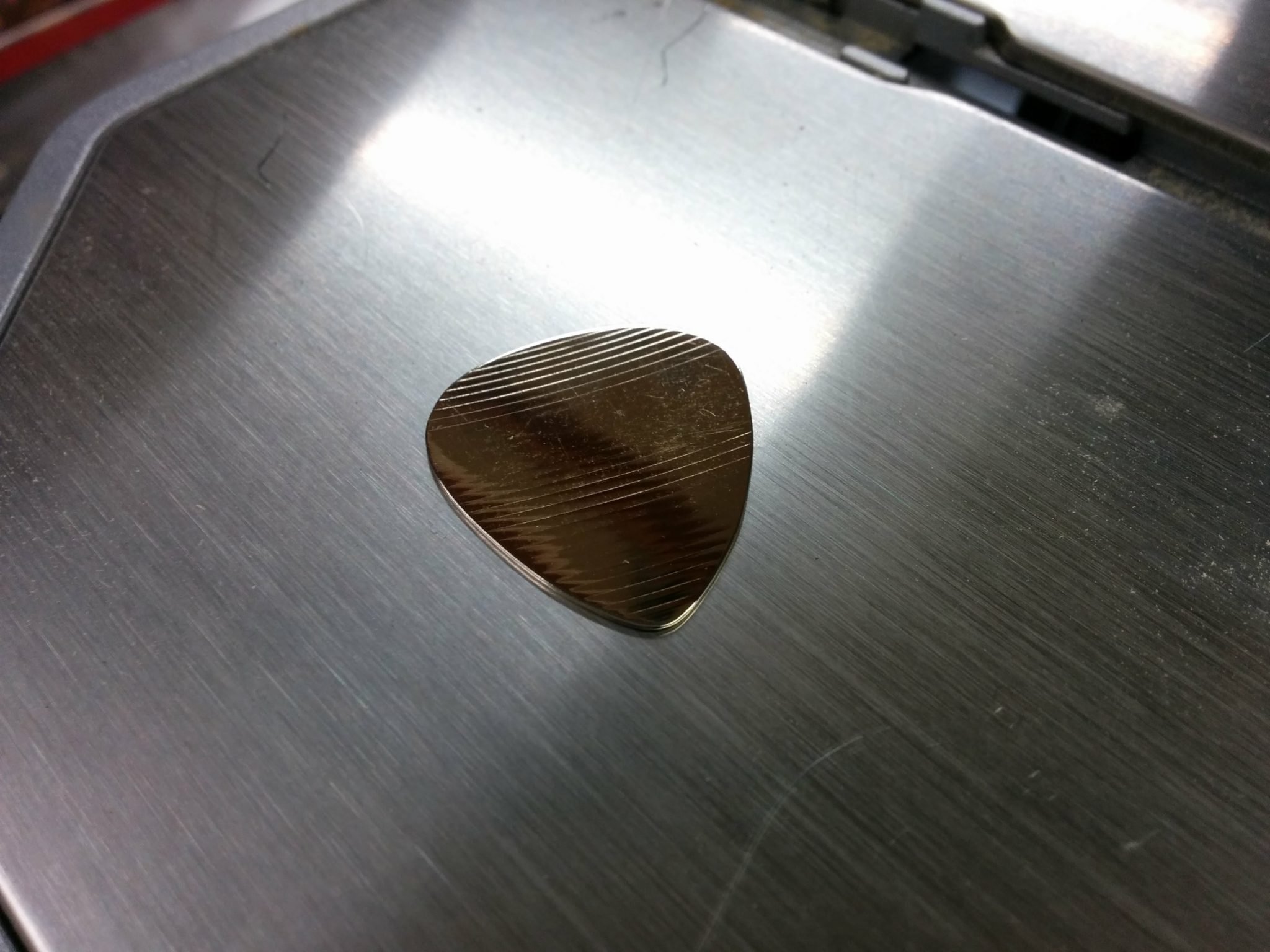
All done.

The final product.
The final product.


All in all, this worked out better than I expected.  Now it’s time to get into production mode and crank out a bunch more.


I’m going to test these out but I don’t have a lot of experience playing with metal picks.  They almost feel too slick so I may need to experiment with adding some texture somehow..  Have any of you made these before?  If so, how did they work as actual guitar picks?  Let me know in the comments below.
Update: I created a follow-up post with a few things I did differently.  You can find that here.

Experimenting with Blue Magic™

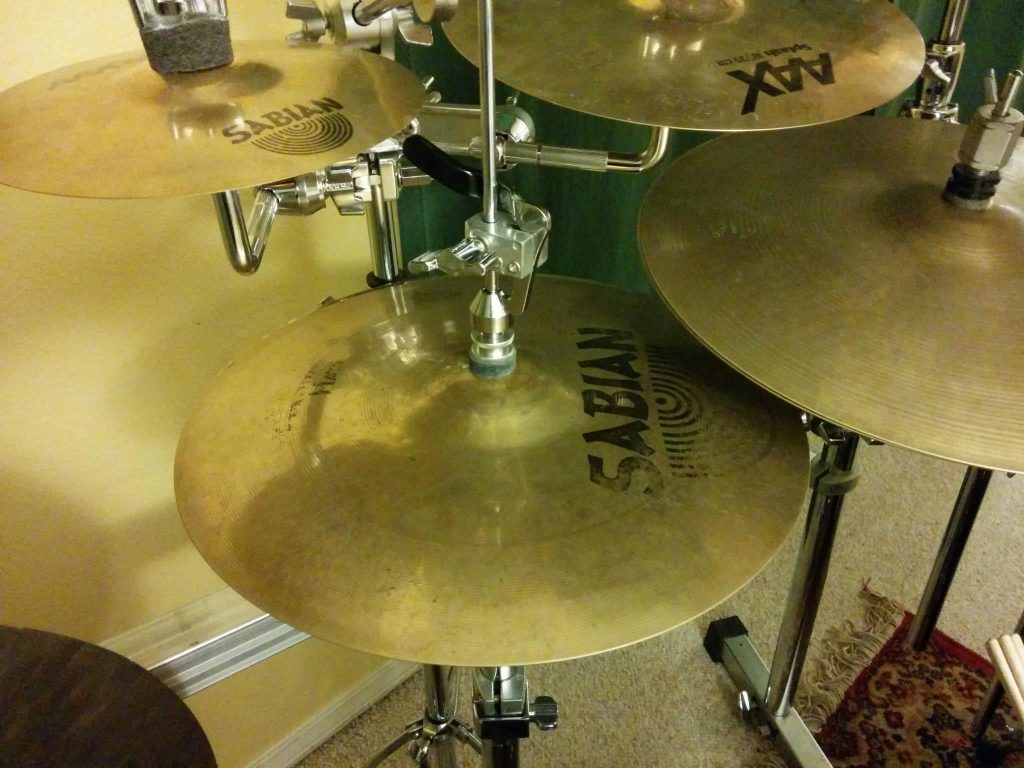
A while ago I sat in at an open mic and got to play on the house drum kit.  It actually belongs to Bill Gates (he’s not THE Bill Gates; he’s A Bill Gates).  The cymbals on this kit looked like molten gold.

I’m a fan of shiny cymbals.  I know a lot of the drummers out there say never clean your cymbals because it affects the sound.  If you let the natural patina build up – not to mention the grime that will accumulate in the tonal grooves – it mellows out the cymbal and makes it sound warmer.  That’s all fine and everything, but it’s not for me.  I like my cymbals shiny and bright sounding.  It’s just a personal preference.

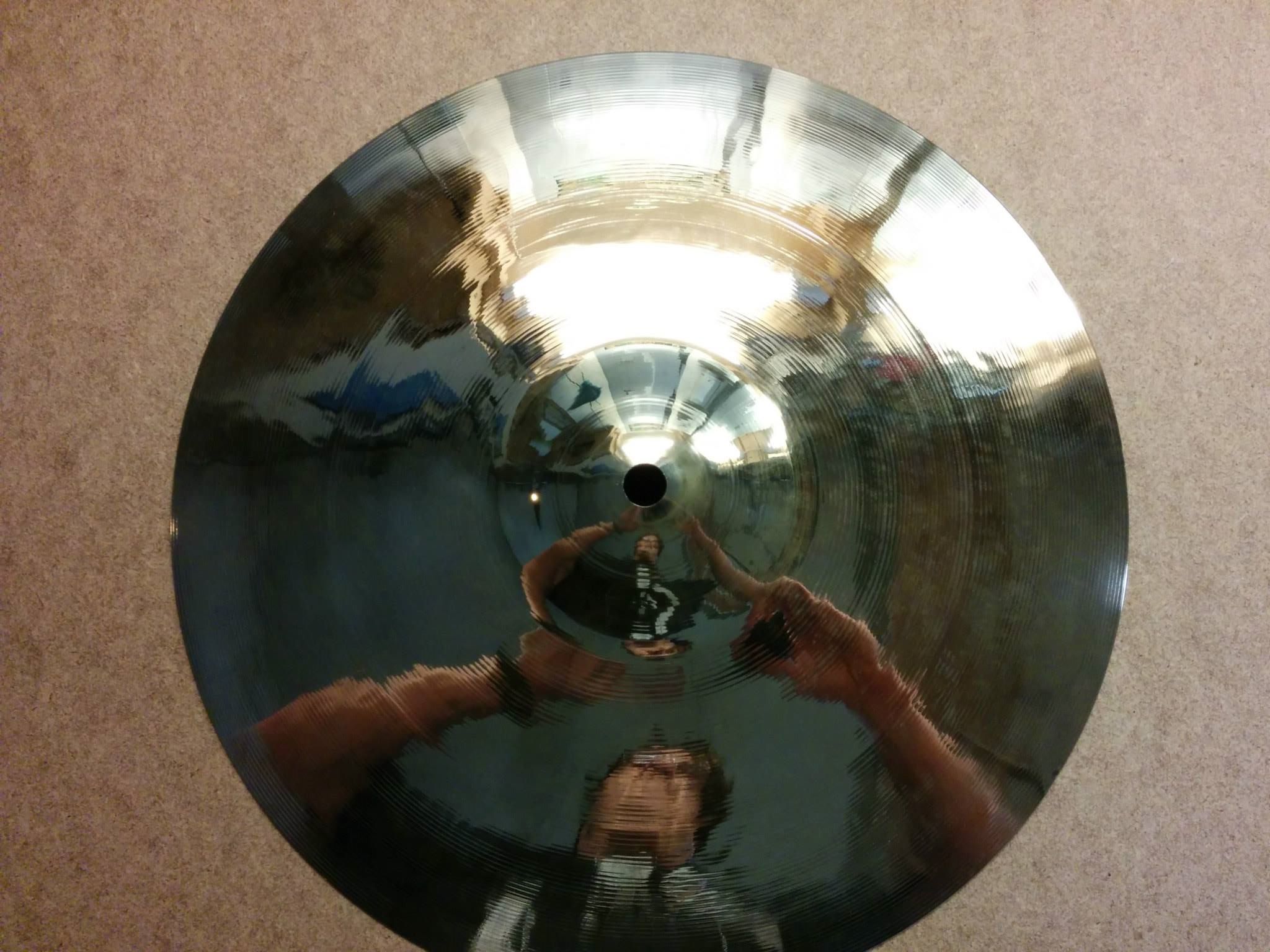
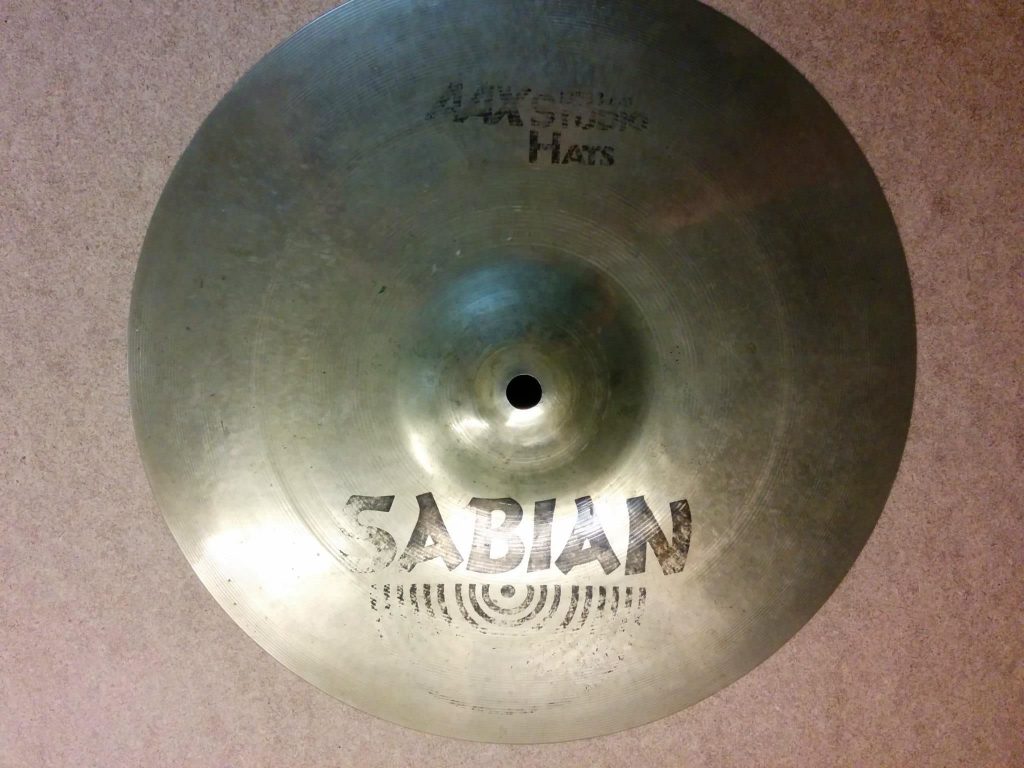
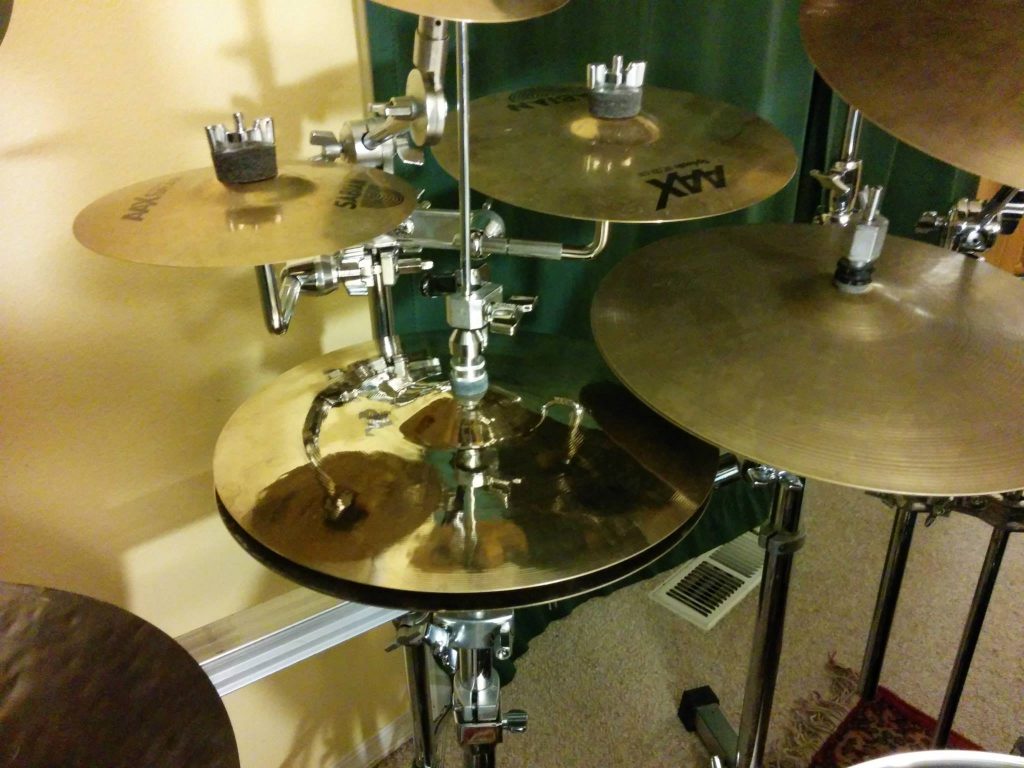
I asked Bill Gates what he used on his cymbals and he told me about a metal polish called Blue Magic.  I’ll write up a more in-depth walkthrough on using this stuff but in the meantime here are some before and after shots of my hi-hat cymbals that I used Blue Magic on.

Sabian AAX 13″ Studio Hat Top – Before

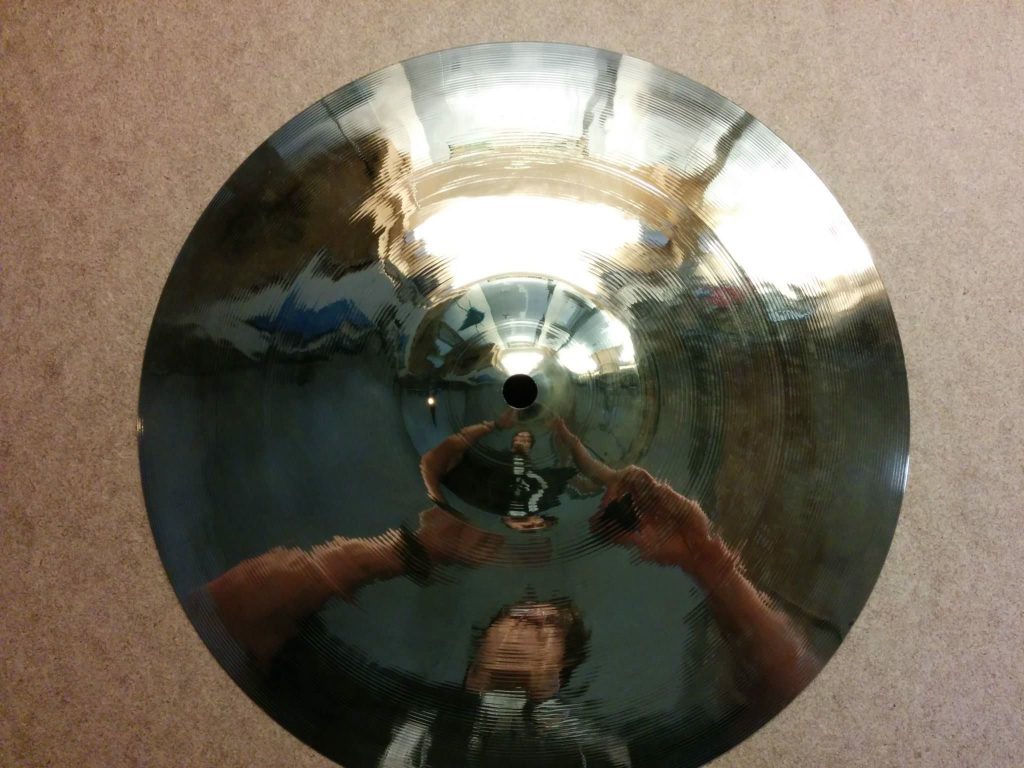
Sabian AAX 13″ Studio Hat Top – After