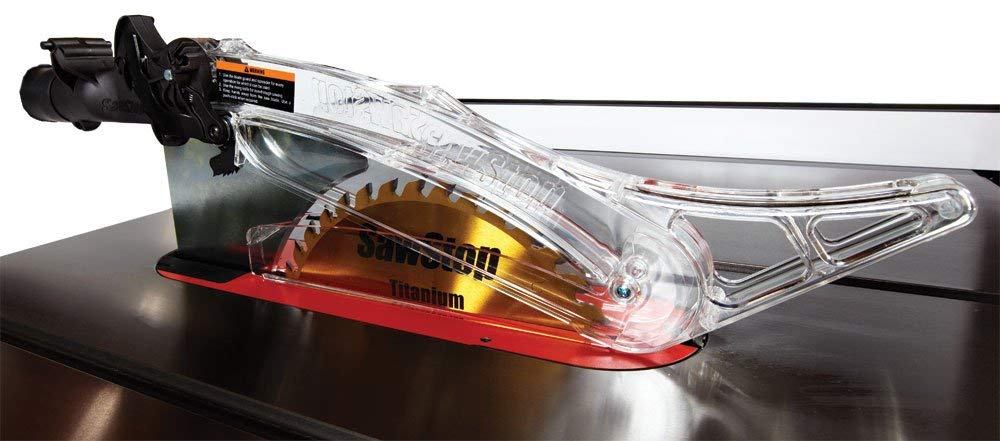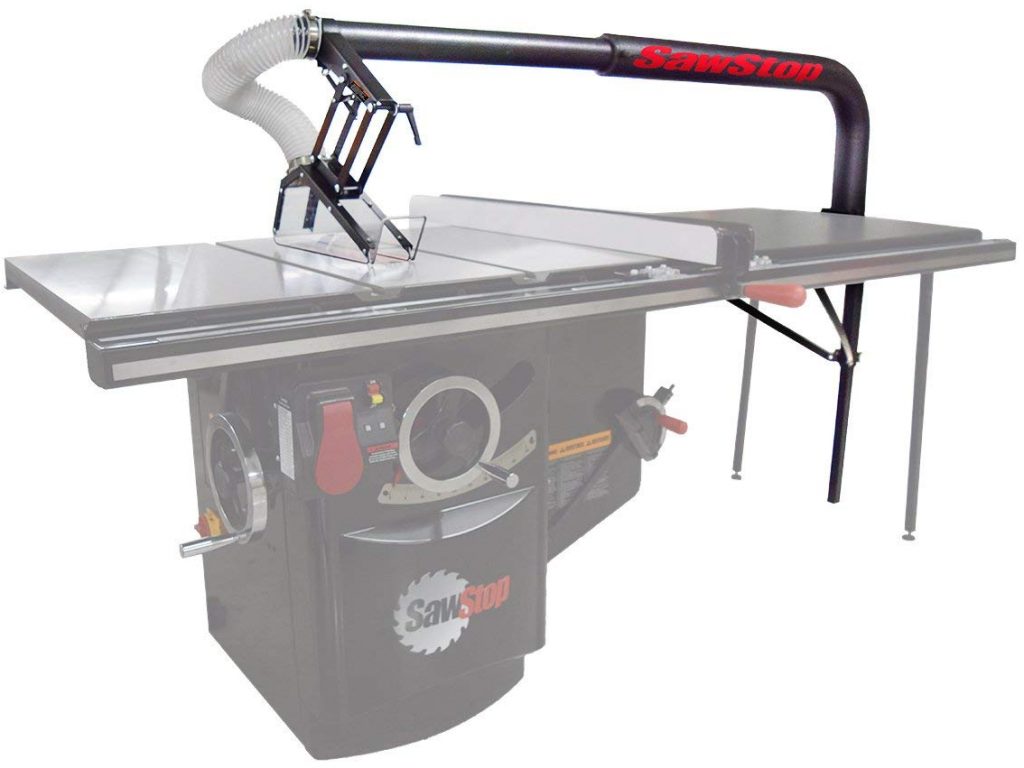
Thin-Kerf Blades and Riving Knives

There are times when you may want to use a thin-kerf blade, but what about your riving knives and splitters? Won’t they be too wide? Well, not exactly.

We’re going to touch on the basics of thin-kerf blades, but the main point of this article is to address the issue of a riving knife or splitter causing the wood to bind after switching to the thin-kerf blade. Many people think they need a thin-kerf riving knife, but it may not come to that. Read on…

What Is a Thin-Kerf Blade?

Now, we’re not concerned with ultra thin blades, such as specialty fret-slot cutting blades. If you’re using those blades then you’re on your own to find a good splitter/riving knife solution. What we’re concerned with are the more common thin-kerf blades.

For th​e record, standard-kerf blades are 1/8″ thick, so thin kerf blades are only 1/32″ thinner.

If you go to the store and ask for a thin-kerf blade, chances are they will hand you a blade that has a 3/32″ wide kerf. Most, if not all, Freud Diablo blades are thin-kerf.

Why Would I Want To Use a Thin-Kerf Blade?

There are two main reasons to use a thin-kerf blade, plus a few other uncommon but valid reasons.

1. Lower horsepower saw

This includes any saw with less than 3 HP or running on 120 volts. Once you get up to 3 HP then you will most-likely be running the saw on 230 volt power but that voltage may not always be available to you. This is commonly the situation when working on a job site doing house construction or for home hobbyists who don’t necessarily need anything other than standard 120 volt service.

For various reasons, you may find yourself using a lower horsepower saw.

Since a thin-kerf blade removes 1/4 less material than a standard kerf blade, this makes it easier for lower horsepower saws to make these cuts, especially when cutting through thicker materials.

2. Less material waste

Since a thin-kerf blade removes less material, that means less material wasted.

In my mind, this is usually a silly reason to use thin-kerf blades. If you’re cutting something like ebony, where you scrape up any sawdust you make and save it, then sure, this is a valid reason. If you’re just cutting plywood or even most hardwoods then it might be time to weigh the cost savings vs. the hassles of using a thin-kerf blade.

Which brings me to…

Why Would I NOT Want To Use a Thin-Kerf Blade?

Thin-kerf blades have a tradeoff.

If you’ll forgive me a brief tangent, thin-kerf blades have been over-hyped on the internet. It’s gotten to where people who are new to woodworking are under the impression that you should always be using a thin-kerf blade because that is all anyone ever recommends.

1. Less Stable

A wobbly blade can also contribute to chipping your zero-clearance insert and maybe even nicking the edges of miter gauge or crosscut sled fences. If you’re using a SawStop, we all know how that can end.

Thin-kerf blades have less mass which results in more wobbling of the blade. More wobbling of the blade results in a rougher cut. A rougher cut results in more sanding. More sanding means more wood removal. So much for saving material.

There are stabilizer (or stiffener) discs that you can add to your thin-kerf blade to help eliminate this issue. This adds to the cost so you’ll want to keep this in mind if you are using thin-kerf blades as some sort of cost-saving measure. This also limits the depth of your cut.
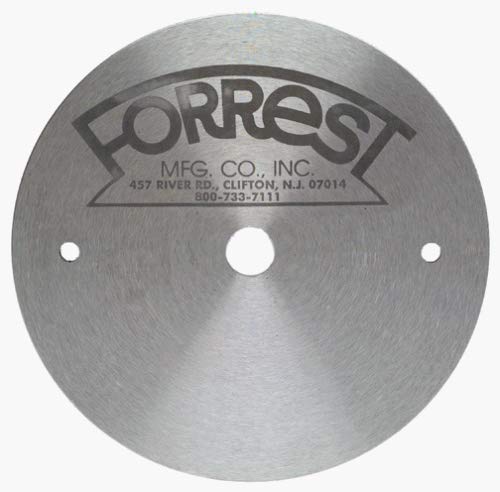
Forrest 5″ Stiffener Disc

2. Alignment With Riving Knife or Splitter

If you are using a riving knife or splitter (and you should be) then you may find that it is no longer aligned with the blade. This results in the wood binding as it clears the blade, which can be dangerous.

We’ll come back to this…

But I Really Want To Use A Thin-Kerf Blade!

Go ahead and use a thin-kerf blade if you’ve really got your heart set on it. Just keep in mind that, like everything in life, there are trade-offs.

The main point of this article is to address the issue of riving knives or splitters, so lets take a look at this subject.

Disclaimer: I am basing this on SawStop table saws because this is what I have access to and because they are the best-selling table saw in North America so they are most-likely what you have access to as well. If you are wanting to address this with another type of table saw, I recommend you contact the manufacturer to get their advice on the matter.

What Riving Knives are Available?

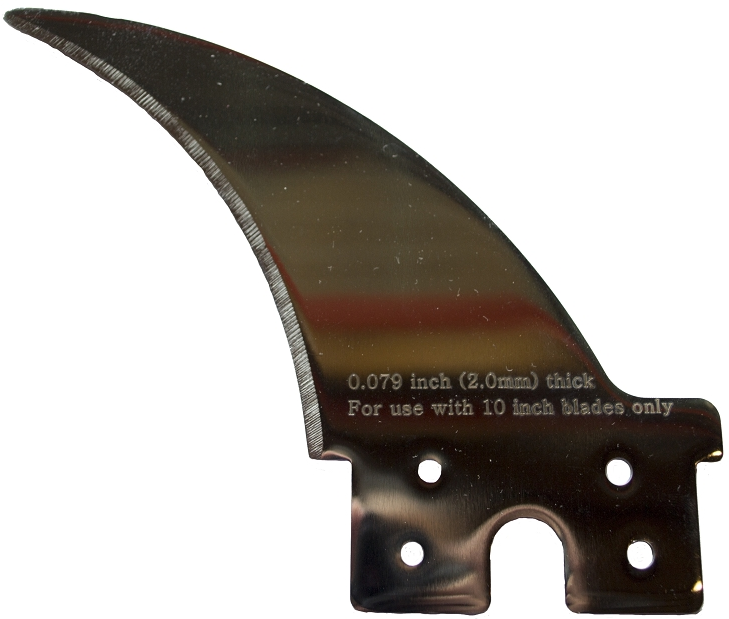
SawStop sells two different riving knives. One is 2.3 mm thick and one is 2.0 mm thick. Chances are, your saw has a 2.3 mm thick riving knife and splitter on your blade guard.
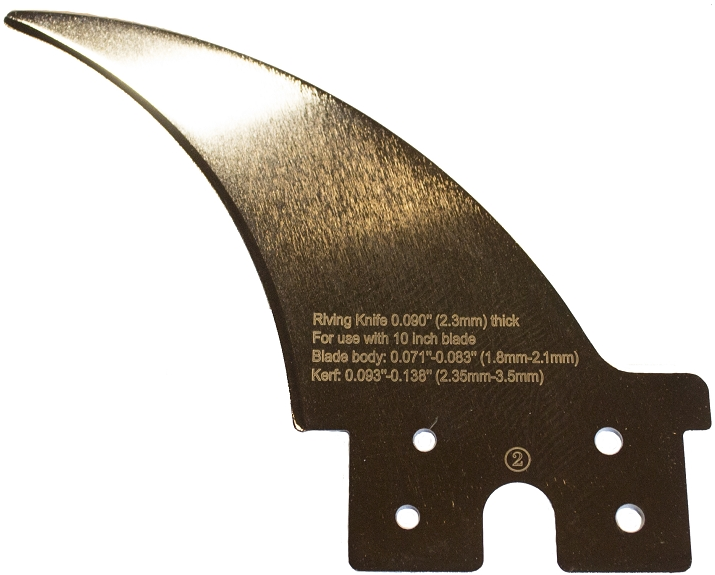
2.3 mm riving Knife
2.0 mm Riving Knife

Why the change? Well, up until 2010, the riving knives and blade guard splitters were 2.0 mm but due to government regulation it was changed to the slightly wider 2.3 mm. It may not sound like a huge difference, and it really isn’t, but 0.3 mm is enough to cause a significant issue, as we’ll address shortly.

Should I Buy a 2.0 mm Riving Knife Instead?

On one condition: you never plan on using your standard blade guard.

Again, we’re talking about SawStops here, but there are three blade guard options:
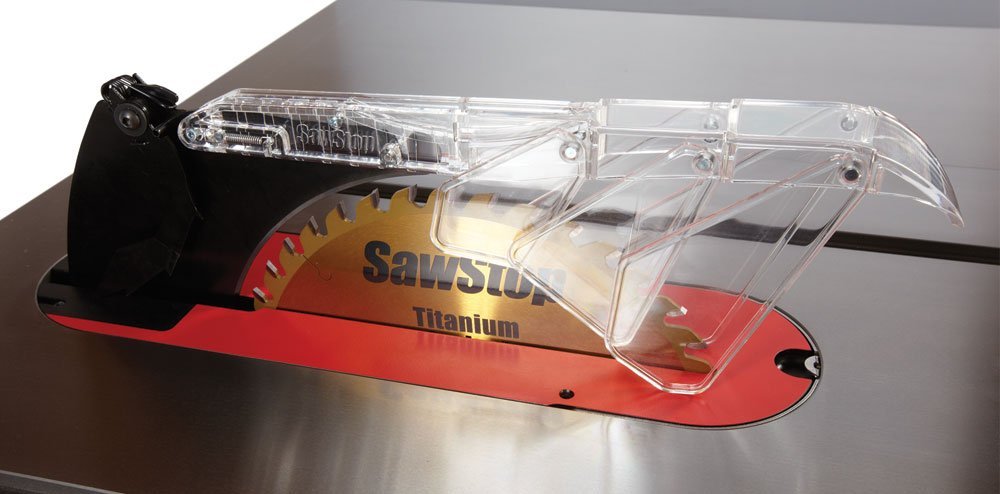
TSG-MG – Micro Blade Guard
TSG-DC – Dust Collecting Blade Guard
TSG-FDC – Floating Dust Collecting Blade Guard

It you are using the Floating Dust Collecting Blade Guard then you are fine, but if you are using either the Micro Guard or the Dust Collecting Blade Guard then you will want to steer clear of the 2.0 mm riving knife. Here’s why…

The Problem With a 2.0 mm Riving Knife

If you make the switch to a 2.0 mm riving knife then the clamp that holds it will be too loose since it is set to 2.3 mm. This can be unsafe and should be fixed by tightening the riving knife clamp. This will make it too tight to hold onto the splitter for the Micro Guard or the Dust Collecting Blade Guard.

You basically have to pick one or the other: either you’re using a 2.0 mm riving knife or you’re using a blade guard. Unless you feel like adjusting the clamping pressure of your riving knife clamp every time you switch back and forth, you’re better off just staying with 2.3 mm.

A friend of mine asked if you could just put a piece of tape on the right side of the 2.0 mm riving knife as a shim. Well…yeah. Jeeze! Don’t ruin the point I’m trying to make!

Seriously, though. If you’re comfortable putting tape on the side of the 2.0 mm riving knife, go ahead, but as you’ll read next, you shouldn’t have to do that.

But Don’t I Need a 2.0 mm Riving Knife If I’m Using a Thin-Kerf Blade?

No, you don’t. Do the math.

For the next few pictures, I’ve created a 3D model of the saw with a riving knife that I’ve colored green for clarity.
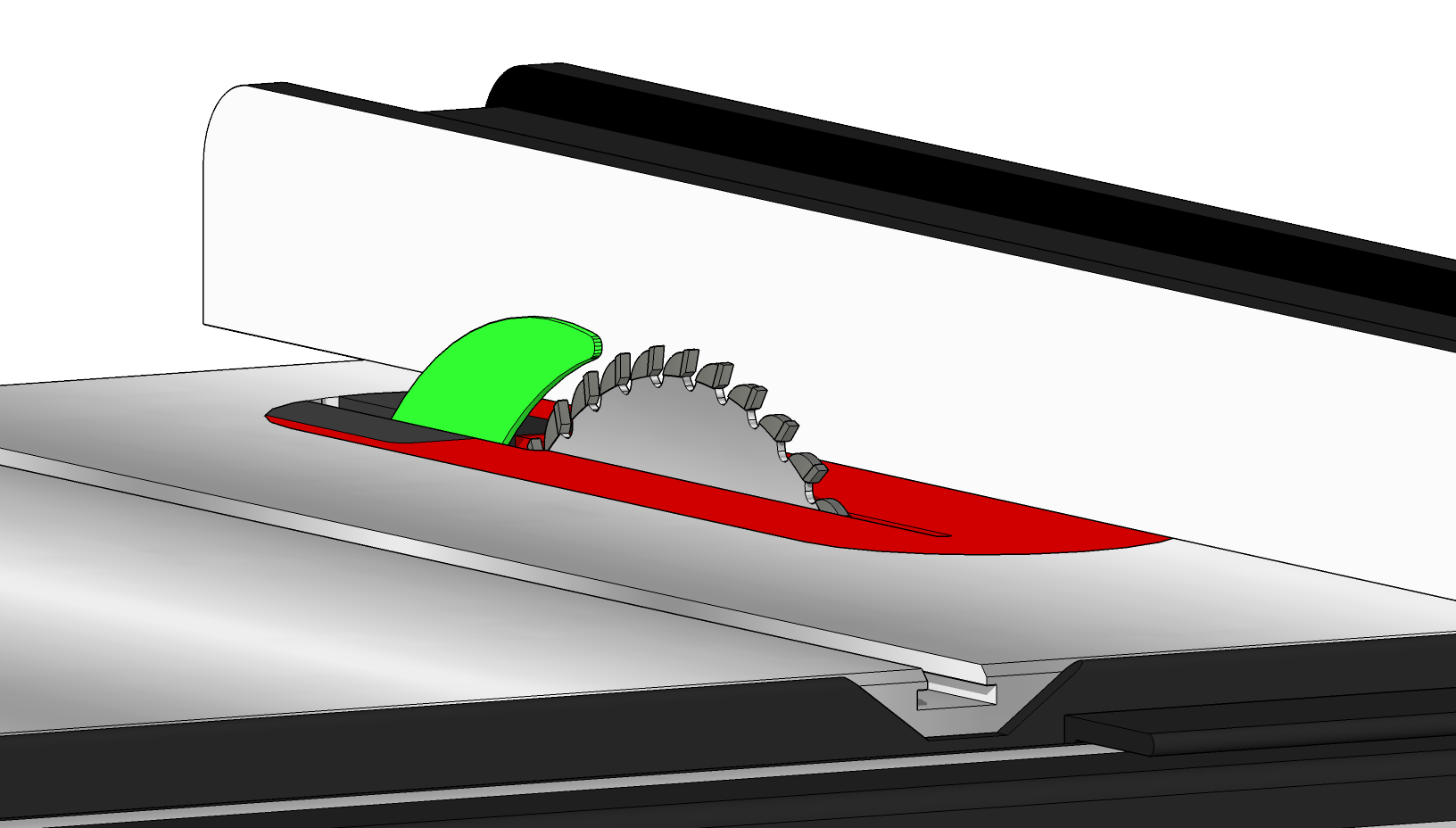
Let’s look at the standard 2.3 mm riving knife compared to both a 1/8″ standard-kerf blade and a 3/32″ thin-kerf blade.

1/8″ = 3.125 mm

3/32″ = 2.38 mm

This means that even the widest of the two riving knives is still thinner than a thin-kerf blade.

Now, if you are considering switching to a thinner riving knife, I assume it’s because you are experiencing problems. Let’s take a look at the REAL issue here…

But The Wood Is Binding Up When I Use a 2.3 mm Riving Knife!

Of course it is, but it’s not happening for the reason you think.

When the saw leaves the factory, it ships with a standard-kerf blade, (actually, it’s .118″ rather than .125″, but definitely bigger than a thin-kerf blade which is .094″). However, as we already established, the riving knife is for a thin-kerf blade. To make this a non-issue, the riving knife is centered on the blade, as shown below.
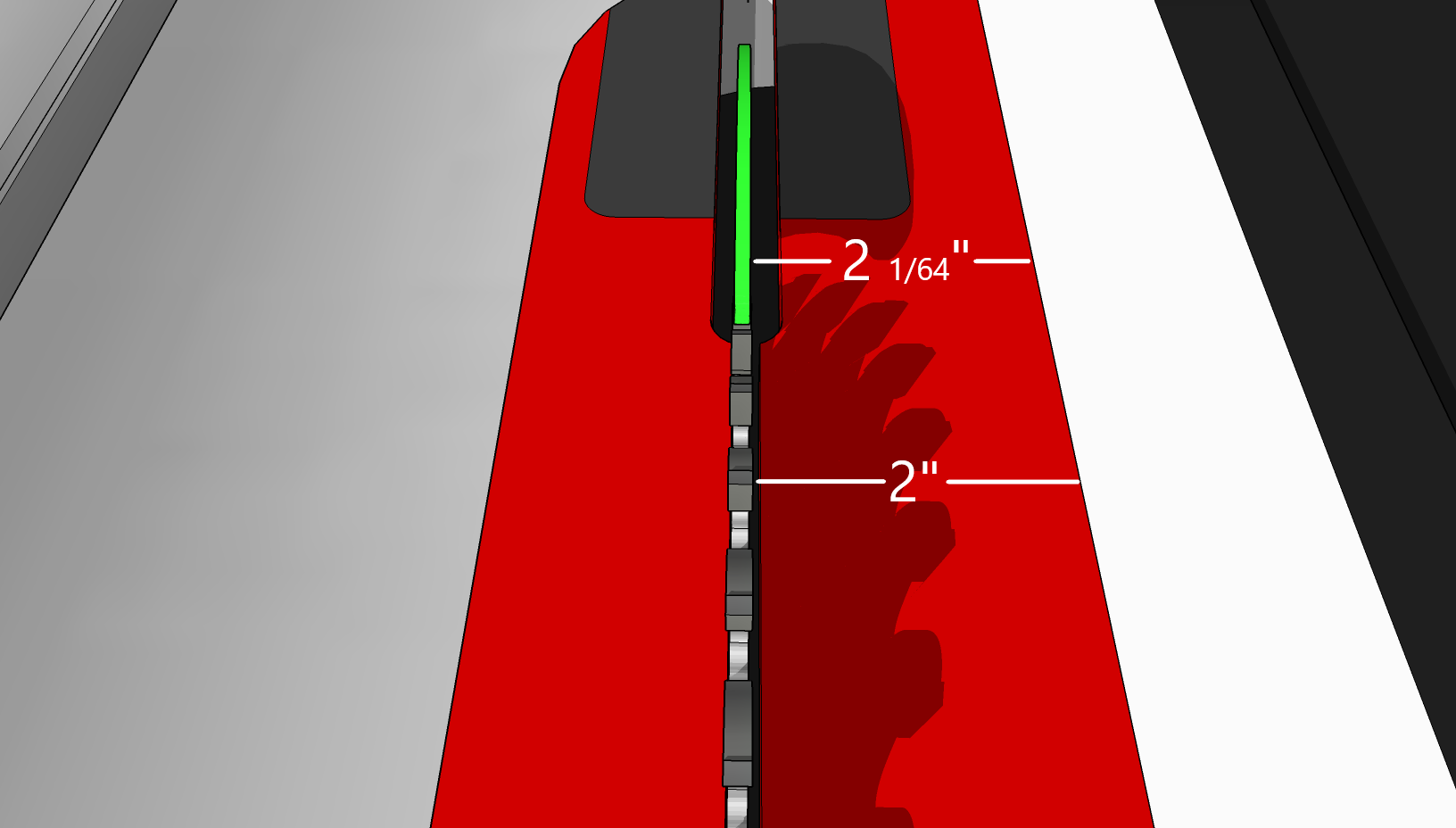
Full kerf blade with riving knife

The thing about left-tilt saws is that the blade mounts onto the arbor shaft from the right. This means that the left side of the blade is constant. It never changes. All of the change happens to the right, which is where we usually have the fence.

See where I’m going with this? If the riving knife is centered on a 1/8″ blade then that means that the blade is 1/64″ wider than the riving knife on both the left and right. If you change to a thin-kerf blade, then you are taking 1/32″ off the right of the blade, but nothing on the left. This means that the riving knife now sticks out 1/64″ to the right, making the space between the riving knife and the fence 1/64″ narrower than the space between the blade and the fence. You’re now trying to slide a board through a space that is too narrow for it. This causes the binding you are experiencing.
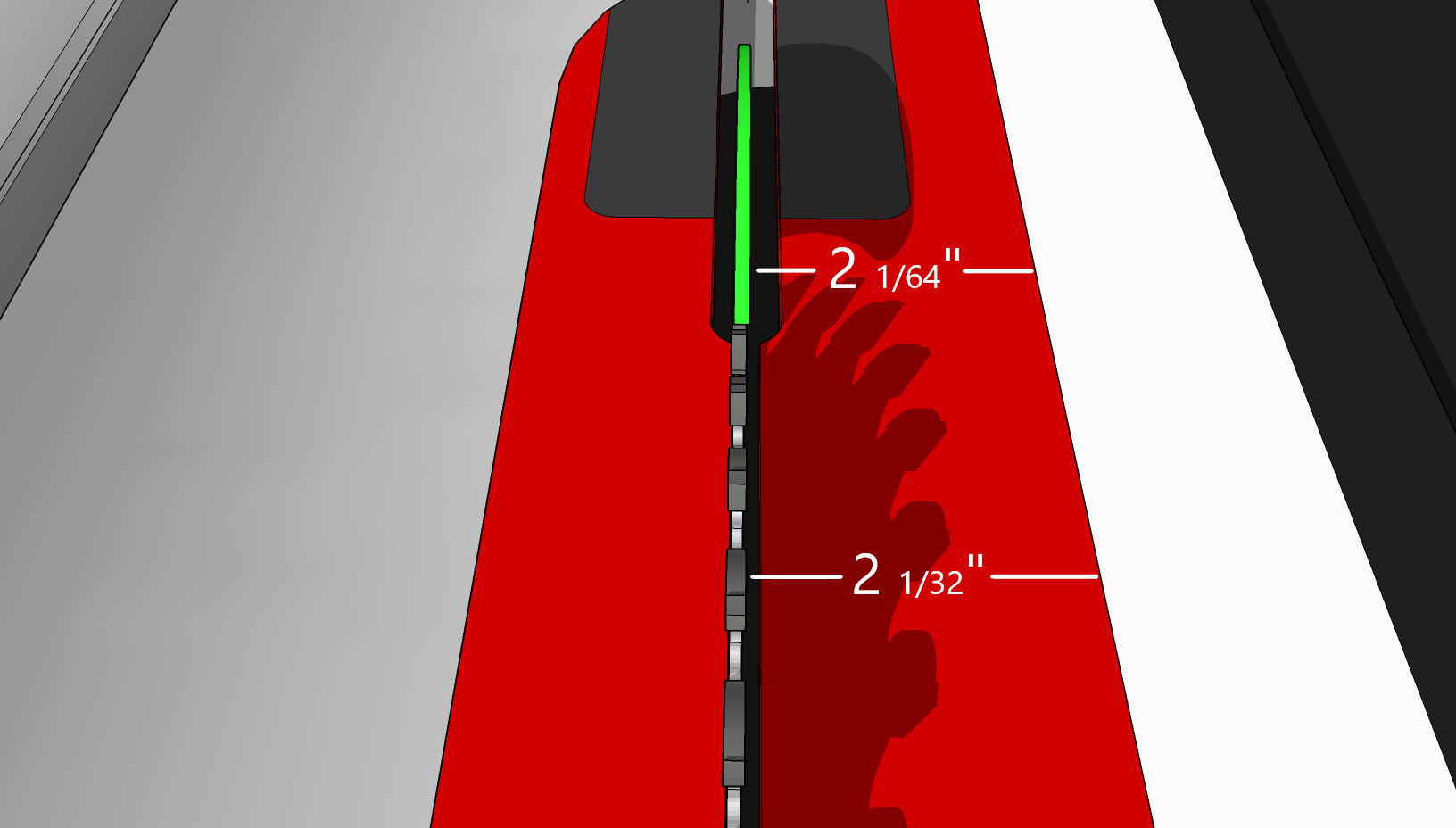
Thin-kerf blade with riving knife

To actually fix this issue, you should slide the riving knife 1/64″ to the left. Your saw may be different, but here’s how to adjust this on a SawStop.

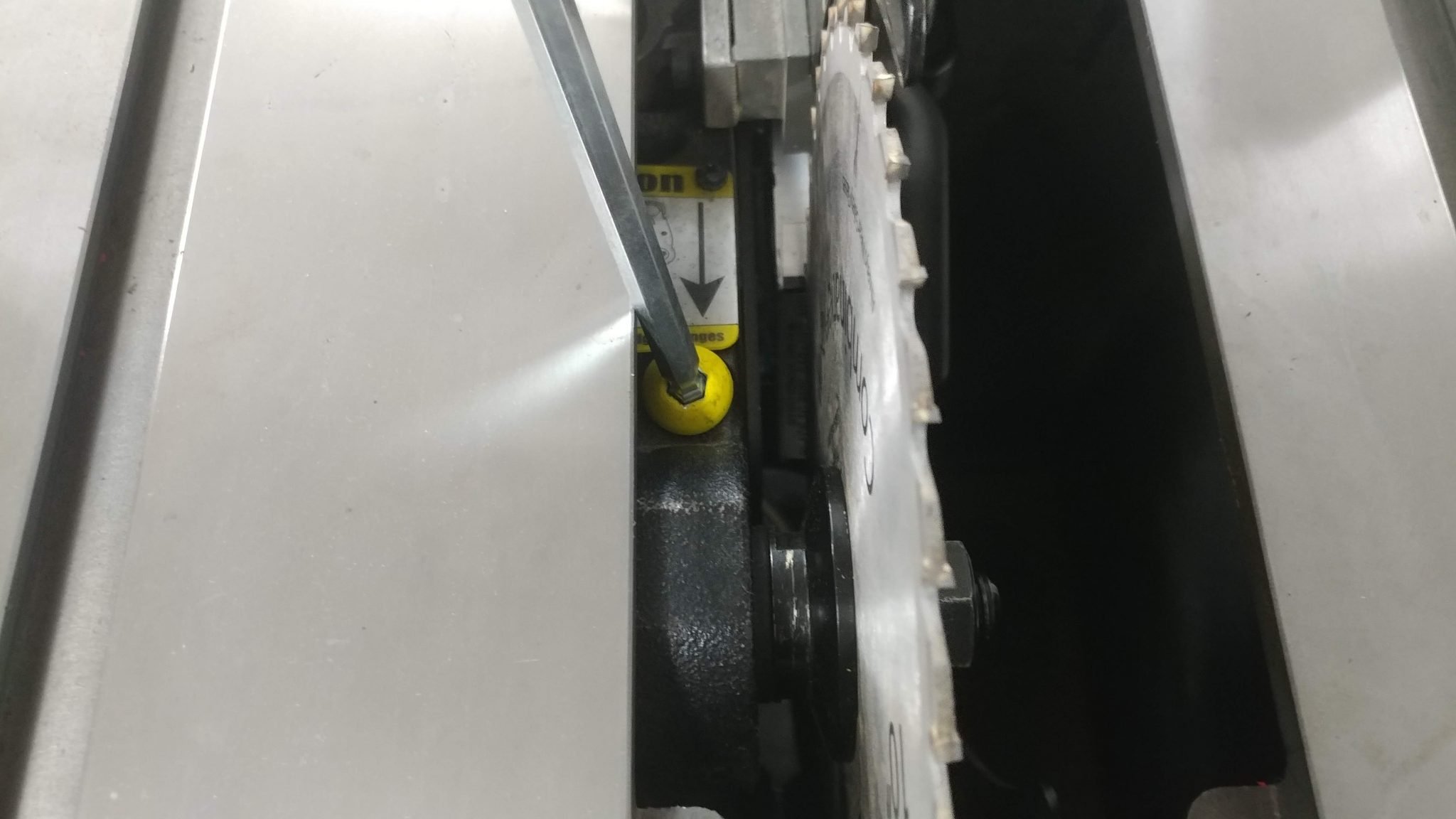
On any of the cast-iron SawStop table saws, there is a pair of 8 mm cap screws that adjust the horizontal positioning of the riving knife or splitter. Slimply loosen these slightly and nudge the clamp a little to the left. It’ll take some back and forth but the end result you are shooting for is for the left face of the riving knife to be co-planer with the left face of the blade, and for the right face of the riving knife to be no closer to the fence than the right face of the blade.

PCS
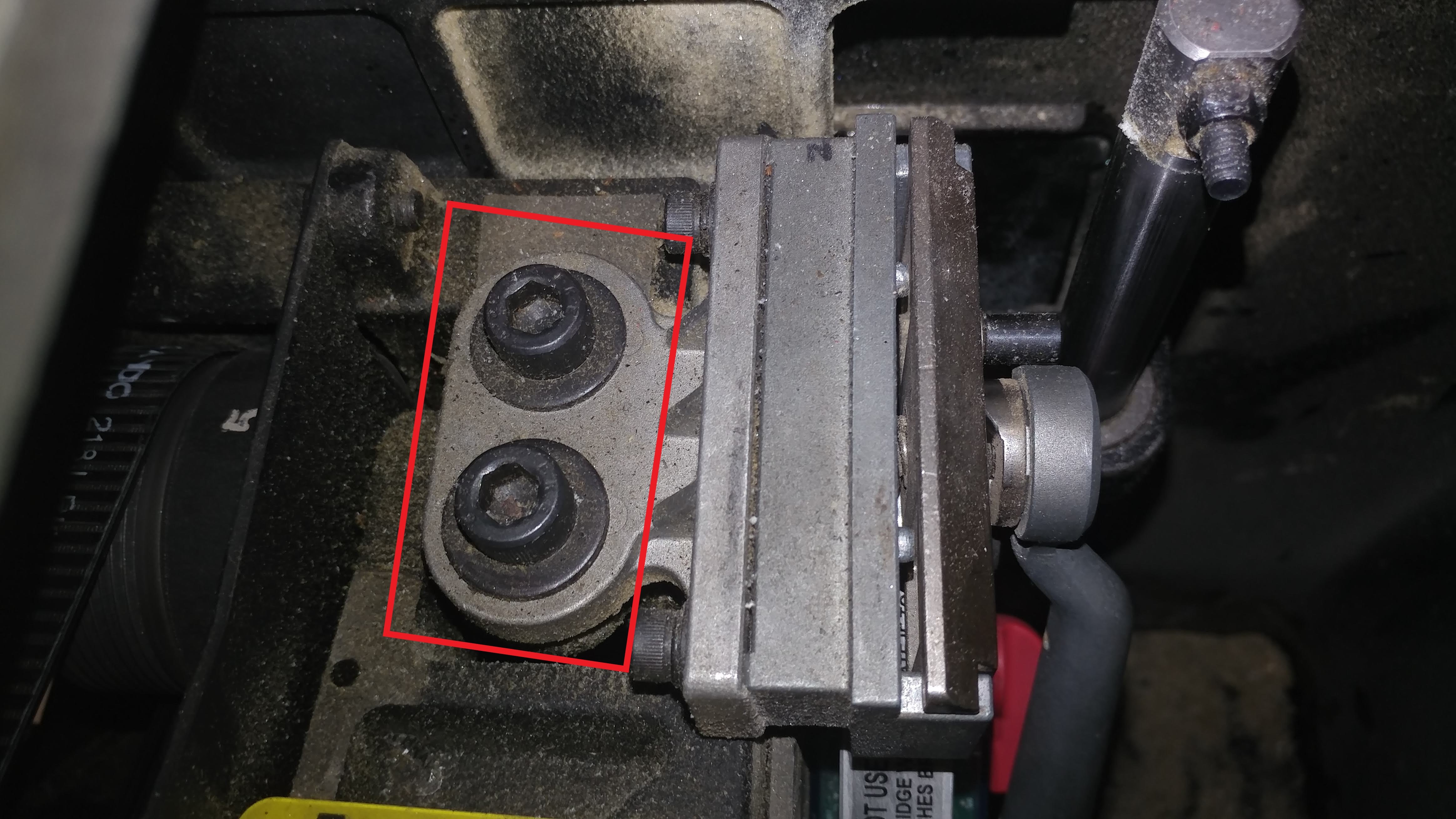
CNS or ICS
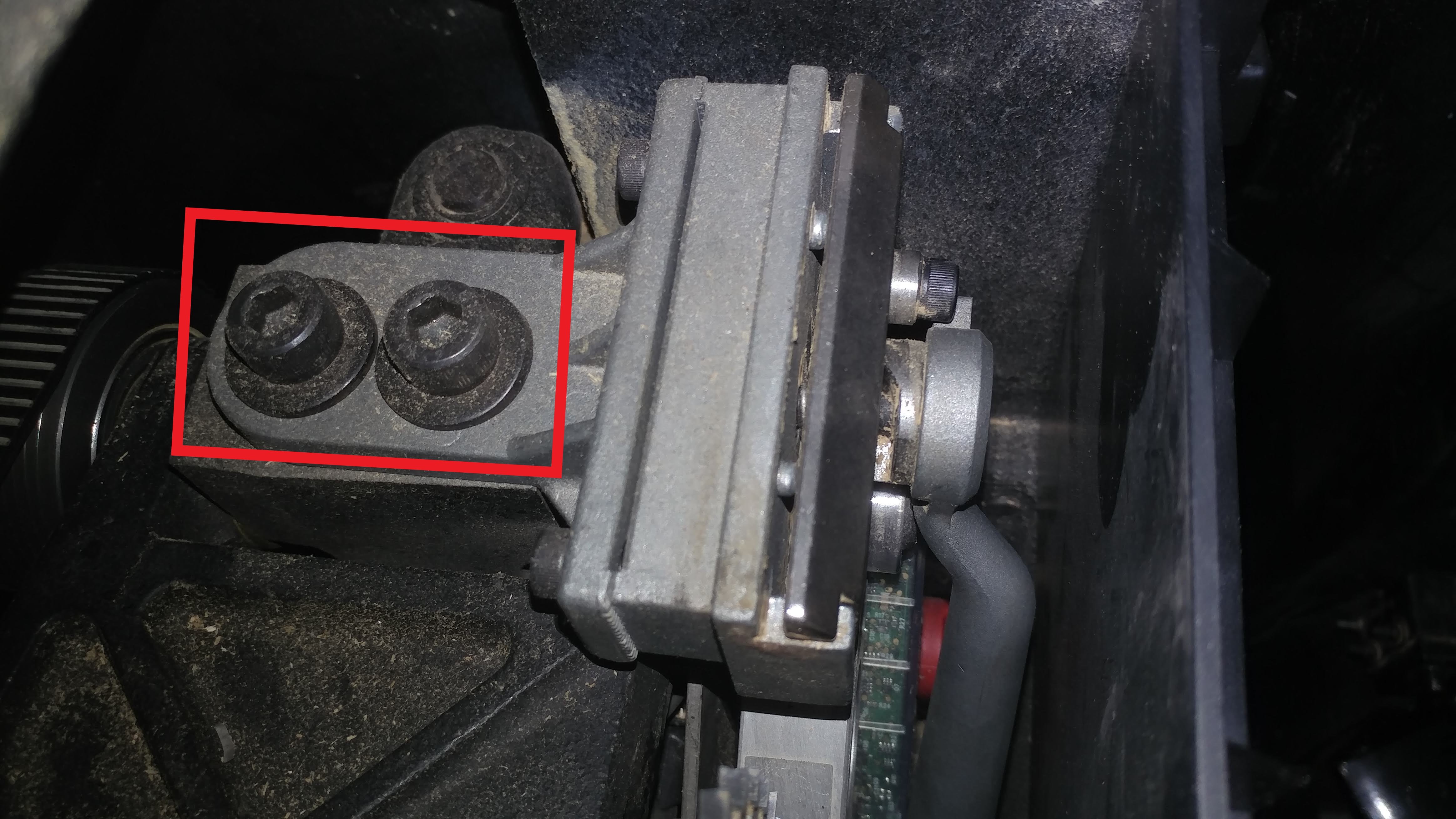
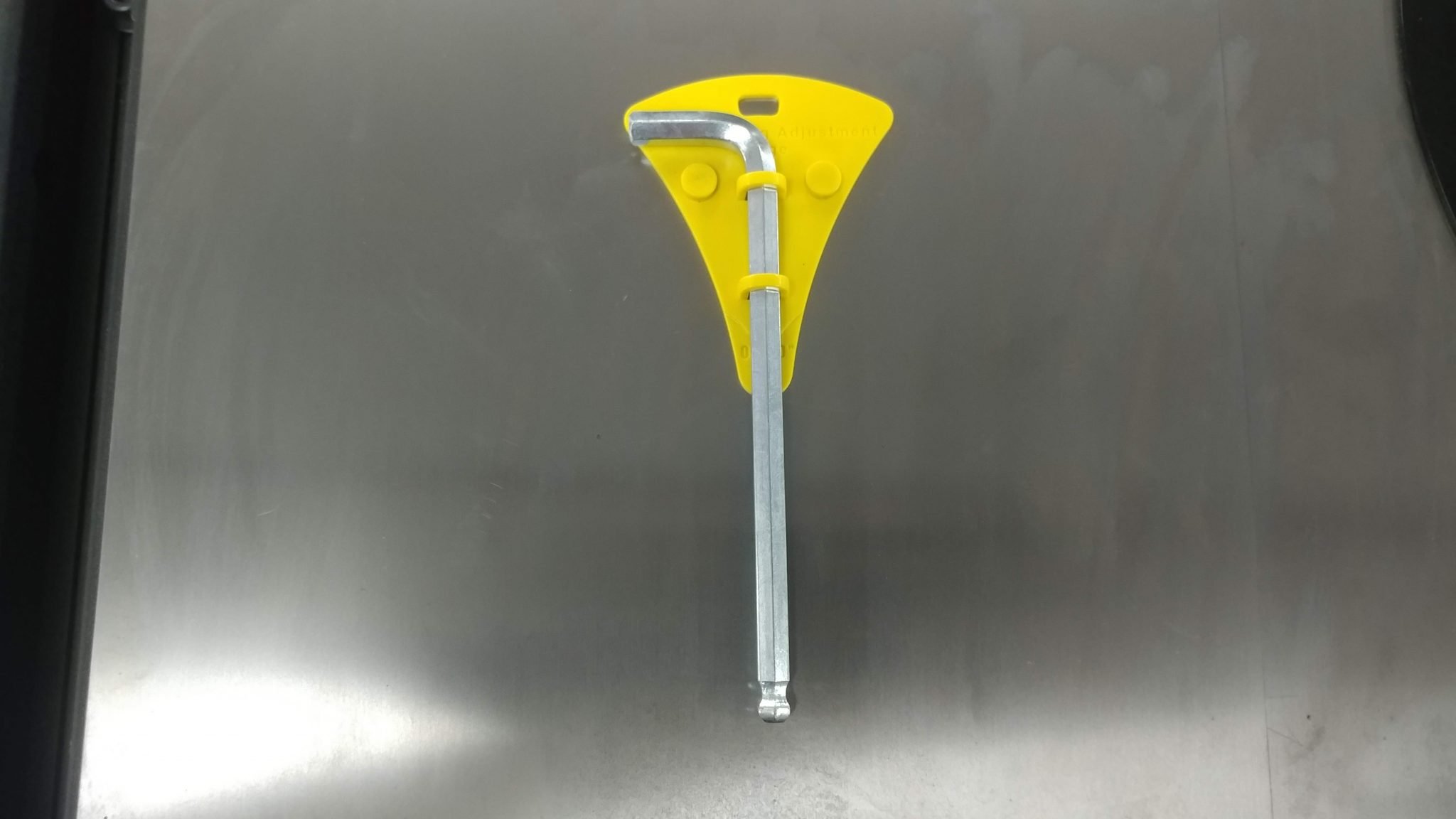
Tip: Since you have to come at these bolts at an angle, use a ball-end allen wrench, such as the one provided with your saw that you would normally use to adjust the spacing between the brake and blade.

Conclusion

As you can see, there isn’t any real reason you would need to get a 2.0 mm riving knife, even when using thin-kerf blades. I feel that it’s always best to address the real problem rather than look for an easy workaround.

I hope this has been helpful. If you feel like I should add anything, please feel free to leave a comment below. Also, I encourage you to share this article with anyone who is considering using thin-kerf blades with their table saw.

SawStop Brake Spacing Explained

Share on Social Media

The subject of brake spacing on a SawStop table saw seems to be somewhat confusing to people, no matter how long they have been using the saw.  I’m hoping to clear up some of the mystery once and for all.

What exactly is brake spacing?

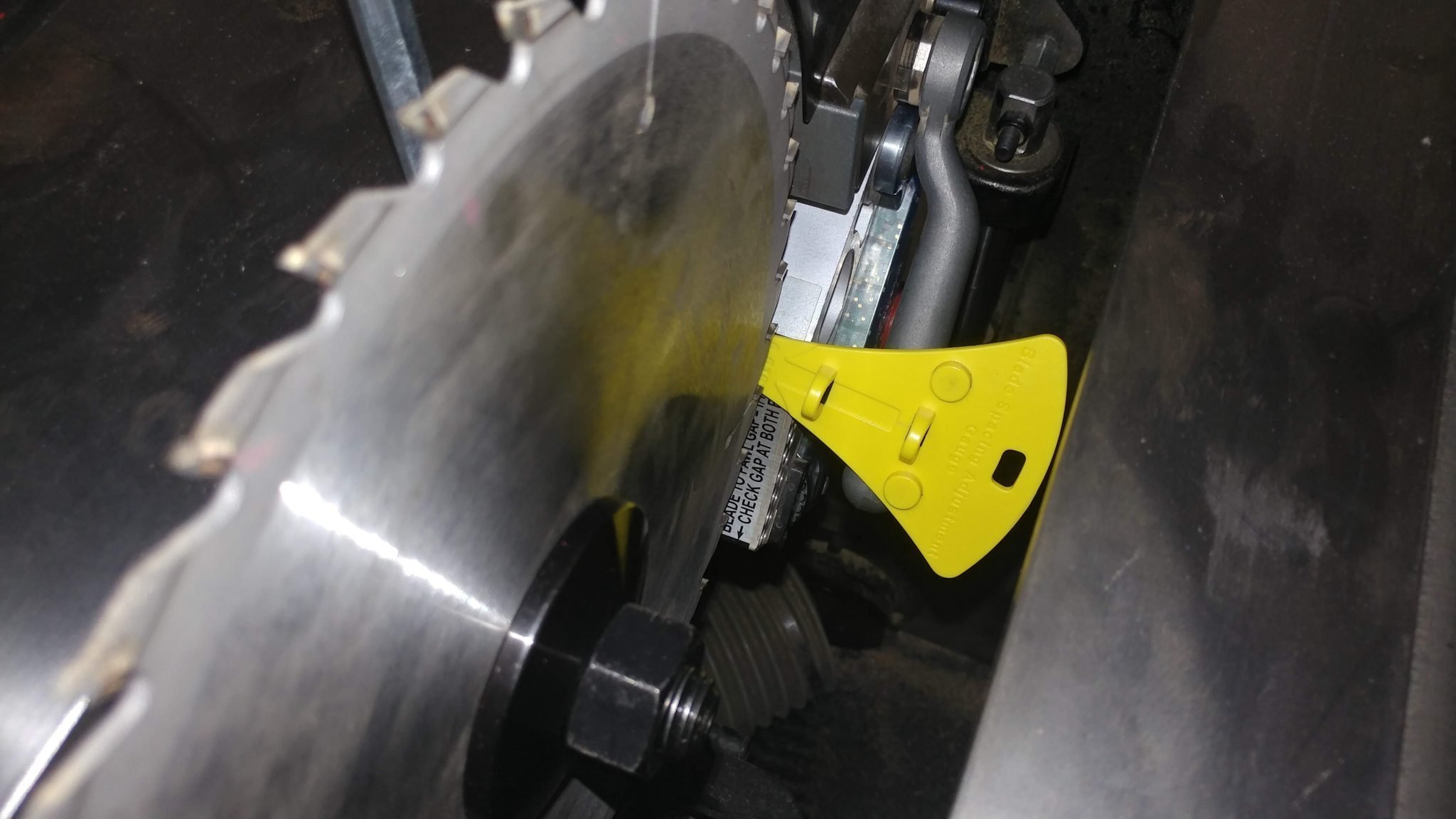
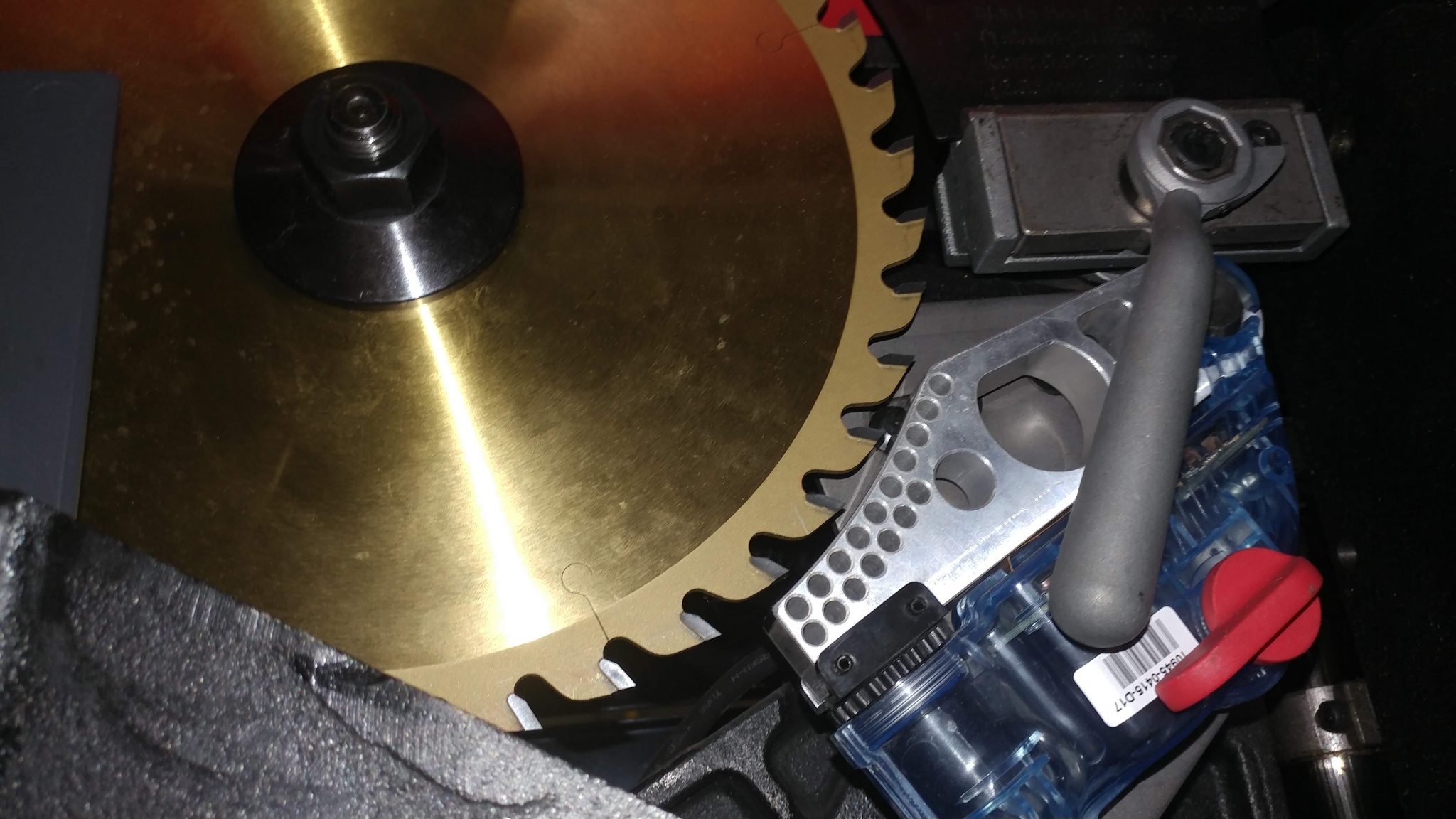
Brake spacing is literally the space between the brake cartridge and the blade as shown below.

Why is it important?

The saw blade has 5 volts of electrical current flowing through the blade and the brake is sending out a radio signal to monitor the level of that current.  If something conductive, such as a finger, touches the blade it will absorb some of the current and like a sponge in a glass of water, the current level will drop.

The brake needs to be close enough to the blade in at least one location in order for it to successfully monitor the electrical current flowing through the blade.  You’ll notice that the aluminum brake pawl is curved to follow the circumference of the blade.  It’s very rare that this curve will follow the shape of the blade perfectly.

What happens if the brake is too far from the blade?

If the gap between the blade and brake is too great, the brake will not be able to see the electrical current flowing through the blade.  This results in an error message consisting of a solid red light and a slow (about once per second) flashing green light.  You will be unable to start the saw until you clear the error message by bringing the brake closer to the blade.

What happens if the brake is too close to the blade?

This is what you really want to avoid.  If the brake is too close to the blade then you run the risk of a high tooth on the blade making contact with the aluminum brake pawl and activating the brake immediately at paddle pull.

How do I adjust the spacing?

The brake spacing is adjusted with an 8mm allen bolt to the left of the blade.  It should be bright yellow and hard to miss.

You use a yellow feeler gauge that is provided with your saw to check the gap spacing.  If you can’t find yours, look on the side of your saw.  It has magnets on the back so most people just stick it to the side of the saw. 

The gauge is .070″ thick and should be inserted between the blade and brake at the point where they are closest.  This will most likely be at the top of the curved aluminum.  

You should be able to rotate the blade and have the teeth just barely touch the yellow gauge.

If you have misplaced your yellow gauge, you can use a US nickel or even the brass bypass keys that should be on the right side of your switchbox.

Any tips?

The gap doesn’t need to be exact.  There is a window that it needs to be within for the system to work.  You can have the gap one of three ways: perfect; too big; or too small.  If you can’t have it perfect, err on the side of it being too big.  If the gap is too big then the worst that will happen is you’ll get the error message.  If it’s too close, you might inadvertently activate the brake at paddle pull.

After some trial and error I happened to find the perfect combination of blades where if I set the gap to its biggest the blade is still close enough to the brake to work yet never too close.  As a result, I haven’t adjusted or even checked the brake to blade spacing in over two and a half years.  If you’re curious, these are the blades I alternate between:

I can’t clear the error message!

If you are getting the solid red and slow green error message and you can’t clear it no matter how close you bring the brake, there may be something interfering with the signal.

If you have changed the height of the riving knife or blade guard on your saw then the clamp may be too low and interfering with the blade signal.  Try installing the riving knife to see if the error goes away.  Obviously, if you are trying to make dadoes with an 8″ blade then you can’t make the cut with the riving knife installed, but this is just a troubleshooting step.  If the error goes away then we found the problem.  You need to raise your riving knife clamp up a little or put a piece of cardboard in the clamp to hold it shut rather than hang loose.

Did I miss anything?

I hope I covered all of the important info related to brake to blade spacing.  If I missed something or you have any questions, please leave a comment below and I’ll address it either with a response in the comments or by updating this article.

Also, be sure to join us on the SawStop Users’ Group on Facebook.

Share on Social Media

Studio Desk – Part 5: Attaching the hardware

This is a continuation of Studio Desk – Part 4: Applying The Finish   For me, all projects have a point where they start to fall apart.  This is what happened here. Don’t get me wrong, I’m happy with how the desk turned out but I also have a few things that I really want to change.

Attaching the Casters

I decided to go with 3″ polyurethane casters since this is going to sit on hardwood floors.  This was my first mistake in that I grossly underestimated the weight of this desk when completed.  More on this later.

1. Rough-positioning the casters

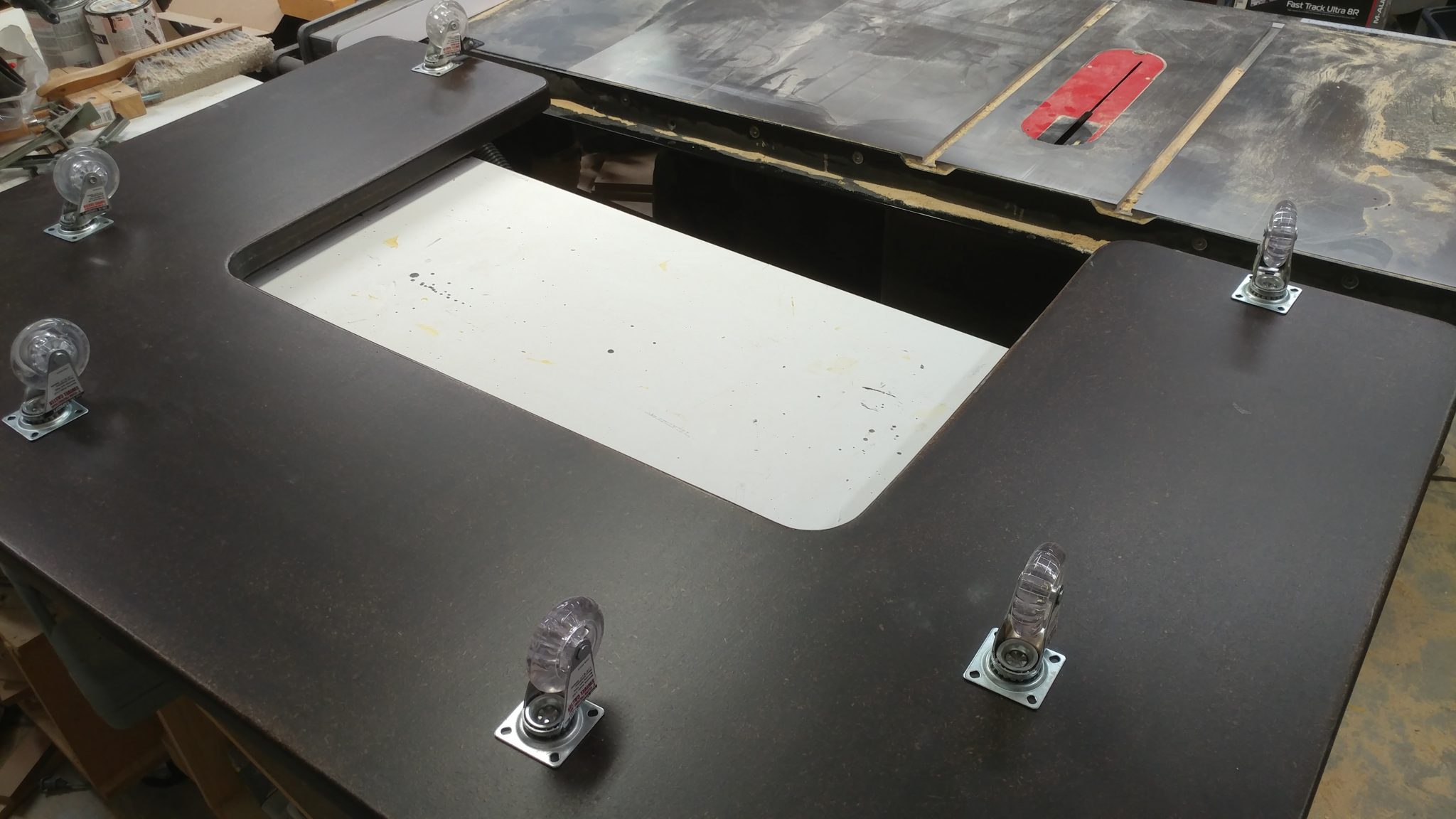
First I laid out where they would be placed on the underside of the bottom piece.

2. Fine-positioning the locking casters

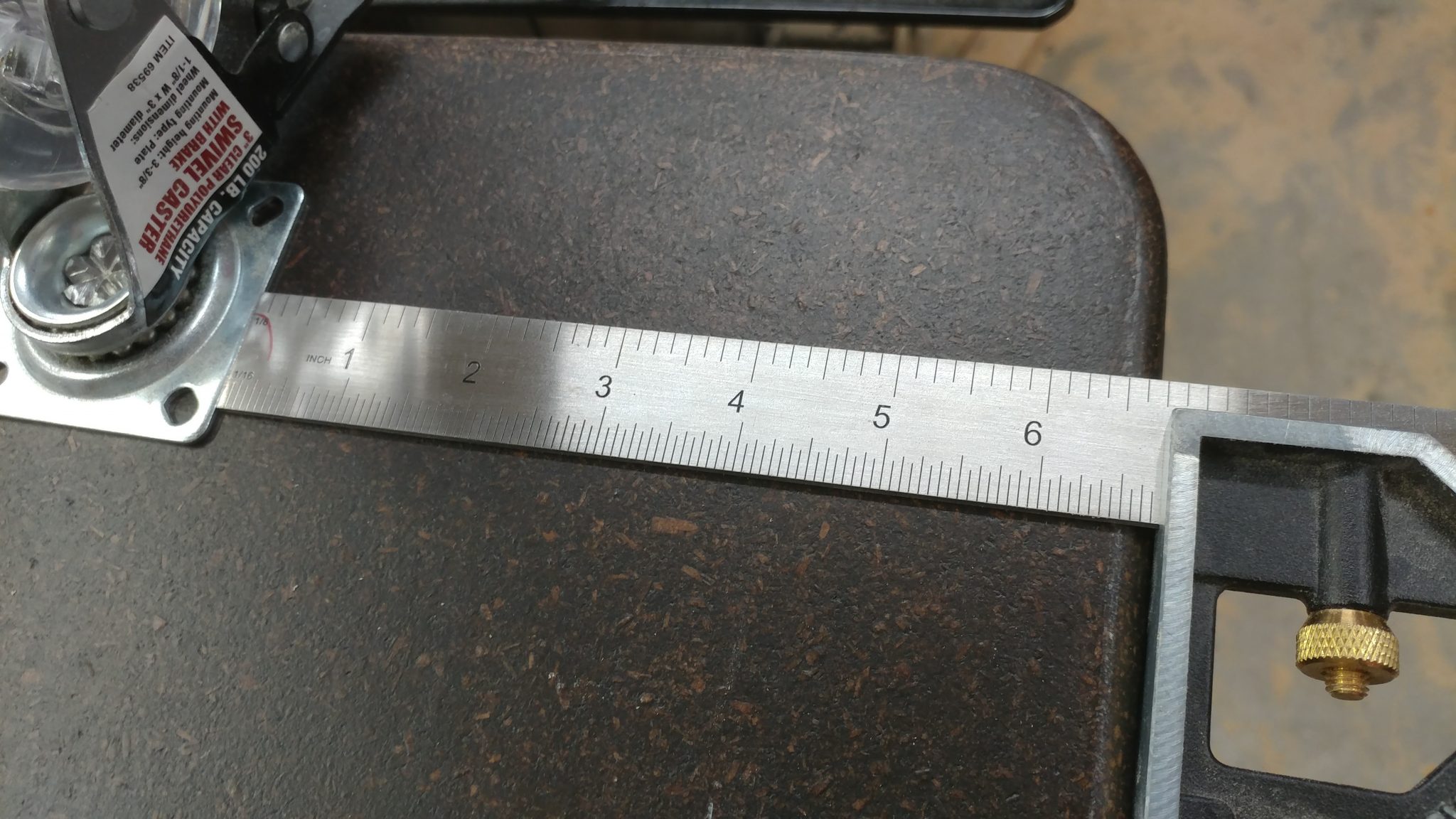
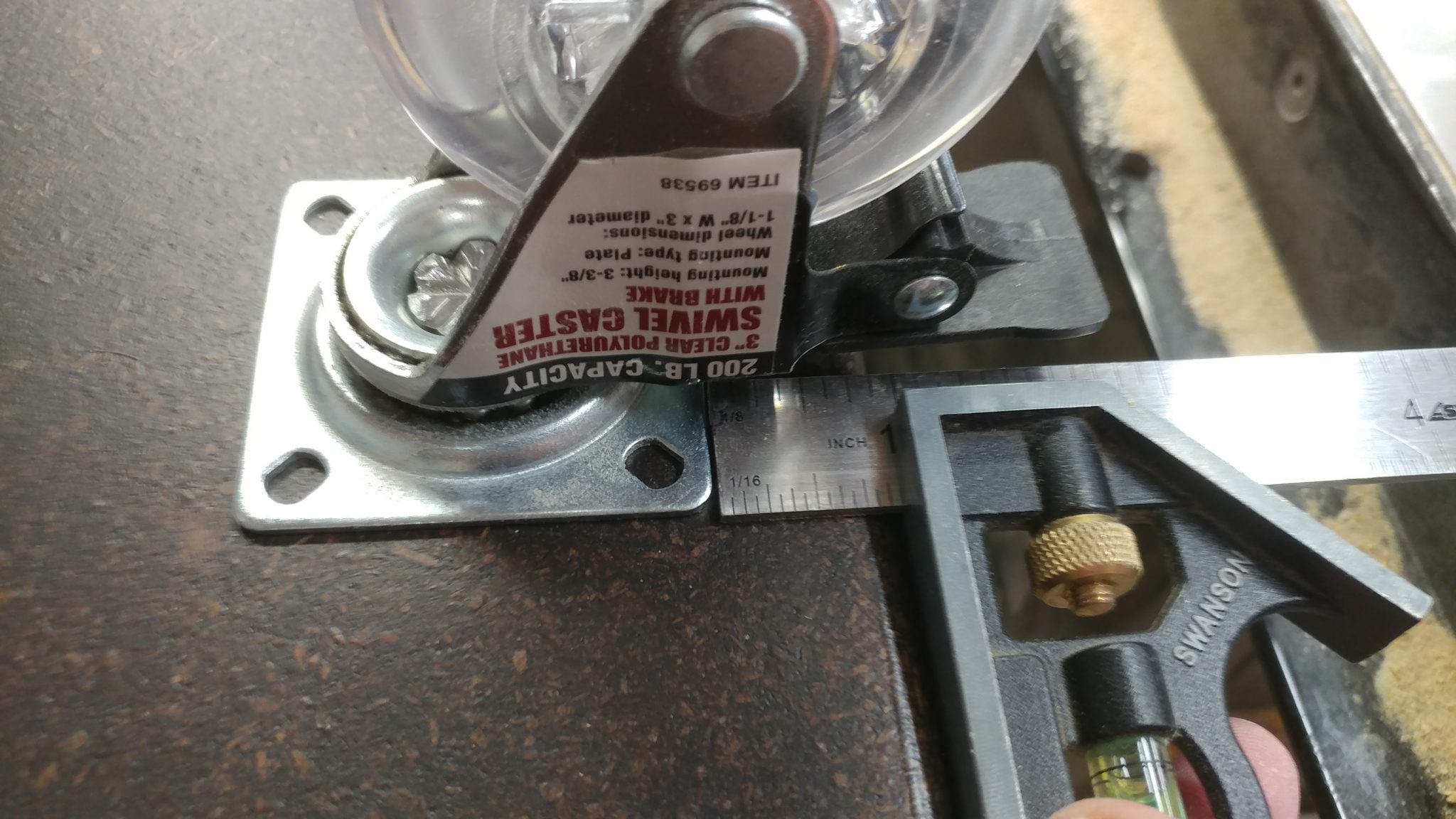
I roughly centered the wheels on the sections that extend out the back by placing the casters 6-3/4″ from the outside edge…

…and 1″ from the rear edge.  This will allow me to lock the casters when I don’t want the desk rolling around.

3. Attaching the locking casters

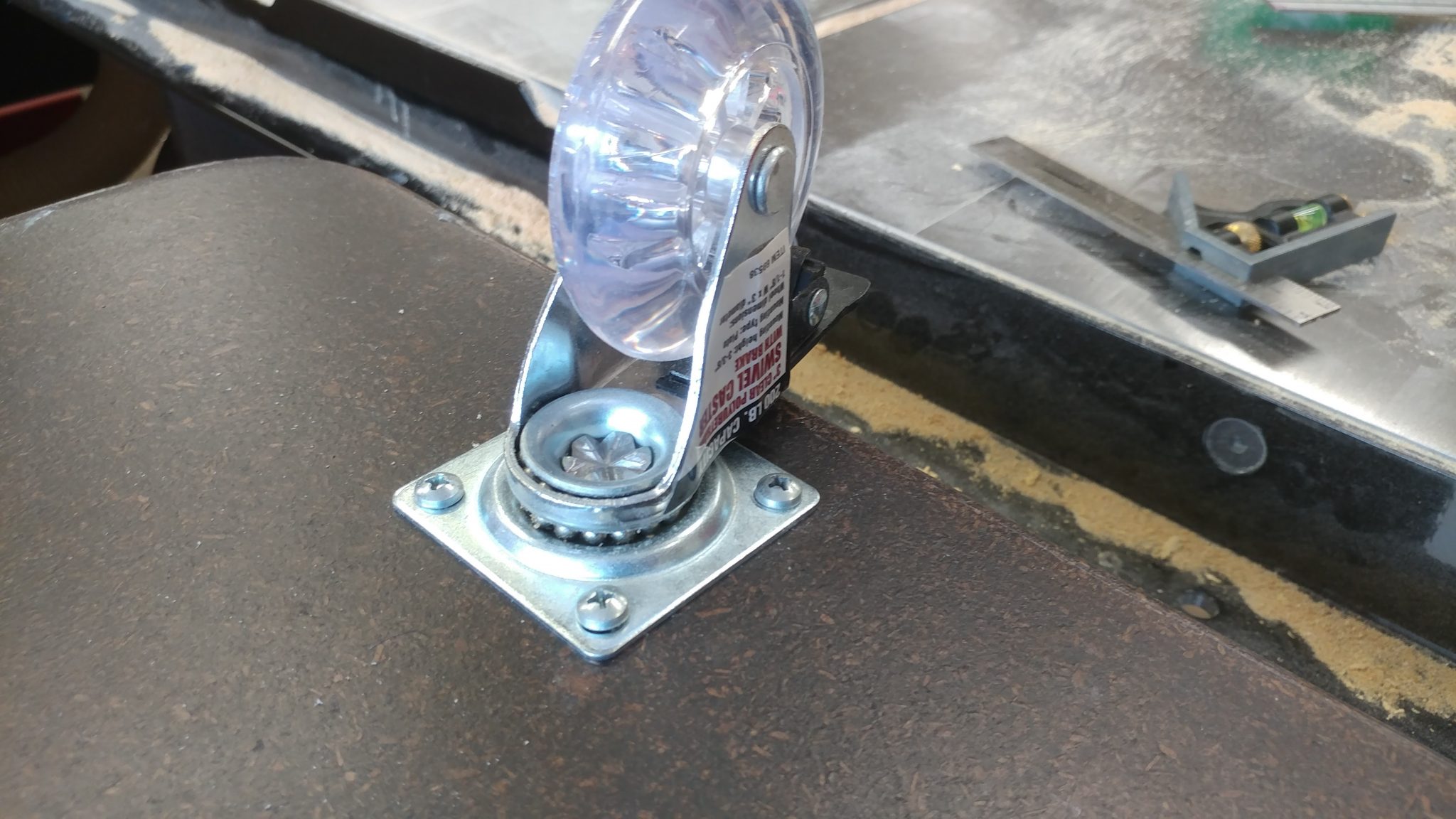
I secured the casters with 1-1/2″ button-head screws.

4. Fine-positioning and attaching the middle non-locking casters

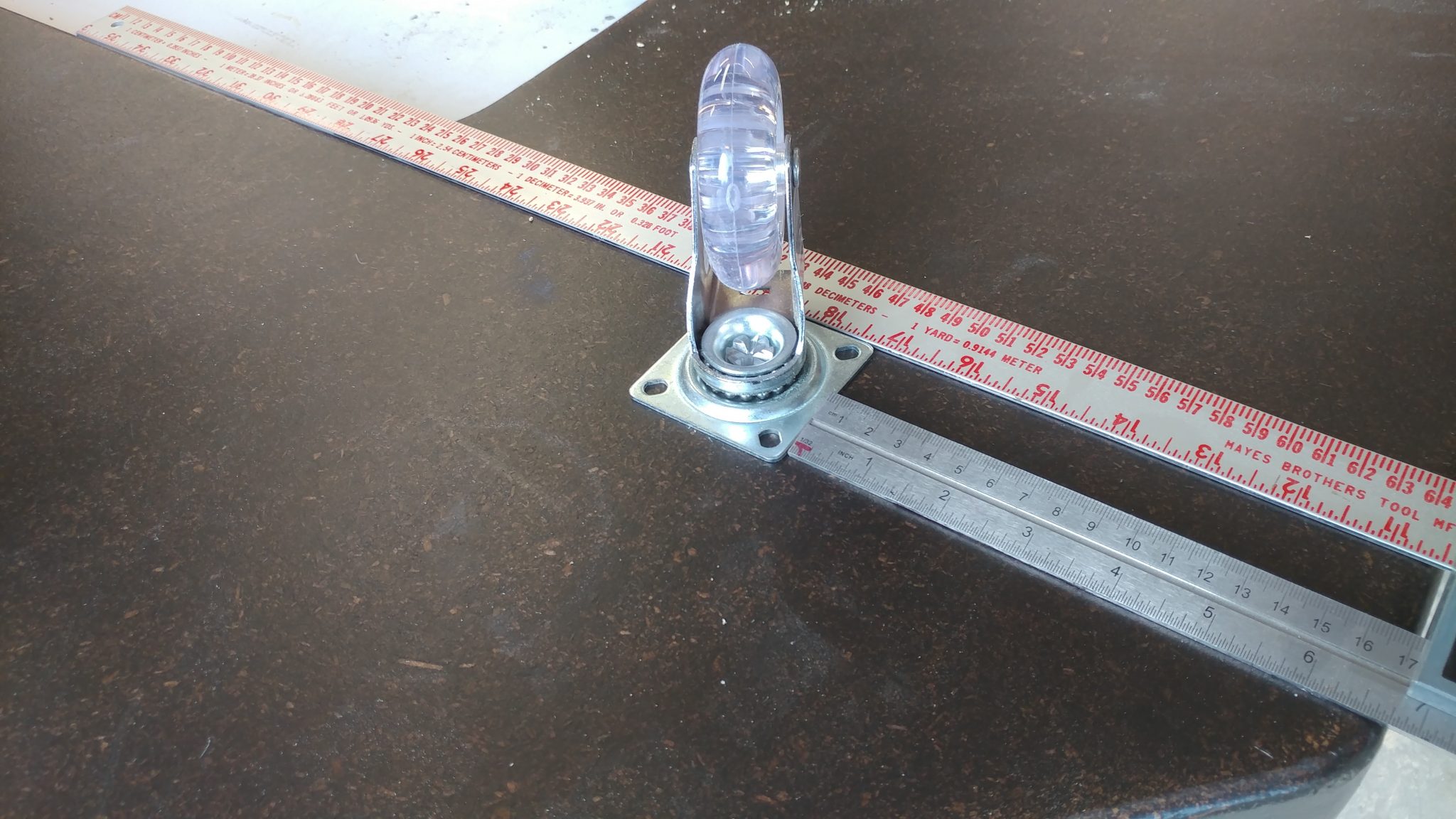
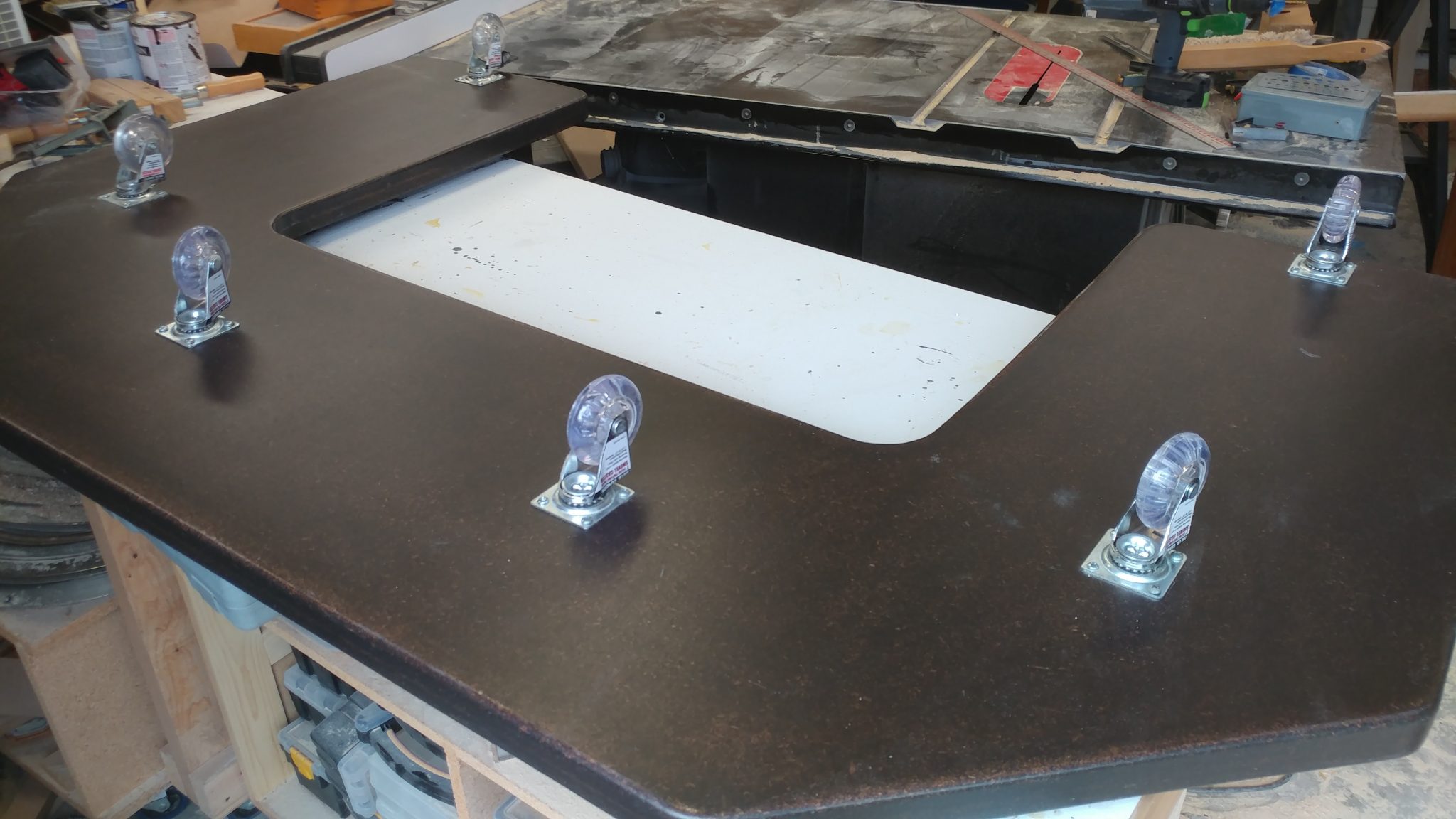
The casters that are not at the rear of the desk are non-locking.  I used my combination square to ensure that the middle casters are inline with the rear casters.  These were attached with the same 1-1/2″ button-head philips screws.

5. Finishing up with the front non-locking casters

The casters at the front are more centered to better bear the heavy load of all of the desk gear.

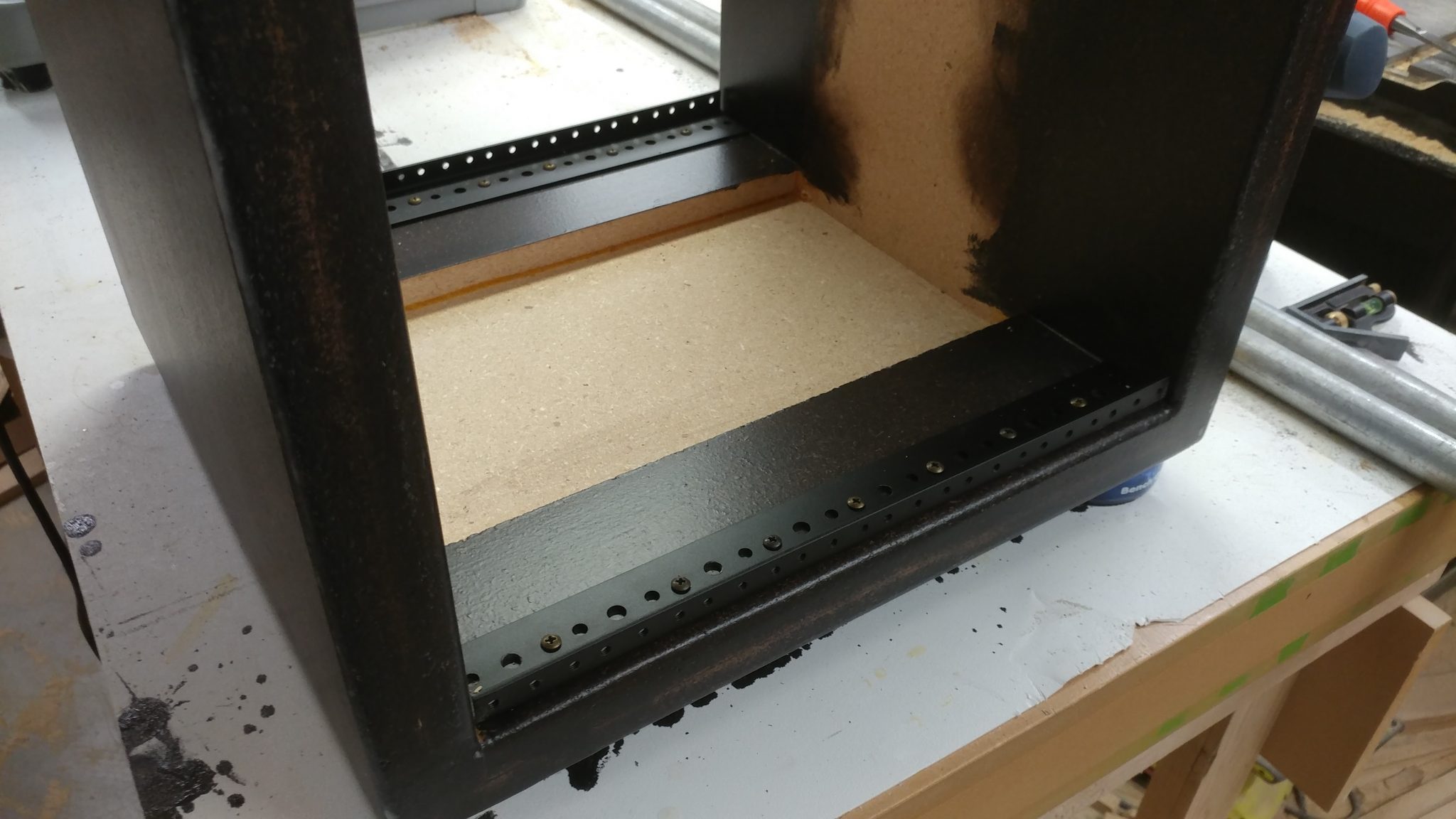
Installing the Rack Hardware

Equipment racks are one of the most overpriced pieces of studio gear and it gives me great pleasure to be able to make my own for a small fraction of the cost.  If you have a use for a studio rack, I highly recommend you try making your own.

1. Positioning the 4-space rack rails

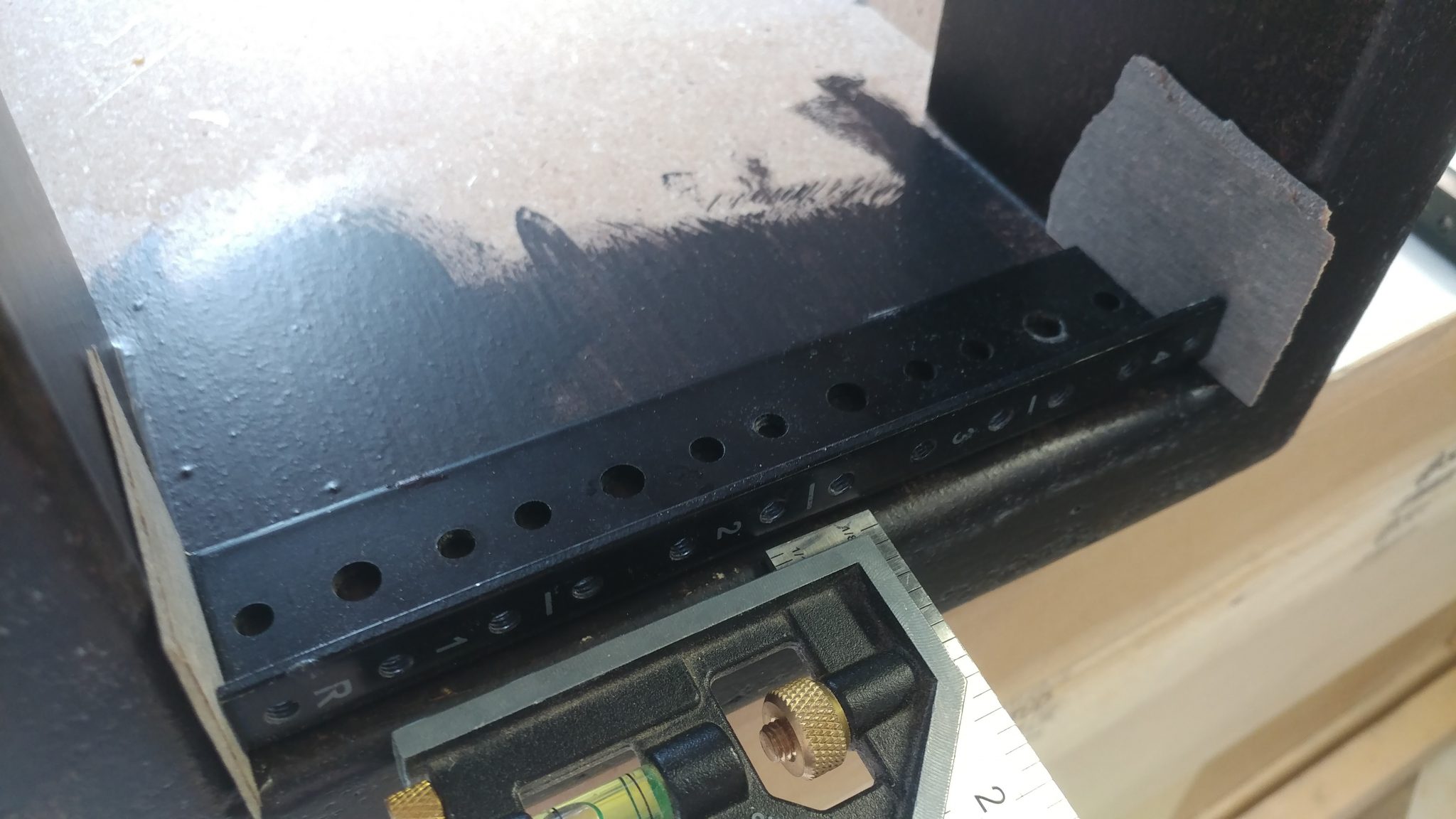
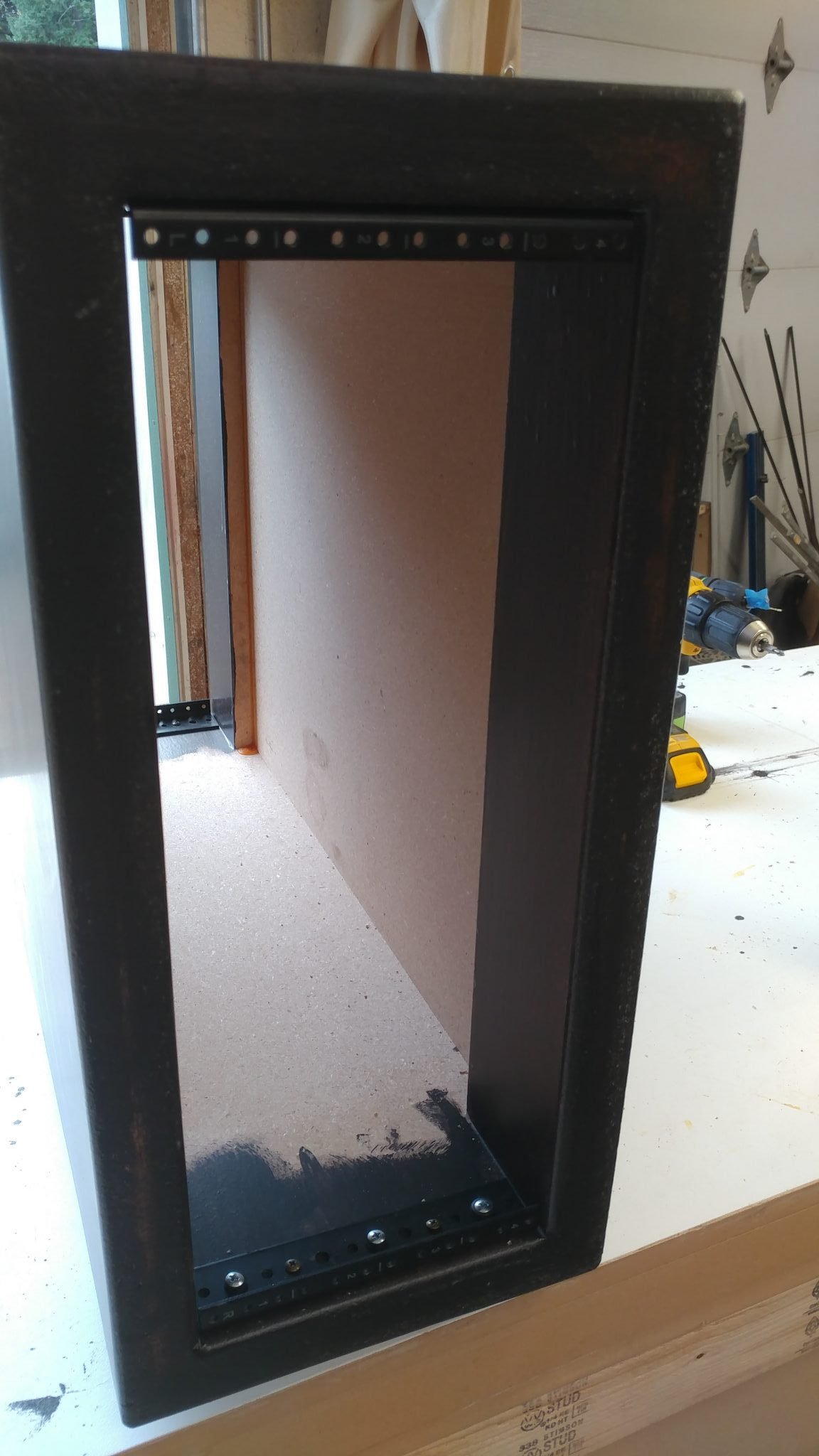
The rack rails were installed so they were 1/8″ from the front of the rack body.  I used two scrap pieces of laminate left over from my router enclosure build to shim between the top and bottom of the rack rails and the inside of the rack body, ensuring that they would be centered and consistent on both the front and back of the racks.

2. Attaching the 4-space rack rails

These rails were attached with screws as well.

Each rack got four rails; two for the front and two for the rear.

3. Determining the location for the grommet

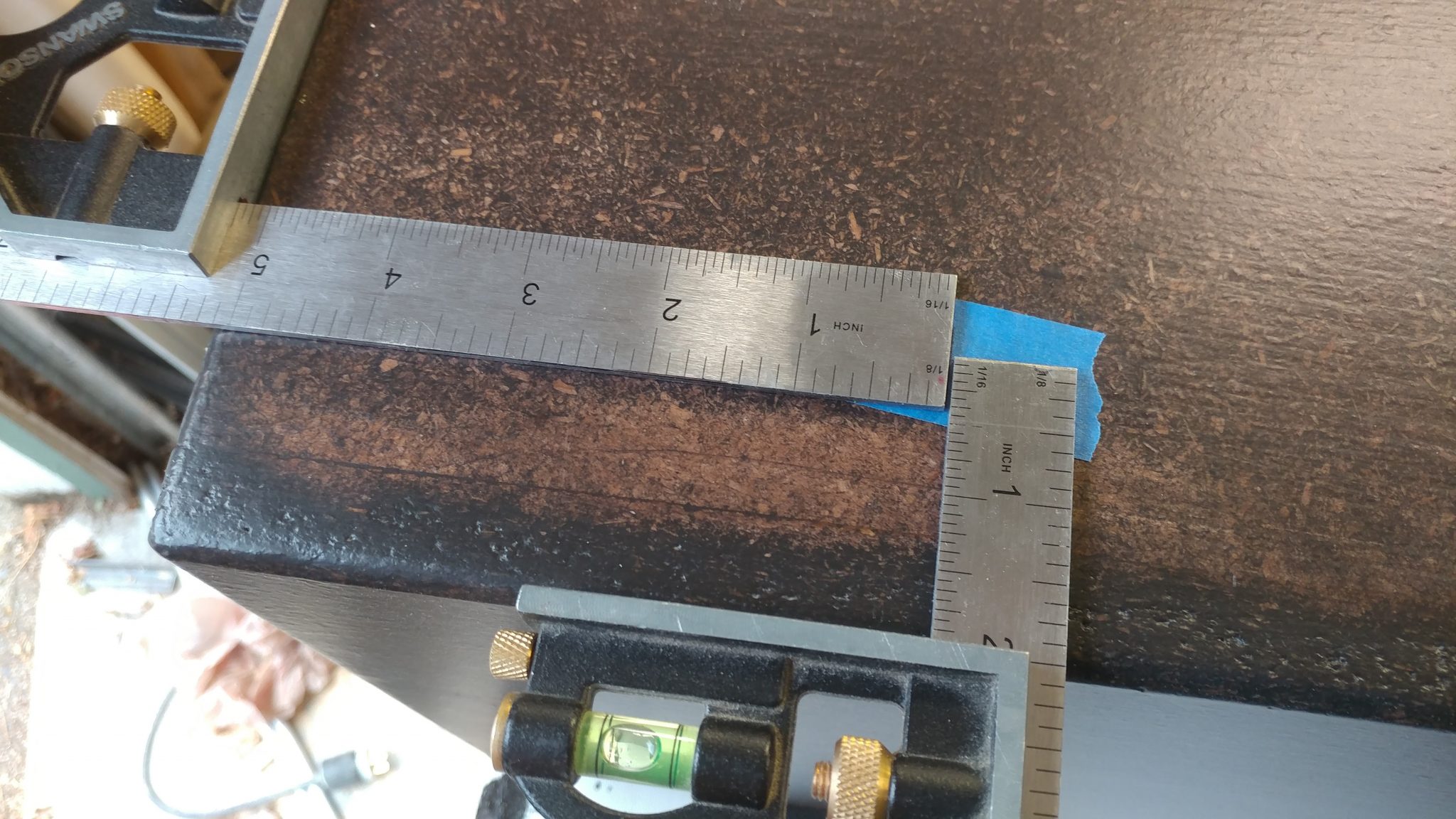
Each rack will have a number of cable pass-throughs.   I wanted the pass-through to be placed towards the back and towards the top, which will make it easier to conceal the cables.  I decided to have the computer pass-through located 2″ from the top of the rack and 5-1/4″ from the rear.  This was a slight mistake, as you’ll see below.

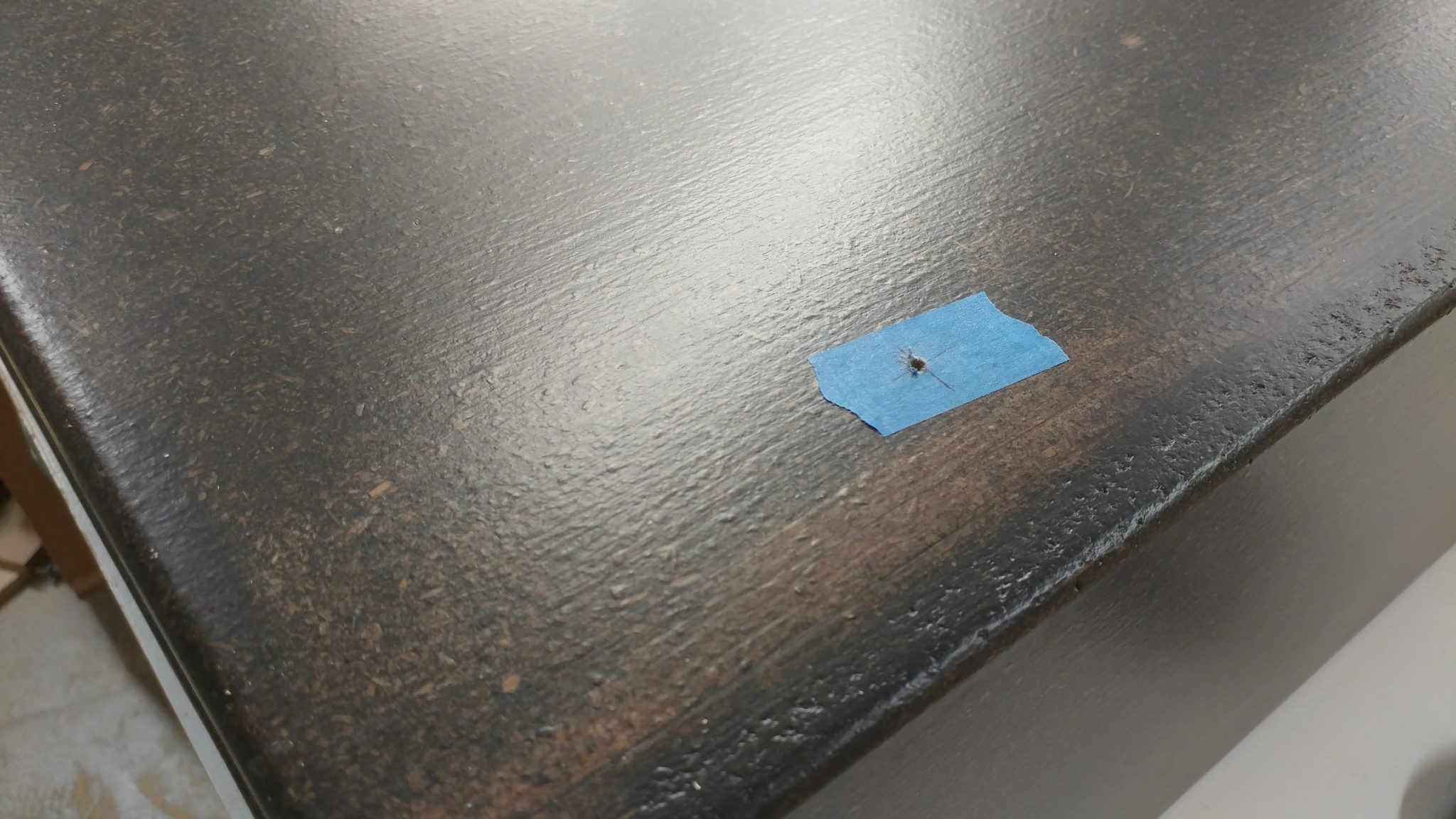
I marked the spot on painters tape and drilled a pilot hole.

4. Prepping the circle-cutter

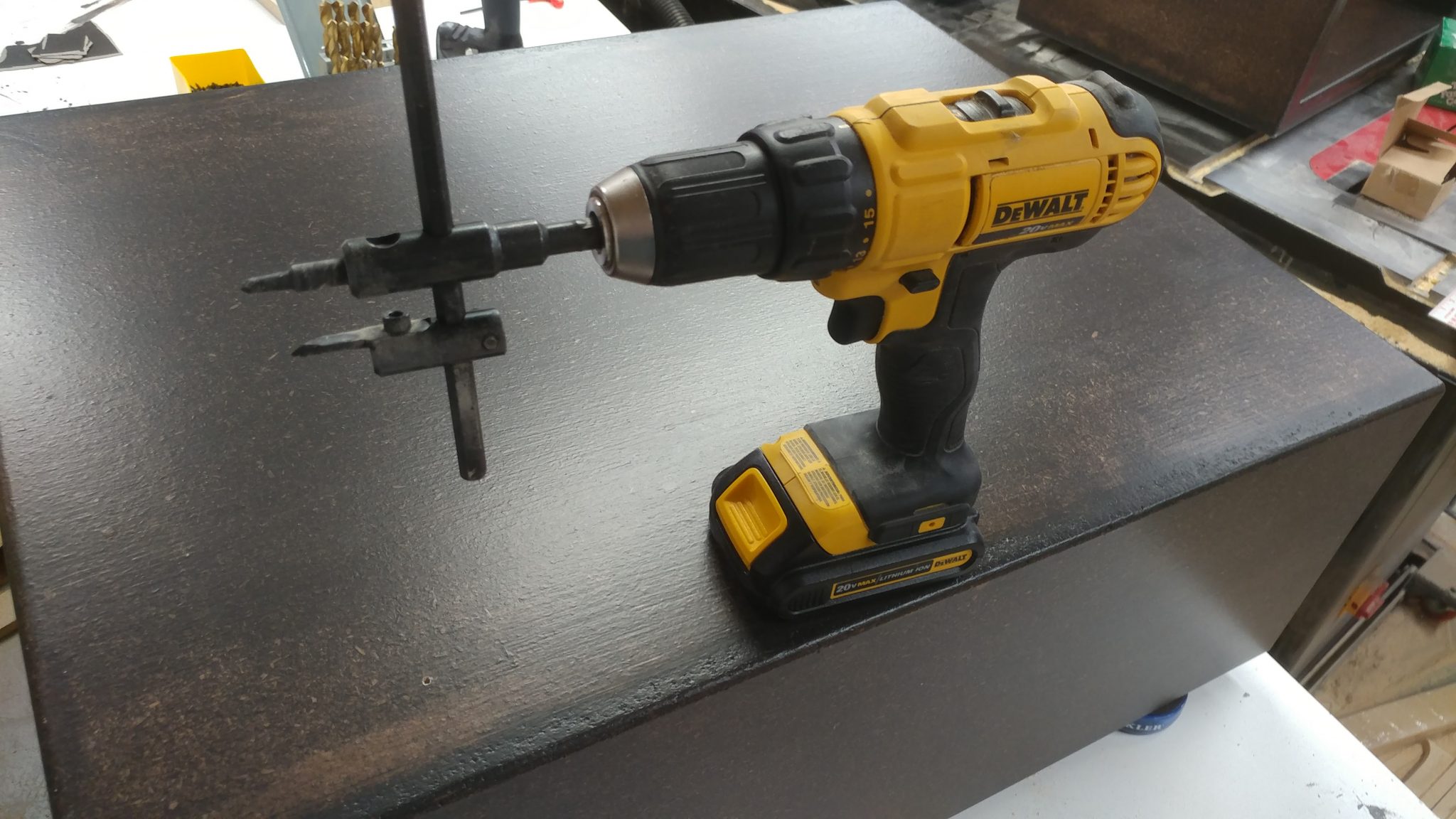
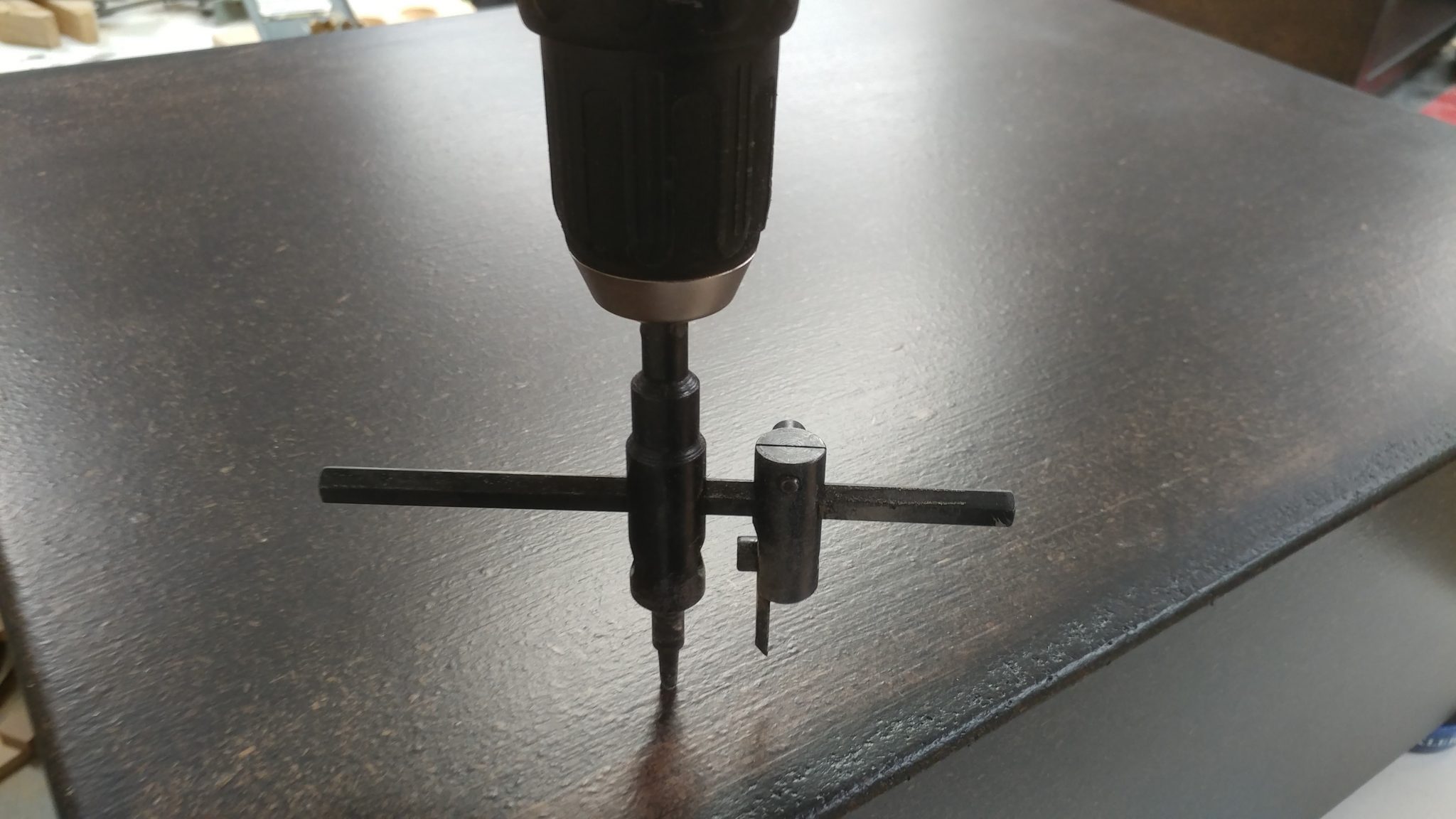
I used a circle cutter on my cordless drill.

I only used one cutter to do this.  Having the second cutter installed was feeling a bit sketchy.

5. Cutting the circle for the grommet

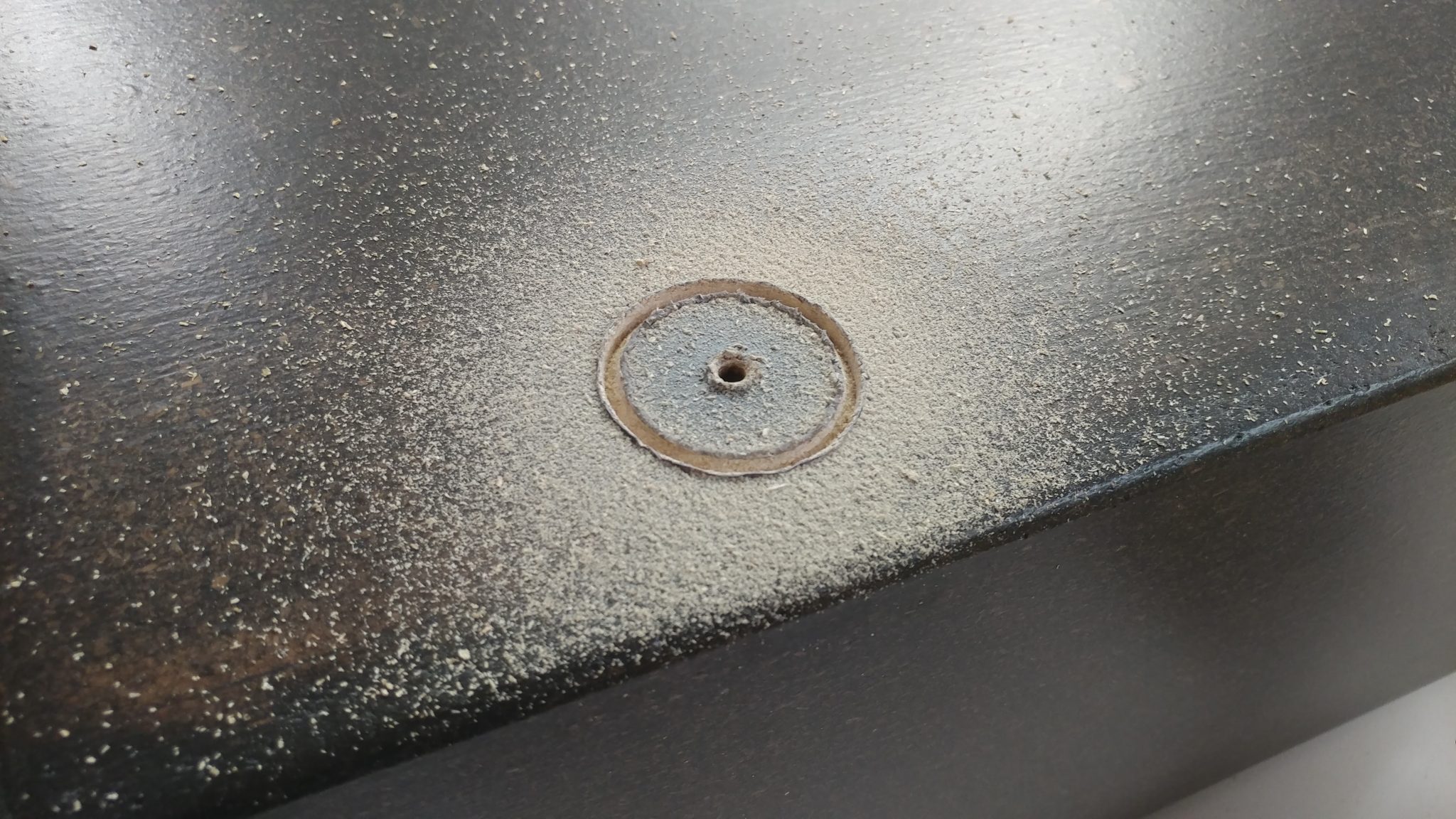
I used the pre-drilled pilot hole to start cutting

The circle cutter uses the pilot hole to keep it in the proper location.

6. My first major screw-up

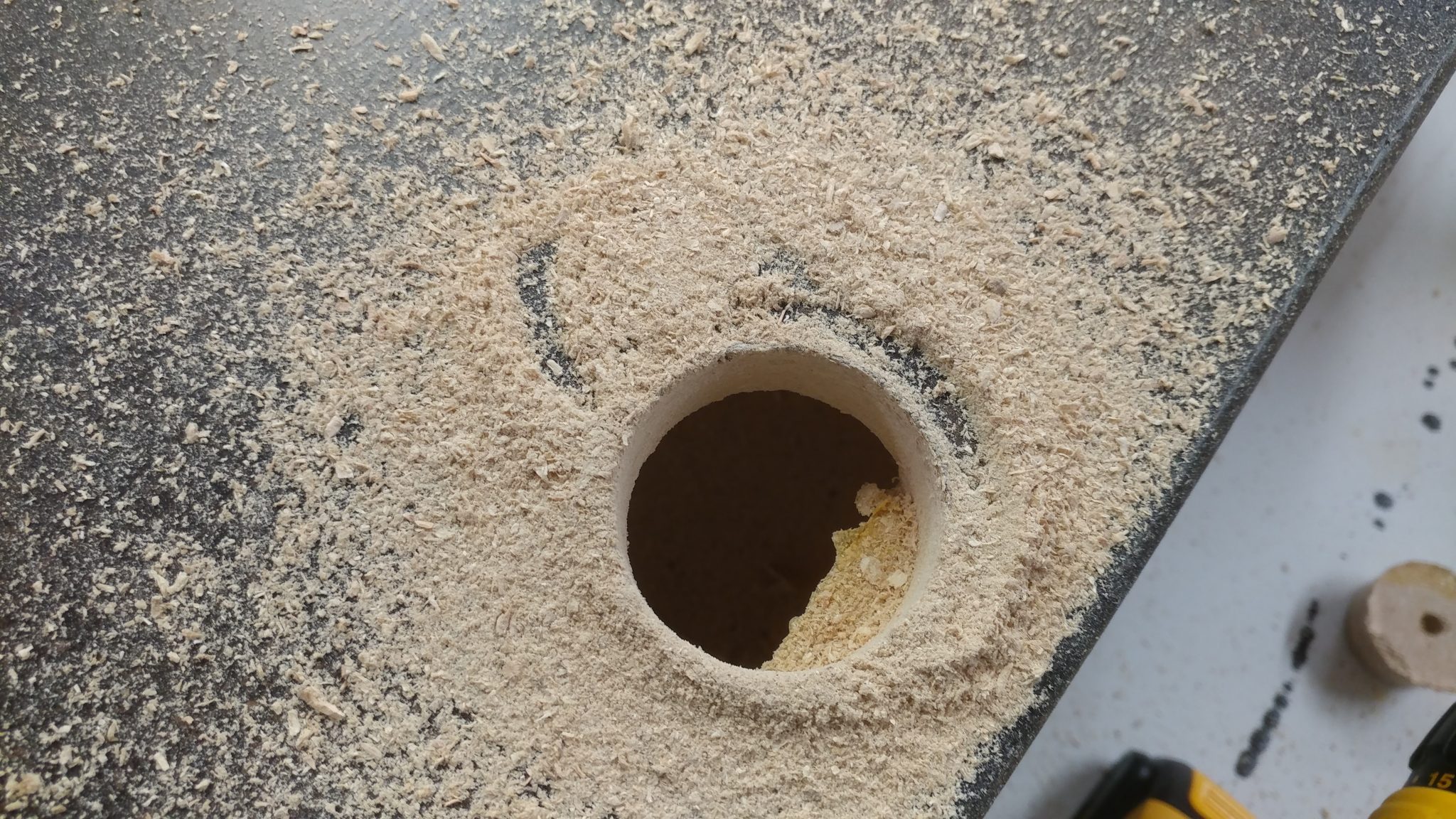
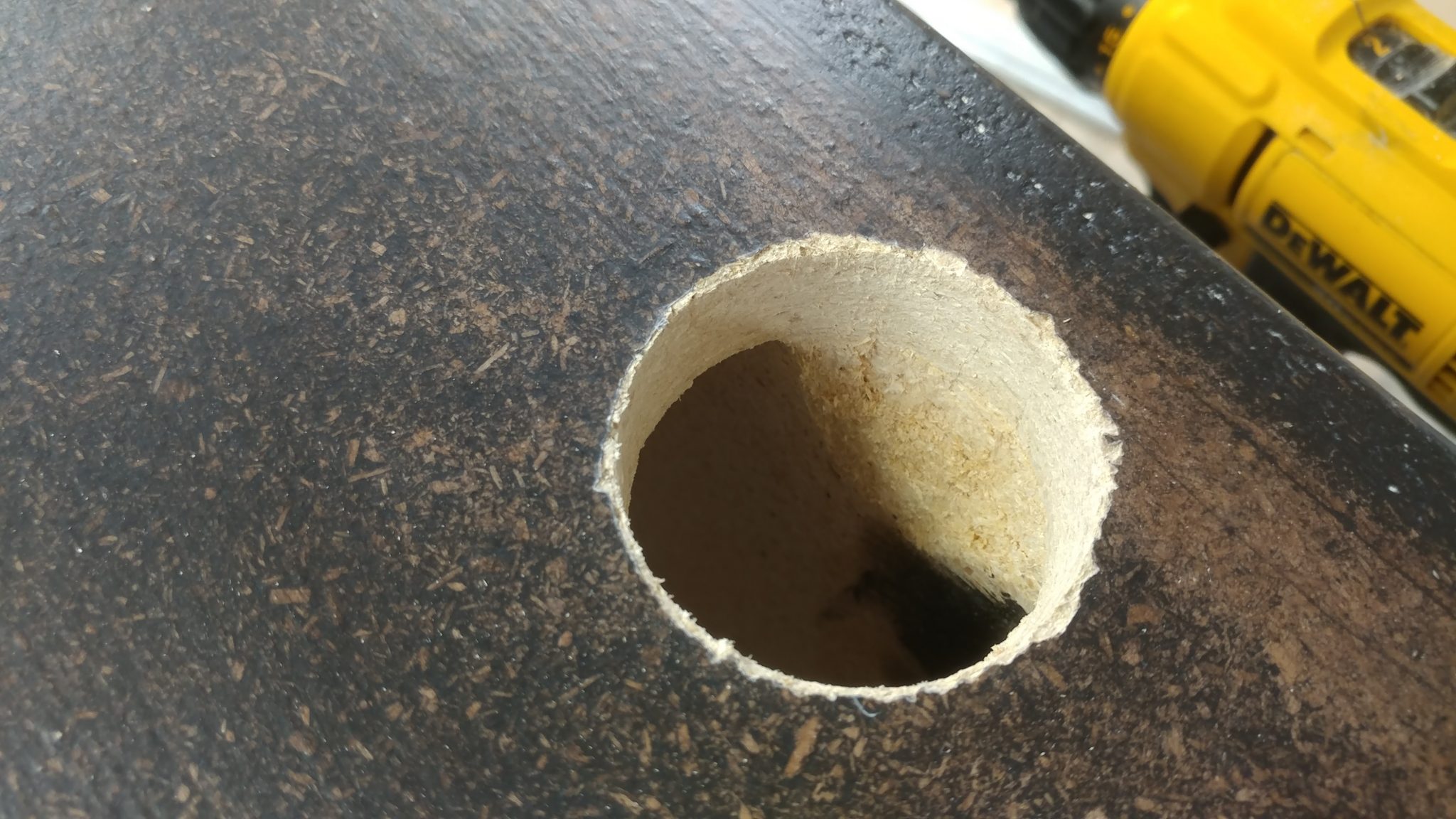
This is where I screwed up.  I forgot that the top and bottom of the racks have two layers of 3/4″ particle board rather than just one.  I didn’t calculate that when I decided on a hole placement.  This means that the top of the rack will interfere with the pass-through.

7. Fixing the screw-up

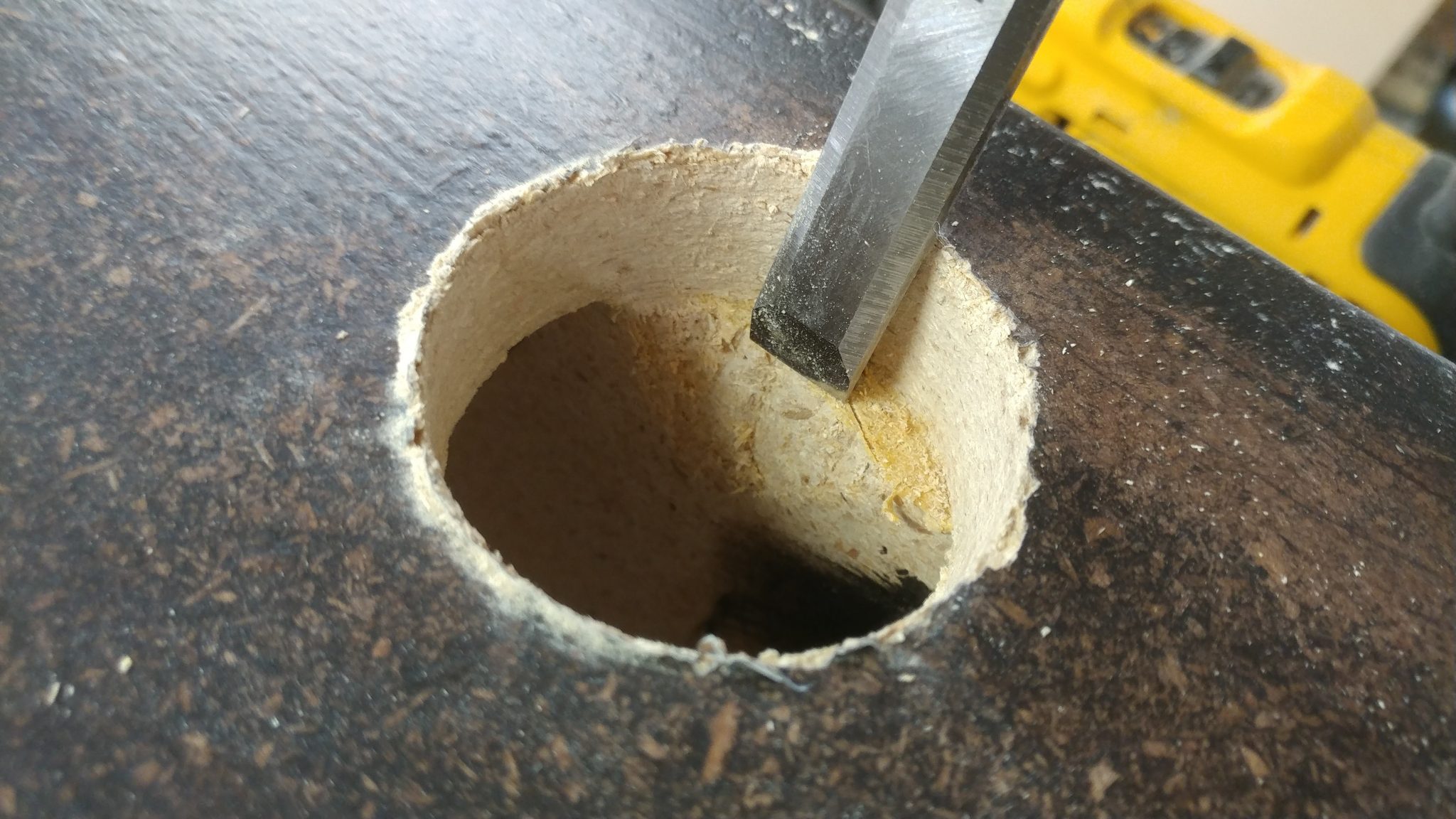
I used a chisel and a rasp to clear out enough room to allow the pass-through grommet to be fully inserted and provide more room for cables.

Much better.

8. Installing the grommet

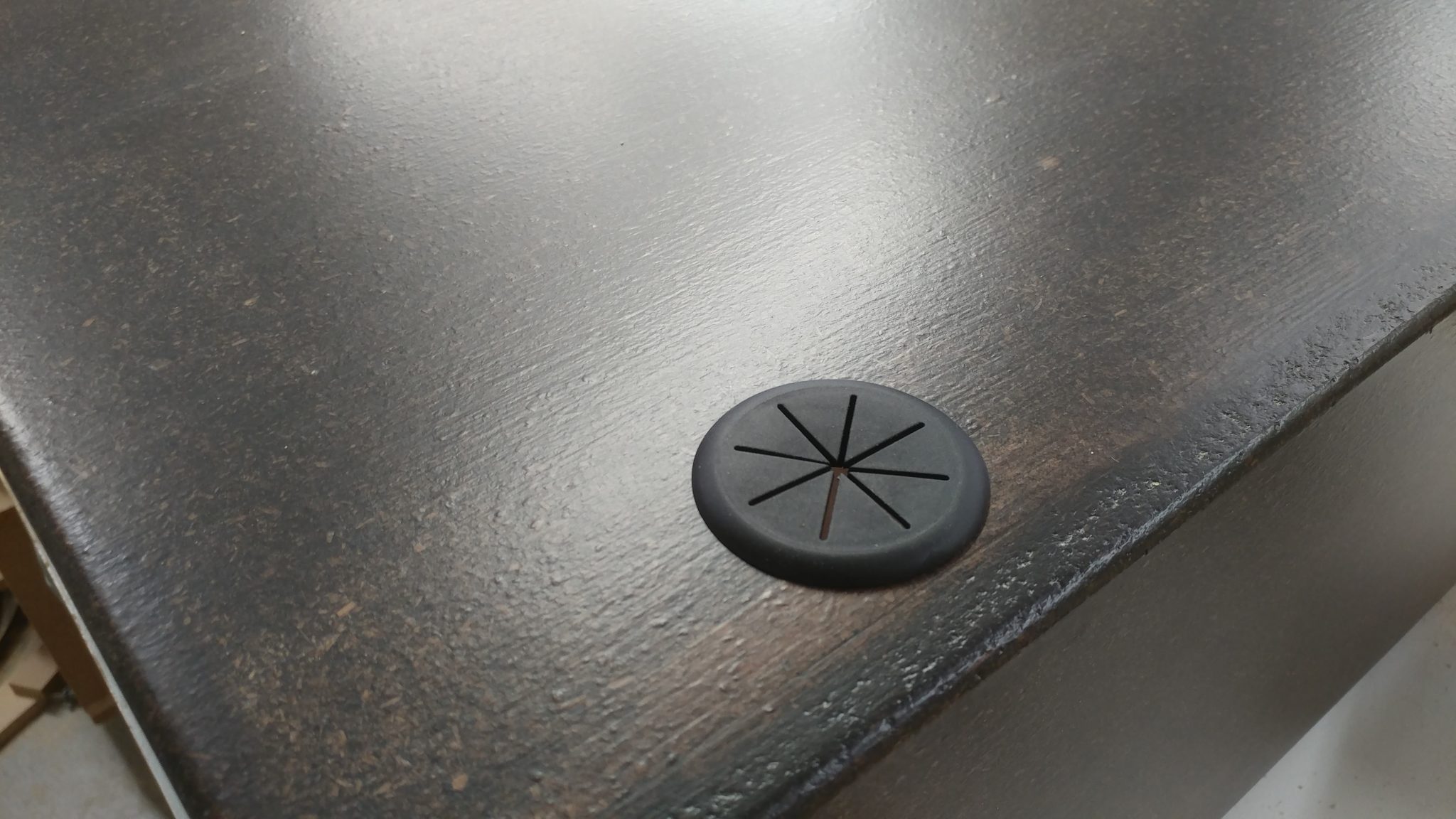
The grommet fits nicely and covers the jagged edge around the hole.  I used some 5-minute epoxy to secure the grommet in place since the hole cutter didn’t really cut a smooth hole in the particleboard..

9. Taking it all in

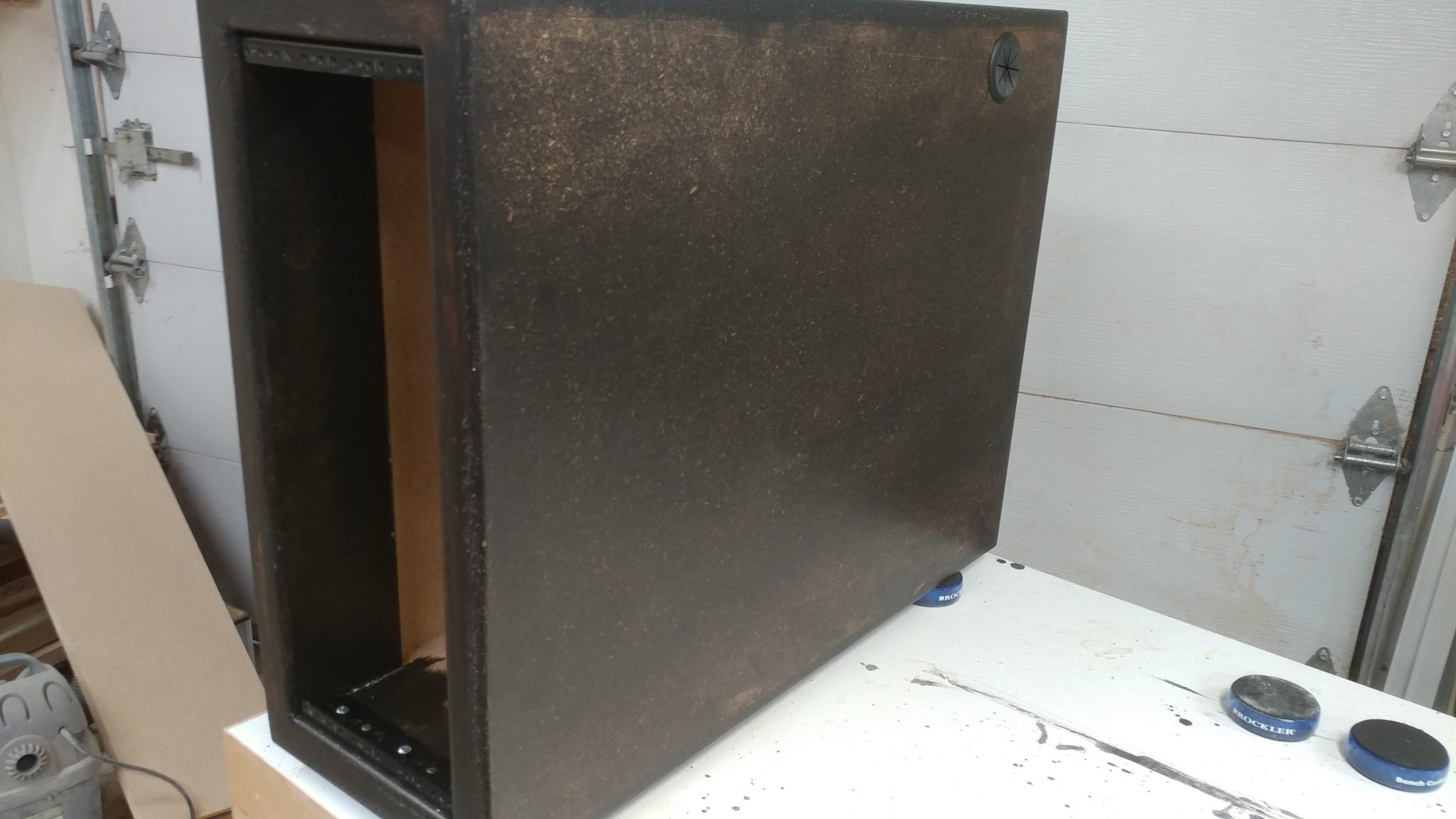
This is how the rack will be positioned in the desk.  You can see the pass-through grommet in the upper rear corner on the side of the rack.

10. Ensuring that the PC will fit in the rack

I set the rack on its back and dropped the computer in.  I screwed it to the rack rails but right now there isn’t anything supporting the computer, which is very heavy.

11. Measuring the space under the PC

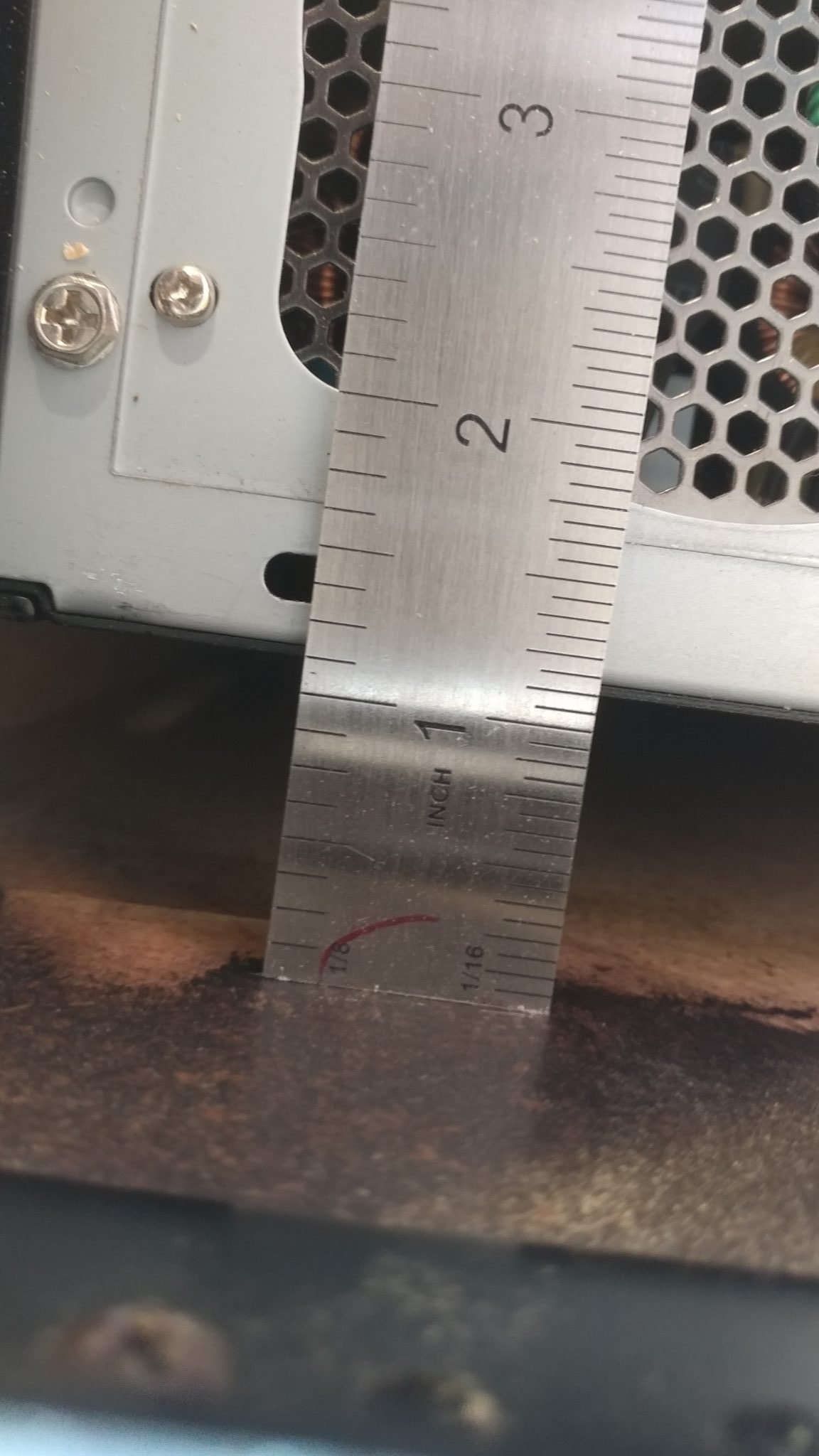
I set the rack upright again and went around the back.  You can see that there is a gap between the computer and the inside floor of the rack.

I measured that to be 1-1/8″.

12. Making the PC supports

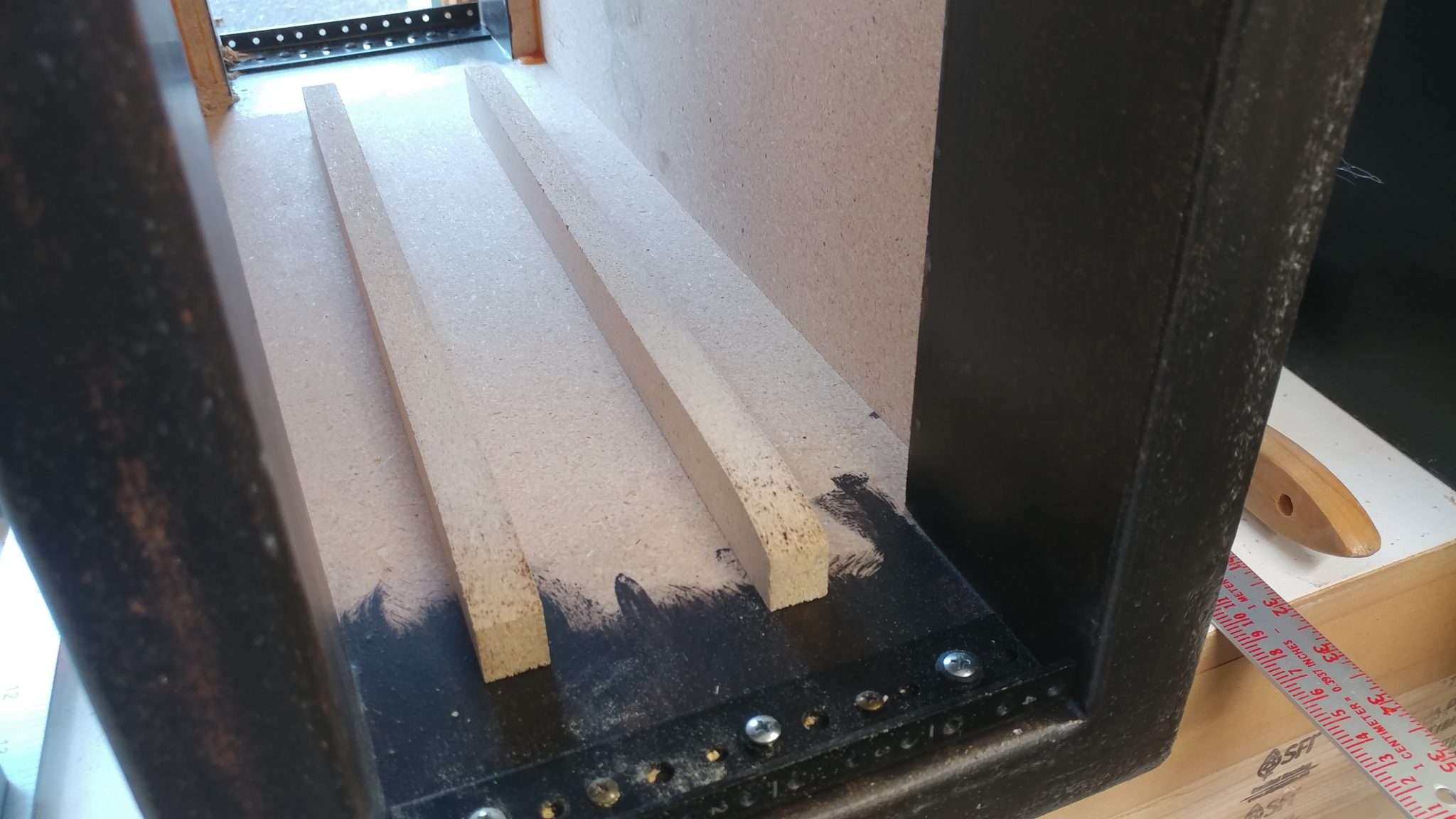
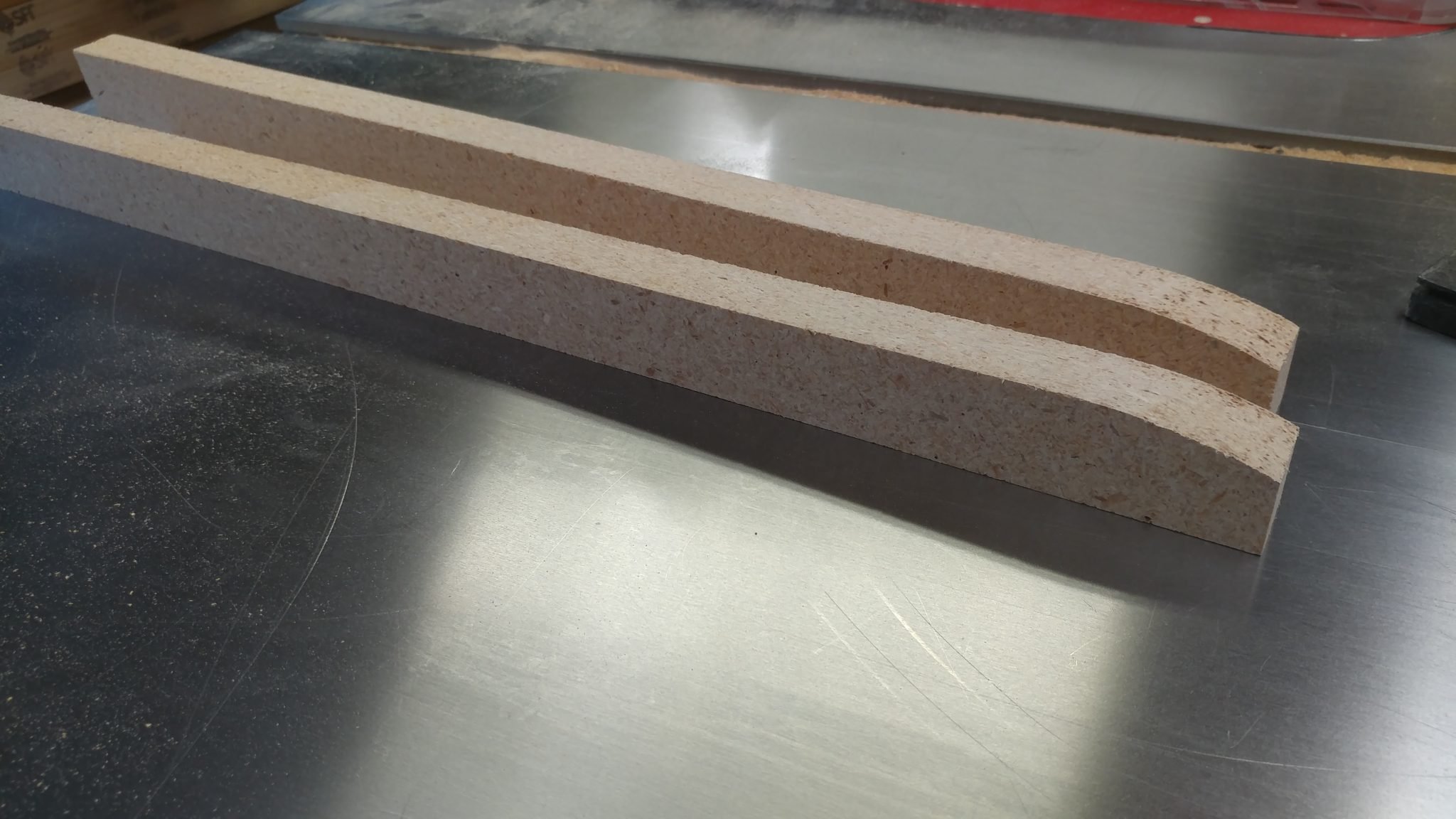
I cut two strips of MDF at that width and slightly tapered the end on a disc sander.  These will go between the computer and the rack floor to help support the computer.  The taper at the end will make it easier to insert the computer from the front.

This is where the wood supports will be placed.

13. Installing the 8-space rack rails

I installed the 8-space rack rails to the larger two racks in the same manner.  They don’t need the wooden supports added to them but I did install a few grommets on both the left and right to allow the cables to pass between the boxes.

Installing the Leg Mounts

The leg mounting hardware needs to be mounted in a way that will allow each of the three racks to be installed in either location.  This didn’t seem like it would be that big of a problem but it took some thinking before I could even get started.  Each rack unit will have three legs; two on the sides towards the outside of the desk and one underneath towars the inside of the desk.  I decided to start with the legs on the sides.

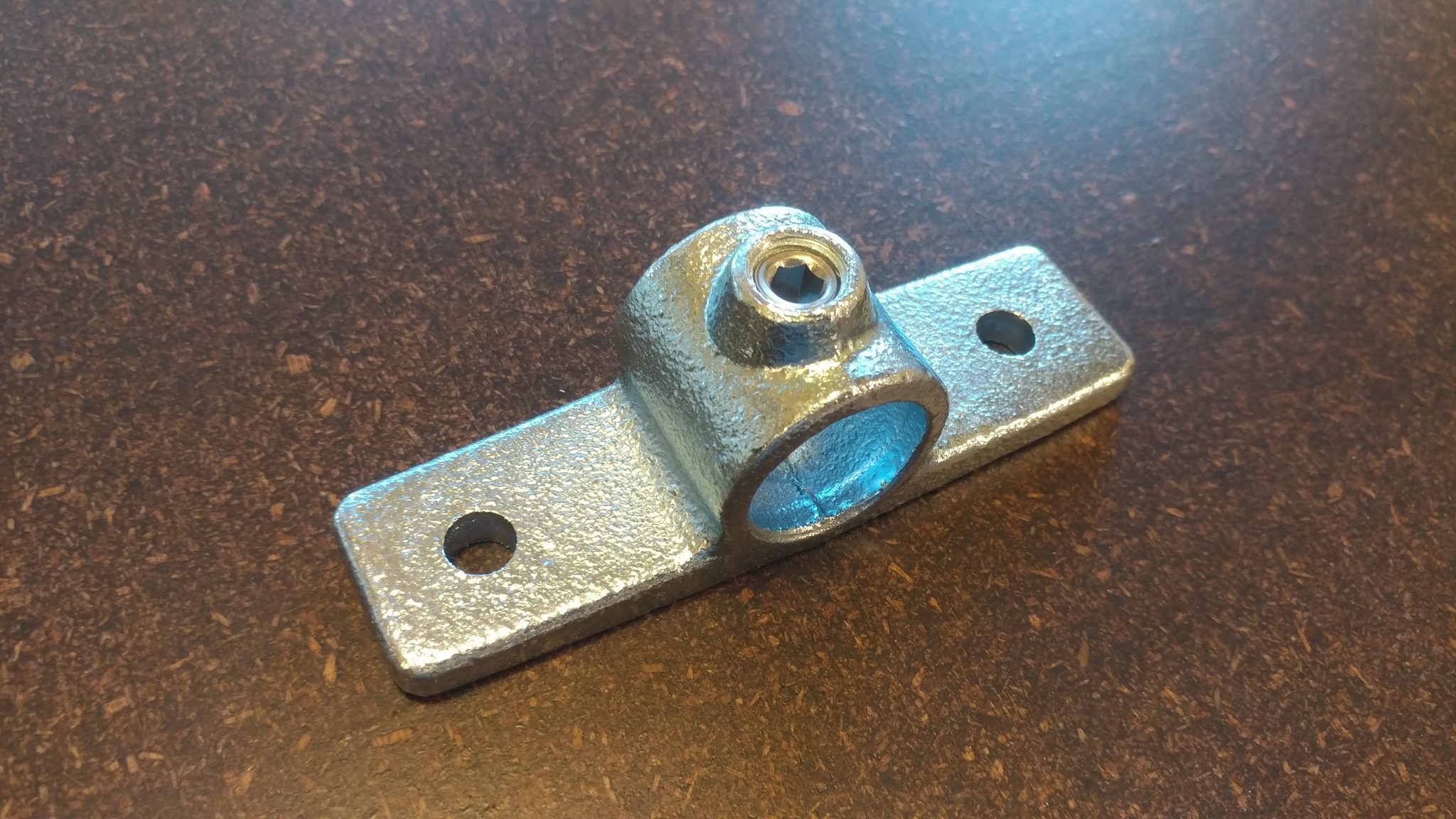
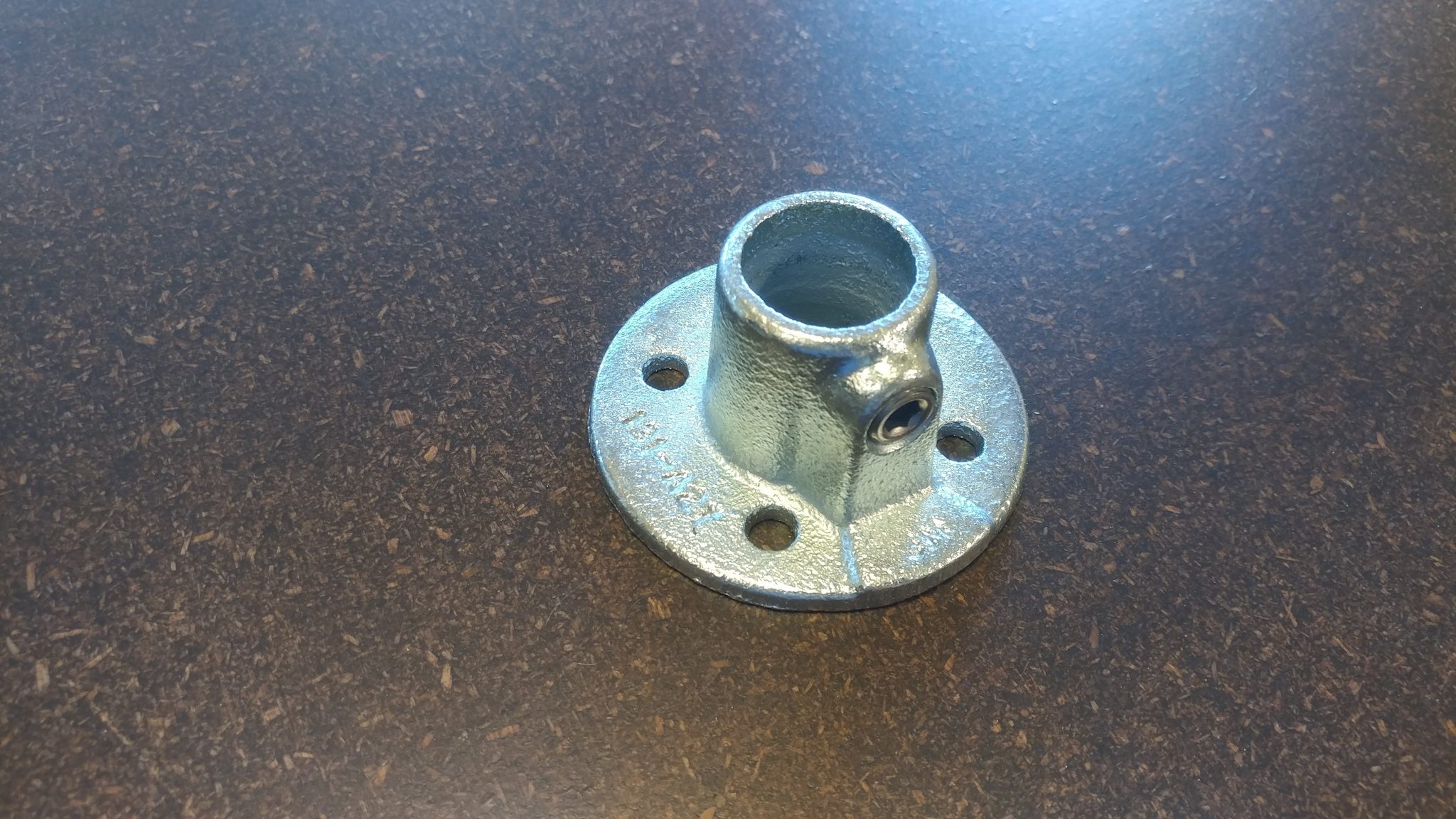
1. Steel-Tek hardware

The side flange is part number 679-804HC from Steel-Tek and can be bought from Lowes.

The floor flange is part number 673-104HC from Steel-Tek and can be bought from Lowes.

2. Determining the position of the side flanges

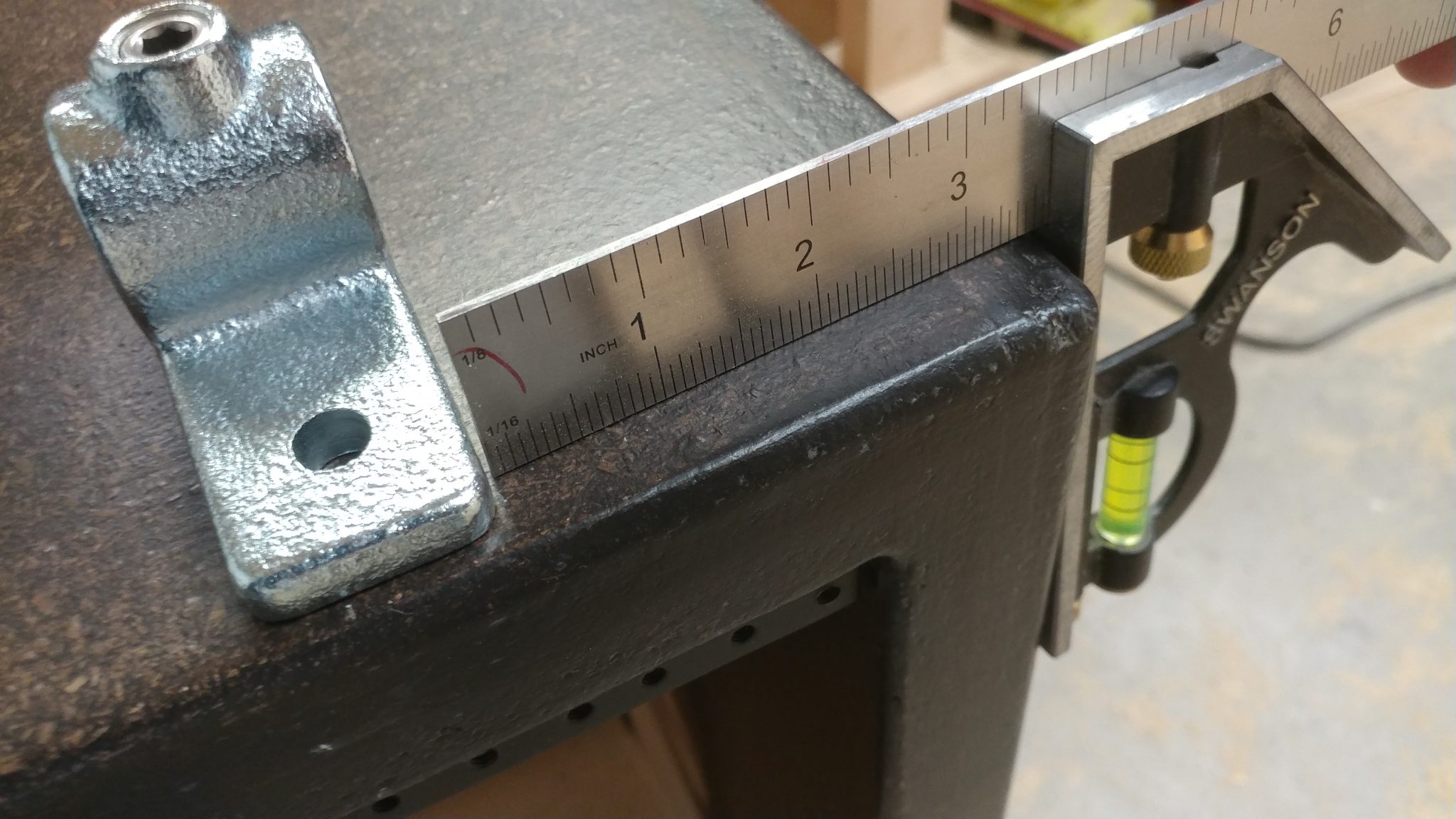
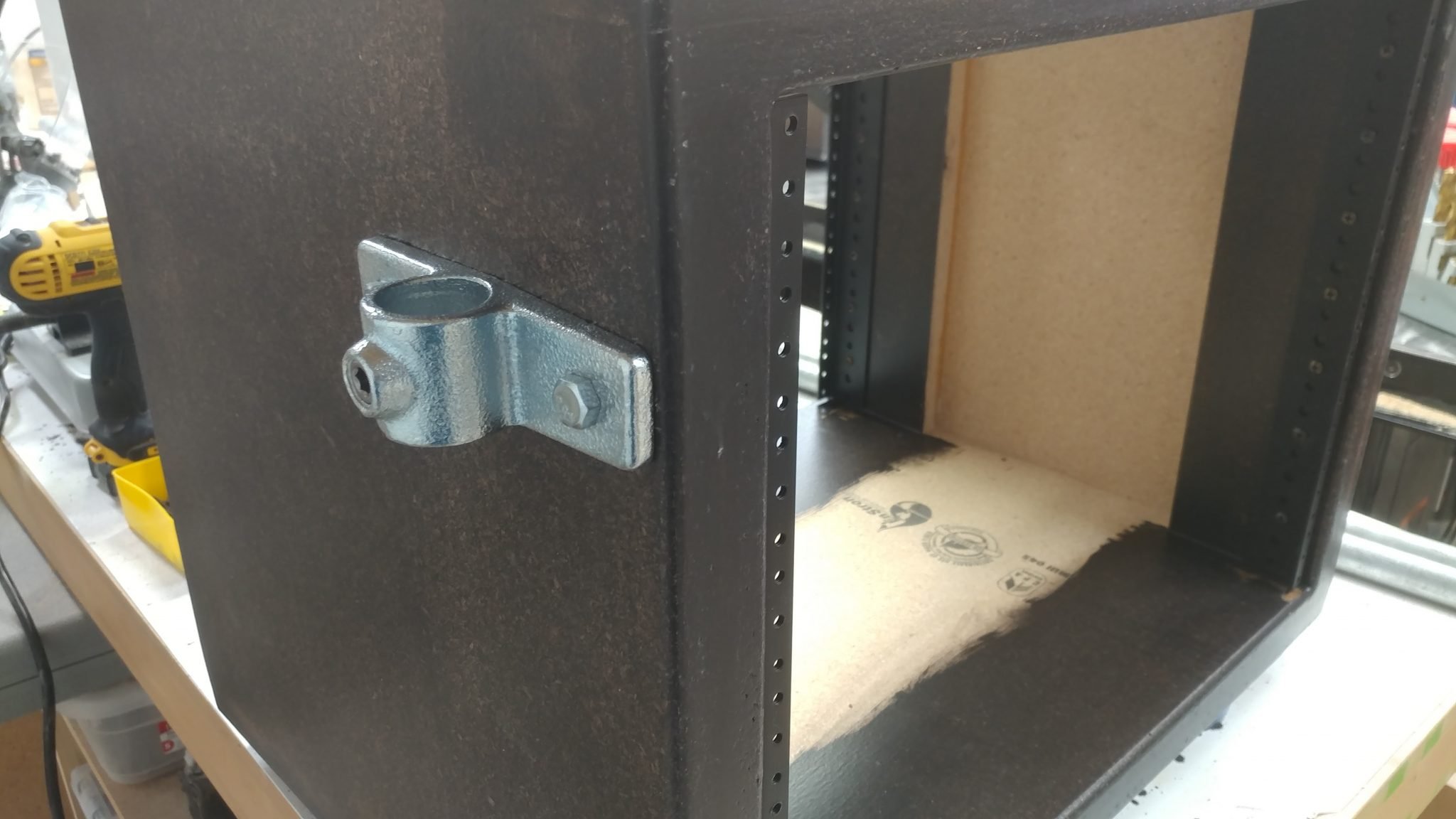
I positioned the side flange on the side of the rack as far forward as I could.  I positioned it 3-1/2″ down from the top.  This doesn’t add anything in terms of stability, it just looked best and it ensured that the bolts I used to attach the bracket wouldn’t hit the screws for the rail hardware.

3. Attaching the side flanges

The side flanges were installed on both sides of one of the larger 8-space racks.  I will install them on the other rack later.

4. Attaching the side flanges

By using some temporary leg rails I was able to place the PC rack on top of one of the larger 8-space racks.  This allowed me to determine the locations for the side flanges.

The side flanges were attached three and a half inches from the top, just to be consistent.

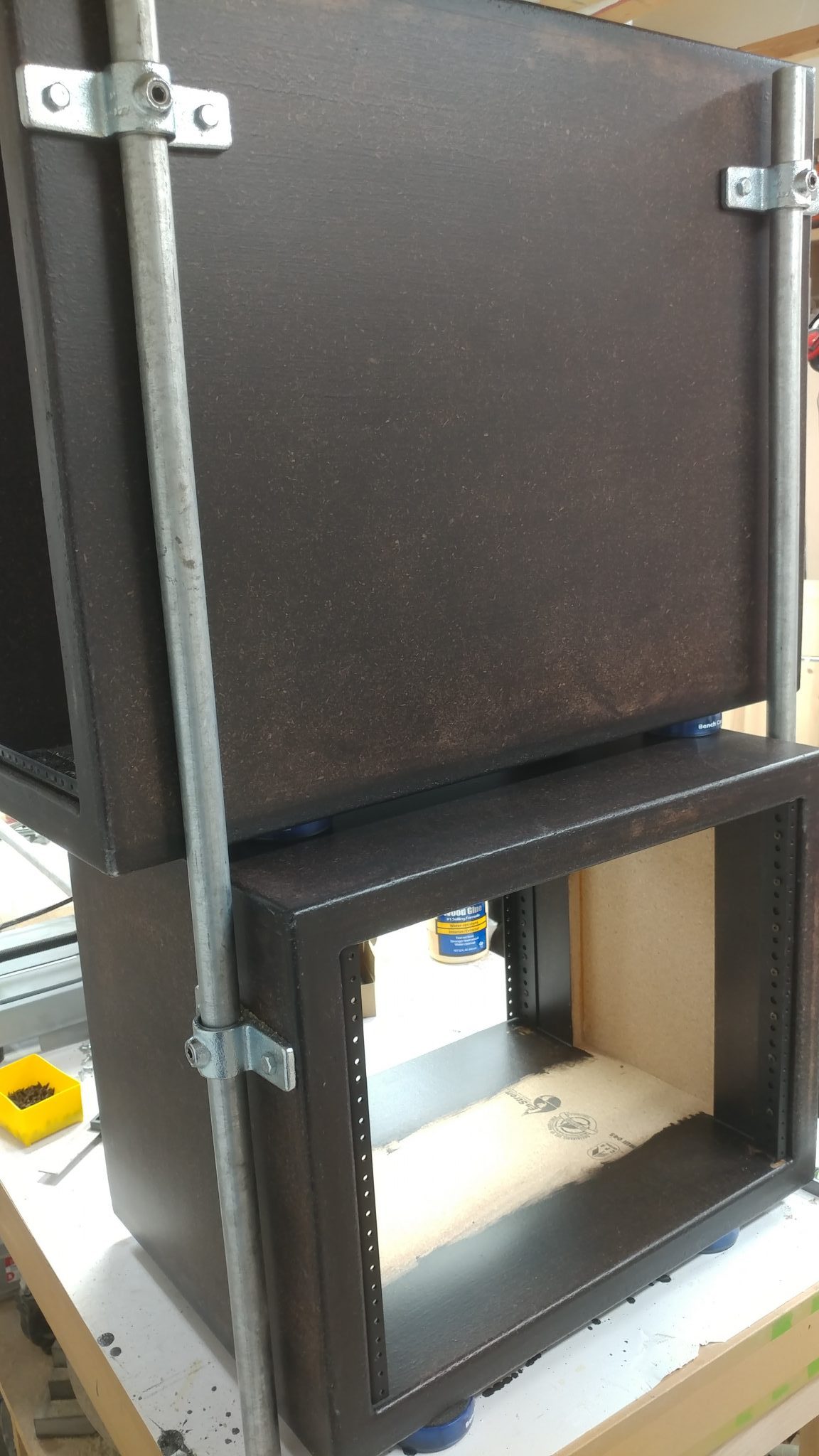
5. Positioning the first floor flange

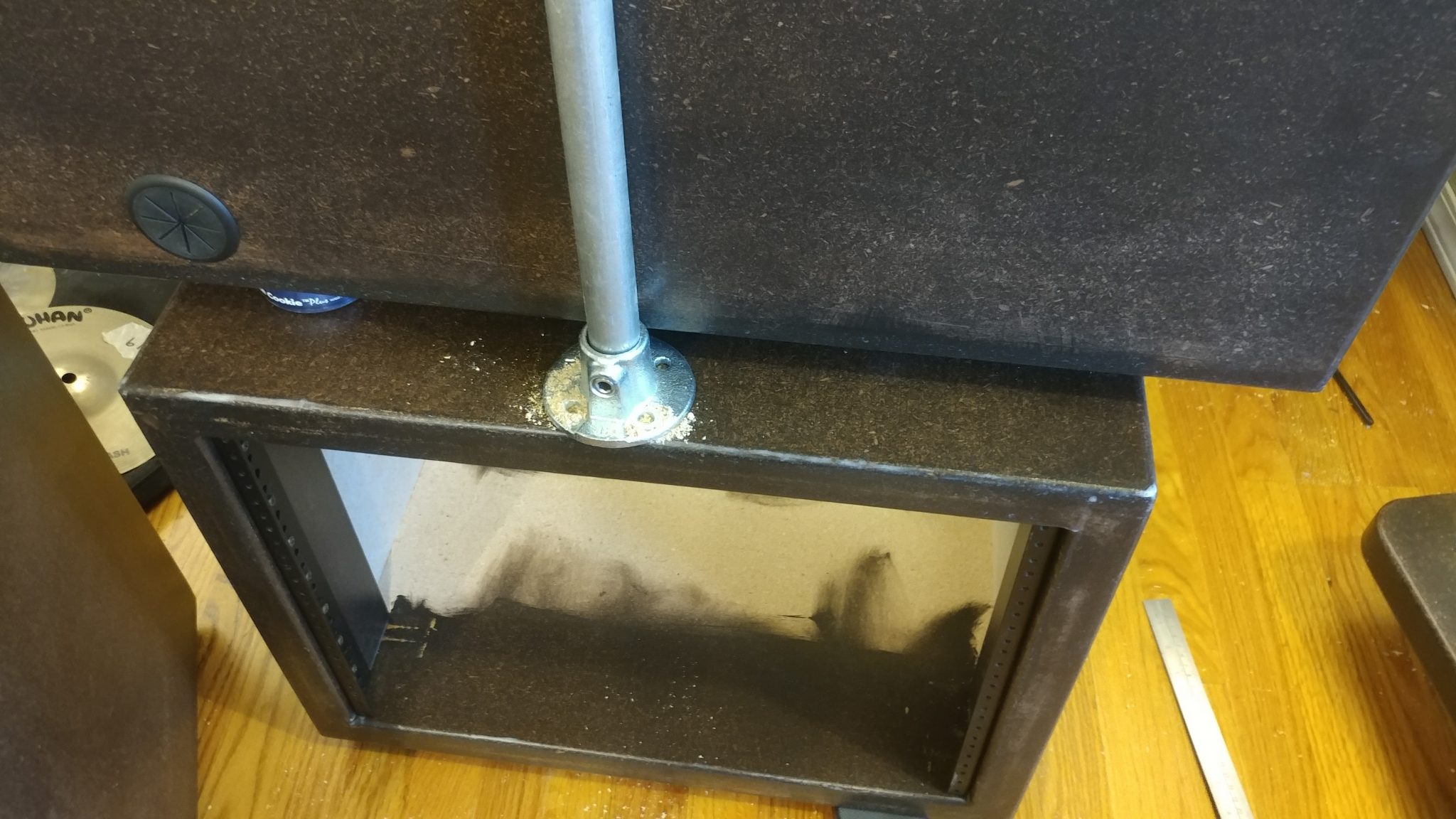
Then it got a bit squirrely.  I took the PC rack off the larger 8-space rack.  Then I turned the 8-space rack upside down and set the PC rack back on top and installed the temporary leg rails.   I then used another temporary leg rail and two of the leg mounting brackets and one of the floor flanges, which will be installed on the underside of each of the 8-space racks.

This is how the flange looked after it was installed.

6. Installing the legs

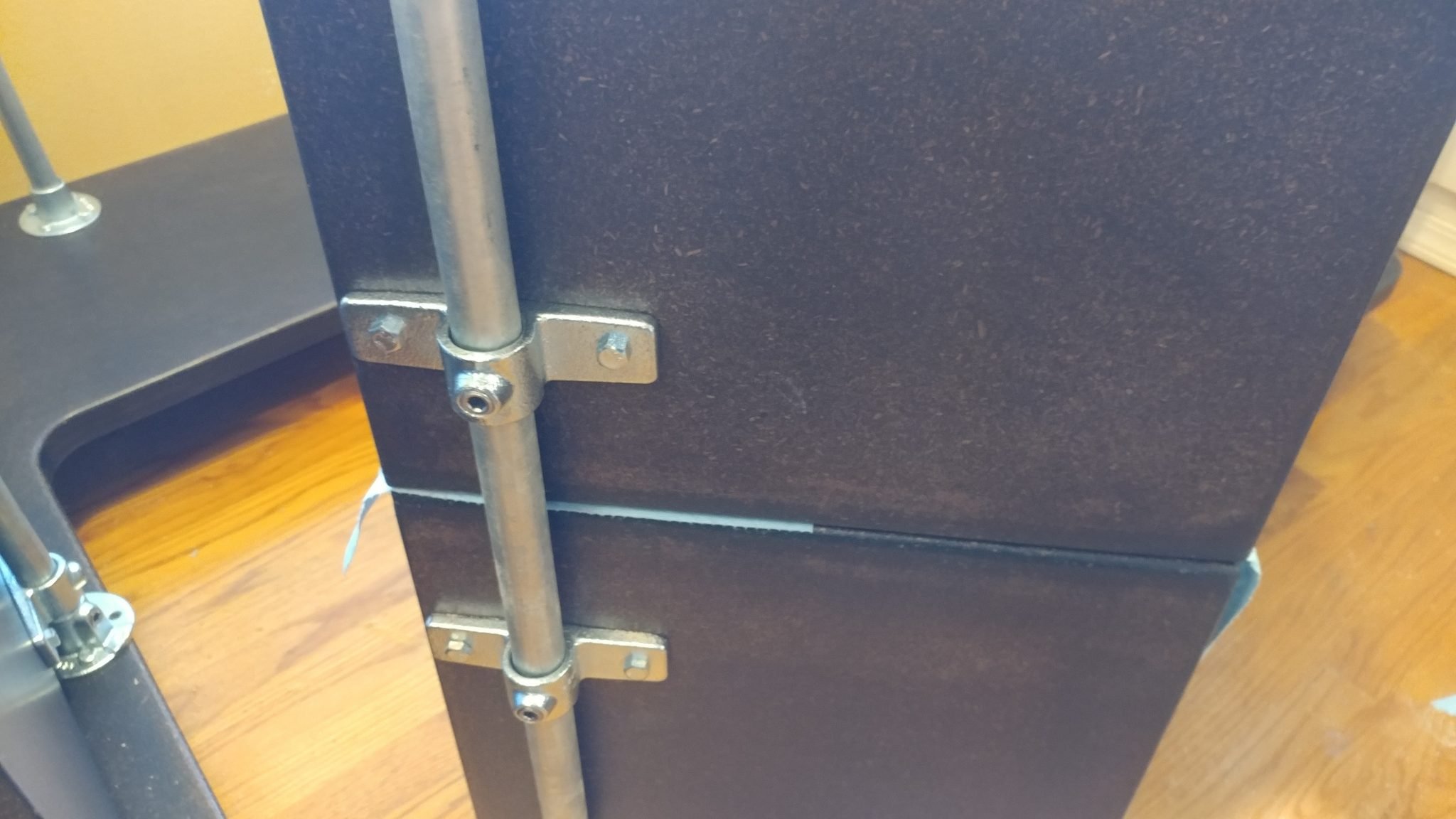
I cut smaller tubes for the legs that will be installed in the flanges.  Then, to get an idea of how it will all look, I put it all together on the workbench, complete with the flanges that will be attached to the desk base.

Attaching the Legs to the Base

New I get to take it all out of my shop and move it into the studio.  I could almost sense my shop breathing a congested sigh of relief as I moved the components out.  Don’t worry, little shop.  I’ll fill you with tripping hazards again soon.

1. Positioning the right-side rack.

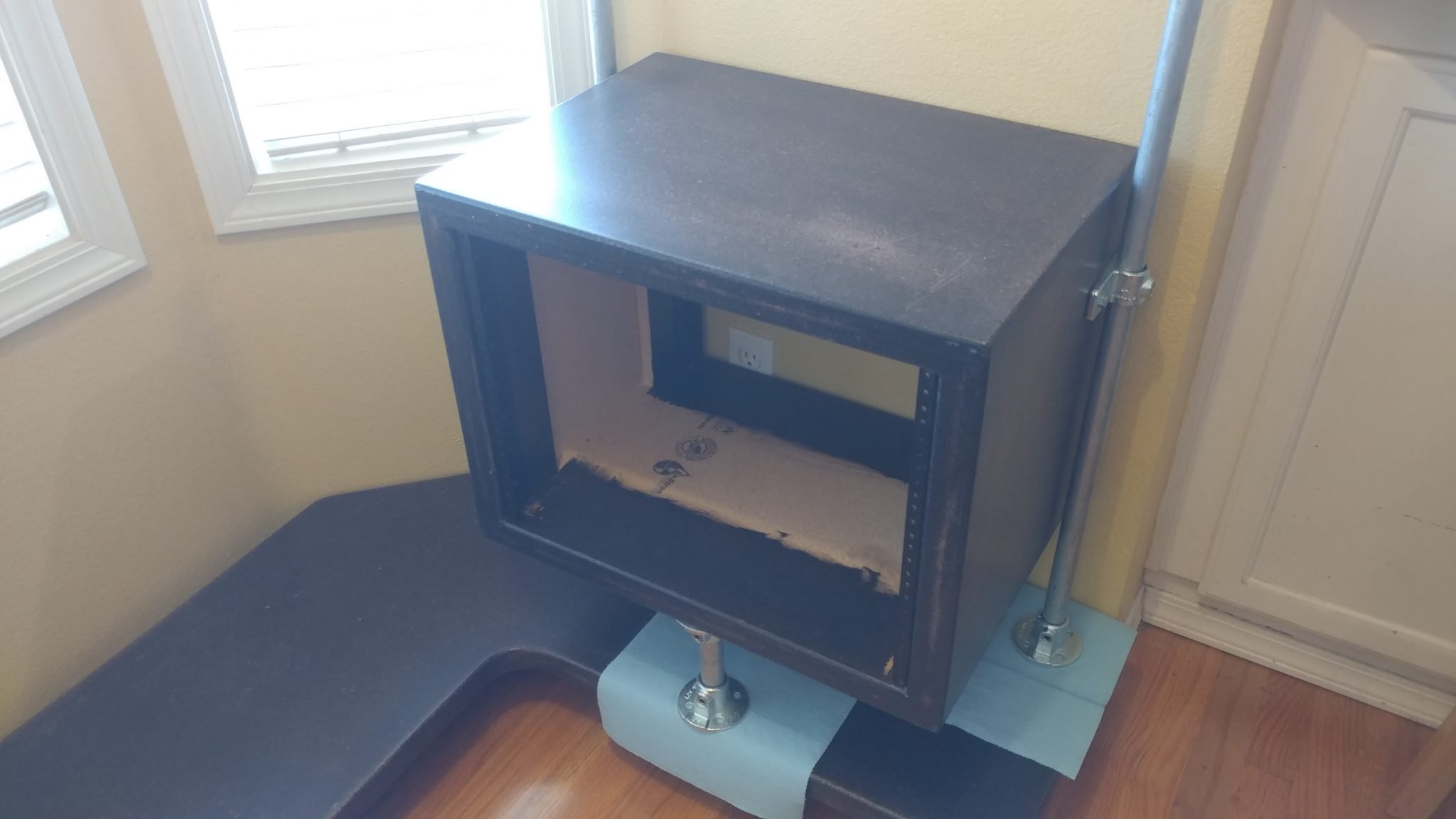
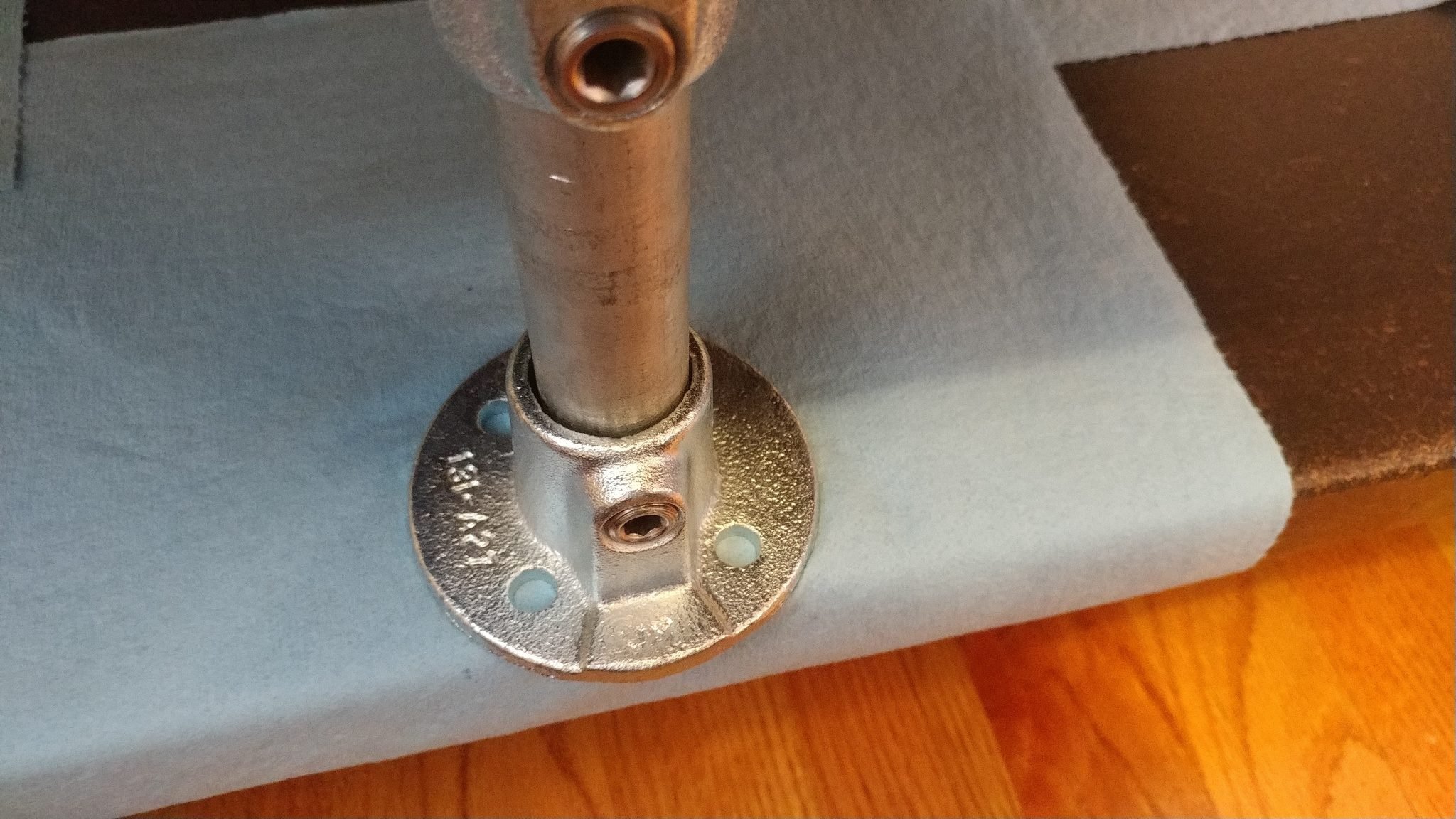
With the legs installed on one of the larger racks, I positioned the legs and flanges in position, using the wall to ensure the outside face of the rack is flush with the outside face of the base.  I set the flanges on blue shop towels to make sure I didn’t scratch the base.

2. Dealing with another screw-up

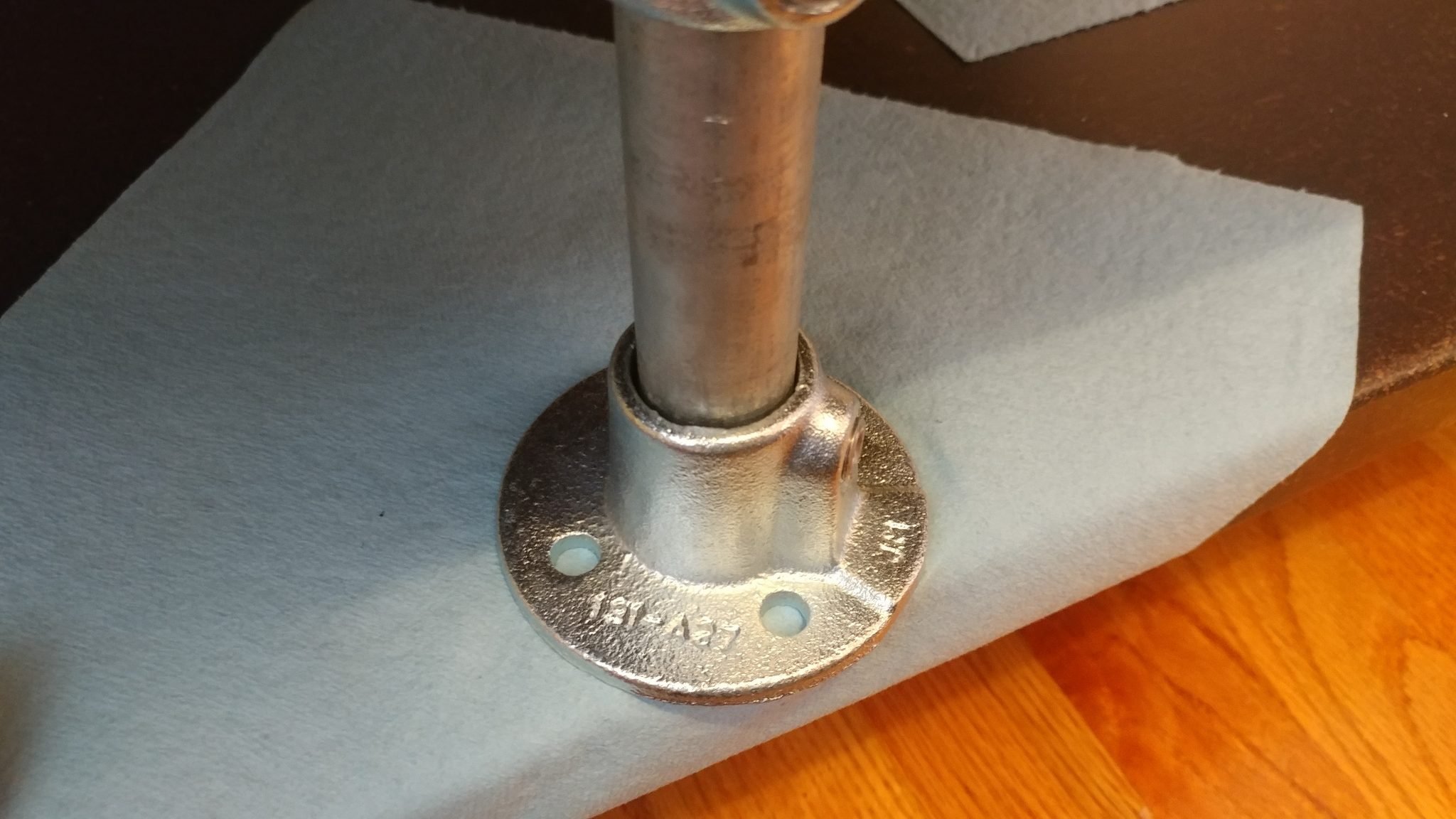
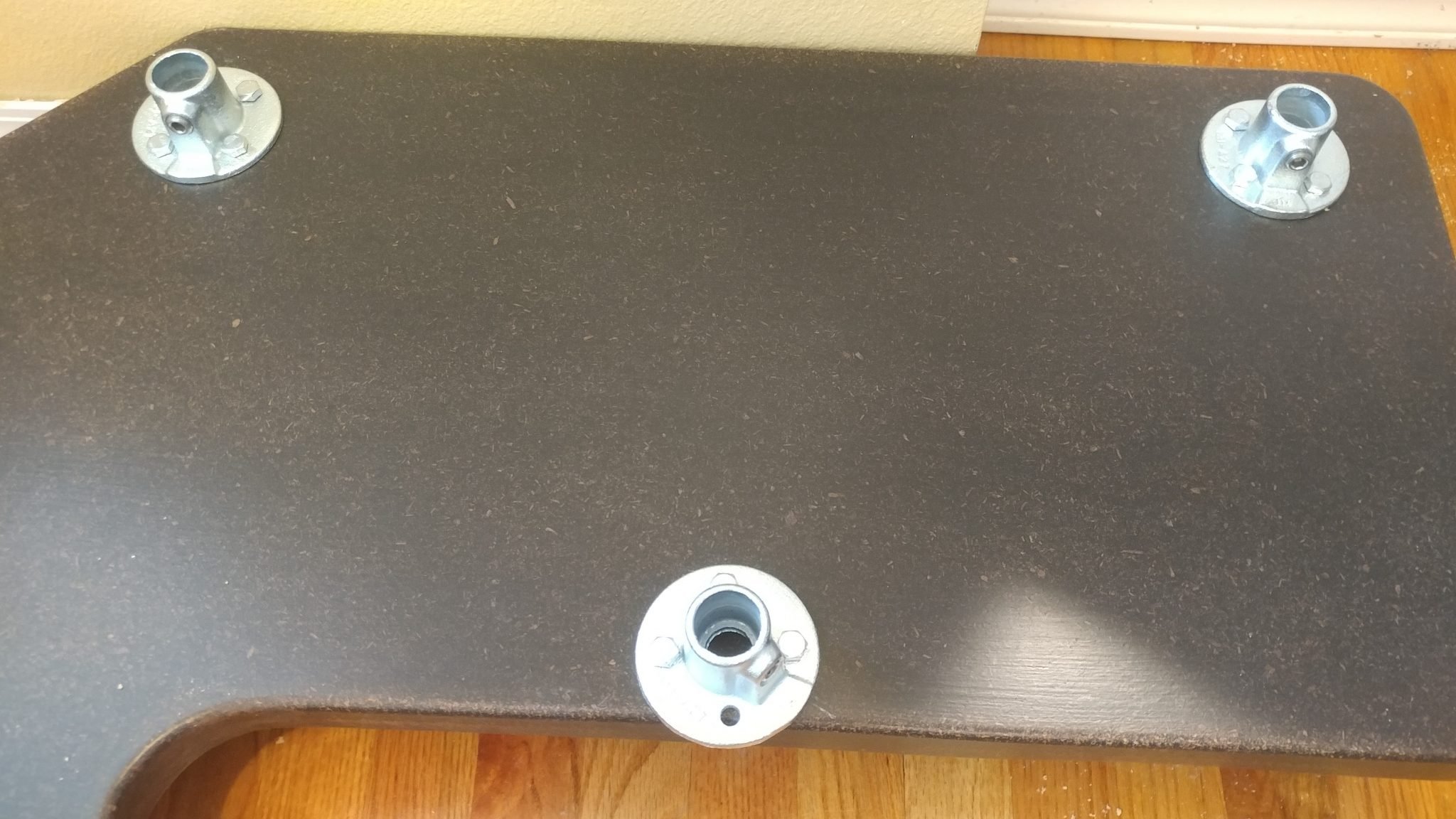
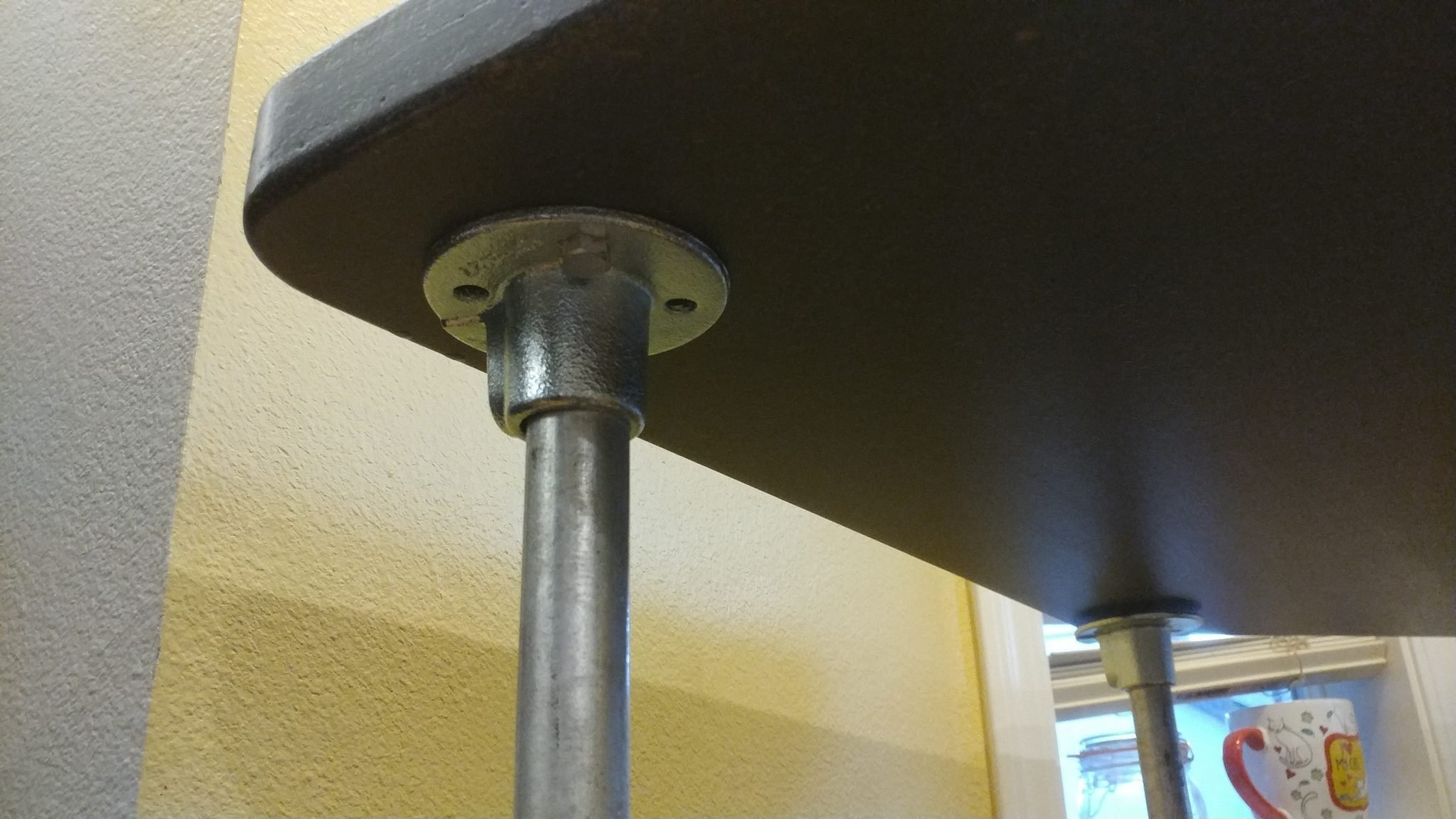
This is another area where I realized that I really screwed up.  As you can see, the flange sticks out past the edge of the base.

I rotated the flange 45-degrees so I could attach it to the base with three bolts rather than just two.

3. Attaching the right-side flanges

All three flanges were attached with 1-1/2″ lag bolts.

4. Attaching the left-side flanges

I performed the same procedure for attaching the flanges on the left side.  To test it out, I installed the PC rack.  It went into place perfectly.

5. Attaching the center flanges

I installed the flanges for the central rack using the rack from the right side.

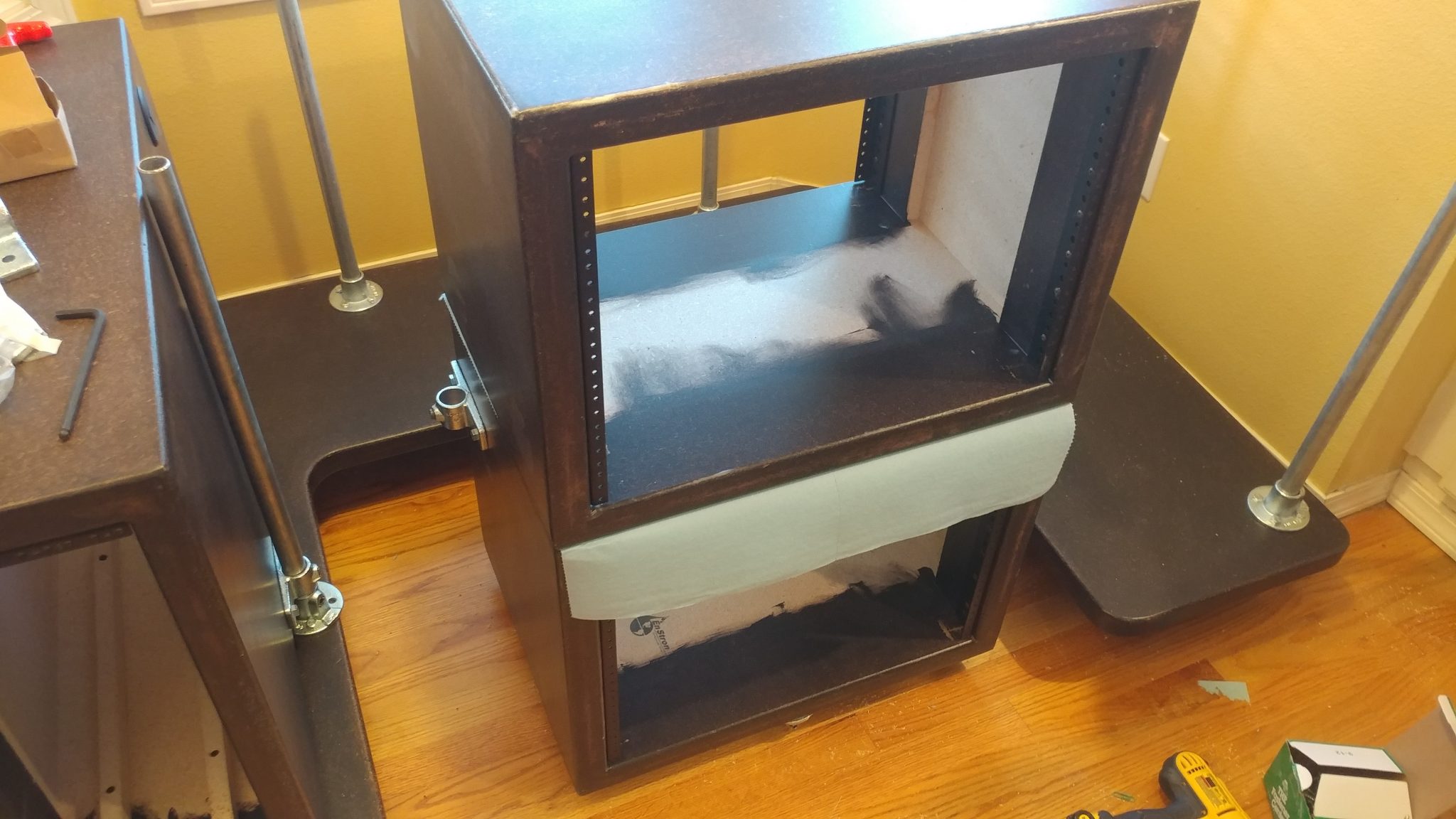
To make sure that the central rack has the side flanges installed correctly, I used the first 8-space rack to position them by removing that rack from the desk and setting the second rack upside-down on top of it.

6. Attaching the side flanges for the second 8-space rack

I inserted the leg rails in the lower rack and then attached the side flanges in place.  I positioned them 3-1/2″ from the lower edge.

7. Attaching the floor flange on the second 8-space rack

To install the central flange on the underside of the second rack, I set it upside-down on the floor and used the PC rack to position the flange just like I did with the other 8-space rack.

8. Installing the legs and upper flanges

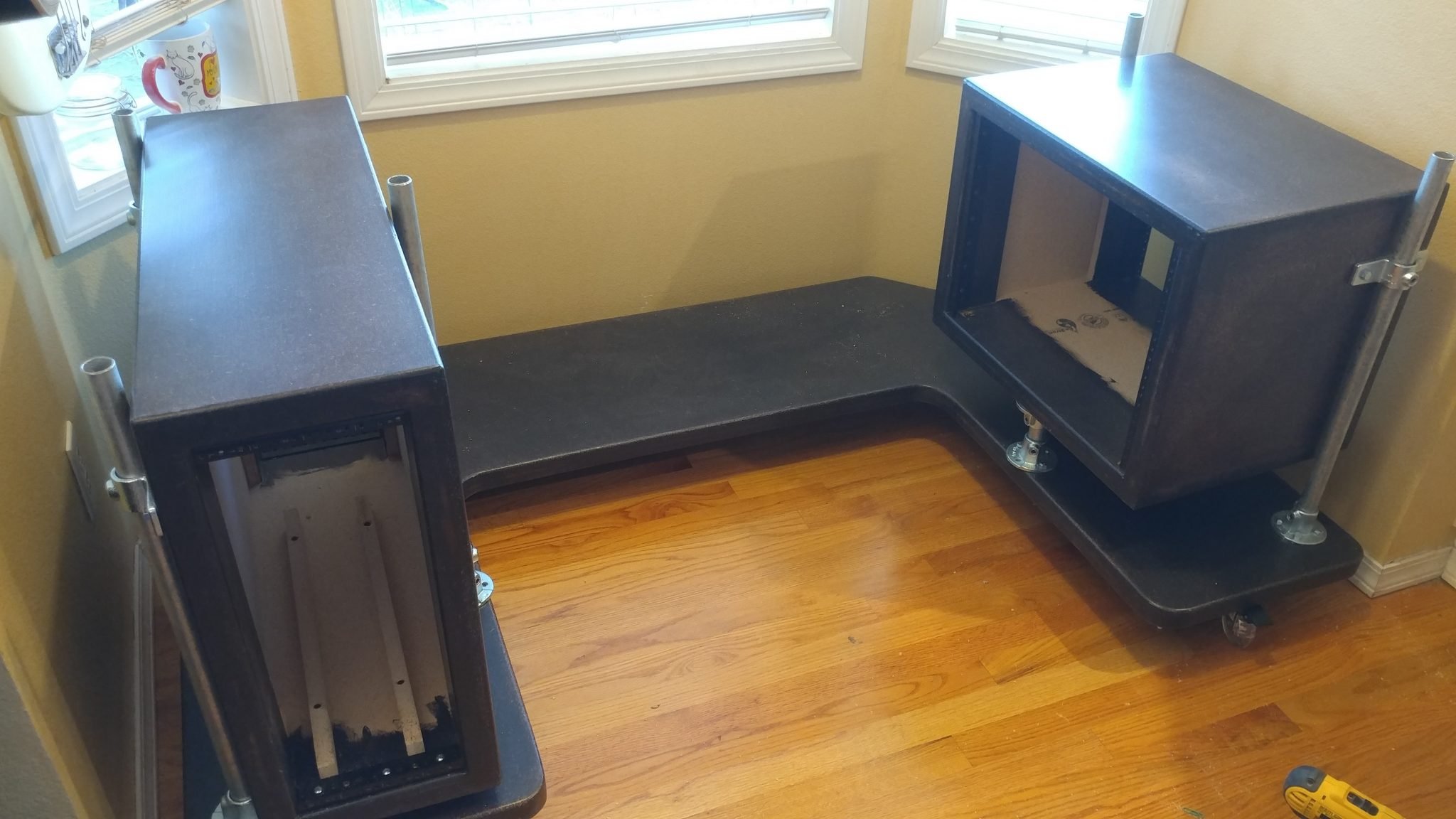
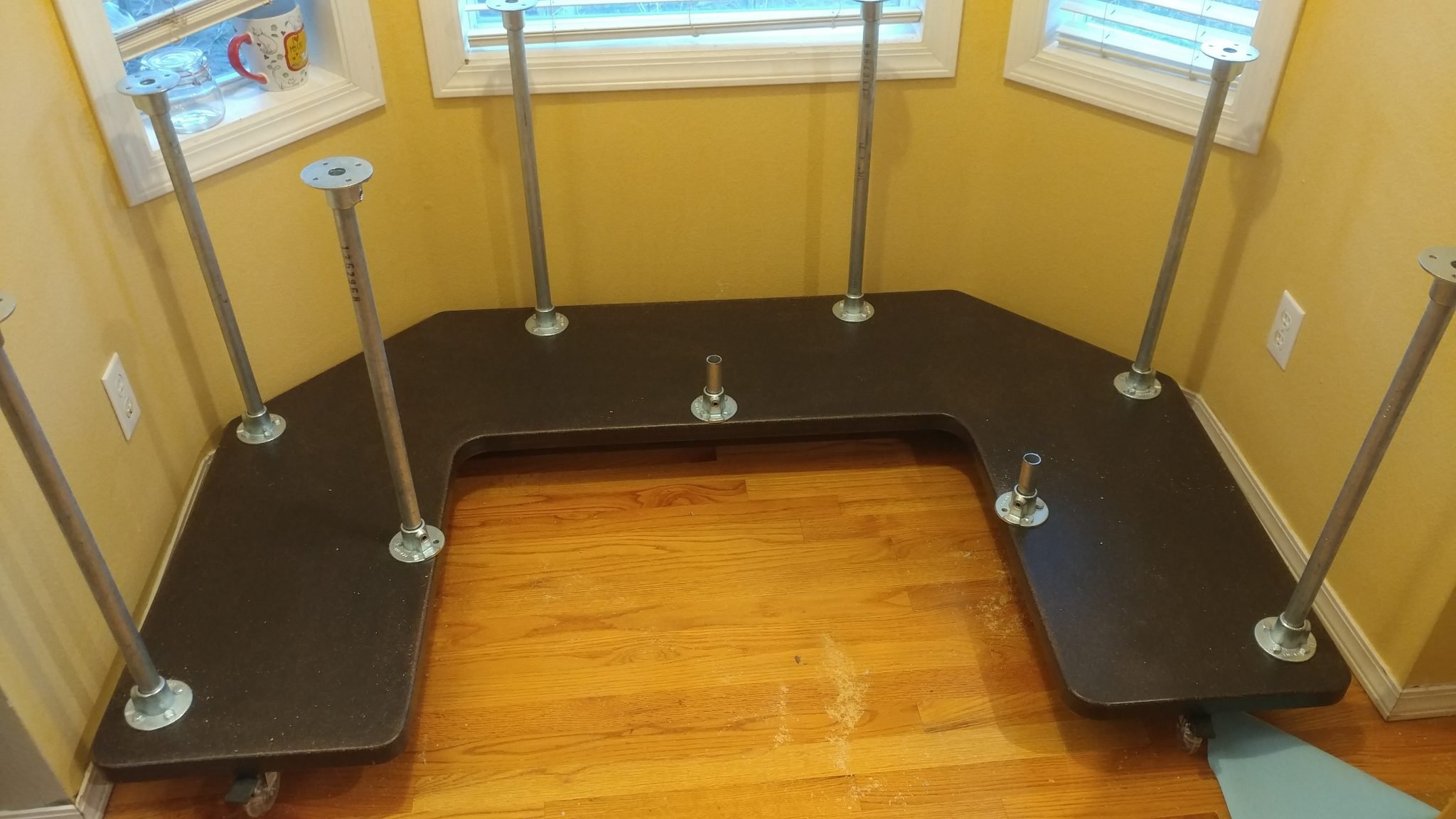
Once I was done with the racks, I set them aside and installed each of the legs and the top flanges.  I left the racks off because I need to attach the flanges to the underside of the desk top and the racks will just be in my way.

Putting it All Together

The hard work is over and now it’s time to put it all together.  I’m really getting tired of working on this, mainly because of how much space it is taking up in my shop so this is a very welcome moment.

1. Positioning the desk top

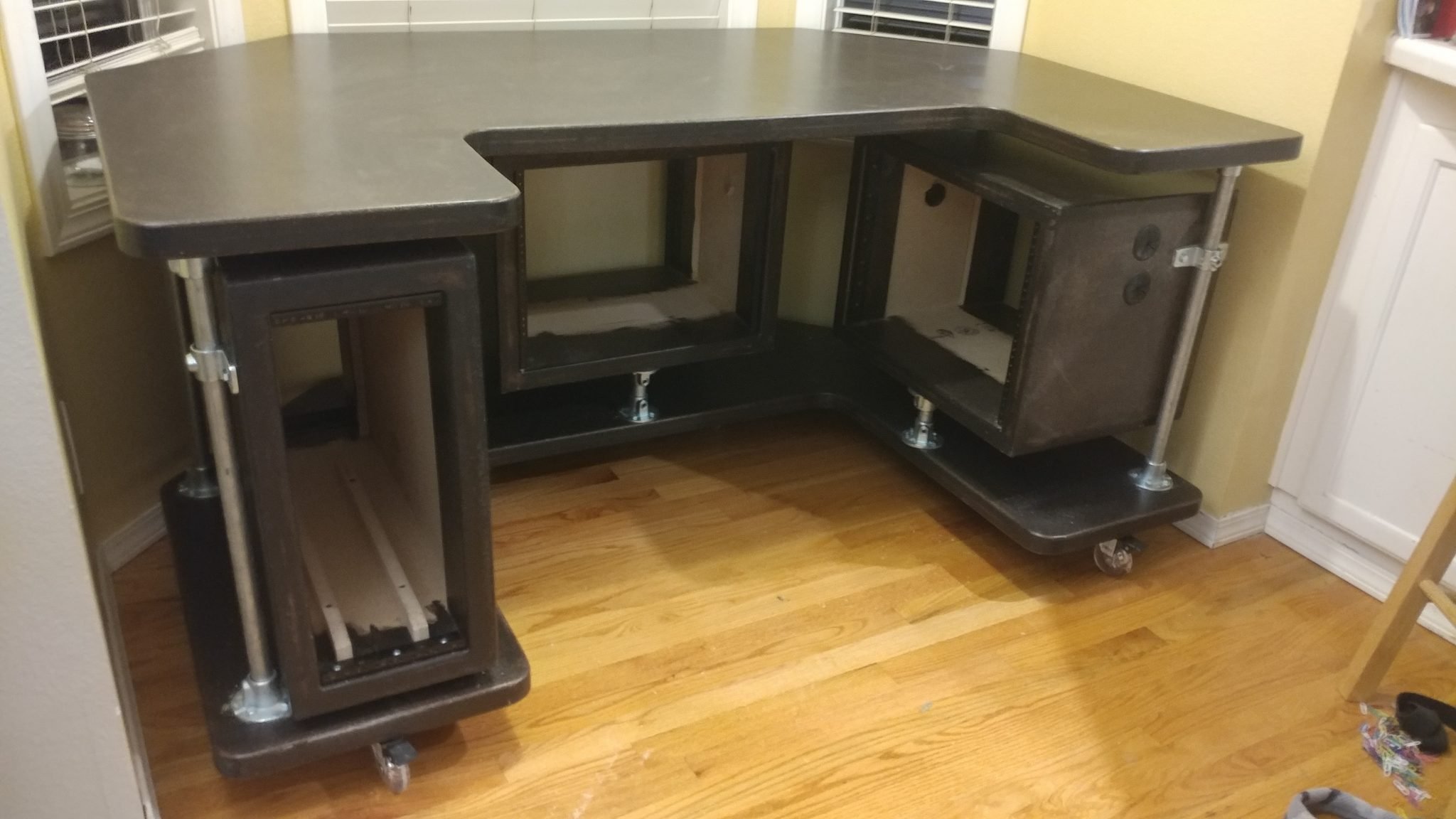
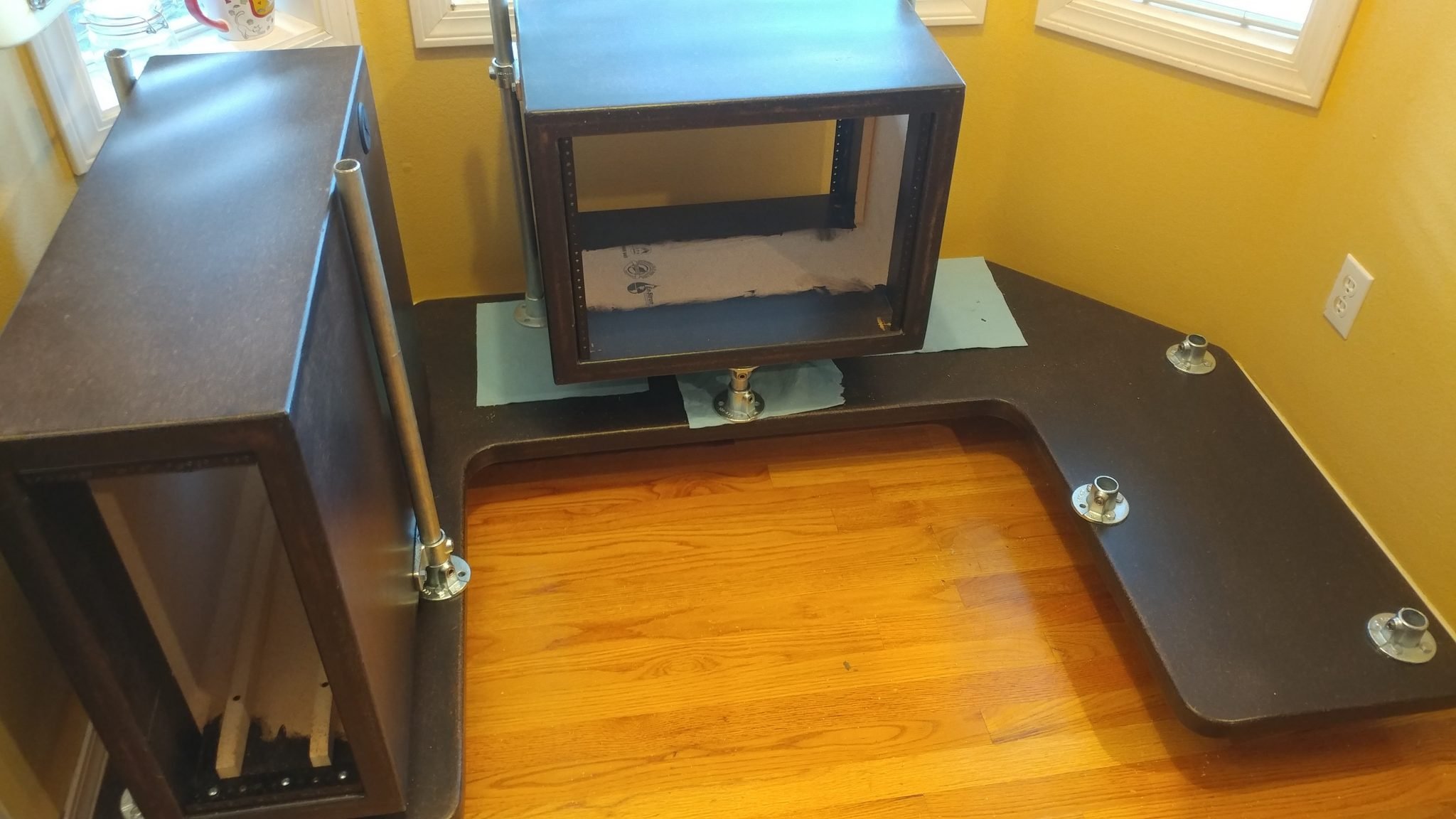
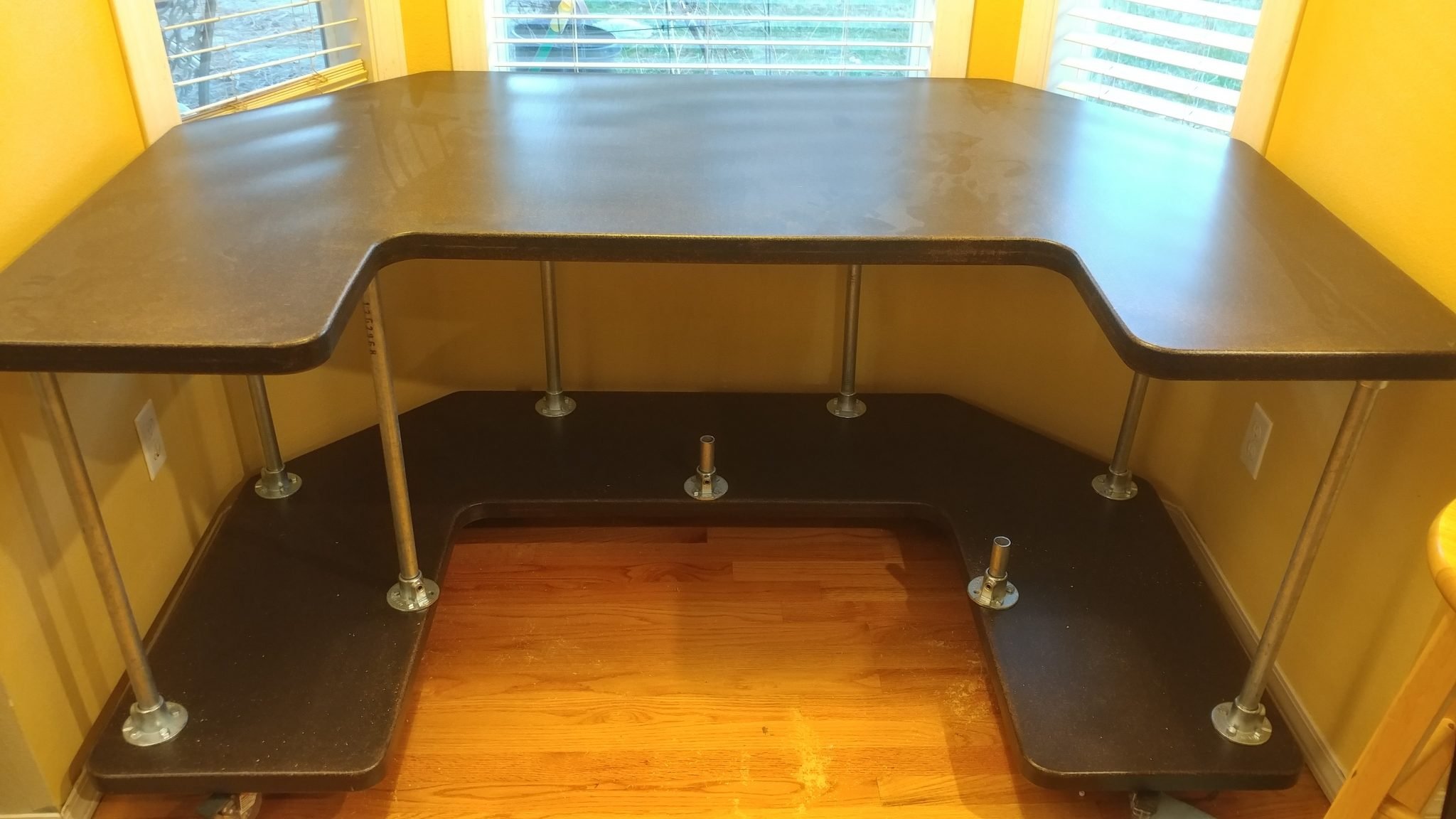
I placed the desk top loosely in place.  It actually started to resemble a desk at this point.

2. Marking the hole locations

From underneath I could see where I needed to drill the holes for the lag bolts.  This is where I almost screwed up.  I realized that there was some play in the flanges and that would cause the legs to tip a bit.  In order to ensure that everything was installed correctly and that the racks would be able to go on squarely, I reinstalled the racks and placed the desktop back on then marked the holes with a silver Sharpie, then rook the top and the racks back off, put the top back on and lined up the holes, then drilled the holes for the lag bolts and attached the flanges.  These parts are very heavy and this was a LOT easier said than done.  As a result, I was too flustered to take photos of that agonizing process.

3. Installing the racks

Once the flanges were attached, I removed the top and reinstalled the racks.

4. Attaching the desk top

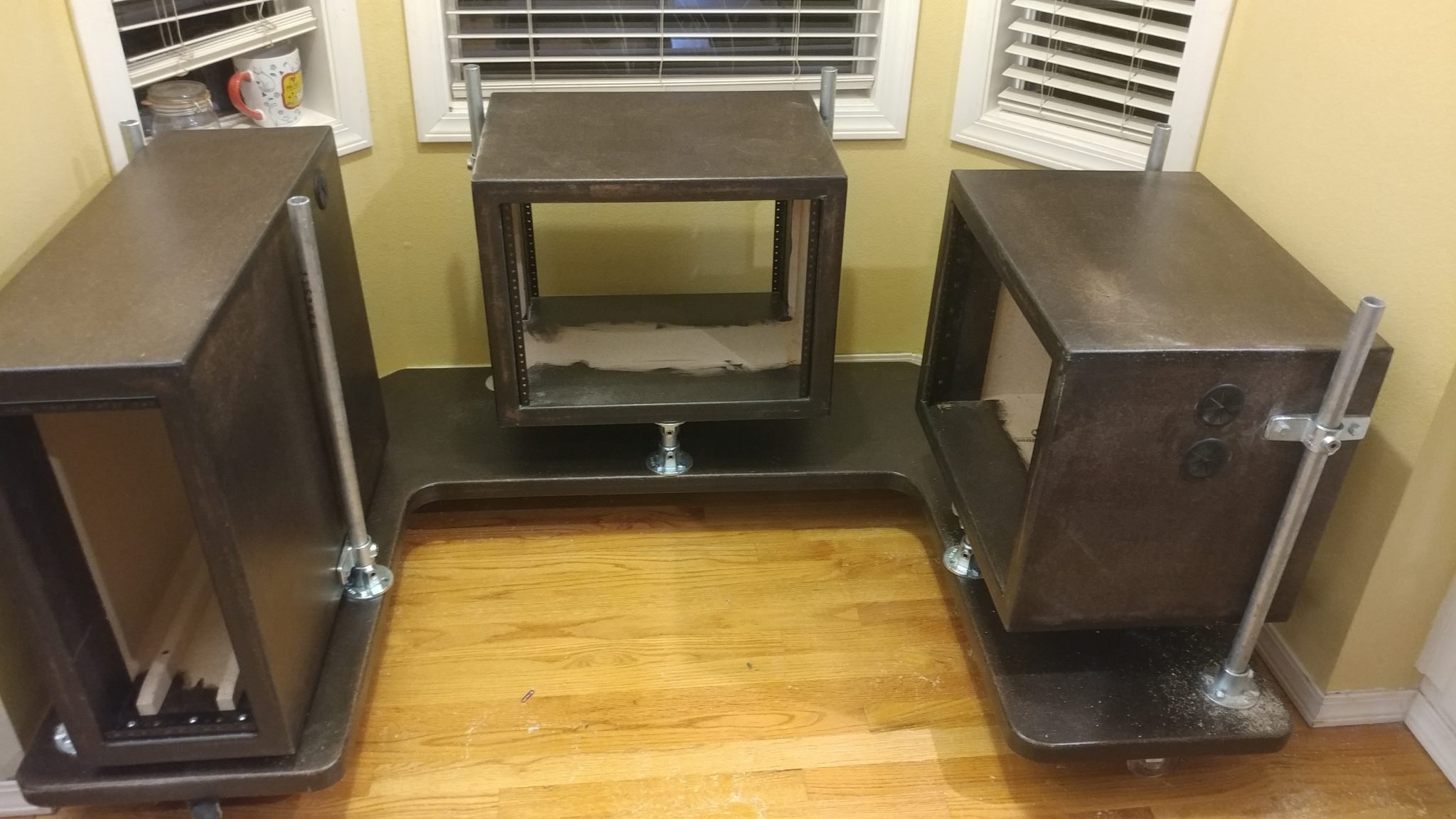
After that I finally put the top back on and the desk assembly was complete.

This concludes part 5.

Closing remarks

This was a pain in the butt.  Each of these pieces weighs a ton and was very difficult to maneuver.

This is also where I ran into a major problem.  The desk is too heavy for the casters.  It’s so heavy that the casters get a flat spot on them if the desk sits in one spot for any length of time.

I don’t know why I missed this but I think it is a good representation of the dangers of keeping your focus on one little detail and not taking in the entire picture.  I was so focused on getting polyurethane wheels that I totally missed the weight issue.

I might try doubling up on the casters.

The next step is to do the electrical.

If you have any suggestions, please leave them in the comments below.  I’d love to see any desk builds you’ve done.  Also, if you haven’t already, please consider signing up for my mailing list so you get e-mail notifications when I post new articles.

Studio Desk – Part 4: Applying the Finish


This is a continuation of Studio Desk – Part 3: Assembling the Racks


Now that the components are built, they’re ready to be stained and finished.

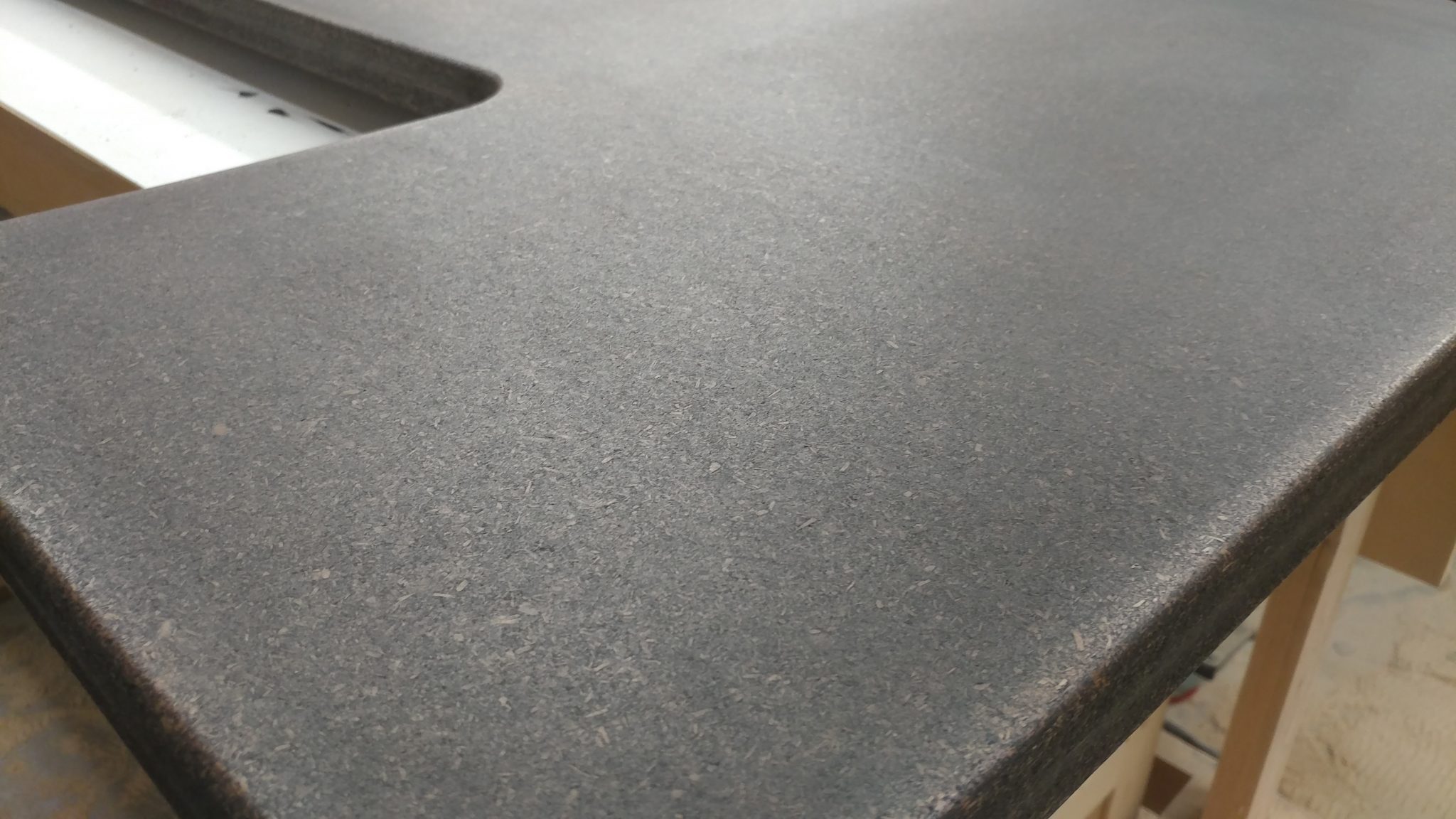
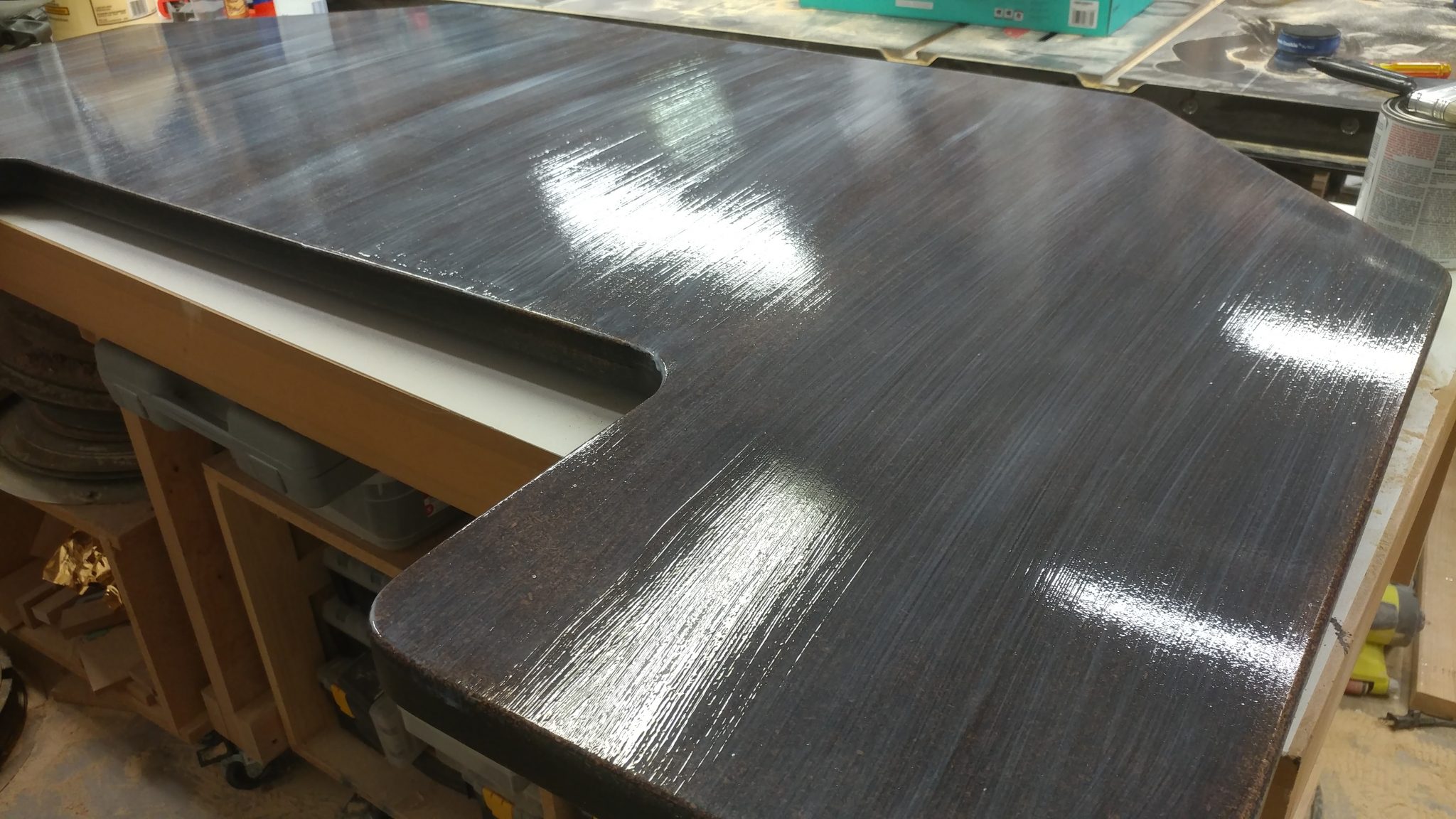
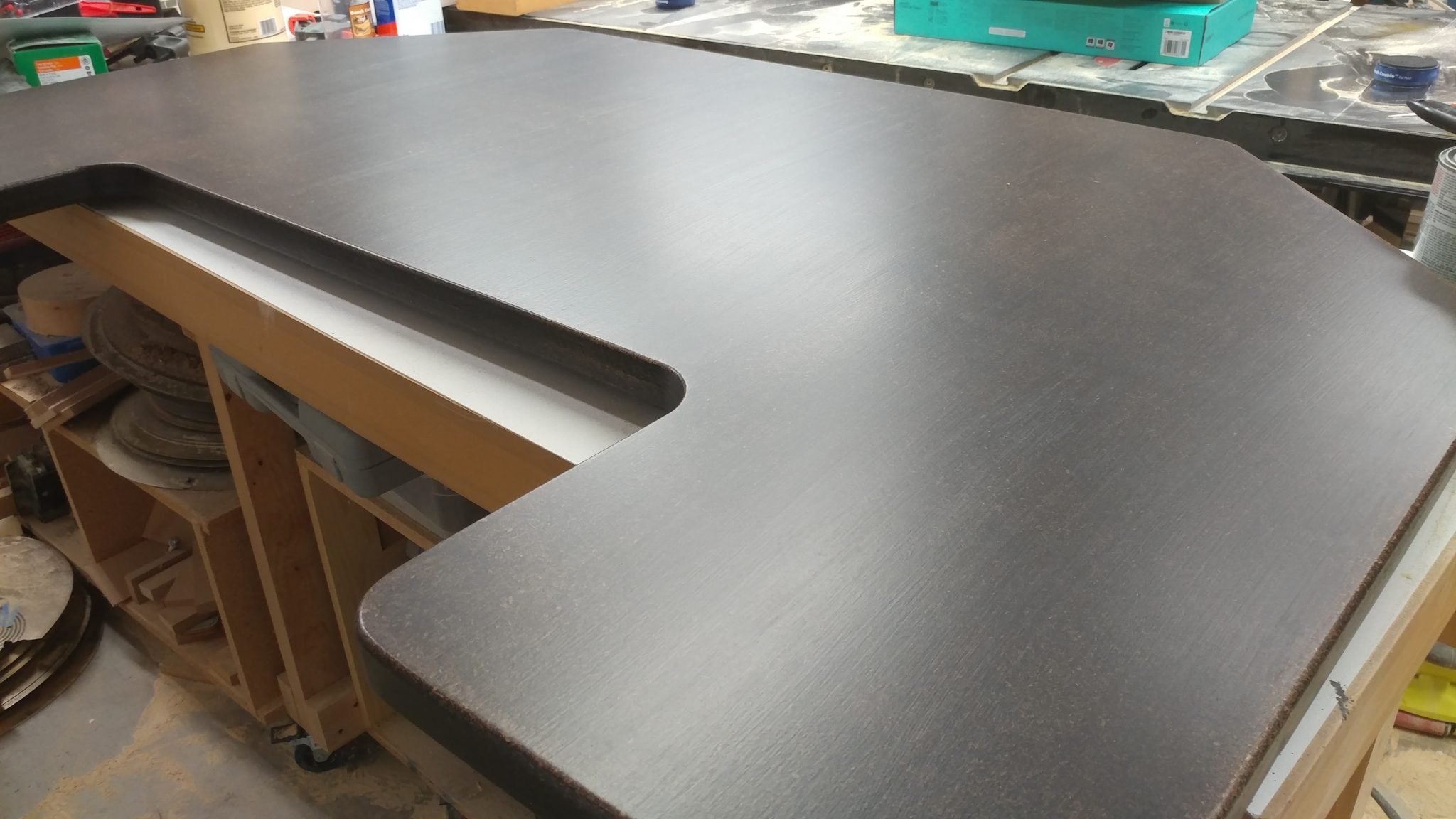
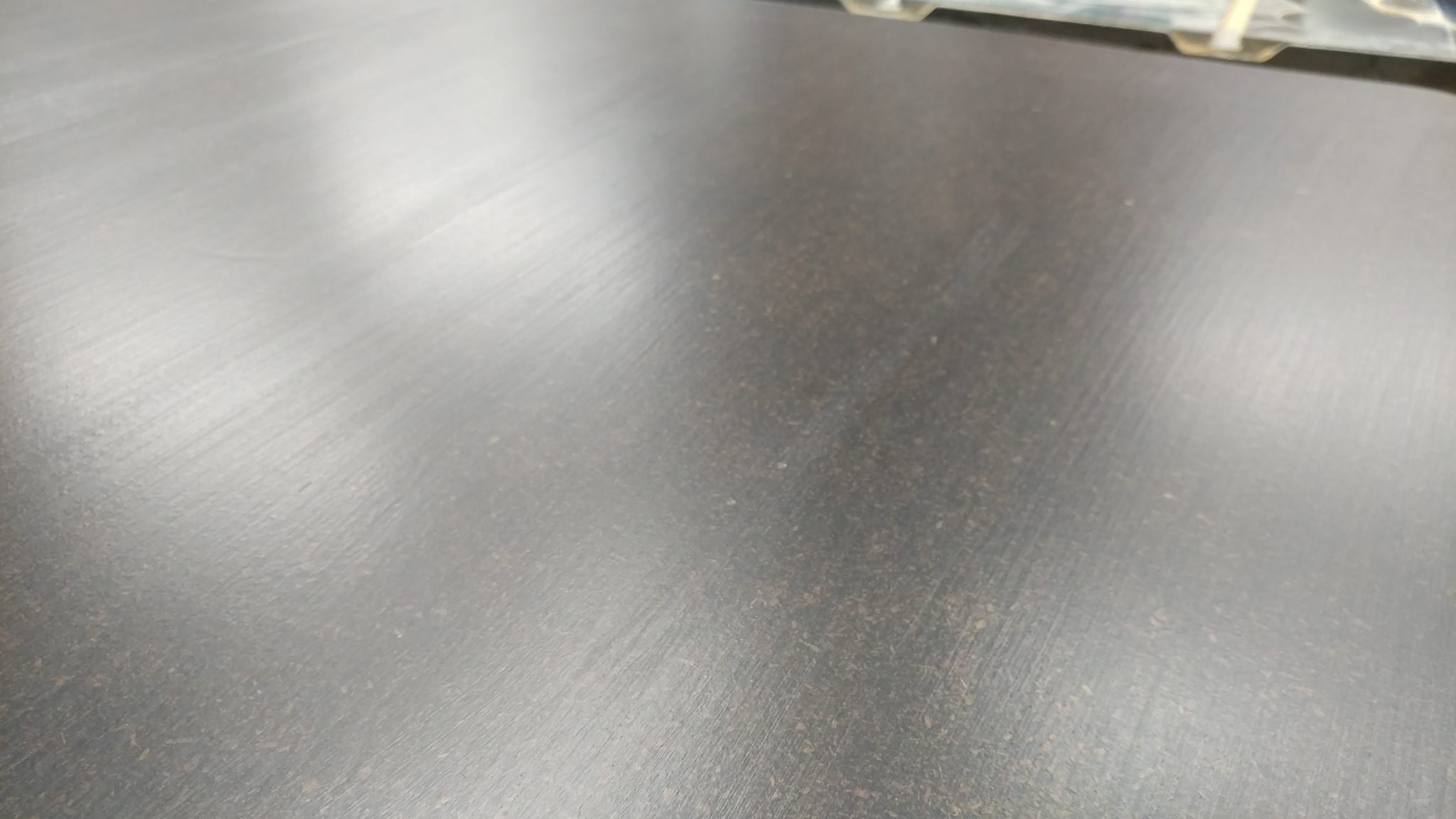
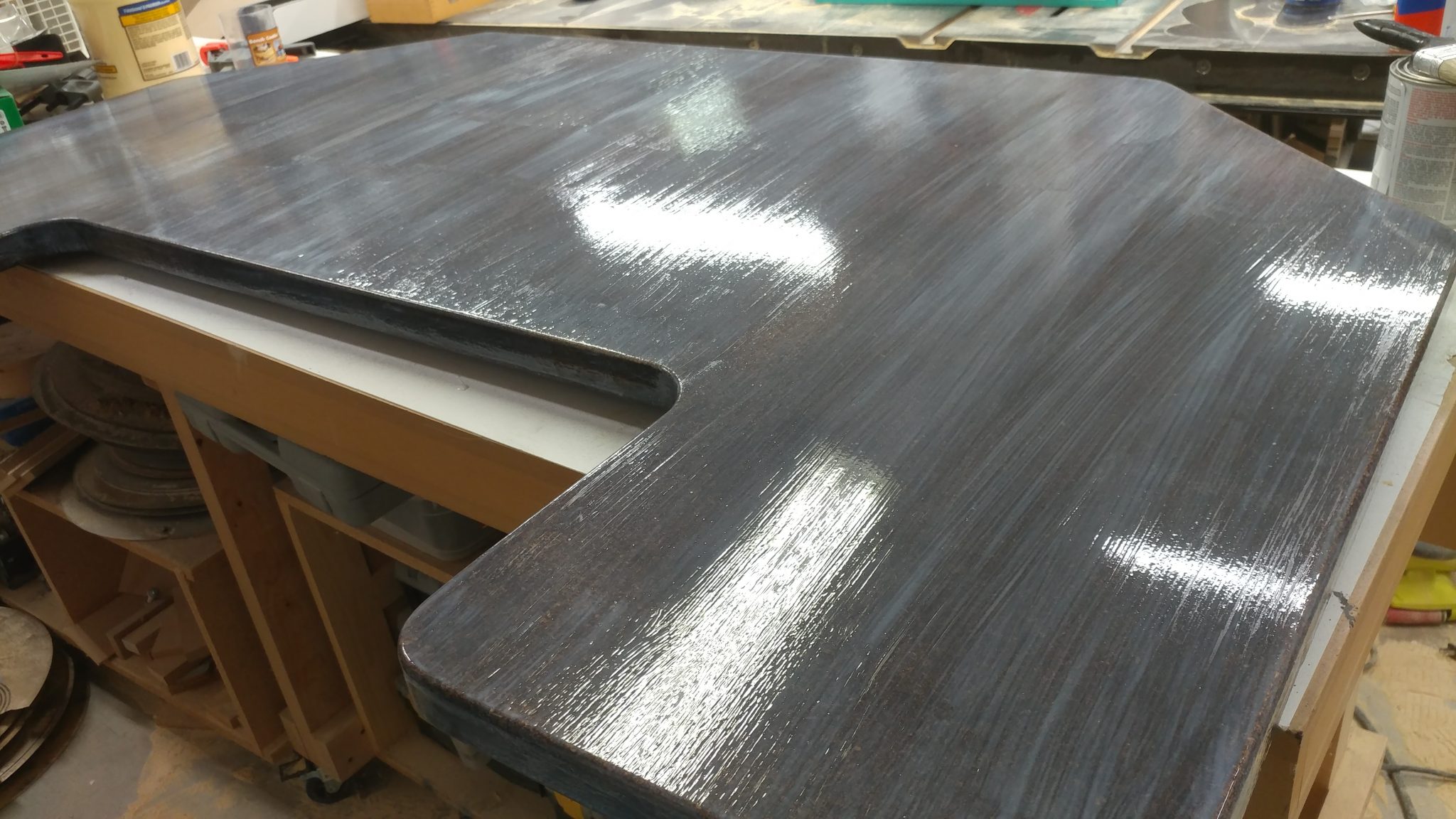
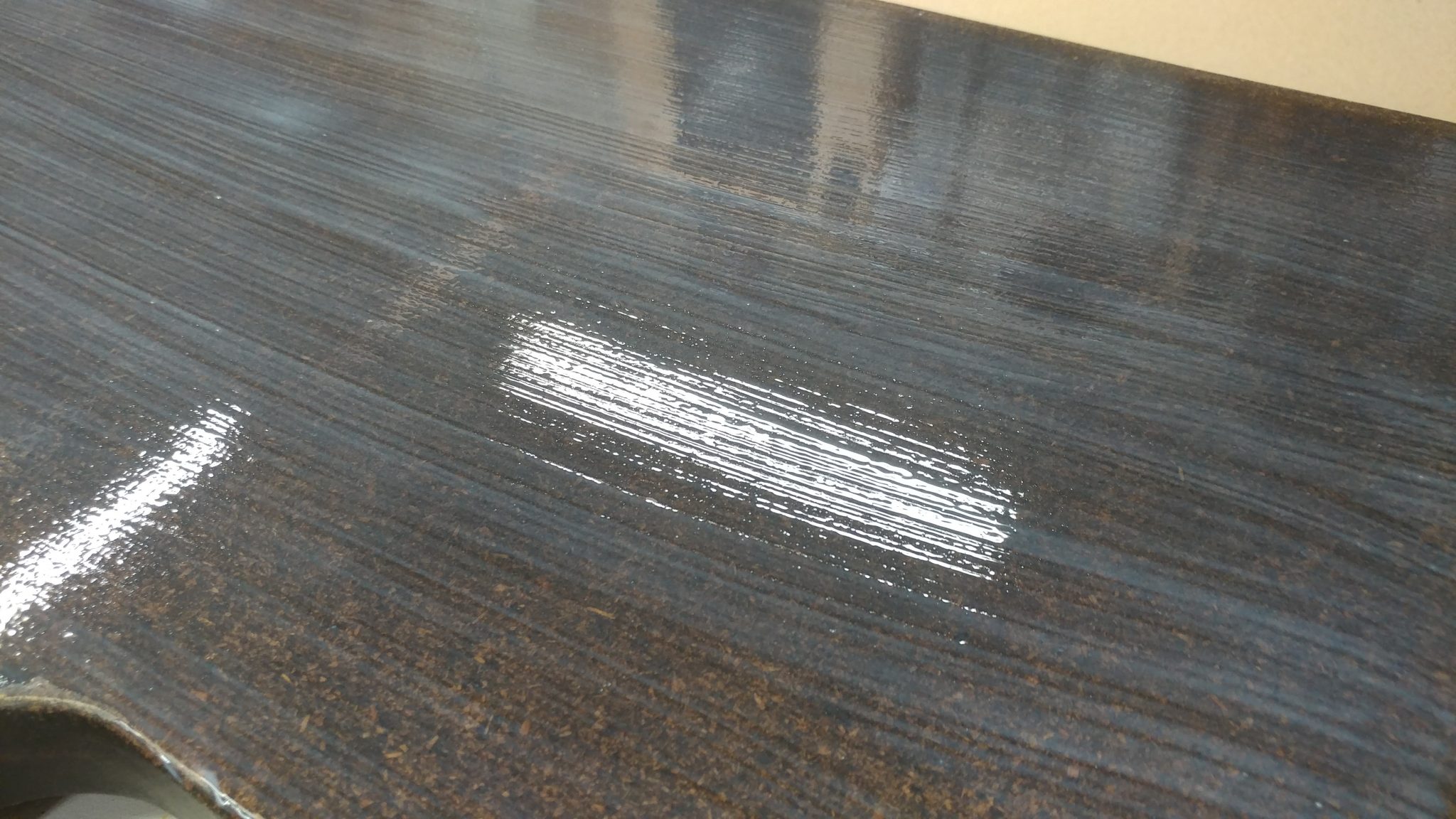
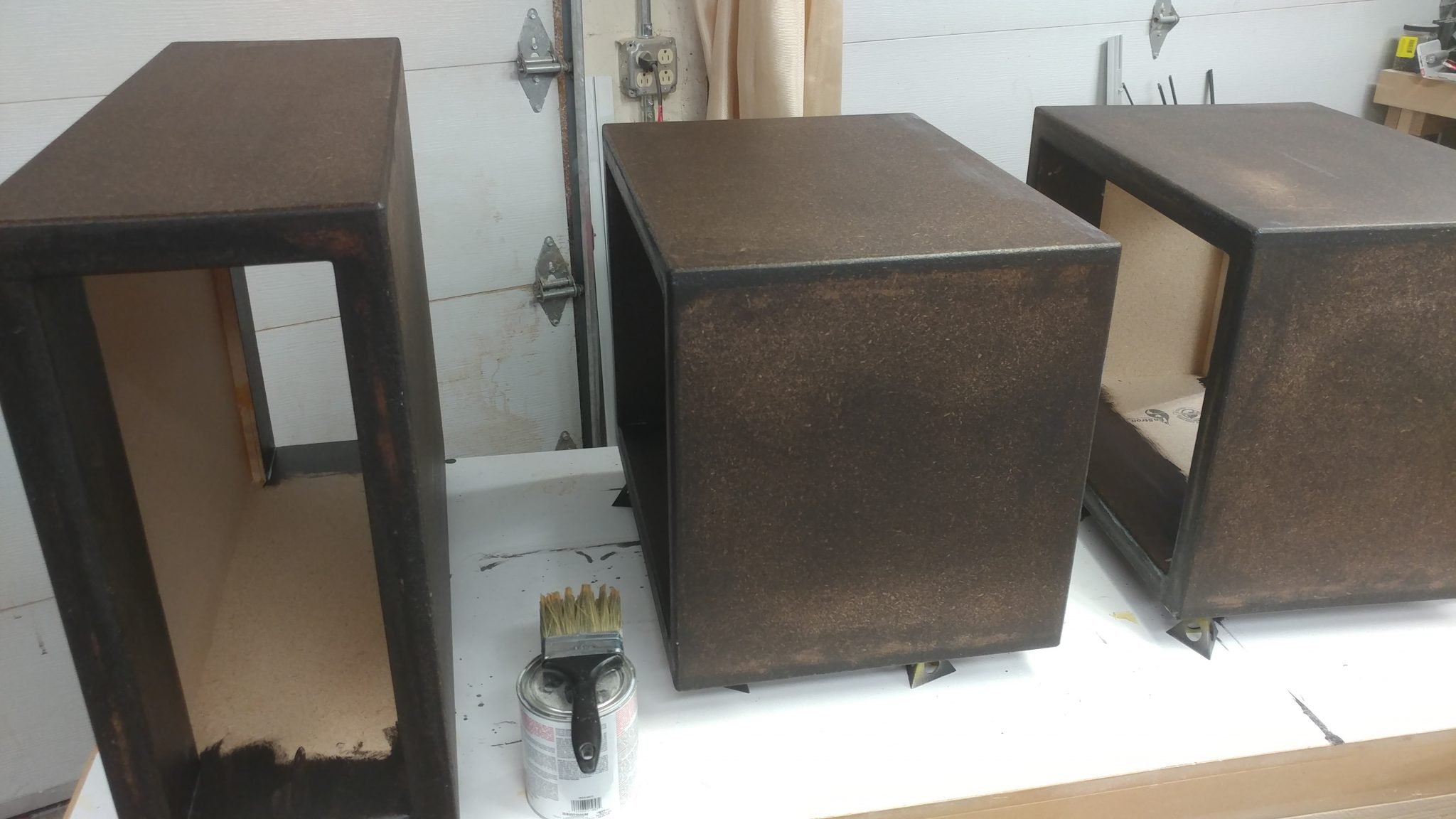
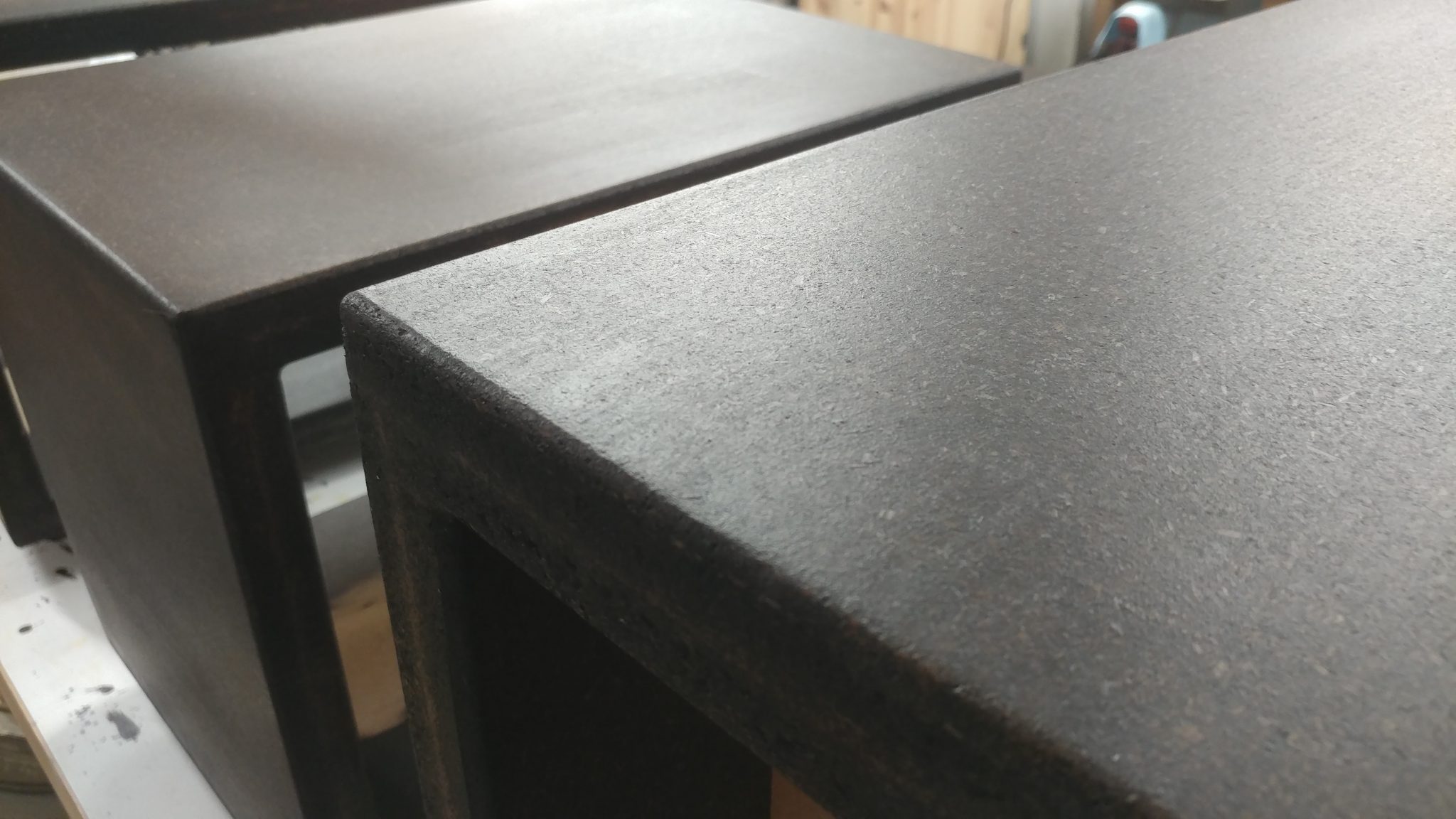
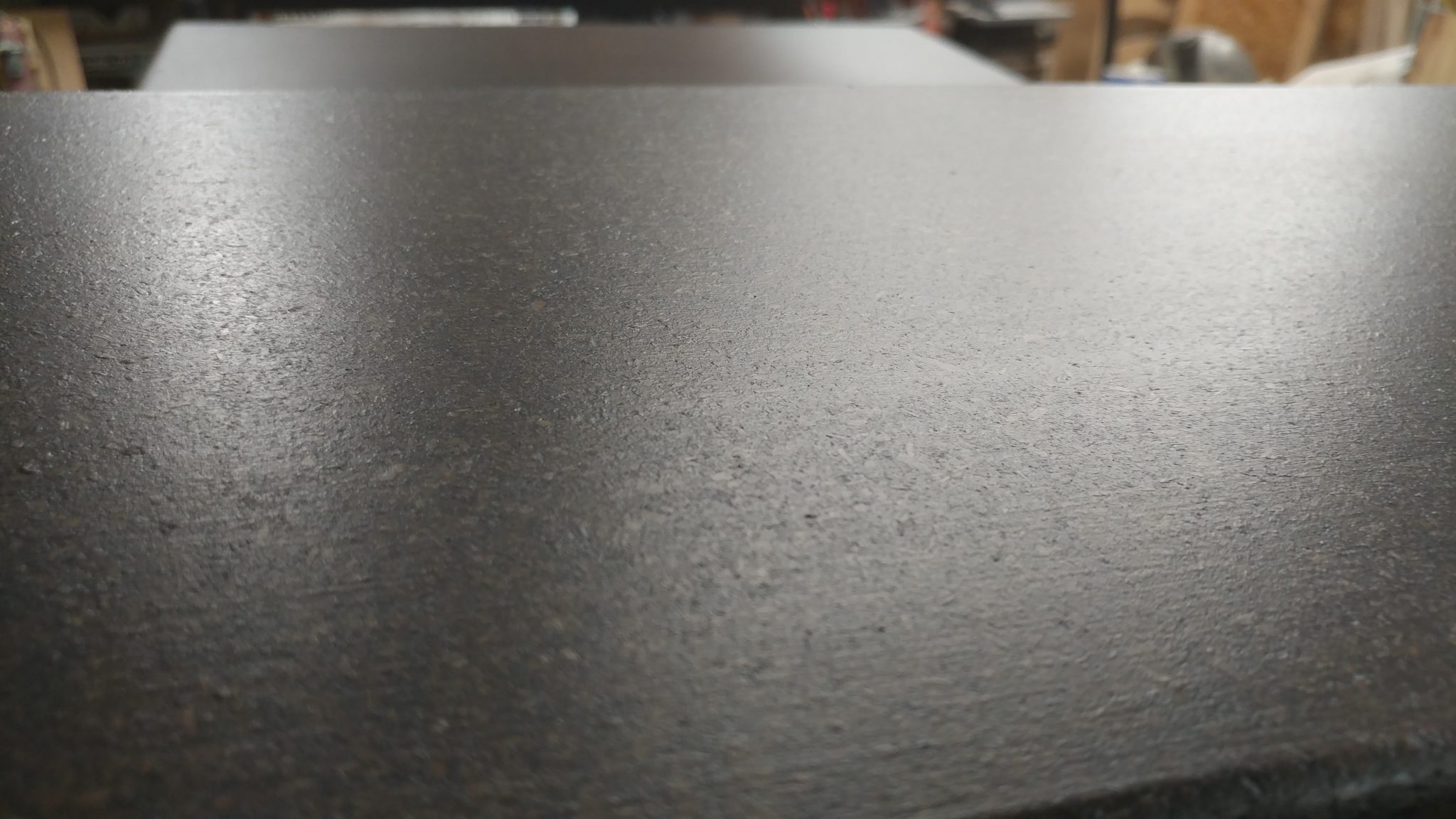
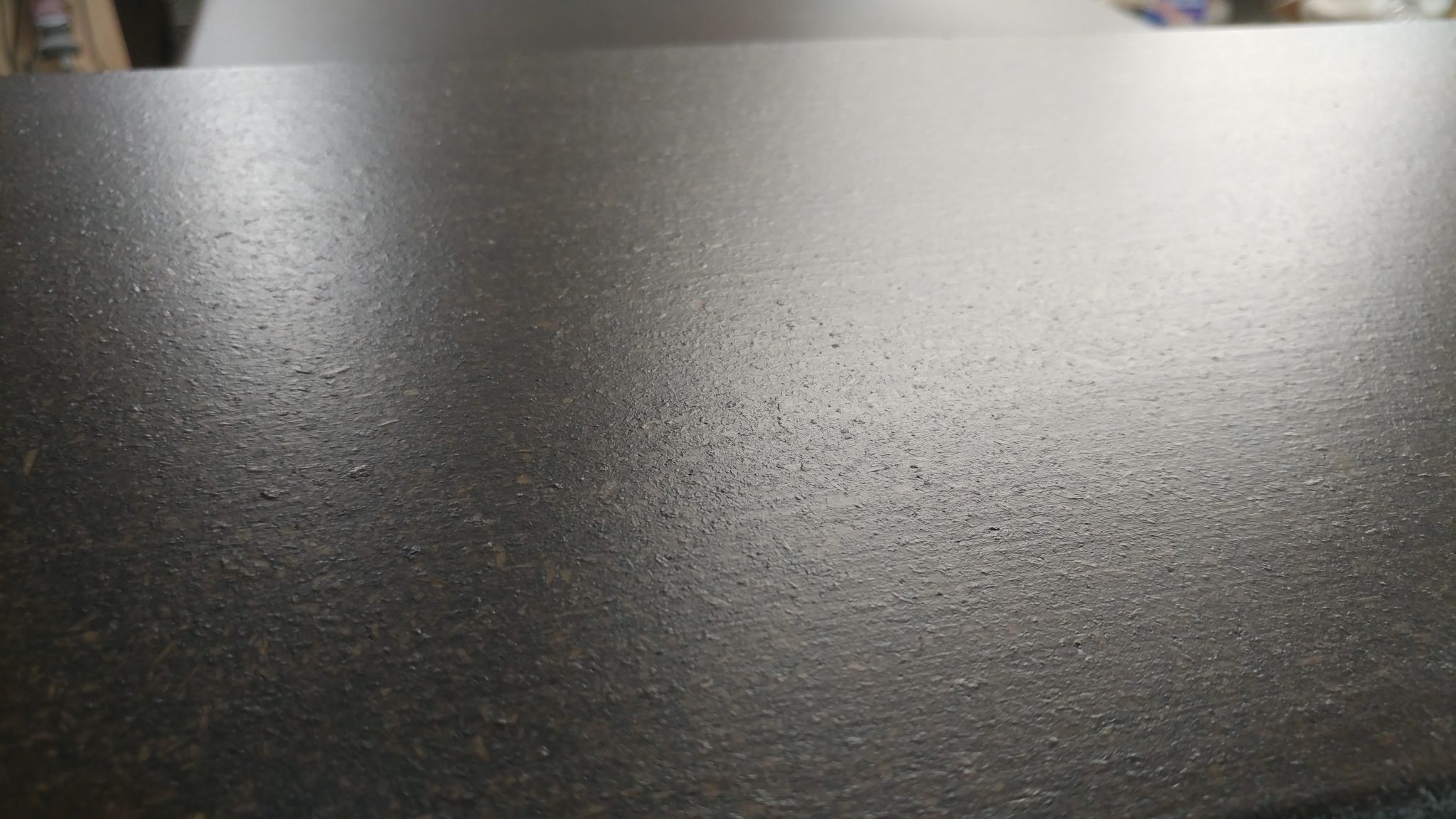
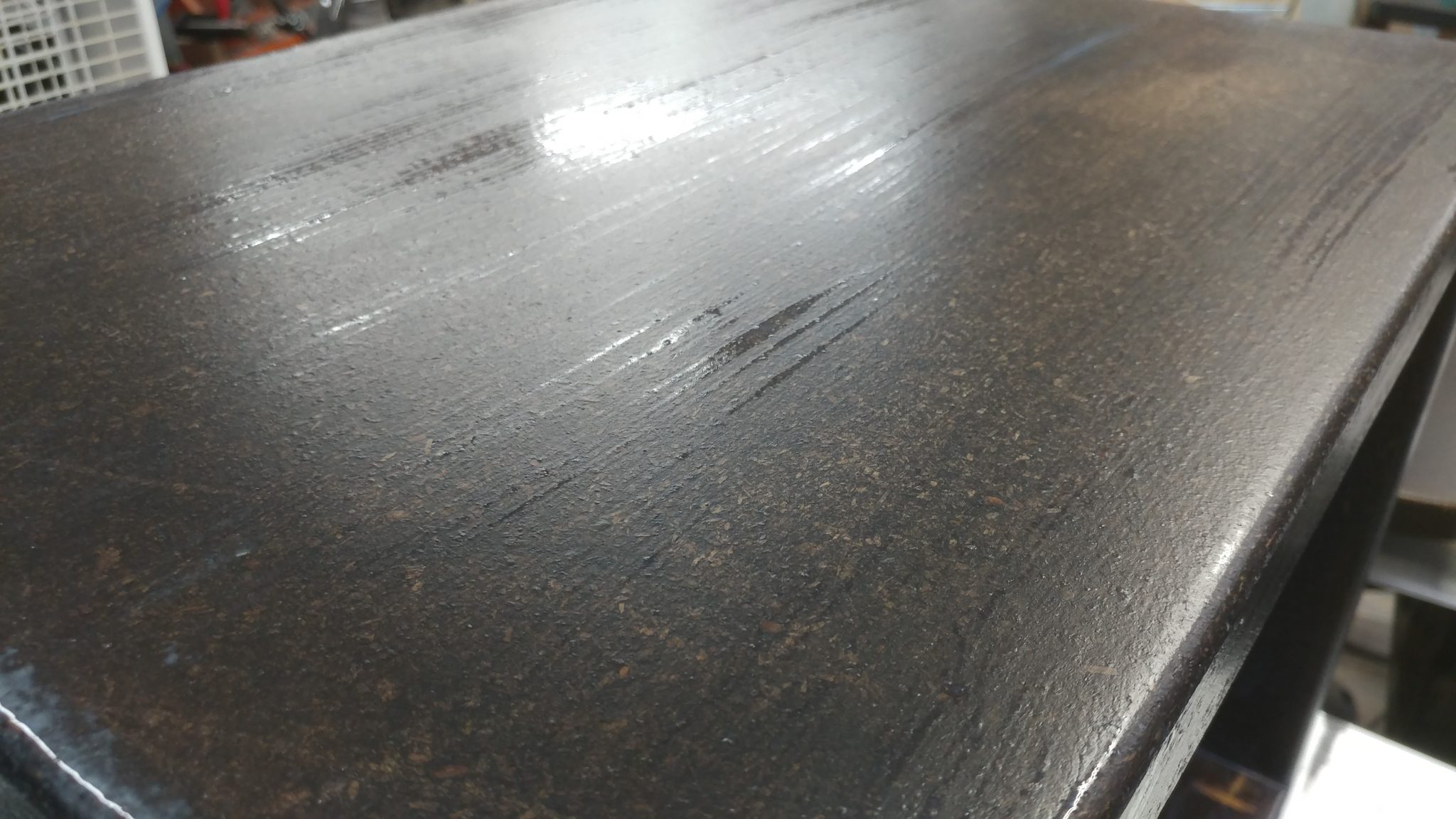
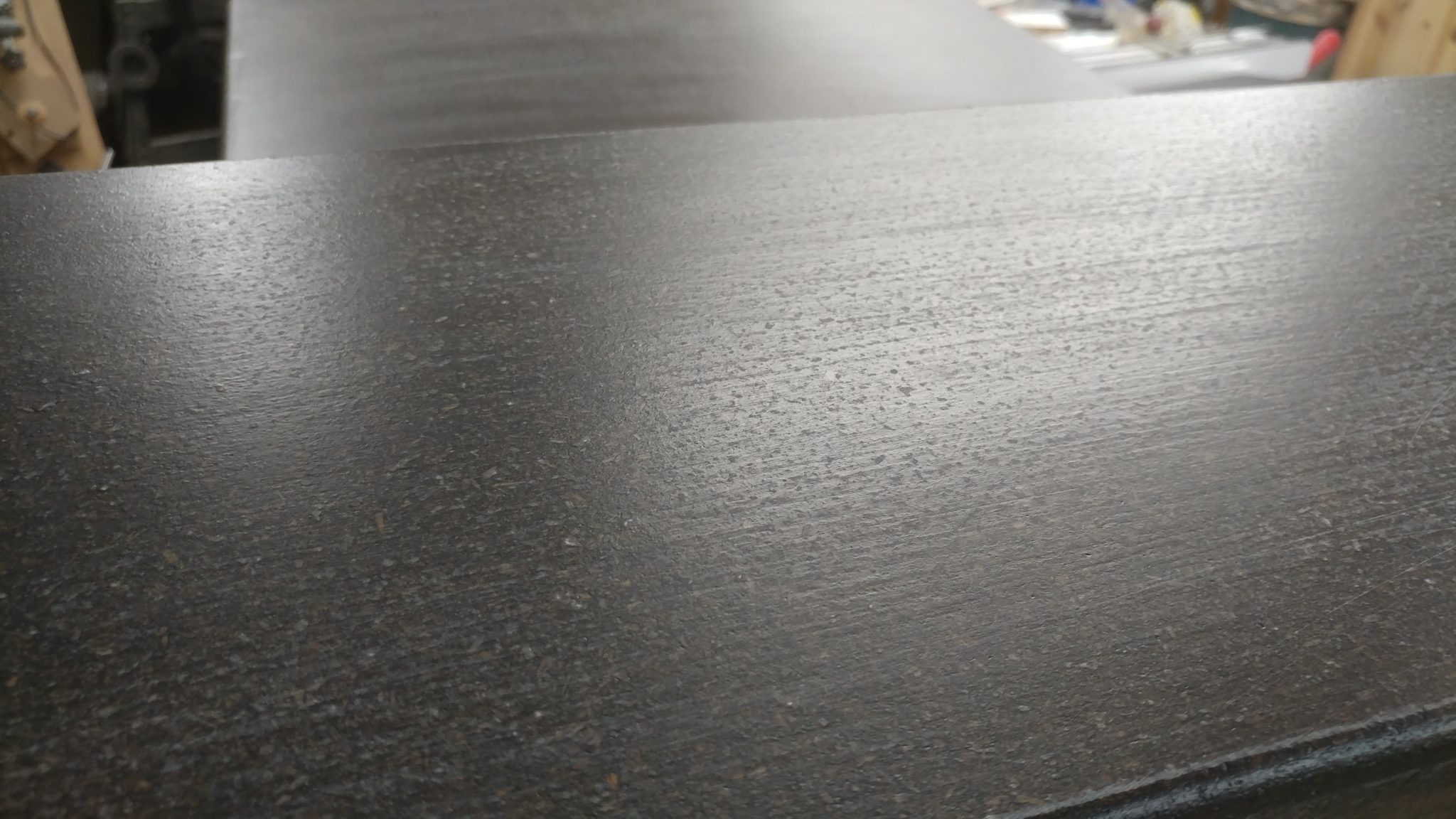
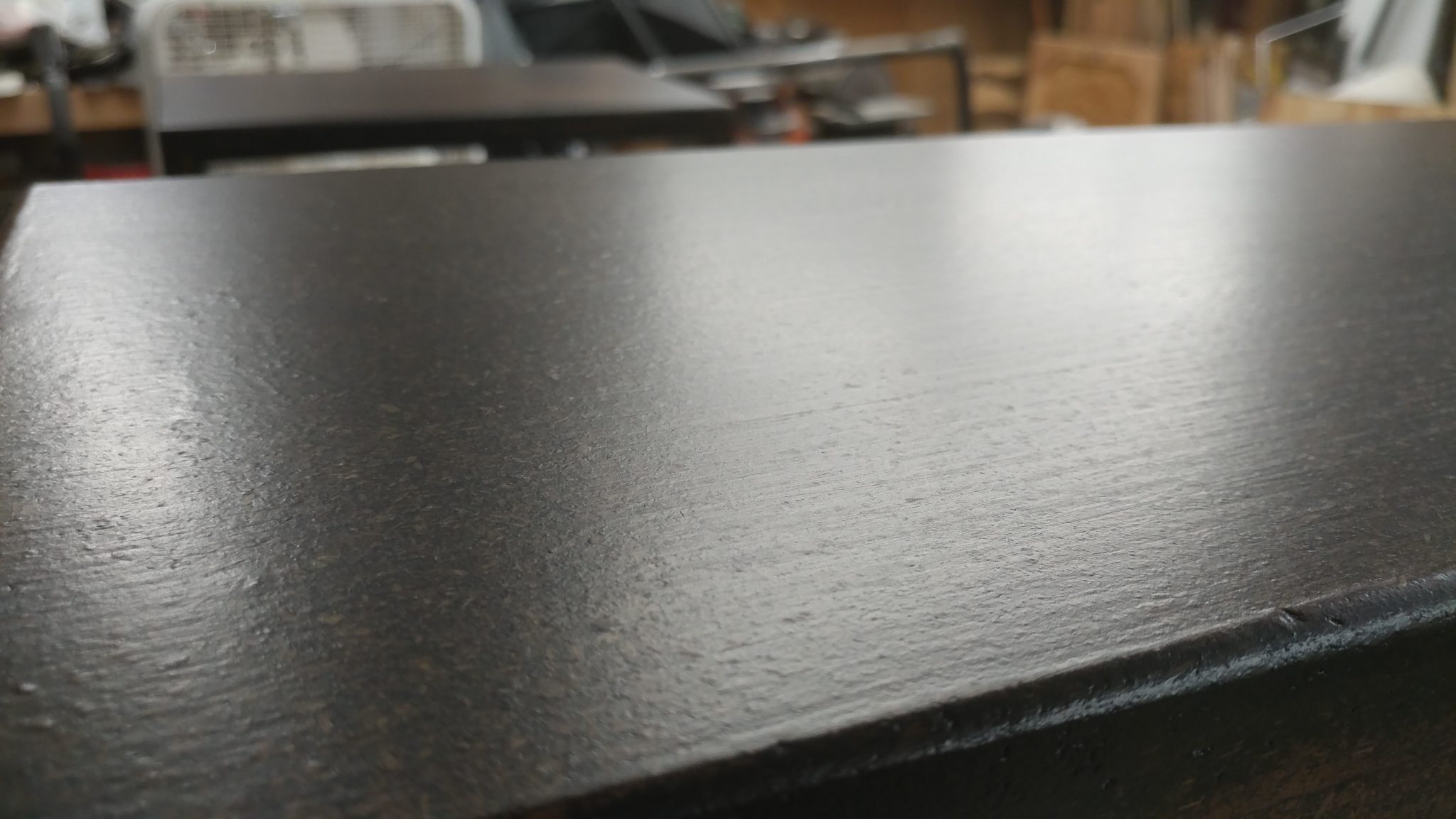
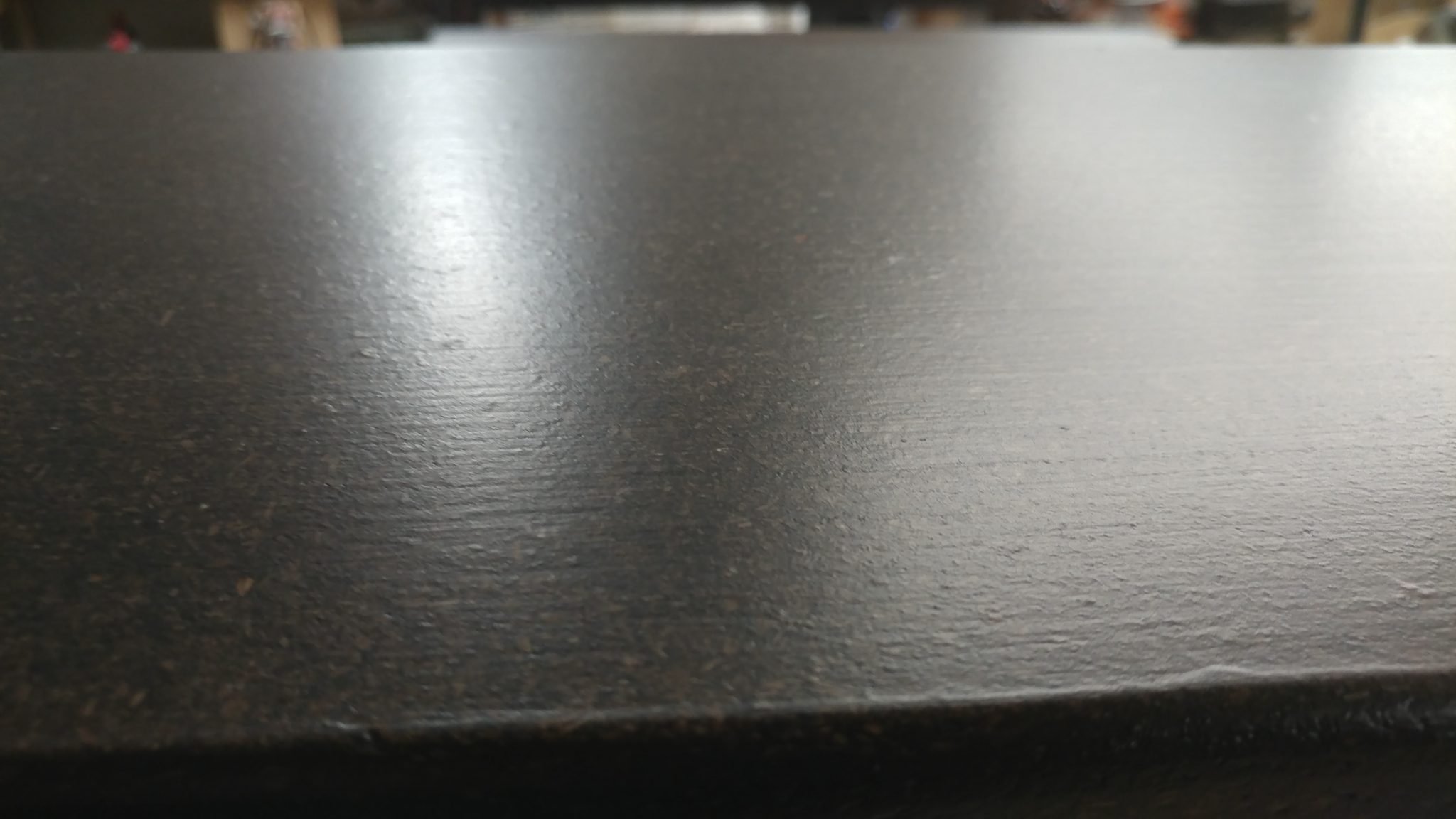
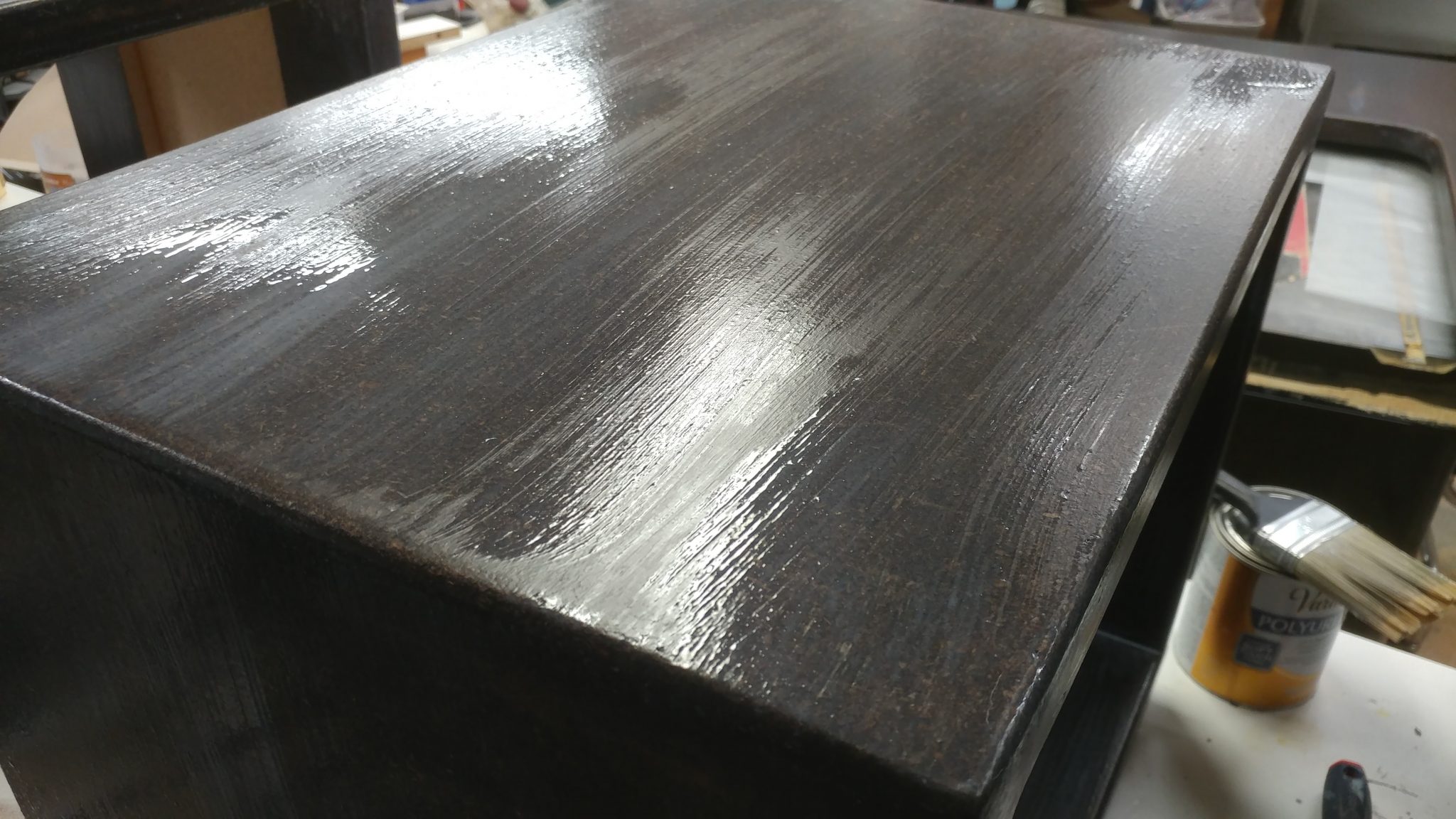
I was going for a specific look that I think worked but I’m having my doubts that I’ll be happy with it in the long run.  I was inspired by a piece that I saw at a restaurant a while ago.  They used plywood where I used particleboard but what I was drawn to was the feel of the piece.  The best way I could describe it was “too much poly with no sanding between coats”.  You couldn’t feel any wood grain through the finish but you could feel the brush marks.

I figured that for this piece, I might as well try to replicate that since I liked it so much.  I think I succeeded but now I’m not sure how much I like it.


Staining the wood

I started with the parts all sanded and ready for stain.


Before applying stain or finish, I like to wipe down the material with denatured alcohol.  This helps remove loose dust particles.


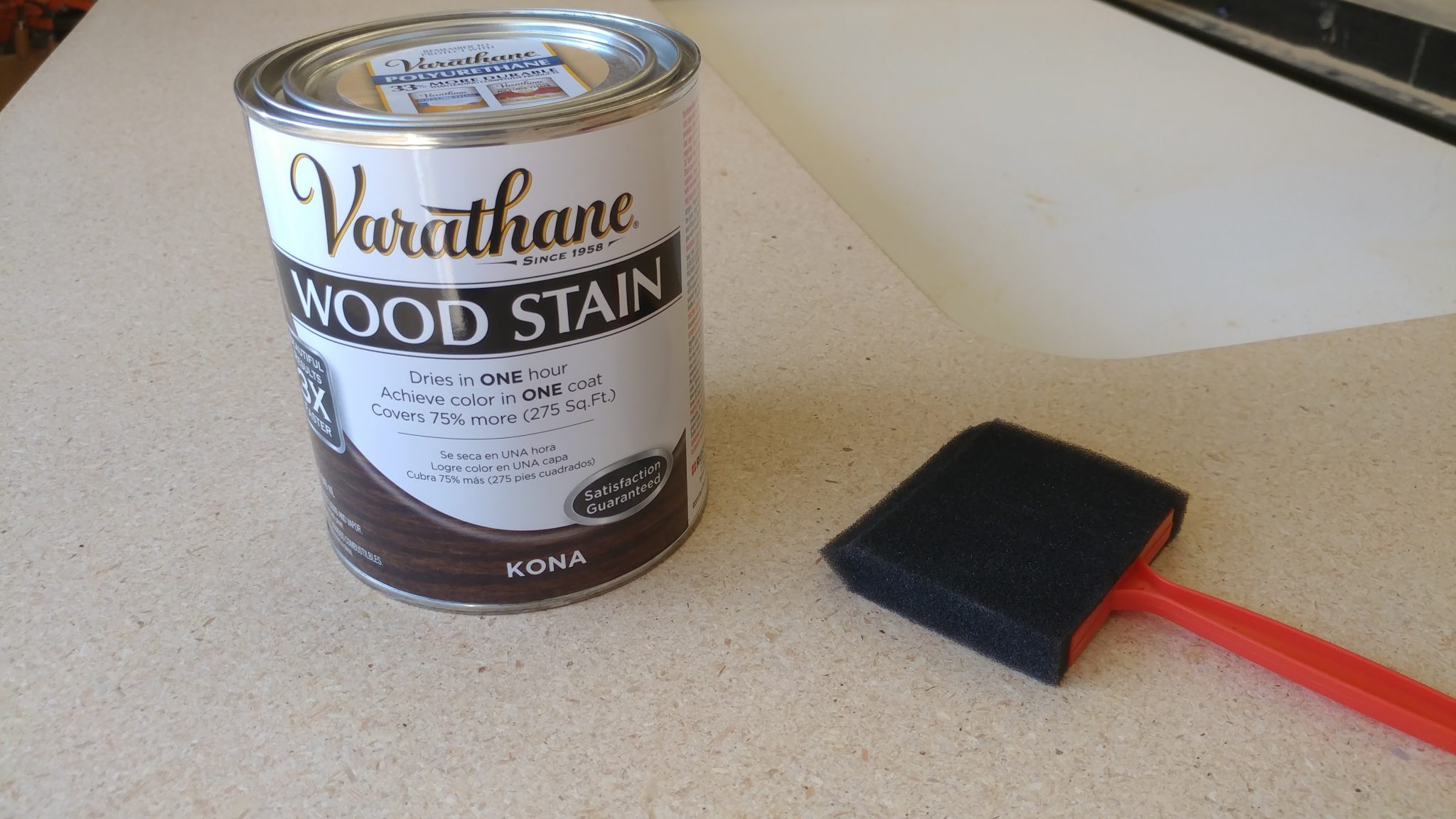
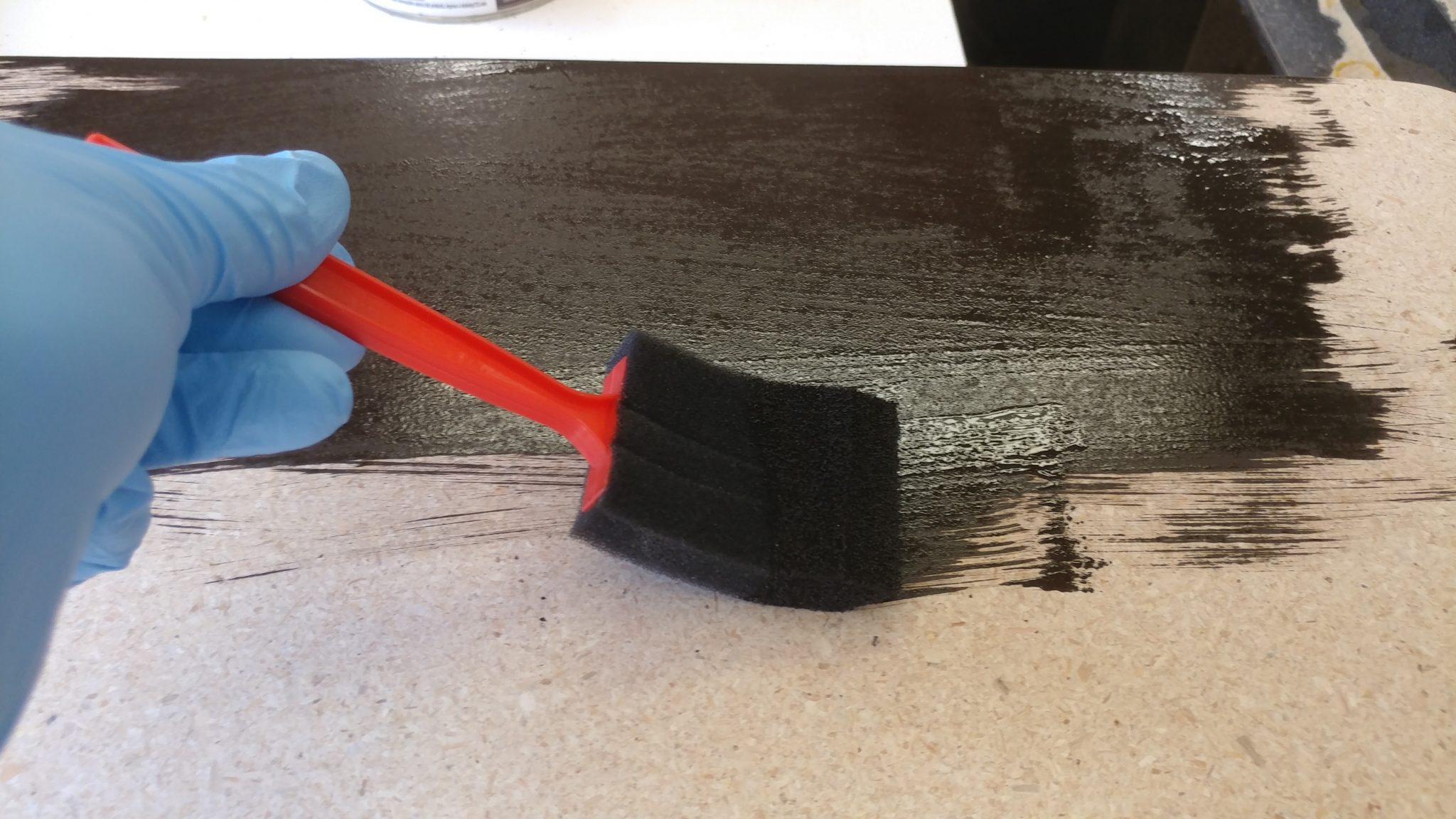
I’m applying Varathane brand Kona wood stain using a cheap foam brush.


I recommend having someone help when staining something this big.  One person can apply the stain and the other can follow up with a towel to remove the excess after letting it sit for a few minutes.  Since it was just me working on this, I had to apply the stain in sections and then wipe it off before moving on to the next section.  This can be tricky since the stain can overlap and make for darker sections.


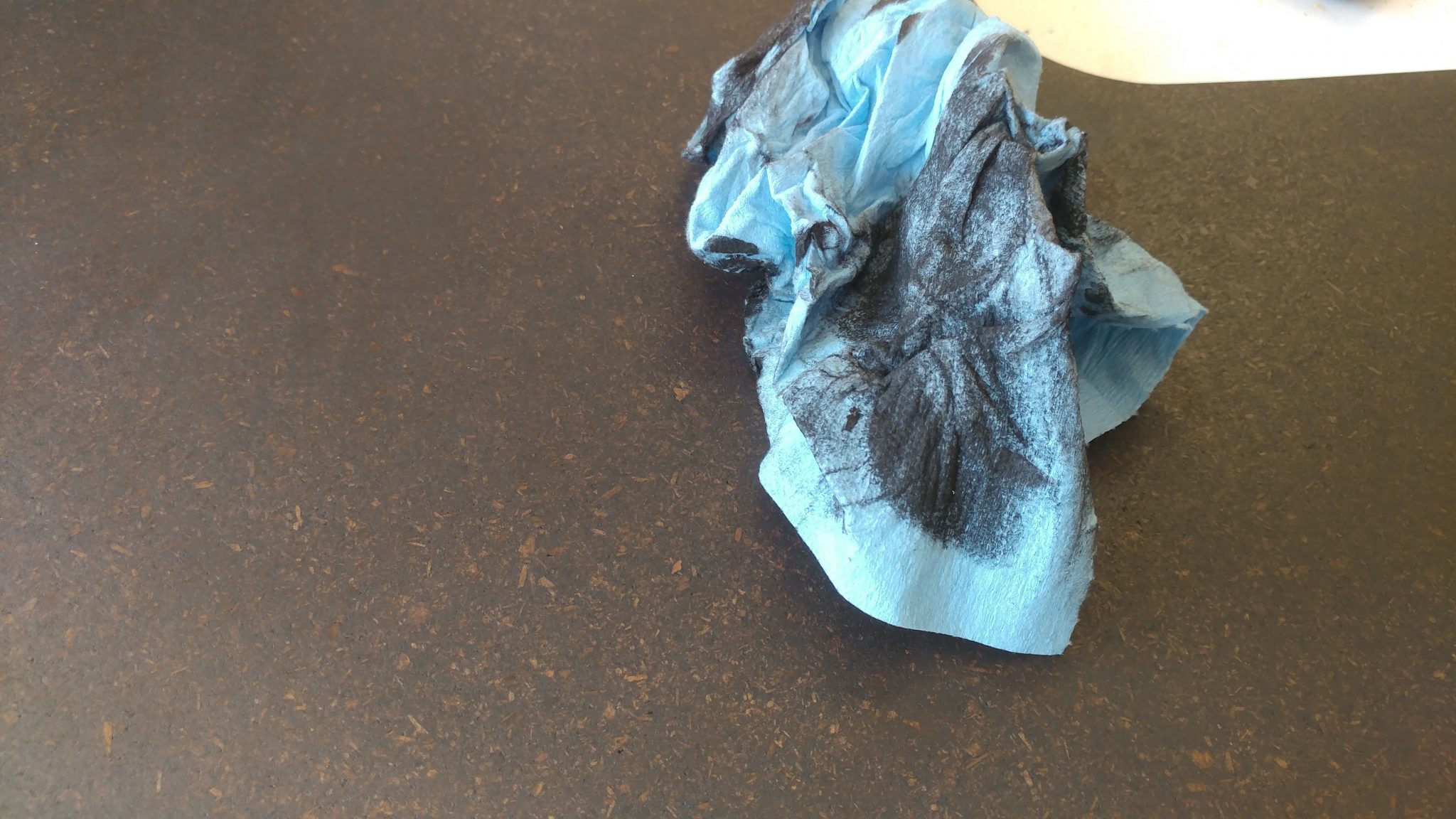
I used blue shop towels to wipe up the excess stain.


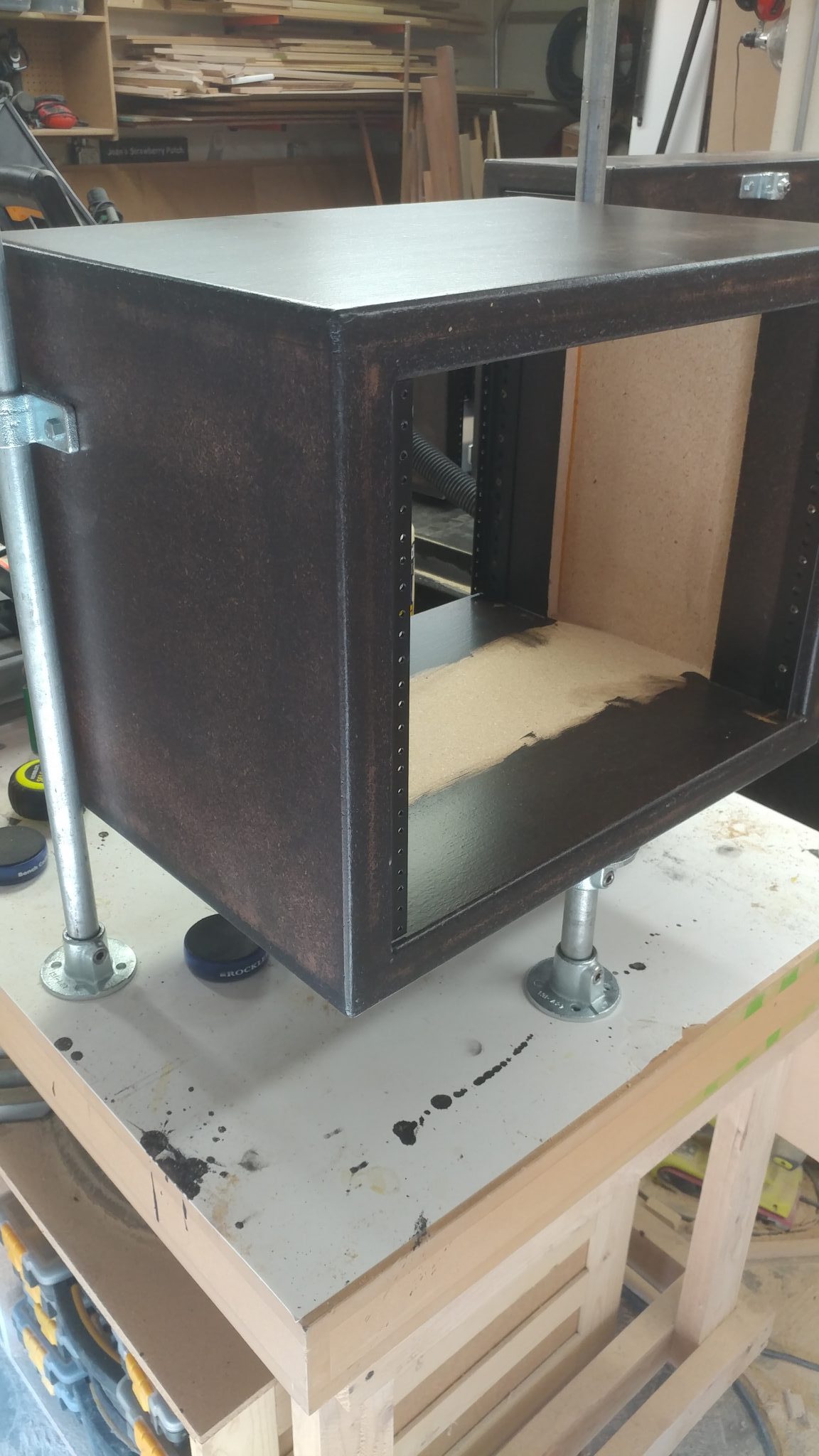
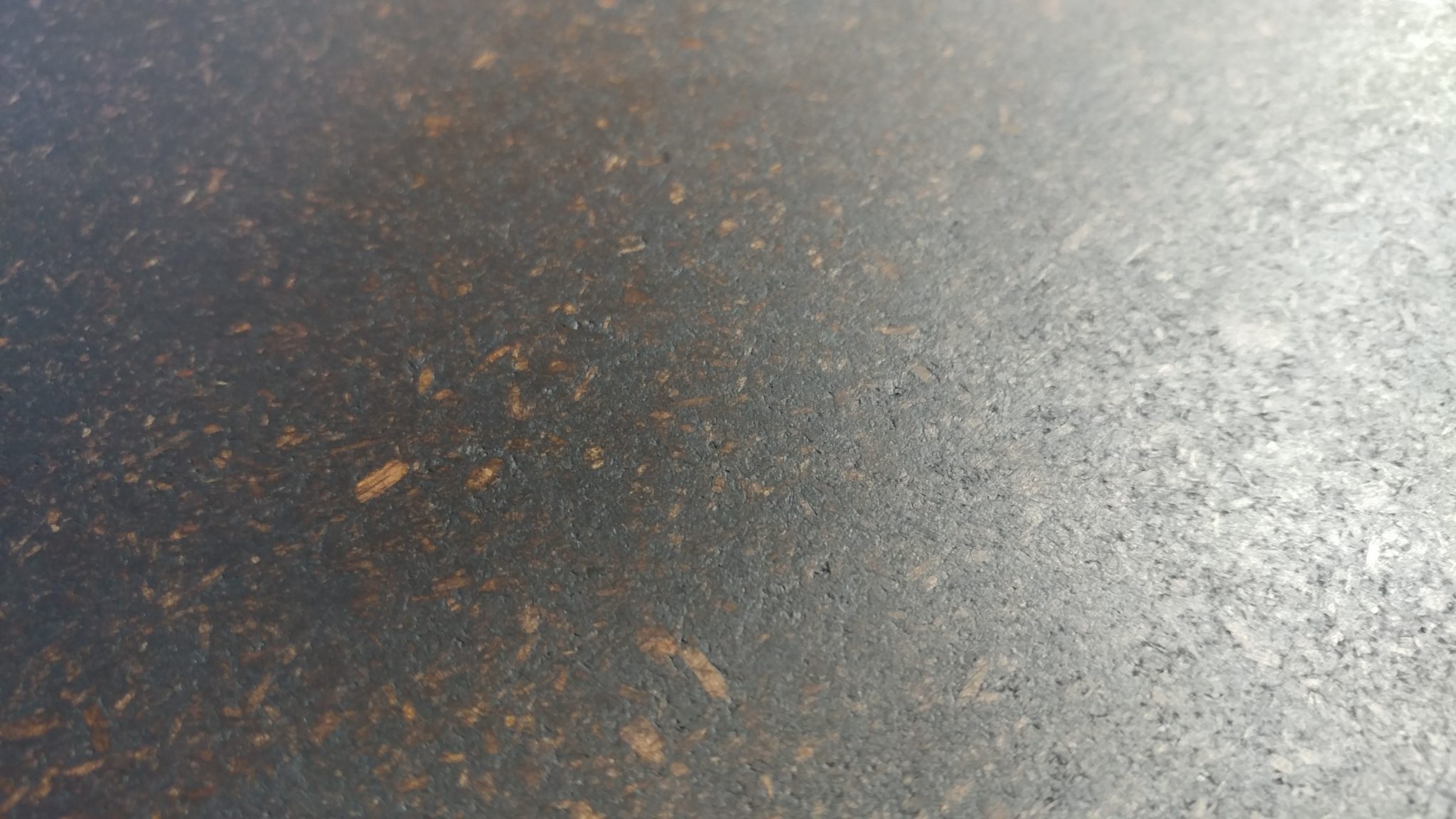
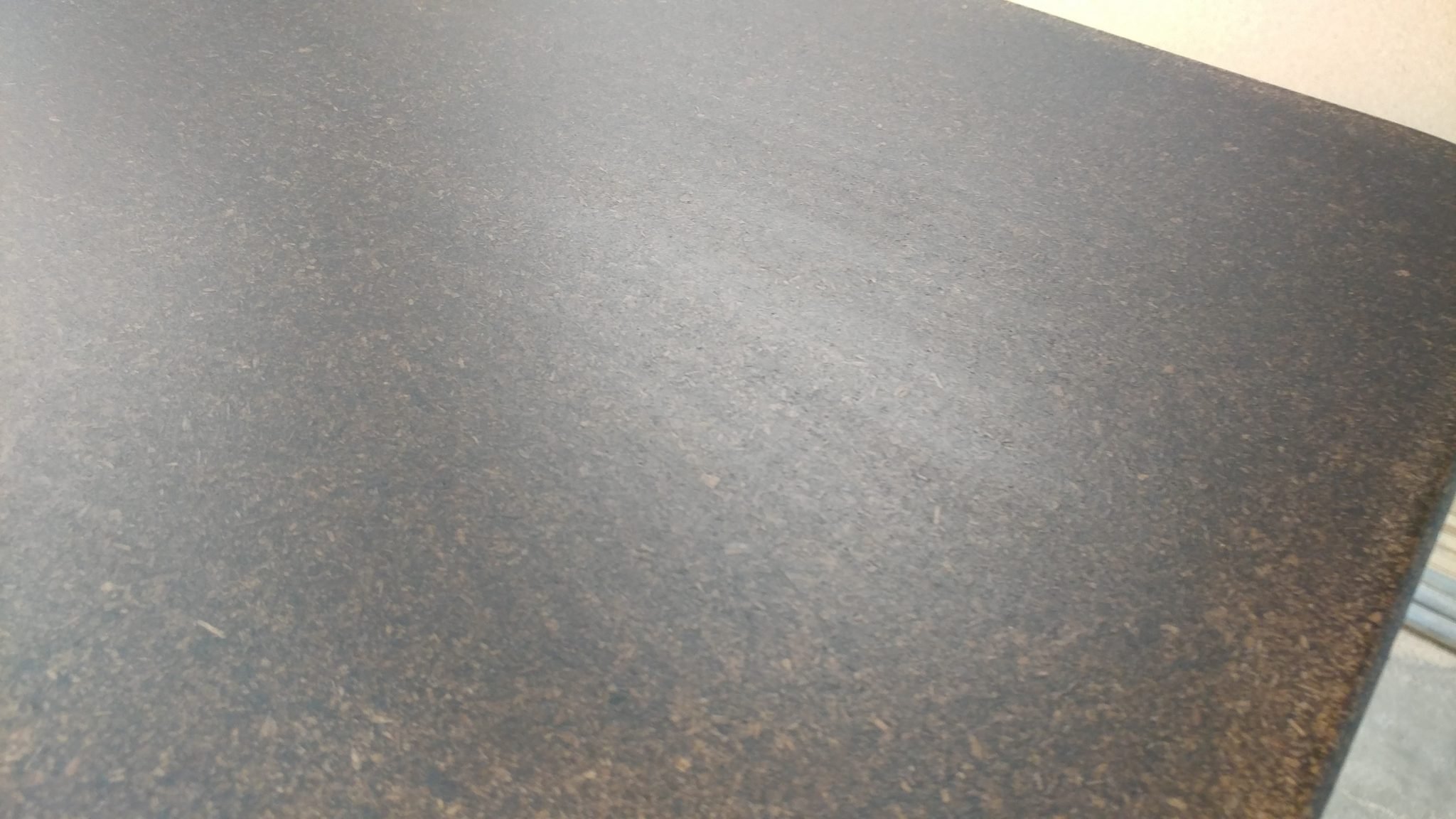
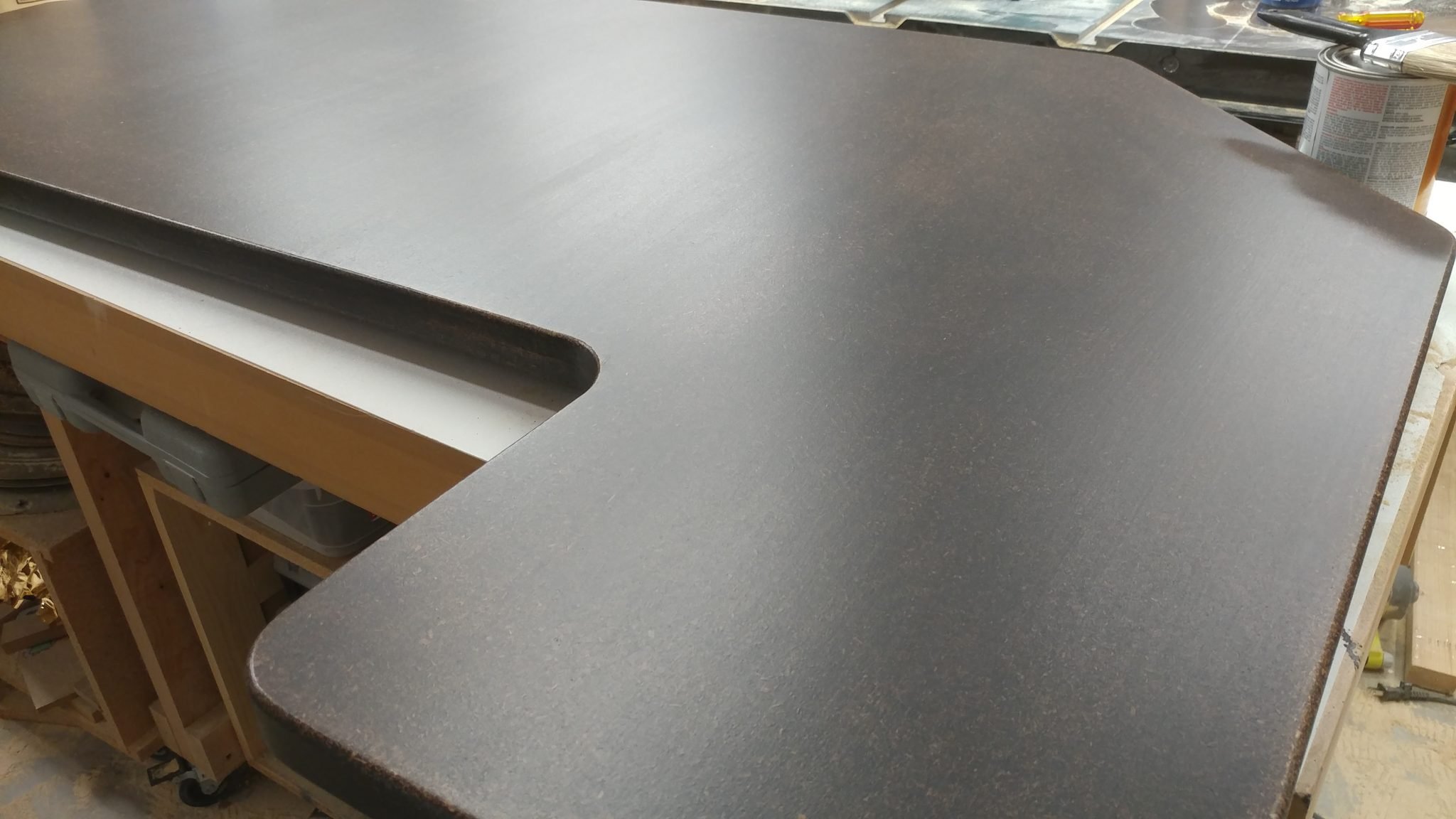
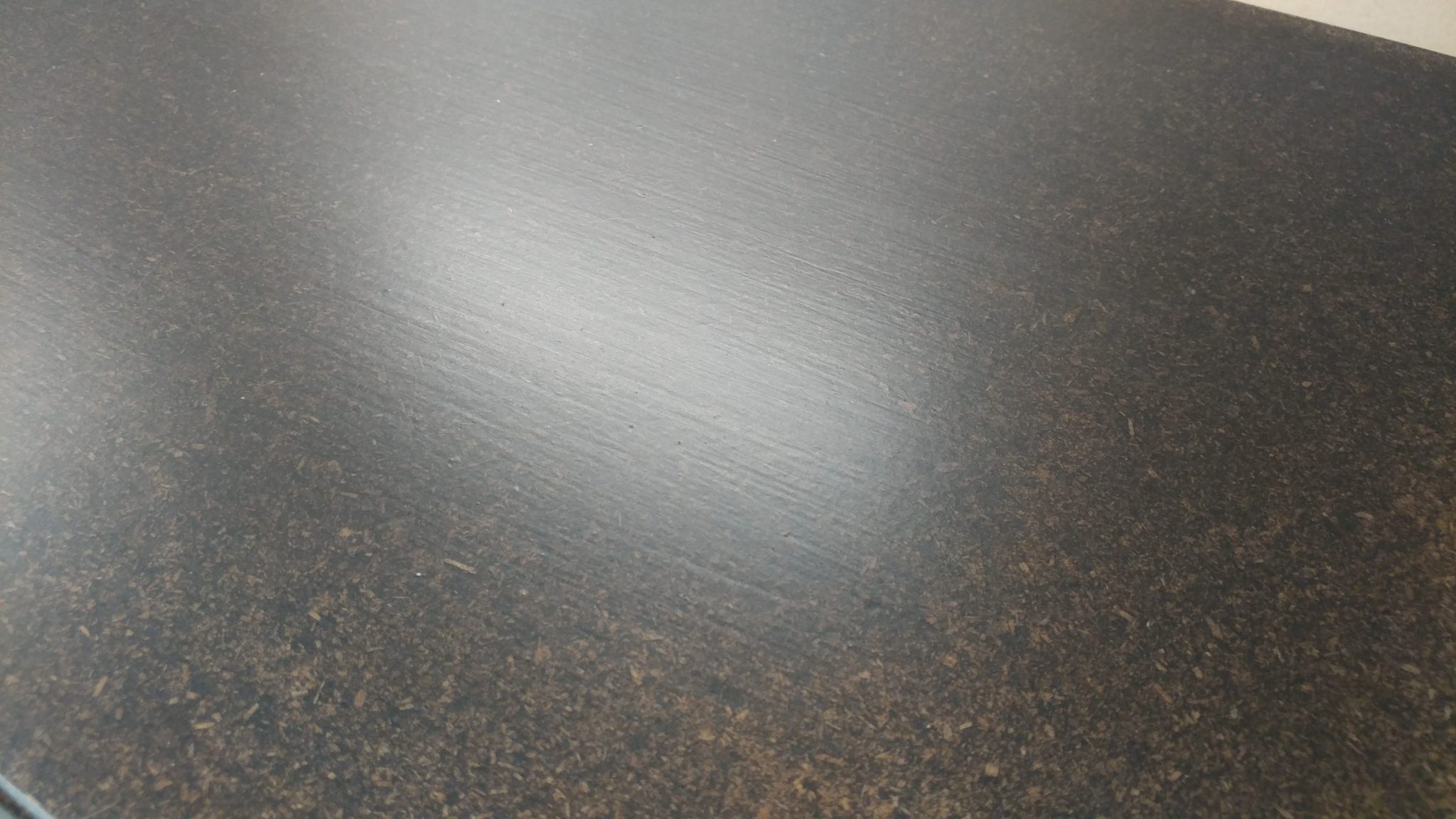
I really like the look of the particleboard with the Kona stain applied.


I applied the stain to one side and let it sit overnight, then applied to the opposite side.


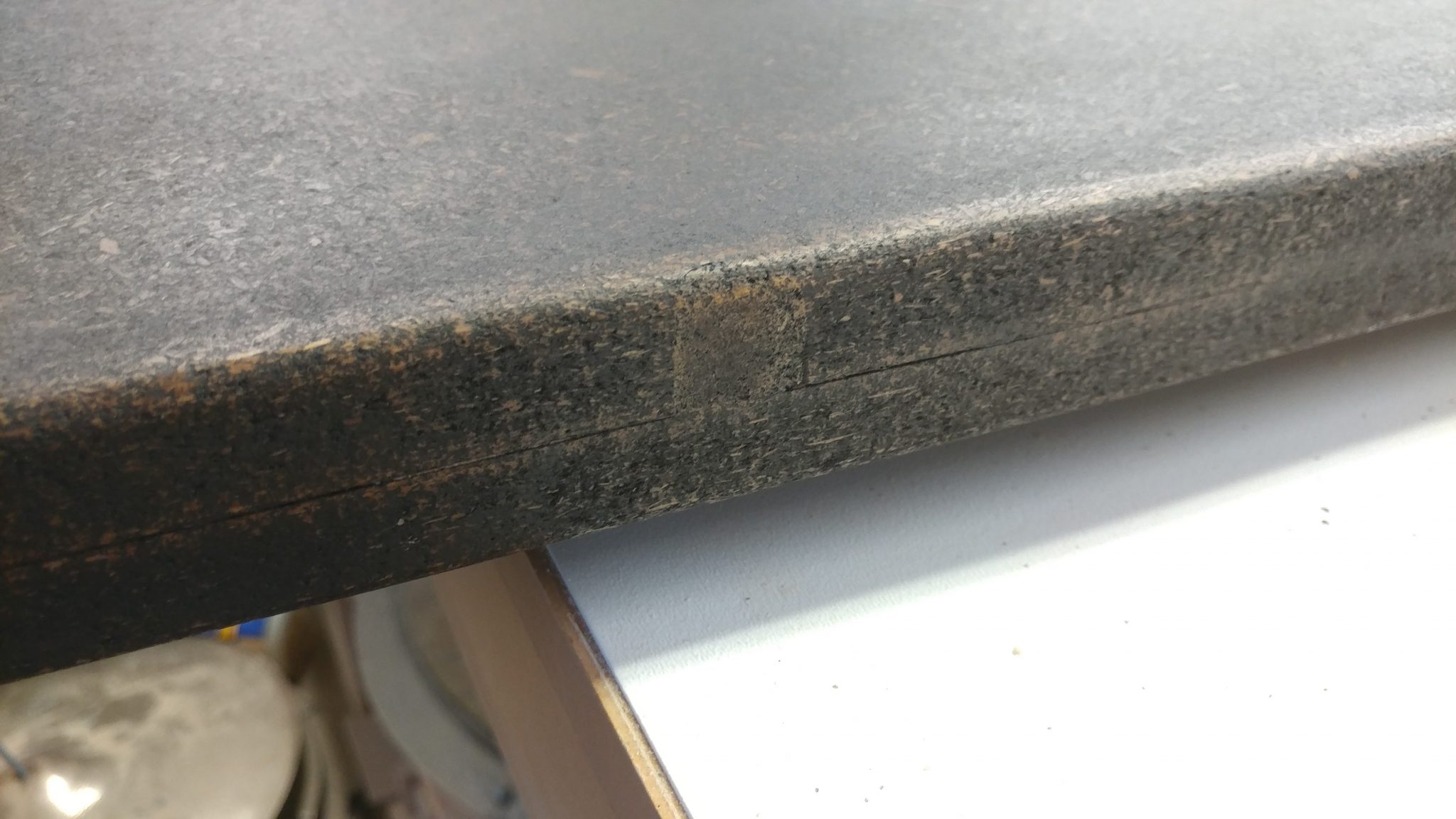
The areas that I patched up take the stain differently, as expected.


Applying polyurethane to the upper section

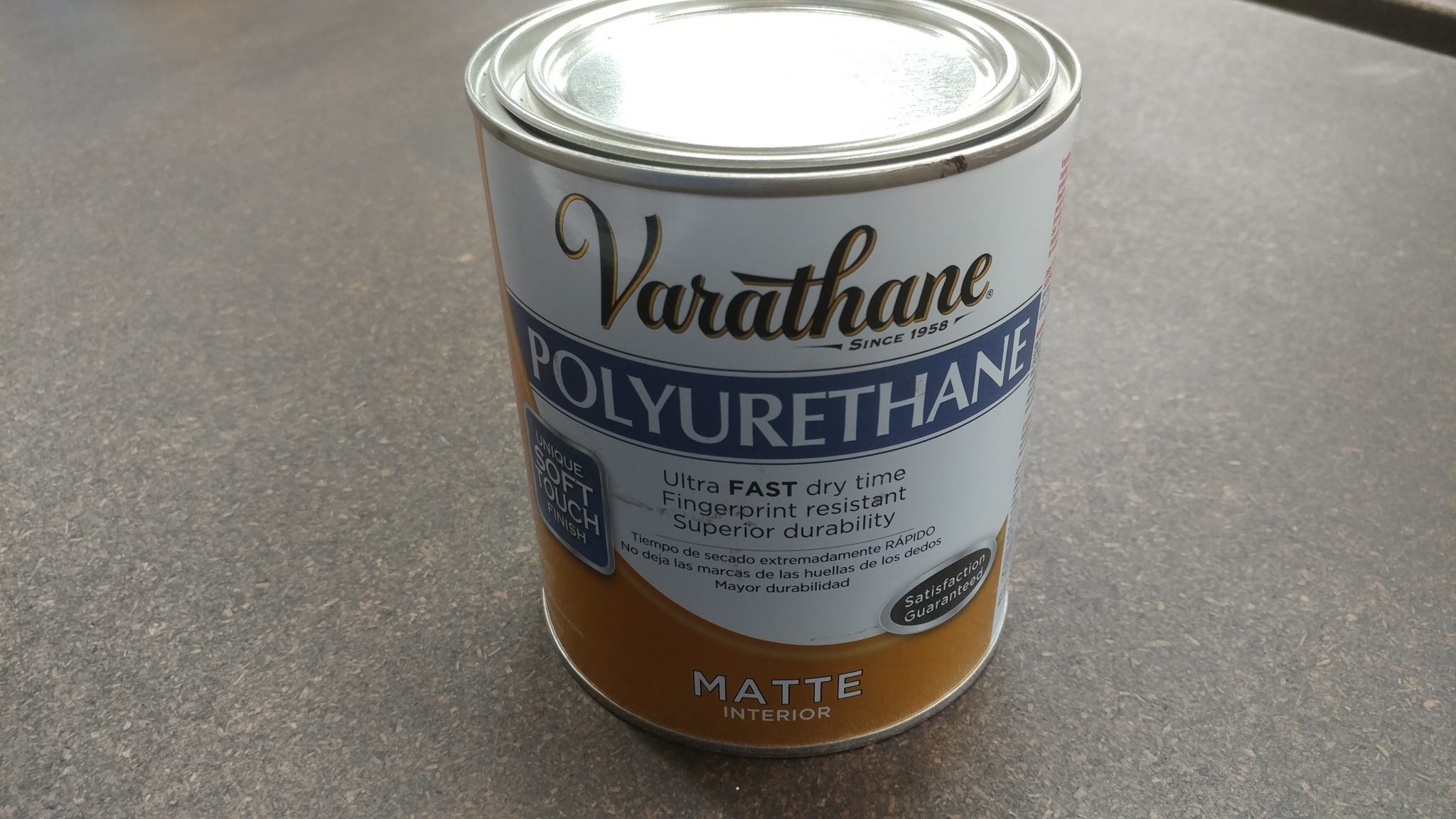
Once the stain set up, I started applying Varathane brand polyurethane matte finish.


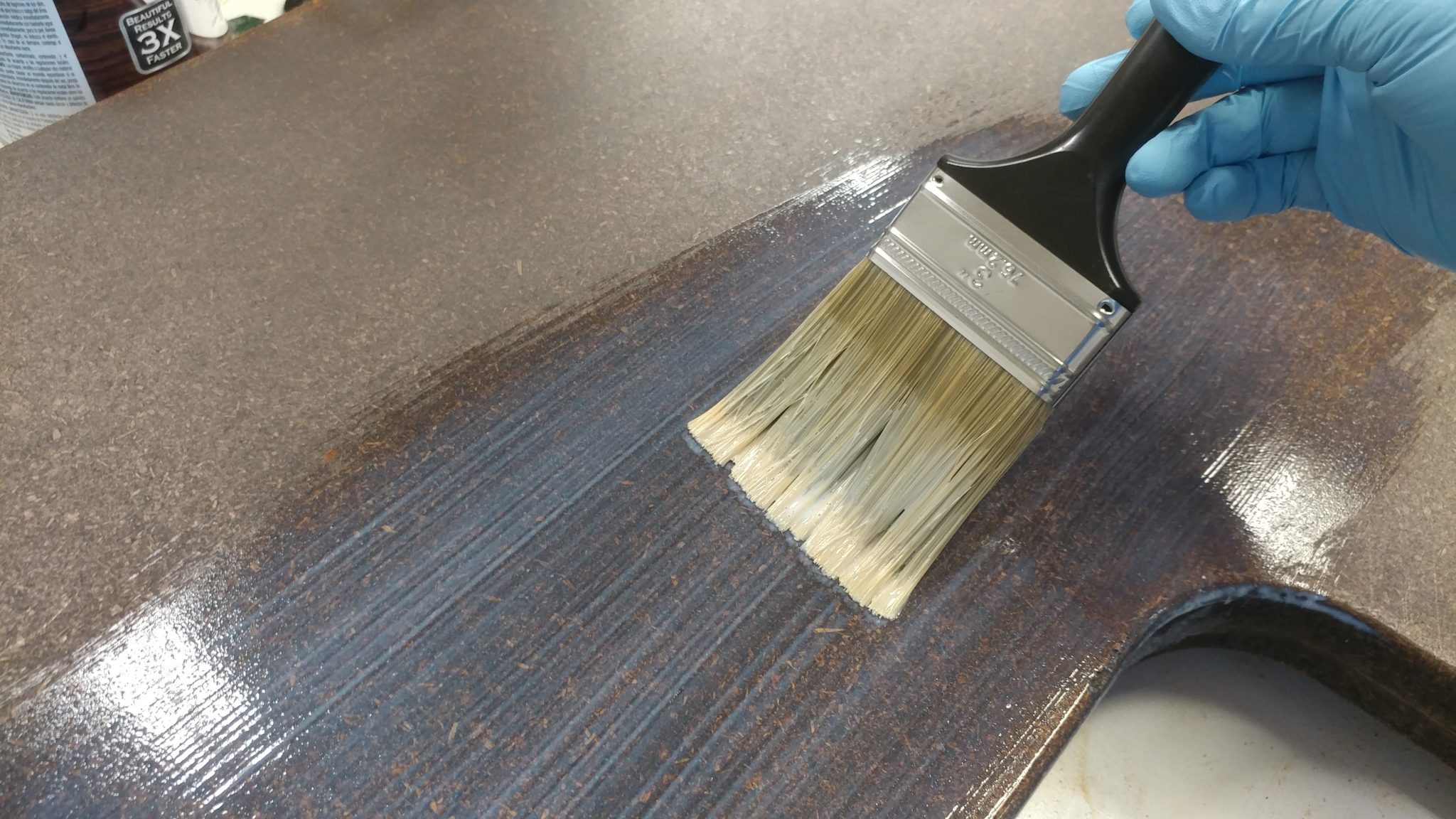
Foam brushes cause bubbles in polyurethane so you’ll want to use a decent synthetic brush.


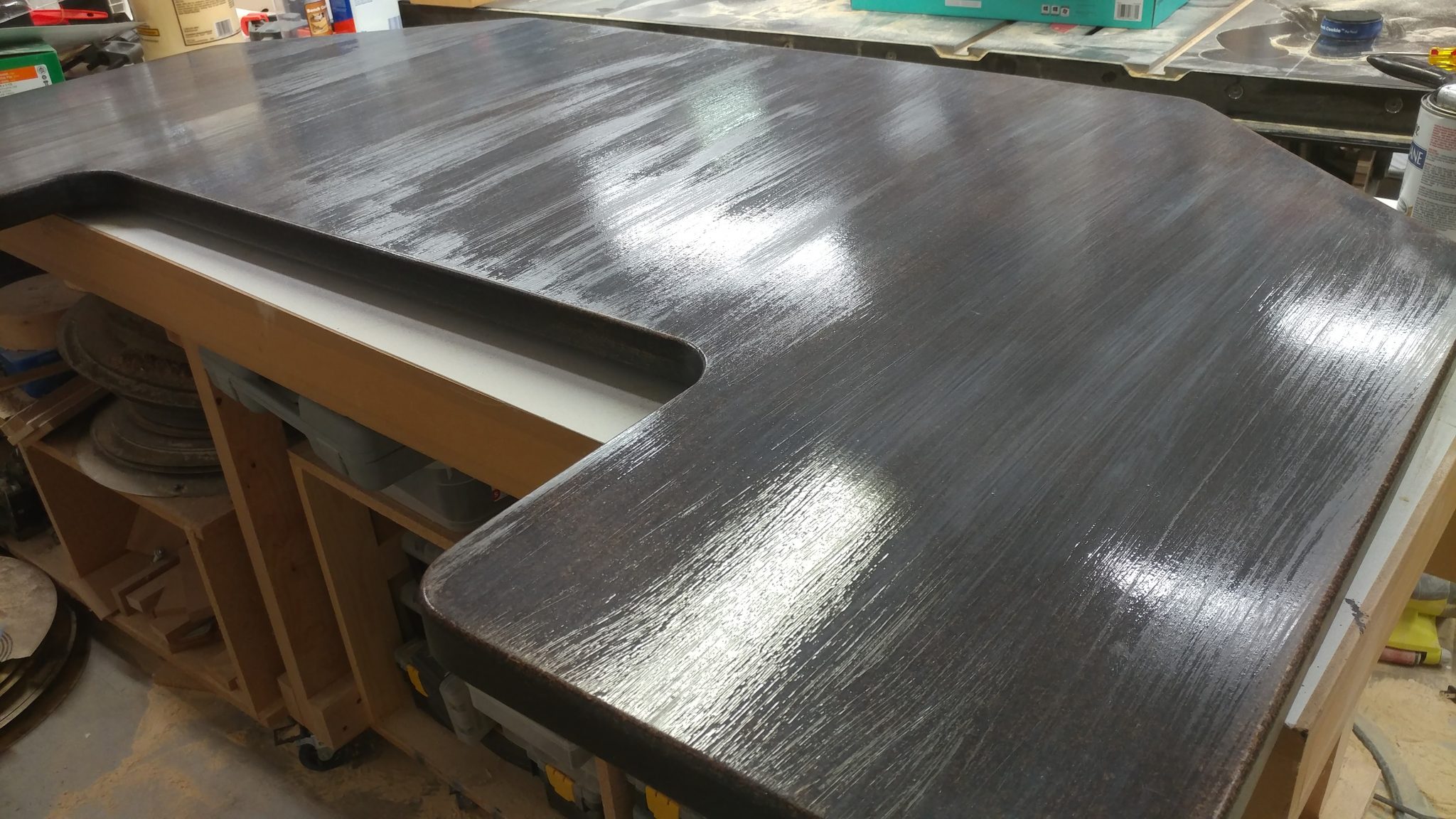
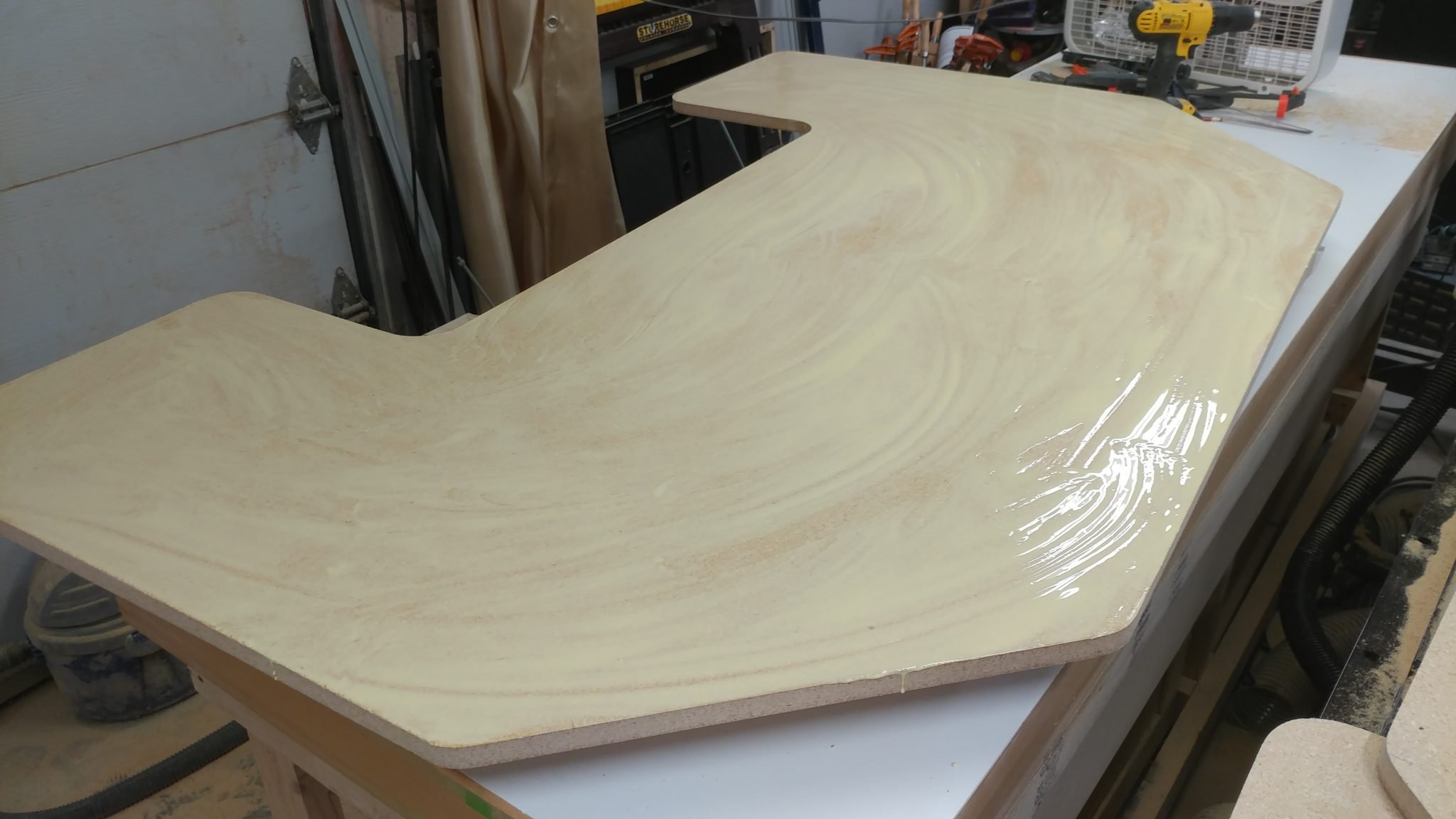
It goes on milky but dries clear.


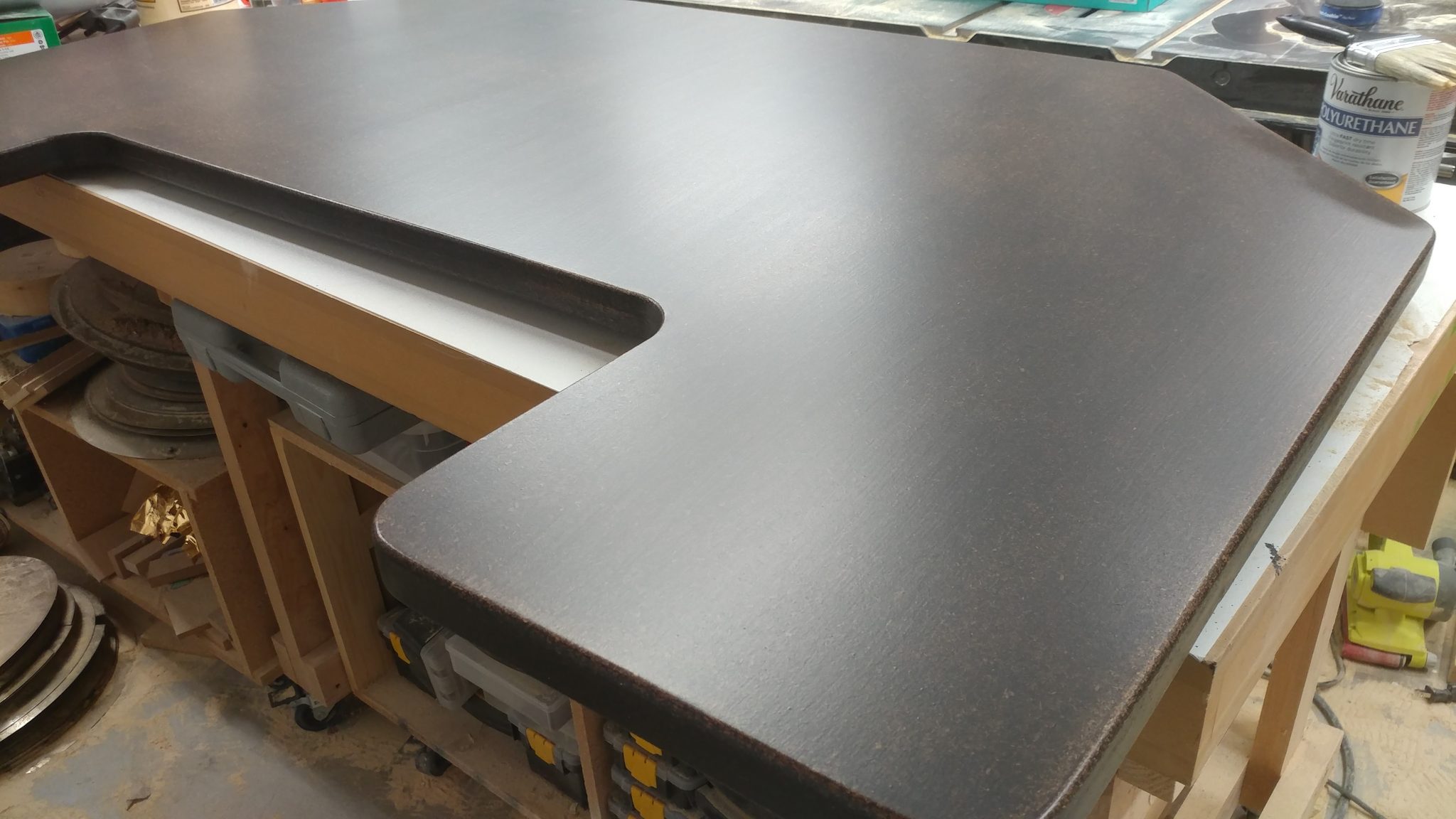
This is how I did the top surface of the upper section of the desk.  The underside of the upper section just had three coats of polyurethane applied.

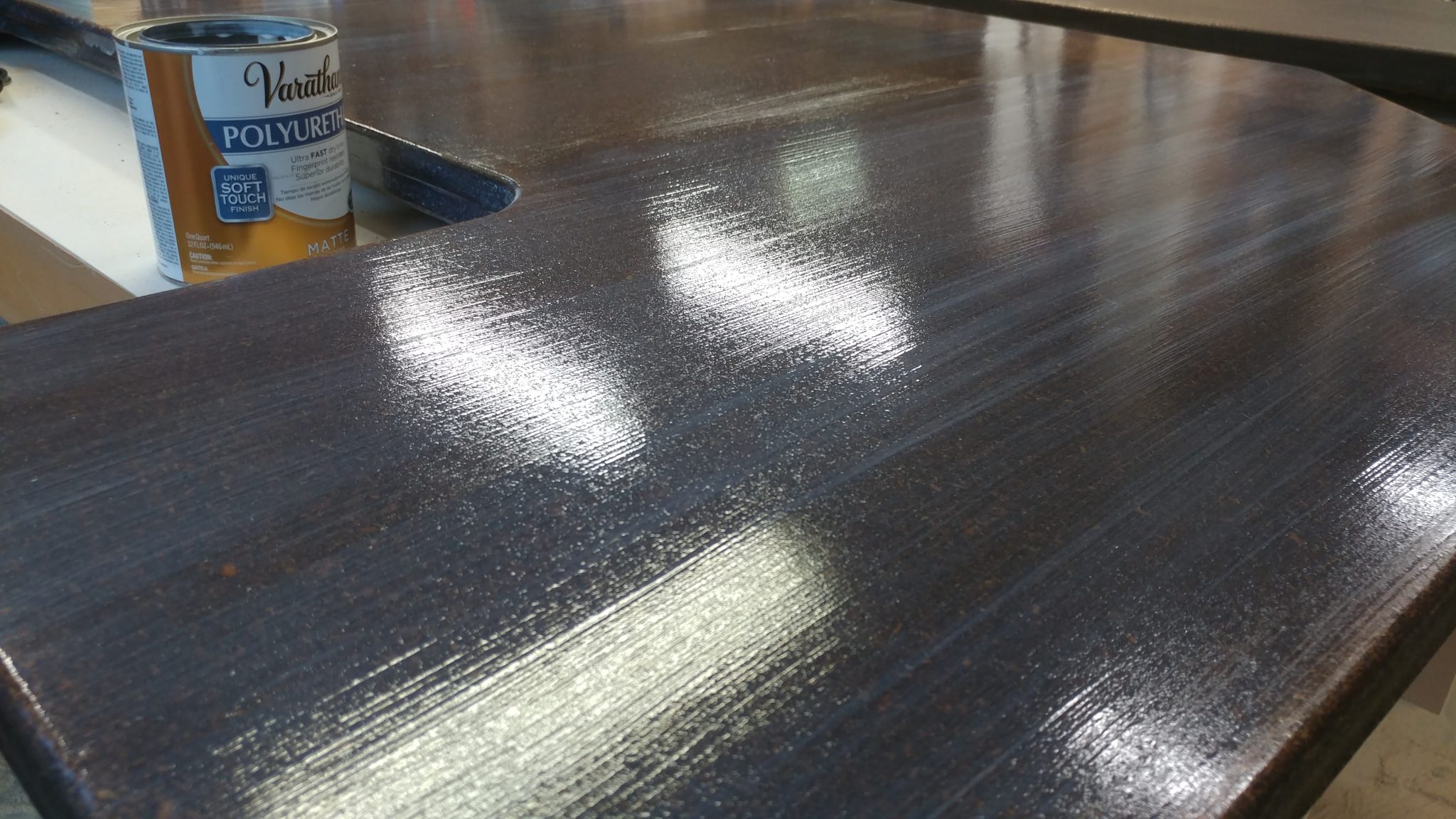
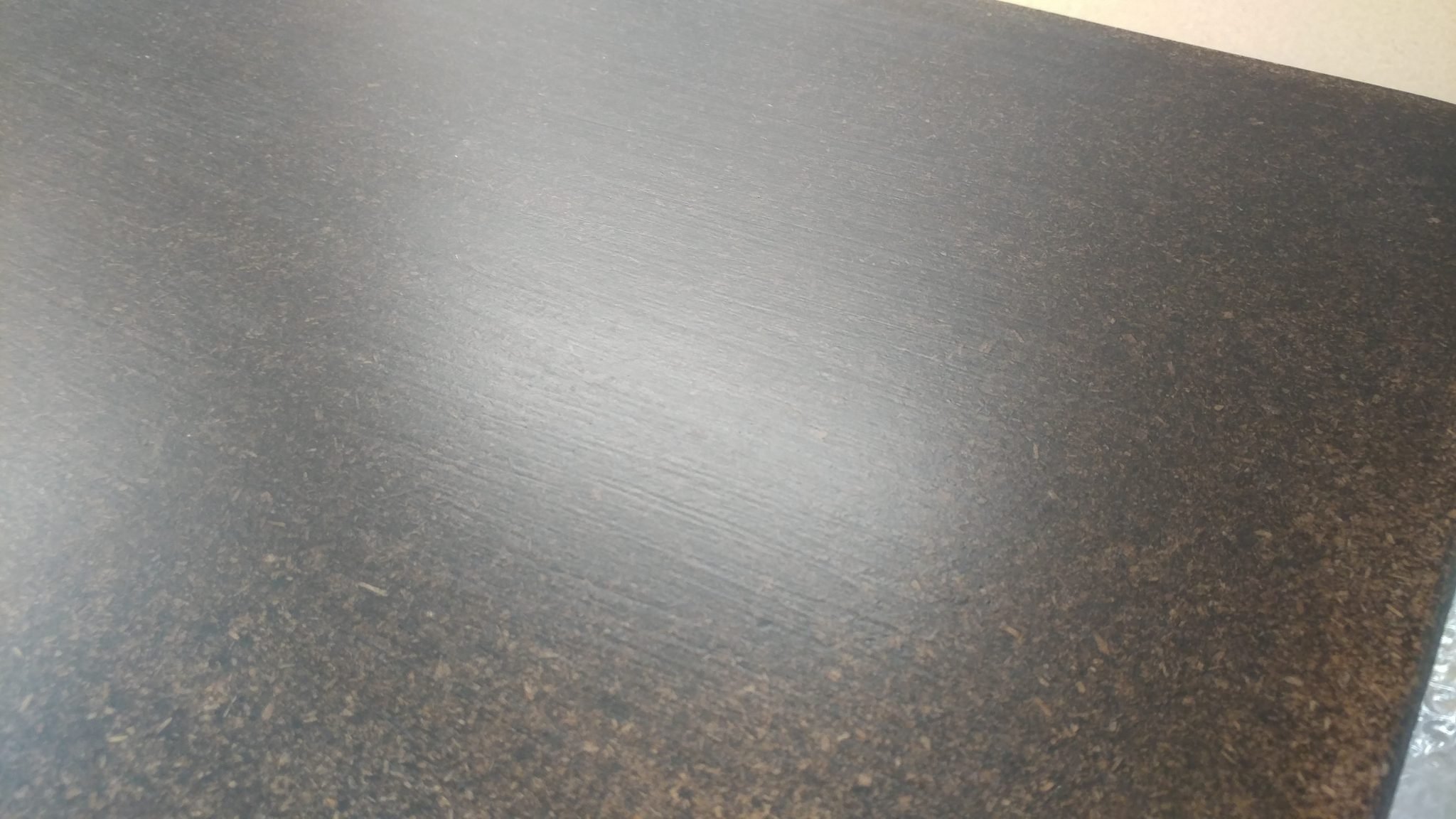
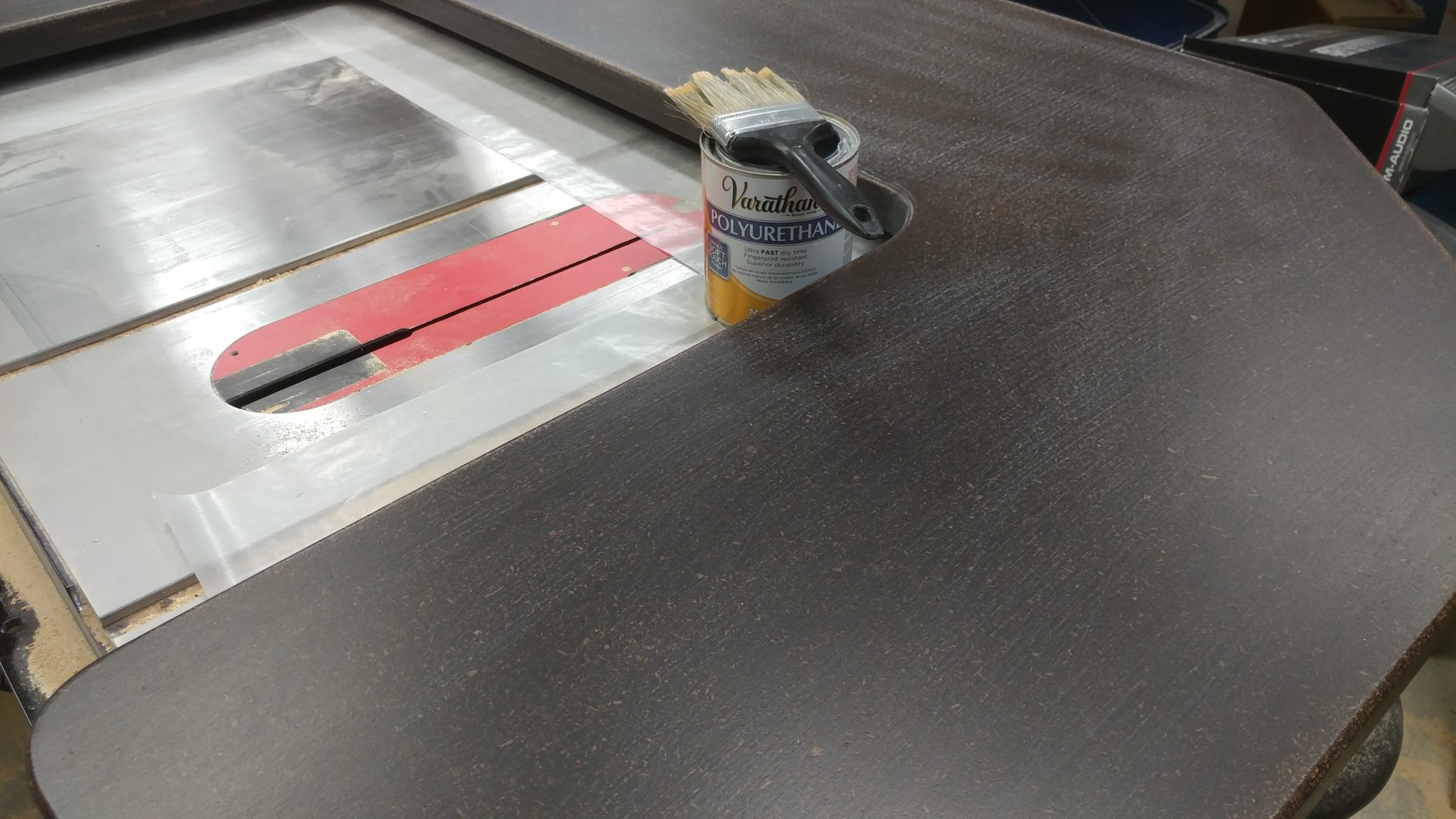
I let the first coat dry for a few hours.  You can see on closer inspection that the wood still has a bit of a rough texture that you can feel through the polyurethane.  Normally, I would lightly sand between coats, regardless what the instructions say.  I chose not to in an effort to add a subtle texture to the finish.  My goal is to apply enough finish so it has more of a plasticy feel to it.


The second coat was applied.


I let that cure for a few hours.


The third coat was applied without any sanding.


After letting it dry, I really liked the look and I could have stopped here but I wanted to add several more layers to give it the look and feel I was after.


I added a fourth coat.


And let it dry.


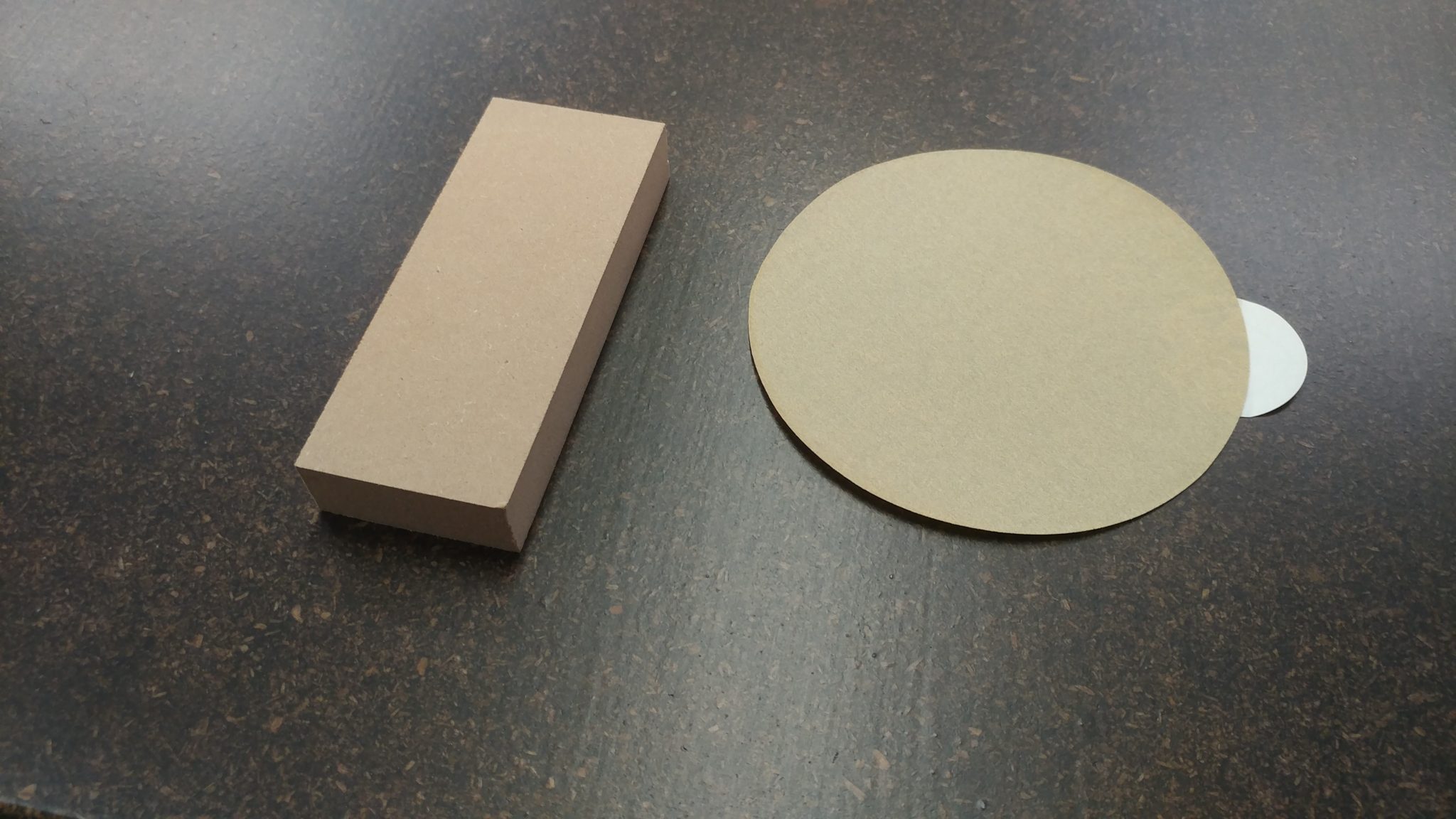
It’s starting to get that “too much poly” look that I’m after but there are a few high spots that I wanted to knock back.  I decided that I would sand the surface with a 220-grit adhesive-backed sanding disc.

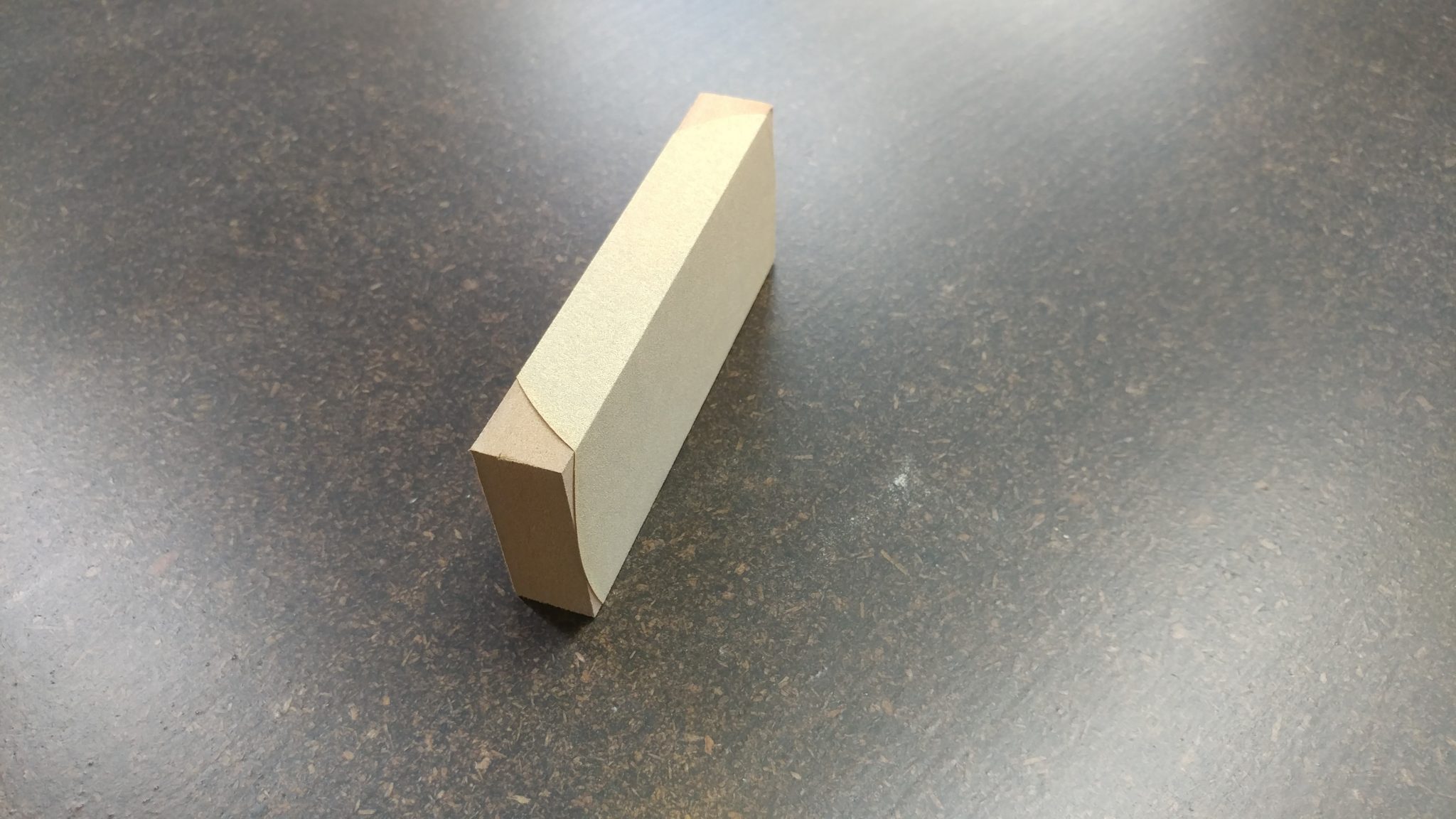
I grabbed a scrap piece of MDF to use as a sanding block and stuck the disc to it.


This resulted in a nice flat sanding block.


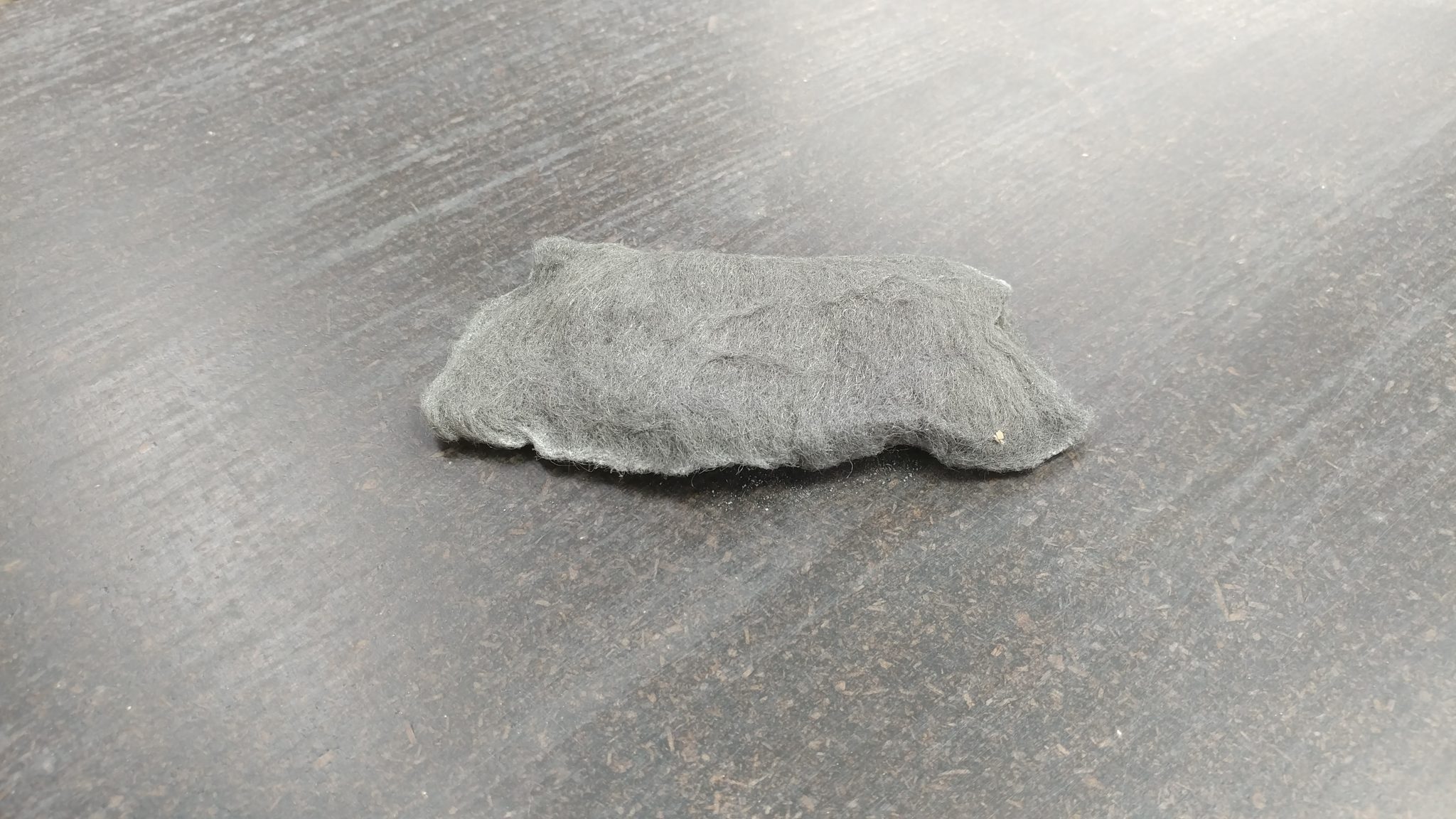
I sanded the high spots off then went over it again with a piece of 0000 steel wool.


I made sure to wipe all the sanding dust off.  I didn’t want to introduce a chemical to the finish at this point so I just went over it a few times with blue shop towels.


Then I applied a fifth coat of polyurethane.


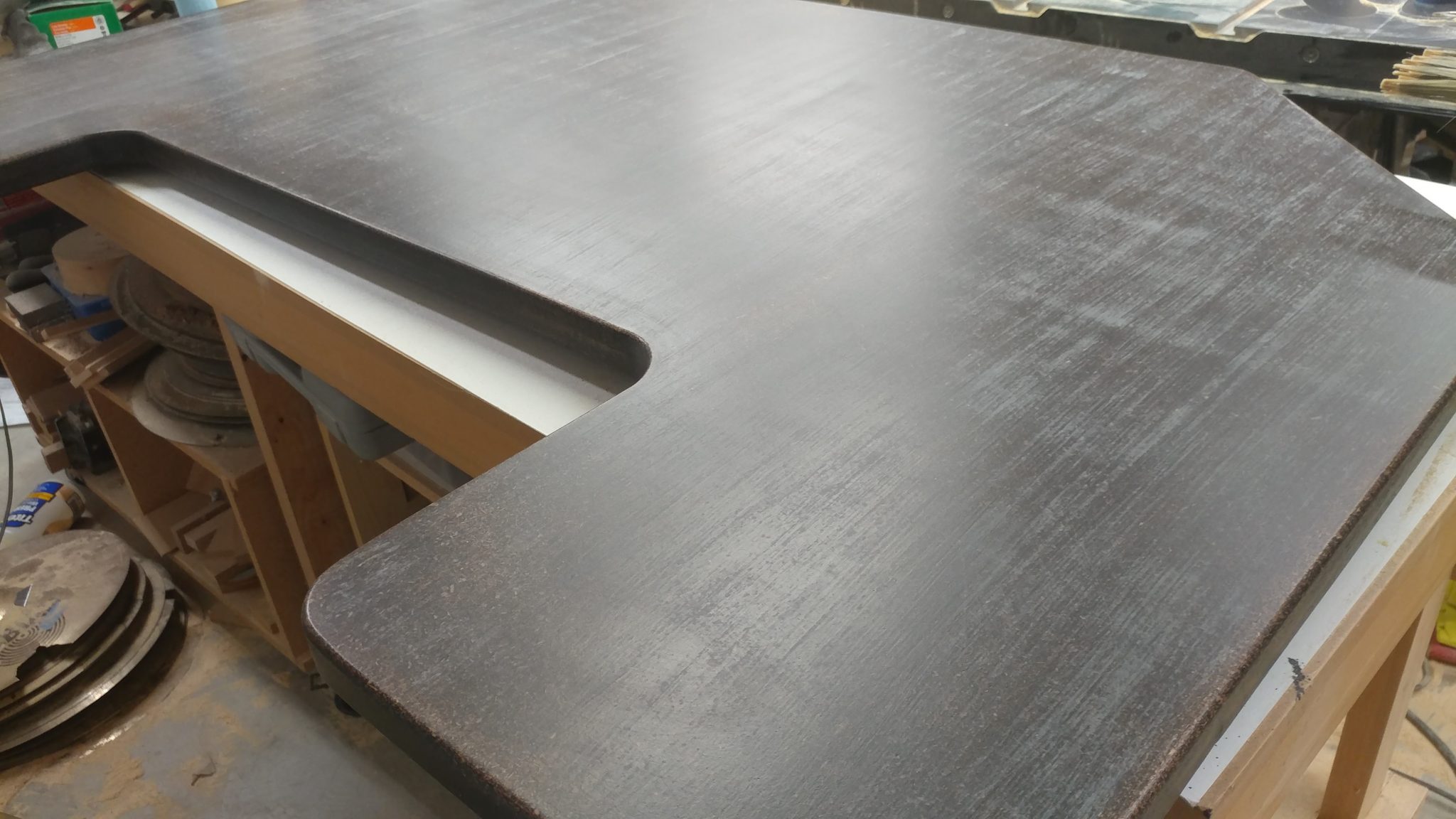
After letting it dry for a few hours I could still see some of the sanded areas through the finish.


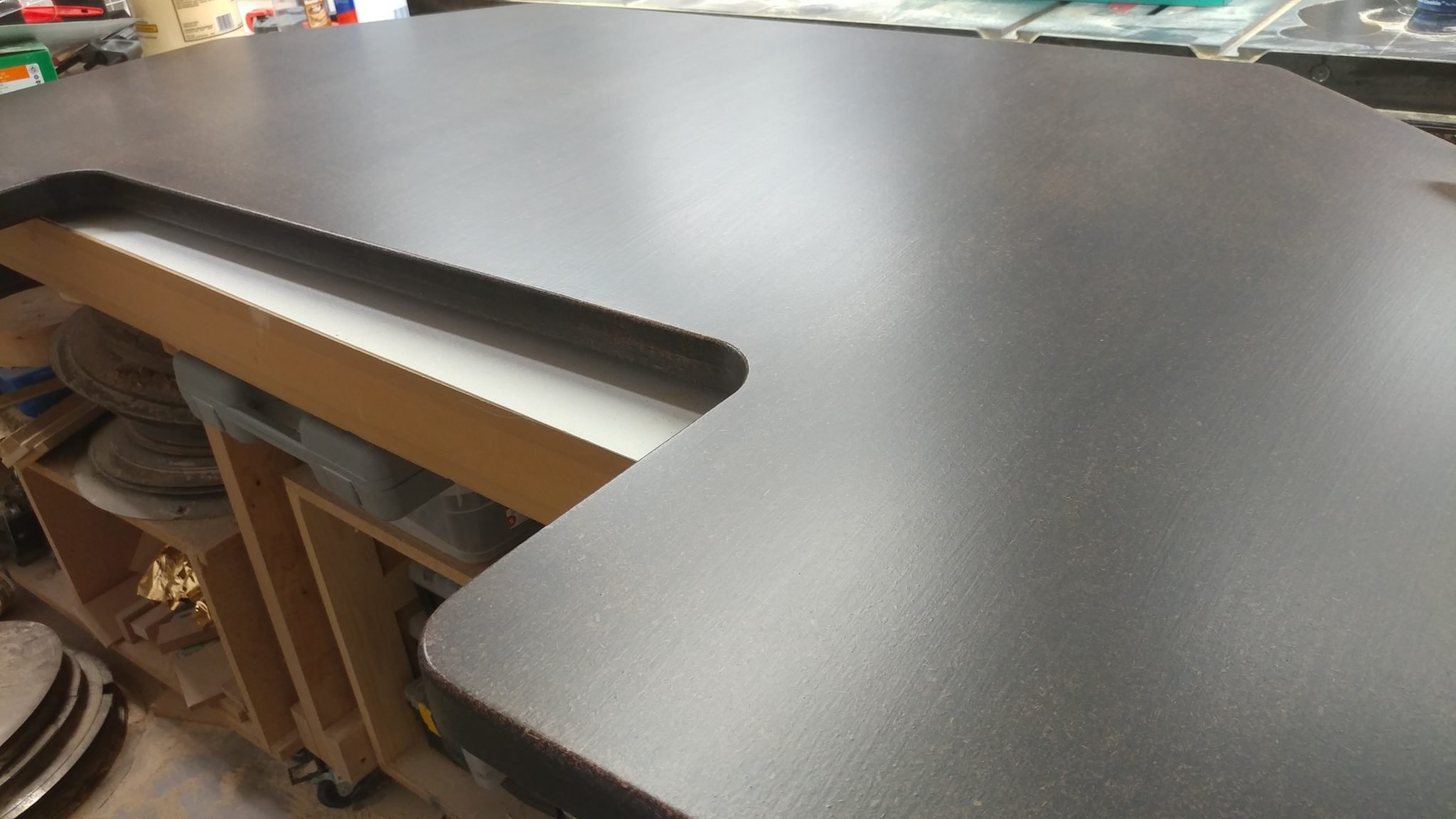
A close up shows that the finish still has a texture to it but the gritty bumps have been removed.


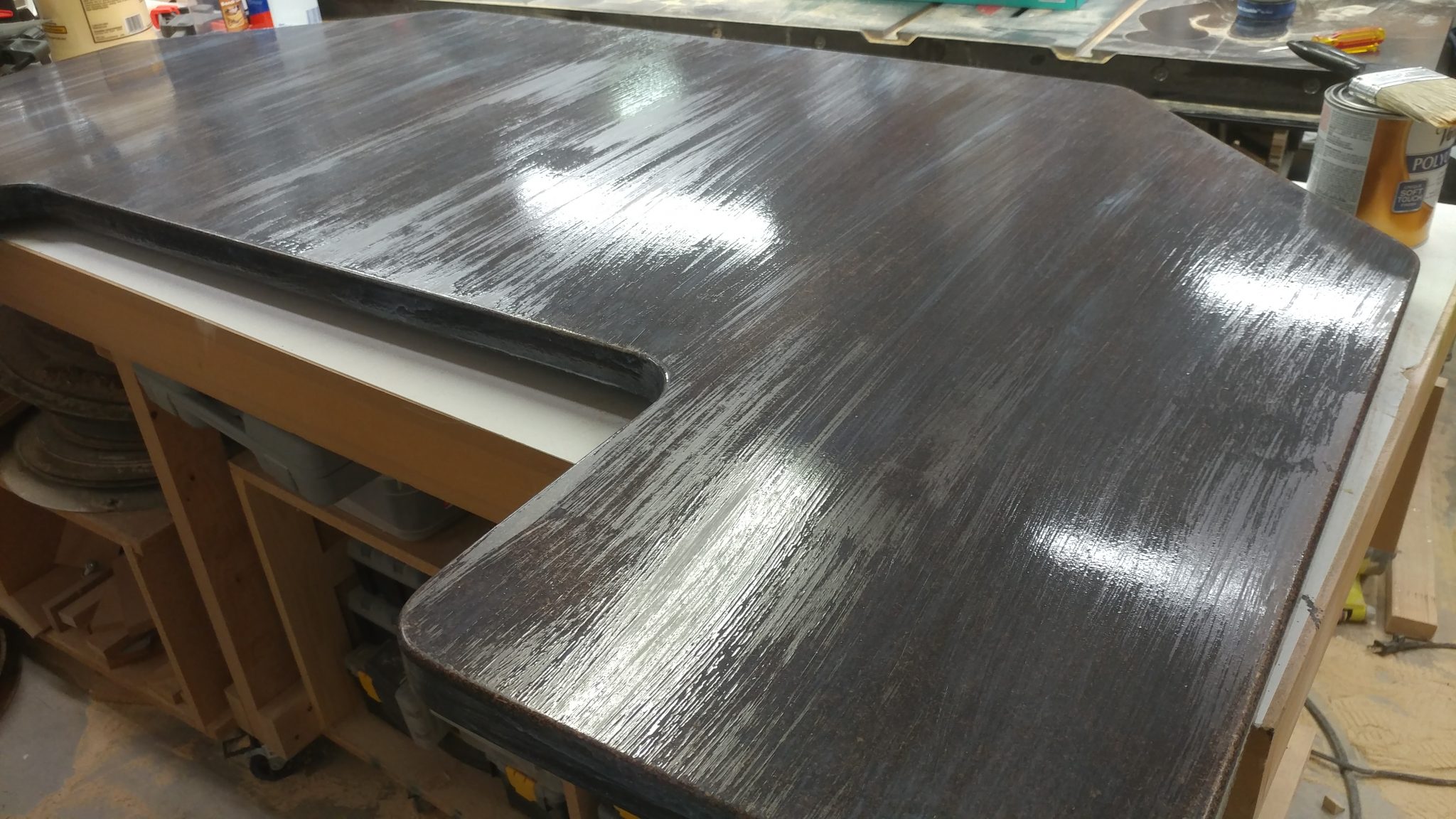
This is really starting to feel ridiculous, but I added a sixth layer of polyurethane.


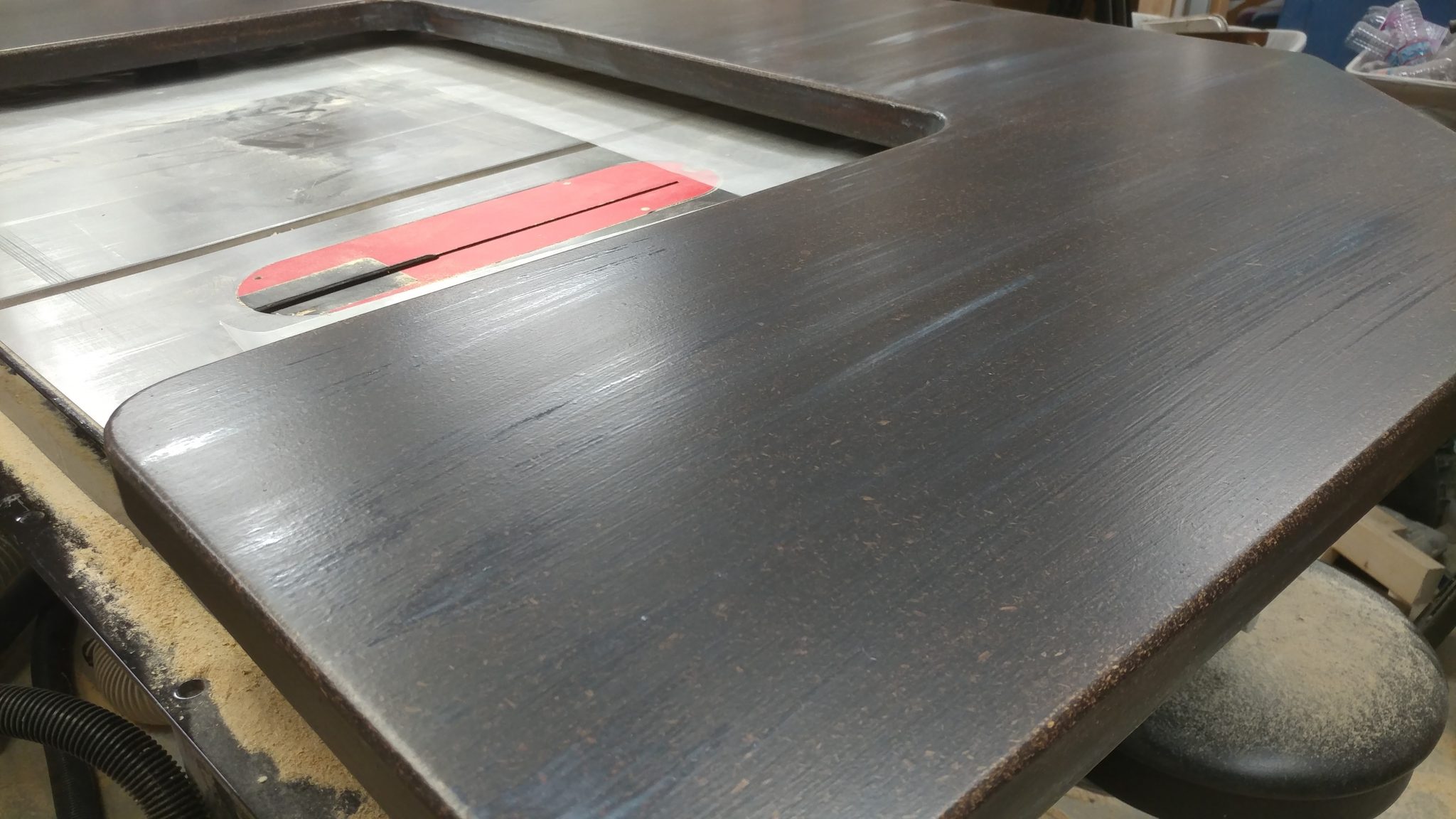
I can still see a few dull spots form the sanding.


A closer look shows the slightly duller areas left over from the sanding.  I am actually pretty happy with the texture at this point but I figured one more coat should hide the rough spots.


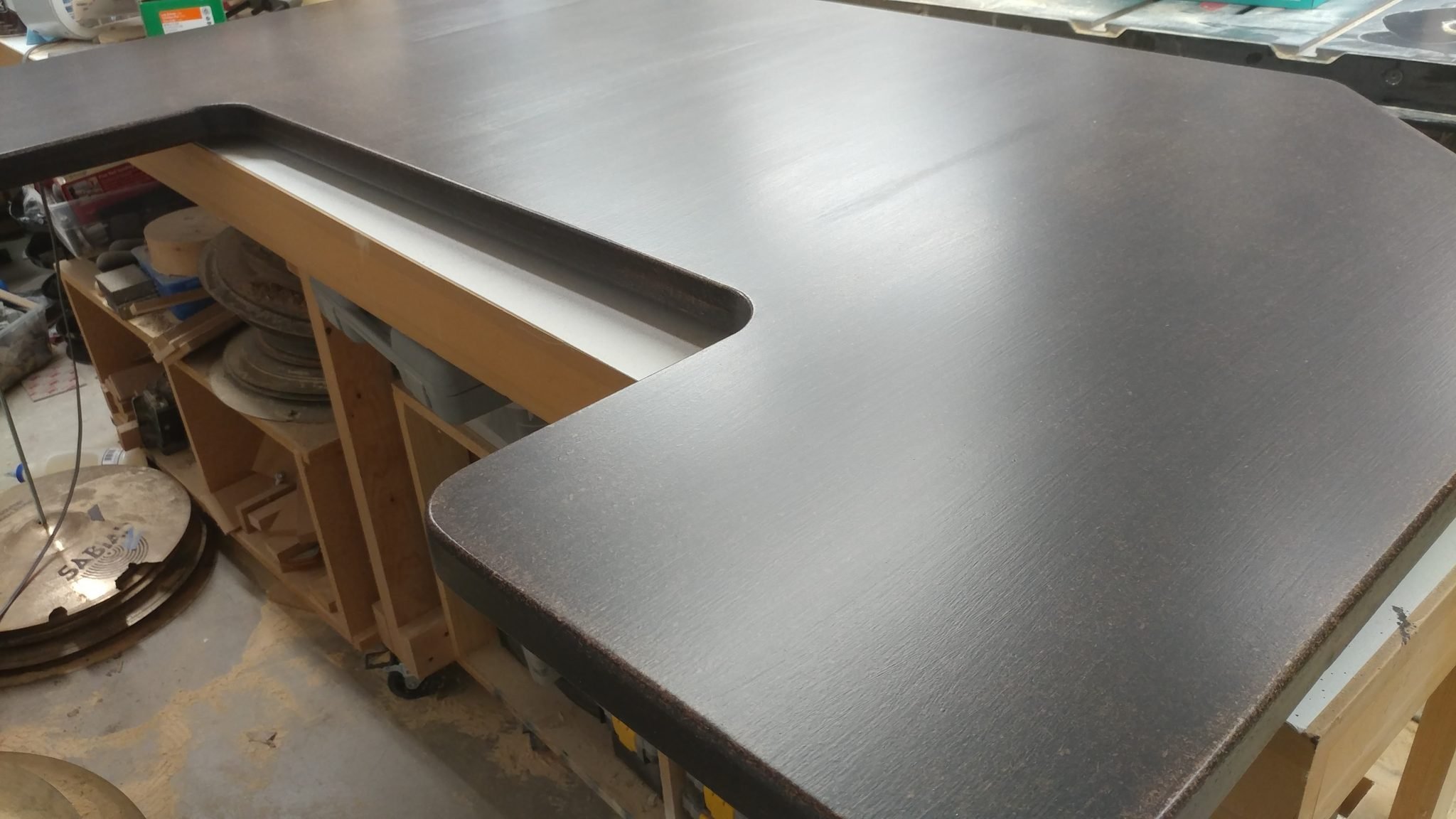
I applied the seventh and final coat.


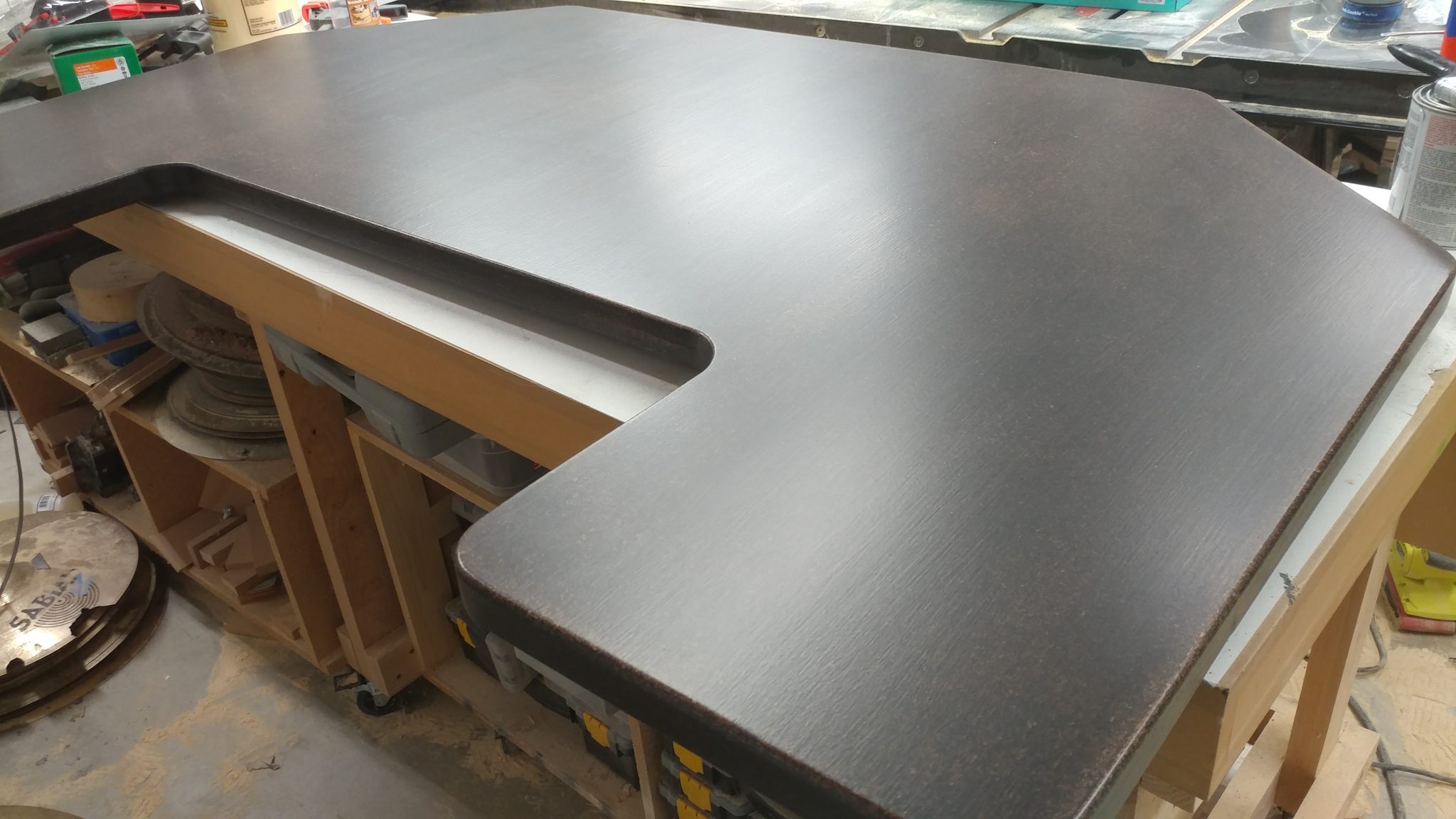
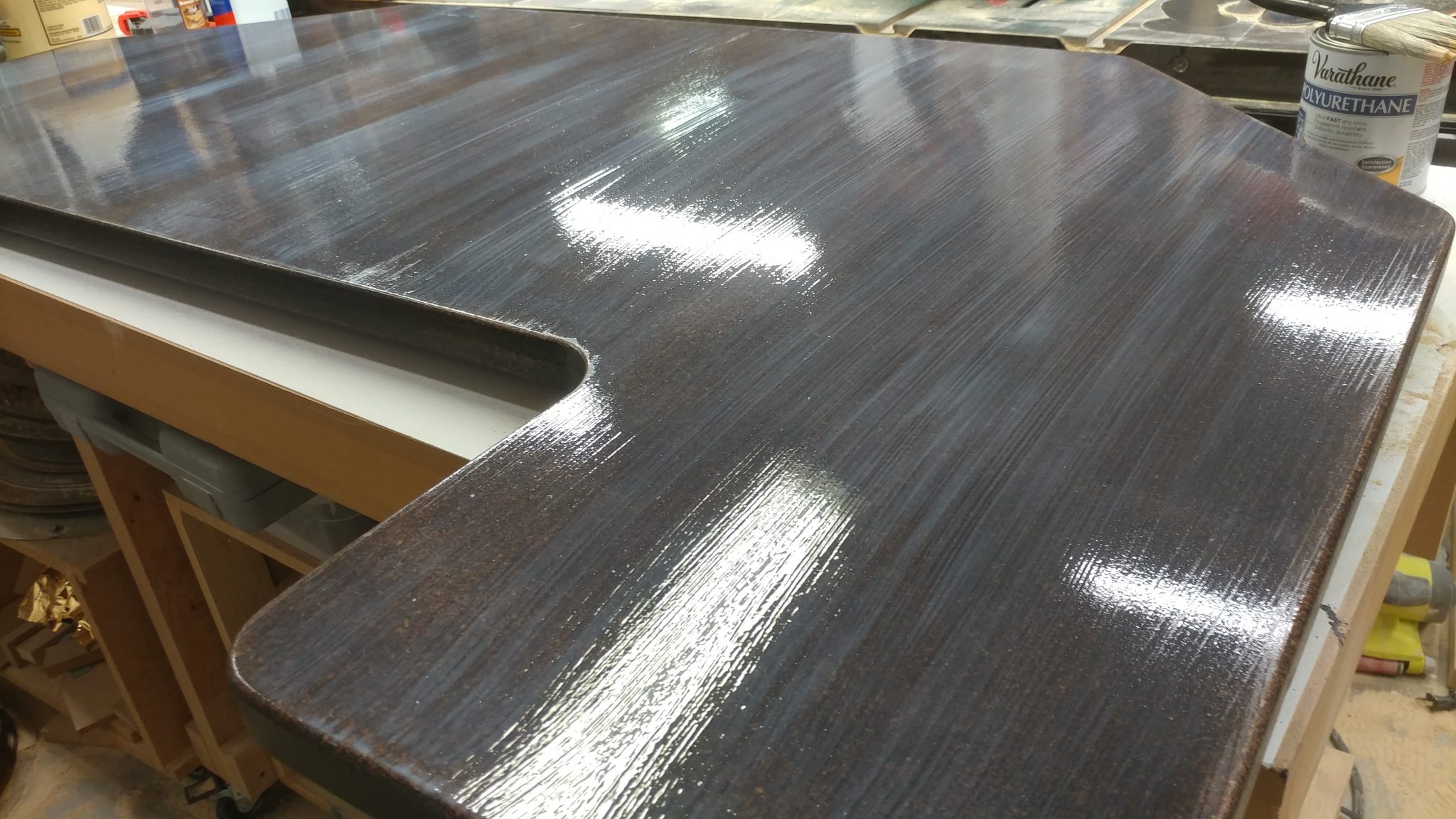
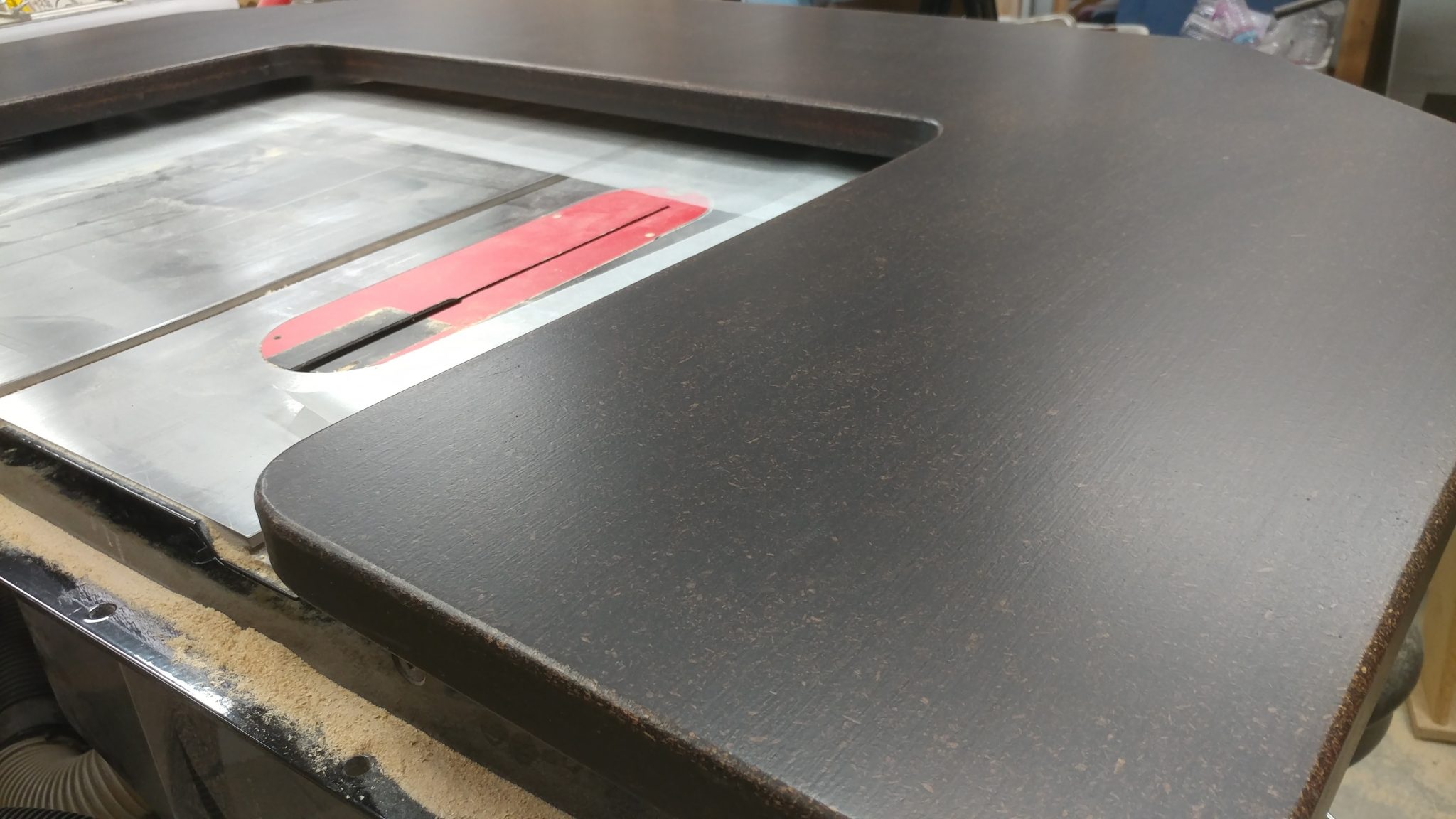
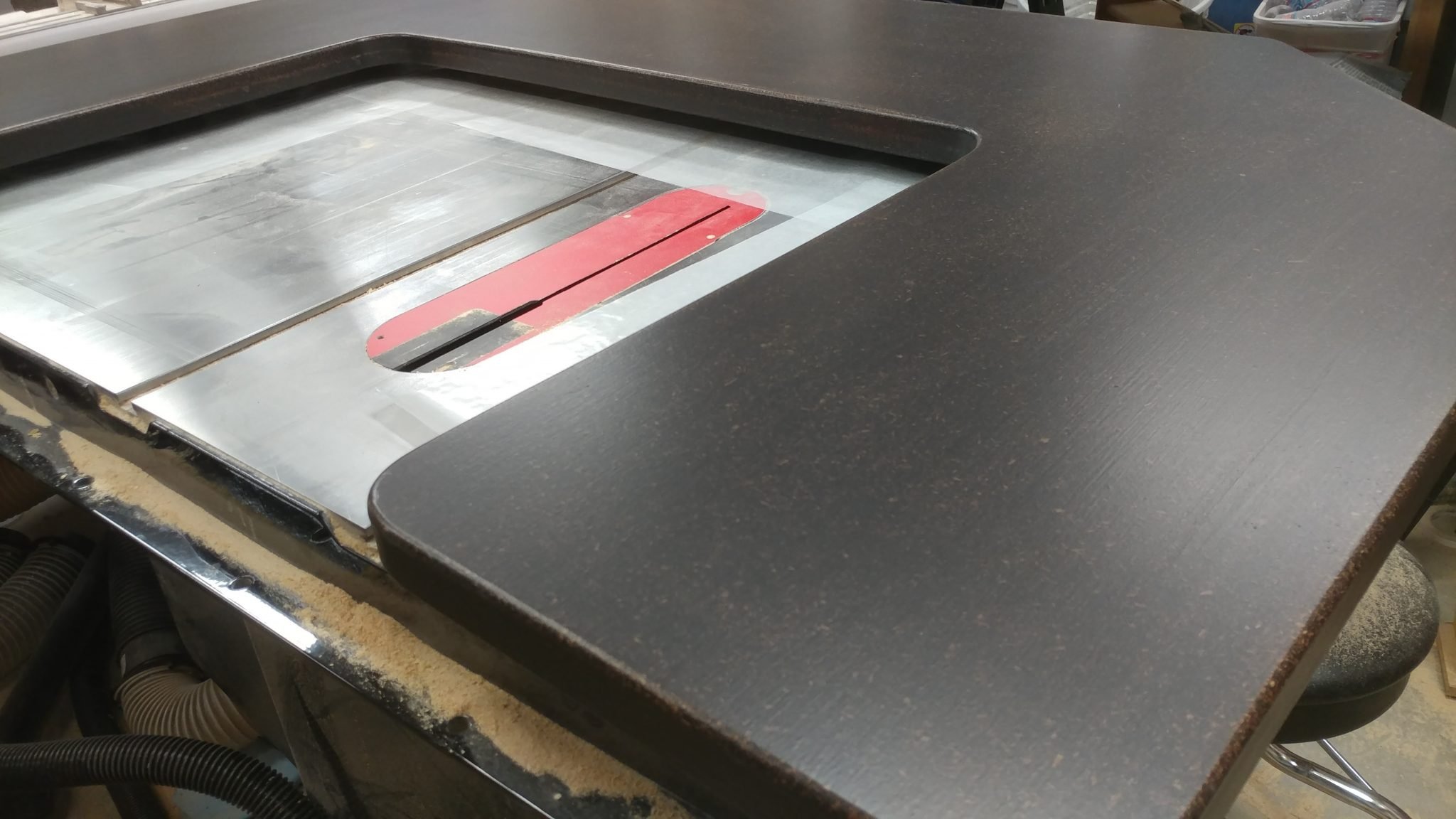
All done.  Now I just need to let it cure for a week.


Applying polyurethane to the lower section

I applied the polyurethane to the lower section in the exact same manner as I did on the upper section.

I first tackled the underside of the lower section.  As with the upper section, I put three coats of polyurethane on the underside.


I let it sit for two days.                     


I flipped it over and applied the polyurethane to the underside.

The first coat.


The second coat.


The third coat.


The fourth coat.


Like the upper section, I sanded the high spots after the fourth coat.


The fifth coat.


The sixth coat.


I didn’t get a photo of the seventh coat after it had dried but here it is shortly after applying the final coat.


Applying polyurethane to the racks

Again, I applied three coats to the undersides of the racks and seven coats to the sides that will be seen.

I wanted to try something different with the racks.  Instead of using glue and sawdust, I tried Elmer’s Wood Filler.  I applied some to all of the seams then sanded it flat.  This stuff doesn’t accept stain very well and I wanted to see how it would look since I’m going for a rough industrial look.  You can see some applied near the edges of the racks.  It shows up as lighter spots.  Personally, I think they add some texture and character.  Elmer’s makes a stainable wood filler but I wanted a rough look here so I went with the regular kind.


I added the first coat.


Then the second.


And the third.


Then the fourth.


I lightly sanded the racks after the fourth coat.


Then I applied the fifth coat.


And the sixth.


Then finally the seventh.


This concludes part 4.


Closing remarks

I think I succeeded in getting the finish how I originally wanted it, but I’m not so sure how much I like it now that it’s complete.  I guess I’ll grow accustomed to it over time.  Also, I can just remake them if I don’t like it.


The next step is to attach the hardware then install and configure the electrical components.


If you have any suggestions, please leave them in the comments below.  I’d love to see any desk builds you’ve done.  Also, if you haven’t already, please consider signing up for my mailing list so you get e-mail notifications when I post new articles.


Studio Desk – Part 3: Assembling the Racks

The top and bottom are ready to be stained and finished.  I’m going a bit out of order at this point.  I have already finished the top and the underside of the bottom but I’m going to bundle that in with my next post.  Here, I’m going to show how I assembled the carcases for the racks.

If you look closely, you will notice the stained desk bottom in the background of some of these photos.


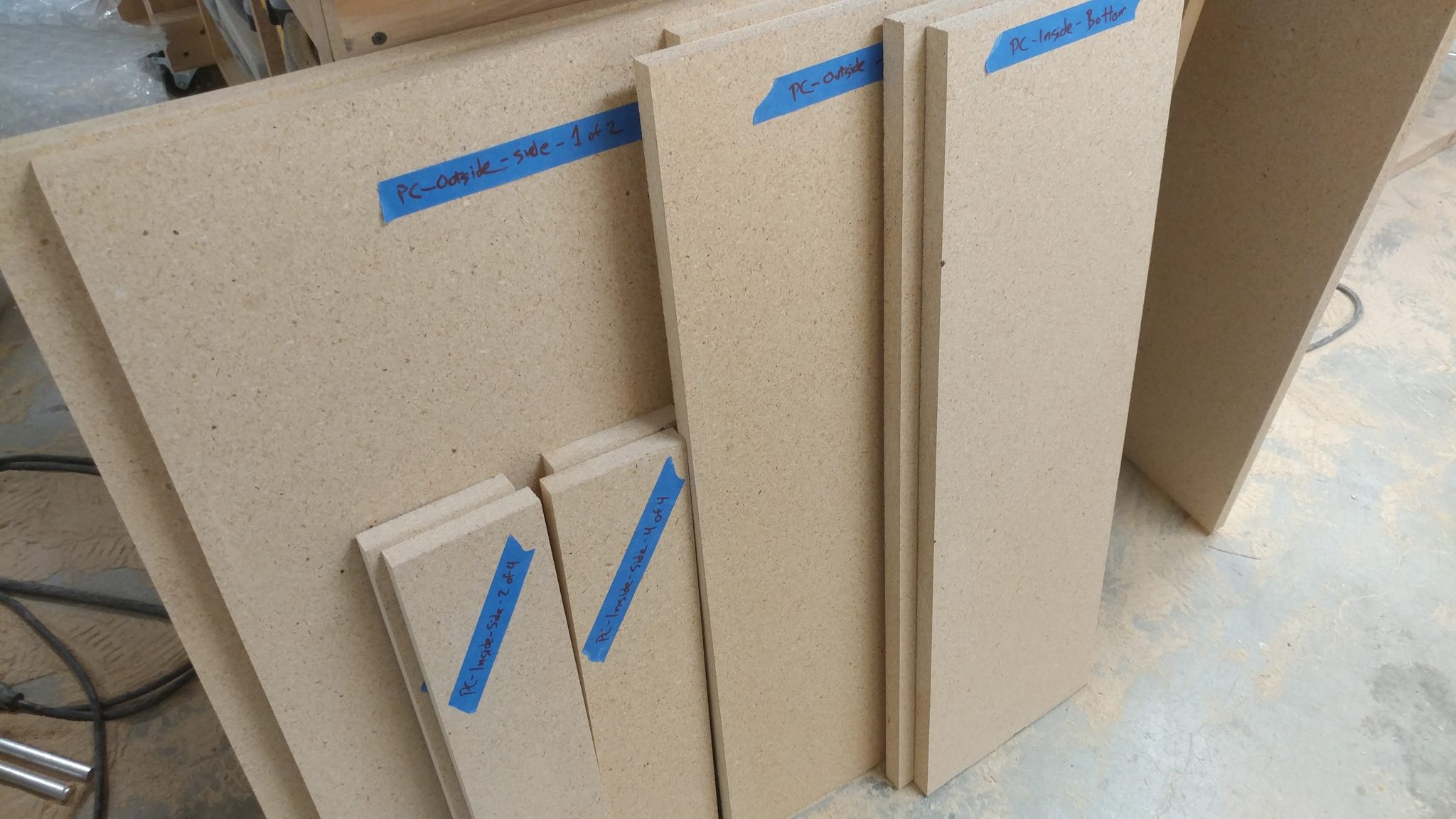
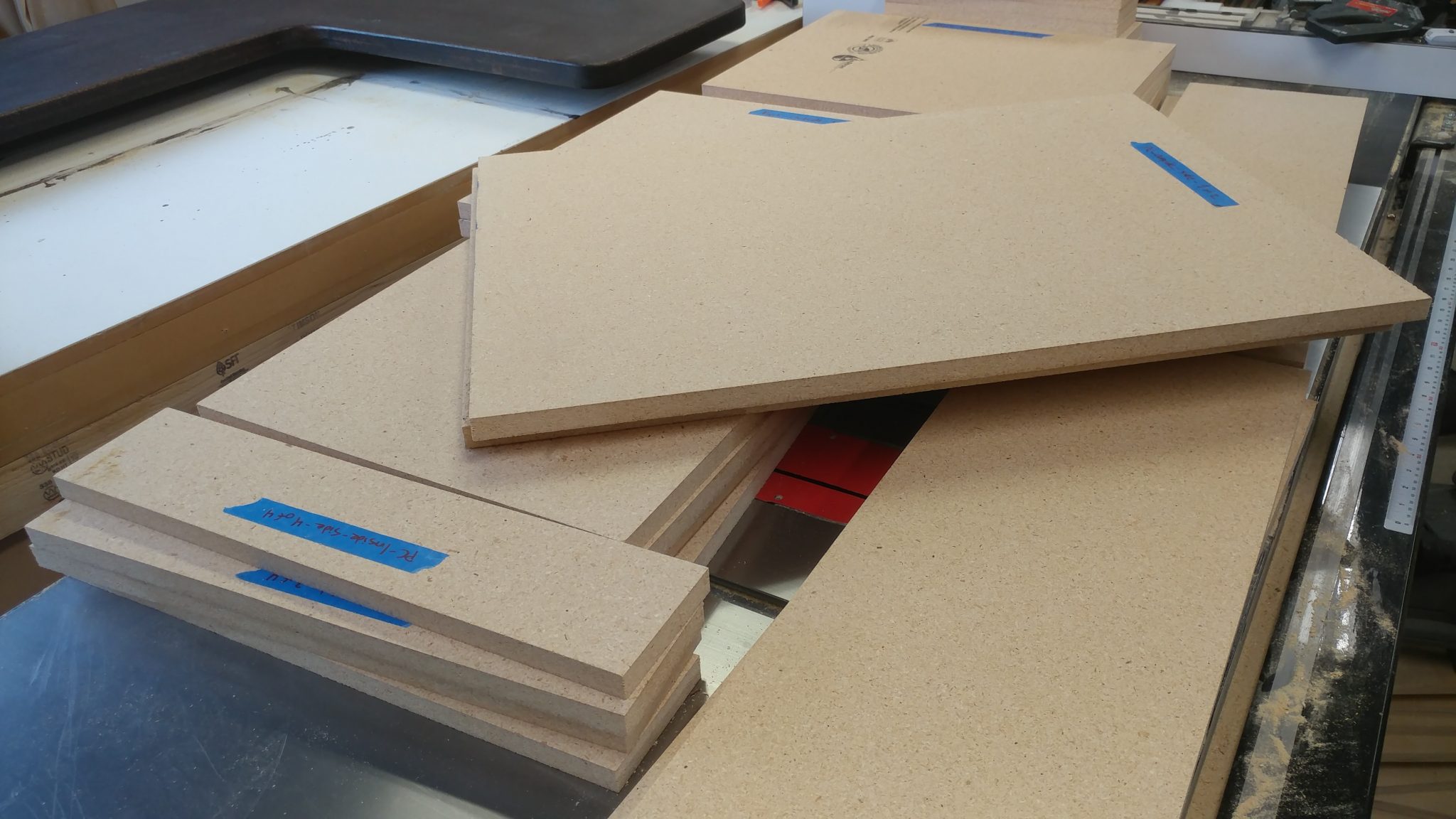
I started with the boards all cut.  I’m not going to show you how I did this since it’s just a bunch of cutting at the table saw and is quite boring.  For something like this, I think it’s really important to clearly label the pieces.  I did this with blue painters tape and a Sharpie.


Assembling the PC Case

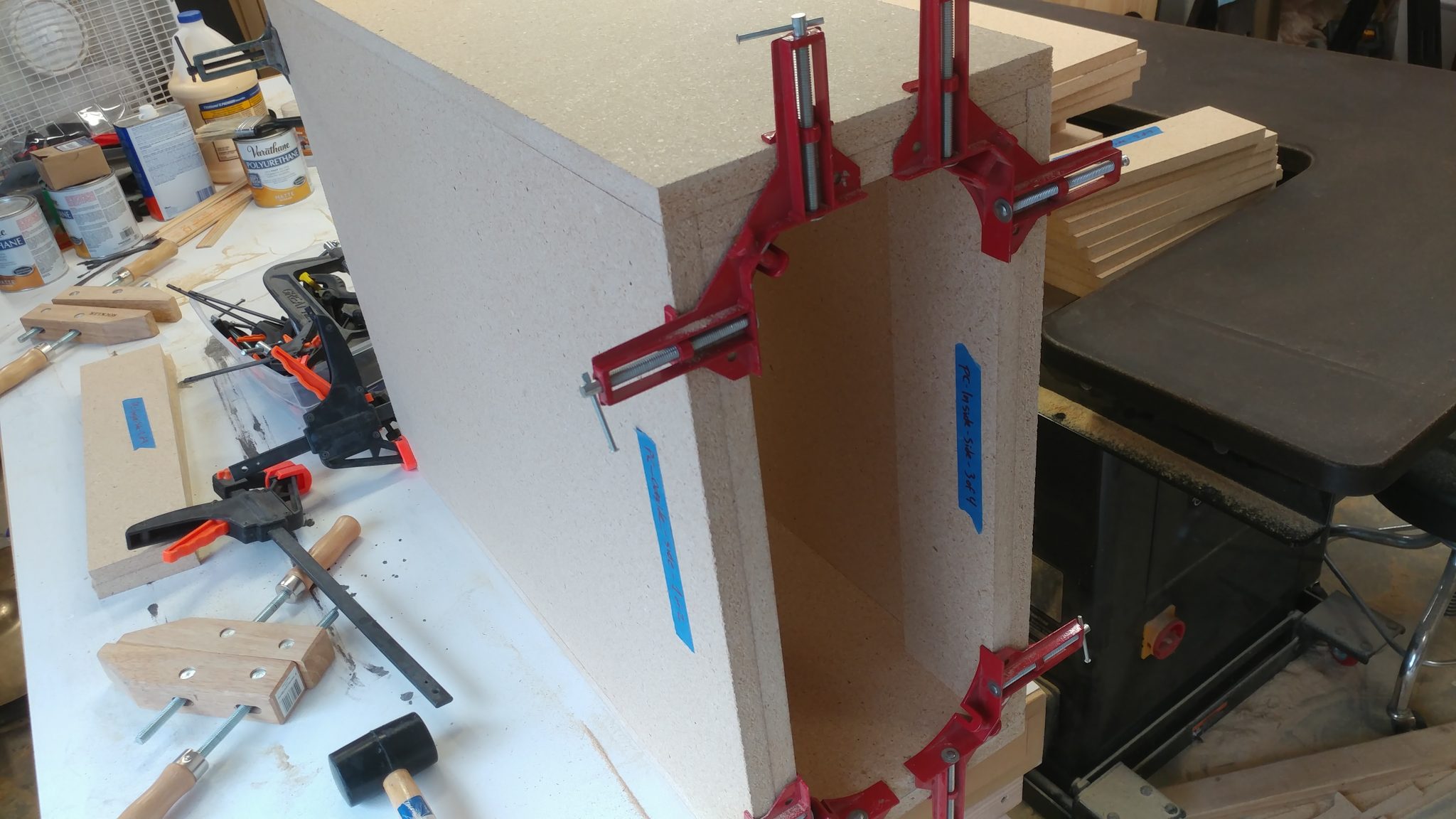
Before doing any glue-up I like to do a dry fit just to make sure I haven’t screwed anything up.  I did this with some corner clamps and a quick-release clamp.  Everything looks good.


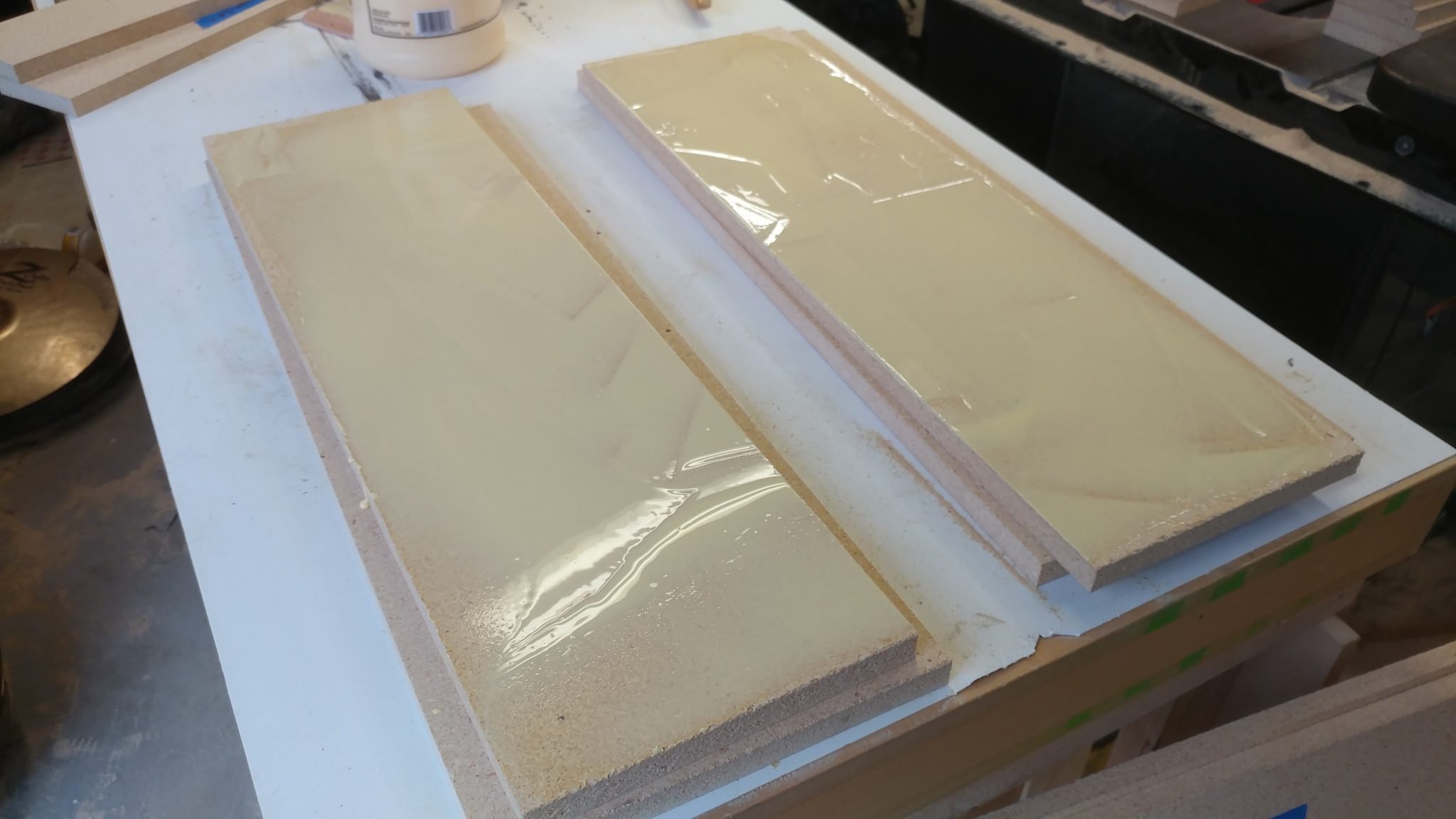
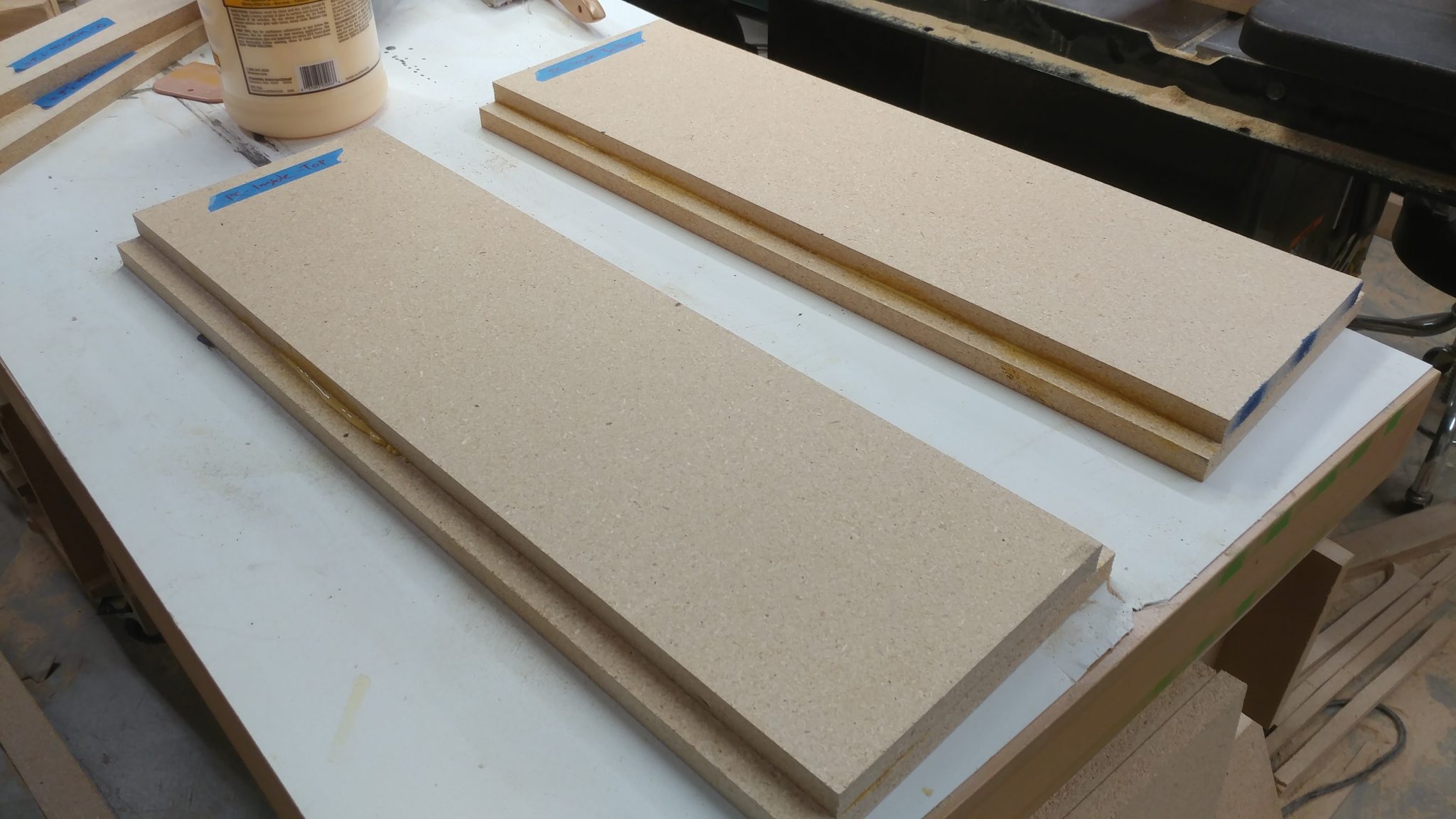
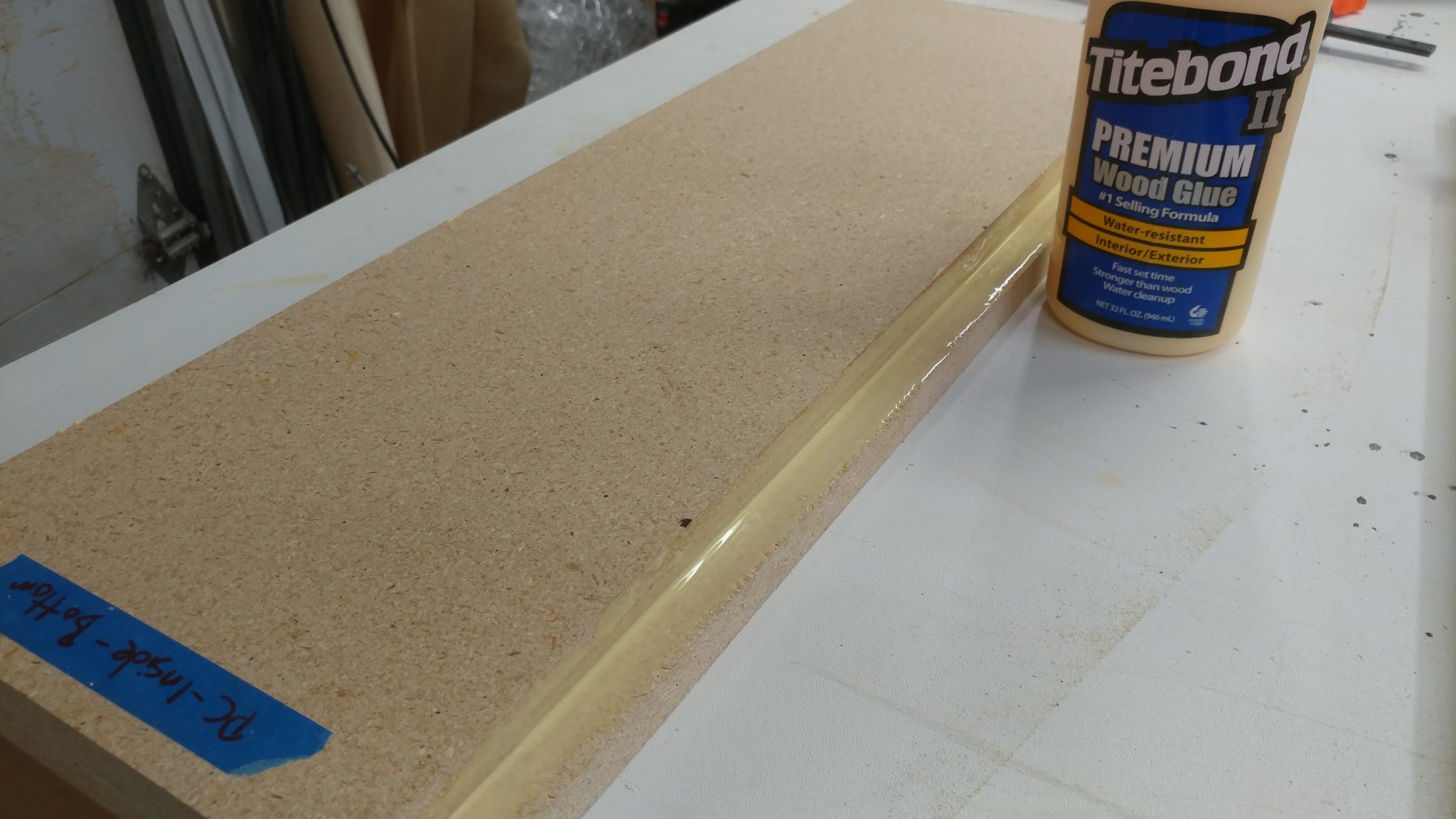
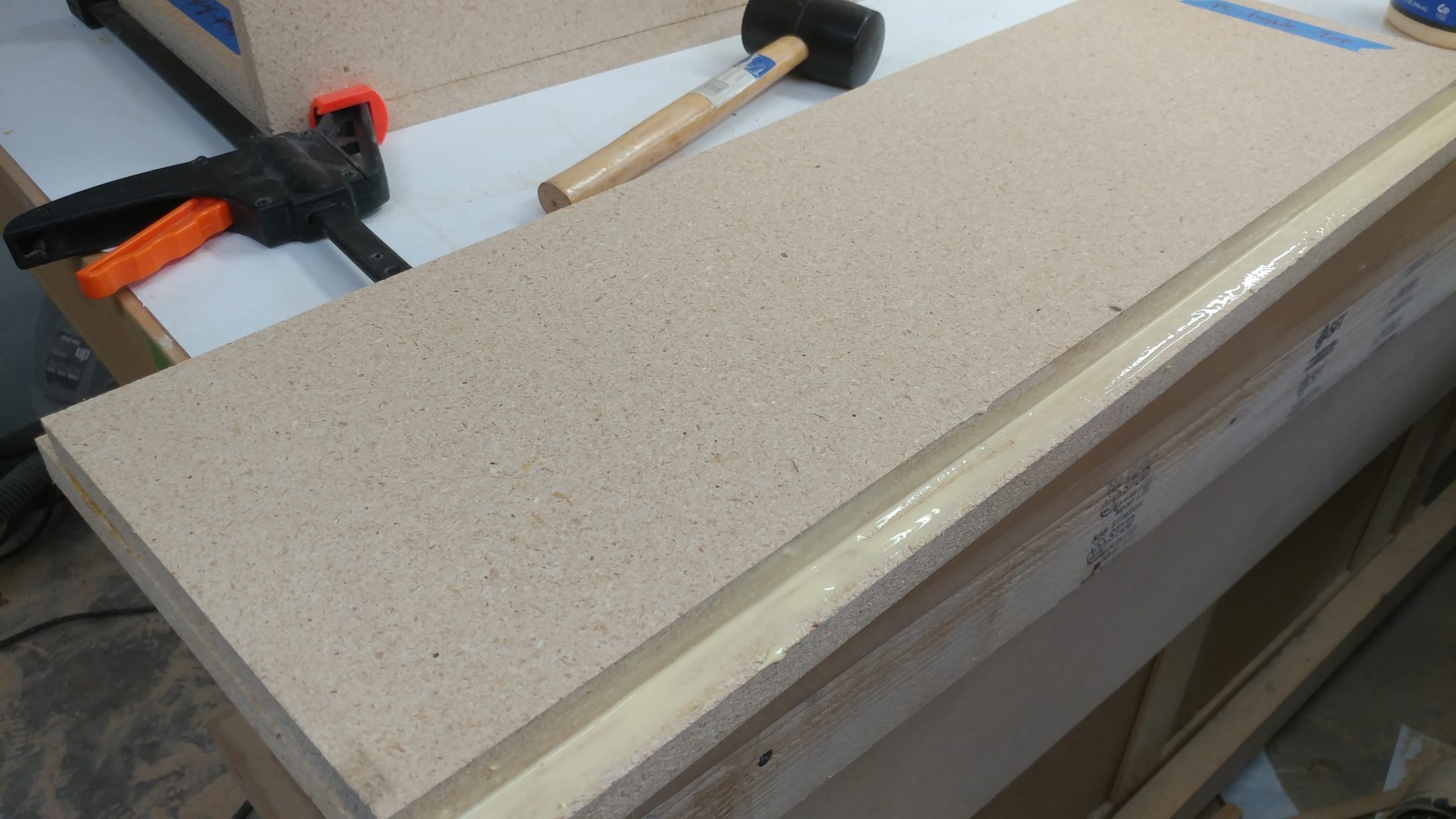
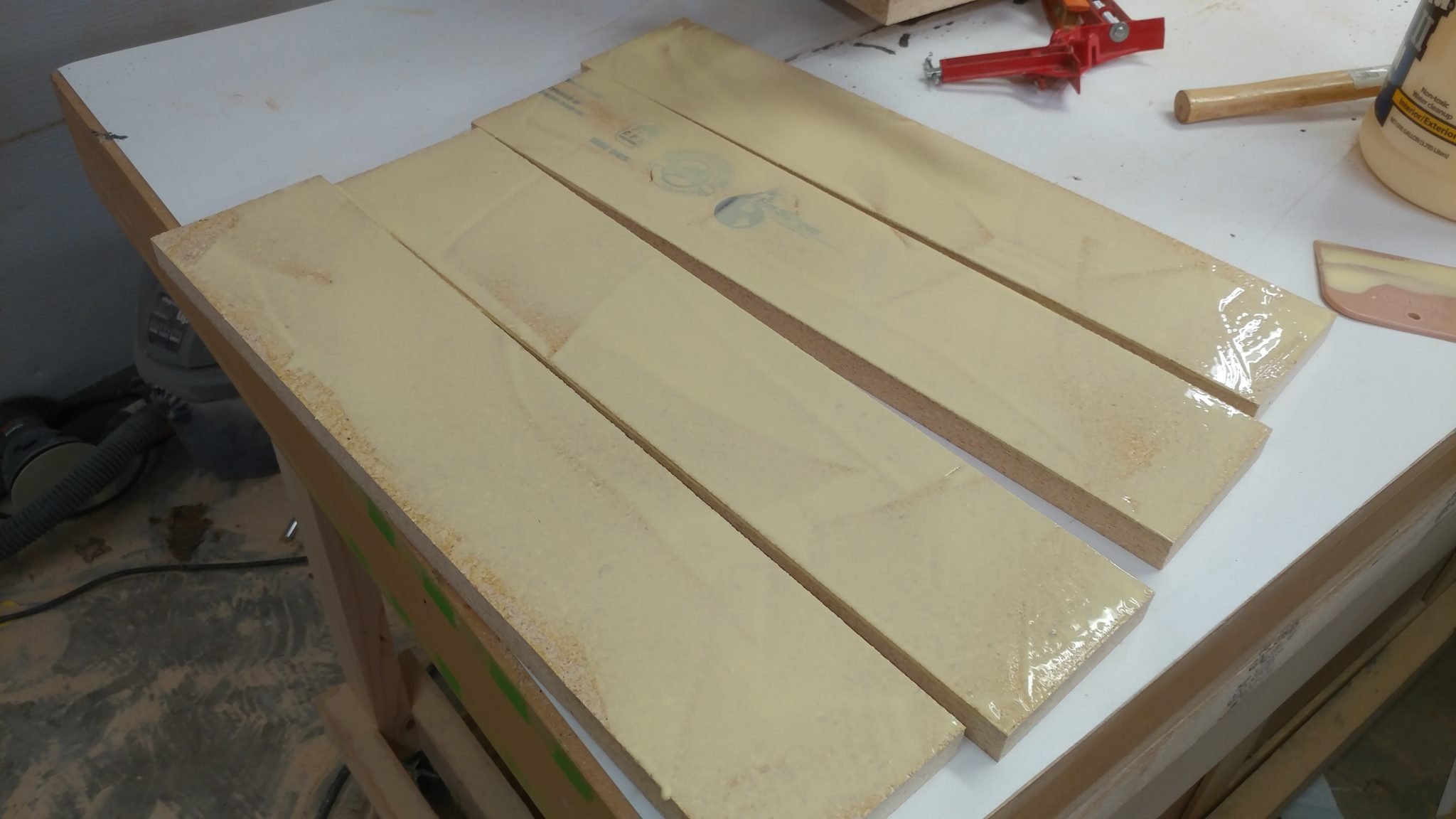
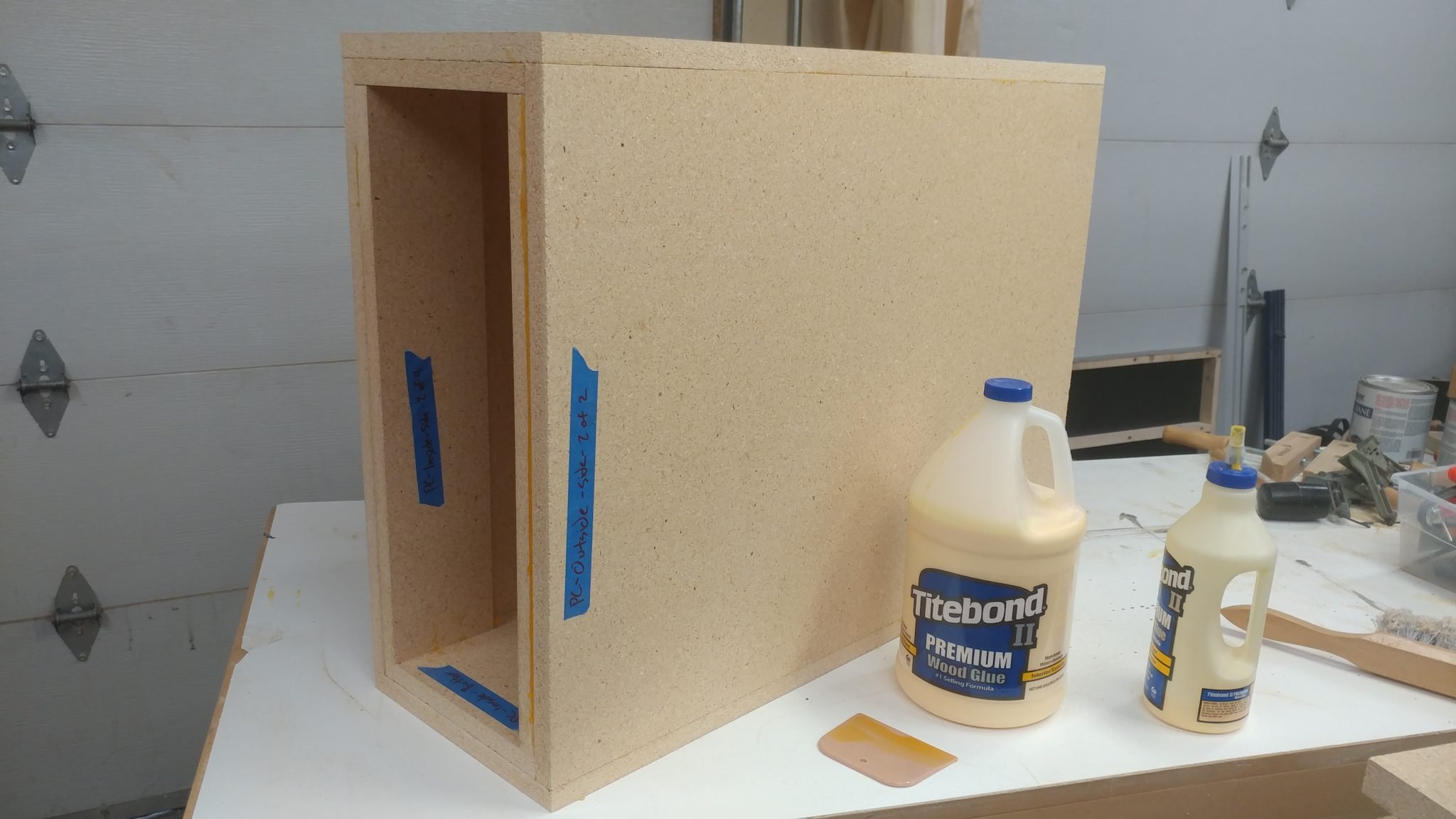
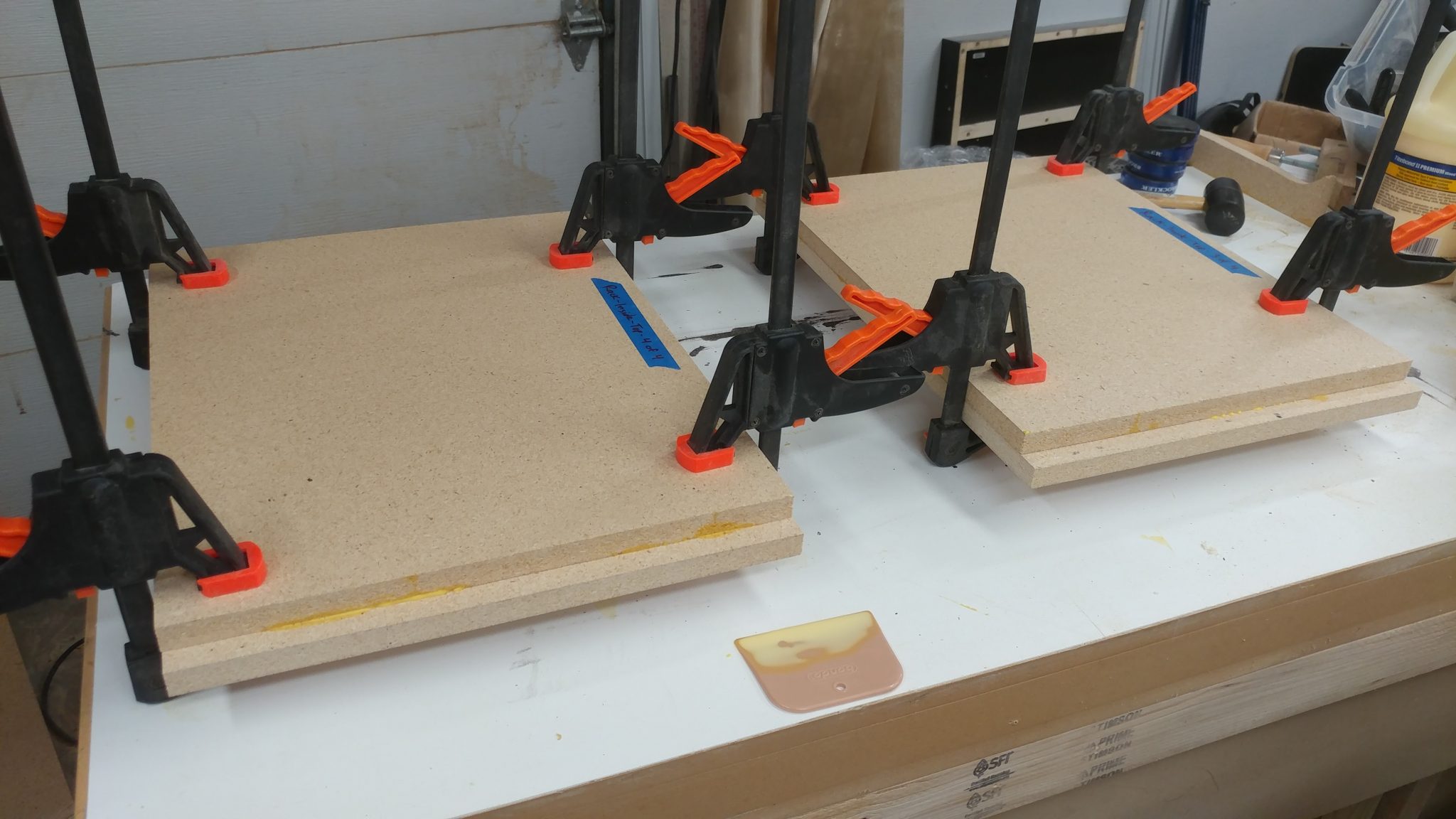
I decided not to have any visible fasteners on the wooden parts of the desk so I’m holding the whole thing together with a butt-load of Titebond II wood glue.  Here, I am attaching the inside of the tops and bottoms to the outside of the tops and bottoms of the PC case.  I spread a good amount of wood glue on the underside of the insides…


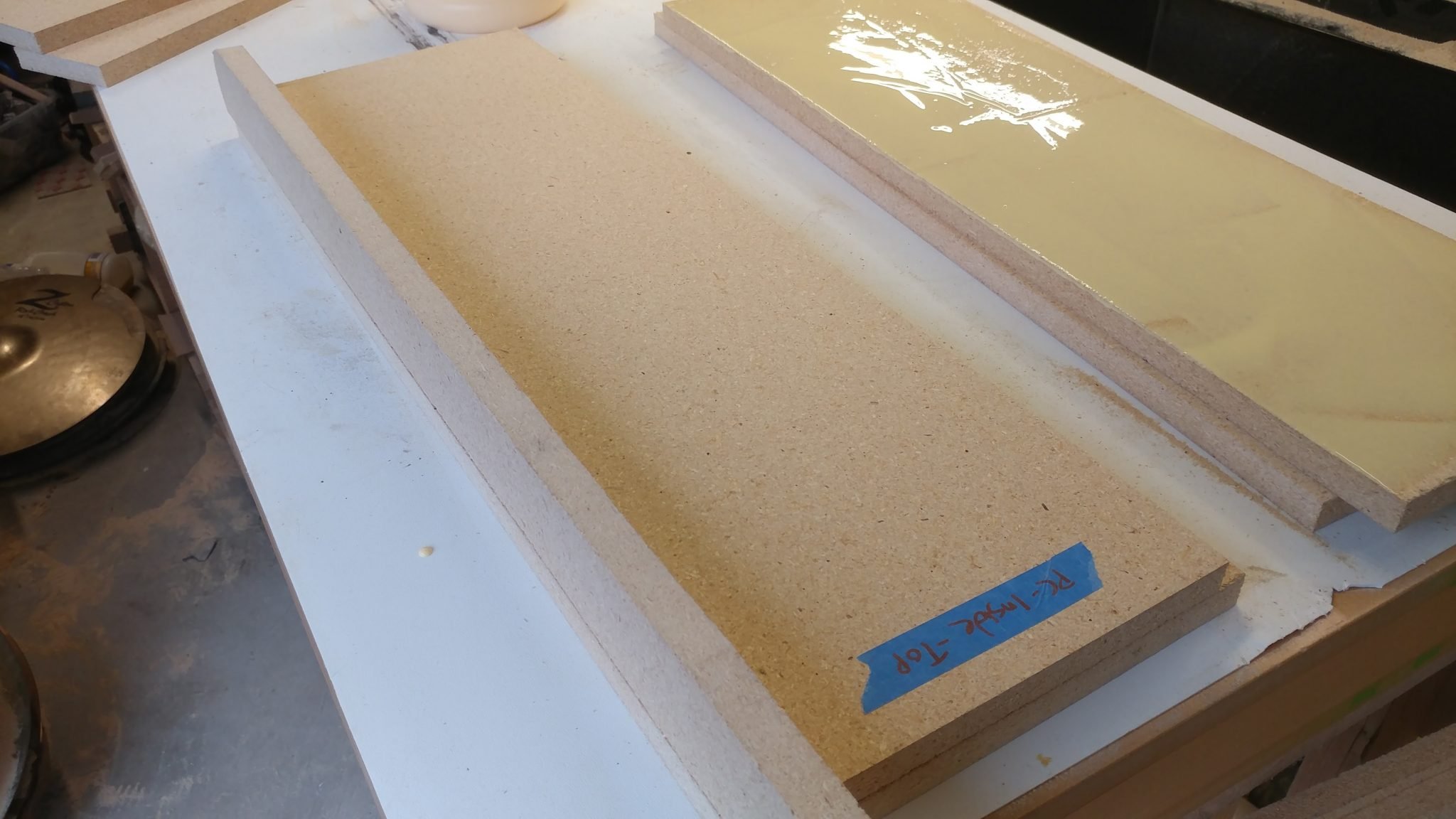
…then flip them over and lay them on the outsides.  I used a scrap piece of 3/4″ particleboard up against the inside piece to ensure that they are positioned correctly.


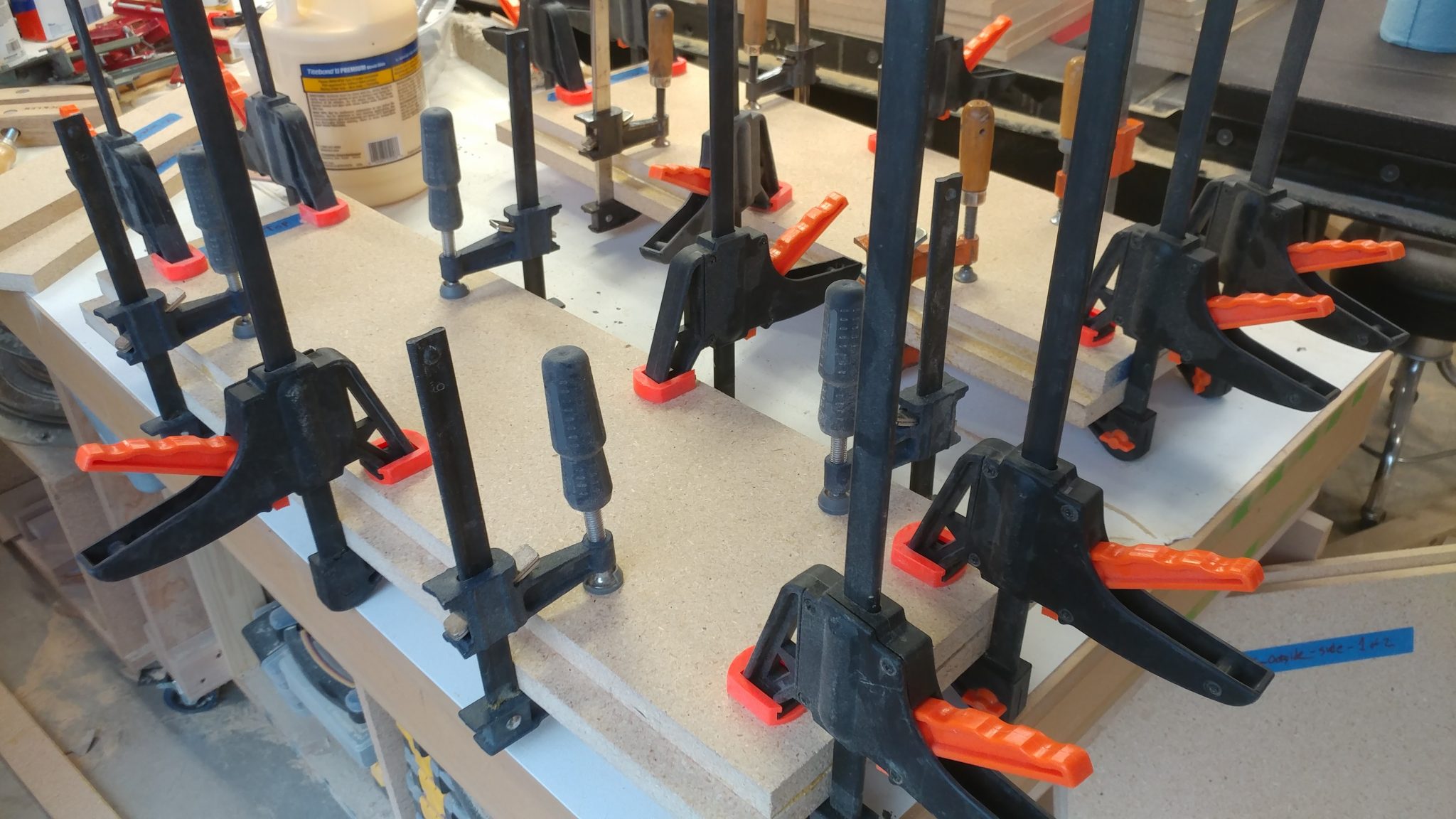
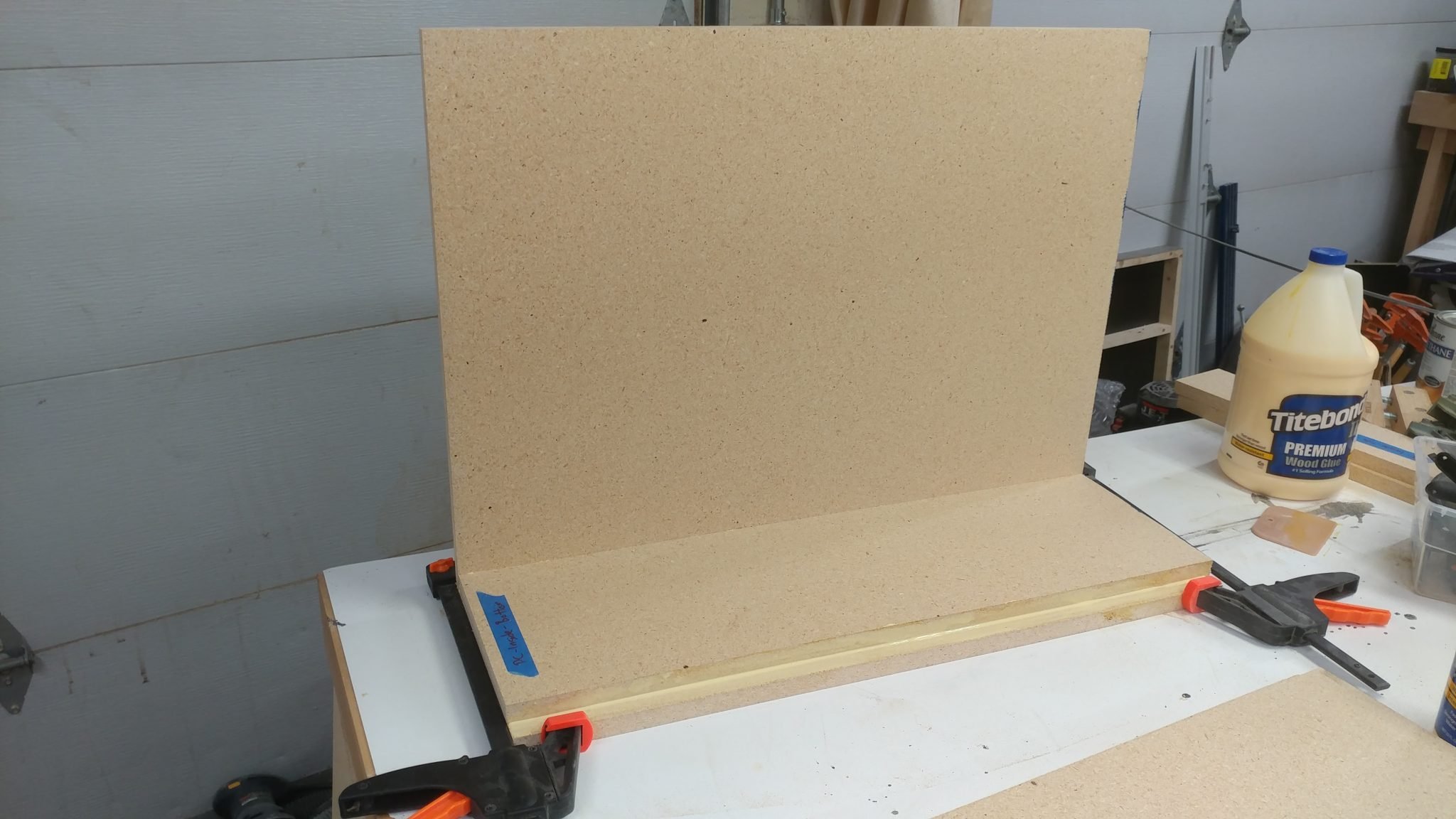
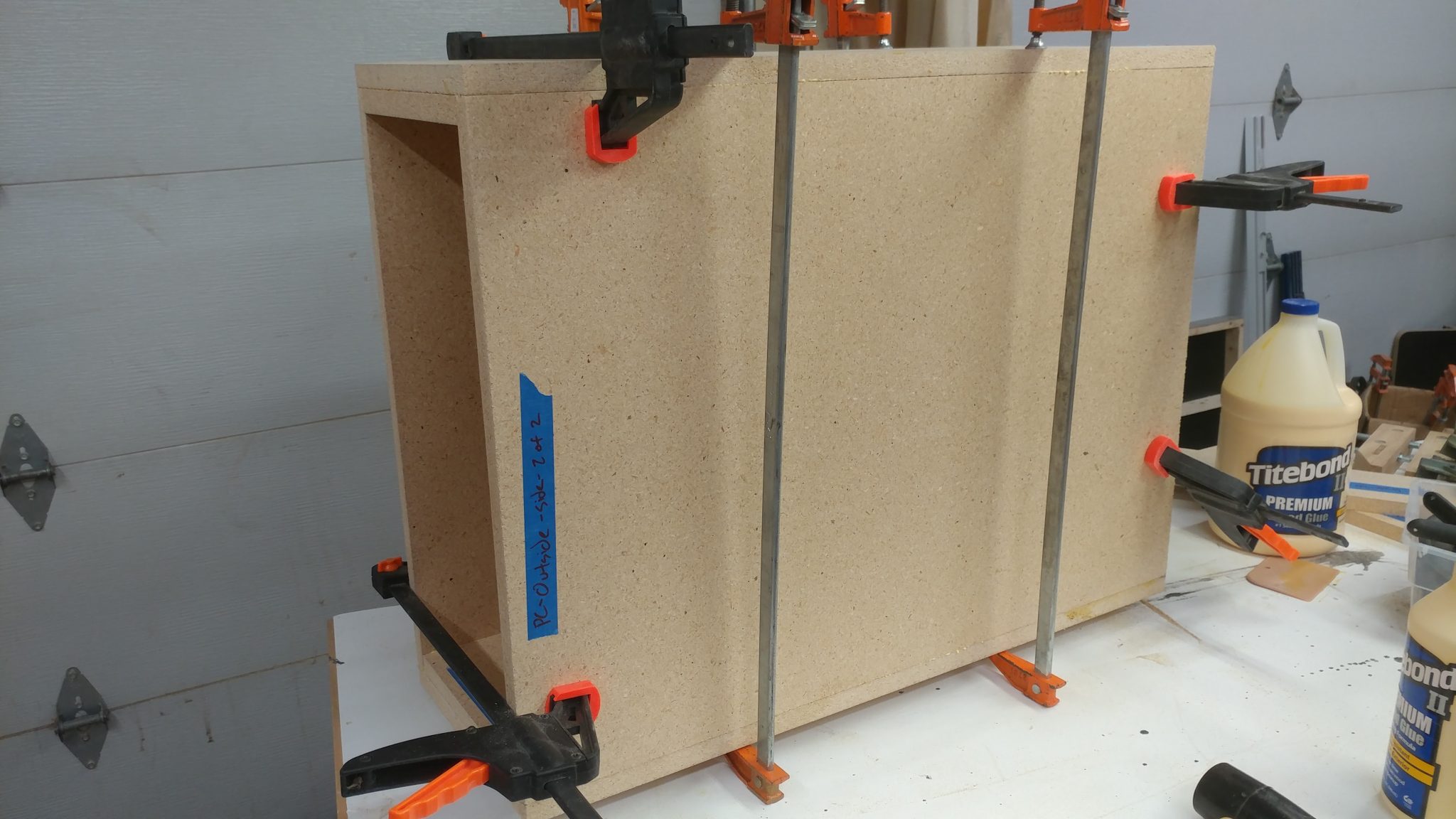
Then I clamped it all up and let them sit for about a half hour.


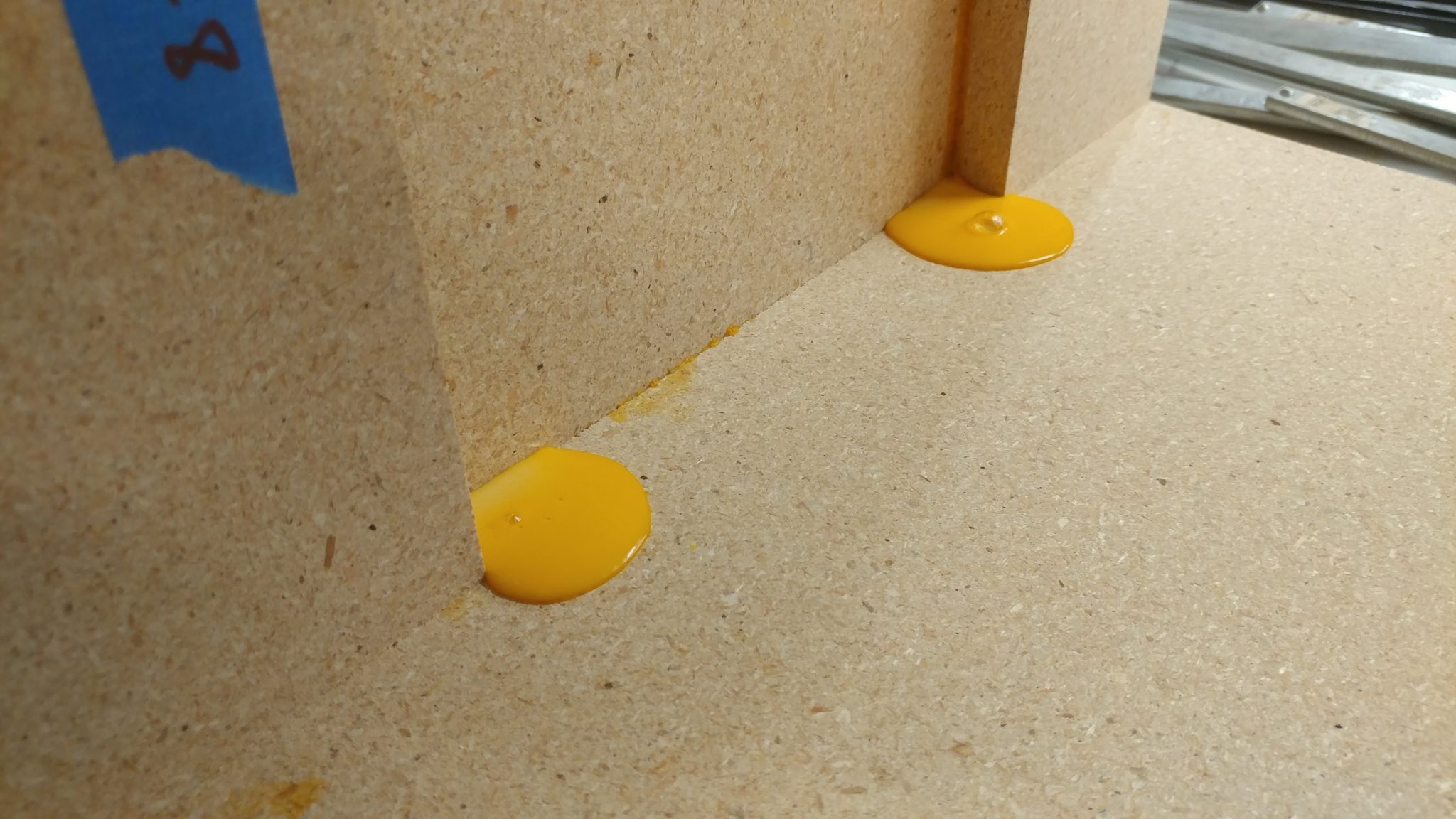
I tend to over-glue (as you’ll see in a bit) so there is usually some squeeze-out that I have to clean up.  For particle board I prefer to let it cure quite a bit then come back with a chisel to take the glue beads off. In this case I wasn’t allowing enough time for the glue to cure so I had some messy blobs to work around.  This wasn’t a problem as you’ll see in the next step.


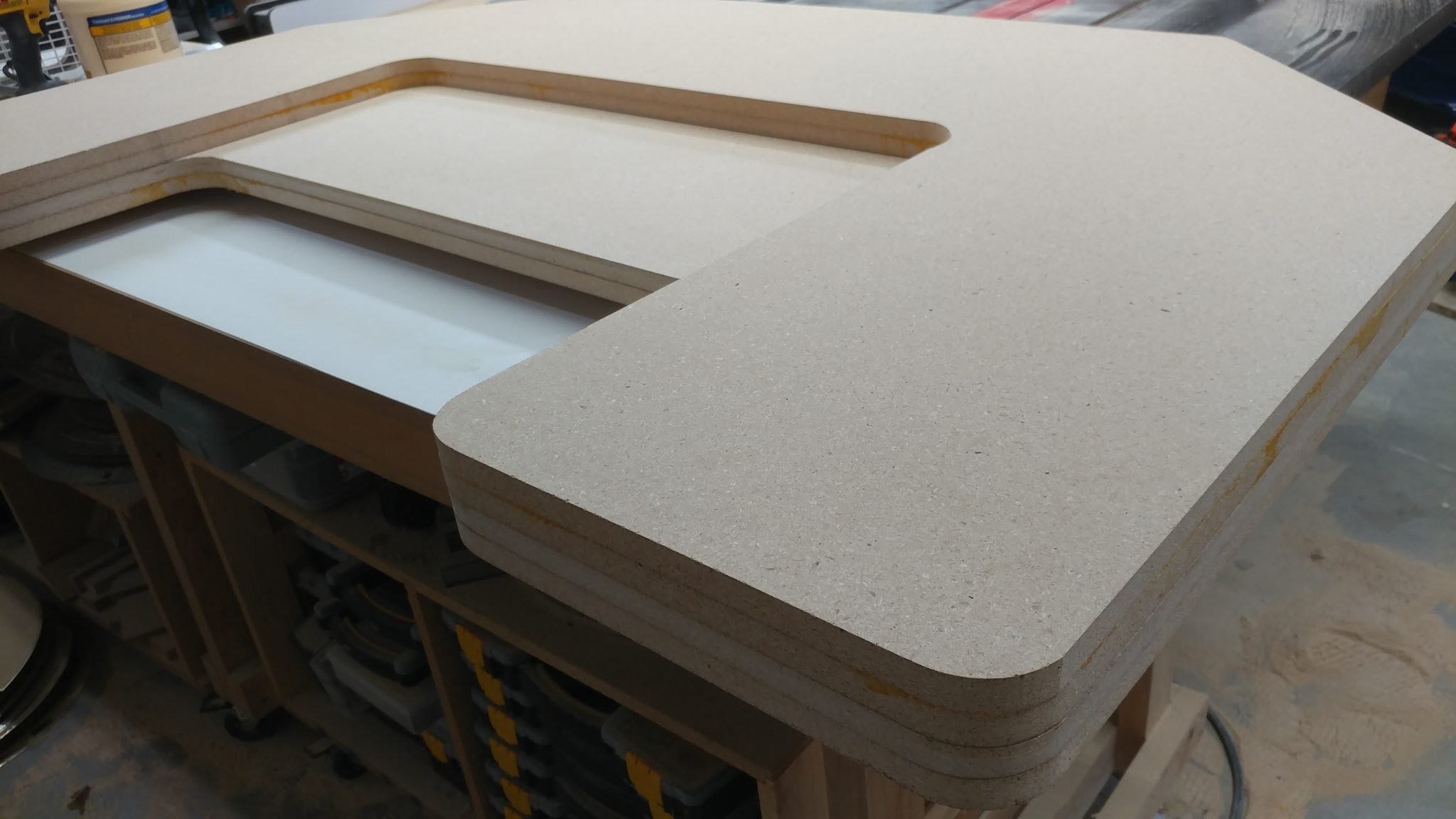
The two pieces glued up effectively make a piece that is 1-1/2″ thick with a 3/4″ X 3/4″ rabbet along two edges.  I applied glue along these edges so I could attach the sides.


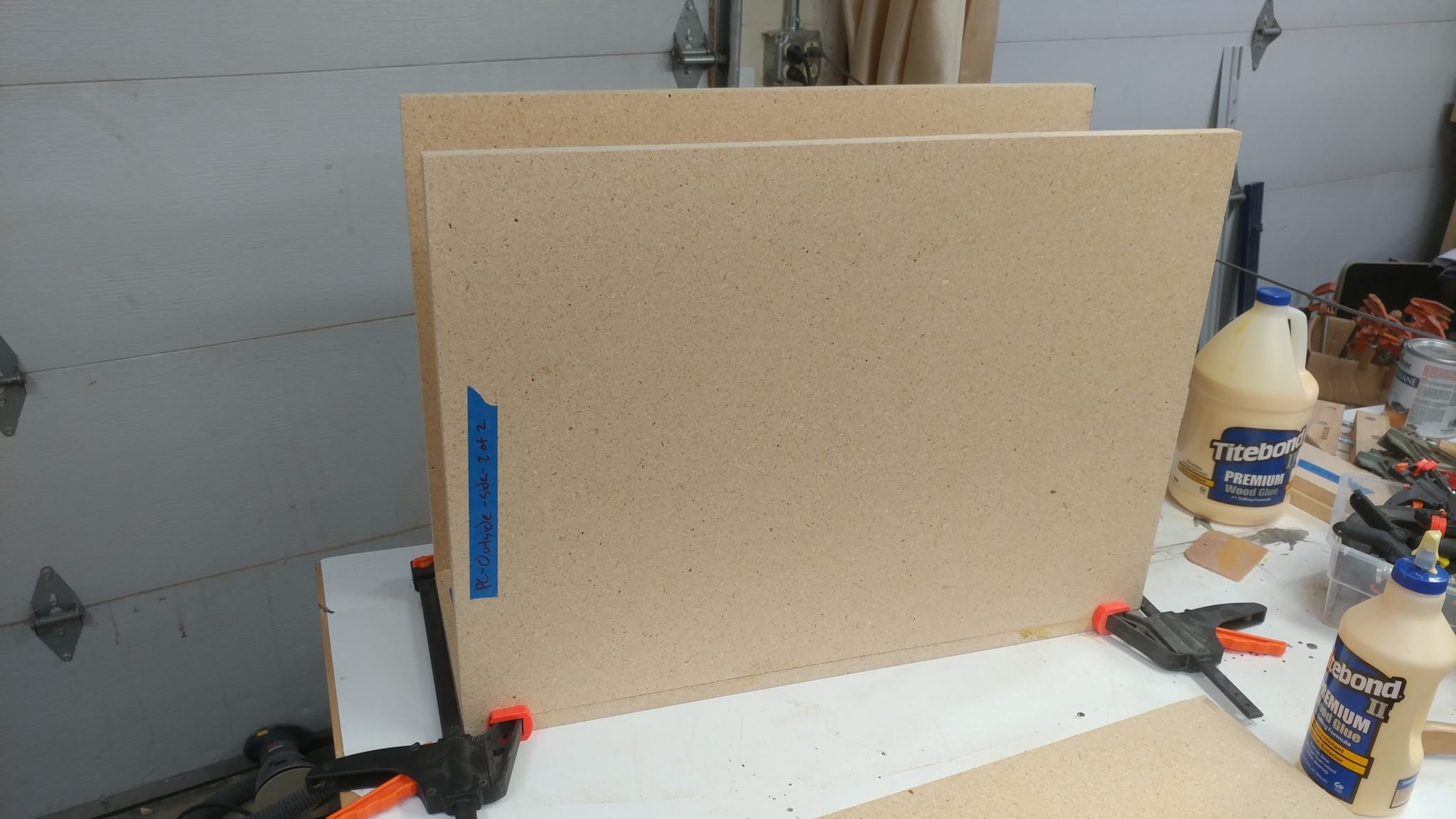
I used quick release clamps to hold one side in place while I maneuvered the second side in place.


The same quick-release clamps held both sides in place so I could drop the top assembly in place.


The top is just like the bottom so I added glue to the rabbets.


I dropped the top part in place and  kept the clamps loose enough so I could  nudge the pieces so they were well aligned.


Rather than make the side pieces on the inside of each rack the entire length of the rack itself, I made them 4″ wide.  This will accomplish a few things.  It will lighten each rack a bit, although they still weigh a ton.  Mainly, they will aid with airflow.  Also, I’m installing cable pass-through grommets and they work best when the material they are going through is 3/4″ thick.  I cut four pieces for the sides of each rack and slathered on the glue.


I then clamped them in place.


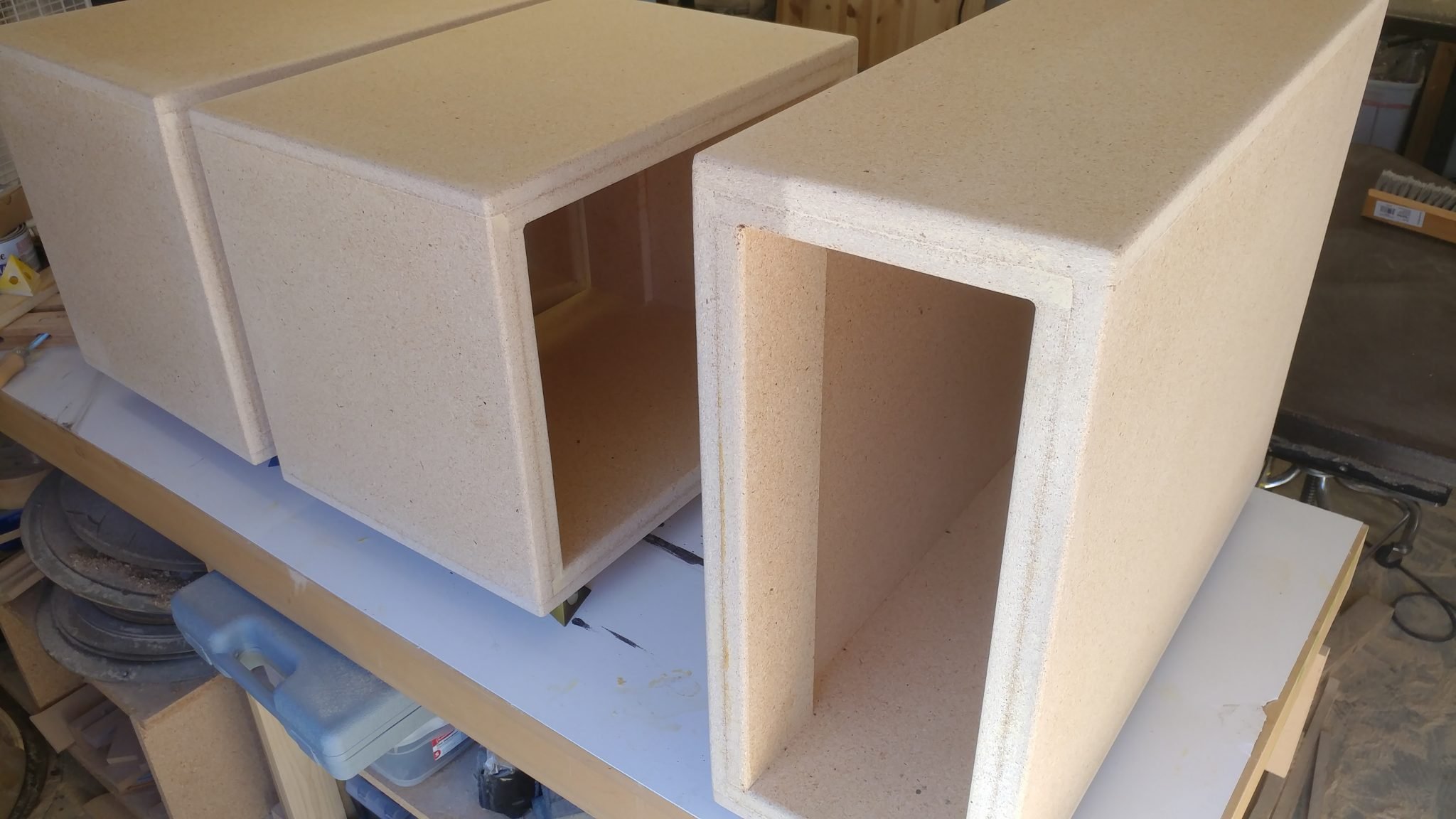
After letting it sit overnight, the PC rack is assembled and ready to be shaped and cleaned up.


Assembling the Two Racks

I then repeated the process for the equipment racks.  The tops and bottoms were glued up and ready to be assembled with the sides.


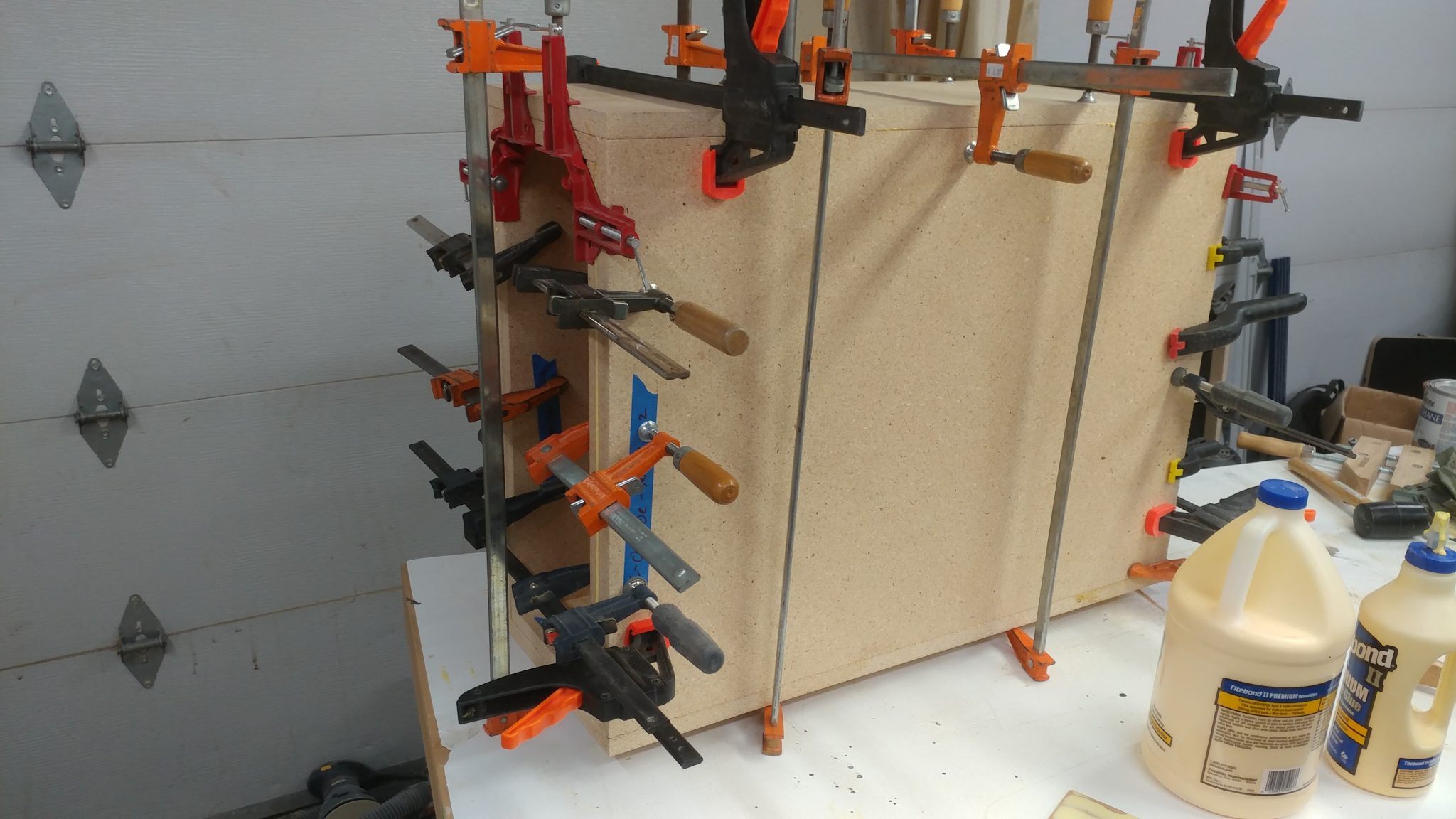
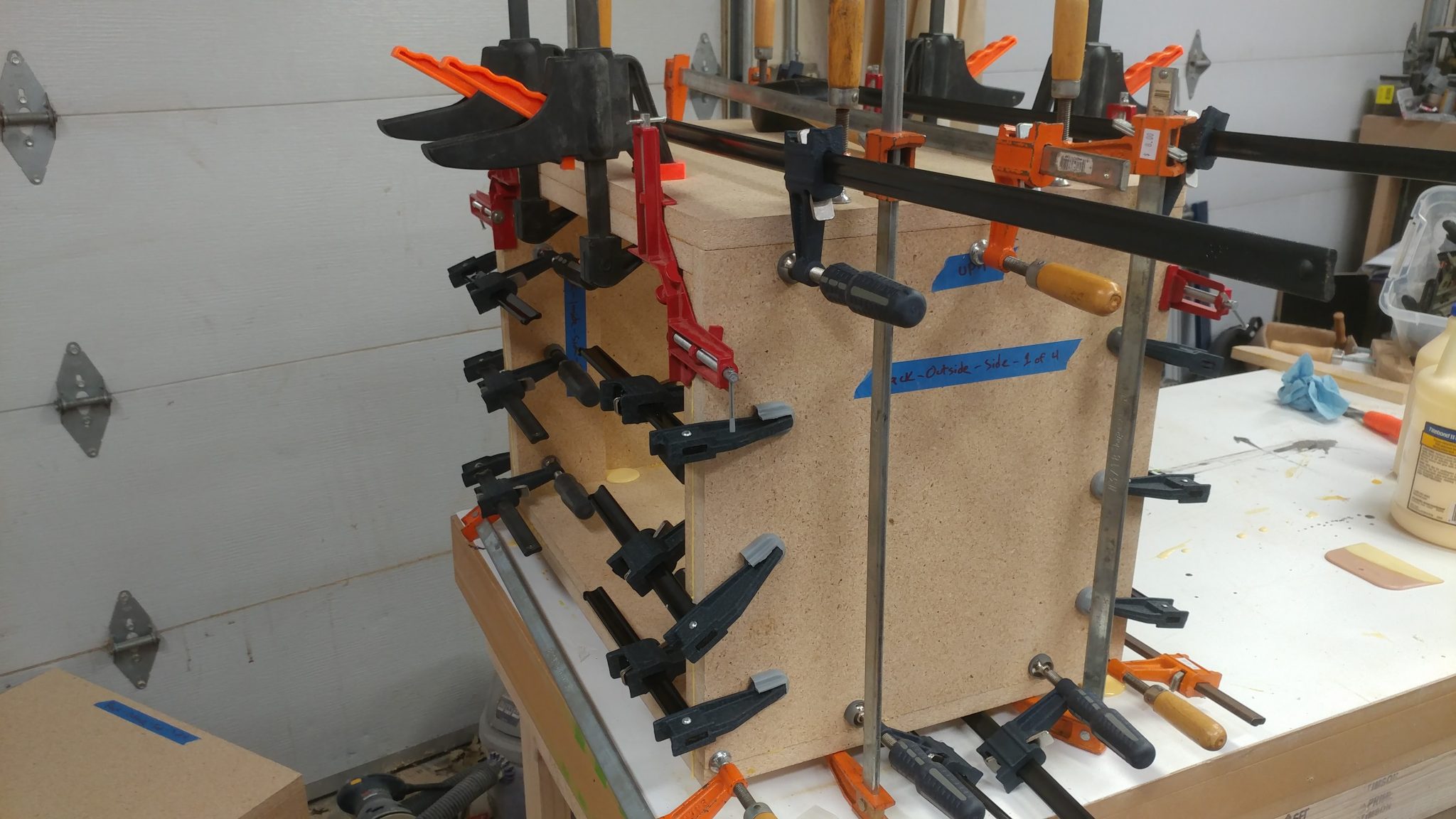
Lots and lots of clamps were used for the assembly since I am relying on glue to hold this all together.


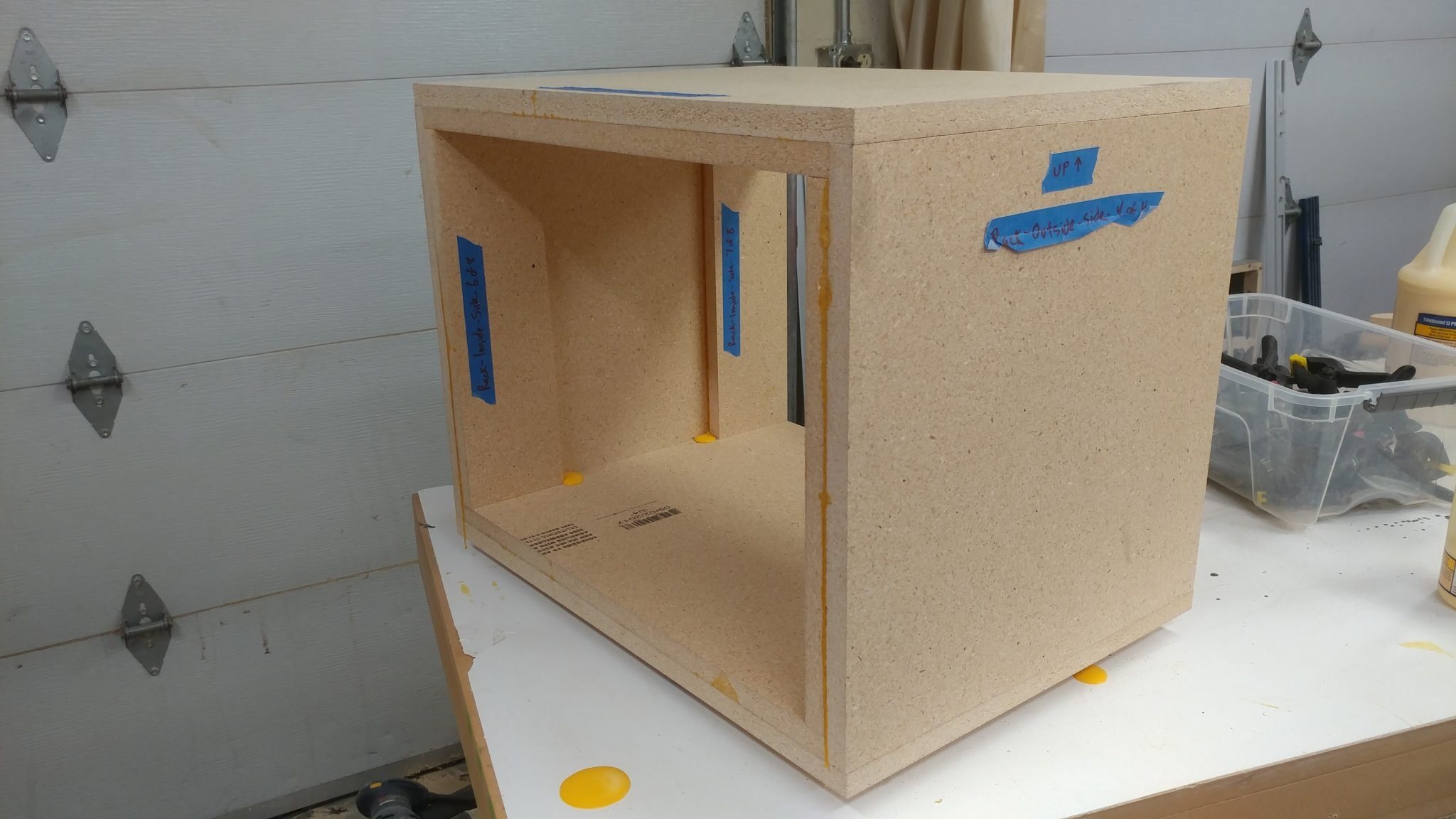
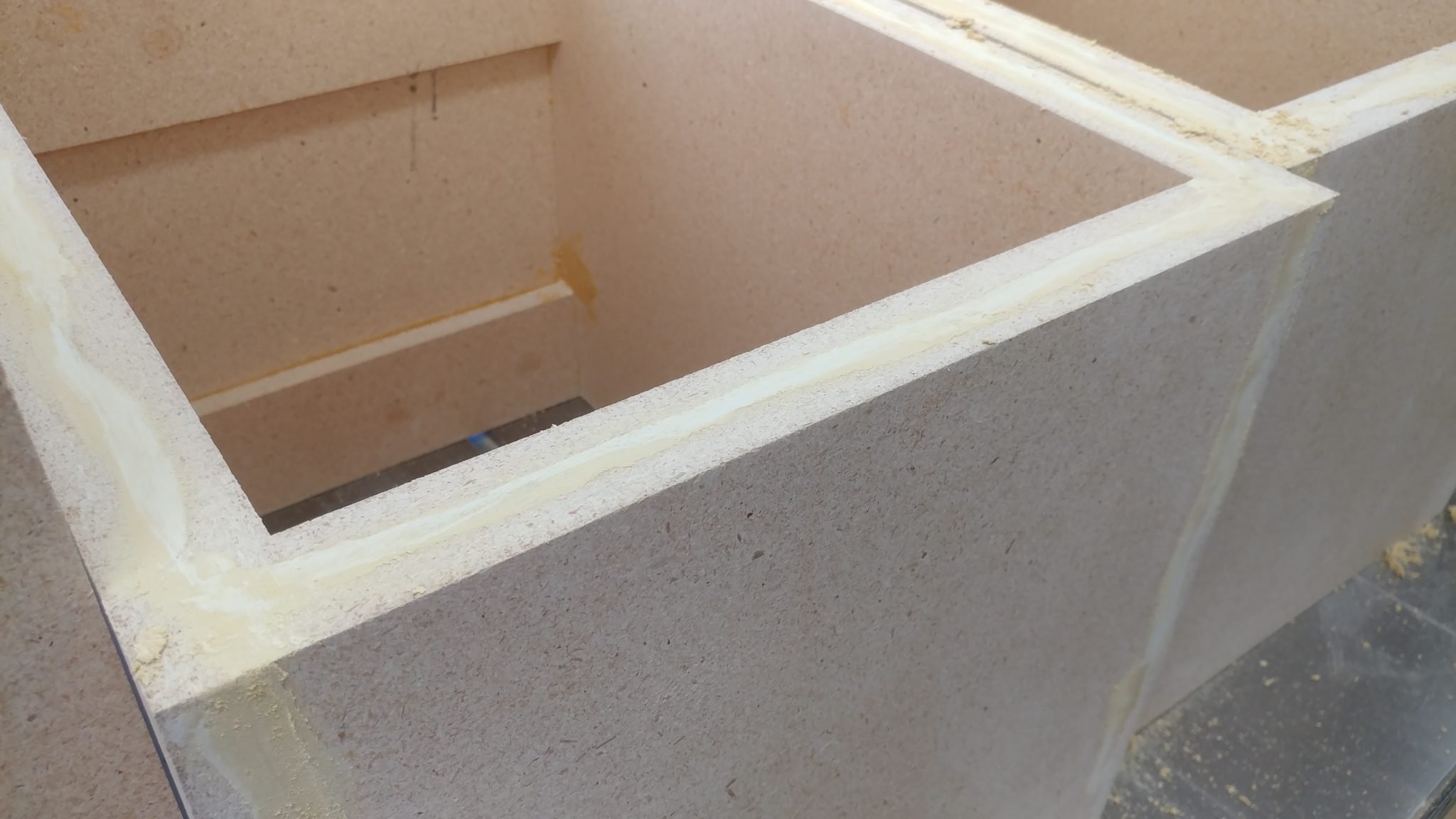
As you can see, I got a little crazy with the wood glue.  It cleans up easy enough and shouldn’t interfere with the finish at all.


Too much glue is better than not enough.


Cleaning up the Racks

I used a random orbital sander to clean up the edges on one face of each rack.


I also cleaned up the tops and bottoms.


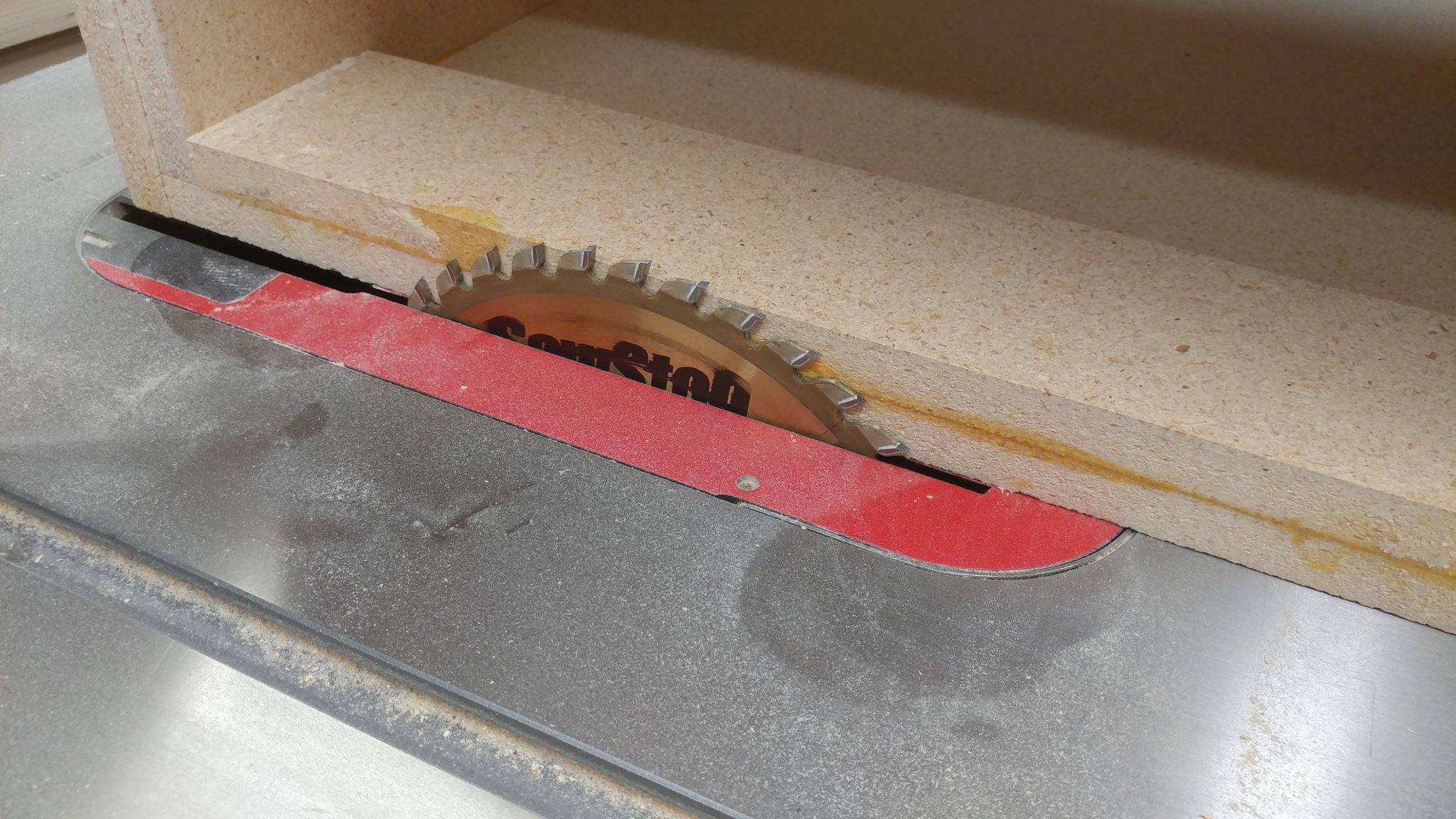
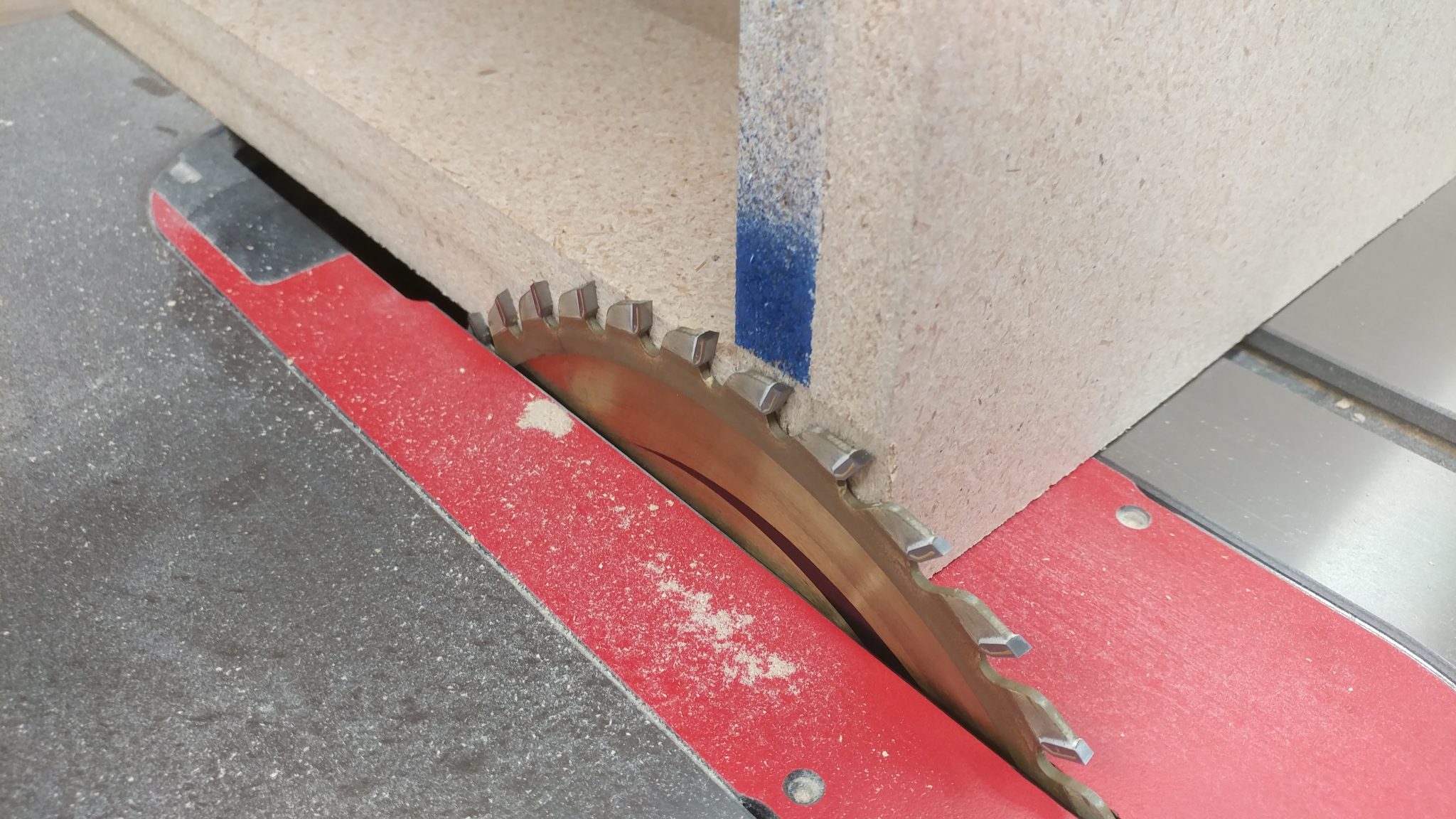
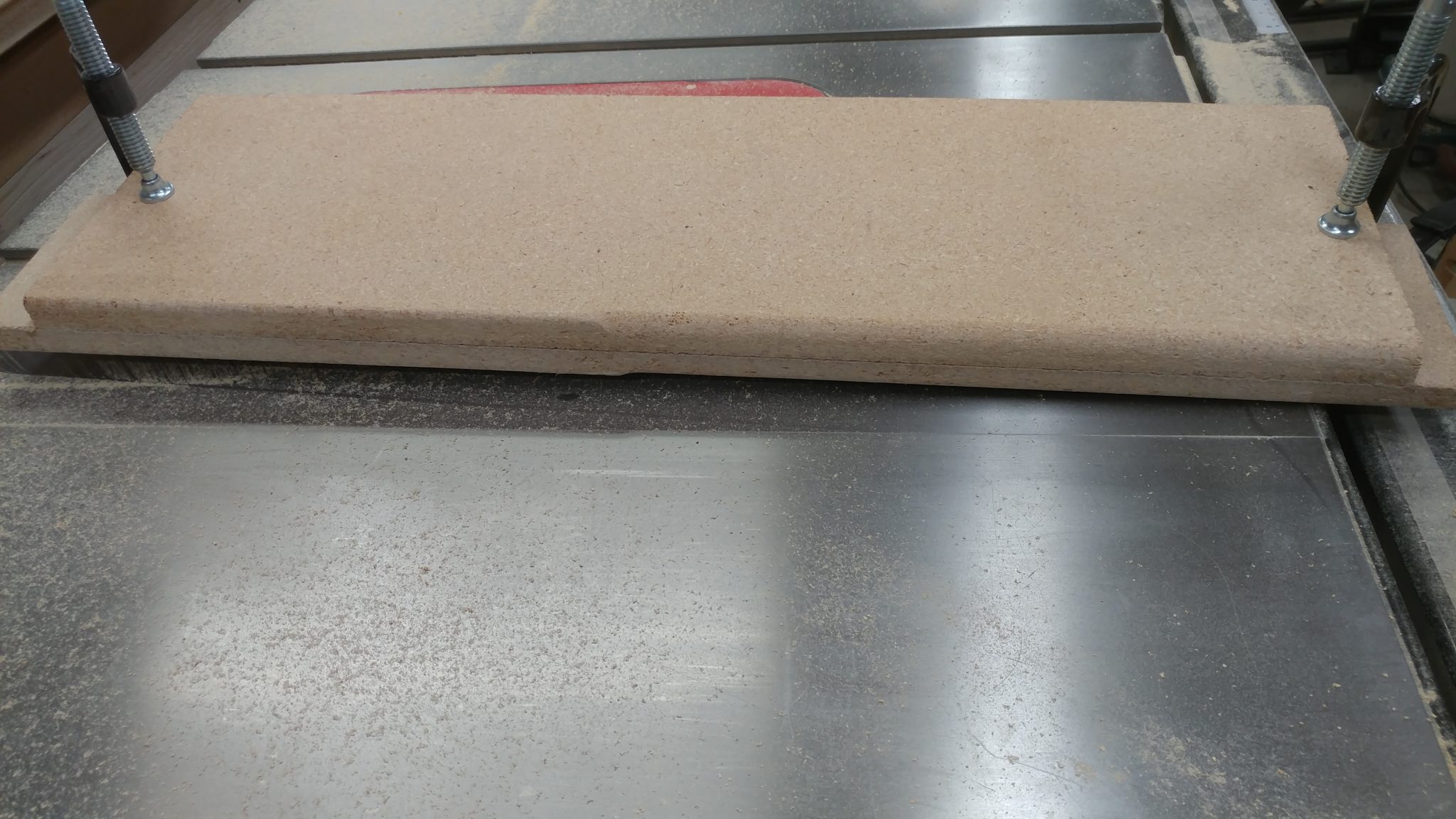
To clean up the final face, and to ensure that both of the equipment racks are the same depth, I shaved off the edge of the last side at the table saw.
 

I shaved off just enough to clean up each edge.


Once each face was clean, I decided to try something different.  I’m going for a rough industrial look with this.  I had seen a piece of furniture once that was made with MDF and had some (what I assume is) wood filler in certain parts.  The way that the filler reacted with the stain and finish had a really interesting rough look.  I decided that I would try this on the racks.  If I end up not liking it, I can always just remake the racks.


I spread wood filler into each seam and let it sit for an hour.


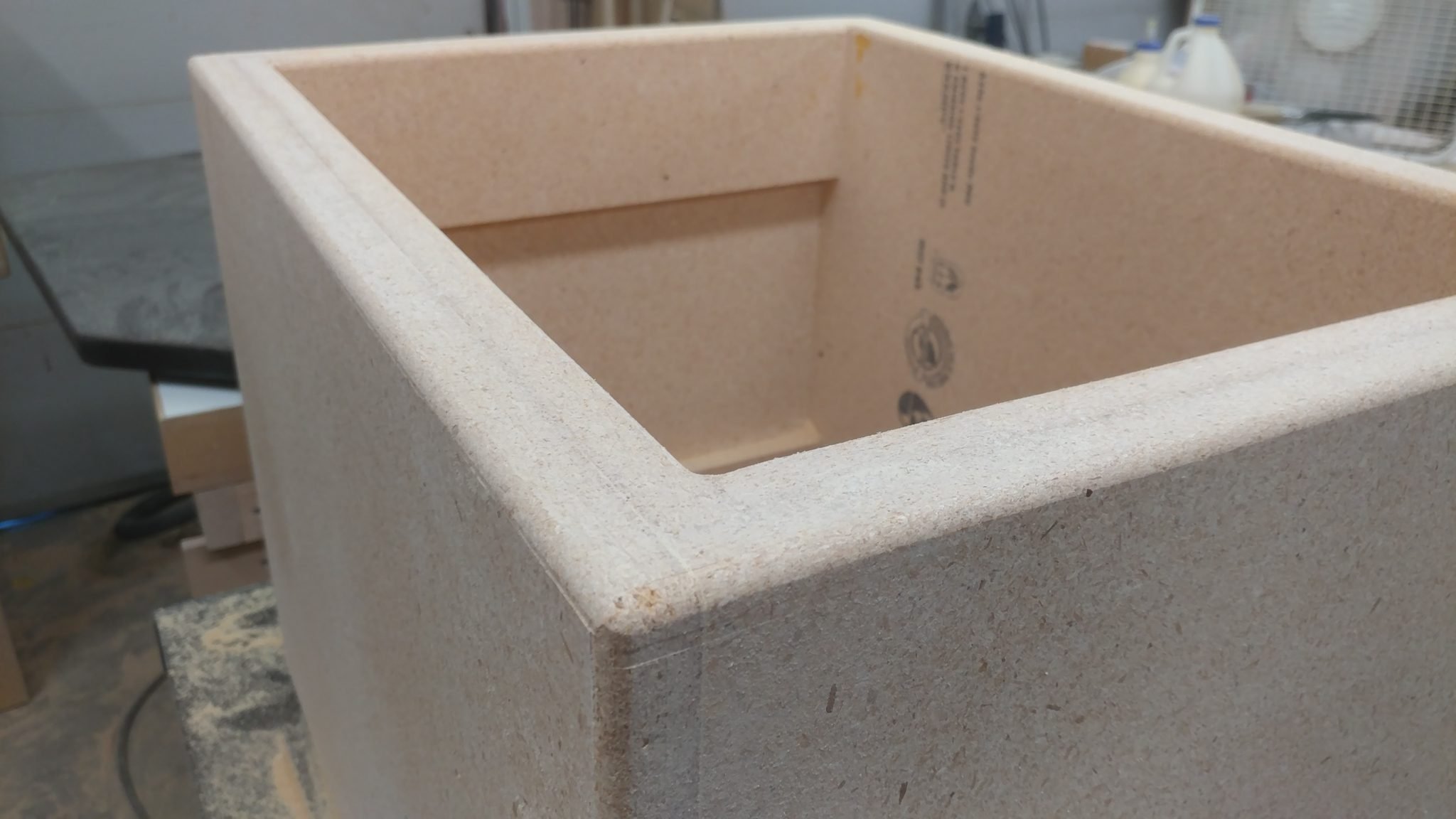
After letting it sit I cleaned up the edges with my random orbital sander then applied a 1/4″ roundover to each edge just like when I made the desk top and bottom.


I cleaned up the routed edges with my random orbital sander again as well as with some careful hand sanding.


This concludes part 3.


Closing remarks

They’re all ready to be stained and finished.


As I said before, I don’t have a lot of room in my shop right now so it’s difficult to get this built but it’ll be worth it in the end.


If you have any suggestions, please leave them in the comments below.  I’d love to see any desk builds you’ve done.  Also, if you haven’t already, please consider signing up for my mailing list so you get e-mail notifications when I post new articles.


Studio Desk – Part 2: Final shaping of the top and bottom

The tops and bottoms are cut to size and glued up.  The next step is to fix a few mistakes and apply the roundovers so I can stain and finish them.


Fixing my mistakes

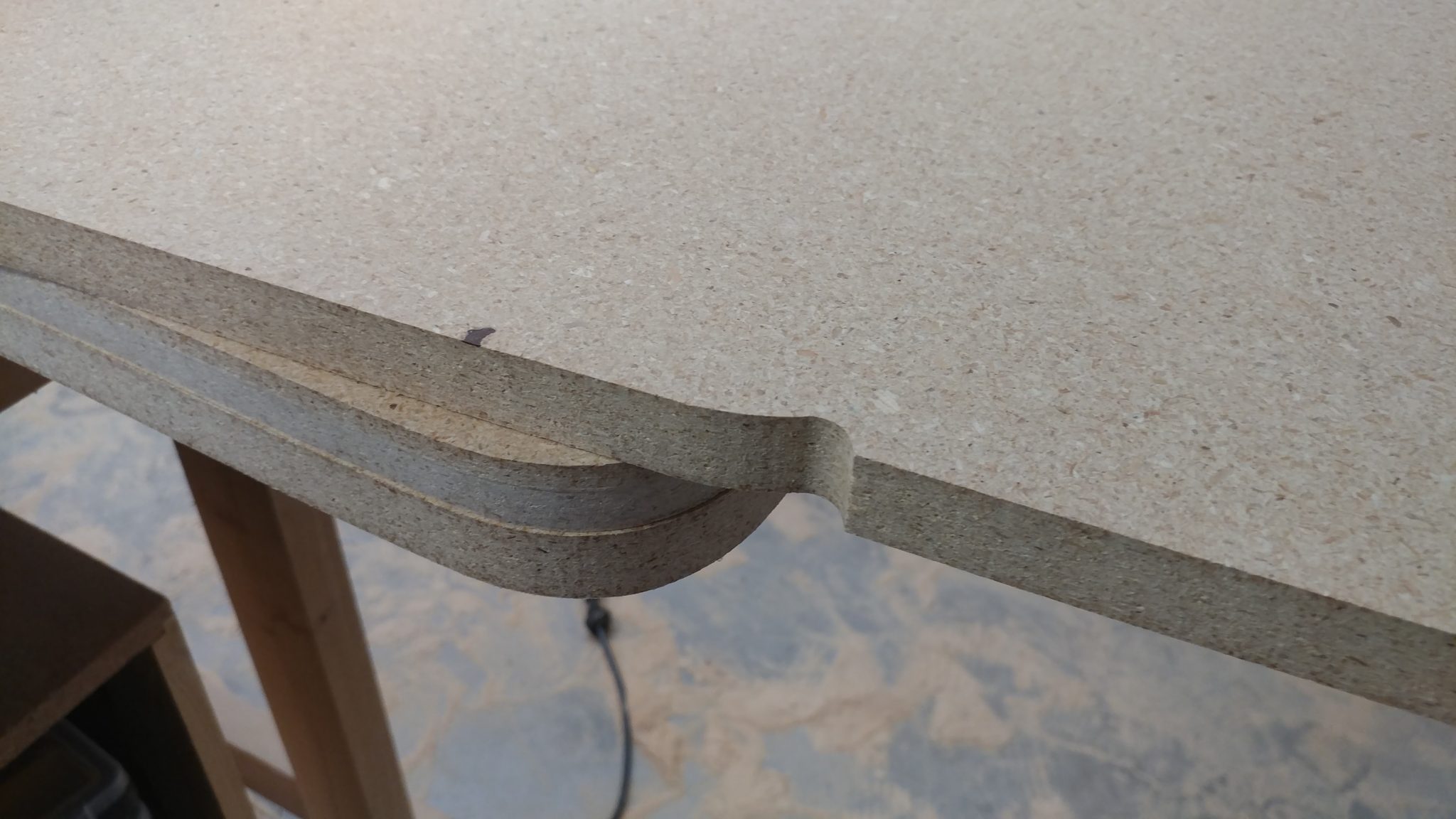
I make a lot of mistakes.  More than I would like.  I made a few while I was routing out the shapes of the desk bottom pieces.

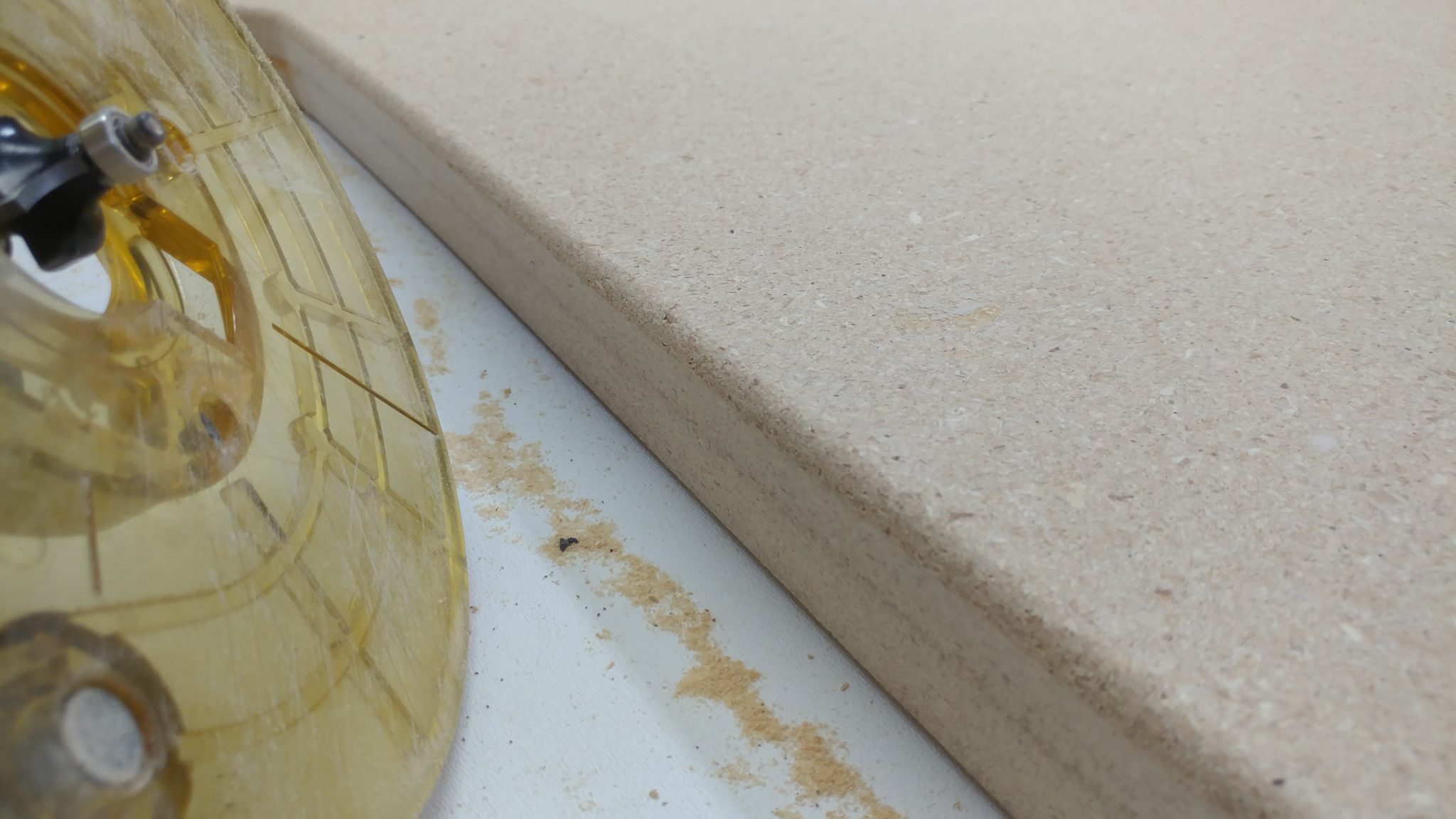
First I slipped up when modifying the outline for the bottom of the desk.  I was able to correct this when cutting out the other half of the bottom but it left a nice gap that needs patching.


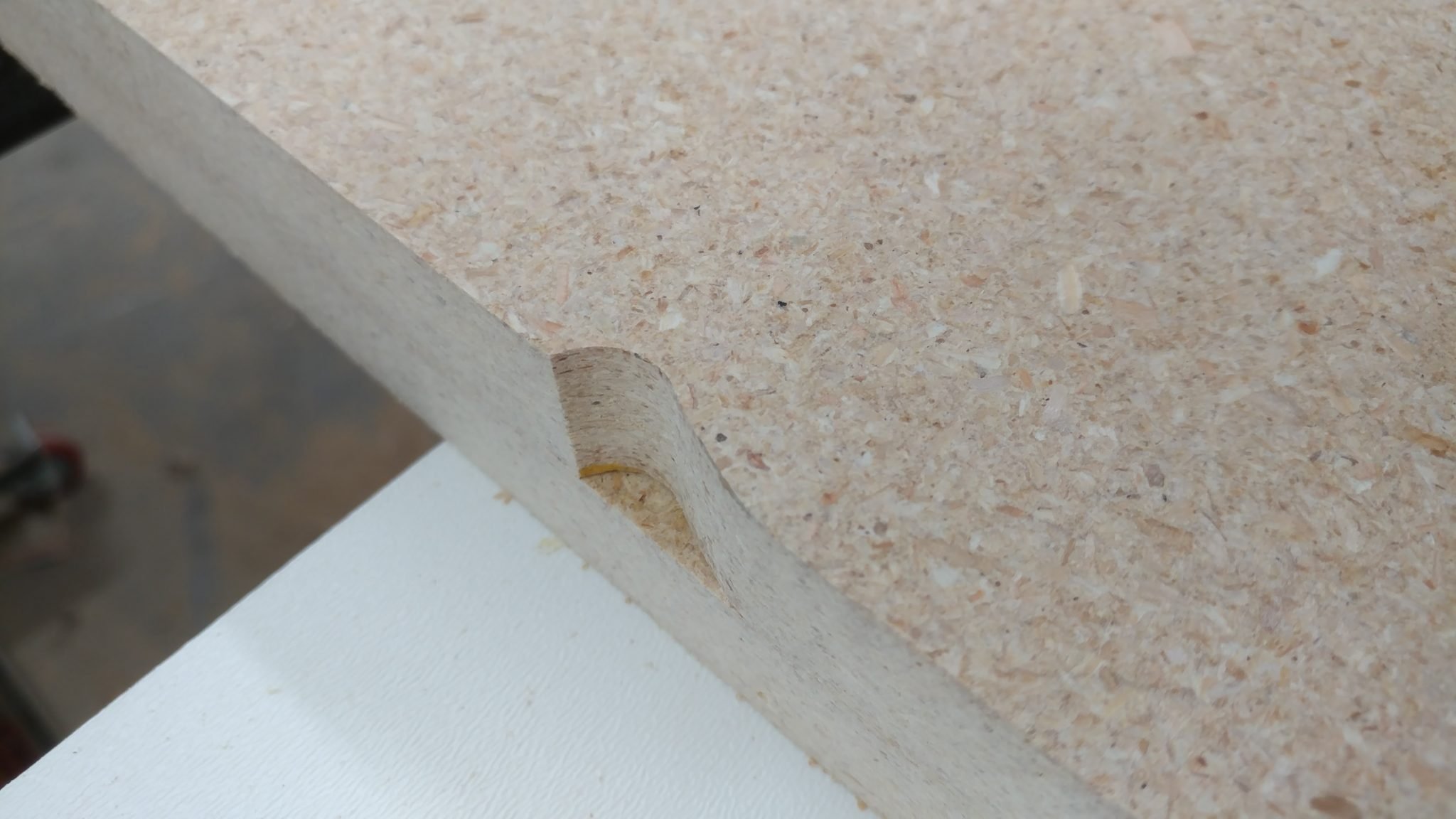
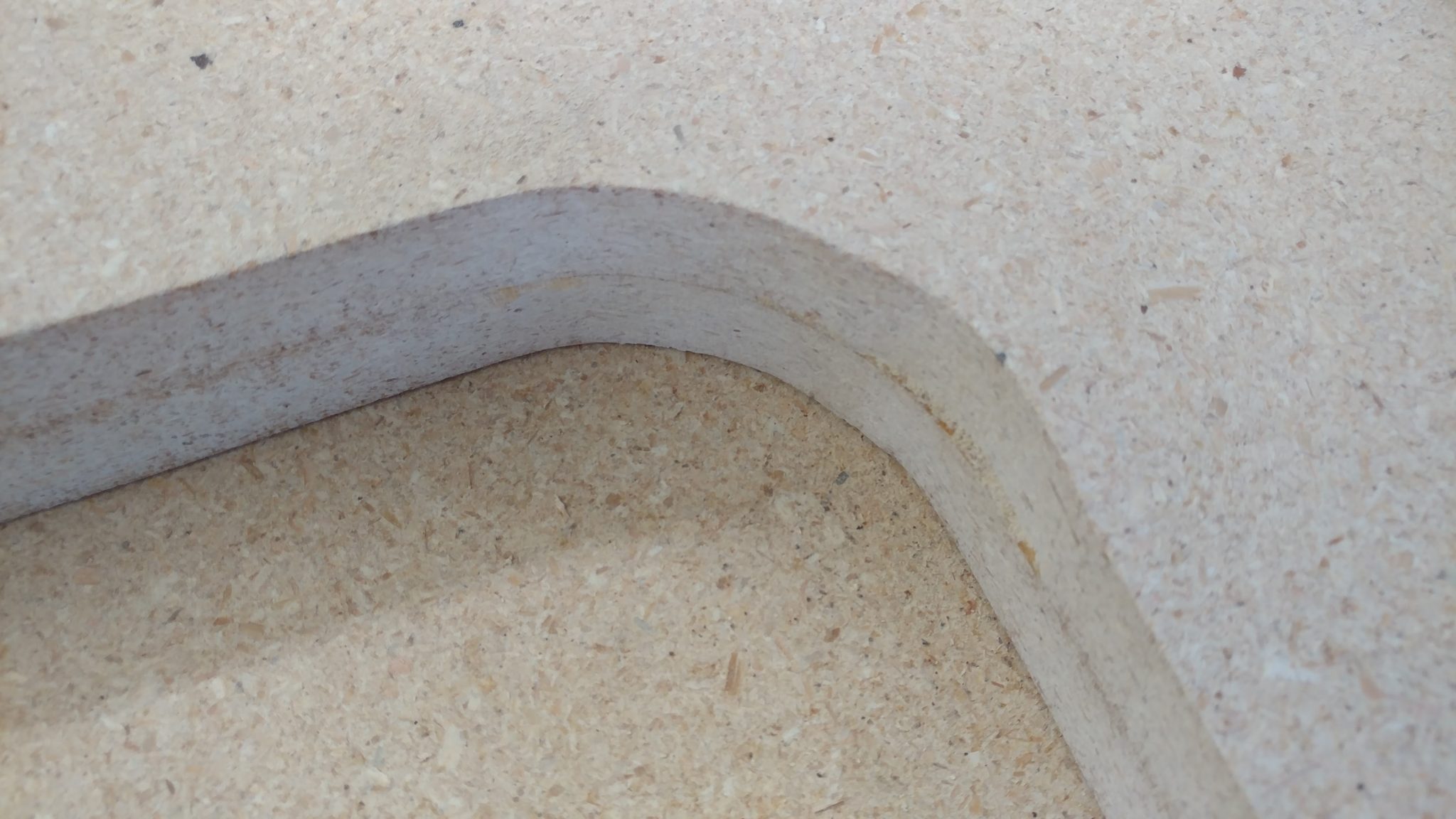
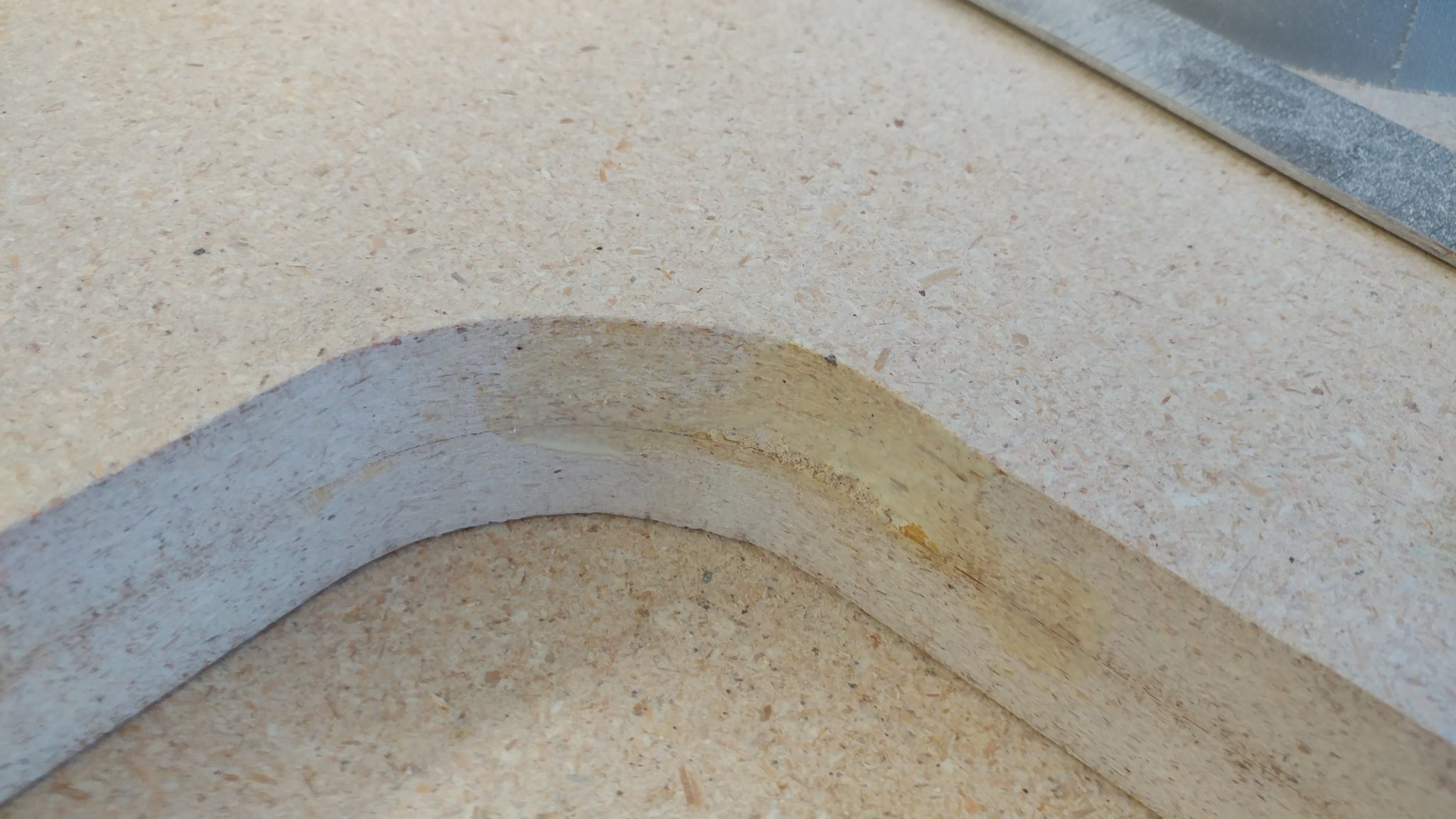
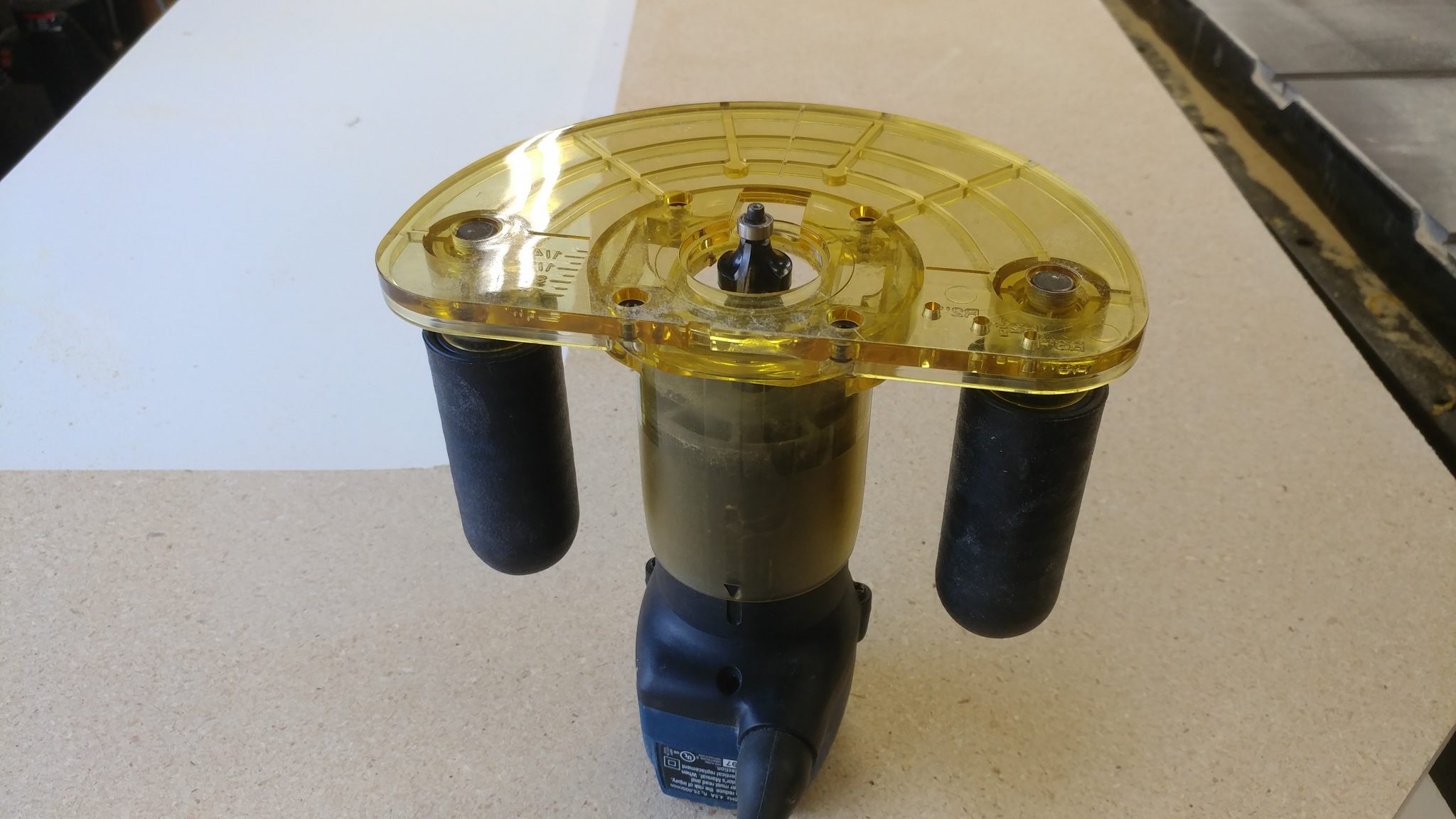
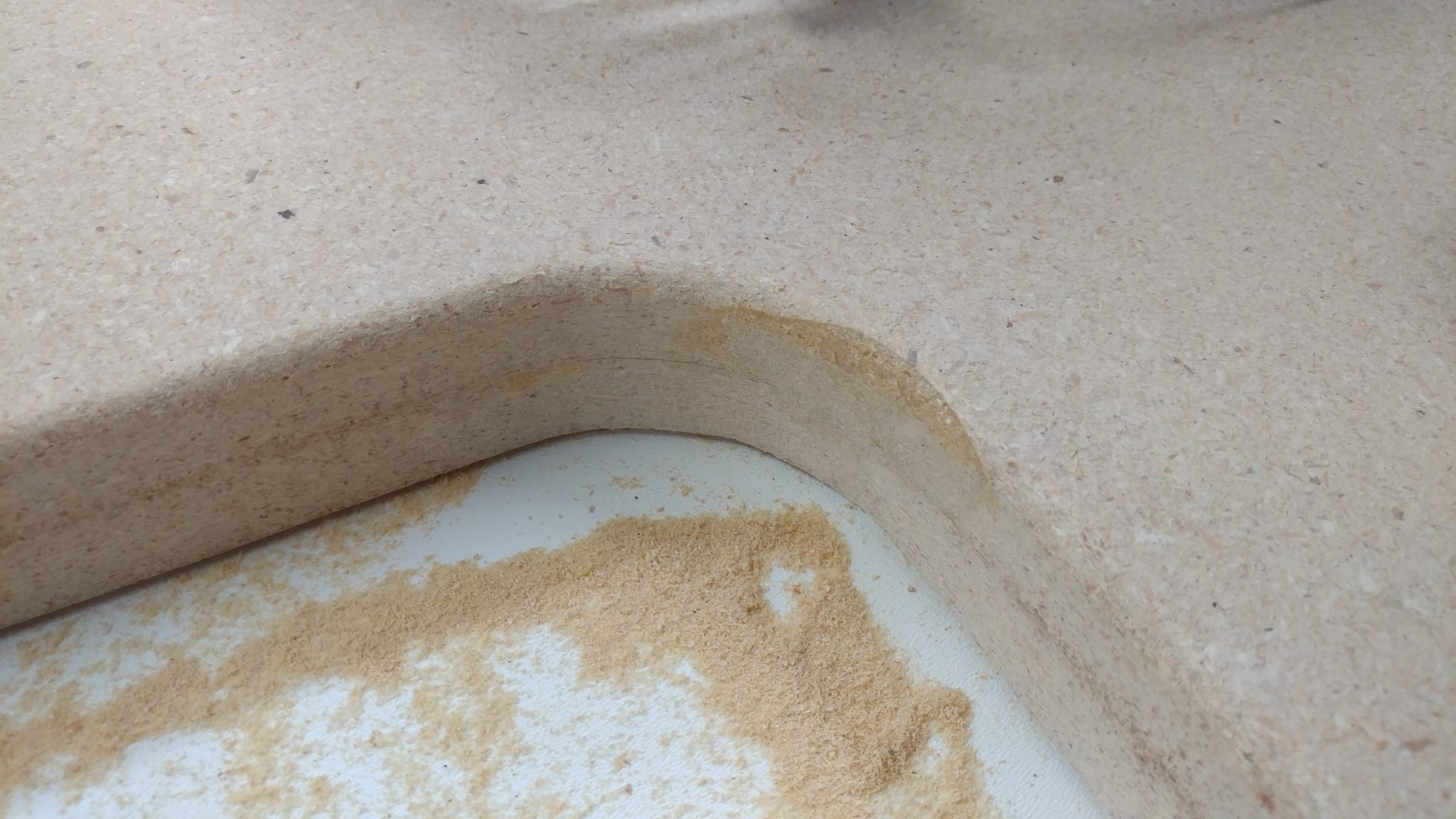
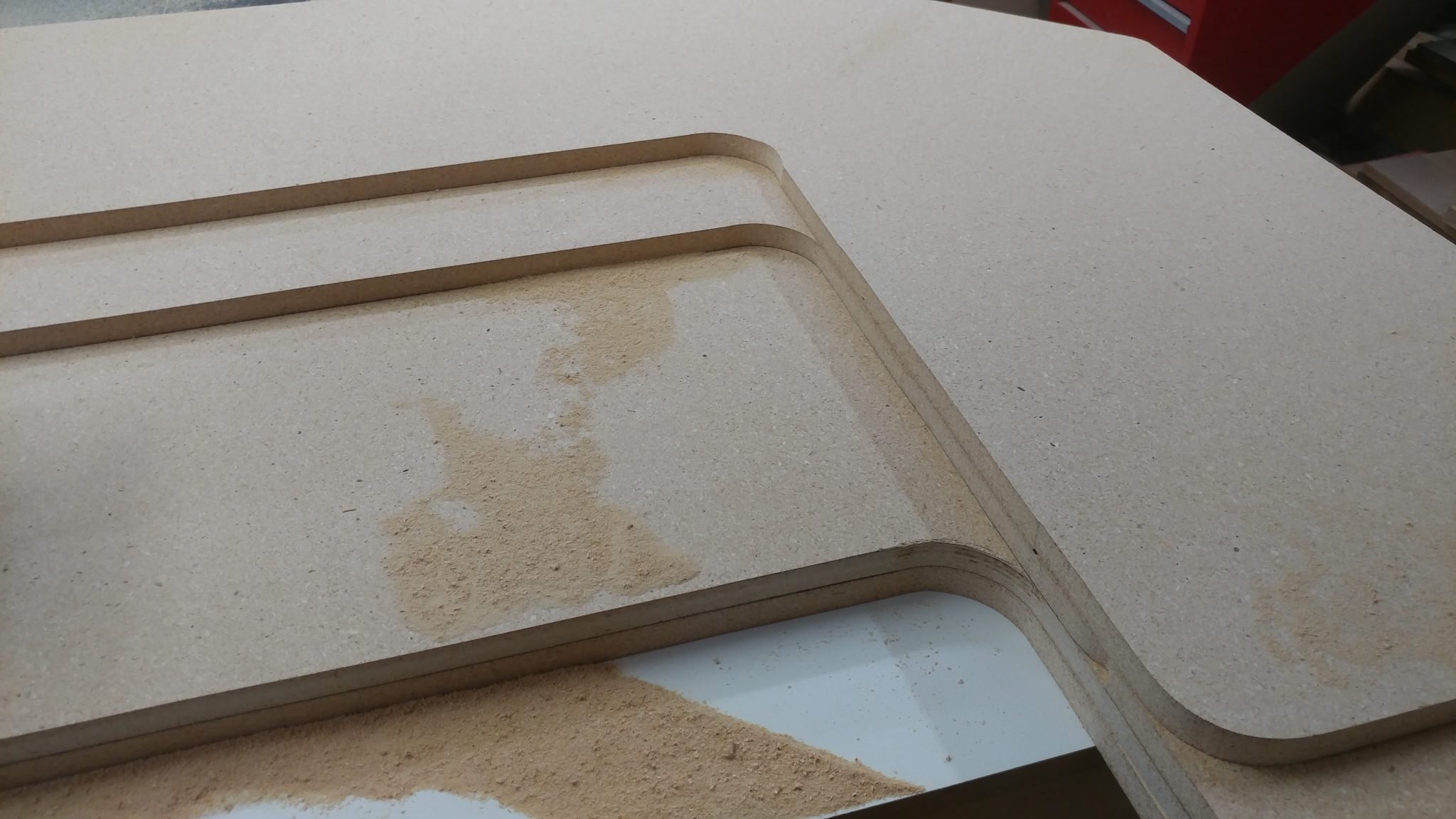
The second mistake was when I was cutting the aforementioned second half of the bottom.  As I was coming up on the area where I had made the mistake on the first half, I guess I was focusing on correcting for the first mistake and I ended up making another slight mistake.  You can see in the following photo that the inner corner is a little wonky.  I think the router, whose base is a little unstable, tipped a little and it caused this.


The following technique won’t always work, especially if you will be staining the piece but I’m going for a more utilitarian/industrial look so I actually welcome this.

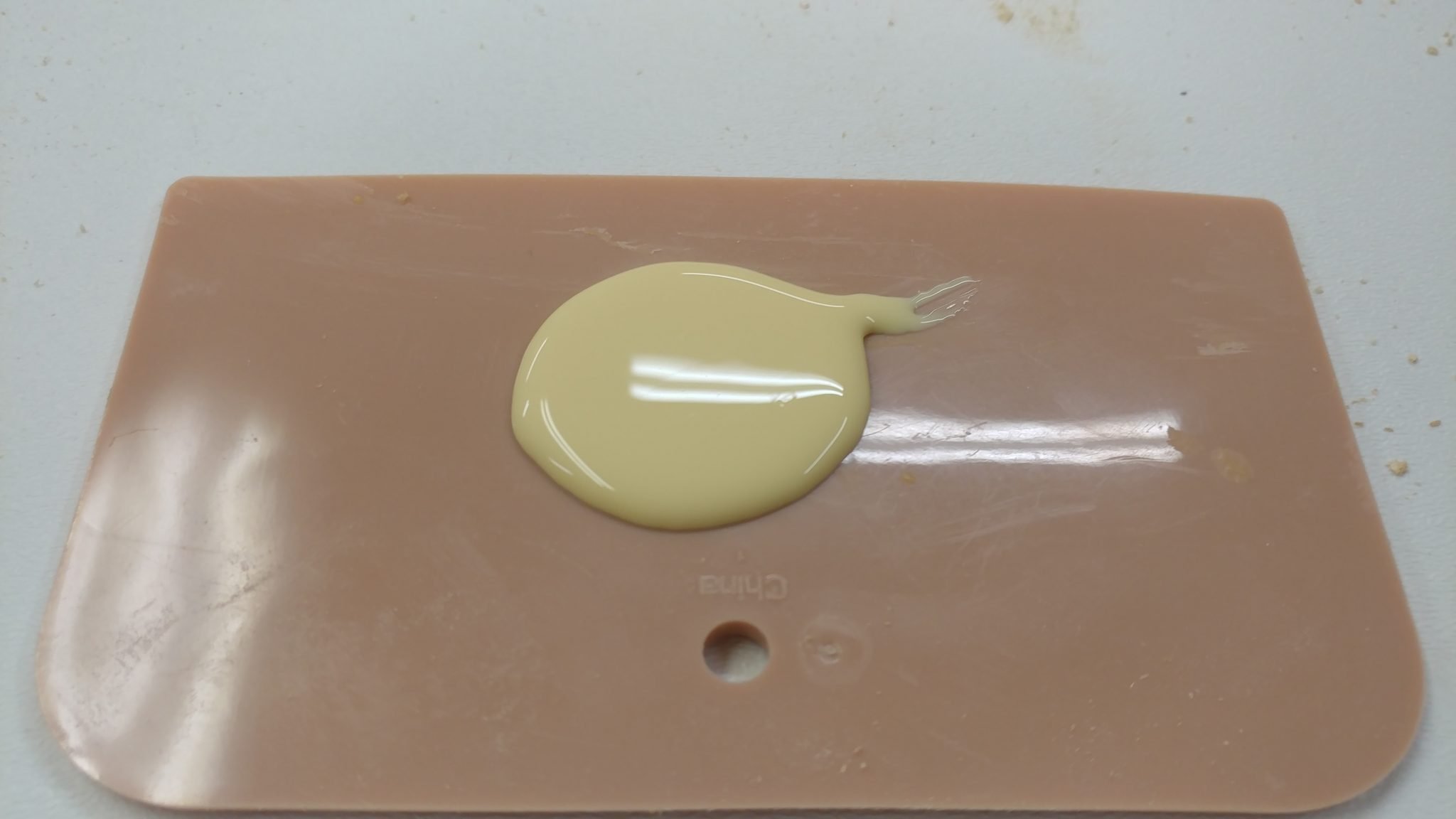
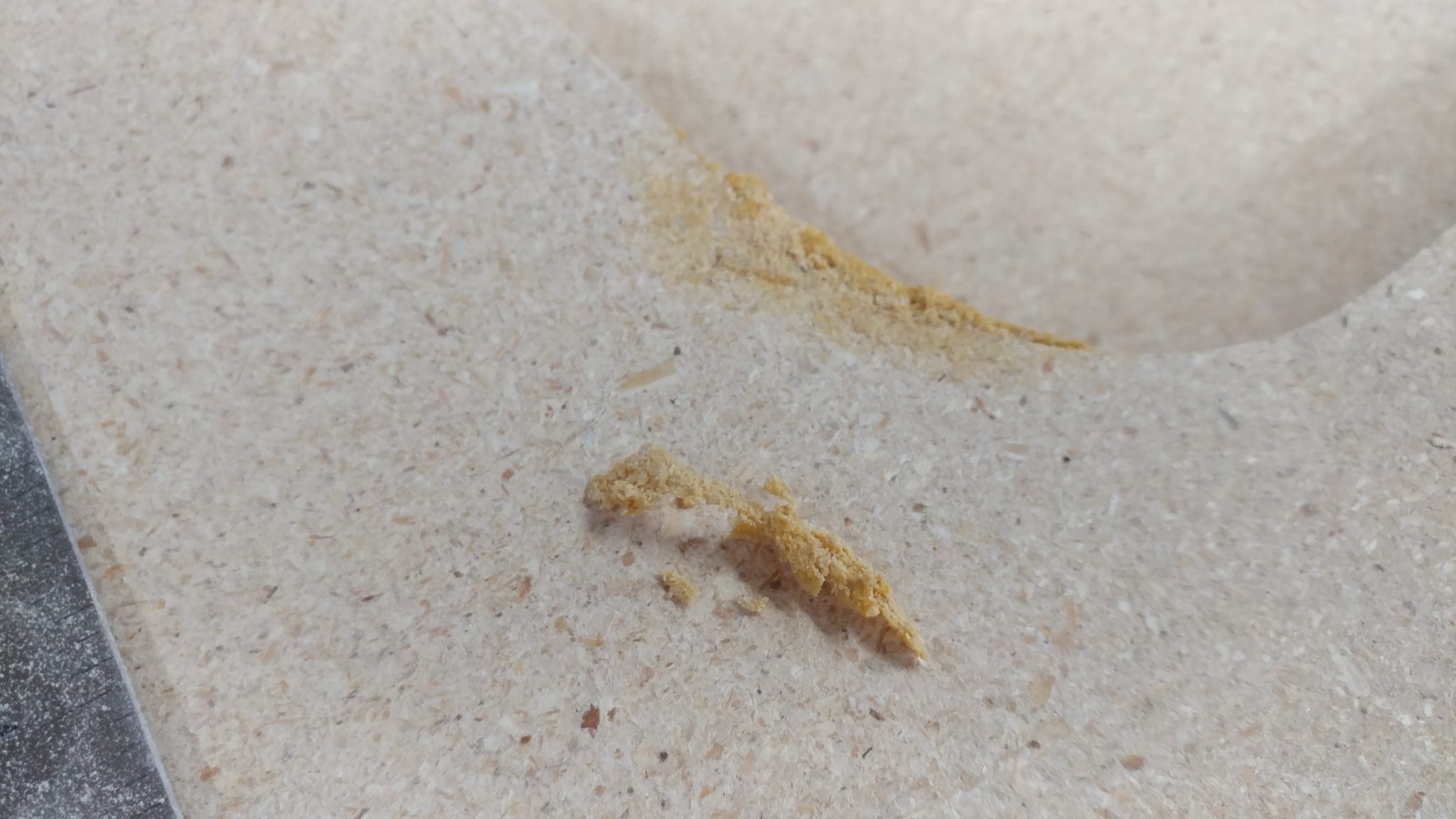
Start with a blob of wood glue.  If you are wanting to stain this, I recommend trying stainable wood filler instead.


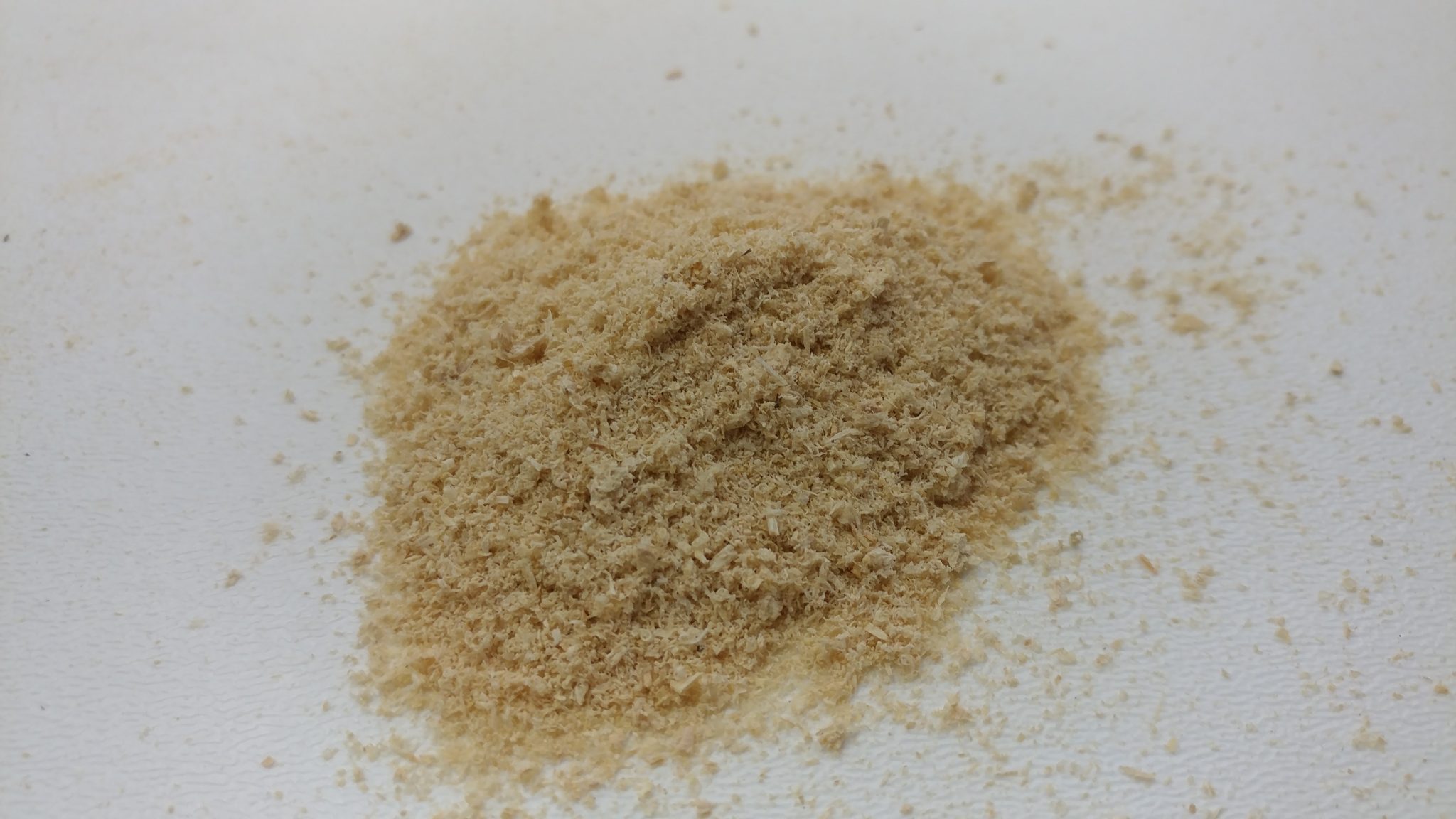
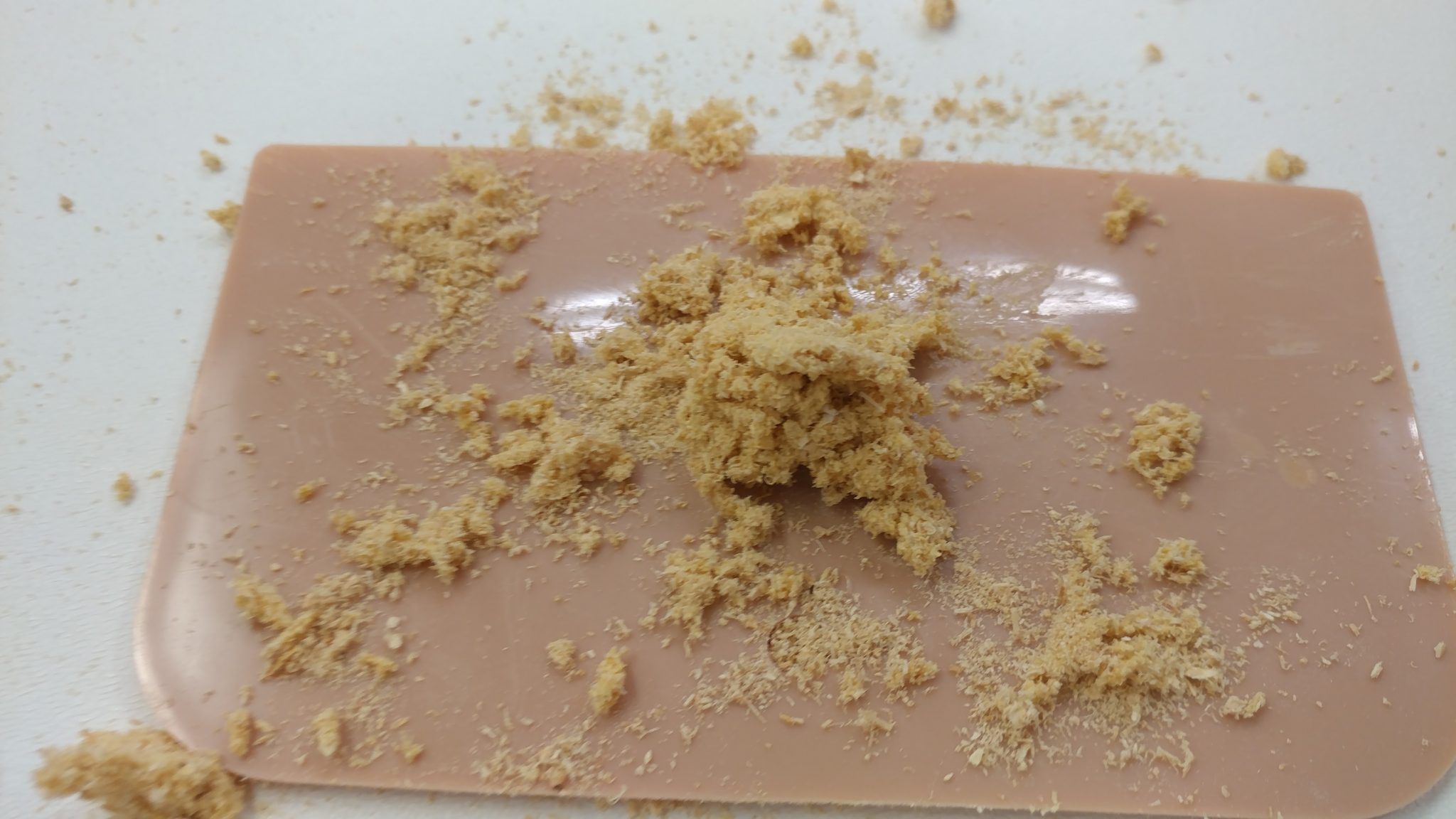
You’ll also need some sawdust, preferably from the same wood that you’re repairing.


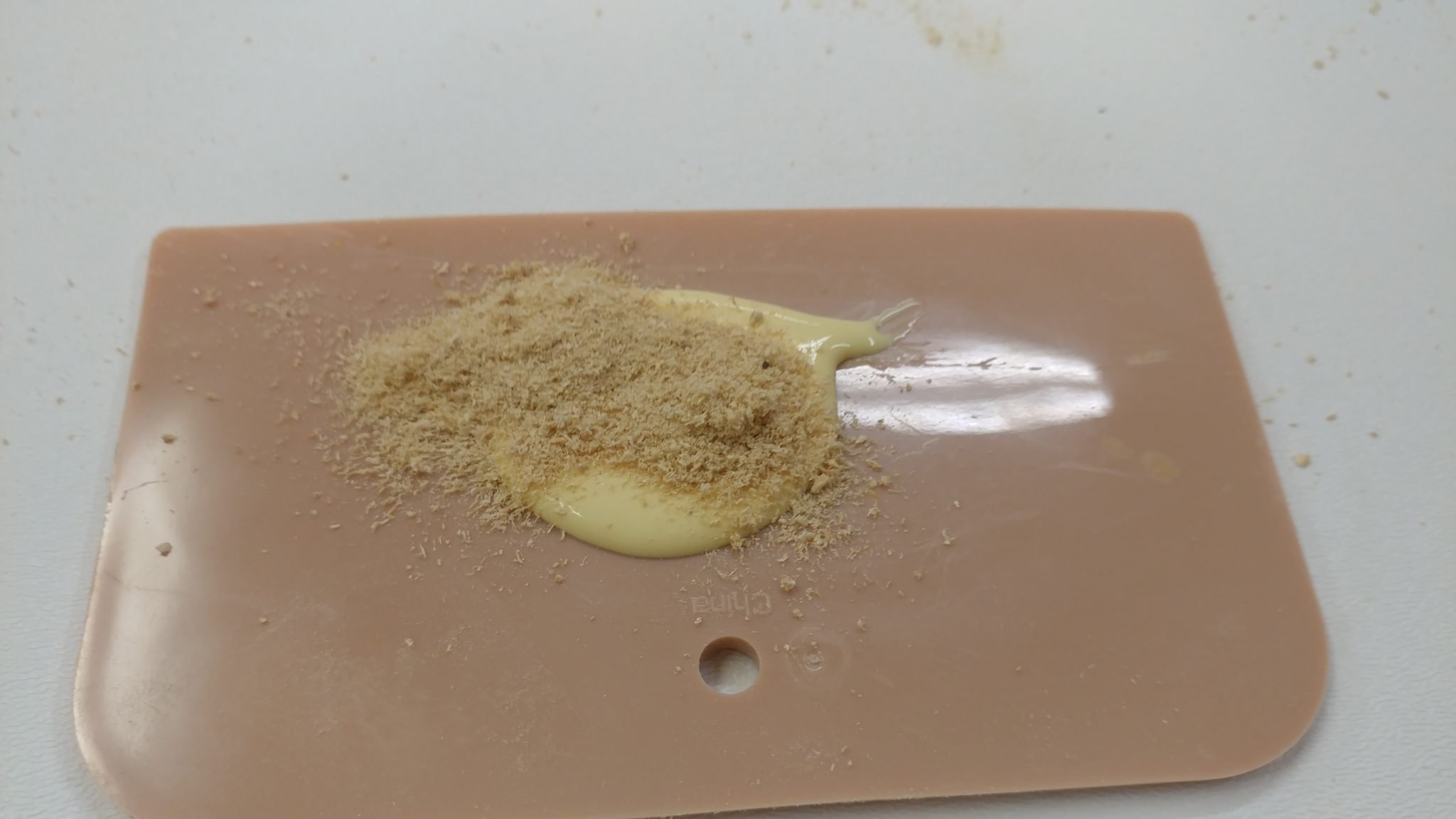
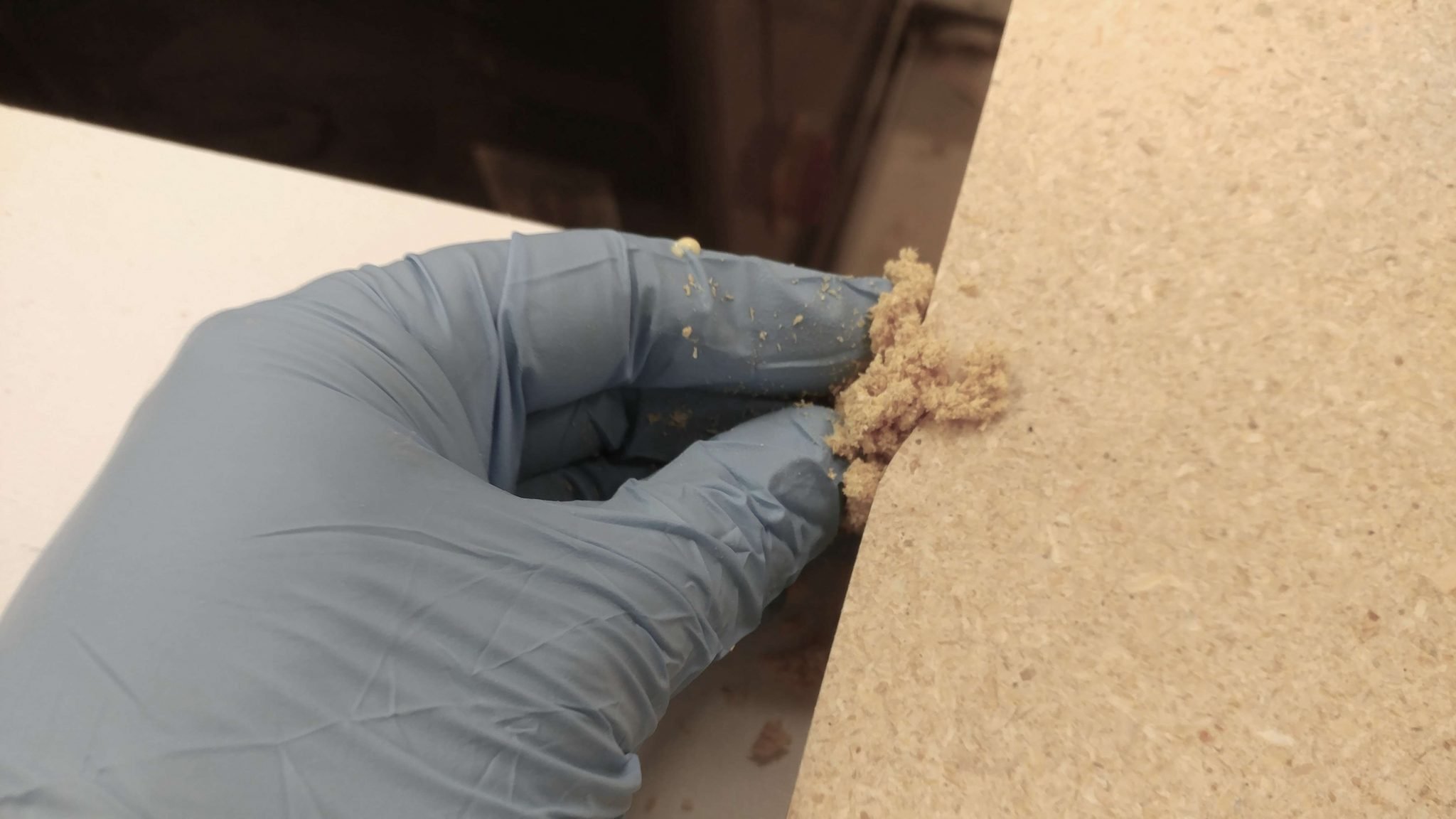
Add the sawdust to the wood glue and mix it together.


This will take some trial and error in order to get something that works for you.  I was going for a dry yet pasty texture.


I rubbed a bit of wood glue on the spot that I needed to repair so the patch job can adhere to it better.


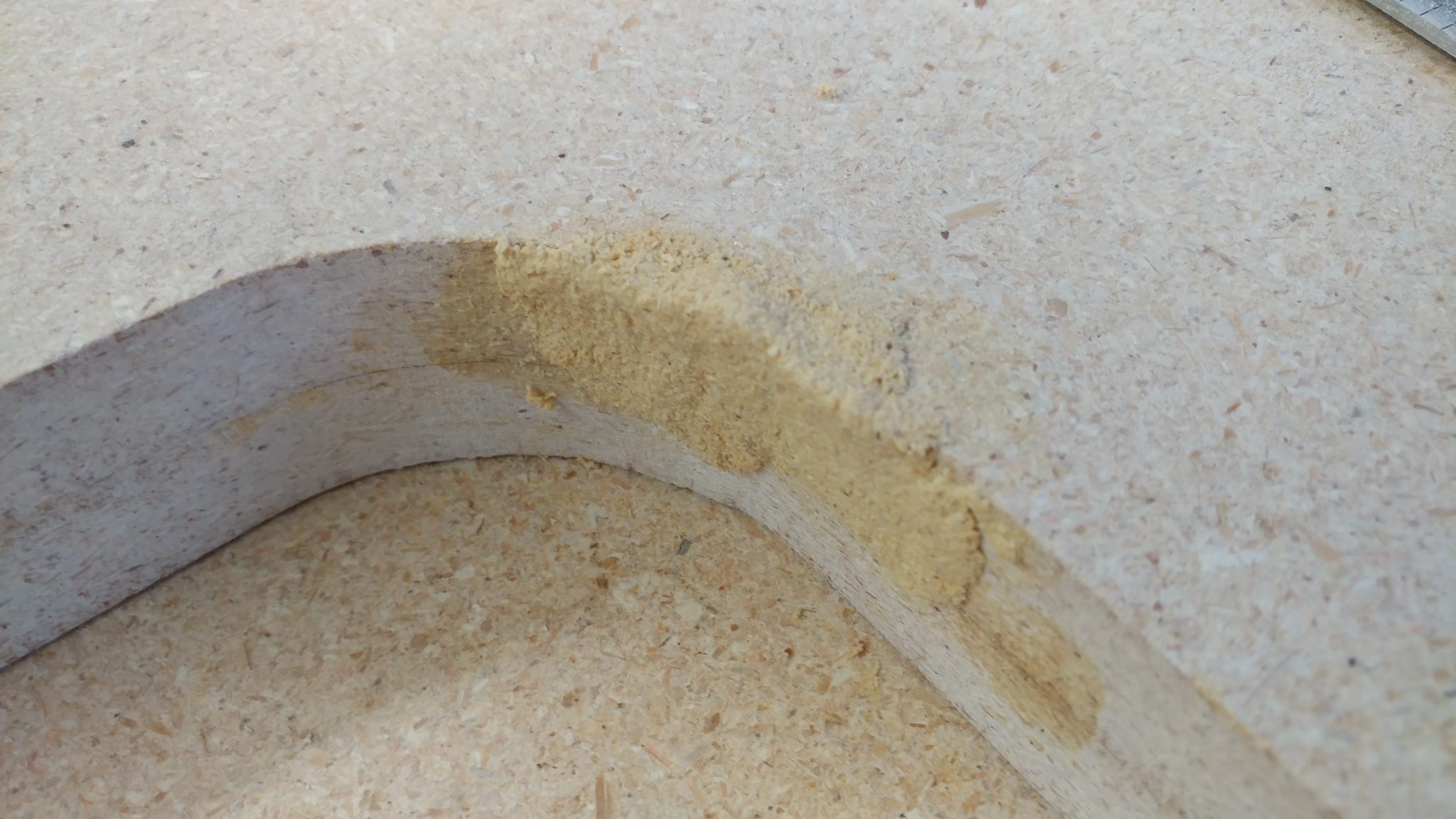
I then smushed (sorry for the technical term) a gob of the glue/sawdust paste into the repair spot, being sure to fill up all the space that needs to be filled.


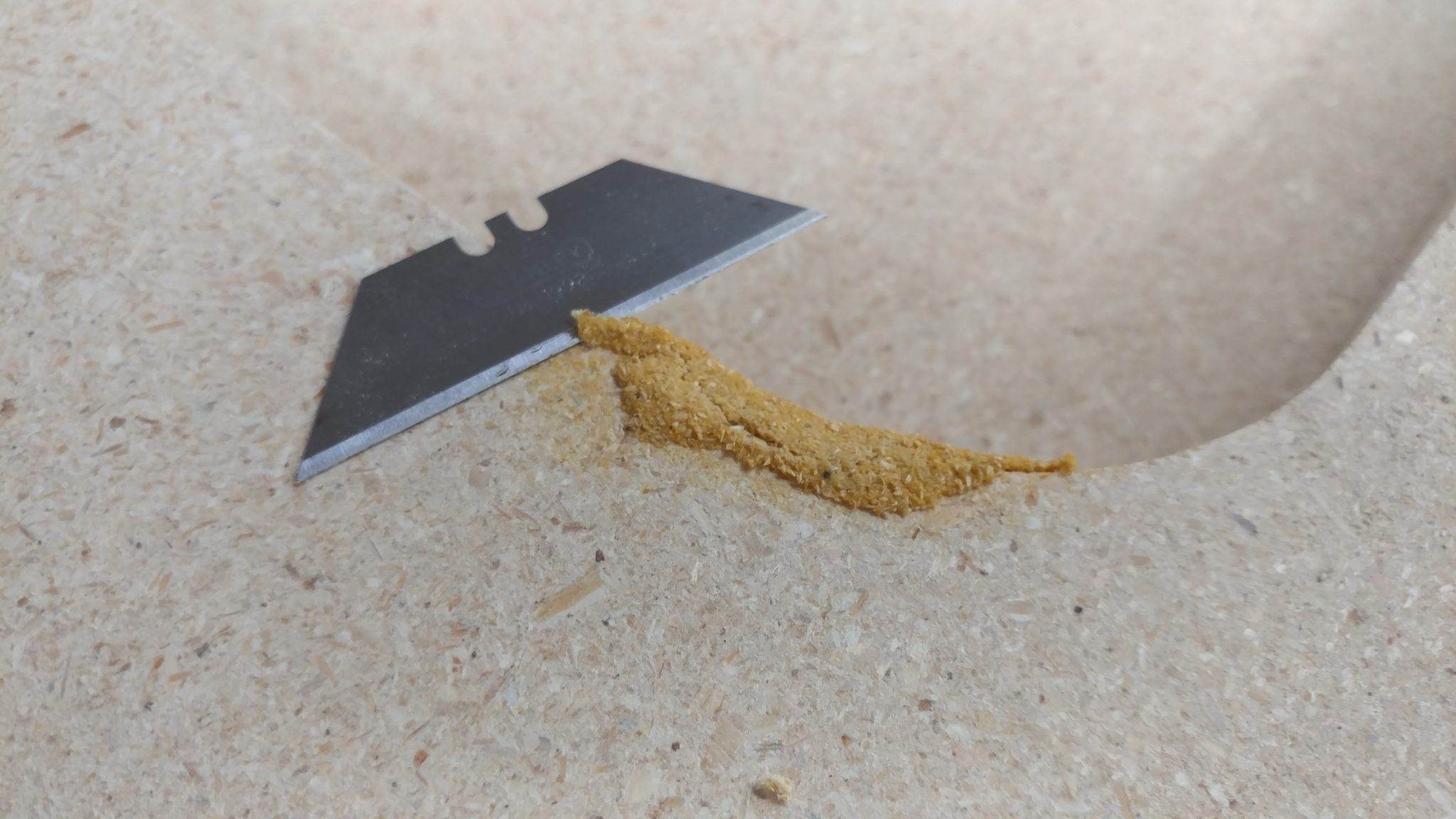
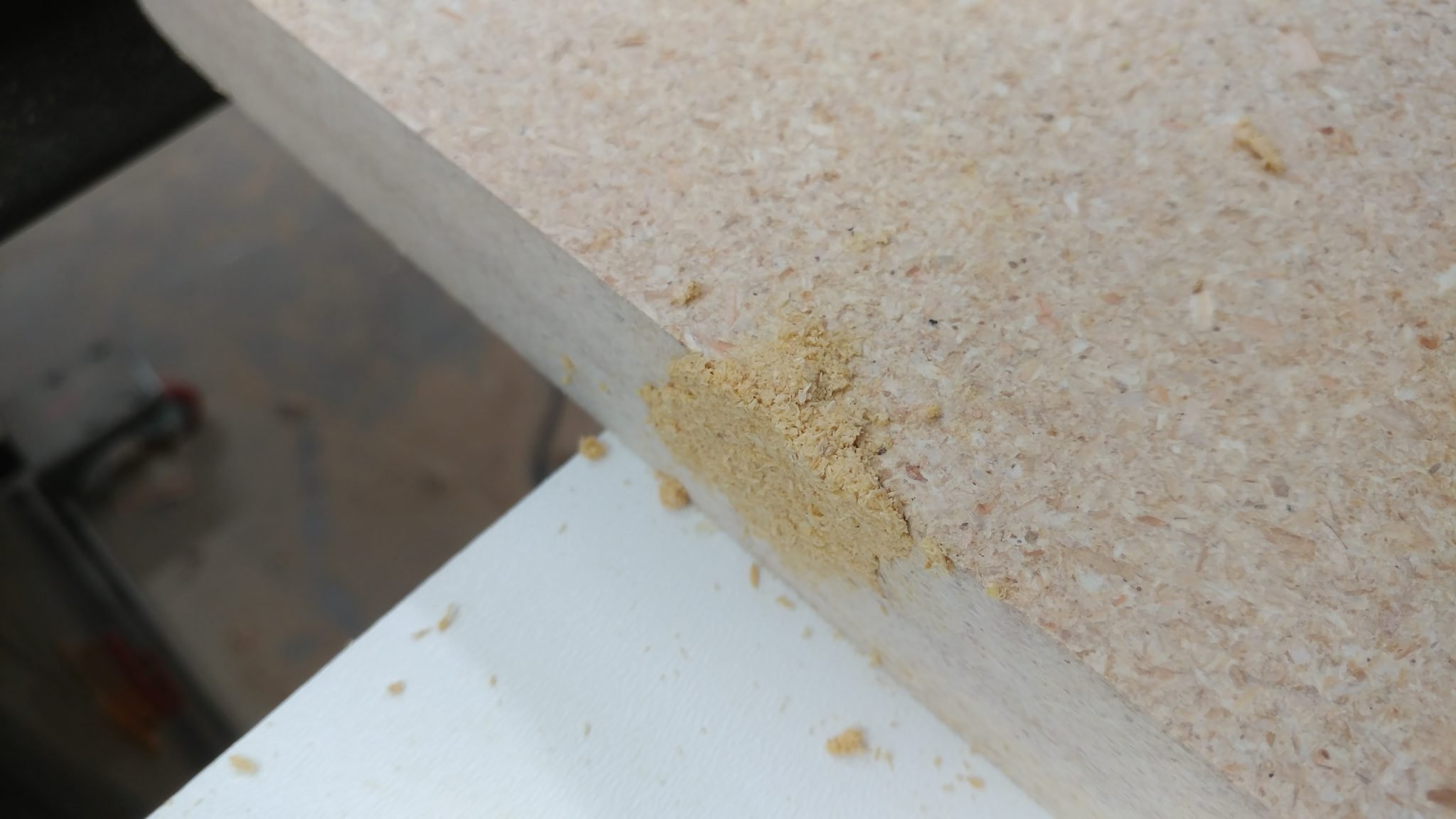
When this dries, it’s going to be pretty hard.  I also need to flip this piece so I can repair the other spot.  To ensure that this wasn’t going to cause a problem, I waited till it had cured a bit then I took a utility knife blade and sliced off any of the filler that protruded from the top of the wood.


This left it flat enough to flip the piece without damaging the filler.


I did the same thing on the other mistake.


This one will be easier to hide since it is all on flat surfaces rather than an inner curve.


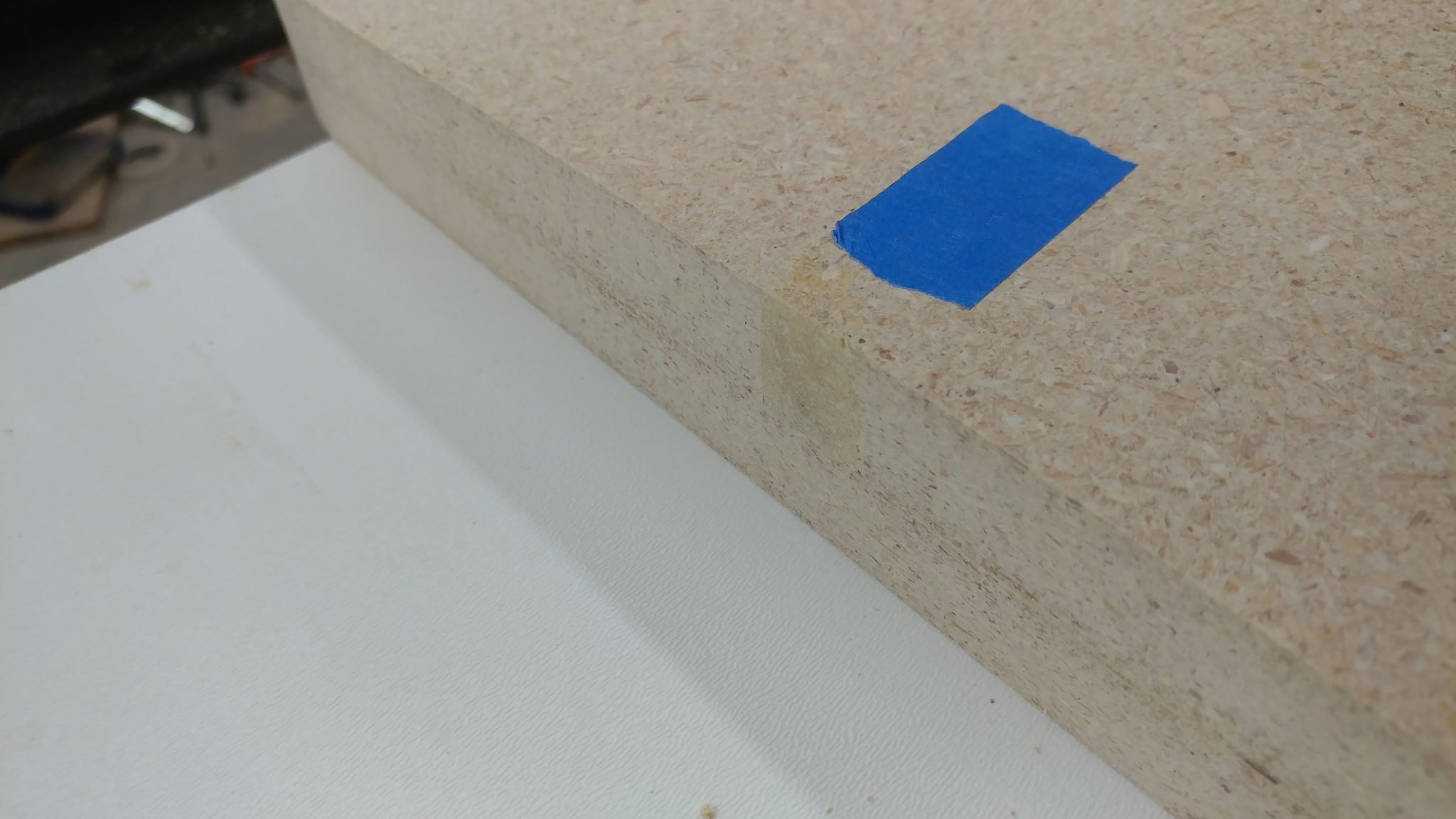
I let the filler fully cure for a day then I took my random orbital sander to it.  I placed a piece of blue painters tape next to the filler so you can see how it blends in.  It isn’t perfect but it’ll be good enough for this project.


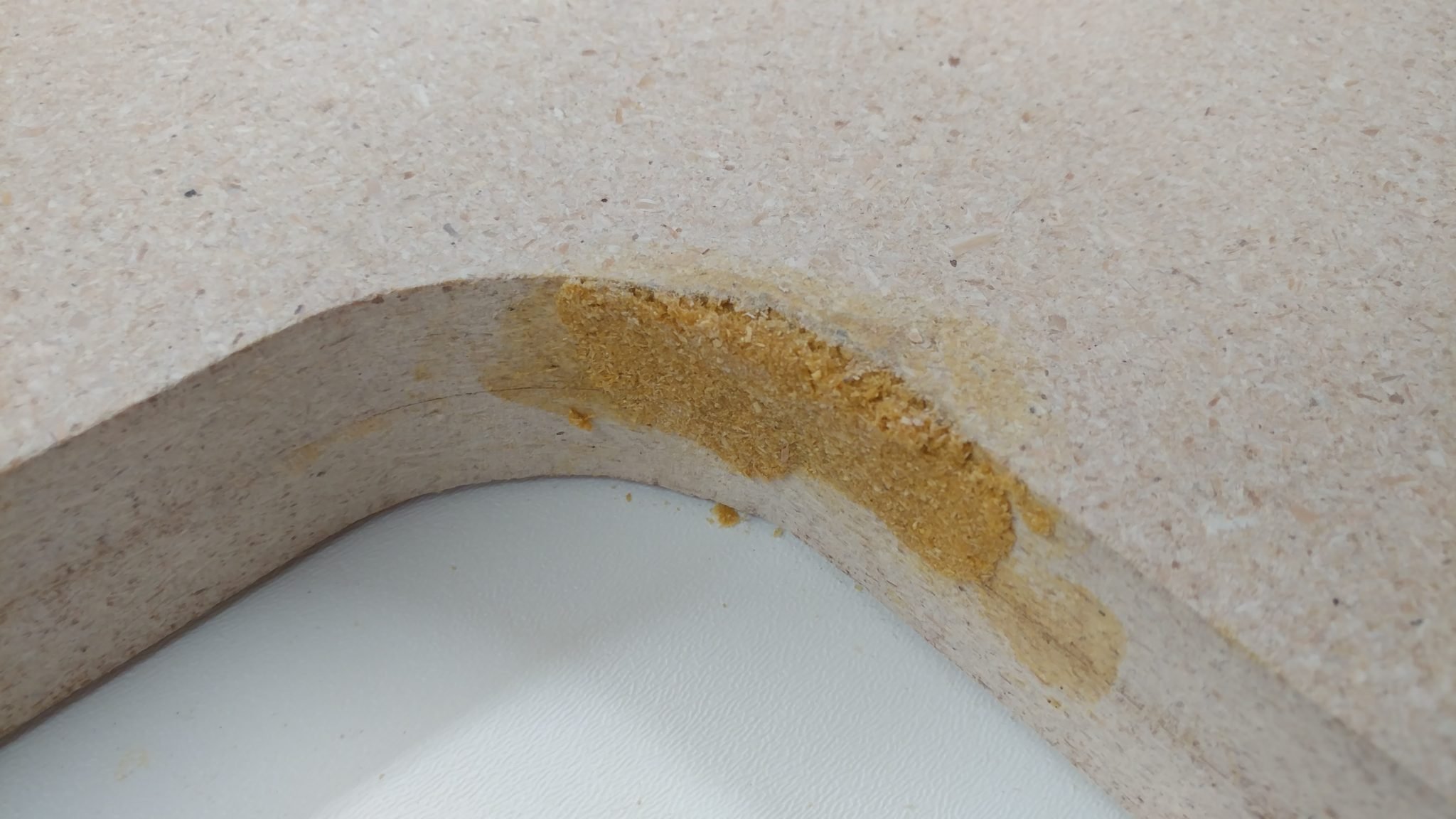
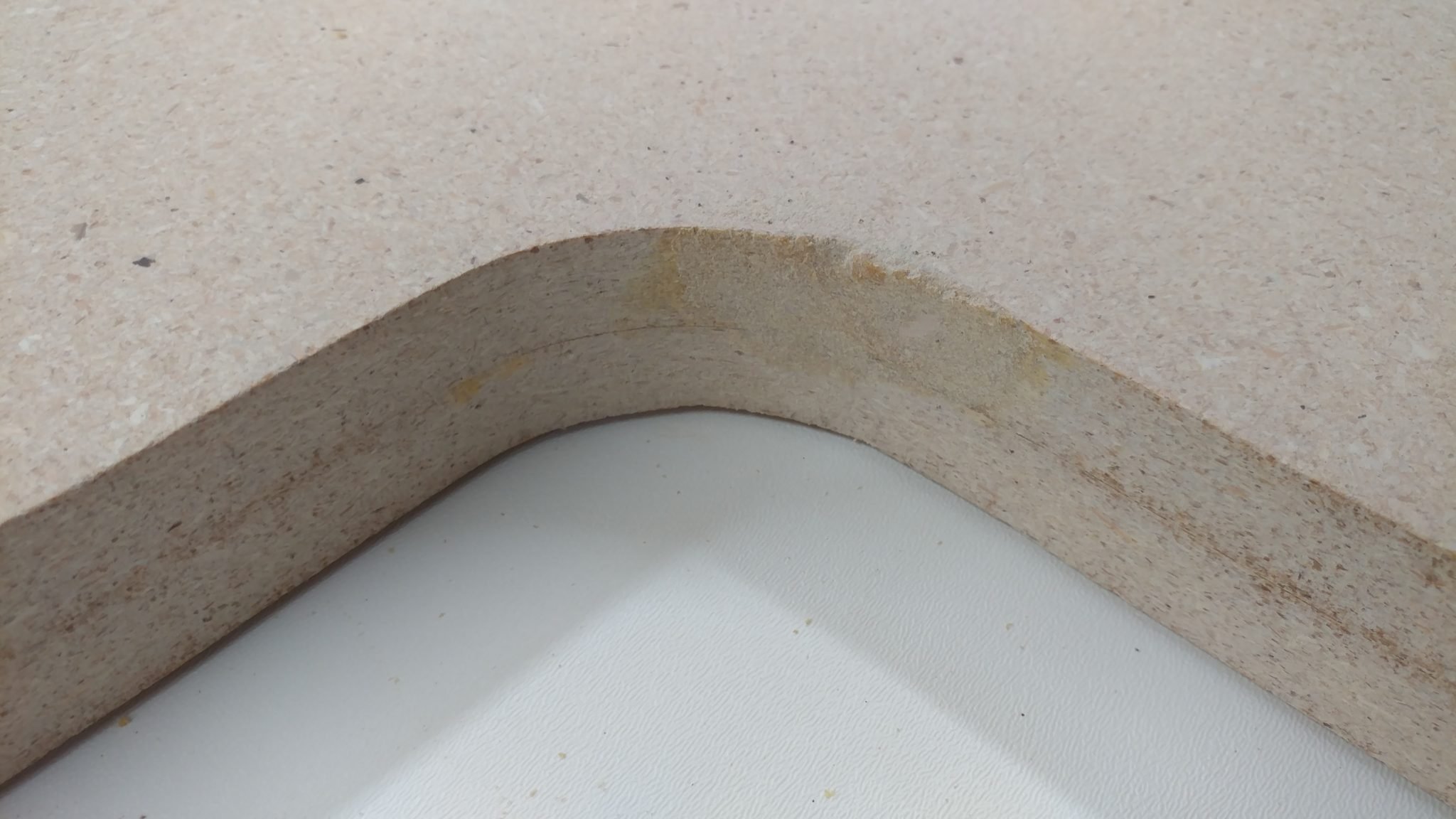
The filler on the inner curve was a lot more difficult to deal with.


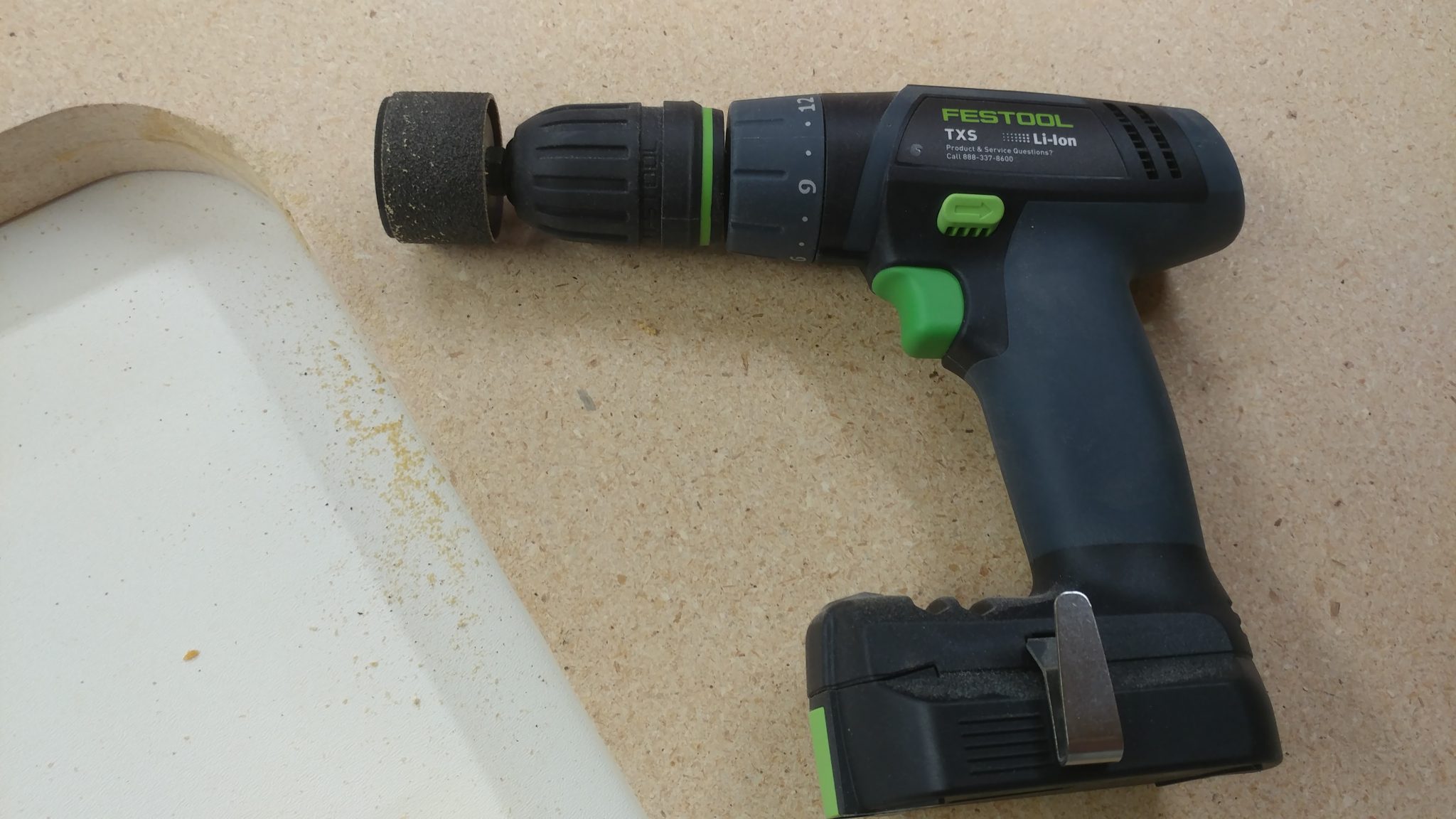
I ended up having to carefully use a drum sander attachment on my hand drill to get it smoothed out.


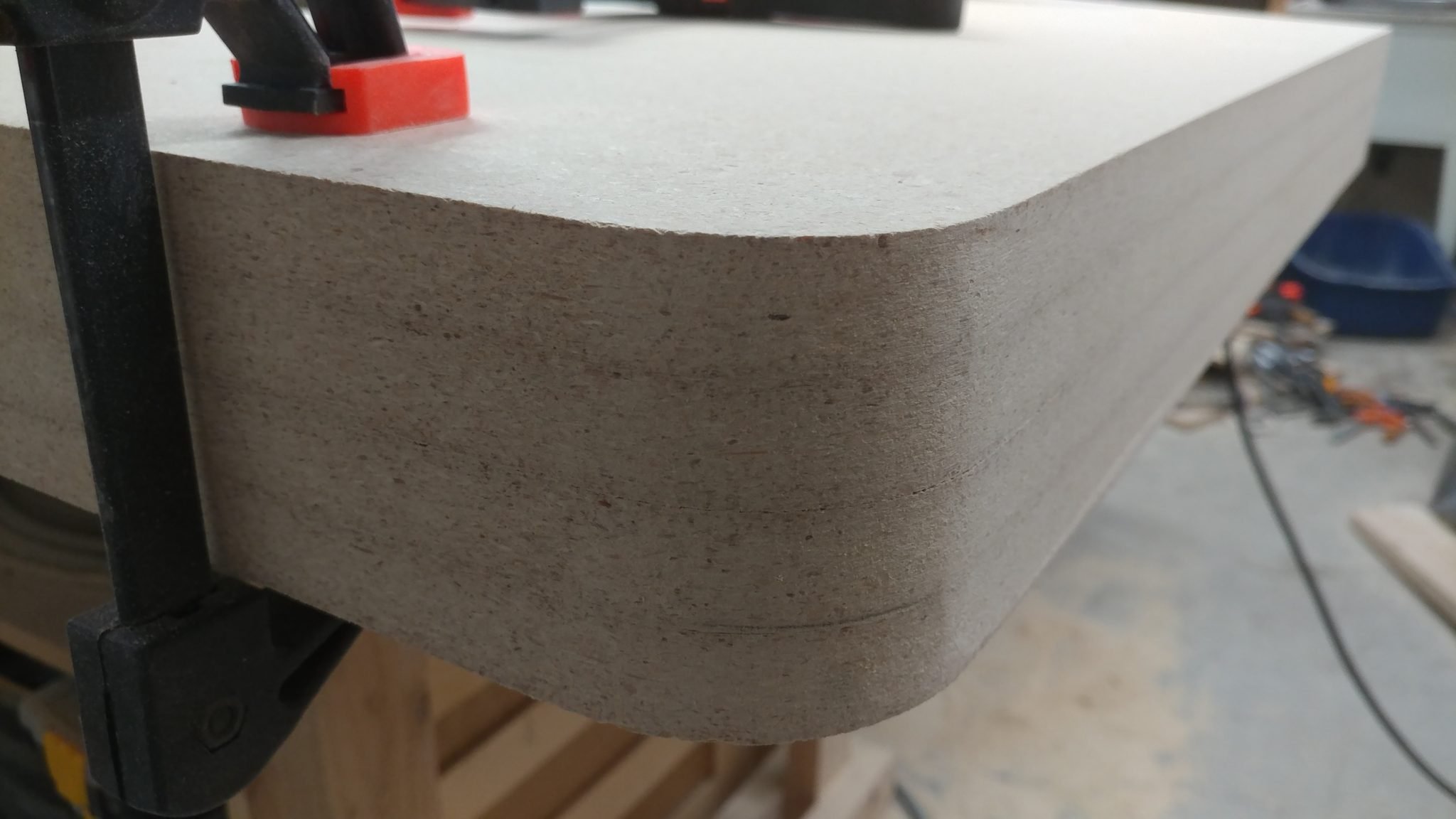
This one didn’t turn out as well but it’s good enough.  I’m putting a roundover on the edges so I’m not worried with how jagged it is.


Applying the roundovers

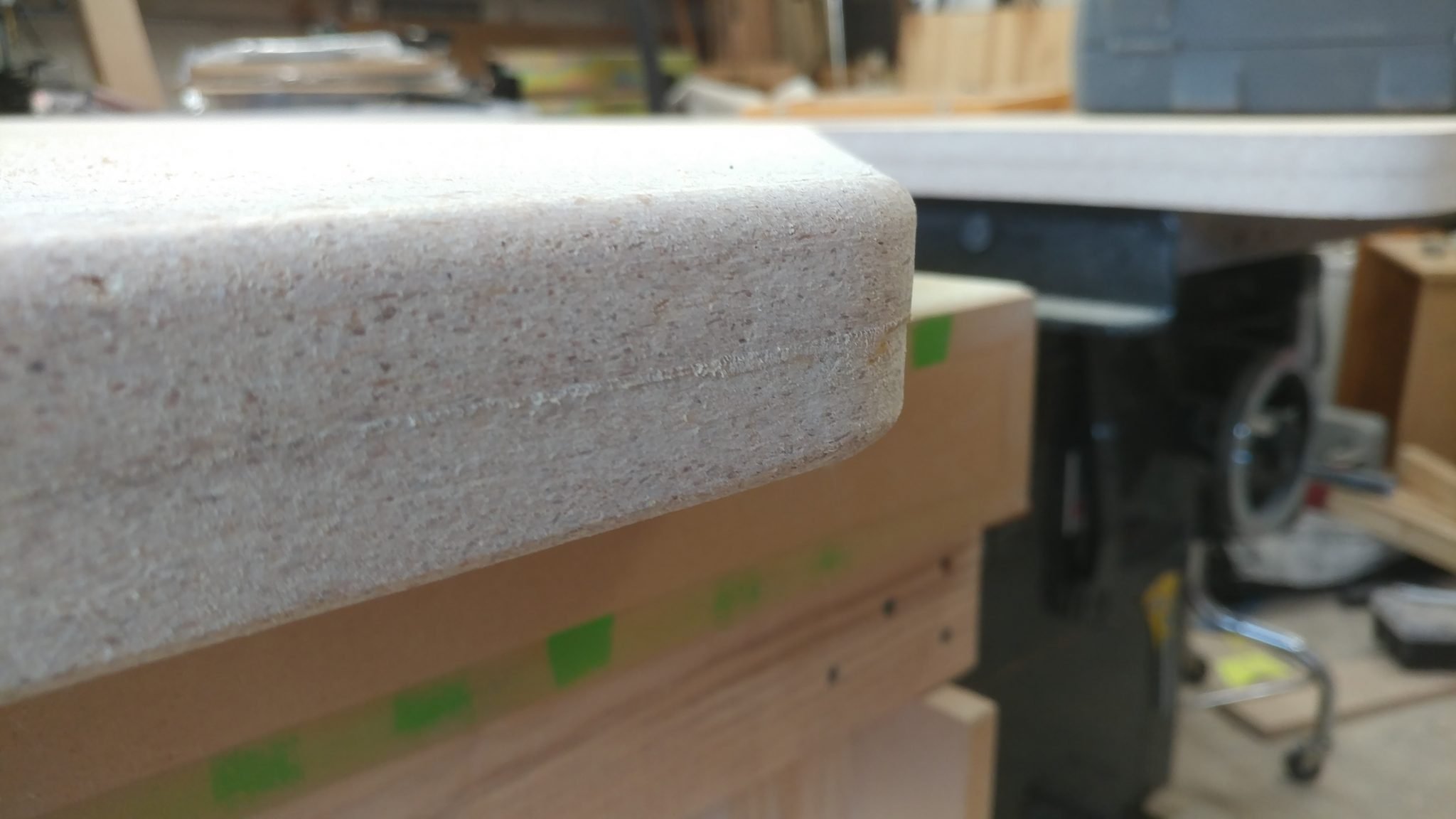
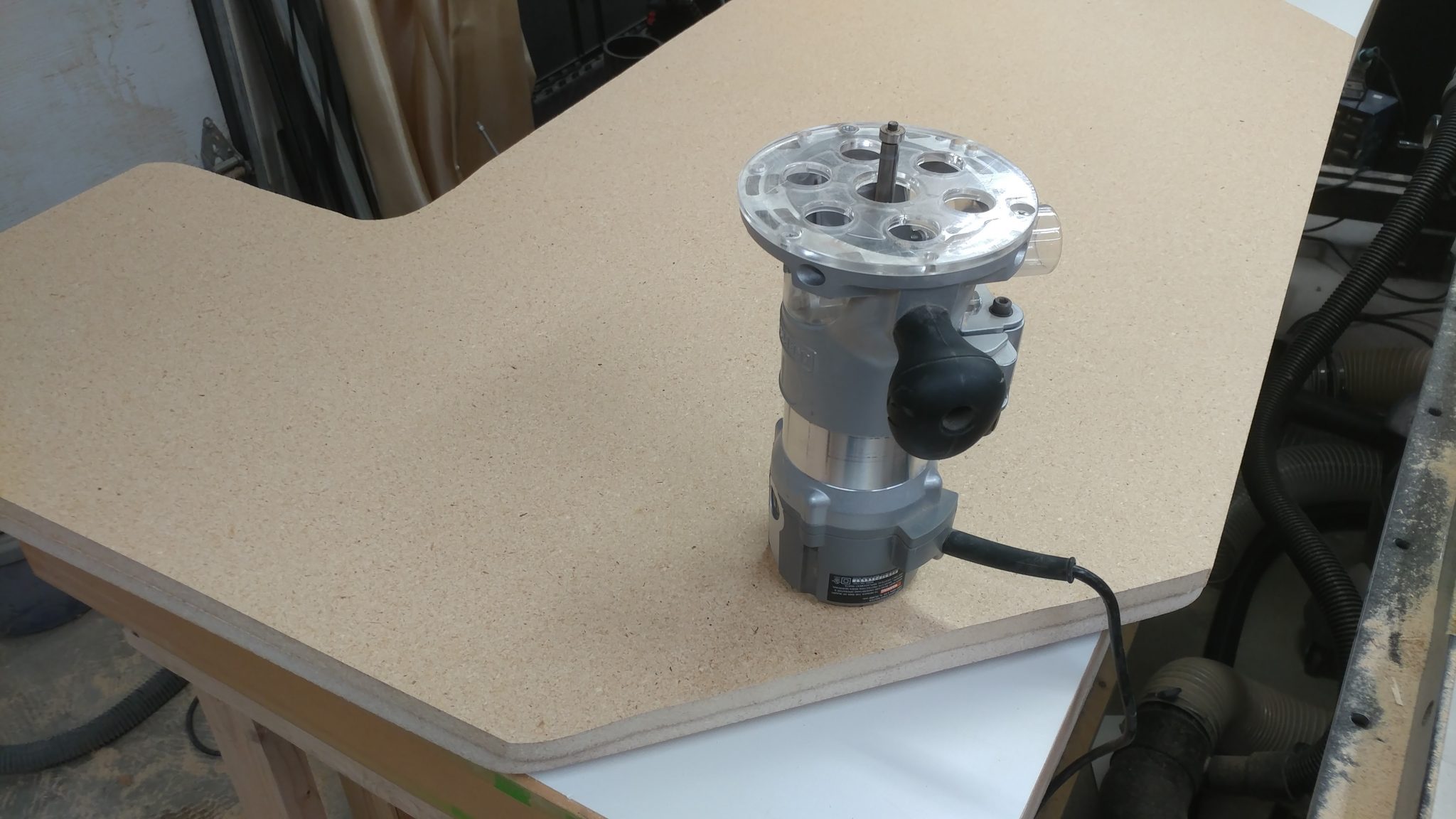
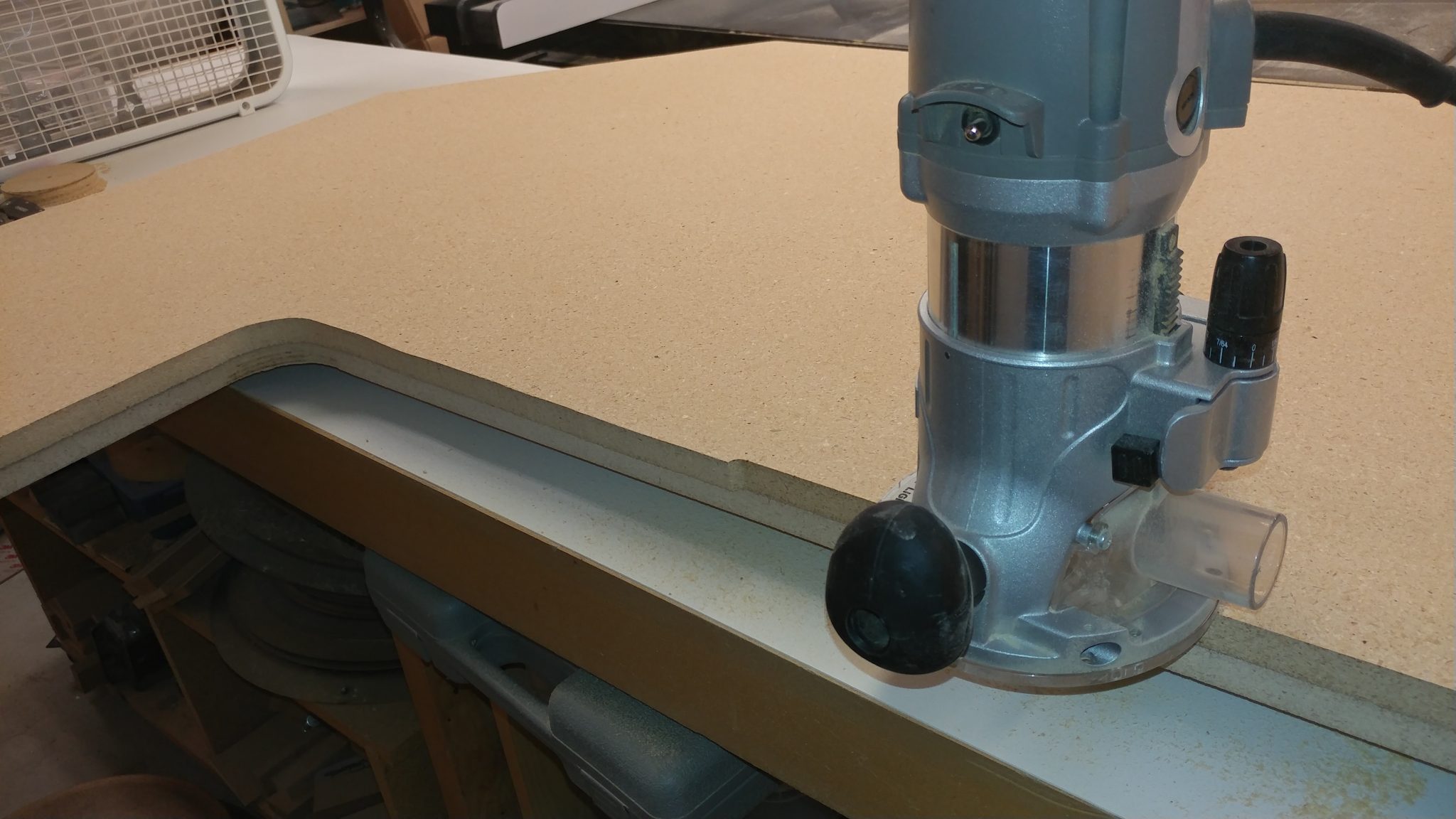
It was time to put the roundovers on the wood.  I decided to just use one of my little trim routers in an effort to avoid the mistakes that I just had to fix which were caused by the unsteady base on my larger router.  I outfitted it with a 1/4″ roundover bit.


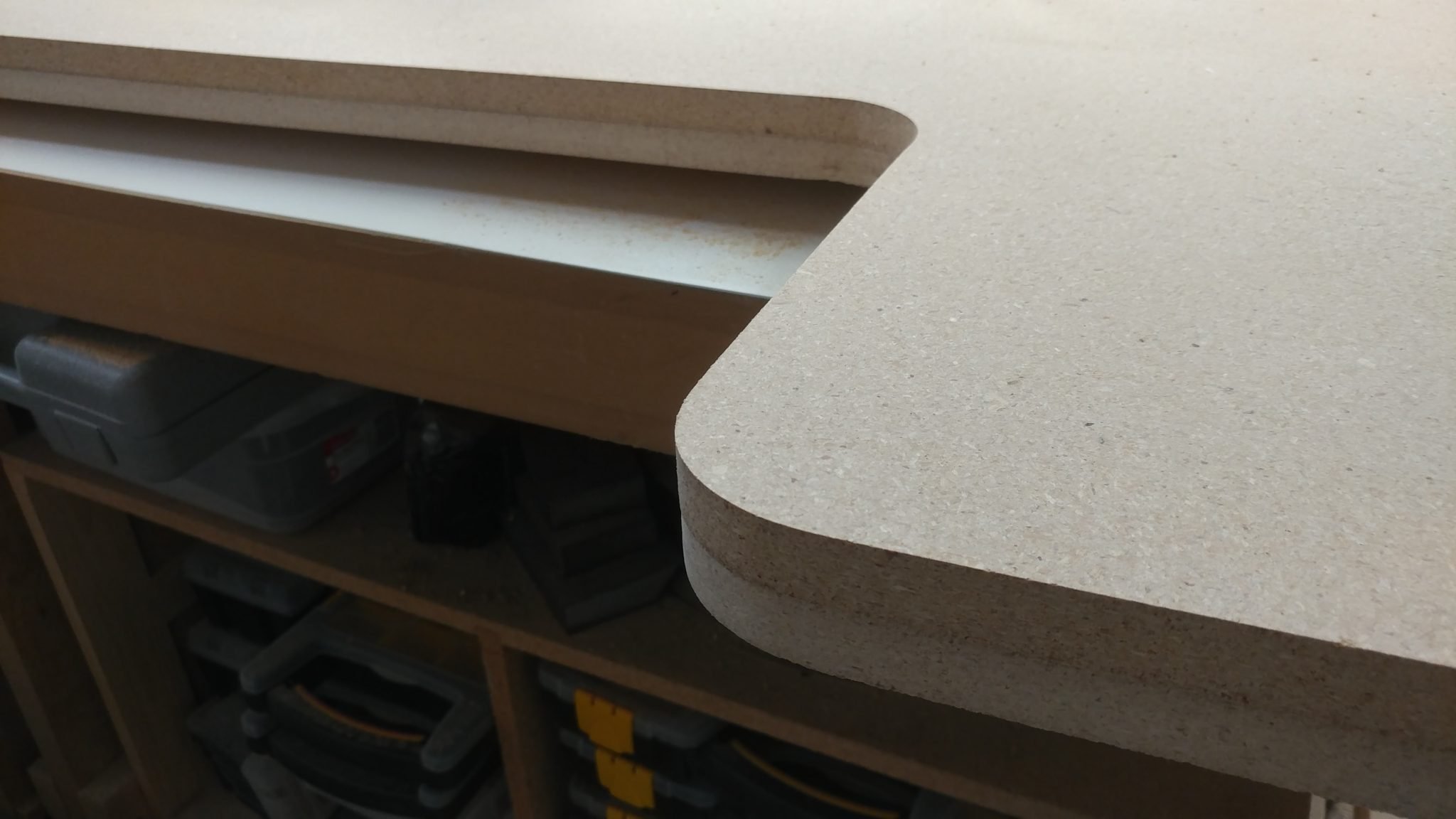
I applied the 1/4″ roundover with the intention of then applying a 1/2″ then finally a 3/4″ roundover.  This is where I ran into a problem; I liked the look of the 1/4″.


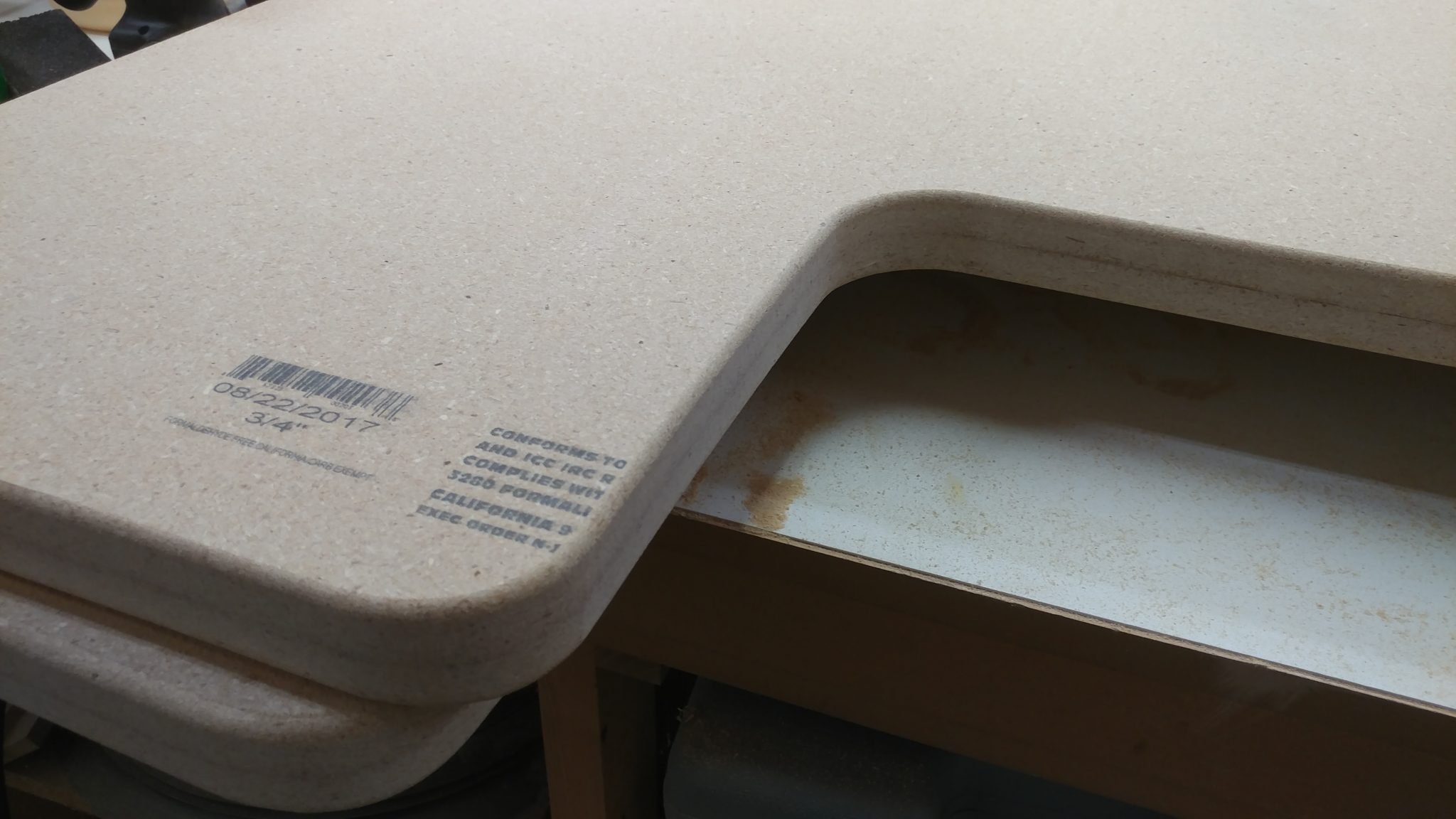
I even liked how this looked in the corner where the patch job made an interesting little shape.


I really liked the look and feel of this roundover.


It looked especially nice when you backed off a bit and took the whole thing in.


I couldn’t make up my mind, and I only have one shot at this so I decided to ask for more opinions.  I took some scrap particleboard and did a mockup.  The left half is the 1/4″ roundover and the right half is a 1/2″ roundover.  I decided I didn’t want to do a full 3/4″ roundover.  I posted this photo along with a few others to several Facebook groups, Google+ groups, Instagram, and Twitter.  I wanted to see what others preferred.  Most feedback seemed to be favoring the 1/2″ but two opinions in particular stood out to me.  One was my wife, who said she preferred the 1/4″, especially since she sometimes attaches vices and jigs to the workbench that I made her and a big roundover would make that difficult.  The other was from Paul Jenkins (a.k.a. The Wood Knight).  He also favored the 1/4″.  In the end, I agreed with these two so I left it as 1/4″


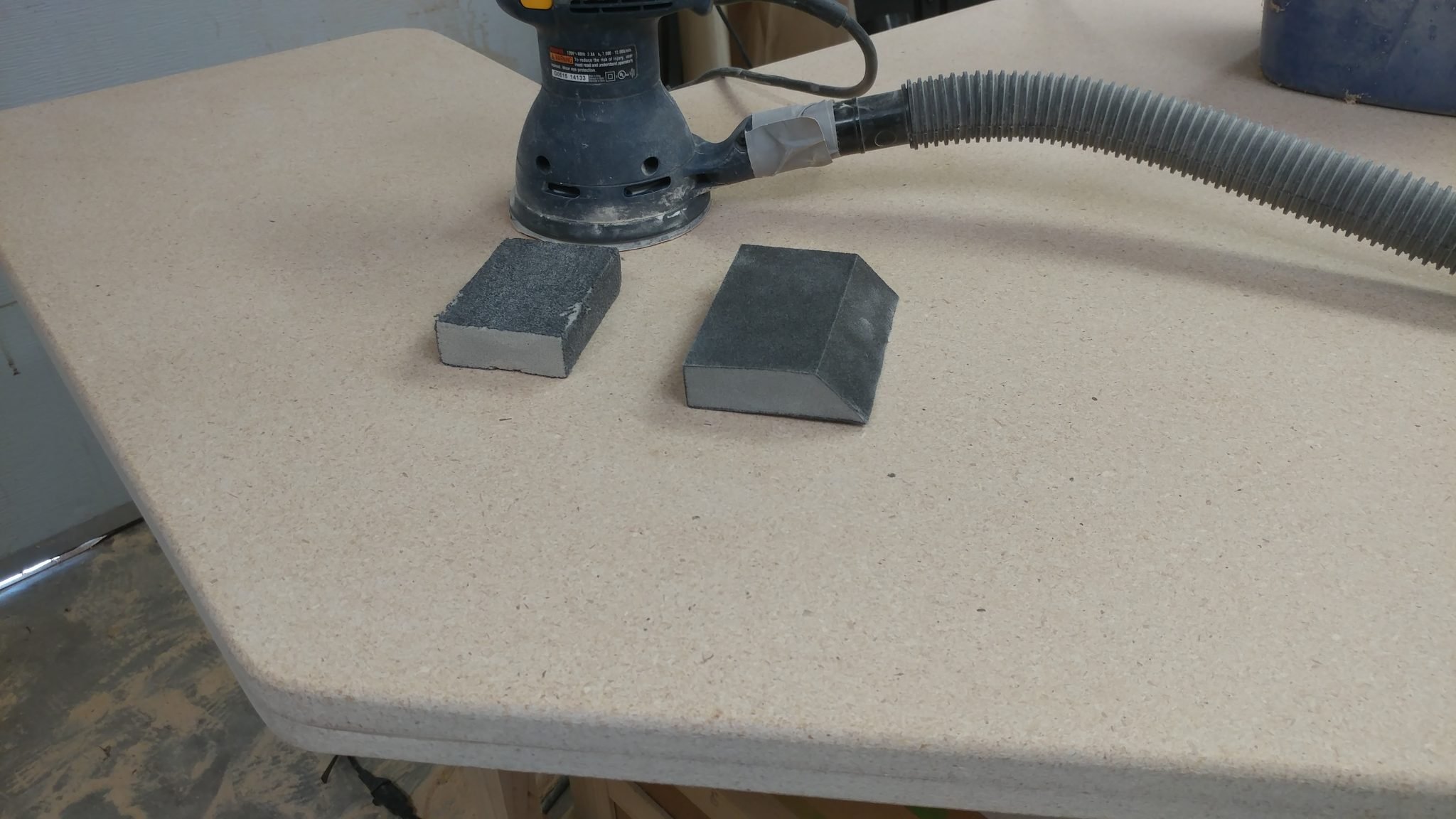
The last step for this part of the project was to clean the pieces up to get them ready for finishing.  I sanded the top and bottom faces of each piece with a random orbital sander and 220-grit sanding discs.  The edges were cleaned up first with a coarse and then a fine-grit sanding sponge.


This concludes part 2.


Closing remarks

This is a difficult project, not in a woodworking sense since it’s ridiculously simple in it’s construction but in that I don’t have a lot of room in my shop at the moment.  My shop is currently difficult to walk in, much less build in.

I’m going to stain the wood next then apply several coats of matte finish polyurethane.  This isn’t going to be particularly interesting and will be time consuming so the next update might not have much to it.

Before I attach the legs and set up the desk, I need to also build the racks that will store the computer and recording gear.  These will determine the final placement of the legs since they are used to hold up the racks.  I’m going to try to get these built while I work on the finishing but I also want to make sure that the finish is protected from sawdust from building the racks and like I said, I have very little room in my shop right now.


If you have any suggestions, please leave them in the comments below.  I’d love to see any desk builds you’ve done.  Also, if you haven’t already, please consider signing up for my mailing list so you get e-mail notifications when I post new articles.


Studio Desk – Part 1: Preparing the top and bottom

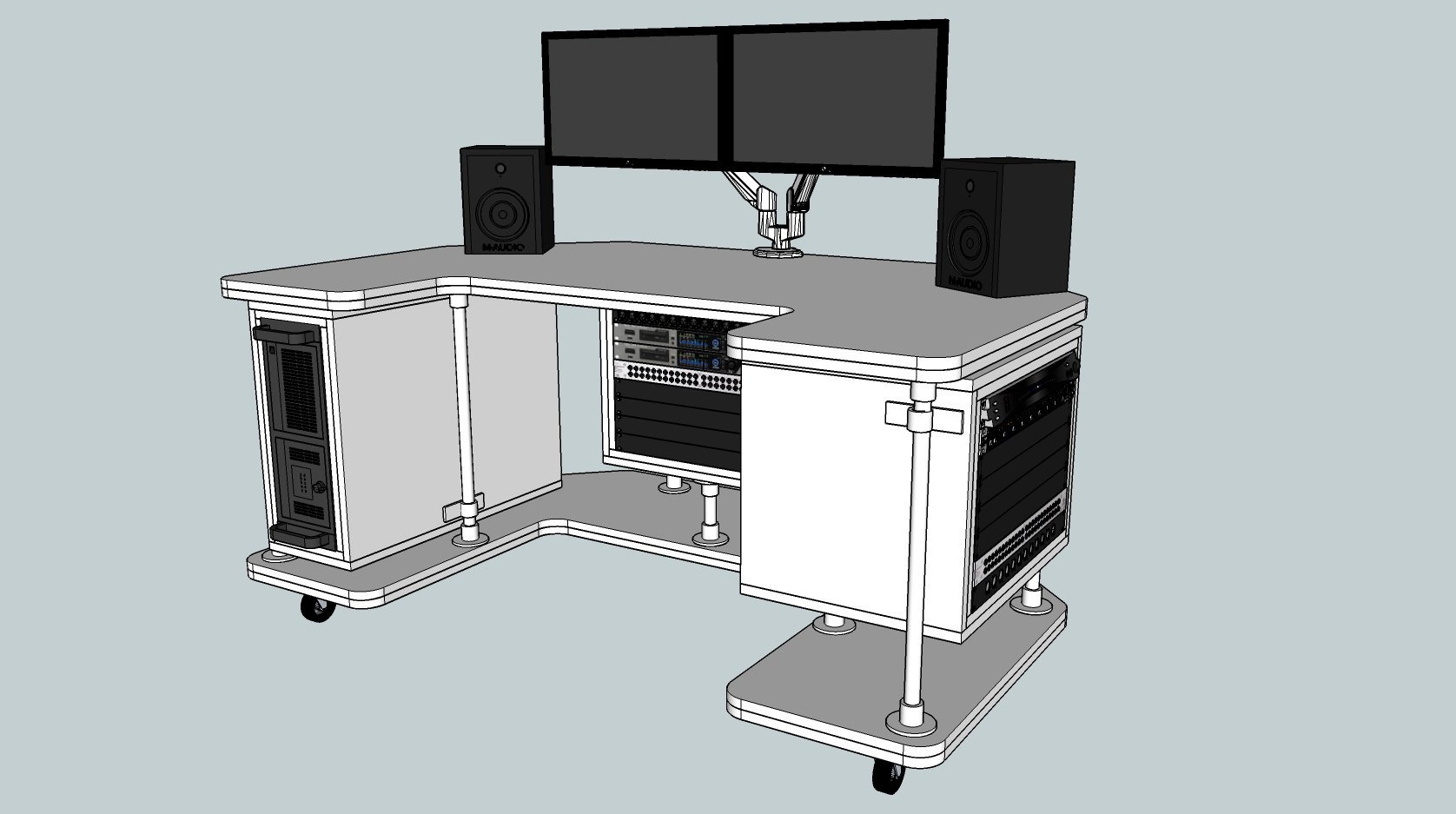
I finally settled on a design for my studio desk.  It needed to fit into the breakfast nook, be mobile, and house the various racks of gear needed to record music.  I went through almost 20 designs before I settled on this one, not because it was the best, but because I knew I would never find the “perfect” design so I should just pick one and go with it.


The desk will mainly consist of a top and a bottom that are joined with vertical pipe sections.  The electronic gear will be stored in racks that will be modular, in that I can change their placement at a later date if I decide to.  I decided to use two layers of particle board for both the top and bottom.  It’s not apparent in the rendering but I’m also going to do a roundover on the tops and bottoms of each piece.  I’m also planning on staining the particleboard a dark color and protecting them with several layers of polyurethane.


Cutting the pieces to size

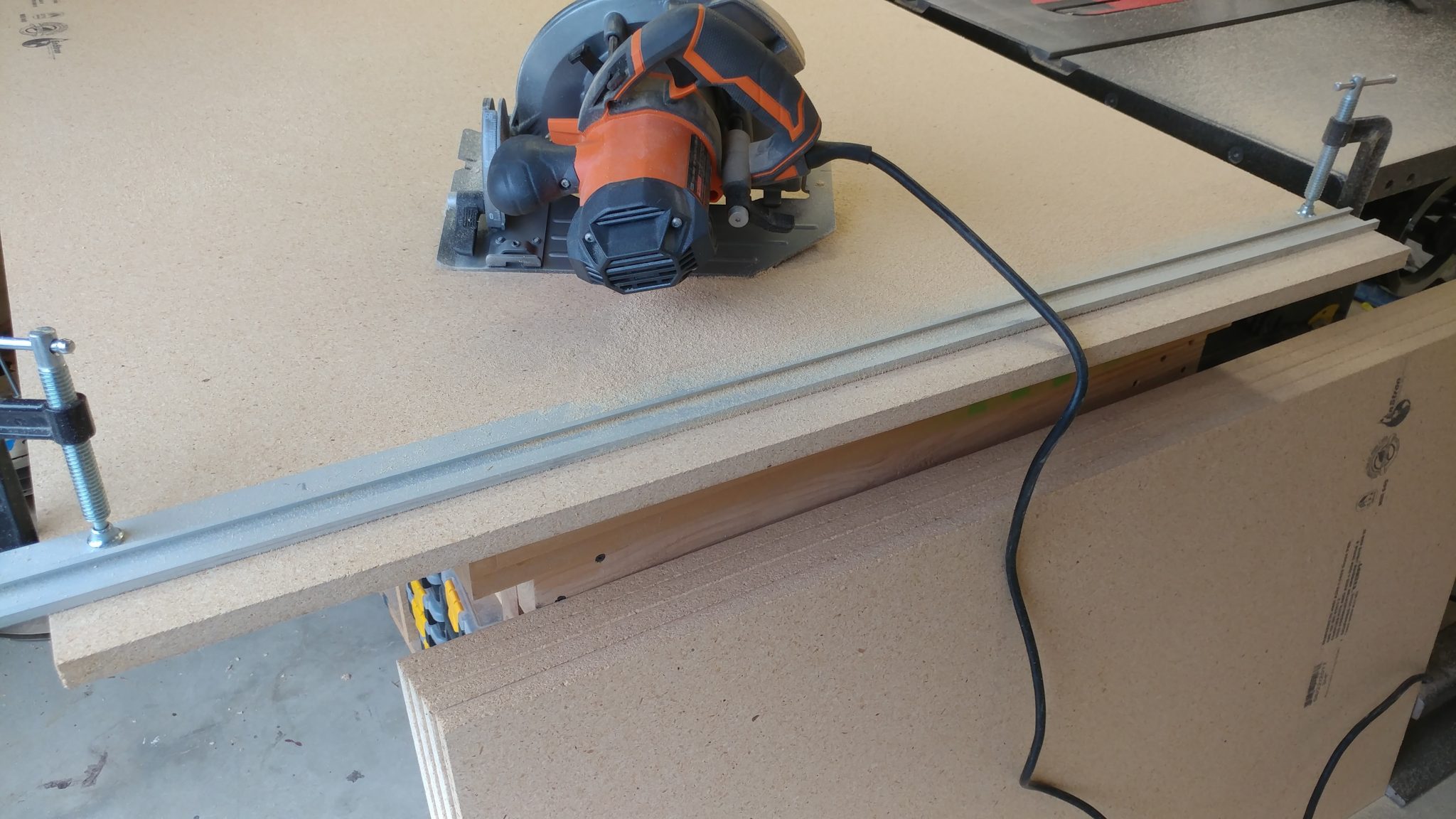
I started with the pieces cut slightly oversized on the panel saw.  Then I cut them to their exact length with a circular saw.  I did this by cutting a little bit off one side then flipping the board around and cutting it down to the exact length on the other side.  I did it this way so I wouldn’t have any factory edges on the final board, which may have nicks on them.


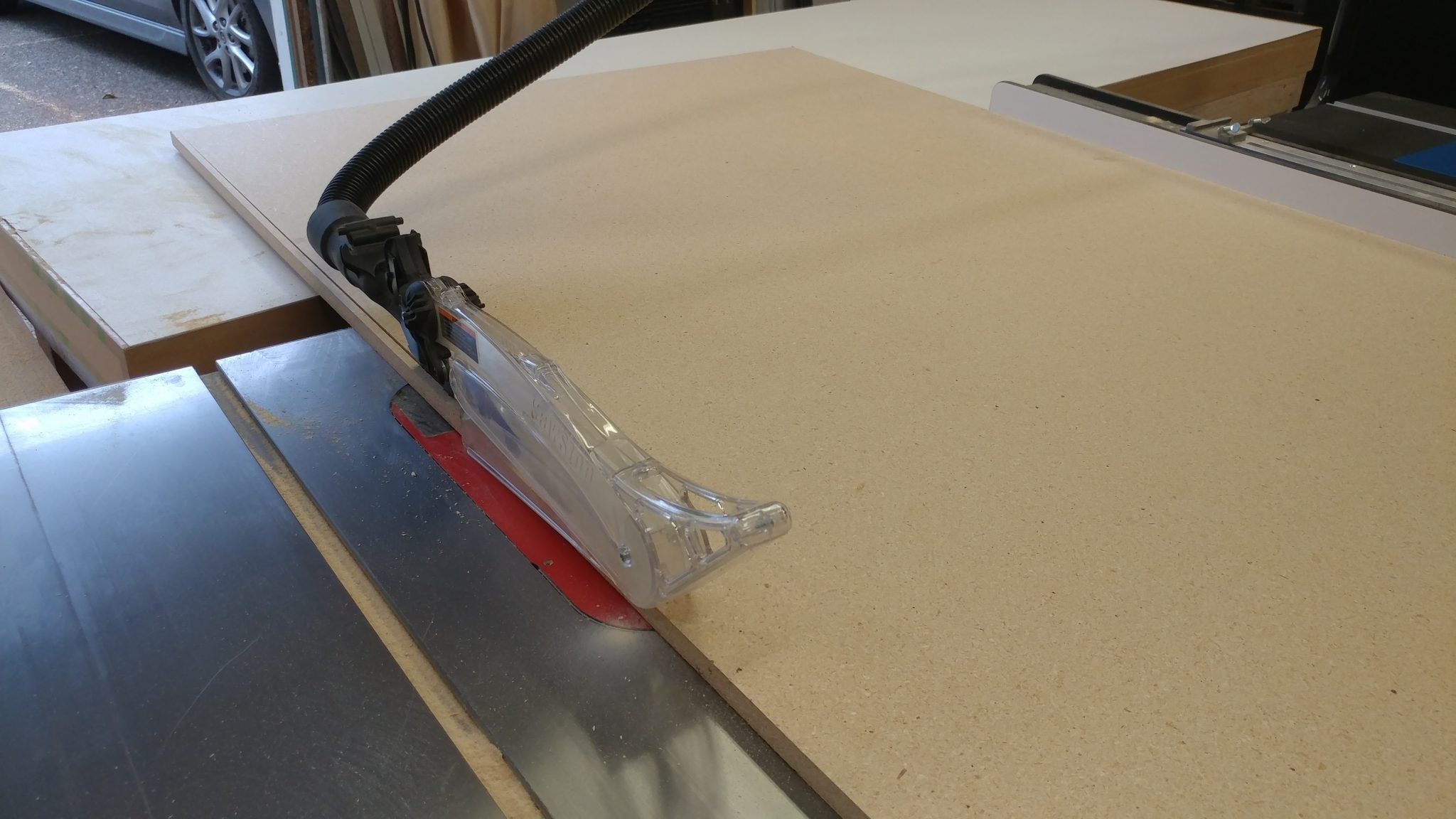
Next, I ripped them on the table saw to get them to their final width.  I did the same thing where I took a little off one edge then flipped it and ripped it to the final width.


Marking the outline

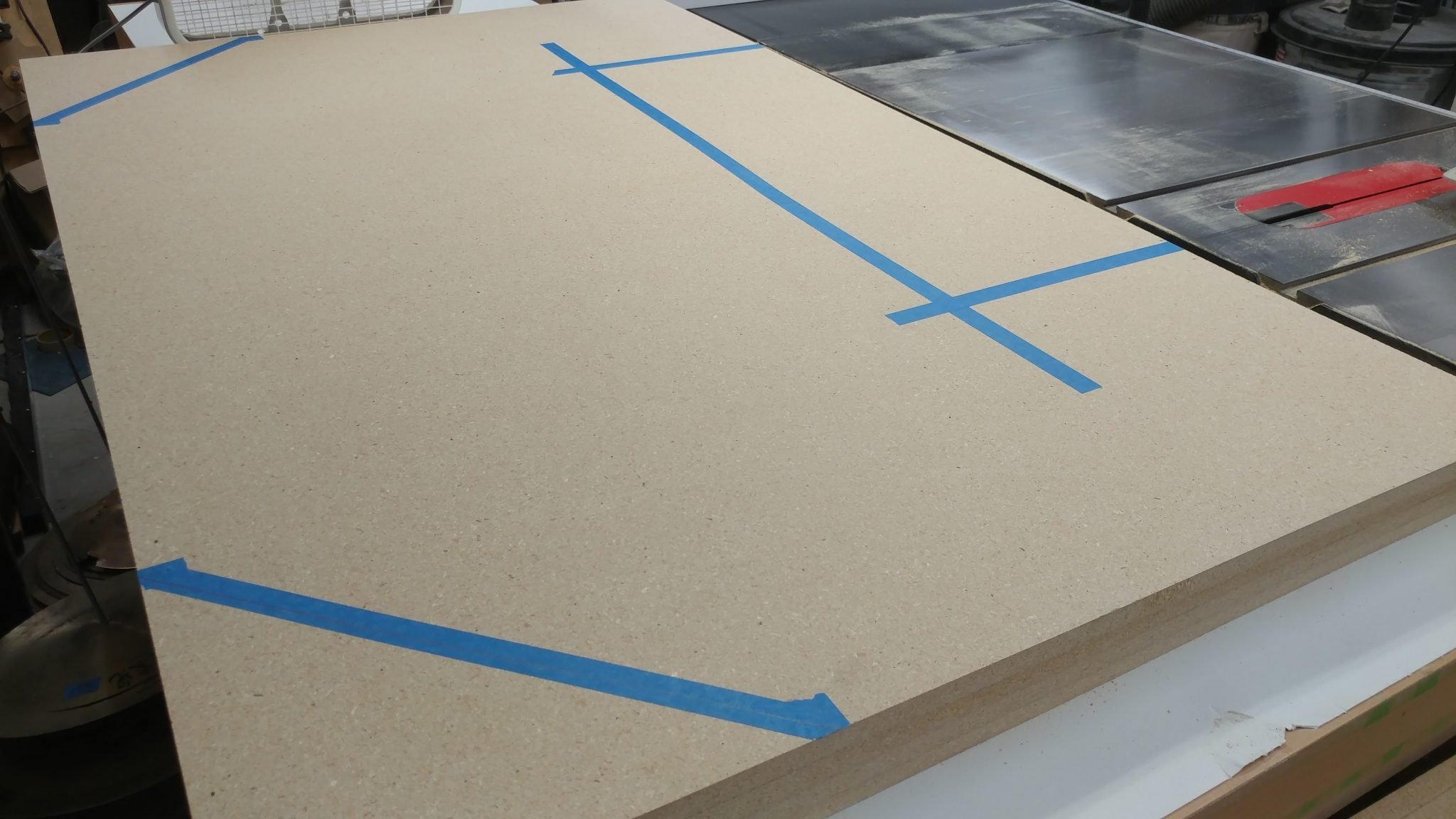
The next step was to mark out where I was going to cut.  Now, I should mention that although this desk has been planned out, some of it is dealt with on the fly.  I had some measurements but they were just guidelines.  The important thing is that it isn’t too wide to fit in the breakfast nook, or “control booth” as I’m now calling it.  That being said, the marks for cutting aren’t permanent so I drew them on painters tape at first.


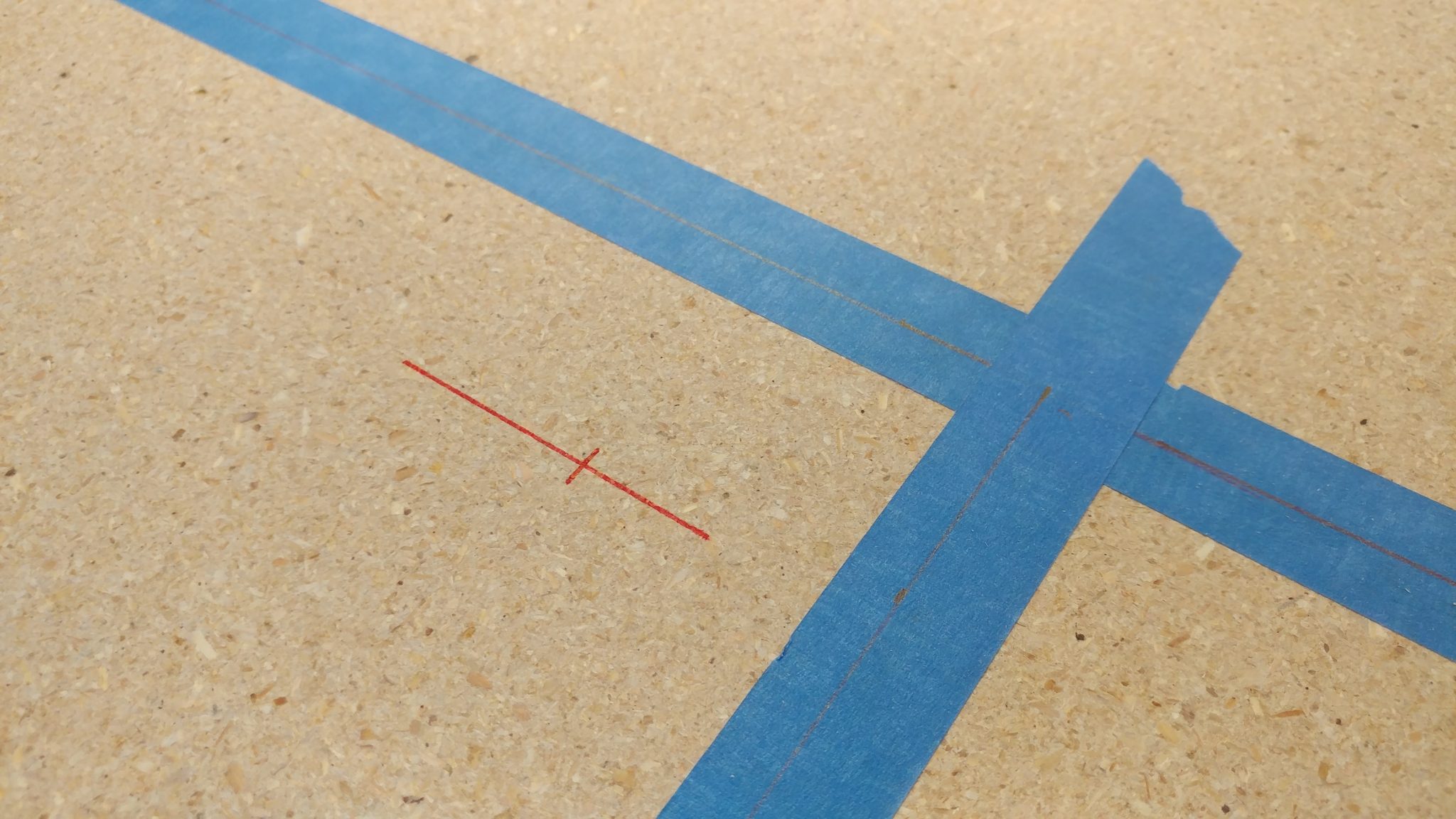
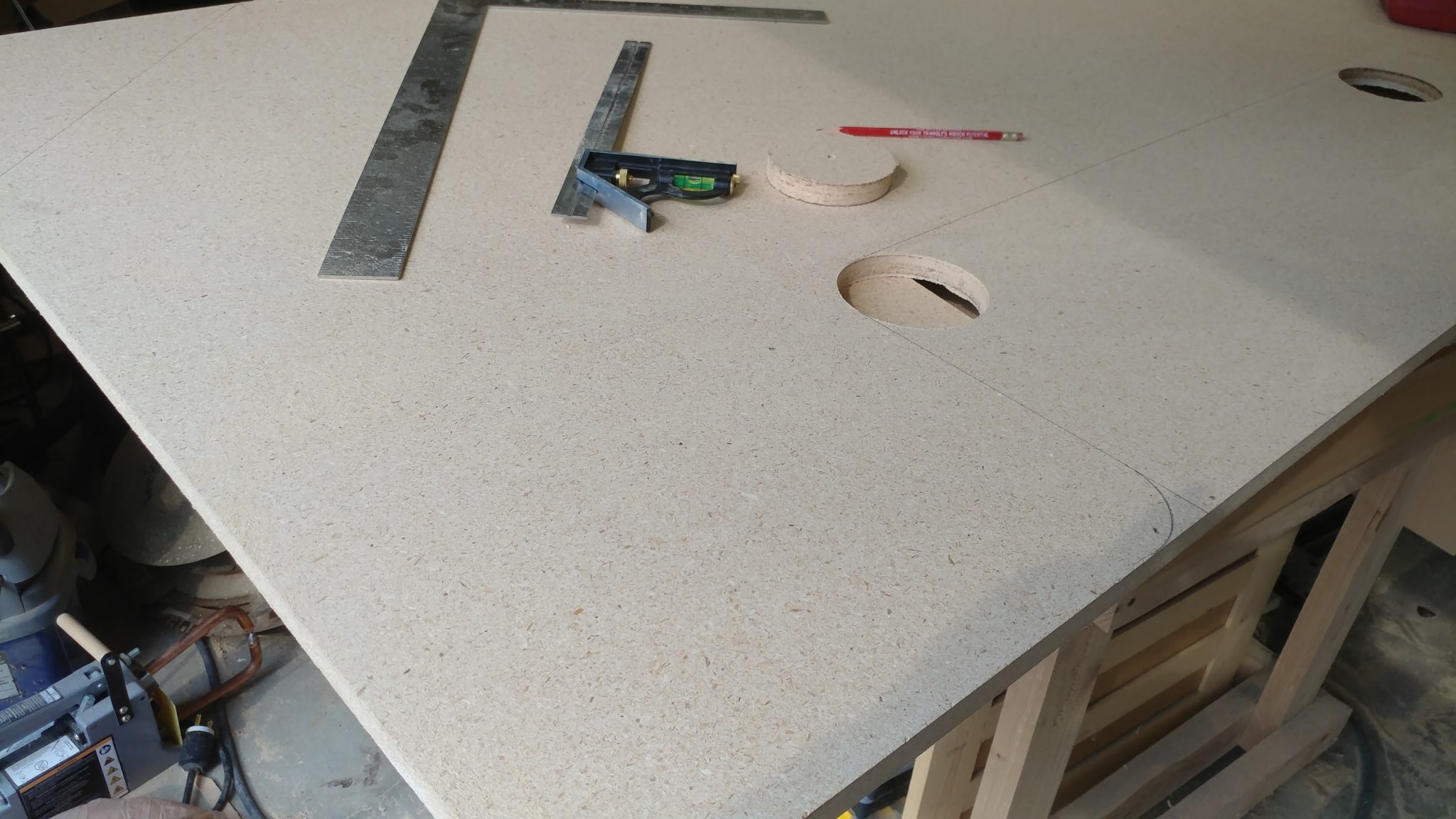
Once it was decided where the cuts will be, I marked 2″ over in both directions from the inside corner so I could drill a 4″ hole.  This will be clear in a little bit.


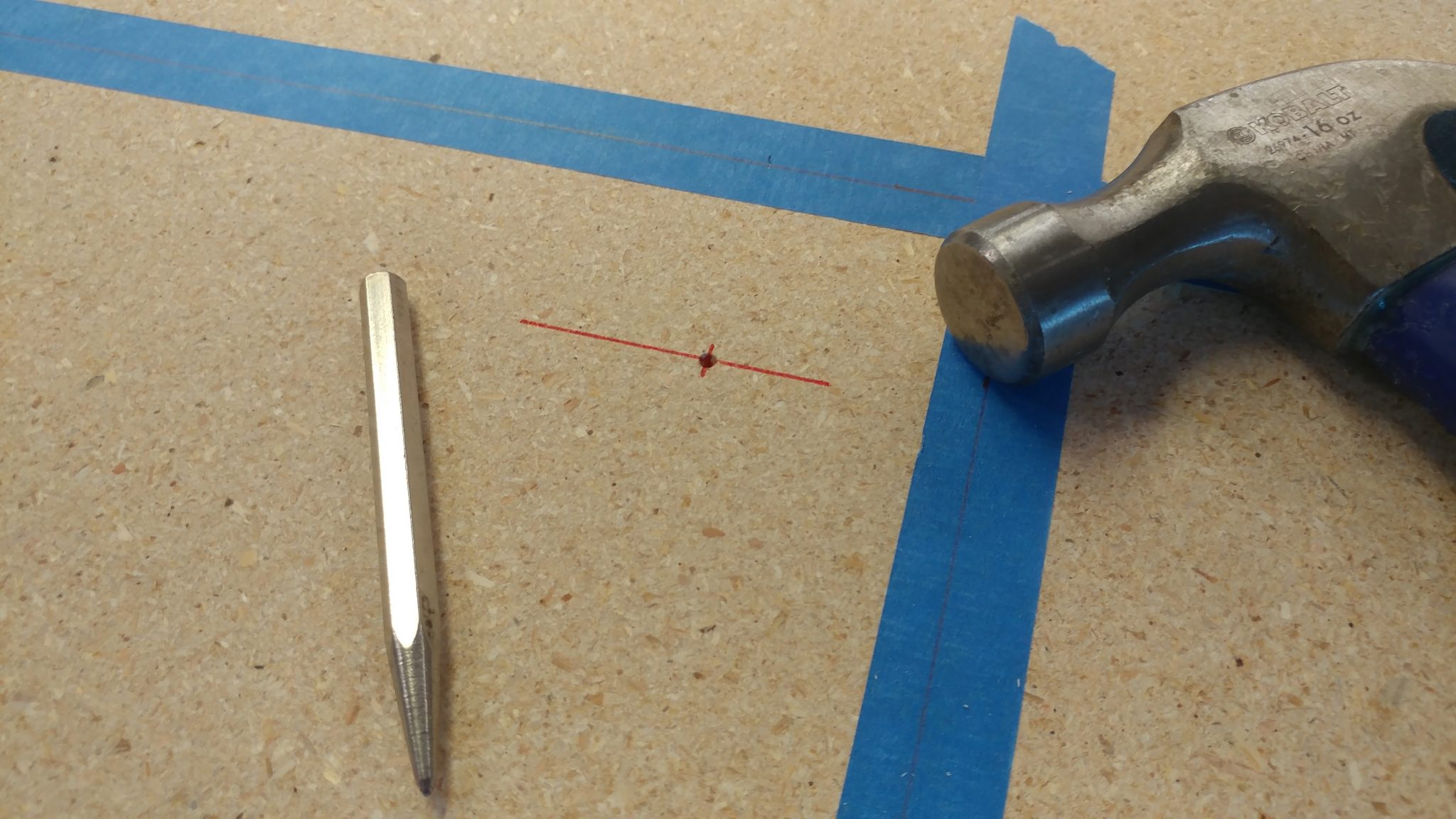
I didn’t want my hole saw to wander so I grabbed a hammer and a punch and made an indentation where I wanted the hole to be centered.


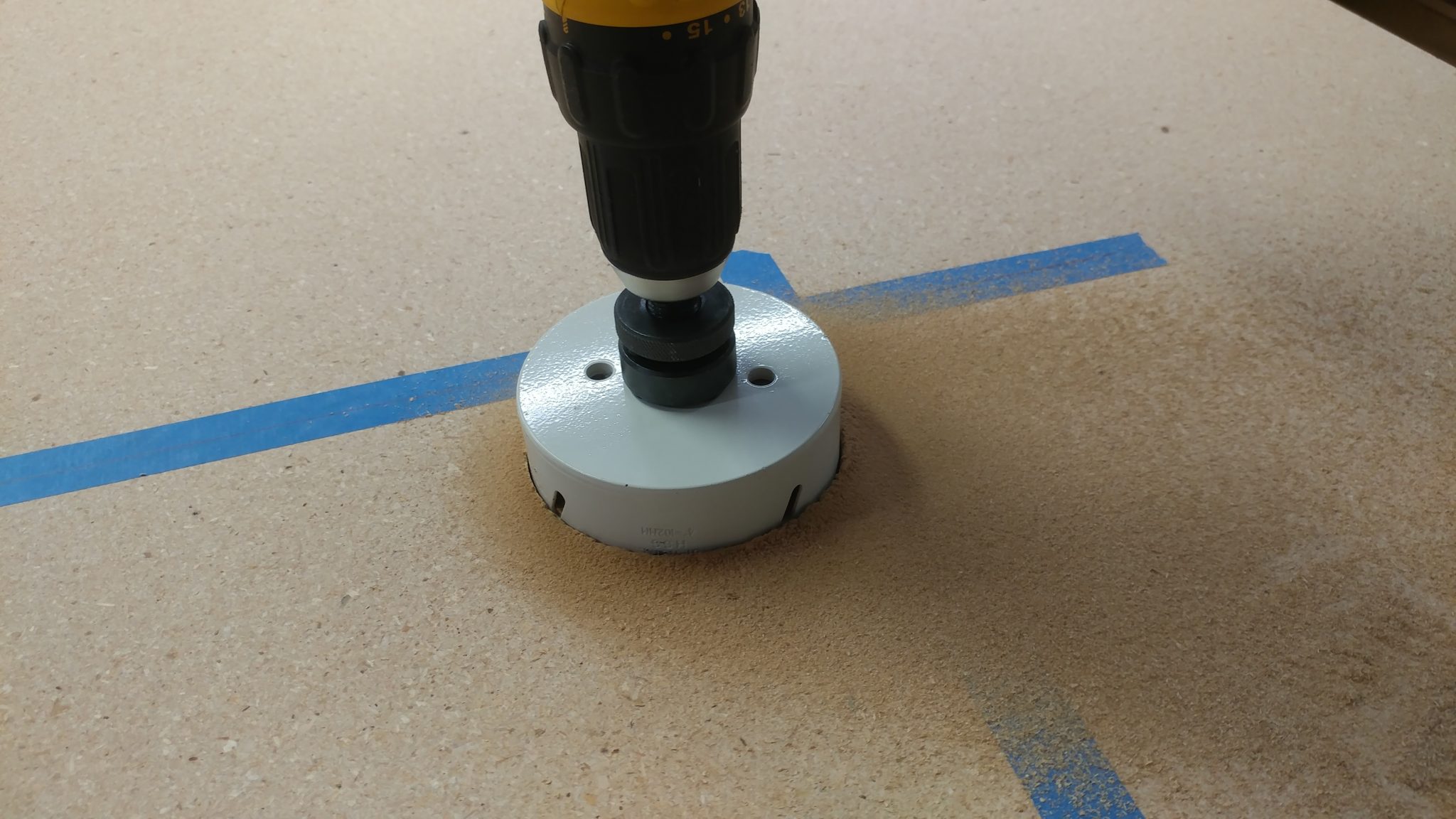
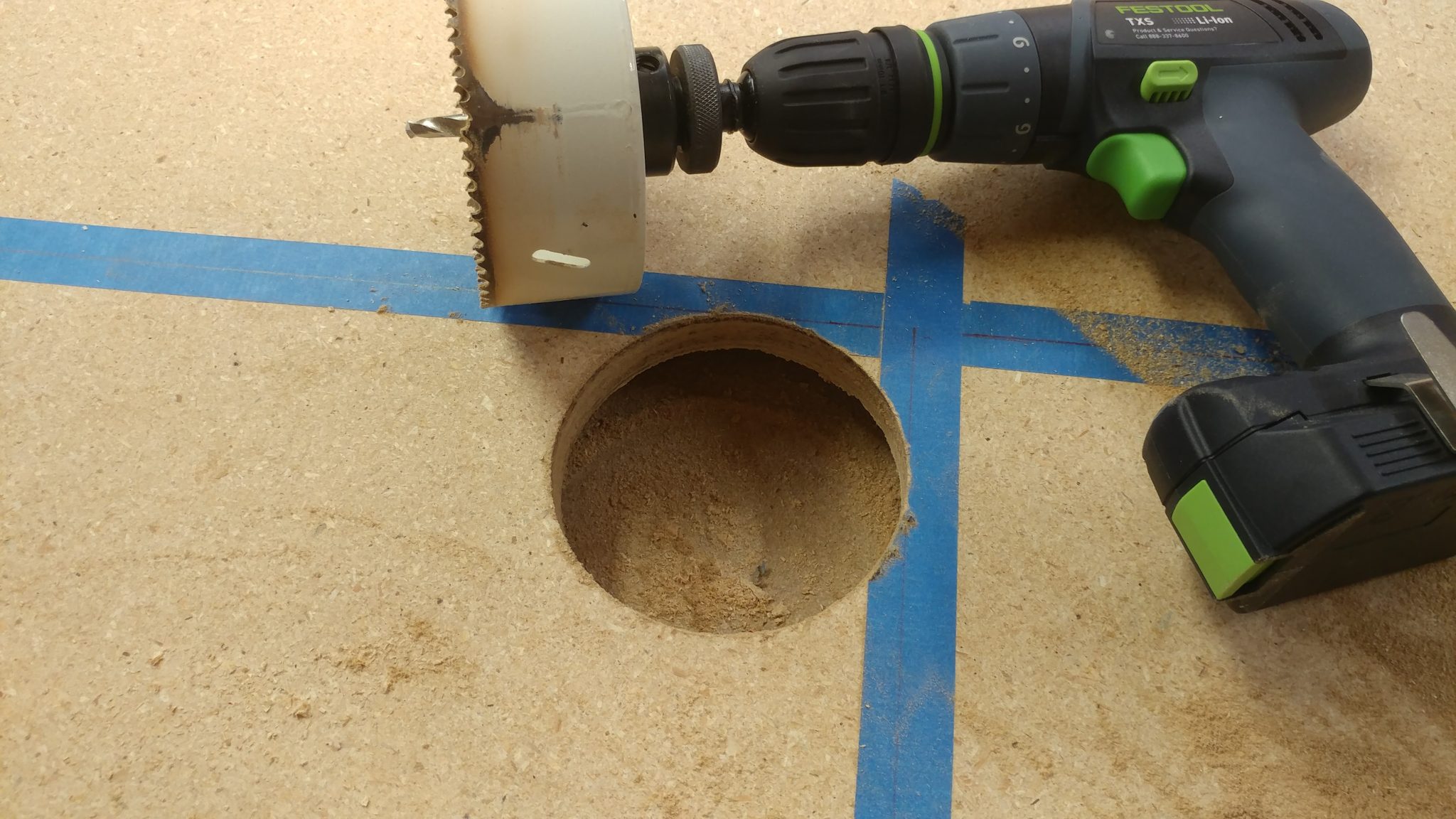
Then I was able to use my (dull) 4″ hole saw to make this cut.


I wasn’t too concerned about blowout on the other end because of the roundover I plan on adding.  as such, the material wasn’t supported underneath.


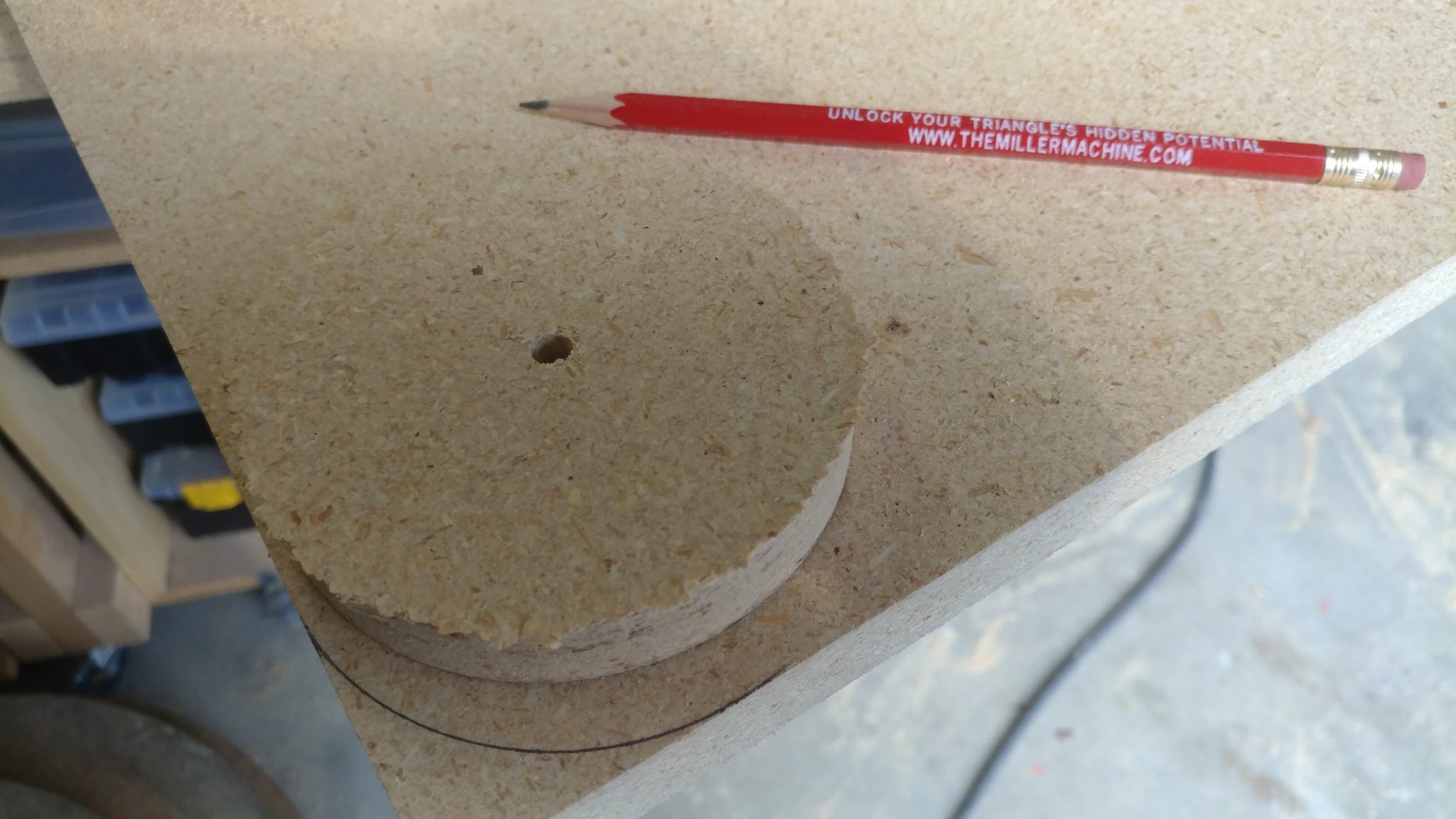
I wanted similar radius’s on the outside corners, but they didn’t need to be exact.  I used the cutout from the hole I made to trace a corner radius on each of the outer corners.


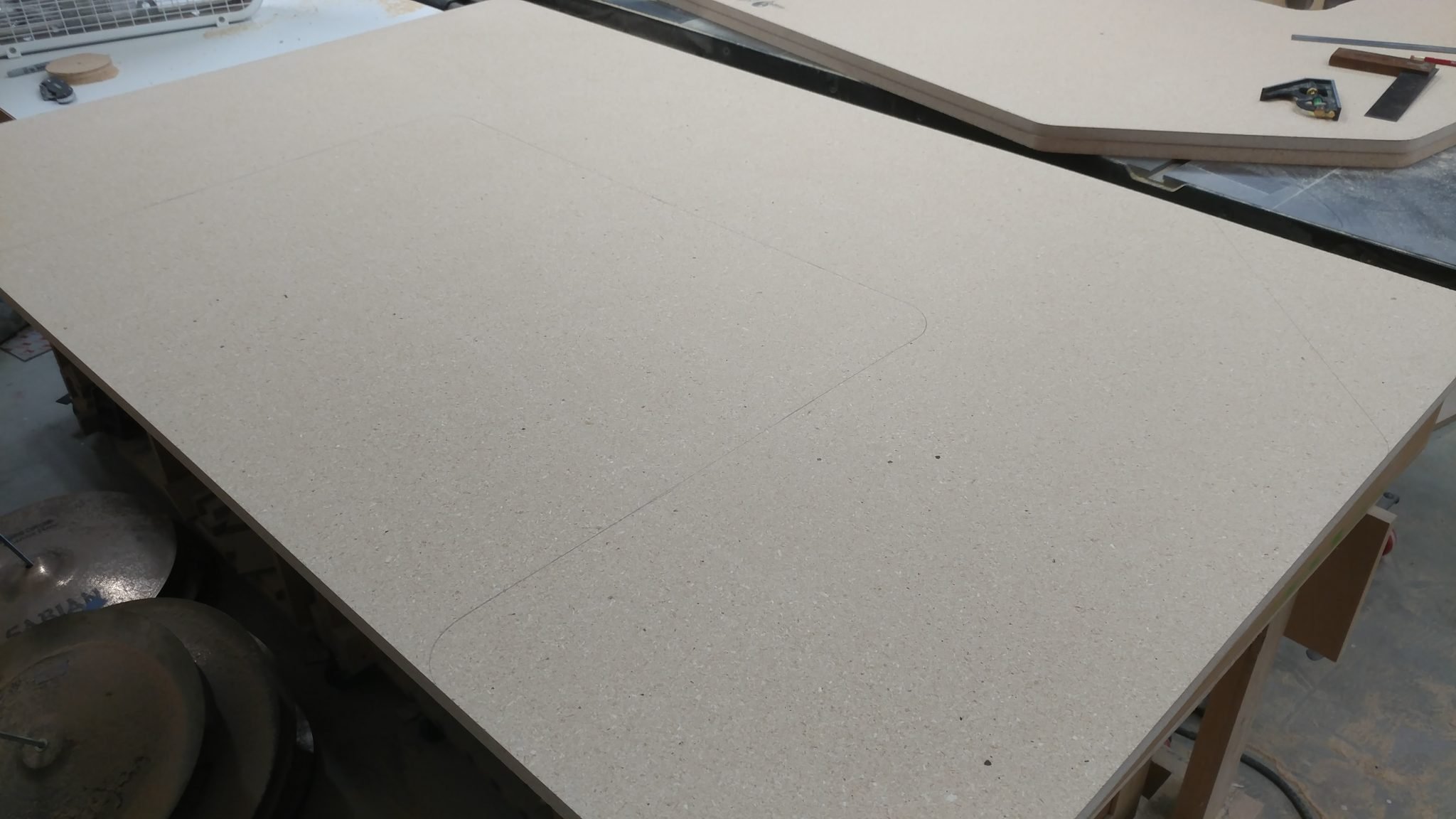
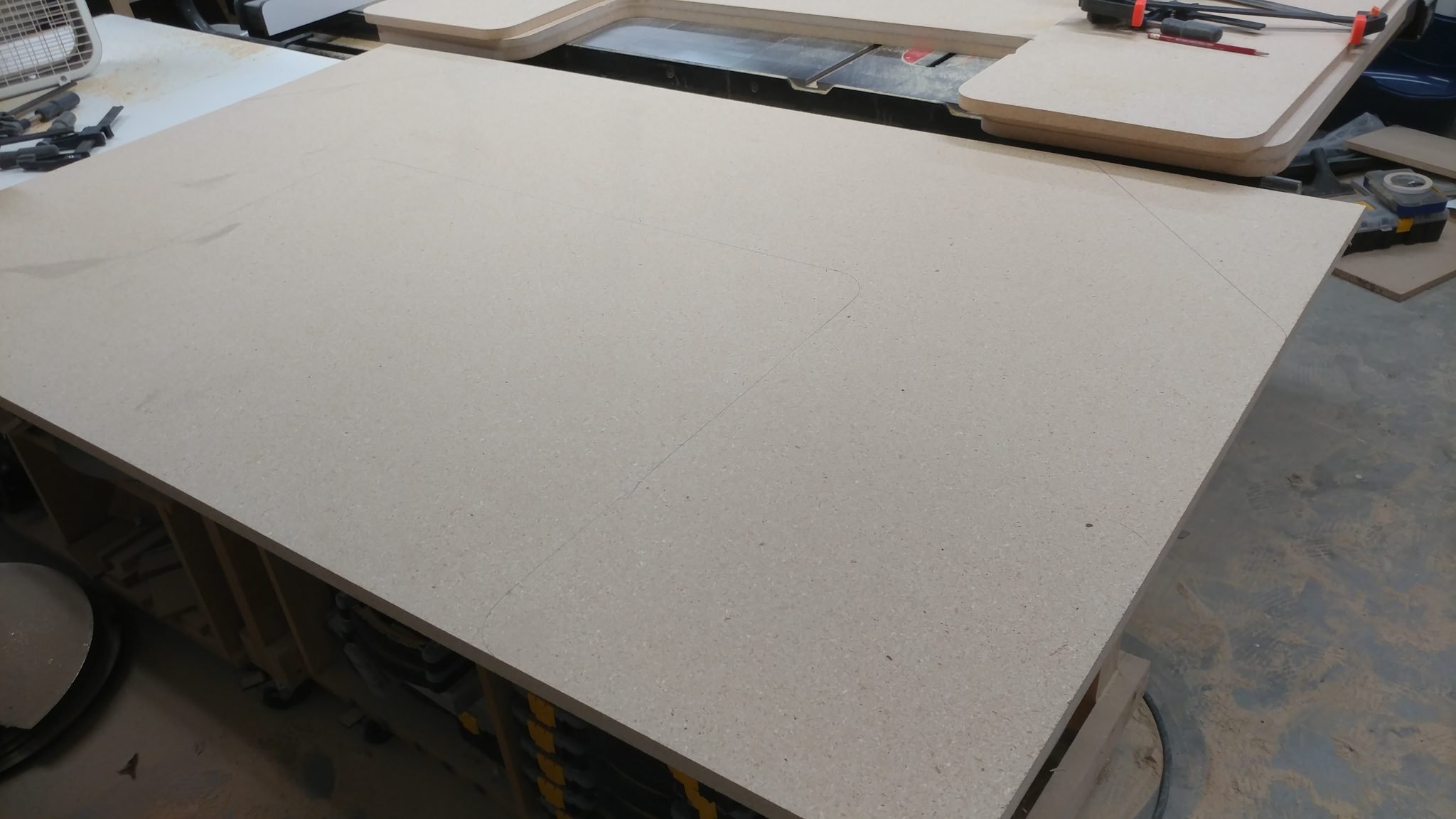
I had the entire thing planned out and traced on the board.


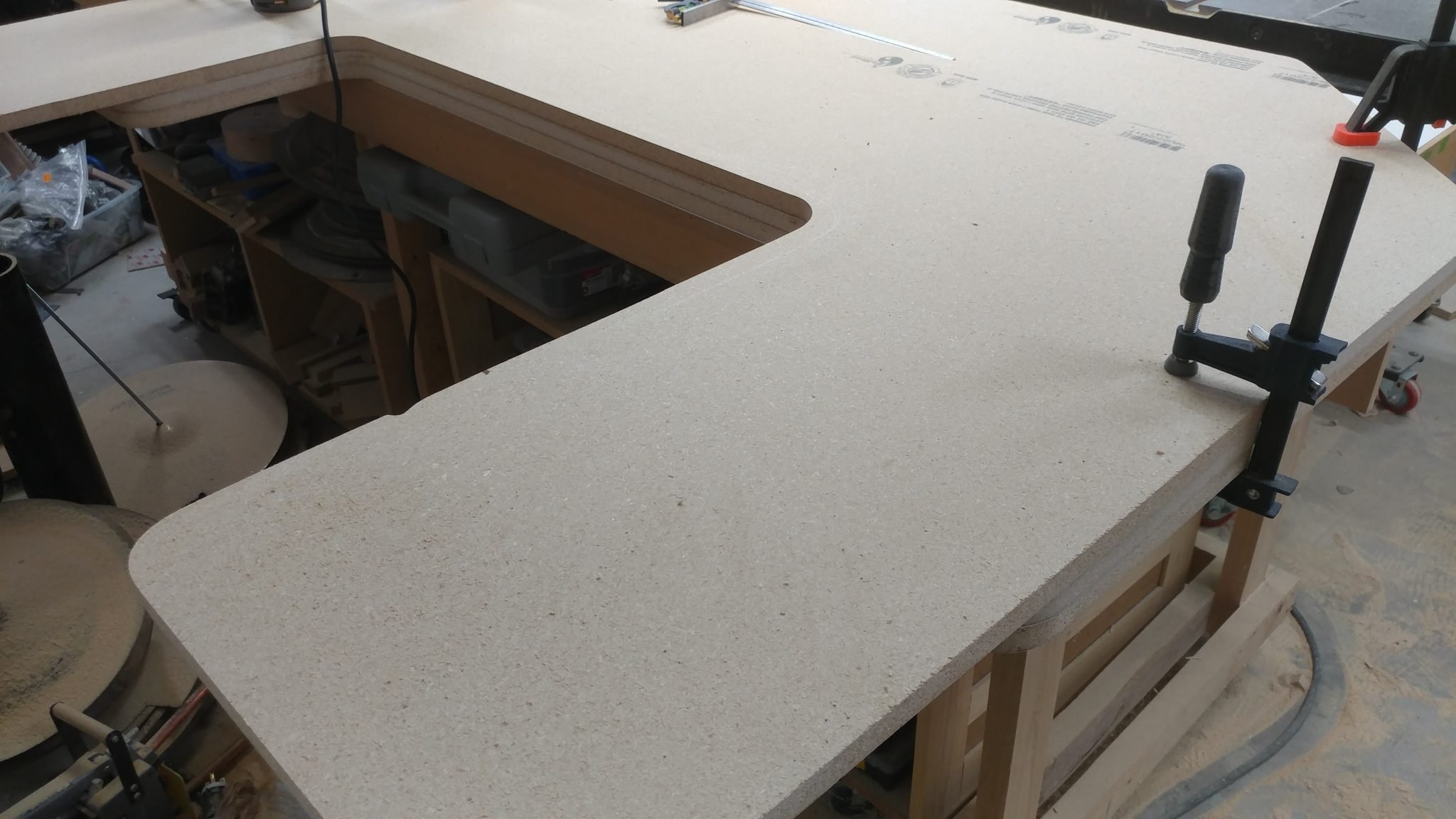
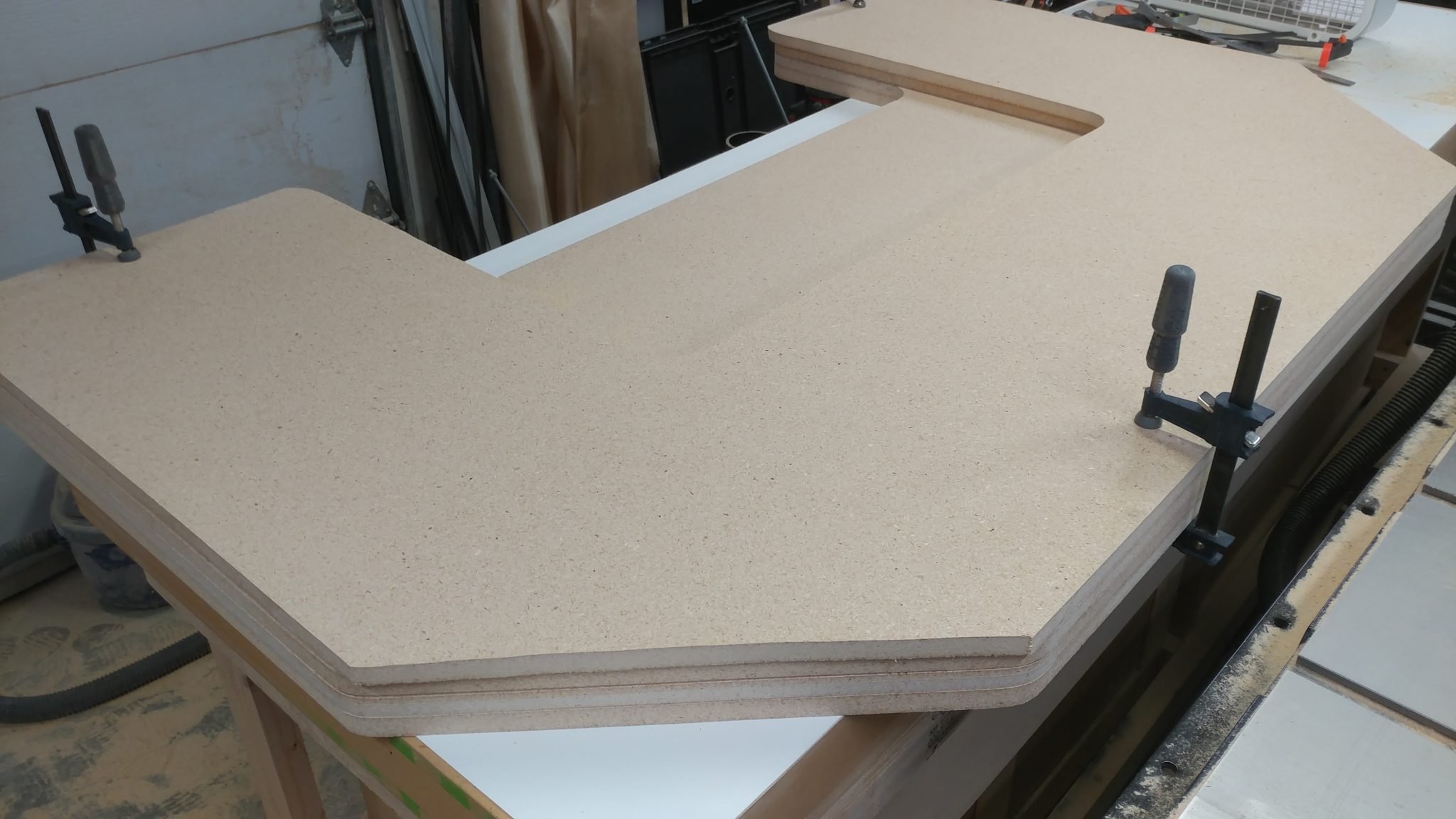
Cutting out the first (and most important) piece

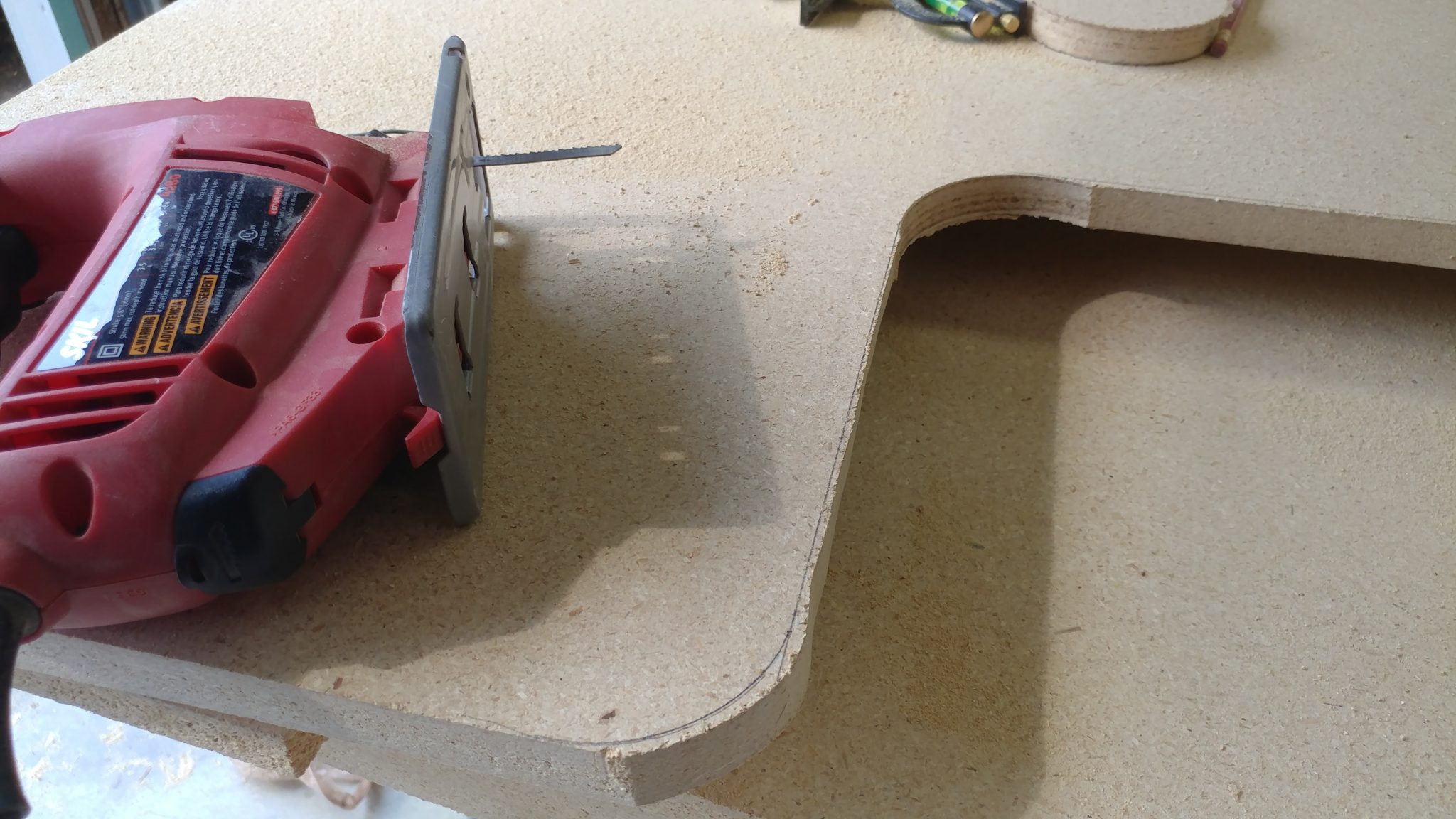
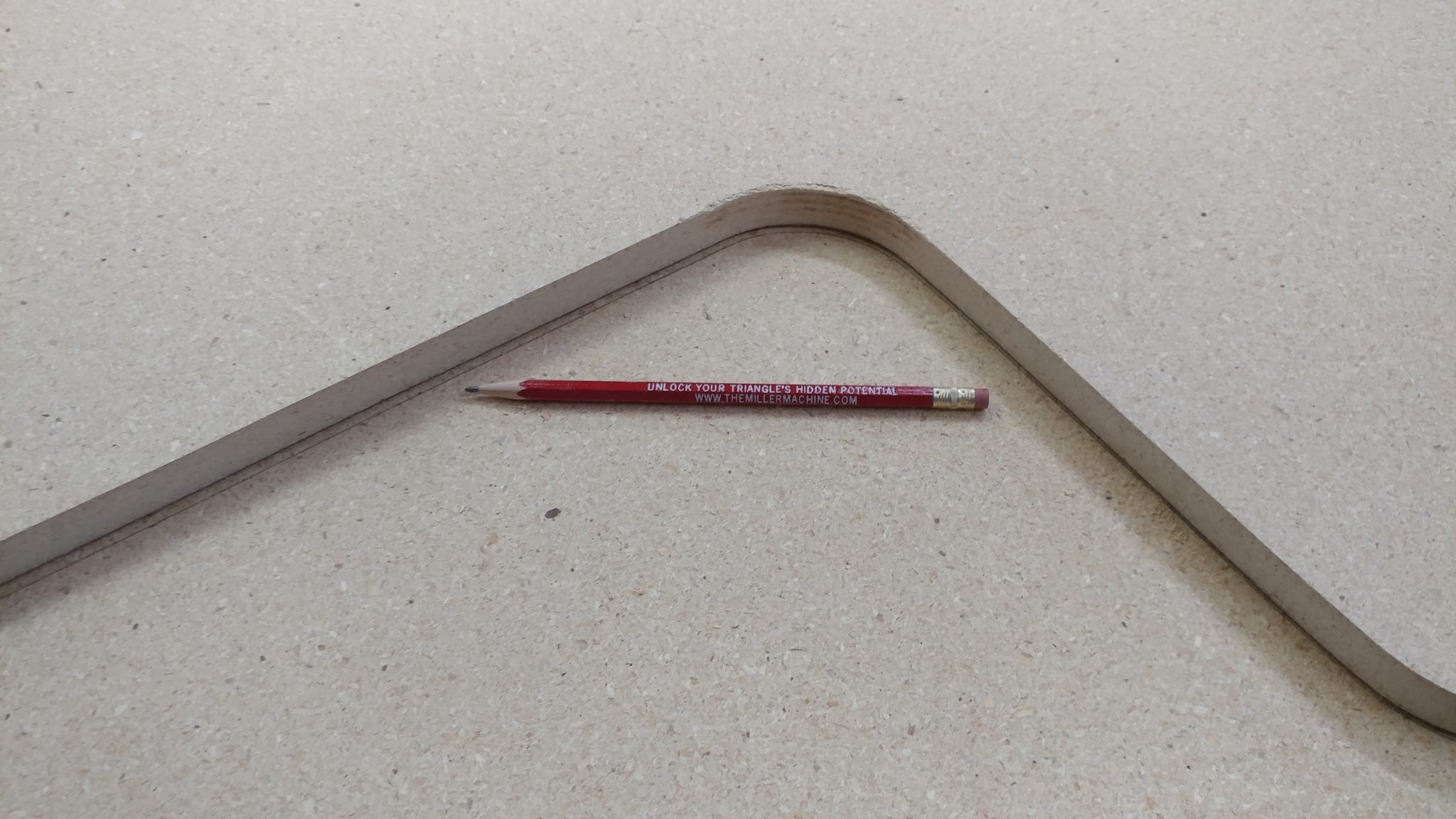
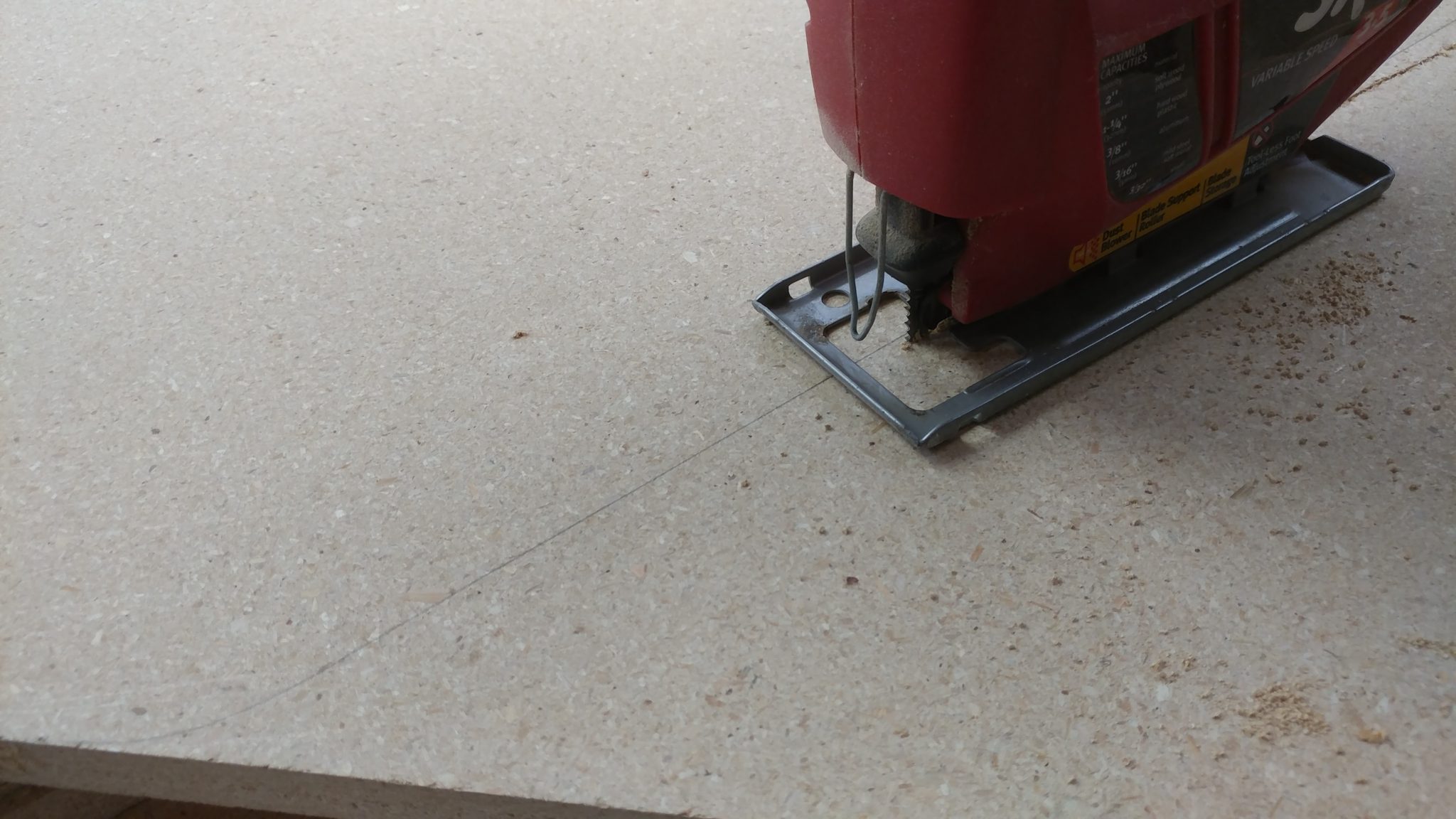
With the outline traced, I used a jigsaw to cut close to the line.


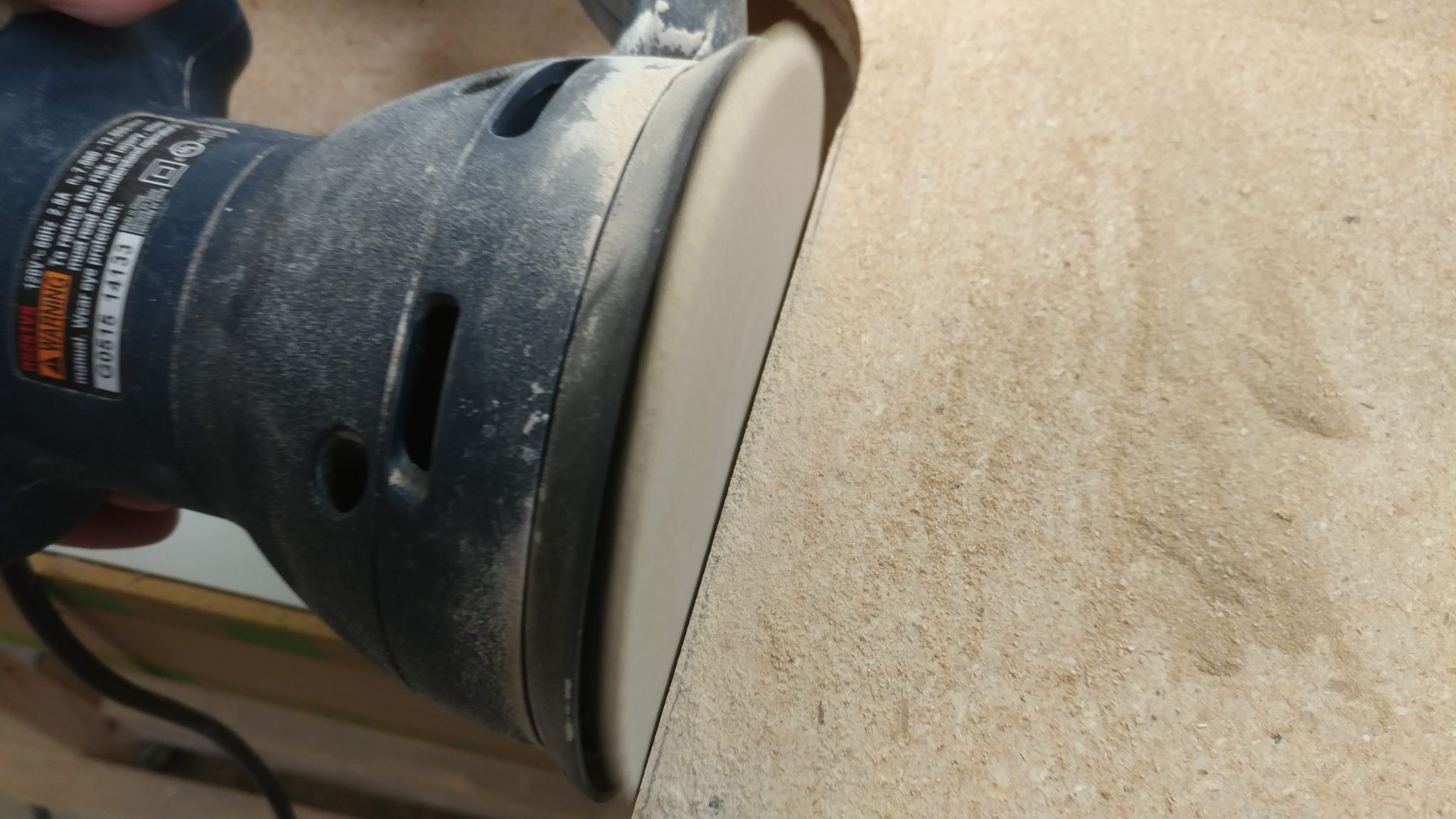
With the desktop shape cut out, I used a random orbital sander and a belt sander, both equipped with an 80-grit sanding disc and belt, to sand up to the line.


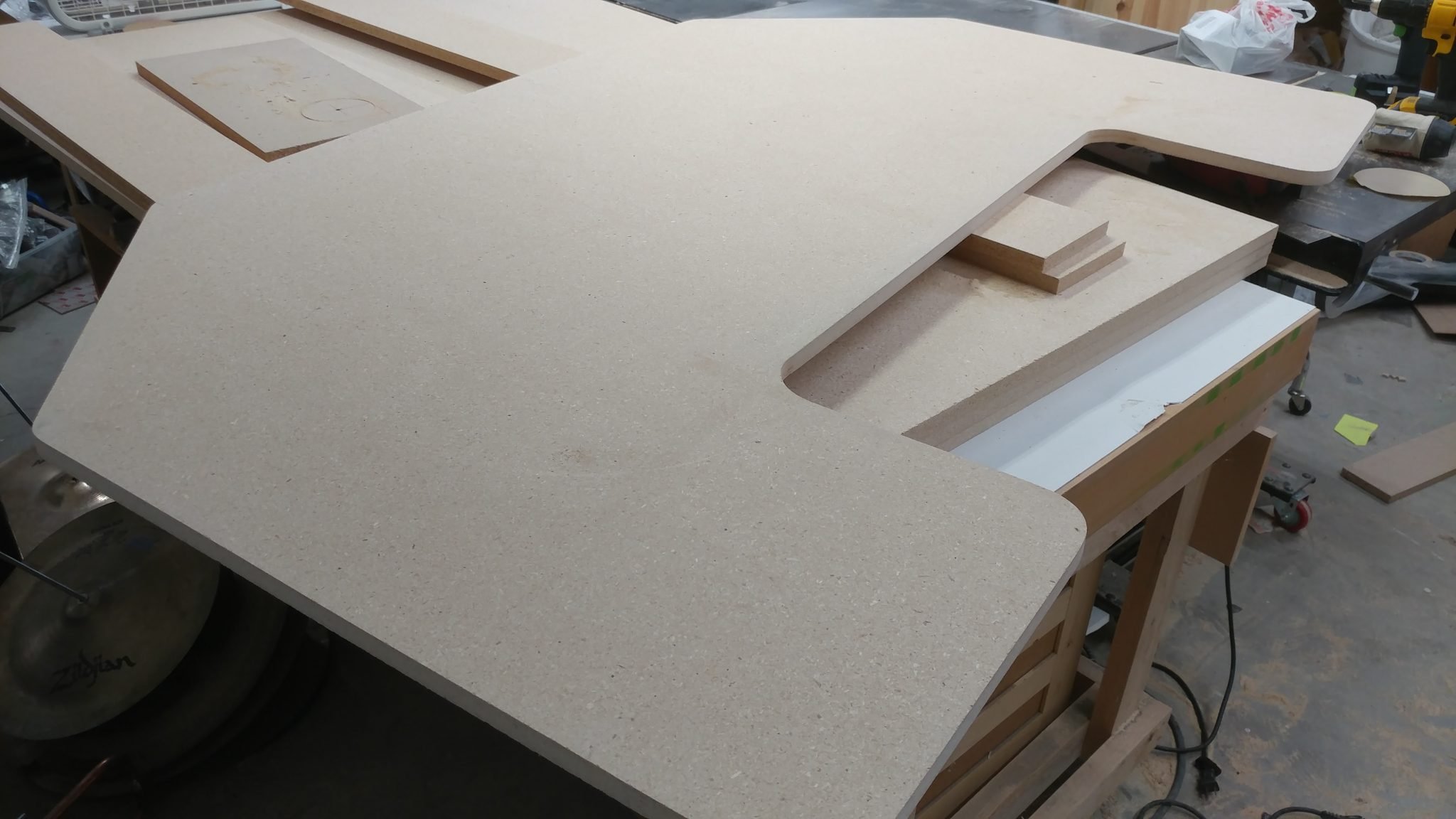
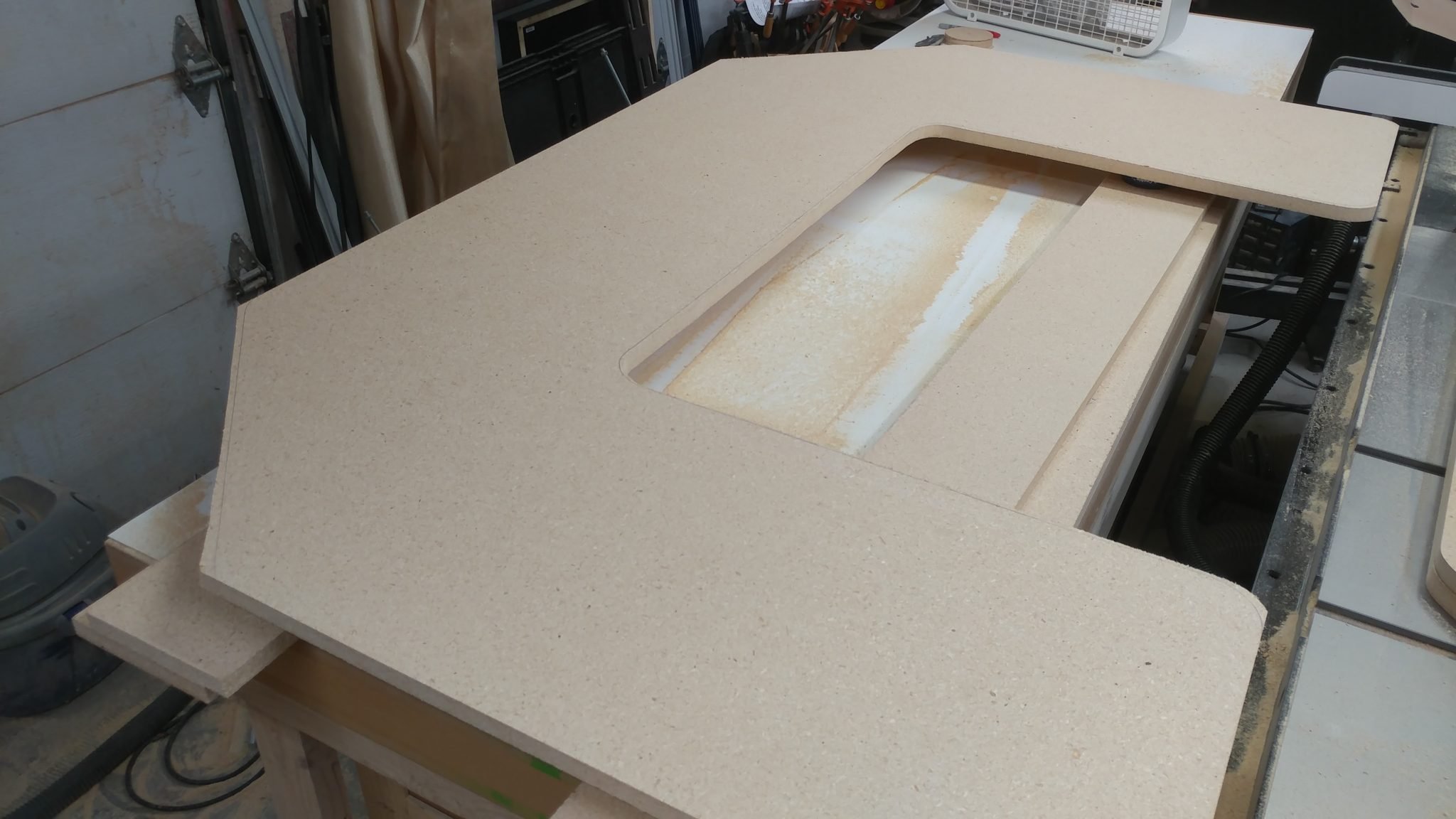
One layer of the desktop is complete.  I’m going to use this as a routing template for the other three pieces, with a slight modification for the two bottom pieces.


Using the first piece to cut out the second

To cut out the second piece of the top, I use the piece that I just shaped and trace an outline in pencil on the second piece.


Once again I use a jigsaw to cut out the shape just outside the line.


I attempted to secure the two pieces with some double-stick tape (which although it looks wimpy, has never let me down in the past).


After placing the second piece in place, I realized that the double-sided tape that had never let me down, was letting me down.  As a solution, I added two screws since this was going to be the underside of the desktop and wouldn’t be seen.


I equipped my router with a 1/2″ straight pattern bit.


I then routed out the second piece of the top.


An exact replica.


Cutting out the first bottom piece

This is where it got tricky.  The bottom needed to match the top but with the central area a bit deeper than on the two top pieces.  I accomplished this by tracing most of the outline then I pushed the top piece back a bit and traced the inner section.


Once again I cut it out with the jigsaw.


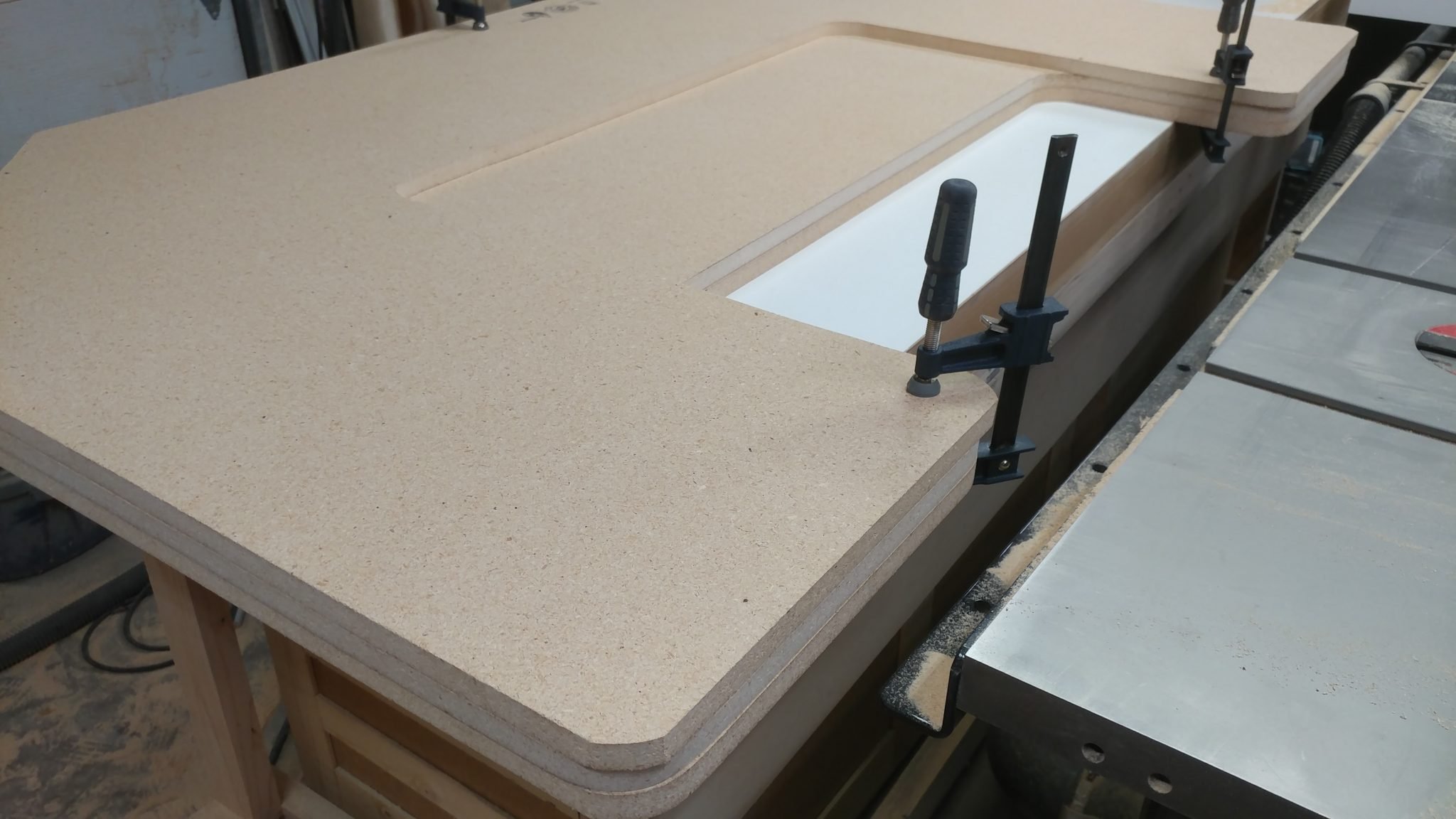
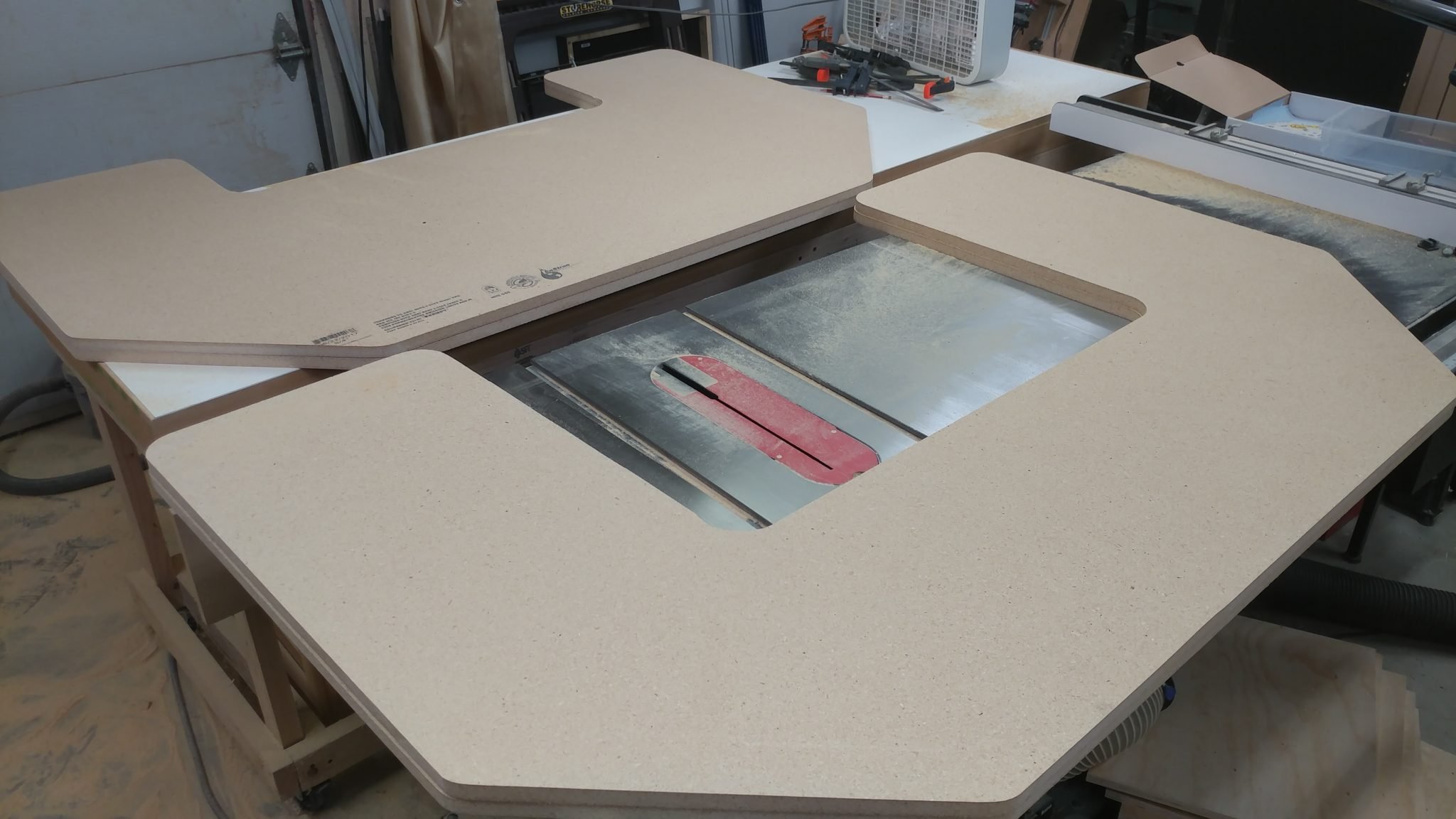
I then clamped the bottom piece to the top pieces, which were still screwed together.


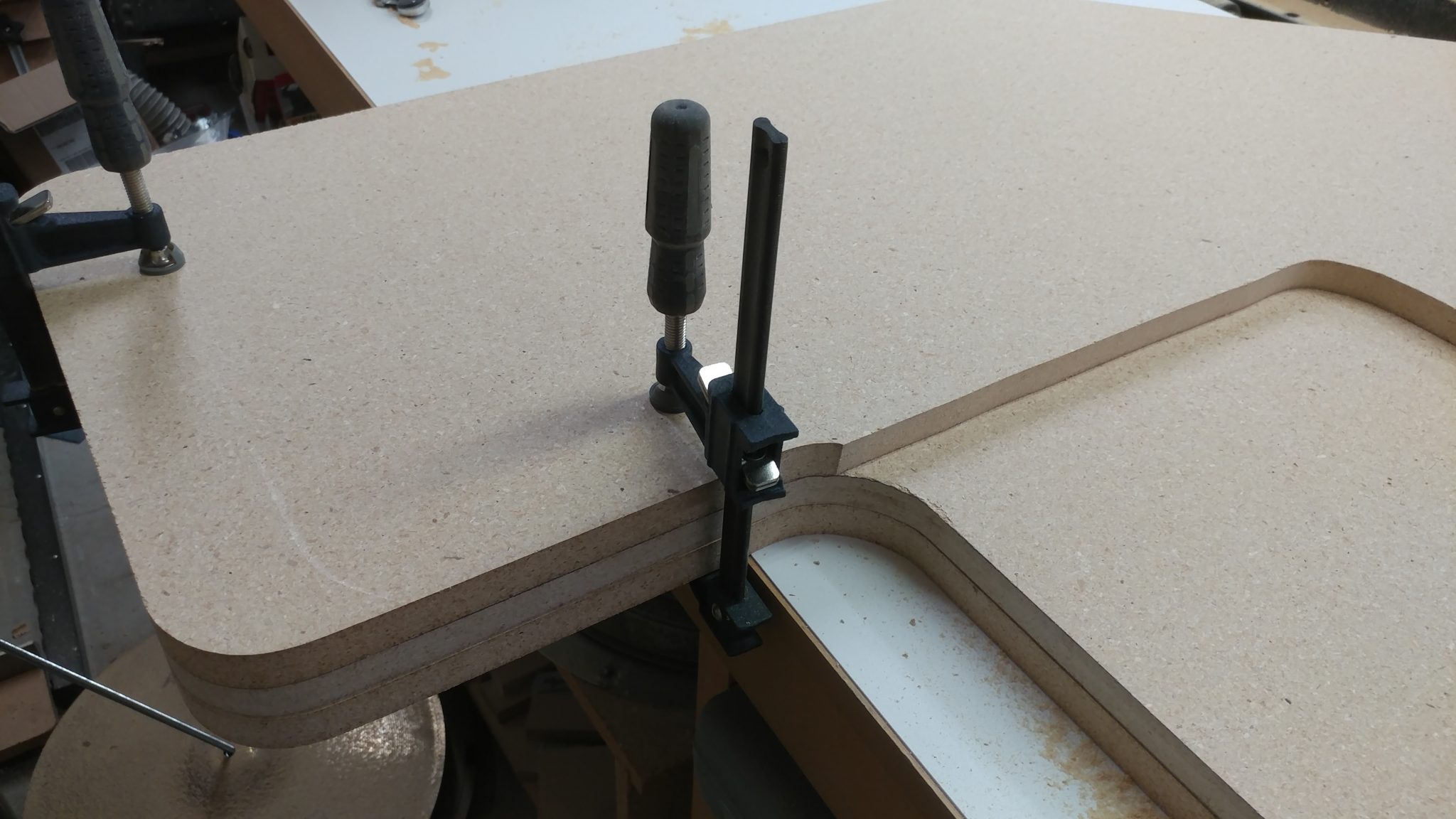
I routed as much as I could.


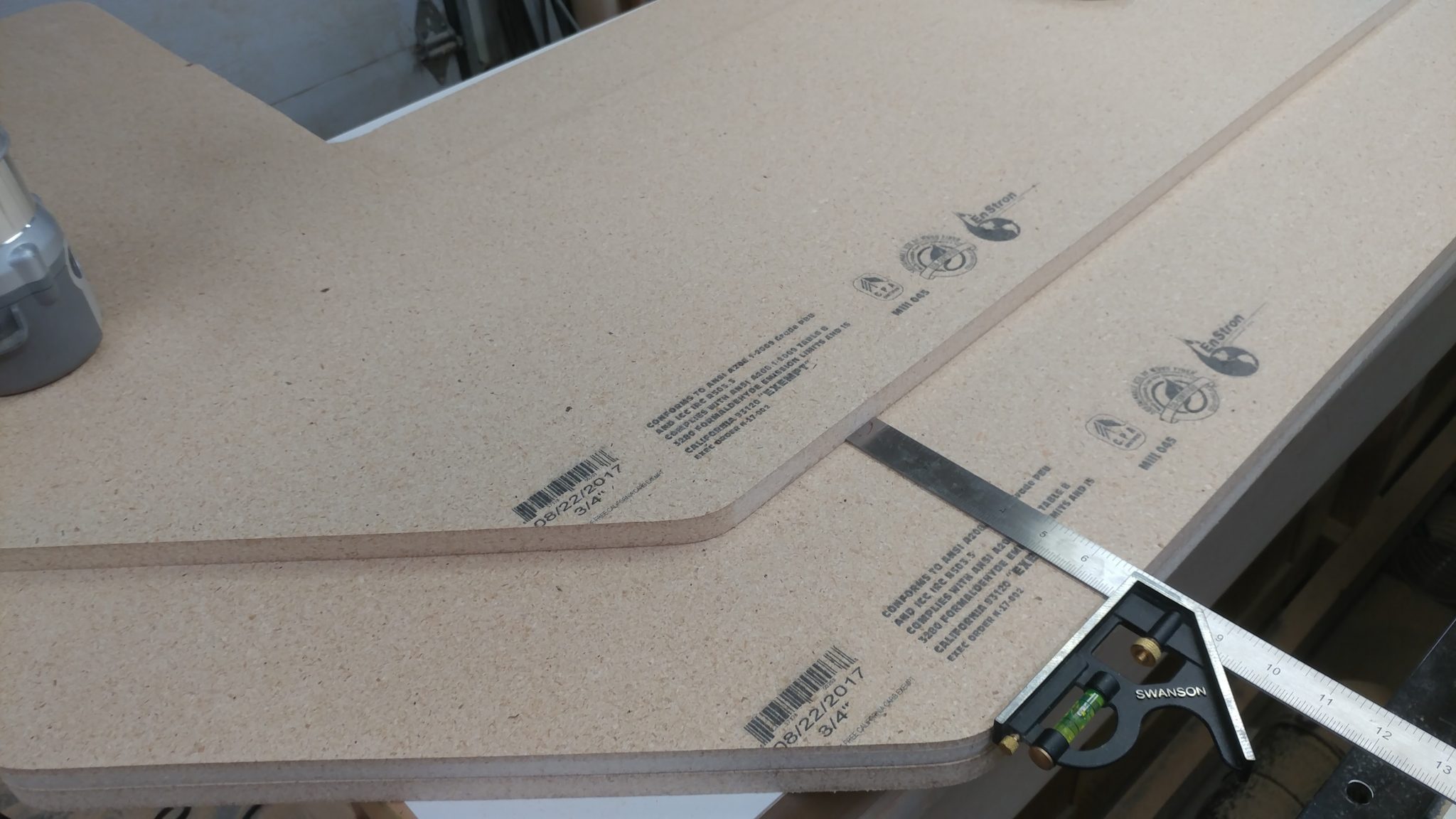
I then moved the bottom piece a bit forward so I could route a bit more of the inner edges using the top pieces as a template.  To make sure I got it pretty even, I used a combination square to move each edge forward the same amount.


And this is where I screwed up.  I got a bit of the inner left edge routed fine then I went over to the right side.  Because of the placement of the router, I couldn’t see that I was coming up on the front corner of my template.  As a result, I took a chunk out of the bottom piece.  Fortunately, this will be easy to fix later since I’m using particleboard.  I’m just going to keep going and fix it later before I put the roundover on them.


After moving the bottom piece forward again I was able to get the inner corners to match those on the top pieces.


Cutting out the second bottom piece

I then traced the bottom piece onto the last piece of particleboard.


Then cut it out with the jigsaw.


Due to space limitations, I’m working with all the pieces stacked on top of each other.  Here, I’ve got all the pieces clamped together.  I’ll be using the bottom piece that I routed out (and screwed up) to route out the second bottom piece.


I managed to not screw this piece up in the same location.  Instead, I accidentally tipped the router as I was going around the inner corner.  Both bottom pieces will need some repair work before I do the roundovers.


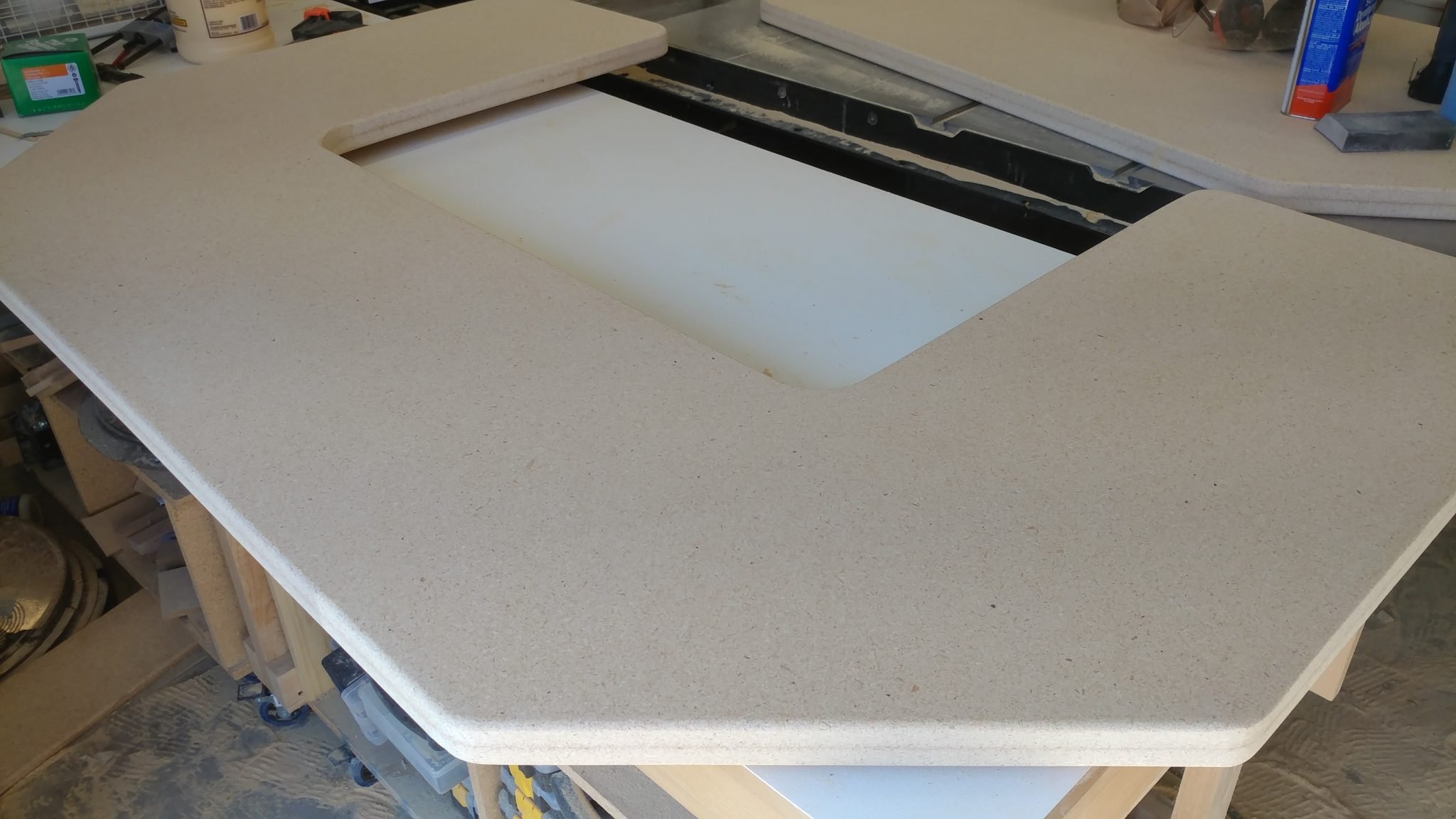
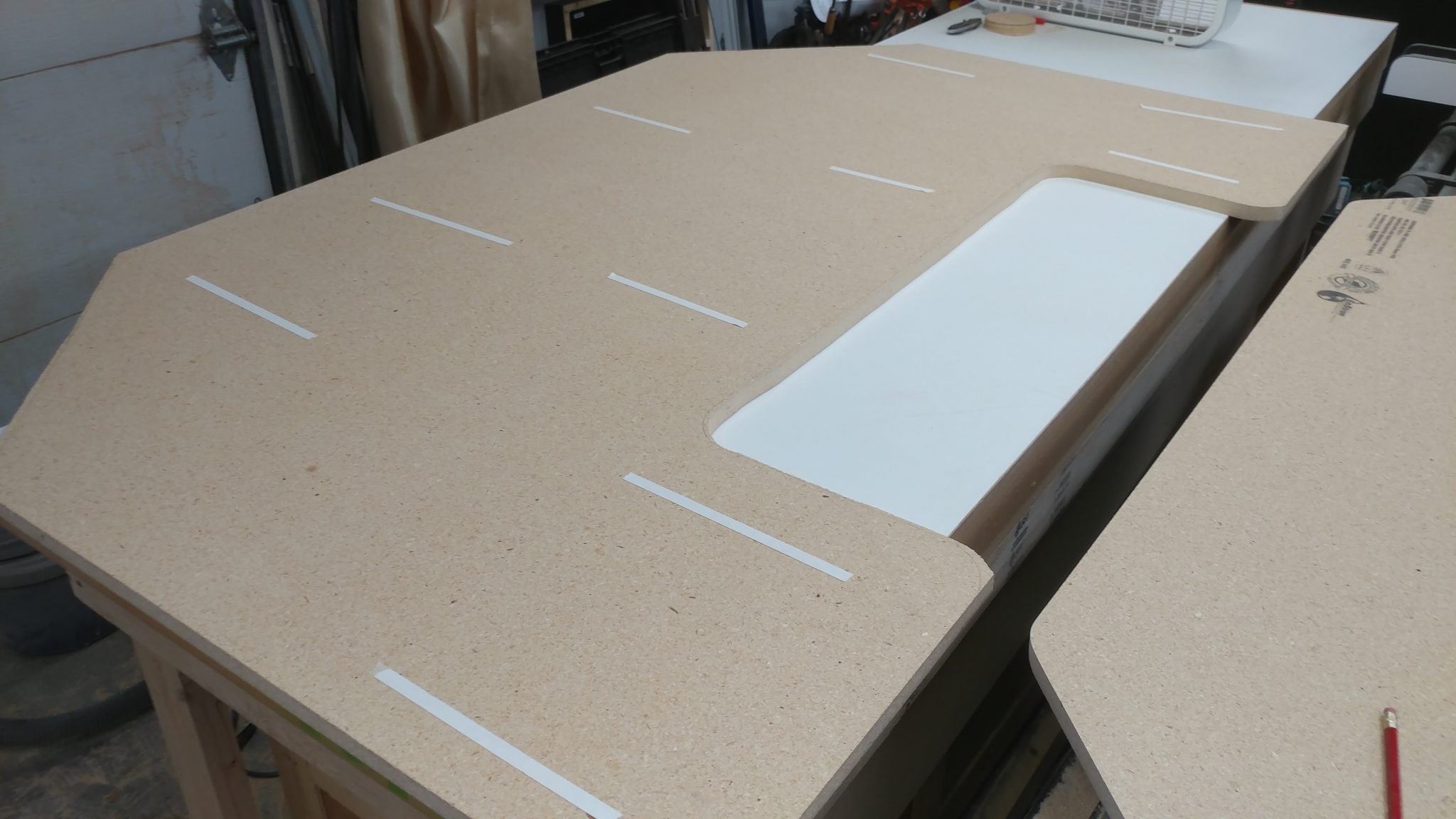
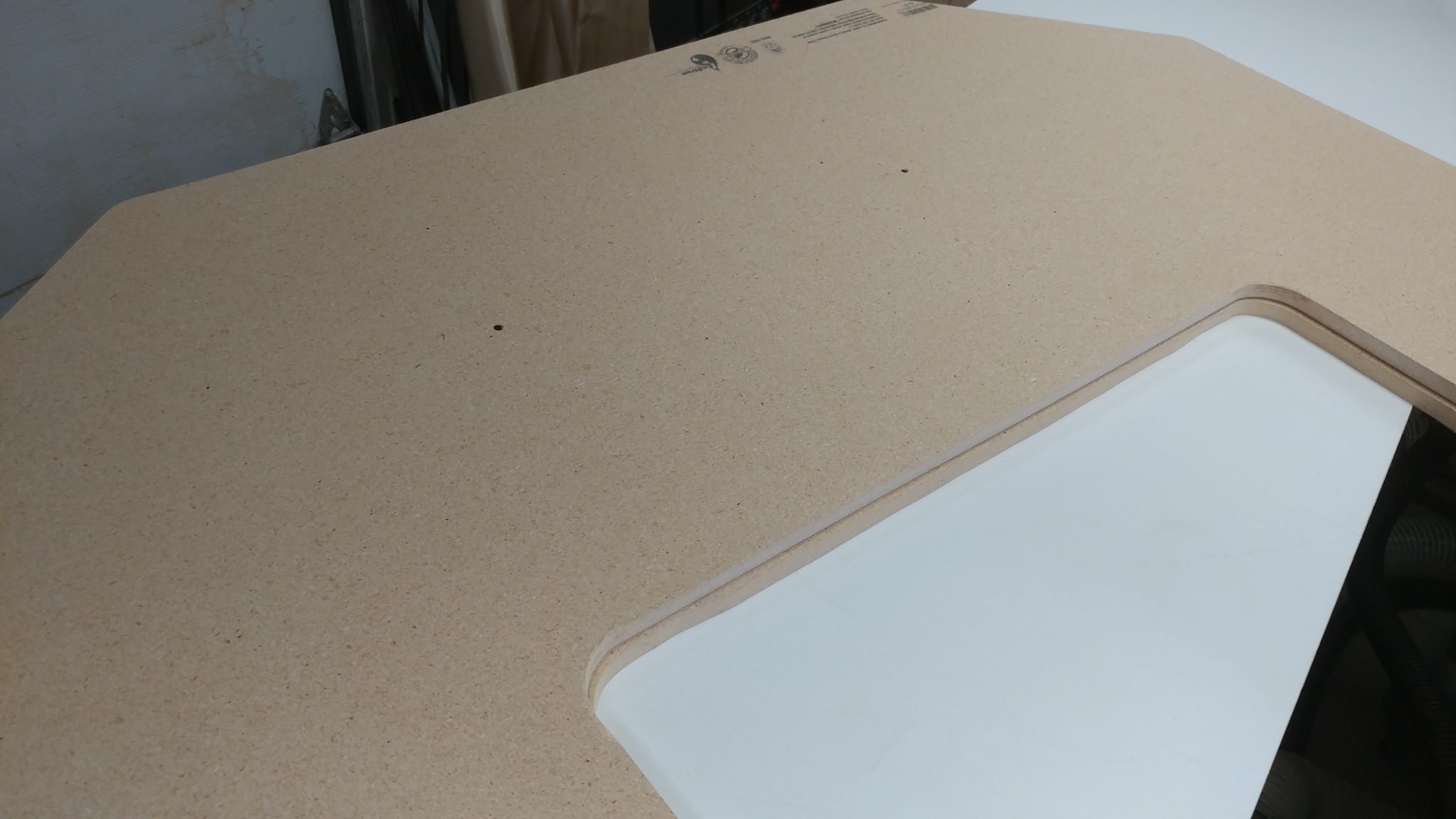
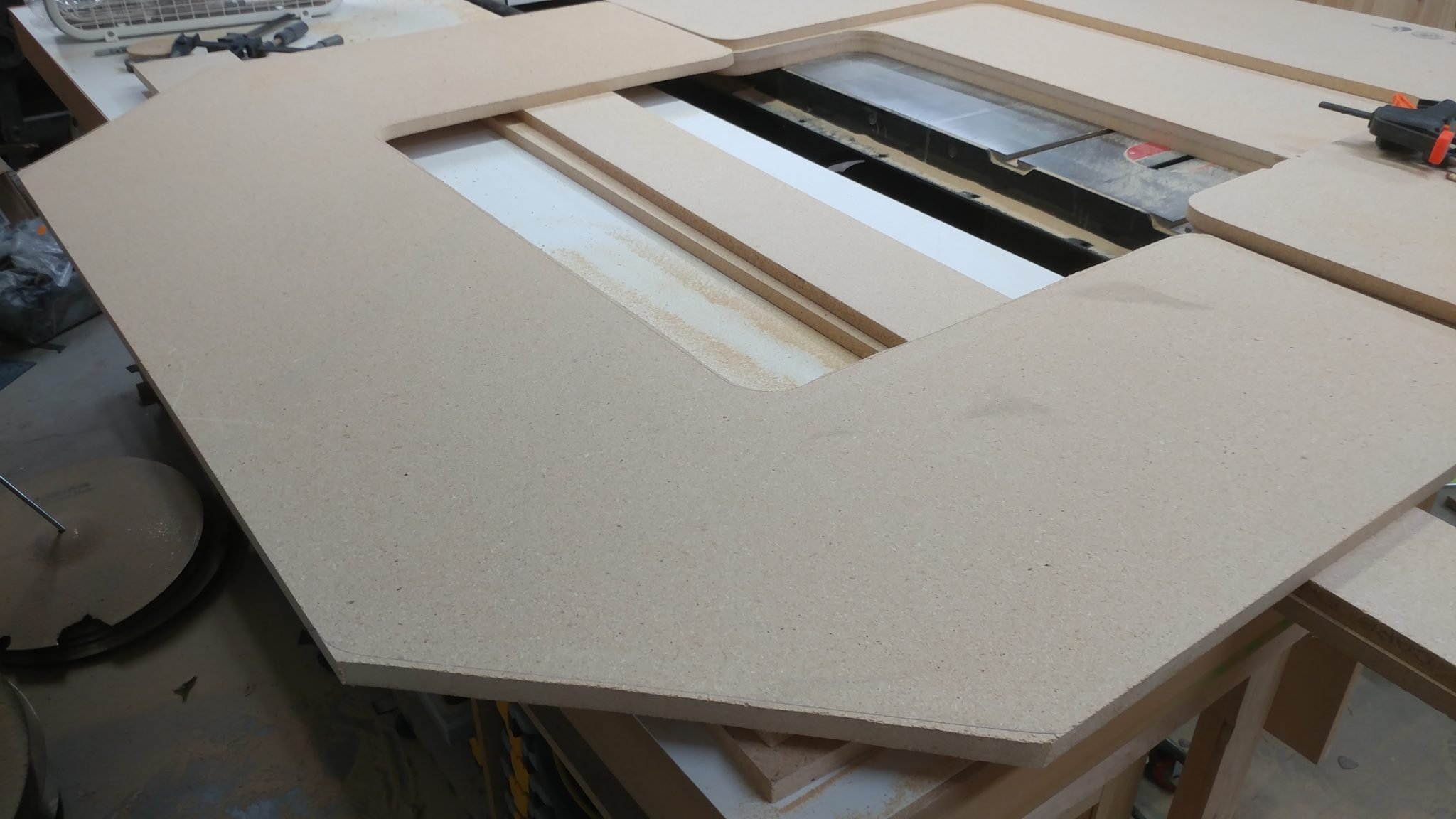
All four pieces are cut to shape.  Time to glue them up.


Gluing the tops together

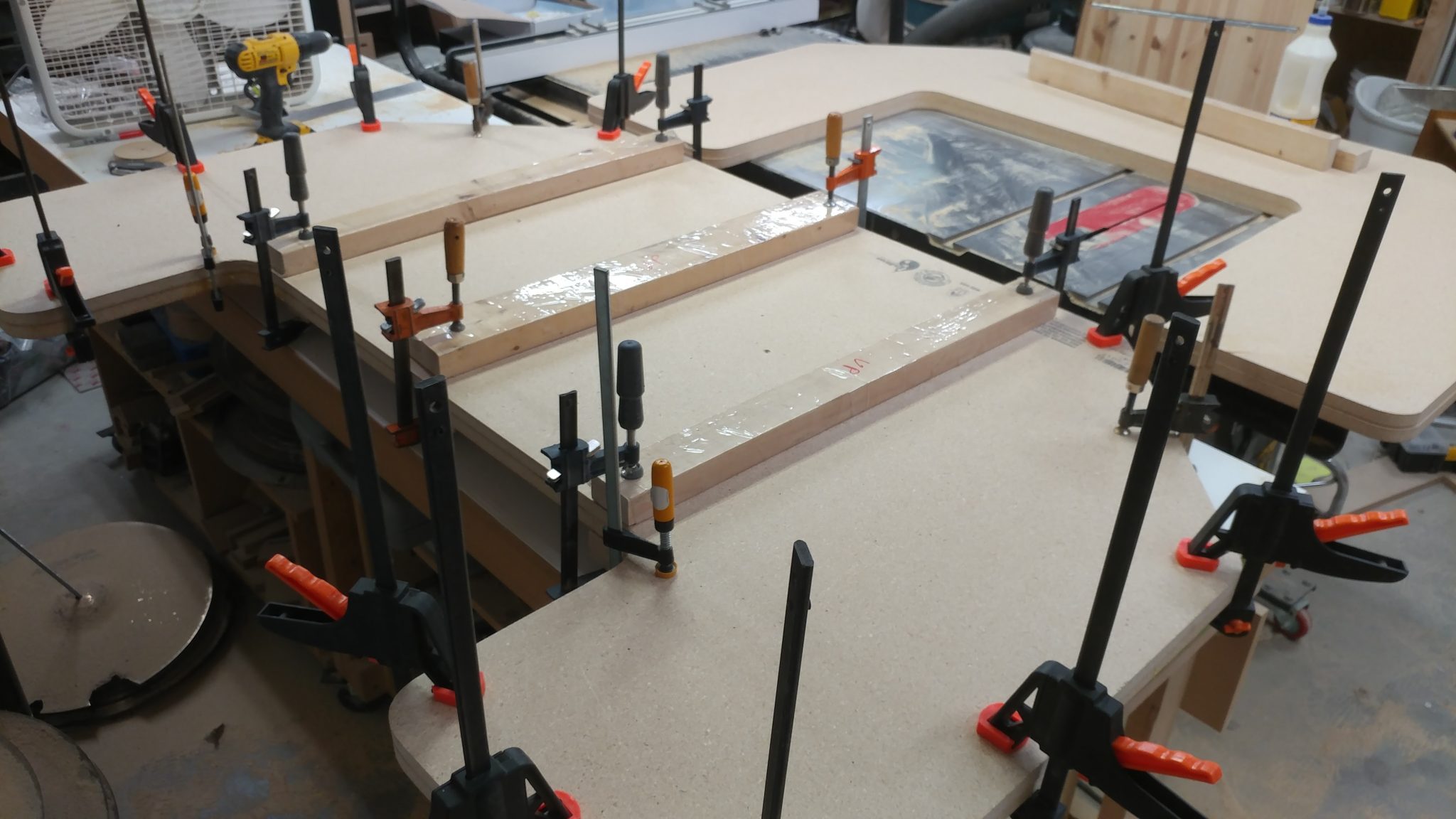
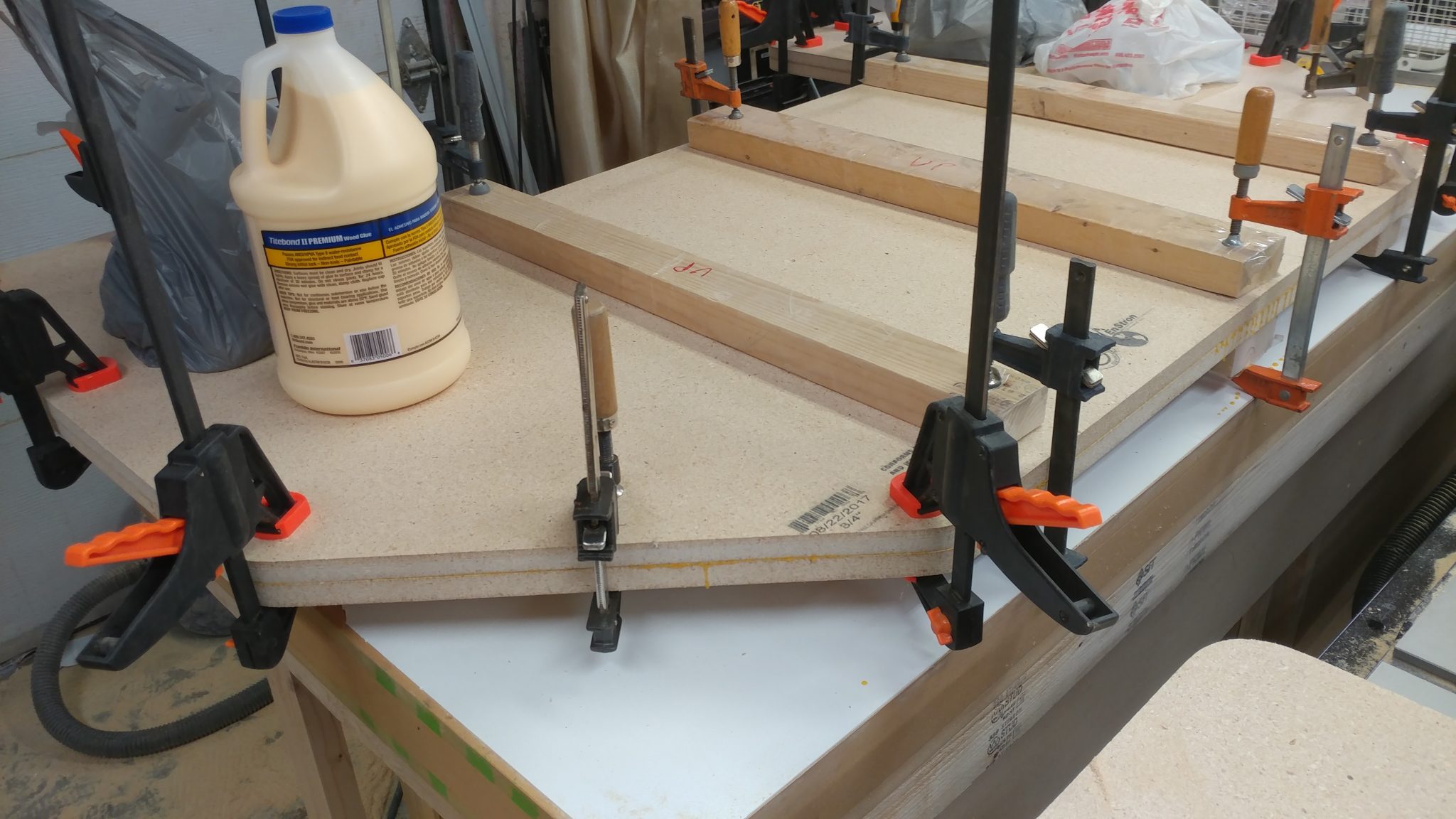
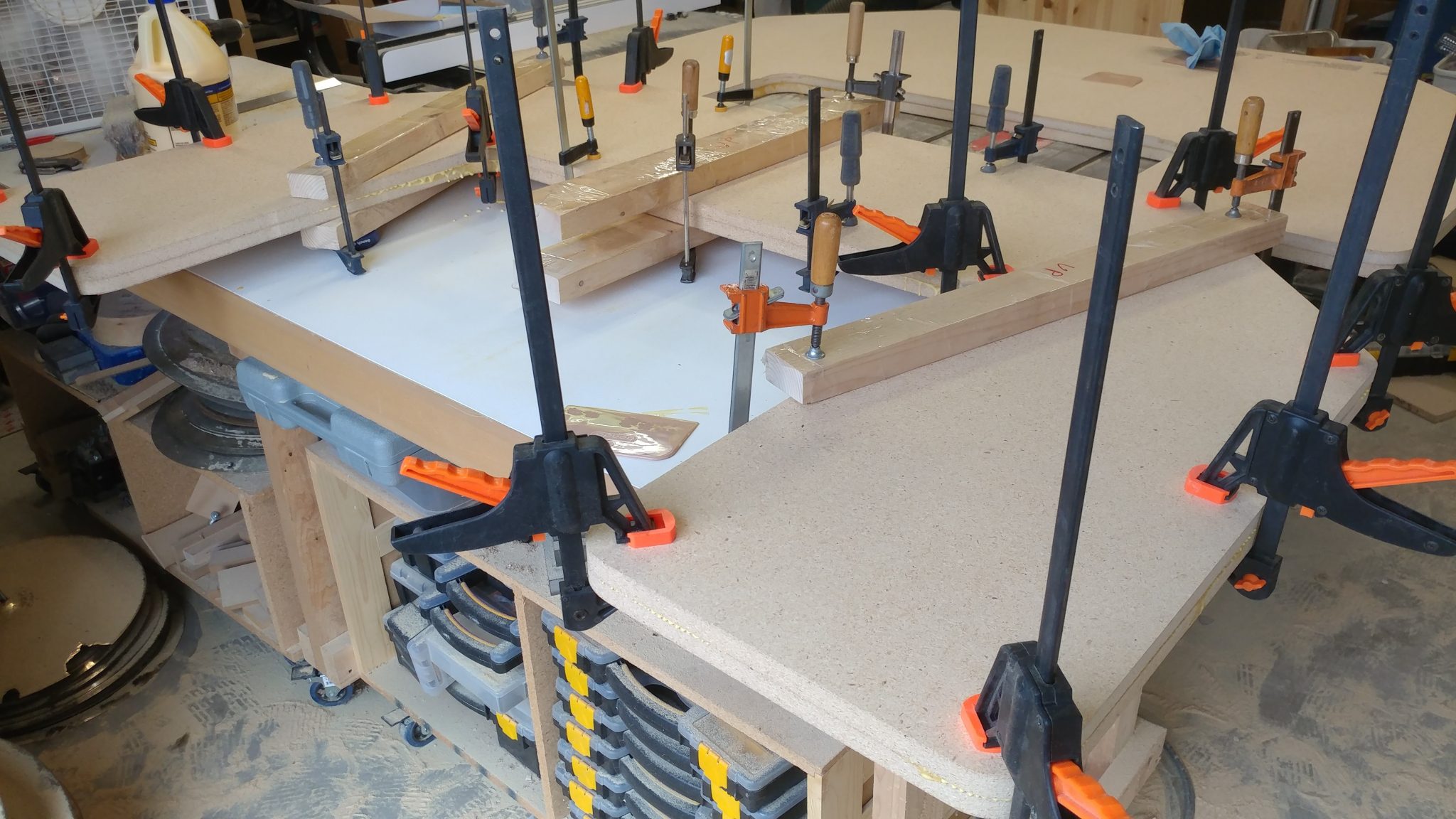
I apply a liberal coat of glue to one of the top pieces.


I then place the second top piece in place and clamp them together.  I’m using clamping cauls to help provide some firm pressure on the wider parts.


I let it sit overnight to cure.


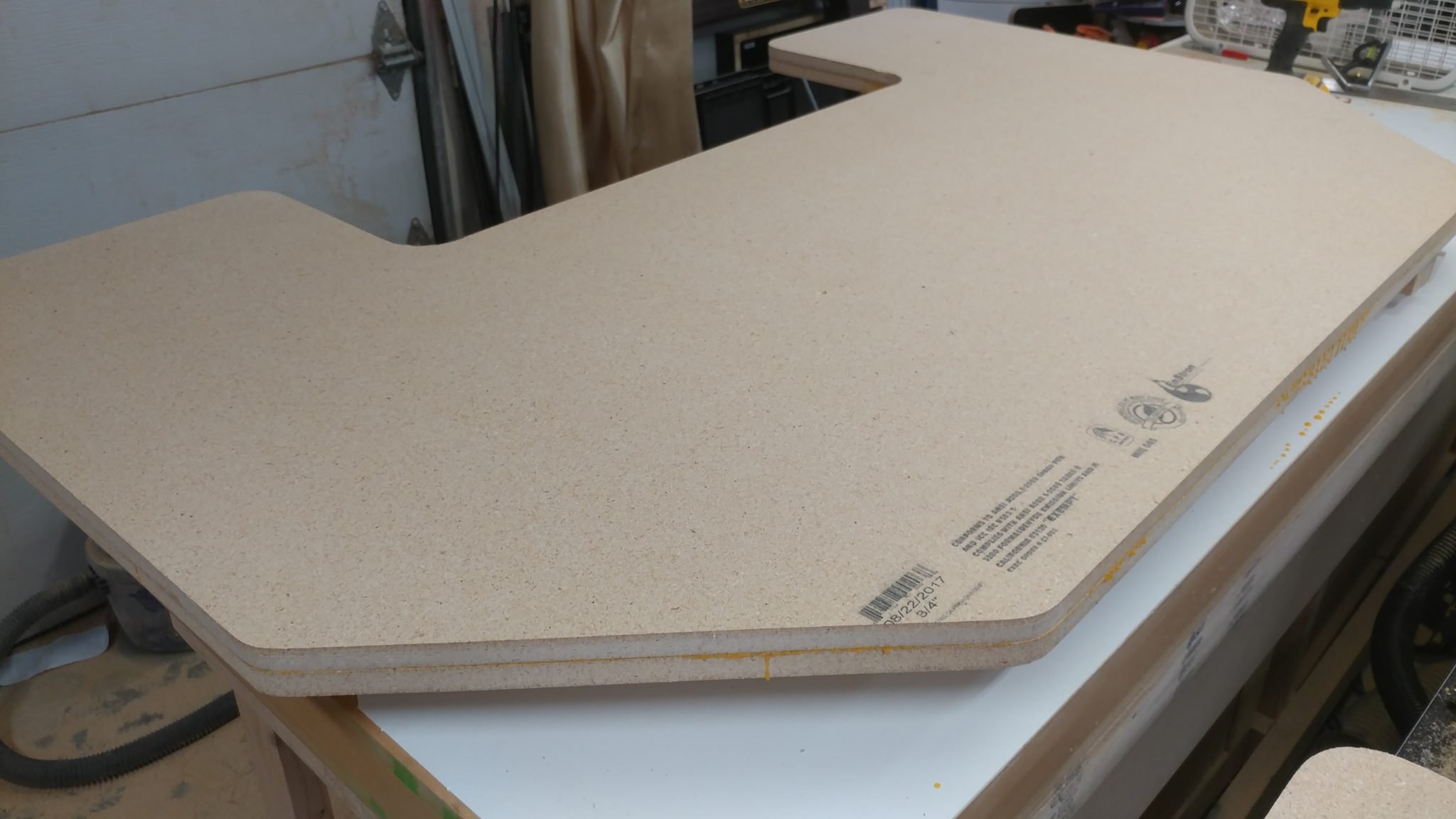
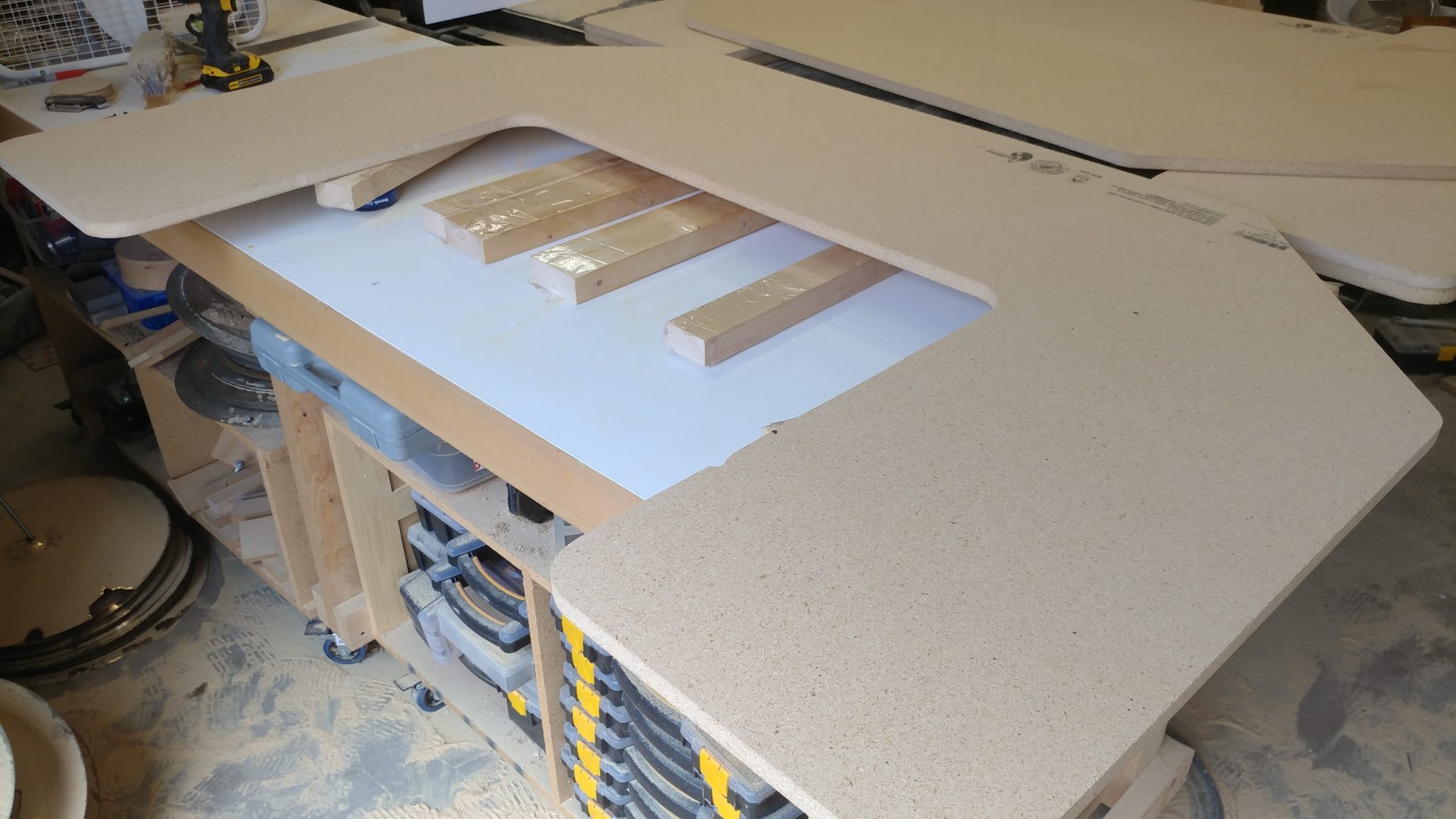
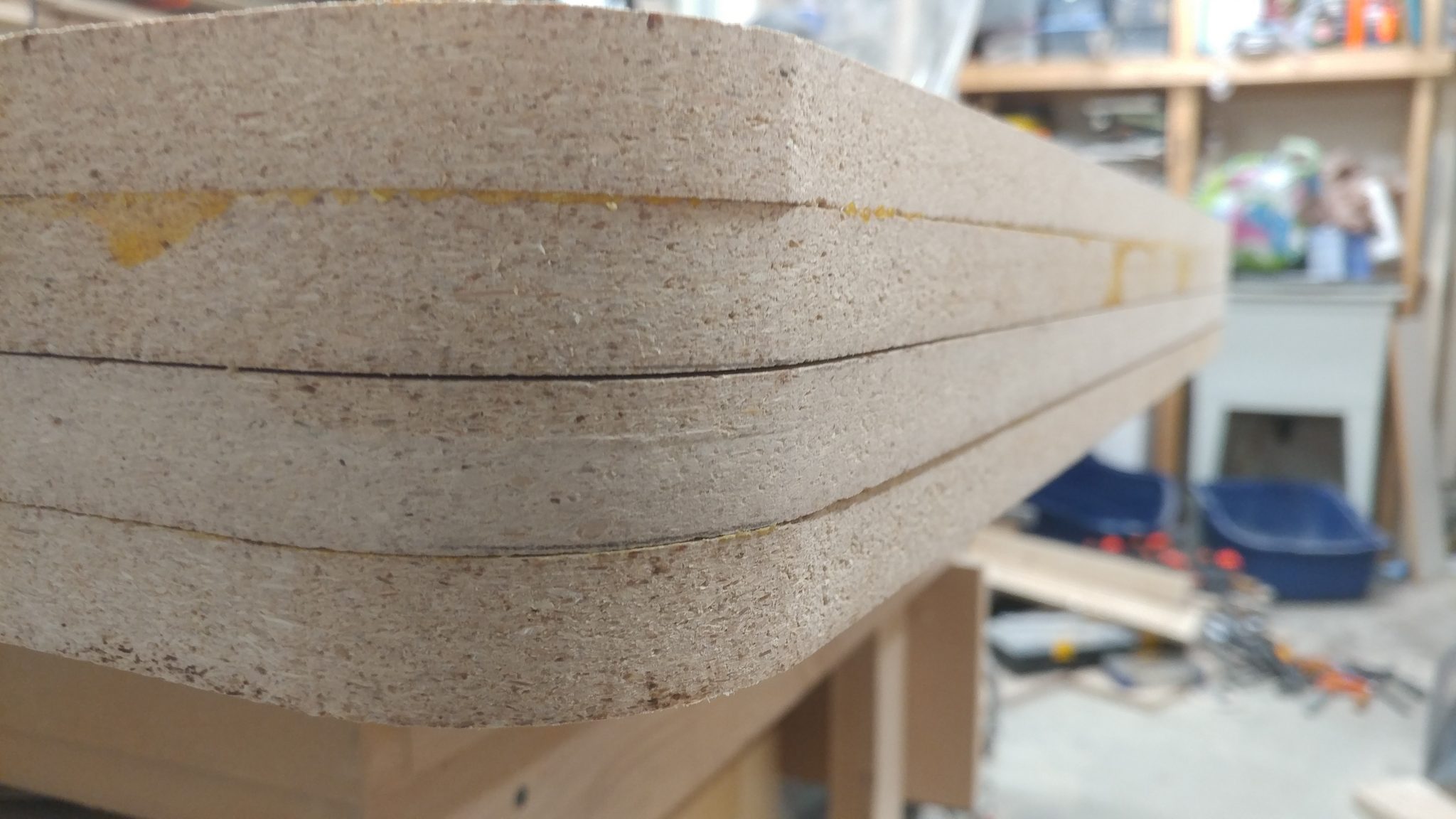
After removing the clamps, the top is very sturdy.  I didn’t notice the two pieces coming apart anywhere when I removed the clamps.


Gluing the bottom pieces together

Now to do the same with the bottom pieces.


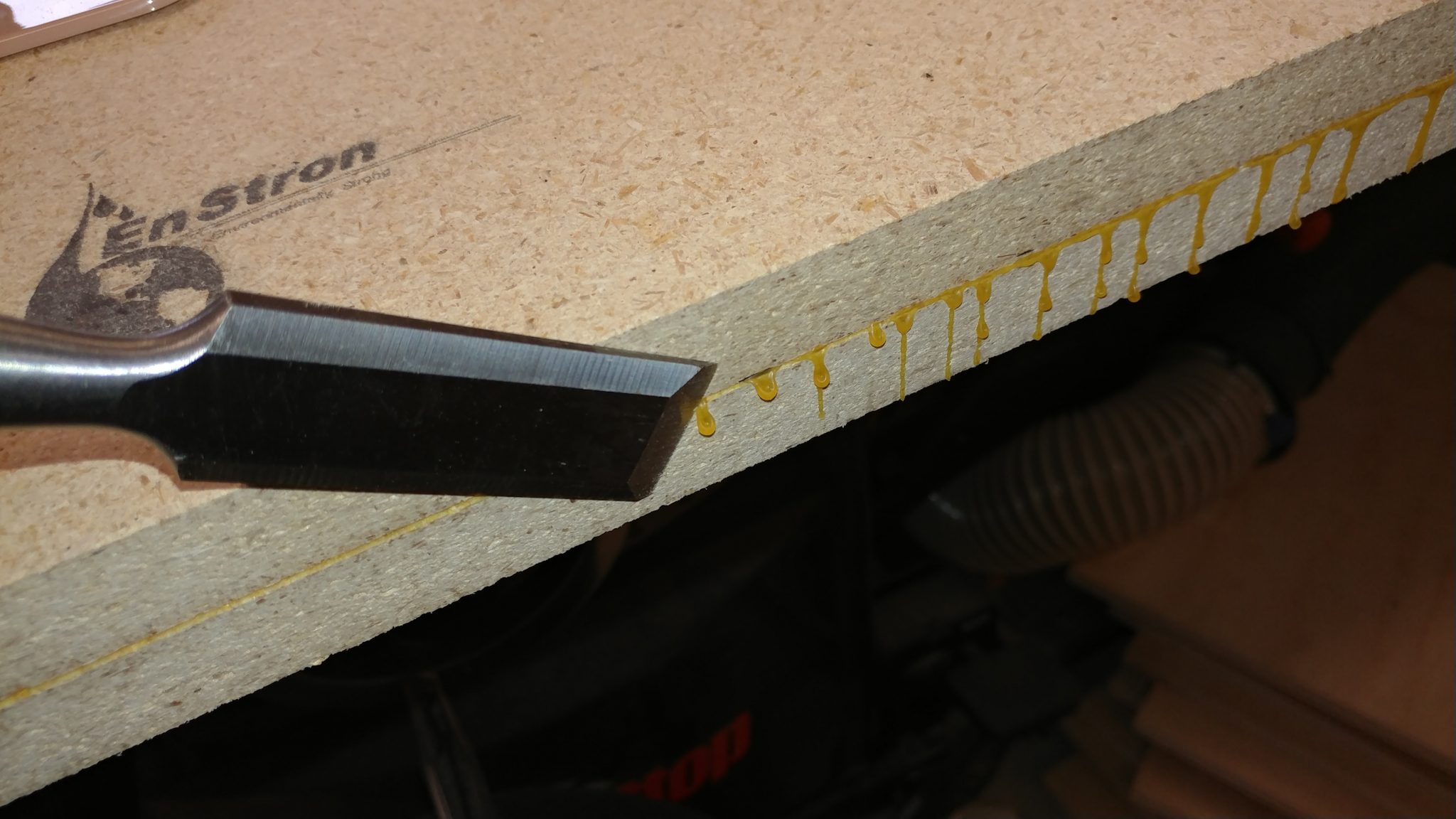
I glued this up in the morning then came back to it in the evening after performing at a show.


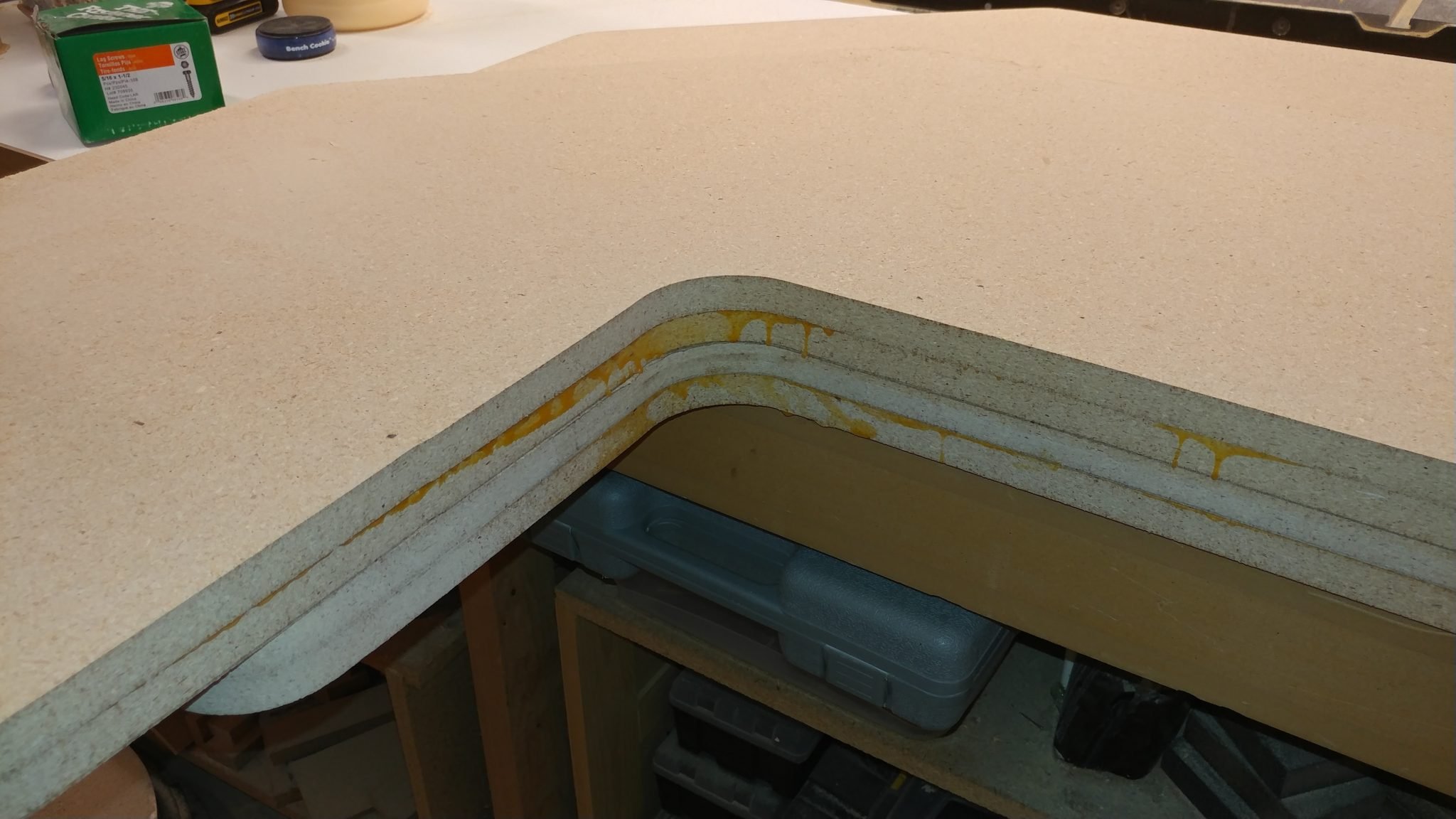
I don’t like to wipe the glue squeeze out when working with particleboard.  I’d rather let it cure in drips which can be easily removed with a chisel.


Final shaping

Both the top and the bottom are fully cured.  Now I’m going to do some final shaping and cleanup.


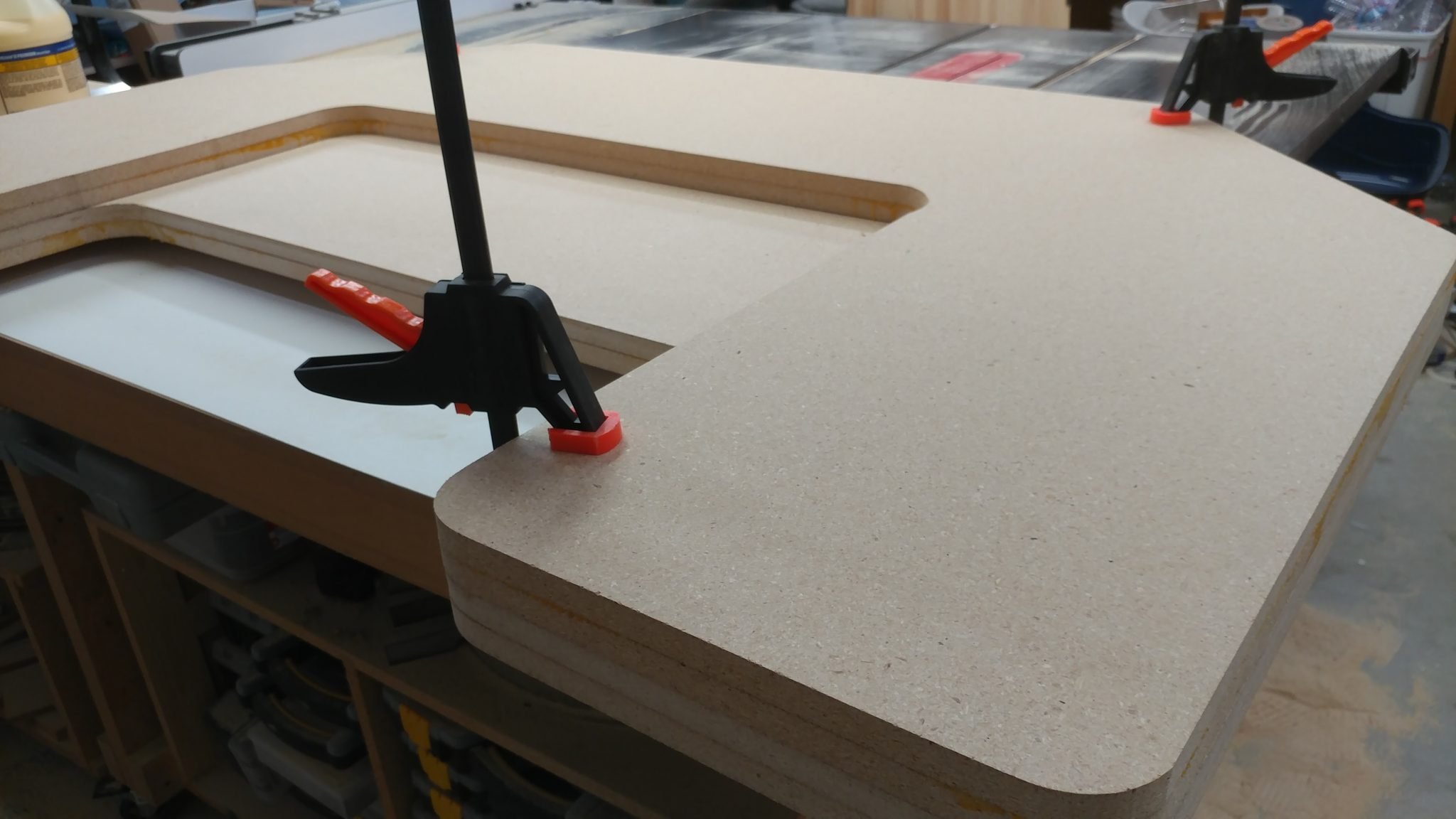
To ensure that both pieces are the same shape and have smooth edges I clamp them together so I can sand them smooth as if they were all one piece.


Here you can see that the edges are still a bit rough and there is still some glue squeeze-out to deal with.


After hitting them with my sanders, they are all much smoother and a uniform shape.


I had to get creative on the inside area.  This took a bit of moving and sanding, then moving again, and sanding some more.


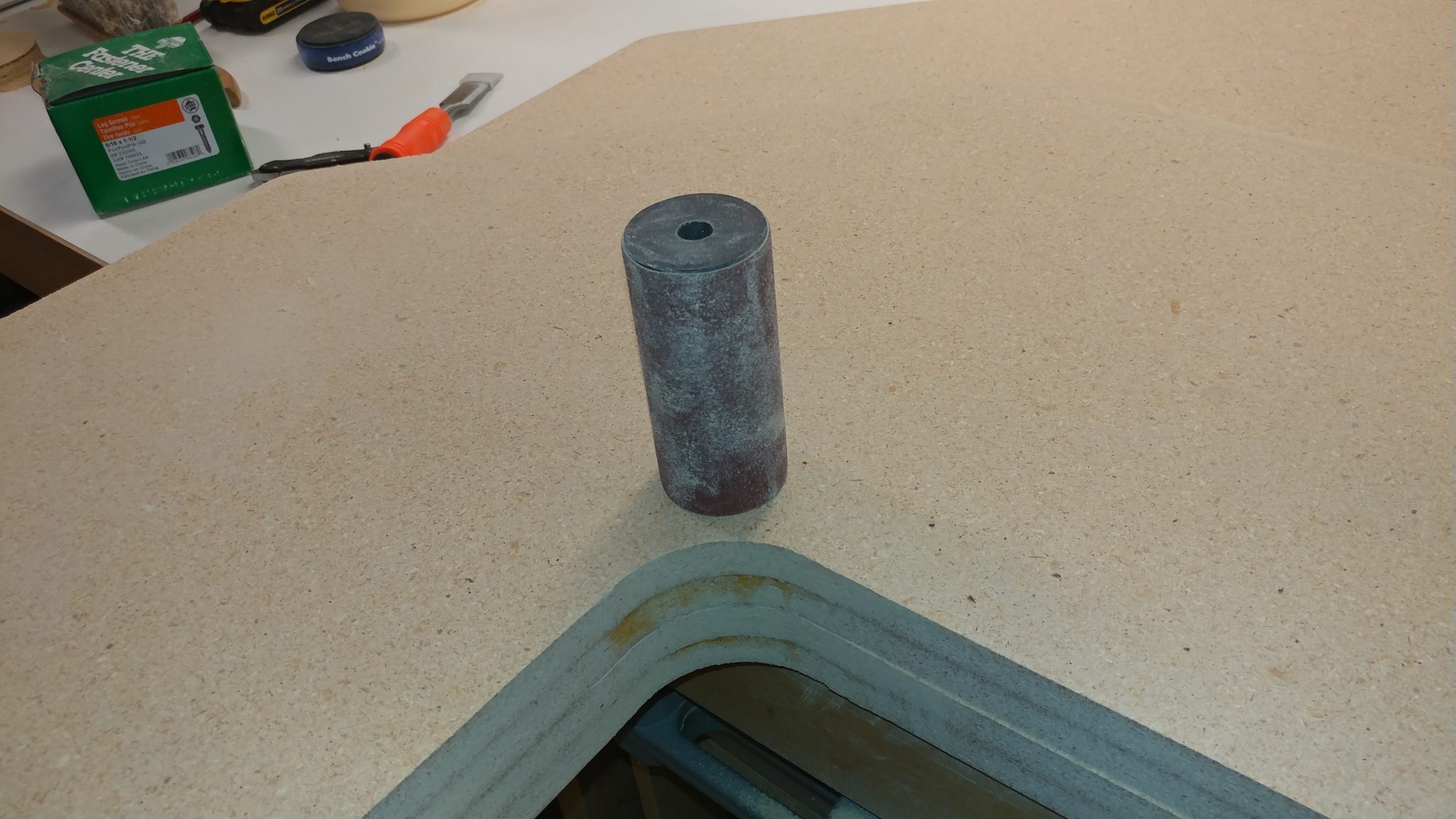
Getting the inside corners was pretty tricky.  I used sanding sponges but that was taking a long time.  I then tried using the large spindle for my spindle sander and that worked a lot better.  I still have a lot of work to do on the inside corners but it’s getting there.


That’s it for part 1.


Closing remarks

I’m still working on the inside corners but I ran out of steam for the weekend.

The next steps are to put the roundovers on the edges and do some more sanding.  Then I’ll be staining them and adding several coats of polyurethane.

I haven’t decided on the size of the roundover I’m going to put on the edges.  My original intent was to put a 3/4″ roundover on both the top and bottom edge which would effectively make the edge a half-round.  I might try a 1/4″ or a 1/2″ to see how I like them.  It sounds like I need to do a mock-up on some scraps first…


If you have any suggestions, please leave them in the comments below.  I’d love to see any desk builds you’ve done.  Also, if you haven’t already, please consider signing up for my mailing list so you get e-mail notifications when I post new articles.


News – August 2nd, 2017 – Apprehension Engine Electronics Prototype

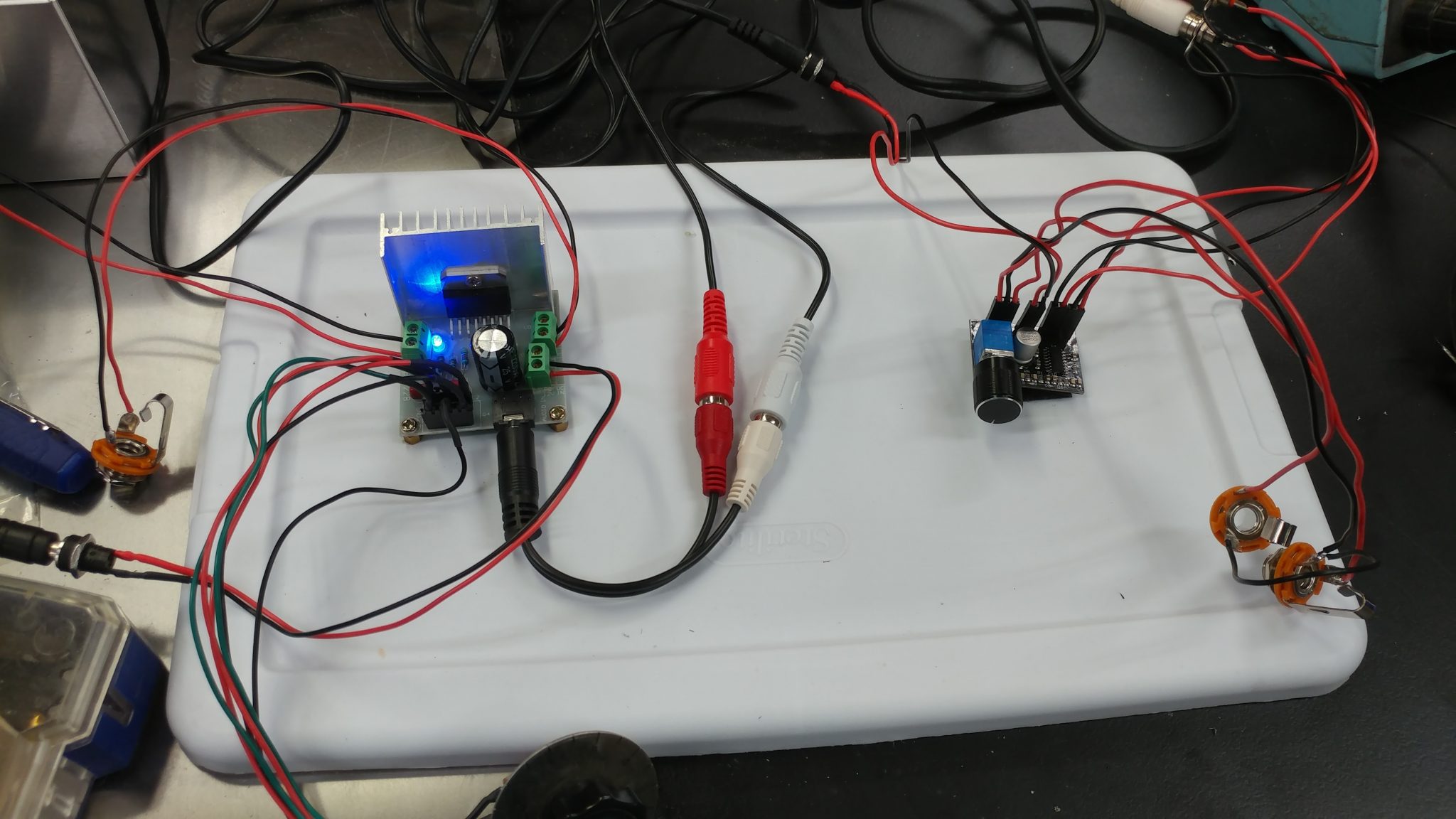
I started putting together the electrical prototype for my version of the Apprehension Engine.  You can read about my plans for this project here.

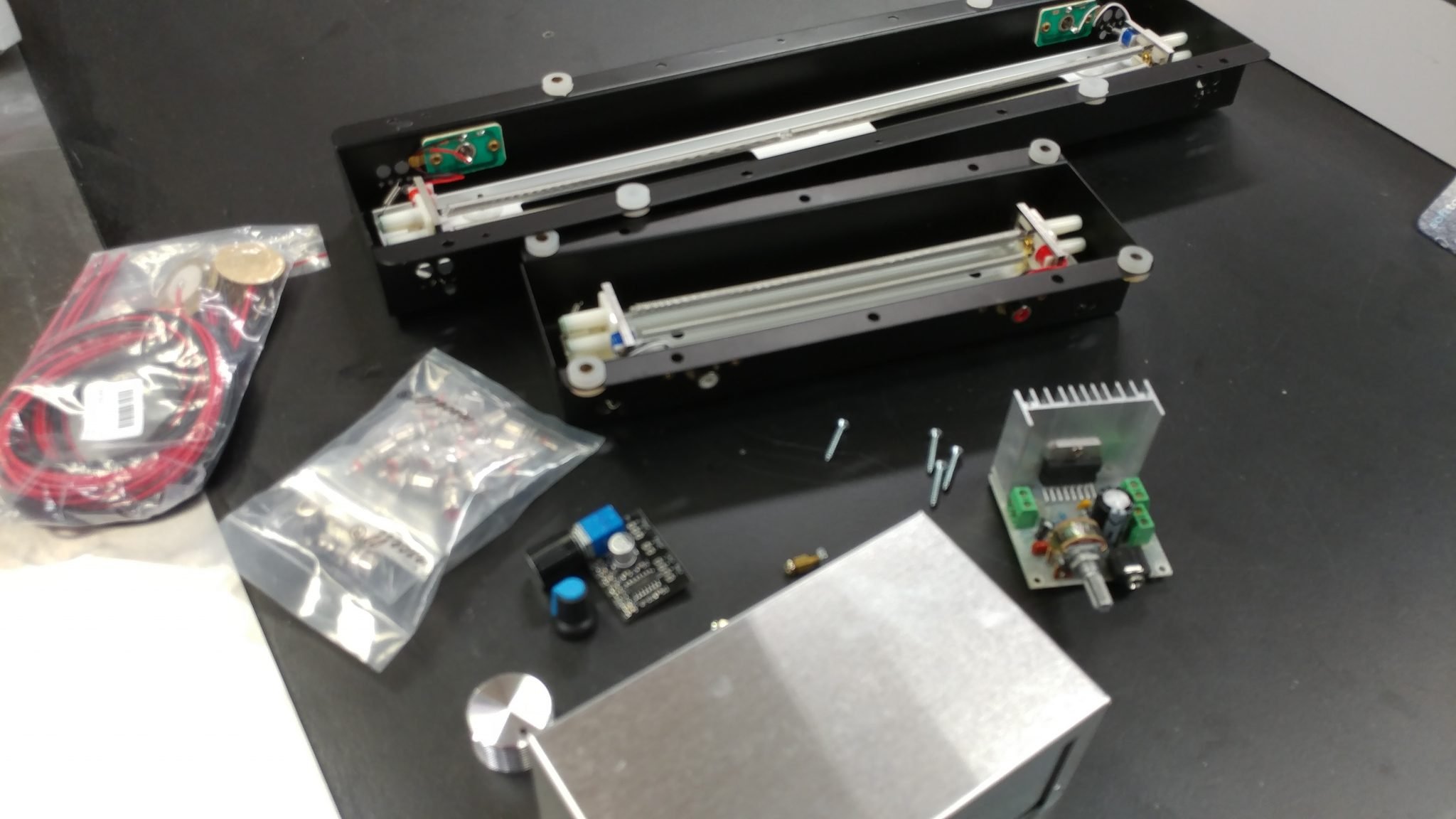
This version is going to have two channels, each with its own reverb tank which will result in each channel having its own sound.  I started by gathering the necessary parts.  Here’s what I’m using:

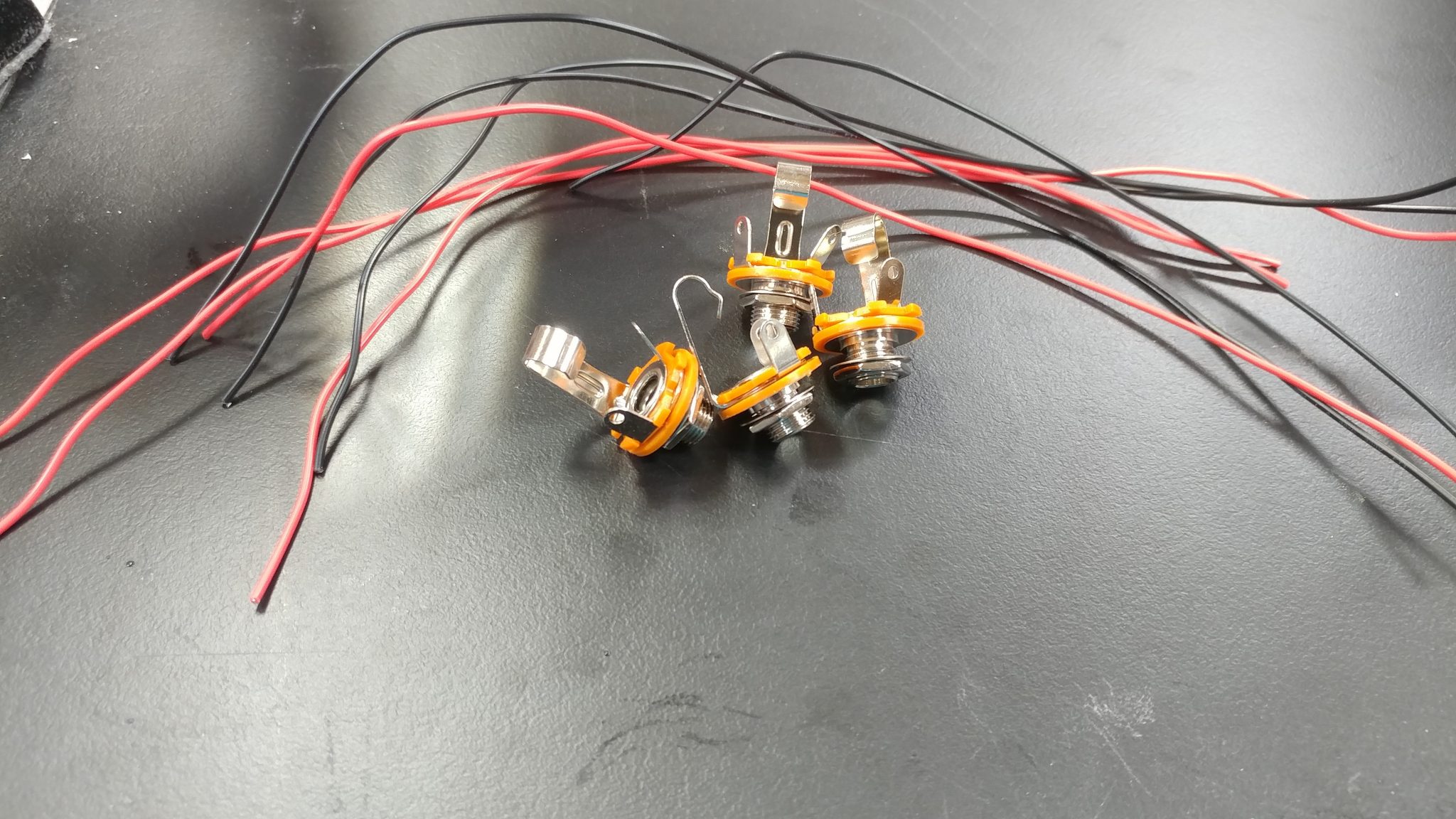
RCA jacks

1/4″ Mono audio jacks

5.5 mm X 2.1 mm power jacks  (X2)

27 mm piezos

Reverb tank: Long decay

Reverb tank: Medium decay

Input amplifier

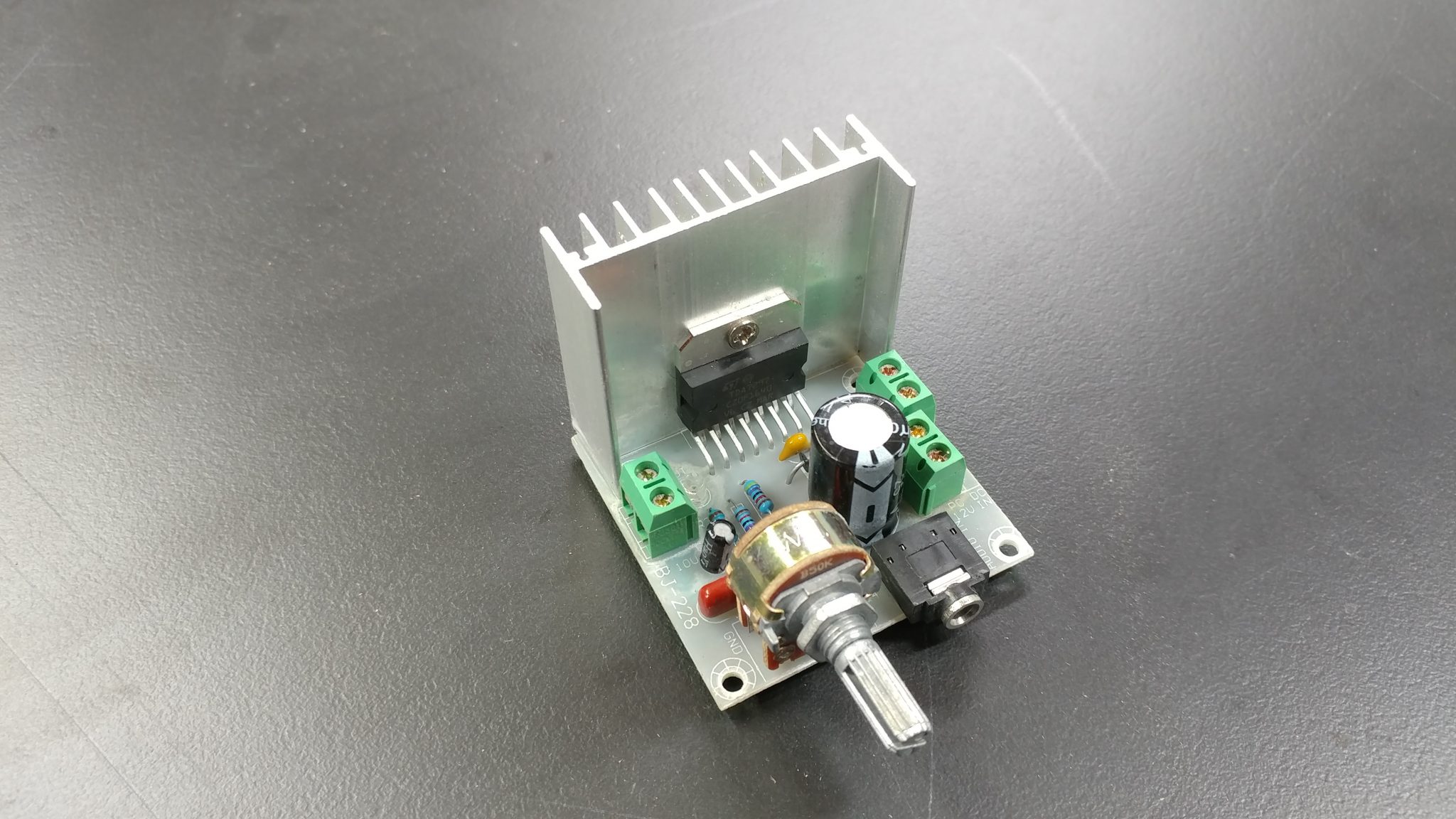
Output amplifier

Power supply: 12 VDC 2 Amp

Power supply: 5 VDC 2 Milliamp


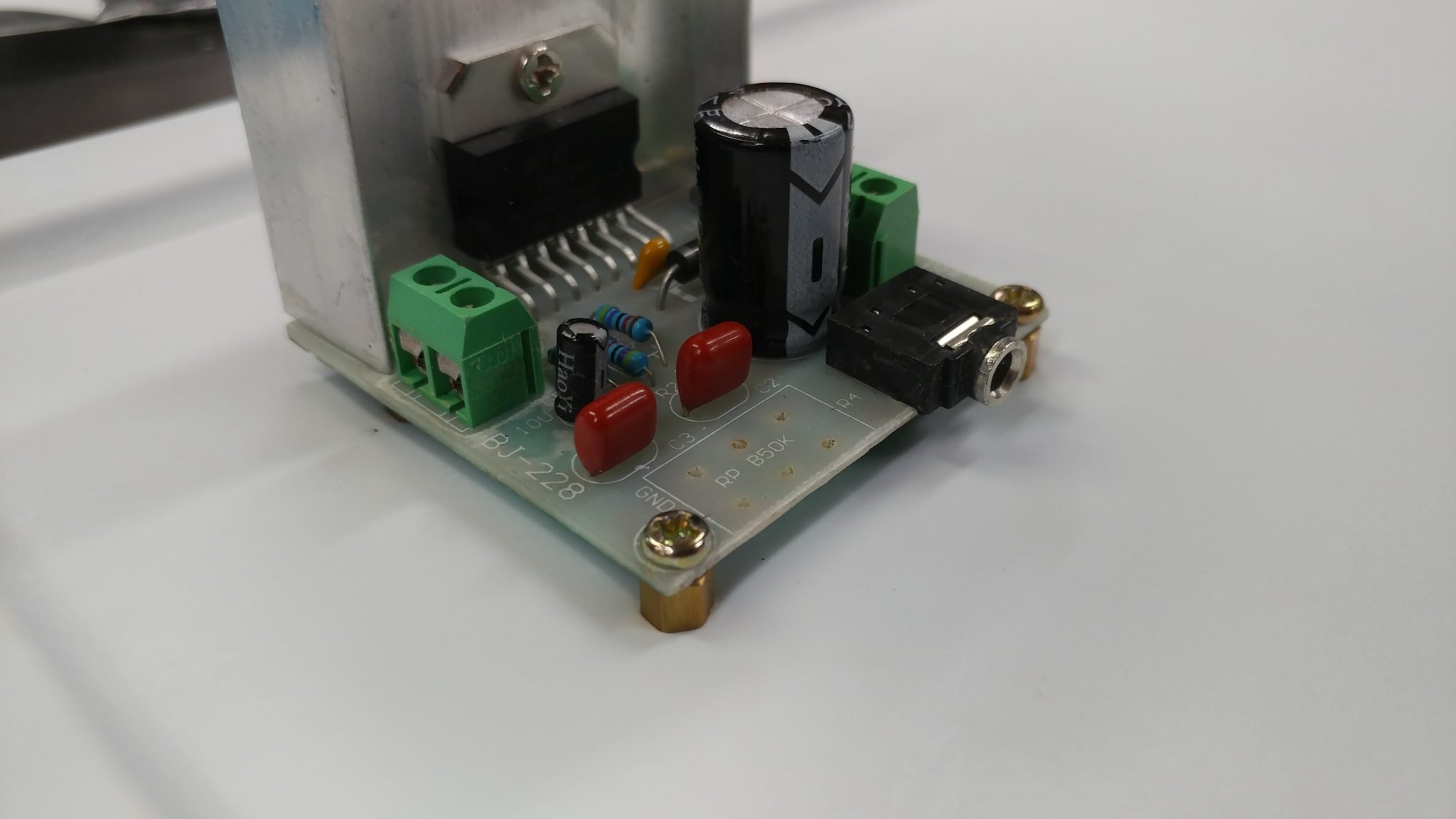
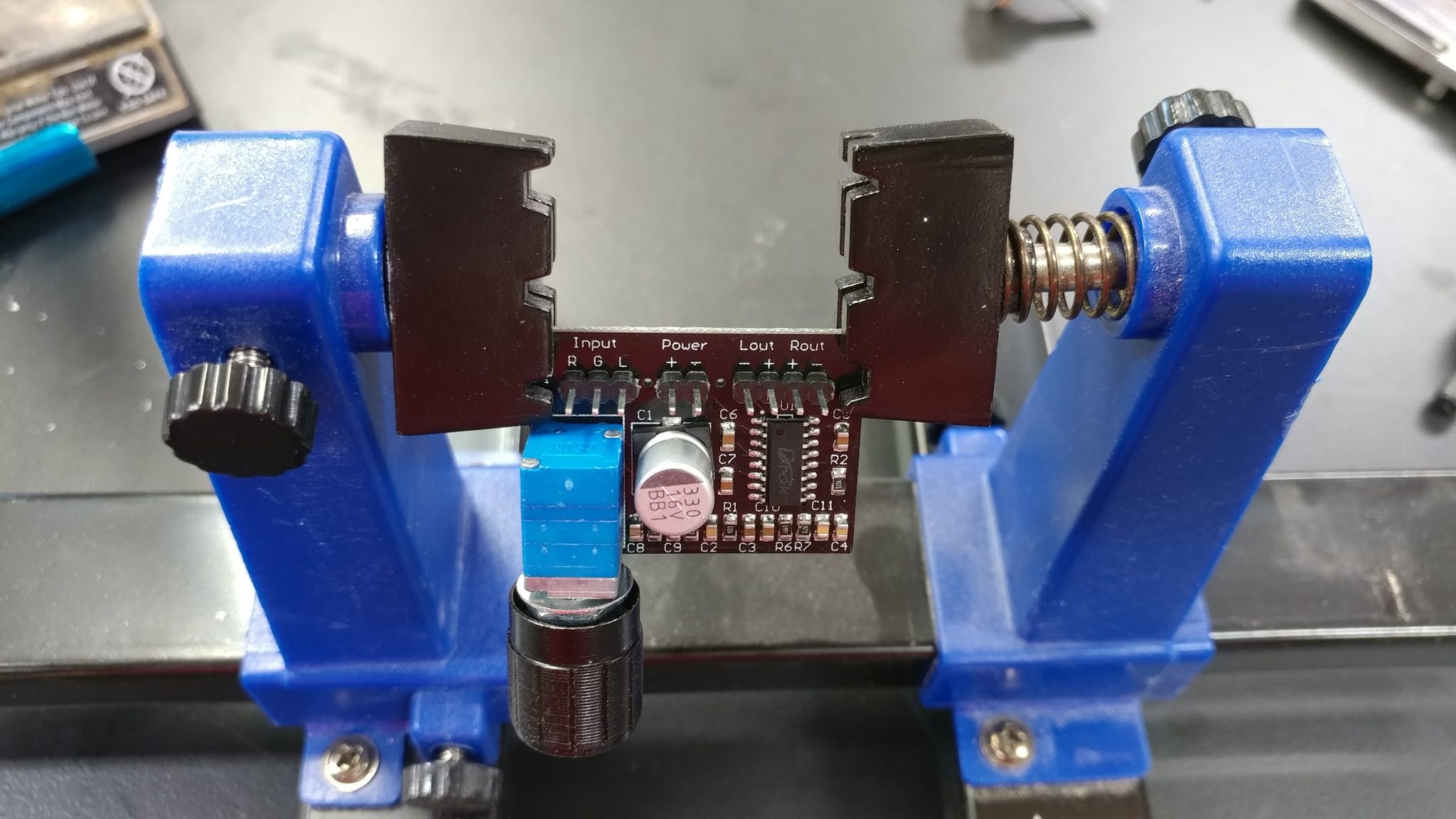
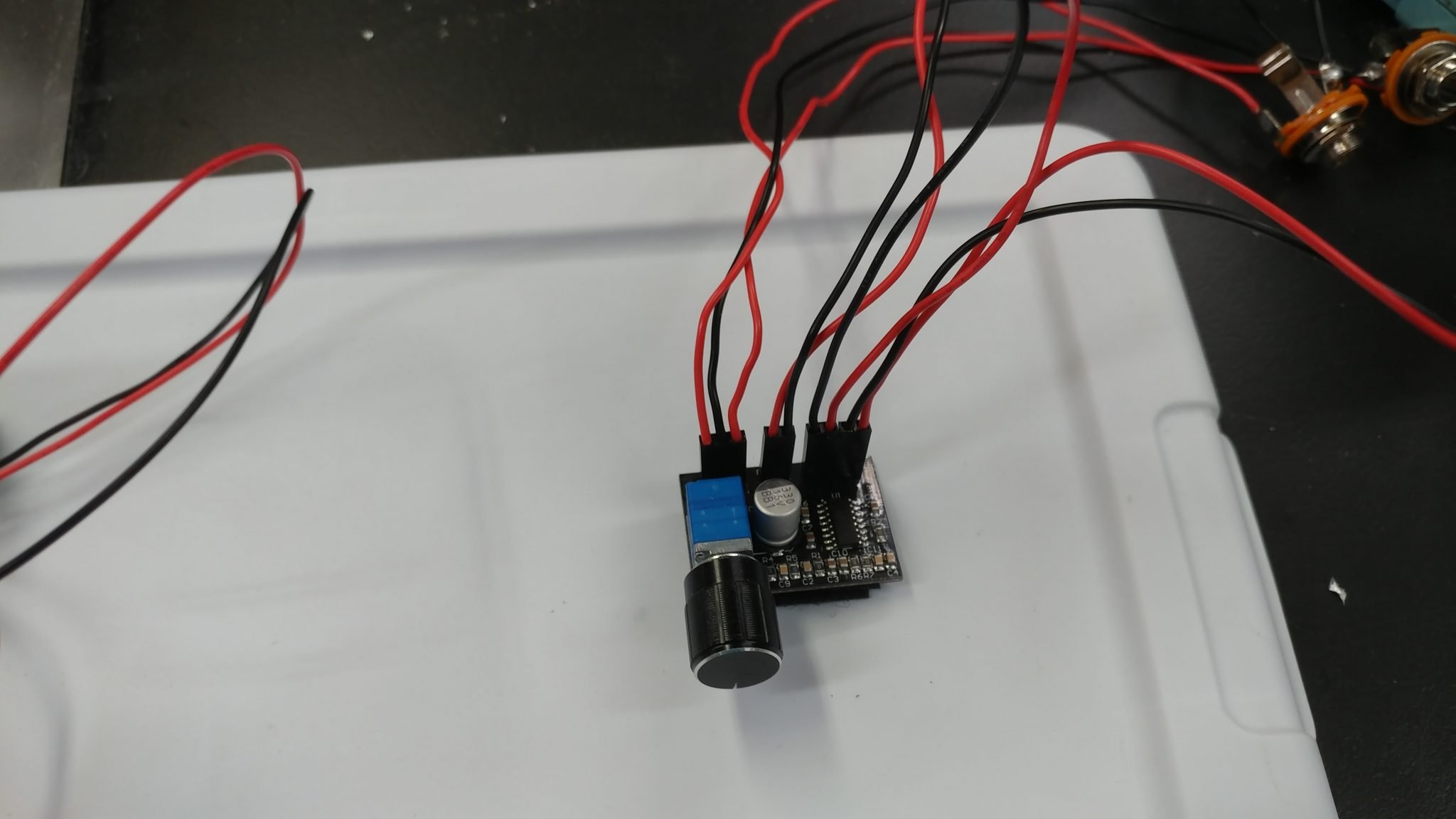
The output amplifier has an volume potentiometer.  I want to have access to this while using the instrument but you’ll notice that there is also an 1/8″ jack right next to it on the board.  This is the input.  Unfortunately, I don’t want this sticking out the front of the instrument so I decided to remove the potentiometer so I can attach it with wires and locate the actual volume knob away from the board.


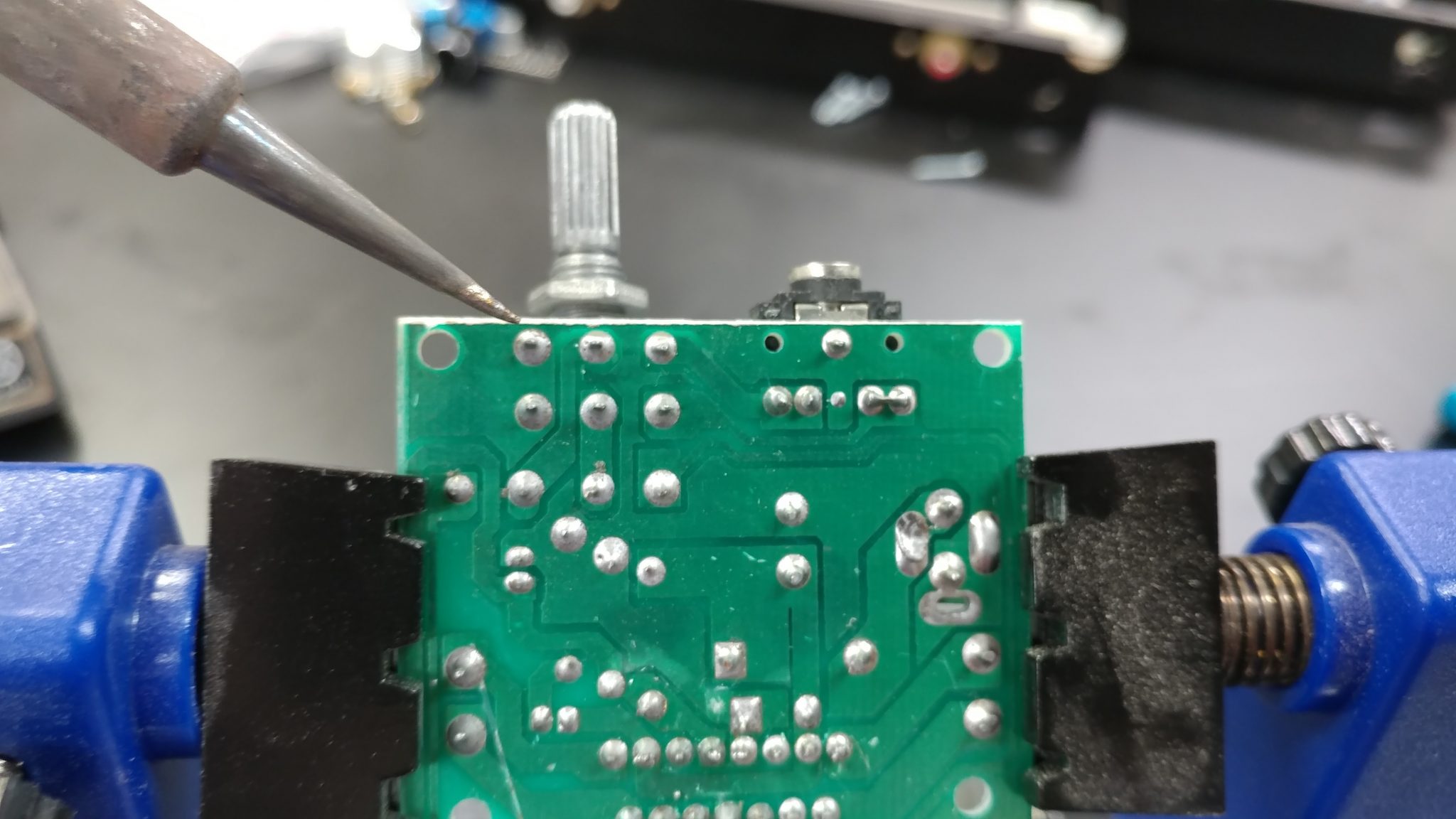
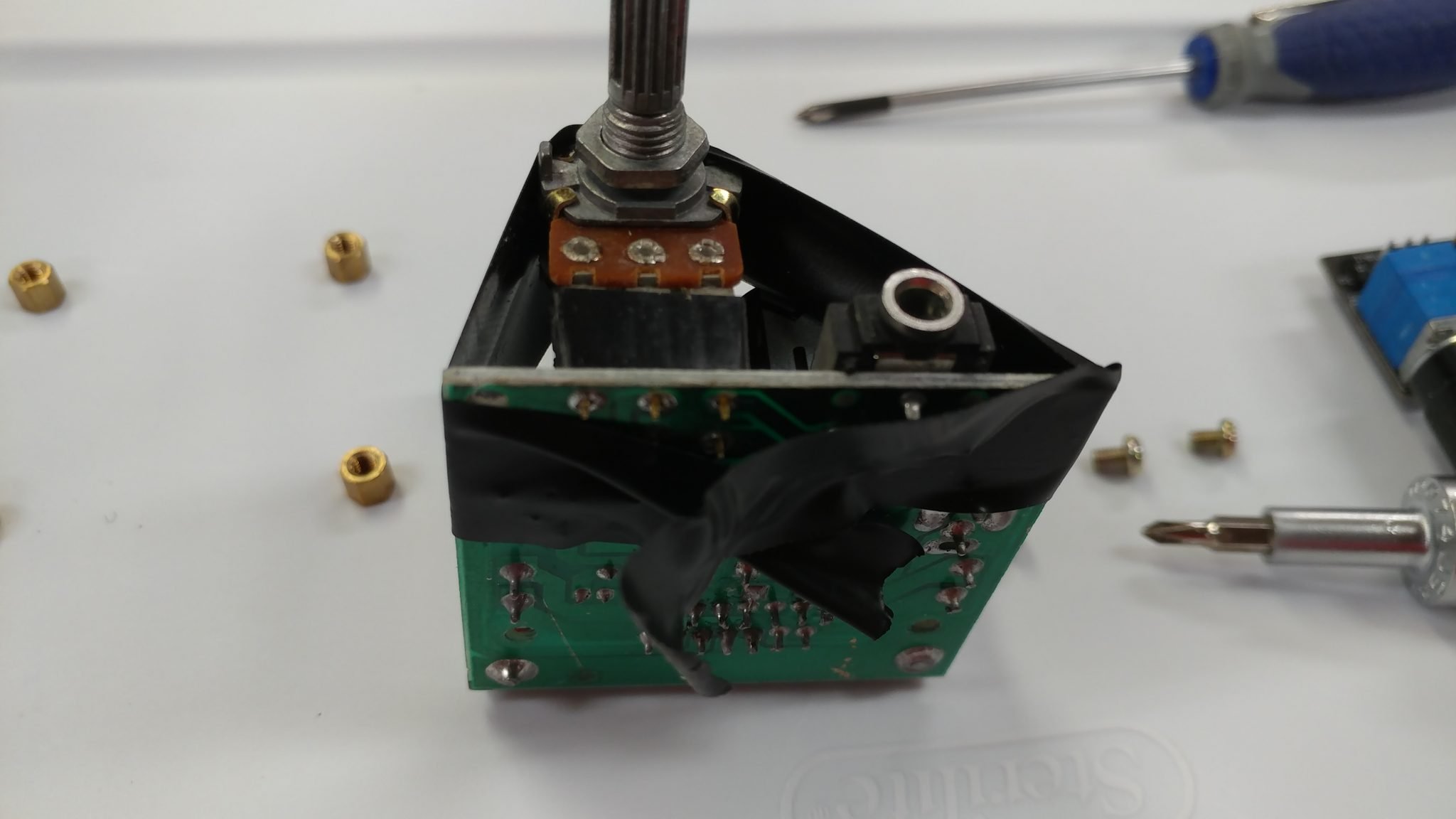
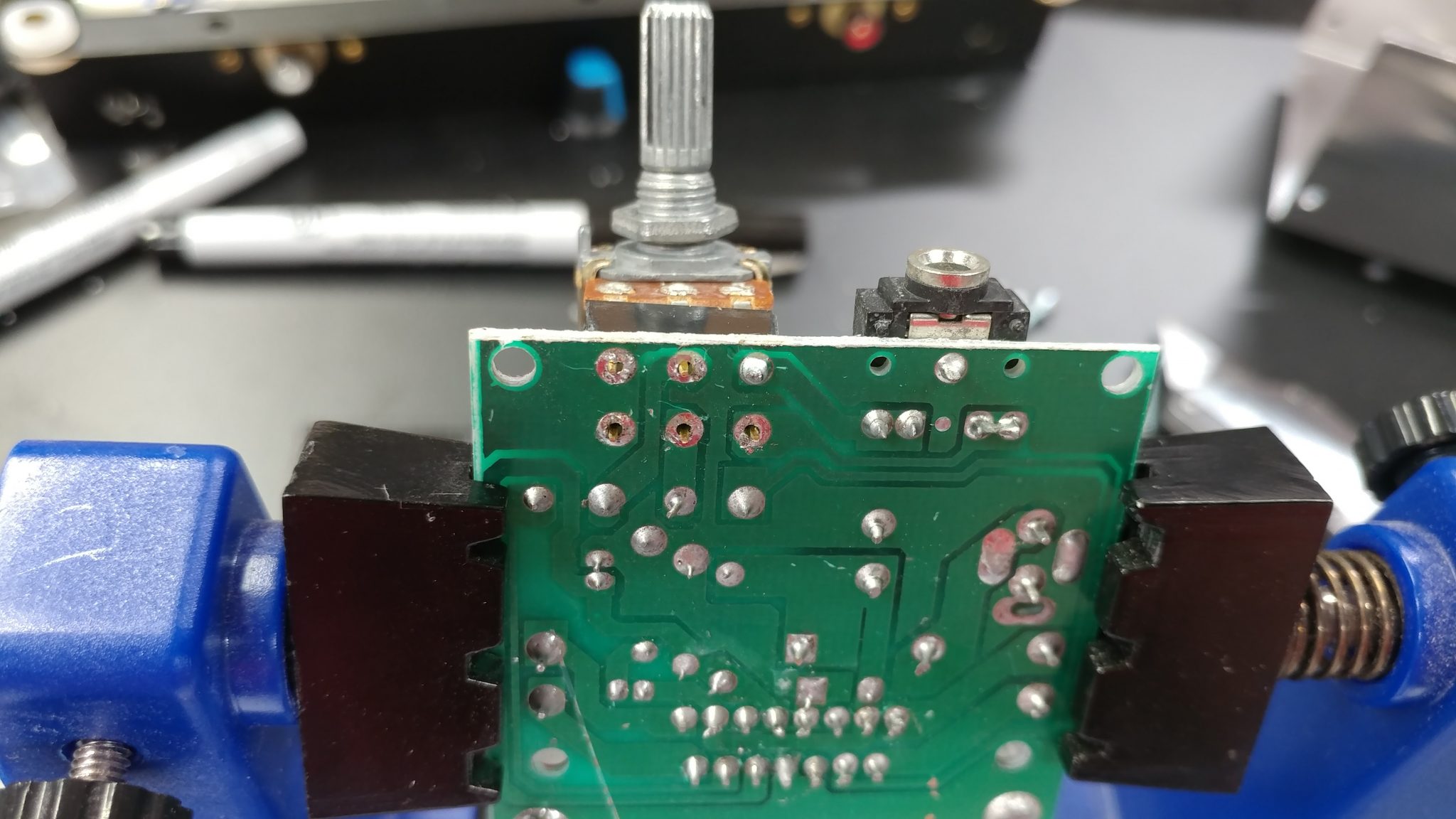
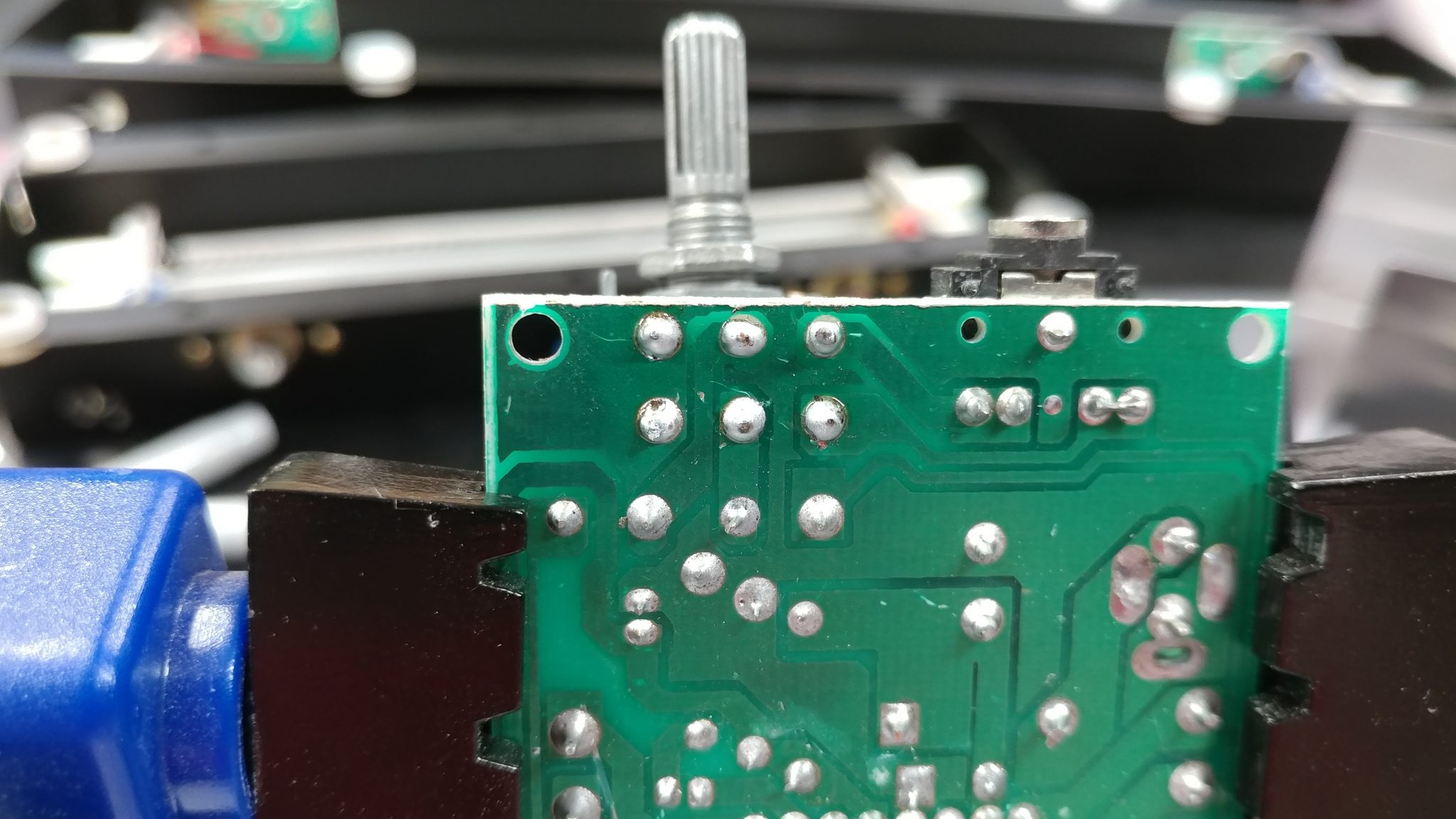
Looking at the underside of the board you’ll see that it should be easy to de-solder and remove the potentiometer.


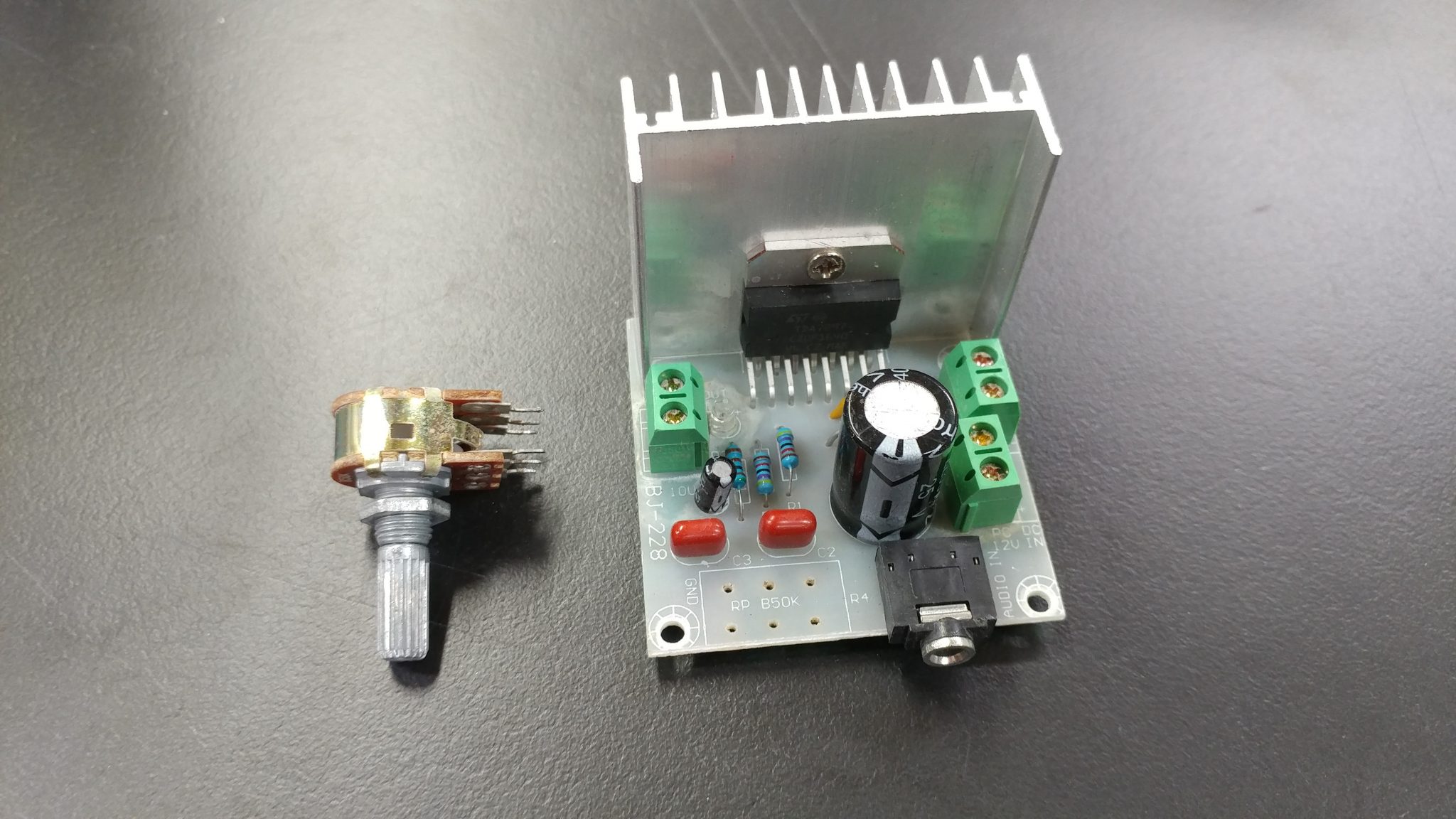
The potentiometer has been successfully removed.


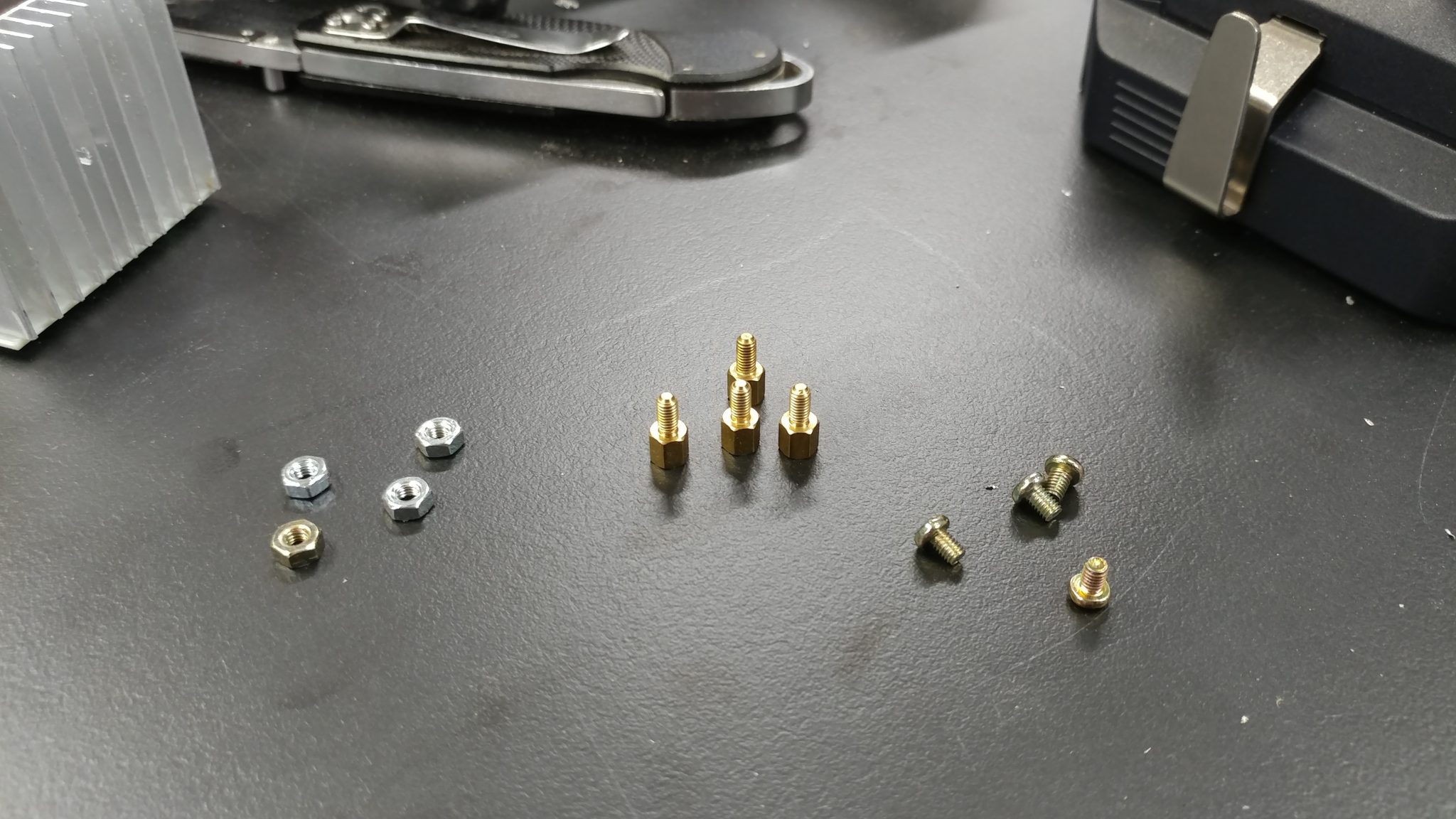
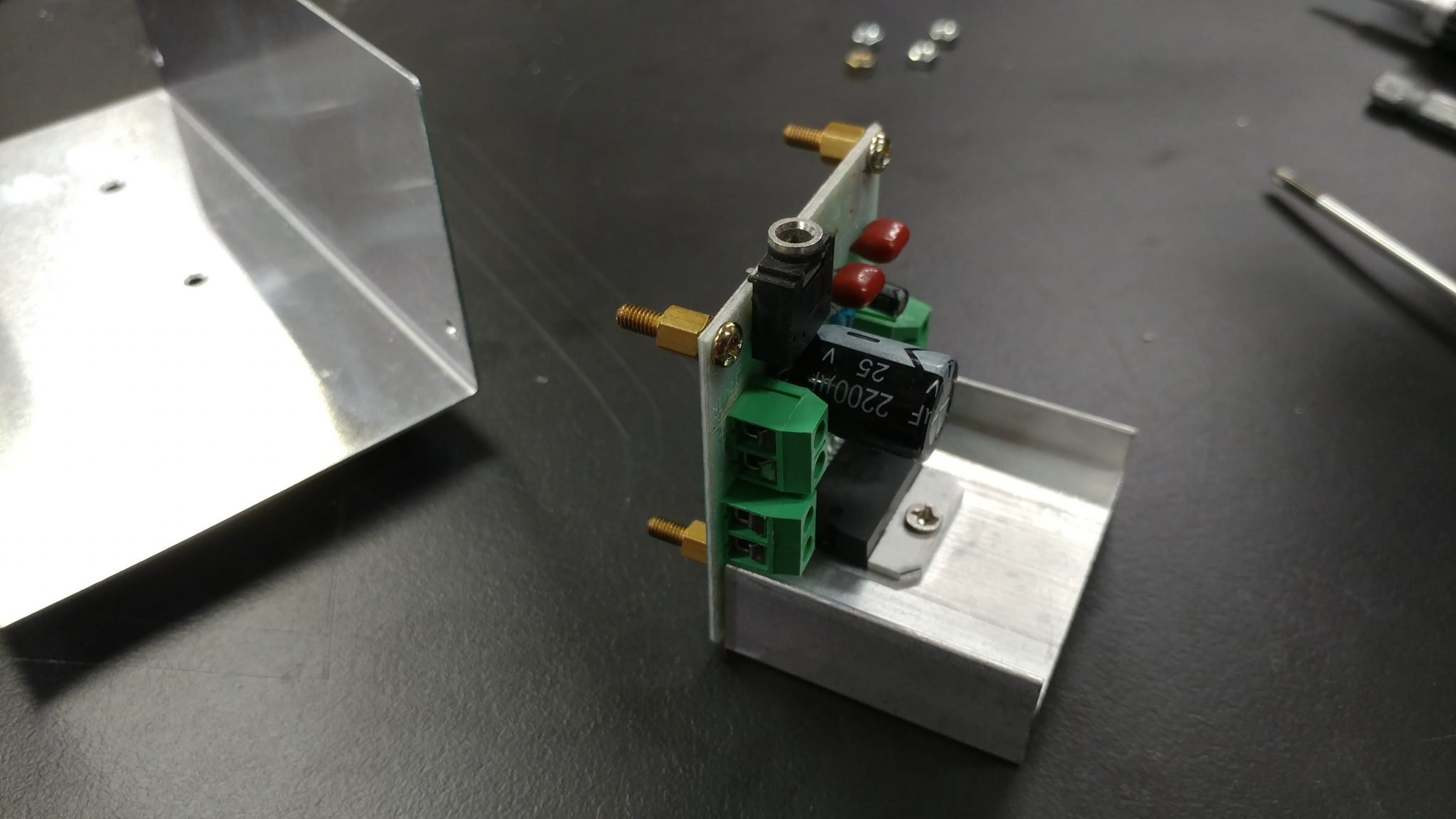
I’m temporarily securing the board to a surface by using screws and standoffs.


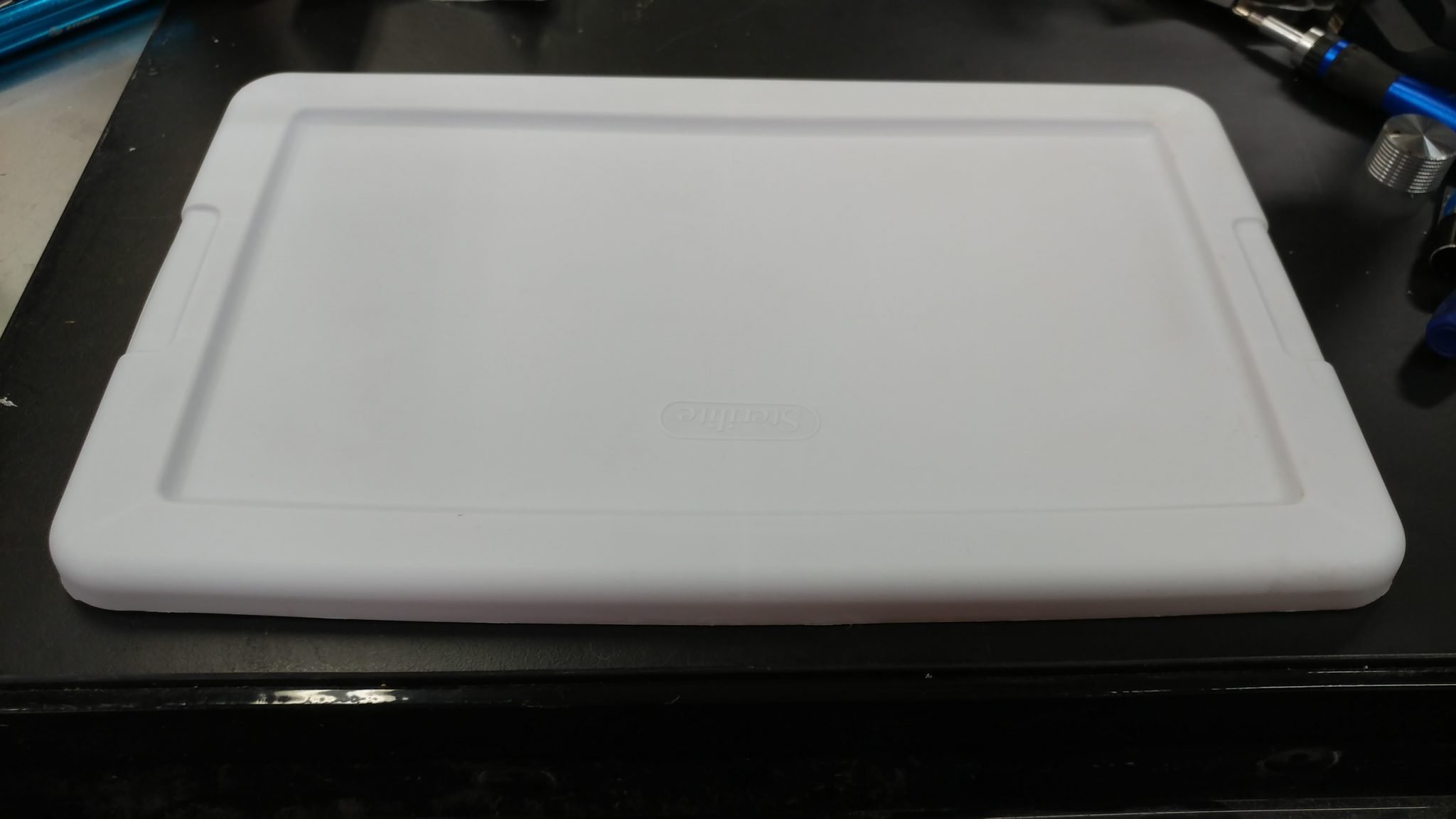
One of my favorite tricks when prototyping electronics is to use those $1.00 storage bins.  At first I decided to attach everything to the top of the lid.  I changed my mind later, which you’ll see.


I attached the standoffs to the board and used that to mark where I needed to drill holes in the lid for the board.


I drilled the holes then inserted the legs of the standoffs then secured them with nuts.


The input amplifier is a bit different.  It’s pretty small and doesn’t have holes for standoffs.  I also don’t necessarily need to access the potentiometer on this board as I expect to set-it-and-forget-it.


Looking at the underside shows a spot where there aren’t any traces so I decided to secure this board with sticky-backed velcro.


Both boards are secure and ready for some prototyping.


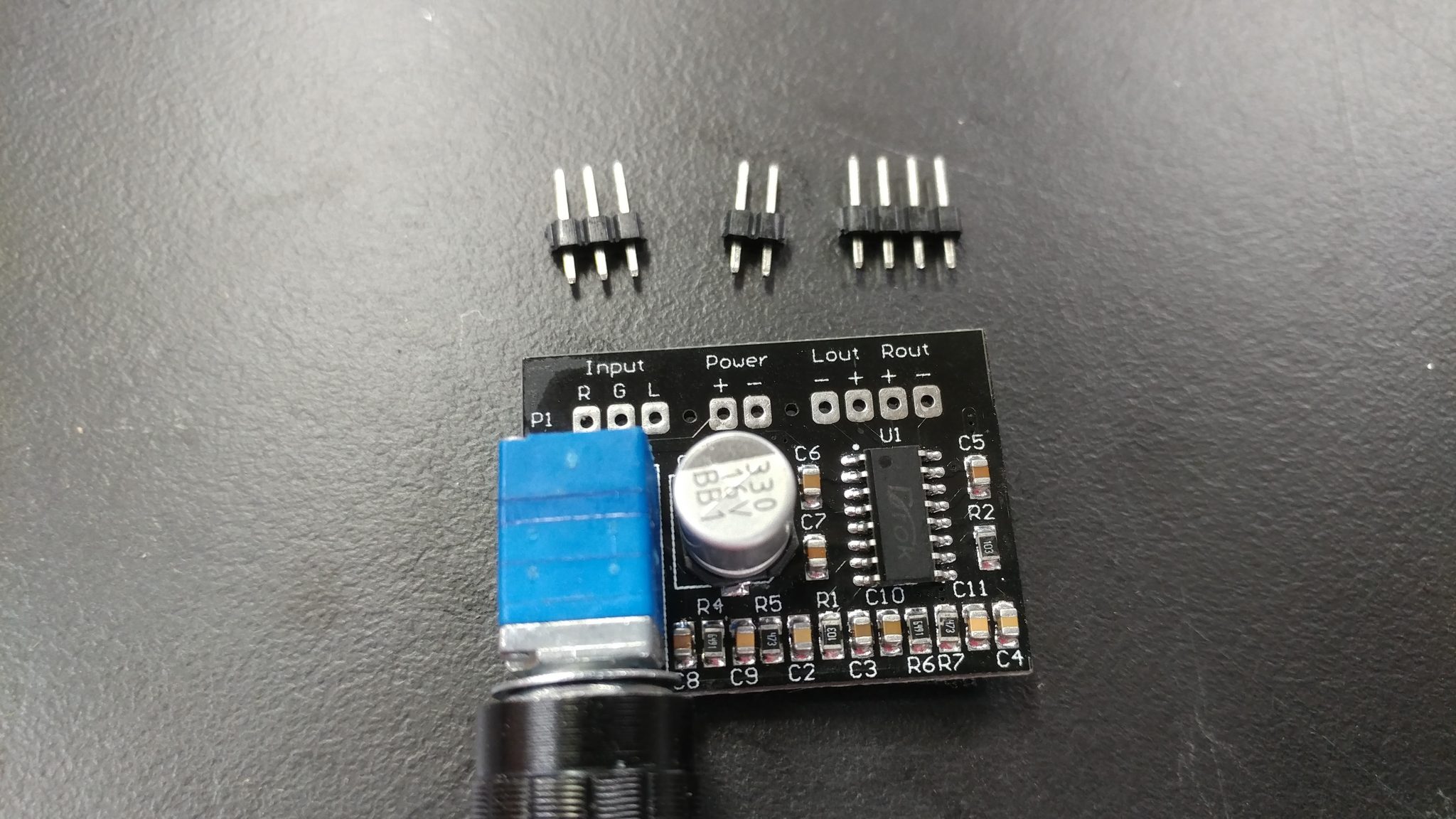
The board requires the installation of header pins.


Easy enough.


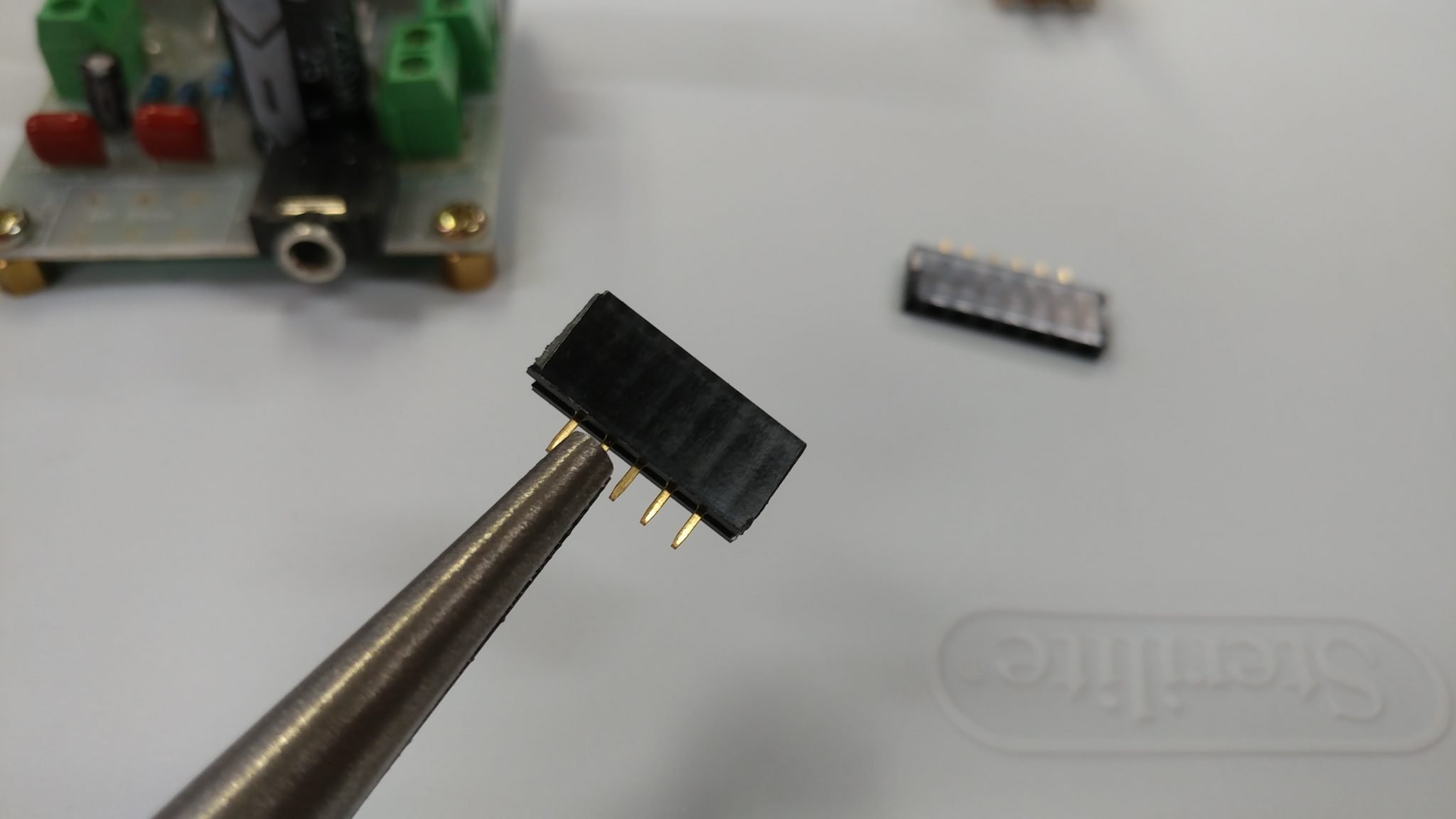
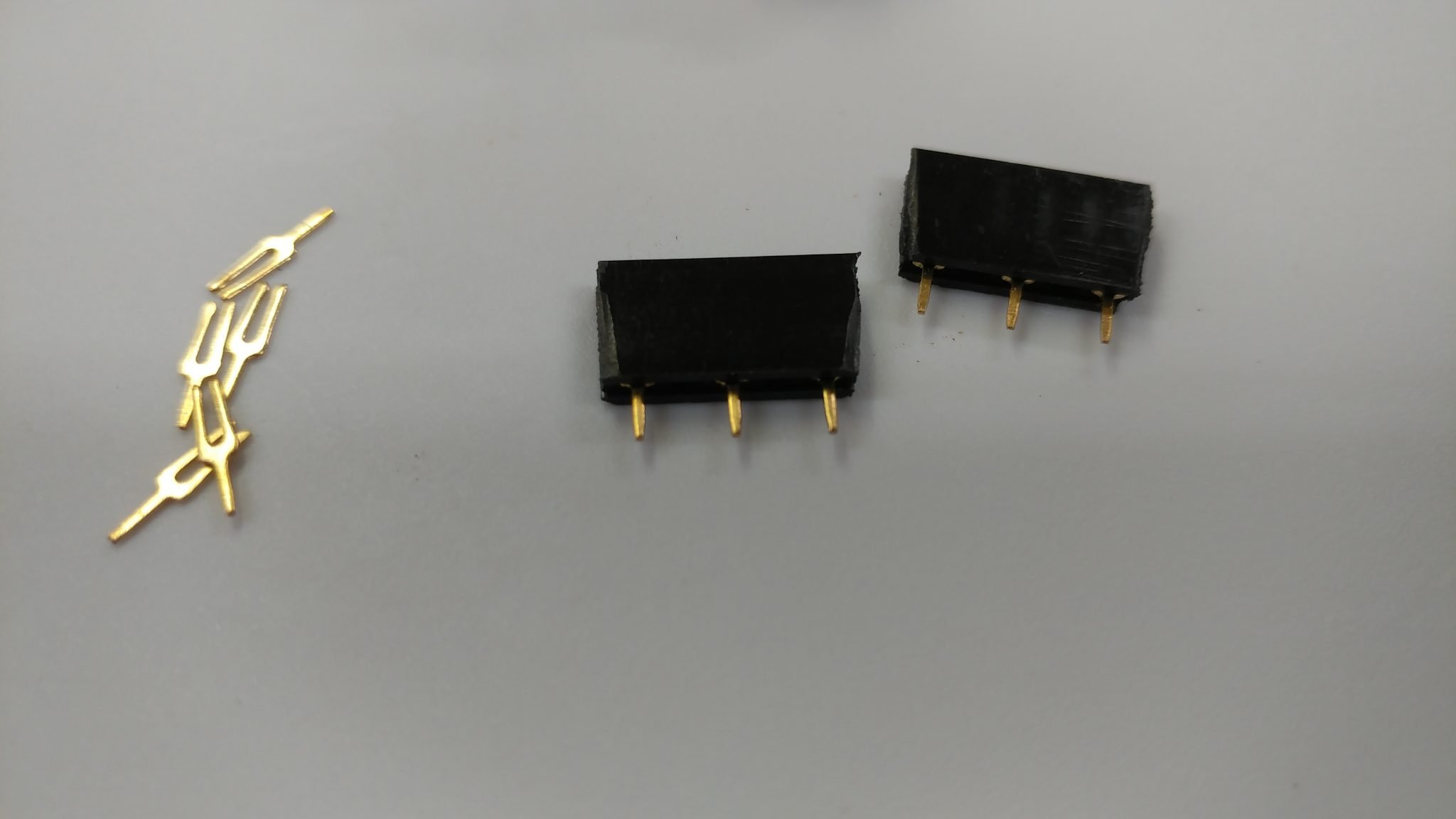
To attach the potentiometer to the output board, I attached some female headers to the board.  I started with some 5 pin sections.  I only need three of them but they’re double-spaced so I need to start with 5 and pull out the 2nd and 4th pin with needle-nosed pliers.


This results in 3-pin headers that I can solder to the board.


To hold the headers in place, I inserted the pins for the potentiometer in the headers and then I held the potentiometer to the board with some electrical tape just long enough to secure one of the pins.


After the pin was secure, I removed the tape….


…and soldered the remaining pins.


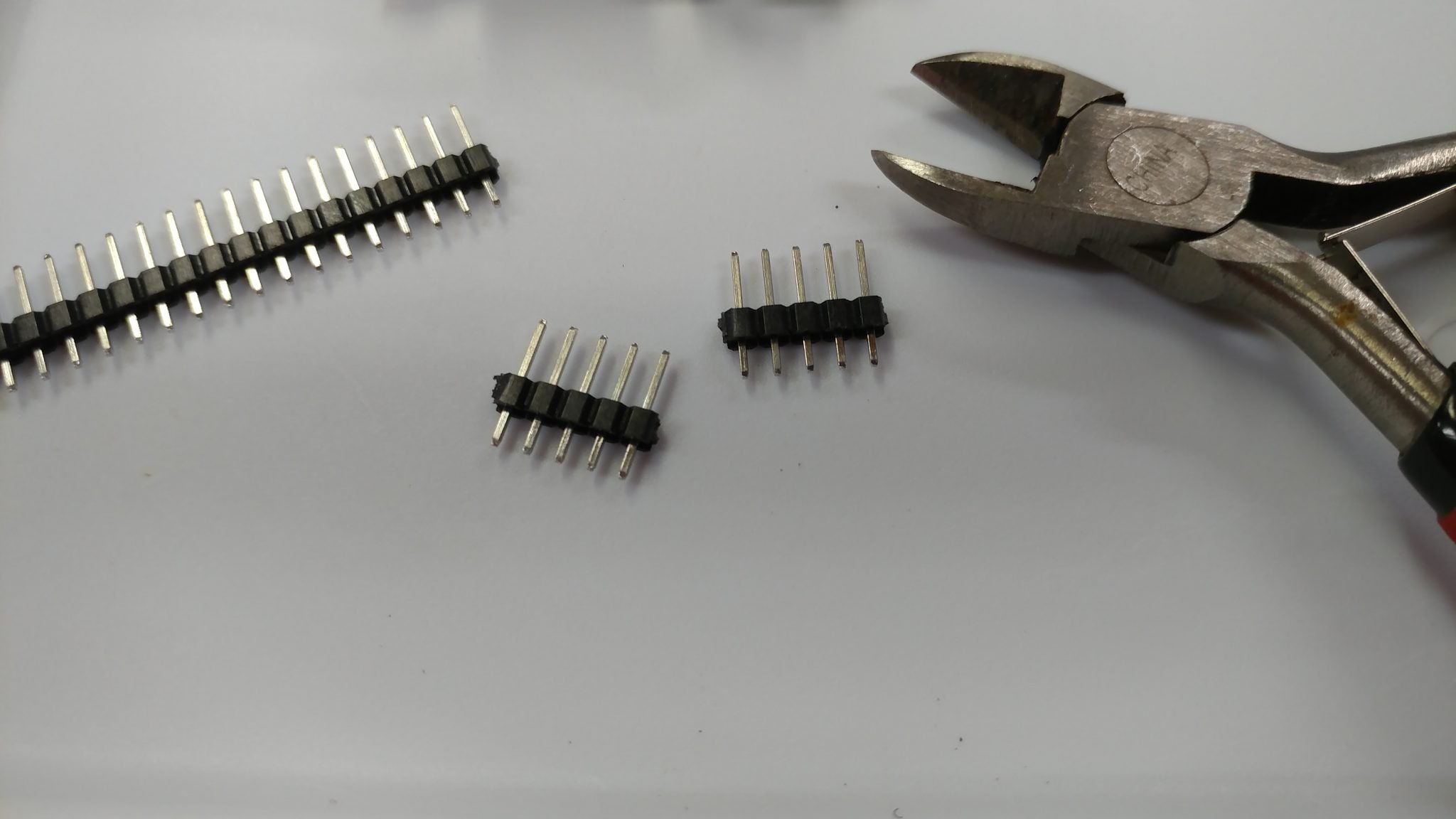
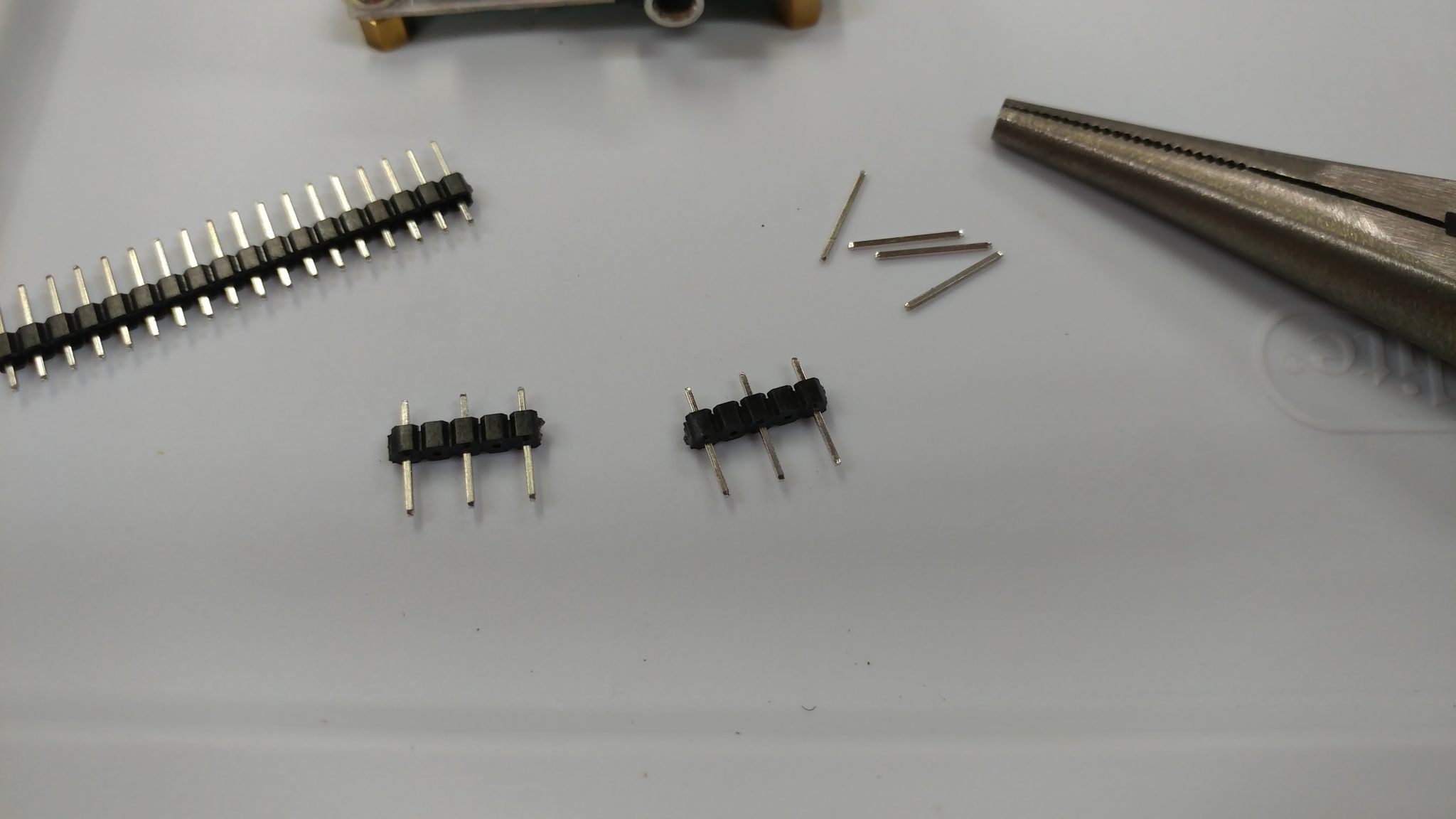
To make the plug that will insert into the headers, I started with a length of header pins.  Using a pair of snips, I made two five-pin sections.


I removed the 2nd and 4th pins just like I did on the female headers.


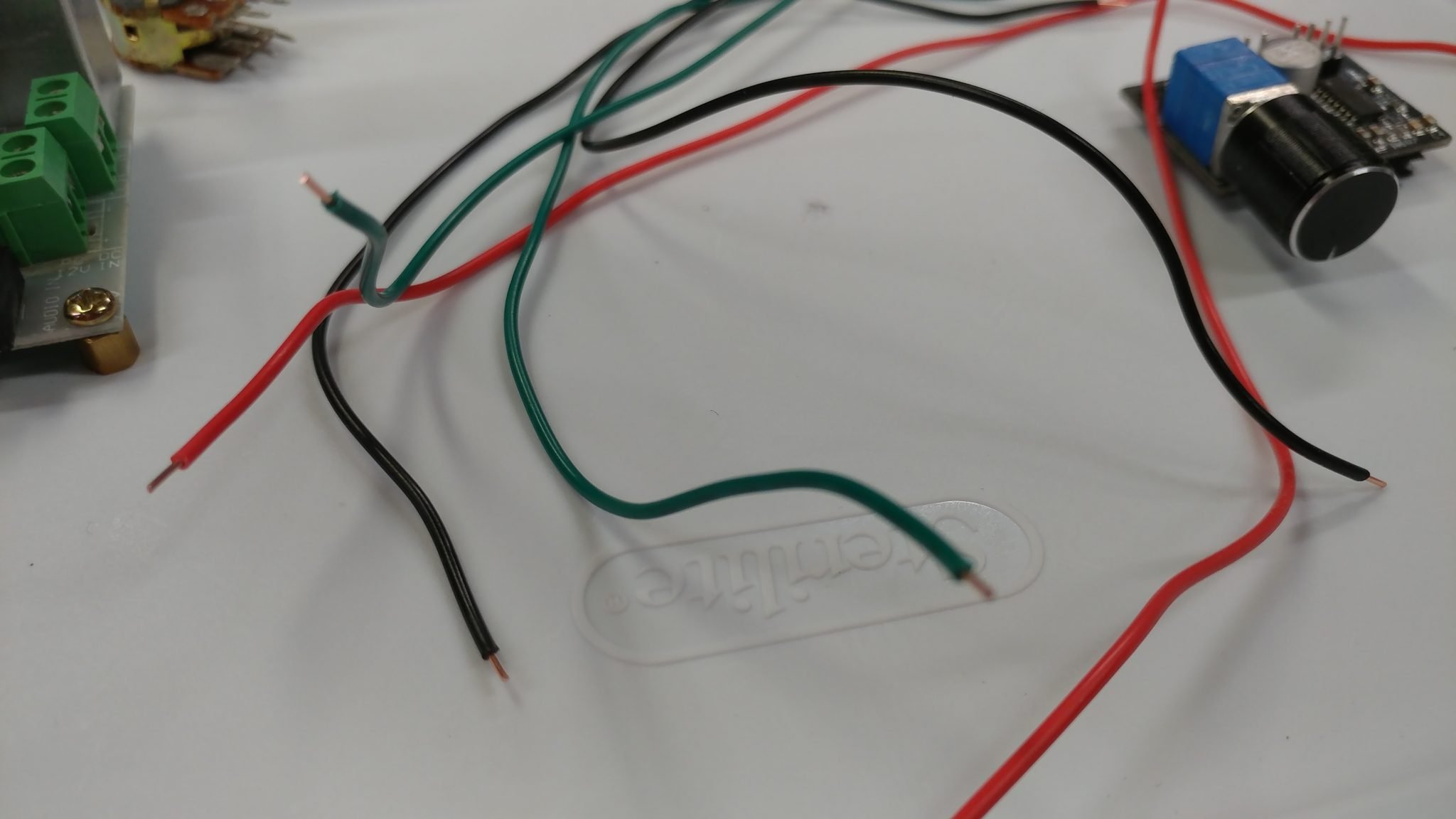
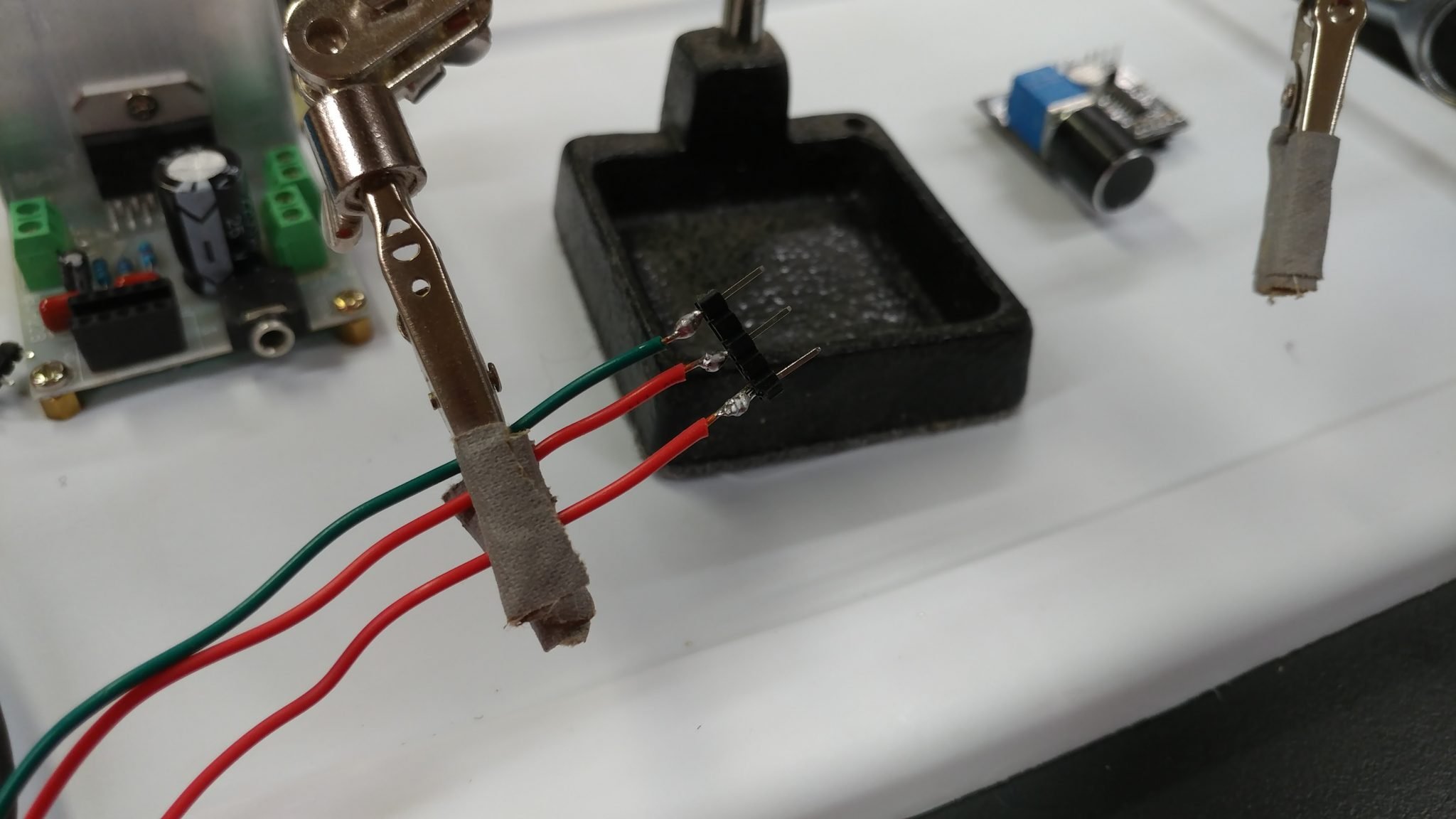
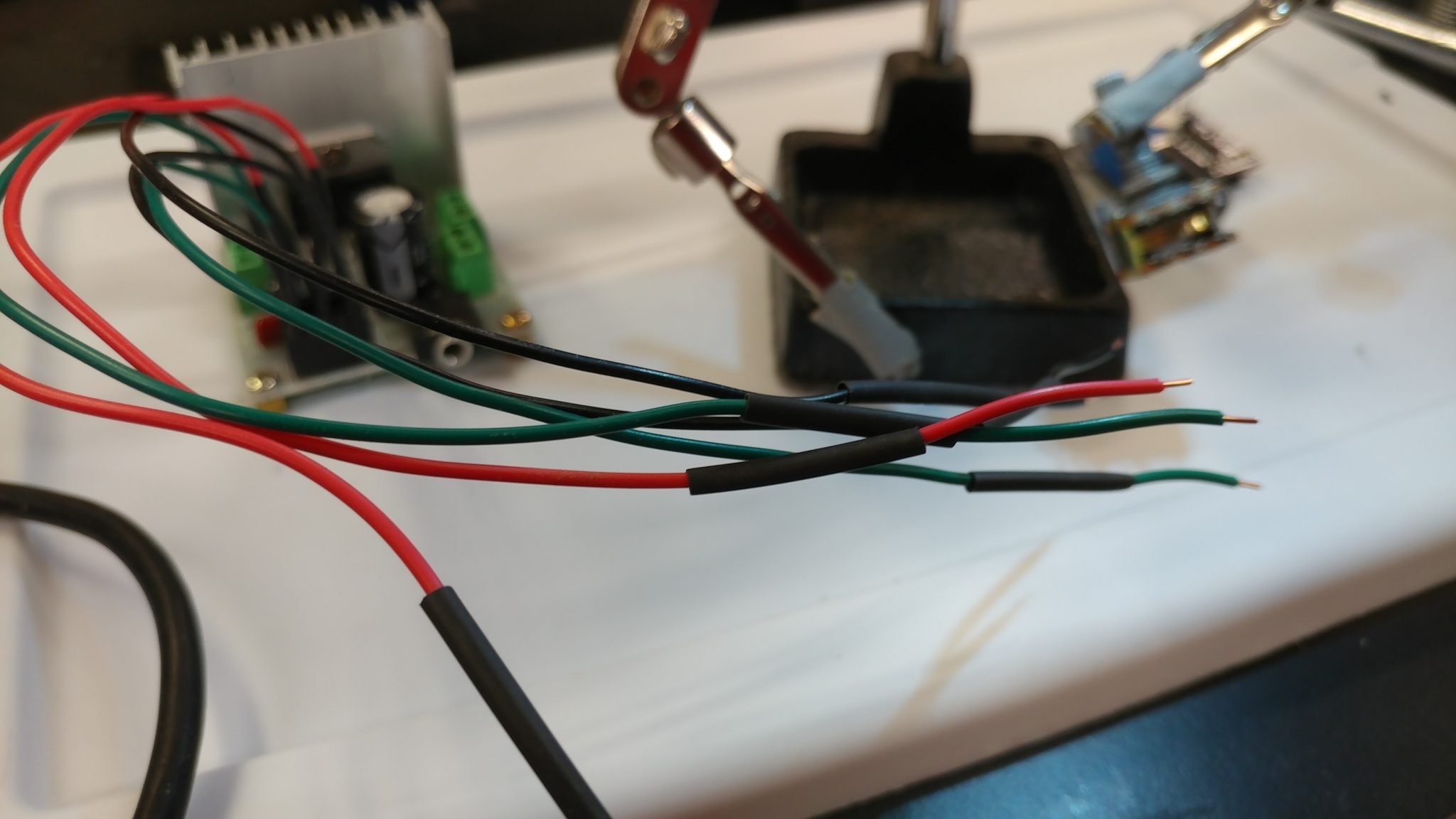
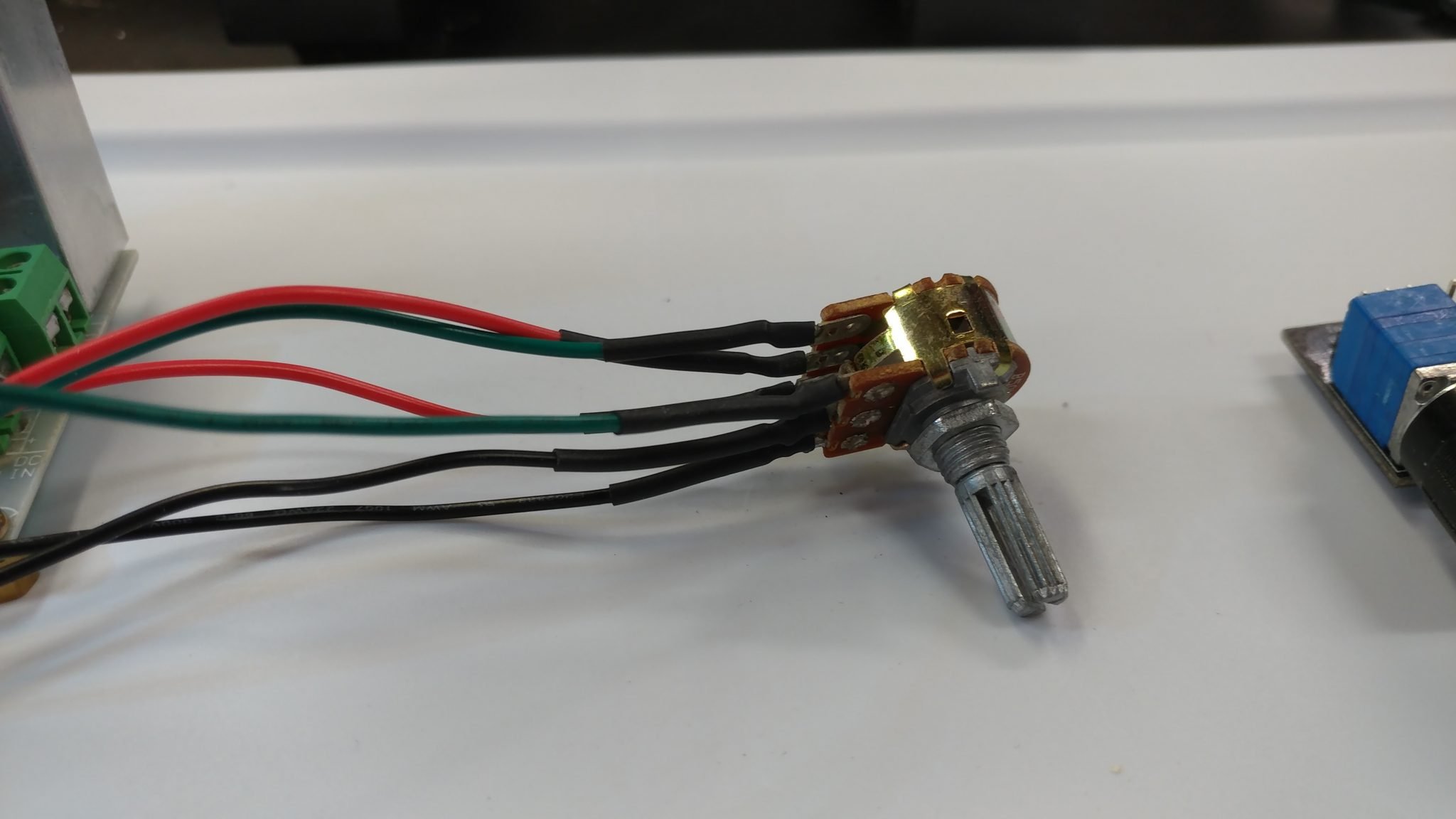
I made a cable out of 22 awg wire.  I normally try to do some sort of color scheme that makes sense so I decided to have the left most pin on each row connect to a green wire, and the other two pins to both connect to either a read or a black wire.  I started by cutting some lengths of wire.  Then I stripped the ends.


I soldered the wires to the pins.


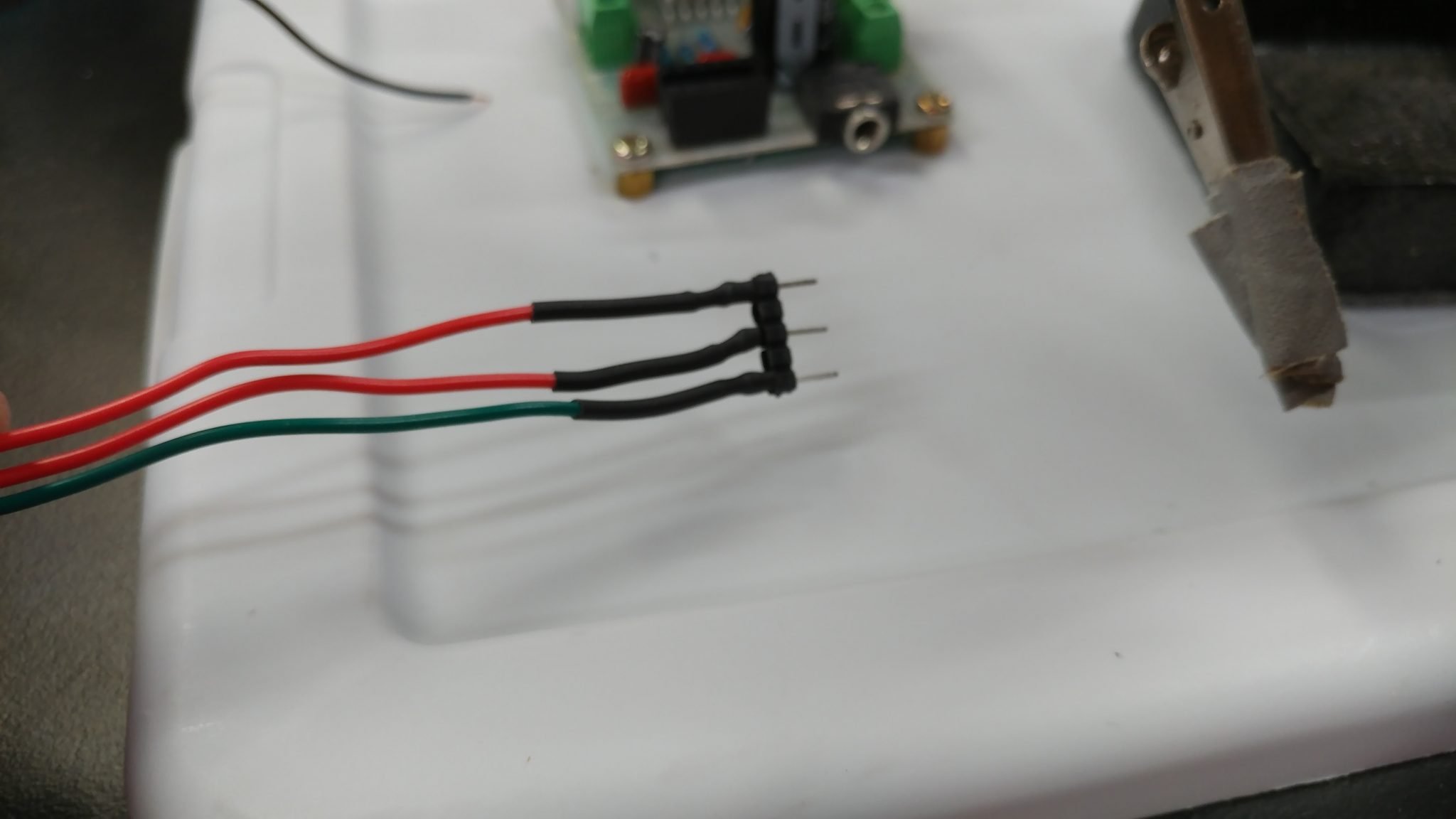
Then I covered the bare connectors with heat-shrink tubing.


Both cables are attached.


Anyone who’s made their own instrument or mic cables can relate to this: always remember to put any sleeves on the wires BEFORE soldering the other ends on.


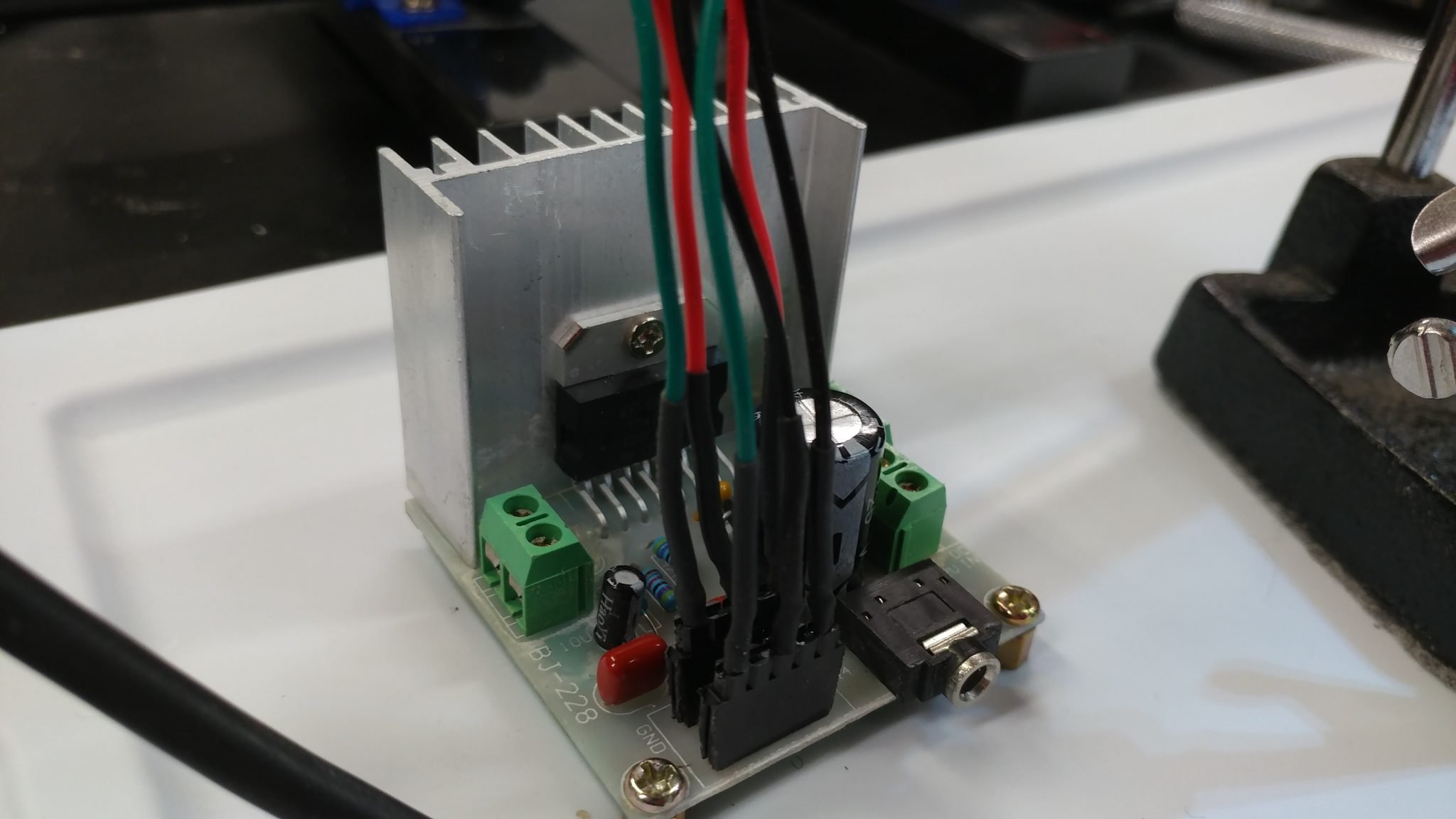
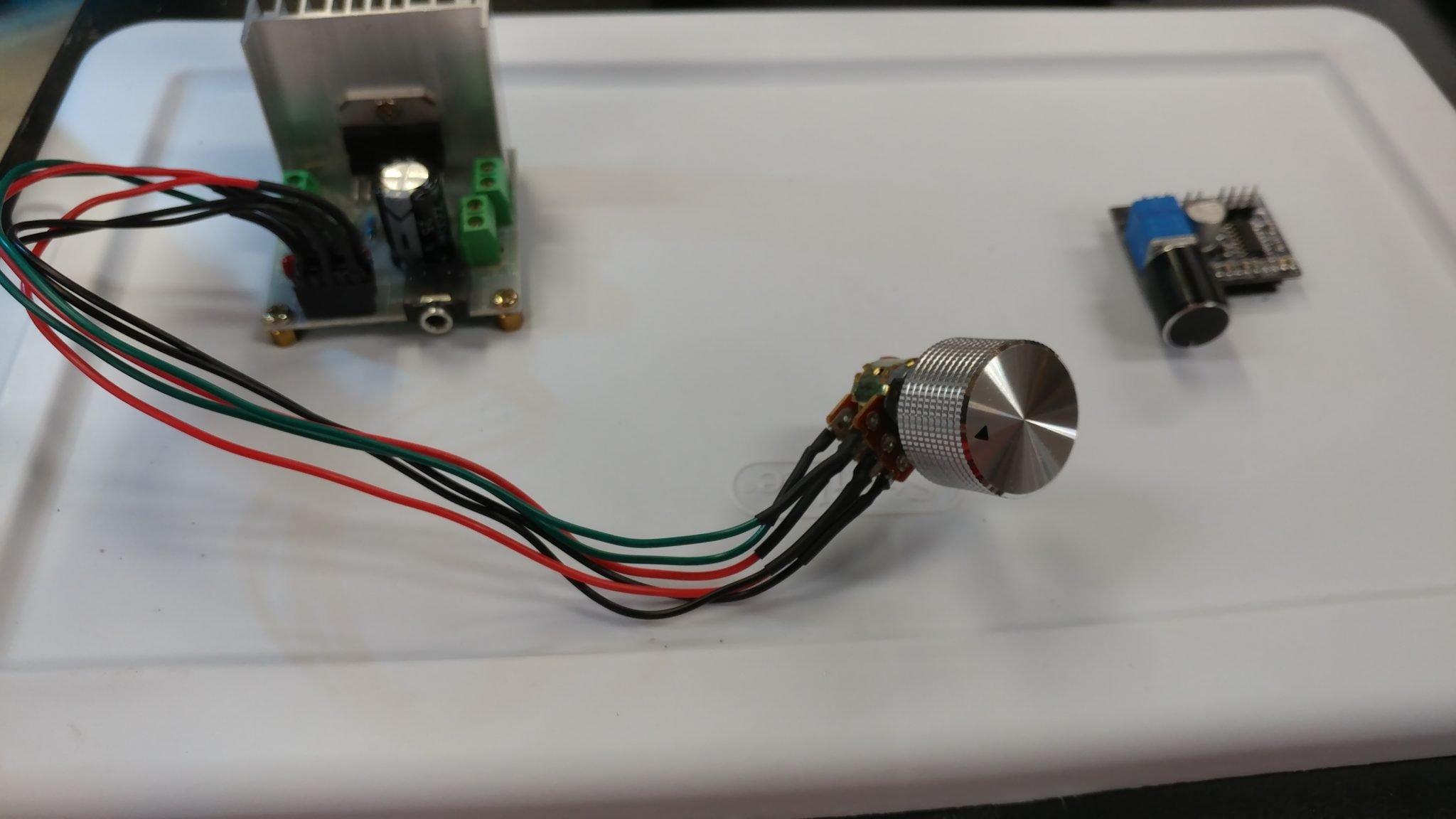
I soldered the wires to the potentiometer then applied the heat-shrink tubing.


Now I’ve got a volume knob that I can attach away from the board.  This may not work, however, as I explain later.


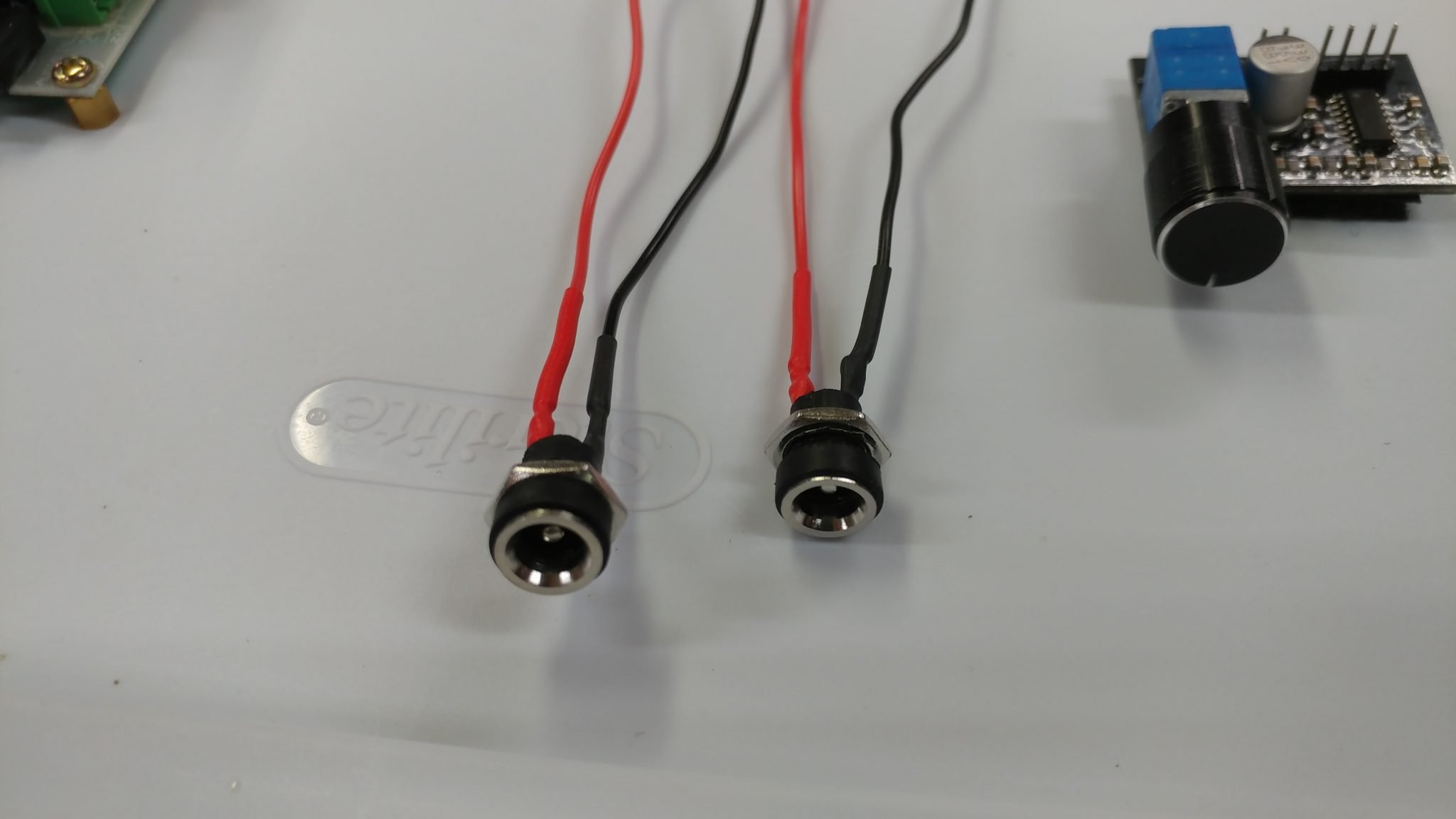
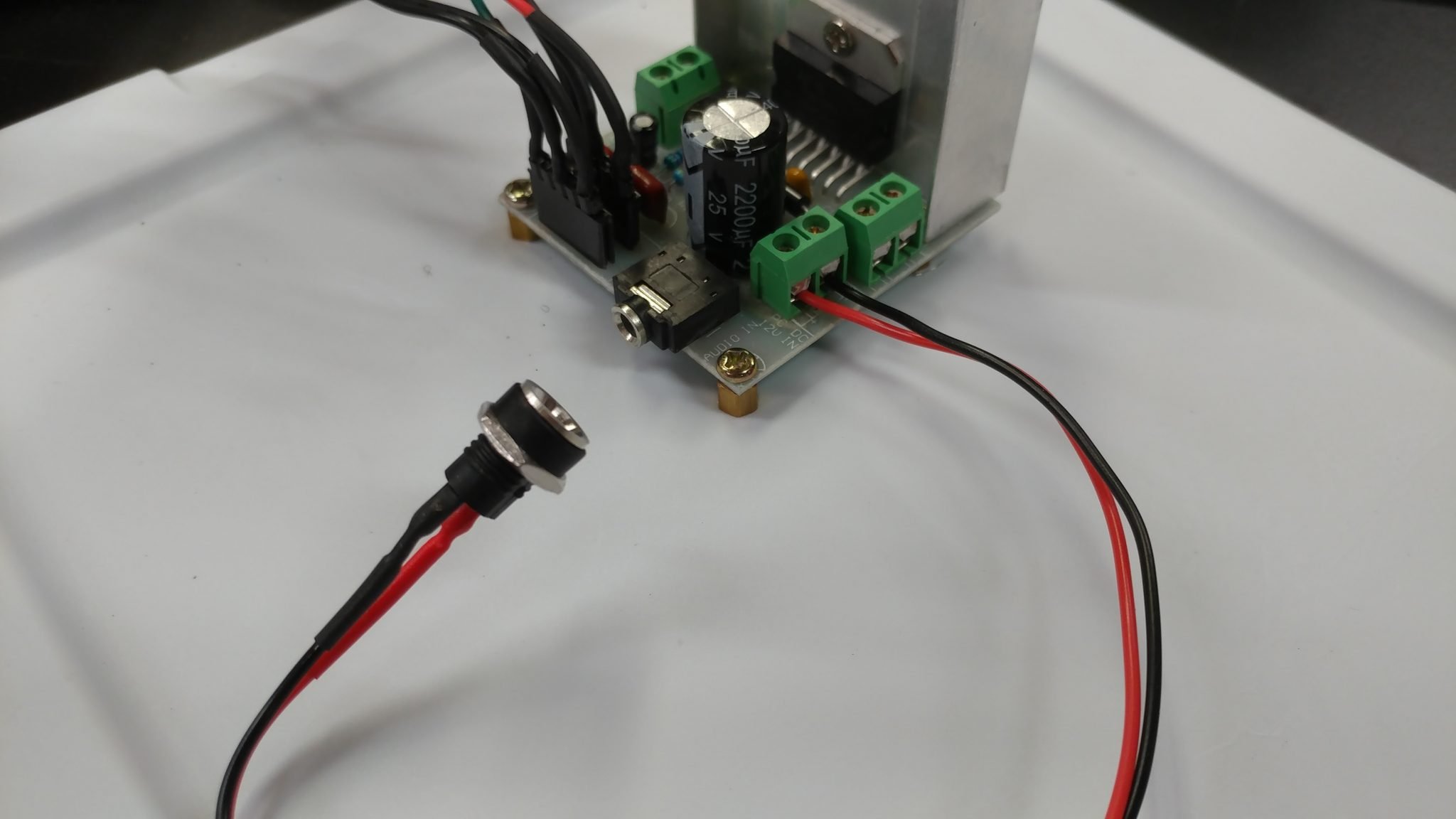
Each board will use its own power supply.  The output amp needs 12 VDC at 2 Amps while the input amp only needs 5 VDC ad 500 Milliamp.  I tried to find an easy way to get different connectors so I don’t accidentally connect the 12 VDC supply in the input amp and damage it, but it’s pretty hard to get the correct power supplies with the connectors that I wanted.  Until I come up with a better solution, this will have to do.


I soldered wires and applied heat-shrink tubing.


The wires for connecting the power jack to the output amplifier are pretty simple to attach.


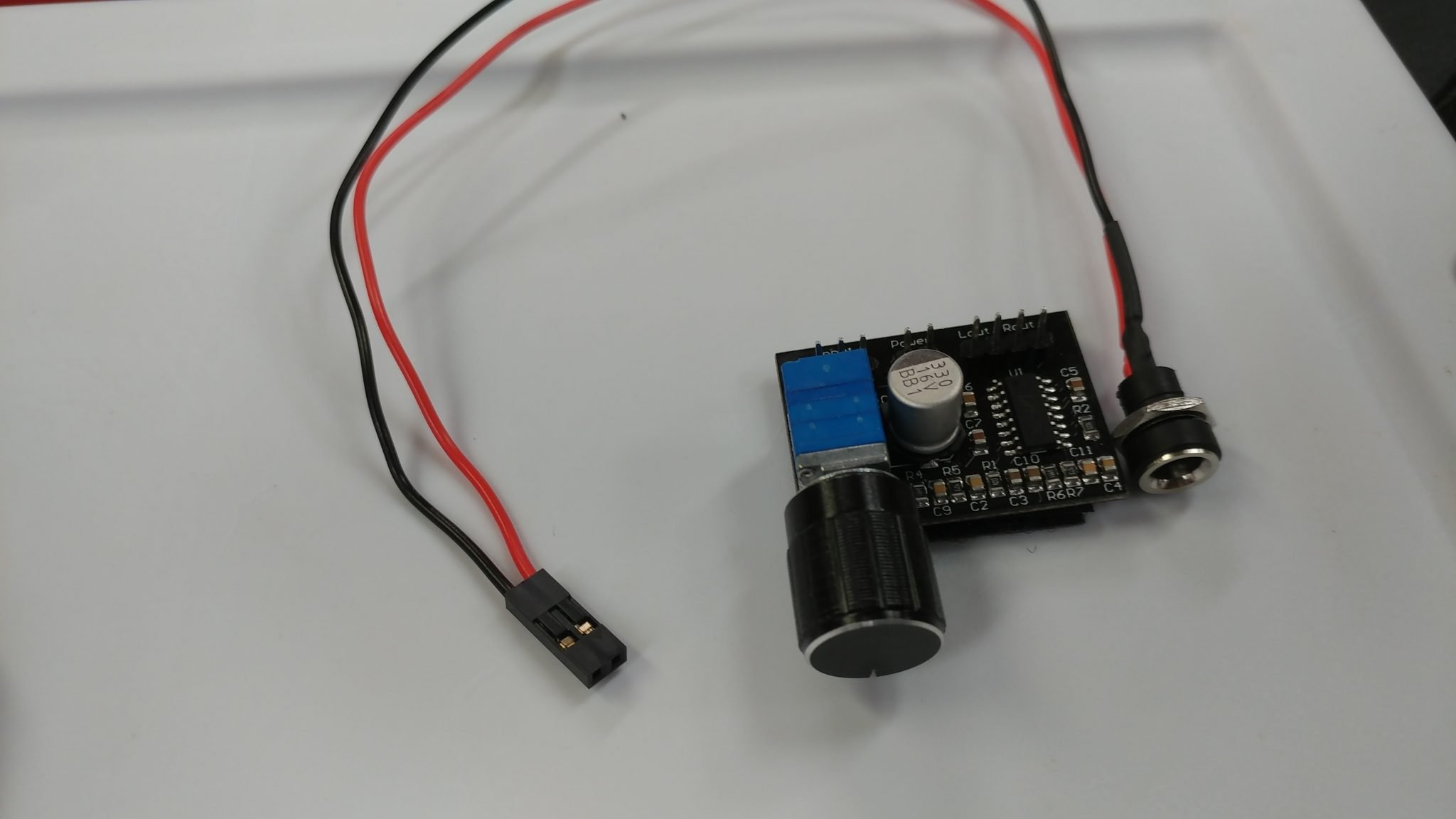
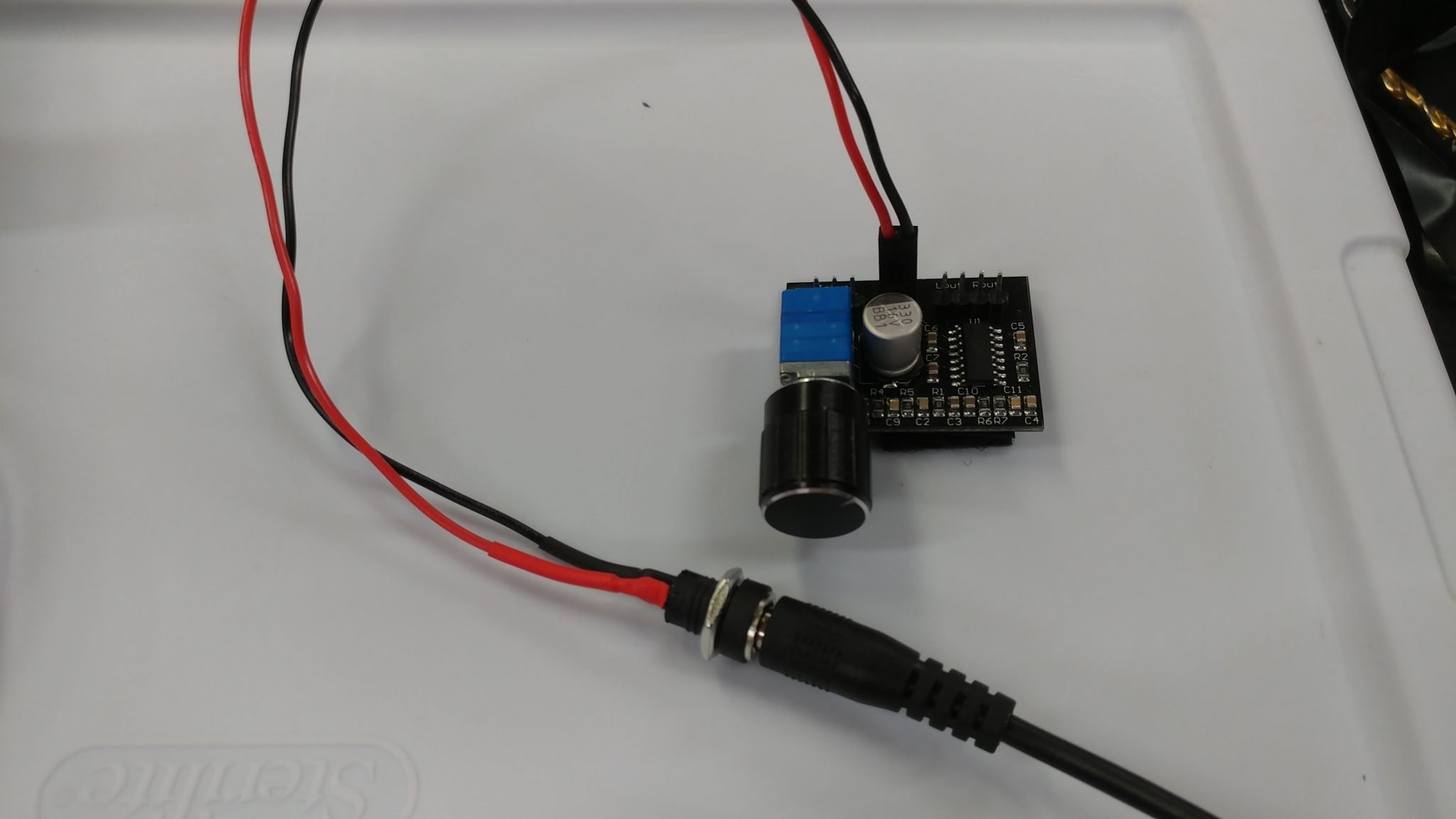
To connect the power jack to the input amp board, I need to add a 2-pin connector.


The power cable connects to the two pins on the board.  I plugged in the power adapter but there isn’t an indicator on the input amp so I don’t know yet if I wired everything up correctly.


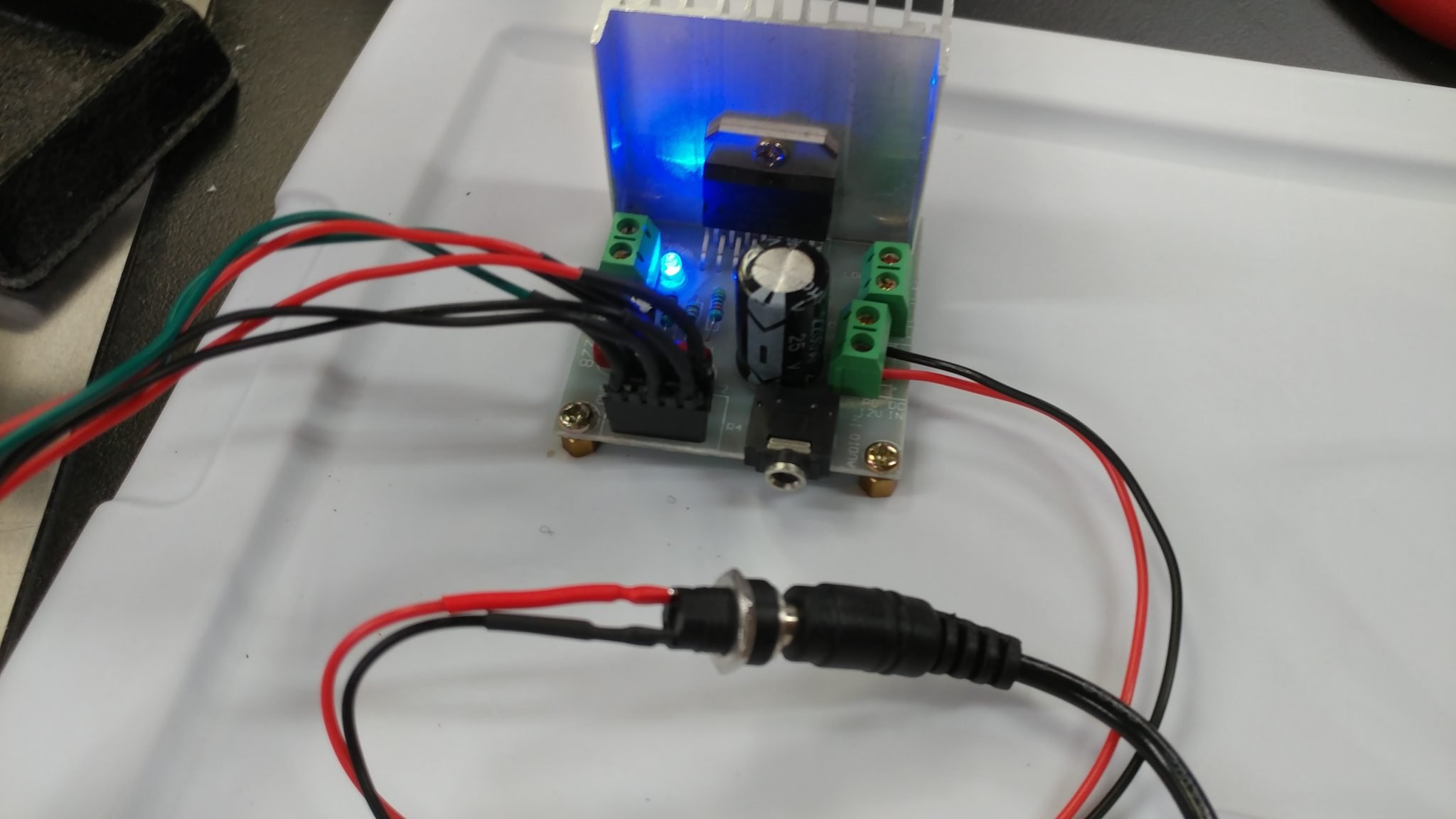
I plugged the power adapter in to the output amp and it all seems to be working.


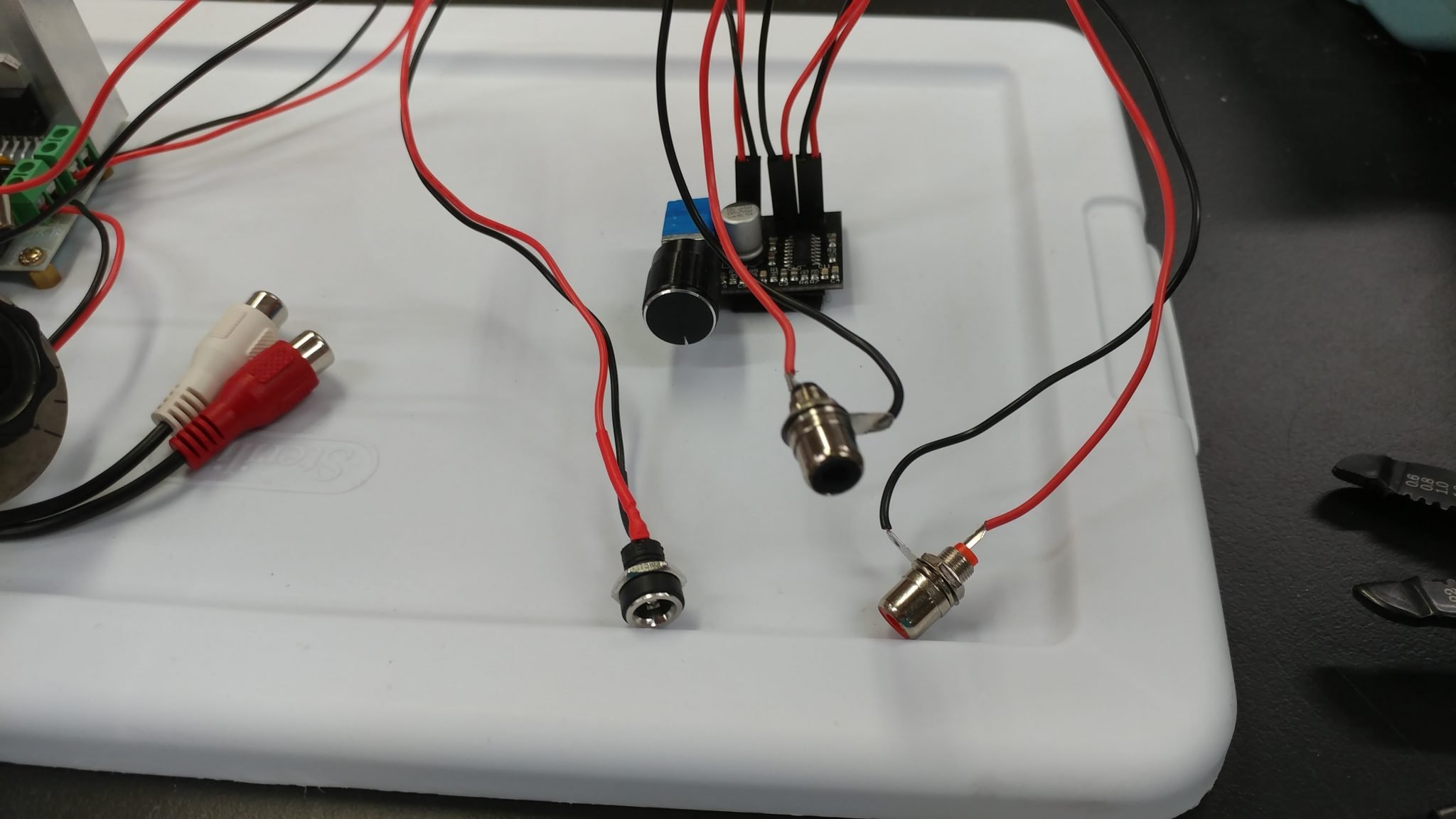
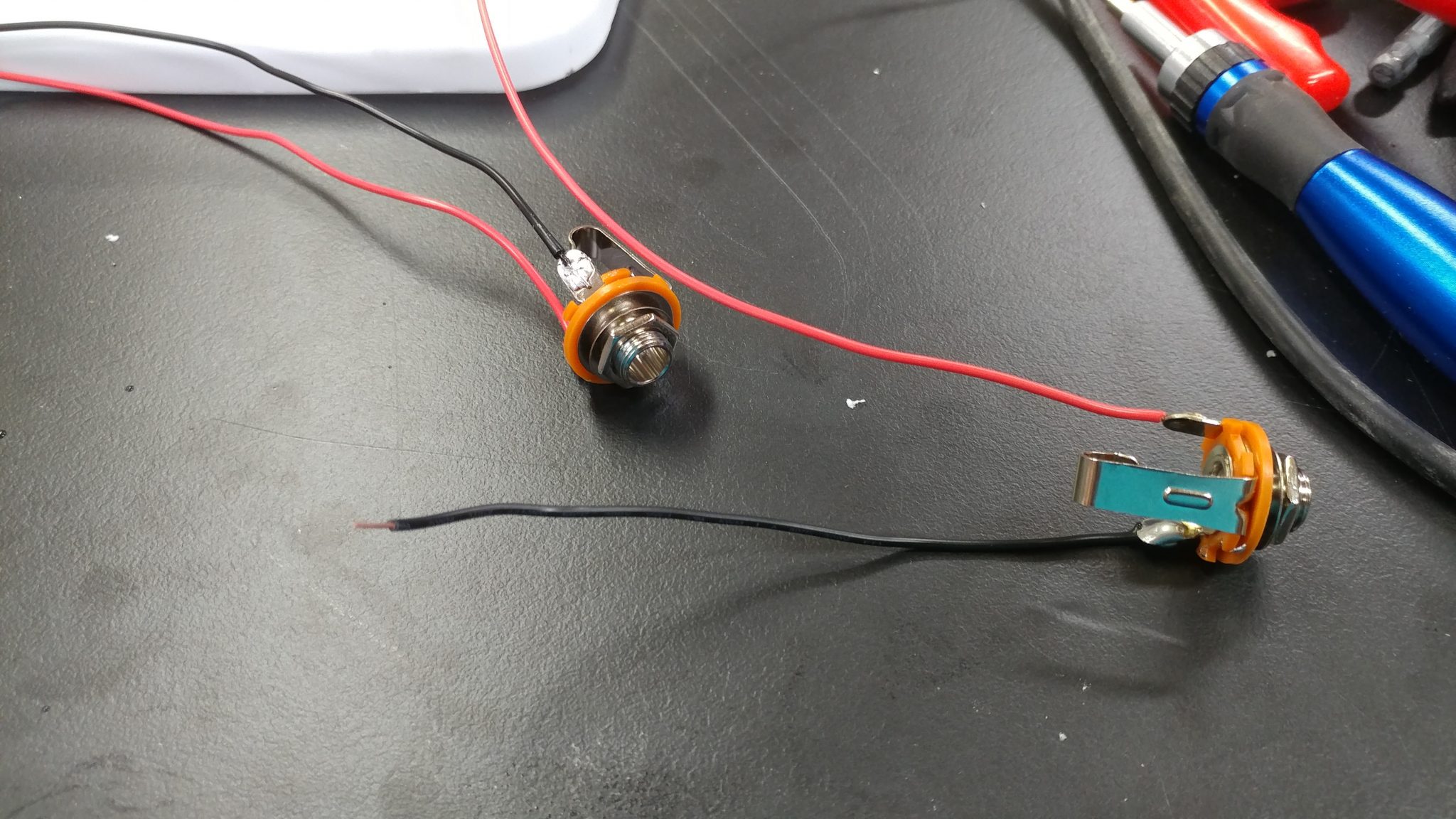
Now it’s time to get some signals into and out of the prototype.  I’m hooking up four 1/4″ TS jacks, two for input and two for output.


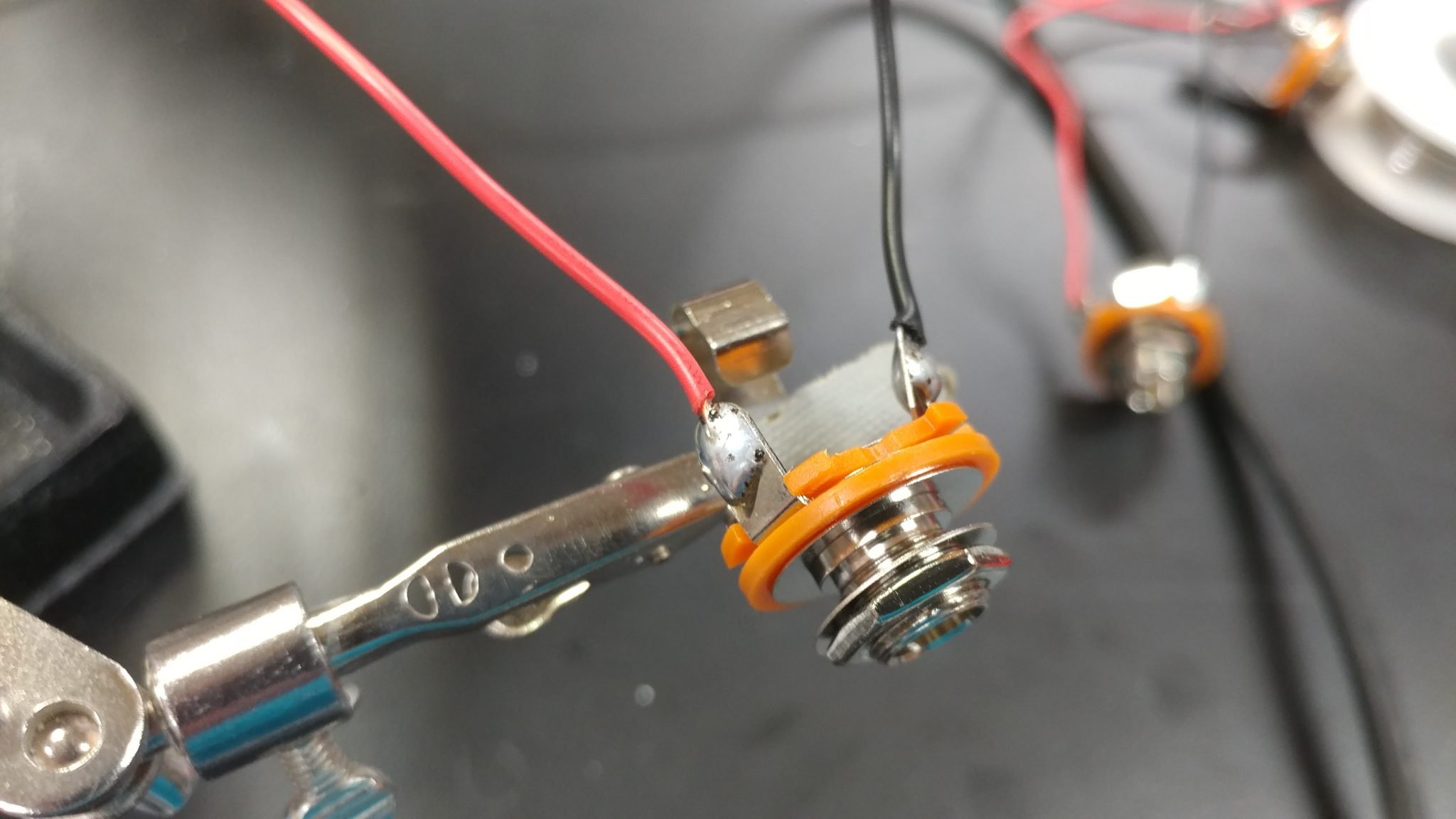
I tinned the tabs on the 1/4″ jacks then attached both wires.


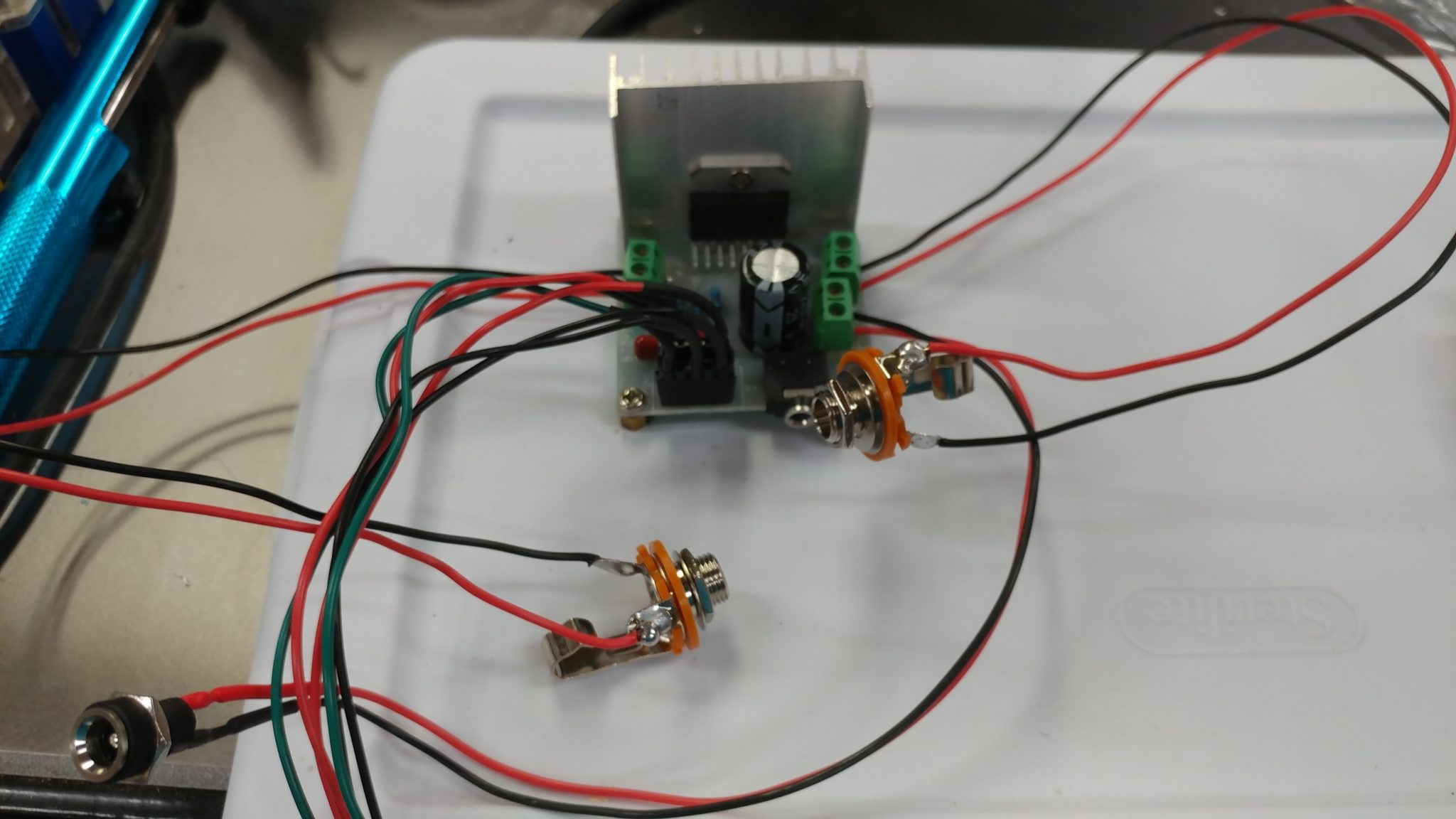
They each connect easily to the output amp.


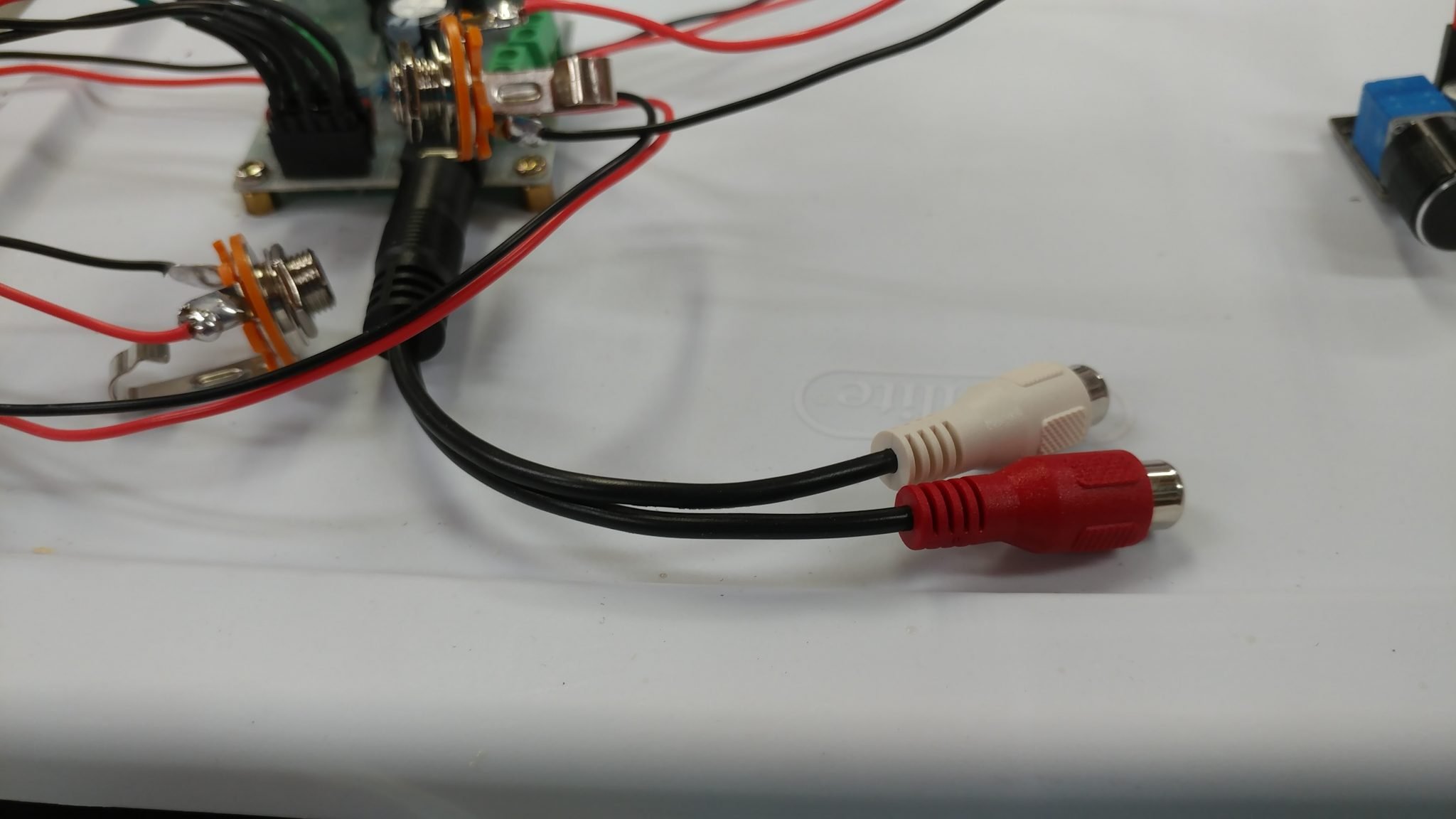
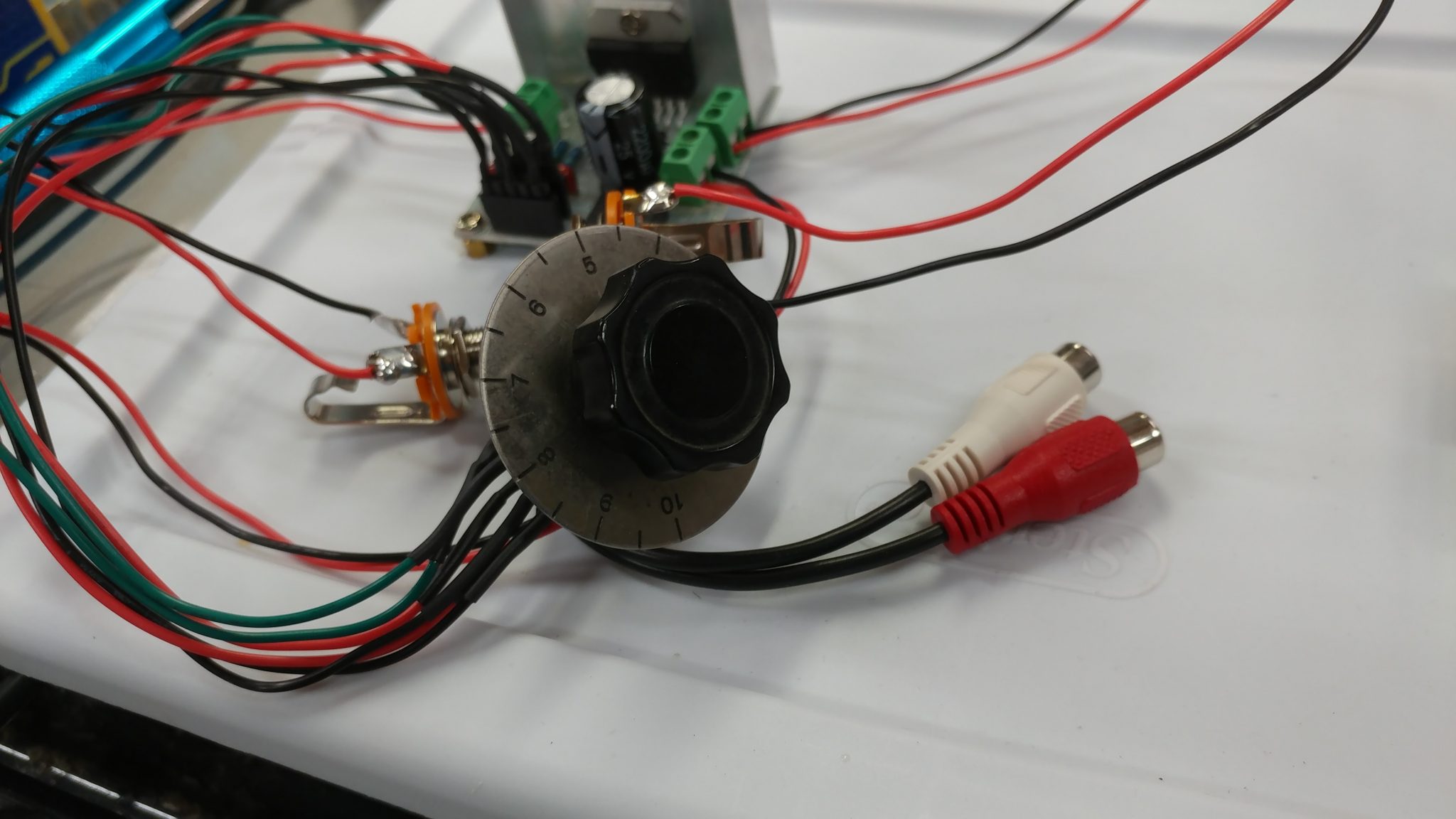
To get the signal into the output amp, I am using an RCA to 1/8″ stereo adapter plugged into the input jack on the board.


I also found an older knob that I attached to the potentiometer which I thought looked a little better than the one I was using.


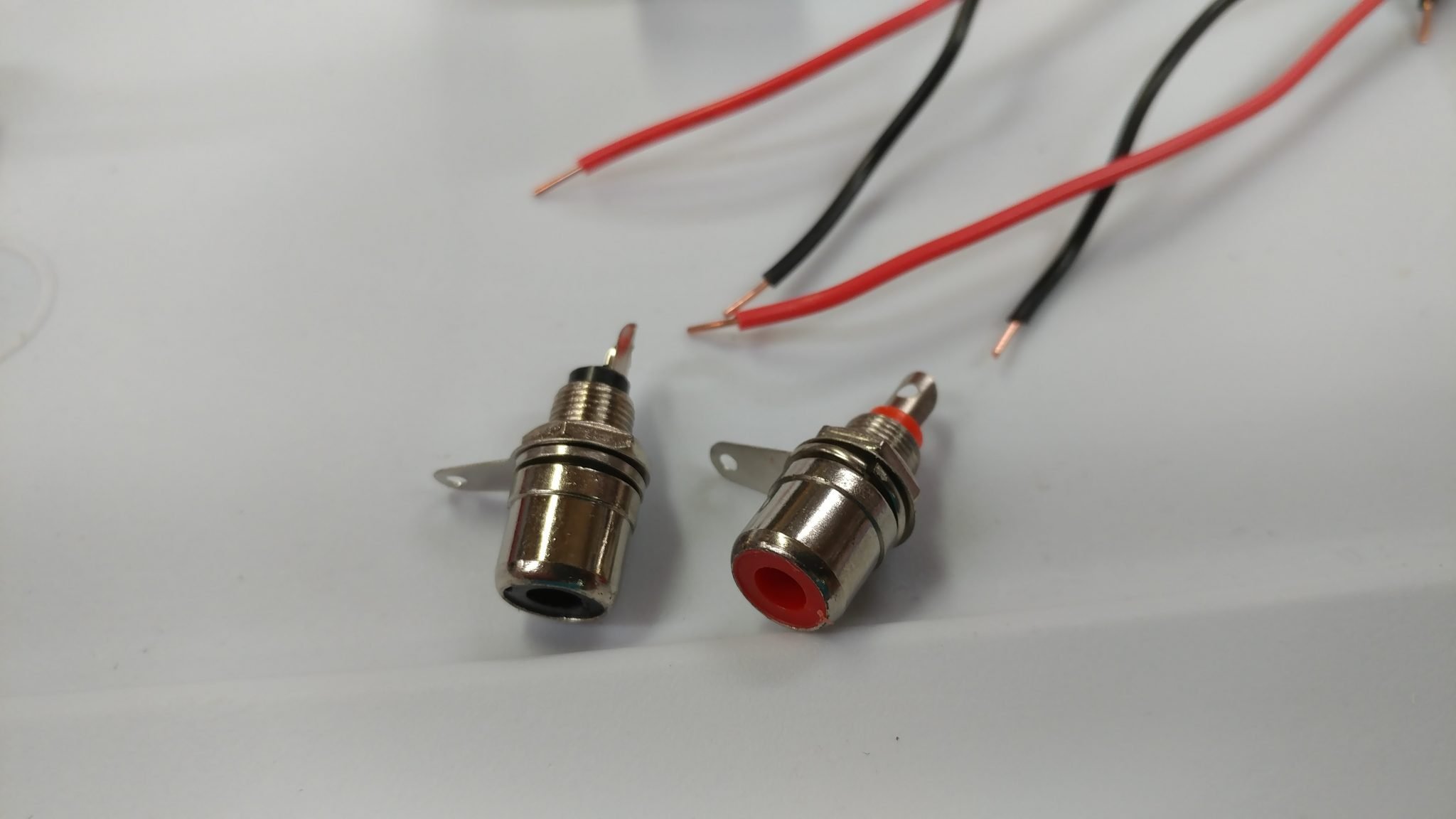
The signal both going out of the input amp and into the output amp will require RCA jacks.  I have a pair for each board.


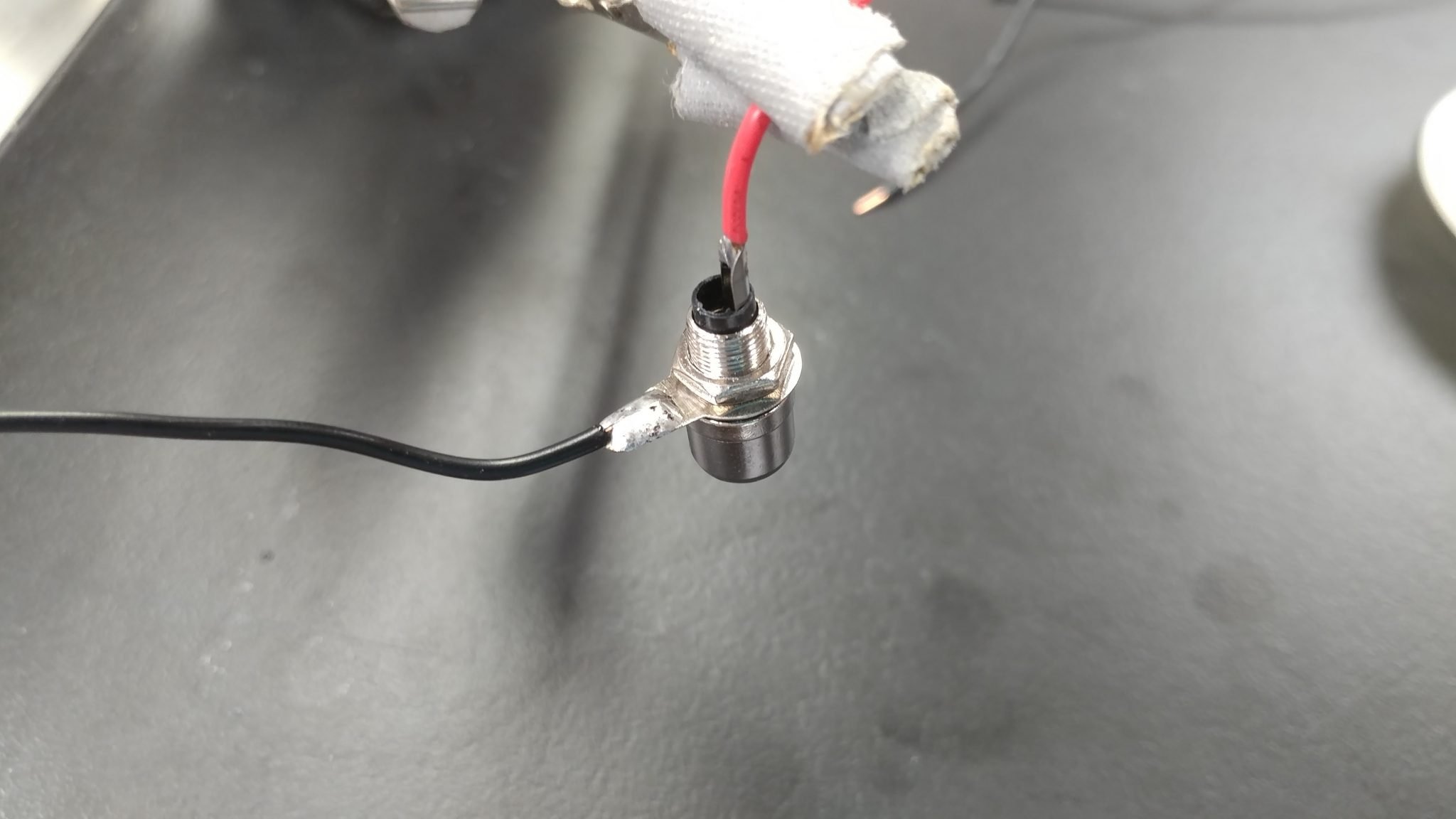
I soldered the wires to the tabs on each jack.


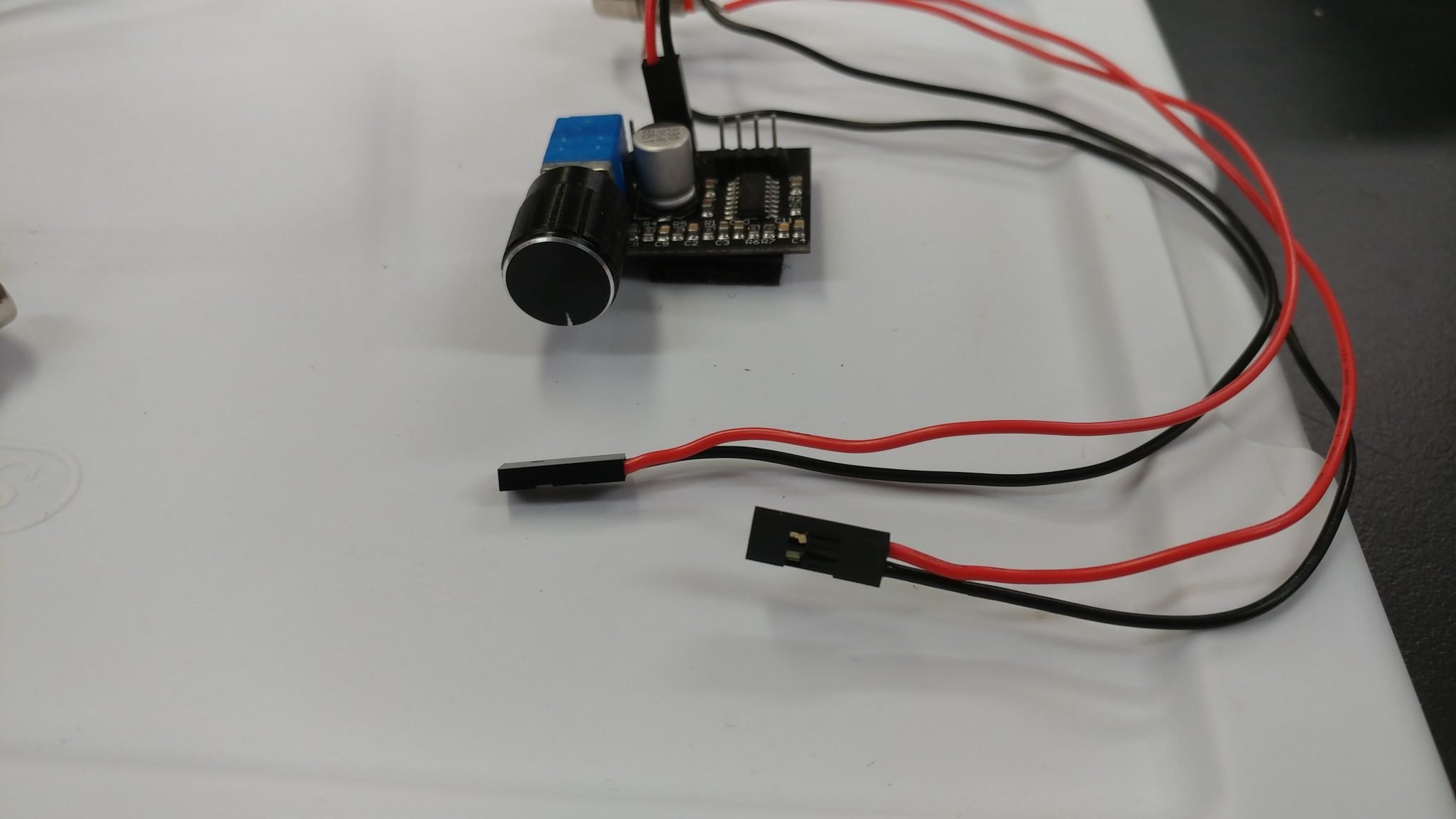
I made four of these, with two of them having plugs for connecting to the header pins on the input amp.


The input amp now has power and a way to send a signal out to the reverb tanks.  Now I need to get a signal into it.


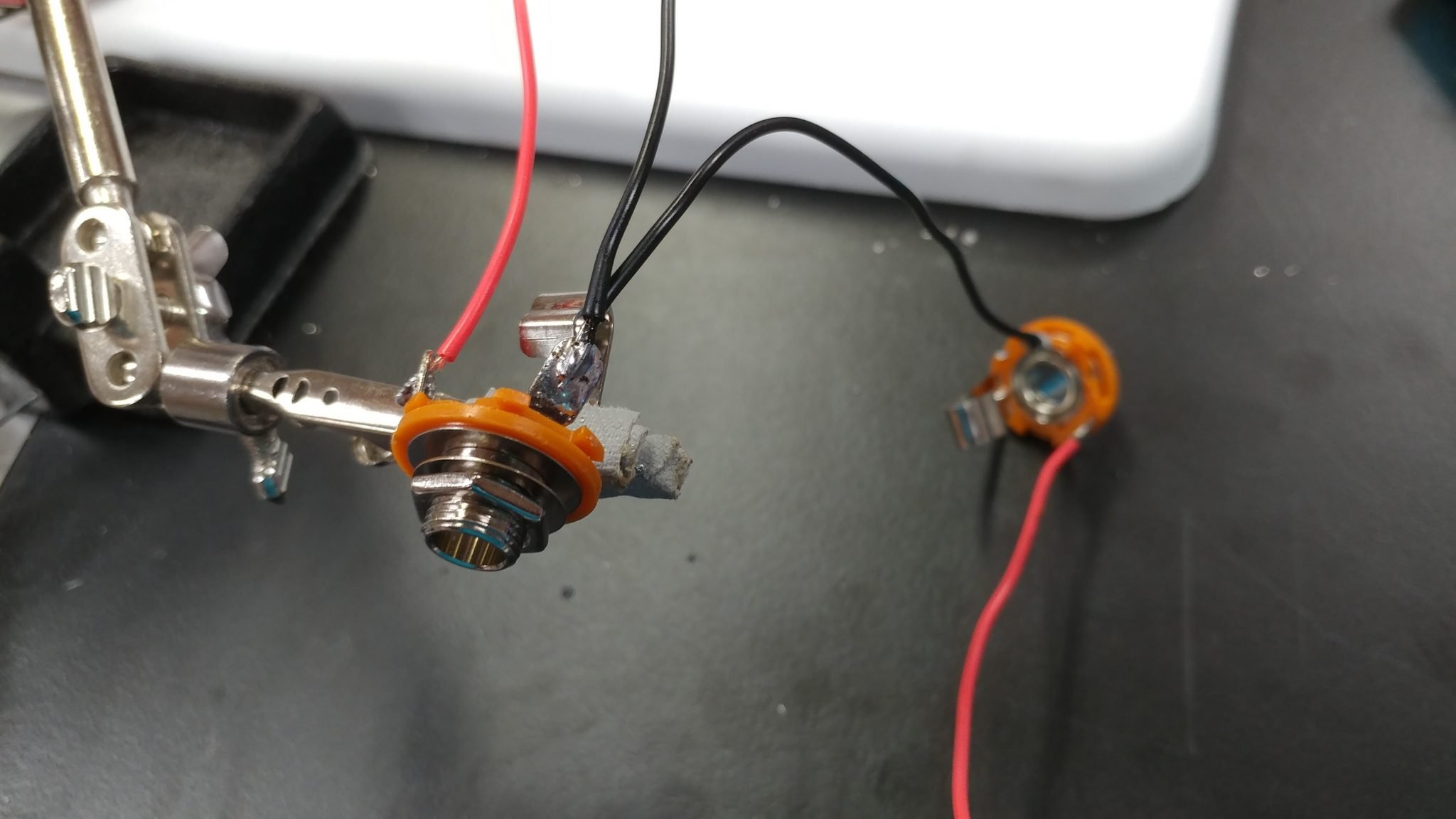
The input amp accepts a stereo signal but both channels share a common ground so I shortened the ground wire on one of the 1/4″ TS jacks so I could attach it to the ground tab on the other jack…


…which I did.


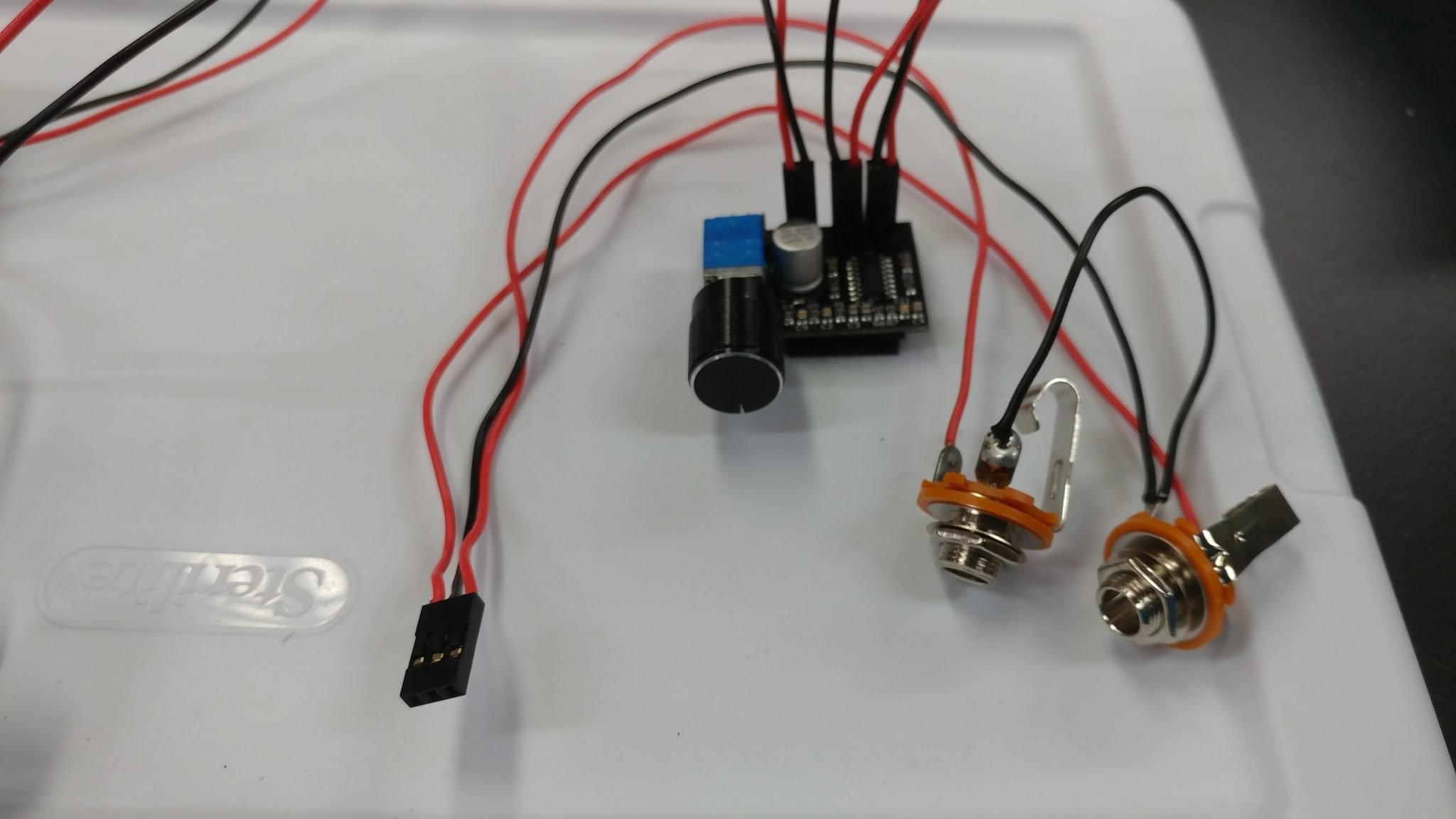
I then attached a three-hole plug to attach the input connectors to the input amp.


The input amp is now all wired up.


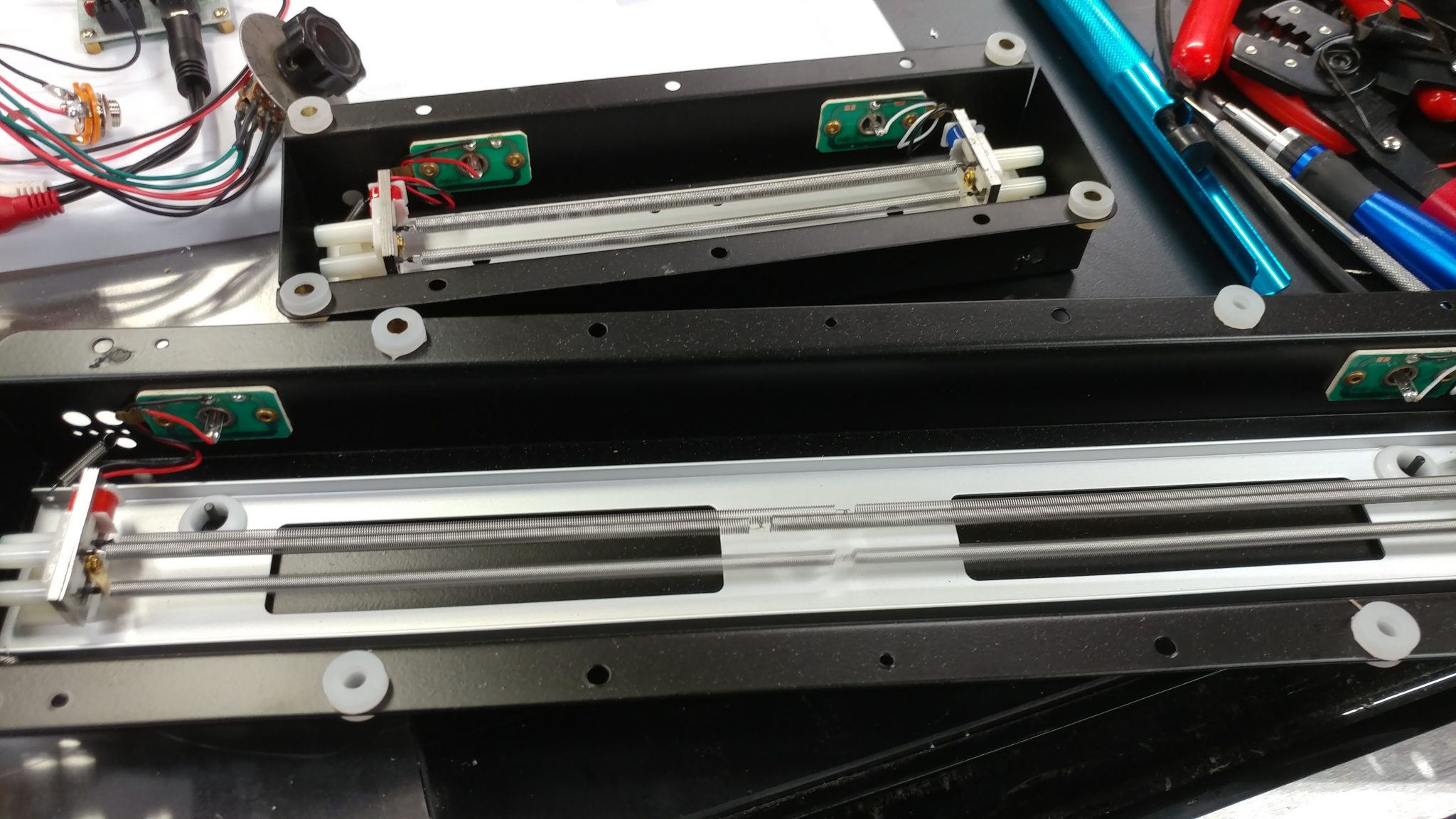
I am using two different reverb tanks.  According to their spec sheets, the shorter one actually has a longer decay than the longer one.  They both take a single audio signal in through an RCA jack and spit it out the other end through another RCA jack.


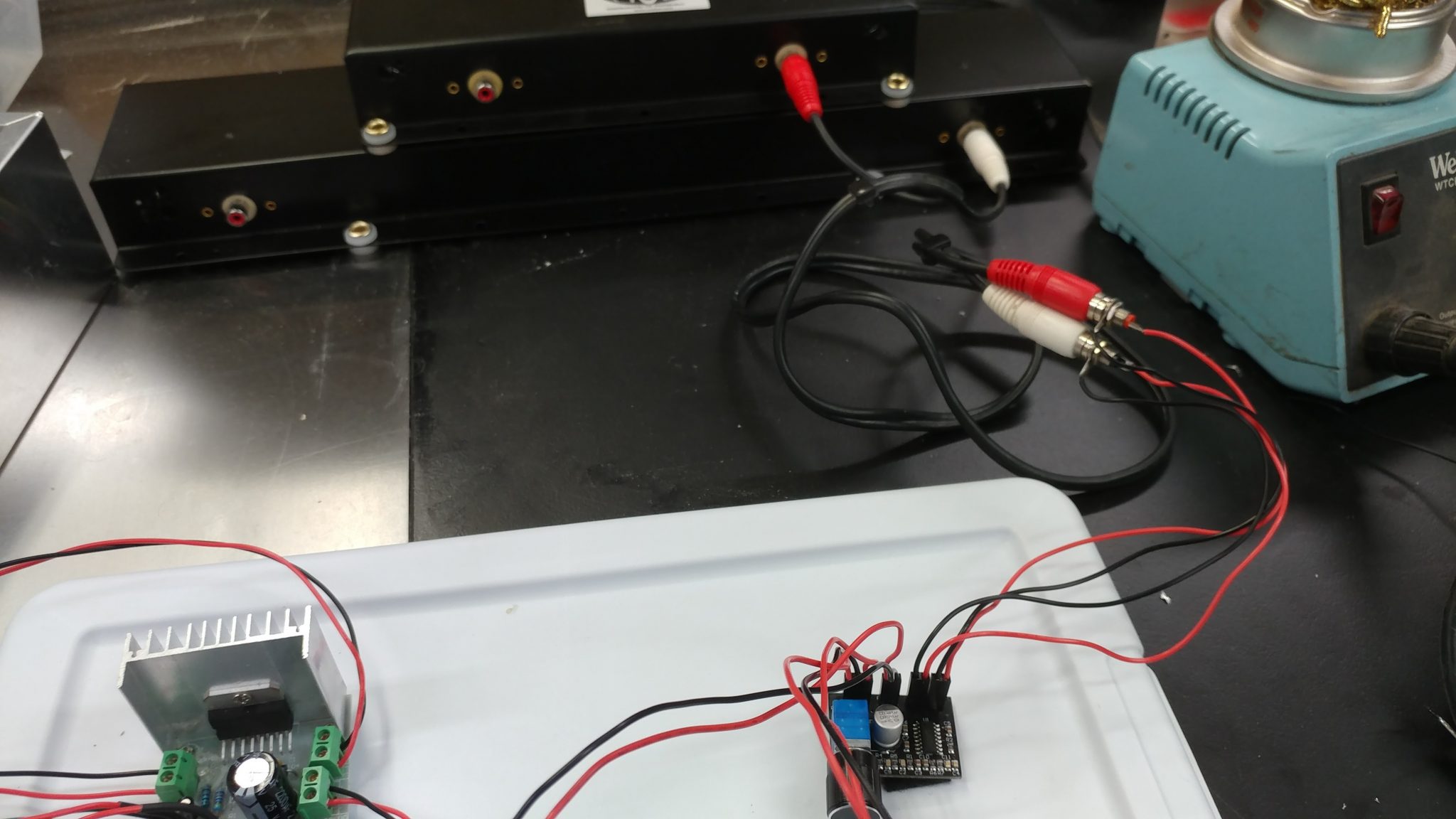
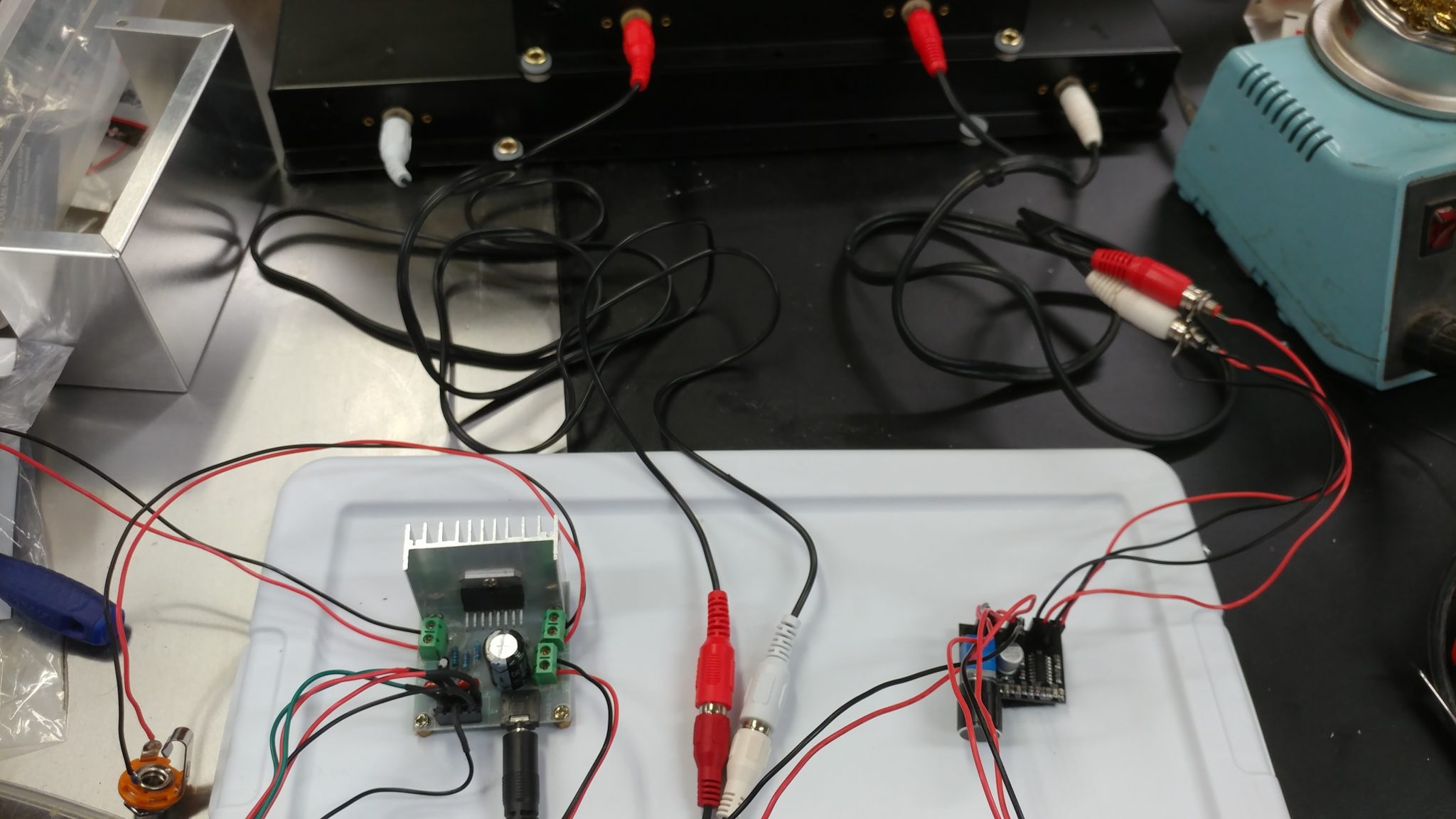
I used a standard stereo RCA cable to connect to the output jacks from the input amp.  I then connected each end to a separate reverb tank.


I then used another stereo RCA cable to connect the output from the reverb tanks to the input jacks of the output amp.


I then turned everything on and tested it out.


The good news is that it works and nothing exploded.  The bad news is that when I attached the wires from the output amp to the volume potentiometer, I basically made a little radio.  When the volume is maxed out, it has a pretty loud buzz.  As soon as I lower the volume, it starts to pick up radio stations.


I tried hooking up another identical amp but without the potentiometer removed and it sounds great.  I tried adding ferrites to the wires to see if that would help but it doesn’t.  I’m going to have to try something else.


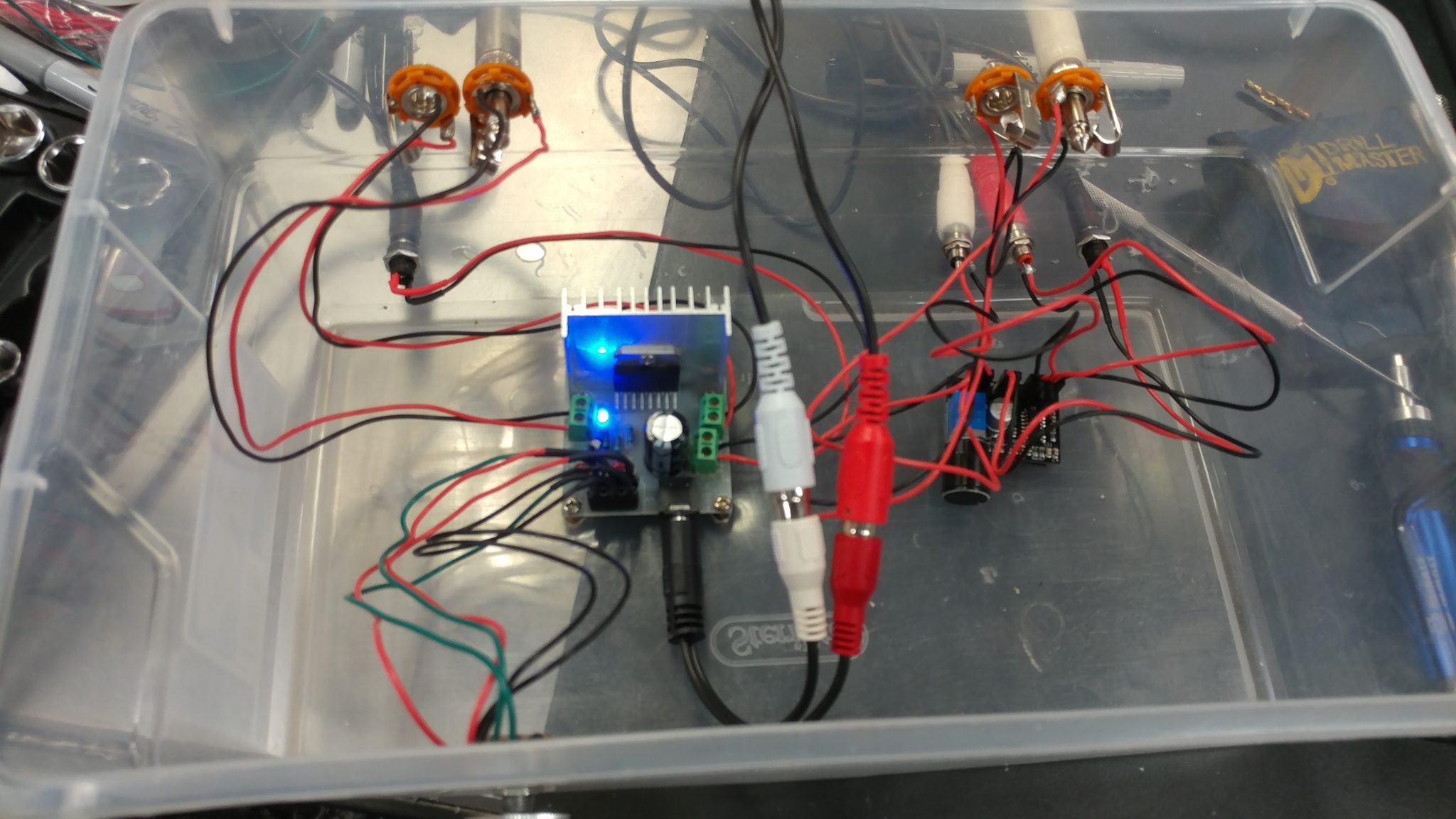
To make it easier to test with, I relocated everything to the inside of another storage bin.

Tool Maintenance – Protecting A Cast Iron Tabletop

Materials Needed

  1. WD-40
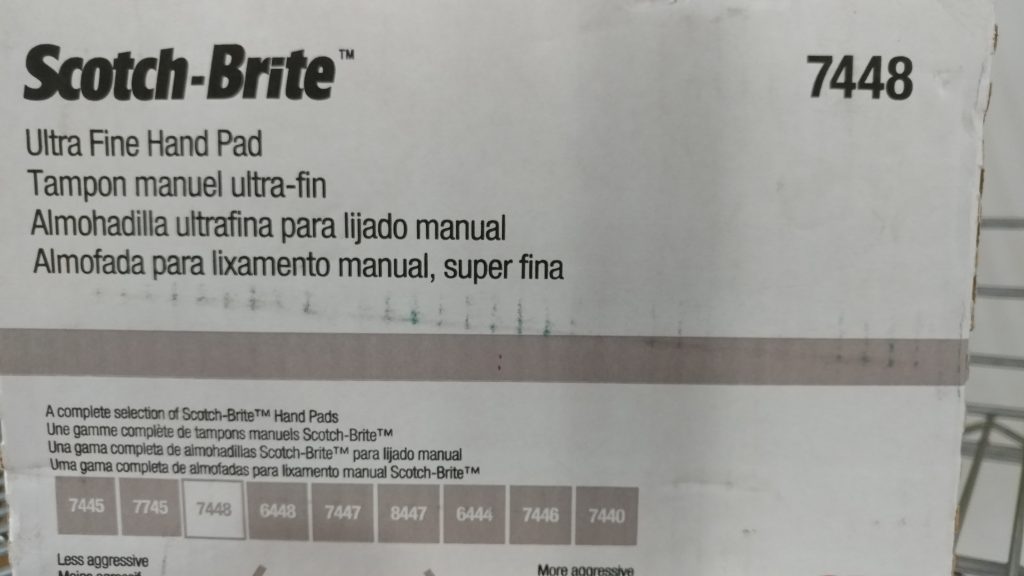
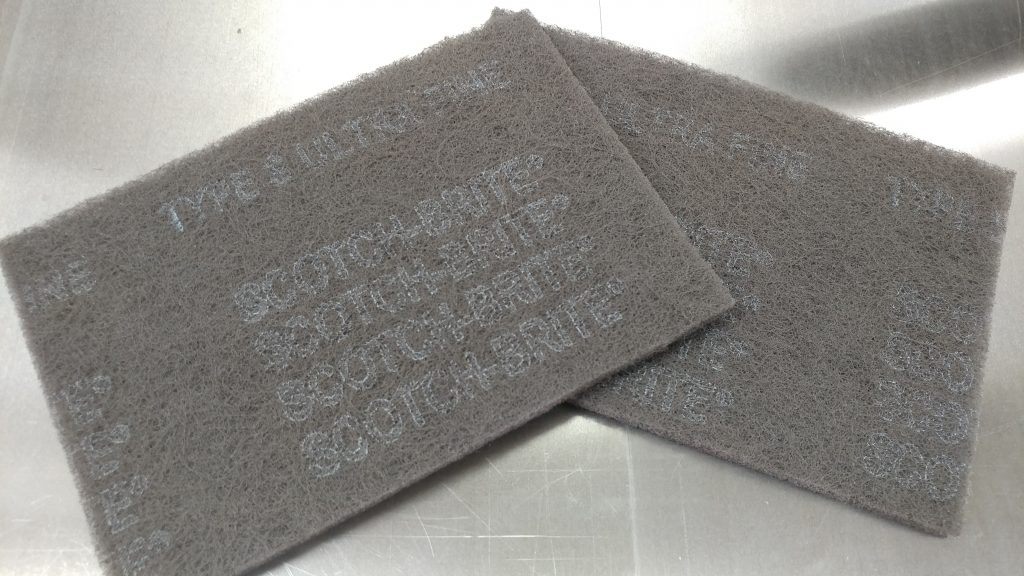
  2. Grey Scotch-Brite Pads (7448)
  3. Some sort of treatment such as…

Optional

  1. 0000 Steel Wool (instead of the Scotch-Brite pads)
  2. Denatured Alcohol
  3. Bag Of Rags
  4. Blue Painters Tape
  5. Blue Shop Towels
  6. Hand Pad Holder or Sanding Block

Setting Up

Cast iron gets rusty.  Period.  You can take steps to help prevent it but you’ll still have to deal with it eventually.

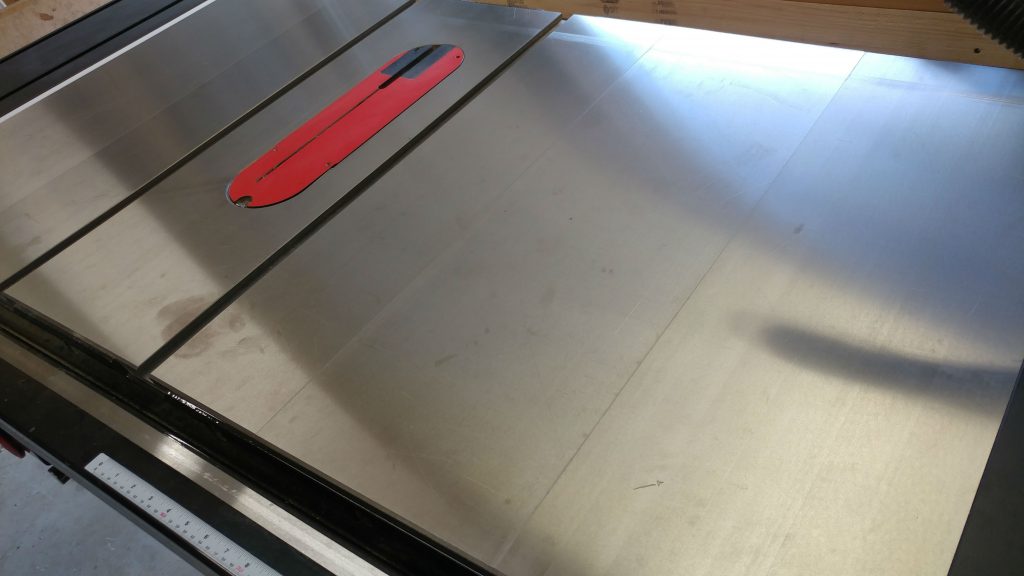
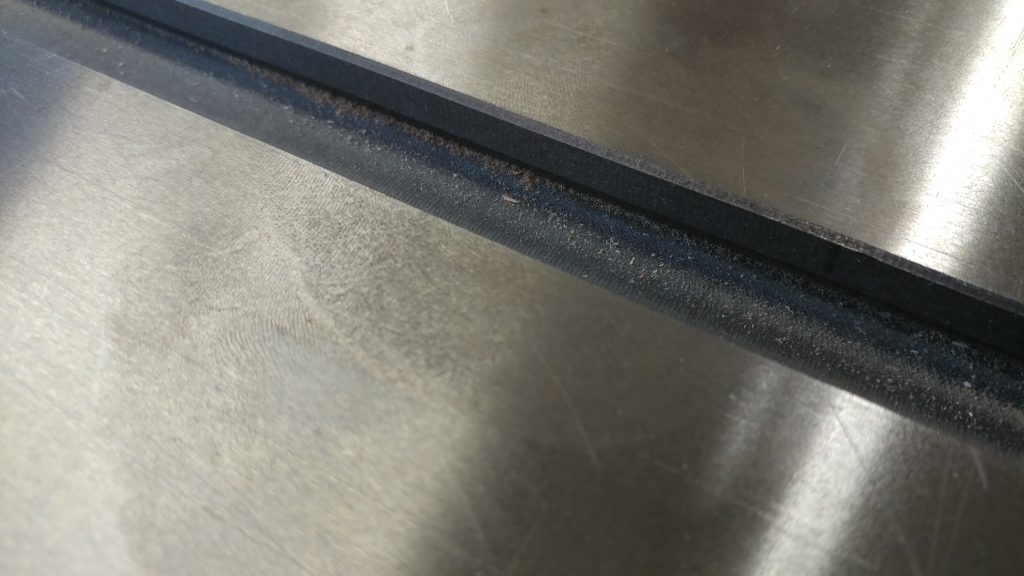
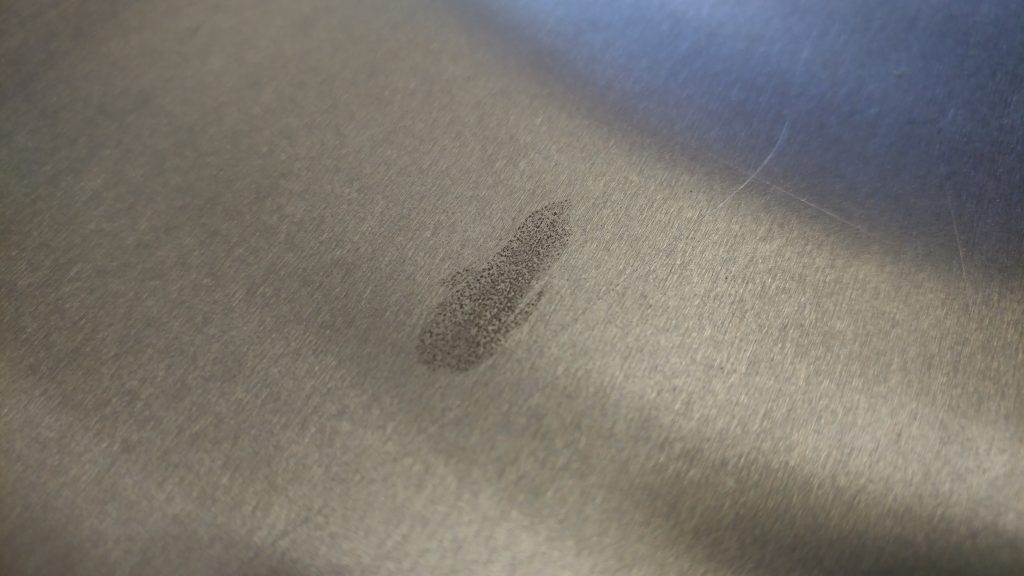
In my case, I have a SawStop Industrial Cabinet Saw with an additional 10″ cast iron wing that has some rust forming on it.  It’s not too bad but I should definitely do something about it.  You can see a big greasy hand print right on my right miter slot.  (How that happened is a long story but rest assured, our lights work now.)

A close-up of the hand print shows that it isn’t pitting yet so it should mostly come off.

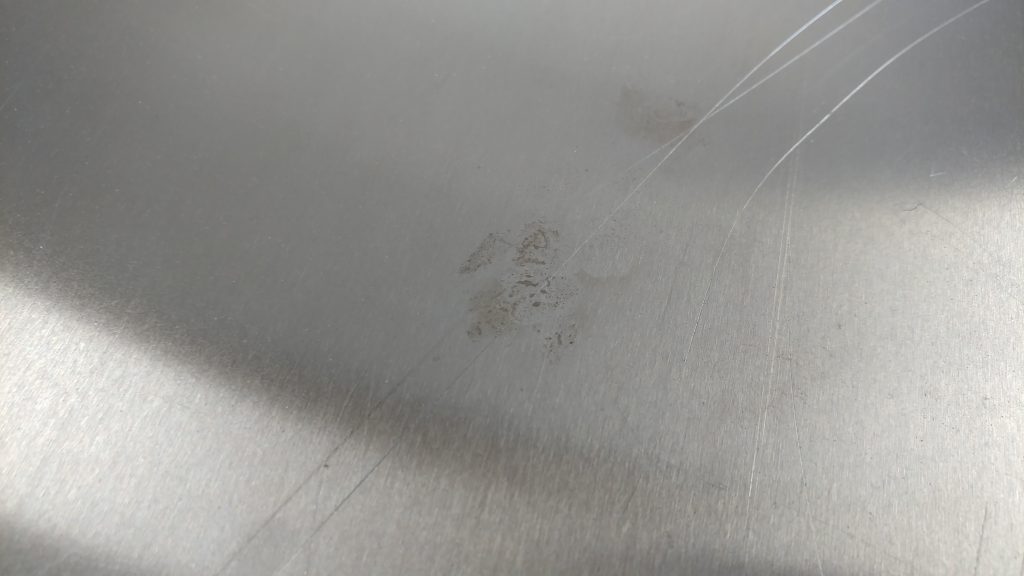
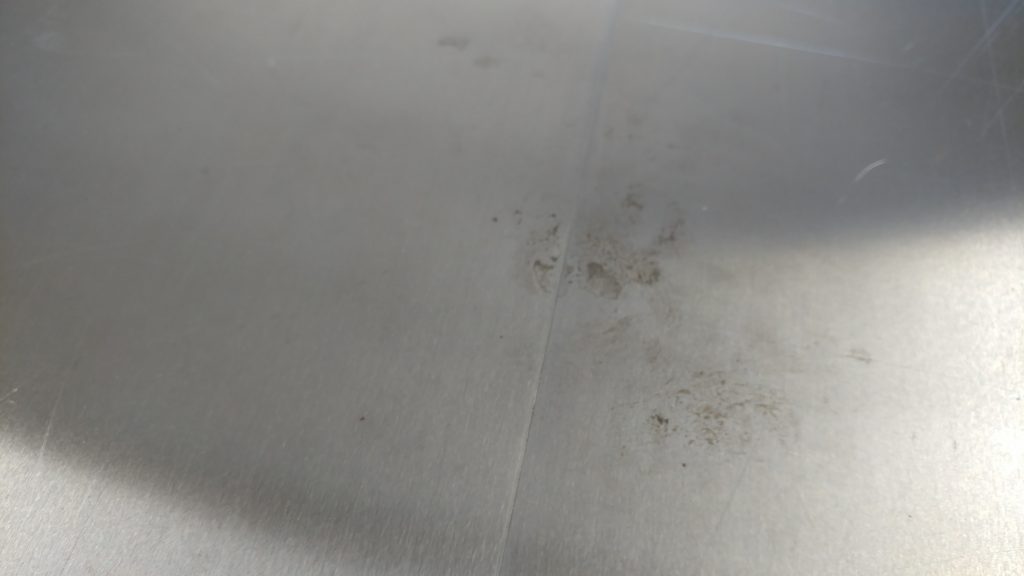
The paw prints are a bit more severe.  I don’t see any pitting but I won’t know for sure until I scrub it away.

Here are a few more paw prints.

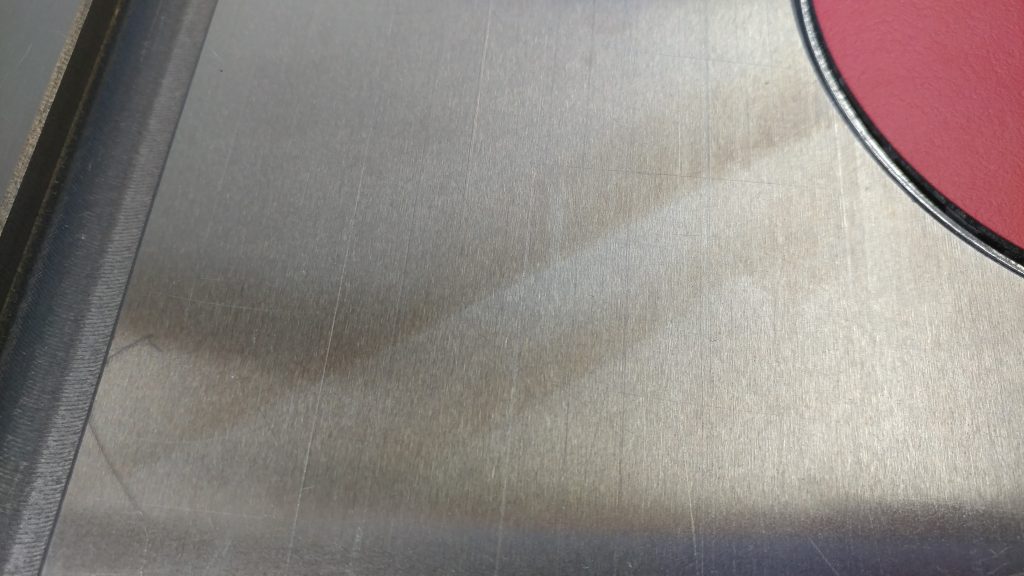
I don’t know exactly what caused these rust bands but I am assuming that this is from moisture being locked under boards that sat on the table top for a day or two.  This is why you shouldn’t leave wood sitting on cast iron overnight, especially during the summer.

Another mysterious rust spot.  It isn’t too bad so it should mostly come off.

Removing The Rust

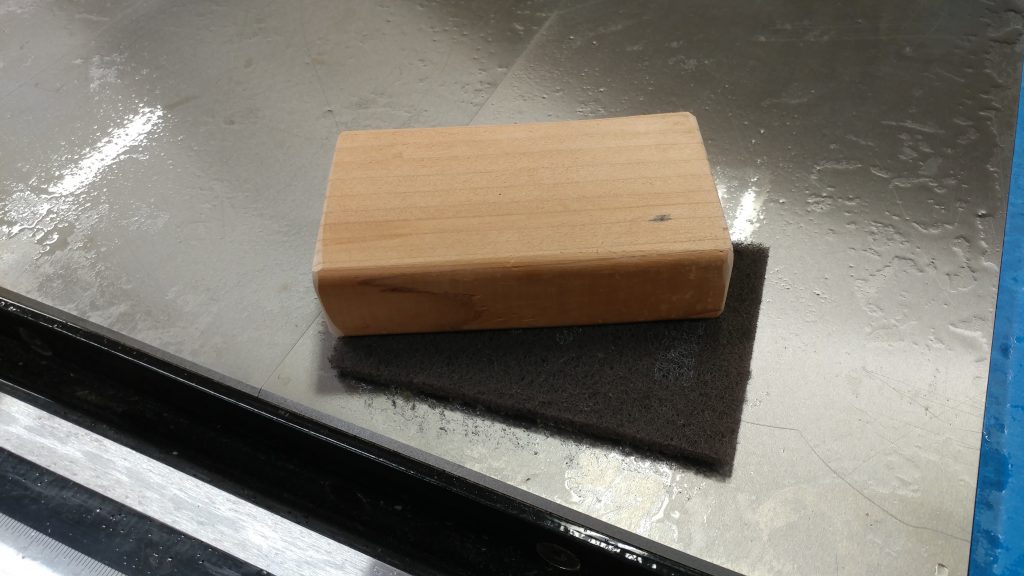
Some people prefer to use 0000 steel wool to remove rust, and it will do a pretty good job.  Personally, I prefer to use Scotch-Brite 7448 pads.  These are the grey pads, not the green ones you use in your kitchen.  They are the same grit as 0000 Steel Wool but you can use a sanding block to apply even pressure over the entire pad.  This is a lot harder to do with steel wool.

The grey Scotch-Brite pads are pretty big so I prefer to cut them in half.  A box of these will last a long time and can be used on pretty much any tool with a cast-iron top.  I also use them for woodturning in place of steel wool.

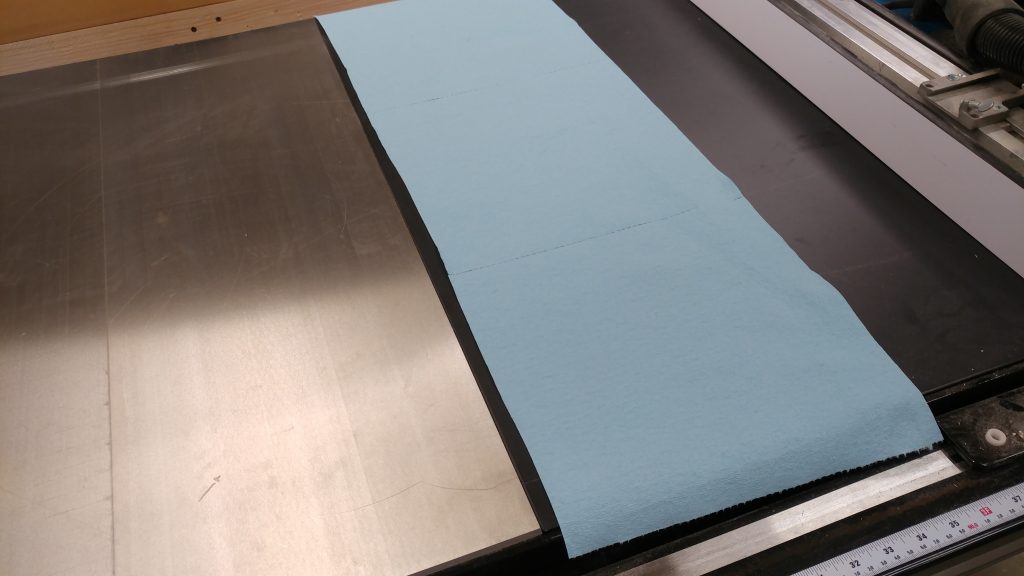
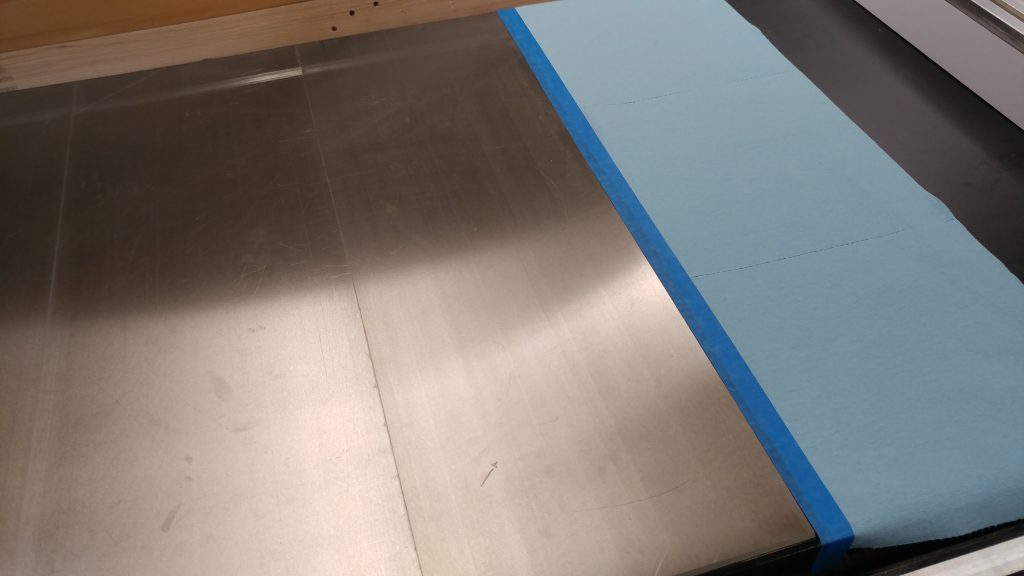
I’m going to be applying WD-40 and it tends to splatter.  I’m not a big fan of getting that gunk off of my wooden extension table so I am going to tape it off to protect it.  I start by laying down some blue shop towels along the edge of the extension table.

I then use some blue painters tape to mark off the end of the extension table and secure the shop towels down.  This should help protect it during the next step.

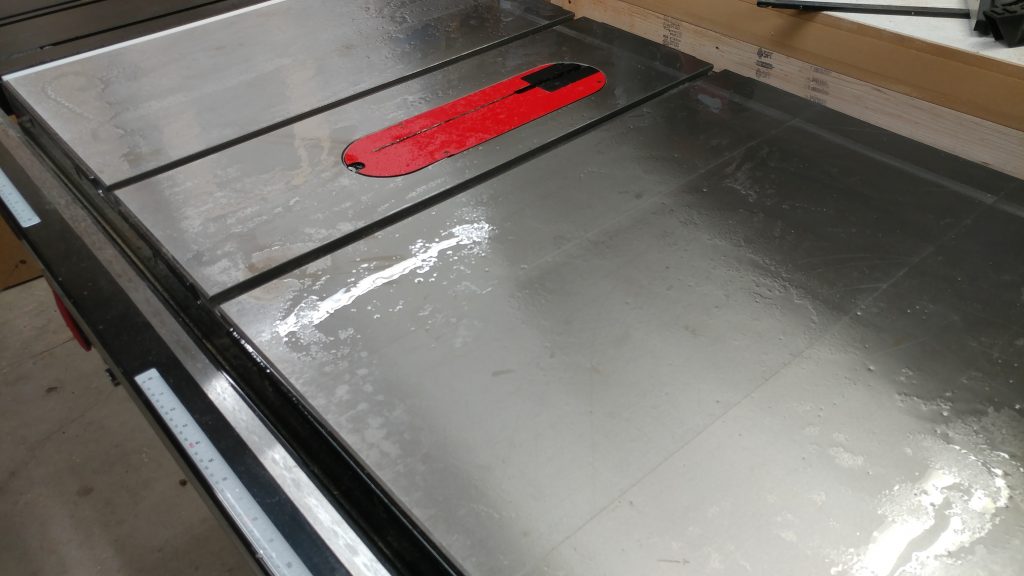
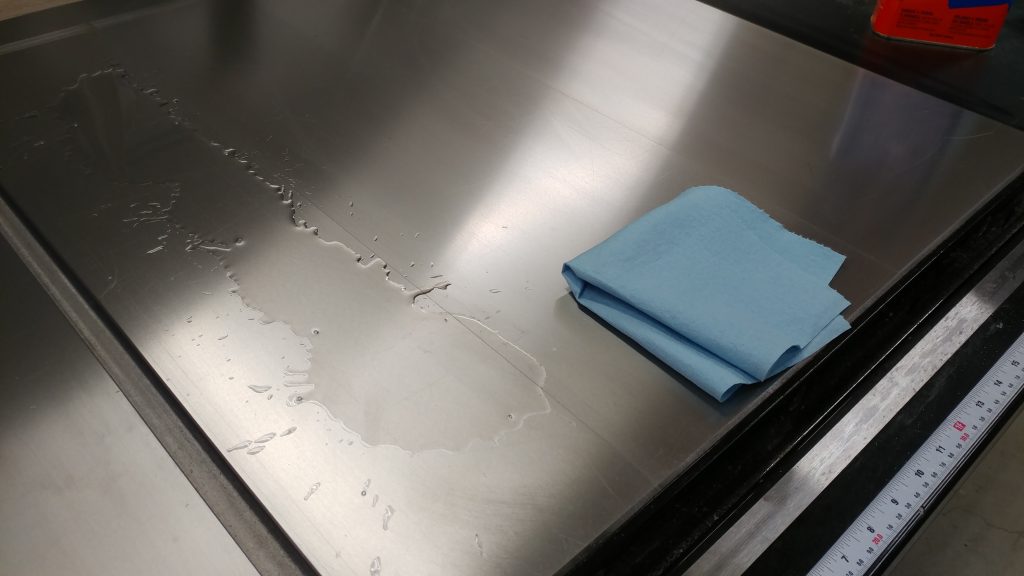
Next, I apply a generous coating of WD-40 to the entire table top.  You want to let it sit for a while so it can penetrate the iron and start to break apart the rust and even some of the slight discoloration that cast iron can sometimes get.  I will typically let it sit for at least 15 minutes but in this case I let it sit for about an hour and a half.

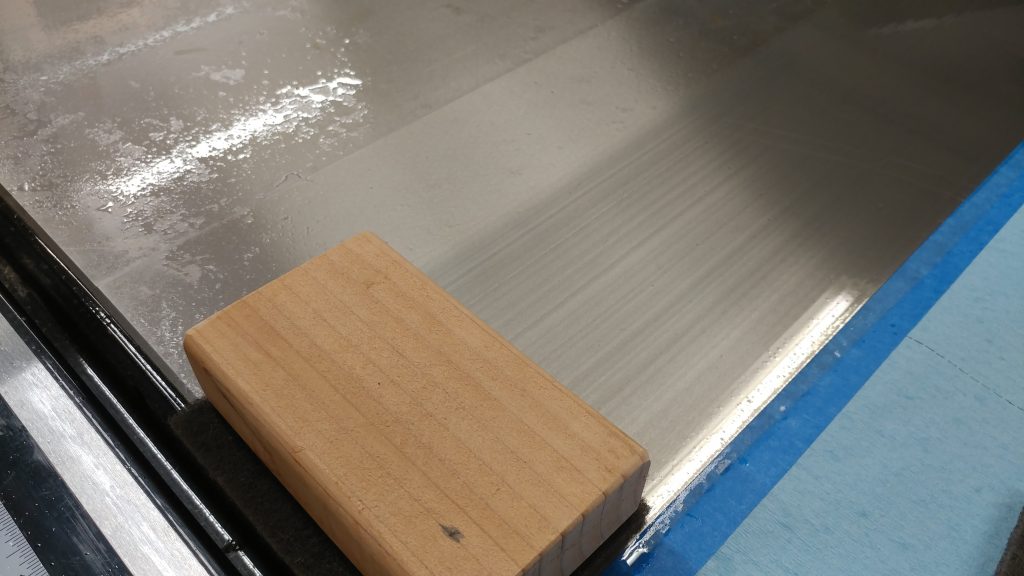
After it has sat like this for a while, I take my grey Scotch-Brite pad and a hand pad holder, or in my case I just use a scrap block of 2 X 4 and start scrubbing.

You should scrub in a front-to-back-to-front motion.  Try not to focus on one little spot since that will lead to an inconsistent shiny spot.  Instead, use some elbow grease and cover the entire depth of the cast iron.

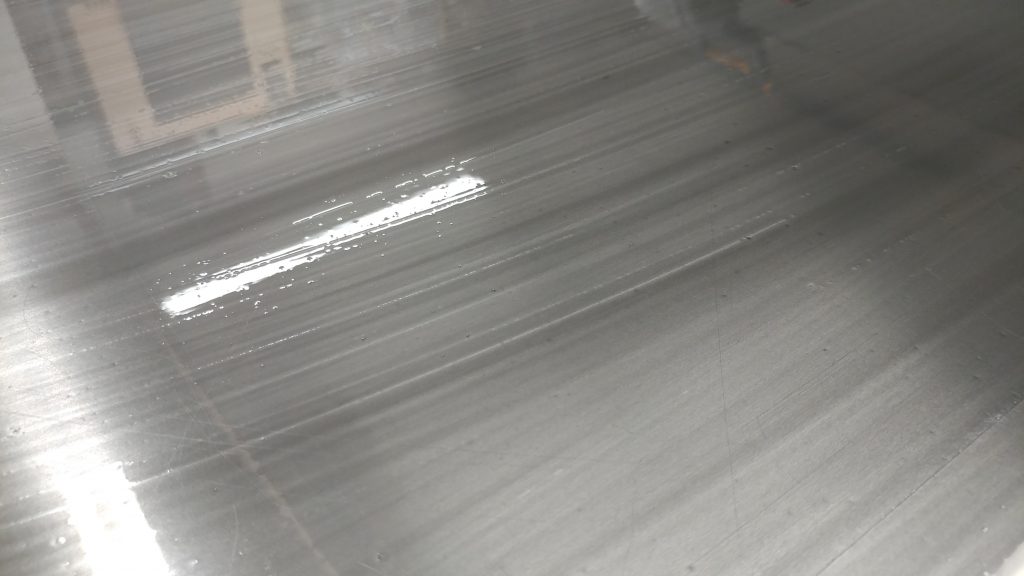
I like to scrub until I at least get a dark slurry started.  It will typically require more scrubbing if your table top is as rusty as mine was.

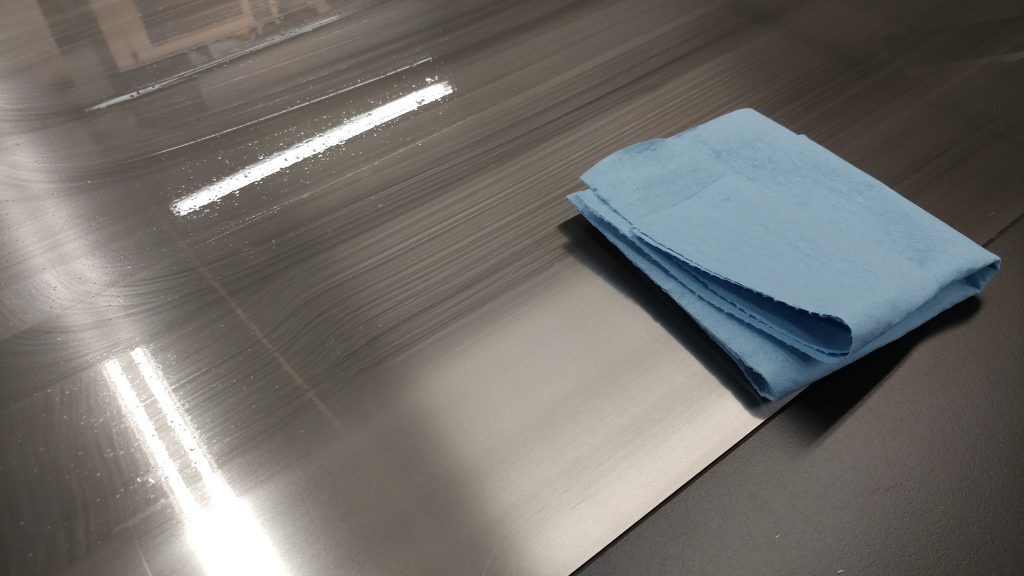
After tackling the entire table top, I do the bulk of the clean-up with blue shop towels.  The table top should look a lot better at this point.

If rust sits for a while it can permanently discolor the cast iron.  You can see this here.  The rust is gone but the iron is stained.  Personally, I’m cool with this.  It doesn’t affect the usability of the saw.
The hand print is mostly gone.  I can still see a slight shadow but you have to know it’s there in order to see it.

Surprisingly, the paw prints are completely gone.  I thought these were going to be there forever.

Technically, you can stop here.  I find that no matter how much I scrub with shop towels I can never quite get all the WD-40 up.  This leaves a slightly greasy feeling to the table top which can transfer to the material you are cutting.  I find that the best way to clean this up is with denatured alcohol.

I start by pouring some denatured alcohol on the table top.  This picture may be cringe-worthy but worry not.  This won’t cause your table to get rusty at all.  Then, use a shop towel to wipe it all up.  This should get the rest of the WD-40 off the cast iron.

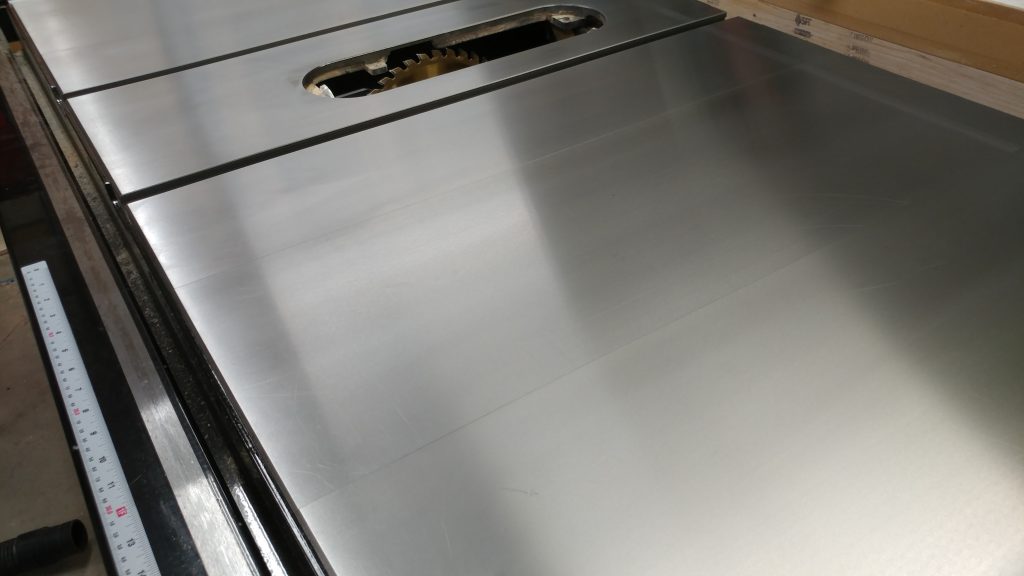
The cast iron is now completely exposed and needs to be protected.

Protecting The Surface

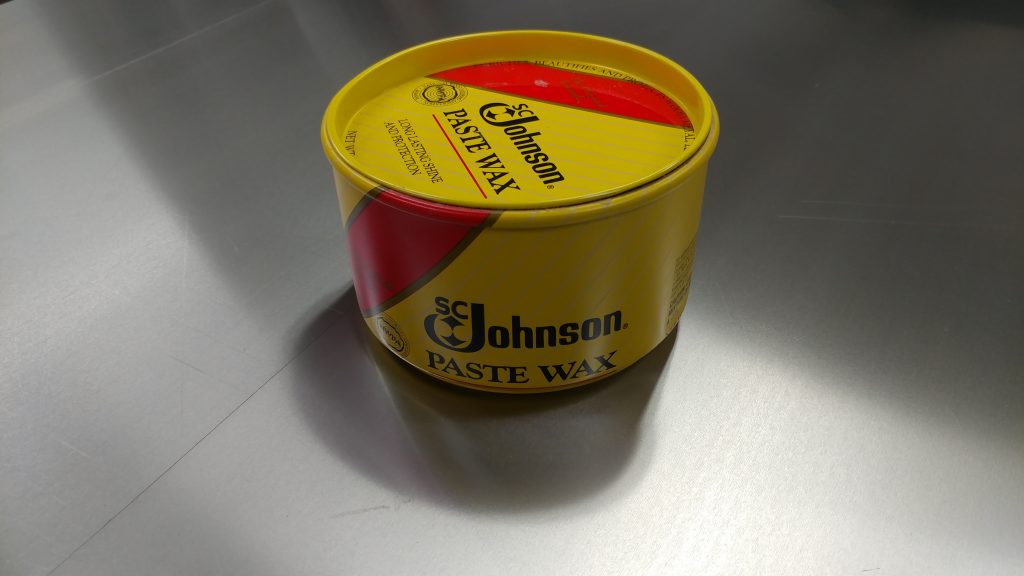
There are many ways to protect the surface of cast iron tools.  I’ve had good experiences with T-9 BoeShield or GlideCote, but I personally prefer using a furniture wax like Johnson Paste Wax, although MinWax and Renaissance Wax will work as well.  I like Johnson Paste Wax since it is softer, which means it applies easier and also buffs out a LOT easier than either MinWax or Renaissance.

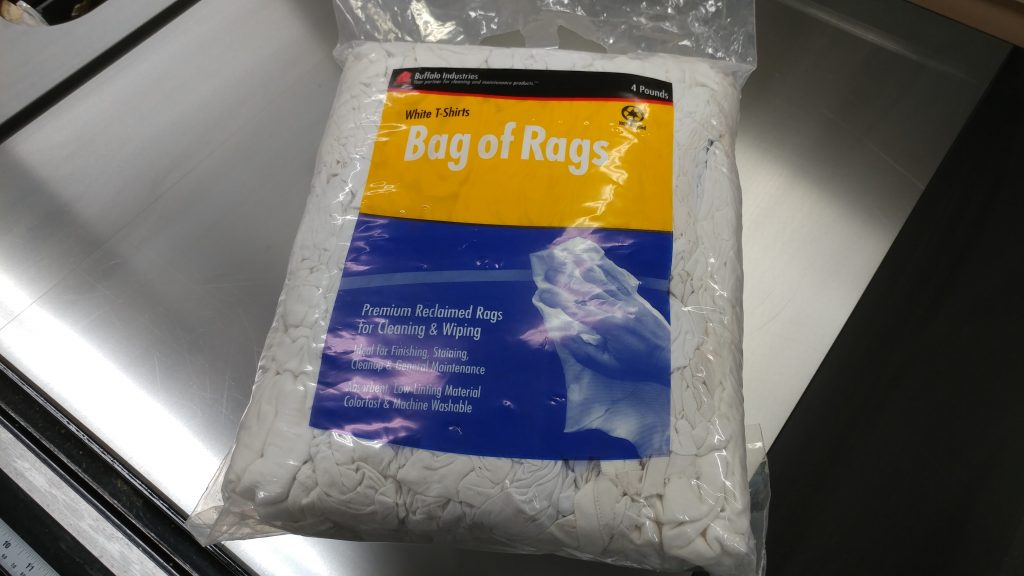
You can use shop towels to apply the wax but you’ll have better luck with a cloth rag.  I try to always keep a Bag of Rags on hand.  These are just scraps of white tee shirts so if you have any shirts you’re just going to throw out you can use them for this instead.

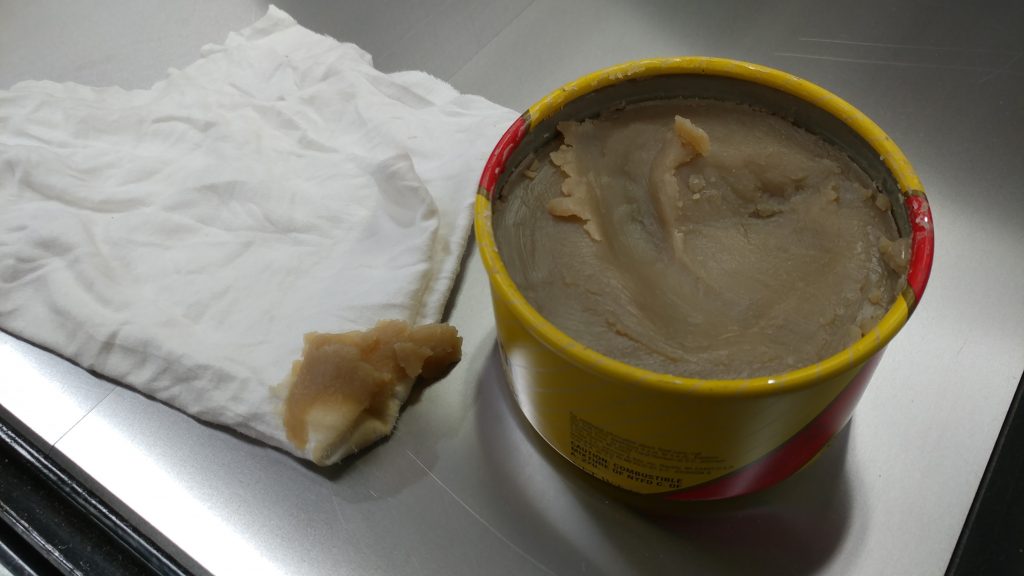
Use the rag to scoop up a generous amount of the paste wax.

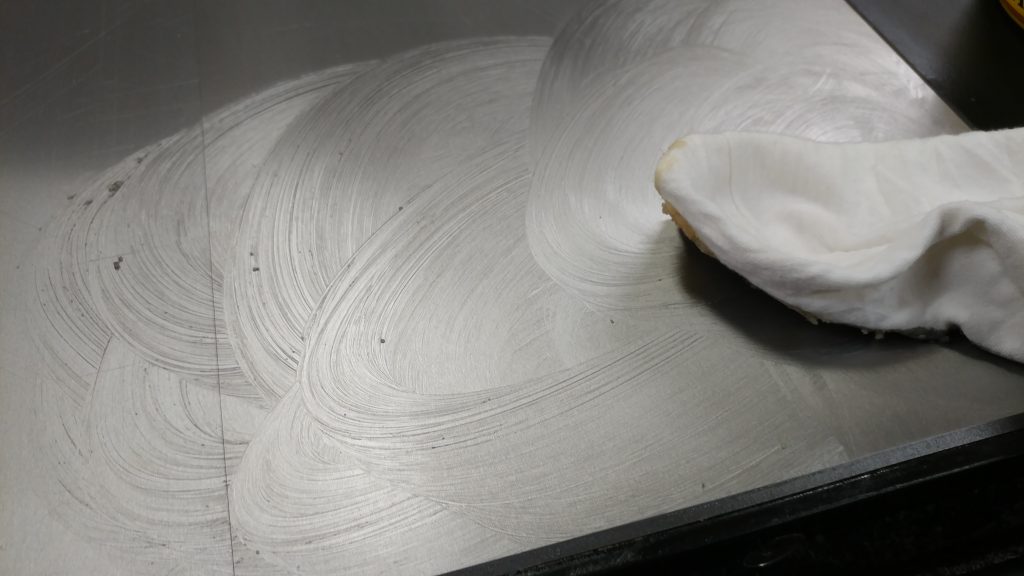
Apply the paste wax to the cast iron.  You don’t need to apply it in any particular fashion, just be sure to get it all over.

After you have the table top coated, let it sit for a while.  I usually let it sit for about 15 minutes.

You’ll know it’s ready to buff out when the paste wax gets a cloudy look to it.

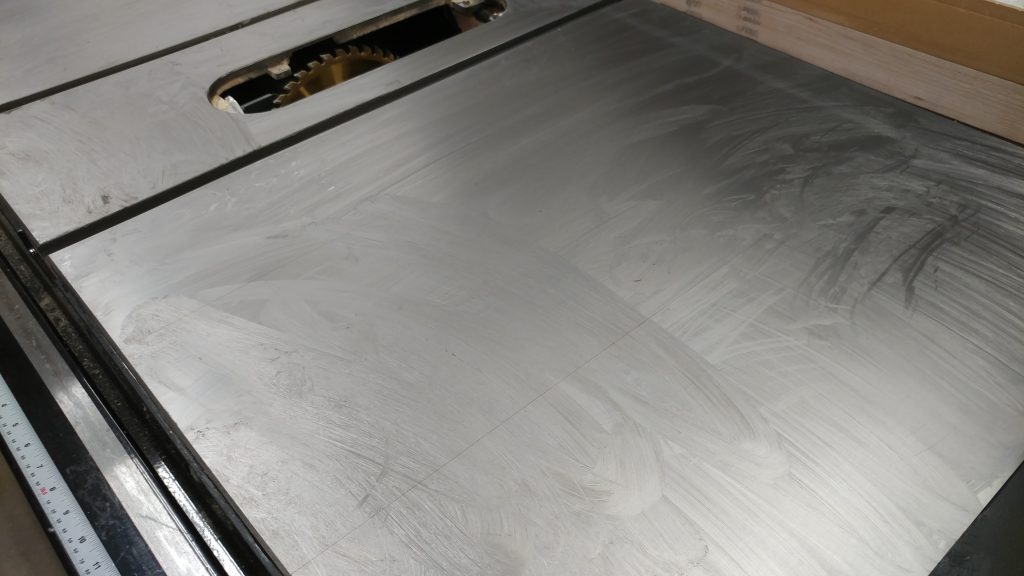
Use a fresh rag to wipe the wax off and buff it out.  This can take some experimentation but the way I handle it is to use one rag to wipe the bulk of the wax off but I don’t worry about it looking good yet.  You’ll still have some streaks and maybe a few missed blobs of wax.  After that, I take another fresh rag and wipe it down to buff it out.  You’ll notice that when you first start buffing it, the table will be slightly “grabby” with the rag.  Just keep buffing.  You don’t really need to apply much pressure or buff in any particular direction, just go back-and-forth for a while to build up some friction.  You’ll find that eventually the table will get very slippery.  That means you’re done and ready to move on to the next section.

After you finish, I recommend that you apply at least two more coats of wax.

That’s it.  You’re done.  You now have a nice slippery cast iron table top that won’t rust up as quickly (if at all).  I like to repeat this process as needed, which may be every six months or every six years.  It all depends on how you use your saw.
Also, it is a good idea to apply some paste wax to the exposed metal on the front tube where the fence rides back and forth.

Table Saw Modification – Router Table Enclosure: Part 3 – Hardware and Electrical

This is a continuation of Table Saw Modification – Router Table Enclosure: Part 1 – Carcase and Table Saw Modification – Router Table Enclosure: Part 2 – Laminate.


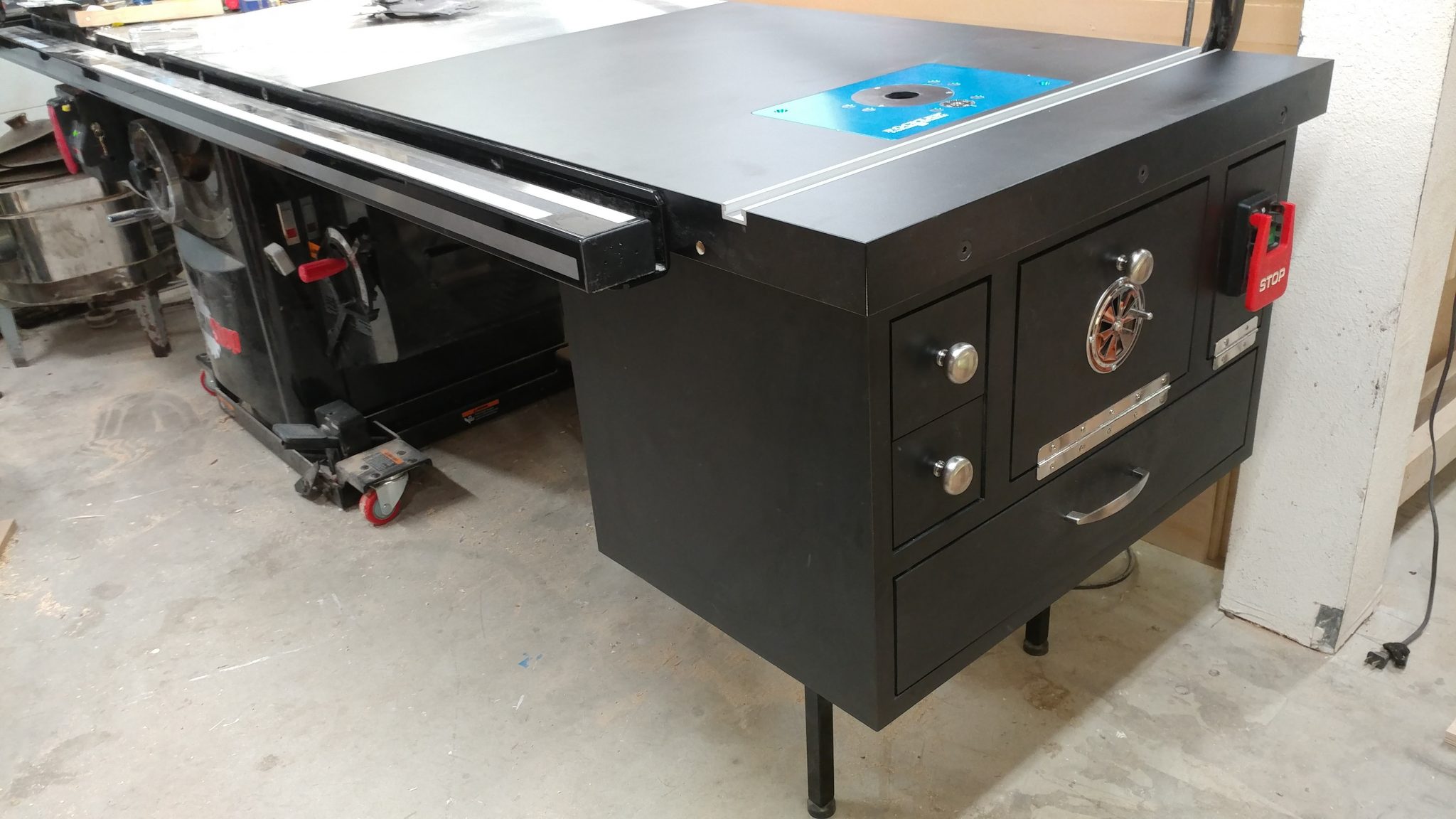
A while back I converted my side extension table into a router table.  Although not strictly necessary, I am going to enclose the router and add dust collection, while also creating much-needed storage and enclosing the electrical.

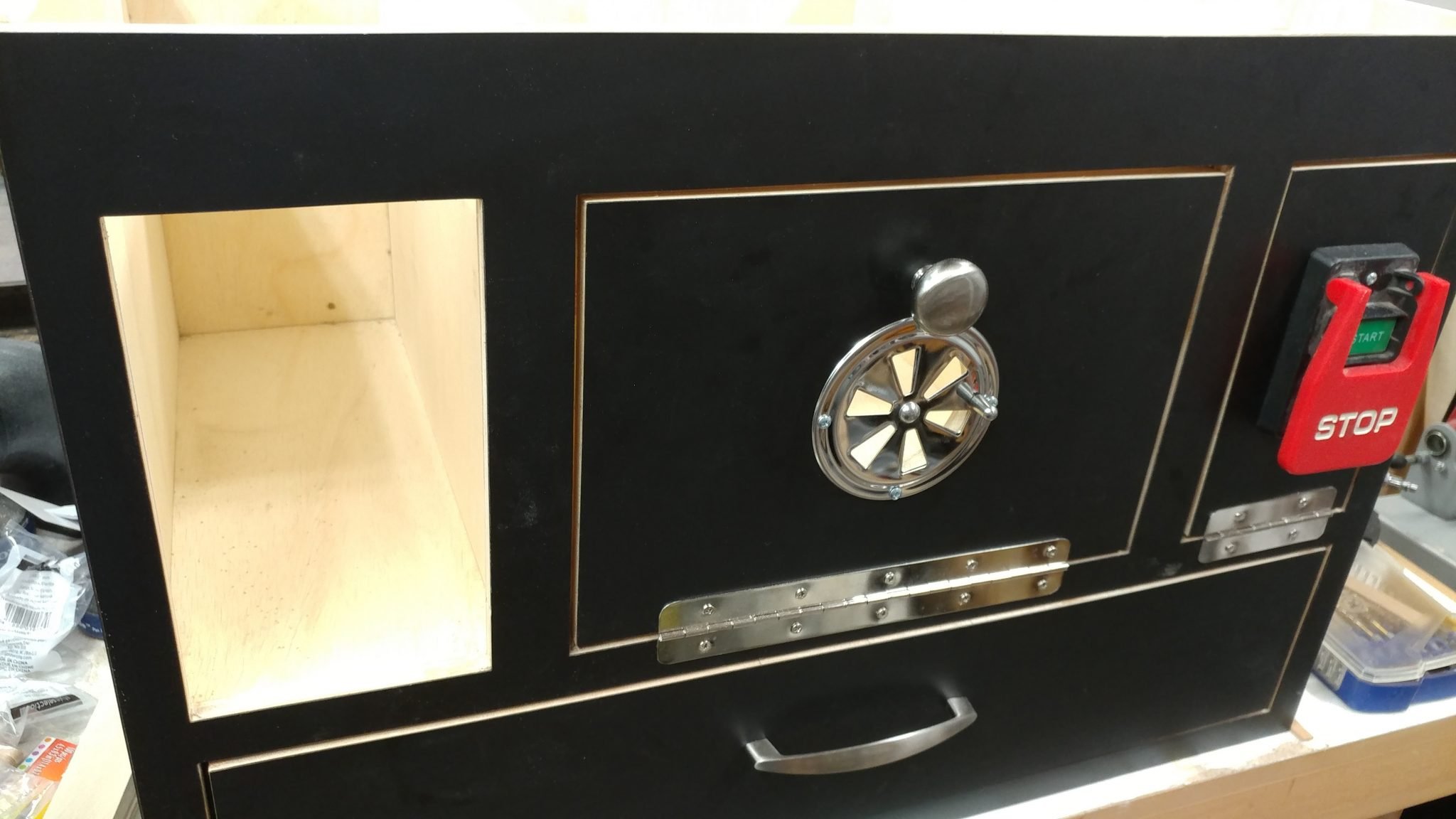
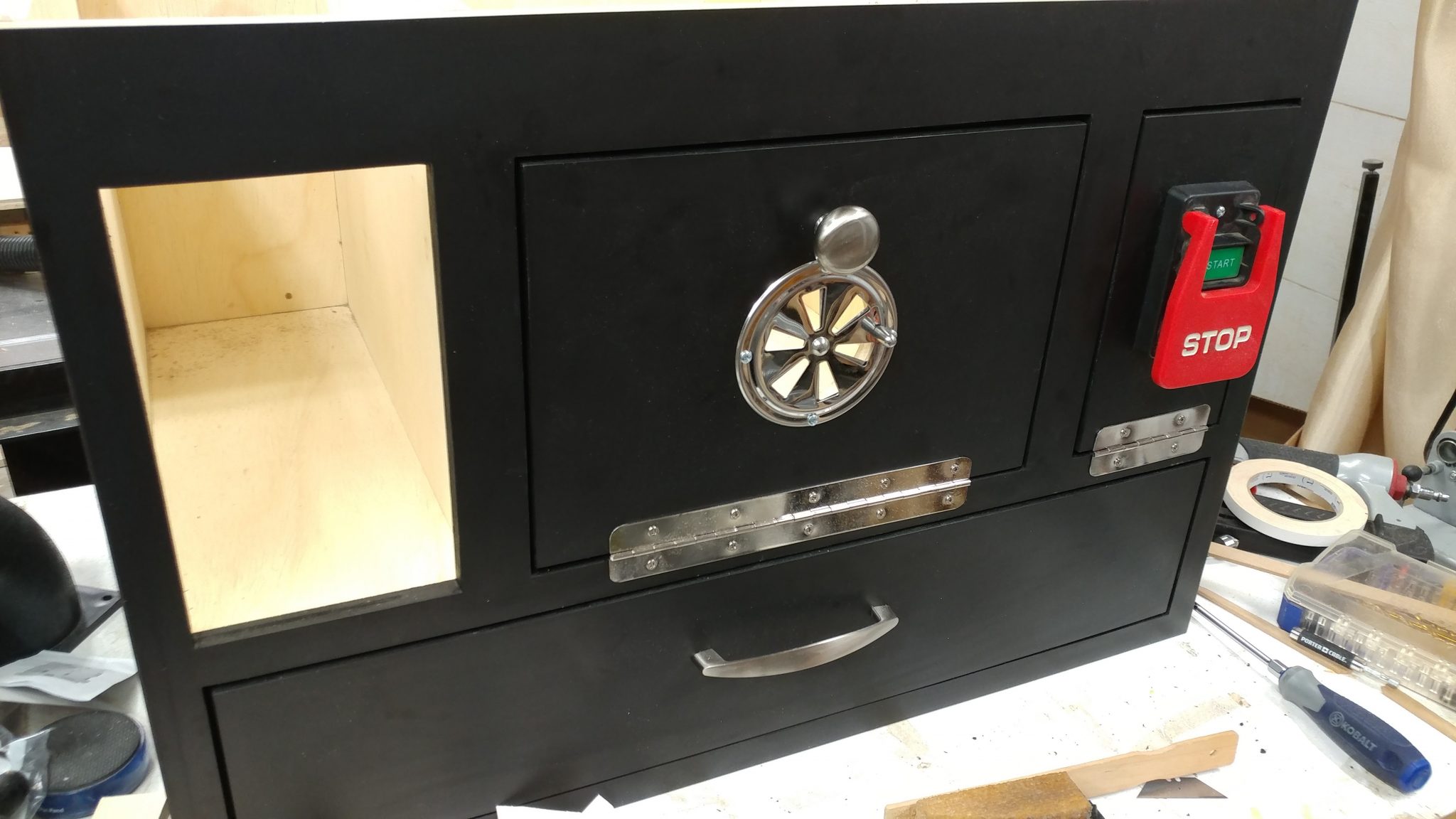
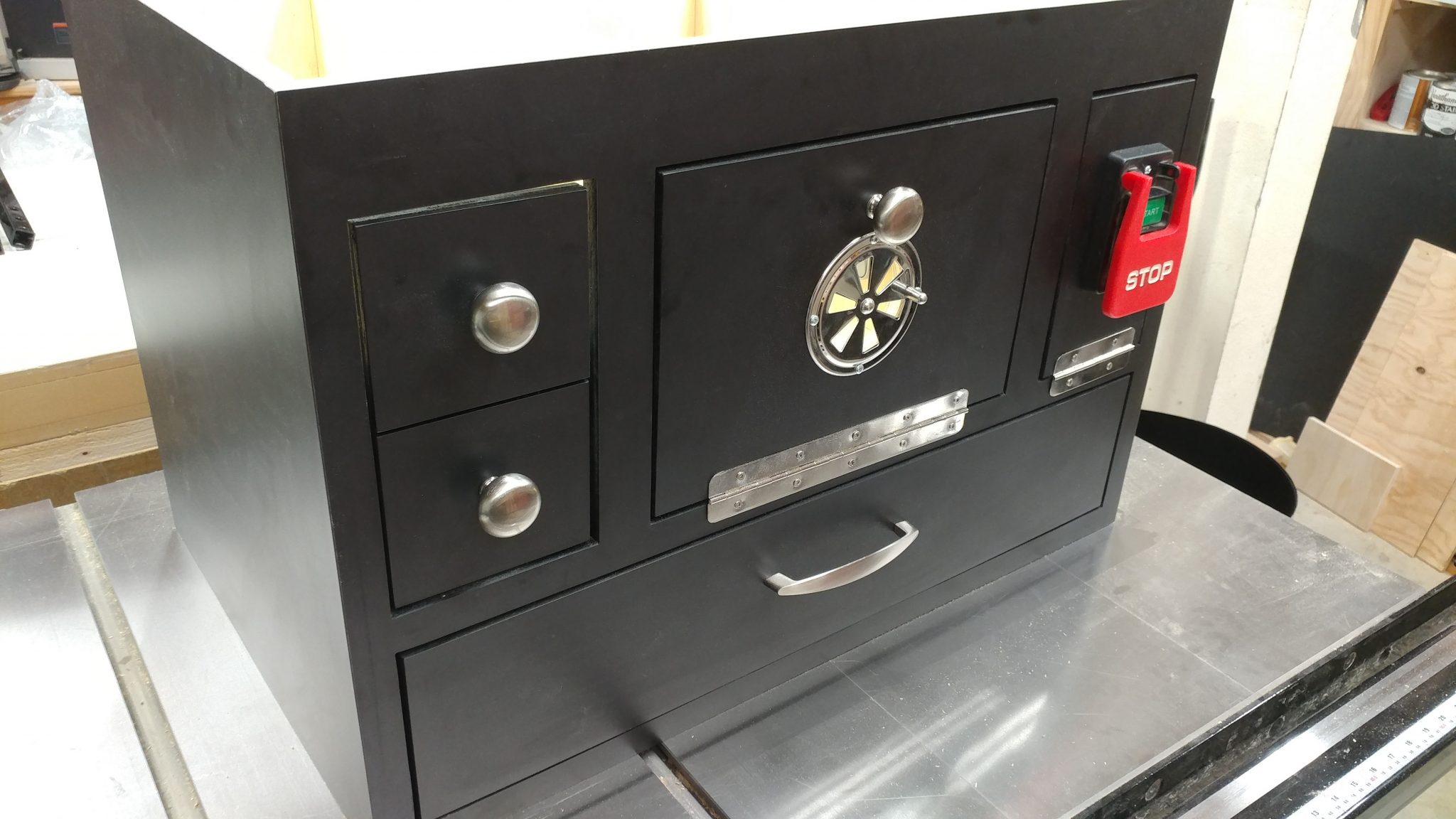
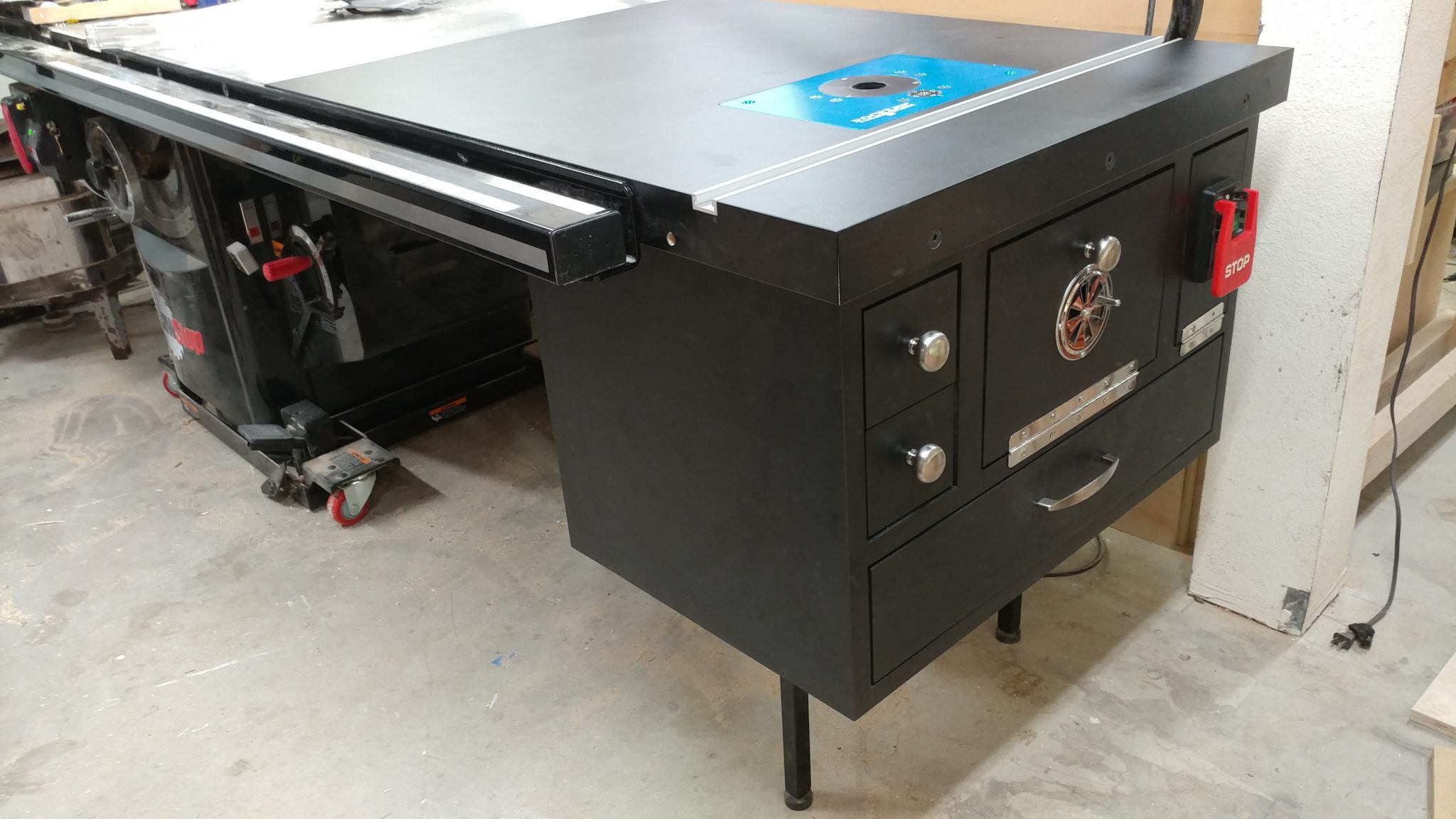
So you can see what I have in mind, here’s a sneak peek of the finished enclosure.

A sneak peek of the finished router table enclosure.

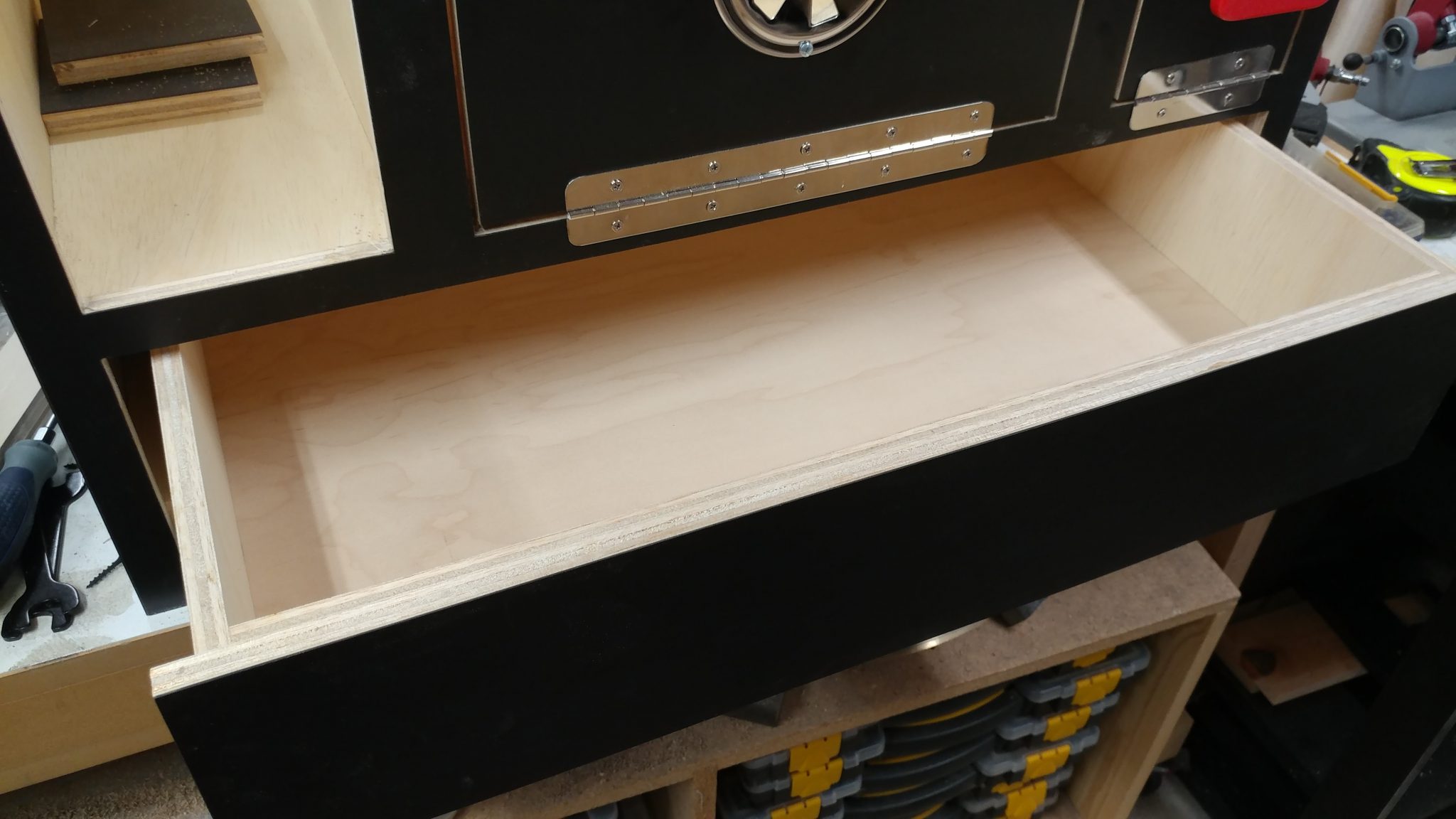
Attaching the doors and drawers

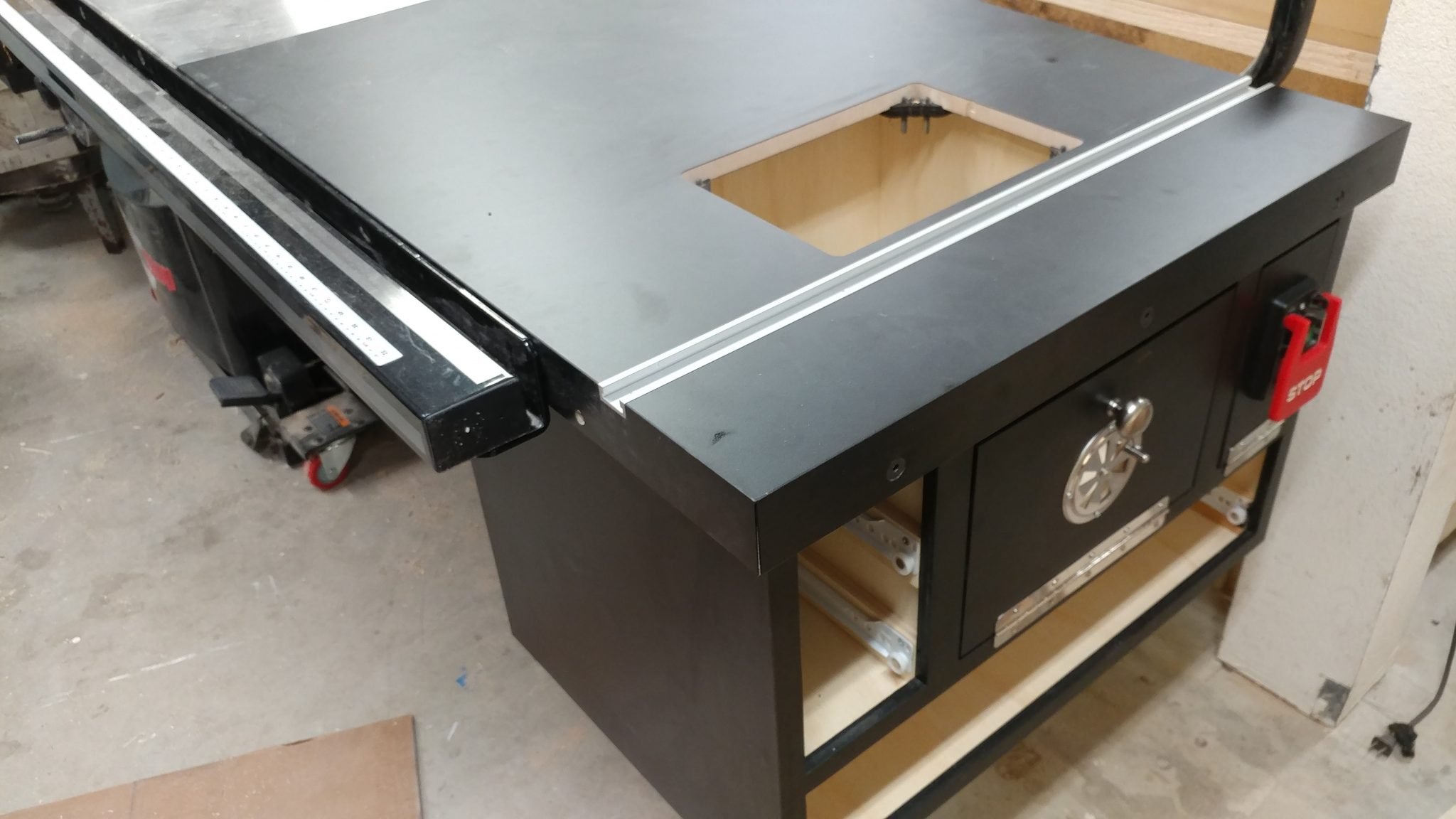
The main carcase is assembled and ready for the hardware.

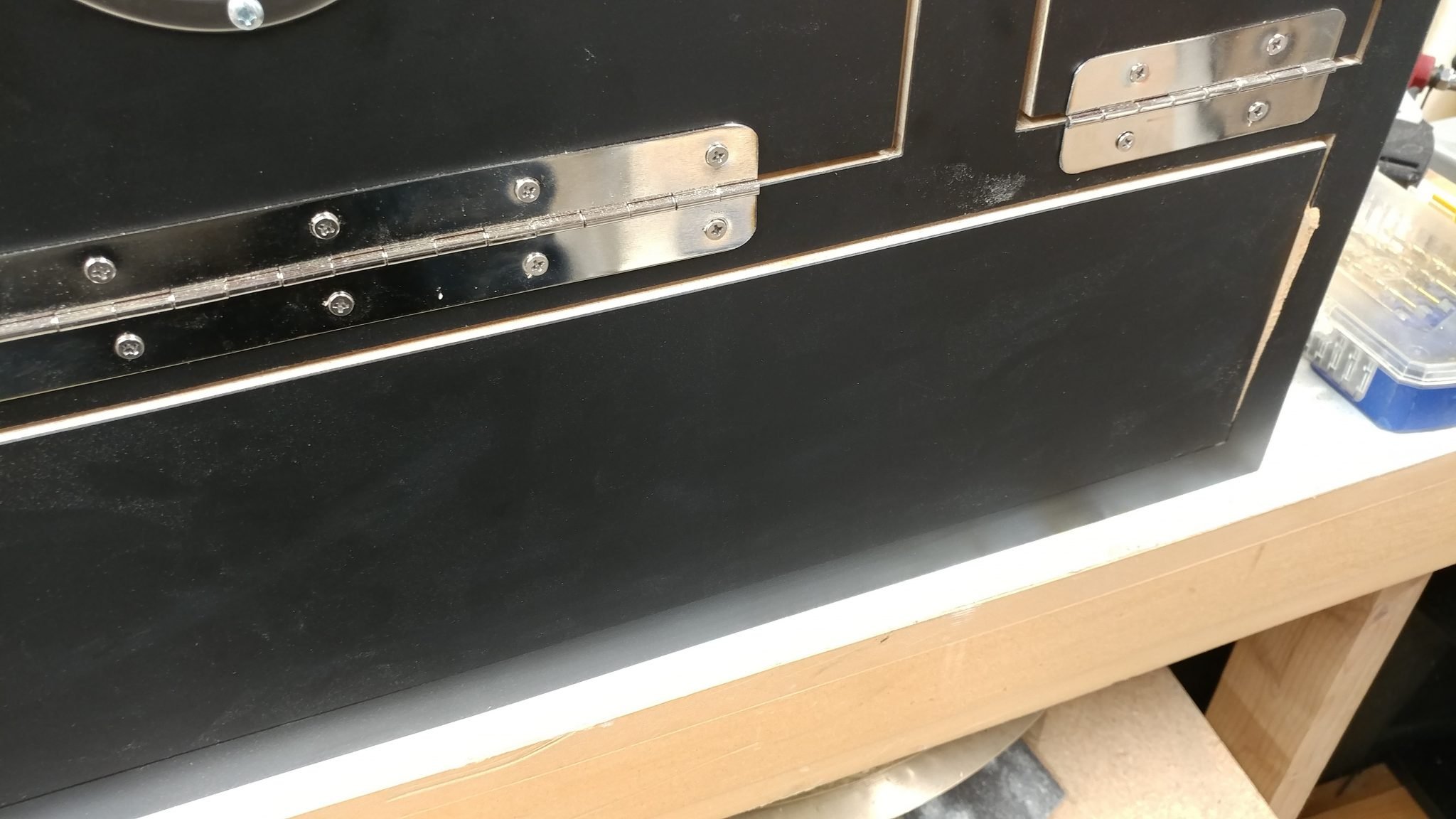
To start with, I attach the main door.  I use some 1/8″ thick MDF pieces as spacers on each edge of the door.


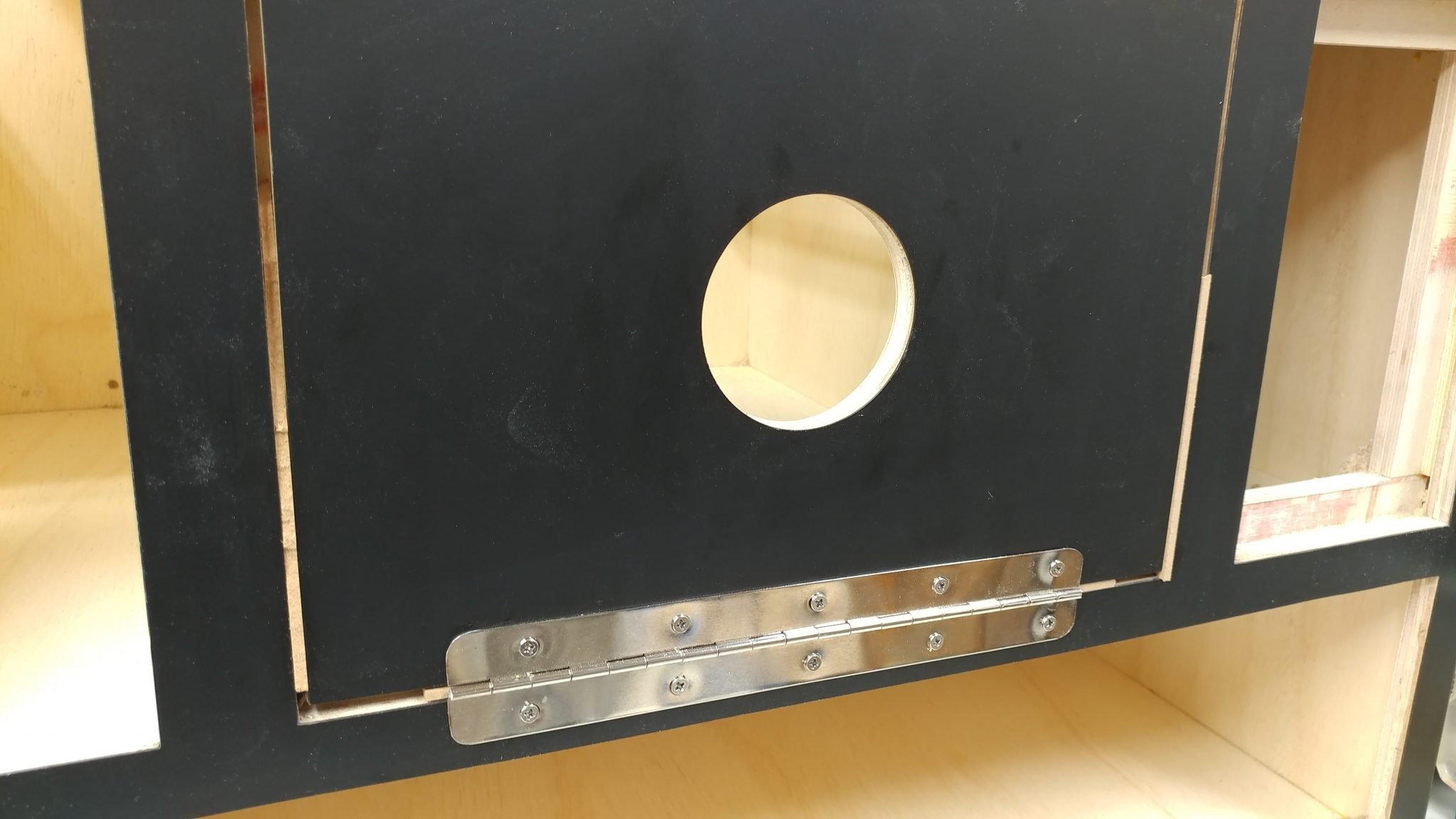
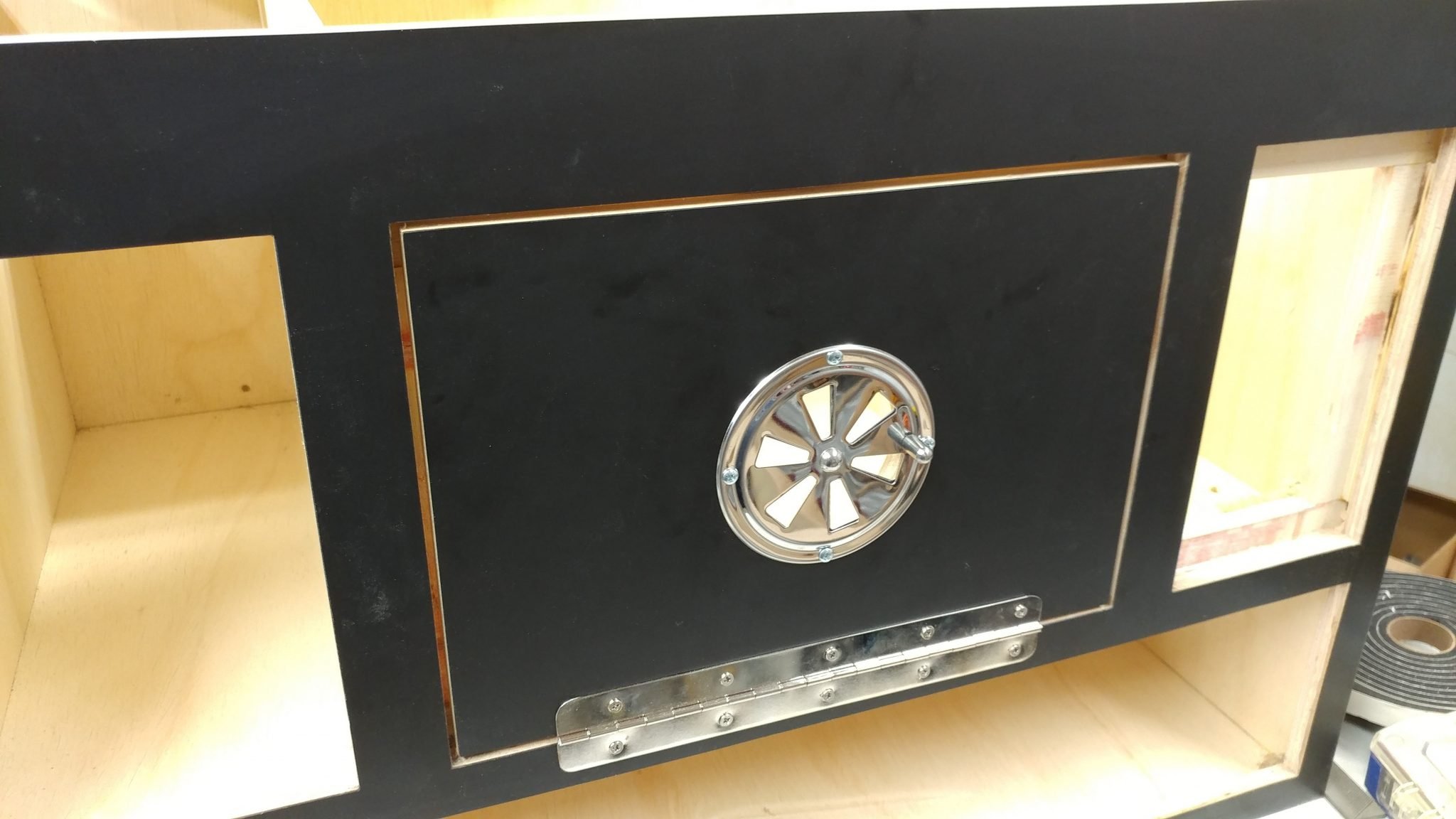
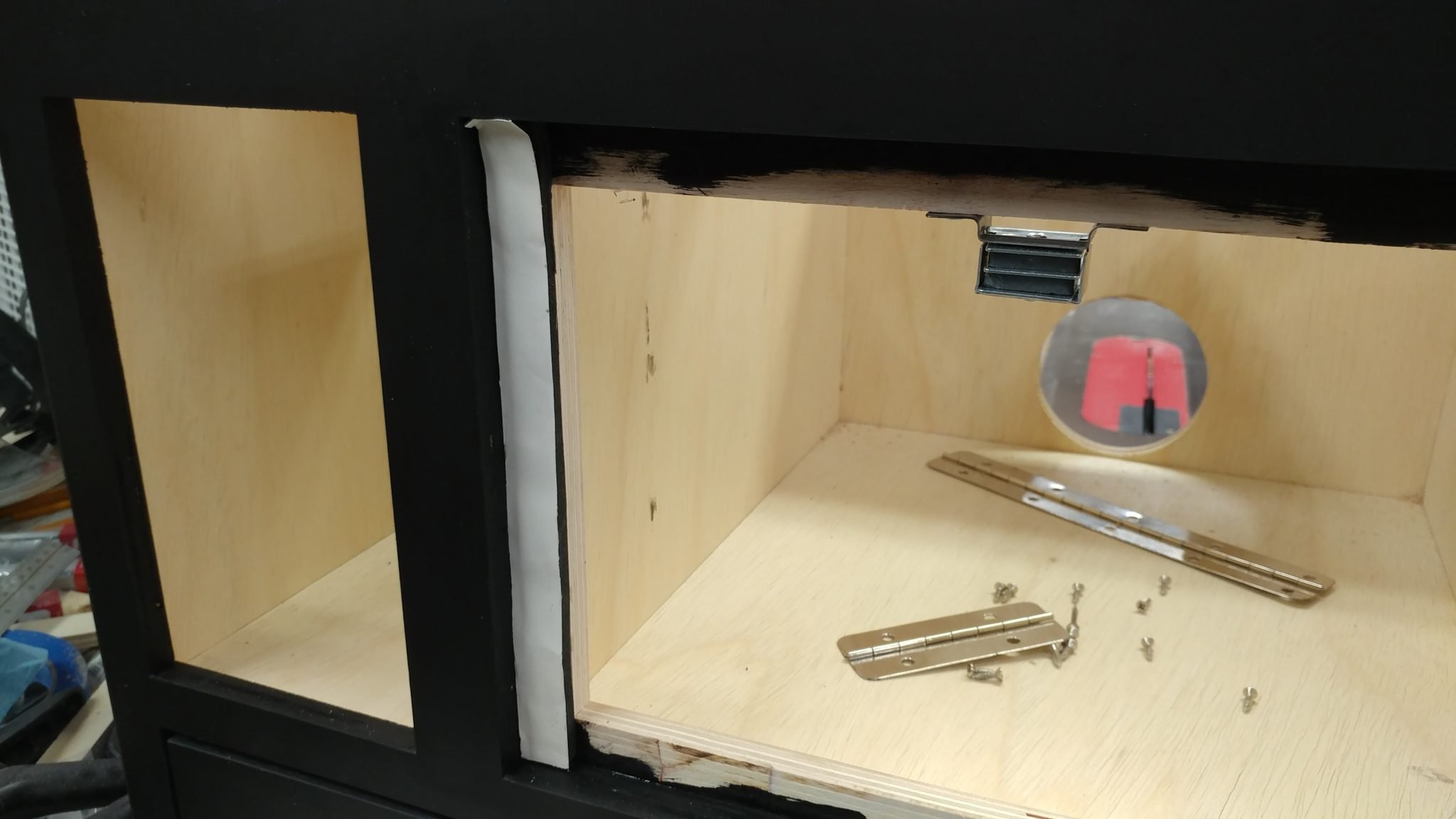
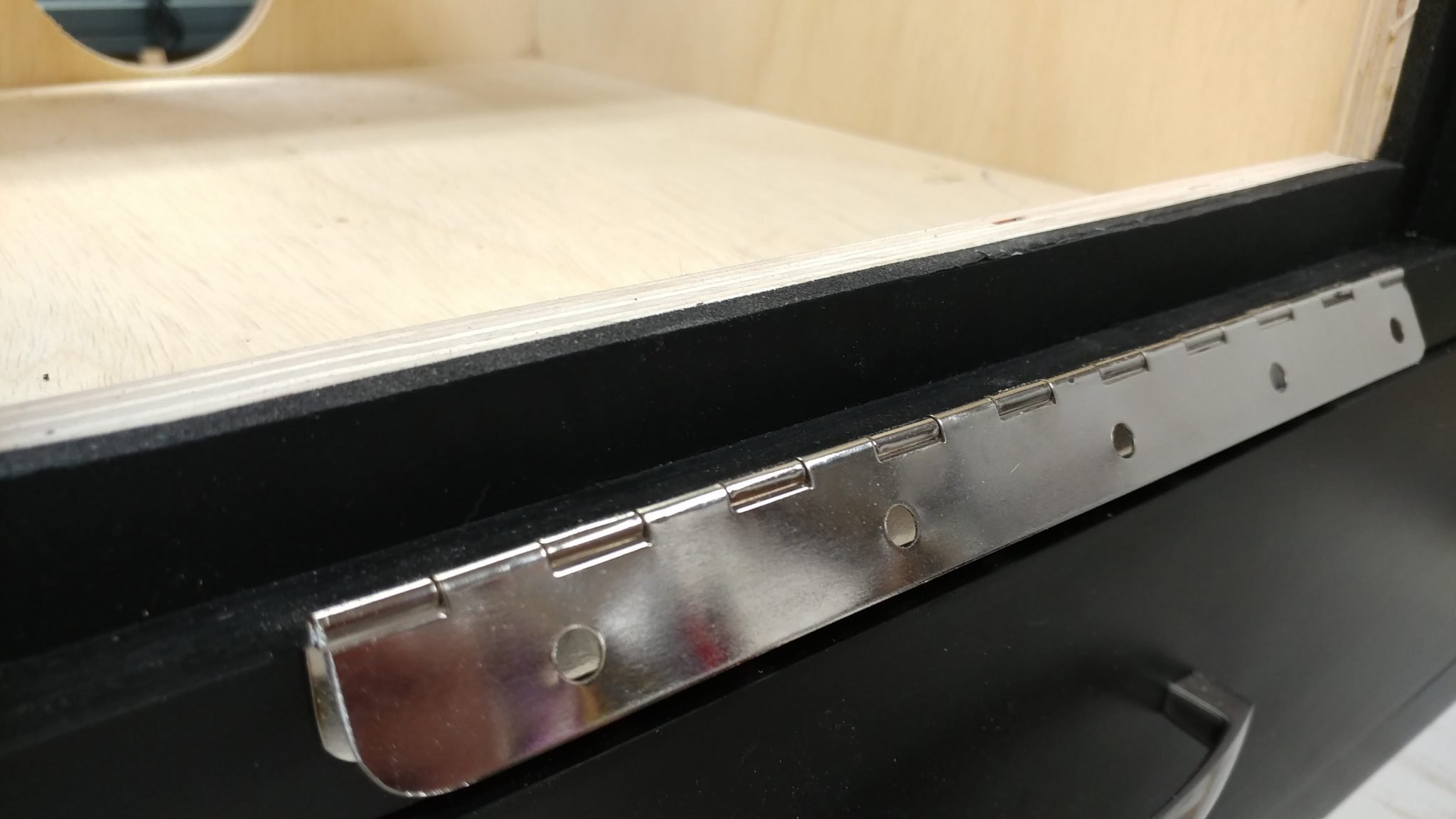
With the spacers holding the door in position, I attach a piano hinge.


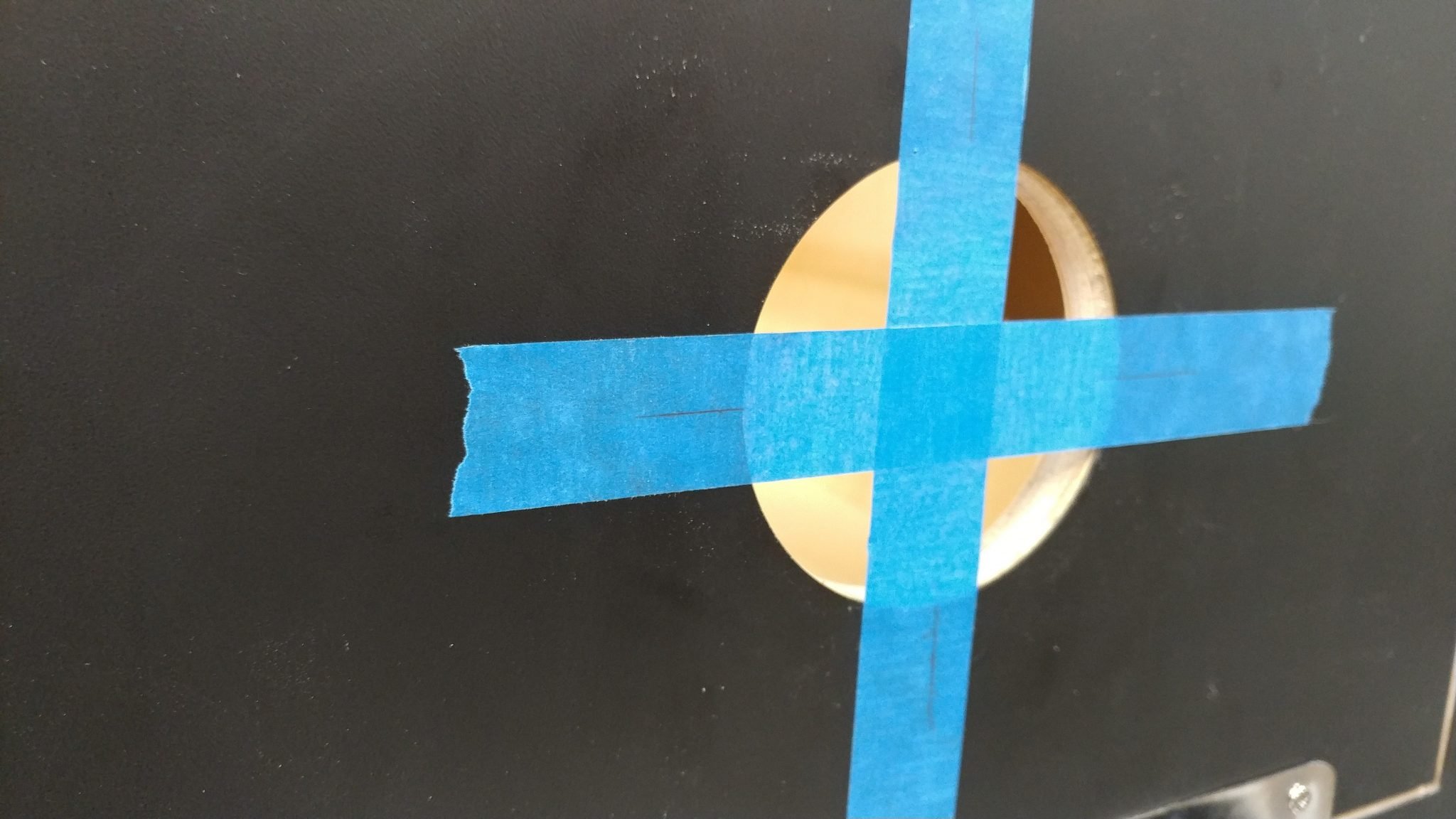
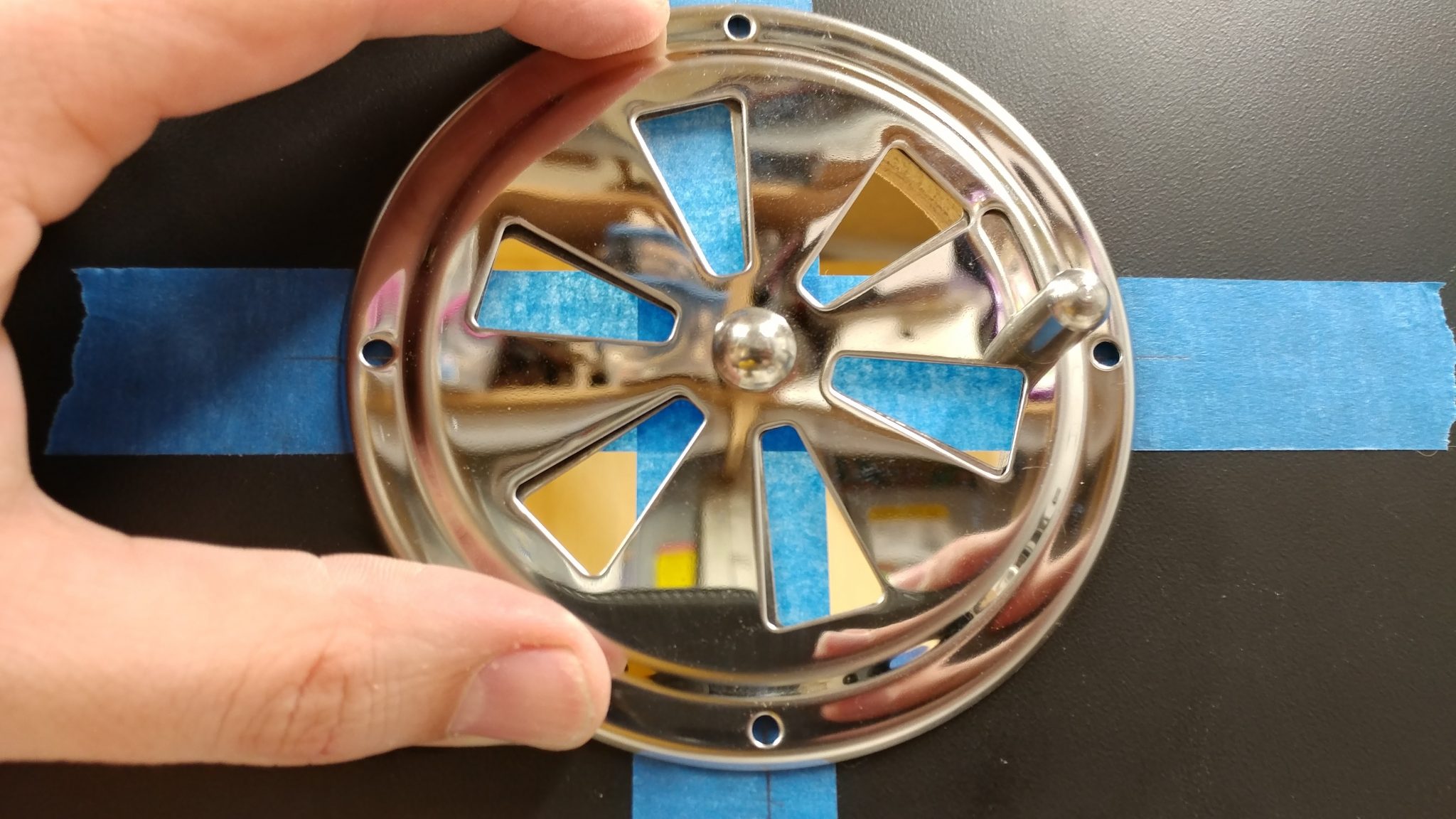
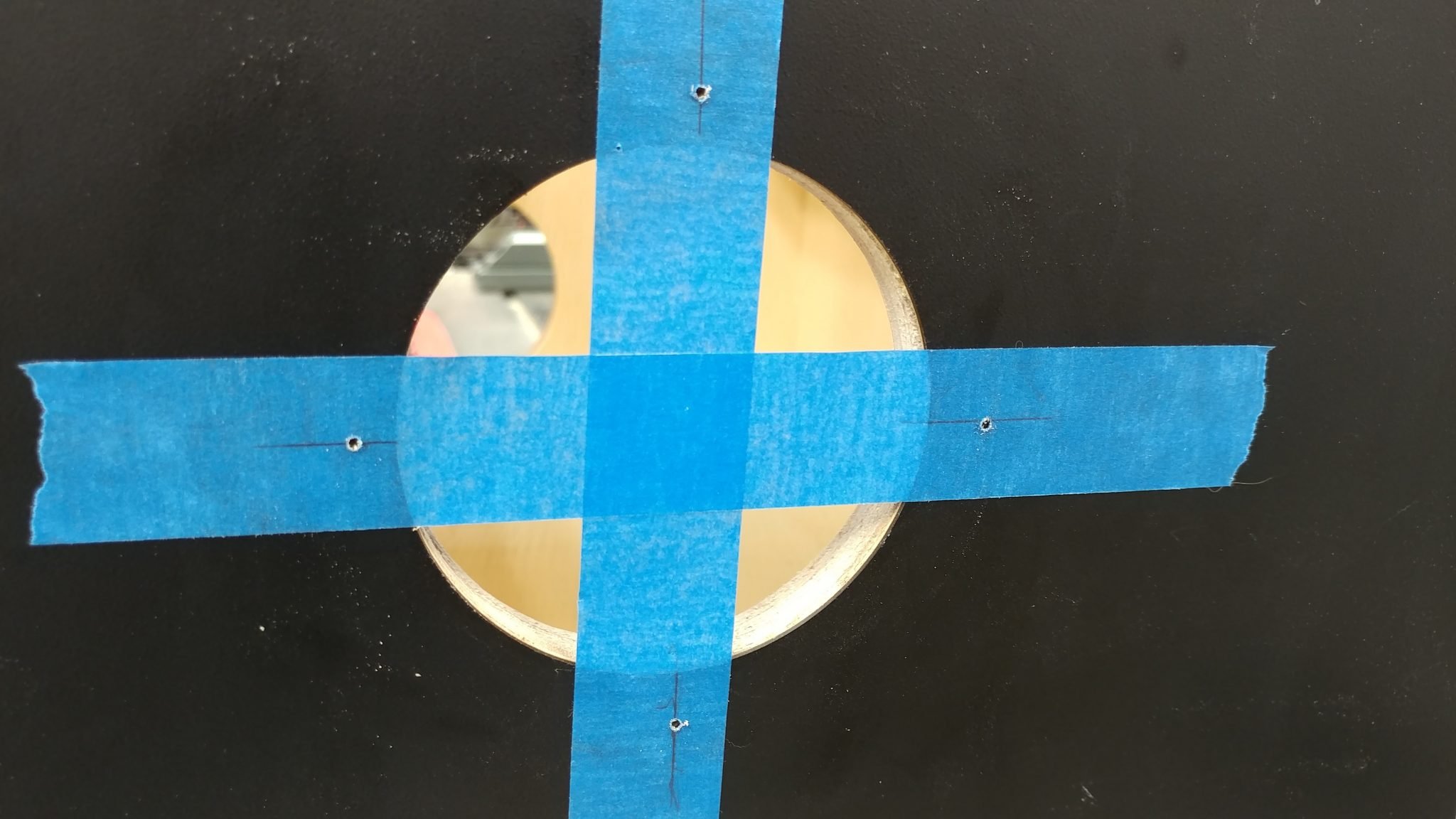
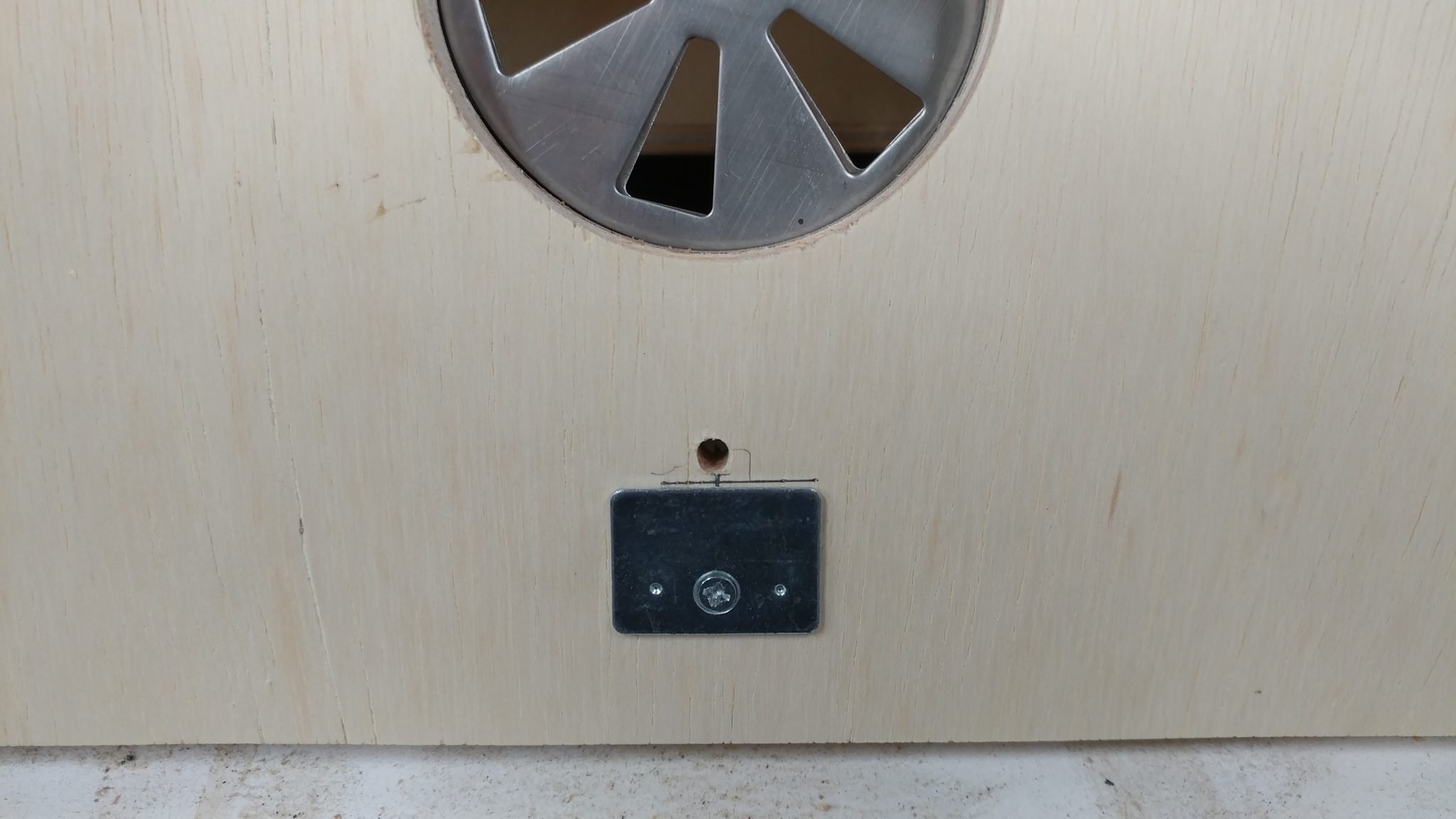
To position the air vent, I put some blue painters tape across the opening and mark the center lines where the screw holes on the vent should line up.


I then position the air vent with the lines going through the center of the screw holes…


…and drill pilot holes for the screws.


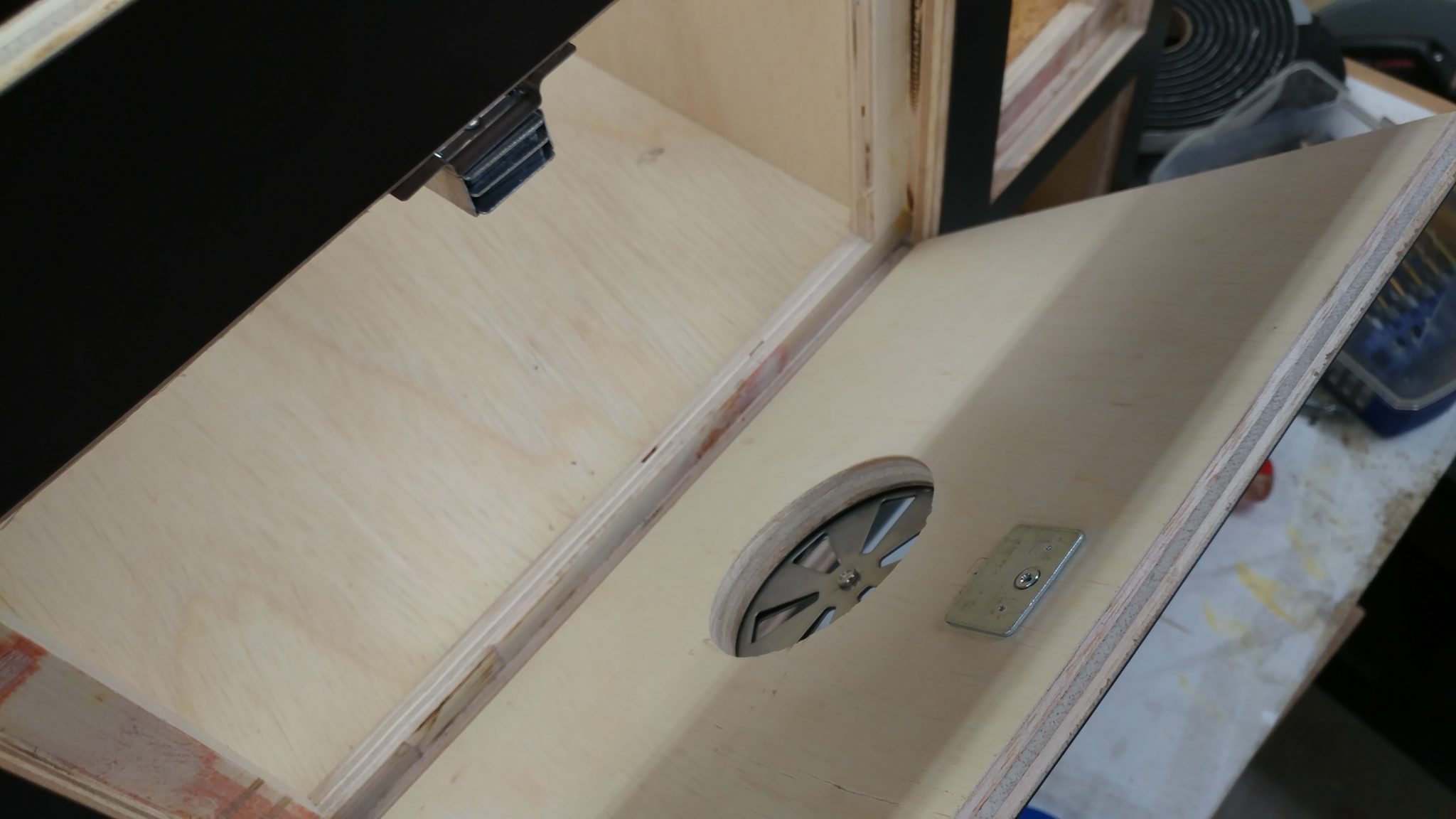
I then installed a magnetic door catch to hold the door closed.


I can then close the door.  The 1/8″ spacers made a nice gap.


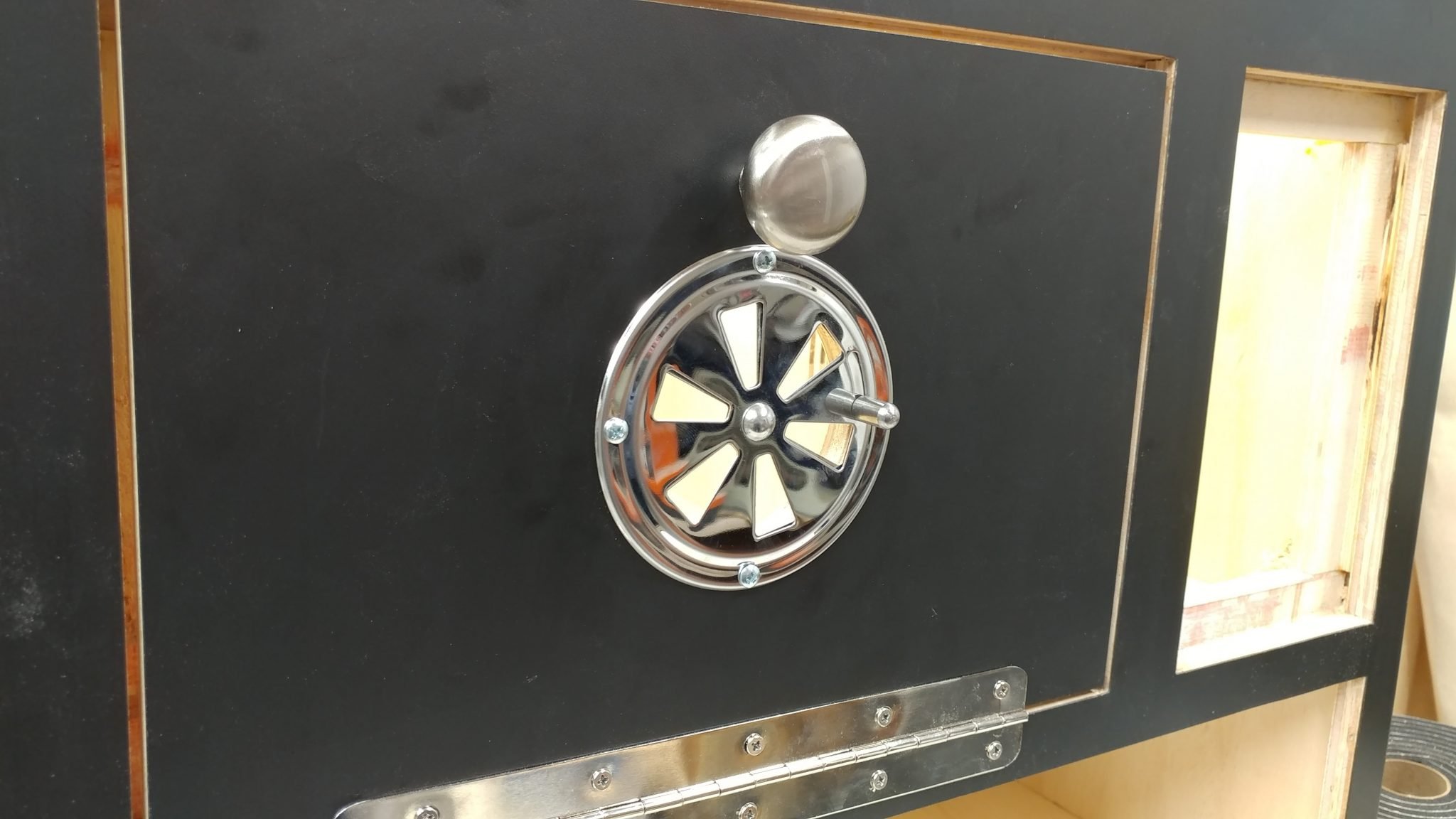
On the inside of the door, I drill a hole as close to the metal plate of the door catch as I can so I can attach a handle.


I then attached a handle to the door.


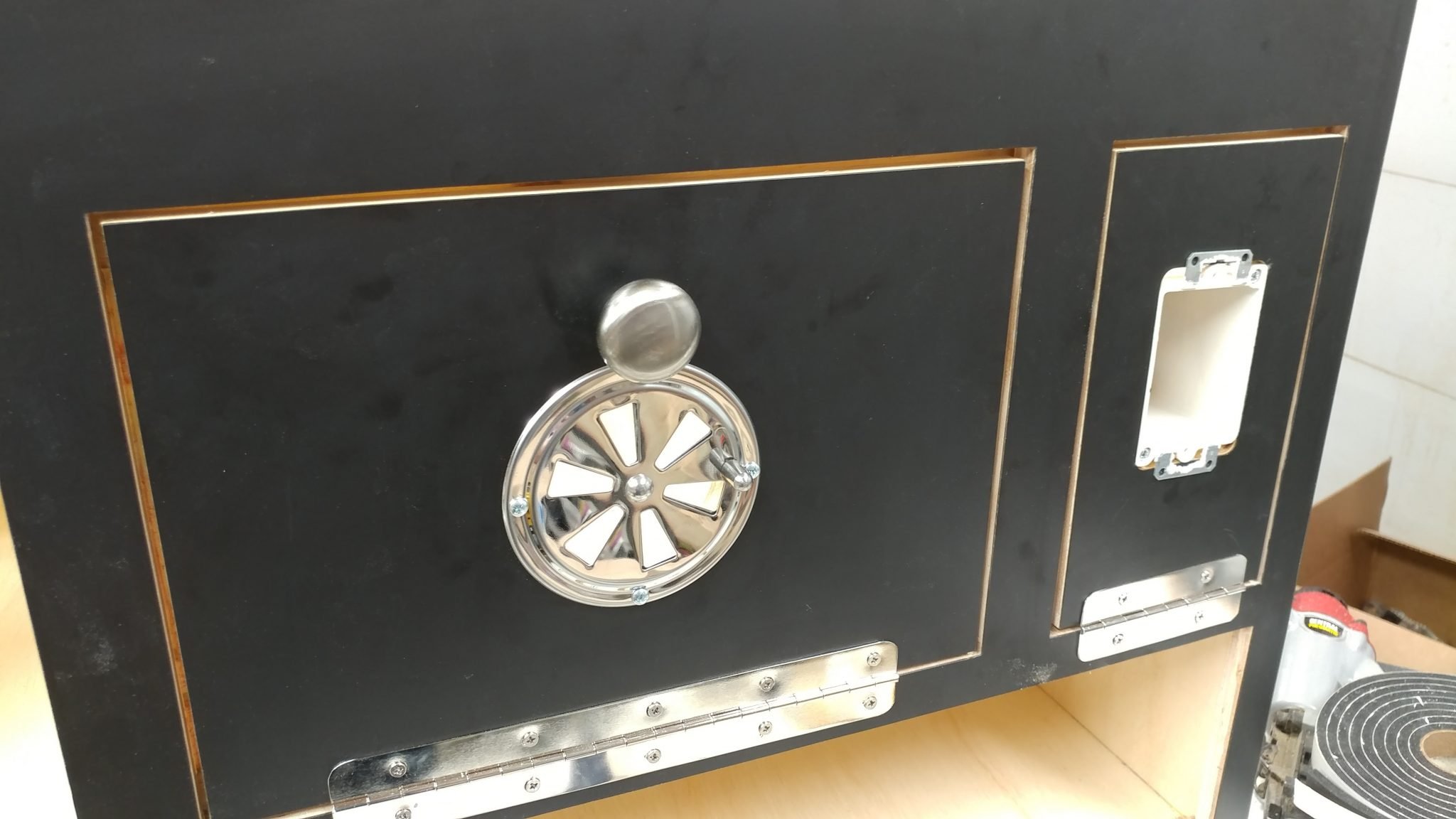
I also attached the door for the electrical in the same way except I didn’t attach a handle.  I’ll explain why later.


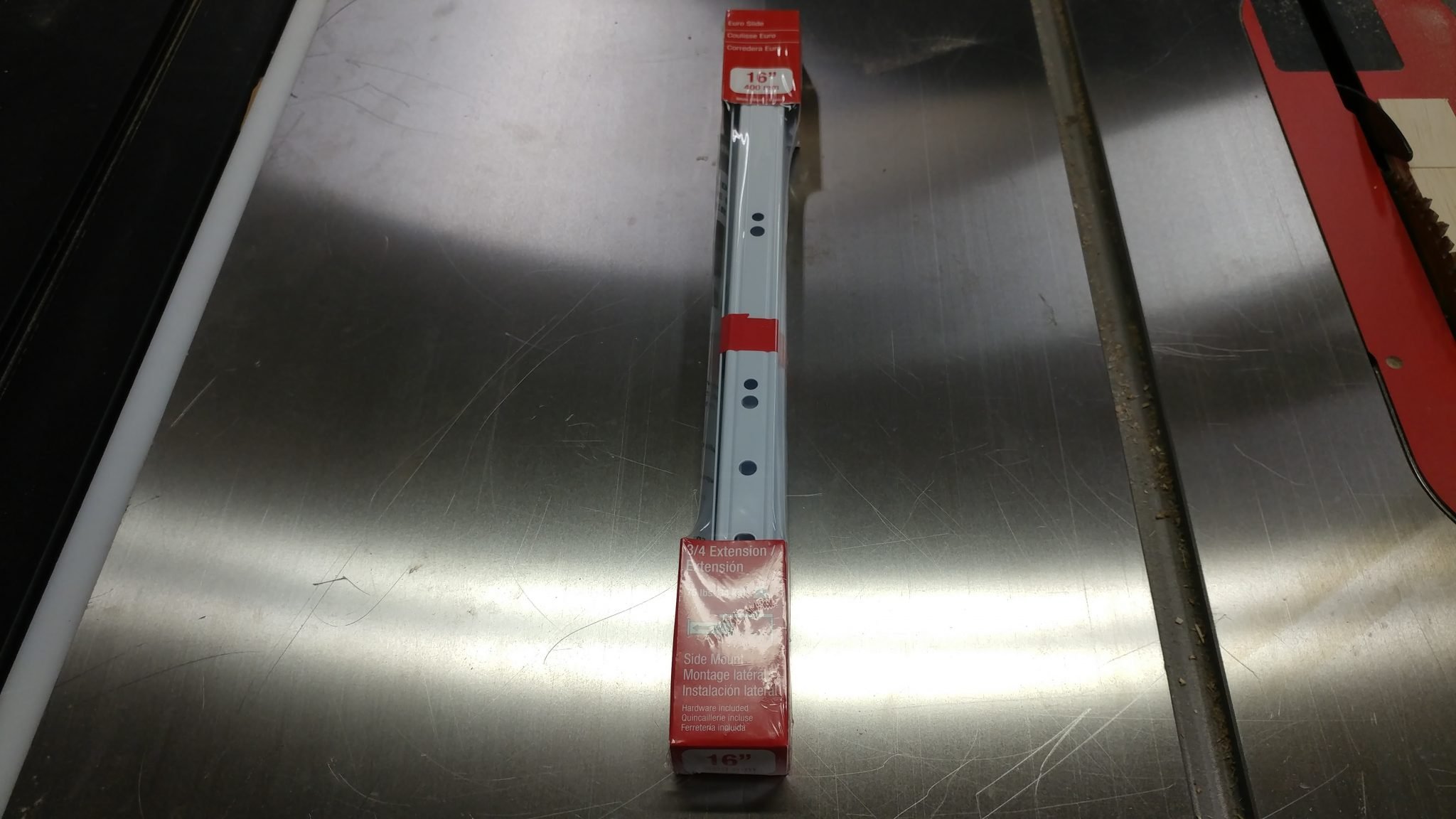
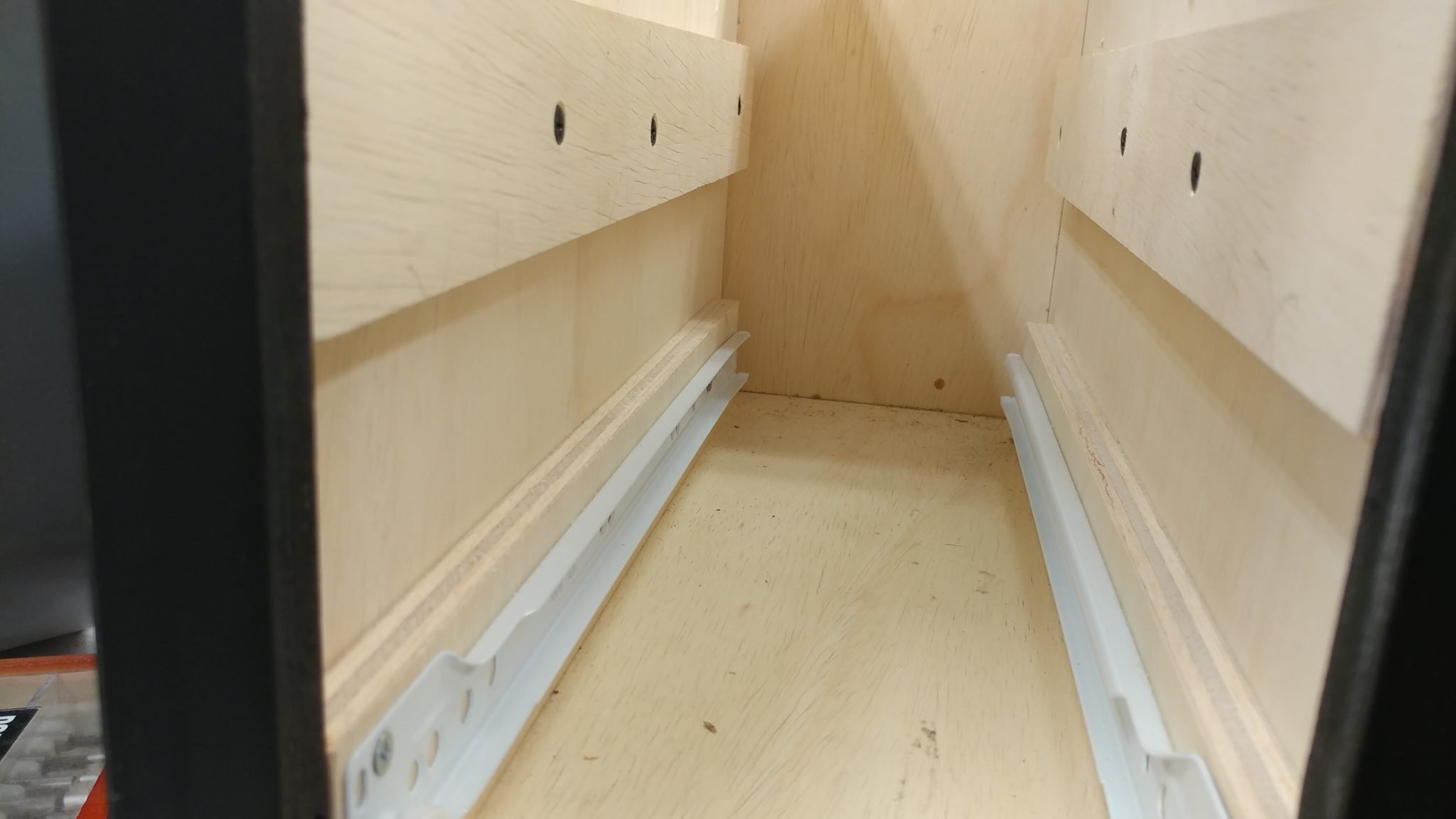
I decided to get cheap and I got some 16″ euro-style drawer glides.


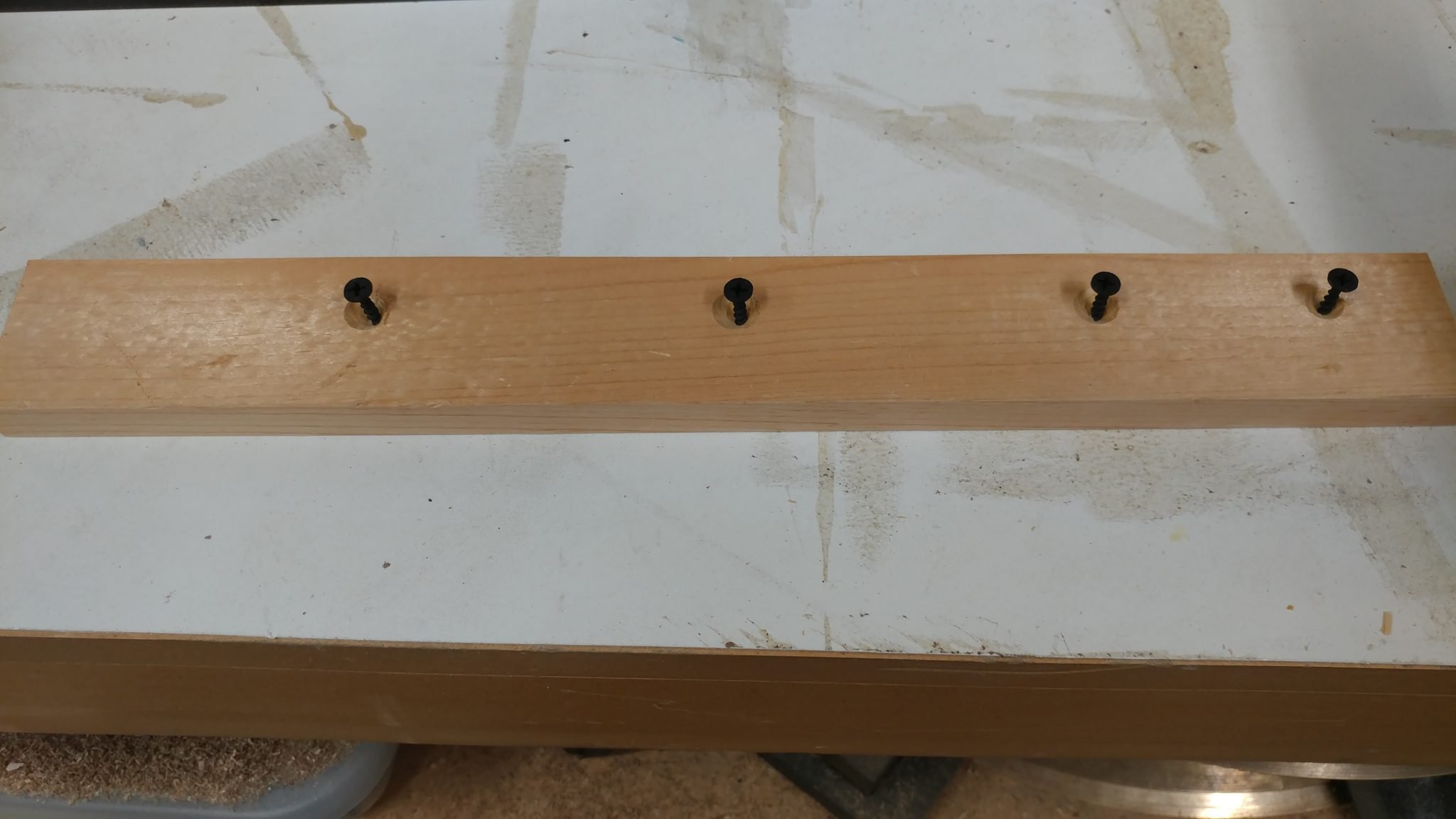
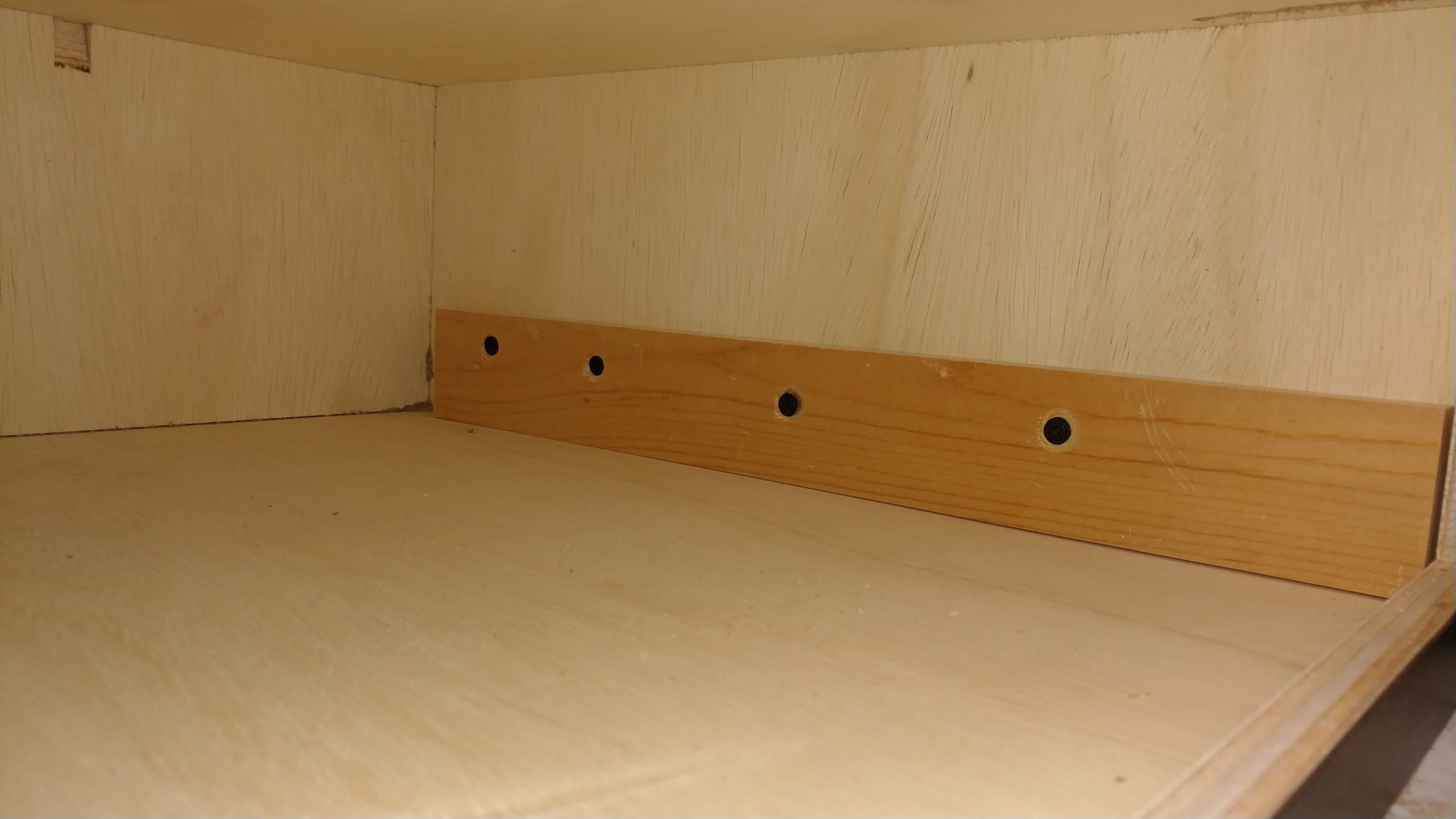
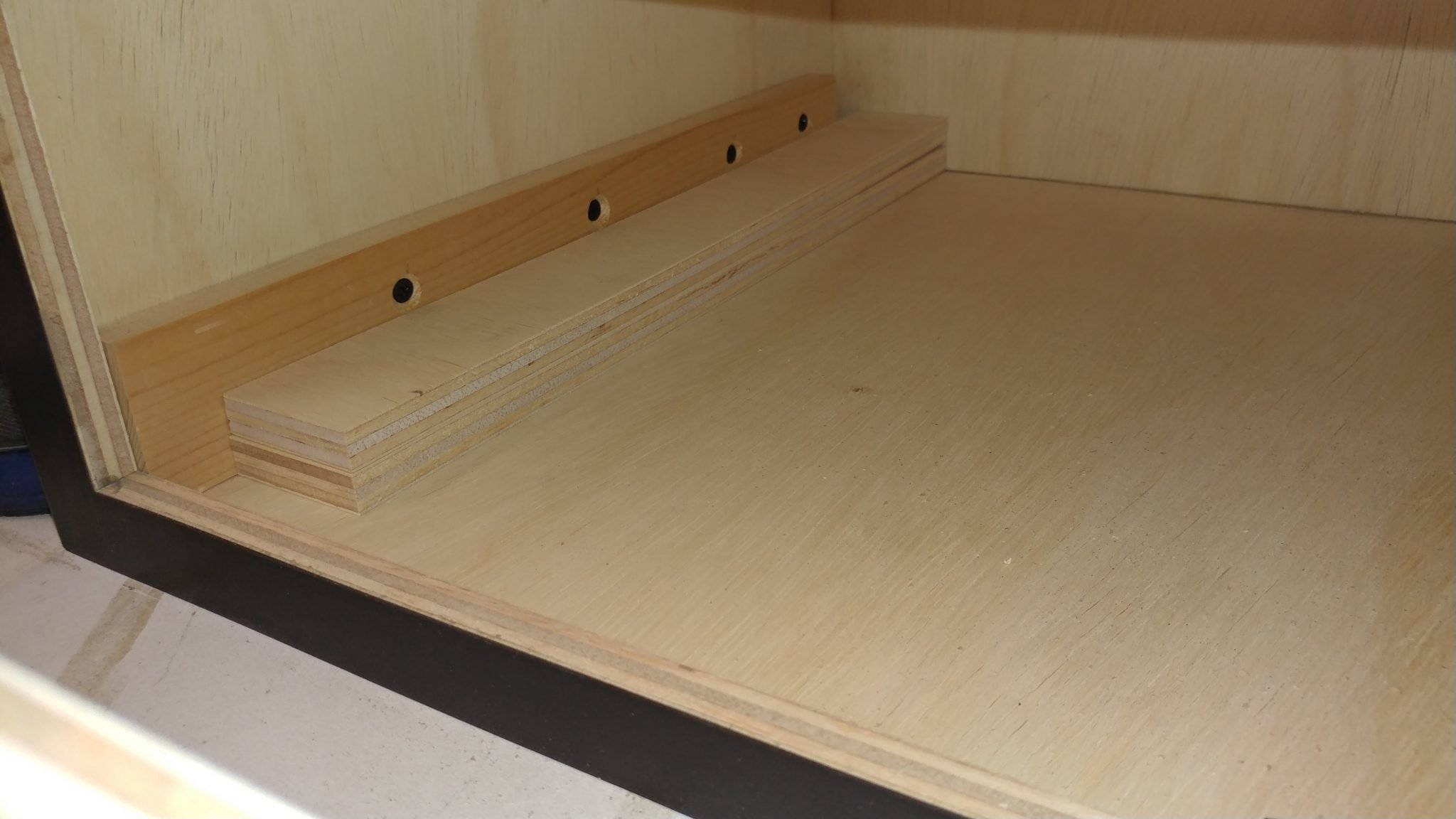
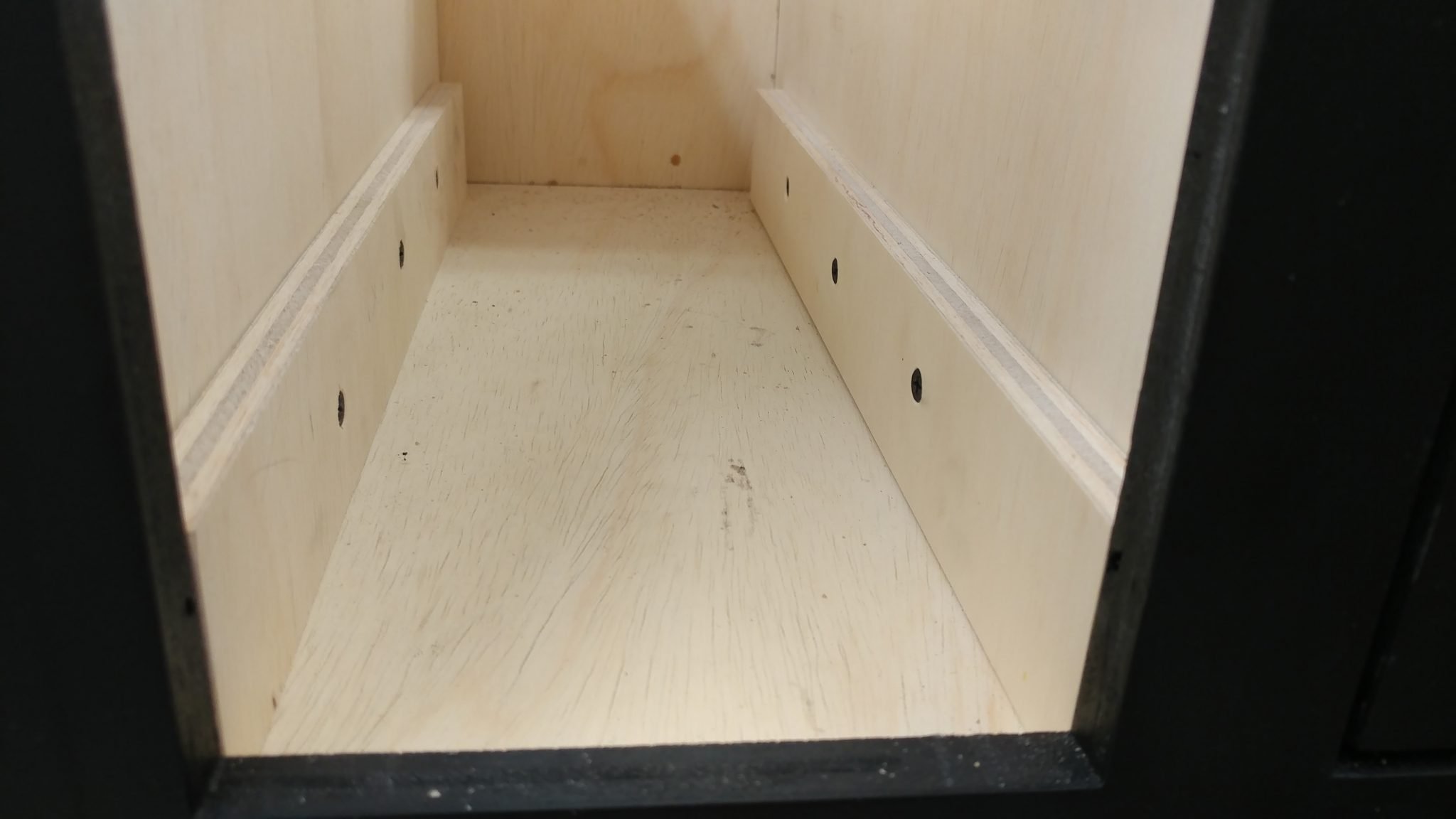
I need to thicken the walls of the carcase where I am attaching the drawer glides so I cut some wood strips 16″ long and 1-1/2″ tall and pre-drilled and countersunk some holes for drywall screws.


I then glued and screwed these to the inside of the carcase everywhere the drawer glides will be attached.  The screw placement may seem random but it isn’t.  They are arranged so they won’t interfere with the screws for mounting the drawer glides.


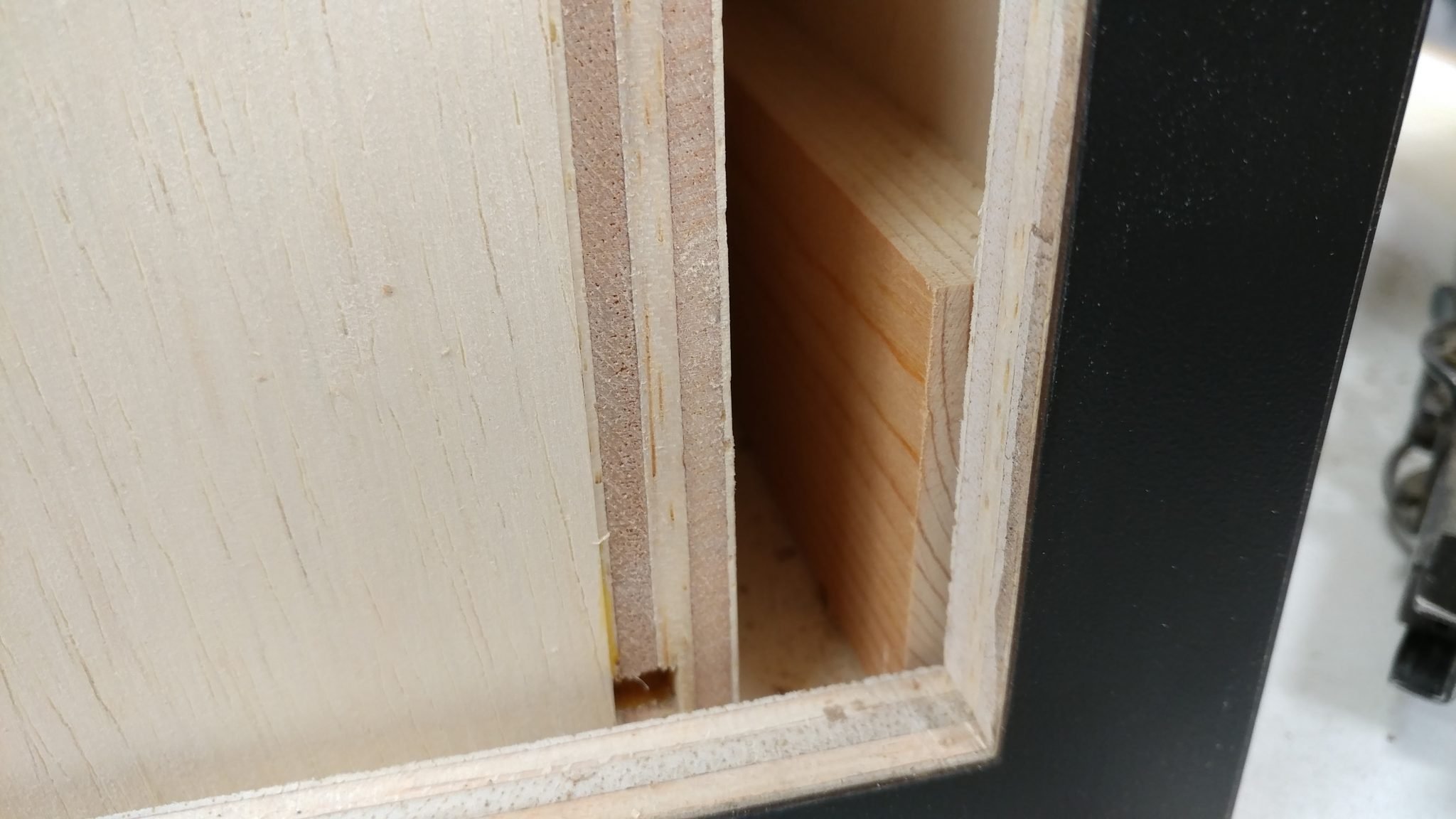
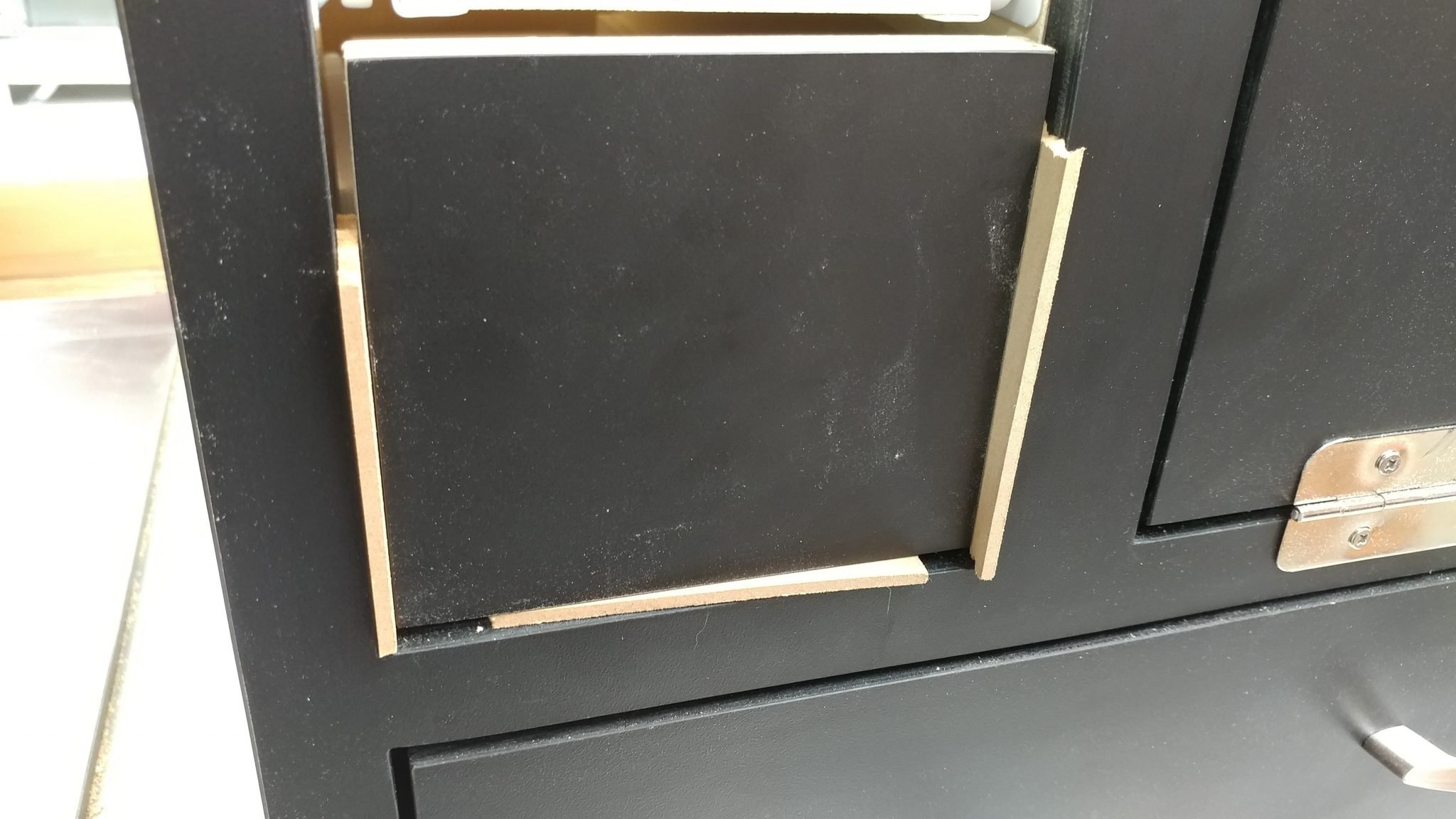
Due to a mis-measurement when I cut the pieces for the big drawer, I needed these pieces to be 5/8″ thick rather than 1/2″ thick as planned.  Here they are in place with the drawer sitting roughly in place.


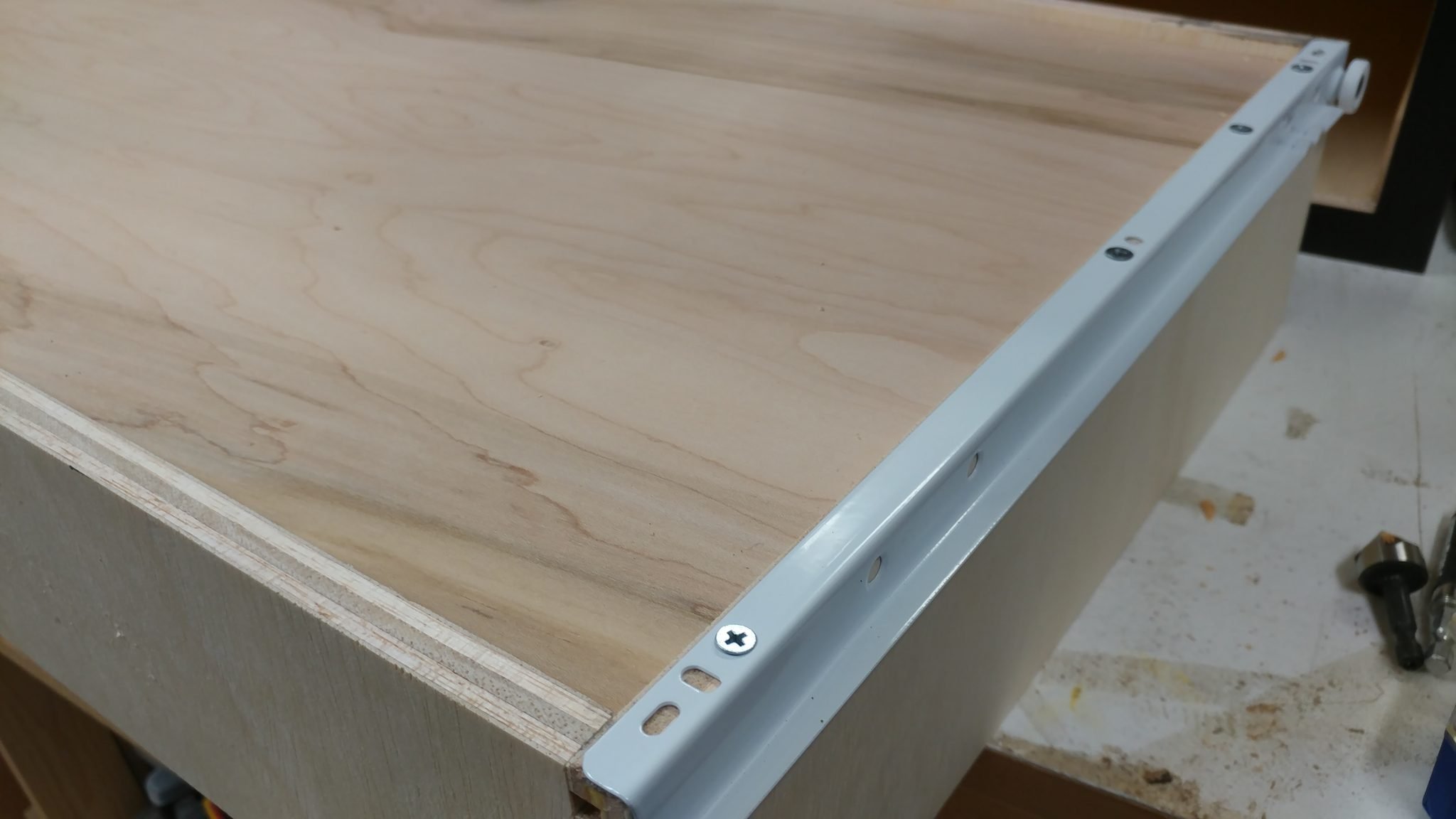
I attached the drawer sections of the glides to the main drawer body.


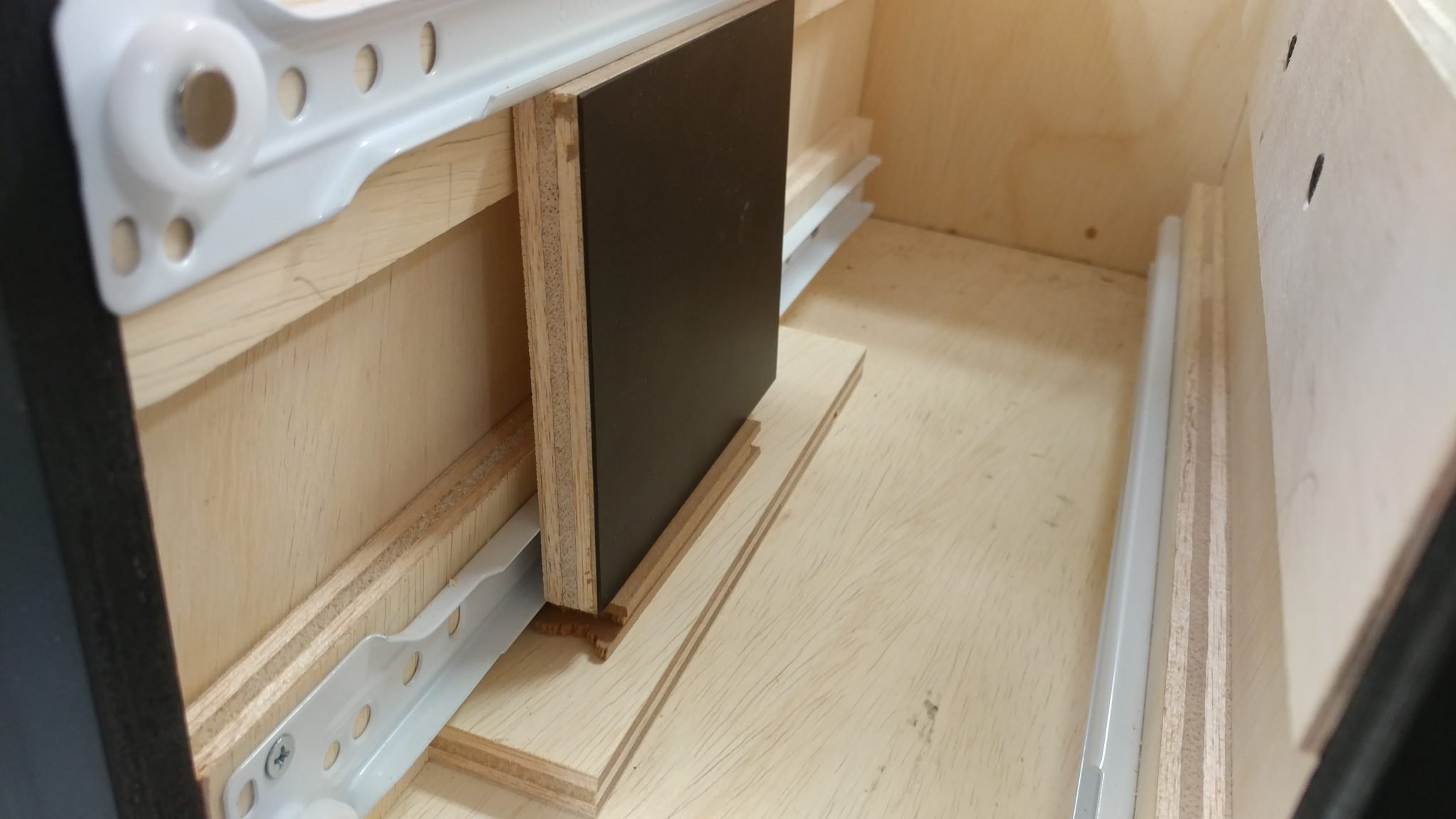
I used a few pieces pieces of plywood as spacers to hold up the cabinet section of the drawer glides and I screwed them into place.


This allowed me to insert the drawer,  It’s now ready for the face.


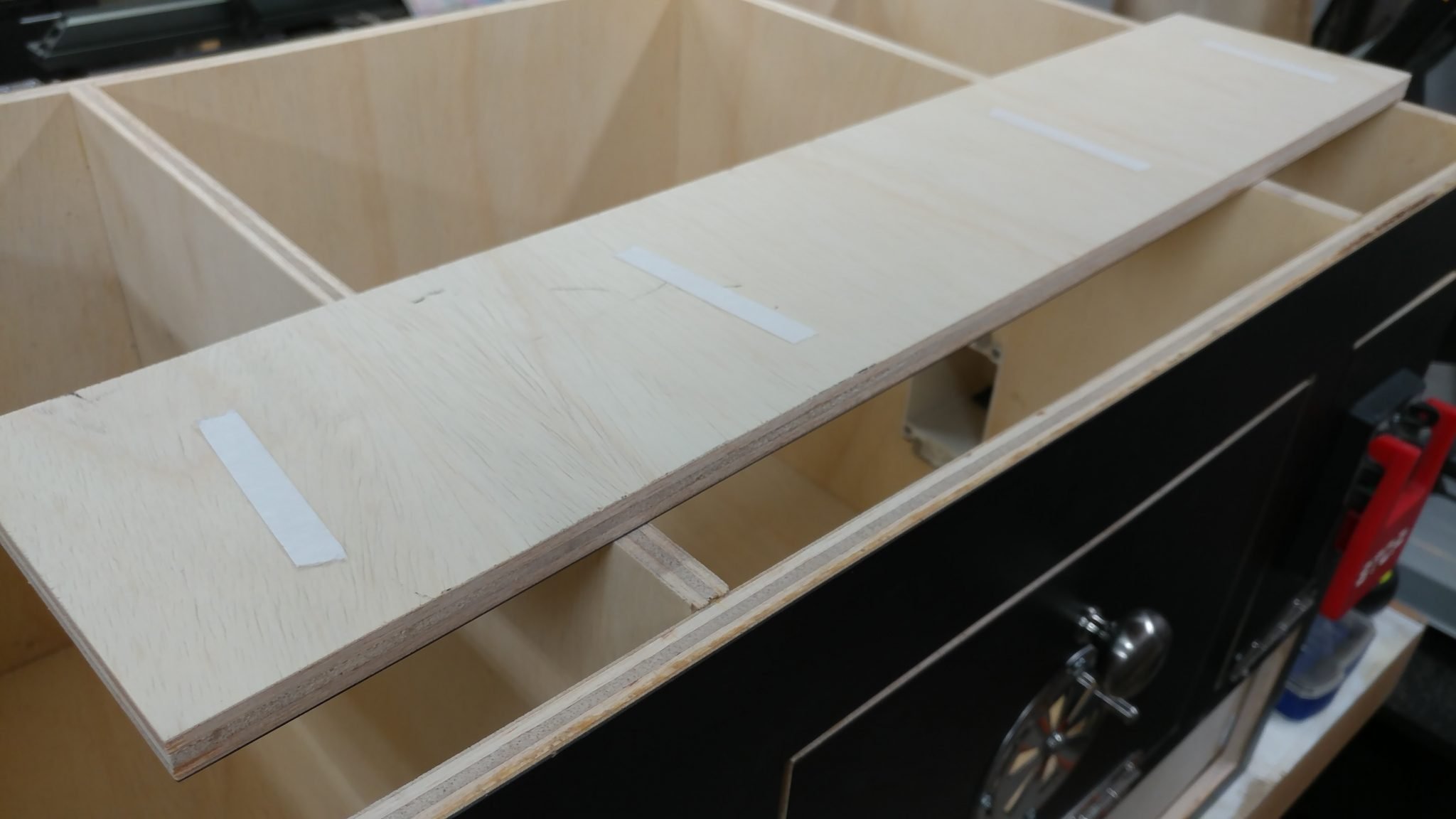
Double-sided tape was attached to the back of the drawer face.


I used the same 1/8″ thick spacers to position the drawer face.


Then I pressed the drawer face onto the drawer body.


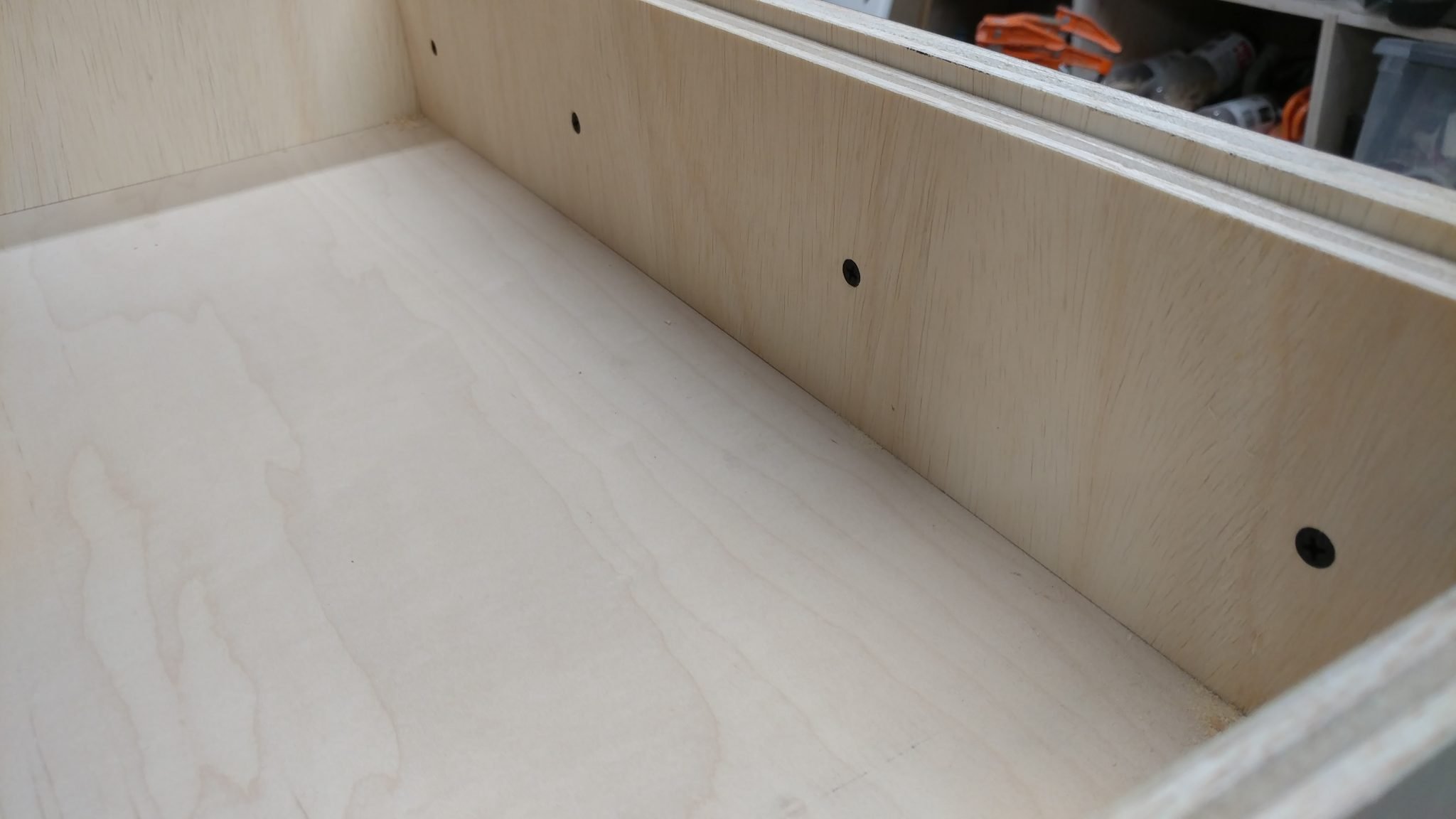
Once that was done, I pulled out the drawer to I could access the inside.


I then secured the face to the drawer with some drywall screws.


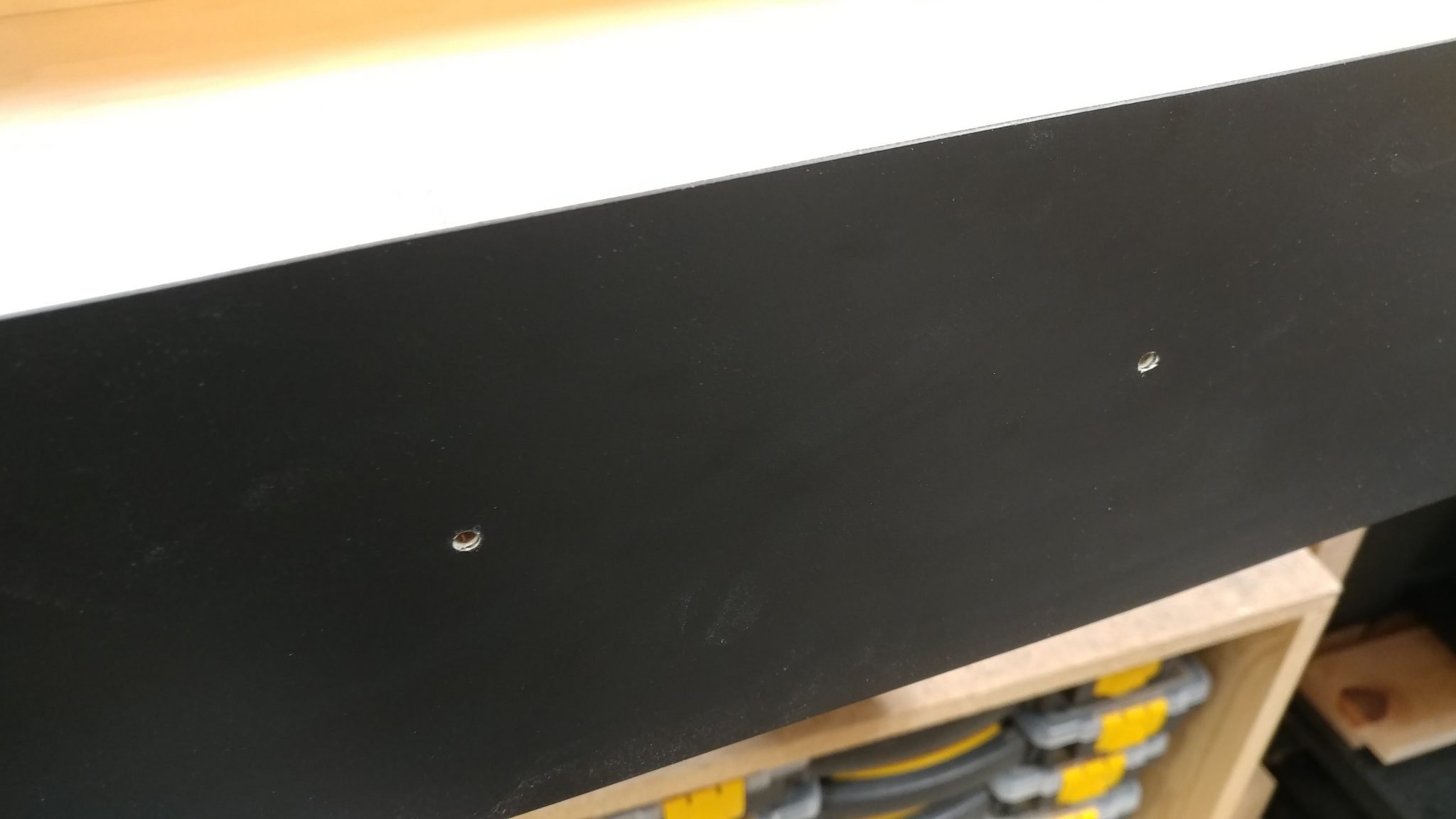
I drilled some holes through the face and the body so I could attach a drawer pull.


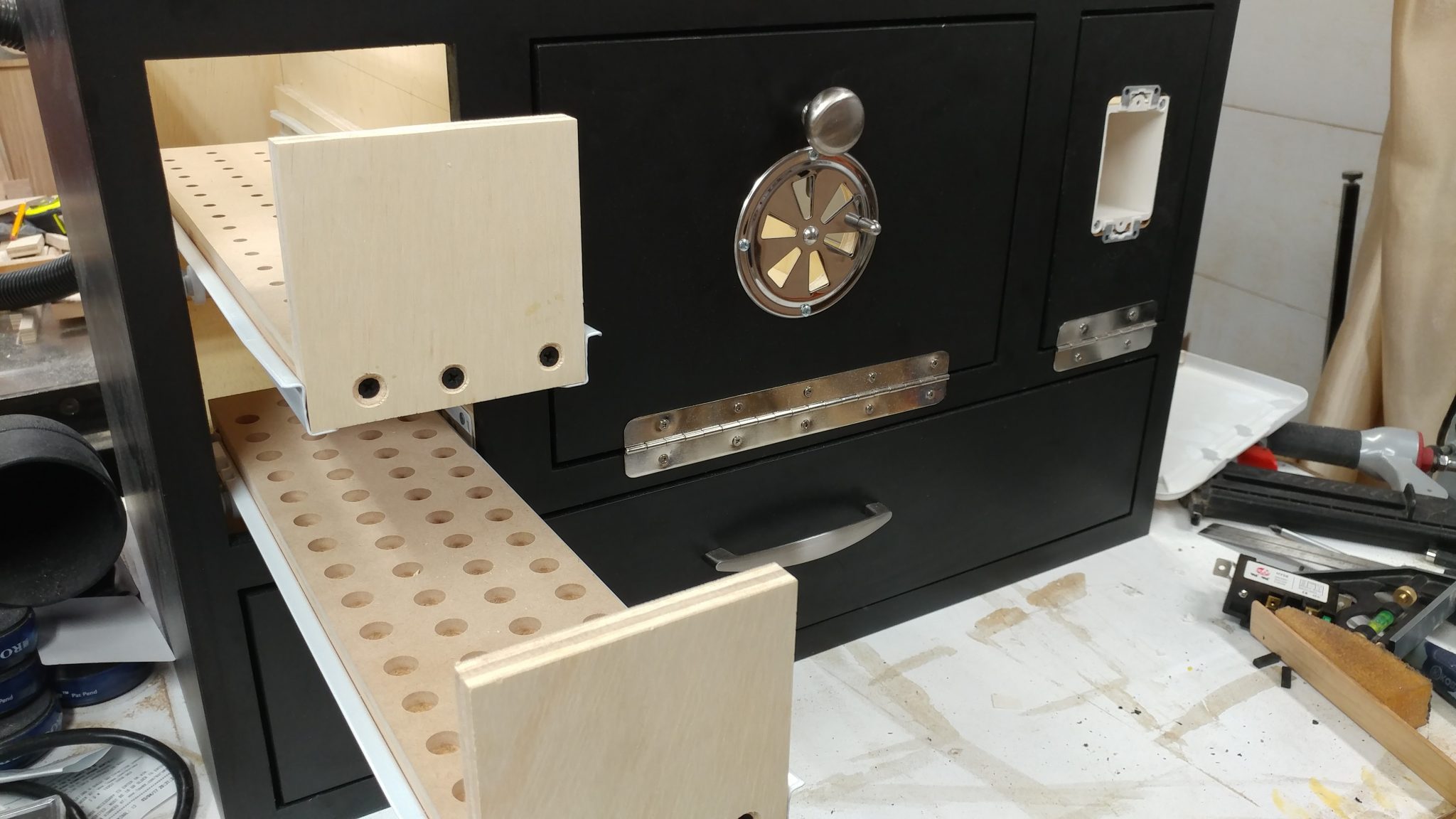
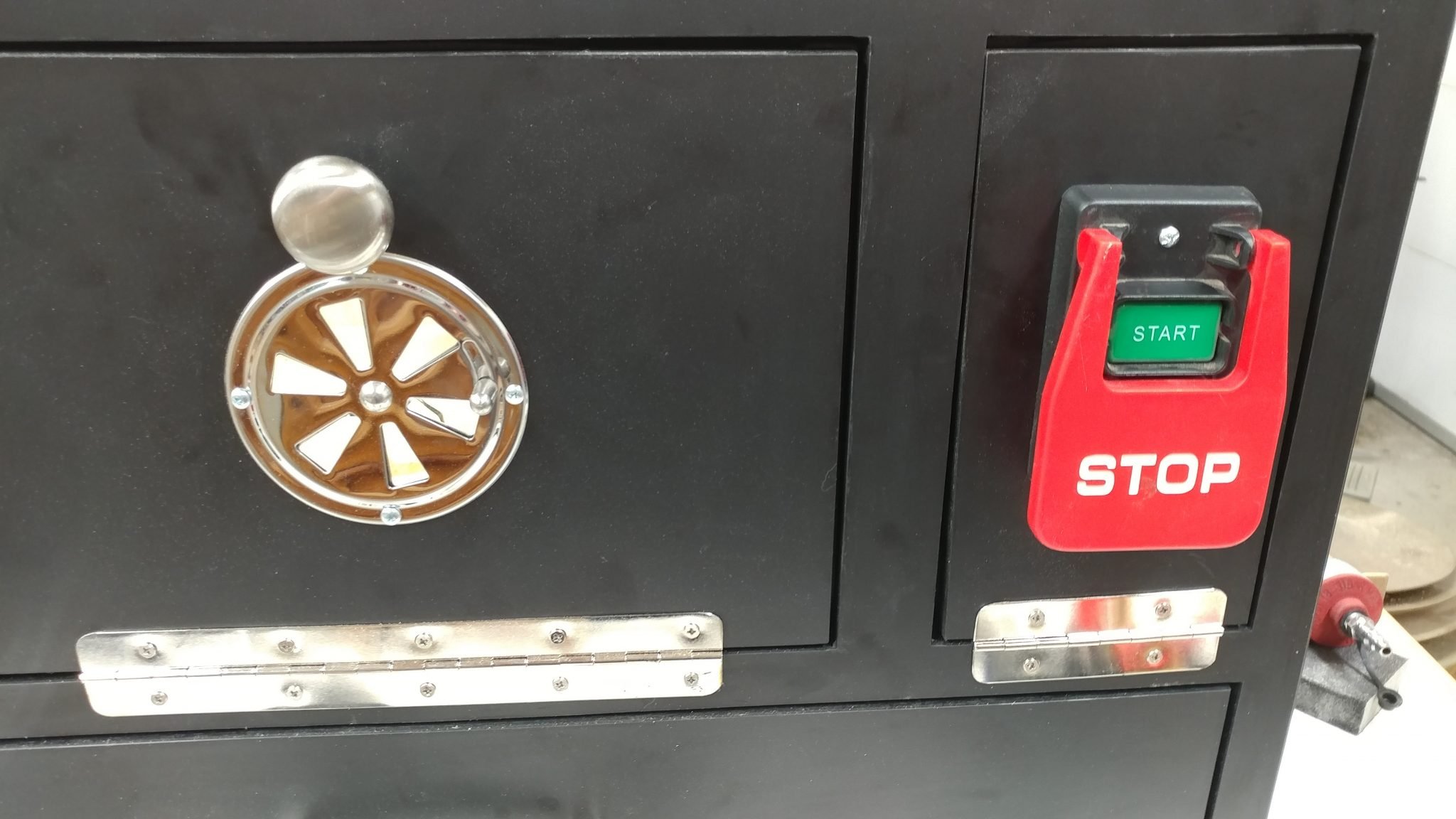
The drawer pull was attached and this drawer is complete.  I also temporarily attached the electrical paddle.  The reason I didn’t install a drawer pull on the electrical door is because I’m not expecting to go into that area very often, if at all, and if I need to, I can just pull the paddle out and it doubles as a handle.


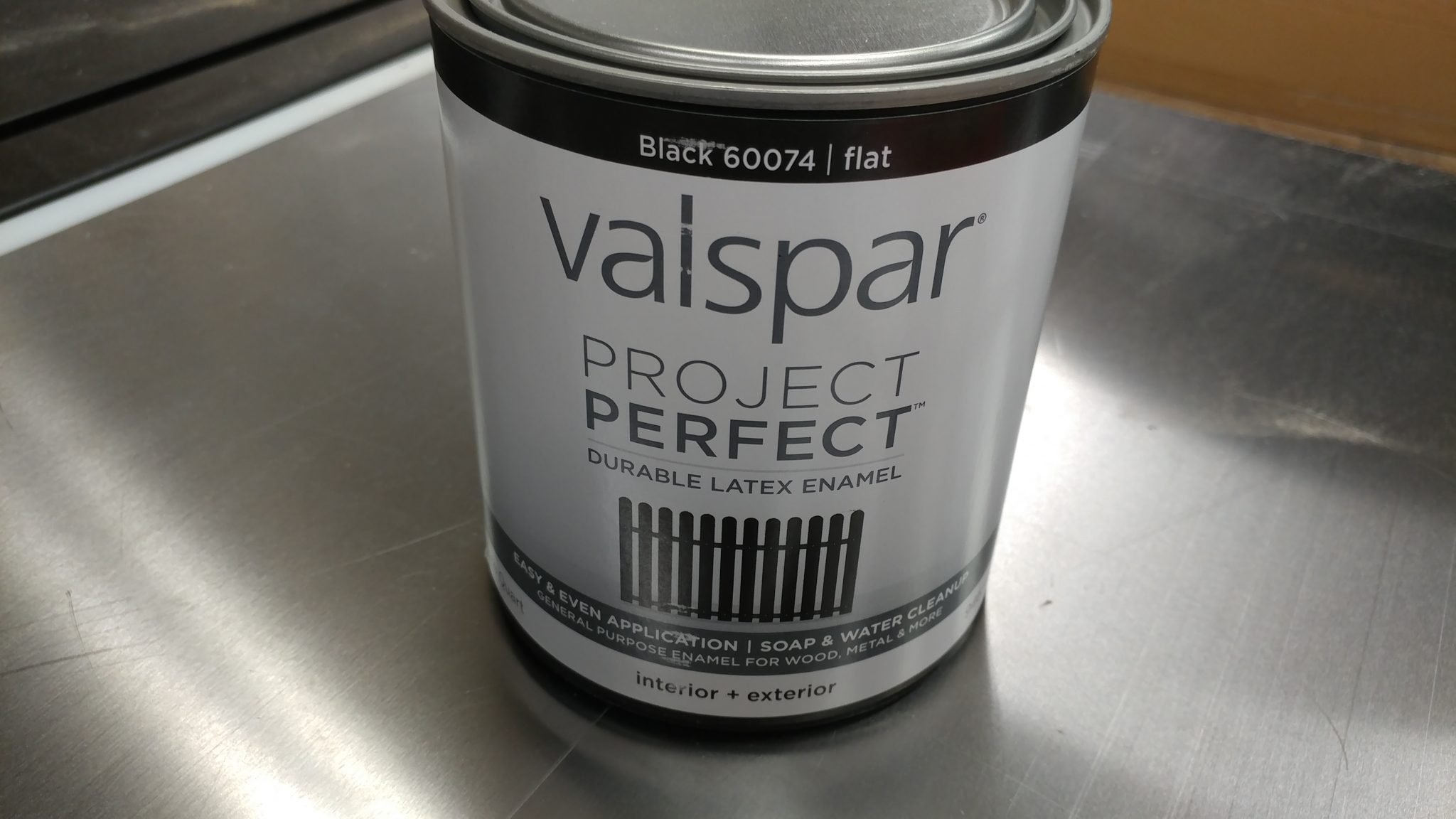
Before finishing up the smaller bit storage drawers, I decided to paint the inner edges of all the openings.  For this I used some black Valspar latex enamel.


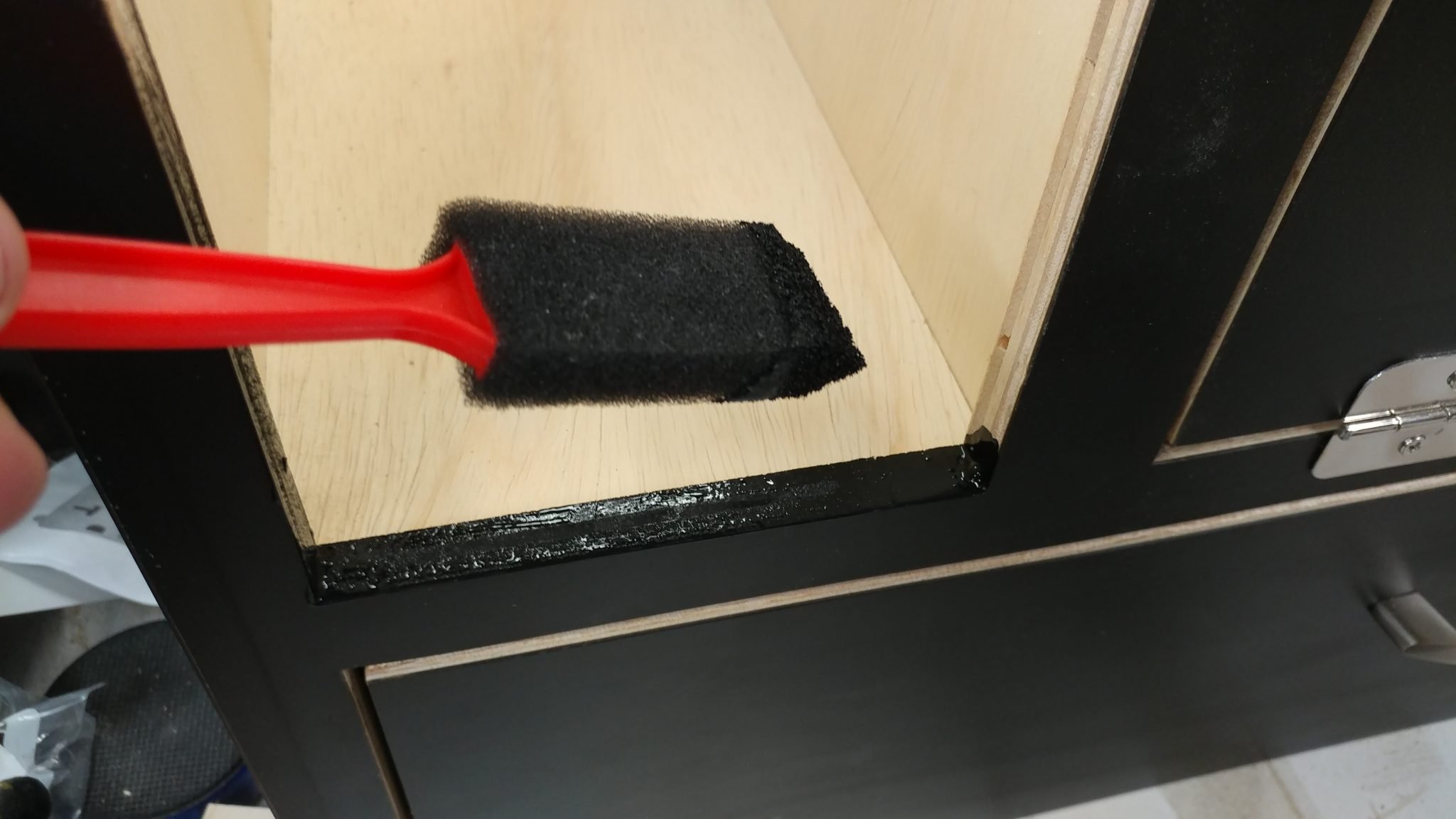
I painted the edges with a cheap foam brush.  It doesn’t matter if I get it off the laminate.  It’s really easy to remove.  I’ll show you how in just a bit.


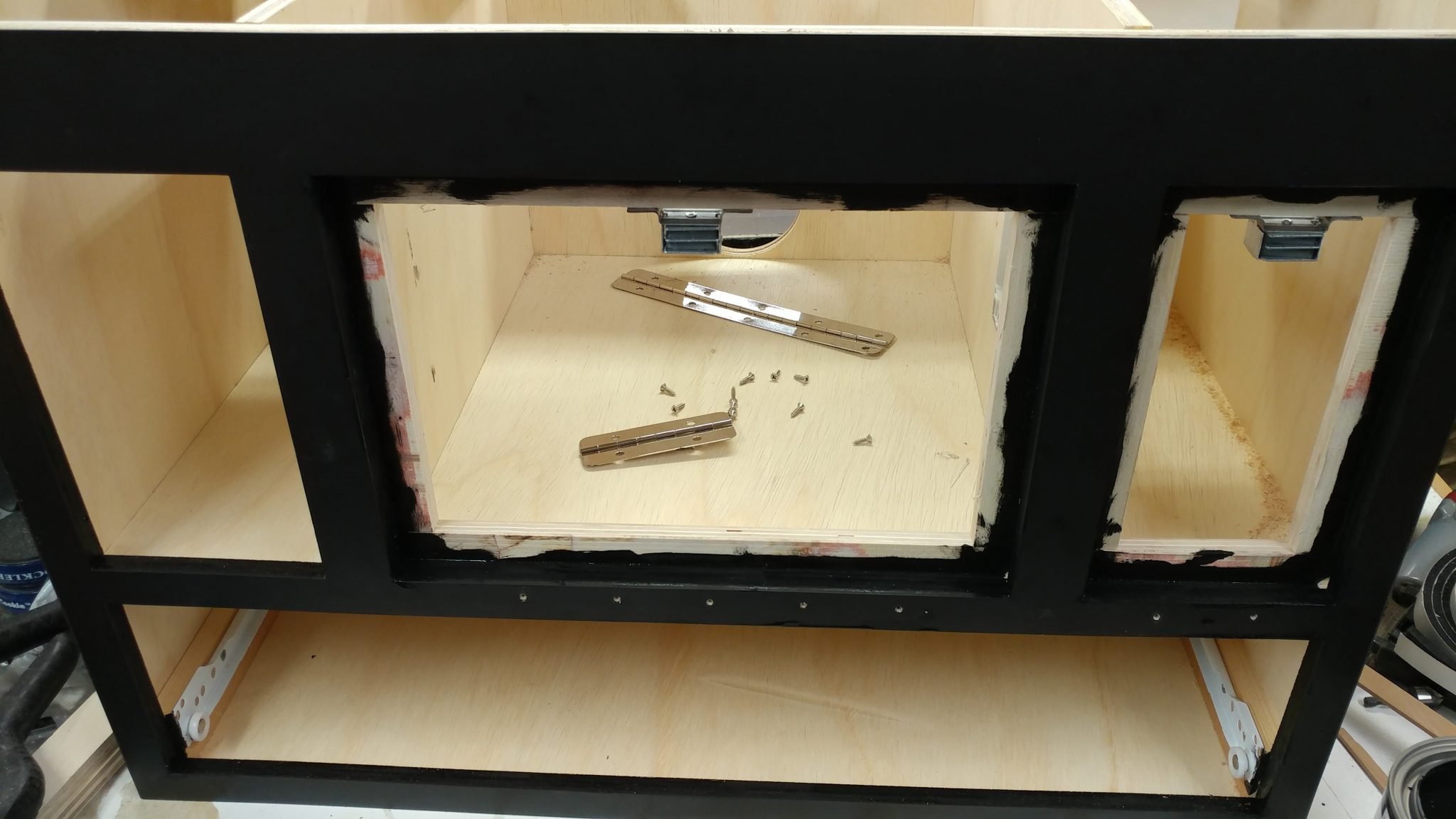
I removed the doors and the drawer so I could get the edges.  The lip that runs along the  inside of the doors doesn’t need to be full covered since it will be covered with weather stripping later.


I also painted the edges of the doors and the face of the drawer.


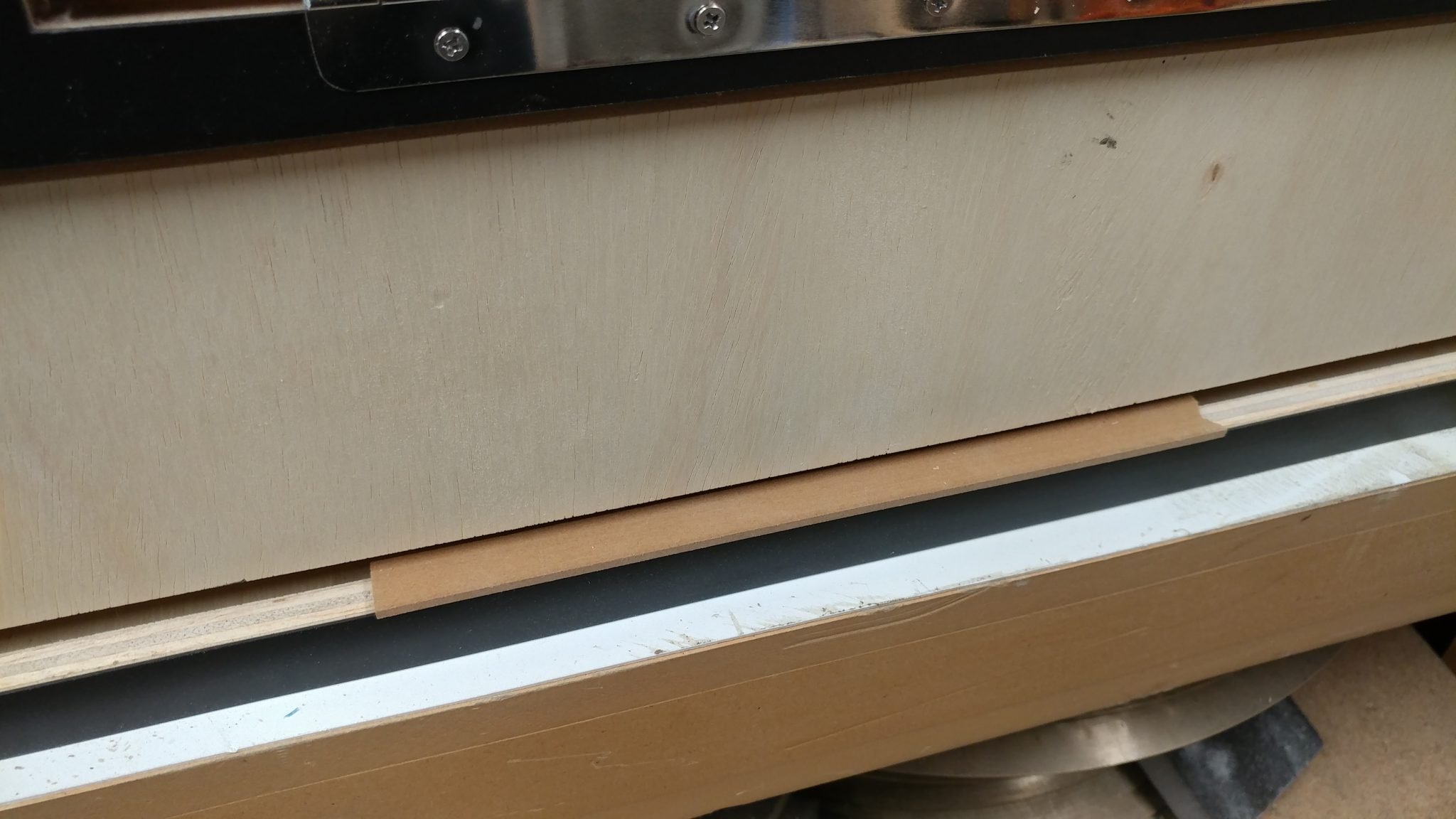
It’s finally time to attach the weather stripping.  I cut pieces to size and attached them to the door lip.


After removing the backing tape, you can see that it makes a nice black barrier that should regulate the airflow in the cabinet.


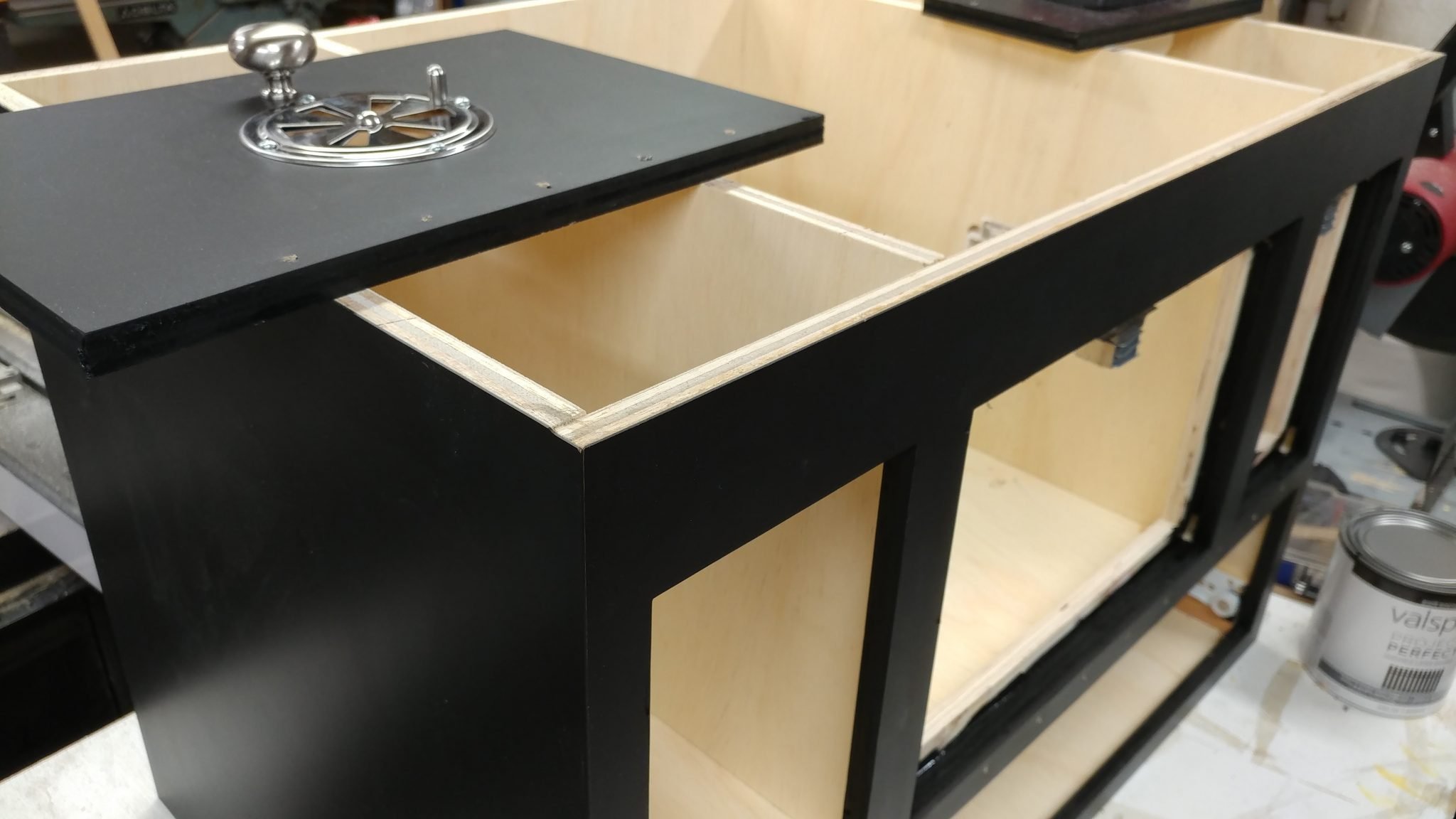
I could then reattach the doors and the drawer.  With the edges painted, it has a nice finished look.


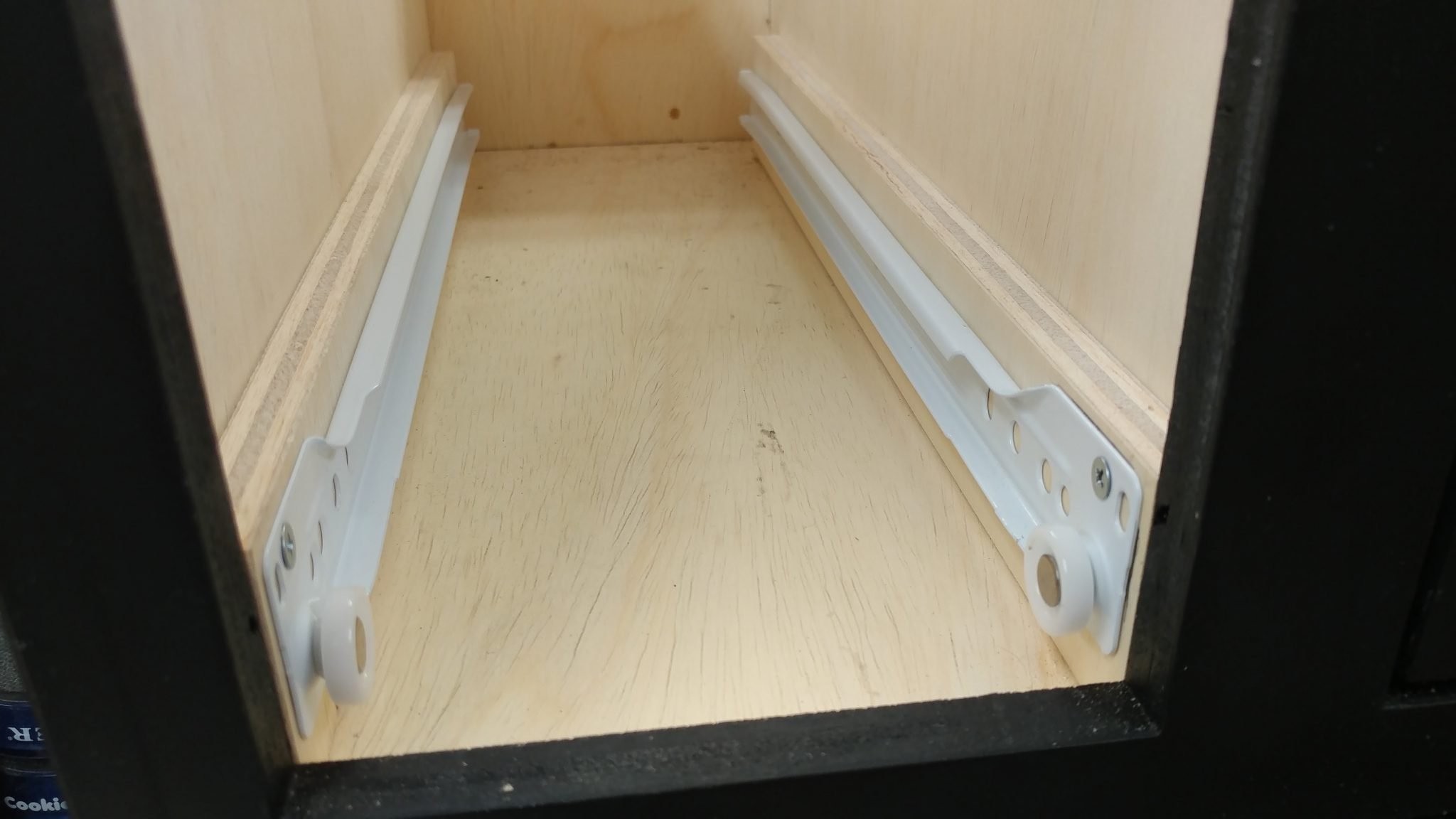
To attach the drawer glides for the bit storage drawers, I cut some 1/2″ plywood into strips.


These were then attached to the inside of the cabinet opening.


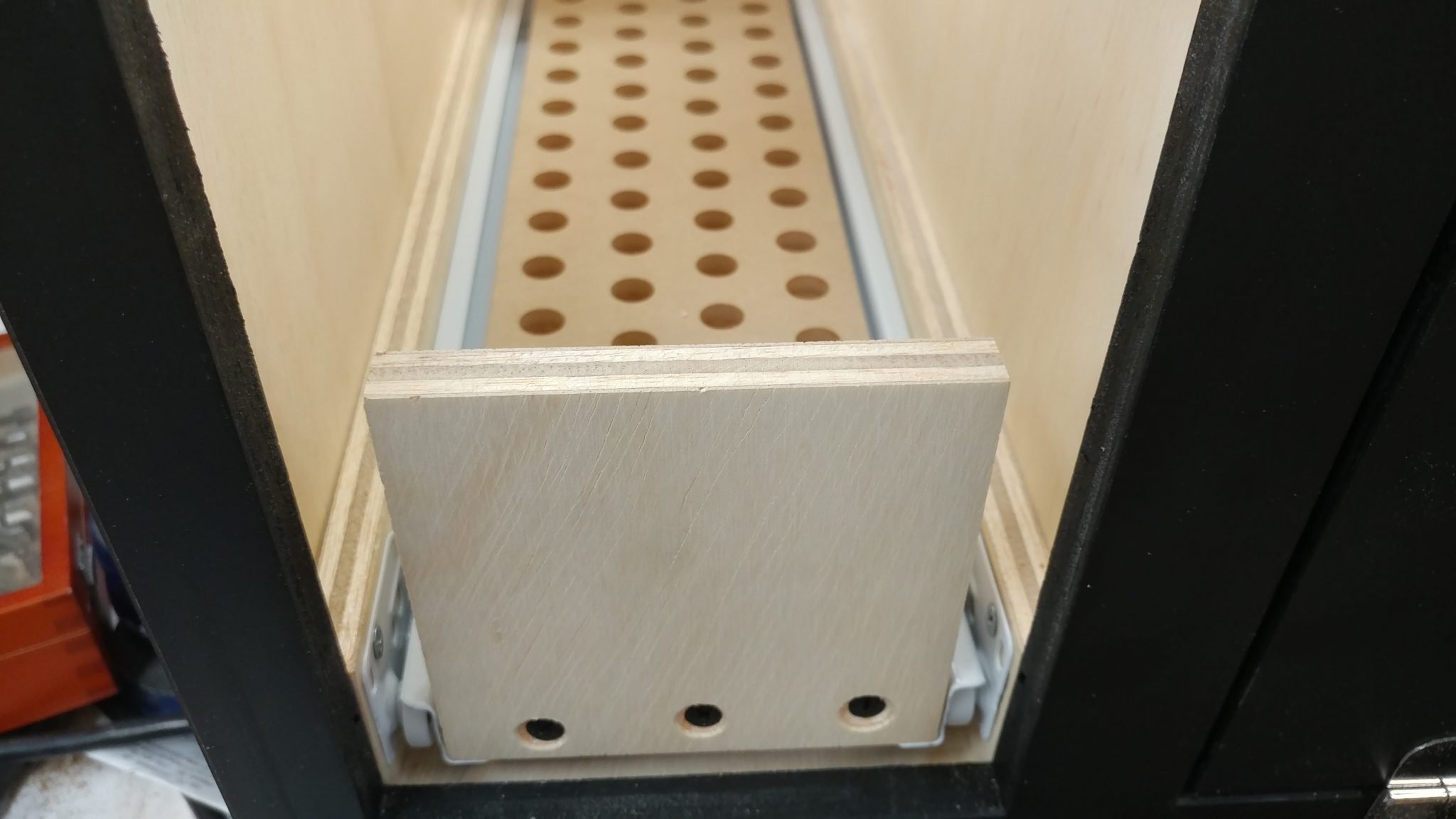
The drawer glides were attached…


…and one of the drawers was inserted.


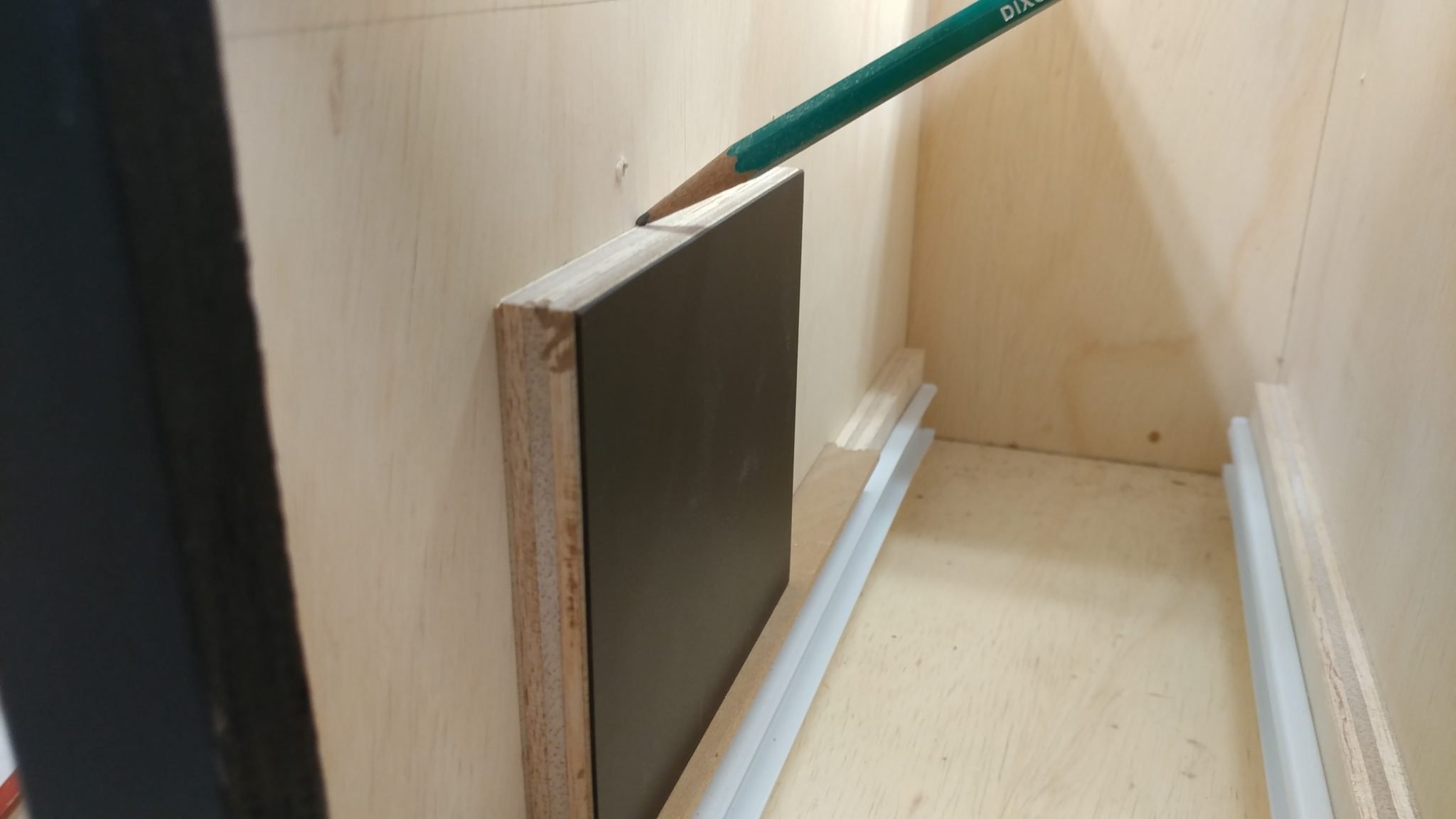
I used the drawer face and a few 1/8″ spacers to mark where the top of the upper strips should be mounted.


The strips were glued and screwed like the others.


To position where I wanted the drawer glides, I used a combination of a piece of 1/2″ plywood plus a 1/8″ spacer – which is how I positioned the  lower glide – pluse two more 1/8″ spacers and the faceplate for one of the drawers.


The drawers are now in position.


I attached the faces the same way that I did for the bigger drawer.  First I attached some double-sided tape…


…and attached it using some 1/8″ spacers on the edges.


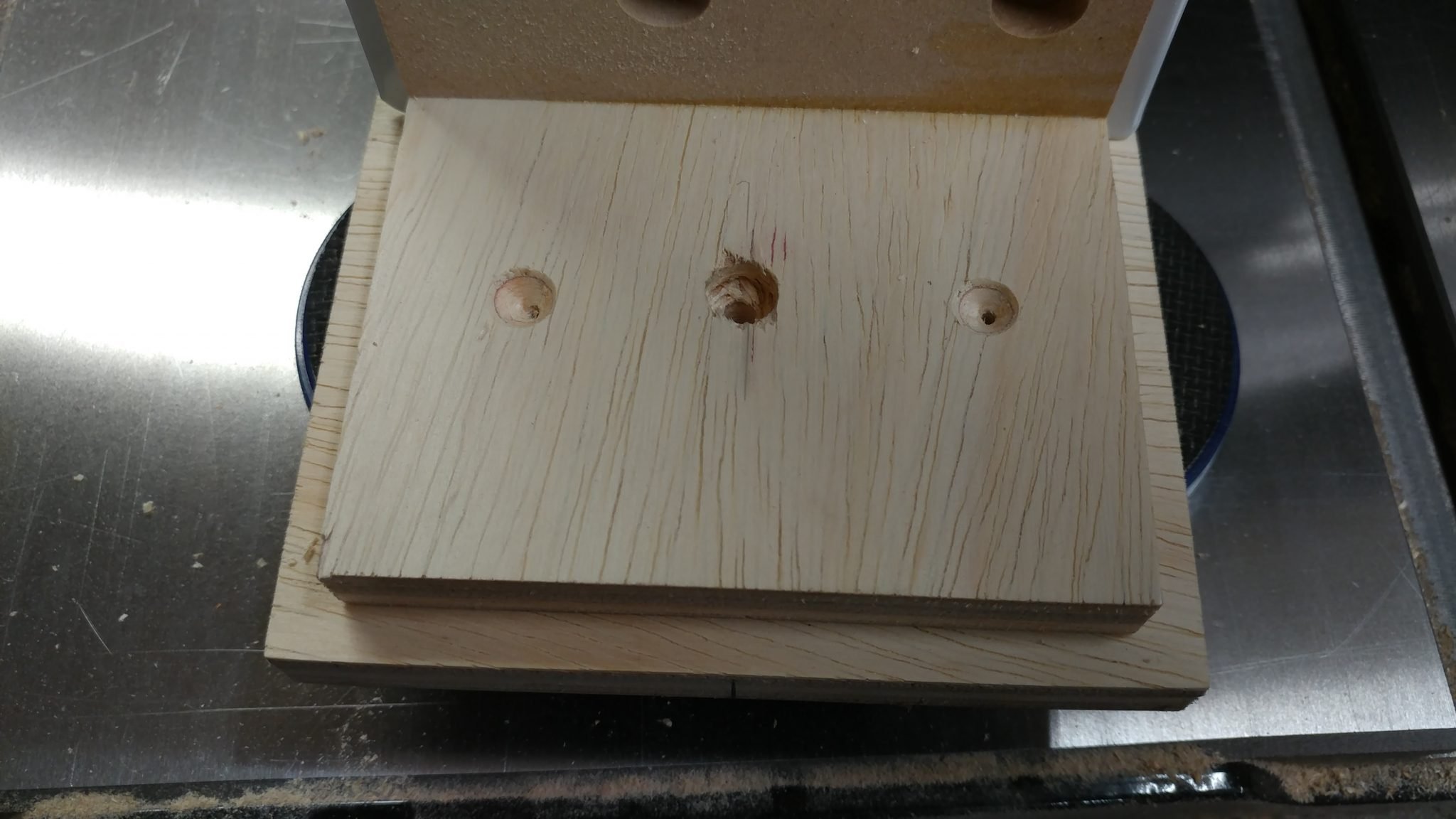
Then I removed the drawer and drilled and countersunk some holes for drywall screws.  I also drilled a hole for the knob hardware.  The screw wasn’t quite long enough to go through both pieces of plywood so I had to drill a recessed area for the head of the screw.


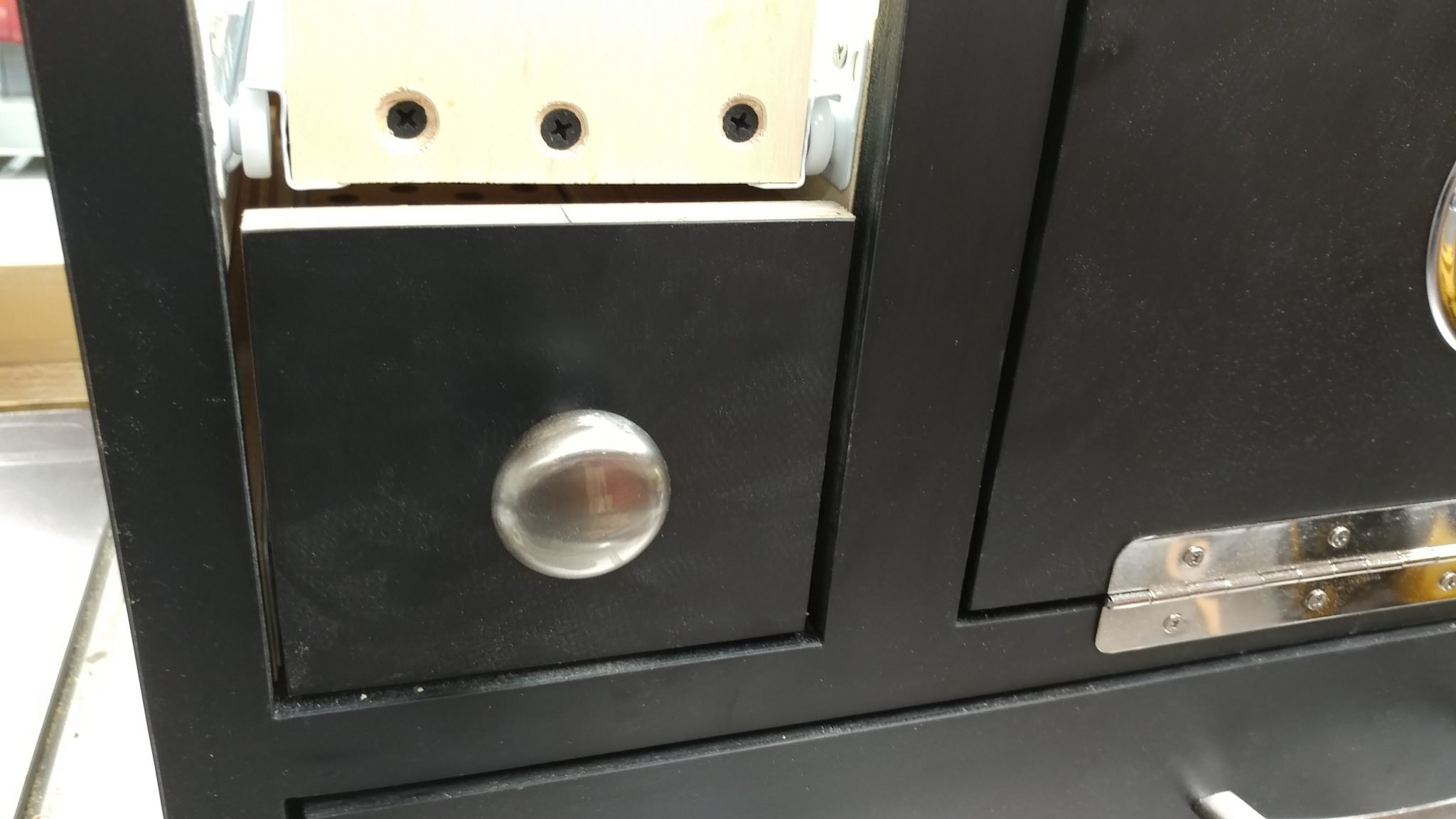
Then I attached the knob.


After that, I repeated the process for the upper drawer then I painted their edges like I did for the other drawers.


Installing the electrical


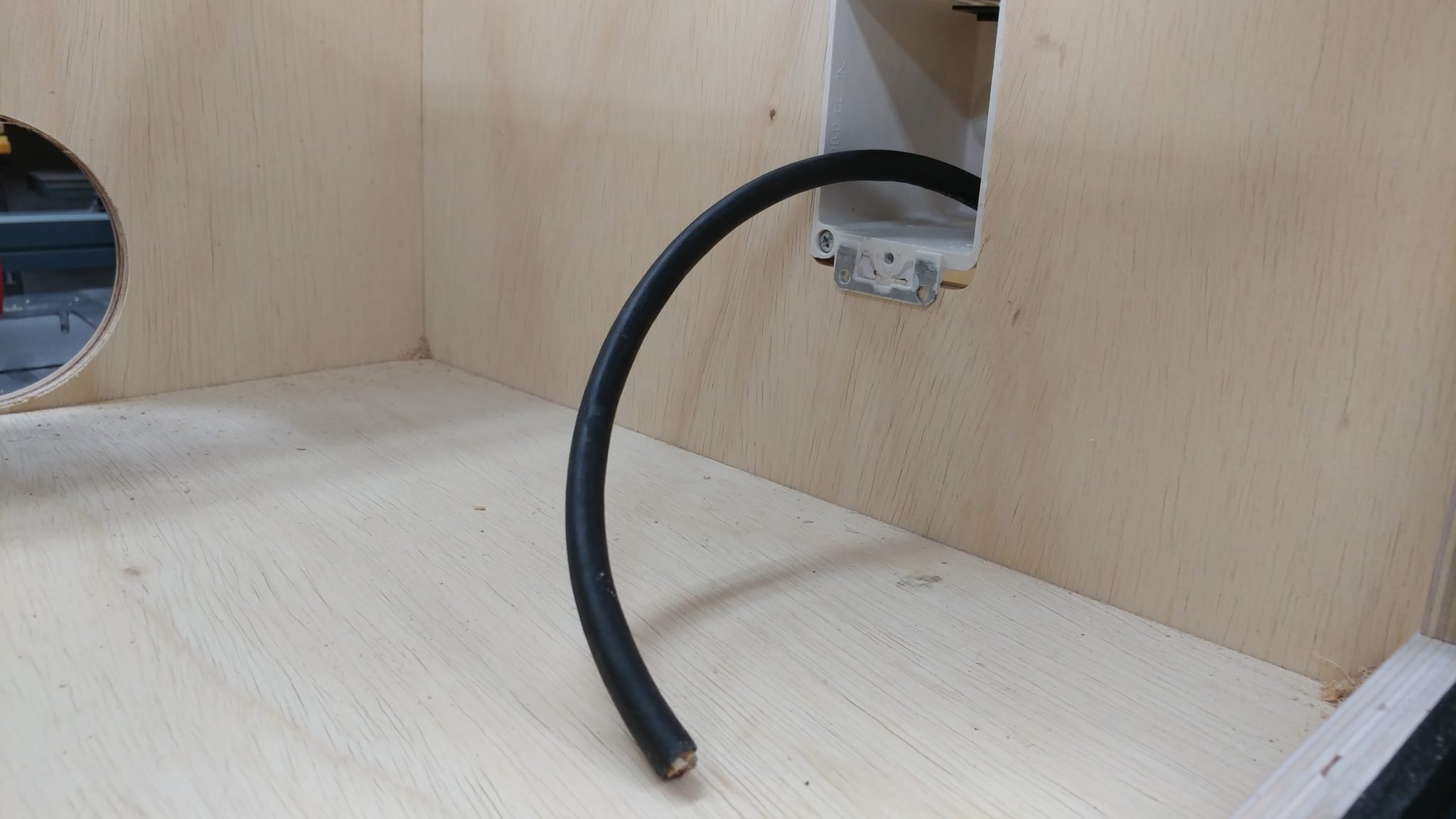
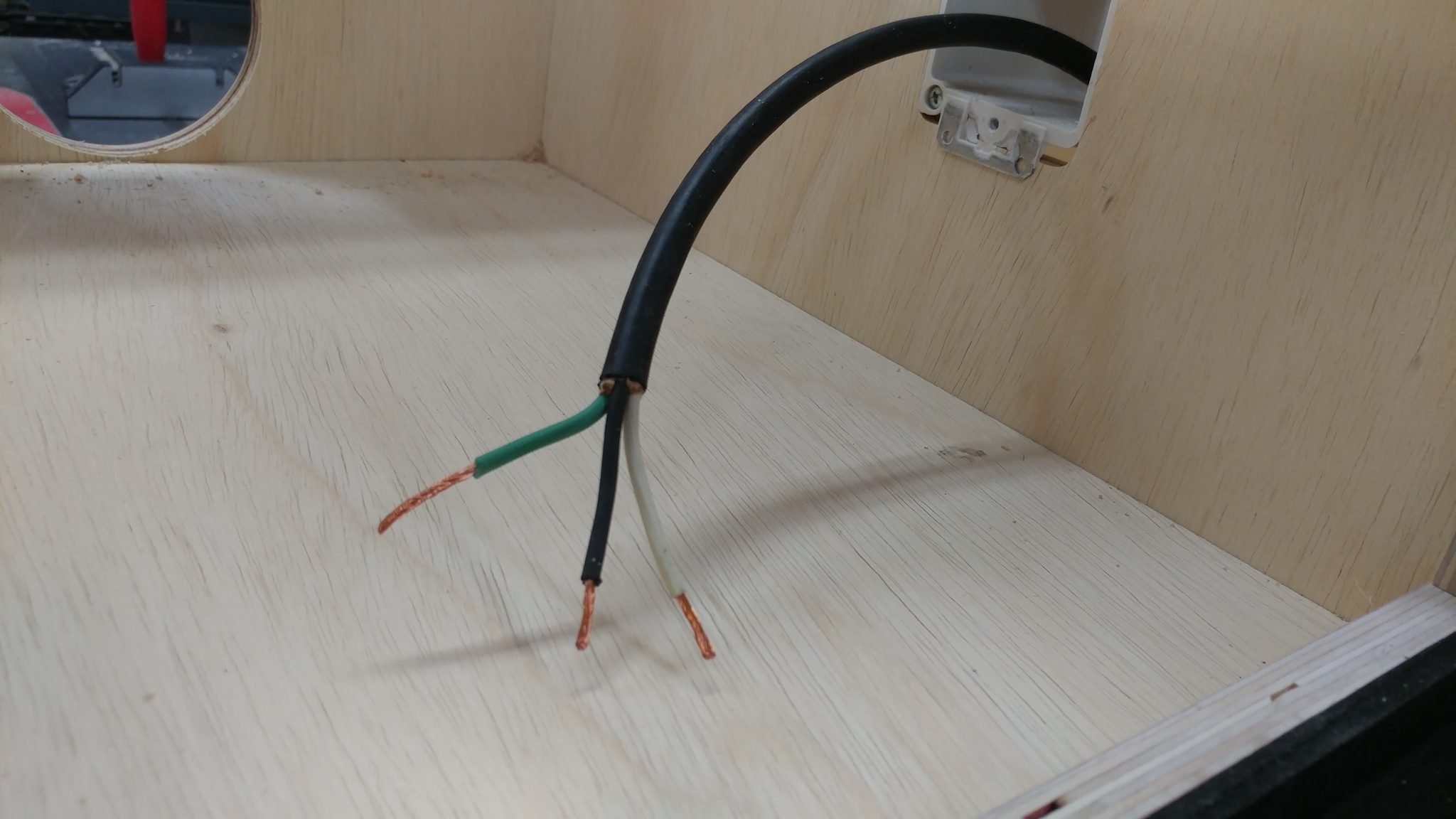
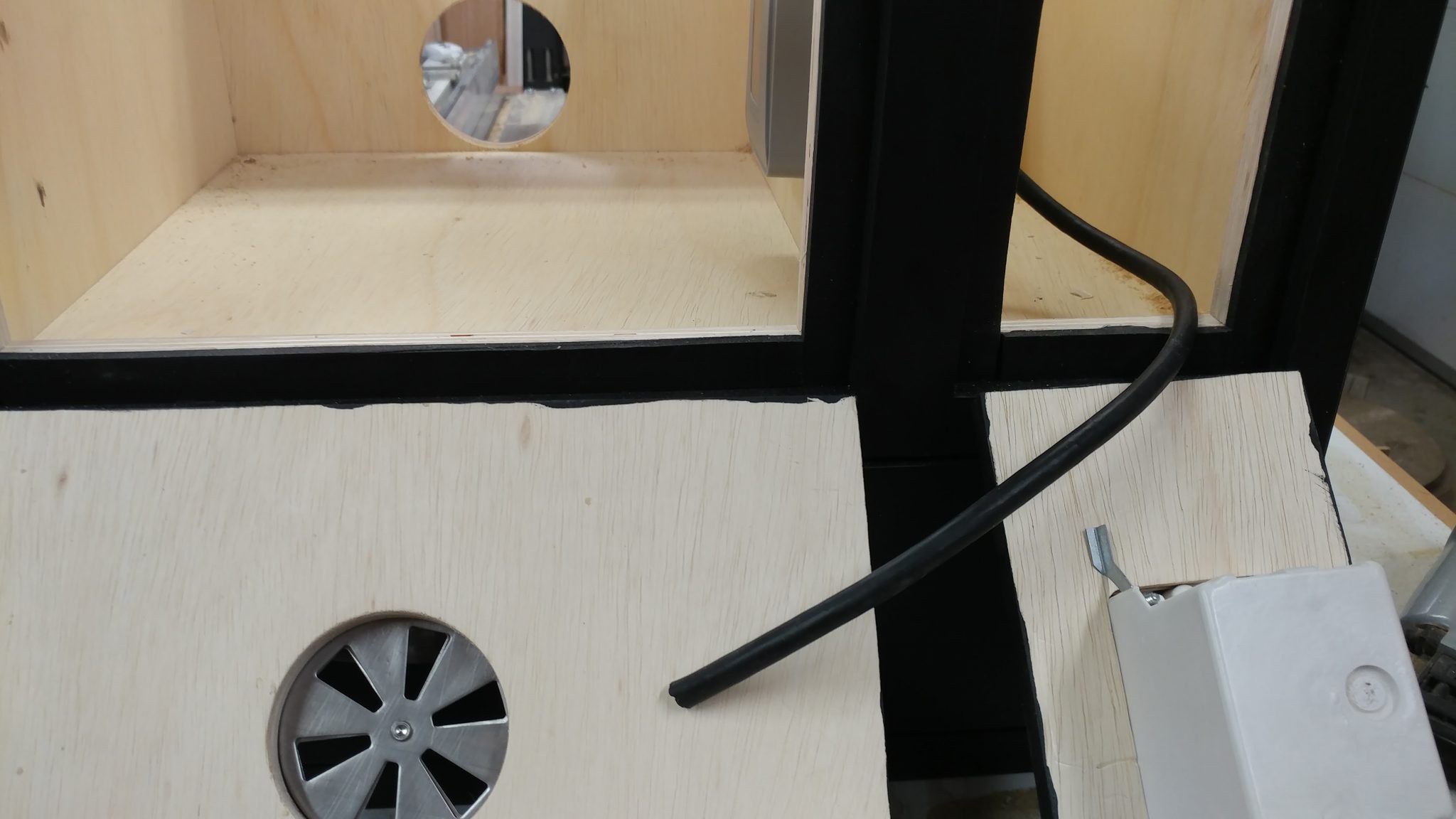
To hook everything up, I’m going to need two lengths of 3-conductor S.O. cord, which can be purchased at nearly any home improvement store.  I bought a 10′ length and inserted one end through the electrical door and routed it through the electrical box on the inside of the main cabinet.


3-conductor S.O. cord has just that…3 conductors.  In this case, it’s a hot, a neutral, and a ground.  This is a standard setup for 110 VAC systems.  I start by stripping the wire to exposed the stranded wires, which I then twist so they are easier to work with.


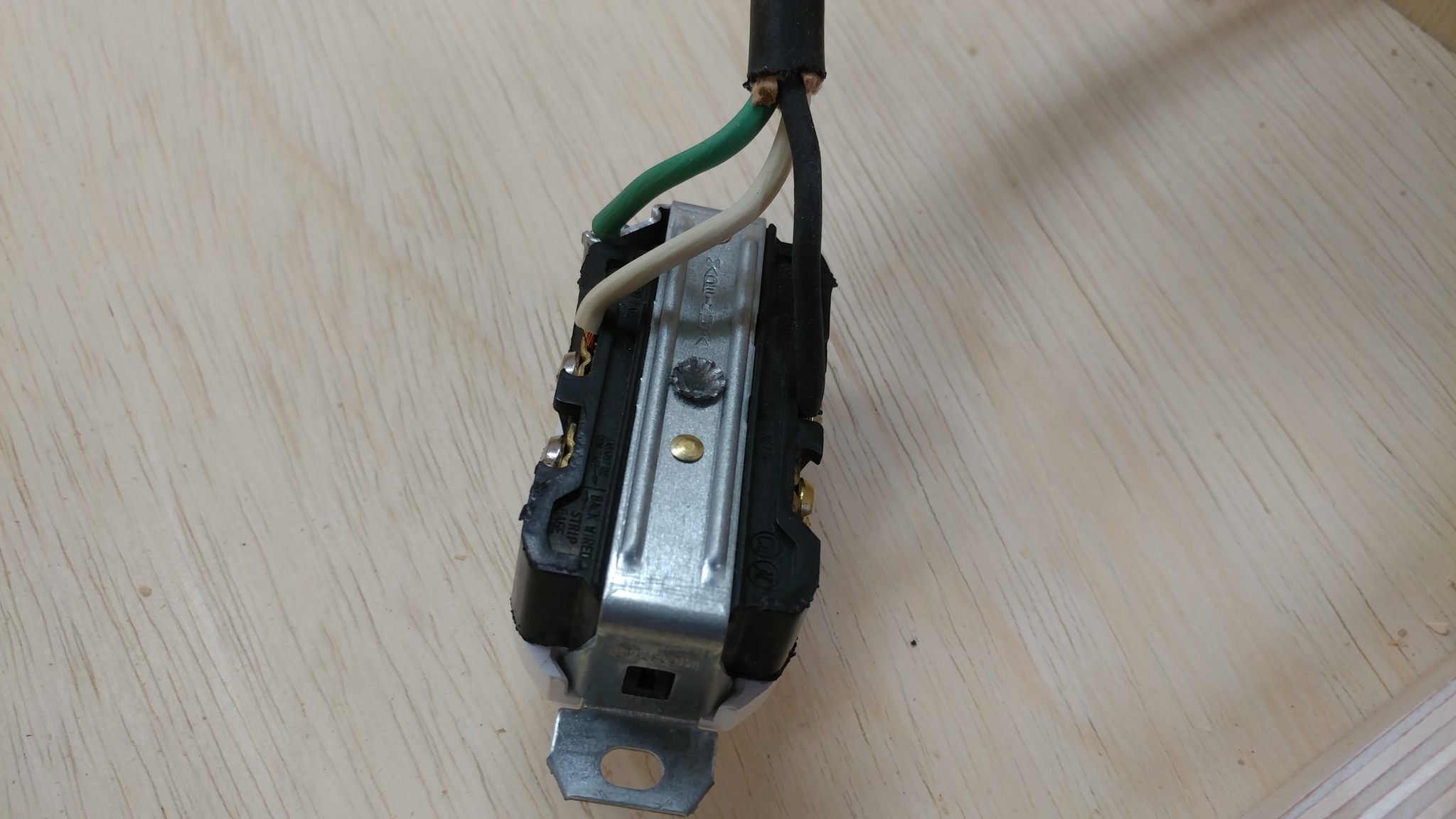
I hook up these wires to the outlet just like you would when installing any standard electrical outlet.  Black to the gold terminal, white to the silver, and the green to the ground terminal.


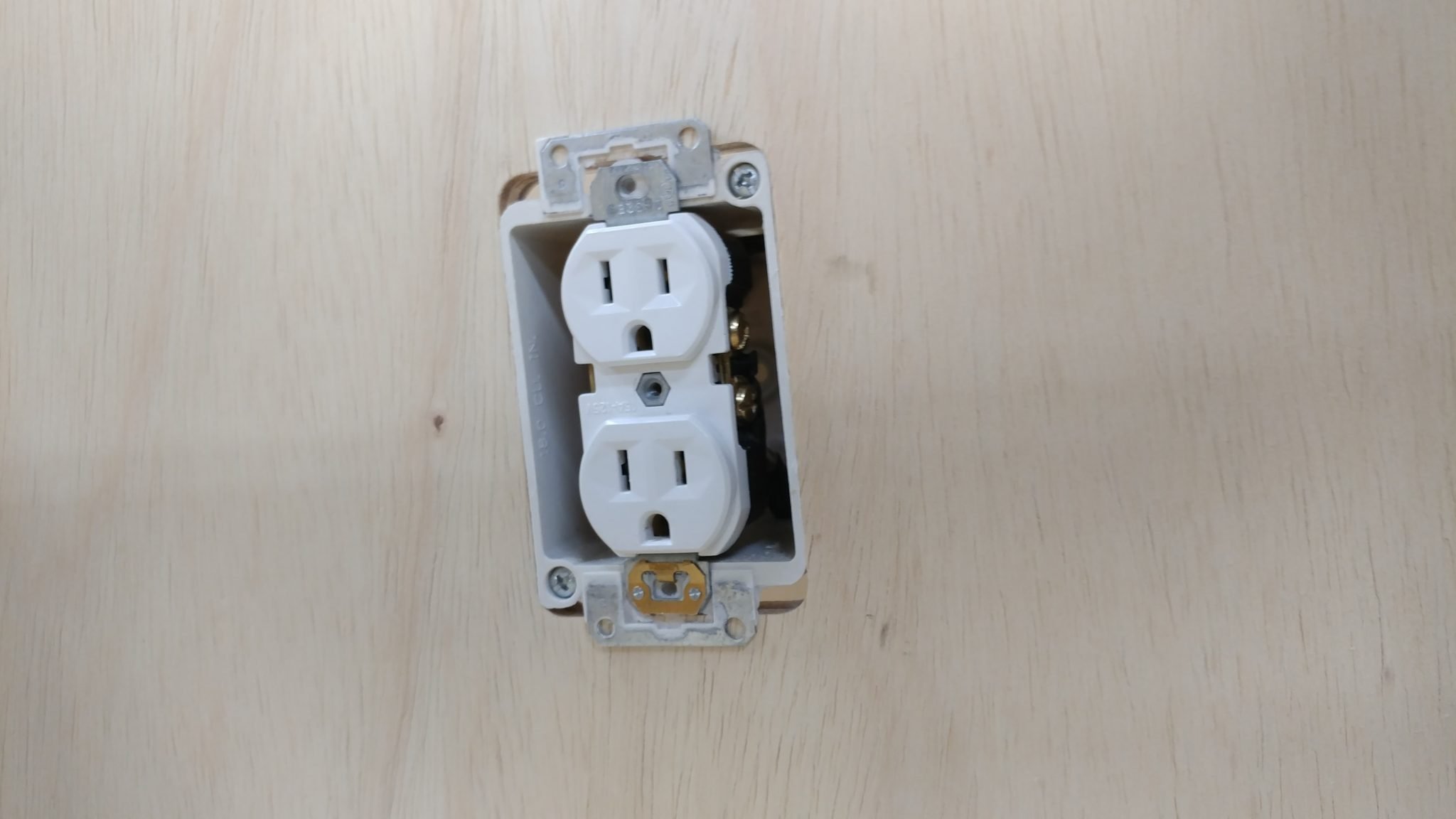
I then fed the wire back into the electrical box so the outlet would sit flush.  I’m not securing it at this time.


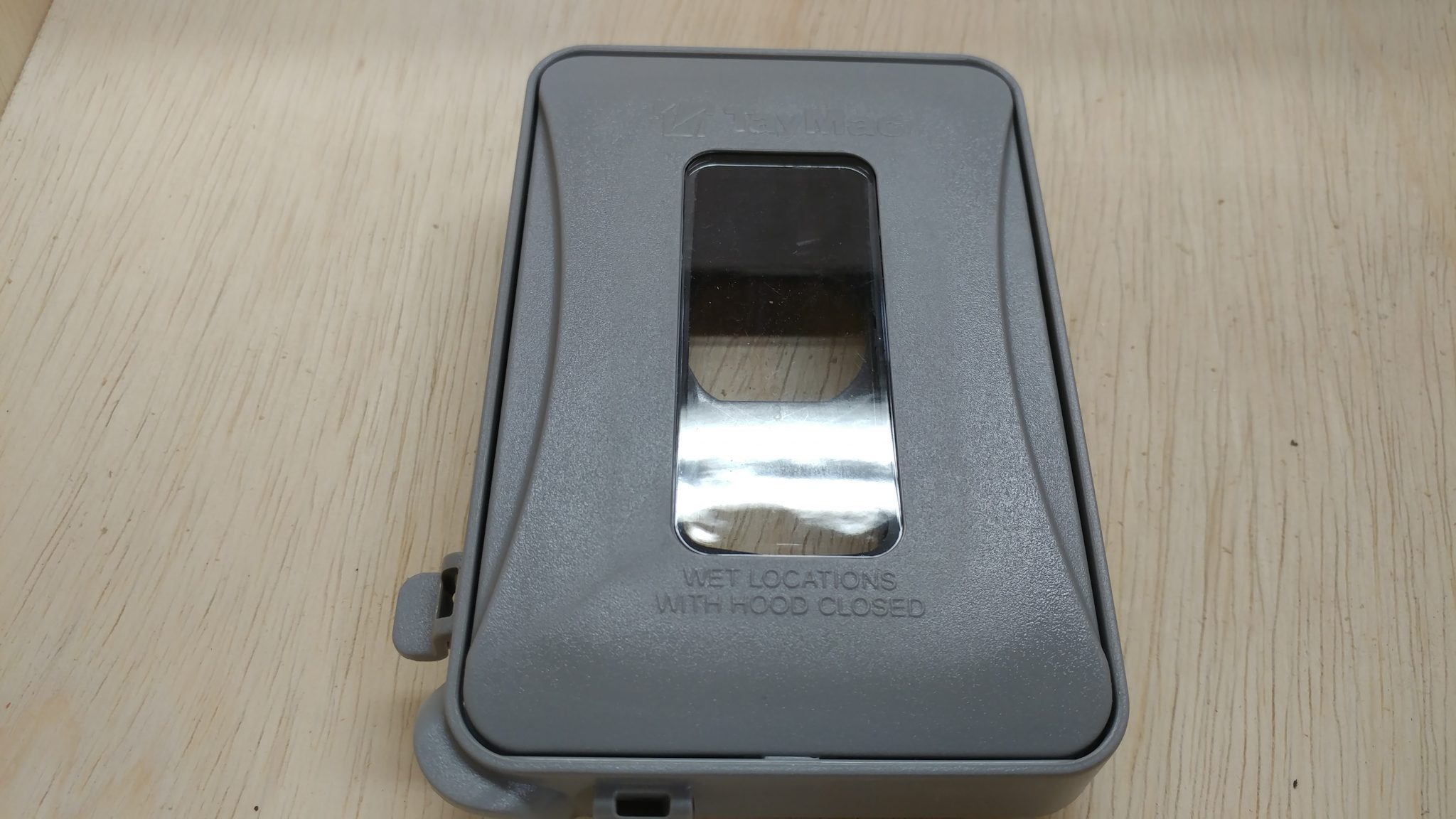
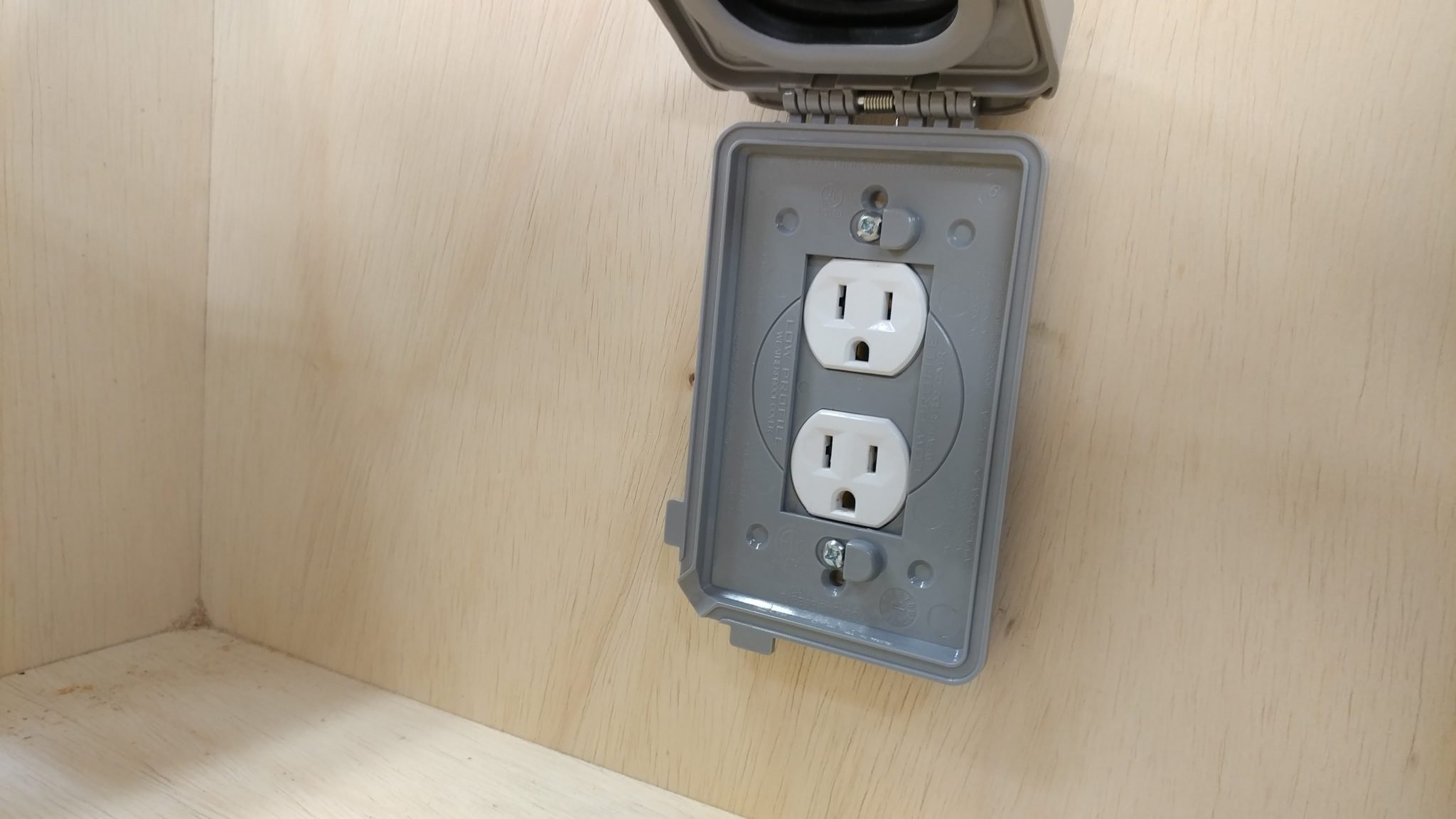
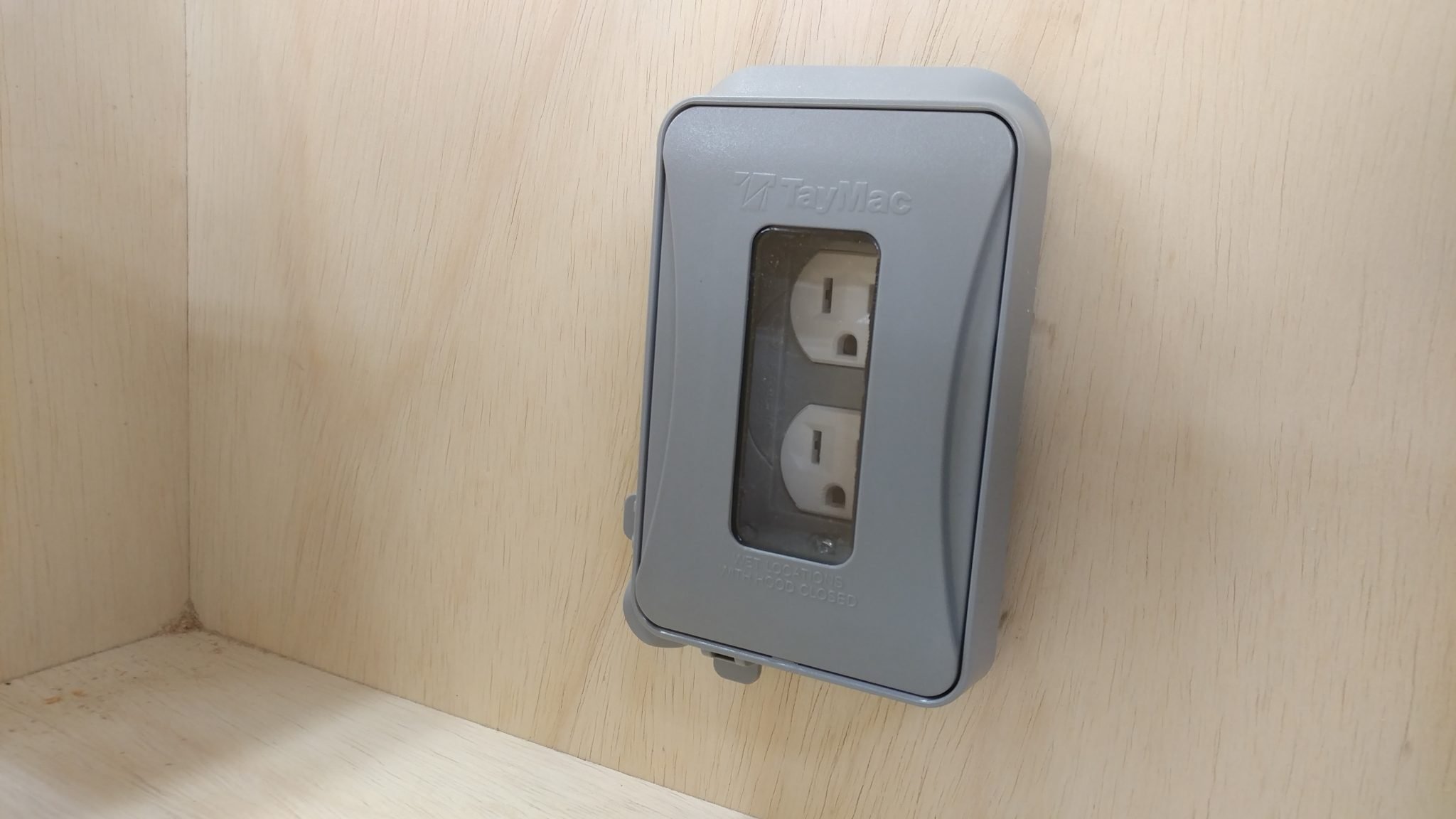
I got an outlet cover to help keep the sawdust out.  It turns out that this was a bad choice as I will explain later.


I installed the outlet faceplate which also secures the actual outlet into the electrical box.


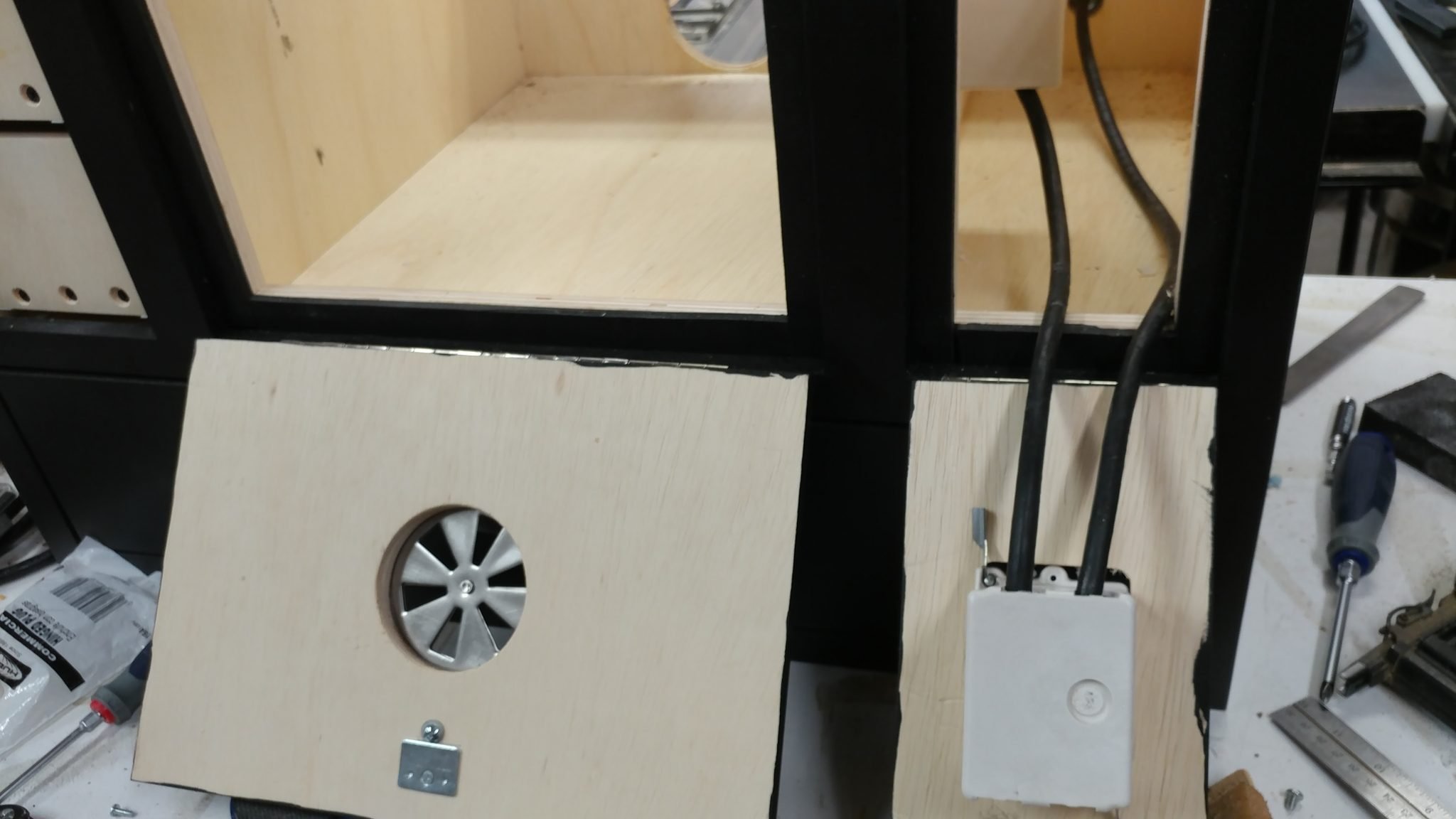
The box then flips down to cover the outlet.


I cut the cord so it would be long enough to reach into the front electrical box with the door open.  I’ll come back to this.


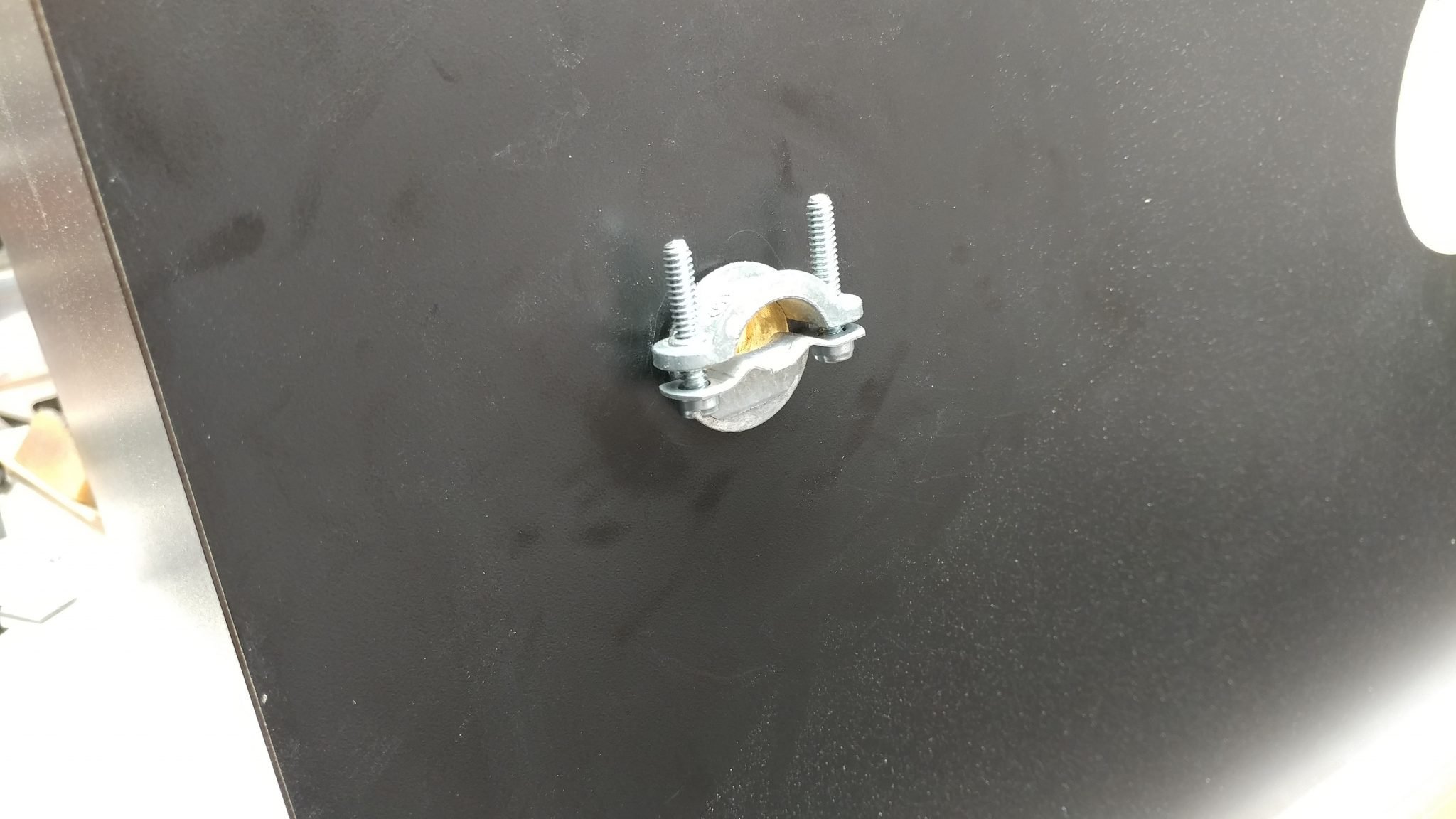
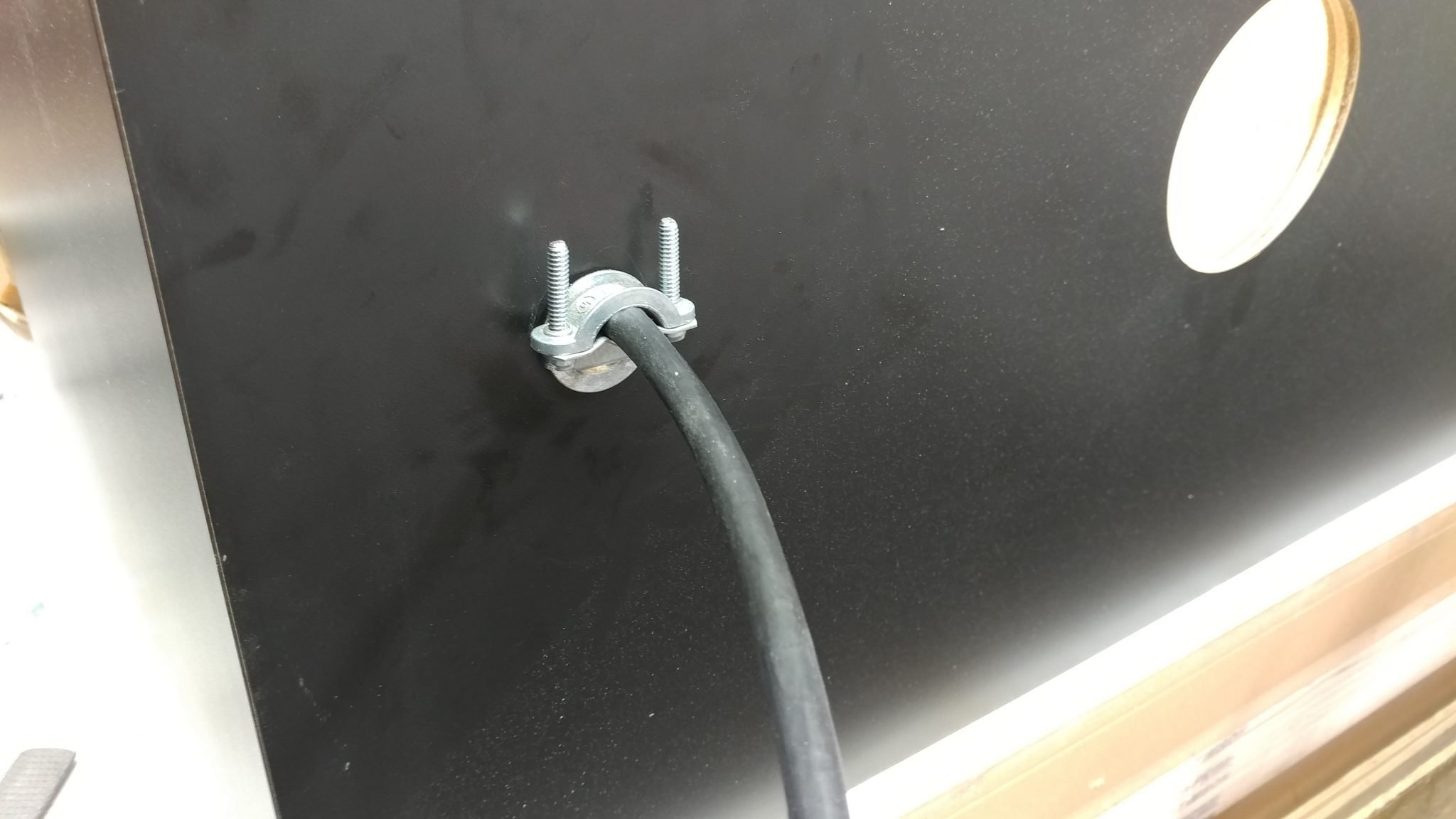
I threaded the strain relief into the smaller hole in the back.


I then fed the rest of the cable into that hole far enough to reach the front electrical box and then tightened the strain relief screws.


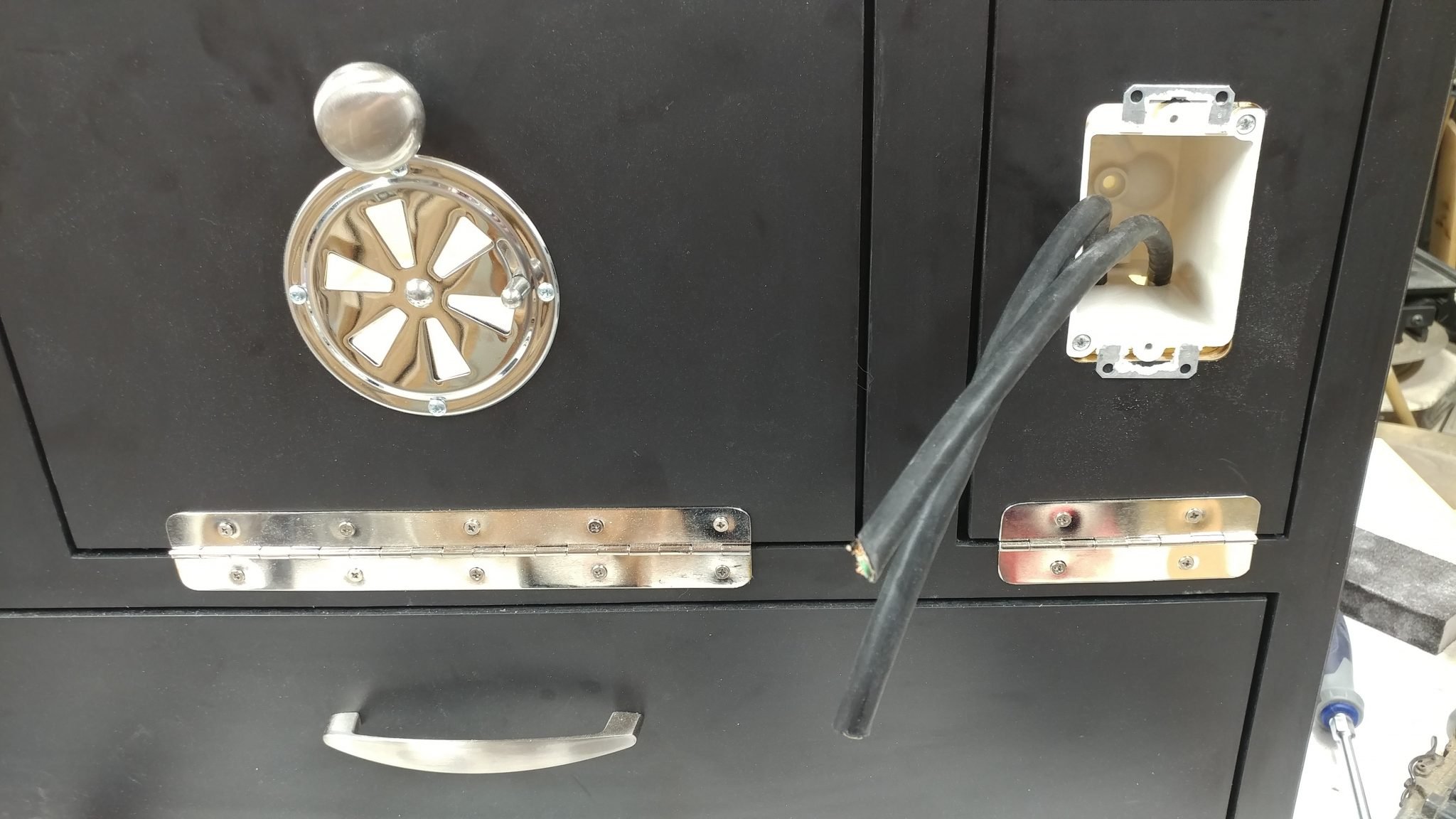
Then it was time to feed both cables into the  front electrical box.


I closed the door so I could finish the wiring.


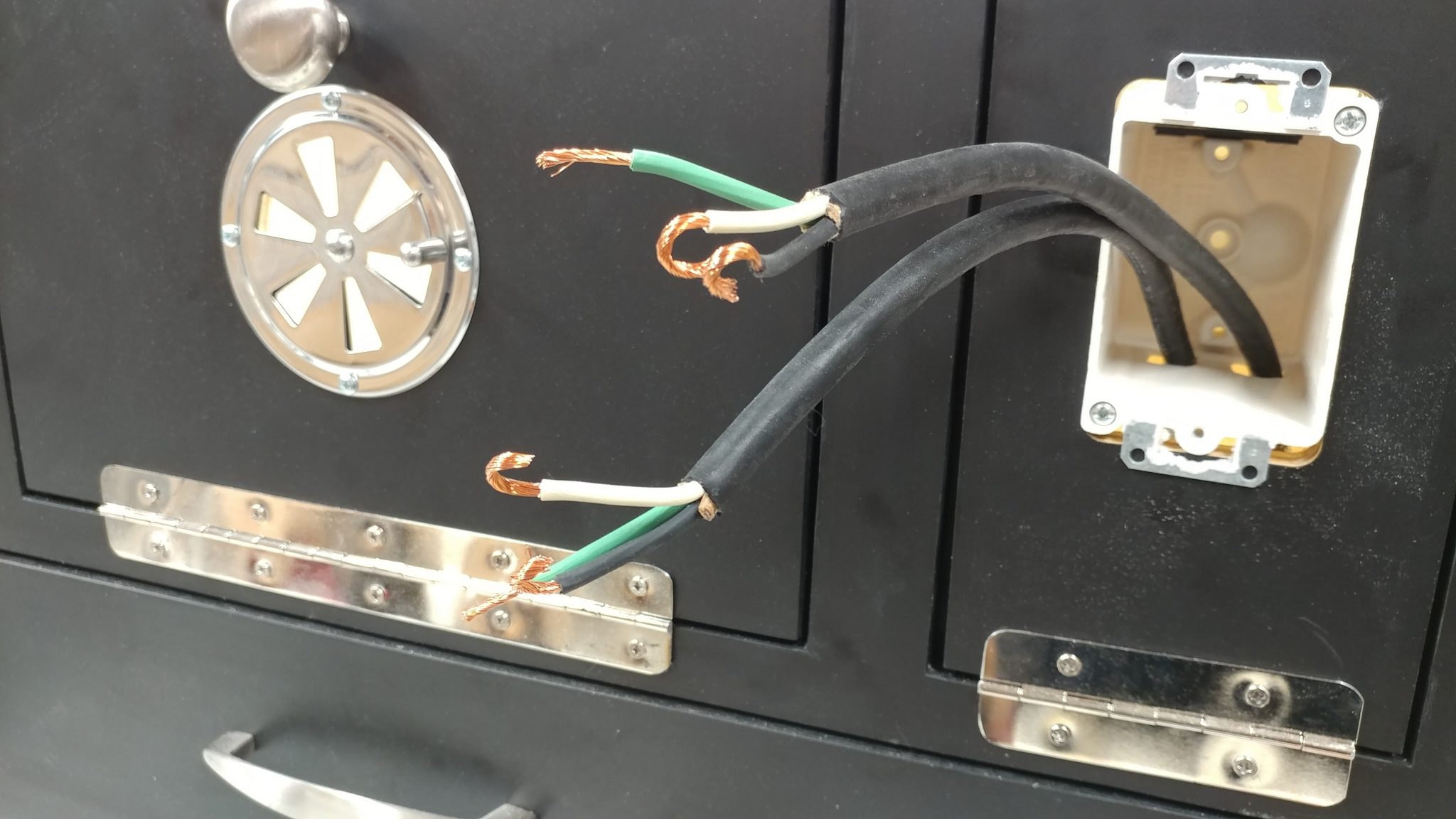
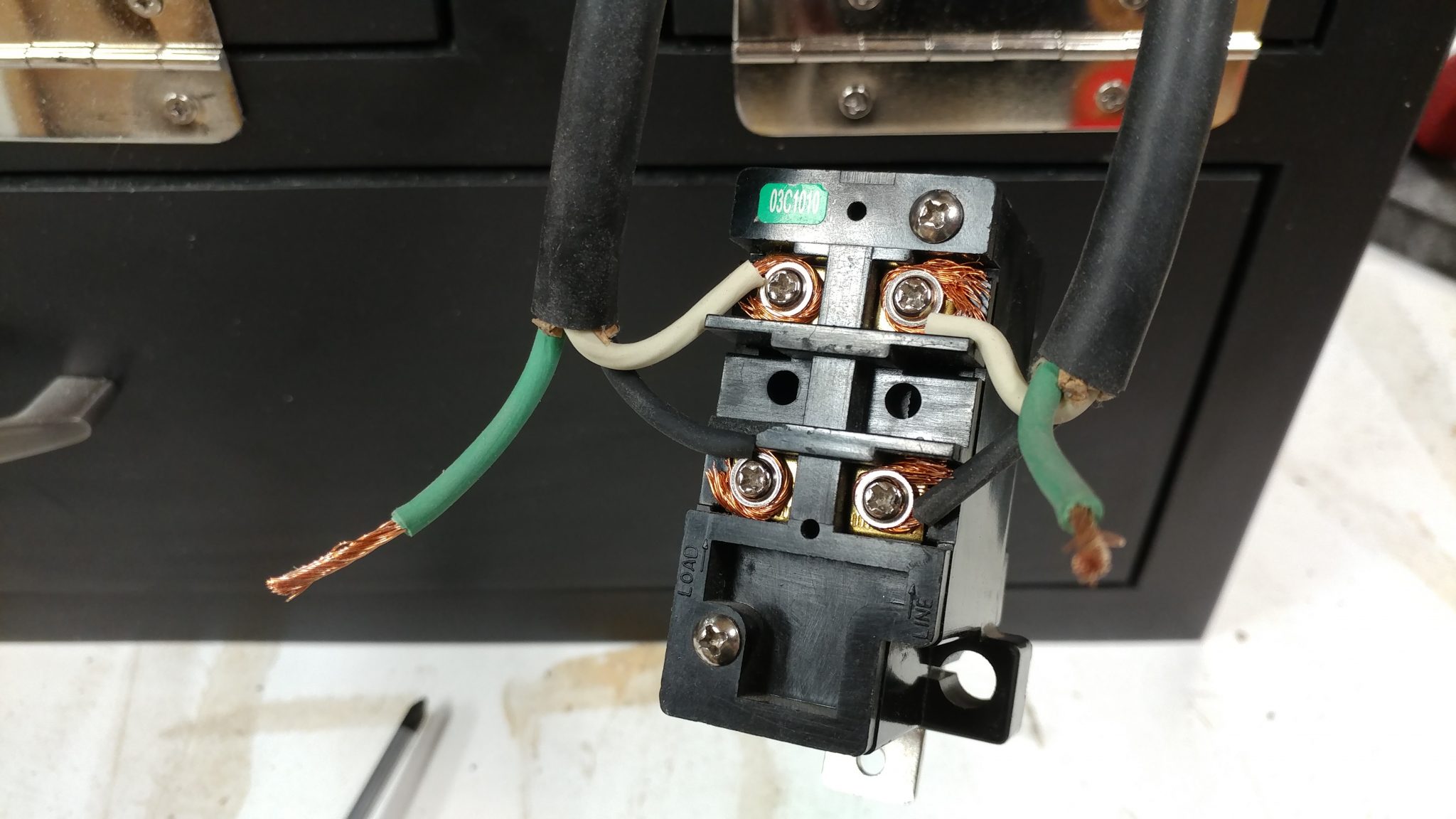
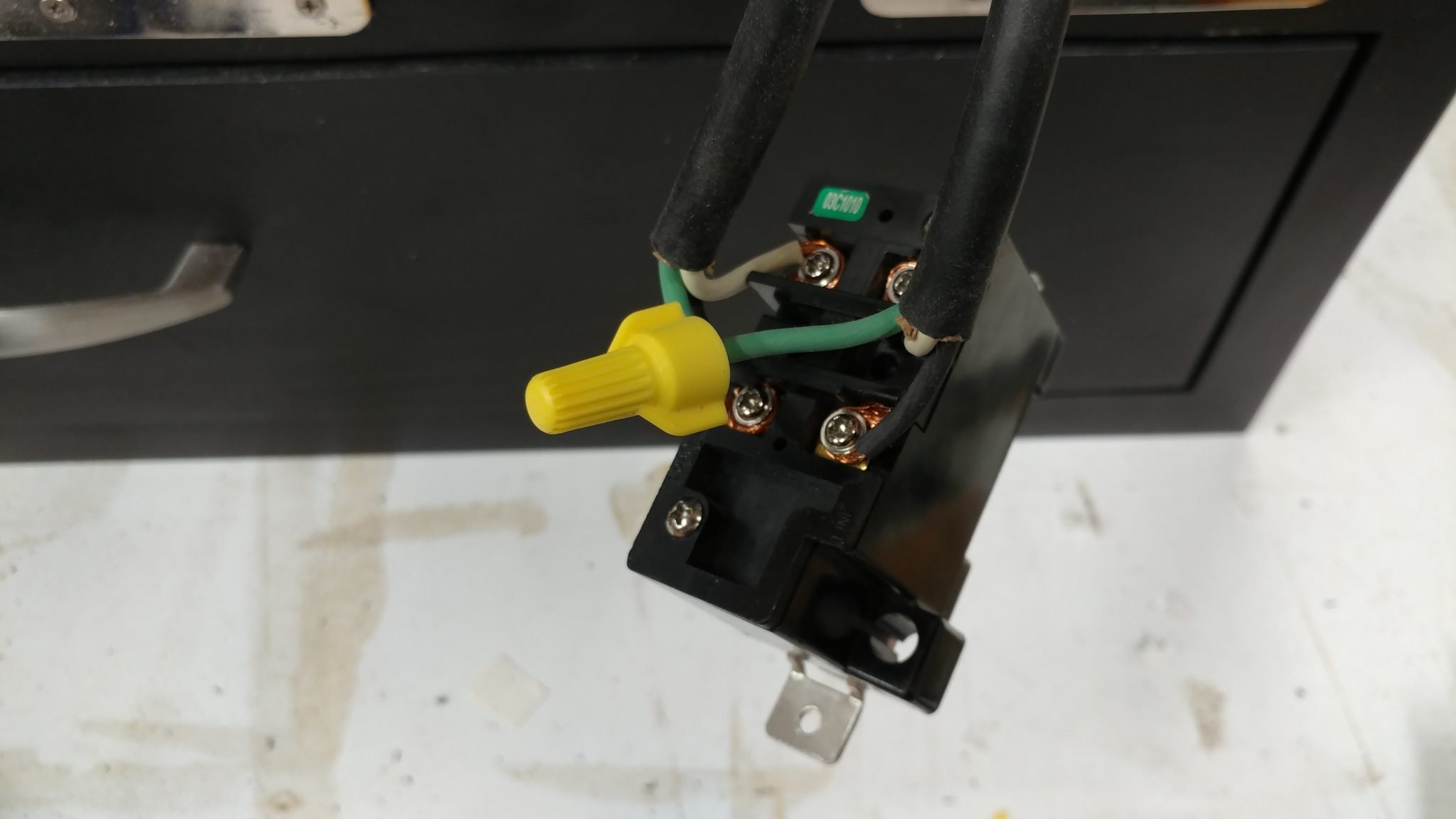
I stripped the wires and bent the hots and neutrals so they would go around the screw terminals easier.  The grounds can stay straight since they will be connected together with a wire nut.


This will vary by switch but I just wired the hots and neutrals according to the directions.


The ground wires are tied together with a wire nut.


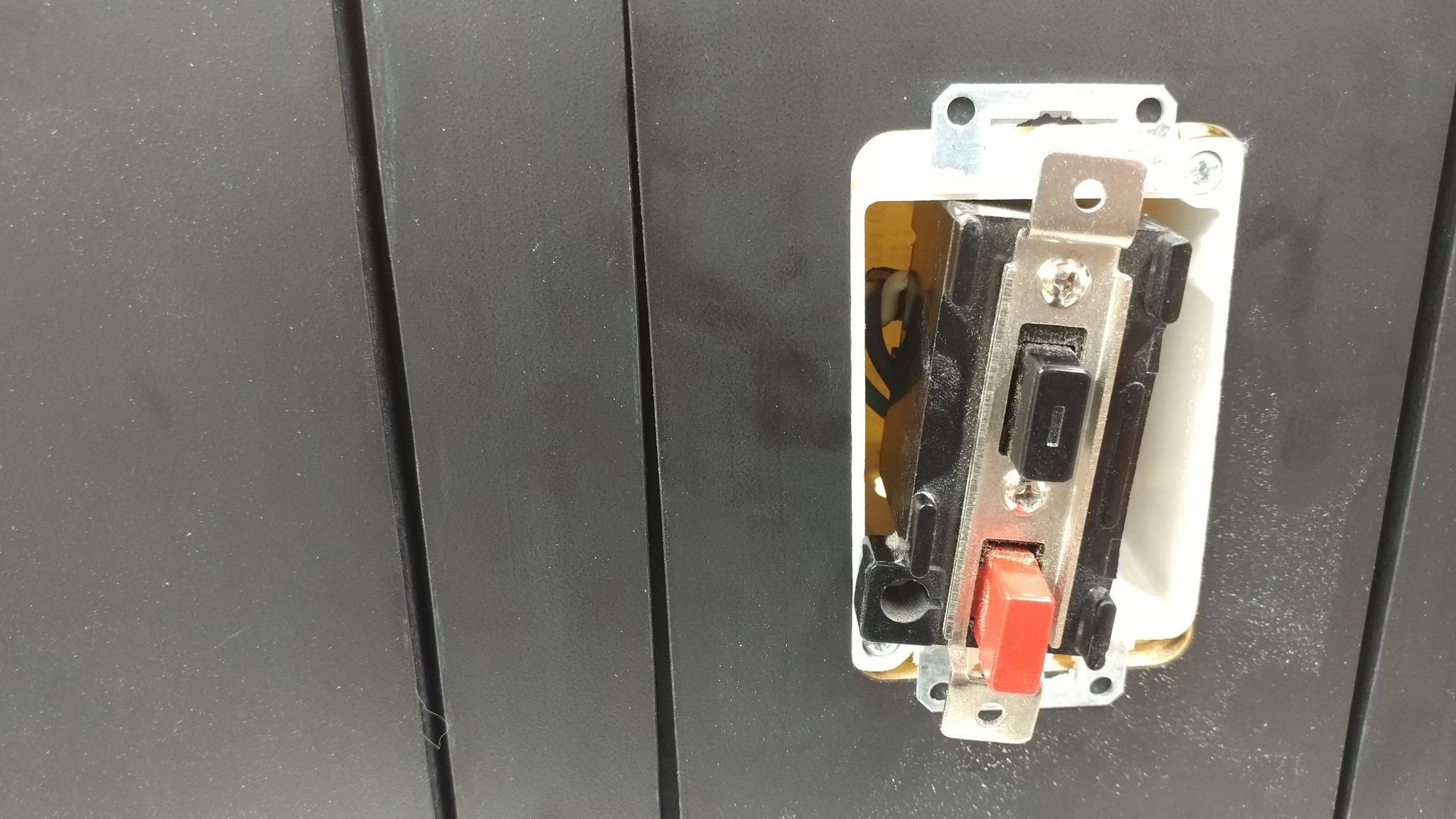
The switch body is then inserted into the electrical box and the extra wire is fed back into the cabinet.


Then I attached the faceplate for the main switch.


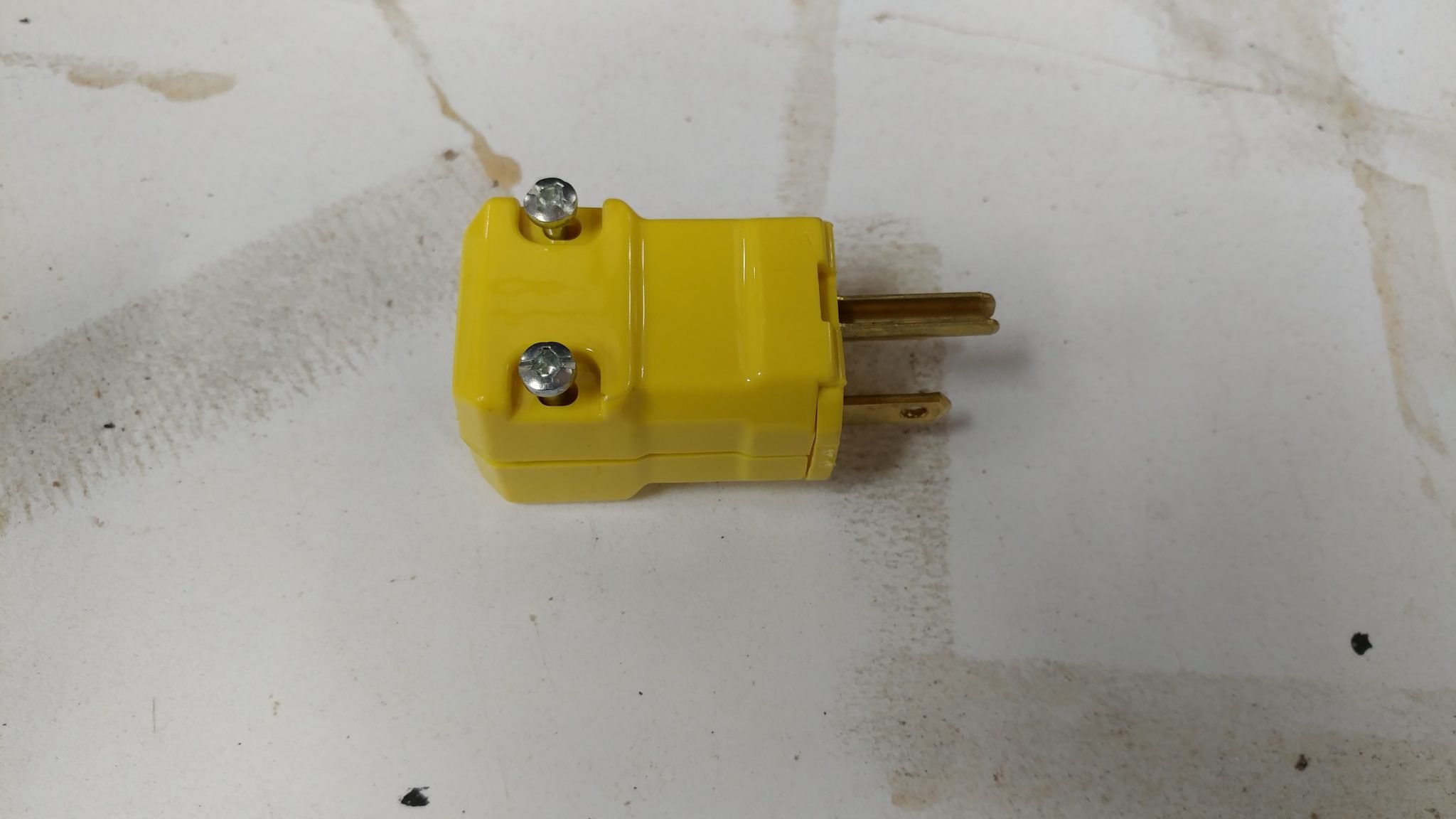
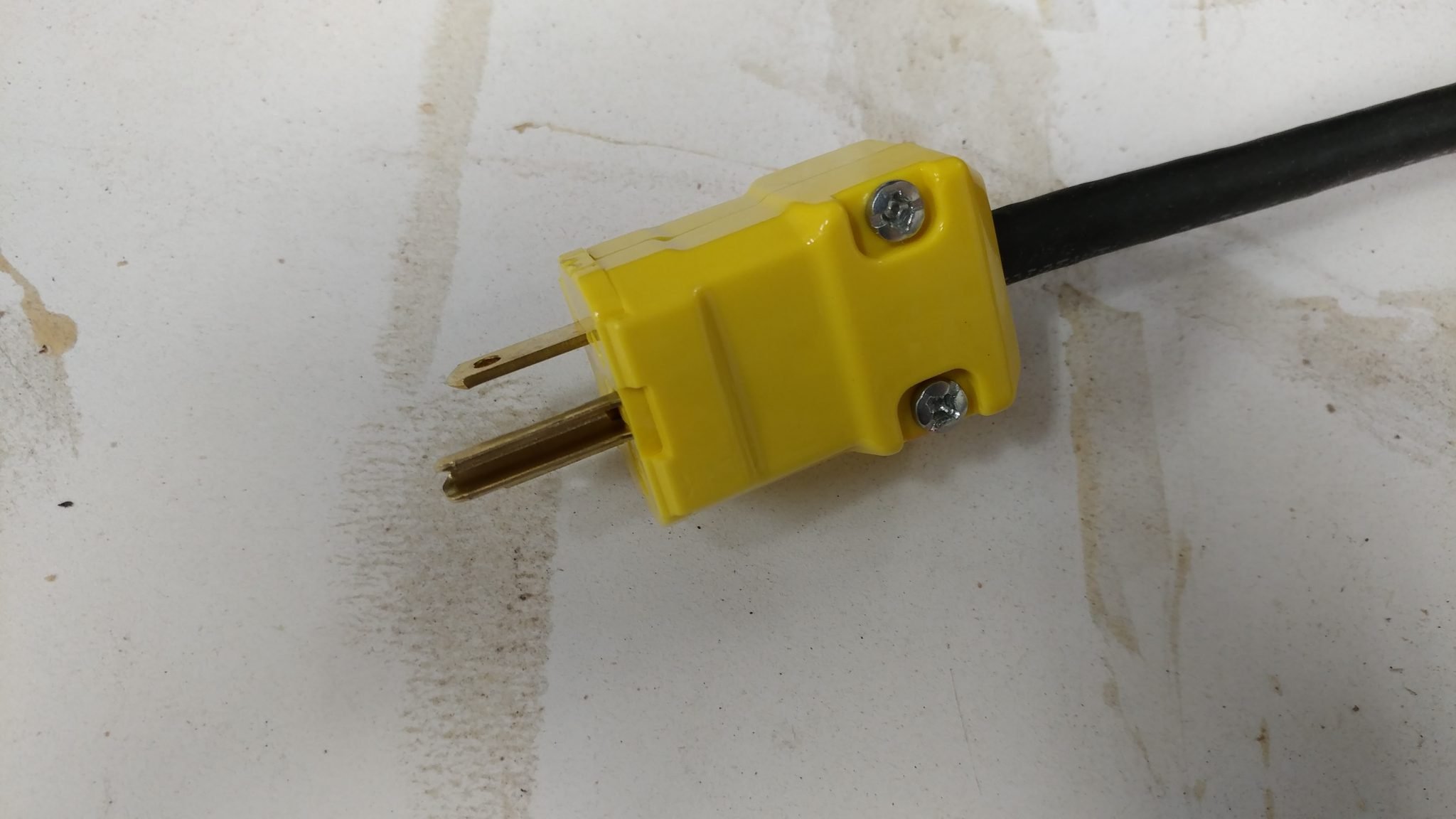
The only thing left on the electrical is to connect a plug to the end of the cable.  This is the type of plug that I decided to use.


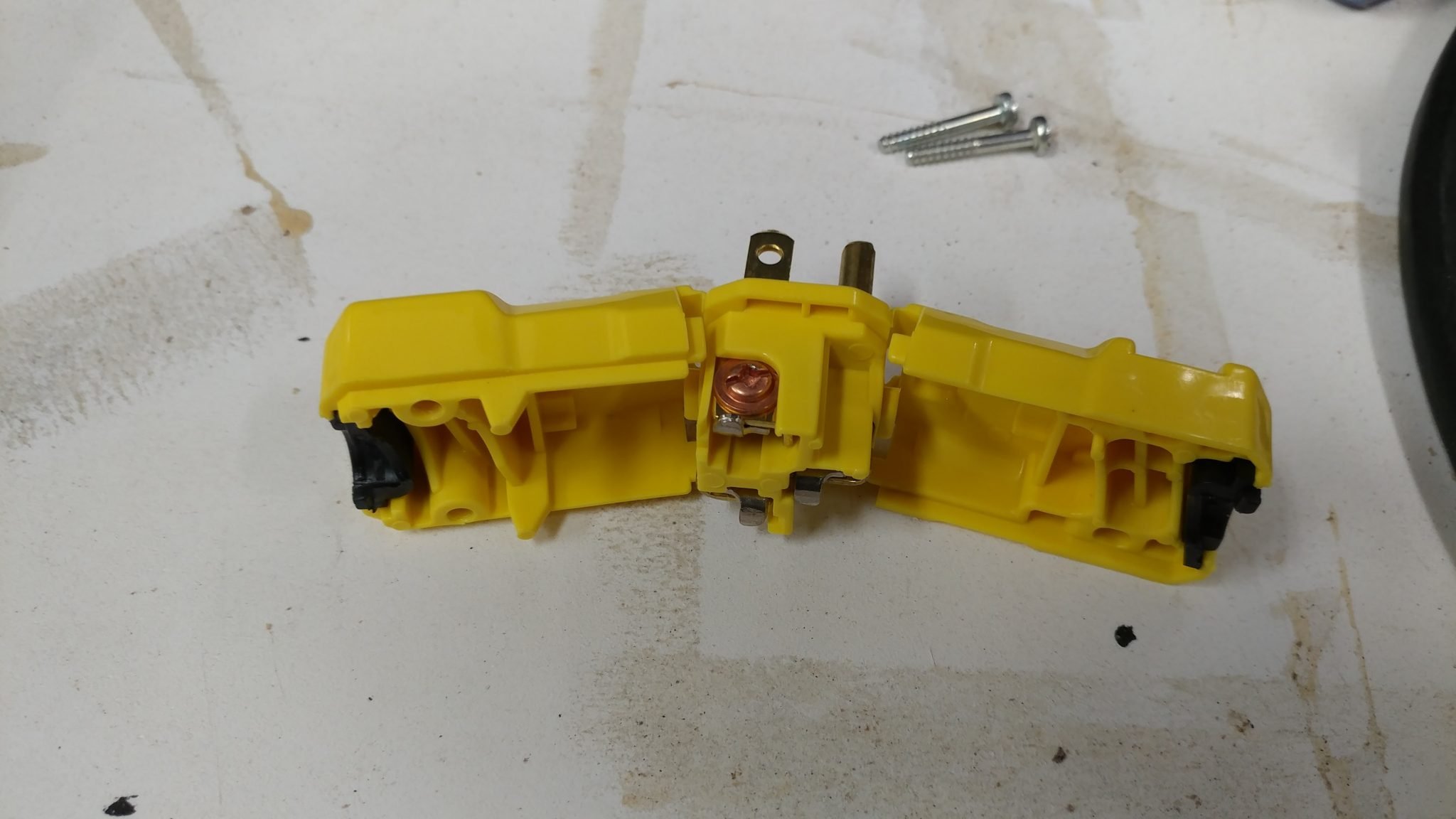
It uses two screws to hold it together.  When these screws are removed, the plug hinges open.


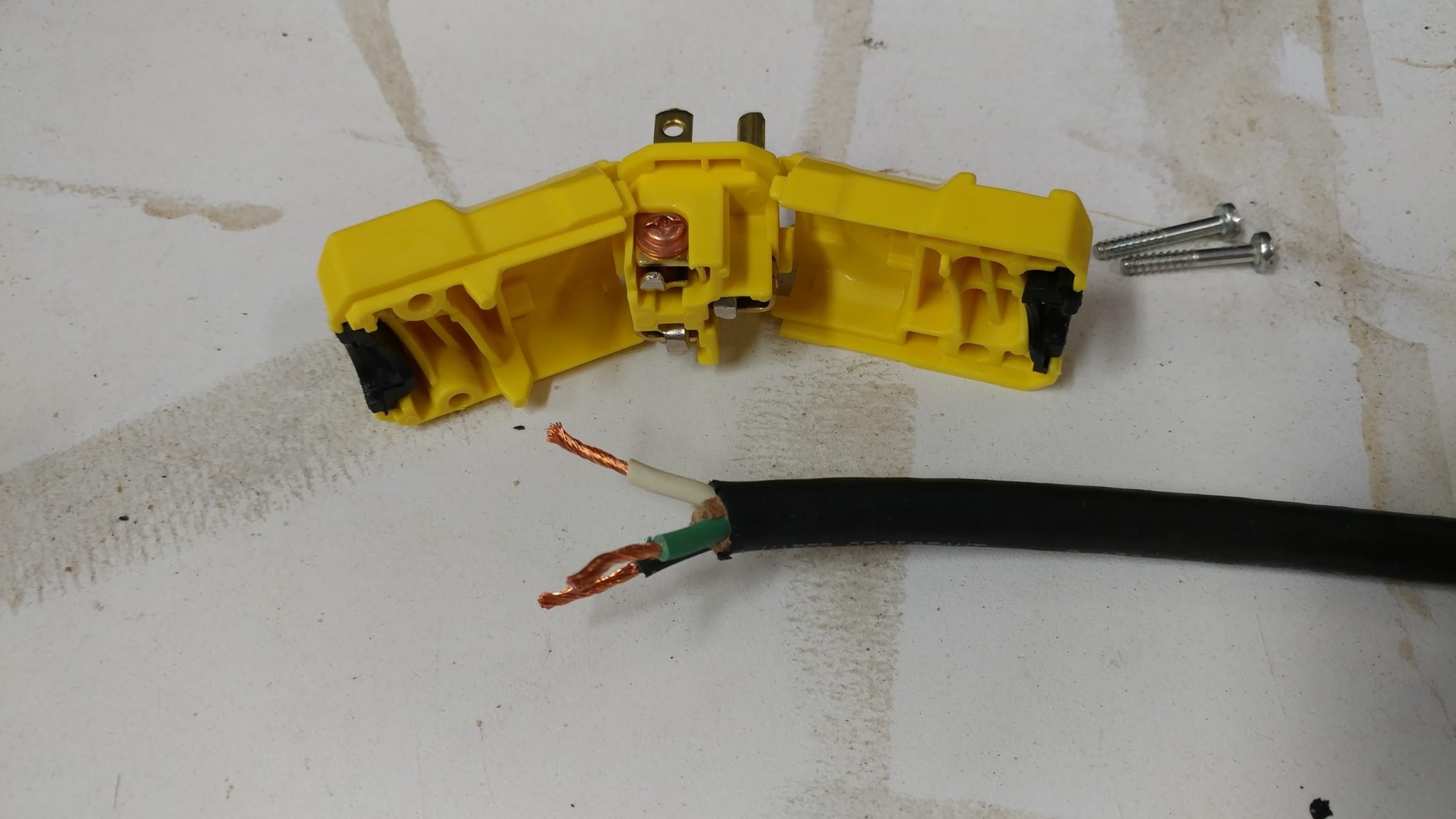
Once again I strip the wires and twist them.


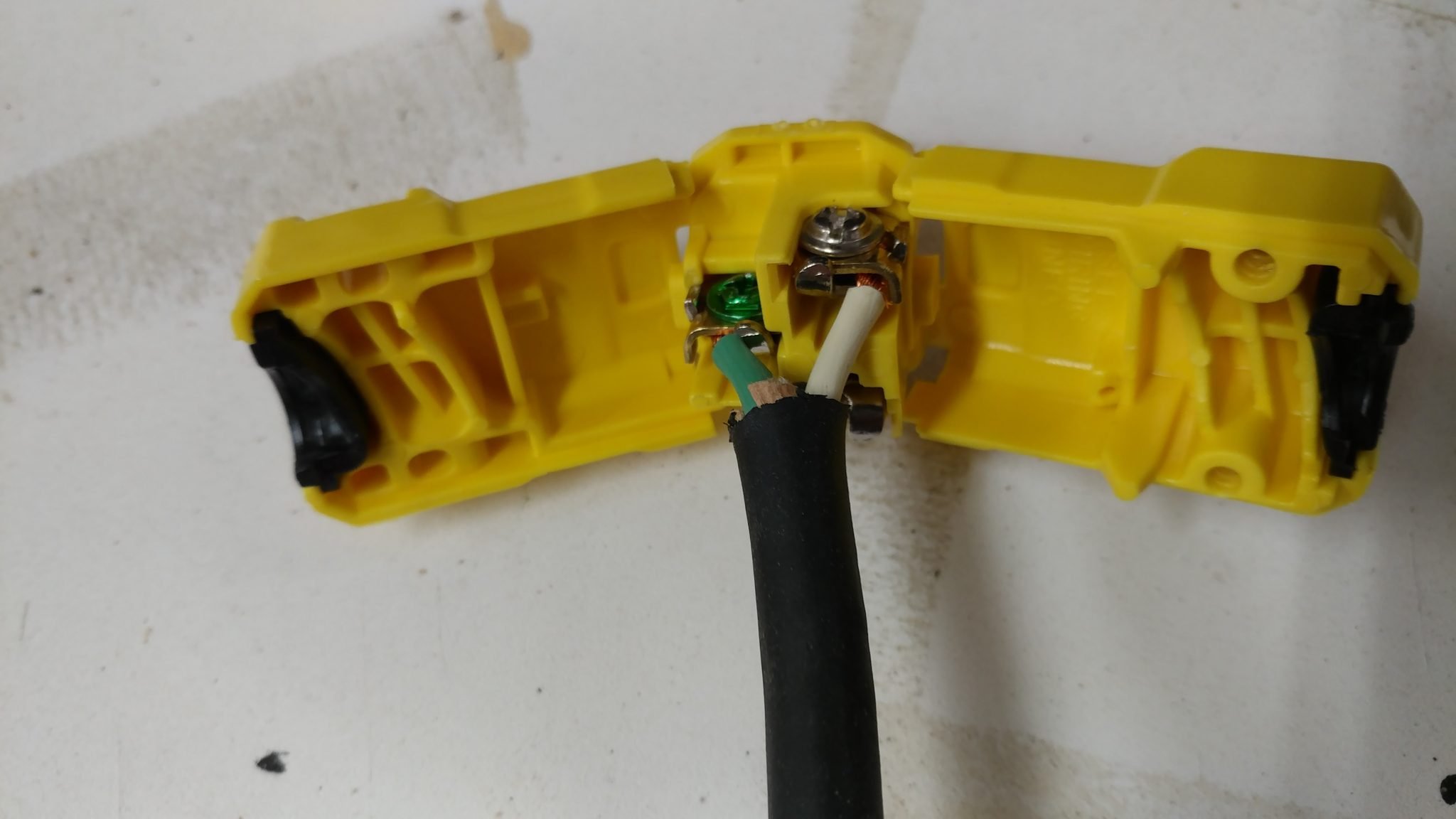
Follow the directions for whatever plug you choose but this one was easy.  You just insert them and tighten some screws.


Then I closed up the plug with the two screws I removed earlier.


Electrical is all done.


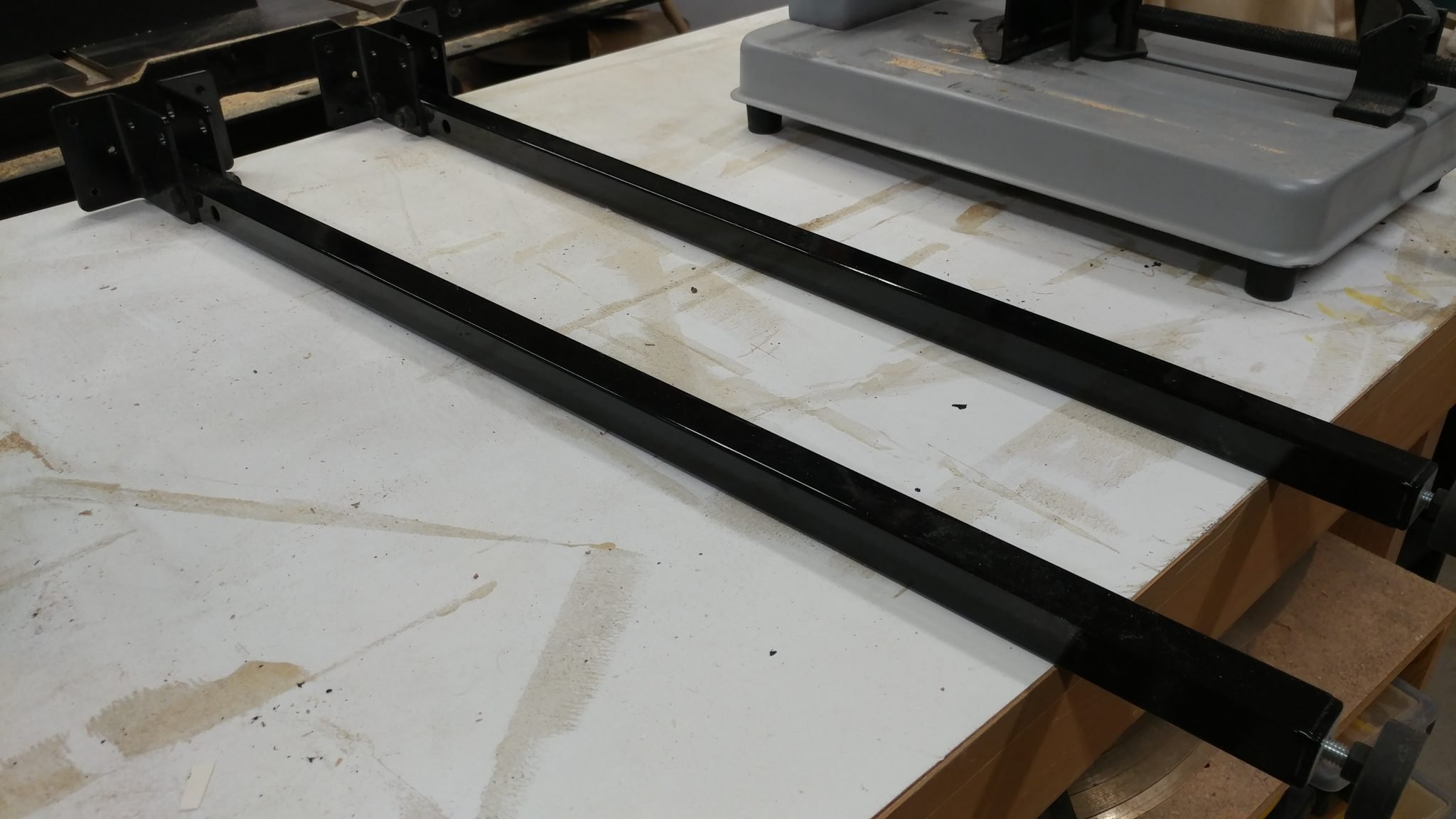
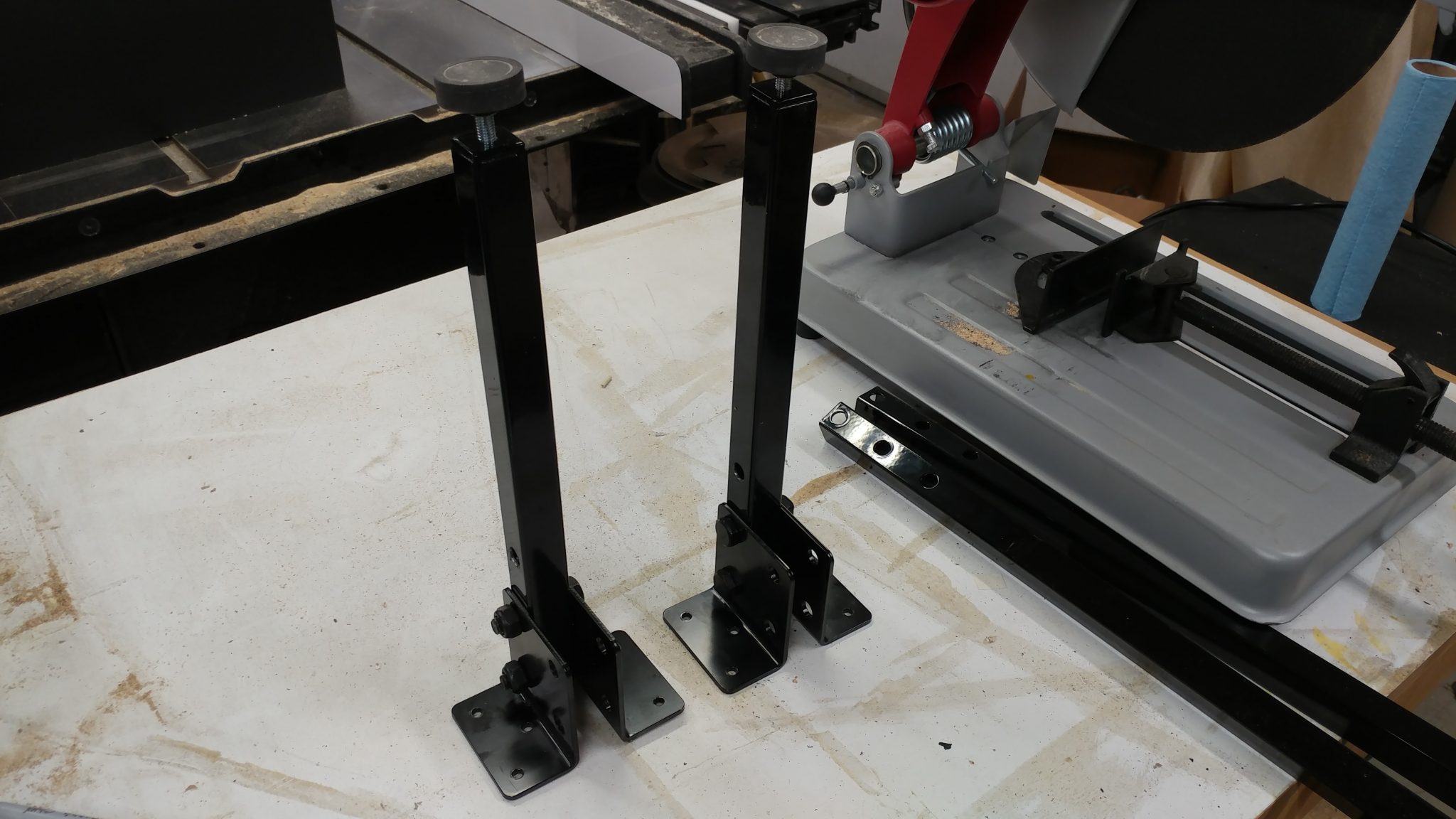
Making the legs


I need to shorten the legs that support the side extension table.  One end has holes drilled for the hardware that attaches it to the underside of the actual table.  The other has the threaded hole for the feet.  I decided to keep the end where the feet screw in since that would be more difficult to recreate than the other end which is just holes.


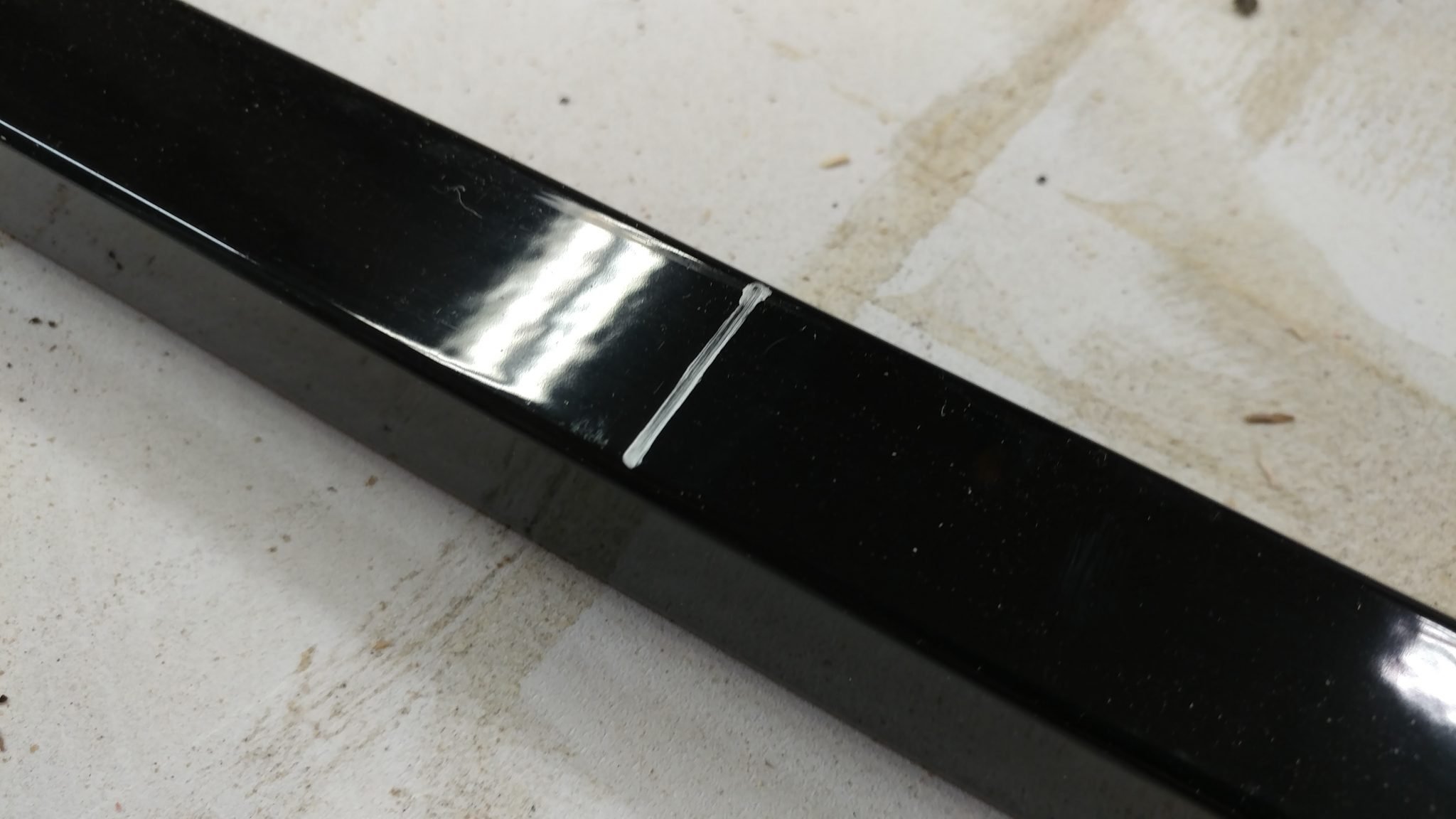
To determine the length of the legs, I simply measured the height of the cabinet.  This provided me with the amount that I needed to remove.  I then measured down from the top of the legs and marked it with a silver Sharpie.  This is where I will cut.


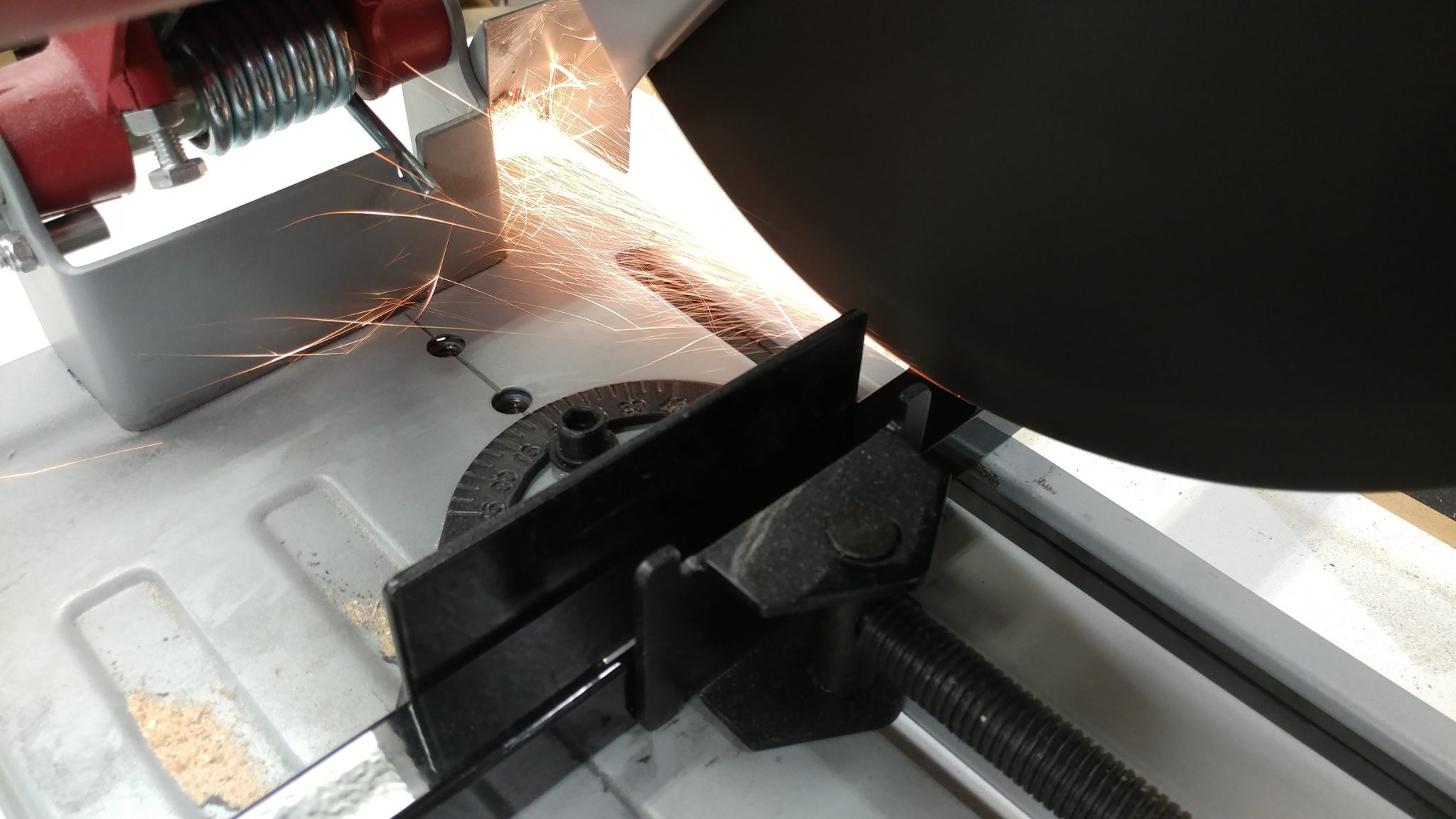
I used my chop saw to cut along that line.


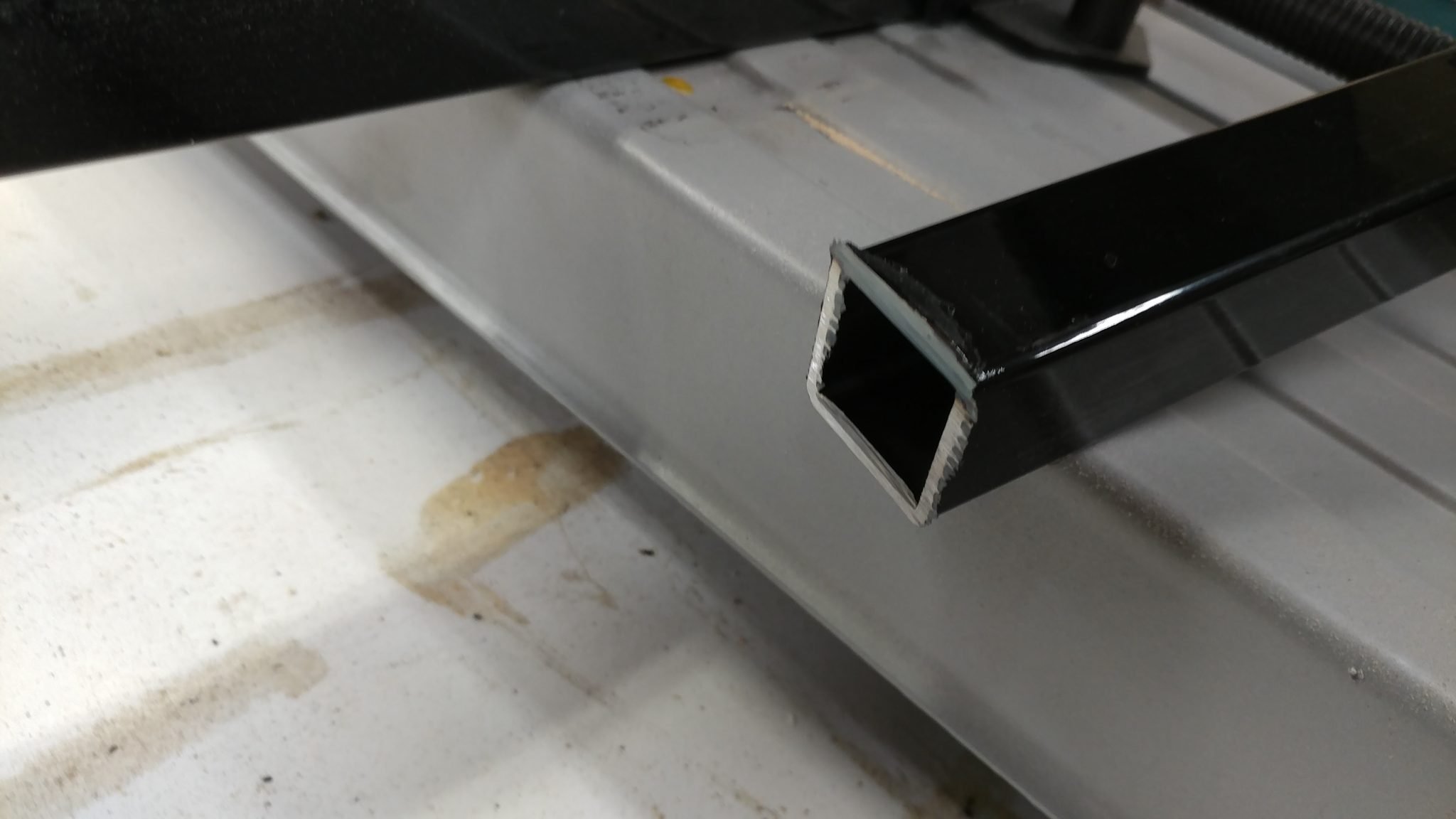
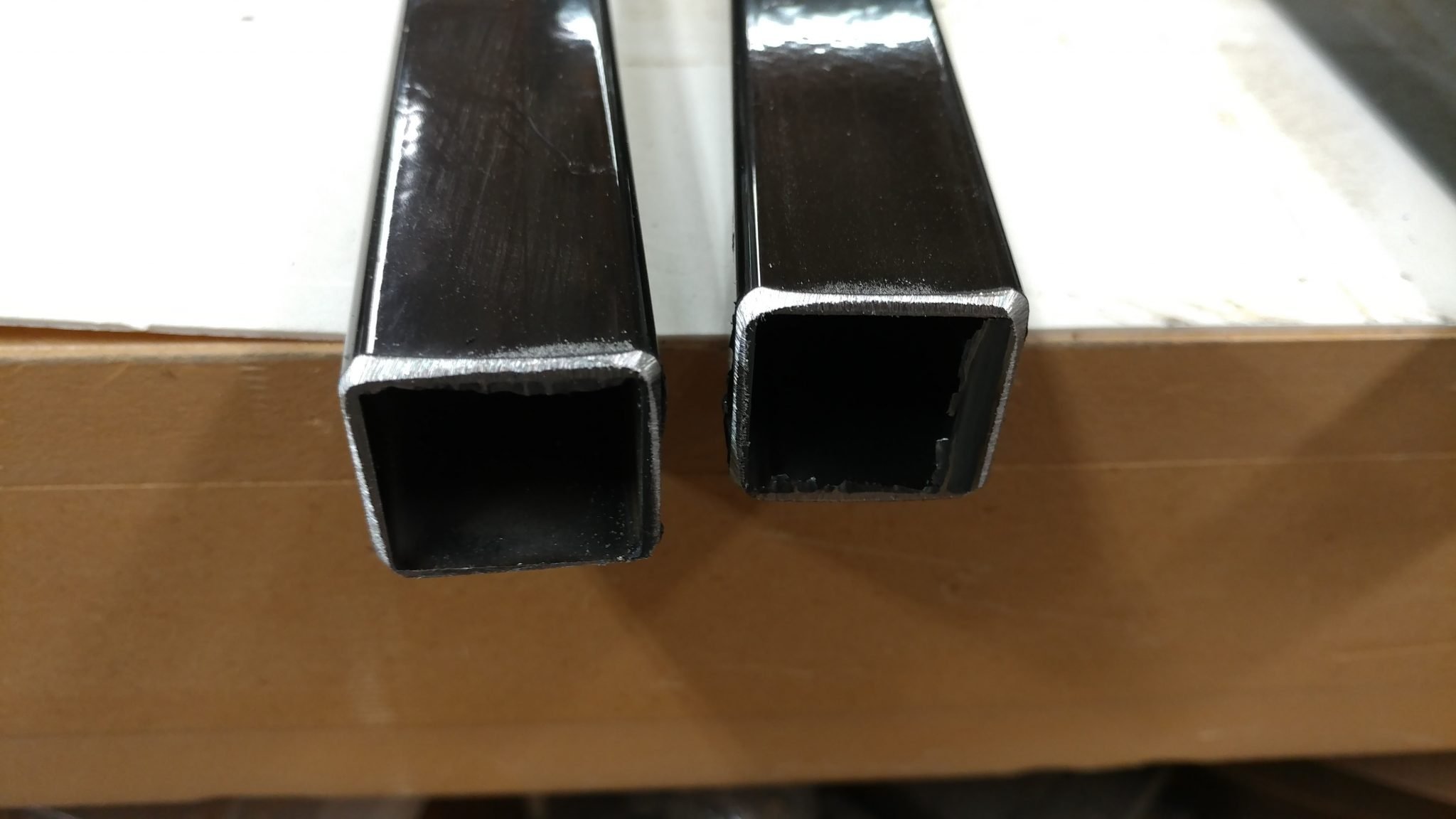
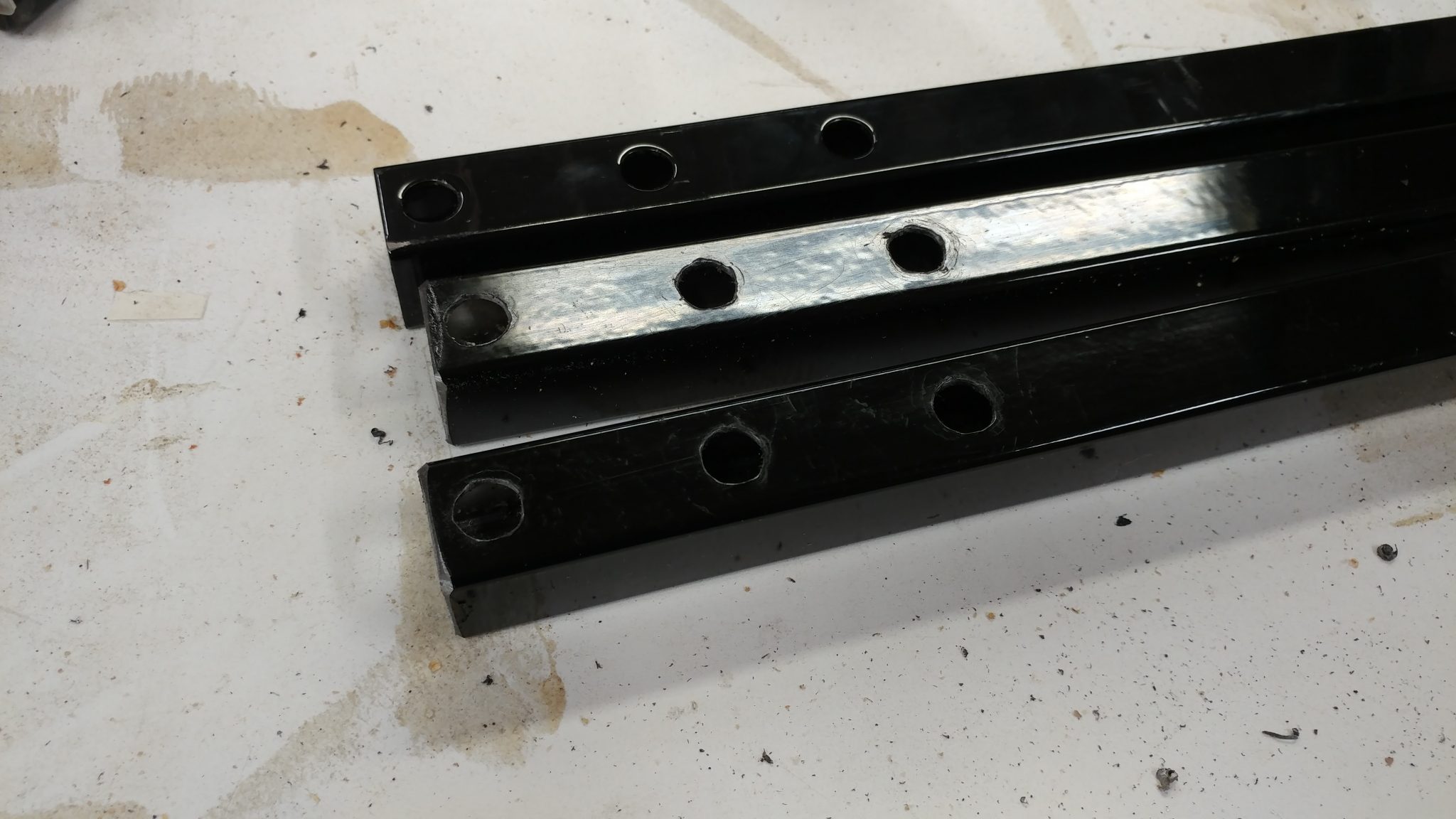
The chop saw leaves a pretty nasty burr that I will want to remove.


A few seconds at the disc sander quickly rounded over the edges enough to remove the burr.


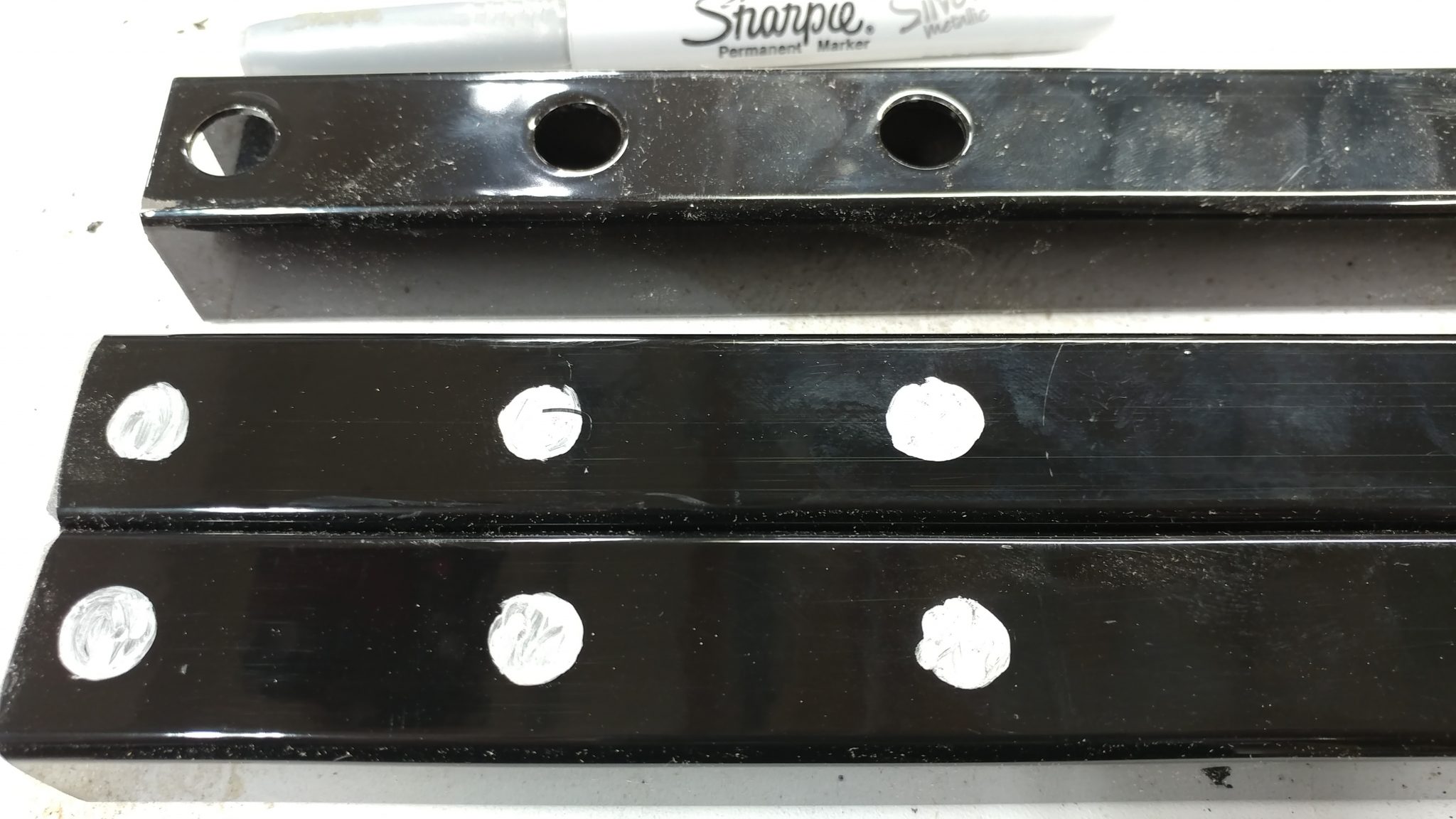
I use the discarded upper end of the leg and a silver Sharpie to mark where I will need to drill.


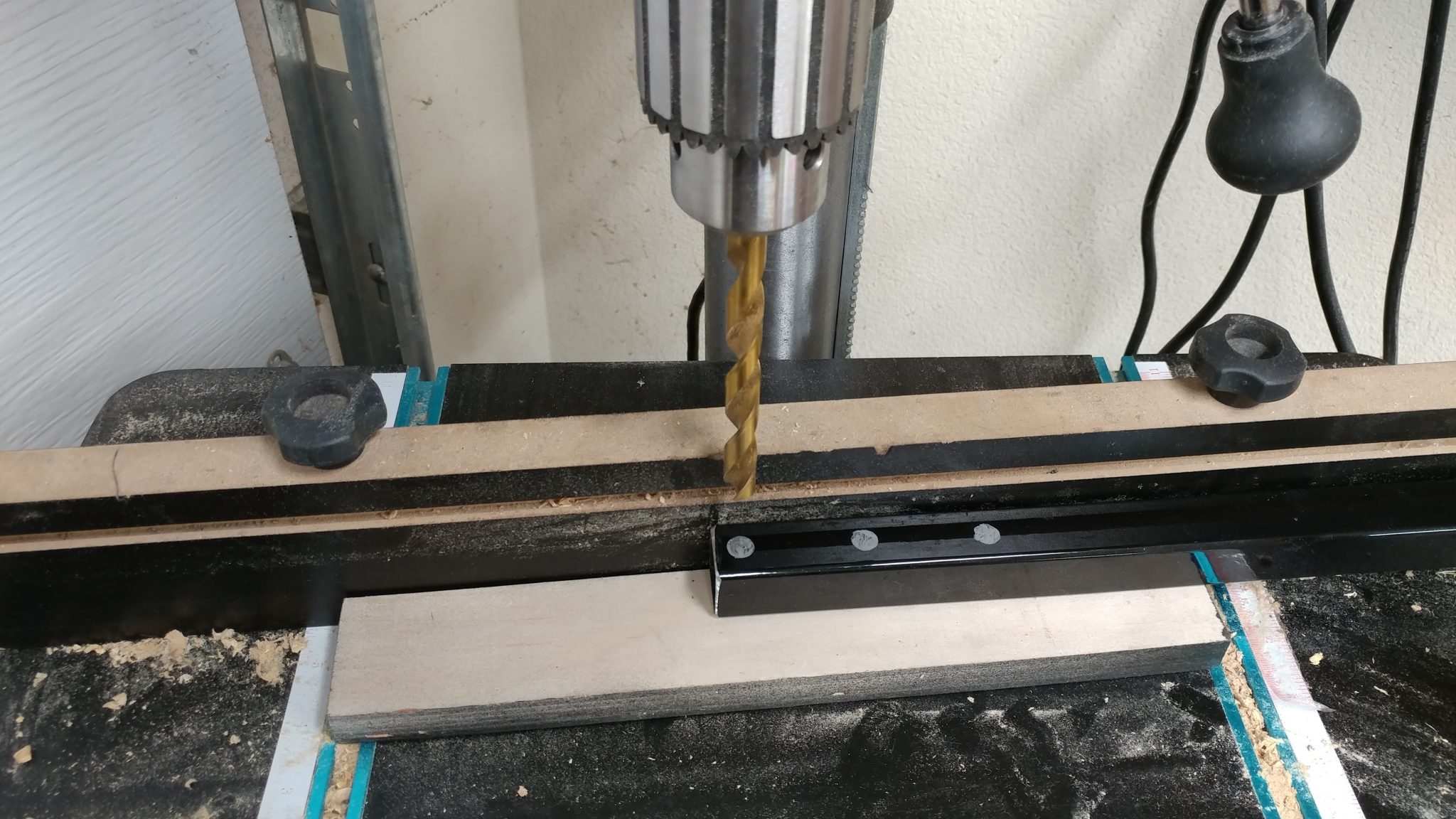
I used my drill press and some 3-in-1 oil to drill out those holes.


The just need to be cleaned up a bit and they’re ready to use.


I reattached the hardware and now I have some mini-legs.  Ain’t they cute?


Attaching the cabinet to the table


Time to finish this up.


I start by turning my extension table upside-down.


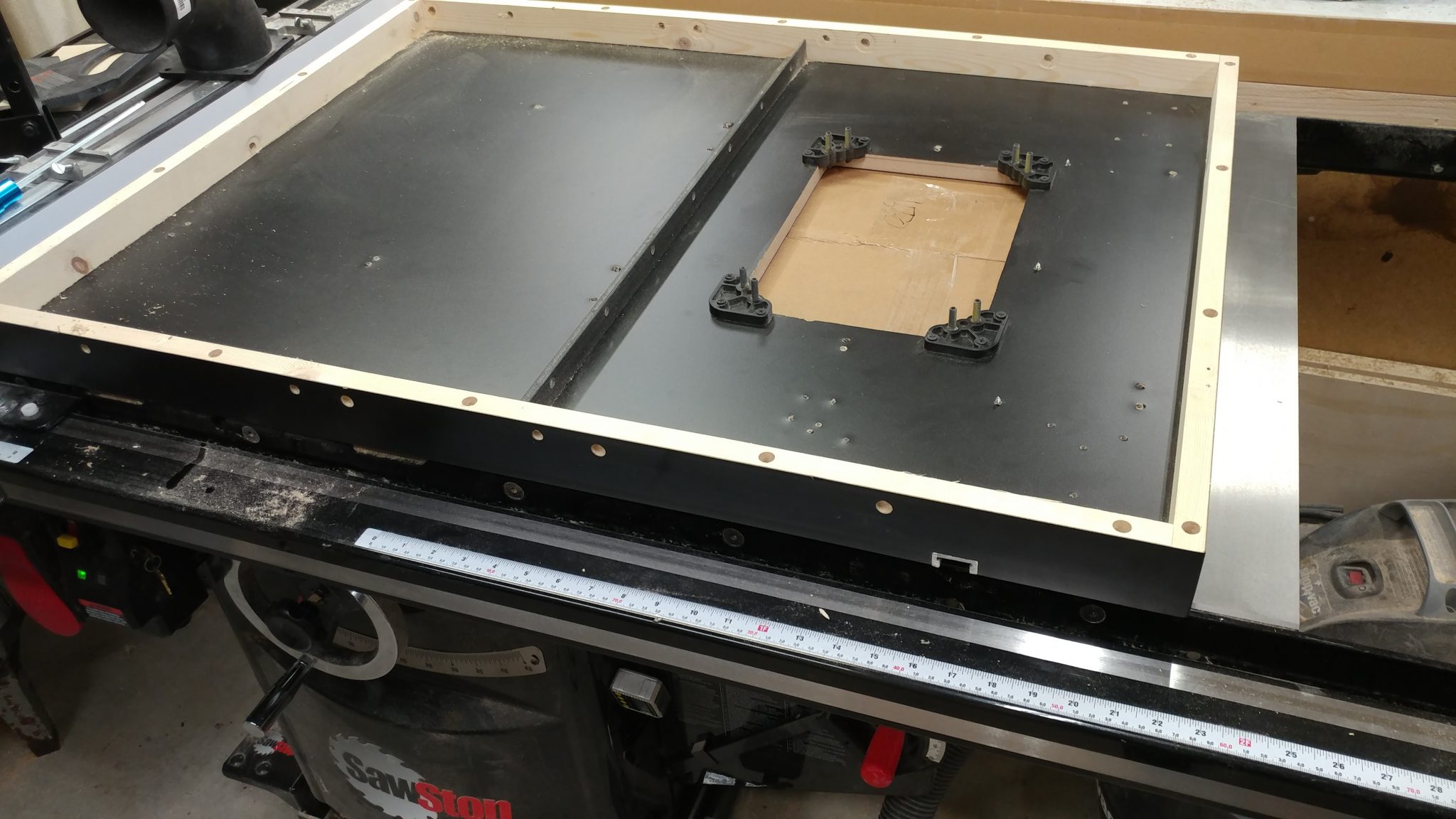
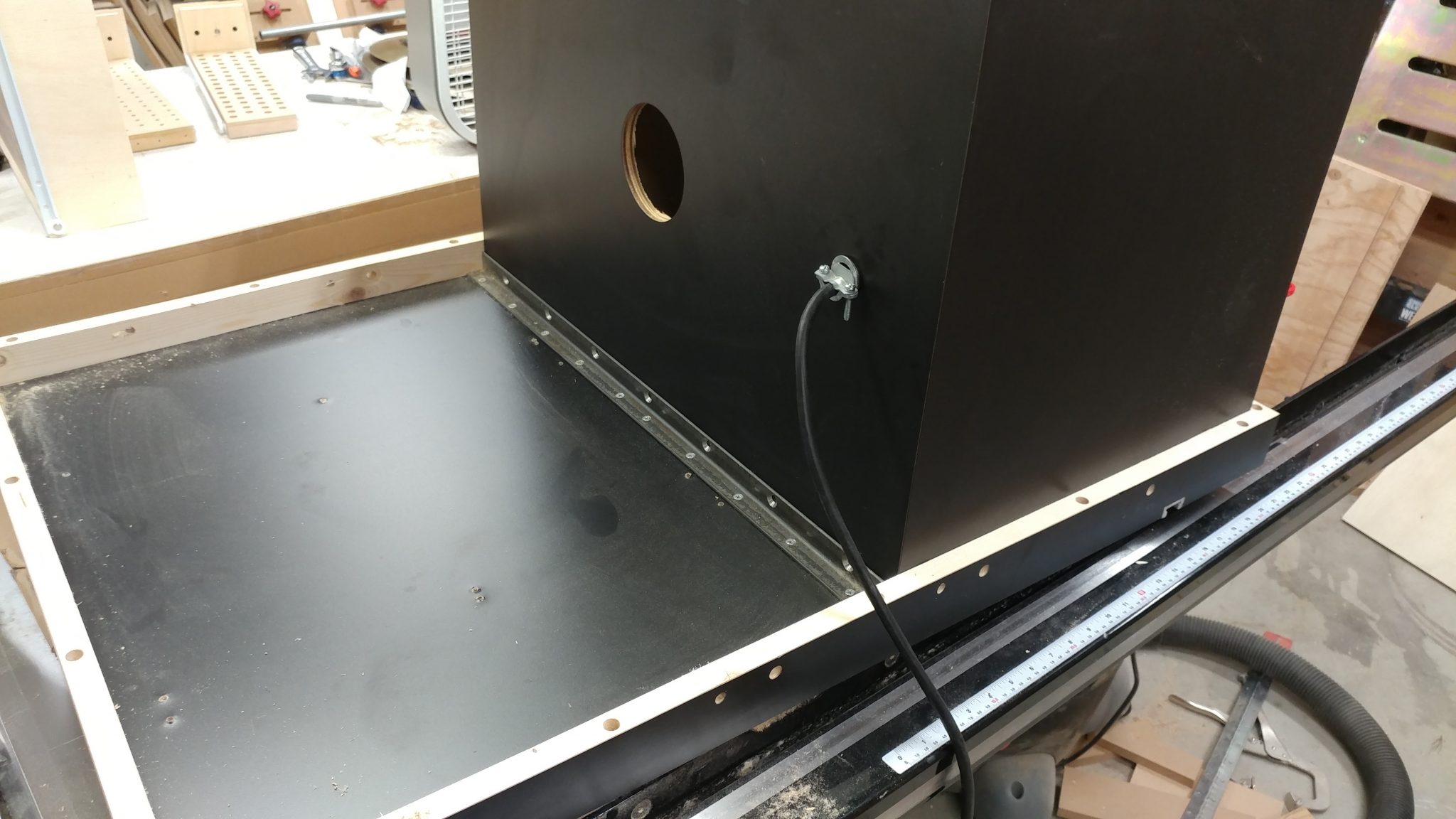
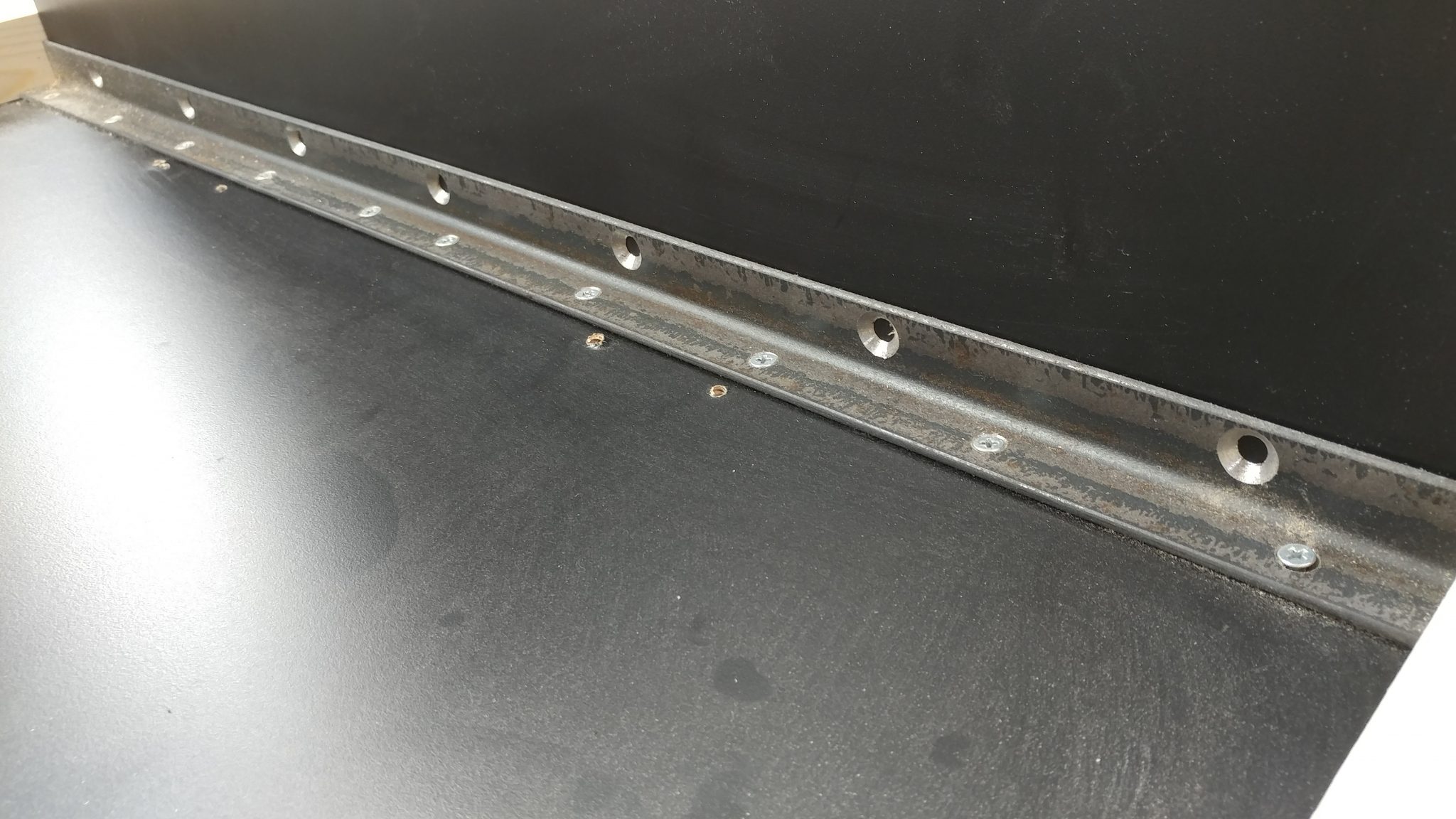
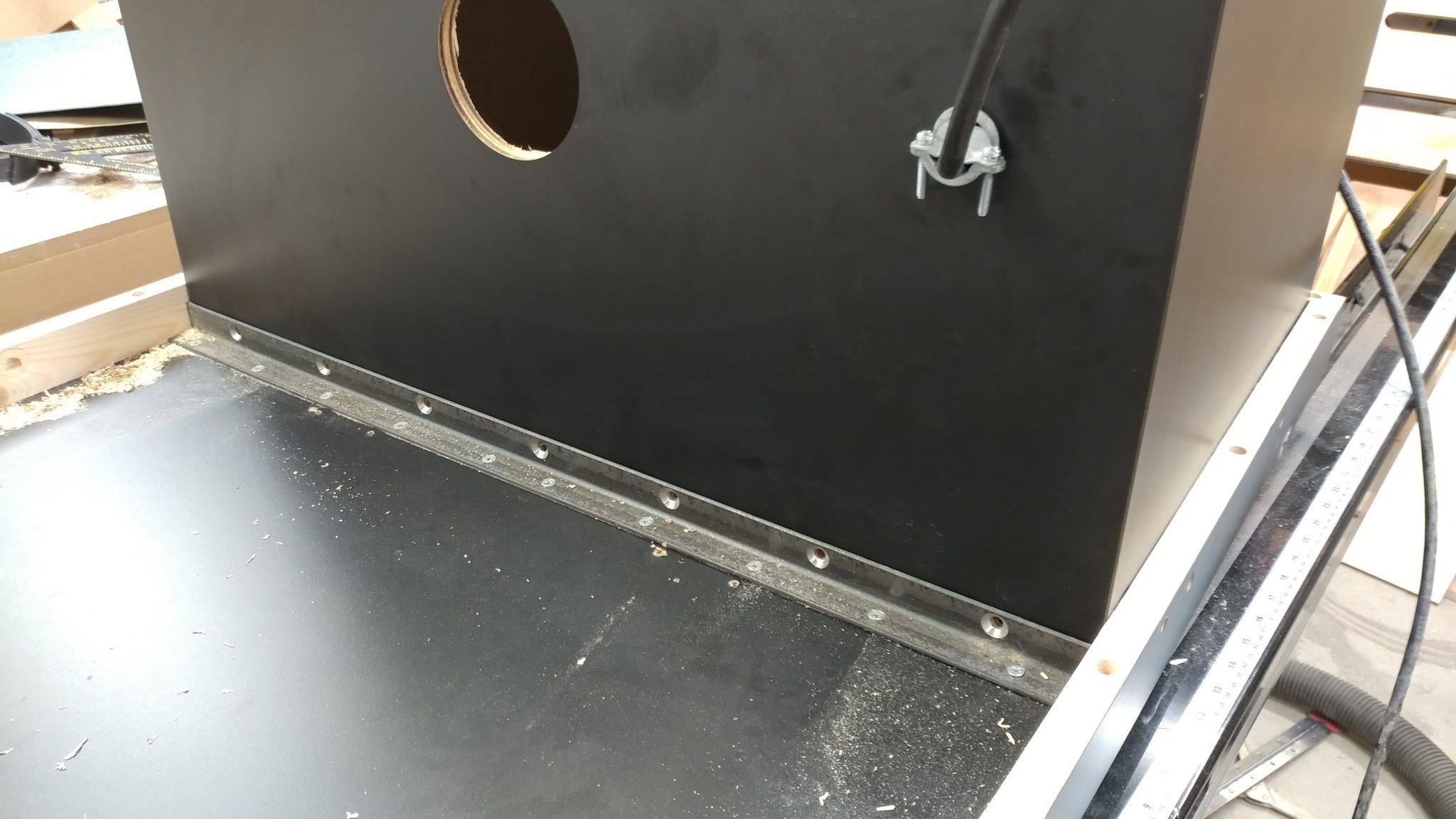
The router enclosure fits in-between the angle iron I attached earlier and the end of the actual table.


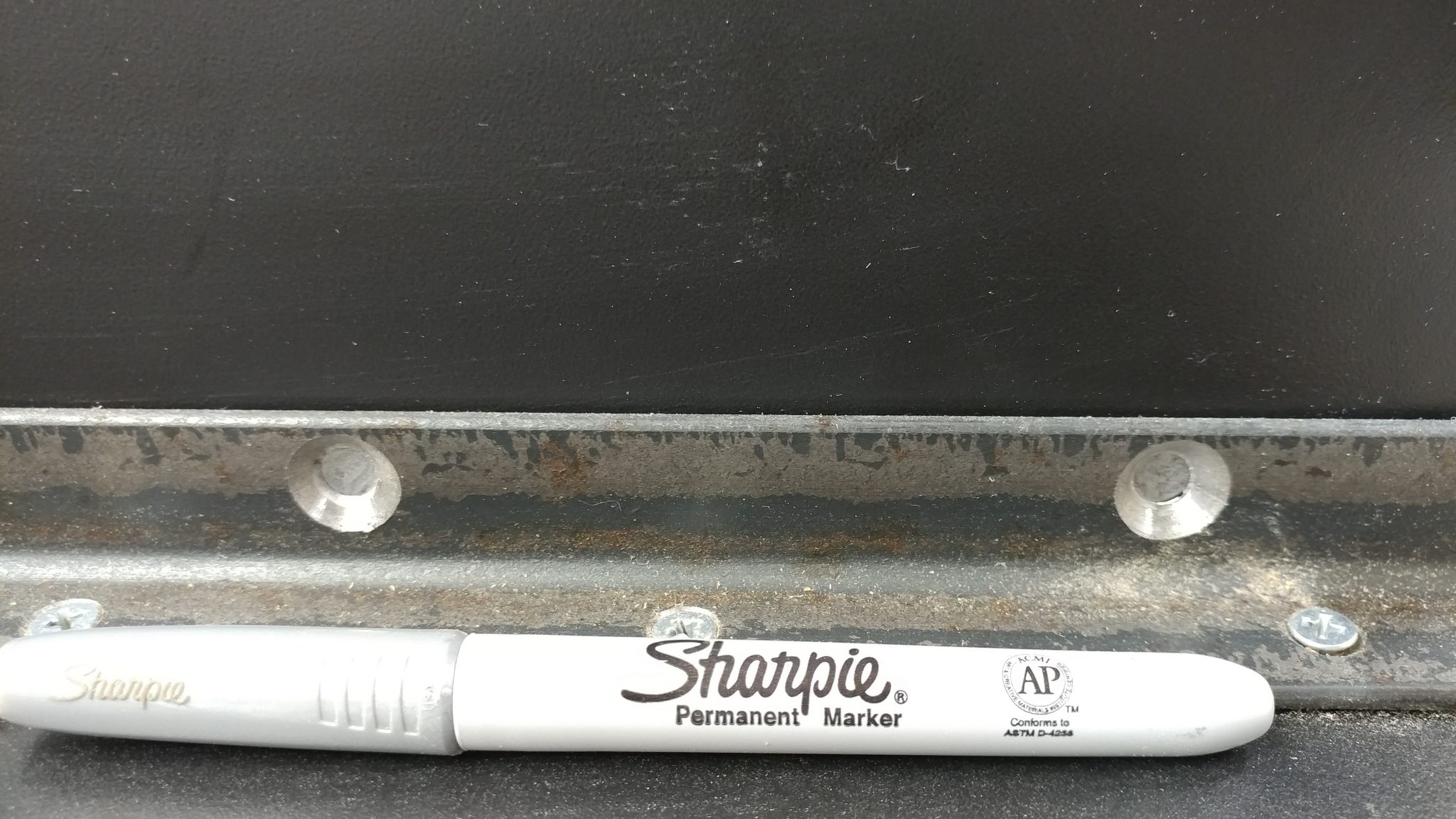
I need to mark and drill the holes for the screws that will attach the enclosure to the angle-iron.


I used a silver Sharpie to mark these holes.


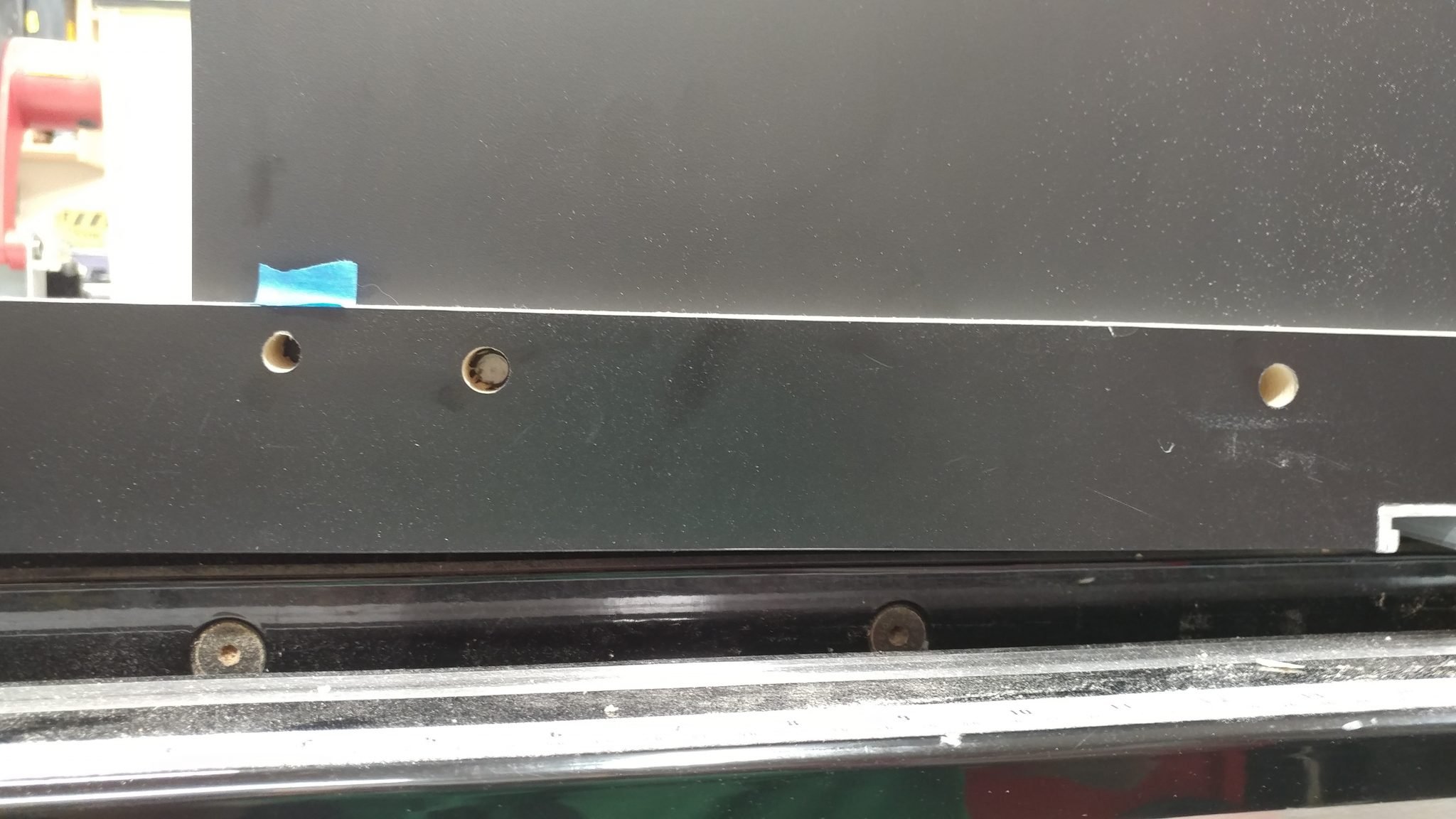
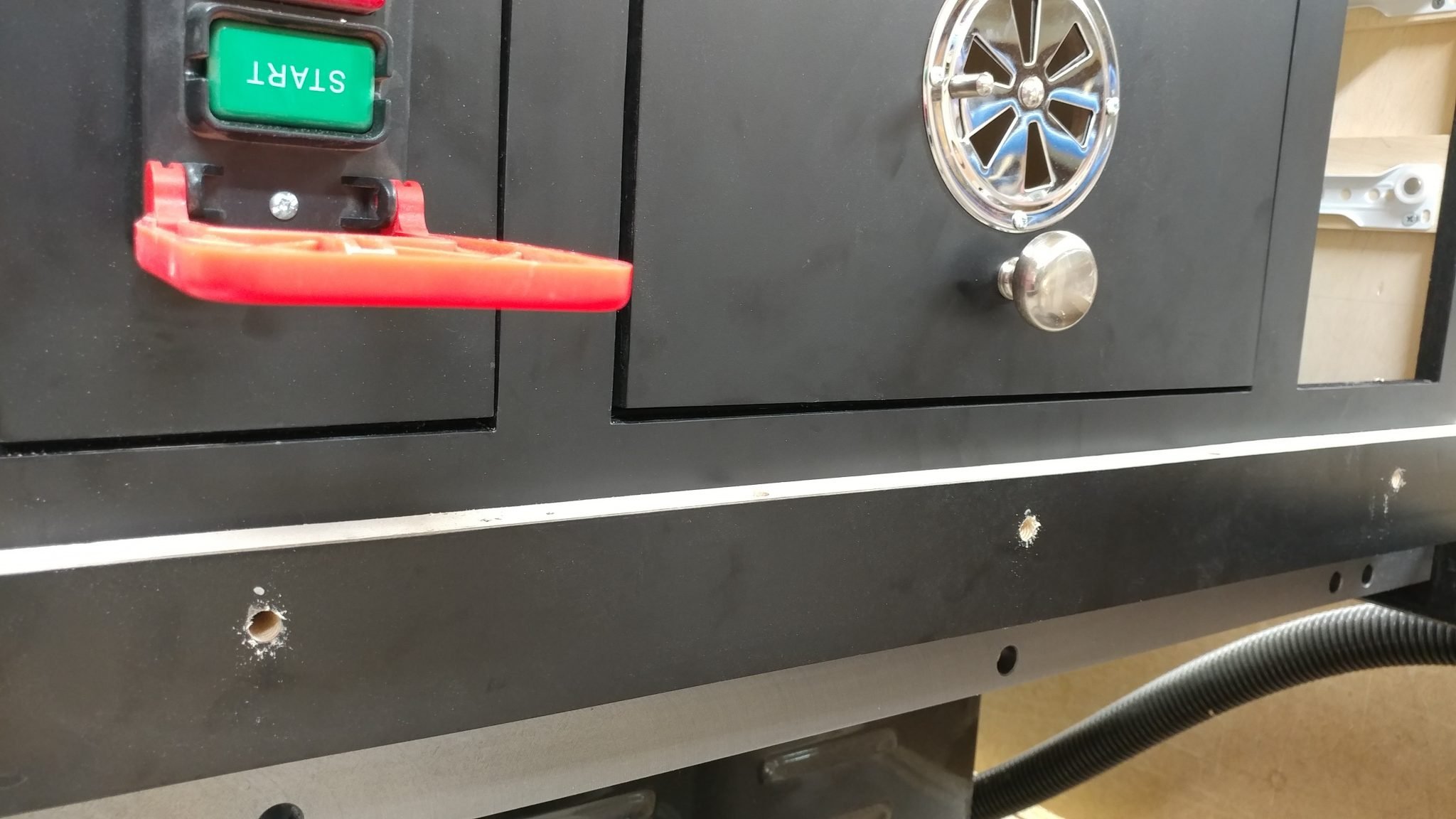
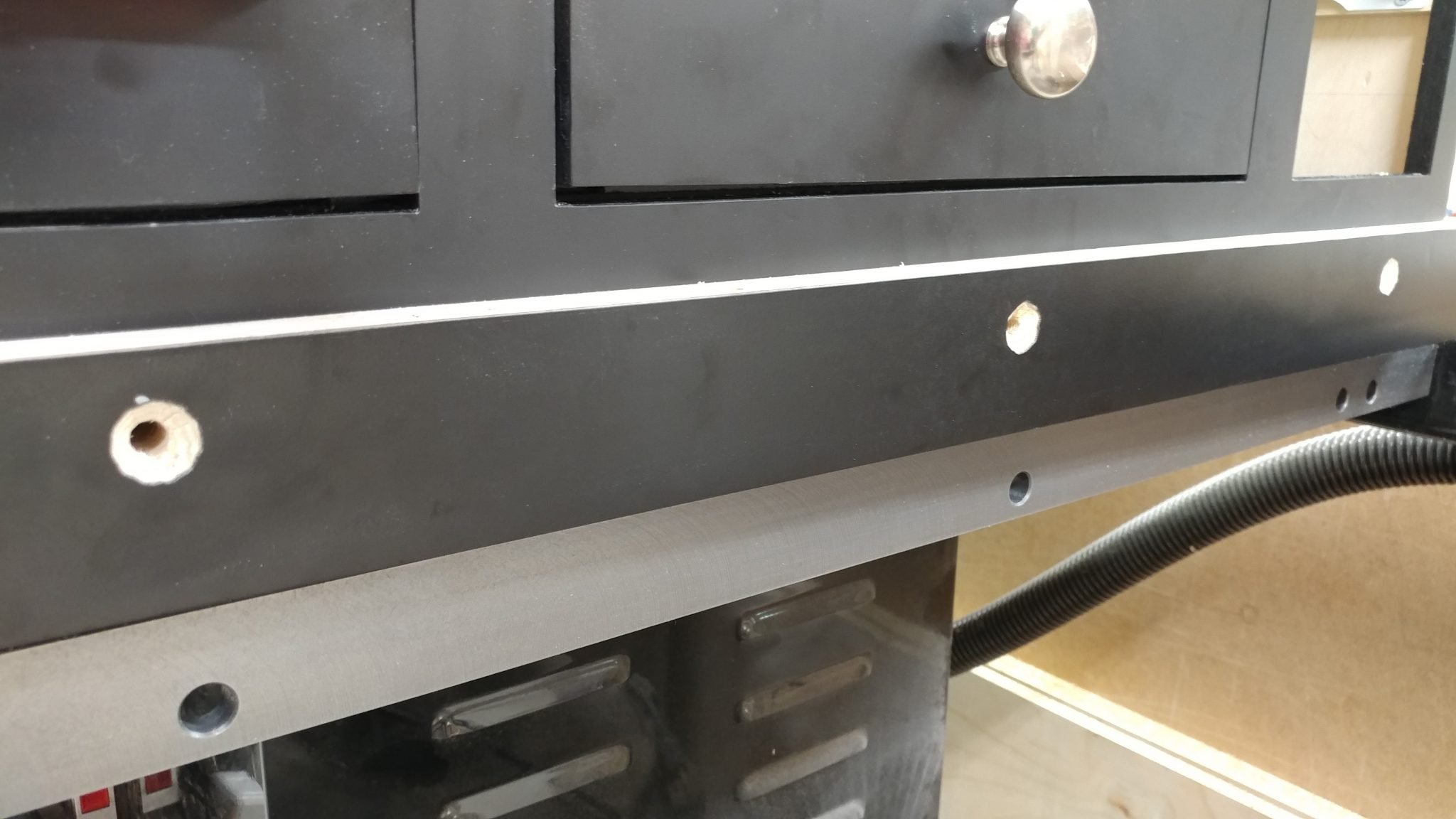
I also marked the holes on the side where the screws will go through the front rail on the table saw, the table, and the enclosure.


I then pulled the enclosure out so I could drill these holes.


To keep the bit from wandering on the slippery Formica, I drilled a small pilot hole at the center of the mark.


I then drilled the holes.


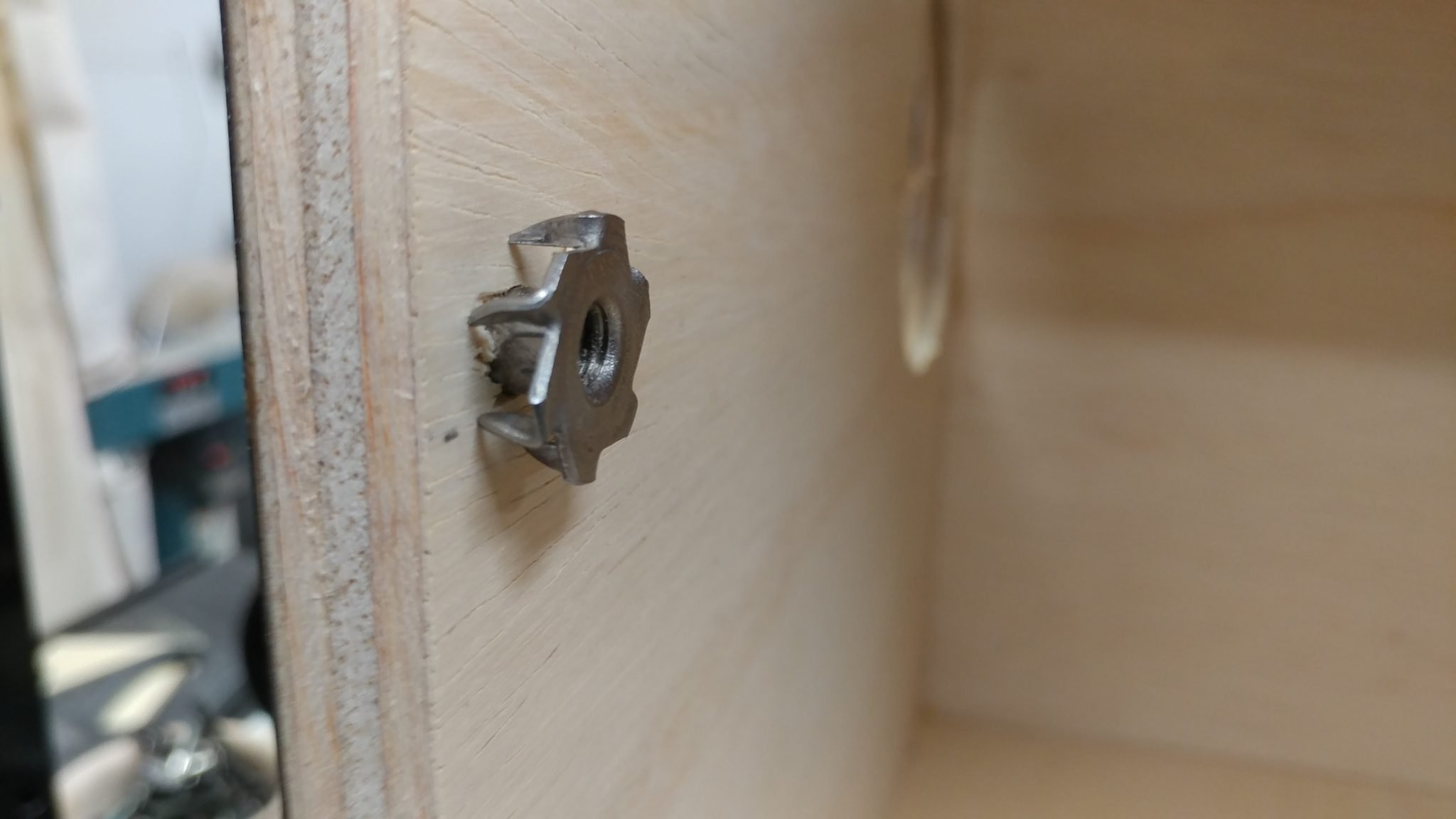
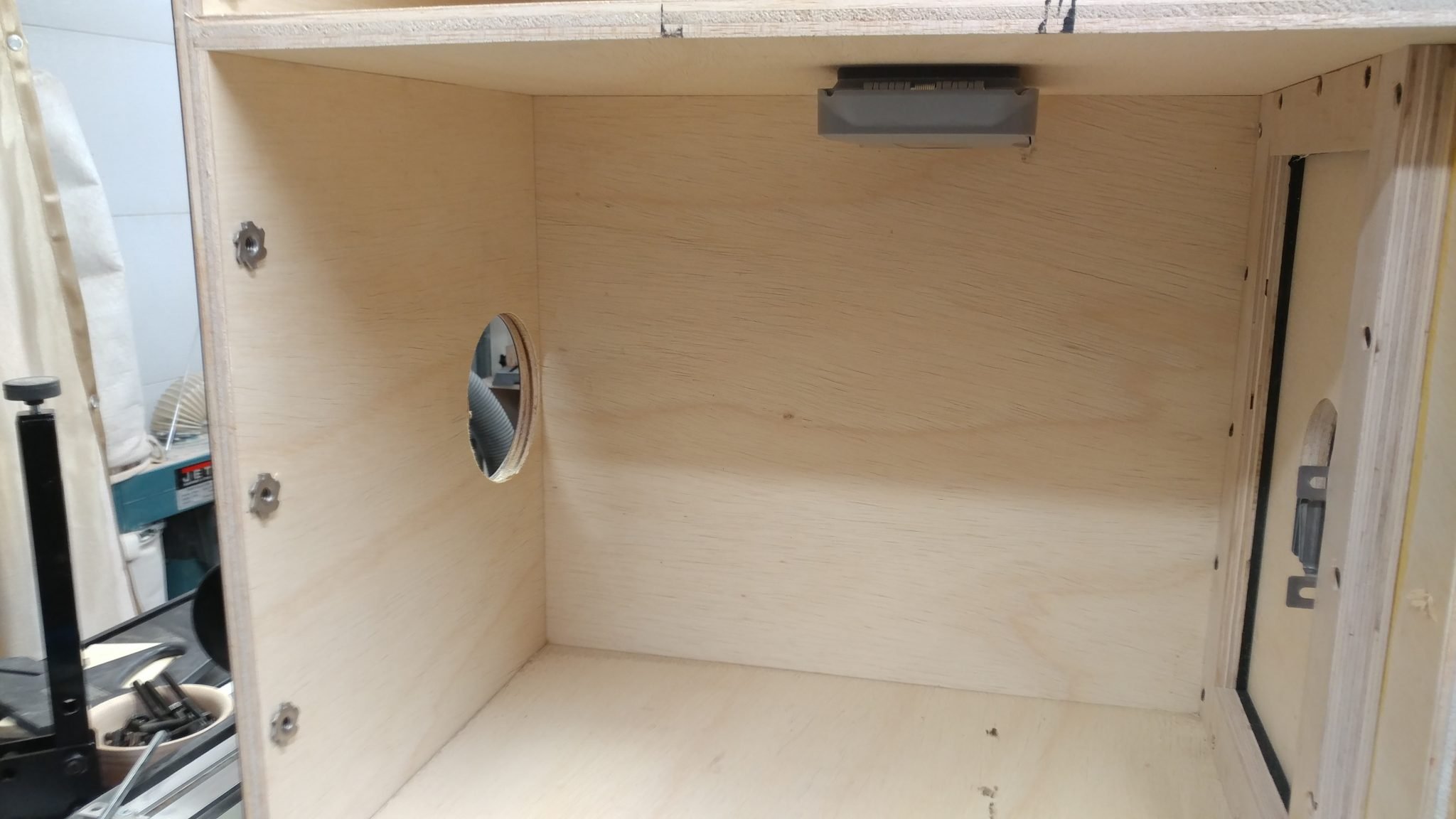
I also wanted to insert some tee-nuts into the holes to help strengthen it a bit.  I started by taking the table out and setting it on its side so I could access these holes.


The tee-nuts fit into the holes perfectly.


These were easy to hammer into the holes as long as I supported the board on the opposite side.


I put the enclosure back in place.


I installed the screws.  They hold it nicely.  Almost too nicely.  I was actually surprised that this worked as well as it did.


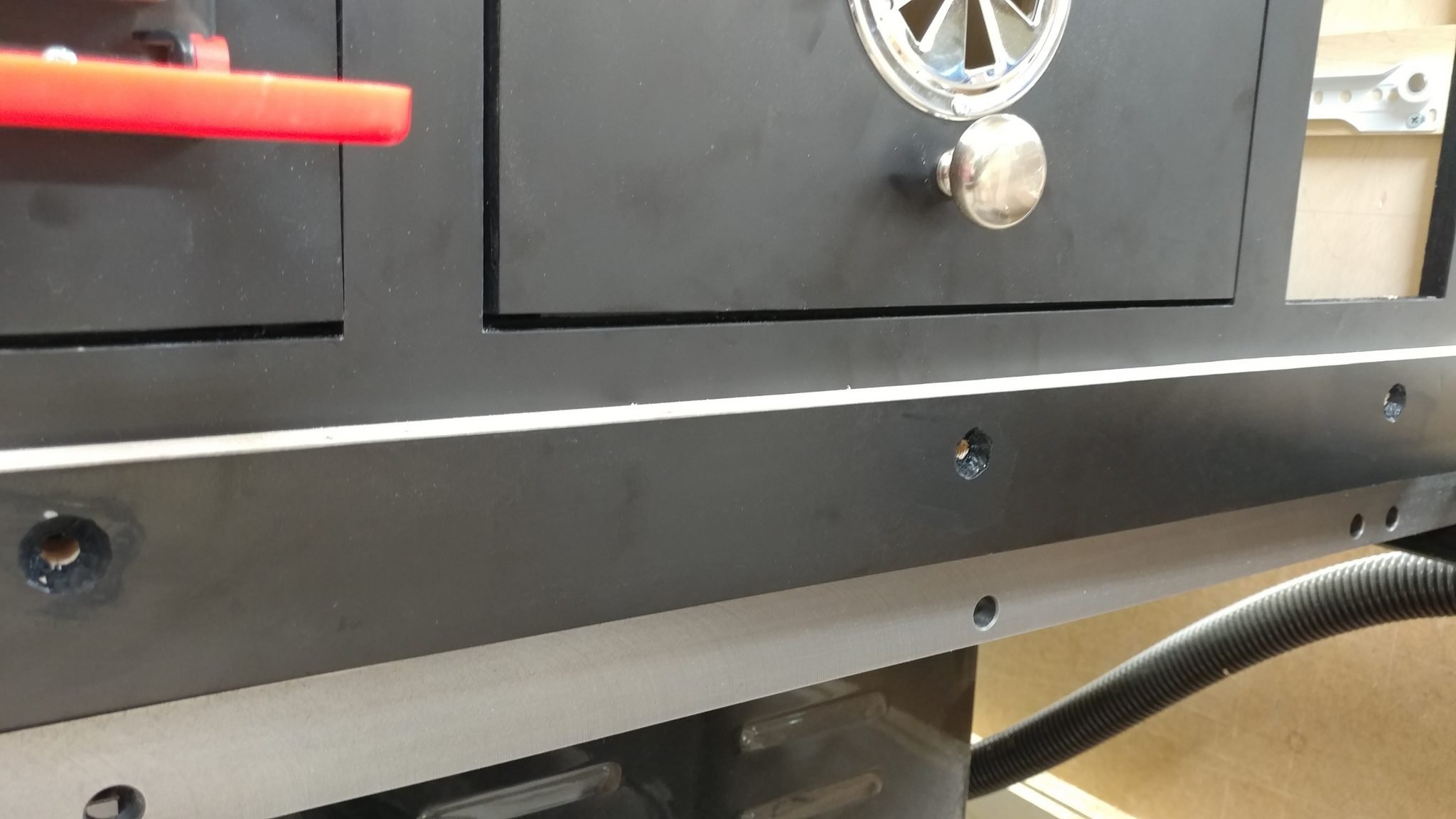
I marked where I would drill three holes in the front where I would secure the enclosure to the table.  I drilled these holes.


Since I’m using the countersunk screws that would normally attach the extension table to the rails, I needed them to be countersunk.


I painted the countersunk area black so it would blend in better.  Then I installed the screws and secured them with washers and lock nuts.


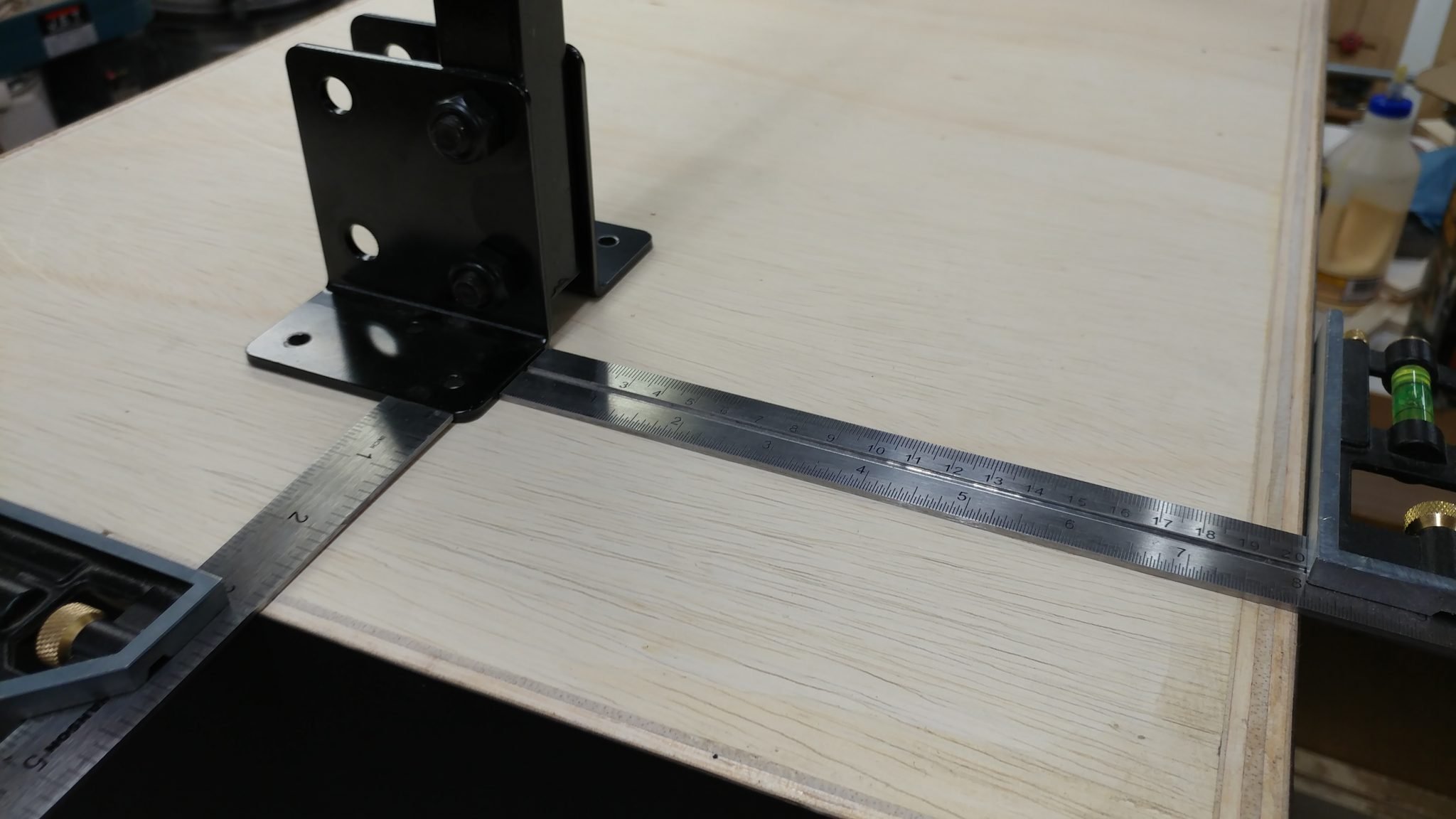
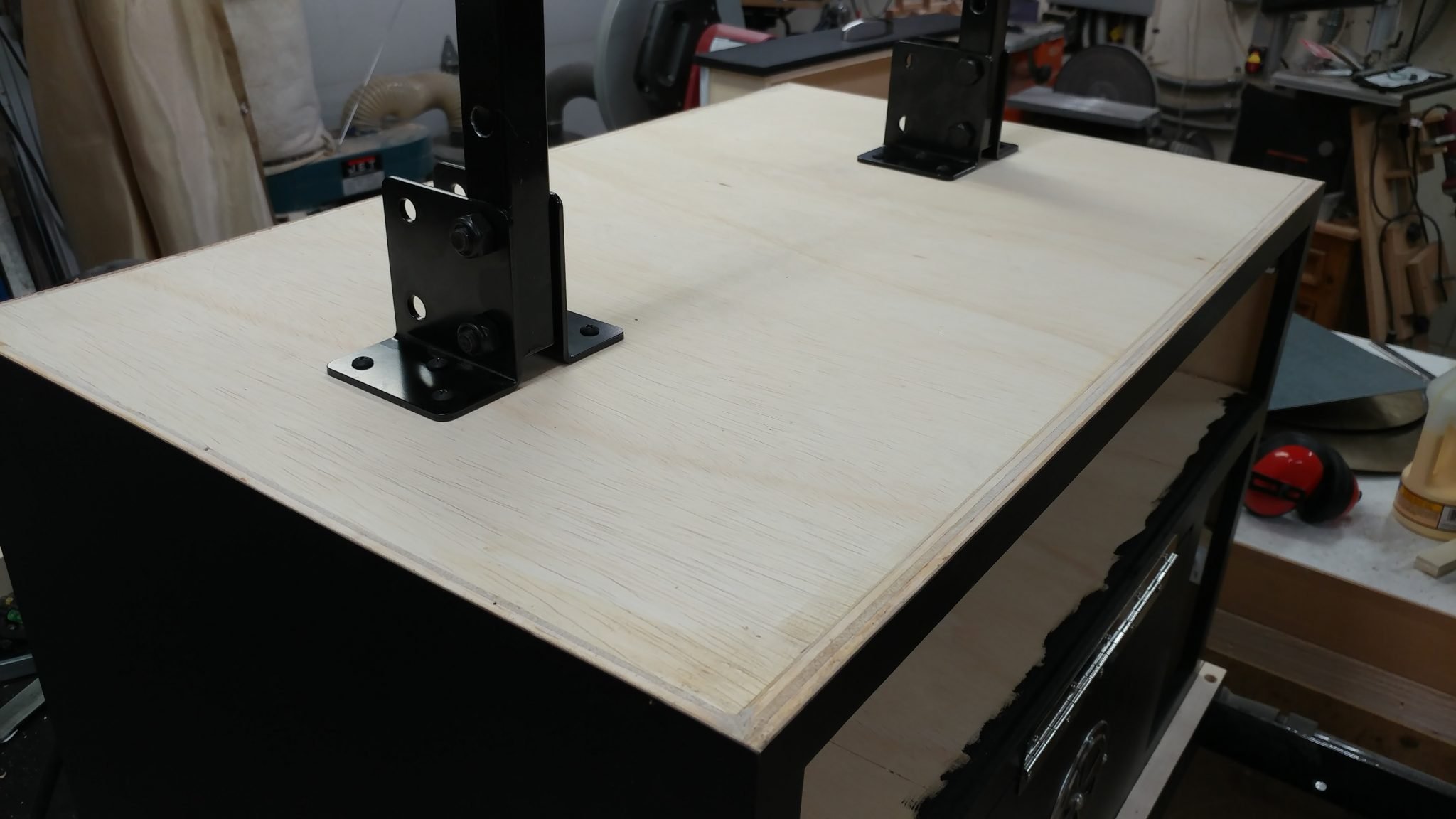
I Chose where I would install the legs to the enclosure.  I used my combination squares to align them.  This allowed me to easily position each leg so they match.


Both legs are now attached.


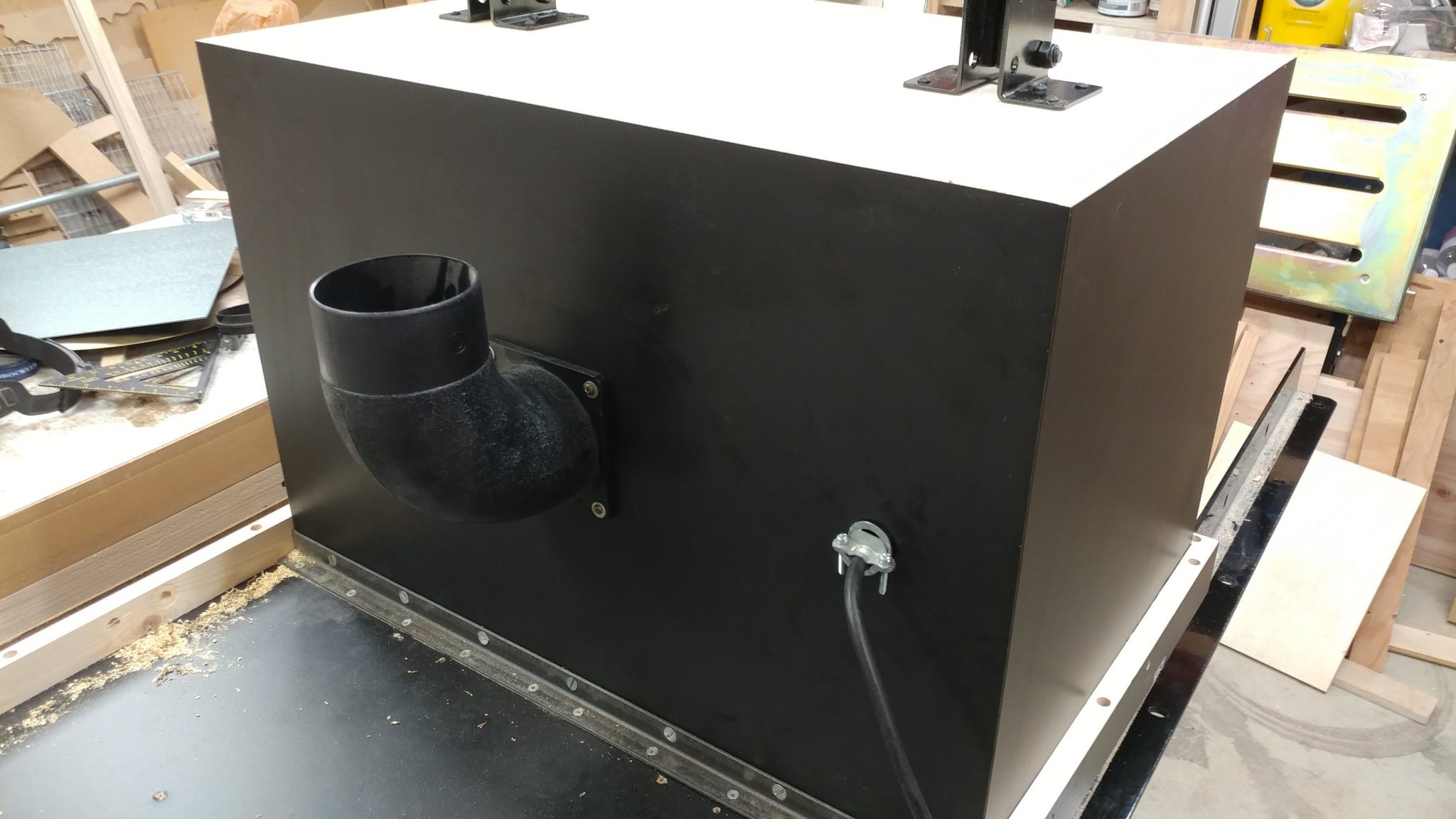
So close!  Only one thing left to do before I  actually attach it to the saw which is to install a dust port.  I’m using a 90-degree port which will allow me to angle it to the back of the saw if I choose to down the road sometime.


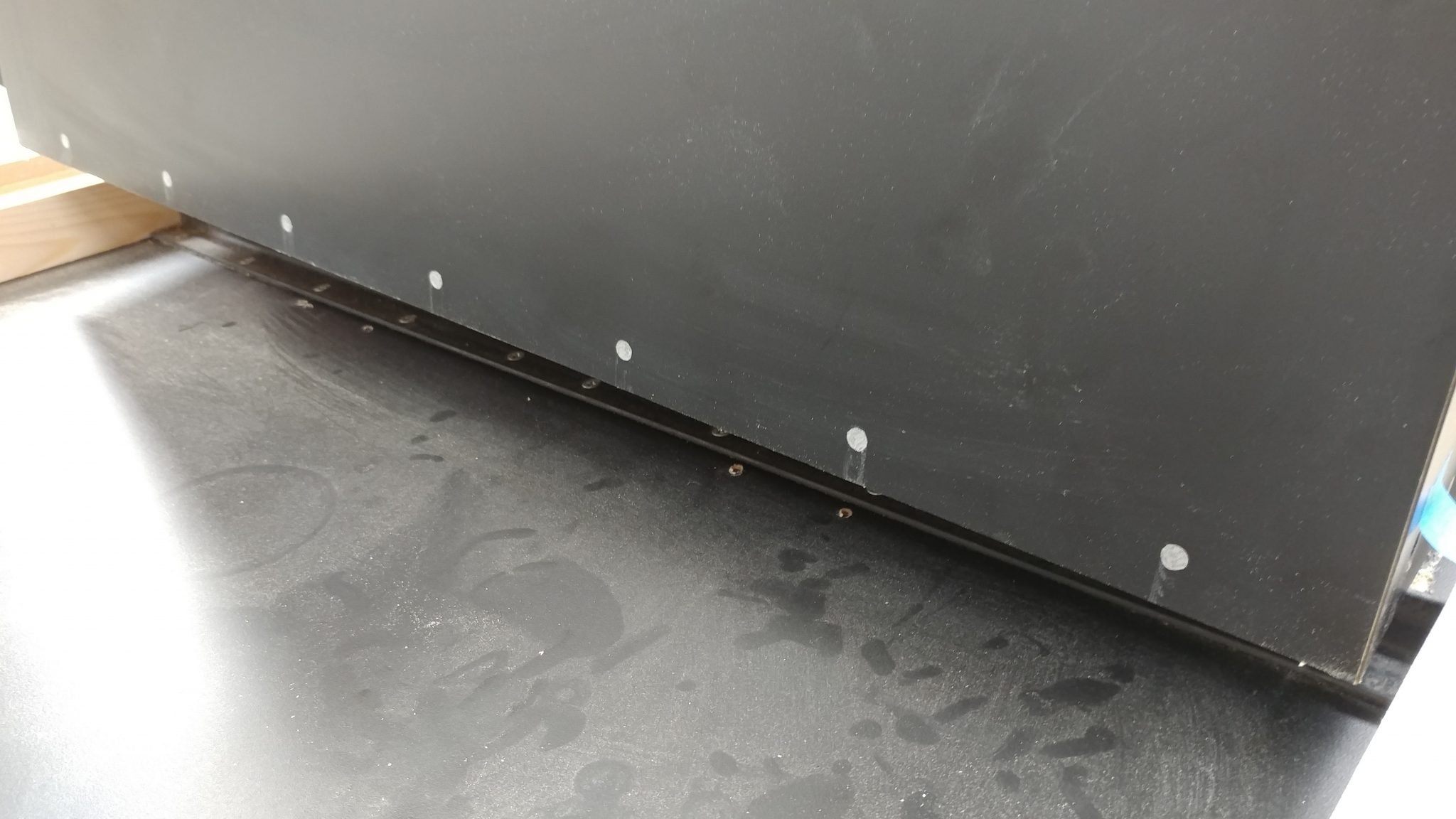
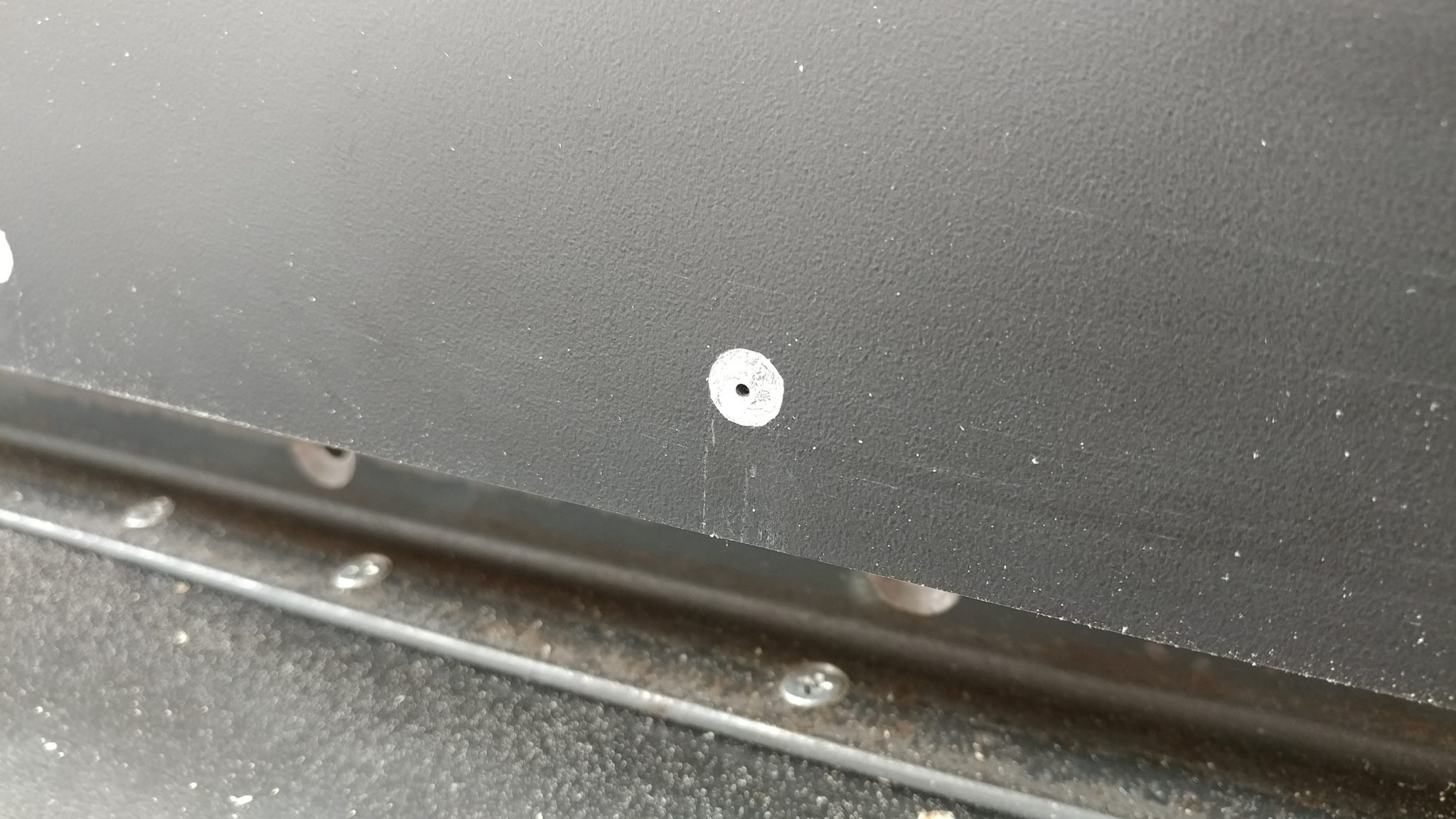
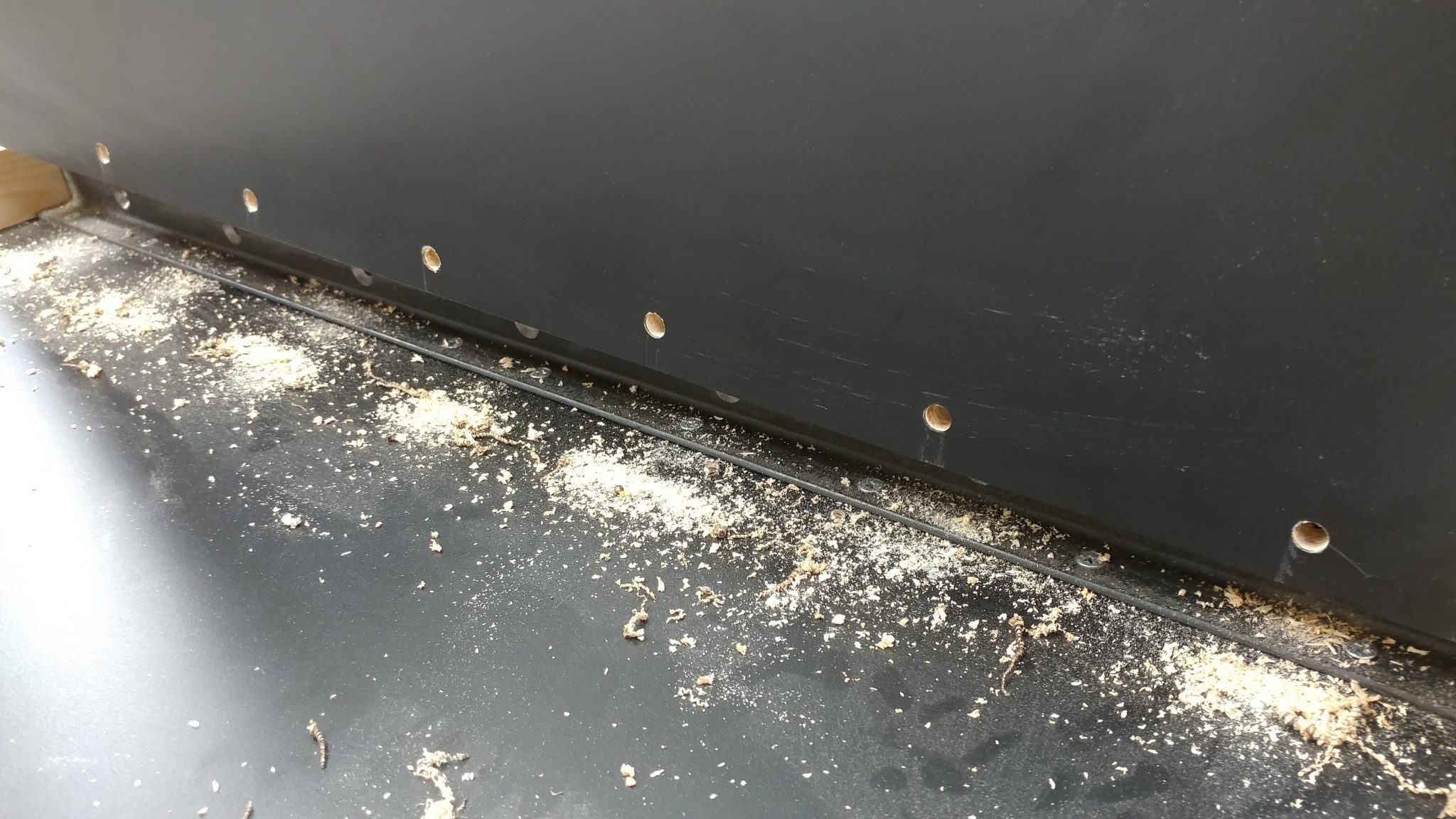
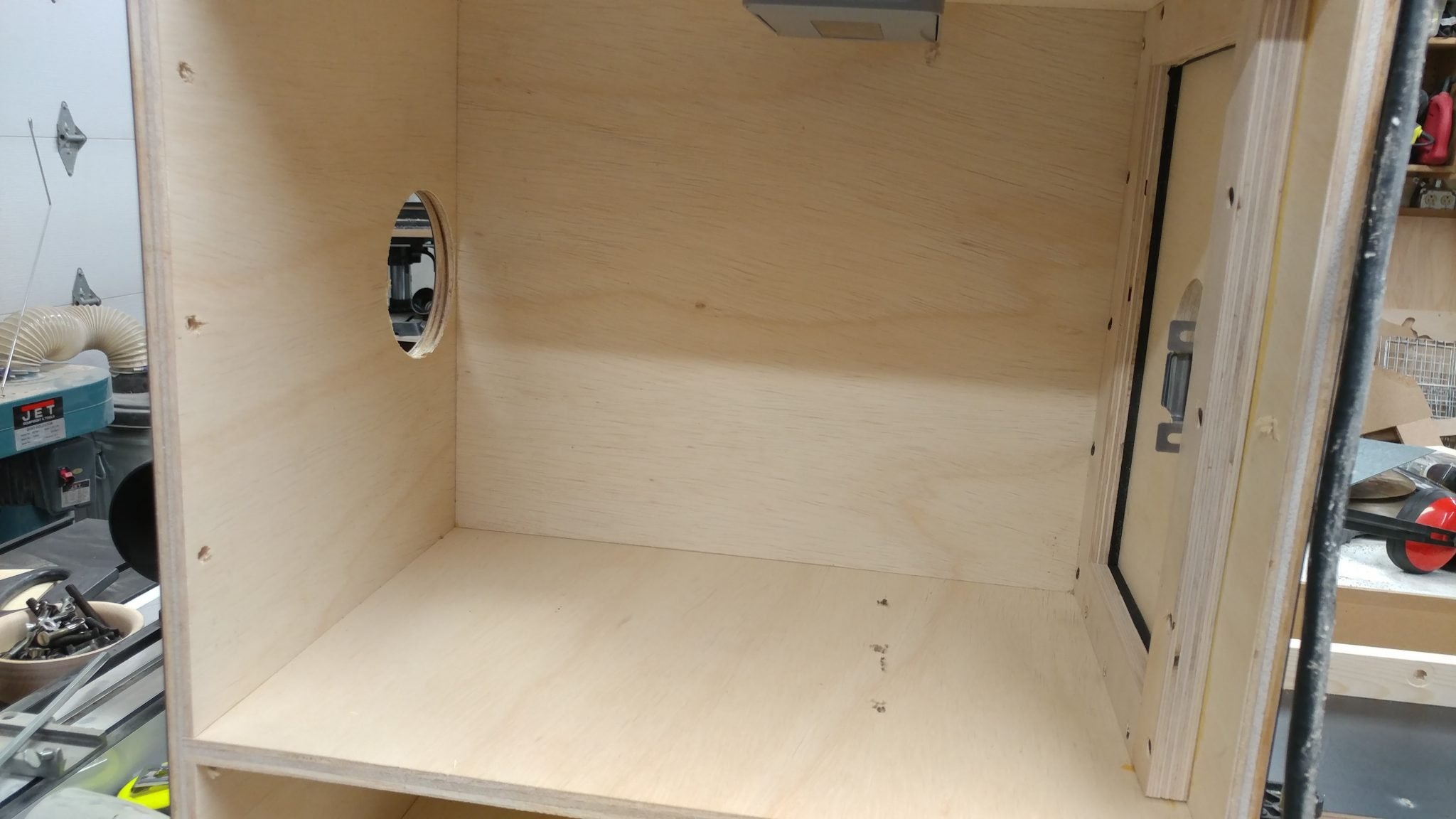
I could finally attach the extension table to the saw.  I used longer bolts than the ones provided by SawStop to go through the rails, the extension table, and the enclosure.
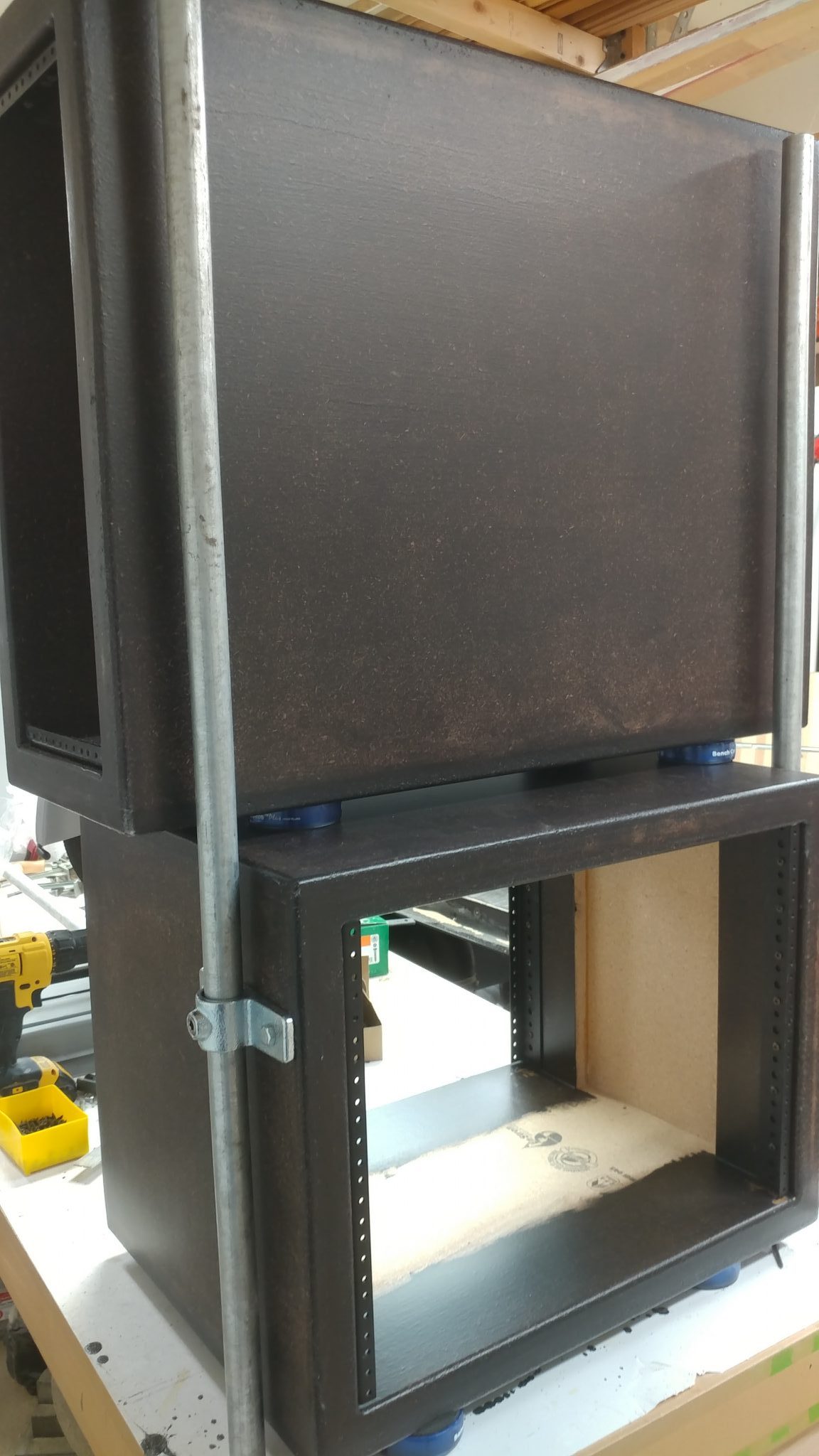
 

I inserted put the router lift in and tried it out.  It works perfectly.


That pretty much covers it.


If I had it to do over again, I would do something different to the outlet faceplate in the main cabinet.  The cover for it, which I intended to keep closed while the router is plugged in is too shallow so unless I change the plug on the router power cord to a right-angle version, I can’t keep the faceplate closed while the router is plugged in.


Also, I would probably just make an entire new table that has all of these features built-in, rather than reusing the existing table.


One last thing I would do differently is that I would use better drawer glides.  I always have trouble getting the euro-style glides installed squarely so the drawer face is flush with teh rest of the cabinet.


If you have any questions or suggestions, please leave a comment below.
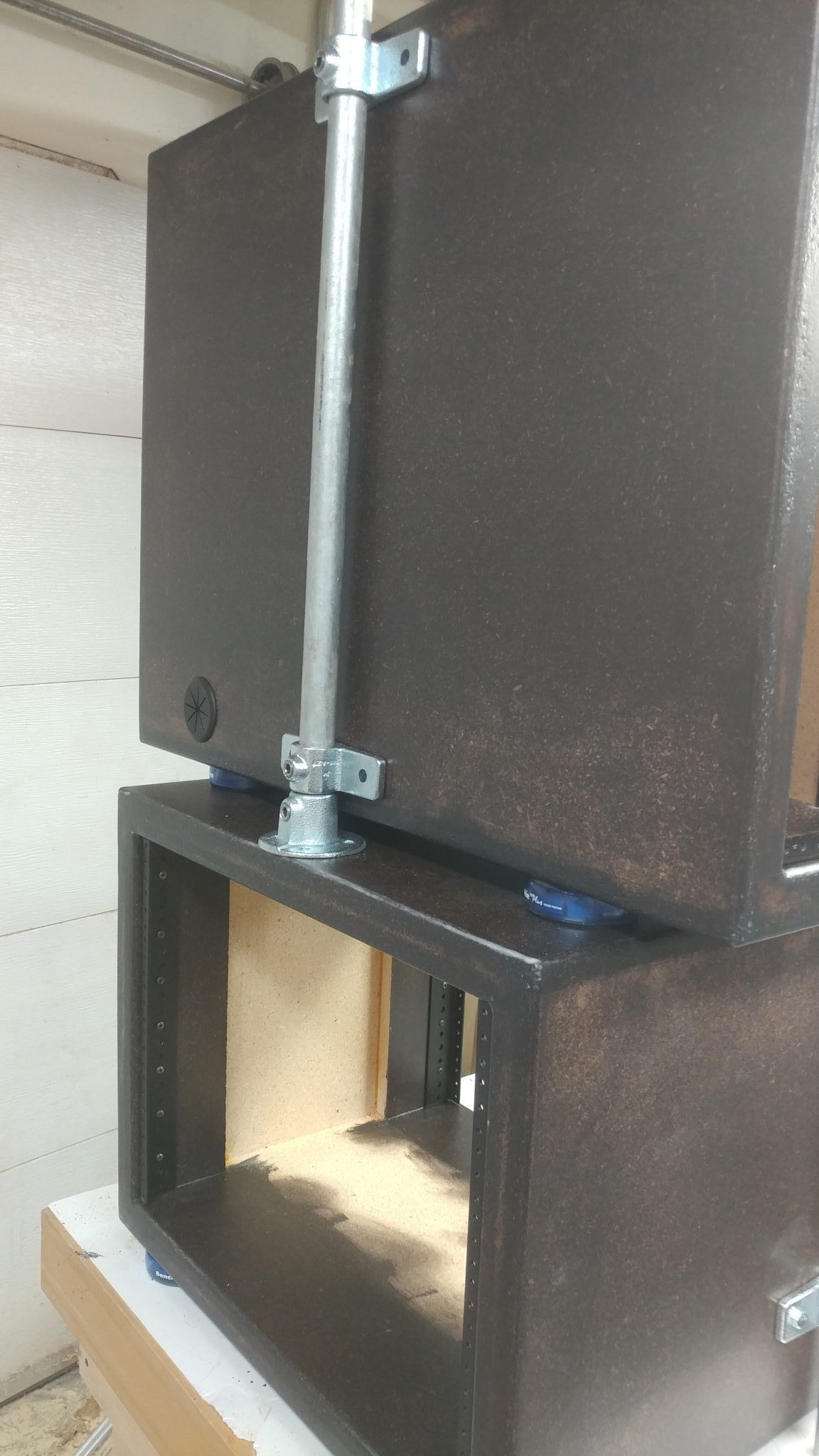
 

<< Back to Table Saw Modification – Router Table Enclosure: Part 2 – Laminate.
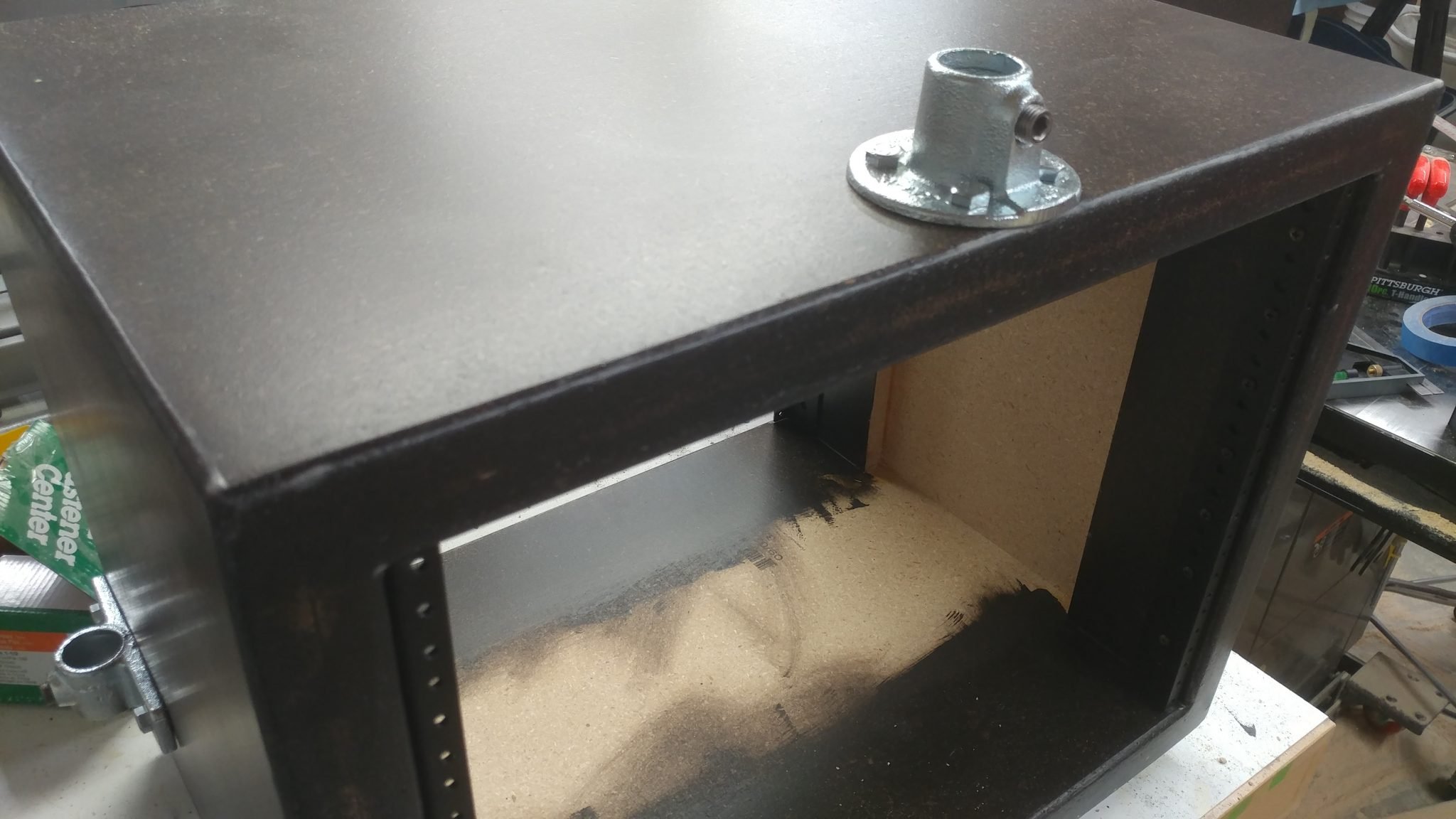
<< Back to Table Saw Modification – Router Table Enclosure: Part 1 – Carcase.